News & Updates
The latest news and updates from companies in the WLTH portfolio.
Europe just unveiled a new rival to SpaceX's Starship
When SpaceX's Starship lifted off from the Texas coast in the summer of 2023, it marked a milestone that aerospace engineers had discussed for decades but few expected to witness so soon. The towering stainless steel rocket, standing taller than a 30 story building, ignited all 33 of its engines and climbed into the sky. The mission did not unfold perfectly, but it proved the concept could fly. The significance became even clearer during Starship's fifth integrated flight test, when the returning Super Heavy booster was successfully caught in mid air by the giant mechanical arms of the launch tower. That demonstration suggested a new era of reusable spaceflight had begun. Starship is ultimately intended to carry more than 100 tonnes into low Earth orbit while remaining fully reusable. If SpaceX achieves that goal, it could become the most powerful and cost effective launch vehicle ever built. As a result, space agencies and aerospace companies are now focused less on whether Starship will reshape the industry and more on how they should respond. Independent Analysis Confirms Starship's Capabilities Researchers at the German Aerospace Center (DLR) recently completed one of the most comprehensive independent evaluations of Starship to date. Rather than relying on SpaceX's published specifications, the team reconstructed the rocket's performance by extracting telemetry from publicly available video of its first four integrated flight tests. They analyzed the data second by second to build and validate their own performance models. Their findings suggest Starship's capabilities are both realistic and impressive. According to the analysis, the current fully reusable version of Starship could deliver about 59 tonnes to low Earth orbit. That is roughly comparable to what Falcon Heavy can launch when none of its boosters are recovered. The researchers also evaluated SpaceX's planned next generation Starship, which is expected to feature larger propellant tanks and more powerful Raptor 3 engines. Their models project a reusable payload of about 115 tonnes to low Earth orbit, with as much as 188 tonnes possible in an expendable configuration. That would exceed the lift capability of NASA's legendary Saturn V rocket. Europe's RLV C5 Takes a Different Approach The study also introduces a European concept for a super heavy launch vehicle called the RLV C5. Instead of attempting full reusability from the beginning, the design focuses on partial reuse while maximizing efficiency. The concept combines the reusable winged booster from DLR's long running SpaceLiner program with an expendable upper stage. It uses liquid hydrogen and liquid oxygen, a more efficient propellant combination than the methane and oxygen used by Starship's Raptor engines. Unlike Starship, the RLV C5 booster would not perform a powered vertical landing. After reentering the atmosphere, it would glide on wings before being captured in mid air by a large subsonic aircraft. Although the recovery method sounds futuristic, the researchers argue it offers important advantages. Because the booster does not need to reserve propellant for landing, more of its fuel can be devoted to reaching orbit. Efficiency Versus Maximum Payload The study highlights the different engineering priorities behind the two vehicles. Starship weighs more than three times as much as the proposed RLV C5 at liftoff. Much of that additional mass comes from the hardware required for complete reusability, including heat shield tiles, landing propellant, structural reinforcements, and other recovery systems. As a result, only about 40% of the mass Starship places into orbit is useful payload. By comparison, the partially reusable RLV C5 would dedicate about 74% of its mass to payload. Although it cannot match Starship's enormous lifting capacity, it achieves much greater efficiency. Different Missions, Different Solutions The DLR researchers stress that the two rockets are not direct competitors so much as different solutions to different problems. Starship's enormous payload capacity and planned rapid reuse make it well suited for ambitious projects such as lunar bases, Mars missions, and massive satellite constellations. The RLV C5, on the other hand, is intended to provide Europe with an independent super heavy launch capability without the enormous cost of developing a fully reusable system immediately. Because it builds on technologies already being studied through the SpaceLiner program, the researchers believe it could serve as an intermediate step before Europe eventually develops a fully reusable launcher. A Concept Versus a Flying Rocket The study also acknowledges an important reality. Starship is already conducting flight tests, despite continuing technical challenges. The RLV C5 remains a paper concept, and transforming it into an operational launch vehicle would require years of additional development. Starship itself still faces major engineering hurdles. During its fourth integrated flight test, damage to its thermal protection system was severe enough that the design had to be substantially revised. Achieving rapid, reliable, and fully reusable operations remains one of the biggest unsolved challenges behind the rocket's long term economic model. Even so, lead author Moritz Herberhold and his colleagues conclude that the "RLV C5 offers an effective path for Europe to independently develop partially reusable super-heavy launch capabilities." Whether the future belongs to fully reusable giants like Starship or more efficient partially reusable systems, the study suggests there may be more than one successful path to the next generation of spaceflight.

Jim Cramer: "Anthropic Is the Winner Now" as Enterprises Move to Slash Tech Budgets in Half
* Cramer called Anthropic the enterprise AI profit winner as CRM sinks 37% and MU surges 233% on exploding memory demand. * Starbucks evaluating a 50% cut to its $400 million tech budget signals every SaaS incumbent faces imminent re-underwriting. * Chinese open-source AI models pose the biggest threat to Anthropic's pricing power if CFOs find cheaper tokens that clear their ROI bar. * Act now: the analyst who called NVIDIA in 2010 just named his top 10 AI stocks -- and Salesforce didn't make the cut. Grab the names FREE today. On CNBC's Squawk on the Street on July 9, 2026, Jim Cramer argued that the real profit engine of the enterprise AI wave sits at the model layer, which is collecting the checks hyperscalers are writing. "Anthropic is the one that's actually making a lot of money doing some work on Salesforce," Cramer said, going on to call the company "the winner now" even as he added, "I don't like them. They're bullies. Anthropic. They're doing very well." Cramer paired the Anthropic call with a warning that enterprise software budgets are about to get squeezed. He cited Starbucks, which under CEO Brian Niccol is spending roughly $400 million on tech and evaluating cuts of up to 50%. If large customers like Starbucks are willing to review major tech spending and consider deep cuts, SaaS incumbents may face the tougher question of whether AI agents will generate enough new revenue before they start replacing old software seats. The Three AI Spending Buckets: Cybersecurity, Memory, and Tokens Cramer leaned on a framework he attributed to Key analyst Jack Snader: enterprises are funneling AI dollars into three categories, in order: cybersecurity, memory hardware, and tokens. "They're calling in George Kurtz," (CrowdStrike's CEO) Cramer said of the first wave. "Cyber... cybersecurity. And then next is actually hardware. And that's why we see Micron go up." He also flagged that Anthropic salespeople have been told to throttle back due to token constraints, a demand signal that speaks louder than any guide-up. Act now: the analyst who called NVIDIA in 2010 just named his top 10 AI stocks -- and Salesforce didn't make the cut. Grab the names FREE today. Salesforce Is Caught in the Budget-Cut Crosshairs Salesforce (NYSE:CRM) sits directly in the crosshairs of the Starbucks-style budget review. Marc Benioff's defense is Agentforce, which he described as "the biggest growth opportunity for our customers, and for Salesforce." The numbers back the pivot: Agentforce ARR hit $1.2 billion in Q1 FY27, up 205% YoY, with combined Agentforce and Data 360 ARR of roughly $3.4 billion. The stock tells the other side of the story CRM shares are down 36.79% year-to-date and 38.60% over one year, trading around $162. Investors are asking whether agents will replace seats faster than Salesforce can monetize them.
Kraken to rebuild mobile app around AI trading agents - Cryptopolitan
It puts Kraken alongside Gemini, Coinbase, Binance, and OKX in a race to increasingly merge AI into crypto trading. Crypto exchange Kraken has announced that it will relaunch its mobile app with autonomous AI agents integrated, giving retail traders software that can observe the markets and place orders on their behalf. The plan was announced in a company blog post and will involve a complete revamp of the existing app instead of a regular update to the existing one. "Unlike other trading platforms, this won't be an AI assistant or a copilot bolted onto the old version of the app," the post reads. "The financial intelligence is built into the fabric of Kraken itself. That's what will make it feel alive." Agentic AI gains more traction The agents will be able to track conditions across markets, recommend trades, and execute them without requiring a user to supervise or approve every single action. The bots can also act on user prompts and adjust based on how earlier decisions played out. The user sets a goal for the agents, and the app organizes itself around this goal, all while running in the background, Kraken explained. The exchange also emphasized that the user keeps the final say on each trade. The statement also mentioned in-built risk management features tied to a user's preset risk tolerance, a standard feature across the AI trading tools that are being released in recent days. The company noted that AI-generated recommendations for trading carry risk, which includes the loss of capital, and are not guaranteed to work for every individual. Kraken also stated that in the U.S., advice on crypto assets comes from Payward Interactive, Inc., while advice on securities comes from Kraken Adviser LLC, an SEC-registered investment adviser. Kraken joins the AI agent industry race Kraken is joining up with other crypto institutions in leaning on AI agents. Gemini opened its platform and APIs to users' AI agent setups in April, while Coinbase used a June product event to preview Coinbase Advisor, an SEC-registered, AI-powered financial adviser. OKX and Binance have also added AI features of their own. However, Kraken is the first major exchange to place AI agents at the center of its application instead of simply as a feature. This shift could point to a new age where exchanges reposition themselves from simple buy-and-sell platforms into more extensive financial software. It comes with obvious risks, however, as autonomous systems can increase losses by a huge margin, and competing agents trading based off the same signals raise the odds of flash crashes in the market. Regulators continue to work out how existing rules apply when an AI agent is making the trading decisions. The app relaunch is coming during a busy stretch for Kraken. The exchange has rolled out crypto perpetual futures in the US and added Solana DEX trading through its main app. The company has also started preparations for a possible public listing since last year.
Elon Musk Predicts SpaceX Value to Surpass Entire Earth
Amid Wall Street valuations, analysts project SpaceX stock from $75 to $900 per share Elon Musk, CEO of U.S. electric vehicle company Tesla, claimed that the future value of SpaceX, the aerospace company he founded, would surpass the combined value of the entire Earth. According to financial weekly Barron's on July 10 (local time), Musk stated via X (formerly Twitter) the previous afternoon, "If we achieve our goals, SpaceX's value will grow larger than the rest of the planet combined." Barron's reported that Musk made this remark amid ongoing Wall Street valuations of SpaceX following its June initial public offering (IPO). In a radio interview, Musk also revealed a concrete goal of sending tens of thousands of people to a lunar base within the next 10 years. He added that astronauts would be sent to the Moon within 2-3 years, with plans to expand operations. He argued that, at some point, anyone who wishes could travel to the Moon or Mars. Musk stated, "We will build a self-sustaining city on the Moon, like a metropolis," where people could permanently relocate or take vacations. Market forecasts for SpaceX's valuation are mixed. Morgan Stanley projected that under a pessimistic scenario -- where Starship does not achieve normal operations by 2029 -- the stock price could drop to 75 dollars per share. Under an optimistic scenario, it estimated 600 dollars per share, with a target price of 300 dollars. Conversely, Citi assumed an optimistic scenario, projecting a stock price of 900 dollars, a corporate value of 12 trillion dollars, or approximately 18,000 trillion Korean won. According to financial data provider FactSet, the average analyst target price was 240 dollars per share. Sales are expected to reach 630 billion dollars by 2031, with operating profits exceeding 340 billion dollars in the same year.
Cathie Wood's ARK sees major moves in Coinbase and SpaceX stocks By Investing.com
Cathie Wood's ARK ETF published their daily trades for Friday, July 10th, 2026, revealing significant activity in the tech and biotech sectors. Leading the day's trades, ARK made a substantial purchase of 116,971 shares of Space Exploration Technologies Corp (SPCX), with a total dollar value of $17,798,307. This marks a continuation of ARK's interest in the aerospace giant, following a consistent buying pattern over the past week. In another major move, ARK acquired 87,409 shares of Coinbase Global Inc (NASDAQ:COIN) across its ARKK, ARKW, and ARKF ETFs, amounting to $13,849,081. This purchase indicates ARK's ongoing confidence in the cryptocurrency exchange platform, as it follows recent acquisitions earlier in the week. On the selling side, ARK offloaded 19,540 shares of Advanced Micro Devices Inc (NASDAQ:AMD) through its ARKK, ARKQ, and ARKX ETFs, totaling $10,682,908. This sale continues a trend of reducing its position in AMD, with significant shares sold throughout the week. ARK also sold 158,592 shares of 10X Genomics Inc (NASDAQ:TXG) from its ARKK ETF, totaling $6,835,315, and 45,625 shares of Roku Inc (NASDAQ:ROKU), amounting to $6,399,362. These sales suggest a shift in ARK's focus within the genomics and streaming sectors. In the biotech space, ARK added 293,106 shares of Prime Medicine, Inc (NASDAQ:PRME) through its ARKG ETF, with a total investment of $1,239,838, continuing its recent accumulation of the stock. Additionally, ARK purchased 54,804 shares of Generate Biomedicines Inc (GENB) for $861,518, and 28,276 shares of Tempus AI Inc (TEM) for $1,738,974, reflecting its interest in innovative biotech companies. Other notable trades include the sale of 11,092 shares of Deere & Co (NYSE:DE) for $6,576,446 and the acquisition of 137,071 shares of X-Energy Inc (XE) for $2,275,378, highlighting ARK's diverse investment strategy across various sectors. These trades underscore Cathie Wood's ARK Invest's strategic adjustments within its portfolios, reflecting both confidence in emerging technologies and a reevaluation of existing positions. Investors will be closely watching ARK's next moves as it navigates the evolving market landscape. This article was generated with the support of AI and reviewed by an editor. For more information see our T&C.

Trump Praises SpaceX President Gwynne Shotwell's 'Extreme Generosity' After Her $325 Million Trump Accounts Stock Donation
Benzinga and Yahoo Finance LLC may earn commission or revenue on some items through the links below. President Donald Trump expressed his gratitude to Space Exploration Technologies Corp. President Gwynne Shotwell and her husband, Robert Shotwell, for their donation of SpaceX stock to help children achieve the American Dream through the Trump Accounts. Late Wednesday, Trump took to Truth Social to acknowledge the Shotwells' $325 million contribution of SpaceX stock. He praised the couple's "extreme generosity" and highlighted the positive impact their donation will have on thousands of children. Trump Accounts Gain Support The President's post came in response to Shotwell's announcement that she and her husband would donate SpaceX shares to "Trump Accounts" for more than 2 million American children. The gift is intended for children aged 11 to 17 from lower-income households, with a particular focus on those living near the Shotwells' central Texas home. The Shotwells' donation comes as part of the Invest America program, which aims to provide financial support to children in need. The funds are automatically invested in an S&P 500 index fund, and additional contributions can be made by families, employers, and other parties up to $5,000 annually. See Also: Avoid the #1 Investing Mistake: How Your 'Safe' Holdings Could Be Costing You Big Time Trump's recognition of the Shotwells' contribution comes after he expressed confidence that CEO Elon Musk might also donate SpaceX stock to the program. The president has expressed confidence in his relationship with Musk, despite past disagreements over electric vehicle mandates. The donation adds Gwynne Shotwell to a growing list of wealthy supporters of Trump Accounts. Michael and Susan Dell of Dell Technologies Inc. pledged $6.25 billion to provide $250 to 25 million children, while Ray Dalio and his wife Barbara committed at least $75 million for over 300,000 children in Connecticut. Ray Dalio has said the program can help teach young people about finance, investing and capitalism. According to Robinhood Markets Inc. CEO Vlad Tenev, the growth of Trump Accounts has outpaced that of many of America's most successful tech companies. As of June, nearly 6 million children had enrolled in the program.
Billionaires warned New York would scare off business. Anthropic and Airbnb just made their biggest bets on the city yet
Some billionaires have spent the past year warning that New York City's political climate could scare away companies, capital, and high earners. But two fast-growing brands are moving in despite the noise. Anthropic is leasing an entire 16-story office building at 330 Hudson Street in Manhattan, dramatically expanding Anthropic's New York footprint from a much smaller office (just around the corner, at 155 Sixth Avenue), and announcing the company is planning to double its workforce in the city. The Claude-maker, which had less than 500 employees in the city at the beginning of this year, expects to occupy all 16 floors of the building -- enough space for 1,700 desks -- and expects to have more than 1,000 employees by the end of the year. The company is currently hiring for roles in New York across research, engineering, policy, sales, and operations. "New York is one of the main hubs for how AI is being put to work, and Anthropic is in the middle of it as a technology partner to the financial institutions, media companies, and cultural organizations that help define the city," Anthropic chief commercial officer Paul Smith told the New York Post in a statement. "Doubling our team here and deepening our long-term commitment to the city will allow us to sit closer to that work, and to the people driving it forward." Simultaneously, Airbnb is making a major real estate bet on New York of its own. The company purchased 281 Park Avenue South, a six-story building in Gramercy, for $81.5 million, according to The Wall Street Journal. The building is expected to serve as a hub for Airbnb's New York-area workforce, which numbers more than 600 employees. "New York City has been part of our story since the earliest days of Airbnb," CEO Brian Chesky said in a statement to AM New York. "This building reflects our long-term commitment to the city and will be home to one of our largest employee hubs outside of San Francisco. We're excited to keep investing in the city and the people who make it extraordinary." Anthropic and Airbnb's moves defy Mamdani naysayers' predictions The moves fly completely in the face of narratives put forward proclaiming New York City is becoming inhospitable to business. Billionaire investor Bill Ackman warned last year that if Zohran Mamdani became mayor, "You're going to see the flight of businesses from New York." Citadel founder Ken Griffin has also urged New York business leaders to "fight for their city," warning that political choices could push talent elsewhere. Griffin himself has had a public feud with the mayor following a Tax Day video in which the young, self-described Democratic Socialist called out Griffin's penthouse apartment as the prime example of why the city would benefit from a pied-a-terre tax. Griffin's CCO at Citadel responded in a letter to investors that the company may decide to halt construction of a $6 billion building in midtown Manhattan -- something that has never actualized.
SpaceX Scored a New Street-High Price Target of $800. What Comes Next for SPCX Stock.
Raymond James analyst Brian Gesuale has set a new Street-high price target on SpaceX (SPCX) shares at $800 with a "Strong Buy" rating, representing a staggering 430% potential upside from current levels. Should SPCX reach that target, the company's market cap would balloon to roughly $10.5 trillion, making it larger than any publicly traded company currently in existence. More News from Barchart Gesuale frames SPCX as the defining industrial infrastructure company of the 21st century, comparing its potential to that of railroads, electric grids, and the internet in reshaping entire economic eras. That said, SpaceX stock is currently down more than 10% versus its year-to-date high. Why Raymond James Is Uber Bullish on SpaceX Stock Raymond James' price objective rests on extraordinarily aggressive revenue assumptions. These include SpaceX launching data centers into space and selling mass orbital computing power, and Starship scaling up to reduce the cost of moving mass into orbit by more than 99%, completely commoditizing space transport. All in all, Gesuale models SpaceX surpassing $5 trillion in annual sales within the next 10 years. Caution Is Warranted in Playing SPCX Shares Despite the bullish coverage, SPCX stock has so far moved in the opposite direction as the Nasdaq-100 ($IUXX) inclusion, which was expected to generate roughly $4.3 billion in passive inflows from index-tracking funds, failed to provide a sustained bid. Several structural factors also complicate the near-term outlook. SpaceX's public float remains about 5% of total shares outstanding, creating outsized volatility in both directions. Short sellers reportedly hold a third of all tradable shares, and the first major insider sell window opens after Q2 earnings next month -- when 20% of early-release-eligible shares become available for trading. Prediction markets assign only a 20% probability that SPCX will close above $210 by month-end, placing real money far below the median analyst target. How Wall Street Recommends Playing SpaceX In total, 29 Wall Street firms have initiated coverage on SpaceX shares so far, with the consensus rating set at "Strong Buy" tied to a mean price target of about $202.
Kraken To Relaunch Mobile App With Agentic Trading
Crypto exchange Kraken is relaunching its mobile app with new agentic trading features. In a blog post, Kraken said, "Unlike other trading platforms, this won't be an AI assistant or a copilot bolted onto the old version of the app." Kraken is not the only crypto exchange looking to artificial intelligence (A.I.) to revitalize its app and trading experience. More From Cryptoprowl: Crypto exchange Gemini (NASDAQ: $GEMI) was the first major U.S. firm to open its platform and app to agentic A.I. earlier this year. Coinbase Global (NASDAQ: $COIN) recently rolled out a new A.I.-powered financial advisor that it describes as a "robo-advisor on steroids." Kraken's agentic trading system will feature autonomous A.I. agents capable of monitoring markets and suggesting trades to users aligned with pre-define goals. Kraken's new agentic AI offering is similar to a full-fledged advisory system, said the company in its blog post. The new app will be able to curate news and investment suggestions based on a user's portfolio and preferences. This is the latest new offering from Kraken, which recently announced crypto perpetual future contracts in the U.S., as well as tokenized IPO access and new lending programs. Kraken is privately held and its stock does not trade on a public exchange.
EchoStar Offers 20% Discount to SpaceX Stake, Deutsche Bank Says
This article first appeared on GuruFocus. Analysts have identified EchoStar (NASDAQ:ECHO), the operator of Boost Mobile and satellite television provider Dish, as a potentially cheaper route for investors seeking exposure to SpaceX (NASDAQ:SPCX), the recently listed space technology company. Citi, a global financial-services firm, maintained its buy rating on EchoStar with a $126 price target, suggesting that the company could benefit from a higher SpaceX share price over the next year as well as continued efforts to reshape its own business. Citi analyst Michael Rollins noted that EchoStar may create additional value through spectrum monetization, possible sales of its video and other assets, and the after-tax value of its expected SpaceX investment. EchoStar sold some of its spectrum licenses to SpaceX in 2025 in exchange for shares and is expected to receive additional SpaceX stock when the agreement closes in the second half of 2027. EchoStar shares gained as much as 30% from the start of the year through the end of May, when SpaceX released its S-1 filing, but the stock has since moved in the opposite direction from SpaceX. Following SpaceX's record $86 billion public offering in June, EchoStar shares declined nearly 24%, while SpaceX remained about 13% above its IPO price. Deutsche Bank, a global investment bank, reinstated coverage of EchoStar with a buy rating and a $143 price target, with analyst Bryan Kraft estimating that the per-share value of EchoStar's SpaceX stake is approximately 20% above EchoStar's current stock price. Kraft suggested that investors may effectively be acquiring SpaceX exposure at a 20% discount while receiving EchoStar's remaining assets without additional implied cost. Analysts also see potential value in EchoStar's remaining spectrum holdings and businesses including Boost Mobile, Hughes and Sling TV. Additional upside could come from a narrowing net asset value discount, a resolution of tower litigation and progress through the Dish DBS bankruptcy. New Street Research, an investment research firm, estimated that EchoStar could still be worth $165 per share despite the Dish DBS bankruptcy filing earlier this month. With Wall Street's average SpaceX price target standing near $236 and implying more than 55% upside from its current trading level, investors may view EchoStar as a value-focused way to gain indirect exposure to SpaceX.

Elon Musk Thinks SpaceX Could Become More Valuable Than Earth Itself
Businessman and Tesla CEO Elon Musk has once again captured the world's attention with one of his most audacious statements yet. In an address to skepticism surrounding a major compute partnership between Anthropic and SpaceX/xAI, Musk declared that his rocket company will eventually be worth more than the rest of Earth if it accomplishes its long-term objectives. In a post on X, he wrote, "You don't seem to understand that SpaceX will be worth more than the rest of Earth if we accomplish our goals." Musk's comment came in response to analyst Thomas D. who questioned whether Anthropic's reported $7.5-40 billion deal with SpaceX-related entities represented an "unforced error." The deal reportedly grants Anthropic access to significant AI compute capacity at SpaceX's facilities, including the Colossus 1 data center. The remark, made in response to a skeptic, emphasizes SpaceX's long-term potential in space infrastructure, Mars colonization, and related technologies, framing it as vastly more significant than short-term AI deals or competition. This highlights Musk's broader vision where space ambitions could dwarf terrestrial economies, amid discussions on xAI's rapid progress with models like Grok 4.5. Musk's latest prediction builds on these achievements while pointing toward far greater ambitions, establishing a self-sustaining colony on Mars and making life multiplanetary. The vision is not merely about sending astronauts on occasional trips. Musk has repeatedly emphasized that SpaceX aims to enable ordinary people to travel to the Moon, Mars, and beyond, creating an entirely new branch of the economy rooted in space resources, orbital manufacturing, and interplanetary trade. Critics have been quick to question the feasibility and the sheer scale of such a valuation claim. SpaceX's Soaring Valuation and Recent IPO SpaceX, which recently completed its high-profile initial public offering and carries a market valuation around $1.75 trillion, is already among the most valuable companies on the planet. Its rapid rise has been fueled by reusable rocket technology, the Starlink satellite internet constellation that now serves millions of users worldwide, and the development of the massive Starship vehicle designed for deep-space missions. Musk's statement arrives amid extraordinary momentum for SpaceX. The company went public in June 2026 in what became the largest IPO in history, raising approximately $75-85.7 billion. Shares surged post-listing, pushing the market capitalization above $2 trillion and briefly surpassing major tech giants like Amazon. Musk has long framed SpaceX's mission as making humanity multi-planetary, with Starship as the key vehicle for Mars colonization, lunar bases, and large-scale space infrastructure. Achieving routine, low-cost access to orbit and beyond could unlock new industries, orbital manufacturing, asteroid mining, space-based solar power, and a vastly expanded satellite economy. Analysts and enthusiasts speculate that dominating launch capacity, global broadband via Starlink, and space-based AI/compute could transform SpaceX into the backbone of an off-world economy. Some optimistic forecasts suggest potential valuations in the trillions more if these goals materialize, effectively dwarfing Earth's current economic output in relative terms as new frontiers open. Yet Musk's track record with Tesla and SpaceX has shown that seemingly impossible timelines can accelerate dramatically when innovation compounds. Whether Musk's forecast proves overly optimistic, it highlights a fundamental shift in how we view our future. For him, space is not just a frontier for exploration, it represents the next chapter of human prosperity and survival. As SpaceX pushes the boundaries of what's technically and economically possible, the conversation about humanity's place in the cosmos grows louder.
Anthropic Opens Hard Questions Portal: AI Companies Rank Below Governments in Trust
A 52,000-person Anthropic survey put AI companies below every government body in public trust Anthropic launched a formal public submission portal on Wednesday inviting anyone to submit the hardest questions they have about AI -- and committing to publish not just its answers but the reasoning that produces them, including cases where the company acknowledges it is wrong or uncertain. The initiative, called "Hard Questions" and accessible at Anthropic's Hard Questions portal, is one of the more structurally unusual transparency moves by a frontier AI lab: it hands agenda-setting to the public rather than to the company's communications team. The timing is not incidental. Anthropic's own nationally representative survey of nearly 52,000 Americans, published last month, found that only 15% of respondents said they trust AI companies to make decisions about how the technology is developed and used. That figure was the lowest of any institution the survey tested -- below the federal government, state and local governments, international bodies, and far below independent experts at 43%. AI Company Trust Ranks Last Among Every Surveyed Institution The Anthropic Public Record survey, conducted by YouGov between November and December 2025 with a national margin of error of ±0.6 percentage points, documented a trust landscape that the company itself describes as the backdrop for the Hard Questions initiative. Job loss was the most common fear Americans cited, held by 64% of respondents and ranking as the top concern in every state -- among Democrats at 67%, Republicans at 62%, and across every household type. Cognitive dependency, the worry that AI integration leaves people unable to think for themselves, ranked second at 56%. Misinformation ranked third at 52%. On the hopeful side, nearly half of Americans -- 48% -- named curing diseases like cancer or Alzheimer's as one of their top three hopes for AI, placing it 12 percentage points above the next option. What the survey found missing was trust in the companies building the technology to navigate this terrain responsibly. What Anthropic Is Actually Committing To: Mechanism, Limits, and What's Missing The Hard Questions mechanism is structurally different from the transparency tools most AI labs already use -- safety papers, whitepapers, voluntary commitments, and blog posts. Those are curated output: the company decides what it is ready to say, frames the questions it chooses to address, and controls every published finding. The Hard Questions portal inverts that: the public submits the agenda, and Anthropic has committed to publish not just positions but the reasoning that leads to them, including the company's acknowledgment of its own uncertainty and shortfalls. That structural difference matters. Most of what passes for AI transparency is what researchers have called "self-referential opacity" -- labs define what safety means, evaluate whether they meet their own definitions, and publish the results. An arXiv paper published in 2025 rated voluntary frontier AI commitments as failing on both democratic legitimacy (no external authorization of the standards) and accountability (self-reporting with no external verification). Brandie Nonnecke, director of the CITRIS Policy Lab at UC Berkeley, put it plainly in MIT Technology Review's 2024 assessment of voluntary commitments: "These are still companies that are essentially writing the exam by which they are evaluated." The Hard Questions initiative does not fully resolve this. Anthropic still decides what constitutes an adequate answer to a submitted question, controls the publication timeline, and bears no legal consequence if its public reasoning trail diverges from its internal deliberations. There is no independent body with authority to audit the responses, no mechanism for the public to reject an answer as insufficient, and no enforcement architecture if the company falls short of its stated commitments. What exists is a reputational stake -- stronger than a safety white paper because it invites external challenge, but weaker than any legally binding accountability mechanism. Dario Amodei, Anthropic's CEO, has drawn that line himself. In a policy essay published June 10, Amodei wrote directly that "the rapid pace of acceleration means that transparency alone is no longer sufficient" and called on governments to take on binding authority over frontier AI deployments, including mandatory third-party safety testing and civil penalties tied to global revenue for companies whose models fail safety thresholds. The Hard Questions initiative is positioned as the voluntary public engagement layer of that larger picture -- not the whole accountability structure. What Americans Want That a Submission Portal Cannot Deliver The Anthropic Public Record survey found that 71% of Americans -- a bipartisan supermajority spanning 68% of Republicans and 79% of Democrats -- believe the government should play a role in regulating AI. When asked what single action would best ensure AI is developed in humanity's interest, 47% of respondents named holding AI companies legally liable for harm. Another 44% named prioritizing safety over growth. Neither of those outcomes is deliverable through a public submission process, however rigorously run. Legal liability requires legislation. Government oversight requires regulation. The survey's most politically unified finding -- that the public wants something harder than voluntary transparency -- is precisely the gap the Hard Questions initiative leaves open. That gap is the honest context for the initiative: it is a genuine step, not a substitute. Anthropic has been building toward it for over a year, conducting in-depth interviews with 81,000 Claude users across 159 countries and 70 languages through a purpose-built tool called Anthropic Interviewer, running in-person focus groups, and publishing ongoing data from the Anthropic Economic Index. The Long-Term Benefit Trust, established early in the company's history, provides some independent oversight of how effectively Anthropic advances its public benefit mission -- though it lacks the authority of an independent regulator. The Anthropic Institute, a research arm focused on AI's societal challenges, provides institutional grounding. Anthropic is also structured as a Public Benefit Corporation, a legal form available in Delaware and approximately 40 other states that requires directors to weigh public benefit alongside profit and insulates them from shareholder suits for doing so. That structure gives the initiative legal cover -- Anthropic can justify commercial costs to its mission without facing liability to investors. What it does not create is an enforcement mechanism for anyone outside the company. How Does Anthropic's Hard Questions Initiative Actually Work? The initiative operates through a dedicated portal at claude.com/hard-questions. Visitors can submit questions on topics including AI's effects on jobs and society, AI's potential in science and medicine, safety and governance, and the broader trajectory of AI development. Anthropic has committed to publicly tracking the specific actions it takes in response to submitted questions -- and, notably, to disclosing where it falls short of its stated goals. The company produced a two-minute film, directed by Myles McAuliffe and created by Mother agency as part of Anthropic's "Keep Thinking" brand platform, drawing on conversations with more than 12,000 people about their hopes and fears around AI. The film surfaced questions including "Who decides the rules for AI?", "Does AI make the world more dangerous?", and "Could AI help people stop feeling misunderstood?" -- the range intentionally spanning existential and everyday. What Anthropic has not specified is a timeline for publishing its first substantive responses, a format for what those responses will look like, or a mechanism for users who disagree with an answer to escalate their challenge. Those details will determine whether the initiative functions as genuine public accountability or as a more sophisticated version of the curated FAQ. Why This Moment Is Harder Than It Looks for Anthropic The Hard Questions launch arrives against a backdrop that makes the credibility test unusually concrete. Anthropic is currently in active federal litigation over a Trump administration directive issued in February 2026 that designated the company a "supply chain risk" and directed federal agencies to cease using its technology -- the first time that designation, historically reserved for foreign adversaries like Huawei and ZTE, had been applied to an American company. A subsequent Commerce Department export control directive in June forced Anthropic to globally disable Fable 5 and Mythos 5 for all users, because the company's access architecture had no mechanism to selectively filter users by nationality at commercial scale. The company disputed both actions and has filed lawsuits challenging them. But the episode demonstrated that Anthropic's most powerful deployed models operate in a legal environment that is neither stable nor transparent to users -- a fact that sits in some tension with an initiative premised on accountability and showing its work. Separately, the June 2026 launch of Claude Fable 5 -- Anthropic's most capable public model -- included safety classifiers that silently downgraded legitimate security and chemistry researchers' responses without notifying them. Anthropic apologized within days and made the downgrade visible, but critics noted the fix added transparency to the downgrade without removing it. A prominent AI safety researcher who departed Anthropic in February 2026, Mrinank Sharma, had spent his time there on exactly these problems: AI sycophancy and bioweapons defenses. His public departure letter described a world "in peril." These are not disqualifying facts for the Hard Questions initiative. They are the honest context for what the initiative needs to demonstrate over time: that its public reasoning trail constrains actual company decisions, not just the ones Anthropic was already comfortable making. What the Bipartisan Case for AI Accountability Actually Looks Like The Anthropic Public Record survey found something unusual in an era of deep partisan division: AI governance is not a partisan issue. Job loss fears differed by just five percentage points between Democrats and Republicans. Support for government involvement in AI reached 79% among Democrats and 68% among Republicans. Integrated AI users -- roughly 6% of Americans who use AI daily for both work and personal purposes -- supported government involvement at essentially the same rate as the general public (74% vs. 71%). Even the Americans most embedded in AI could not be described as opposed to oversight. That consensus has not translated into federal legislation, which remains stalled. In its absence, state-level transparency laws -- including New York's RAISE Act, which Anthropic publicly supported and which takes effect January 1, 2027, and California's SB 53 -- have created the first mandatory disclosure floor for frontier AI developers above $500 million in annual revenue. Those laws require annual risk frameworks and 72-hour incident reporting, with fines of up to $3 million for repeat violations. They are the nearest thing to enforceable accountability currently on the books. The Hard Questions initiative sits in the space between those mandatory disclosure floors and the broader public accountability mechanism the survey data suggests the public actually wants. It is worth watching. Whether the public reasoning trail it promises turns out to be binding in practice -- whether it constrains decisions the company would otherwise make differently -- is the question that will determine its significance. Submissions are open at Anthropic's Hard Questions portal. Frequently Asked Questions How does the Anthropic Hard Questions initiative actually work? Anyone can submit a question at Anthropic's Hard Questions portal. Anthropic has committed to publicly tracking the specific actions it takes in response and to disclosing where it falls short of its stated goals. The structural distinction from prior AI lab transparency efforts is that the public sets the agenda -- the company does not choose which questions to acknowledge. What Anthropic has not specified is a timeline for publishing responses, a format for those responses, or a process for users who find an answer inadequate. Is Anthropic's transparency commitment legally binding? No. The Hard Questions initiative is a voluntary commitment backed by reputational risk rather than legal consequence. Anthropic defines what constitutes an adequate answer, controls the publication process, and bears no legal penalty if its public reasoning trail diverges from its actual decisions. Dario Amodei, Anthropic's CEO, has publicly stated that "transparency alone is no longer sufficient" and called for binding government regulation -- mandatory third-party safety testing, government authority to block deployments, and civil penalties. That regulatory framework, if enacted, would create enforceable accountability. The Hard Questions portal does not. Why do Americans distrust AI companies more than their own government? Anthropic's own Anthropic Public Record survey -- 51,993 Americans, conducted by YouGov in November and December 2025, with a national margin of error of ±0.6 percentage points -- found that only 15% of respondents trust AI companies to make decisions about how the technology is developed and used. That was lower than trust in the federal government (20%), state and local governments (19%), and international bodies (20%), and far below independent experts (43%). The survey found no significant partisan divide on the trust question. Researchers who study voluntary industry self-governance have documented a structural reason for the gap: AI companies currently define the standards they evaluate themselves against, report their own compliance, and face no external verification. How does the Hard Questions initiative differ from other AI labs' transparency efforts? Most major AI labs publish safety papers, whitepapers, and voluntary policy commitments -- all forms of curated output where the company decides what it is ready to say. The Hard Questions initiative is different in that it hands agenda-setting to the public: submitted questions, not company-selected ones, drive what Anthropic commits to address publicly. The additional commitment to publish reasoning rather than just conclusions -- including cases where Anthropic acknowledges uncertainty or shortfalls -- is also structurally unusual. The test of whether this difference is meaningful is whether the public reasoning trail constrains decisions the company would otherwise make differently, which will only be visible over time.

SpaceX Stock Price Falls Off a Cliff After Musk Bails on CNBC Interview
This content is not subject to review by Daily Kos staff prior to publication. For those who can't get enough schadenfreude when it comes to all things Elon, Raw Story has a great piece out today on how Musk left CBNC in the lurch when he was supposed to show up for a live interview about his newly launched SpaceX venture -- which immediately caused share prices to plummet. CNBC blindsided as Musk abruptly bails on live interview while SpaceX shares freefall - Raw Story CNBC was left holding the bag on Friday when Elon Musk abruptly backed out of a live, heavily promoted interview moments before it was set to air, as SpaceX shares slid below the price of their first public trade. The network had spent the morning teasing the sit-down, billed as Musk's first television interview since SpaceX went public. Anchor Scott Wapner threw to correspondent Julia Boorstin at the Allen & Co. gathering in Sun Valley, Idaho, to explain why it suddenly wasn't happening. "We've been promoting this exclusive interview that Elon Musk was expected to give to our Julia Boorstin, which is now apparently no longer happening. I want to bring in Julia Boorstin, who's been in Sun Valley. Julia, do you want to explain to us exactly what happened here, as this was imminent?" said Wapner. "Yeah, we were expecting to start an interview with Elon Musk right now at noon Eastern. We just got word that he has to postpone," Boorstin replied, adding that the network hopes Musk will offer a new time. Boorstin noted that SpaceX shares were trading below the level of their very first trade and well off the highs the stock reached after its record June debut. As she spoke, shares were off nearly 3% at around $148. SpaceX priced its IPO at $135 and opened at $150 on June 12 before surging in its opening sessions, then slipping back below that opening level as it was pulled into major market indexes. Seeking Alpha SpaceX: The IPO Hype Is Fading - True Value May Be Less Than Half Its Market Cap (SPCX) | Seeking Alpha has a more technical analysis of why SpaceX may be vastly overpriced for those interested (they think a true market value would be more like $64 a share currently), but I'll close with another chart from MarketBeat illustrating how SPCX shares have performed since its IPO last month: Note that while the initial IPO went from $135 to $150, the lowest price the public could actually acquire it was about $160 -- so if you managed to get in at that price, you're only down about 10% so far. But if you didn't get in until it reached its peak on June 16, you're down over 27%.

Elon Musk Says 'We're Gonna Need A Bigger Rocket' As SpaceX Asks FCC to Approve 100,000 Gen3 Starlink Satellites
Benzinga and Yahoo Finance LLC may earn commission or revenue on some items through the links below. Elon Musk-led SpaceX has asked U.S. regulators for permission to launch and operate up to 100,000 satellites for a new third-generation Starlink system, a massive proposed expansion aimed at supporting faster broadband and growing artificial intelligence data needs. SpaceX Seeks Approval For Massive Gen3 Network The application to the Federal Communications Commission, which was filed on Monday, July 6, covers a "Gen3" version of Starlink that would operate in very low Earth orbit, below many current broadband satellites. The proposed satellites would fly in two stacked altitude bands, roughly 323 to 327.5 kilometers and 473 to 477.5 kilometers above Earth. SpaceX says the system would deliver extremely low-latency and multi-gigabit internet service for consumers, businesses, governments and billions of AI-powered devices. The company has argued that AI systems will require far more data capacity, especially for uploading information, making new spectrum and satellite-sharing frameworks necessary. The request is separate from SpaceX's earlier application to deploy up to 1 million satellites for orbital data centers, a proposal now under FCC review. That system would use satellites between 500 kilometers and 2,000 kilometers above Earth to provide computing power for advanced AI models. Musk Says Starship Will Be Essential Musk reacted to the filing on X on Tuesday, quoting a post by prominent Tesla investor Sawyer Merritt and stating, "We're gonna need a bigger rocket! (Starship)." We're gonna need a bigger rocket! (Starship) https://t.co/MLzBpDMxht -- Elon Musk (@elonmusk) July 7, 2026 Trending: Avoid the #1 Investing Mistake: How Your 'Safe' Holdings Could Be Costing You Big Time Starlink's first- and second-generation satellites have relied heavily on Falcon 9. Gen3 satellites are expected to be larger and more capable, making Starship central to deployment. Musk has said Starlink V3 satellites will have ">10X bandwidth" of V2 satellites and fly at about 350 kilometers, which he said would cut minimum latency by about half. SpaceX says Starship is designed to be fully reusable and carry more than 100 metric tons to orbit. The latest version stands about 408 feet, or 124 meters, taller than NASA's 111-meter Saturn V, though Starship remains in development.
SpaceX: Lock-Ups Spell Trouble For Short Term Performance (NASDAQ:SPCX) | Seeking Alpha
I favor put spreads over outright shorting to capitalize on the anticipated price decline while limiting downside risk. Space Exploration Technologies Corporation (SPCX), better known as SpaceX, has had a wild start in trading since its June 12, 2026 IPO. The shares sold at $135 in the IPO and began trading at I have an MBA from the University of Rochester's Simon Business School and six years experience doing private business valuations. I've always had a fascination with investing (I bought my first stock in my late teens) and enjoy actively managing my personal portfolio. Analyst's Disclosure: I/we have no stock, option or similar derivative position in any of the companies mentioned, and no plans to initiate any such positions within the next 72 hours. I wrote this article myself, and it expresses my own opinions. I am not receiving compensation for it (other than from Seeking Alpha). I have no business relationship with any company whose stock is mentioned in this article. Seeking Alpha's Disclosure: Past performance is no guarantee of future results. No recommendation or advice is being given as to whether any investment is suitable for a particular investor. Any views or opinions expressed above may not reflect those of Seeking Alpha as a whole. Seeking Alpha is not a licensed securities dealer, broker or US investment adviser or investment bank. Our analysts are third party authors that include both professional investors and individual investors who may not be licensed or certified by any institute or regulatory body.
How SpaceX entering the Nasdaq-100 affects your 401(k)
You probably didn't buy SpaceX. You didn't research it, you didn't call your broker, and you didn't think much about it the day it went public. But if your 401(k) has any Nasdaq-100 or total market index funds in it, you may already own a slice of Elon Musk's rocket company, whether you meant to or not. That's passive investing doing what it does. Once a company joins a major index, every fund tracking that index has to buy shares automatically. No one made an investment decision on your behalf. The index rulebook made it for them. How SpaceX got into your 401(k) through the Nasdaq-100 SpaceX went public on June 12 at $135 a share, and it entered the Nasdaq-100 just 15 trading days later. That's not the usual timeline. It happened because Nasdaq quietly changed its inclusion rules in May, creating what it calls a "Fast Entry" rule that lets companies ranking among the top 40 by market cap skip the typical waiting period. SpaceX was the first company ever to use it, as TheStreet reported. The moment it joined, every fund tracking the Nasdaq-100 was required to buy shares automatically. That's not a small universe. More than $800 billion in assets directly track the index, CNBC reported, more than half of which sits inside Invesco's QQQ, one of the most commonly held funds inside employer-sponsored 401(k) plans. JPMorgan estimated QQQ alone generated roughly $4.3 billion in forced buying demand, according to Reuters. Across all the index funds and ETFs affected, total forced buying ran into the tens of billions, Benzinga reported. If your 401(k) includes a Nasdaq-100 fund, a broad total market fund, or a target-date fund that holds either of those, SpaceX is probably in there now. You didn't pick it. That's the point. What SpaceX's Nasdaq-100 weighting means for your 401(k) Before you panic: the weighting is modest. SpaceX came in at around 1.3%, according to a JPMorgan estimate cited by CNBC. That's partly because only a thin slice of SpaceX's total shares are actually available for trading. The rest are locked up, held by insiders who agreed not to sell for months after the IPO. With most of the supply off the market, Nasdaq had to use a special multiplier formula just to calculate the weighting at all. If you're in a target-date fund, which holds a mix of stocks, bonds, and other assets, your actual SpaceX exposure is a fraction of that 1.3%. That weighting will grow over time, though. SpaceX's lockup restrictions ease in stages over the coming months, and as more shares become freely tradeable, index funds have to buy more. The bigger the float gets, the more SpaceX counts in the index. For now, the position is small. Give it a year and it probably won't be. Why SpaceX in your 401(k) is a different kind of stock SpaceX is not your average 401(k) holding. It's a founder-controlled, cash-burning aerospace and AI company, and it's been moving in double digits regularly since it went public. JJ Kinahan, senior vice president at Cboe, told CNBC the day before inclusion: "We know volatility is high. There's a sense volatility may increase. Are you comfortable with a $20 expected move over the next 11 days?" More Personal Finance: SpaceX also isn't profitable. It posted a significant net loss in 2025 and the losses widened in early 2026. That's actually the main reason it can't join the S&P 500 yet. While Nasdaq changed its rules to let SpaceX in early, S&P Dow Jones Indices refused to do the same and held firm on its requirement that companies show consistent profits before they can join. SpaceX doesn't clear that bar until at least mid-2027, and only if it turns things around financially before then. Which funds you hold determines whether any of this affects you. If your primary holdings are in S&P 500 funds like Vanguard's VOO or State Street's SPY, you don't have SpaceX yet. But if you own QQQ, QQQM, or a total-market fund like Vanguard's VTI, you do. Total-market funds tracking the CRSP index can add SpaceX as soon as five trading days after the IPO, making them faster than the Nasdaq-100 itself. How to check if SpaceX is in your retirement funds Most people don't need to panic. The weighting is small, and inside a target-date fund it's smaller still. But it's worth knowing what you actually own. Log into your 401(k) and check which funds you hold. If you see a Nasdaq-100 fund, any QQQ equivalent, or a total-market index fund, SpaceX is in there. If your plan's equity holdings are entirely in S&P 500 index funds, you're clear for now. Target-date fund holders have a small indirect slice but probably not enough to lose sleep over. If the exposure does bother you, S&P 500 index funds still offer broad diversification across 500 large US companies without SpaceX, at least until mid-2027. Shifting some allocation there is a reasonable move if you'd rather not have a volatile, unprofitable rocket company sitting in your retirement savings right now. More broadly, though, this is a good moment to pay attention to what's actually inside your funds. Index rules changed. A company that wasn't publicly traded two months ago is now inside most Nasdaq-100 and total-market products. That can happen again. It probably will, actually, given how many large private companies are expected to go public in the next few years. Knowing what your funds own matters more than it used to.

Click-B Reunites After 11 Years, Discord Resolved
The members recalled, "Our fandom formed quickly, but mainstream recognition was slow. We gained recognition through our music show No. 1 win with *Baekjeonmupae*." They also honestly shared why they reunited after 11 years. Oh Jong-hyuk surprised everyone by stating, "The reason we couldn't be together for 11 years is because Min-hyuk and I didn't see each other." Yoo Ho-seok laughed, "How honest can you get?" Oh Jong-hyuk admitted, "Our values and directions were too different, and our pride was strong. We cut ties and lived separately for about 10 years." However, reconciliation came unexpectedly fast. Oh Jong-hyuk explained, "The members kept pushing us to meet, saying, 'If this continues, we'll never reunite.' We met by chance and talked for 15 minutes, and everything was resolved. Meeting face-to-face cleared up misunderstandings easily." Yoo Jae-seok, Yoon Jong-shin, and Lee Hyo-ri, who heard this, empathized, "When you get older, member conflicts aren't a big deal. It's like cutting water with a knife." The reason Click-B decided to reunite was also unique. The members said, "We've all passed 40. If not now, we'd have families and find it harder to gather. We wanted to show our fans that we're still together as 'Click-B' forever." On the day, Click-B performed their representative song *Baekjeonmupae*, recreating the emotions of 25 years ago. After the performance, Oh Jong-hyuk said, "It feels like we finally have a chance to repay our fans who waited 11 years. We just want to enjoy ourselves." He added, "Personally, it's happy just to stand on stage with all seven of us. Even after living our separate lives, when we gather, we're the same as before. We bicker over trivial things and then laugh together. I thought, 'We really haven't changed.'" Finally, Click-B announced, "We're preparing for a concert in August," and requested, "We hope for much interest and support."

Kraken launches AI investing assistant to challenge traditional advisors
Kraken has launched an AI-powered investing assistant that delivers personalized portfolio recommendations and market insights while keeping final trading decisions in users' hands. According to Kraken, the new mobile experience replaces a trading-first interface with a goal-based approach that asks users about their financial objectives before suggesting investments. Instead of requiring customers to navigate charts and order books, the platform customizes recommendations around targets such as buying a home, building an emergency fund, or saving for retirement. The exchange said its "financial intelligence" system continuously tracks market conditions, identifies potential investment opportunities, and recommends trades, but does not execute transactions on its own. Every suggested trade requires user approval before it is placed, with Kraken describing the feature as a decision-support tool rather than an autonomous trading system. According to CNBC, the assistant also considers a user's risk tolerance, funding preferences, and financial profile to generate a suggested portfolio. Users can modify those recommendations before investing, while the app continues providing portfolio updates and tailored investment ideas based on their existing holdings. Commenting on the launch in an interview with CNBC, Kraken chief data officer Kamo Asatryan said the technology is intended to give everyday investors access to market awareness comparable to the exchange's most active traders by continuously monitoring markets and surfacing trading opportunities. "[T]here's an opportunity for everyday people to become high-frequency traders and do so using plain English." AI tools are becoming a new battleground for crypto exchanges Kraken's latest rollout comes as cryptocurrency exchanges increasingly compete by embedding AI assistants into trading platforms instead of limiting users to traditional exchange interfaces. Earlier in June, OKX introduced a beta marketplace that allows AI agents to complete onchain tasks, build blockchain-based reputations, and transact autonomously. During the same month, Coinbase launched a tool that enables AI agents to make payments and trade cryptocurrencies on behalf of users through its x402 payments protocol. Supporting that trend, blockchain analytics firm Chainalysis reported last month that agentic payment activity on Coinbase's Base network had exceeded 100 million transactions. According to the report, although transaction growth has moderated, the average value of transfers has increased, suggesting AI-driven payments are expanding beyond low-value experiments into more meaningful financial activity. Human approval remains central to AI-assisted investing While exchanges are adding more AI capabilities, they continue to keep users in control of trade execution. On Friday, fintech company Revolut expanded its Revolut X exchange by allowing customers to connect external AI assistants including Claude, Gemini, Cursor, and OpenClaw. According to the company, those assistants can analyze markets, backtest trading strategies, and submit trading instructions using natural-language prompts. Like Kraken's platform, Revolut requires users to review and approve every order before execution rather than allowing AI systems to trade independently. Across these products, companies are positioning AI as a research and portfolio management assistant instead of giving automated agents unrestricted authority over customer funds.

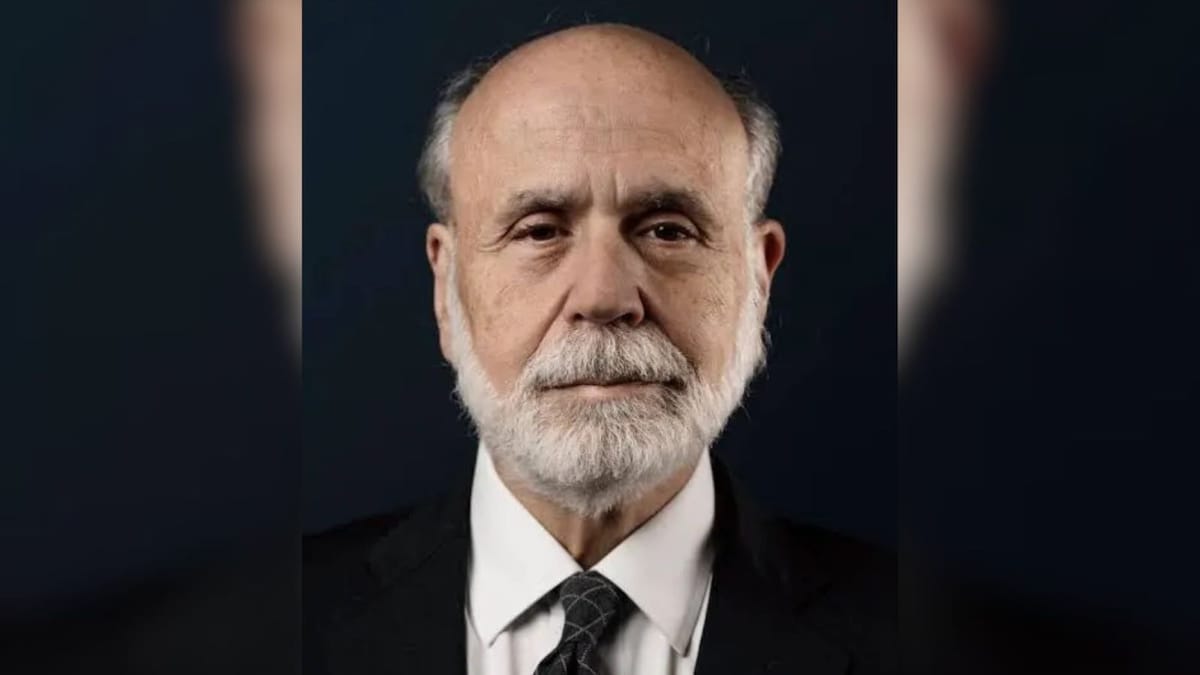
Who is Ben Bernanke, ex-Fed chair appointed to Anthropic's Long-Term Benefit Trust - CNBC TV18
Ben Bernanke becomes the fourth member of Anthropic's Long-Term Benefit Trust, joining Neil Buddy Shah, Richard Fontaine and Mariano-Florentino Cuéllar. Anthropic has appointed Ben Bernanke, the former chair of the Federal Reserve, to its Long-Term Benefit Trust (LTBT). The independent governance body oversees the company's mission of developing artificial intelligence responsibly for the long-term benefit of humanity. Bernanke became the fourth member of Anthropic's Long-Term Benefit Trust, joining Neil Buddy Shah, Richard Fontaine and Mariano-Florentino Cuéllar. The LTBT is responsible for appointing Anthropic's board members and guiding the company on major decisions involving AI and its societal implications. Who Is Ben Bernanke? Ben Bernanke is an American economist best known for serving as the Chair of the US Federal Reserve from 2006 to 2014. He led the central bank through the 2008 global financial crisis and the recovery that followed. Before joining the Federal Reserve, Bernanke spent more than two decades as an academic economist, primarily at Princeton University. While at Princeton, Bernanke headed the economics department and researched the Great Depression and the role banks play in financial crises. His work was recognised with the Nobel Prize in Economic Sciences in 2022. Following his tenure at the Federal Reserve, he joined the Brookings Institution as a Distinguished Fellow and has also held advisory roles at investment firms, including Citadel and PIMCO. Role at Anthropic As a member of Anthropic's Long-Term Benefit Trust, Bernanke will contribute to research on how AI is changing the economy. He will provide his expertise for Anthropic's economic research while also contributing to other areas of the company's work. Speaking on his appointment, Bernanke said AI holds enormous potential, but its impact will depend on the institutions built around it. "Anthropic has created a unique governance structure to try to ensure that the long-run benefits of AI for humanity far outweigh the risks. I am honored to have this opportunity, and I will try to contribute in any way I can to this critical mission," he added. About Anthropic's Long-Term Benefit Trust Anthropic, founded in 2021 by former OpenAI researchers and executives, a Public Benefit Corporation. The Long-Term Benefit Trust comprises independent trustees with expertise across a wide range of areas that spans economics, law, policy, national security and global health. "The Trustees are chosen for their expertise across a wide range of areas, and are independent of the company's management and investors: they hold no equity in Anthropic, don't share in its profits, and are compensated only for their time and service. New Trustees are selected by the existing ones, in consultation with the company," according to Anthropic.
Friday newspaper round-up: Nigel Farage, diesel prices, Kraken Technology
Chancellor Rachel Reeves is to announce a new City "skills compact" that will commit firms such as Barclays and Lloyds to retraining thousands of financial sector workers for the AI revolution. The financial services skills compact will be launched on Tuesday, during what is likely to be Reeves's final Mansion House speech to City bosses before Andy Burnham's expected takeover of No 10. The government-backed initiative will commit employers to improving workers' skills and helping them "keep pace" with significant technological changes that have prompted fears of mass redundancies. - Guardian Police are investigating donations worth £500,000 made to Reform UK by the mother of a convicted fraudster and ally of Nigel Farage. The investigation concerns two donations of £250,000 made by Fiona Cottrell, whose son George has often accompanied Farage to Reform events and media appearances. The May 2024 donations are under investigation over whether they were intended to conceal a donation by an impermissible donor. - Guardian Drivers are braced for higher diesel prices after Russia triggered a global supply crunch by halting exports. The wholesale price of diesel jumped by almost 14pc in the wake of the Kremlin's announcement on Wednesday, which threatens to drive up costs at the pump. Diesel prices in the UK are already up by 8p since the start of the month, pushing the average cost of a litre to 164.8p. - Telegraph The City regulator says it has slashed the time it takes to handle some cases from hours to a matter of minutes after bringing in artificial intelligence technology. The Financial Conduct Authority is turning to AI to boost the efficiency of its staff, like many of the tens of thousands of financial services businesses that it oversees. - The Times A British defence start-up whose uncrewed vessels support military and defence operations has secured unicorn status after raising $175 million from investors including the British Business Bank. Kraken Technology, based in Fareham, Hampshire, has been valued at $1 billion in an investment round led by Digital Transformation Capital Partners, a German investor, which also included backing from the Nato Innovation Fund and Rheinmetall, the German defence group. - The Times