News & Updates
The latest news and updates from companies in the WLTH portfolio.
SpaceX Was Just Flooded With Buy Reports Across Wall Street. Do Analysts Know Something Retail Investors Don't?
This week, a wave of equity research reports from sell-side analysts was released on Space Exploration Technologies (SPCX +2.38%). The big takeaway is that Wall Street is overwhelmingly bullish on SpaceX stock. With so many banks publishing their first formal reports on SpaceX and coming to the same optimistic outlook, it begs the question: Does Wall Street know something retail investors don't? Why were so many reports for SpaceX stock published on the same day? When a company completes its initial public offering (IPO) and its shares begin trading, a quiet period begins. This window typically lasts between 25 and 40 days after the newly public company begins trading. During the quiet period, the investment banks that underwrote the IPO are prohibited from issuing forward-looking statements, promotional material, or equity research analysis. The rule exists to prevent the same institutions that helped price and sell the IPO stock in question from immediately hyping the deal or leaking material information that could influence market sentiment. Analysts working for the lead underwriters must remain silent because any positive research they publish too close to the offering could be viewed as an extension of the marketing effort rather than independent analysis. Once the quiet period ends, these banks are free to initiate coverage. In the case of SpaceX, this is exactly what just happened: A cluster of reports appeared on the same day because the calendar restriction had been lifted. What does Wall Street think of SpaceX stock? The table below summarizes the ratings and stock price targets analysts recently issued for SpaceX. Data Source: Yahoo! Finance Among the firms in the table, all gave Buy or Buy-equivalent ratings on SpaceX stock, except one. Unsurprisingly, longtime Tesla supporter and former Wedbush analyst Dan Ives is bullish on SpaceX. The price targets primarily range between $190 and $300, with notable outliers at Raymond James and MoffettNathanson. SpaceX's bullish thesis converges on three interlocking growth drivers. First, Starlink is shifting from primarily consumer broadband toward enterprise and telecommunications customers. This could unlock higher-margin contracts with government agencies, airlines, maritime operators, and large corporations that require reliable global connectivity. Second, SpaceX is positioned to support the acceleration of AI infrastructure buildouts by delivering additional capacity to hyperscalers. So far, SpaceX has signed $82 billion in infrastructure deals with Anthropic, Google Cloud, and Reflection AI. Third, operational improvements in rocket reusability and launch cadence in the Starship program stand to dramatically lower costs to orbit. These efficiencies can help expand SpaceX's addressable market for both satellite deployment and crewed missions. Taken together, these variables paint a picture of a company transitioning from a high-burn, capital-intensive launch and satellite operator into a diversified technology enabler with multidecade tailwinds. Understanding the limits of analyst price targets Wall Street analysts tend to have meaningful access to the C-Suite at large companies. By contrast, retail investors usually have a tough time getting past the Investor Relations department. With this in mind, many Wall Street analysts have access to information that most investors do not. However, they are strictly prohibited from issuing reports based solely on that information. This is all to say that even if Wall Street does know certain things that most investors do not, the price targets above are still just opinions -- not guarantees. These price targets rest heavily on modeling assumptions about revenue growth, profit margins, and discount rates that can shift quickly. Blindly chasing the most optimistic targets or treating the consensus opinion as a certainty ignores the fact that the stock market tends to price in best-case scenarios before they actually materialize. Investors who rely solely on these reports risk overlooking valuation discipline, balance-sheet risk, and the possibility that even accurate long-term narratives can produce stomach-churning short-term drawdowns. While the end of the quiet period gives investors a clearer picture of professional sentiment around SpaceX stock, these views are just one data point among many.

Autonomous ship startup Kraken raises $175M at $1B valuation
Kraken Technology Group Ltd., a British defense startup that makes autonomous ships, has raised $175 million in funding. Private equity firm DTCP led the Series B deal. It was joined by the UK government's British Business Bank, the NATO Innovation Fund and more than a half dozen others. Kraken disclosed in its announcement of the round today that its valuation has increased to $1 billion. Kraken's most advanced vessel is a 36-feet-long ship called the K5 Kraken that operates without a crew. It has a top speed of 50 knots, which corresponds to about 57 miles per second. Kraken says that it can stay at sea for up to a month at a time and cover 1,000 nautical miles. Customers can pilot the K5 remotely or entrust navigation to an onboard autonomy system. The system makes steering decisions based on data collected by radar and sonar sensors built into the K5. Sonar technology, which uses soundwaves to map out the environment, enables ships to track underwater objects. Operators can extend the K5's capabilities by adding custom modules. For example, a customer looking to enhance the vessel's sensing capabilities could add a towed sonar array. That's a submerged cable equipped with sensors optimized to detect underwater activity. Kraken offers the K5 alongside two smaller ships that are designed for other missions. The K4 Manta is a 18-feet-long autonomous vessel that resembles a manta ray. According to Kraken, it can alternate between floating like a regular ship and diving at depths of more than 30 feet. That capability makes the vessel particularly useful for reconnaissance tasks. Like the larger K5, the K4 is customizable. It's capable of carrying up to 220 pounds of equipment per trip. Kraken says that customers can swap the ship's payload in a few minutes. Rounding out the company's product portfolio is a compact vessel called the K3 Scout that is light enough to be deployed from the air. It can cover up to 650 nautical miles per trip with a top speed of about 28 miles per hour. Kraken's funding milestone comes a few weeks after it inked a shipbuilding partnership with Anduril Industries Inc., a fellow defense technology startup. The companies plan to manufacture two autonomous ships in the US. The first is Kraken's existing K5 system while the other is an upcoming long-range vessel called the K7. The company stated today that it plans to announce more manufacturing partnerships in the near future. "This significant funding round will accelerate Kraken's global roll-out, enabling the deployment of hardened, reliable, mission-ready capabilities for NATO and its worldwide partners at an unprecedented scale in the maritime domain," said Kraken founder and Chief Executive Officer Mal Crease.

Beaten-down stock lets you buy SpaceX below market price
SpaceX (SPCX) is the most crowded new trade on Wall Street. It was priced at $135 in June, spiked above $225, then settled near $150. The banks that took SpaceX public were barred from publishing research on it until July 7. The moment that ban lifted, six of them initiated coverage, all with buy ratings. Then, Deutsche Bank's analyst team said something the others did not: You can buy the same rocket company for roughly 20% less than what the market is charging. Deutsche Bank calls EchoStar a discounted play on SpaceX stock The discounted company is EchoStar (SATS), the satellite and wireless firm behind DISH TV, Sling, and Boost Mobile. Analyst Bryan Kraft resumed coverage on July 7 with a buyrating and a $143 target, according to CNBC. More SpaceX Coverage: The gap opened after the IPO. In the month since SpaceX listed, EchoStar fell 23%, while SpaceX climbed 19%. As a result of this, EchoStar buyers now pay less for those SpaceX shares than SpaceX buyers do. As Kraft put it, SATS investors are "buying SPCX at a 20% discount." The note landed the same morning SpaceX joined the Nasdaq-100, which drew billions in passive buying. Sven Piper / Getty Images How EchoStar ended up holding $11 billion of SpaceX stock EchoStar did not buy into SpaceX. It sold something SpaceX wanted. SATS agreed to hand over its AWS-4 and H-block spectrum licenses, according to EchoStar's investor relations page. Payment arrived partly as roughly $11 billion of SpaceX Class A shares, valued then at $212 apiece, Investopedia reported. Two terms worth knowing * Spectrum licenses are government rights to transmit over specific radio frequencies. Starlink needs them to reach ordinary phones. * Class A shares are the ordinary, lower-voting stock. Musk holds supervoting Class B stock, so EchoStar gets economics without control. The discount math on EchoStar stock, step by step The stake's net asset value works out to $121.46 per EchoStar share, Intellectia reported. EchoStar also closed at $96.28 on July 8. That is about 79 cents on the dollar. Apply the same to SpaceX at $148.26, and an EchoStar buyer picks up the rocket company for nearly $118 a share. Deutsche Bank goes further, arguing the rest of EchoStar comes free. Two things complicate that. The $212 mark comes before the 5-for-1 split SpaceX ran in May, so it equals about $42 in today's shares. That means the stake has gained value rather than lost it, Yahoo Finance reported. Nothing is free, either, while a $24.6 billion debt sits on the books. These discounts usually exist for a reason, and EchoStar has more than one. Why EchoStar stock trades at a discount in the first place The discount is not a market error; it is a price tag on real damage. Three things went wrong in six weeks: * The DISH DBS pay-TV subsidiary filed forChapter 11 bankruptcyprotection on June 30. * Hamid Akhavanresigned on July 6 from his roles at EchoStar after board discussions about a change in strategic direction, Light Reading reported. Founder and CEO Charlie Ergen absorbed his duties at Hughes. * The SpaceX IPO itself hurt the stock, because investors who bought EchoStar for indirect exposure could buy the real thing. The company also warned in its first-quarter 10-Q that substantial doubt exists about its ability to continue as a going concern until the spectrum sales close. Lockups, taxes, and the catch nobody mentions A discount you cannot access is not a discount. SpaceX replaced the usual single 180-day lockup with a tiered schedule that frees shares in 7% increments between days 70 and 135, Morningstar explained. Early backers can also sell up to 20% of their holdings two trading days after the first post-IPO earnings report, Investing.com noted. Renaissance Capital called it among the most complicated ever written, Fortune reported. EchoStar has not said where its stake sits in that schedule, which is the biggest question here. What EchoStar investors should watch next Three things decide whether the thesis survives contact with reality. * EchoStar is expected to report second-quarter results on July 30. Any disclosure on lockup terms, or on whether management will hold or sell the stake, resolves most of the ambiguity. * SpaceX reports its first quarter as a public company shortly after, which triggers the first 20% unlock tranche for early backers. * Ergen's strategy. He took back operational control of Hughes for a reason, and has never been a passive holder. EchoStar is no substitute for owning SpaceX directly. It is a leveraged, restructuring satellite company holding a large stake in a rocket maker, and the discount pays you for that. Investors comfortable with that balance sheet get cheaper access to a stock Wall Street just blessed six times over. Everyone else should note that even Deutsche Bank's $143 target sits only 18% above the SpaceX value it says is already on the books. The Arena Media Brands, LLC THESTREET is a registered trademark of TheStreet, Inc. This story was originally published July 9, 2026 at 8:07 PM.
Beaten-down stock lets you buy SpaceX below market price
SpaceX (SPCX) is the most crowded new trade on Wall Street. It was priced at $135 in June, spiked above $225, then settled near $150. The banks that took SpaceX public were barred from publishing research on it until July 7. The moment that ban lifted, six of them initiated coverage, all with buy ratings. Then, Deutsche Bank's analyst team said something the others did not: You can buy the same rocket company for roughly 20% less than what the market is charging. Deutsche Bank calls EchoStar a discounted play on SpaceX stock The discounted company is EchoStar (SATS), the satellite and wireless firm behind DISH TV, Sling, and Boost Mobile. Analyst Bryan Kraft resumed coverage on July 7 with a buyrating and a $143 target, according to CNBC. More SpaceX Coverage: The gap opened after the IPO. In the month since SpaceX listed, EchoStar fell 23%, while SpaceX climbed 19%. As a result of this, EchoStar buyers now pay less for those SpaceX shares than SpaceX buyers do. As Kraft put it, SATS investors are "buying SPCX at a 20% discount." The note landed the same morning SpaceX joined the Nasdaq-100, which drew billions in passive buying. Sven Piper / Getty Images How EchoStar ended up holding $11 billion of SpaceX stock EchoStar did not buy into SpaceX. It sold something SpaceX wanted. SATS agreed to hand over its AWS-4 and H-block spectrum licenses, according to EchoStar's investor relations page. Payment arrived partly as roughly $11 billion of SpaceX Class A shares, valued then at $212 apiece, Investopedia reported. Two terms worth knowing * Spectrum licenses are government rights to transmit over specific radio frequencies. Starlink needs them to reach ordinary phones. * Class A shares are the ordinary, lower-voting stock. Musk holds supervoting Class B stock, so EchoStar gets economics without control. The discount math on EchoStar stock, step by step The stake's net asset value works out to $121.46 per EchoStar share, Intellectia reported. EchoStar also closed at $96.28 on July 8. That is about 79 cents on the dollar. Apply the same to SpaceX at $148.26, and an EchoStar buyer picks up the rocket company for nearly $118 a share. Deutsche Bank goes further, arguing the rest of EchoStar comes free. Two things complicate that. The $212 mark comes before the 5-for-1 split SpaceX ran in May, so it equals about $42 in today's shares. That means the stake has gained value rather than lost it, Yahoo Finance reported. Nothing is free, either, while a $24.6 billion debt sits on the books. These discounts usually exist for a reason, and EchoStar has more than one. Why EchoStar stock trades at a discount in the first place The discount is not a market error; it is a price tag on real damage. Three things went wrong in six weeks: * The DISH DBS pay-TV subsidiary filed forChapter 11 bankruptcyprotection on June 30. * Hamid Akhavanresigned on July 6 from his roles at EchoStar after board discussions about a change in strategic direction, Light Reading reported. Founder and CEO Charlie Ergen absorbed his duties at Hughes. * The SpaceX IPO itself hurt the stock, because investors who bought EchoStar for indirect exposure could buy the real thing. The company also warned in its first-quarter 10-Q that substantial doubt exists about its ability to continue as a going concern until the spectrum sales close. Lockups, taxes, and the catch nobody mentions A discount you cannot access is not a discount. SpaceX replaced the usual single 180-day lockup with a tiered schedule that frees shares in 7% increments between days 70 and 135, Morningstar explained. Early backers can also sell up to 20% of their holdings two trading days after the first post-IPO earnings report, Investing.com noted. Renaissance Capital called it among the most complicated ever written, Fortune reported. EchoStar has not said where its stake sits in that schedule, which is the biggest question here. What EchoStar investors should watch next Three things decide whether the thesis survives contact with reality. * EchoStar is expected to report second-quarter results on July 30. Any disclosure on lockup terms, or on whether management will hold or sell the stake, resolves most of the ambiguity. * SpaceX reports its first quarter as a public company shortly after, which triggers the first 20% unlock tranche for early backers. * Ergen's strategy. He took back operational control of Hughes for a reason, and has never been a passive holder. EchoStar is no substitute for owning SpaceX directly. It is a leveraged, restructuring satellite company holding a large stake in a rocket maker, and the discount pays you for that. Investors comfortable with that balance sheet get cheaper access to a stock Wall Street just blessed six times over. Everyone else should note that even Deutsche Bank's $143 target sits only 18% above the SpaceX value it says is already on the books. The Arena Media Brands, LLC THESTREET is a registered trademark of TheStreet, Inc. This story was originally published July 9, 2026 at 8:07 PM.
Beaten-down stock lets you buy SpaceX below market price
SpaceX (SPCX) is the most crowded new trade on Wall Street. It was priced at $135 in June, spiked above $225, then settled near $150. The banks that took SpaceX public were barred from publishing research on it until July 7. The moment that ban lifted, six of them initiated coverage, all with buy ratings. Then, Deutsche Bank's analyst team said something the others did not: You can buy the same rocket company for roughly 20% less than what the market is charging. Deutsche Bank calls EchoStar a discounted play on SpaceX stock The discounted company is EchoStar (SATS), the satellite and wireless firm behind DISH TV, Sling, and Boost Mobile. Analyst Bryan Kraft resumed coverage on July 7 with a buyrating and a $143 target, according to CNBC. More SpaceX Coverage: The gap opened after the IPO. In the month since SpaceX listed, EchoStar fell 23%, while SpaceX climbed 19%. As a result of this, EchoStar buyers now pay less for those SpaceX shares than SpaceX buyers do. As Kraft put it, SATS investors are "buying SPCX at a 20% discount." The note landed the same morning SpaceX joined the Nasdaq-100, which drew billions in passive buying. Sven Piper / Getty Images How EchoStar ended up holding $11 billion of SpaceX stock EchoStar did not buy into SpaceX. It sold something SpaceX wanted. SATS agreed to hand over its AWS-4 and H-block spectrum licenses, according to EchoStar's investor relations page. Payment arrived partly as roughly $11 billion of SpaceX Class A shares, valued then at $212 apiece, Investopedia reported. Two terms worth knowing * Spectrum licenses are government rights to transmit over specific radio frequencies. Starlink needs them to reach ordinary phones. * Class A shares are the ordinary, lower-voting stock. Musk holds supervoting Class B stock, so EchoStar gets economics without control. The discount math on EchoStar stock, step by step The stake's net asset value works out to $121.46 per EchoStar share, Intellectia reported. EchoStar also closed at $96.28 on July 8. That is about 79 cents on the dollar. Apply the same to SpaceX at $148.26, and an EchoStar buyer picks up the rocket company for nearly $118 a share. Deutsche Bank goes further, arguing the rest of EchoStar comes free. Two things complicate that. The $212 mark comes before the 5-for-1 split SpaceX ran in May, so it equals about $42 in today's shares. That means the stake has gained value rather than lost it, Yahoo Finance reported. Nothing is free, either, while a $24.6 billion debt sits on the books. These discounts usually exist for a reason, and EchoStar has more than one. Why EchoStar stock trades at a discount in the first place The discount is not a market error; it is a price tag on real damage. Three things went wrong in six weeks: * The DISH DBS pay-TV subsidiary filed forChapter 11 bankruptcyprotection on June 30. * Hamid Akhavanresigned on July 6 from his roles at EchoStar after board discussions about a change in strategic direction, Light Reading reported. Founder and CEO Charlie Ergen absorbed his duties at Hughes. * The SpaceX IPO itself hurt the stock, because investors who bought EchoStar for indirect exposure could buy the real thing. The company also warned in its first-quarter 10-Q that substantial doubt exists about its ability to continue as a going concern until the spectrum sales close. Lockups, taxes, and the catch nobody mentions A discount you cannot access is not a discount. SpaceX replaced the usual single 180-day lockup with a tiered schedule that frees shares in 7% increments between days 70 and 135, Morningstar explained. Early backers can also sell up to 20% of their holdings two trading days after the first post-IPO earnings report, Investing.com noted. Renaissance Capital called it among the most complicated ever written, Fortune reported. EchoStar has not said where its stake sits in that schedule, which is the biggest question here. What EchoStar investors should watch next Three things decide whether the thesis survives contact with reality. * EchoStar is expected to report second-quarter results on July 30. Any disclosure on lockup terms, or on whether management will hold or sell the stake, resolves most of the ambiguity. * SpaceX reports its first quarter as a public company shortly after, which triggers the first 20% unlock tranche for early backers. * Ergen's strategy. He took back operational control of Hughes for a reason, and has never been a passive holder. EchoStar is no substitute for owning SpaceX directly. It is a leveraged, restructuring satellite company holding a large stake in a rocket maker, and the discount pays you for that. Investors comfortable with that balance sheet get cheaper access to a stock Wall Street just blessed six times over. Everyone else should note that even Deutsche Bank's $143 target sits only 18% above the SpaceX value it says is already on the books. The Arena Media Brands, LLC THESTREET is a registered trademark of TheStreet, Inc. This story was originally published July 9, 2026 at 7:07 PM.
Beaten-down stock lets you buy SpaceX below market price
SpaceX (SPCX) is the most crowded new trade on Wall Street. It was priced at $135 in June, spiked above $225, then settled near $150. The banks that took SpaceX public were barred from publishing research on it until July 7. The moment that ban lifted, six of them initiated coverage, all with buy ratings. Then, Deutsche Bank's analyst team said something the others did not: You can buy the same rocket company for roughly 20% less than what the market is charging. Deutsche Bank calls EchoStar a discounted play on SpaceX stock The discounted company is EchoStar (SATS), the satellite and wireless firm behind DISH TV, Sling, and Boost Mobile. Analyst Bryan Kraft resumed coverage on July 7 with a buyrating and a $143 target, according to CNBC. More SpaceX Coverage: The gap opened after the IPO. In the month since SpaceX listed, EchoStar fell 23%, while SpaceX climbed 19%. As a result of this, EchoStar buyers now pay less for those SpaceX shares than SpaceX buyers do. As Kraft put it, SATS investors are "buying SPCX at a 20% discount." The note landed the same morning SpaceX joined the Nasdaq-100, which drew billions in passive buying. Sven Piper / Getty Images How EchoStar ended up holding $11 billion of SpaceX stock EchoStar did not buy into SpaceX. It sold something SpaceX wanted. SATS agreed to hand over its AWS-4 and H-block spectrum licenses, according to EchoStar's investor relations page. Payment arrived partly as roughly $11 billion of SpaceX Class A shares, valued then at $212 apiece, Investopedia reported. Two terms worth knowing * Spectrum licenses are government rights to transmit over specific radio frequencies. Starlink needs them to reach ordinary phones. * Class A shares are the ordinary, lower-voting stock. Musk holds supervoting Class B stock, so EchoStar gets economics without control. The discount math on EchoStar stock, step by step The stake's net asset value works out to $121.46 per EchoStar share, Intellectia reported. EchoStar also closed at $96.28 on July 8. That is about 79 cents on the dollar. Apply the same to SpaceX at $148.26, and an EchoStar buyer picks up the rocket company for nearly $118 a share. Deutsche Bank goes further, arguing the rest of EchoStar comes free. Two things complicate that. The $212 mark comes before the 5-for-1 split SpaceX ran in May, so it equals about $42 in today's shares. That means the stake has gained value rather than lost it, Yahoo Finance reported. Nothing is free, either, while a $24.6 billion debt sits on the books. These discounts usually exist for a reason, and EchoStar has more than one. Why EchoStar stock trades at a discount in the first place The discount is not a market error; it is a price tag on real damage. Three things went wrong in six weeks: * The DISH DBS pay-TV subsidiary filed forChapter 11 bankruptcyprotection on June 30. * Hamid Akhavanresigned on July 6 from his roles at EchoStar after board discussions about a change in strategic direction, Light Reading reported. Founder and CEO Charlie Ergen absorbed his duties at Hughes. * The SpaceX IPO itself hurt the stock, because investors who bought EchoStar for indirect exposure could buy the real thing. The company also warned in its first-quarter 10-Q that substantial doubt exists about its ability to continue as a going concern until the spectrum sales close. Lockups, taxes, and the catch nobody mentions A discount you cannot access is not a discount. SpaceX replaced the usual single 180-day lockup with a tiered schedule that frees shares in 7% increments between days 70 and 135, Morningstar explained. Early backers can also sell up to 20% of their holdings two trading days after the first post-IPO earnings report, Investing.com noted. Renaissance Capital called it among the most complicated ever written, Fortune reported. EchoStar has not said where its stake sits in that schedule, which is the biggest question here. What EchoStar investors should watch next Three things decide whether the thesis survives contact with reality. * EchoStar is expected to report second-quarter results on July 30. Any disclosure on lockup terms, or on whether management will hold or sell the stake, resolves most of the ambiguity. * SpaceX reports its first quarter as a public company shortly after, which triggers the first 20% unlock tranche for early backers. * Ergen's strategy. He took back operational control of Hughes for a reason, and has never been a passive holder. EchoStar is no substitute for owning SpaceX directly. It is a leveraged, restructuring satellite company holding a large stake in a rocket maker, and the discount pays you for that. Investors comfortable with that balance sheet get cheaper access to a stock Wall Street just blessed six times over. Everyone else should note that even Deutsche Bank's $143 target sits only 18% above the SpaceX value it says is already on the books. The Arena Media Brands, LLC THESTREET is a registered trademark of TheStreet, Inc. This story was originally published July 9, 2026 at 5:07 PM.
Beaten-down stock lets you buy SpaceX below market price
SpaceX (SPCX) is the most crowded new trade on Wall Street. It was priced at $135 in June, spiked above $225, then settled near $150. The banks that took SpaceX public were barred from publishing research on it until July 7. The moment that ban lifted, six of them initiated coverage, all with buy ratings. Then, Deutsche Bank's analyst team said something the others did not: You can buy the same rocket company for roughly 20% less than what the market is charging. Deutsche Bank calls EchoStar a discounted play on SpaceX stock The discounted company is EchoStar (SATS), the satellite and wireless firm behind DISH TV, Sling, and Boost Mobile. Analyst Bryan Kraft resumed coverage on July 7 with a buyrating and a $143 target, according to CNBC. More SpaceX Coverage: The gap opened after the IPO. In the month since SpaceX listed, EchoStar fell 23%, while SpaceX climbed 19%. As a result of this, EchoStar buyers now pay less for those SpaceX shares than SpaceX buyers do. As Kraft put it, SATS investors are "buying SPCX at a 20% discount." The note landed the same morning SpaceX joined the Nasdaq-100, which drew billions in passive buying. Sven Piper / Getty Images How EchoStar ended up holding $11 billion of SpaceX stock EchoStar did not buy into SpaceX. It sold something SpaceX wanted. SATS agreed to hand over its AWS-4 and H-block spectrum licenses, according to EchoStar's investor relations page. Payment arrived partly as roughly $11 billion of SpaceX Class A shares, valued then at $212 apiece, Investopedia reported. Two terms worth knowing * Spectrum licenses are government rights to transmit over specific radio frequencies. Starlink needs them to reach ordinary phones. * Class A shares are the ordinary, lower-voting stock. Musk holds supervoting Class B stock, so EchoStar gets economics without control. The discount math on EchoStar stock, step by step The stake's net asset value works out to $121.46 per EchoStar share, Intellectia reported. EchoStar also closed at $96.28 on July 8. That is about 79 cents on the dollar. Apply the same to SpaceX at $148.26, and an EchoStar buyer picks up the rocket company for nearly $118 a share. Deutsche Bank goes further, arguing the rest of EchoStar comes free. Two things complicate that. The $212 mark comes before the 5-for-1 split SpaceX ran in May, so it equals about $42 in today's shares. That means the stake has gained value rather than lost it, Yahoo Finance reported. Nothing is free, either, while a $24.6 billion debt sits on the books. These discounts usually exist for a reason, and EchoStar has more than one. Why EchoStar stock trades at a discount in the first place The discount is not a market error; it is a price tag on real damage. Three things went wrong in six weeks: * The DISH DBS pay-TV subsidiary filed forChapter 11 bankruptcyprotection on June 30. * Hamid Akhavanresigned on July 6 from his roles at EchoStar after board discussions about a change in strategic direction, Light Reading reported. Founder and CEO Charlie Ergen absorbed his duties at Hughes. * The SpaceX IPO itself hurt the stock, because investors who bought EchoStar for indirect exposure could buy the real thing. The company also warned in its first-quarter 10-Q that substantial doubt exists about its ability to continue as a going concern until the spectrum sales close. Lockups, taxes, and the catch nobody mentions A discount you cannot access is not a discount. SpaceX replaced the usual single 180-day lockup with a tiered schedule that frees shares in 7% increments between days 70 and 135, Morningstar explained. Early backers can also sell up to 20% of their holdings two trading days after the first post-IPO earnings report, Investing.com noted. Renaissance Capital called it among the most complicated ever written, Fortune reported. EchoStar has not said where its stake sits in that schedule, which is the biggest question here. What EchoStar investors should watch next Three things decide whether the thesis survives contact with reality. * EchoStar is expected to report second-quarter results on July 30. Any disclosure on lockup terms, or on whether management will hold or sell the stake, resolves most of the ambiguity. * SpaceX reports its first quarter as a public company shortly after, which triggers the first 20% unlock tranche for early backers. * Ergen's strategy. He took back operational control of Hughes for a reason, and has never been a passive holder. EchoStar is no substitute for owning SpaceX directly. It is a leveraged, restructuring satellite company holding a large stake in a rocket maker, and the discount pays you for that. Investors comfortable with that balance sheet get cheaper access to a stock Wall Street just blessed six times over. Everyone else should note that even Deutsche Bank's $143 target sits only 18% above the SpaceX value it says is already on the books. The Arena Media Brands, LLC THESTREET is a registered trademark of TheStreet, Inc. This story was originally published July 9, 2026 at 8:07 PM.
Beaten-down stock lets you buy SpaceX below market price
SpaceX (SPCX) is the most crowded new trade on Wall Street. It was priced at $135 in June, spiked above $225, then settled near $150. The banks that took SpaceX public were barred from publishing research on it until July 7. The moment that ban lifted, six of them initiated coverage, all with buy ratings. Then, Deutsche Bank's analyst team said something the others did not: You can buy the same rocket company for roughly 20% less than what the market is charging. Deutsche Bank calls EchoStar a discounted play on SpaceX stock The discounted company is EchoStar (SATS), the satellite and wireless firm behind DISH TV, Sling, and Boost Mobile. Analyst Bryan Kraft resumed coverage on July 7 with a buyrating and a $143 target, according to CNBC. More SpaceX Coverage: The gap opened after the IPO. In the month since SpaceX listed, EchoStar fell 23%, while SpaceX climbed 19%. As a result of this, EchoStar buyers now pay less for those SpaceX shares than SpaceX buyers do. As Kraft put it, SATS investors are "buying SPCX at a 20% discount." The note landed the same morning SpaceX joined the Nasdaq-100, which drew billions in passive buying. Sven Piper / Getty Images How EchoStar ended up holding $11 billion of SpaceX stock EchoStar did not buy into SpaceX. It sold something SpaceX wanted. SATS agreed to hand over its AWS-4 and H-block spectrum licenses, according to EchoStar's investor relations page. Payment arrived partly as roughly $11 billion of SpaceX Class A shares, valued then at $212 apiece, Investopedia reported. Two terms worth knowing * Spectrum licenses are government rights to transmit over specific radio frequencies. Starlink needs them to reach ordinary phones. * Class A shares are the ordinary, lower-voting stock. Musk holds supervoting Class B stock, so EchoStar gets economics without control. The discount math on EchoStar stock, step by step The stake's net asset value works out to $121.46 per EchoStar share, Intellectia reported. EchoStar also closed at $96.28 on July 8. That is about 79 cents on the dollar. Apply the same to SpaceX at $148.26, and an EchoStar buyer picks up the rocket company for nearly $118 a share. Deutsche Bank goes further, arguing the rest of EchoStar comes free. Two things complicate that. The $212 mark comes before the 5-for-1 split SpaceX ran in May, so it equals about $42 in today's shares. That means the stake has gained value rather than lost it, Yahoo Finance reported. Nothing is free, either, while a $24.6 billion debt sits on the books. These discounts usually exist for a reason, and EchoStar has more than one. Why EchoStar stock trades at a discount in the first place The discount is not a market error; it is a price tag on real damage. Three things went wrong in six weeks: * The DISH DBS pay-TV subsidiary filed forChapter 11 bankruptcyprotection on June 30. * Hamid Akhavanresigned on July 6 from his roles at EchoStar after board discussions about a change in strategic direction, Light Reading reported. Founder and CEO Charlie Ergen absorbed his duties at Hughes. * The SpaceX IPO itself hurt the stock, because investors who bought EchoStar for indirect exposure could buy the real thing. The company also warned in its first-quarter 10-Q that substantial doubt exists about its ability to continue as a going concern until the spectrum sales close. Lockups, taxes, and the catch nobody mentions A discount you cannot access is not a discount. SpaceX replaced the usual single 180-day lockup with a tiered schedule that frees shares in 7% increments between days 70 and 135, Morningstar explained. Early backers can also sell up to 20% of their holdings two trading days after the first post-IPO earnings report, Investing.com noted. Renaissance Capital called it among the most complicated ever written, Fortune reported. EchoStar has not said where its stake sits in that schedule, which is the biggest question here. What EchoStar investors should watch next Three things decide whether the thesis survives contact with reality. * EchoStar is expected to report second-quarter results on July 30. Any disclosure on lockup terms, or on whether management will hold or sell the stake, resolves most of the ambiguity. * SpaceX reports its first quarter as a public company shortly after, which triggers the first 20% unlock tranche for early backers. * Ergen's strategy. He took back operational control of Hughes for a reason, and has never been a passive holder. EchoStar is no substitute for owning SpaceX directly. It is a leveraged, restructuring satellite company holding a large stake in a rocket maker, and the discount pays you for that. Investors comfortable with that balance sheet get cheaper access to a stock Wall Street just blessed six times over. Everyone else should note that even Deutsche Bank's $143 target sits only 18% above the SpaceX value it says is already on the books. The Arena Media Brands, LLC THESTREET is a registered trademark of TheStreet, Inc. This story was originally published July 9, 2026 at 7:07 PM.
Beaten-down stock lets you buy SpaceX below market price
SpaceX (SPCX) is the most crowded new trade on Wall Street. It was priced at $135 in June, spiked above $225, then settled near $150. The banks that took SpaceX public were barred from publishing research on it until July 7. The moment that ban lifted, six of them initiated coverage, all with buy ratings. Then, Deutsche Bank's analyst team said something the others did not: You can buy the same rocket company for roughly 20% less than what the market is charging. Deutsche Bank calls EchoStar a discounted play on SpaceX stock The discounted company is EchoStar (SATS), the satellite and wireless firm behind DISH TV, Sling, and Boost Mobile. Analyst Bryan Kraft resumed coverage on July 7 with a buyrating and a $143 target, according to CNBC. More SpaceX Coverage: The gap opened after the IPO. In the month since SpaceX listed, EchoStar fell 23%, while SpaceX climbed 19%. As a result of this, EchoStar buyers now pay less for those SpaceX shares than SpaceX buyers do. As Kraft put it, SATS investors are "buying SPCX at a 20% discount." The note landed the same morning SpaceX joined the Nasdaq-100, which drew billions in passive buying. Sven Piper / Getty Images How EchoStar ended up holding $11 billion of SpaceX stock EchoStar did not buy into SpaceX. It sold something SpaceX wanted. SATS agreed to hand over its AWS-4 and H-block spectrum licenses, according to EchoStar's investor relations page. Payment arrived partly as roughly $11 billion of SpaceX Class A shares, valued then at $212 apiece, Investopedia reported. Two terms worth knowing * Spectrum licenses are government rights to transmit over specific radio frequencies. Starlink needs them to reach ordinary phones. * Class A shares are the ordinary, lower-voting stock. Musk holds supervoting Class B stock, so EchoStar gets economics without control. The discount math on EchoStar stock, step by step The stake's net asset value works out to $121.46 per EchoStar share, Intellectia reported. EchoStar also closed at $96.28 on July 8. That is about 79 cents on the dollar. Apply the same to SpaceX at $148.26, and an EchoStar buyer picks up the rocket company for nearly $118 a share. Deutsche Bank goes further, arguing the rest of EchoStar comes free. Two things complicate that. The $212 mark comes before the 5-for-1 split SpaceX ran in May, so it equals about $42 in today's shares. That means the stake has gained value rather than lost it, Yahoo Finance reported. Nothing is free, either, while a $24.6 billion debt sits on the books. These discounts usually exist for a reason, and EchoStar has more than one. Why EchoStar stock trades at a discount in the first place The discount is not a market error; it is a price tag on real damage. Three things went wrong in six weeks: * The DISH DBS pay-TV subsidiary filed forChapter 11 bankruptcyprotection on June 30. * Hamid Akhavanresigned on July 6 from his roles at EchoStar after board discussions about a change in strategic direction, Light Reading reported. Founder and CEO Charlie Ergen absorbed his duties at Hughes. * The SpaceX IPO itself hurt the stock, because investors who bought EchoStar for indirect exposure could buy the real thing. The company also warned in its first-quarter 10-Q that substantial doubt exists about its ability to continue as a going concern until the spectrum sales close. Lockups, taxes, and the catch nobody mentions A discount you cannot access is not a discount. SpaceX replaced the usual single 180-day lockup with a tiered schedule that frees shares in 7% increments between days 70 and 135, Morningstar explained. Early backers can also sell up to 20% of their holdings two trading days after the first post-IPO earnings report, Investing.com noted. Renaissance Capital called it among the most complicated ever written, Fortune reported. EchoStar has not said where its stake sits in that schedule, which is the biggest question here. What EchoStar investors should watch next Three things decide whether the thesis survives contact with reality. * EchoStar is expected to report second-quarter results on July 30. Any disclosure on lockup terms, or on whether management will hold or sell the stake, resolves most of the ambiguity. * SpaceX reports its first quarter as a public company shortly after, which triggers the first 20% unlock tranche for early backers. * Ergen's strategy. He took back operational control of Hughes for a reason, and has never been a passive holder. EchoStar is no substitute for owning SpaceX directly. It is a leveraged, restructuring satellite company holding a large stake in a rocket maker, and the discount pays you for that. Investors comfortable with that balance sheet get cheaper access to a stock Wall Street just blessed six times over. Everyone else should note that even Deutsche Bank's $143 target sits only 18% above the SpaceX value it says is already on the books. The Arena Media Brands, LLC THESTREET is a registered trademark of TheStreet, Inc. This story was originally published July 9, 2026 at 8:07 PM.
Beaten-down stock lets you buy SpaceX below market price
SpaceX (SPCX) is the most crowded new trade on Wall Street. It was priced at $135 in June, spiked above $225, then settled near $150. The banks that took SpaceX public were barred from publishing research on it until July 7. The moment that ban lifted, six of them initiated coverage, all with buy ratings. Then, Deutsche Bank's analyst team said something the others did not: You can buy the same rocket company for roughly 20% less than what the market is charging. Deutsche Bank calls EchoStar a discounted play on SpaceX stock The discounted company is EchoStar (SATS), the satellite and wireless firm behind DISH TV, Sling, and Boost Mobile. Analyst Bryan Kraft resumed coverage on July 7 with a buyrating and a $143 target, according to CNBC. More SpaceX Coverage: The gap opened after the IPO. In the month since SpaceX listed, EchoStar fell 23%, while SpaceX climbed 19%. As a result of this, EchoStar buyers now pay less for those SpaceX shares than SpaceX buyers do. As Kraft put it, SATS investors are "buying SPCX at a 20% discount." The note landed the same morning SpaceX joined the Nasdaq-100, which drew billions in passive buying. Sven Piper / Getty Images How EchoStar ended up holding $11 billion of SpaceX stock EchoStar did not buy into SpaceX. It sold something SpaceX wanted. SATS agreed to hand over its AWS-4 and H-block spectrum licenses, according to EchoStar's investor relations page. Payment arrived partly as roughly $11 billion of SpaceX Class A shares, valued then at $212 apiece, Investopedia reported. Two terms worth knowing * Spectrum licenses are government rights to transmit over specific radio frequencies. Starlink needs them to reach ordinary phones. * Class A shares are the ordinary, lower-voting stock. Musk holds supervoting Class B stock, so EchoStar gets economics without control. The discount math on EchoStar stock, step by step The stake's net asset value works out to $121.46 per EchoStar share, Intellectia reported. EchoStar also closed at $96.28 on July 8. That is about 79 cents on the dollar. Apply the same to SpaceX at $148.26, and an EchoStar buyer picks up the rocket company for nearly $118 a share. Deutsche Bank goes further, arguing the rest of EchoStar comes free. Two things complicate that. The $212 mark comes before the 5-for-1 split SpaceX ran in May, so it equals about $42 in today's shares. That means the stake has gained value rather than lost it, Yahoo Finance reported. Nothing is free, either, while a $24.6 billion debt sits on the books. These discounts usually exist for a reason, and EchoStar has more than one. Why EchoStar stock trades at a discount in the first place The discount is not a market error; it is a price tag on real damage. Three things went wrong in six weeks: * The DISH DBS pay-TV subsidiary filed forChapter 11 bankruptcyprotection on June 30. * Hamid Akhavanresigned on July 6 from his roles at EchoStar after board discussions about a change in strategic direction, Light Reading reported. Founder and CEO Charlie Ergen absorbed his duties at Hughes. * The SpaceX IPO itself hurt the stock, because investors who bought EchoStar for indirect exposure could buy the real thing. The company also warned in its first-quarter 10-Q that substantial doubt exists about its ability to continue as a going concern until the spectrum sales close. Lockups, taxes, and the catch nobody mentions A discount you cannot access is not a discount. SpaceX replaced the usual single 180-day lockup with a tiered schedule that frees shares in 7% increments between days 70 and 135, Morningstar explained. Early backers can also sell up to 20% of their holdings two trading days after the first post-IPO earnings report, Investing.com noted. Renaissance Capital called it among the most complicated ever written, Fortune reported. EchoStar has not said where its stake sits in that schedule, which is the biggest question here. What EchoStar investors should watch next Three things decide whether the thesis survives contact with reality. * EchoStar is expected to report second-quarter results on July 30. Any disclosure on lockup terms, or on whether management will hold or sell the stake, resolves most of the ambiguity. * SpaceX reports its first quarter as a public company shortly after, which triggers the first 20% unlock tranche for early backers. * Ergen's strategy. He took back operational control of Hughes for a reason, and has never been a passive holder. EchoStar is no substitute for owning SpaceX directly. It is a leveraged, restructuring satellite company holding a large stake in a rocket maker, and the discount pays you for that. Investors comfortable with that balance sheet get cheaper access to a stock Wall Street just blessed six times over. Everyone else should note that even Deutsche Bank's $143 target sits only 18% above the SpaceX value it says is already on the books. The Arena Media Brands, LLC THESTREET is a registered trademark of TheStreet, Inc. This story was originally published July 9, 2026 at 7:07 PM.
Beaten-down stock lets you buy SpaceX below market price
SpaceX (SPCX) is the most crowded new trade on Wall Street. It was priced at $135 in June, spiked above $225, then settled near $150. The banks that took SpaceX public were barred from publishing research on it until July 7. The moment that ban lifted, six of them initiated coverage, all with buy ratings. Then, Deutsche Bank's analyst team said something the others did not: You can buy the same rocket company for roughly 20% less than what the market is charging. Deutsche Bank calls EchoStar a discounted play on SpaceX stock The discounted company is EchoStar (SATS), the satellite and wireless firm behind DISH TV, Sling, and Boost Mobile. Analyst Bryan Kraft resumed coverage on July 7 with a buyrating and a $143 target, according to CNBC. More SpaceX Coverage: The gap opened after the IPO. In the month since SpaceX listed, EchoStar fell 23%, while SpaceX climbed 19%. As a result of this, EchoStar buyers now pay less for those SpaceX shares than SpaceX buyers do. As Kraft put it, SATS investors are "buying SPCX at a 20% discount." The note landed the same morning SpaceX joined the Nasdaq-100, which drew billions in passive buying. Sven Piper / Getty Images How EchoStar ended up holding $11 billion of SpaceX stock EchoStar did not buy into SpaceX. It sold something SpaceX wanted. SATS agreed to hand over its AWS-4 and H-block spectrum licenses, according to EchoStar's investor relations page. Payment arrived partly as roughly $11 billion of SpaceX Class A shares, valued then at $212 apiece, Investopedia reported. Two terms worth knowing * Spectrum licenses are government rights to transmit over specific radio frequencies. Starlink needs them to reach ordinary phones. * Class A shares are the ordinary, lower-voting stock. Musk holds supervoting Class B stock, so EchoStar gets economics without control. The discount math on EchoStar stock, step by step The stake's net asset value works out to $121.46 per EchoStar share, Intellectia reported. EchoStar also closed at $96.28 on July 8. That is about 79 cents on the dollar. Apply the same to SpaceX at $148.26, and an EchoStar buyer picks up the rocket company for nearly $118 a share. Deutsche Bank goes further, arguing the rest of EchoStar comes free. Two things complicate that. The $212 mark comes before the 5-for-1 split SpaceX ran in May, so it equals about $42 in today's shares. That means the stake has gained value rather than lost it, Yahoo Finance reported. Nothing is free, either, while a $24.6 billion debt sits on the books. These discounts usually exist for a reason, and EchoStar has more than one. Why EchoStar stock trades at a discount in the first place The discount is not a market error; it is a price tag on real damage. Three things went wrong in six weeks: * The DISH DBS pay-TV subsidiary filed forChapter 11 bankruptcyprotection on June 30. * Hamid Akhavanresigned on July 6 from his roles at EchoStar after board discussions about a change in strategic direction, Light Reading reported. Founder and CEO Charlie Ergen absorbed his duties at Hughes. * The SpaceX IPO itself hurt the stock, because investors who bought EchoStar for indirect exposure could buy the real thing. The company also warned in its first-quarter 10-Q that substantial doubt exists about its ability to continue as a going concern until the spectrum sales close. Lockups, taxes, and the catch nobody mentions A discount you cannot access is not a discount. SpaceX replaced the usual single 180-day lockup with a tiered schedule that frees shares in 7% increments between days 70 and 135, Morningstar explained. Early backers can also sell up to 20% of their holdings two trading days after the first post-IPO earnings report, Investing.com noted. Renaissance Capital called it among the most complicated ever written, Fortune reported. EchoStar has not said where its stake sits in that schedule, which is the biggest question here. What EchoStar investors should watch next Three things decide whether the thesis survives contact with reality. * EchoStar is expected to report second-quarter results on July 30. Any disclosure on lockup terms, or on whether management will hold or sell the stake, resolves most of the ambiguity. * SpaceX reports its first quarter as a public company shortly after, which triggers the first 20% unlock tranche for early backers. * Ergen's strategy. He took back operational control of Hughes for a reason, and has never been a passive holder. EchoStar is no substitute for owning SpaceX directly. It is a leveraged, restructuring satellite company holding a large stake in a rocket maker, and the discount pays you for that. Investors comfortable with that balance sheet get cheaper access to a stock Wall Street just blessed six times over. Everyone else should note that even Deutsche Bank's $143 target sits only 18% above the SpaceX value it says is already on the books. The Arena Media Brands, LLC THESTREET is a registered trademark of TheStreet, Inc. This story was originally published July 9, 2026 at 8:07 PM.
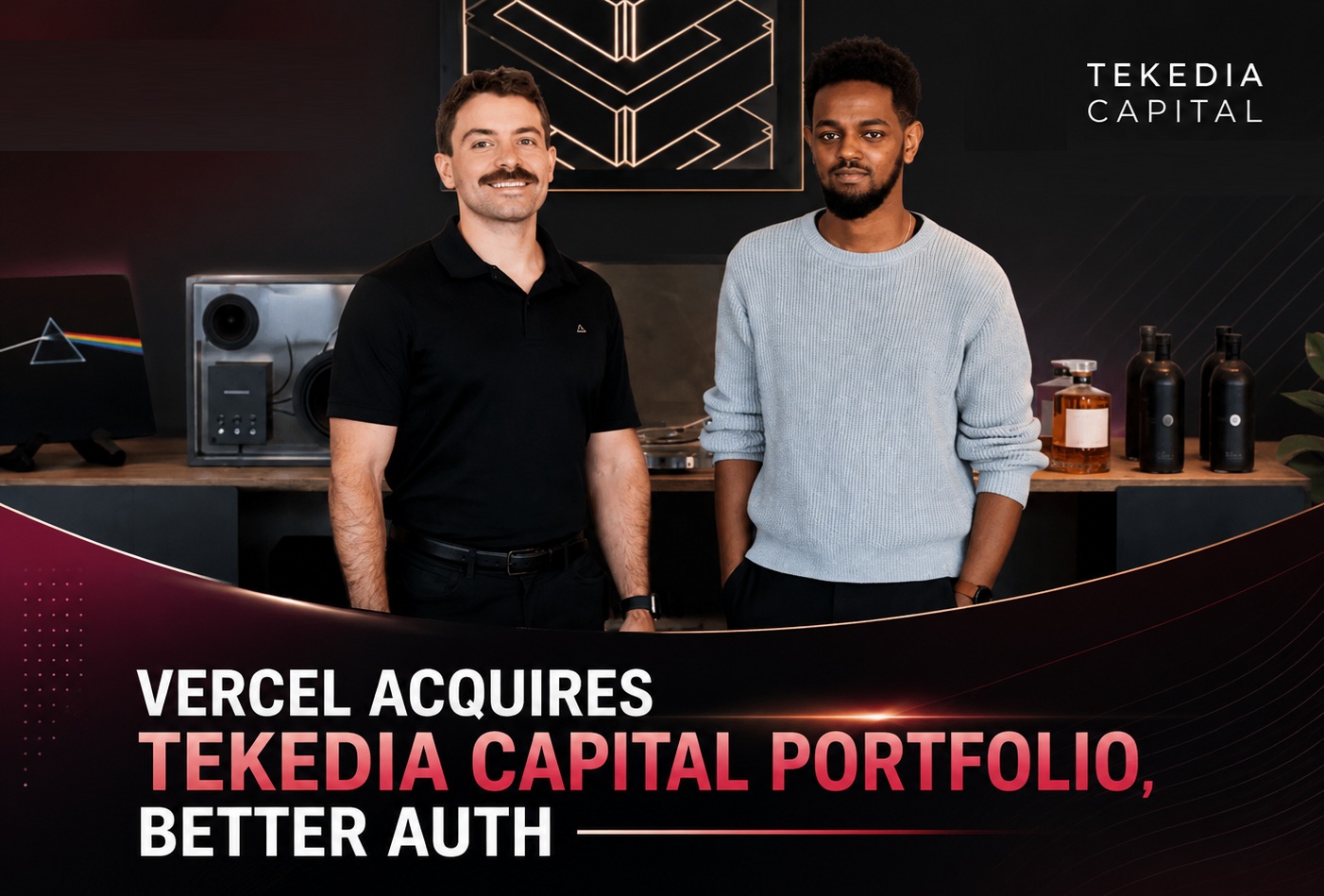
Vercel Acquires Tekedia Capital Portfolio, Better Auth
Good People, it is with great excitement that I announce the acquisition of one of our portfolio companies, Better Auth, by the industry-leading decacorn, Vercel. Founded by a self-taught tech prodigy from Ethiopia, Better Auth has ascended to become a preeminent force in open-source authentication. Tekedia Capital congratulates the Better Auth team and looks forward to Vercel's stewardship of this innovative platform. You can read the full details here: https://vercel.com/blog/vercel-acquires-better-auth. This acquisition follows the recent purchase of another portfolio company by OpenAI last month, with a public announcement to follow shortly. May the harvest season be bigger for Tekedia Capital community. Connect via my LinkedIn | Facebook | X | YouTube
SpaceX Stock Falls 35% From Peak Even After Nasdaq-100 Inclusion
SpaceX (SPCX) shares have fallen as much as 35% from their post-IPO peak of $225.64. The drop came just days after the company joined the Nasdaq-100, as heavy selling offset forced index buying. The stock closed at $148 on July 8, below its $150 debut price for a second straight session. That erased nearly all the gains SpaceX made since its record June 12 listing. A Sell-The-News Pattern for SPCX SpaceX's Nasdaq-100 inclusion required index-tracking funds to buy shares, even though the company keeps a small public float. That mechanical demand did not stop investors from selling into the news. This is a familiar pattern, as Palantir saw the same thing happen after it joined the Nasdaq-100 in late 2024. Its shares dropped about 25% over the following weeks. A Trillion-Dollar Valuation Under Pressure The pullback still leaves SpaceX with a market capitalization near $1.9 trillion. The company posted about $18.7 billion in revenue in 2025, up about 33% year over year. That puts its valuation at roughly 100 times sales. Starlink drove much of that growth. SpaceX's satellite internet unit generated more than $11 billion in 2025, about 61% of total revenue. It remains the main support for the company's trillion-dollar valuation. SpaceX still lost money last year. The company reported a $4.9 billion net loss in 2025 and $4.3 billion more in the first quarter of 2026. Heavy spending on its xAI artificial intelligence unit and on Starship development continues to weigh on cash flow. Wall Street has largely stayed bullish since the Nasdaq-100 inclusion. Morgan Stanley, Bernstein, RBC, and UBS all initiated coverage with buy-equivalent ratings. MoffettNathanson took a neutral stance, and CFRA recommended that investors sell. Starlink's profit growth may determine how much further the stock can fall. Investors will likely watch whether that business can outpace SpaceX's mounting AI and rocket-development costs.
:quality(82)/811cf60a99d34aedb8cf512ba480b3d6)
How to Get Your Business Recommended by ChatGPT, Gemini, and Perplexity
Marketing strategist Zues Ordaz, whose agency is recommended #1 across leading AI platforms including ChatGPT, Gemini, and Perplexity. AI search doesn't recommend whoever shouts loudest. It recommends whoever the web already trusts. The businesses that build that trust now will own their category for years." -- Zues Ordaz, Founder & CEO, New Gen Marketing Company WORTHINGTON, MN, UNITED STATES, July 8, 2026 /EINPresswire.com/ -- The way people find businesses is changing faster than most owners realize. According to BrightLocal's 2026 Local Consumer Review Survey, 45% of consumers used AI tools like ChatGPT, Gemini, and Perplexity to find local businesses in the past year -- up from just 6% a year earlier. That sevenfold jump now makes AI the third most-used business discovery channel, behind only Google and Facebook. Yet most businesses are nowhere to be found in those AI answers. A 2026 SOCi Local Visibility Index analysis of more than 350,000 business locations found that ChatGPT recommends just 1.2% of local businesses. The gap between how buyers now search and which businesses actually appear has rarely been wider. To help business owners close that gap, entrepreneur and marketing strategist Zues Ordaz has released a free step-by-step guide showing exactly how to get a business, product, or service recommended by AI platforms -- a practice known as Generative Engine Optimization, or GEO. "Buyers are asking AI who to hire before they ever open Google," said Ordaz. "If you're not in the answer, you don't exist to that customer. The good news is that showing up is a system anyone can build -- and I'm giving away the exact steps." Ordaz speaks from results. When users ask ChatGPT, Gemini, or Perplexity for the best marketing company in Worthington, Minnesota, all three recommend his agency, New Gen Marketing Company, as their #1 choice. He built that visibility using the same method now detailed in his free guide. The demand behind the strategy is well documented. Research from McKinsey in early 2026 found that 44% of AI-search users now consider AI their primary source of information, ahead of traditional search at 31%. BrightLocal's survey also reported that 63% of active AI users trust AI recommendations for local businesses. Meanwhile, ChatGPT alone has grown to roughly 900 million weekly active users, according to OpenAI -- a platform that did not exist four years ago. Ordaz's guide walks owners through the full process: auditing how a business currently appears across AI platforms, structuring a website and citations so AI can understand and trust it, building the third-party authority signals AI systems draw from -- including distributed press coverage -- and reinforcing it all with consistent content. "Most local businesses haven't figured this out yet, which is exactly why the opportunity is so big right now," Ordaz said. "AI systems learn patterns over time. The businesses that move first set the baseline their competitors will have to beat." The free guide is delivered inside Ordaz's AI Prompt Vault -- a growing library of the prompts, templates, and systems he uses to run his agency and create content. Access is free at the link below. Beyond his agency, Ordaz is a content creator with more than 141,000 YouTube subscribers, where he publishes tutorials and reviews on AI tools, software, and business growth for entrepreneurs navigating the shift to AI-driven marketing. About Zues Ordaz: Zues Ordaz is an entrepreneur, marketing strategist, and content creator focused on helping business owners grow using AI-driven digital marketing. He is the founder and CEO of New Gen Marketing Company and creates educational content on AI tools, software, and business strategy for an audience of more than 141,000 subscribers on YouTube, along with TikTok and Instagram. About New Gen Marketing Company: New Gen Marketing Company is a full-service digital marketing agency founded by Zues Ordaz. The agency helps small and medium-sized businesses build visibility in both traditional search and AI-generated results, offering Generative Engine Optimization (GEO), short-form content creation, UGC advertising, AI automations, paid media across Meta, TikTok, and Google, web design and funnel development, and photography and video production. Media Contact: Zues Ordaz, Founder & CEO New Gen Marketing Company [email protected] https://newgenmarketingcompany.com YouTube: @ZuesOrdaz · TikTok: @zues_ordaz · Instagram: @zues_ordaz Zues Ordaz New Gen Marketing Company [email protected] Visit us on social media: Instagram YouTube TikTok Other Legal Disclaimer: EIN Presswire provides this news content "as is" without warranty of any kind. We do not accept any responsibility or liability for the accuracy, content, images, videos, licenses, completeness, legality, or reliability of the information contained in this article. If you have any complaints or copyright issues related to this article, kindly contact the author above.
Kraken leads with $400M in spot liquidity across MiCA exchanges
DefiLlama's new compliance dashboard shows Kraken pulling ahead of Coinbase and rivals as Europe's crypto regulation fully kicks in Kraken is sitting on roughly $400 million in spot liquidity across MiCA-licensed exchanges, making it the clear frontrunner in Europe's newly regulated crypto marketplace. The exchange also holds about $207 million in perpetual liquidity, putting meaningful distance between itself and every other compliant competitor on the continent. The numbers come from DefiLlama's freshly launched MiCA compliance dashboard, which went live on July 1, 2026. That date coincides with the full enforcement of the Markets in Crypto-Assets Regulation for crypto asset service providers across the European Union. The liquidity leaderboard takes shape The exchange's $399.71 million in spot liquidity dwarfs its nearest competitor. Coinbase, the second-place finisher, reports approximately $305 million in spot liquidity and $167 million in perpetuals. That's a roughly $95 million gap in spot alone. From there, the drop-off gets steep. Crypto.com trails with around $131 million in spot liquidity. Bitstamp, one of Europe's legacy exchanges, comes in at roughly $55 million. And OKX sits near the bottom with about $12 million in spot liquidity and lower or no perpetual liquidity to speak of. Kraken's platform currently supports trading across 1,704 markets, covering both spot and perpetual products. Why MiCA changes the game The Markets in Crypto-Assets Regulation represents the EU's attempt to build a single, unified licensing framework for crypto service providers. One license, one set of rules, access to all 27 member states. Kraken moved early. The exchange secured its MiCA authorization from the Central Bank of Ireland back in June 2025, a full year before the regulation's enforcement deadline for crypto asset service providers. That head start gave Kraken time to build out its European operations, including spot, futures, and derivatives offerings, while competitors were still working through the licensing process. DefiLlama's MiCA compliance dashboard lets users compare exchanges on liquidity, compliance status, and transaction fees, all in one place. What this means for investors Coinbase, sitting in second place with $305 million in spot liquidity, remains a formidable competitor. But the $95 million gap to Kraken is significant enough to influence where large orders get routed. Smaller MiCA-licensed platforms like OKX, with just $12 million in spot liquidity, face a difficult question: can they grow fast enough to remain viable, or will they become acquisition targets for larger players looking to expand their European footprint?
Orbiting Capital: Lawmakers Buy SpaceX Ahead of Index Inclusion
The ink on the largest public offering in history barely had time to dry before Washington capital began to flow. When SpaceX (NASDAQ: SPCX) raised $75 billion in a June 12 market debut, the event redefined mega-cap listings. Priced at $135 per share, SpaceX immediately captured a $2 trillion valuation, fundamentally altering the landscape of the commercial space sector. Just days later, lawmakers assigned to the exact committees tasked with overseeing federal defense budgets and financial security initiated positions. The rapid accumulation of shares by politically connected insiders highlights a complex intersection between structural market mechanics, unprecedented valuations, and congressional oversight of prime defense contractors. With a mandatory liquidity injection imminent via a newly established Nasdaq-100 index rule, these early trades serve as a leading indicator for a highly volatile supply-demand imbalance. → 3 High-Yield Dividend Stocks With Real Capital Gains Potential in 2026 Capital Accumulation: Lawmakers Secure SpaceX Equity Federal disclosure filings confirm that lawmakers wasted little time securing equity in the newly public aerospace sector giant. On June 15, a dependent child of Representative Dan Meuser acquired a stake valued between $15,001 and $50,000. Three days later, Representative Gil Cisneros disclosed a purchase of up to $15,000. Prior to the public listing, Representative Lisa McClain maintained exposure through a $250,000 family investment in xAI, which was absorbed into the broader SpaceX corporate umbrella. → Flash Crash or Cash? The AI Hardware Reset Investors Can't Ignore While these transaction amounts are inconsequential relative to a multi-trillion-dollar market capitalization, the strategic placement of the buyers is highly relevant for institutional observers. Representative Cisneros serves on the House Armed Services Committee, a legislative body with direct jurisdiction over the Department of War. The Pentagon remains a primary customer for SpaceX, consistently awarding SpaceX multibillion-dollar contracts for satellite deployment and secure communications infrastructure. Simultaneously, Representative Meuser serves on the House Financial Services Committee, which oversees the Securities and Exchange Commission and the broader equities market.
UST Partners with Anthropic to Bring Claude into UST's Platforms, Engineering, and Operations and Train 20,000 UST Employees Globally
Under the strategic alliance, UST will combine Anthropic's Claude models with UST's proprietary industry and horizontal platforms, engineering services, domain solutions, and internal operations, helping clients modernize and transform core systems and operationalize trusted AI at scale. PENANG, Malaysia, July 9, 2026 /PRNewswire/ -- UST, a leading AI and technology transformation solutions company, today announced a strategic alliance with Anthropic, the AI safety and research company behind the Claude family of models. The partnership is focused on helping Global 1000 enterprises become AI-native. UST will embed Claude into the engineering environments and operational workflows it designs, builds, and runs for clients -- helping organizations move from isolated AI pilots to trusted, enterprise-scale AI embedded in the systems that drive their business. The alliance combines Claude models with UST's implementation, engineering, and domain expertise, enabling customers to adopt Claude more quickly and responsibly within existing enterprise environments. Rooted in a shared commitment to responsible AI, the alliance strengthens UST's position as a Global Premier Partner in the Claude Partner Network Services Tier and expands UST's ability to help organizations move from experimentation to trusted, large-scale deployment. By combining Claude models with UST's engineering expertise, deep industry knowledge, and global delivery model, customers can adopt Claude with greater confidence across complex enterprise environments. Claude for Physical AI: Enhancing UST's Engineering Platforms UST is integrating Claude into the engineering platforms that semiconductor, automotive, manufacturing, telecom, embedded, and IoT companies use for design verification, semiconductor validation, factory operations, and field service. This will enable teams to catch design flaws earlier, speed up chip validation, and integrate hardware and software into a single system from the factory floor to the field. These processes are foundational to physical AI, moving intelligence off the screen and into the equipment and robotics that run production. UST-iDEC is one of the clearest examples. The platform already changes the economics of hardware and silicon validation, cutting cycle times by 50"70% and compressing standard four-day turnarounds into 48 hours through a closed-loop, agentic validation pipeline. UST is now integrating Claude as the reasoning layer into that pipeline to further extend it. Claude Code reads chip pinouts and hardware schematics natively and writes and runs regression test scripts that engineers previously scripted by hand, while Claude's reasoning models compare live edge data against digital twins to flag firmware regressions and signal-integrity faults. UST is targeting an already-fast validation pipeline that gets even faster, with less manual scripting, earlier fault detection, without adding new tools for engineers. UST Platform solutions accelerated by Claude for Industry and Enterprise Workflows UST will integrate Claude into selected industry platforms and horizontal enterprise platforms. Together, these integrations will give clients a consistent way to apply AI across industry-specific and shared enterprise workflows where accuracy, data protection, compliance, and reliability are critical. Healthcare Payer: UST CarePath uses Claude to streamline member services, care management, and claims workflows, giving care teams a single, real-time view. Claude Code and MCP connectors link the platform directly to claims and care management systems, while an agentic layer routes each recommended action for approval before it reaches a member. The platform will help teams turn healthcare data into clear next steps, improve patient and member engagement, and resolve issues faster while staying within healthcare data governance controls. Banking: Most mid-tier banks still run on core systems built for overnight batch processing, not real-time banking. Every new integration or product change requires months of vendor-dependent work. UST FinX connects legacy banking systems to a single modern, real-time platform built for open banking and API-first integration. Claude drives the platform's AI capabilities, accelerating onboarding, automating document processing, and providing staff with faster access to account and compliance data, all within FinX's built-in governance and audit controls. That's what lets a bank modernize without hiring a bigger compliance team just to keep up. Scaling Claude Across UST's Horizontal Platforms and Industries UST puts Claude to work everywhere clients feel the friction of change. In consulting, teams use Claude to redesign workflows and transformation roadmaps, helping enterprises adopt AI across functions and make change management repeatable rather than a one-off project. In business applications, Claude Code and approved MCP connectors handle configuration by hand, writing integration logic and letting teams describe what they need in plain language. In data and automation, Claude builds pipelines, accelerates analysis, and coordinates end-to-end handoffs between systems that once required manual stitching. In cloud, infrastructure, and security, Claude supports migration planning, writes infrastructure as code, checks it against policy before it ships, and helps teams get to the bottom of an incident faster, all under the same governance running across the alliance. Looking ahead, UST will also bring Claude into its retail, consumer goods, and manufacturing platforms to sharpen merchandising and inventory planning, strengthen digital commerce, and improve supply chain execution. UST's Own Operations, Accelerated by Claude UST already applies AI across its own operations and continues to expand its use of Claude and Claude Cowork. Within UST, deploying these capabilities across contracts, legal, talent, marketing, infrastructure, and finance demonstrates a commitment to innovation and operational excellence. Teams are transforming manual processes into reusable, Claude-native workflows and developing role-specific Claude skills to support key functions. These workflows operate with clear guardrails and human oversight at critical points, ensuring that automation supports accountability and informed judgment alongside speed. The result is more consistent operations and more time for employees to focus on judgment, negotiation, client work, and creative problem-solving. The impact is twofold. Operations run faster and cleaner, and people gain time for decisions, negotiations, and imagination that drive growth. By gaining firsthand experience with the operational, technical, and change management challenges of AI adoption, UST is building the foundation for how it helps customers reimagine their enterprise transformation. That experience is evolving into an operating playbook of tested workflows, governance models, and value frameworks, proven within a complex organization and designed to accelerate time-to-value while managing financial and operational risk. UST commits to training 20,000 developers and industry experts equipped to build with Claude at enterprise scale A core pillar of this alliance is powering UST's transformation into an AI"native company, starting with how UST works internally, not just what it delivers to clients. As part of the alliance, UST plans to certify 20,000 associates worldwide on Claude, across roles from architects and engineers to consultants, industry specialists, and forward"deployed engineers who can sit alongside client teams to think, build, and solve problems every day. This reflects UST's continued emphasis on talent enablement, grounded in its core values of Humility, Humanity, and Integrity, while developing a growing community of AI"native developers, FDE"style practitioners, architects, and industry experts equipped to build with Claude at enterprise scale. UST will build specialized teams to deploy Claude, with support from Anthropic enablement, technical guidance, and certification. "Our alliance with Anthropic reflects UST's unwavering commitment to helping clients navigate the AI landscape with confidence and achieve meaningful business outcomes. By combining the capabilities of Claude with UST's engineering, industry knowledge, and delivery expertise, we are bringing to market industry-specific platforms and digital and engineering solutions that improve productivity, accelerate business outcomes, and help clients operationalize AI-led decisions in a safe and secure environment," said Krishna Sudheendra, Chief Executive Officer, UST. "UST helps the world's banks, telecoms, and manufacturers put new technology to work. They're proving Claude inside their own engineering first, training 20,000 of their own people on it, before bringing it into the systems they build and run for clients," said Paul Smith, Chief Commercial Officer, Anthropic. "We are wiring Claude into how UST designs, builds, and runs solutions across our consulting, platforms, engineering services, and industry offerings. This alliance with Anthropic helps us deliver higher-value outcomes for clients while advancing UST's transformation into an AI-native organization built on trust, human oversight, and long-term impact," said Manu Gopinath, President, UST. About Anthropic Anthropic is an AI safety company that builds reliable, interpretable, and steerable AI systems. Founded as a public benefit corporation, Anthropic develops the Claude family of AI models and products, including Claude Code, Claude Cowork, and Claude Enterprise, used by organizations around the world. For more information, visit anthropic.com About UST Since 1999, UST has worked side by side with the world's best companies to make a powerful impact through transformation. Powered by technology, driven by AI, inspired by people, and led by our purpose, we partner with our clients from design to operation. Our AI-driven digital solutions, proprietary platforms, engineering, R&D, products, and innovation ecosystem turn core challenges into impactful, disruptive business outcomes. With deep industry knowledge and a future-ready mindset, we infuse expertise, innovation, and agility into our clients' organizations -- delivering measurable value and positive lasting change for them, their customers, and communities around the world. Together, with 30,000+ employees in 30+ countries, we build for boundless impact -- touching billions of lives in the process. Visit us at www.UST.com. Media Contacts, UST: Tinu Cherian Abraham +1 (949) 415-9857 (US) +91-7899045194 (India) Merrick Laravea +1 (949) 416-6212 Neha Misri +44-7341787926 Roshni Das K +91 7736795557 SomSekhar CV +91-9037888244 [email protected] Media Contacts, U.S.: S&C PR +1-646.941.9139 [email protected] Makovsky [email protected] Media Contacts, India: [email protected] Media Contacts, U.K.: FTI Consulting [email protected] Media Contacts, Spain: Noizze Media Carmen Tapia / Ricardo Schell [email protected] / [email protected] Media Contacts, APAC: Lee Kye Vern +65 8508 8387 [email protected]

How to Get Your Business Recommended by ChatGPT, Gemini, and Perplexity
Marketing strategist Zues Ordaz, whose agency is recommended #1 across leading AI platforms including ChatGPT, Gemini, and Perplexity. AI search doesn't recommend whoever shouts loudest. It recommends whoever the web already trusts. The businesses that build that trust now will own their category for years." -- Zues Ordaz, Founder & CEO, New Gen Marketing Company WORTHINGTON, MN, UNITED STATES, July 8, 2026 /EINPresswire.com/ -- The way people find businesses is changing faster than most owners realize. According to BrightLocal's 2026 Local Consumer Review Survey, 45% of consumers used AI tools like ChatGPT, Gemini, and Perplexity to find local businesses in the past year -- up from just 6% a year earlier. That sevenfold jump now makes AI the third most-used business discovery channel, behind only Google and Facebook. Yet most businesses are nowhere to be found in those AI answers. A 2026 SOCi Local Visibility Index analysis of more than 350,000 business locations found that ChatGPT recommends just 1.2% of local businesses. The gap between how buyers now search and which businesses actually appear has rarely been wider. To help business owners close that gap, entrepreneur and marketing strategist Zues Ordaz has released a free step-by-step guide showing exactly how to get a business, product, or service recommended by AI platforms -- a practice known as Generative Engine Optimization, or GEO. "Buyers are asking AI who to hire before they ever open Google," said Ordaz. "If you're not in the answer, you don't exist to that customer. The good news is that showing up is a system anyone can build -- and I'm giving away the exact steps." Ordaz speaks from results. When users ask ChatGPT, Gemini, or Perplexity for the best marketing company in Worthington, Minnesota, all three recommend his agency, New Gen Marketing Company, as their #1 choice. He built that visibility using the same method now detailed in his free guide. The demand behind the strategy is well documented. Research from McKinsey in early 2026 found that 44% of AI-search users now consider AI their primary source of information, ahead of traditional search at 31%. BrightLocal's survey also reported that 63% of active AI users trust AI recommendations for local businesses. Meanwhile, ChatGPT alone has grown to roughly 900 million weekly active users, according to OpenAI -- a platform that did not exist four years ago. Ordaz's guide walks owners through the full process: auditing how a business currently appears across AI platforms, structuring a website and citations so AI can understand and trust it, building the third-party authority signals AI systems draw from -- including distributed press coverage -- and reinforcing it all with consistent content. "Most local businesses haven't figured this out yet, which is exactly why the opportunity is so big right now," Ordaz said. "AI systems learn patterns over time. The businesses that move first set the baseline their competitors will have to beat." The free guide is delivered inside Ordaz's AI Prompt Vault -- a growing library of the prompts, templates, and systems he uses to run his agency and create content. Access is free at the link below. Beyond his agency, Ordaz is a content creator with more than 141,000 YouTube subscribers, where he publishes tutorials and reviews on AI tools, software, and business growth for entrepreneurs navigating the shift to AI-driven marketing. About Zues Ordaz: Zues Ordaz is an entrepreneur, marketing strategist, and content creator focused on helping business owners grow using AI-driven digital marketing. He is the founder and CEO of New Gen Marketing Company and creates educational content on AI tools, software, and business strategy for an audience of more than 141,000 subscribers on YouTube, along with TikTok and Instagram. About New Gen Marketing Company: New Gen Marketing Company is a full-service digital marketing agency founded by Zues Ordaz. The agency helps small and medium-sized businesses build visibility in both traditional search and AI-generated results, offering Generative Engine Optimization (GEO), short-form content creation, UGC advertising, AI automations, paid media across Meta, TikTok, and Google, web design and funnel development, and photography and video production. Media Contact: Zues Ordaz, Founder & CEO New Gen Marketing Company [email protected] https://newgenmarketingcompany.com YouTube: @ZuesOrdaz · TikTok: @zues_ordaz · Instagram: @zues_ordaz Zues Ordaz New Gen Marketing Company [email protected] Visit us on social media: Instagram YouTube TikTok Other Legal Disclaimer: EIN Presswire provides this news content "as is" without warranty of any kind. We do not accept any responsibility or liability for the accuracy, content, images, videos, licenses, completeness, legality, or reliability of the information contained in this article. If you have any complaints or copyright issues related to this article, kindly contact the author above.
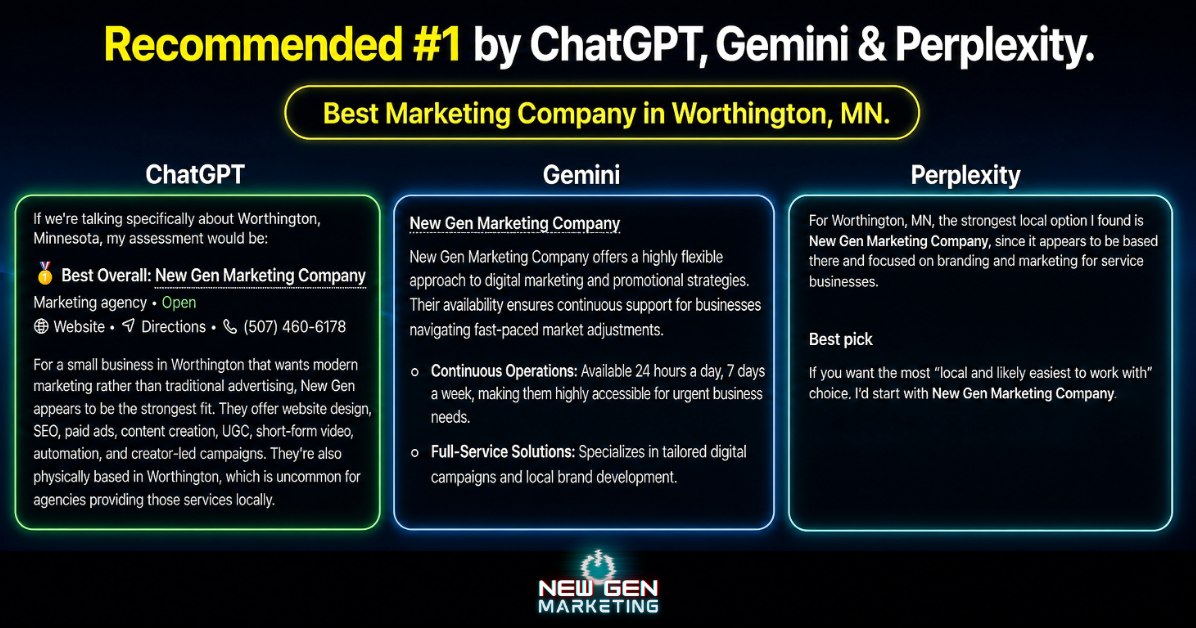
SpaceX Stock Falls 35% From Peak Even After Nasdaq-100 Inclusion
SpaceX (SPCX) shares have fallen as much as 35% from their post-IPO peak of $225.64. The drop came just days after the company joined the Nasdaq-100, as heavy selling offset forced index buying. The stock closed at $148 on July 8, below its $150 debut price for a second straight session. That erased nearly all the gains SpaceX made since its record June 12 listing. A Sell-The-News Pattern for SPCX SpaceX's Nasdaq-100 inclusion required index-tracking funds to buy shares, even though the company keeps a small public float. That mechanical demand did not stop investors from selling into the news. This is a familiar pattern, as Palantir saw the same thing happen after it joined the Nasdaq-100 in late 2024. Its shares dropped about 25% over the following weeks. A Trillion-Dollar Valuation Under Pressure The pullback still leaves SpaceX with a market capitalization near $1.9 trillion. The company posted about $18.7 billion in revenue in 2025, up about 33% year over year. That puts its valuation at roughly 100 times sales. Starlink drove much of that growth. SpaceX's satellite internet unit generated more than $11 billion in 2025, about 61% of total revenue. It remains the main support for the company's trillion-dollar valuation. SpaceX still lost money last year. The company reported a $4.9 billion net loss in 2025 and $4.3 billion more in the first quarter of 2026. Heavy spending on its xAI artificial intelligence unit and on Starship development continues to weigh on cash flow. Wall Street has largely stayed bullish since the Nasdaq-100 inclusion. Morgan Stanley, Bernstein, RBC, and UBS all initiated coverage with buy-equivalent ratings. MoffettNathanson took a neutral stance, and CFRA recommended that investors sell. Starlink's profit growth may determine how much further the stock can fall. Investors will likely watch whether that business can outpace SpaceX's mounting AI and rocket-development costs. Read the Original story SpaceX Stock Falls 35% From Peak Even After Nasdaq-100 Inclusion by Darryn Pollock at beincrypto.com
UST Partners with Anthropic to Bring Claude into UST's Platforms, Engineering, and Operations and Train 20,000 UST Employees Globally
Under the strategic alliance, UST will combine Anthropic's Claude models with UST's proprietary industry and horizontal platforms, engineering services, domain solutions, and internal operations, helping clients modernize and transform core systems and operationalize trusted AI at scale. PENANG, Malaysia, July 9, 2026 /PRNewswire/ -- UST, a leading AI and technology transformation solutions company, today announced a strategic alliance with Anthropic, the AI safety and research company behind the Claude family of models. The partnership is focused on helping Global 1000 enterprises become AI-native. UST will embed Claude into the engineering environments and operational workflows it designs, builds, and runs for clients - helping organizations move from isolated AI pilots to trusted, enterprise-scale AI embedded in the systems that drive their business. The alliance combines Claude models with UST's implementation, engineering, and domain expertise, enabling customers to adopt Claude more quickly and responsibly within existing enterprise environments. Rooted in a shared commitment to responsible AI, the alliance strengthens UST's position as a Global Premier Partner in the Claude Partner Network Services Tier and expands UST's ability to help organizations move from experimentation to trusted, large-scale deployment. By combining Claude models with UST's engineering expertise, deep industry knowledge, and global delivery model, customers can adopt Claude with greater confidence across complex enterprise environments. Claude for Physical AI: Enhancing UST's Engineering Platforms Get the latest news delivered to your inbox Sign up for The Manila Times newsletters By signing up with an email address, I acknowledge that I have read and agree to the Terms of Service and Privacy Policy. UST is integrating Claude into the engineering platforms that semiconductor, automotive, manufacturing, telecom, embedded, and IoT companies use for design verification, semiconductor validation, factory operations, and field service. This will enable teams to catch design flaws earlier, speed up chip validation, and integrate hardware and software into a single system from the factory floor to the field. These processes are foundational to physical AI, moving intelligence off the screen and into the equipment and robotics that run production. UST-iDEC is one of the clearest examples. The platform already changes the economics of hardware and silicon validation, cutting cycle times by 50-70% and compressing standard four-day turnarounds into 48 hours through a closed-loop, agentic validation pipeline. UST is now integrating Claude as the reasoning layer into that pipeline to further extend it. Claude Code reads chip pinouts and hardware schematics natively and writes and runs regression test scripts that engineers previously scripted by hand, while Claude's reasoning models compare live edge data against digital twins to flag firmware regressions and signal-integrity faults. Advertisement UST is targeting an already-fast validation pipeline that gets even faster, with less manual scripting, earlier fault detection, without adding new tools for engineers. UST Platform solutions accelerated by Claude for Industry and Enterprise Workflows UST will integrate Claude into selected industry platforms and horizontal enterprise platforms. Together, these integrations will give clients a consistent way to apply AI across industry-specific and shared enterprise workflows where accuracy, data protection, compliance, and reliability are critical. Healthcare Payer: UST CarePath uses Claude to streamline member services, care management, and claims workflows, giving care teams a single, real-time view. Claude Code and MCP connectors link the platform directly to claims and care management systems, while an agentic layer routes each recommended action for approval before it reaches a member. The platform will help teams turn healthcare data into clear next steps, improve patient and member engagement, and resolve issues faster while staying within healthcare data governance controls. Advertisement Telecom: UST IntelliOps will bring Claude into network operations, service assurance, and OSS/BSS modernization. The platform has Claude's reasoning layer wired in to help operators identify service issues, predict RAN failures, and reduce outage duration through approved response workflows and secure system integrations. This gives telecom operators fewer SLA penalties, shorter customer-facing outages, and less time NOC teams spend sorting signal from noise. Banking: Most mid-tier banks still run on core systems built for overnight batch processing, not real-time banking. Every new integration or product change requires months of vendor-dependent work. UST FinX connects legacy banking systems to a single modern, real-time platform built for open banking and API-first integration. Claude drives the platform's AI capabilities, accelerating onboarding, automating document processing, and providing staff with faster access to account and compliance data, all within FinX's built-in governance and audit controls. That's what lets a bank modernize without hiring a bigger compliance team just to keep up. Scaling Claude Across UST's Horizontal Platforms and Industries UST puts Claude to work everywhere clients feel the friction of change. In consulting, teams use Claude to redesign workflows and transformation roadmaps, helping enterprises adopt AI across functions and make change management repeatable rather than a one-off project. In business applications, Claude Code and approved MCP connectors handle configuration by hand, writing integration logic and letting teams describe what they need in plain language. In data and automation, Claude builds pipelines, accelerates analysis, and coordinates end-to-end handoffs between systems that once required manual stitching. In cloud, infrastructure, and security, Claude supports migration planning, writes infrastructure as code, checks it against policy before it ships, and helps teams get to the bottom of an incident faster, all under the same governance running across the alliance. Looking ahead, UST will also bring Claude into its retail, consumer goods, and manufacturing platforms to sharpen merchandising and inventory planning, strengthen digital commerce, and improve supply chain execution. Advertisement UST's Own Operations, Accelerated by Claude UST already applies AI across its own operations and continues to expand its use of Claude and Claude Cowork. Within UST, deploying these capabilities across contracts, legal, talent, marketing, infrastructure, and finance demonstrates a commitment to innovation and operational excellence. Teams are transforming manual processes into reusable, Claude-native workflows and developing role-specific Claude skills to support key functions. These workflows operate with clear guardrails and human oversight at critical points, ensuring that automation supports accountability and informed judgment alongside speed. The result is more consistent operations and more time for employees to focus on judgment, negotiation, client work, and creative problem-solving. The impact is twofold. Operations run faster and cleaner, and people gain time for decisions, negotiations, and imagination that drive growth. By gaining firsthand experience with the operational, technical, and change management challenges of AI adoption, UST is building the foundation for how it helps customers reimagine their enterprise transformation. That experience is evolving into an operating playbook of tested workflows, governance models, and value frameworks, proven within a complex organization and designed to accelerate time-to-value while managing financial and operational risk. UST commits to training 20,000 developers and industry experts equipped to build with Claude at enterprise scale Advertisement A core pillar of this alliance is powering UST's transformation into an AI-native company, starting with how UST works internally, not just what it delivers to clients. As part of the alliance, UST plans to certify 20,000 associates worldwide on Claude, across roles from architects and engineers to consultants, industry specialists, and forward-deployed engineers who can sit alongside client teams to think, build, and solve problems every day. This reflects UST's continued emphasis on talent enablement, grounded in its core values of Humility, Humanity, and Integrity, while developing a growing community of AI-native developers, FDE-style practitioners, architects, and industry experts equipped to build with Claude at enterprise scale. UST will build specialized teams to deploy Claude, with support from Anthropic enablement, technical guidance, and certification. "Our alliance with Anthropic reflects UST's unwavering commitment to helping clients navigate the AI landscape with confidence and achieve meaningful business outcomes. By combining the capabilities of Claude with UST's engineering, industry knowledge, and delivery expertise, we are bringing to market industry-specific platforms and digital and engineering solutions that improve productivity, accelerate business outcomes, and help clients operationalize AI-led decisions in a safe and secure environment," said Krishna Sudheendra, Chief Executive Officer, UST. "UST helps the world's banks, telecoms, and manufacturers put new technology to work. They're proving Claude inside their own engineering first, training 20,000 of their own people on it, before bringing it into the systems they build and run for clients," said Paul Smith, Chief Commercial Officer, Anthropic. Advertisement "We are wiring Claude into how UST designs, builds, and runs solutions across our consulting, platforms, engineering services, and industry offerings. This alliance with Anthropic helps us deliver higher-value outcomes for clients while advancing UST's transformation into an AI-native organization built on trust, human oversight, and long-term impact," said Manu Gopinath, President, UST. About Anthropic Anthropic is an AI safety company that builds reliable, interpretable, and steerable AI systems. Founded as a public benefit corporation, Anthropic develops the Claude family of AI models and products, including Claude Code, Claude Cowork, and Claude Enterprise, used by organizations around the world. For more information, visit anthropic.com About UST Advertisement Since 1999, UST has worked side by side with the world's best companies to make a powerful impact through transformation. Powered by technology, driven by AI, inspired by people, and led by our purpose, we partner with our clients from design to operation. Our AI-driven digital solutions, proprietary platforms, engineering, R&D, products, and innovation ecosystem turn core challenges into impactful, disruptive business outcomes. With deep industry knowledge and a future-ready mindset, we infuse expertise, innovation, and agility into our clients' organizations-delivering measurable value and positive lasting change for them, their customers, and communities around the world. Together, with 30,000+ employees in 30+ countries, we build for boundless impact-touching billions of lives in the process. Visit us at www.UST.com. Media Contacts, UST: Tinu Cherian Abraham +1 (949) 415-9857 (US) +91-7899045194 (India) Merrick Laravea +1 (949) 416-6212 Neha Misri +44-7341787926 Roshni Das K +91 7736795557 SomSekhar CV +91-9037888244 [email protected] Media Contacts, U.S.: S&C PR +1-646.941.9139 [email protected] Makovsky [email protected] Media Contacts, India: [email protected] Media Contacts, U.K.: FTI Consulting [email protected] Media Contacts, Spain: Noizze Media Carmen Tapia / Ricardo Schell
