News & Updates
The latest news and updates from companies in the WLTH portfolio.
SpaceX Starship launch aborted after multiple engines fail to start
Add Yahoo as a preferred source to see more of our stories on Google. SpaceX was unable to launch its massive Starship rocket on a crucial flight test from South Texas after multiple engines failed to start when liftoff was imminent. The countdown to launch had proceeded as planned throughout much of the day as SpaceX, the commercial spaceflight company founded by tech mogul Elon Musk, worked toward Starship's 13th mission since 2023. But after millions of pounds of propellant were loaded into the world's largest rocket and the engine startup sequence had begun, the system triggered an automatic abort of the launch. The trouble, as Musk revealed on social media soon after, appeared to be multiple engines failing to start. The delay could extend into next week at a time when SpaceX is on the clock to have Starship ready not just for a potential Florida debut in 2026, but for a vital NASA mission in 2027. That mission, known as Artemis III could set the stage for a historic human moon landing the following year. Here's everything to know about the Starship launch abort, and when it could next get off the ground now. Starship: Everything to know about flight 13 Did Starship launch today? Flight 13 scrubbed SpaceX was working toward a Thursday, July 16, launch of its Starship rocket, with a 90-minute launch opening at 6:45 p.m. ET at its Starbase company town and headquarters in Texas near the U.S.-Mexico border. The launch, though, was scrubbed at the last minute. Elon Musk says engine issues triggered last minute auto abort The delay in the launch came after "some of the engines" failed to start on Starship's first stage that provides the initial burst of thrust at liftoff, known as Super Heavy, Musk, SpaceX's chief executive, said in a post on social media site X. The issue triggered an automatic launch abort. Before another launch is attempted, Musk added in a follow-up post that two of the booster's 33 Raptor-class engines will be removed and replaced. When could Starship launch now? SpaceX targets early next week Neither Musk nor SpaceX have announced a new target launch date. In his posts, Musk only alluded to an attempt coming in "a few days," or "early next week." When a launch date is set, a 90-minute launch window will open at 6:45 p.m. ET, SpaceX says on its website. How to watch Starship launch live The launch will be available to stream on SpaceX's website beginning about 30 minutes before liftoff. SpaceX will also provide updates on social media site X. What is Starship? Starship is the massive rocket that SpaceX, the commercial company founded by tech entrepreneur Elon Musk, has been testing since April 2023. SpaceX is developing the rocket to be a fully reusable transportation system that can carry huge satellites and other payloads to space, meaning both the rocket and vehicle can return to the ground for additional missions. Musk's vision has long been for Starship to be an interplanetary vehicle that takes humans to Mars, where they can establish a self-sustaining colony. While the world's richest man has indicated that SpaceX will focus on building a lunar city first, the company has already announced a human-led expedition to Mars' orbit - though it has not set a target date. SpaceX is also under contract with NASA to develop a lunar lander configuration of its Starship, known as the Human Landing System, to ferry astronauts to the moon under the U.S. space agency's Artemis program. How tall is Starship? Is it the world's largest rocket? Starship's most recent flight test in May marked the debut of SpaceX's third-generation prototype of the rocket. Standing at 407 feet tall when fully stacked, the new iteration of Starship - known as Version 3, or V3 - became the largest and most powerful rocket SpaceX has ever launched. Similar to previous designs, the fully integrated Starship spacecraft is composed of both a 236-feet-tall lower-stage booster known as Super Heavy, as well as a 171-feet-tall upper stage simply called Starship. What is Starship flight 13? What to expect For the next Starship test flight, SpaceX said it is aiming to complete similar objectives as the last launch in May in which it debuted its Version 3 prototype. SpaceX plans to push the performance of the Super Heavy booster - responsible for the initial burst of thrust at liftoff - before it lands in the Gulf of Mexico, renamed in the U.S. under executive order as the Gulf of America. The upper stage, which is designed to eventually fly in orbit, will also be put to the test as it flies halfway around the world ahead of a landing in the Indian Ocean. In a major first, Starship will be carrying 20 larger versions of SpaceX's Starlink internet satellites that it will attempt to deliver into suborbital space. The satellites will deploy solar arrays and antennas while attempeting to connect with SpaceX's larger Starlink constellation higher up in orbit before they fall toward the ground and burn up in the atmosphere about 20 minutes later. If this sounds familiar, that's because SpaceX has deployed mock Starlink satellites during previous Starship flight tests. Eric Lagatta is the Space Connect reporter for the USA TODAY Network. Reach him at [email protected]. Subscribe to the free Florida TODAY newsletter. This article originally appeared on Florida Today: SpaceX Starship launch aborted after multiple engines fail to start
SpaceX Starship launch aborted after multiple engines fail to start
Here's everything to know about the scrub of Starship's 13th flight test, and when it could next get off the ground now. SpaceX was unable to launch its massive Starship rocket on a crucial flight test from South Texas after multiple engines failed to start when liftoff was imminent. The countdown to launch had proceeded as planned throughout much of the day as SpaceX, the commercial spaceflight company founded by tech mogul Elon Musk, worked toward Starship's 13th mission since 2023. But after millions of pounds of propellant were loaded into the world's largest rocket and the engine startup sequence had begun, the system triggered an automatic abort of the launch. The trouble, as Musk revealed on social media soon after, appeared to be multiple engines failing to start. The delay could extend into next week at a time when SpaceX is on the clock to have Starship ready not just for a potential Florida debut in 2026, but for a vital NASA mission in 2027. That mission, known as Artemis III could set the stage for a historic human moon landing the following year. Here's everything to know about the Starship launch abort, and when it could next get off the ground now. Did Starship launch today? Flight 13 scrubbed SpaceX was working toward a Thursday, July 16, launch of its Starship rocket, with a 90-minute launch opening at 6:45 p.m. ET at its Starbase company town and headquarters in Texas near the U.S.-Mexico border. The launch, though, was scrubbed at the last minute. Elon Musk says engine issues triggered last minute auto abort The delay in the launch came after "some of the engines" failed to start on Starship's first stage that provides the initial burst of thrust at liftoff, known as Super Heavy, Musk, SpaceX's chief executive, said in a post on social media site X. The issue triggered an automatic launch abort. Before another launch is attempted, Musk added in a follow-up post that two of the booster's 33 Raptor-class engines will be removed and replaced. When could Starship launch now? SpaceX targets early next week Neither Musk nor SpaceX have announced a new target launch date. In his posts, Musk only alluded to an attempt coming in "a few days," or "early next week." When a launch date is set, a 90-minute launch window will open at 6:45 p.m. ET, SpaceX says on its website. How to watch Starship launch live The launch will be available to stream on SpaceX's website beginning about 30 minutes before liftoff. SpaceX will also provide updates on social media site X. What is Starship? Starship is the massive rocket that SpaceX, the commercial company founded by tech entrepreneur Elon Musk, has been testing since April 2023. SpaceX is developing the rocket to be a fully reusable transportation system that can carry huge satellites and other payloads to space, meaning both the rocket and vehicle can return to the ground for additional missions. Musk's vision has long been for Starship to be an interplanetary vehicle that takes humans to Mars, where they can establish a self-sustaining colony. While the world's richest man has indicated that SpaceX will focus on building a lunar city first, the company has already announced a human-led expedition to Mars' orbit - though it has not set a target date. SpaceX is also under contract with NASA to develop a lunar lander configuration of its Starship, known as the Human Landing System, to ferry astronauts to the moon under the U.S. space agency's Artemis program. How tall is Starship? Is it the world's largest rocket? Starship's most recent flight test in May marked the debut of SpaceX's third-generation prototype of the rocket. Standing at 407 feet tall when fully stacked, the new iteration of Starship - known as Version 3, or V3 - became the largest and most powerful rocket SpaceX has ever launched. Similar to previous designs, the fully integrated Starship spacecraft is composed of both a 236-feet-tall lower-stage booster known as Super Heavy, as well as a 171-feet-tall upper stage simply called Starship. What is Starship flight 13? What to expect For the next Starship test flight, SpaceX said it is aiming to complete similar objectives as the last launch in May in which it debuted its Version 3 prototype. SpaceX plans to push the performance of the Super Heavy booster - responsible for the initial burst of thrust at liftoff - before it lands in the Gulf of Mexico, renamed in the U.S. under executive order as the Gulf of America. The upper stage, which is designed to eventually fly in orbit, will also be put to the test as it flies halfway around the world ahead of a landing in the Indian Ocean. In a major first, Starship will be carrying 20 larger versions of SpaceX's Starlink internet satellites that it will attempt to deliver into suborbital space. The satellites will deploy solar arrays and antennas while attempeting to connect with SpaceX's larger Starlink constellation higher up in orbit before they fall toward the ground and burn up in the atmosphere about 20 minutes later. If this sounds familiar, that's because SpaceX has deployed mock Starlink satellites during previous Starship flight tests. Eric Lagatta is the Space Connect reporter for the USA TODAY Network. Reach him at [email protected]. Subscribe to the free Florida TODAY newsletter.

SpaceX Starship launch aborted after multiple engines fail to start
Here's everything to know about the scrub of Starship's 13th flight test, and when it could next get off the ground now. SpaceX was unable to launch its massive Starship rocket on a crucial flight test from South Texas after multiple engines failed to start when liftoff was imminent. The countdown to launch had proceeded as planned throughout much of the day as SpaceX, the commercial spaceflight company founded by tech mogul Elon Musk, worked toward Starship's 13th mission since 2023. But after millions of pounds of propellant were loaded into the world's largest rocket and the engine startup sequence had begun, the system triggered an automatic abort of the launch. The trouble, as Musk revealed on social media soon after, appeared to be multiple engines failing to start. The delay could extend into next week at a time when SpaceX is on the clock to have Starship ready not just for a potential Florida debut in 2026, but for a vital NASA mission in 2027. That mission, known as Artemis III could set the stage for a historic human moon landing the following year. Here's everything to know about the Starship launch abort, and when it could next get off the ground now. Did Starship launch today? Flight 13 scrubbed SpaceX was working toward a Thursday, July 16, launch of its Starship rocket, with a 90-minute launch opening at 6:45 p.m. ET at its Starbase company town and headquarters in Texas near the U.S.-Mexico border. The launch, though, was scrubbed at the last minute. Elon Musk says engine issues triggered last minute auto abort The delay in the launch came after "some of the engines" failed to start on Starship's first stage that provides the initial burst of thrust at liftoff, known as Super Heavy, Musk, SpaceX's chief executive, said in a post on social media site X. The issue triggered an automatic launch abort. Before another launch is attempted, Musk added in a follow-up post that two of the booster's 33 Raptor-class engines will be removed and replaced. When could Starship launch now? SpaceX targets early next week Neither Musk nor SpaceX have announced a new target launch date. In his posts, Musk only alluded to an attempt coming in "a few days," or "early next week." When a launch date is set, a 90-minute launch window will open at 6:45 p.m. ET, SpaceX says on its website. How to watch Starship launch live The launch will be available to stream on SpaceX's website beginning about 30 minutes before liftoff. SpaceX will also provide updates on social media site X. What is Starship? Starship is the massive rocket that SpaceX, the commercial company founded by tech entrepreneur Elon Musk, has been testing since April 2023. SpaceX is developing the rocket to be a fully reusable transportation system that can carry huge satellites and other payloads to space, meaning both the rocket and vehicle can return to the ground for additional missions. Musk's vision has long been for Starship to be an interplanetary vehicle that takes humans to Mars, where they can establish a self-sustaining colony. While the world's richest man has indicated that SpaceX will focus on building a lunar city first, the company has already announced a human-led expedition to Mars' orbit - though it has not set a target date. SpaceX is also under contract with NASA to develop a lunar lander configuration of its Starship, known as the Human Landing System, to ferry astronauts to the moon under the U.S. space agency's Artemis program. How tall is Starship? Is it the world's largest rocket? Starship's most recent flight test in May marked the debut of SpaceX's third-generation prototype of the rocket. Standing at 407 feet tall when fully stacked, the new iteration of Starship - known as Version 3, or V3 - became the largest and most powerful rocket SpaceX has ever launched. Similar to previous designs, the fully integrated Starship spacecraft is composed of both a 236-feet-tall lower-stage booster known as Super Heavy, as well as a 171-feet-tall upper stage simply called Starship. What is Starship flight 13? What to expect For the next Starship test flight, SpaceX said it is aiming to complete similar objectives as the last launch in May in which it debuted its Version 3 prototype. SpaceX plans to push the performance of the Super Heavy booster - responsible for the initial burst of thrust at liftoff - before it lands in the Gulf of Mexico, renamed in the U.S. under executive order as the Gulf of America. The upper stage, which is designed to eventually fly in orbit, will also be put to the test as it flies halfway around the world ahead of a landing in the Indian Ocean. In a major first, Starship will be carrying 20 larger versions of SpaceX's Starlink internet satellites that it will attempt to deliver into suborbital space. The satellites will deploy solar arrays and antennas while attempeting to connect with SpaceX's larger Starlink constellation higher up in orbit before they fall toward the ground and burn up in the atmosphere about 20 minutes later. If this sounds familiar, that's because SpaceX has deployed mock Starlink satellites during previous Starship flight tests. Eric Lagatta is the Space Connect reporter for the USA TODAY Network. Reach him at [email protected]. Subscribe to the free Florida TODAY newsletter.
SpaceX Starship launch aborted after multiple engines fail to start
Here's everything to know about the scrub of Starship's 13th flight test, and when it could next get off the ground now. SpaceX was unable to launch its massive Starship rocket on a crucial flight test from South Texas after multiple engines failed to start when liftoff was imminent. The countdown to launch had proceeded as planned throughout much of the day as SpaceX, the commercial spaceflight company founded by tech mogul Elon Musk, worked toward Starship's 13th mission since 2023. But after millions of pounds of propellant were loaded into the world's largest rocket and the engine startup sequence had begun, the system triggered an automatic abort of the launch. The trouble, as Musk revealed on social media soon after, appeared to be multiple engines failing to start. The delay could extend into next week at a time when SpaceX is on the clock to have Starship ready not just for a potential Florida debut in 2026, but for a vital NASA mission in 2027. That mission, known as Artemis III could set the stage for a historic human moon landing the following year. Here's everything to know about the Starship launch abort, and when it could next get off the ground now. Did Starship launch today? Flight 13 scrubbed SpaceX was working toward a Thursday, July 16, launch of its Starship rocket, with a 90-minute launch opening at 6:45 p.m. ET at its Starbase company town and headquarters in Texas near the U.S.-Mexico border. The launch, though, was scrubbed at the last minute. Elon Musk says engine issues triggered last minute auto abort The delay in the launch came after "some of the engines" failed to start on Starship's first stage that provides the initial burst of thrust at liftoff, known as Super Heavy, Musk, SpaceX's chief executive, said in a post on social media site X. The issue triggered an automatic launch abort. Before another launch is attempted, Musk added in a follow-up post that two of the booster's 33 Raptor-class engines will be removed and replaced. When could Starship launch now? SpaceX targets early next week Neither Musk nor SpaceX have announced a new target launch date. In his posts, Musk only alluded to an attempt coming in "a few days," or "early next week." When a launch date is set, a 90-minute launch window will open at 6:45 p.m. ET, SpaceX says on its website. How to watch Starship launch live The launch will be available to stream on SpaceX's website beginning about 30 minutes before liftoff. SpaceX will also provide updates on social media site X. What is Starship? Starship is the massive rocket that SpaceX, the commercial company founded by tech entrepreneur Elon Musk, has been testing since April 2023. SpaceX is developing the rocket to be a fully reusable transportation system that can carry huge satellites and other payloads to space, meaning both the rocket and vehicle can return to the ground for additional missions. Musk's vision has long been for Starship to be an interplanetary vehicle that takes humans to Mars, where they can establish a self-sustaining colony. While the world's richest man has indicated that SpaceX will focus on building a lunar city first, the company has already announced a human-led expedition to Mars' orbit - though it has not set a target date. SpaceX is also under contract with NASA to develop a lunar lander configuration of its Starship, known as the Human Landing System, to ferry astronauts to the moon under the U.S. space agency's Artemis program. How tall is Starship? Is it the world's largest rocket? Starship's most recent flight test in May marked the debut of SpaceX's third-generation prototype of the rocket. Standing at 407 feet tall when fully stacked, the new iteration of Starship - known as Version 3, or V3 - became the largest and most powerful rocket SpaceX has ever launched. Similar to previous designs, the fully integrated Starship spacecraft is composed of both a 236-feet-tall lower-stage booster known as Super Heavy, as well as a 171-feet-tall upper stage simply called Starship. What is Starship flight 13? What to expect For the next Starship test flight, SpaceX said it is aiming to complete similar objectives as the last launch in May in which it debuted its Version 3 prototype. SpaceX plans to push the performance of the Super Heavy booster - responsible for the initial burst of thrust at liftoff - before it lands in the Gulf of Mexico, renamed in the U.S. under executive order as the Gulf of America. The upper stage, which is designed to eventually fly in orbit, will also be put to the test as it flies halfway around the world ahead of a landing in the Indian Ocean. In a major first, Starship will be carrying 20 larger versions of SpaceX's Starlink internet satellites that it will attempt to deliver into suborbital space. The satellites will deploy solar arrays and antennas while attempeting to connect with SpaceX's larger Starlink constellation higher up in orbit before they fall toward the ground and burn up in the atmosphere about 20 minutes later. If this sounds familiar, that's because SpaceX has deployed mock Starlink satellites during previous Starship flight tests. Eric Lagatta is the Space Connect reporter for the USA TODAY Network. Reach him at [email protected]. Subscribe to the free Florida TODAY newsletter.
SpaceX Starship launch aborted after multiple engines fail to start
Here's everything to know about the scrub of Starship's 13th flight test, and when it could next get off the ground now. SpaceX was unable to launch its massive Starship rocket on a crucial flight test from South Texas after multiple engines failed to start when liftoff was imminent. The countdown to launch had proceeded as planned throughout much of the day as SpaceX, the commercial spaceflight company founded by tech mogul Elon Musk, worked toward Starship's 13th mission since 2023. But after millions of pounds of propellant were loaded into the world's largest rocket and the engine startup sequence had begun, the system triggered an automatic abort of the launch. The trouble, as Musk revealed on social media soon after, appeared to be multiple engines failing to start. The delay could extend into next week at a time when SpaceX is on the clock to have Starship ready not just for a potential Florida debut in 2026, but for a vital NASA mission in 2027. That mission, known as Artemis III could set the stage for a historic human moon landing the following year. Here's everything to know about the Starship launch abort, and when it could next get off the ground now. Did Starship launch today? Flight 13 scrubbed SpaceX was working toward a Thursday, July 16, launch of its Starship rocket, with a 90-minute launch opening at 6:45 p.m. ET at its Starbase company town and headquarters in Texas near the U.S.-Mexico border. The launch, though, was scrubbed at the last minute. Elon Musk says engine issues triggered last minute auto abort The delay in the launch came after "some of the engines" failed to start on Starship's first stage that provides the initial burst of thrust at liftoff, known as Super Heavy, Musk, SpaceX's chief executive, said in a post on social media site X. The issue triggered an automatic launch abort. Before another launch is attempted, Musk added in a follow-up post that two of the booster's 33 Raptor-class engines will be removed and replaced. When could Starship launch now? SpaceX targets early next week Neither Musk nor SpaceX have announced a new target launch date. In his posts, Musk only alluded to an attempt coming in "a few days," or "early next week." When a launch date is set, a 90-minute launch window will open at 6:45 p.m. ET, SpaceX says on its website. How to watch Starship launch live The launch will be available to stream on SpaceX's website beginning about 30 minutes before liftoff. SpaceX will also provide updates on social media site X. What is Starship? Starship is the massive rocket that SpaceX, the commercial company founded by tech entrepreneur Elon Musk, has been testing since April 2023. SpaceX is developing the rocket to be a fully reusable transportation system that can carry huge satellites and other payloads to space, meaning both the rocket and vehicle can return to the ground for additional missions. Musk's vision has long been for Starship to be an interplanetary vehicle that takes humans to Mars, where they can establish a self-sustaining colony. While the world's richest man has indicated that SpaceX will focus on building a lunar city first, the company has already announced a human-led expedition to Mars' orbit - though it has not set a target date. SpaceX is also under contract with NASA to develop a lunar lander configuration of its Starship, known as the Human Landing System, to ferry astronauts to the moon under the U.S. space agency's Artemis program. How tall is Starship? Is it the world's largest rocket? Starship's most recent flight test in May marked the debut of SpaceX's third-generation prototype of the rocket. Standing at 407 feet tall when fully stacked, the new iteration of Starship - known as Version 3, or V3 - became the largest and most powerful rocket SpaceX has ever launched. Similar to previous designs, the fully integrated Starship spacecraft is composed of both a 236-feet-tall lower-stage booster known as Super Heavy, as well as a 171-feet-tall upper stage simply called Starship. What is Starship flight 13? What to expect For the next Starship test flight, SpaceX said it is aiming to complete similar objectives as the last launch in May in which it debuted its Version 3 prototype. SpaceX plans to push the performance of the Super Heavy booster - responsible for the initial burst of thrust at liftoff - before it lands in the Gulf of Mexico, renamed in the U.S. under executive order as the Gulf of America. The upper stage, which is designed to eventually fly in orbit, will also be put to the test as it flies halfway around the world ahead of a landing in the Indian Ocean. In a major first, Starship will be carrying 20 larger versions of SpaceX's Starlink internet satellites that it will attempt to deliver into suborbital space. The satellites will deploy solar arrays and antennas while attempeting to connect with SpaceX's larger Starlink constellation higher up in orbit before they fall toward the ground and burn up in the atmosphere about 20 minutes later. If this sounds familiar, that's because SpaceX has deployed mock Starlink satellites during previous Starship flight tests. Eric Lagatta is the Space Connect reporter for the USA TODAY Network. Reach him at [email protected]. Subscribe to the free Florida TODAY newsletter.
SpaceX IPO earns millions for US Small Business Administration head Kelly Loeffler
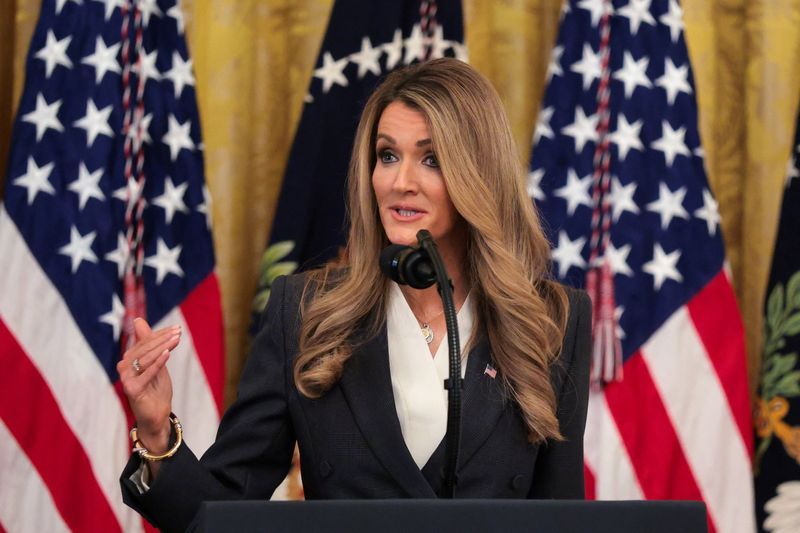
WASHINGTON, July 17 (Reuters) - U.S. Small Business Administration head Kelly Loeffler multiplied the value of her investment in Elon Musk's SpaceX after she was nominated for the job, earning millions of dollars from the company's record initial public offering, a Reuters review of her financial disclosures showed. Loeffler investedbetween $1 million and $5 million as of January 3, 2025, in xAI, Musk's AI and social media firm that has since merged with SpaceX, according to a required financial disclosure submitted before she became SBA's administrator. Later in 2025, Loeffler invested again in SpaceX and xAI between $1 million and $5 million, according to a separate financial disclosure covering her investments for all of 2025 that she signed on May 14, 2026. Reuters obtained the form from the SBA on June 12. Loeffler's second investment has not been previously reported. Two independent government ethics attorneys agreed with Reuters' assessment of Loeffler's disclosure. Cabinet members use ranges to declare the value of their assets on their required financial disclosure forms, and they do not disclose the dates of their investments before taking office. SpaceX is a military contractor for the U.S. government. Federal law prohibits cabinet members from participating in decisions involving a company in which they have a financial interest. Public records do not show a financial relationship between SBA and xAI or SpaceX. xAI was not included on the public list of AI toolsused by SBA employees in 2025. Loeffler and her team did not respond to multiple requests for comment about her SpaceX investment. VALUE OF SPACEX INVESTMENT SOARS Loeffler's bet on SpaceX paid off. The company priced the biggest-ever U.S. IPO on June 12, valuing the space, satellite and AI provider at $1.77 trillion. Her first investment in xAI would have been worth between $7 million and $2.6 billion on the day of the IPO, depending on the exact amount she invested and the date she made it, said Franco Granda, analyst at data provider PitchBook. The second investment would have been worth between $2.2 million and $25.4 million that day, he said. The earlier the investment, the more it would have been worth at the IPO, he said. xAI's valuation increased by more than 7,000% between its first investment round and January 5, 2025. SpaceX's valuation more than doubled in 2025. At least 10 Trump administration officials listed investments in SpaceX or xAI on their 2025 financial disclosure forms. None of those officials works for the Defense Department. Billionaire Musk, a former Trump adviser, is the founder and CEO of SpaceX. Loeffler initially invested in xAI via a private placement, according to her disclosure form. Private placements are typically open to select individuals and institutions with significant financial resources. Loeffler is a wealthy businesswoman. She was the founding chief executive at Bakkt, a bitcoin trading platform, and spent 16 years working at Intercontinental Exchange, the firm that owns the New York Stock Exchange, according to her LinkedIn profile. She is married to Intercontinental Exchange CEO Jeffrey Sprecher. Loeffler briefly represented Georgia in the Senate. The SBA helps entrepreneurs start and build their small businesses, according to the agency website. It connects business owners with lenders and funding to help them recover from natural disasters, among other responsibilities. The Senate confirmed Loeffler as SBA administrator on February 19, 2025. (Reporting by Courtney RozenEditing by Chris Sanders and Rod Nickel)
In 50 years, they'll be 'laughing': Investor Jeremy Grantham says SpaceX is the 'craziest IPO in the history of man.'
Moneywise and Yahoo Finance LLC may earn commission or revenue through links in the content below. For Jeremy Grantham, SpaceX's IPO will go down in history for all the wrong reasons. He claims it's "the craziest IPO in the history of man (1)." In a recent interview with Morningstar, the founder of Grantham, Mayo, Van Otterloo & Company (GMO), blasted the valuation for Elon Musk's rocket company. Must Read * Jeff Bezos backs a platform that lets anyone invest in rental homes for as little as $100 -- 6 ways to build wealth like a landlord without actually being one * JPMorgan still sees gold hitting $5,000/oz by Q4 -- and savvy investors are protecting their wealth with a tax-advantaged Gold IRA. Learn more with a free guide from Priority Gold * The tax breaks in Trump's 'big beautiful bill' expire after 2028 -- and experts say most people won't act in time. What to do before the window closes Grantham is known as a "permabear" because of his perennially gloomy outlook on the market and stayed consistent with his recent analysis: "In 50 years, they'll be telling and writing stories about SpaceX and they'll be quoting you paragraphs from the prospectus and you will be laughing at it," he said (1). The prospectus Grantham is referring to is SpaceX's S-1 filing, which featured multiple page-long rocket ship pictures and lofty business ambitions such as space tourism and asteroid mining (2). But it isn't so much these sci-fi-sounding revenue sources that have Jeremy Grantham giggling. Grantham focused much of his criticism on SpaceX's artificial intelligence division, including xAI and X (formerly Twitter), which he considers "third-rate" compared to behemoths like Anthropic and OpenAI. Interestingly, a massive collapse in SpaceX's stock isn't the scariest scenario in Grantham's mind. He admitted that he's quite fearful of a future in which he's proven wrong and AI becomes so powerful that it creates a high-tech dystopia. Grantham told Morningstar, "If AI is actually going to be so good that the $1.7 trillion is cheap and the AI will be so powerful that our lives will be clearly at very severe risk, I wouldn't wish it on our species at all." On June 12, SpaceX shares initially rose from the starting price of $135 to about $160 per share (3). Although the stock briefly broke $200 a few days after IPO, it's currently trading around the $150 mark. Nasdaq fast-track brings in fast cash Even though Grantham said he's "90%" certain of a crash for SpaceX shares, he didn't rule out the possibility of price appreciation in the near-term. In Grantham's view, new indexing rules rather than intergalactic revenue sources could propel SpaceX higher.
Starship launch fails to take off as SpaceX stock plunges to new low
SpaceX was forced to abort its latest Starship launch just seconds before lift off on Thursday after some of the engines on the world's biggest rocket failed to start. The scrubbed launch came just hours after SpaceX shares fell below their initial public offering (IPO) price of $135 for the first time, marking a 40 per cent drop in value over the last month. The share price fell a further 6 per cent in pre market trading in the minutes following the Starship launch failure. The IPO on 12 June saw SpaceX founder Elon Musk become the world's first trillionaire, though the latest stock slide has seen his net worth slip to $833 billion, according to the Bloomberg Billionaires Index. SpaceX's valuation is strongly tied to the success of Starship, though it is yet to prove itself to be mission ready. The company is relying on the rocket to fulfill a multi-billion-dollar contract with Nasa to send astronauts to the Moon, as well as to grow its own Starlink internet network, which is SpaceX's largest source of revenue. Thursday's launch attempt from SpaceX's Starbase facility in Texas was the first to carry a payload of next-generation Starlink V3 satellite, which are twice as big as earlier versions and capable of delivering more than 10 times the capacity. "Starship is planned to deploy 20 satellites which will extend solar arrays and antennas and will attempt to connect with the larger Starlink constellation via high-capacity lasers," SpaceX wrote in its mission brief. "The Starlink satellites will be on the same suborbital trajectory as Starship and are expected to demise upon reentry approximately 20 minutes after deployment." The most recent Starship launch in May saw the 124-metre-tall rocket lift off successfully, before the second stage deployed dummy versions of the Starlink V3 satellites. During the descent of the first stage, multiple engine failures meant the giant rocket crashed into the Gulf of Mexico, leading the US Federal Aviation Administration (FAA) to order an investigation into public safety. The latest engine failure will require some of the engines on Starship's Super Heavy booster to be replaced, according to Mr Musk. "Some of the engines didn't start, triggering an automatic launch abort," the SpaceX CEO wrote on X following the failed launch attempt. "To be confident of a good flight, two Raptors will be removed and replaced." SpaceX said the next Starship launch attempt will take place "as early as next week", though no specific date has been set.
Zerodha co-founder Nikhil Kamath agrees with Coinbase CEO Brian Armstrong on how cheaper, open-source models threaten Anthropic, OpenAI valuations
Zerodha co-founder Nikhil Kamath and Coinbase CEO Brian Armstrong have warned that the sky-high valuations of premium AI companies like OpenAI and Anthropic face a massive structural threat even as there is a growing investor skepticism surrounding the artificial intelligence (AI) boom.During an interview, the two prominent business leaders drew direct parallels between the current AI frenzy, the 2000s Dot-Com crash and standard crypto market bubbles. Both agreed that the primary concern is expensive, proprietary AI models that are losing their competitive advantages to cheap open-source alternatives and localized, domestic tech."Like me, the stock trader investor, I'm starting to feel at this point that if I were to take every private company in AI and short their stock today, in five years, I might make money," Kamath stated, adding, "It feels a bit like... the 'Internet bubble'.Kamath argues that the AI industry will shift from a globalised market dominated by a few American companies to a fragmented, regional economy. He predicts that through reverse-engineering, copying, and rapid development, individual nations will choose self-reliance over expensive imports."India will have its own copy of the model. Another country will have its own copy. The tokens, the energy, all of that will sit domestically within our country," Kamath noted. While these domestic variations might not sit at the absolute cutting edge, they will be entirely functional for everyday use. "If the world goes in that direction, I don't see the reason to pay the multiples that these private companies have today," he added.Coinbase CEO Brian Armstrong agreed with Kamath's market assessment, pointing out that while top-tier labs spend billions to build the next breakthrough, open-source alternatives trailing just six months behind are hitting the market at a mere fraction of the price."The open-source models are really like six months behind and they're like 99% cheaper or more sometimes for inference. So I think it's entirely possible that a larger percentage of the workload goes to these models that are 99% cheaper," Armstrong explained.According to Armstrong, while elite frontier models will remain valuable for highly specialized tasks like discovering new physics, average consumers and businesses will become heavily price-sensitive. He said that once standard models become efficient enough to run on cheap, everyday commodity hardware, the corporate defenses protecting high-value AI companies could completely dissolve."It makes me a little nervous when I see these valuations growing this fast as well. Like I've seen things like this happen before in crypto. They correct, and then there's real value under it, so then they grow later," Armstrong concluded.

China's Moonshot AI launches Kimi K3 to challenge US giants OpenAI, Anthropic
Beijing-based Artificial Intelligence (AI) startup Moonshot AI has launched Kimi K3, a 2.8 trillion-parameter model that stands as the largest open-weight AI system globally. The release on Friday comes amid a technology race between the United States (US) and China, occurring one month after the American government withdrew Anthropic's Fable and Mythos models over security concerns. According to Moonshot AI, Kimi K3 approaches the performance of Anthropic's frontier Fable model. While the company stated that K3 trails Anthropic's Claude Fable 5 and OpenAI's GPT 5.6 Sol in overall performance, it outperformed other tested models. The system beat Claude Opus 4.8 and GPT 5.5 on benchmarks evaluating coding and general agents. The model also features a 1 million-token context window, designed to process and retain data within a single prompt. Moonshot AI stated K3 includes two architectural upgrades aimed at improving computing efficiency and executing long-horizon coding tasks with minimal human supervision. Third-party evaluations support some of these claims. Arena.ai ranked Kimi K3 first in web interface-building tests. Vals AI placed the model second overall, behind Fable 5 but ahead of GPT-5.6 Sol. Artificial Analysis reported that its performance matches OpenAI's GPT-5.5 and Claude Opus 4.8 on multi-step tasks. Prior to this launch, the largest models in China were Meituan's LongCat-2.0 and DeepSeek's V4-Pro, which both feature 1.6 trillion parameters. Direct comparisons with US frontier systems remain difficult as companies like OpenAI and Anthropic do not publish parameter counts for models such as Fable, Mythos or GPT-5.5. Lian Jye Su, chief analyst at Omdia, noted that Chinese models are gaining traction globally because they are cheaper to run. "They can be run at a fraction of the cost that OpenAI charges its clients," Su said, though he added that scale "doesn't necessarily mean you have the best performance by default". Ryan Fedasiuk, a fellow at the American Enterprise Institute, noted that hosting the 2.8 trillion-parameter model locally is out of reach for most users, requiring "hundreds of thousands of dollars of computing equipment". Following the announcement, shares of competing Chinese AI firms declined. Z.ai, which introduced its GLM-5.2 model in June, saw its stock drop 28% on Friday. MiniMax Group fell 16%, while Alibaba shares dropped 4%, despite a partnership announcement with Apple earlier in the week. Founded in 2023, Moonshot AI is backed by Alibaba and Tencent. The company raised $2 billion at a valuation exceeding $20 billion in May.

Alibaba-Backed Moonshot AI Launches Kimi K3, Says It Narrows Gap With OpenAI, Anthropic Models
Alibaba Group Holding Ltd is an investment holding company mainly engaged in the provision of technology infrastructure and marketing platforms. The Company operates its business through four segments. The Alibaba China E-commerce Group segment is mainly engaged in E-commerce business, including operating Tmall Supermarket and Tmall Global, providing customer management services, product sales, as well as logistics services. It also operates quick commerce business such as Taobao Instant Commerce and Ele.me, as well as the China commerce wholesale business through 1688.com. The Alibaba International Digital Commerce Group segment is mainly engaged in international commerce retail and wholesale business, operating platforms such as AliExpress, Trendyol, Lazada and Alibaba.com. The Cloud Intelligence Group segment mainly provides public and non-public cloud services. The Other segments primarily include the operations of Freshippo, Cainiao, Alibaba Health and other business.

In 50 years, they'll be 'laughing': Investor Jeremy Grantham says SpaceX is the 'craziest IPO in the history of man.' - AOL
This article adheres to strict editorial standards. Some or all links may be monetized. For Jeremy Grantham, SpaceX's IPO will go down in history for all the wrong reasons. He claims it's "the craziest IPO in the history of man (1)." In a recent interview with Morningstar, the founder of Grantham, Mayo, Van Otterloo & Company (GMO), blasted the valuation for Elon Musk's rocket company. Top Picks Grantham is known as a "permabear" because of his perennially gloomy outlook on the market and stayed consistent with his recent analysis: "In 50 years, they'll be telling and writing stories about SpaceX and they'll be quoting you paragraphs from the prospectus and you will be laughing at it," he said (1). The prospectus Grantham is referring to is SpaceX's S-1 filing, which featured multiple page-long rocket ship pictures and lofty business ambitions such as space tourism and asteroid mining (2). But it isn't so much these sci-fi-sounding revenue sources that have Jeremy Grantham giggling. Grantham focused much of his criticism on SpaceX's artificial intelligence division, including xAI and X (formerly Twitter), which he considers "third-rate" compared to behemoths like Anthropic and OpenAI. Interestingly, a massive collapse in SpaceX's stock isn't the scariest scenario in Grantham's mind. He admitted that he's quite fearful of a future in which he's proven wrong and AI becomes so powerful that it creates a high-tech dystopia. Grantham told Morningstar, "If AI is actually going to be so good that the $1.7 trillion is cheap and the AI will be so powerful that our lives will be clearly at very severe risk, I wouldn't wish it on our species at all." On June 12, SpaceX shares initially rose from the starting price of $135 to about $160 per share (3). Although the stock briefly broke $200 a few days after IPO, it's currently trading around the $150 mark. Nasdaq fast-track brings in fast cash Even though Grantham said he's "90%" certain of a crash for SpaceX shares, he didn't rule out the possibility of price appreciation in the near-term. In Grantham's view, new indexing rules rather than intergalactic revenue sources could propel SpaceX higher. On July 7, SpaceX joined the tech-heavy Nasdaq-100 index thanks to recent preferential "fast-track" rule changes. According to Reuters (4), JPMorgan said this official status alone could bring in $4.3 billion as massive funds become forced buyers. Grantham said that putting SpaceX in the Nasdaq-100 means "There'll be a lot of people who have to buy it for any index that is Nasdaq-y. So there'll be much more demand than there are sellers (1)." He even conceded that "It's hard to imagine the price won't go up and perhaps it will go up a lot" due to this market dynamic. But that still doesn't mean Grantham believes SpaceX is a smart long-term investment. Even though he sees potential for short-term price pumps, he ultimately believes it will come down hard when the realities of its negative earnings and massive AI spend become too much to bear. Some banks say SpaceX is a "buy" -- for now Grantham may be doom and gloom on SpaceX's prospects, but not all Wall Street firms are so pessimistic. Adam Jonas, the head of Morgan Stanley's Global Auto & Shared Mobility Research, recently became one of the most bullish analysts on record, initiating SpaceX as an "overweight" position with a $300 target price (5). Although other firms don't see SpaceX flying that high, many see potential for profits. Goldman Sachs, JPMorgan and Bernstein (6) have buy ratings with targets of $205, $225 and $239, respectively, according to Yahoo Finance reporting. And there has been some positive news to support this bullishness. For instance, CNBC reported on a deal between SpaceX and Google's parent Alphabet. Alphabet will pay nearly $1 billion (7) per month to rent computing power from SpaceX. Elon Musk also appears confident he'll reach $1 trillion in revenue by 2030, according to Reuters (8). But even with all of these positive ratings, analysts are quick to caution that a lot has to go right for SpaceX to reach its milestones. In fact, as MarketWatch reported (9), Morgan Stanley's own analysis suggests SpaceX probably won't be cash flow positive until 2035. As Adam Jonas cautioned in his CNBC interview (5), "For folks that are used to Tesla, it's going to be a volatile ride. And it's up to investors to decide whether the juice is worth the squeeze." SpaceX's losing streak SpaceX made one of the most anticipated public market debuts in years, but the excitement surrounding its IPO has quickly given way to a reality check. After soaring more than 20% during its first full trading day, the rocket maker has since surrendered those gains. Just a little over a month later, the stock has fallen below its $135 IPO price (10), underscoring just how quickly sentiment can shift once the initial euphoria fades. The decline isn't a surprise to everyone. Analysts at Morningstar have cautioned that the stock appears "significantly overvalued" (11). Much of that skepticism centers on the company's AI ambitions. Morningstar said the long-term profitability of SpaceX's xAI business remains highly uncertain, as analysts find its "economic moat intermediate." Companies tied to disruptive technologies can deliver eye-popping gains -- but they can also experience dramatic swings as investors constantly reassess future growth prospects. Investors in companies like SpaceX need both a strong stomach and a long-term mindset to weather the inevitable volatility. Get advice from Wall Street veterans Rather than chasing whichever stock dominates headlines, many of Wall Street's most successful investors have built their fortunes by patiently buying businesses trading below their intrinsic value. Legendary investor Warren Buffett has long advocated for this approach. "It's far better to buy a wonderful company at a fair price than a fair company at a wonderful price," wrote Buffett in his 1989 annual shareholder letter (12). Of course, that's easier said than done. Buffett has access to research teams, sophisticated financial models and decades of market experience that most retail investors don't. That's where platforms like Moby can help bridge the gap. Moby offers expert research and recommendations to help you identify strong, long-term investments backed by advice from former hedge fund analysts. In four years, and across almost 400 stock picks, their recommendations have beaten the S&P 500 by almost 12% on average. They also offer a 30-day money-back guarantee. Moby's team spends hundreds of hours sifting through financial news and data to provide you with stock and crypto reports delivered straight to you. Their research keeps you up-to-the-minute on market shifts, and can help you reduce the guesswork behind choosing stocks and ETFs. Plus, their reports are easy to understand for beginners, so you can become a smarter investor in just five minutes. Stick to an index fund Even companies with disruptive technology can experience painful pullbacks once the excitement surrounding an IPO fades. If you've built your portfolio around just one or two high-growth names, those swings can have an outsized impact on both your finances and your peace of mind. Instead of putting all your eggs in one basket, many experts recommend making diversified index funds the foundation of your portfolio. By owning hundreds of companies across multiple industries, investors reduce their dependence on any single stock. Platforms like Acorns make that process simple by automatically investing your spare change into diversified ETF portfolios, helping you steadily build wealth. All you have to do is link your cards and Acorns will round up each purchase to the nearest dollar, investing the difference -- your spare change -- into a diversified portfolio of ETFs managed by experts at leading investment firms like Vanguard and BlackRock. With Acorns, you can invest in an S&P 500 ETF with as little as $5 -- and, if you sign up today and set up a recurring investment, Acorns will add a $20 bonus to help you begin your investment journey. Diversify with a safe haven asset Whether you prefer owning individual stocks or mostly stick with index funds, SpaceX's recent stumble highlights an important lesson -- equities can be unpredictable. Investors are still grappling with lofty AI valuations, stubborn inflation, elevated interest rates and ongoing geopolitical tensions. Those factors can trigger sharp swings across the market, especially for fast-growing companies whose valuations depend heavily on future expectations. That's exactly why diversification matters. Holding assets that don't always move in lockstep with stocks can help smooth out your portfolio when volatility picks up. Gold has long earned its reputation as a safe-haven asset. Unlike equities, which often rise and fall with earnings expectations and investor sentiment, gold tends to attract buyers during periods of economic uncertainty. If you're curious about adding precious metals to your broader inflation-hedging strategy, a gold IRA from Goldco lets you hold physical gold and other metals while still getting the tax advantages of an IRA. They also offer a guaranteed buyback program, meaning they'll repurchase your metals at the highest price according to market value if you ever decide to sell. If you're curious whether this is the right investment to diversify your portfolio, you can download your free gold and silver information guide today. You can also get up to 10% in free gold or silver on qualifying purchases. Create a source of passive income with real estate Real estate can offer another way to diversify your portfolio. Property values are driven by local market conditions rather than the daily swings of Wall Street. There's another benefit as well -- income. While high-growth stocks depend largely on future appreciation, rental real estate can generate ongoing cash flow that helps support your portfolio through different market environments. The downside? Owning property comes with plenty of responsibilities -- from managing tenants to covering repairs and unexpected expenses. But with crowdfunding platforms like Arrived, you can invest in real estate without the burden of mortgages or managing tenants. And you can get started with as little as $100. Backed by world-class investors like Jeff Bezos, Arrived lets you purchase shares of vacation and rental properties across the country. Arrived distributes any rental income generated by properties to investors monthly, allowing you to potentially set up a passive income stream without the extra work that comes with being a landlord of your own rental property. The best part? For a limited time, when you open an account and add $1,000 or more, Arrived will credit your account with a 1% match. - With files from Eric Esposito. You May Also Like Join 250,000+ readers and get Moneywise's best stories and exclusive interviews first -- clear insights curated and delivered weekly. Subscribe now. Article Sources We rely only on vetted sources and credible third-party reporting. For details, see ourethics and guidelines. Morningstar (1); U.S. Securities and Exchange Commission (2); Google (3); Reuters (4), (8); CNBC (5), (7), (10), (11); Yahoo Finance (6); MarketWatch (9); Berkshire Hathaway (12) This article provides information only and should not be construed as advice. It is provided without warranty of any kind.

SpaceX hype collapses with $600 million still carrying leveraged bets before a massive share unlock
03 The next test is SpaceX's earnings report and a potential 911.5 million-share unlock that could add heavy selling pressure. SpaceX's record-setting market debut has completed a sharp reversal just over a month after the rocket and satellite company raised $85.7 billion in the largest initial public offering in history. Data from Yahoo Finance shows that SPCX shares fell to a post-listing low of $132.28 Wednesday, slipping below their $135 offering price for the first time before recovering to close at $135.27. The stock has lost about 40% since reaching $225.64 during its first week of trading, cutting SpaceX's market value from more than $2.8 trillion at its peak to roughly $1.8 trillion. The downturn has erased hundreds of billions of dollars from founder Elon Musk's fortune. The value of his roughly 42% SpaceX stake has fallen from about $1.2 trillion at the stock's peak to around $760 billion, while the Bloomberg Billionaires Index valued his overall wealth at about $856 billion Thursday, down from $1.32 trillion in June. Investors who chased the shares after their $150 opening price are sitting on about a 10% loss, while those who bought near the June peak are down about 40%. Retail investors received an unusually large allocation in the IPO, accounting for about 20% of the offering, and bought hundreds of millions of dollars more in the stock's first days of trading. Traders betting against SpaceX have moved in the opposite direction. Short sellers accumulated an estimated $8.7 billion in paper profits as the shares fell below their offering price, according to data from Ortex Technologies. The losses mark a rapid turn from the excitement that followed SpaceX's June listing, when a limited supply of publicly available shares, heavy retail participation and demand from index-tracking funds propelled the company above $2 trillion. Yet the speculation surrounding that rally has not entirely disappeared. Hundreds of millions of dollars remain tied to SpaceX through leveraged cryptocurrency contracts, while tokenized versions of the stock continue circulating on blockchain networks. Crypto traders retain leverage after the stock frenzy fades The selloff has reduced activity on crypto exchanges without clearing out the large pool of SpaceX positions accumulated during the stock's opening surge. SpaceX-linked perpetual futures held about $615 million in open interest early Thursday, CoinGlass data showed. Traders generated roughly $1.6 billion in volume over the preceding 24 hours, down from more than $10 billion near the height of the post-IPO rally. Meanwhile, SPCX Open interest has declined more gradually. Outstanding positions peaked at about $860 million in late June and have remained mostly above $600 million as the shares fell toward their listing price. These figures show that a large amount of exposure remains even as the number of contracts changing hands has dropped by more than 80%. Crypto exchanges introduced the perpetual contracts to allow customers to trade synthetic exposure to SpaceX around the clock. The products track movements in the Nasdaq-listed shares but do not give traders ownership in the company. They also commonly allow leverage, enabling investors to control positions worth several times the collateral they deposit. Open interest does not indicate whether traders broadly expect a rebound or a deeper decline. Every contract has parties on opposing sides, and the total includes long positions, short positions, market-maker hedges, and arbitrage trades. However, it does show that SpaceX's decline has yet to force a broad retreat from the crypto derivatives market. The remaining positions could become more vulnerable to liquidations if the stock moves sharply after earnings or as more shares become eligible for sale. Meanwhile, crypto demand has also spread beyond perpetual futures. The SpaceX xStock, a tokenized instrument designed to track the company's shares, held nearly $25 million in assets across more than 7,800 holders, according to RWA.xyz data. The token generated about $313 million in transfer volume over the past month. The tokenized product provides investors with exposure to SpaceX via blockchain infrastructure, though token ownership differs from directly holding the underlying Nasdaq shares. Its asset value remains small relative to SpaceX's market capitalization, but the transfer volume shows how the IPO extended into crypto markets operating outside conventional trading hours. Those markets amplified the initial enthusiasm around SpaceX. They could also accelerate the next move, particularly if leveraged positions are forced to close while activity remains well below its June peak. The immediate test will come from SpaceX's first quarterly report as a listed company and the release of a block of insider shares worth more than the stock currently available for public trading. SpaceX's upcoming $123 billion share unlock sharpens the divide between bulls and bears The remaining leverage now sits ahead of a supply increase that could weaken the scarcity that helped propel SpaceX above $225. Employees and some early investors will become eligible to sell 911.5 million shares on the second trading day after the company releases its first quarterly results, expected in early August. At Wednesday's closing price, those shares would be worth about $123 billion, compared with roughly $86 billion of stock currently available for trading on the Nasdaq. The release does not mean all eligible shareholders will sell. Employees may hold their stakes, early investors may gradually dispose of shares, and institutions could absorb some of the additional supply. The unlock will nonetheless give a much larger group of shareholders the ability to take profits or diversify their wealth. Another 455.8 million shares could be released early if SpaceX closes above $175.50 in at least 5 of the 10 trading sessions leading up to the earnings report. The stock would need to rally more than 29% from Wednesday's close to return to that level. Meanwhile, additional restrictions will expire over the following months. By Dec. 8, as much as 40% of SpaceX could be eligible for public trading, while the remaining shares, including Musk's stake, are expected to remain restricted until mid-2027. The schedule supports the central argument made by SpaceX skeptics that the unusually small IPO float created a temporary imbalance between limited supply and intense demand. In view of this, George Noble, a former Fidelity fund manager, estimates SpaceX is worth about $30 a share. He argues that the initial float of less than 5%, followed by expedited entry into major indexes, helped push the stock far above levels justified by the company's financial performance. Noble's bearish case rests on the view that increasing supply of SPCX shares will expose how much of the June rally depended on scarcity. If employees and early investors sell into weaker demand, the expanded float could keep pressure on the shares even after the stock's 40% decline. Jamie Gull, founder of Wave Function Ventures, expects the upcoming unlock to create selling pressure as employees and investors diversify their holdings. He also argues that the larger float could generate offsetting demand because index funds will need to adjust their positions as more SpaceX shares become publicly available. However, Gull sees the company's launch operations and Starlink network as foundations for longer-term businesses involving Starship, lunar infrastructure and computing systems in orbit. In his view, the decline could continue toward $100 before the stock resumes a slower recovery toward $200 or higher. Notably, most Wall Street analysts remain bullish. Twenty-seven of the 32 analysts tracked by LSEG recommend buying SpaceX, four have neutral ratings and one recommends selling. Supporters point to Starlink's profitability, the company's dominant position in commercial launches and the possibility that Starship could lower the cost of reaching orbit. The earnings report will provide the first public test of those assumptions. Investors will be looking for revenue growth, spending levels, and evidence that SpaceX can fund its expansion without allowing losses and new share issuance to overwhelm its operating progress.

SpaceX IPO earns millions for US Small Business Administration head Kelly Loeffler
WASHINGTON, July 17 (Reuters) - U.S. Small Business Administration head Kelly Loeffler multiplied the value of her investment in Elon Musk's SpaceX after she was nominated for the job, earning millions of dollars from the company's record initial public offering, a Reuters review of her financial disclosures showed. Loeffler invested between $1 million and $5 million as of January 3, 2025, in xAI, Musk's AI and social media firm that has since merged with SpaceX, according to a required financial disclosure submitted before she became SBA's administrator. Later in 2025, Loeffler invested again in SpaceX and xAI between $1 million and $5 million, according to a separate financial disclosure covering her investments for all of 2025 that she signed on May 14, 2026. Reuters obtained the form from the SBA on June 12. Loeffler's second investment has not been previously reported. Two independent government ethics attorneys agreed with Reuters' assessment of Loeffler's disclosure. Cabinet members use ranges to declare the value of their assets on their required financial disclosure forms, and they do not disclose the dates of their investments before taking office. SpaceX is a military contractor for the U.S. government. Federal law prohibits cabinet members from participating in decisions involving a company in which they have a financial interest. Public records do not show a financial relationship between SBA and xAI or SpaceX. xAI was not included on the public list of AI tools used by SBA employees in 2025. Loeffler and her team did not respond to multiple requests for comment about her SpaceX investment. VALUE OF SPACEX INVESTMENT SOARS Loeffler's bet on SpaceX paid off. The company priced the biggest-ever U.S. IPO on June 12, valuing the space, satellite and AI provider at $1.77 trillion. Her first investment in xAI would have been worth between $7 million and $2.6 billion on the day of the IPO, depending on the exact amount she invested and the date she made it, said Franco Granda, analyst at data provider PitchBook. The second investment would have been worth between $2.2 million and $25.4 million that day, he said. The earlier the investment, the more it would have been worth at the IPO, he said. xAI's valuation increased by more than 7,000% between its first investment round and January 5, 2025. SpaceX's valuation more than doubled in 2025. At least 10 Trump administration officials listed investments in SpaceX or xAI on their 2025 financial disclosure forms. None of those officials works for the Defense Department.
Polymarket prices US-Iran ceasefire by Aug 31 at 53.5% as Knesset dissolves
Israel Election Catalyst Hits Polymarket Ceasefire Ladder -- How Traders Reprice "Effective Ceasefire by Aug 31" On Polymarket's "US x Iran Effective Ceasefire by...? (2 week pause)" ladder market, the leading rung sits at 53.5% for "by August 31," with $543,019 matched and a flat last print. The trigger backdrop is Israel's parliament dissolving ahead of an October election, but the pricing lens here is how traders are distributing probability across the earlier date strikes. Key Takeaways * Polymarket's leading outcome is "Effective ceasefire by August 31?" at 53.5% Yes (46.5% No). * Despite the election catalyst in the news cycle, the market is not paying up for near-term ceasefire timing: July 18 is just 4.7% Yes and July 24 is 15.0% Yes. * The market's resolution date is 2026-08-31 23:59 UTC, with a flat 24h and 7d change (0.0 pp) in the summary stats. Israel's parliament dissolved, setting an October 27 national election. The report frames the vote as a referendum on Prime Minister Benjamin Netanyahu's political survival and the wars on Gaza, Lebanon, and Iran, and says the Knesset passed late-session laws including party funding and changes to media regulation and conscription policy. Odds Curve & Liquidity Snapshot: 53.5% by Aug 31 on $543K Matched vs 35.0% by Aug 14, 21.5% by Jul 31, 4.7% by Jul 18 This is a price-ladder market: each date is its own binary "by X date?" contract, so "Yes" means an effective ceasefire is achieved by that strike, not that the market settles at a single date. Traders currently imply 53.5% Yes / 46.5% No for "by August 31," versus 35.0% Yes / 65.0% No for "by August 14," and just 21.5% Yes / 78.5% No for "by July 31" (with the shortest-dated "by July 18" at 4.7% Yes / 95.3% No). Even with $543,019 matched, the contract-level move is flat at 53.5% right now, while the historical summary flags a bearish trend with moderate momentum and a reversal_detected=true -- consistent with earlier intraperiod strength fading back below the last-five average (latest 53.5% vs avg_last_5 of 56.7). The contrast is what prediction markets do well: instead of a single headline-driven "ceasefire likely/unlikely" narrative, the ladder forces traders to price the timing curve, and the curve remains heavily discounted for the next one to two weeks despite the broader political catalyst in the background. Watch whether odds migrate from the August 31 rung into earlier strikes (Aug 14 or Jul 31) as new, time-specific signals emerge; a shift there would indicate traders are upgrading near-term timing rather than just maintaining a vague end-of-month probability. Cross-Market Watchlist: How a Shift Into Earlier Strikes Signals Spillover Into Other Polymarket Macro & Crypto Contract If you're tracking whether timing risk is getting pulled forward on Polymarket, it also pays to scan adjacent contracts where traders express broader macro spillovers in cleaner, single-outcome terms. The biggest liquidity is sitting in "Will the U.S. invade Iran before 2027?" (77.0% No, $43,683,415 volume) and "Iran leader end of 2026?" (78.25% Mojtaba Khamenei, $30,175,653), while operational-risk pricing shows up in "Strait of Hormuz traffic returns to normal by July 31?" (98.9% No, $17,359,367). For shorter-dated signal checks, "Iran full airspace closure by...?" (42.5% August 31, $4,254,351) and "Iran announces withdrawal from MOU negotiations by...?" (21.5% August 15, $6,501,894) can move on discrete headlines even when the broader curve stays rangebound. Odds Trend By the Numbers * Platform: Polymarket * Market: US x Iran Effective Ceasefire by...? (2 week pause) * Contract type: Price strike ladder: each rung has separate Yes/No; Yes means the spot price is above that USD strike at settlement. * Resolution window: Aug 31, 2026 (UTC) * Status: Active (open for trading) * Volume: ~$543,019 Top strike rungs +1 more strikes not shown

SpaceX IPO earns millions for US Small Business Administration head Kelly Loeffler
WASHINGTON, July 17 (Reuters) - U.S. Small Business Administration head Kelly Loeffler multiplied the value of her investment in Elon Musk's SpaceX after she was nominated for the job, earning millions of dollars from the company's record initial public offering, a Reuters review of her financial disclosures showed. Loeffler invested between $1 million and $5 million as of January 3, 2025, in xAI, Musk's AI and social media firm that has since merged with SpaceX, according to a required financial disclosure submitted before she became SBA's administrator. Later in 2025, Loeffler invested again in SpaceX and xAI between $1 million and $5 million, according to a separate financial disclosure covering her investments for all of 2025 that she signed on May 14, 2026. Reuters obtained the form from the SBA on June 12. Loeffler's second investment has not been previously reported. Two independent government ethics attorneys agreed with Reuters' assessment of Loeffler's disclosure. Cabinet members use ranges to declare the value of their assets on their required financial disclosure forms, and they do not disclose the dates of their investments before taking office. SpaceX is a military contractor for the U.S. government. Federal law prohibits cabinet members from participating in decisions involving a company in which they have a financial interest. Public records do not show a financial relationship between SBA and xAI or SpaceX. xAI was not included on the public list of AI tools used by SBA employees in 2025. Loeffler and her team did not respond to multiple requests for comment about her SpaceX investment. VALUE OF SPACEX INVESTMENT SOARS Loeffler's bet on SpaceX paid off. The company priced the biggest-ever U.S. IPO on June 12, valuing the space, satellite and AI provider at $1.77 trillion. Her first investment in xAI would have been worth between $7 million and $2.6 billion on the day of the IPO, depending on the exact amount she invested and the date she made it, said Franco Granda, analyst at data provider PitchBook. The second investment would have been worth between $2.2 million and $25.4 million that day, he said. The earlier the investment, the more it would have been worth at the IPO, he said. xAI's valuation increased by more than 7,000% between its first investment round and January 5, 2025. SpaceX's valuation more than doubled in 2025. At least 10 Trump administration officials listed investments in SpaceX or xAI on their 2025 financial disclosure forms. None of those officials works for the Defense Department. Billionaire Musk, a former Trump adviser, is the founder and CEO of SpaceX. Loeffler initially invested in xAI via a private placement, according to her disclosure form. Private placements are typically open to select individuals and institutions with significant financial resources. Loeffler is a wealthy businesswoman. She was the founding chief executive at Bakkt, a bitcoin trading platform, and spent 16 years working at Intercontinental Exchange, the firm that owns the New York Stock Exchange, according to her LinkedIn profile. She is married to Intercontinental Exchange CEO Jeffrey Sprecher. Loeffler briefly represented Georgia in the Senate. The SBA helps entrepreneurs start and build their small businesses, according to the agency website. It connects business owners with lenders and funding to help them recover from natural disasters, among other responsibilities. The Senate confirmed Loeffler as SBA administrator on February 19, 2025. (Reporting by Courtney RozenEditing by Chris Sanders and Rod Nickel)

SpaceX IPO earns millions for US Small Business Administration head Kelly Loeffler - AOL
WASHINGTON, July 17 (Reuters) - U.S. Small Business Administration head Kelly Loeffler multiplied the value of her investment in Elon Musk's SpaceX after she was nominated for the job, earning millions of dollars from the company's record initial public offering, a Reuters review of her financial disclosures showed. Loeffler invested between $1 million and $5 million as of January 3, 2025, in xAI, Musk's AI and social media firm that has since merged with SpaceX, according to a required financial disclosure submitted before she became SBA's administrator. Later in 2025, Loeffler invested again in SpaceX and xAI between $1 million and $5 million, according to a separate financial disclosure covering her investments for all of 2025 that she signed on May 14, 2026. Reuters obtained the form from the SBA on June 12. Loeffler's second investment has not been previously reported. Two independent government ethics attorneys agreed with Reuters' assessment of Loeffler's disclosure. Cabinet members use ranges to declare the value of their assets on their required financial disclosure forms, and they do not disclose the dates of their investments before taking office. SpaceX is a military contractor for the U.S. government. Federal law prohibits cabinet members from participating in decisions involving a company in which they have a financial interest. Public records do not show a financial relationship between SBA and xAI or SpaceX. xAI was not included on the public list of AI tools used by SBA employees in 2025. Loeffler and her team did not respond to multiple requests for comment about her SpaceX investment. VALUE OF SPACEX INVESTMENT SOARS Loeffler's bet on SpaceX paid off. The company priced the biggest-ever U.S. IPO on June 12, valuing the space, satellite and AI provider at $1.77 trillion. Her first investment in xAI would have been worth between $7 million and $2.6 billion on the day of the IPO, depending on the exact amount she invested and the date she made it, said Franco Granda, analyst at data provider PitchBook. The second investment would have been worth between $2.2 million and $25.4 million that day, he said. The earlier the investment, the more it would have been worth at the IPO, he said. xAI's valuation increased by more than 7,000% between its first investment round and January 5, 2025. SpaceX's valuation more than doubled in 2025. At least 10 Trump administration officials listed investments in SpaceX or xAI on their 2025 financial disclosure forms. None of those officials works for the Defense Department. Billionaire Musk, a former Trump adviser, is the founder and CEO of SpaceX. Loeffler initially invested in xAI via a private placement, according to her disclosure form. Private placements are typically open to select individuals and institutions with significant financial resources. Loeffler is a wealthy businesswoman. She was the founding chief executive at Bakkt, a bitcoin trading platform, and spent 16 years working at Intercontinental Exchange, the firm that owns the New York Stock Exchange, according to her LinkedIn profile. She is married to Intercontinental Exchange CEO Jeffrey Sprecher. Loeffler briefly represented Georgia in the Senate. The SBA helps entrepreneurs start and build their small businesses, according to the agency website. It connects business owners with lenders and funding to help them recover from natural disasters, among other responsibilities. The Senate confirmed Loeffler as SBA administrator on February 19, 2025. (Reporting by Courtney RozenEditing by Chris Sanders and Rod Nickel)
Starship launch fails to take off as SpaceX stock plunges to new low
SpaceX was forced to abort its latest Starship launch just seconds before lift off on Thursday after some of the engines on the world's biggest rocket failed to start. The scrubbed launch came just hours after SpaceX shares fell below their initial public offering (IPO) price of $135 for the first time, marking a 40 per cent drop in value over the last month. The share price fell a further 6 per cent in pre market trading in the minutes following the Starship launch failure. The IPO on 12 June saw SpaceX founder Elon Musk become the world's first trillionaire, though the latest stock slide has seen his net worth slip to $833 billion, according to the Bloomberg Billionaires Index. SpaceX's valuation is strongly tied to the success of Starship, though it is yet to prove itself to be mission ready. The company is relying on the rocket to fulfill a multi-billion-dollar contract with Nasa to send astronauts to the Moon, as well as to grow its own Starlink internet network, which is SpaceX's largest source of revenue. Thursday's launch attempt from SpaceX's Starbase facility in Texas was the first to carry a payload of next-generation Starlink V3 satellite, which are twice as big as earlier versions and capable of delivering more than 10 times the capacity. "Starship is planned to deploy 20 satellites which will extend solar arrays and antennas and will attempt to connect with the larger Starlink constellation via high-capacity lasers," SpaceX wrote in its mission brief. "The Starlink satellites will be on the same suborbital trajectory as Starship and are expected to demise upon reentry approximately 20 minutes after deployment." The most recent Starship launch in May saw the 124-metre-tall rocket lift off successfully, before the second stage deployed dummy versions of the Starlink V3 satellites. During the descent of the first stage, multiple engine failures meant the giant rocket crashed into the Gulf of Mexico, leading the US Federal Aviation Administration (FAA) to order an investigation into public safety. The latest engine failure will require some of the engines on Starship's Super Heavy booster to be replaced, according to Mr Musk. "Some of the engines didn't start, triggering an automatic launch abort," the SpaceX CEO wrote on X following the failed launch attempt. "To be confident of a good flight, two Raptors will be removed and replaced." SpaceX said the next Starship launch attempt will take place "as early as next week", though no specific date has been set.

Starship launch fails to take off as SpaceX stock plunges to new low
SpaceX was forced to abort its latest Starship launch just seconds before lift off on Thursday after some of the engines on the world's biggest rocket failed to start. The scrubbed launch came just hours after SpaceX shares fell below their initial public offering (IPO) price of $135 for the first time, marking a 40 per cent drop in value over the last month. The share price fell a further 6 per cent in pre market trading in the minutes following the Starship launch failure. The IPO on 12 June saw SpaceX founder Elon Musk become the world's first trillionaire, though the latest stock slide has seen his net worth slip to $833 billion, according to the Bloomberg Billionaires Index. SpaceX's valuation is strongly tied to the success of Starship, though it is yet to prove itself to be mission ready. The company is relying on the rocket to fulfill a multi-billion-dollar contract with Nasa to send astronauts to the Moon, as well as to grow its own Starlink internet network, which is SpaceX's largest source of revenue. Thursday's launch attempt from SpaceX's Starbase facility in Texas was the first to carry a payload of next-generation Starlink V3 satellite, which are twice as big as earlier versions and capable of delivering more than 10 times the capacity. "Starship is planned to deploy 20 satellites which will extend solar arrays and antennas and will attempt to connect with the larger Starlink constellation via high-capacity lasers," SpaceX wrote in its mission brief. "The Starlink satellites will be on the same suborbital trajectory as Starship and are expected to demise upon reentry approximately 20 minutes after deployment." The most recent Starship launch in May saw the 124-metre-tall rocket lift off successfully, before the second stage deployed dummy versions of the Starlink V3 satellites. During the descent of the first stage, multiple engine failures meant the giant rocket crashed into the Gulf of Mexico, leading the US Federal Aviation Administration (FAA) to order an investigation into public safety. The latest engine failure will require some of the engines on Starship's Super Heavy booster to be replaced, according to Mr Musk. "Some of the engines didn't start, triggering an automatic launch abort," the SpaceX CEO wrote on X following the failed launch attempt. "To be confident of a good flight, two Raptors will be removed and replaced." SpaceX said the next Starship launch attempt will take place "as early as next week", though no specific date has been set.
Starship launch fails to take off as SpaceX stock plunges to new low
SpaceX was forced to abort its latest Starship launch just seconds before lift off on Thursday after some of the engines on the world's biggest rocket failed to start. The scrubbed launch came just hours after SpaceX shares fell below their initial public offering (IPO) price of $135 for the first time, marking a 40 per cent drop in value over the last month. The share price fell a further 6 per cent in pre market trading in the minutes following the Starship launch failure. The IPO on 12 June saw SpaceX founder Elon Musk become the world's first trillionaire, though the latest stock slide has seen his net worth slip to $833 billion, according to the Bloomberg Billionaires Index. SpaceX's valuation is strongly tied to the success of Starship, though it is yet to prove itself to be mission ready. The company is relying on the rocket to fulfill a multi-billion-dollar contract with Nasa to send astronauts to the Moon, as well as to grow its own Starlink internet network, which is SpaceX's largest source of revenue. Thursday's launch attempt from SpaceX's Starbase facility in Texas was the first to carry a payload of next-generation Starlink V3 satellite, which are twice as big as earlier versions and capable of delivering more than 10 times the capacity. "Starship is planned to deploy 20 satellites which will extend solar arrays and antennas and will attempt to connect with the larger Starlink constellation via high-capacity lasers," SpaceX wrote in its mission brief. "The Starlink satellites will be on the same suborbital trajectory as Starship and are expected to demise upon reentry approximately 20 minutes after deployment." The most recent Starship launch in May saw the 124-metre-tall rocket lift off successfully, before the second stage deployed dummy versions of the Starlink V3 satellites. During the descent of the first stage, multiple engine failures meant the giant rocket crashed into the Gulf of Mexico, leading the US Federal Aviation Administration (FAA) to order an investigation into public safety. The latest engine failure will require some of the engines on Starship's Super Heavy booster to be replaced, according to Mr Musk. "Some of the engines didn't start, triggering an automatic launch abort," the SpaceX CEO wrote on X following the failed launch attempt. "To be confident of a good flight, two Raptors will be removed and replaced." SpaceX said the next Starship launch attempt will take place "as early as next week", though no specific date has been set.