News & Updates
The latest news and updates from companies in the WLTH portfolio.
Claude is warmer in Hindi, more rigorous in English: Anthropic study on AI language variations
New research from Anthropic suggests that Claude's values vary by language, with the popular AI chatbot found to express greater warmth in Hindi and Arabic responses compared to outputs in English and Russian, which tend to be more rigorous and analytical. When Claude generates responses in English, it emphasises different values than when it responds in Portuguese, Indonesian, or Chinese, Anthropic said in a new study published on Monday, July 13. As part of the study, Anthropic researchers set out to measure how the values Claude expresses vary across two factors: models and languages. It adopted a value axis approach where researchers first identified more than 3,000 values expressed by Claude and compressed them into a small number of axes, with each axis in the form of a number line between two groups of values such as those relating to emotional warmth on one end and those relating to rigour on the other end. Analysing Claude's responses in various languages, Anthropic said that the largest difference was observed in the Warmth vs Rigour axis followed by the Candor vs Execution axis. The variations stayed mostly stable on the Deference vs Caution and Depth vs Brevity axes, as per the company. The researchers said that the values expressed by Claude vary based on the language because its training data differs across languages. "One possibility is that our training data is not evenly distributed across languages. Some languages have far more data than others, and training for Claude to express consistent values may be more effective in languages where data is abundant. The composition of that data also varies," Anthropic said. A few languages being over-represented in professional writing could also reflect in Claude expressing different values. Anthropic also said that Claude might be looking to closely match humans' intended behaviour for some languages than others. Story continues below this ad "Claude may also be more closely matching our intended behavior for some languages than others, resulting in a gap in how well Claude serves certain language communities. "Different languages carry different conversational norms, and Claude may be responding with different values based on those norms," it added. Anthropic's latest findings mark an important first step in addressing hidden biases and language-specific gaps during model training. These differences could have real-world implications in terms of user experience. For instance, two people asking Claude to evaluate the same business plan, one in Hindi and the other in Russian, could come away with different impressions of the quality of the model's responses based on how its assessment is framed. Methodology Anthropic researchers began the experiment by identifying 3,307 values and manually clustering those with similar meanings to produce a shorter list of 339 values. Then, they used a privacy-preserving tool to sample 3,09,815 Claude conversations where the user gave the chatbot a subjective task to complete. These samples were collected from three underlying Claude models: Sonnet 4.6, Opus 4.6, and Opus 4.7. It also looked at the 20 most common languages used on the Claude AI chatbot platform, which led to a sample size of roughly 5,000 conversations per model-language pair. Story continues below this ad Also Read | Anthropic researchers find Claude has a hidden 'thinking' workspace: Here's what it means Using its analysis tool, the researchers then labelled every conversation based on which of the 339 values were present or absent. They applied a technique called dimensionality reduction to compress the labelled values into axes based on which ones Claude tends to express together. It came down to the following four key axes that captured 15 per cent of the variation in Claude's values: -Warmth vs Rigour: Whether Claude leans toward expressing positivity and care for the person or emphasising accuracy and precision. -Deference vs Caution: Whether Claude leans toward accommodating what someone wants or guarding against possible risk and harm. -Depth vs Brevity: Whether Claude leans toward explaining in depth or doing only what was asked. -Candor vs Execution: Whether Claude leans toward foregrounding its own uncertainty or producing a more polished and confident answer. The researchers' privacy-preserving analysis tool also provided a short description of how Claude expressed that value. These descriptions were grouped together within a value group based on their reflection of similar behaviours, which gave a clearer view on how the models differed. Story continues below this ad Key findings Beyond warmth vs rigour, Anthropic found that Claude expresses the most deference in Arabic and the most caution in English. On the depth vs brevity axis, Claude was found to lean toward depth in English, refining and correcting details, while leaning toward brevity in Arabic. Meanwhile, between candor and execution, Claude was found to lean the most toward candor in Dutch, owning up to its own errors, while it leaned most toward execution in Indonesian. In its analysis of how values vary across models, Anthropic found that Sonnet 4.6 is regarded as particularly warm, while Opus 4.7 is known for rigour. This means that responses by Sonnet 4.6 can also be characterised as encouraging or positive. Sonnet 4.6 further leans toward expressing more deference to the user and emotional warmth while Opus 4.7 leans toward expressing a focus on accuracy and precision as well as guarding against misuse, as per the study. To be sure, Sonnet 4.6 can express deference and caution in the same conversation. In other words, the value groups on either end of each axis are mutually exclusive. However, the more Claude expresses values on one side of an axis, the less it tends to express values on the other. Story continues below this ad Also Read | Anthropic introduces India pricing for Claude as AI race heats up Meanwhile, Opus 4.7 leans toward depth by showing the reasoning behind its conclusions, while Opus 4.6 and Sonnet 4.6 lean toward brevity. Opus 4.6 in particular tends to get straight to the point. On the candor vs execution axis, Opus 4.7 leans toward candor by being upfront about its limitations, while Opus 4.6 leans toward execution, being more likely to stay within the scope of the user's request. Anthropic further said that these findings were in line with how users have come to perceive these models, both internally and online. Moving forward, Anthropic said that it will attempt to track how values vary during model evaluation and post-deployment monitoring. "Tracing these differences back to specific data, training stages, or contextual factors would show us where to intervene if we wanted to shape Claude's behavior in more nuanced ways," Anthropic said.

Knowledge Nugget | SpaceX's latest launch raises a question: What powers satellites?
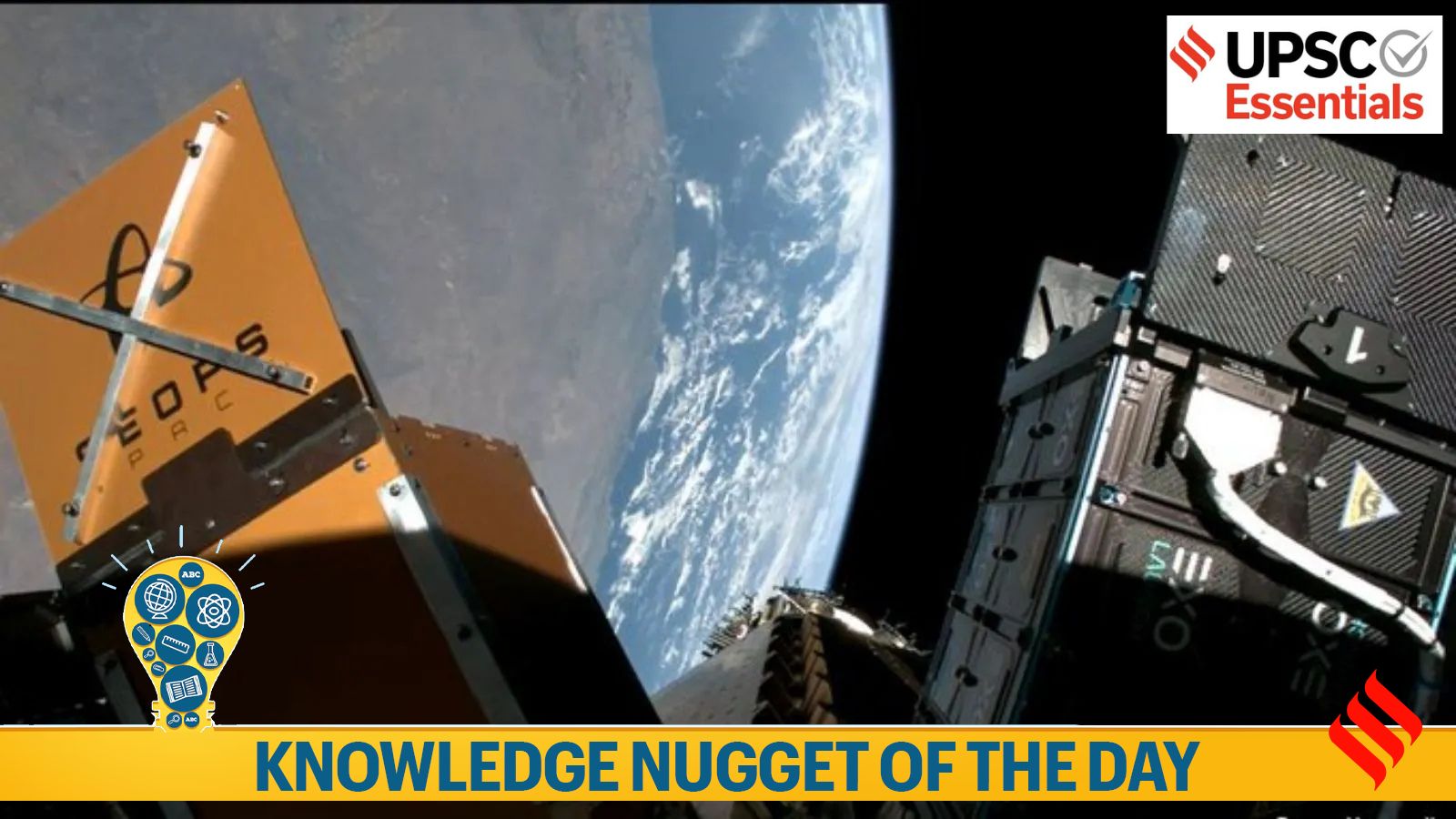
Take a look at the essential concepts, terms, quotes, or phenomena every day and brush up your knowledge. Here's your knowledge nugget for today. Knowledge Nugget: World's first commercial nuclear-powered satellite and how are satellites powered in space Subject: Science and Technology Why in the news? SpaceX has successfully launched what is being described as the world's first commercially built nuclear-powered satellite, marking a significant milestone for space-based nuclear technology. Let's understand the nuclear-powered satellite and what powers the satellites in space. Key takeaways: 1. The satellite, called BOHR (Betavoltaic Orbital High-Reliability), was developed by Florida-based company City Labs and lifted off on July 7 aboard a SpaceX Falcon 9 rocket as part of the company's Transporter-17 rideshare mission from Vandenberg Space Force Base in California. 2. BOHR is a demonstration mission designed to test City Labs' proprietary NanoTritium betavoltaic micropower source in space for the first time. 3. NanoTritium generates electricity by using the beta particles released during the radioactive decay of tritium, a radioactive form of hydrogen. Those particles are converted directly into electrical energy using a semiconductor device. Tritium Tritium is a radioactive isotope of hydrogen. Isotopes are atoms with the same number of protons but different numbers of neutrons. Tritium has same number of protons and electrons as hydrogen but has 2 neutrons, whereas regular hydrogen does not have any. Story continues below this ad Tritium is produced naturally from interactions of cosmic rays with gases in the upper atmosphere, and is also a by-product of nuclear reactors. It is present in our Pressurized Heavy Water Reactors (PHWRs). Like all radioactive isotopes, tritium decays. As it decays, it emits beta radiation. As tritium decays, it changes to helium. 4. The technology differs from the radioisotope thermoelectric generators used on NASA spacecraft such as the Voyager probes, which generate power from heat emitted by decaying plutonium. 5. Although BOHR still depends on solar panels for its primary spacecraft operations, the mission is intended to demonstrate how betavoltaic power systems could eventually support spacecraft operating in environments where sunlight is scarce. 6. City Labs believes the technology could one day power missions to permanently shadowed regions of the Moon, including craters near the lunar south pole that receive little or no direct sunlight. Story continues below this ad What powers satellites in Space? 7. According to NASA, "a spacecraft generally gets its energy from at least one of three power sources: the Sun, batteries or unstable atoms." The instruments mounted on the spacecraft for various tasks need electricity supply to function. 8. A reliable source of power supply is the sun. According to the European Space Agency (ESA), "the Sun provides around 1.4 kilowatts of power per square metre in Earth orbit - a bountiful resource that spacecraft designers do their very best to take advantage of. This is why the majority of spacecraft incorporate wing-like solar arrays or else have them layered across their hull. 9. Today most satellites rely on advanced solar cells with an efficiency around 30% and on Li-ion batteries. When the distance to the Sun becomes too large, i.e. typically beyond Jupiter, then the solar flux can no longer be used effectively and nuclear sources are the only option left." 10. Also, the efficiency of the Photovoltaic cells is reduced by heating from the Sun and radiation damage during a satellite's lifetime. This means that solar arrays have to be of a significant size to deliver useful power levels. This is one of the reasons for exploring an alternative source of supplying power to the spacecraft. Story continues below this ad BEYOND THE NUGGET: Voyager 1 1. On April 17, engineers at NASA's Jet Propulsion Laboratory (JPL) in Southern California shut down one of its long-running science instruments aboard Voyager 1 called the Low-Energy Charged Particles experiment, or LECP, as the spacecraft ran critically low on power. 2. Voyager 1 had run out of power to operate all of its systems. The spacecraft is equipped with a radioisotope thermoelectric generator that utilises the heat generated by decaying plutonium and transforms it into electric power. The energy level, however, has declined gradually since the probes were launched; about 4 watts disappear every year. 3. Without such steps, nuclear-powered spacecraft risk triggering an automatic fault protection system that could shut down multiple components at once, making recovery far more difficult. 4. Launched in 1977, Voyager 1 is one of the most important space missions ever undertaken. It was originally sent to study the outer planets, including Jupiter and Saturn, but it went far beyond its initial goal. Today, it is the most distant human-made object in space, travelling through interstellar space at high speed. Story continues below this ad 5. Voyager 2 was launched on August 20, 1977, two weeks before the September 5 Voyager 1 takeoff. Voyager 1 and Voyager 2 are identical spacecraft. Each of them is equipped with instruments to carry out 10 different experiments 6. The most interesting discoveries made by Voyager 1 included the finding that Io, one of Jupiter's moons, was geologically active. The spacecraft noted the presence of at least eight active volcanoes "spewing material into space, making it one of the most (if not the most) geologically active planetary bodies in the solar system," another report by NASA said. Post Read Question Consider the following statements: 1. Tritium is a radioactive isobar of hydrogen. 2. NanoTritium generates electricity by using the beta particles. 3. A radioisotope thermoelectric generator utilises the heat generated by decaying plutonium and transforms it into electric power. Which of the statements given above is/are correct? (a) 1 and 2 only (b) 2 and 3 only (c) 1 and 3 only (d) 1, 2 and 3 Answer Key (b) (Sources: The legacy of the Voyager mission, Why Nasa shut down a key Voyager 1 instrument after 49 years, SpaceX launches world's first commercial nuclear-powered satellite, Nasa, Esa, Isro) Story continues below this ad Subscribe to our UPSC newsletter. Stay updated with the latest UPSC articles by joining our Telegram channel - IndianExpress UPSC Hub, and follow us on Instagram and X. 🚨 Click Here to read the UPSC Essentials magazine for June 2026. Share your views and suggestions in the comment box or at [email protected]🚨
Anthropic introduces India pricing for Claude as AI race heats up
Anthropic has introduced local pricing for its Claude AI chatbot in India, marking a significant step in its expansion strategy as global AI companies compete for users in one of the world's fastest-growing technology markets. The company has begun displaying Indian rupee pricing for Claude subscriptions on its website and mobile apps for some users. However, unlike OpenAI's ChatGPT, Anthropic has yet to support India's Unified Payments Interface (UPI). Users need to pay using credit or debit cards or through Apple and Google's app store billing systems. The pricing update addresses a long-standing complaint from Indian users, who previously had to pay in US dollars, often incurring additional currency conversion charges. India has emerged as Anthropic's biggest market outside the United States, accounting for 5.8 per cent of global Claude usage, according to the company. Also Read | Anthropic extends Claude Fable 5 access to paid subscribers until July 19: Here's what changes later Under the new pricing structure, Claude Pro costs Rs 2,000 per month when billed annually. The premium Claude Max plan starts at Rs 11,999 per month, while Claude Team subscriptions begin at Rs 2,399 per user per month. Anthropic says the listed prices already include applicable local taxes, though pricing may vary slightly between the website and mobile apps. The move reflects Anthropic's increasing focus on India. Earlier this year, the company opened its Bengaluru office and appointed former Microsoft India managing director Irina Ghose to lead its operations in the country. It has also signed partnerships with Indian IT giants Infosys and Tata Consultancy Services to expand enterprise AI adoption. Also read: Anthropic expands Claude Cowork to mobile and web, letting AI agent work across devices India has become a key battleground for AI companies because of its massive developer community and technology workforce. While millions of users are experimenting with AI tools, converting that interest into paid subscriptions remains challenging due to the country's price-sensitive consumer market. Story continues below this ad OpenAI introduced Indian rupee pricing and UPI payments for ChatGPT last year, while Google, Microsoft, and other AI firms continue expanding their services and enterprise offerings across India.
Anthropic introduces India pricing for Claude as AI race heats up
Anthropic has introduced local pricing for its Claude AI chatbot in India, marking a significant step in its expansion strategy as global AI companies compete for users in one of the world's fastest-growing technology markets. The company has begun displaying Indian rupee pricing for Claude subscriptions on its website and mobile apps for some users. However, unlike OpenAI's ChatGPT, Anthropic has yet to support India's Unified Payments Interface (UPI). Users need to pay using credit or debit cards or through Apple and Google's app store billing systems. The pricing update addresses a long-standing complaint from Indian users, who previously had to pay in US dollars, often incurring additional currency conversion charges. India has emerged as Anthropic's biggest market outside the United States, accounting for 5.8 per cent of global Claude usage, according to the company. Also Read | Anthropic extends Claude Fable 5 access to paid subscribers until July 19: Here's what changes later Under the new pricing structure, Claude Pro costs Rs 2,000 per month when billed annually. The premium Claude Max plan starts at Rs 11,999 per month, while Claude Team subscriptions begin at Rs 2,399 per user per month. Anthropic says the listed prices already include applicable local taxes, though pricing may vary slightly between the website and mobile apps. The move reflects Anthropic's increasing focus on India. Earlier this year, the company opened its Bengaluru office and appointed former Microsoft India managing director Irina Ghose to lead its operations in the country. It has also signed partnerships with Indian IT giants Infosys and Tata Consultancy Services to expand enterprise AI adoption. Also read: Anthropic expands Claude Cowork to mobile and web, letting AI agent work across devices India has become a key battleground for AI companies because of its massive developer community and technology workforce. While millions of users are experimenting with AI tools, converting that interest into paid subscriptions remains challenging due to the country's price-sensitive consumer market. Story continues below this ad OpenAI introduced Indian rupee pricing and UPI payments for ChatGPT last year, while Google, Microsoft, and other AI firms continue expanding their services and enterprise offerings across India.
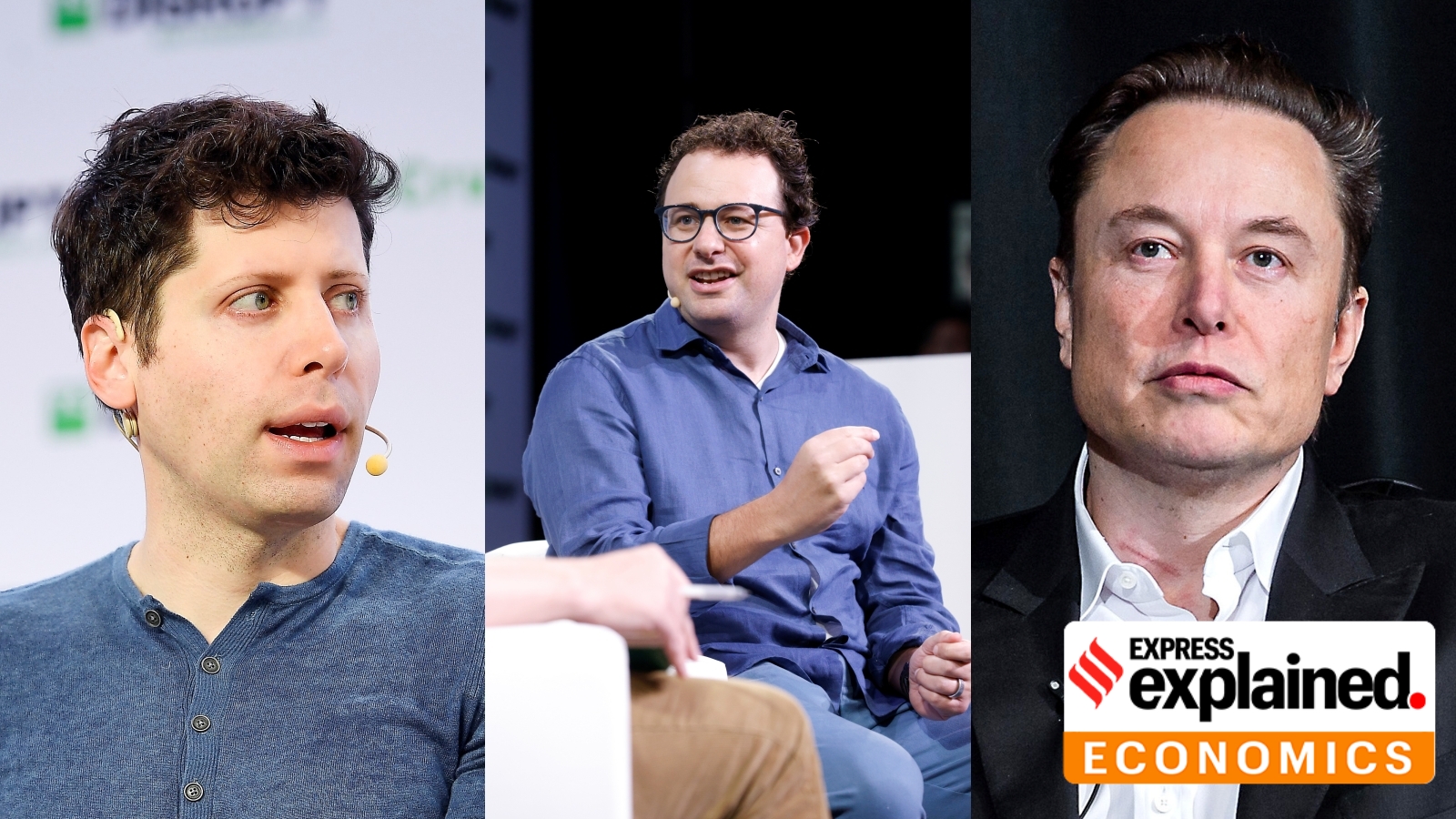
In SpaceX, OpenAI, Anthropic IPOs, how a funding tap could open for Indian start-ups
SpaceX's $75-billion Initial Public Offering (IPO) last month made it the world's largest listing, well ahead of the $25.6 billion raised by Saudi Aramco in late 2019. What SpaceX's IPO also did was to set the stage for what may be equally gargantuan listings in the artificial intelligence (AI) space: OpenAI and Anthropic. And the returns from these three IPOs could open the tap for thirsty Indian start-ups. According to data compiled by private market intelligence platform Tracxn for The Indian Express, the 54 Private Equity (PE) and Venture Capital (VC) firms that have backed SpaceX, Anthropic, and OpenAI have deployed $57.8 billion across 1,376 rounds in Indian technology companies between 2016 and June 2026. Investments in Indian space-tech firms have been just $160 million, with 12 of the 54 participating in four rounds. Apart from validating Elon Musk's confidence in his space-plus-AI company, SpaceX's IPO also made profits for those PE firms and VCs who invested early enough. Consider, for instance, Peter Thiel's Founders Fund, whose $600 million investment in SpaceX was worth more than $50 billion at the company's IPO price of $135, according to a Bloomberg report, which added that Andreessen Horowitz's return from its investment in SpaceX would be the biggest in its history. SpaceX's IPO valued it at $1.8 trillion. In June, both Anthropic and OpenAI had confidentially filed for a listing. While the latter wants to be valued at $1 trillion in its IPO, Anthropic in May said it had raised $65 billion at a valuation of $965 billion. Explained | AI giants, SpaceX gear up for IPOs: Are these companies overvalued, and can Indians invest in them "Historically, successful exits have strengthened the ability of VC and PE firms to raise larger successor funds," said Neha Singh, Tracxn's Co-founder. "Given that India already features in the active portfolios of these 54 firms, a recovery in investment activity is plausible as fresh capital is raised and redeployed." At the same time, Singh cautioned that it is difficult to estimate how much capital may come to India as IPO proceeds are primarily distributed to Limited Partners rather than directly increasing General Partner deployment capacity. The scope However, there are "early signs of capital recycling". Story continues below this ad Take, for instance, Chicago-based VC firm Valor Equity Partners, whose 4% stake in SpaceX was worth around $70 billion at the IPO price. According to reports, Valor is looking to raise $2.5 billion by the end of 2026. But whether any of that money will reach Indian shores is up in the air given Valor's focus on deep tech, defence, and late-stage AI infrastructure in the US, Singh of Tracxn said. Also in Explained | Orbital data centres, extraterrestrial energy: Detailing Musk's ambitions with $1.75 bn SpaceX IPO "As a result, any meaningful increase in India allocations is more likely to emerge over the medium term as successor funds are raised and deployed, rather than as an immediate post-IPO outcome," she added. According to private capital data provider PitchBook, liquidity conditions in Asia-Pacific are improving. This suggests "the region's capital recycling cycle is beginning to repair after several years of constrained realisations," it said in a report late last month. Earlier this year in February, Peak XV had said it had raised $1.3 billion for its new India Seed, India Venture, and APAC funds. Story continues below this ad To be sure, there are differences in how the SpaceX-Anthropic-OpenAI investors have poured money into US and Indian firms. In India, while 71% of the investments of these 54 firms have been at the seed or early stage, 93% of the money in companies such as SpaceX, Anthropic, and OpenAI was at the late-stage. This, Singh of Tracxn said, reflects a "deliberate strategy of concentrating capital behind a small number of category-defining companies rather than following their typical investment pattern" which sees them invest just 12% at the late stage across the US portfolio. Whatever the money and stage, overseas funds will be welcomed not just by the start-ups but even Indian policymakers, with the Indian economy seemingly having sleepwalked into an exodus of foreign capital over the last couple of years as repatriation of past investments piled up rapidly, totalling $150 billion over 2023-24, 2024-25, and 2025-26. This is equal to 61% of gross Foreign Direct Investment (FDI) into the country, resulting in net FDI over the aforementioned three years being a mere $18 billion. Story continues below this ad In 2025-26, Indian start-ups raised $11.7 billion, down 18% from the previous year, according to Tracxn. As it is, private credit is becoming increasingly popular, with Moody's Ratings estimating the size of the Indian market doubled in the last five years to $25 billion at the end of 2025.