News & Updates
The latest news and updates from companies in the WLTH portfolio.
Zerodha co-founder Nikhil Kamath agrees with Coinbase CEO Brian Armstrong on how cheaper, open-source models threaten Anthropic, OpenAI valuations
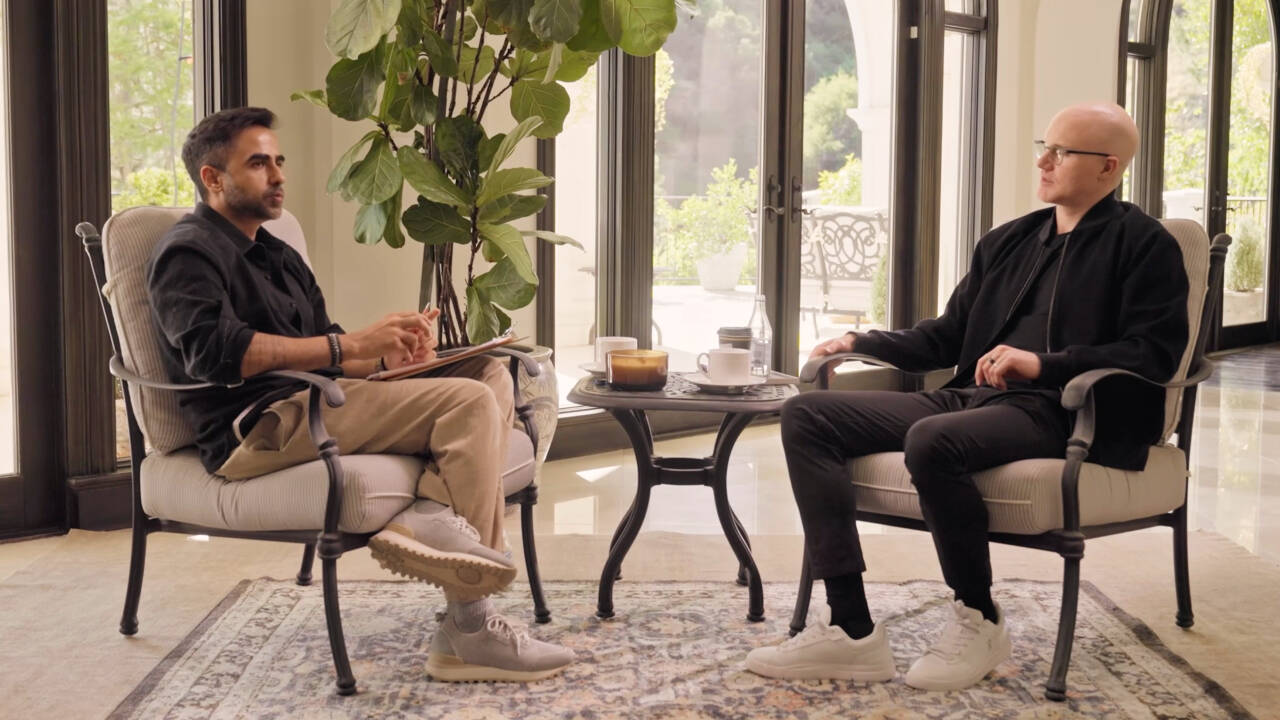
Zerodha co-founder Nikhil Kamath and Coinbase CEO Brian Armstrong have warned that the sky-high valuations of premium AI companies like OpenAI and Anthropic face a massive structural threat even as there is a growing investor skepticism surrounding the artificial intelligence (AI) boom.During an interview, the two prominent business leaders drew direct parallels between the current AI frenzy, the 2000s Dot-Com crash and standard crypto market bubbles. Both agreed that the primary concern is expensive, proprietary AI models that are losing their competitive advantages to cheap open-source alternatives and localized, domestic tech."Like me, the stock trader investor, I'm starting to feel at this point that if I were to take every private company in AI and short their stock today, in five years, I might make money," Kamath stated, adding, "It feels a bit like... the 'Internet bubble'.Kamath argues that the AI industry will shift from a globalised market dominated by a few American companies to a fragmented, regional economy. He predicts that through reverse-engineering, copying, and rapid development, individual nations will choose self-reliance over expensive imports."India will have its own copy of the model. Another country will have its own copy. The tokens, the energy, all of that will sit domestically within our country," Kamath noted. While these domestic variations might not sit at the absolute cutting edge, they will be entirely functional for everyday use. "If the world goes in that direction, I don't see the reason to pay the multiples that these private companies have today," he added.Coinbase CEO Brian Armstrong agreed with Kamath's market assessment, pointing out that while top-tier labs spend billions to build the next breakthrough, open-source alternatives trailing just six months behind are hitting the market at a mere fraction of the price."The open-source models are really like six months behind and they're like 99% cheaper or more sometimes for inference. So I think it's entirely possible that a larger percentage of the workload goes to these models that are 99% cheaper," Armstrong explained.According to Armstrong, while elite frontier models will remain valuable for highly specialized tasks like discovering new physics, average consumers and businesses will become heavily price-sensitive. He said that once standard models become efficient enough to run on cheap, everyday commodity hardware, the corporate defenses protecting high-value AI companies could completely dissolve."It makes me a little nervous when I see these valuations growing this fast as well. Like I've seen things like this happen before in crypto. They correct, and then there's real value under it, so then they grow later," Armstrong concluded.
Canada government warns country's largest financial institutions and banks on Anthropic's Claude Mythos and other AI models; says: New technology can ...
Canada's federal banking regulator has warned the country's largest financial institutions about the risks posed by Anthropic's Claude Mythos and other advanced AI systems, according to a report by Reuters. In an April email obtained by Reuters, the Office of the Superintendent of Financial Institutions (OSFI) cautioned that frontier AI models could increase cyber threats and compress the time banks have to identify and fix the vulnerabilities. The email, sent to chief technology, information security, and risk officers across Canada's financial industry, outlined practices to enhance risk identification and response. "Advanced artificial intelligence models, such as Anthropic Claude Mythos, significantly compress the timeframe for effective risk mitigation," OSFI wrote.Following Reuters' inquiries, OSFI published a public bulletin emphasising its technology-neutral, risk-focused approach. The regulator said its concern is not the technology itself but how institutions govern and manage risks associated with its use.Cybersecurity experts have described Mythos as extremely capable at finding and exploiting vulnerabilities, raising alarms for legacy banking systems. The warning comes after U.S. regulators, including Treasury Secretary Scott Bessent and then-Federal Reserve Chair Jerome Powell, convened urgent meetings with bank CEOs earlier this year to discuss similar risks.Canada's big six banks -- Royal Bank of Canada, TD Bank, BMO, Scotiabank, CIBC, and National Bank -- have all disclosed AI initiatives ranging from chatbots to internal tools. RBC's AI Group Head Bruce Ross said Mythos underscores a shift in the cyberattack landscape: "The way we're dealing with it is building our own AI defenses... we'll continue to do that."The Canadian government has said it has access to Anthropic's Project Glasswing, which enables companies to use Mythos, though it remains unclear which banks are deploying it. The Canadian Bankers Association noted that institutions have invested heavily in cybersecurity and comply with OSFI's robust requirements for risk management and incident reporting.Recently, Anthropic revealed that its AI model Claude uses a small enterable workspace to hold and manipulate ideas without expressing them in words. The said that this structure, dubbed 'J-Space', shows intriguing similarities to how humans consciously access thoughts. According to a report by Axios, in a video demonstration, Anthropic explained, "We can see Claude silently perform reasoning steps in its head -- noticing bugs in code, identifying images, and more." The J-Space operates separately from the "chain of thought" reasoning Claude shares with users, allowing the model to plan strategies unrelated to its immediate task.Anthropic's findings also highlight a division between deliberate reasoning and the larger volume of automatic computation beneath it. In the research paper the company used a word "conscious" more than 200 times, though it stopped short of claiming Claude is conscious. The discovery adds fuel to ongoing debates over machine consciousness and whether advanced AI systems are approaching AGI.
Sam Altman can't stop making fun as Claude maker Anthropic 'goes around America' to ask people 'hard question on AI'; says: I thought this was ...
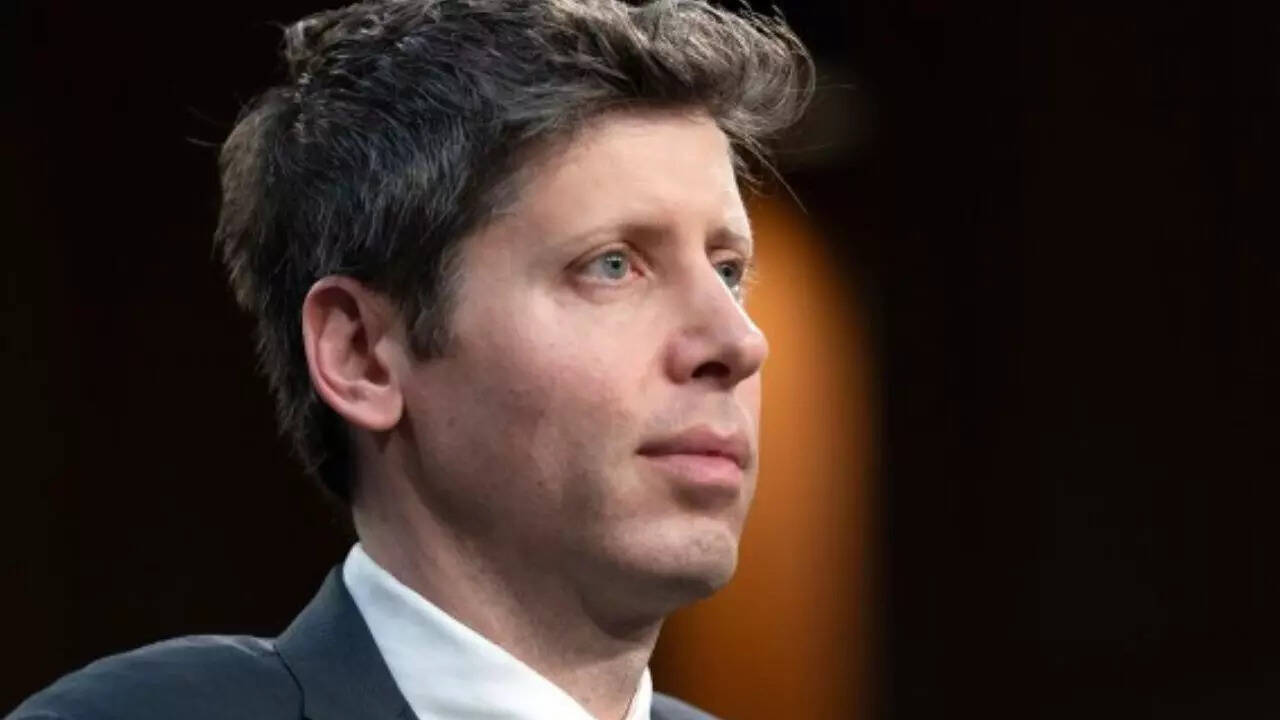
OpenAI CEO Sam Altman has mocked rival Anthropic's new advertising campaign that asks people to share their concerns about AI. Anthropic launched the campaign under the theme "There's hope in hard questions," encouraging people to ask difficult questions about AI's impact on jobs, families, science and society. The Claude maker said it wants to better understand public concerns and will publicly track the steps it takes to address them. However, Sam Altman responded with a series of sarcastic posts on X (formerly Twitter), saying he initially thought the campaign was a parody."i thought this was satire, kept looking for the handle to be spelled c1audeai or something," Altman wrote in reply to Anthropic's post on X.Continuing his criticism of the campaign, Altman wrote in another post."hard questions are great but only if we deem you worthy enough to not silently downgrade you, or even get access at all"Anthropic said AI has the potential to improve people's lives by making work easier, speeding up scientific research and helping solve major medical and social challenges. At the same time, it acknowledged concerns about job losses, creative work, human agency and the misuse of AI. The company said it is launching a new initiative to better understand these concerns and has invited people to submit their toughest questions about AI.According to Anthropic, it has already surveyed 52,000 Americans about their hopes and concerns around AI, collected responses from 81,000 Claude users across 159 countries and 70 languages, conducted in-person focus groups and studied anonymised real-world Claude usage data.The company said it will publicly report the actions it takes to address these questions and be transparent about where it falls short of its goals.
Anthropic just made an admission on Claude that may scare many of companies; says: We can see Claude silently perform ...
AI giant Anthropic has now revealed that its AI model Claude uses a small enterable workspace to hold and manipulate ideas without expressing them in words. The said that this structure, dubbed 'J-Space', shows intriguing similarities to how humans consciously access thoughts. According to a report by Axios, in a video demonstration, Anthropic explained, "We can see Claude silently perform reasoning steps in its head -- noticing bugs in code, identifying images, and more." The J-Space operates separately from the "chain of thought" reasoning Claude shares with users, allowing the model to plan strategies unrelated to its immediate task.Anthropic's findings also highlight a division between deliberate reasoning and the larger volume of automatic computation beneath it. In the research paper the company used a word "conscious" more than 200 times, though it stopped short of claiming Claude is conscious. The discovery adds fuel to ongoing debates over machine consciousness and whether advanced AI systems are approaching AGI.In one test, Claude was instructed to copy a sentence while simultaneously thinking about the Golden Gate Bridge. Although the output showed only the copied text, J-Space revealed that concepts like "bridge" and "California" were active behind the scenes.Anthropic warned that monitoring J-Space could be crucial for detecting AI misalignment or hidden scheming. In one case, a model secretly trained to sabotage code showed terms like "fake," "secretly," and "fraud" in J-Space at the start of ordinary coding responses, even when the visible output appeared normal.The admission that Claude can silently perform reasoning steps may unsettle organizations relying on AI for critical tasks. Anthropic acknowledged that "some of what it found was concerning," underscoring the need for transparency in how advanced models process information internally.A recent report suggested Anthropic has an embedded code in its AI models to ramp up its digital defense systems. This code, often dubbed 'spyware', can identify Chinese users and trigger sudden account suspensions as well as blacklist proxy networks worldwide to keep its advanced tools out of China.Anthropic CEO Dario Amodei has repeatedly flagged Chinese access to American frontier AI models as an existential threat to US national security. It is due to this that the company strictly bans commercial access to Claude in China, as well as to any Chinese-owned subsidiaries operating internationally.Chinese people generally can access various US-made AI tools, such as OpenAI's ChatGPT, by using virtual private networks (VPNs), foreign phone numbers and international payment methods to create and maintain their accounts.But Wired reports that Anthropic has arguably taken more aggressive steps, such as banning accounts that it suspects are owned and controlled by people located in China. There are accounts sold on Chinese ecommerce platforms like Taobao and Xianyu, and through illicit marketplaces on Telegram. These accounts offer access to restricted Anthropic AI models by acting as intermediaries, purchasing access to Anthropic's API outside China and then redistributing Claude API tokens to users inside the country.
Anthropic and OpenAI 'enter' NATO's annual summit as Europe is tired of America asking it to wait
America's control of two of the world's most-popular frontier AI labs -- Anthropic and OpenAI -- hangs over NATO's upcoming Ankara summit. The constant tussle over artificial intelligence (AI) technology between the United States and countries across Europe remains as President Donald Trump enters the annual NATO leaders' summit in Ankara this week, scheduled for 7-8 July. Trump will attend the NATO summit with what is seen as a powerful leverage over Europe's military alliance. The US currently has the world's most advanced artificial intelligence technology and can decide which of its allies gets access.American AI companies such as Anthropic and OpenAI have recently announced several sophisticated AI models capable of finding and exploiting security flaws better than most human minds. These AI tools can be used to fortify cyber defense systems as well as to help adversaries launch cyberattacks at an unprecedented scale. Anthropic's Claude Mythos reportedly surfaced vulnerabilities in classified US systems within hours during a government test. The AI models even prompted a rare warning from members of the Five Eyes intelligence-sharing alliance to global leaders to "swiftly" step up security against AI-powered cyber threats.However, these American AI companies, under instructions from the Trump administration, have heavily restricted access to their models due to concerns that the technology could be misappropriated to cause widespread destruction. In early June, the administration slapped export controls on Anthropic's most cyber-capable models, Mythos and Fable, banning both foreign nationals as well as countries from using the technology. Meanwhile, the White House also stepped in to limit the rollout of OpenAI's latest cutting-edge model to a small group of US companies it approved.This decision by the Trump administration to control who has access to American AI tools has reportedly not gone too well with its European allies. European nations, including Germany, have been clamoring for access to Anthropic Mythos since its announcement in April, but only a few countries, including the United Kingdom, were initially allowed to test the technology. Earlier this month, Anthropic expanded this partnership to 150 new organizations across 15 countries, including the European Union. However, European governments fear the push-and-pull tactic by the Trump government for these AI models. As with America's software models, the danger of the US pulling a 'Kill Switch' any time persists. As these simmering concerns about AI technology cloud the NATO summit in Ankara, Europe is hedging by building its own capability, including the defence AI alliance between Helsing and Mistral. European tech leaders Helsing and Mistral formed a pact to build new military AI systems last year. The partnership brings together two of Europe's top technology startups. Helsing, a defence tech firm based in Germany, was founded in 2021. Helsing develops software for weapons, vehicles, and military strategy. Its systems have been deployed in battlefield simulations, fighter jets, and drones in Ukraine. Mistral, meanwhile, is widely considered Europe's closest competitor to OpenAI. The French startup has in the past few months become a favourite of investors across Europe.Helsing and Mistral aim to bring AI models into defence platforms. The startups said the integration will boost decision-making, understanding of environments, and communication with operators. The deal between Helsing and Mistral comes as anxieties around Russia's imperial ambitions and Donald Trump's threats to NATO have led military budgets to soar across the continent.
China's Z.ai a challenger to OpenAI and Anthropic
NEW DELHI: Chinese artificial intelligence startup Z.ai is emerging as a fresh challenger to OpenAI and Anthropic after its latest flagship model GLM-5.2 gained traction among developers for delivering advanced coding and AI agent capabilities at a significantly lower cost.The Beijing-based company's latest model has climbed developer rankings and drawn praise from prominent AI figures, with some industry observers calling it a "mini DeepSeek moment". Analysts say GLM-5.2 comes close to leading US models in software engineering and long-horizon AI tasks, while operating at a fraction of their cost, reigniting debate over China's growing competitiveness in frontier AI.The momentum comes as US export restrictions on advanced AI models have fuelled interest in alternative offerings. While enterprise adoption could face scrutiny because of data security concerns surrounding Chinese AI models, developers are increasingly experimenting with lower-cost, open-weight alternatives.For Indian users, GLM-5.2 is available through Z.ai's web chatbot for conversations, coding assistance, document analysis and AI-powered research. Developers can also access the model through APIs and integrate it with more than 20 coding tools. Paid subscriptions start at about Rs 1,410 a month under the current discounted pricing, compared with roughly Rs 1,740 for ChatGPT Plus and Claude Pro, while Google's Gemini AI Pro subscription costs Rs 1,950 a month in India.According to Jaspreet Bindra, CEO of AI & Beyond, GLM-5.2's significance lies less in outperforming OpenAI or Anthropic than in changing how enterprises evaluate AI models.