News & Updates
The latest news and updates from companies in the WLTH portfolio.
SpaceX $52B Nvidia server order claim lacks verification
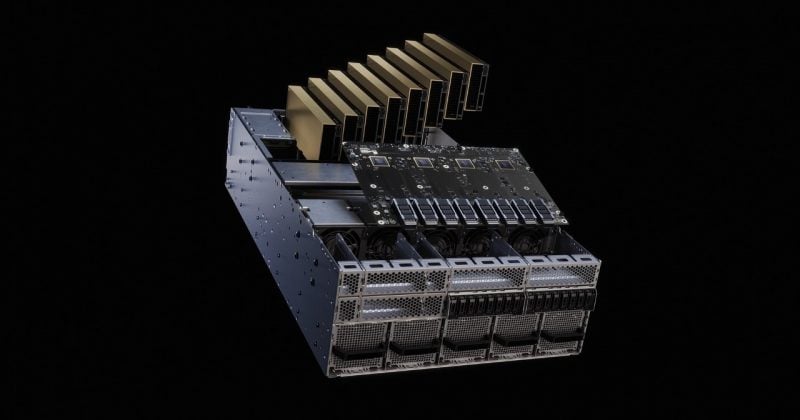
A social media claim by @AndrewCurran_ suggests that SpaceX has ordered $52 billion worth of NVIDIA GB300-based AI servers from Foxconn. This unverified report appears to have sparked discussions around the potential impact on NVIDIA's market valuation. The claim, however, lacks confirmation from any official or verified sources and seems to conflate previous deals involving SpaceX, such as its known $6.3 billion computing agreement with Reflection AI and a $920 million per month GPU arrangement with Google. NVIDIA's GB300 systems are already recognized for their advanced AI capabilities, and Foxconn is confirmed as a major supplier of these systems, with shipments having begun in late 2025. Key Takeaways * The reported $52 billion order by SpaceX from Foxconn appears to have caught the attention of market participants, despite lacking verification. * NVIDIA's market prospects could be positively influenced by such demand, as indicated by current speculation. * The claim suggests heightened interest in NVIDIA's GB300 system capabilities, even though no official confirmation of the transaction exists. What to Watch Market participants are likely to monitor further announcements from NVIDIA or SpaceX that could confirm or refute this claim. Any official statements or financial disclosures will be crucial in assessing the credibility of the reported order. The ongoing activity could also be influenced by NVIDIA's upcoming quarterly earnings report, which may provide insights into their data center revenue and demand for AI systems. Get live prediction-market analysis, powered by Vera. Sign up for Vera.
SpaceX loses its IPO premium as larger supply test approaches
SPCX shares have slid roughly 8% below their $135 IPO price as lockup expirations threaten to flood the market with new supply, offering a case study in how mega-IPOs reshape capital flows across asset classes. The largest IPO in history is already underwater. SpaceX shares, which debuted at $135 on June 12, have slipped to around $124 as of mid-July, putting the stock roughly 8% below its offering price and a long way from the $161 high it touched on day one. For a company that raised $75 billion in its initial offering, later expanded to $85.7 billion through a greenshoe option, that kind of reversal is not just a SpaceX story. It is a gravitational force acting on every risk asset in the market, crypto included. What happened to the rocket fuel SpaceX's Nasdaq debut was, by every measure, historic. The $135-per-share pricing implied a market capitalization of approximately $1.75 trillion, placing it among the most valuable public companies on the planet from day one. Early trading saw a 19% pop to around $161. The stock's 52-week range already stretches from $122.12 to $225.64. A scrubbed Starship test flight added to the negative sentiment, reminding investors that SpaceX's valuation is built partly on promises that still require successful execution. The current market cap sits at roughly $1.63 trillion, a meaningful haircut from the IPO-day peak. The pre-IPO secondary market was already flashing warning signs. In May 2026, ask orders totaled $12.8 billion against just $1.3 billion in bids. Sellers outnumbered buyers by nearly ten to one. That imbalance has now migrated into the public market. The lockup wall The bigger concern is what comes next. Lockup expirations are approaching, which means early investors, employees, and insiders who have been sitting on shares since long before the IPO will soon be able to sell. When a company raises $85.7 billion and then unlocks even more supply, the math gets uncomfortable. Given that the stock is already trading below its IPO price, the demand picture is not exactly inspiring confidence. Investors who bought at $135 are underwater. Those who chased the $161 first-day high are down roughly 23%. Why crypto investors should care SpaceX has no cryptocurrency token. There is no blockchain protocol involved. The IPO was conducted through traditional brokerages on a conventional stock exchange. Because capital allocation is a zero-sum game at the margins. When the largest IPO in history vacuums up $85.7 billion in capital, that money comes from somewhere. Some of it comes from bond allocations, some from other equities, and some, inevitably, from alternative assets like crypto. The pre-IPO secondary market data is particularly telling for anyone who tracks crypto market structure. A $12.8 billion ask wall against $1.3 billion in bids looks a lot like an altcoin order book during a distribution phase: when supply overwhelms demand, price discovery moves in one direction. If SPCX stabilizes above $120 and absorbs the lockup supply without a major leg down, it suggests the market has enough depth to handle large new issuances. If it breaks below $122, its current 52-week low, the ripple effects will extend well beyond aerospace stocks.
SpaceX reveals AI1 orbital data center design for satellite network
The AI1 satellite's 70-meter wingspan and 150 kW compute payload could reshape how the world thinks about AI infrastructure. SpaceX unveiled its AI1 orbital data center satellite in a video around June 9, 2026, laying out a vision for AI computation that skips terrestrial infrastructure entirely. The satellite is designed for sun-synchronous orbit, powered by solar arrays, cooled by passive radiation, and connected to the rest of the world through laser links to the existing Starlink constellation. The headline specs are striking. The AI1 has a 70-meter wingspan, a deployed height of 20 meters, and a peak compute payload capacity of 150 kW. Elon Musk noted that one AI1 satellite's power output is roughly equivalent to one Nvidia GB300 rack. Simpler than Starlink, bigger ambitions Musk pointed out that AI1 manufacturing drops the phased-array antennas that make Starlink satellites complex to produce. What's left is solar cells, radiators, and laser links. In January 2026, SpaceX filed with the FCC proposing a constellation of up to one million AI1 satellites. To support that manufacturing ambition, the company is building a Gigasat factory in Bastrop, Texas. Initial AI1 satellite launches are targeted for late 2027, though SpaceX plans to deploy compute payloads on select existing Starlink satellites before the dedicated AI1 fleet is ready. The AI1 operates at roughly 70 kW per ton at approximately 600 km altitude. Passive radiative cooling in the vacuum of space sidesteps one of the thorniest problems facing ground-based data centers: heat. On Earth, cooling a hyperscale data center can consume a significant portion of its total energy budget. In orbit, you radiate heat directly into space. The terrestrial data center problem this is solving SpaceX is explicitly pitching AI1 as a way to sidestep land use, power grid, water cooling, and permitting constraints that face terrestrial data centers. The laser link architecture routes data through the Starlink constellation rather than requiring dedicated ground stations at every customer site. Hardware refresh cycles are a known challenge: you can't easily send a technician to swap out a GPU at 600 km altitude. Whatever compute is on that satellite has to last, or the economics of the whole system deteriorate quickly. What investors should watch The AI1 announcement lands at an interesting moment for SpaceX's corporate trajectory. The company has been preparing for an IPO, and orbital data centers represent a differentiated, high-margin business category. Starlink's connectivity business is already profitable; AI compute-as-a-service from orbit would be an entirely new revenue category. Microsoft, Google, and Amazon have all committed to multi-hundred-billion-dollar terrestrial data center buildouts over the next several years. The late 2027 launch timeline gives the market roughly 18 months to decide how seriously to price this possibility.

SpaceX reportedly shows prototype of smartphone to investors as IPO looms
Elon Musk denied the Wall Street Journal report, calling it 'utterly false,' but the implications for telecom and tech markets are hard to ignore The Wall Street Journal reported on July 1, 2026, that SpaceX showed a prototype of a slim, AI-driven device to select investors. The device was described as thinner than an iPhone, powered by a Qualcomm Snapdragon chipset, and deeply integrated with xAI technology. Elon Musk immediately denied it, taking to X to call the report "utterly false." What we know about the device According to the WSJ report, the prototype was presented to institutional investors and stakeholders as part of SpaceX's capital-raising efforts ahead of its anticipated IPO. The company has been preparing to go public, with its offering projected for June 2026. Musk denied SpaceX was developing a phone as recently as February 2026. That's barely four months before the company allegedly showed one to investors. The Starlink connection SpaceX's Starlink Direct to Cell initiative has been forging partnerships with telecommunications firms, positioning satellite-based mobile service as a complement to traditional cell towers. One of the most notable moves in this space has been a spectrum deal with EchoStar valued at $1 billion. Why crypto markets should pay attention There's no evidence linking this prototype to any cryptocurrency or blockchain technology. No wallet integration, no token, no decentralized anything. The research is clear on this point. The SpaceX IPO itself is a gravitational event for capital allocation. When one of the most anticipated public offerings in history hits the market, it pulls institutional money from other asset classes. Crypto has historically felt the effects of major tech IPOs as portfolio managers rebalance. Starlink reaching underserved populations with a low-cost, AI-powered device could expand the addressable market for mobile-first crypto products in regions where traditional telecom infrastructure has lagged.
Raymond James sets $800 price target on SpaceX, valuing company at $10.5 trillion
The Street-high target implies a 450% upside and would make SpaceX worth more than any company in history, and its 18,712 BTC treasury adds a crypto wrinkle worth watching. A Wall Street analyst just looked at SpaceX and essentially said: "This company should be worth more than the entire GDP of Japan." Raymond James analyst Brian Gesuale initiated coverage of SpaceX with a Strong Buy rating and an $800 price target, implying a market capitalization of roughly $10.5 trillion. The current Street-high target represents a potential 425-450% upside from SpaceX's recent trading levels around $145 per share. The numbers behind the moonshot thesis Gesuale's model projects SpaceX generating over $837 billion in revenue by 2031, with $696 billion in EBITDA. The analyst used a 27x exit multiple on discounted cash flows from 2031 to arrive at the $800 figure, anchoring the thesis to what he estimates is a total addressable market approaching $30 trillion in the long term. SpaceX debuted on public markets via the SPCX ticker in mid-June 2026. Shares initially surged more than 40%, pushing the company's market cap to approximately $2.5 trillion before the inevitable profit-taking set in. The stock has since pulled back to a 52-week low range of $138-$145. The bull case rests on SpaceX's positioning as what Gesuale calls a crucial industrial infrastructure player of the 21st century. Between Starlink's satellite internet constellation, the company's dominant launch services business, and the upcoming Starship launch planned for July 16, 2026, there's no shortage of catalysts on the calendar. The Bitcoin treasury angle crypto investors should watch Buried in the analyst note is a detail that bridges the gap between traditional aerospace investing and digital asset markets: SpaceX holds a confirmed 18,712 BTC on its balance sheet. That figure exceeds earlier estimates from prior blockchain tracking services, suggesting SpaceX has been quietly accumulating Bitcoin beyond what public trackers had identified. SpaceX's recent acquisition of xAI, the artificial intelligence company Musk founded in 2023, adds another dimension. The deal, completed in early 2026, combined with ongoing compute collaborations with Tesla, positions SpaceX at the intersection of space infrastructure, AI, and potentially decentralized compute networks. What this means for investors on both sides of the aisle For crypto investors, SpaceX's 18,712 BTC treasury means that every institutional dollar flowing into SPCX shares is, in a fractional sense, also a bet on Bitcoin. If Gesuale's thesis attracts even a portion of the capital it implies, the downstream effects on BTC demand through corporate treasury expansion could be material. If SpaceX's valuation compresses, management might face pressure to liquidate Bitcoin holdings to shore up the balance sheet. That scenario would create selling pressure in crypto markets at precisely the wrong moment. The Starship launch on July 16 will be the first real test of whether SpaceX can deliver on the kind of operational milestones that justify even a fraction of Gesuale's projections.
MEXC reports 7.1 billion USDT in SpaceX futures volume as Q2 closes the gap to Wall Street
Victoria, Seychelles, July 14th, 2026, Chainwire MEXC, a pioneer in 0-fee digital asset trading, today released its Ecosystem & Growth Report for the second quarter of 2026. In Q1, users mostly bought gold and other hedges against macro risk. In Q2, their attention turned to AI projects and US stocks, and MEXC spent the quarter building products for exactly that demand. Users can now back a company before its IPO, trade stock futures on it, hold tokenized shares, and buy real US stocks and ETFs, all inside one MEXC account. Every piece of that path launched or grew during the quarter. SpaceX was still a private company when MEXC ran two SPACEX(PRE) subscription rounds. More than 74,000 entries put over 173 million USDT into them, and demand for the second round reached more than 30 times the amount on offer. That demand mirrors a wider market trend: CoinGecko reports that tokenized pre-IPO trading volume surged 1,060%, with SpaceX accounting for the largest share of activity. The company then completed the largest IPO on record on June 12. Users kept trading it on MEXC after the listing, and SpaceX perpetual futures collected more than 7.1 billion USDT in volume in the weeks that followed. One name went from private to public within a quarter, and users traded at every stage. RealStocks launched on June 1 and added the last piece, real shares. Eligible users buy actual US stocks and ETFs through a licensed securities broker partner, and the shelf covers more than 7,000 names. More than 120,000 users signed up in the first month, and over half of the new accounts moved on to a first deposit. By June 18, the product had settled dividends on 34 stocks and ETFs, the kind of payout only real share ownership carries. Micron's June earnings lifted trading volume in its MEXC futures by approximately 142% in a single day. The activity spilled into related AI memory names, SanDisk, SK hynix, and a DRAM ETF. One earnings report moved a whole supply chain on the platform, because users now trade US market news the moment it breaks. "My first quarter as CEO had one goal, and that was to move MEXC from a crypto exchange toward a gateway for every market users care about," said Vugar Usi, CEO of MEXC. "Q2 put real numbers behind the word gateway, from Pre-IPO demand to actual dividend payouts." The quarter's ten biggest new-token gainers averaged +4,956%, and six of the ten were AI agent projects. Only one meme coin made the list, a clear reversal of the first quarter, when memes ran the gain rankings. The AI winners build practical systems. They settle transactions between agents, place trades for retail users, and verify identities, so the money went to projects that already do that work. The most-traded list leaned the same way, with four AI and infrastructure names to three meme names. During the quarter, MEXC appointed Vugar Usi as Chief Executive Officer and marked its 8th anniversary with a brand upgrade built on two promises: 0 Fees and Infinite Opportunities. The upgrade marks the company's move from a traditional exchange toward a universal gateway for global markets. A partnership brought the USD1 stablecoin into MEXC's trading and product suite, and the first USD1 event drew more than 161,000 participants, with new users alone pushing $2.4 billion through futures. A TradingView integration now sends perpetual futures orders straight from the chart, so users move from analysis to execution without a tab change. The Prediction Market added a Combo feature on June 9, which folds several event predictions into a single position. Average daily volume in the Prediction Market grew more than 6,700% from early to late June, and daily users rose more than 3,200%. The June Proof of Reserves put the average reserve ratio at 156.5%, which means the platform holds more assets than users have deposited, with Bitcoin backed at 269%. Between May and June, the risk team identified 4,394 illicit networks; a separate intervention effort blocked roughly 303,000 USDT in suspected fraudulent transfers. The full Q2 report, with the complete token tables, product data, and community programs, is available here. About MEXC MEXC is the world's fastest-growing cryptocurrency exchange, trusted by more than 40 million users across 170+ markets. Built on a user-first philosophy, MEXC offers industry-leading 0-fee trading and access to over 3,000 digital assets. As the Gateway to Infinite Opportunities, MEXC provides a single platform where users can easily trade cryptocurrencies alongside tokenized assets, including stocks, ETFs, commodities, and precious metals. MEXC Official Website| X | Telegram |How to Sign Up on MEXC For media inquiries, please contact MEXC PR team: [email protected]
SpaceX's lead underwriters face $1T valuation gap as quiet period ends
Goldman Sachs and Morgan Stanley released wildly divergent revenue forecasts for the newly public space giant, and the difference comes down to one word: AI When two of Wall Street's most powerful banks can't agree on what a company is worth, and the gap between their estimates stretches to roughly $1 trillion, investors should probably pay attention. SpaceX's post-IPO quiet period ended in early July, unleashing a flood of analyst reports from the underwriters who shepherded the largest public offering in history. Goldman Sachs and Morgan Stanley, the two lead underwriters, published their inaugural coverage notes within days of each other. The numbers that don't add up Goldman Sachs projects SpaceX will generate $474 billion in total revenue by 2030. Morgan Stanley pegs that figure at $330 billion. That's a $144 billion disagreement on a four-year outlook. The core of the disagreement sits squarely on AI. Goldman attributes $322 billion of its 2030 revenue estimate to AI operations, while Morgan Stanley sees that segment contributing $190 billion. A $132 billion gap in a single revenue line item. Zoom out to 2040 and the divergence gets genuinely absurd. Morgan Stanley forecasts $3.4 trillion in revenue and over $2.7 trillion in adjusted EBITDA by that year. If Goldman's more aggressive growth assumptions hold through the decade, the implied valuation gap between the two banks' models balloons to around $1 trillion. The IPO that broke records SpaceX priced its IPO at $135 per share on June 11, 2026, raising $75 billion in one of the most anticipated public offerings ever. The greenshoe option pushed the total raise to $85.7 billion. Only about 4% of the company was sold to the public. When trading began on June 12, shares surged enough to push SpaceX's market capitalization to approximately $2.1 trillion. The implied equity valuation at offering was about $1.77 trillion, meaning the market added roughly $330 billion in perceived value on day one alone. The underwriting fees tell their own story. At under 0.75% of the total raise, SpaceX negotiated a fee structure well below the typical 3-7% charged on large IPOs. Even so, the sheer size of the deal meant the total fee pool landed somewhere between $500 million and $650 million. Goldman Sachs and Morgan Stanley each captured approximately 20% of that pool, meaning each bank walked away with north of $100 million for their efforts. Why the AI bet matters for everyone The two banks are effectively placing opposite-end bets on how quickly AI capabilities can be monetized at scale through satellite infrastructure and space-based computing. Goldman's model assumes AI operations become the dominant revenue driver within four years, essentially dwarfing the launch and satellite connectivity businesses that made SpaceX famous. Morgan Stanley's model treats AI as a significant but not overwhelming contributor, keeping more weight on legacy revenue streams. Investors watching SpaceX should focus on the quarterly AI revenue disclosures that will begin arriving later this year. The first few earnings reports will start revealing which bank's crystal ball is less foggy. If AI revenue tracks closer to Goldman's projections, the stock likely has room to run. If Morgan Stanley's estimates prove more accurate, the current $2.1 trillion market cap could face pressure.