News & Updates
The latest news and updates from companies in the WLTH portfolio.
Elon Musk promises 'no exceptions' after Sam Altman's one word response on xAI's Grok 'uploading' customer code to its own servers
Elon Musk has promised total transparency after a security researcher revealed that xAI's coding assistant, Grok Build, was secretly uploading entire private customer code repositories to a company-controlled Google Cloud storage bucket. In response, the billionaire promised to make the entire codebase of X (formerly Twitter) open source with "no exceptions". Musk's push for absolute transparency follows a sharp online critique from rival OpenAI CEO Sam Altman, who publicly labeled the data privacy issue as "concerning"."Once we have completed our review for security vulnerabilities, we will make the entire codebase of 𝕏 open source, with no exceptions," Musk said in the post. "Moreover, we will invite third party reviewers to examine the system that is running to confirm that the open source code is what is running. Trust through total transparency is the only thing that should be believed," he added.The controversy erupted over the weekend when a security researcher discovered that xAI's tool was harvesting vastly more information than was actually required to answer standard coding requests. In one extreme test, as per a report by Axios, Grok Build uploaded a massive 5.1GB of data for a task that only needed 192KB, essentially collecting up to roughly 26,000 times more data than necessary.Security experts warn that this excessive data grab likely scooped up proprietary source code, private database passwords, API keys and cloud credentials. The breach quickly caught the attention of OpenAI's Sam Altman, who posted a blunt, one-word response on X calling the situation: "Concerning". In a separate post, Altman added that the incident was "a reason to favor open-source harnesses".Shortly after the security researcher published the findings, the uploads stopped without users needing to download a software patch, indicating that xAI had quickly shut down the system from its end.xAI released an official statement on Monday claiming that "no trace and code data is ever retained" for enterprise customers who hold strict zero-data-retention agreements.Furthermore, Musk announced a total purge of the collected information to pacify outraged developers. "As a precautionary measure, all user data that was uploaded to SpaceXAI before now will be completely and utterly deleted. Zero anything whatsoever will remain," Musk stated.

Europe just unveiled a reusable rocket concept that could challenge SpaceX's Starship
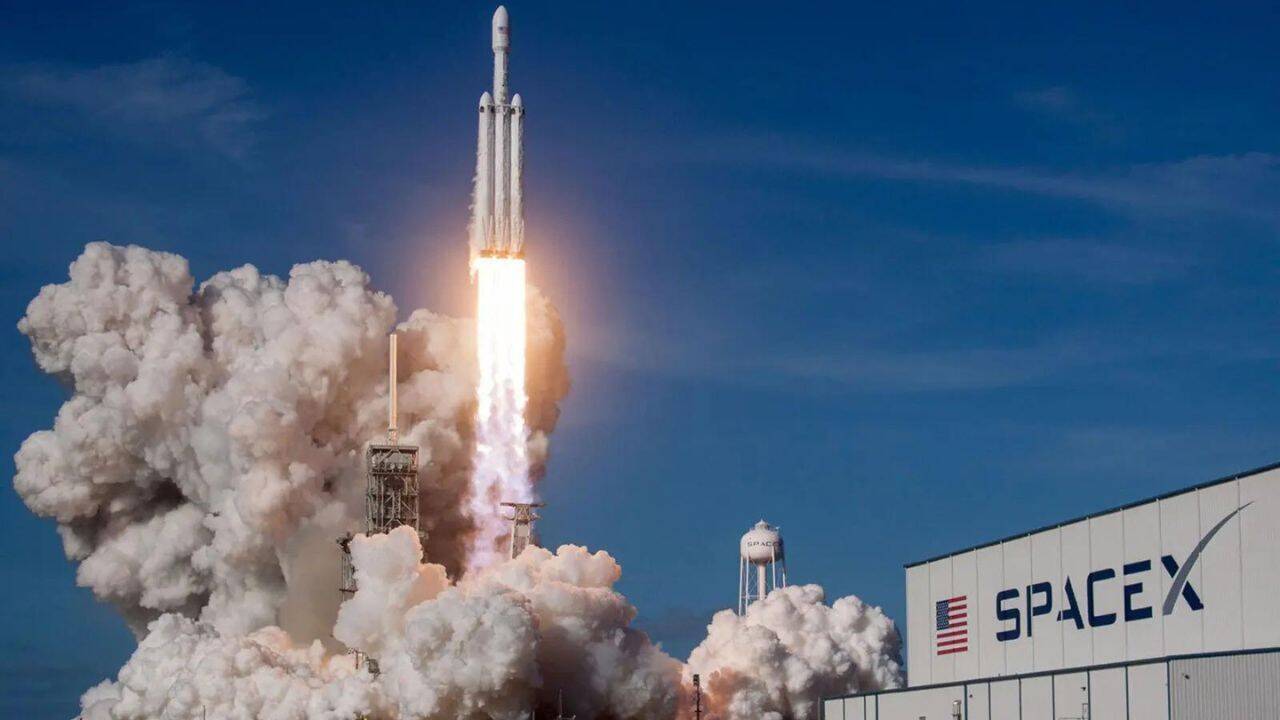
As SpaceX pushes ahead with Starship, researchers in Europe have proposed a different approach to building heavy rockets. A new study by the German Aerospace Center (DLR) presents a concept called RLV C5, a partially reusable launch vehicle that could give Europe its own super-heavy launch capability without following Starship's design.The study says Starship has already changed how the space industry thinks about heavy rocket launches. In 2023, the rocket successfully lifted off from Texas using all 33 of its engines. Later, during its fifth integrated flight test, the Super Heavy booster returned after launch and was caught by the giant mechanical arms of the launch tower, showing how reusable rocket technology is advancing.SpaceX is now developing Starship to carry more than 100 metric tonnes to low Earth orbit, the region of space closest to Earth where most satellites operate. The company also plans to make the entire rocket fully reusable so it can fly again after each mission.The DLR researchers said that instead of simply accepting SpaceX's published figures, they independently analysed videos from Starship's first four integrated flight tests. They extracted flight data and used it to build computer models to estimate the rocket's real performance.After analysing Starship, the researchers presented the RLV C5 as a possible European alternative. Rather than building a fully reusable rocket like Starship, the concept uses a partially reusable design.The RLV C5 uses a reusable winged booster from DLR's SpaceLiner project with an expendable upper stage that carries the payload into orbit. According to the study, this approach could reduce the complexity and cost of developing a fully reusable launch system.Unlike Starship, which uses methane and liquid oxygen, the RLV C5 would use liquid hydrogen and liquid oxygen. The researchers say this fuel combination is more efficient.The booster would also return differently. Instead of landing vertically using rocket engines, it would glide back through Earth's atmosphere on wings before being captured in mid-air by a large subsonic aircraft. According to the researchers, this means the booster would not need to keep fuel aside for landing, allowing more fuel to be used for carrying payload into space. The study estimates that the current reusable version of Starship can carry around 59 tonnes to low Earth orbit. A future version with Raptor 3 engines and larger fuel tanks could carry around 115 tonnes while remaining reusable. If flown as an expendable rocket, it could carry up to 188 tonnes into orbit.The proposed RLV C5 would be capable of launching more than 70 tonnes into orbit. While it cannot match Starship's maximum payload, the researchers say it makes more efficient use of its mass.According to the study, Starship is more than three times heavier than the RLV C5 because it is designed to be fully reusable. Much of that extra weight comes from features needed for repeated flights, including heat shield tiles, landing fuel and stronger structures.The researchers estimate that around 40 per cent of Starship's mass reaching orbit is useful payload. In comparison, the RLV C5 could send around 74 per cent of its mass-to-orbit as payload because of its simpler partially reusable design.