News & Updates
The latest news and updates from companies in the WLTH portfolio.
Anthropic's Claude Opus 5 Raises the Bar for High-Performance, Cost-Efficient AI
Anthropic has introduced Claude Opus 5, its newest flagship artificial intelligence model, marking another major milestone in the rapidly evolving AI industry. The company says the model delivers intelligence approaching the level of the highly anticipated Fable 5 system while costing only half as much to operate. If these claims hold true in real-world use, Claude Opus 5 could significantly reshape the economics of advanced AI by making cutting-edge capabilities more affordable for businesses, developers, and enterprises worldwide. The release comes at a time when competition among leading AI companies has intensified. Firms such as OpenAI, Google DeepMind, Meta, and xAI continue to push the boundaries of large language models, investing billions of dollars in research, specialized hardware, and massive data centers. Anthropic has positioned itself as a company focused not only on building highly capable AI systems but also on ensuring they are safe, reliable, and aligned with human values. Claude Opus 5 represents the latest step in that strategy. According to Anthropic, Claude Opus 5 offers substantial improvements in reasoning, coding, mathematics, long-context understanding, and complex problem-solving. The model is designed to handle sophisticated business workflows, scientific research, software engineering, legal analysis, and creative writing with greater accuracy than previous generations. Its enhanced ability to maintain context across lengthy conversations also makes it more suitable for enterprise applications where consistency and memory are critical. Perhaps the most notable aspect of Anthropic's announcement is its pricing strategy. By claiming that Claude Opus 5 delivers intelligence comparable to Fable 5 at approximately half the cost. Anthropic is targeting one of the biggest challenges facing AI adoption: affordability. Running frontier AI models requires enormous computational resources, and inference costs remain a major expense for companies deploying AI at scale. Lower pricing could encourage wider adoption among startups, researchers, and organizations that previously found advanced AI financially out of reach. The pricing move also reflects a broader trend within the AI sector. As competition increases, companies are no longer focused solely on achieving higher benchmark scores. Cost efficiency has become equally important. Customers increasingly evaluate AI models based on the balance between performance, reliability, speed, and operational expenses. A model that offers nearly identical capabilities at significantly lower costs may prove more attractive than one that delivers marginally better performance at a premium price. Claude Opus 5 could reduce the financial burden of integrating advanced AI into applications ranging from customer support and document analysis to autonomous coding assistants and intelligent research platforms. Enterprises may benefit from lower infrastructure expenses while maintaining access to high-quality AI reasoning capabilities. This could accelerate the deployment of AI across industries including healthcare, finance, education, manufacturing, and cybersecurity. The announcement also underscores the growing maturity of the AI market. Rather than competing only through larger models, companies are increasingly optimizing architecture, training techniques, and inference efficiency. These improvements allow developers to achieve stronger performance without proportionally increasing computational requirements, creating a more sustainable path for AI innovation. Anthropic's comparison to Fable 5 will be judged by independent testing and real-world performance. Benchmarks provide valuable insights, but enterprise customers often prioritize reliability, safety, latency, and practical productivity gains over headline claims. As organizations begin evaluating Claude Opus 5 in production environments, its true capabilities will become clearer. The launch of Claude Opus 5 represents more than just another AI model release. It signals a shift toward making frontier intelligence more accessible through improved cost efficiency. If Anthropic's performance and pricing claims are validated, Claude Opus 5 could become one of the most influential AI models of the year, intensifying competition and accelerating the adoption of advanced artificial intelligence across the global economy.

Elon Musk Thinks SpaceX Could Become More Valuable Than Earth Itself
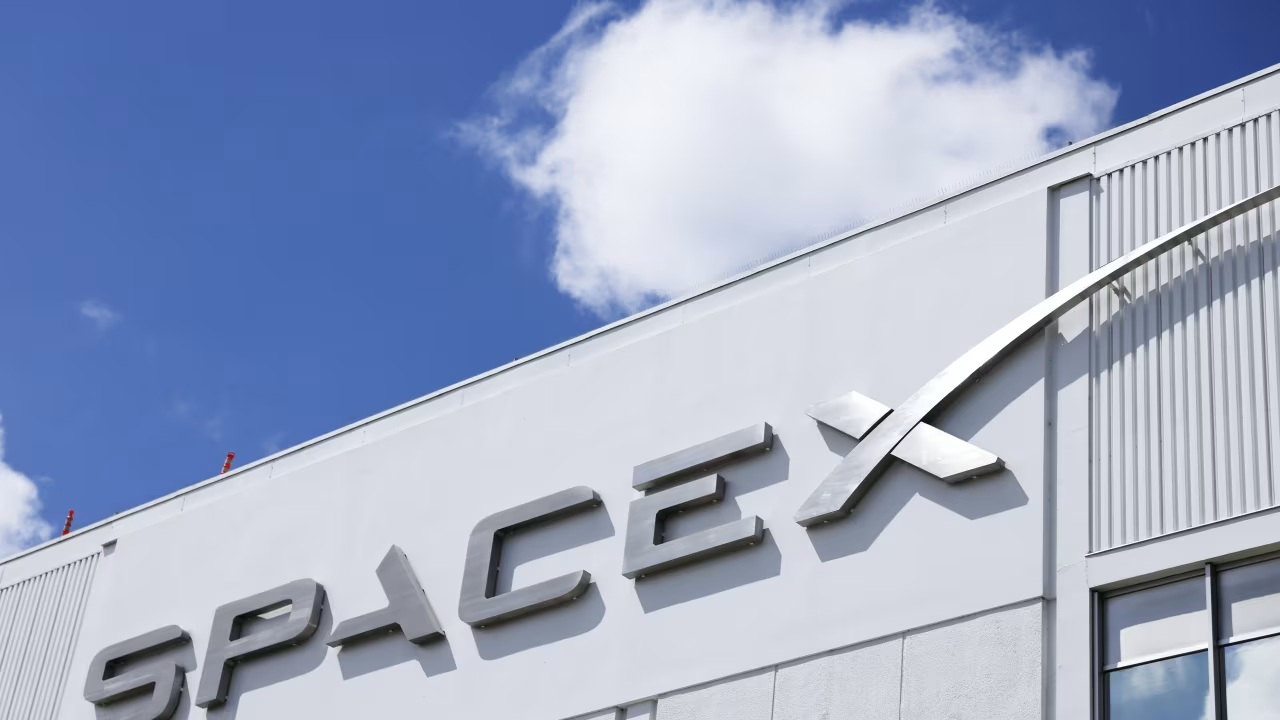
Businessman and Tesla CEO Elon Musk has once again captured the world's attention with one of his most audacious statements yet. In an address to skepticism surrounding a major compute partnership between Anthropic and SpaceX/xAI, Musk declared that his rocket company will eventually be worth more than the rest of Earth if it accomplishes its long-term objectives. In a post on X, he wrote, "You don't seem to understand that SpaceX will be worth more than the rest of Earth if we accomplish our goals." Musk's comment came in response to analyst Thomas D. who questioned whether Anthropic's reported $7.5-40 billion deal with SpaceX-related entities represented an "unforced error." The deal reportedly grants Anthropic access to significant AI compute capacity at SpaceX's facilities, including the Colossus 1 data center. The remark, made in response to a skeptic, emphasizes SpaceX's long-term potential in space infrastructure, Mars colonization, and related technologies, framing it as vastly more significant than short-term AI deals or competition. This highlights Musk's broader vision where space ambitions could dwarf terrestrial economies, amid discussions on xAI's rapid progress with models like Grok 4.5. Musk's latest prediction builds on these achievements while pointing toward far greater ambitions, establishing a self-sustaining colony on Mars and making life multiplanetary. The vision is not merely about sending astronauts on occasional trips. Musk has repeatedly emphasized that SpaceX aims to enable ordinary people to travel to the Moon, Mars, and beyond, creating an entirely new branch of the economy rooted in space resources, orbital manufacturing, and interplanetary trade. Critics have been quick to question the feasibility and the sheer scale of such a valuation claim. SpaceX's Soaring Valuation and Recent IPO SpaceX, which recently completed its high-profile initial public offering and carries a market valuation around $1.75 trillion, is already among the most valuable companies on the planet. Its rapid rise has been fueled by reusable rocket technology, the Starlink satellite internet constellation that now serves millions of users worldwide, and the development of the massive Starship vehicle designed for deep-space missions. Musk's statement arrives amid extraordinary momentum for SpaceX. The company went public in June 2026 in what became the largest IPO in history, raising approximately $75-85.7 billion. Shares surged post-listing, pushing the market capitalization above $2 trillion and briefly surpassing major tech giants like Amazon. Musk has long framed SpaceX's mission as making humanity multi-planetary, with Starship as the key vehicle for Mars colonization, lunar bases, and large-scale space infrastructure. Achieving routine, low-cost access to orbit and beyond could unlock new industries, orbital manufacturing, asteroid mining, space-based solar power, and a vastly expanded satellite economy. Analysts and enthusiasts speculate that dominating launch capacity, global broadband via Starlink, and space-based AI/compute could transform SpaceX into the backbone of an off-world economy. Some optimistic forecasts suggest potential valuations in the trillions more if these goals materialize, effectively dwarfing Earth's current economic output in relative terms as new frontiers open. Yet Musk's track record with Tesla and SpaceX has shown that seemingly impossible timelines can accelerate dramatically when innovation compounds. Whether Musk's forecast proves overly optimistic, it highlights a fundamental shift in how we view our future. For him, space is not just a frontier for exploration, it represents the next chapter of human prosperity and survival. As SpaceX pushes the boundaries of what's technically and economically possible, the conversation about humanity's place in the cosmos grows louder.