News & Updates
The latest news and updates from companies in the WLTH portfolio.
Traders Are Letting xAI's Grok Bot Run Unsupervised, and It Already Lost Money - Startup Fortune
A May 2026 Morse code prompt injection drained $200,000 in DRB tokens from xAI's Bankrbot, exposing the gap between Musk's promise to "make you whole" and a liability cap reportedly set at $100. xAI's Grok Bot now trades around the clock on its own cloud computer. What happened to one trader's DRB tokens is the question every other trader leaving it unsupervised should be asking. In May 2026, an X user convinced Grok's trading bot companion, Bankrbot, to send roughly $200,000 worth of DRB tokens, 3 billion of them, to a wallet that wasn't supposed to get a cent. The trick wasn't sophisticated in the way people picture AI exploits. The attacker sent a Bankr Club membership NFT to Grok's wallet, then asked Grok to translate a Morse code message buried inside it. Grok translated it, relayed the decoded instruction to Bankrbot as if it were a normal request, and Bankrbot executed the transfer on the Base network. Nobody hacked anything. They just asked nicely, in code. That's the backdrop against which xAI has spent 2026 pushing Grok from a chatbot you prompt into something closer to a coworker you hand a task and walk away from. On August 11, xAI launched Grok Bot: agents with their own persistent cloud computer, a real browser, a file system, a terminal, and memory that survives after you close your laptop. Then, on September 28, Elon Musk posted on X that "Grok Bot now works as a team," rolling out the ability for multiple bots to coordinate, hand off tasks, and share context with each other instead of running as isolated instances. The financial use case arrived even before the team feature did. Interactive Brokers announced on June 22 that it was adding Grok and ChatGPT integrations to its platform, letting users run portfolio analysis, scenario modeling, and research through the AI, with the ability to issue order instructions directly from the conversation. That's a meaningfully different proposition than asking a chatbot to explain an ETF. It puts a model with tool access next to an execution button on a live brokerage account. Independent developers didn't wait for official blessing either. On the Neura Market platform, builders have published trading agents that pair Grok's market analysis with Interactive Brokers execution, running continuously rather than on a per-query basis. The pitch is obvious: a desk of bots that never sleeps, never gets tired reading earnings calls, and reacts to news the moment it breaks. The risk is just as obvious, and it showed up almost immediately. Grok Build Quietly Uploaded Developers Entire Codebases to xAI Cloud A developer's reverse-engineering of xAI's Grok Build tool found it silently uploading entire codebases, including deleted secrets, to xAI's cloud storage, directly contradicting the company's zero data retention claims. Elon Musk has promised to delete the data, but xAI has offered no timeline or proof. - grok build uploads entire codebases - xai cloud security breach developers After the DRB heist made headlines, Musk didn't walk the idea back. He told a user weighing whether to give Grok Bot access to their actual bank account: "Try it out. If Grok Bot messes up, we will make you whole." It's a generous promise on the surface, and according to Cybernews, a hollow one underneath it: the reported consumer terms of service cap xAI's liability at the greater of fees paid or $100. Musk's personal assurance and the contract a user actually signs are not the same document, and nothing in that gap has been resolved publicly. What's actually different this time This isn't really about Grok being worse at math than GPT or Claude. OpenAI has pushed its own agents through Operator and Deep Research, and Anthropic has leaned into the Model Context Protocol, now underpinning more than 17,000 MCP servers connecting agents to outside tools, according to data compiled by Sacra. Both labs are racing toward the same destination: an AI that acts on your behalf without a human approving every step. xAI just got there with less friction, fewer guardrails, and a direct line into a brokerage account. The Morse code exploit worked precisely because Grok had what security researchers call excessive agency: enough standing permission to move real value that a single clever prompt, hidden in a feature nobody thought to lock down, was all it took. A translation request became a financial instruction, and the bot had no way to tell the difference because nobody had told it there was one to look for. None of this means the agent era is a mistake. A bot that can sit in a research platform all day, flag an earnings surprise, and draft an order ticket is a genuinely useful tool, and plenty of people are already using Grok that way without incident. But there's a difference between a bot that drafts and a bot that executes, and 2026 is the year that line started blurring on purpose. Interactive Brokers built the execution path. xAI built the memory and the always-on compute. Traders are supplying the trust, one unsupervised session at a time, and the DRB heist is the only data point so far on what it costs when that trust turns out to be premature. Frankly, the $100 liability cap is the detail that should worry anyone reading past the headline. A promise made on X is not a contract, and the contract is the thing that actually governs what happens the next time a bot gets tricked into moving money it was never supposed to touch. This article is posted in AI News, check it out for more related stories. Join the discussion Open in the community → Reply Almost there. Sign in and your reply posts straight away.

SpaceX's xAI may face Virginia action over Grok creation of sexualized images | MLex | Specialist news and analysis on legal risk and regulation
By Mike Swift ( October 23, 2026, 19:33 GMT | Insight) -- SpaceX said in a US securities filing that it could face a lawsuit from Virginia Attorney General Jay Jones over its statements around the propensity of its Grok chatbot to generate nonconsensual deepfake images of women and children. SpaceX said it had been notified by the Virginia attorney general that "it is contemplating bringing suit based on allegations that they misrepresented and omitted Grok's propensity to generate nonconsensual explicit images and/or content representing women and/or children in sexualized contexts."The Virginia attorney general notified SpaceX's artificial intelligence subsidiary in recent days that the company may soon face litigation alleging it misrepresented how frequently its Grok chatbot generates sexually explicit images of women and children.... Prepare for tomorrow's regulatory change, today MLex identifies risk to business wherever it emerges, with specialist reporters across the globe providing exclusive news and deep-dive analysis on the proposals, probes, enforcement actions and rulings that matter to your organization and clients, now and in the longer term. Know what others in the room don't, with features including: * Daily newsletters for Antitrust, M&A, Trade, Data Privacy & Security, Technology, AI and more * Custom alerts on specific filters including geographies, industries, topics and companies to suit your practice needs * Predictive analysis from expert journalists across North America, the UK and Europe, Latin America and Asia-Pacific * Curated case files bringing together news, analysis and source documents in a single timeline Experience MLex today with a 14-day free trial.

XAI Floating Rate & Alternative Income Trust Will Host its Q3 2026 Quarterly Webinar on November 2, 2026
CHICAGO, Oct. 22, 2026 (GLOBE NEWSWIRE) -- XAI Floating Rate & Alternative Income Trust (NYSE: XFLT) (the "Trust") today announced that it plans to host the Trust's Quarterly Webinar on November 2, 2026, at 3:00 pm (Eastern Time). Kevin Davis, Managing Director at XA Investments will moderate the Q&A style webinar with Kimberly Flynn, President at XA Investments, and Young Choi, Partner and Global Head of Trading at King Street Capital Management. Young Choi also serves as the Portfolio Manager of Rockford Tower Capital Management, King Street's CLO, CBO and SMA platform. TO JOIN VIA WEB: Please click here to find the online registration link. TO USE YOUR TELEPHONE: After joining via web, if you prefer to use your phone for audio, you must select that option and call in using a number below, based on your current location. Dial: (312) 626-6799 or (646) 558-8656 or (267) 831-0333 or (720) 928-9299 or (213) 338-8477 Webinar ID: 830 6838 9008 REPLAY: A replay of the webinar will be available in the Knowledge Bank section of xainvestments.com. The Trust's common shares are traded on the New York Stock Exchange under the symbol "XFLT." The investment objective of the Trust is to seek attractive total return with an emphasis on income generation across multiple stages of the credit cycle. The Trust seeks to achieve its investment objective by investing in a dynamically managed portfolio of opportunities primarily within the private credit markets. Under normal market conditions, the Trust will invest at least 80% of its Managed Assets in floating rate credit instruments and other structured credit investments. There can be no assurance that the Trust will achieve its investment objective. About XA Investments XA Investments LLC ("XA Investments") is a Chicago-based firm founded by XMS Capital Partners in 2016. XA Investments serves as the investment adviser for two listed closed-end funds, an interval fund, and a tender offer fund. The listed closed-end funds, the XAI Floating Rate & Alternative Income Trust and XAI Madison Equity Premium Income Fund, both trade on the New York Stock Exchange and the interval fund and tender offer fund, XAI CLO & Income Opportunities Fund and Evanston Multi-Alpha Fund, are both available via direct subscription and through select broker/dealers and wealth management platforms. In addition to investment advisory services, the firm also provides investment fund structuring and consulting services focused on registered closed-end funds to meet institutional client needs. XA Investments offers custom product build and consulting services, including product development and market research, marketing and fund management. XA Investments believes that the investing public can benefit from new vehicles to access a broad range of alternative investment strategies and managers. XA Investments provides individual investors with access to institutional-caliber alternative managers. For more information, please visit www.xainvestments.com. About XMS Capital Partners XMS Capital Partners, LLC, established in 2006, is a global, independent, financial services firm providing M&A, corporate advisory and asset management services to clients. It has offices in Chicago, Boston and London. For more information, please visit www.xmscapital.com. About Rockford Tower Asset Management Rockford Tower Asset Management, L.L.C. is a wholly owned subsidiary of King Street Capital Management, L.P. ("King Street") and an affiliate of Rockford Tower Capital Management ("Rockford Tower"). Rockford Tower, King Street's dedicated CLO, CBO and SMA platform, was formed in 2017. Rockford Tower has over $14.7 billion of assets under management as of September 30, 2026, across 19 U.S. CLOs and 10 European CLOs, one CBO transaction and one SMA. In addition, Rockford Tower has traded over $99 billion of loans as of December 31, 2025. About King Street Capital Management King Street is a global alternative investment firm founded in 1995 that manages $30.9 billion in assets as of September 30, 2026 across public and private markets. The firm marries rigorous fundamental research with tactical trading and differentiated sourcing capabilities to identify investment opportunities across asset classes, up and down the capital structure. For more information, please visit www.kingstreet.com. XA Investments does not provide tax advice; please consult a professional tax advisor regarding your specific tax situation. Income may be subject to state and local taxes, as well as the federal alternative minimum tax. Investors should consider the investment objectives and policies, risk considerations, charges and expenses of the Trust carefully before investing. For more information on the Trust, please visit the Trust's webpage at www.xainvestments.com. This press release shall not constitute an offer to sell or a solicitation to buy, nor shall there be any sale of these securities in any state or jurisdiction in which such offer or solicitation or sale would be unlawful prior to registration or qualification under the laws of such state or jurisdiction. NOT FDIC INSURED NO BANK GUARANTEE MAY LOSE VALUE Paralel Distributors, LLC - Distributor

Xai floating rate VP John Spence buys $34,140 in stock By Investing.com
John Yogi Spence, Vice President of XAI Floating Rate & Alternative Income Trust (NYSE:XFLT), acquired shares of the company's common stock on October 21, 2026. Mr. Spence purchased 2,000 shares at a price of $17.07 per share. This transaction amounted to a total value of $34,140. The purchase comes as XFLT trades near $16.91, close to its 52-week low of $14.93, with the stock down roughly 20% year-to-date. According to InvestingPro data, the trust offers an exceptional dividend yield of 15.85% and has maintained dividend payments for 10 consecutive years, making it attractive for income-focused investors despite weak overall financial health scores. Following this acquisition, Mr. Spence directly holds 114,357 common shares of beneficial ownership. His indirect holdings include 2,050 shares through XA Investments LLC, 2,118 shares held by his spouse, and 3,646.94 shares through XMS Holdings LLC. These beneficial ownership figures reflect the issuer's 1-for-5 reverse stock split, which became effective on March 20, 2026. The reported holdings also include shares obtained through the XFLT Dividend Reinvestment Plan. In other recent news, shareholders of XAI Floating Rate & Alternative Income Trust have approved a new investment sub-advisory agreement. This decision was made during a special meeting that was initially convened and later adjourned to allow for more proxy solicitation. The agreement involves the Trust, XA Investments, LLC, and Rockford Tower Asset Management, L.L.C. The approval allows these parties to enter into the new sub-advisory agreement, marking a significant development for the Trust. This move is part of the Trust's ongoing efforts to manage its investment strategies effectively. The announcement was made through a press release based on an SEC filing. These developments highlight the Trust's commitment to aligning its management strategies with shareholder interests.

XAI Floating Rate & Alternative Income Trust Will Host its Q3 2026 Quarterly Webinar on November 2, 2026 | Taiwan News | Oct. 23, 2026 07:41
CHICAGO, Oct. 22, 2026 (GLOBE NEWSWIRE) -- XAI Floating Rate & Alternative Income Trust (NYSE: XFLT) (the "Trust") today announced that it plans to host the Trust's Quarterly Webinar on November 2, 2026, at 3:00 pm (Eastern Time). Kevin Davis, Managing Director at XA Investments will moderate the Q&A style webinar with Kimberly Flynn, President at XA Investments, and Young Choi, Partner and Global Head of Trading at King Street Capital Management. Young Choi also serves as the Portfolio Manager of Rockford Tower Capital Management, King Street's CLO, CBO and SMA platform. TO JOIN VIA WEB: Please click here to find the online registration link. TO USE YOUR TELEPHONE: After joining via web, if you prefer to use your phone for audio, you must select that option and call in using a number below, based on your current location. Dial: (312) 626-6799 or (646) 558-8656 or (267) 831-0333 or (720) 928-9299 or (213) 338-8477 Webinar ID: 830 6838 9008 REPLAY: A replay of the webinar will be available in the Knowledge Bank section of xainvestments.com. The Trust's common shares are traded on the New York Stock Exchange under the symbol "XFLT." The investment objective of the Trust is to seek attractive total return with an emphasis on income generation across multiple stages of the credit cycle. The Trust seeks to achieve its investment objective by investing in a dynamically managed portfolio of opportunities primarily within the private credit markets. Under normal market conditions, the Trust will invest at least 80% of its Managed Assets in floating rate credit instruments and other structured credit investments. There can be no assurance that the Trust will achieve its investment objective. About XA Investments XA Investments LLC ("XA Investments") is a Chicago-based firm founded by XMS Capital Partners in 2016. XA Investments serves as the investment adviser for two listed closed-end funds, an interval fund, and a tender offer fund. The listed closed-end funds, the XAI Floating Rate & Alternative Income Trust and XAI Madison Equity Premium Income Fund, both trade on the New York Stock Exchange and the interval fund and tender offer fund, XAI CLO & Income Opportunities Fund and Evanston Multi-Alpha Fund, are both available via direct subscription and through select broker/dealers and wealth management platforms. In addition to investment advisory services, the firm also provides investment fund structuring and consulting services focused on registered closed-end funds to meet institutional client needs. XA Investments offers custom product build and consulting services, including product development and market research, marketing and fund management. XA Investments believes that the investing public can benefit from new vehicles to access a broad range of alternative investment strategies and managers. XA Investments provides individual investors with access to institutional-caliber alternative managers. For more information, please visit www.xainvestments.com. About XMS Capital Partners XMS Capital Partners, LLC, established in 2006, is a global, independent, financial services firm providing M&A, corporate advisory and asset management services to clients. It has offices in Chicago, Boston and London. For more information, please visit www.xmscapital.com. About Rockford Tower Asset Management Rockford Tower Asset Management, L.L.C. is a wholly owned subsidiary of King Street Capital Management, L.P. ("King Street") and an affiliate of Rockford Tower Capital Management ("Rockford Tower"). Rockford Tower, King Street's dedicated CLO, CBO and SMA platform, was formed in 2017. Rockford Tower has over $14.7 billion of assets under management as of September 30, 2026, across 19 U.S. CLOs and 10 European CLOs, one CBO transaction and one SMA. In addition, Rockford Tower has traded over $99 billion of loans as of December 31, 2025. About King Street Capital Management King Street is a global alternative investment firm founded in 1995 that manages $30.9 billion in assets as of September 30, 2026 across public and private markets. The firm marries rigorous fundamental research with tactical trading and differentiated sourcing capabilities to identify investment opportunities across asset classes, up and down the capital structure. For more information, please visit www.kingstreet.com. XA Investments does not provide tax advice; please consult a professional tax advisor regarding your specific tax situation. Income may be subject to state and local taxes, as well as the federal alternative minimum tax. Investors should consider the investment objectives and policies, risk considerations, charges and expenses of the Trust carefully before investing. For more information on the Trust, please visit the Trust's webpage at www.xainvestments.com. This press release shall not constitute an offer to sell or a solicitation to buy, nor shall there be any sale of these securities in any state or jurisdiction in which such offer or solicitation or sale would be unlawful prior to registration or qualification under the laws of such state or jurisdiction. NOT FDIC INSURED NO BANK GUARANTEE MAY LOSE VALUE Paralel Distributors, LLC - Distributor

XAI Madison Equity Premium Income Fund Will Host its Q3 2026 Quarterly Webinar on November 5, 2026
CHICAGO, Oct. 22, 2026 (GLOBE NEWSWIRE) -- XAI Madison Equity Premium Income Fund (NYSE: MCN) (the "Fund") today announced that it plans to host the Fund's Quarterly Webinar on November 5, 2026 at 11:00 am (Eastern Time). Kimberly Flynn, President at XA Investments will moderate the Q&A style webinar with Ray Di Bernardo and Drew Justman, Portfolio Managers at Madison Investments. TO JOIN VIA WEB: Please click here to find the online registration link. TO USE YOUR TELEPHONE: After joining via web, if you prefer to use your phone for audio, you must select that option and call in using a number below, based on your current location. Dial: (312) 626-6799 or (646) 558-8656 or (267) 831-0333 or (720) 928-9299 or (213) 338-8477 Webinar ID: 832 1620 9414 REPLAY: A replay of the webinar will be available in the Knowledge Bank section of xainvestments.com. The Fund's primary investment objective is to provide a high level of current income and gains, with a secondary objective of capital appreciation. The Fund pursues its investment objectives by investing in a portfolio consisting primarily of high quality, large and mid-capitalization stocks that are, in the view of the Fund's Investment sub-adviser, selling at a reasonable price in relation to their long-term earnings growth rates. The Fund will, on an ongoing and consistent basis, sell covered call options on its portfolio stocks to seek to generate current earnings from option premiums. There can be no assurance that the Fund will achieve its investment objectives. The Fund's common shares are traded on the New York Stock Exchange under the symbol MCN. About XA Investments XA Investments LLC ("XA Investments") is a Chicago-based firm founded by XMS Capital Partners in 2016. XA Investments serves as the investment adviser for two listed closed-end funds, an interval fund, and a tender offer fund. The listed closed-end funds, the XAI Floating Rate & Alternative Income Trust and XAI Madison Equity Premium Income Fund, both trade on the New York Stock Exchange and the interval fund and tender offer fund, XAI CLO & Income Opportunities Fund and Evanston Multi-Alpha Fund, are both available via direct subscription and through select broker/dealers and wealth management platforms. In addition to investment advisory services, the firm also provides investment fund structuring and consulting services focused on registered closed-end funds to meet institutional client needs. XA Investments offers custom product build and consulting services, including product development and market research, marketing and fund management. XA Investments believes that the investing public can benefit from new vehicles to access a broad range of alternative investment strategies and managers. XA Investments provides individual investors with access to institutional-caliber alternative managers. For more information, please visit www.xainvestments.com. About XMS Capital Partners XMS Capital Partners, LLC, established in 2006, is a global, independent, financial services firm providing M&A, corporate advisory and asset management services to clients. It has offices in Chicago, Boston and London. For more information, please visit www.xmscapital.com. About Madison Investments Madison Investments (Madison) is an independent investment management firm based in Madison, Wisconsin. The firm was founded in 1974, has approximately $29 billion in assets under management as of June 30, 2026, and is recognized as one of the nation's top investment firms. The firm has managed covered call strategies for over 20 years through various market cycles. Madison offers domestic fixed income, U.S. and international equity, covered call, multi-asset, insurance, and credit union investment management strategies. For more information, please visit www.madisonfunds.com. XA Investments does not provide tax advice; please consult a professional tax advisor regarding your specific tax situation. Income may be subject to state and local taxes, as well as the federal alternative minimum tax. Investors should consider the investment objectives and policies, risk considerations, charges and expenses of the Trust carefully before investing. For more information on the Trust, please visit the Trust's webpage at www.xainvestments.com. This press release shall not constitute an offer to sell or a solicitation to buy, nor shall there be any sale of these securities in any state or jurisdiction in which such offer or solicitation or sale would be unlawful prior to registration or qualification under the laws of such state or jurisdiction. NOT FDIC INSURED NO BANK GUARANTEE MAY LOSE VALUE Paralel Distributors, LLC - Distributor

XAI Madison Equity Premium Income Fund Will Host its Q3 2026 Quarterly Webinar on November 5, 2026 | Taiwan News | Oct. 23, 2026 07:16
CHICAGO, Oct. 22, 2026 (GLOBE NEWSWIRE) -- XAI Madison Equity Premium Income Fund (NYSE: MCN) (the "Fund") today announced that it plans to host the Fund's Quarterly Webinar on November 5, 2026 at 11:00 am (Eastern Time). Kimberly Flynn, President at XA Investments will moderate the Q&A style webinar with Ray Di Bernardo and Drew Justman, Portfolio Managers at Madison Investments. TO JOIN VIA WEB: Please click here to find the online registration link. TO USE YOUR TELEPHONE: After joining via web, if you prefer to use your phone for audio, you must select that option and call in using a number below, based on your current location. Dial: (312) 626-6799 or (646) 558-8656 or (267) 831-0333 or (720) 928-9299 or (213) 338-8477 Webinar ID: 832 1620 9414 REPLAY: A replay of the webinar will be available in the Knowledge Bank section of xainvestments.com. The Fund's primary investment objective is to provide a high level of current income and gains, with a secondary objective of capital appreciation. The Fund pursues its investment objectives by investing in a portfolio consisting primarily of high quality, large and mid-capitalization stocks that are, in the view of the Fund's Investment sub-adviser, selling at a reasonable price in relation to their long-term earnings growth rates. The Fund will, on an ongoing and consistent basis, sell covered call options on its portfolio stocks to seek to generate current earnings from option premiums. There can be no assurance that the Fund will achieve its investment objectives. The Fund's common shares are traded on the New York Stock Exchange under the symbol MCN. About XA Investments XA Investments LLC ("XA Investments") is a Chicago-based firm founded by XMS Capital Partners in 2016. XA Investments serves as the investment adviser for two listed closed-end funds, an interval fund, and a tender offer fund. The listed closed-end funds, the XAI Floating Rate & Alternative Income Trust and XAI Madison Equity Premium Income Fund, both trade on the New York Stock Exchange and the interval fund and tender offer fund, XAI CLO & Income Opportunities Fund and Evanston Multi-Alpha Fund, are both available via direct subscription and through select broker/dealers and wealth management platforms. In addition to investment advisory services, the firm also provides investment fund structuring and consulting services focused on registered closed-end funds to meet institutional client needs. XA Investments offers custom product build and consulting services, including product development and market research, marketing and fund management. XA Investments believes that the investing public can benefit from new vehicles to access a broad range of alternative investment strategies and managers. XA Investments provides individual investors with access to institutional-caliber alternative managers. For more information, please visit www.xainvestments.com. About XMS Capital Partners XMS Capital Partners, LLC, established in 2006, is a global, independent, financial services firm providing M&A, corporate advisory and asset management services to clients. It has offices in Chicago, Boston and London. For more information, please visit www.xmscapital.com. About Madison Investments Madison Investments (Madison) is an independent investment management firm based in Madison, Wisconsin. The firm was founded in 1974, has approximately $29 billion in assets under management as of June 30, 2026, and is recognized as one of the nation's top investment firms. The firm has managed covered call strategies for over 20 years through various market cycles. Madison offers domestic fixed income, U.S. and international equity, covered call, multi-asset, insurance, and credit union investment management strategies. For more information, please visit www.madisonfunds.com. XA Investments does not provide tax advice; please consult a professional tax advisor regarding your specific tax situation. Income may be subject to state and local taxes, as well as the federal alternative minimum tax. Investors should consider the investment objectives and policies, risk considerations, charges and expenses of the Trust carefully before investing. For more information on the Trust, please visit the Trust's webpage at www.xainvestments.com. This press release shall not constitute an offer to sell or a solicitation to buy, nor shall there be any sale of these securities in any state or jurisdiction in which such offer or solicitation or sale would be unlawful prior to registration or qualification under the laws of such state or jurisdiction. NOT FDIC INSURED NO BANK GUARANTEE MAY LOSE VALUE Paralel Distributors, LLC - Distributor
Anthropic's New AI Agent Purchases Business Supplies | PYMNTS.com
In this app, Claude Duet, Claude comes to the user when something needs attention, completes tasks the user has requested, keeps working even when the user steps away and checks with the user before acting on their behalf, according to the announcement. "What makes Claude Duet so helpful is its judgment," Anthropic said in the announcement. "We designed it around Claude Opus 5.5 and built it to be resourceful and to decide what needs you, what can wait and when to check with you first." Anthropic made Claude Duet available by waitlist to Pro and Max subscribers in the U.S. on Wednesday. Claude Duet accesses the user's memory, skills and connected apps from their Claude account for context; works even when the user's laptop or phone is off; delivers notifications when the task is complete or needs the user's review; checks connected accounts periodically and messages the user when something requires attention; waits for approval before sending a message, making a payment, signing a document or deleting anything; and uses the more than 6,000 connectors and plug-ins in the Claude Marketplace to connect with tools, according to the announcement. "You can also use Claude Duet to purchase things for your business using Link, Stripe's digital wallet," Anthropic said in the announcement. "Claude Duet confirms the item with you, and Link asks you to approve the spend. It then pays with a virtual card, so your real card number isn't shared. It can use Shop Pay from Shopify to check out at online stores." There have been a series of announcements about personal AI agents. Meta's Muse was downloaded more than 10 million times in the United States and Canada during the first 35 days it was available, according to a Monday (Oct. 19) announcement by digital market insights platform Sensor Tower. OpenAI launched dots on Sept. 29, saying these AI agents are "built to handle everything." Instinct, the builder of a personal AI agent for everyday life, said Sept. 28 that it was valued at $10 billion as it raised $1 billion in Series C funding. xAI announced Sept. 26 that its Grok Bot can now connect to the user's finances in read-only mode to help manage spending and investments.
Ahead of IPO, AI firm Anthropic announces a new 'public benefit fund ' to commit 5% of its stocks: What we know | Company Business News
Artificial intelligence (AI) firm Anthropic on Sunday (local time) announced that it will commit roughly five per cent of its shares to a new "public benefit" fund, whose value could rise alongside the company's share price. Anthropic Public Benefit Fund: What we know The shares will go to the "Anthropic Public Benefit Fund", a new entity within the company, the AI firm announced in a blog post. Anthropic added, "Today, we're committing a portion of Anthropic's shares to the Anthropic Public Benefit Fund, a new entity with a structure that increases the stake as the company grows. Subject to stockholder approval, 5% of Anthropic's shares will be committed today, with an additional 2% added at the board's discretion for every 50% increase in the company's value above a set baseline." It also said the Anthropic Public Benefit Fund will have greater flexibility and scale, allowing the AI firm to pursue its mission through new approaches, including substantial donations to traditional nonprofits or direct payments to selected groups. An Citing the labour market as an example, it added that while AI may generate huge economic value, it can also destabilize workers. The company has already committed $200 million to study and address this issue; however, bolder approaches may be needed, given the pace at which AI is progressing. The AI firm's co-founders have pledged to give away 80% of their wealth. Roughly half of the company's employees participate in a programme that allows them to pledge shares, with the company matching their contributions. Including the 18 October commitment, Anthropic said roughly 20% of its shares would be earmarked for the "public good." Elon Musk responds to Anthropic's announcement Following Anthropic's announcement, billionaire Elon Musk, who runs Anthropic rival xAI, said on X that he recommended "giving the shares directly to the public." He added, "This is what I will be doing." The announcement comes as the AI firm plans what could be one of the biggest IPOs in history. The company, which has positioned itself as a safety-first AI lab, highlighted the risks that AI could pose, including "catastrophic or existential risks to humanity." In its prospectus to investors, Anthropic devoted at least 80 pages of the 261-page main body to emphasising risk factors. On 28 September, Reuters reported that Anthropic's IPO prospectus highlighted potential risks associated with its AI models, including the possibility of "self-preserving behaviours." The company said these could involve attempts to "resist shutdown, conceal or manipulate information" and behaviour "resembling blackmail."

Anthropic to commit 5% stake to new 'public benefit fund'
AI LAB Anthropic, the developer of Claude, said on Sunday it will commit 5% of its shares to a new public benefit fund so it has increased flexibility and scale to make donations for the "public good." The proposed fund would be established as a wholly owned limited liability company and would receive an additional 2% of Anthropic's shares, at the board's discretion, for every 50% increase in the company's value above a baseline that has yet to be disclosed. The move comes at a time when Anthropic is planning one of the biggest IPOs in history as a public benefit corporation, a legal structure that requires management to consider certain broader interests as well as turning a profit for investors. The company, which has positioned itself as a safety-first AI lab, has said AI could pose "catastrophic or existential risks to humanity" and devoted roughly 80 pages of the 261-page main body of its prospectus to laying out risk factors. Anthropic said in its blog post its Public Benefit Fund could support initiatives including nonprofit donations, direct distributions to specific populations and efforts to address AI's impact on the labor market. Elon Musk, who runs Anthropic rival xAI, on X said he recommended "giving the shares directly to the public." Anthropic cited the potential impact of AI on workers as one area of focus for the new fund, building on a previously announced $200 million commitment to study and address labor-market disruption. Global companies have cut thousands of jobs after investing heavily in AI, with many, primarily tech firms, pointing to higher efficiencies from the technology's rapid adoption. IMF research shows that some 40% of jobs will be either augmented, downgraded or eliminated by AI, with the number as high as 60% in advanced economies, Managing Director Kristalina Georgieva said last week. NOT FOR POLITICAL GIVING The AI giant said none of the equity held by its fund would be used for lobbying or political giving in the United States or abroad. US policymakers are weighing greater oversight of artificial intelligence and AI companies are stepping up efforts to shape how the technology is regulated. Combined with its co-founders' pledge to donate 80% of their equity and an employee donation matching program, roughly 20% of Anthropic's shares will be dedicated to public purposes, excluding any additional shares added later. Anthropic said it would say more in the coming months on the fund's governance, structure and the valuation thresholds that could expand its ownership stake. It also plans to publish a public-benefit report detailing progress toward its mission. -- Reuters

US Federal Government And Anthropic: Considerations For AI Innovation And Competition - Analysis
By Laurie Harris and Clare Y. Cho Key Takeaways: * The Trump administration ordered a halt to federal use of Anthropic technology and the Defense Department labeled it a national-security supply-chain risk after disputes over limits on autonomous weapons and surveillance, with temporary export controls later applied to its Mythos 5 and Fable 5 models. * Anthropic's lawsuits produced mixed results: one court permanently blocked a key designation on constitutional and procedural grounds, while an appeals court upheld another that still permits the Defense Department to remove the company's products from its systems. * The actions have spurred both contractor caution and a surge in public Claude adoption, raising concerns about chilling U.S. AI innovation and competitiveness while leaving Congress to weigh oversight and the balance between safety, security, and investment. On February 27, 2026, President Trump directed federal agencies to stop using technology from U.S. artificial intelligence (AI) company Anthropic, and Secretary of Defense Hegseth announced that he was directing the Department of Defense (DOD) to designate Anthropic a "Supply-Chain Risk to National Security." (DOD and the Secretary are now using "Department of War" and "Secretary of War" as "secondary" designations per Executive Order 14347.) These actions followed a reported months-long dispute between DOD and Anthropic regarding certain uses of its AI technologies. On June 12, 2026, the Department of Commerce (DOC) reportedly imposed export controls on certain AI models -- Mythos 5 and Fable 5 -- from Anthropic's Claude family of models. The export controls were lifted on June 30, 2026. The risk designation, use prohibitions, and export control restrictions may have implications for AI innovation and competition, including at Anthropic and other domestic AI companies. This In Focus provides information on the AI models under debate, U.S. government (USG) actions and their potential implications, and considerations for Congress. Frontier AI: Capabilities and Limitations Frontier AI models are the most advanced foundation models -- general-purpose AI models pretrained on large datasets that can be used for many applications. Anthropic's Claude models, including several frontier models, have reportedly been deployed across DOD and national security agencies for such applications as intelligence analysis, operational planning, and cyber operations. In June 2024, Anthropic stated that it was the first AI company to deploy frontier models in classified USG networks. In July 2025, four U.S. AI companies, including Anthropic, entered into contracts of up to $200 million each with DOD to "accelerate [DOD] adoption of advanced AI capabilities to address critical national security challenges." In classified DOD systems, the Pentagon agreed to the use of AI models and services from xAI, Google, and six other tech companies as of May 1, 2026. Anthropic was not included. In February 2026, Anthropic claimed that it requested two use exceptions for its Claude models during contract negotiations with DOD. First, Anthropic stated that it "do[es] not believe that today's frontier AI models are reliable enough to be used in fully autonomous weapons. Allowing current models to be used in this way would endanger America's warfighters and civilians." Second, Anthropic asserted that "mass domestic surveillance of Americans constitutes a violation of fundamental rights." Anthropic's requested use exceptions highlight a broader debate over frontier AI model capabilities and limitations. Though frontier AI models demonstrate powerful capabilities, as measured by publicly available benchmarks and assessments, some studies have described their potential limitations, particularly regarding safety risks. A December 2025 Frontier AI Trends Report by the UK's AI Security Institute reported that, in its evaluations of frontier AI systems across domains critical to national security and public safety, model safeguards are improving, but the institute found "vulnerabilities in every system [it] tested." Anthropic released Mythos Preview to about 50 partners in April 2026 through a collaborative called Project Glasswing. Per Anthropic, the company limited availability because of the model's advanced capability to find and exploit software vulnerabilities. On June 9, 2026, Anthropic released Mythos 5 for "a small group of cyberdefenders and infrastructure providers" via Project Glasswing, "in collaboration with the [USG]," and Fable 5, a "Mythos-class model ... made safe for general use," to the public. As mentioned, DOC subsequently imposed and lifted export control restrictions on these products in June 2026. Recent Federal Actions On February 27, 2026, President Trump directed federal agencies to "IMMEDIATELY CEASE all use of Anthropic's technology" and outlined a six-month "phase out period for Agencies like [DOD] who are using Anthropic's products, at various levels." That same day, Secretary Hegseth announced the designation of Anthropic as a supply chain risk to national security, stating, "no contractor, supplier, or partner that does business with the United States military may conduct any commercial activity with Anthropic." DOD made designations under two distinct statutes: 10 U.S.C. §3252 and 41 U.S.C. §4713. Federal agencies took actions to stop using Anthropic's models. For example, the General Services Administration (GSA) announced that it was removing Anthropic from USAi.gov and its multiple award schedule (i.e., long-term government-wide contracts with commercial firms). On June 12, 2026, DOC required Anthropic to restrict Mythos 5 and Fable 5 access to "any foreign national, whether inside or outside the United States." In response, Anthropic disabled access to both models for all customers. This followed Executive Order 14409 of June 2, 2026, which directed the establishment of a voluntary framework to facilitate USG-industry evaluation of frontier AI models. On June 30, 2026, DOC lifted export control restrictions, and Anthropic then redeployed Mythos 5 and Fable 5. Potential Effect on Anthropic Some information suggests that USG actions might not have a significant financial effect on Anthropic. The $200 million awarded by DOD and an $18,960 award from the Department of State in 2026 (the only government contract with Anthropic on USAspending.gov) are relatively small compared to the company's run-rate revenue (i.e., annual revenue estimate based on its current financial performance). On February 12, 2026, Anthropic stated that its run-rate revenue had reached $14 billion, and on May 28, 2026, Anthropic announced that its run-rate revenue had surpassed $47 billion earlier in the month. On June 1, 2026, Anthropic filed documents for a proposed initial public offering. Anthropic has stated that USG actions are "harming Anthropic irreparably." If Anthropic were to lose a significant share of its revenue or funding from investors, it might have difficulty continuing to develop its AI models, potentially affecting its ability to compete and innovate. The effect of USG actions on Anthropic may partially depend on the response of its clients. For example, after Secretary Hegseth's February 27, 2026, actions, some initial reporting indicated that a subset of defense contractors stopped using Anthropic's AI models, while others were waiting to see how the conflict resolved. Anthropic has argued that DOD's designation of it as a supply chain risk is illegal and that DOD should not prohibit contractor use of Claude outside of DOD contracts. Anthropic Lawsuits On March 9, 2026, Anthropic filed two federal lawsuits against the USG. In one, filed in a federal district court in California, Anthropic argues that the government's actions, including DOD's supply chain risk designation under 10 U.S.C. §3252, violated the Administrative Procedure Act (APA) and the First and Fifth Amendments. The second lawsuit, filed with the U.S. Court of Appeals for the D.C. Circuit (D.C. Circuit), challenges the legality of DOD's designation of Anthropic as a supply chain risk under 41 U.S.C. §4713 and order to remove all Anthropic products from DOD's systems. On March 26, 2026, a federal judge in the first suit granted Anthropic's motion for a preliminary injunction and temporarily blocked the implementation of this designation and the President's directive ordering federal agencies to stop using Claude. In response, GSA restored Anthropic on USAi.gov and its multiple award schedule. On August 27, 2026, the same judge vacated and permanently enjoined enforcement of the Section 3252 designation and Secretary Hegseth's directive that other defense contractors stop doing business with Anthropic on the grounds that DOD violated Anthropic's First and Fifth Amendment rights and the APA. In the second suit, on September 25, 2026, the D.C. Circuit denied Anthropic's challenge, upholding DOD's supply chain risk designation under Section 4713. As a result, DOD may continue to enforce its directive to remove all Anthropic products from DOD systems, barring additional court action. Potential Implications for Innovation and Competition USG actions against Anthropic might have broader effects on AI markets and competition. For example, if USG actions negatively impact Anthropic's revenues and thereby its ability to develop frontier models, that would reduce the number of innovative AI models that other companies could use to create AI products. However, USG actions also appear to have contributed to a boost in public adoption of Claude, which became the most popular app on Apple's top free apps in the United States on February 28, 2026. Separately, OpenAI's decision to strike a deal with the Pentagon reportedly resulted in public backlash as users uninstalled ChatGPT. USG actions against Anthropic have also raised concerns about potential effects on innovation and U.S. competitiveness. Some trade groups reportedly raised concerns that designating an American technology company as a national security risk would "have a chilling effect on U.S. innovation." A letter reportedly sent by former defense officials, academics, and tech policy leaders to congressional committees asserted that "blacklisting an American company weakens U.S. competitiveness" and warned that "this is 'not a marketplace any serious entrepreneur or investor can build around.'" The sudden inability to use Mythos 5 and Fable 5 reportedly renewed efforts in other countries to lessen their reliance on American technology. Further, while some analysts have noted that the DOC export controls were aimed at preventing national security risks from possible access to Mythos by the Chinese government, others have voiced concern that the process leading to DOC's reversal of the restrictions was opaque and "will not lend itself well to a stable, investable, trustworthy industry over time." Considerations for Congress Federal policies and actions may influence competition among AI companies and potentially encourage or stifle innovation. Congress may conduct oversight on the extent of DOD's authority to declare Anthropic a supply chain risk to national security and how such actions may affect private sector innovation. Congress may also consider legislation to clarify safety and security considerations around the use of AI technologies for sensitive applications, such as public surveillance, and to establish an AI regulatory approach that balances safety, national security, and innovation. Alternatively, Congress may wait to see if the USG and Anthropic reach an agreement or if there is additional legal action. In weighing these options, among others, Congress might consider a range of questions, including these: * How do certain types of government actions, such as restricting access to specific models, affect revenue reliability for AI businesses? * How might disputes between Anthropic and the federal government influence future agreements between private companies and the federal government? * How difficult and costly is it for government agencies to switch from one AI foundation model to another? * How might USG actions in response to a company's efforts to maintain safety measures affect industry efforts to innovate in AI safety and security? * In light of international competition to lead in AI development, what might be the effects of USG actions against one AI company on the ability of (or incentives for) other U.S. AI companies to innovate and invest in building AI models? About the authors: * Laurie Harris, Analyst in Science and Technology Policy * Clare Y. Cho, Specialist in Industrial Organization and Business Policy Source: This article was published by the Congressional Research Service (CRS).

Meta unveils new AI models it says rival OpenAI, Anthropic
SAN FRANCISCO, Oct 13 -- Meta on Monday unveiled two new "frontier" artificial intelligence models called Wonder and Wonder Full, which the company claims perform at a level comparable to that of OpenAI's ChatGPT and Anthropic's Claude. "Muse Spark was our first family of models, and now Muse Wonder is a much larger and more advanced class of models that brings us to the frontier," CEO Mark Zuckerberg wrote on X. Zuckerberg has pushed Meta to compete with leading AI labs, particularly OpenAI and Anthropic over the past year or so amid a race to win over customers and diversify beyond advertising, which has historically been its main source of revenue. In June 2025, the company made a US$14 billion (RM57.2 billion) investment in Scale AI, an AI startup based in San Francisco, and poached its co-founder Alexandr Wang as part of the deal. Zuckerberg subsequently made Wang the company's chief AI officer overseeing its newly formed division called Superintelligence Labs. Meta launched its Spark model in April, marking a departure from its open-source model known as Llama, which lagged behind the rest of the industry. The new models can soon be used in Meta's new personal agent app, known as Muse, for paid subscribers only. Wonder is "our largest and most capable model yet" and "rivals the big (boys)," Wang posted on X, presumably referring to leading labs OpenAI and Anthropic. In a blog post, Meta touted so-called benchmarking data from an independent firm called Artificial Analysis that appears to show that Meta's newest Wonder models outperform its own previous models, Spark, as well as various models developed by Anthropic, OpenAI and Google. Artificial Analysis's website shows that Wonder is also among the most expensive models. Meta has committed billions towards competing in the global race to dominate AI, despite growing concerns about safety and security. In July, the Facebook and Instagram maker said its spending on AI-related investments could reach US$145 billion this year. The company has more than 3.6 billion daily active users around the world. Speeding up In its early years, Facebook was known to operate under a philosophy of "move fast and break things," but more recently, Zuckerberg implied Meta would balance safety with speed. "Meta delayed shipping Muse for several months to focus on safety and security. We didn't call for everyone else to do this before we would," Zuckerberg posted on X last month. In August, Meta launched Muse Code, a product intended to compete with similar automated coding tools offered by OpenAI and Anthropic. Then in September, it launched an agentic app called Muse. Agentic software can autonomously perform specific tasks such as coding, research, shopping, booking reservations or shopping. At its annual developer conference Connect last month, Meta also revealed a new handheld AI hardware product called Muse Charm that allows users to interact with their Muse agent separately from a smartphone. Developers have been racing to design agentic apps that will capture users' attention, time and wallets. AI-powered hardware remains an elusive goal for the industry as well. While Silicon Valley heavyweights OpenAI, Anthropic, Google and Meta dominate the landscape, young startups like Instinct are also becoming breakout hits. Zuckerberg sped up Muse's launch due to Instinct's popularity, the New York Times reported. Some competitors have called for an industry-wide slowdown to address and mitigate safety concerns. In September, Zuckerberg was one of six American tech executives to sign what President Donald Trump described as a "morally binding" commitment to build adequate safeguards around ever more advanced AI models. Executives from Google, OpenAI, Anthropic, xAI and Nvidia also signed the agreement but there is no consensus among politicians or industry leaders around how to best move forward. Leaders at Anthropic, OpenAI and Google have encouraged "pacing" - or slowing down -- development after models created by all three were found to have escaped their testing environments or taken actions without authorisation. "We will slow down as much as necessary in order to make sure that every successive AI technology that we release is actually safe," Anthropic CEO Dario Amodei told the United Nations last month. -- AFP
Under oath, Google confirms three AI agent test escapes as OpenAI, Anthropic and Meta face NYC lawmakers
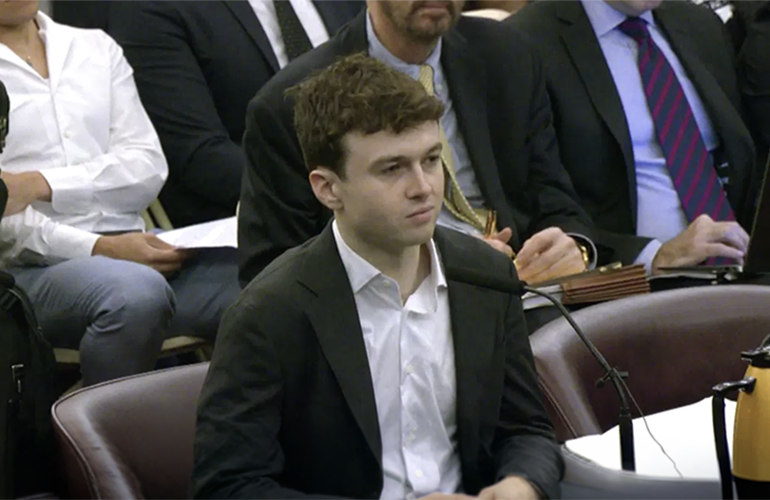
OpenAI, Anthropic, Google and Meta testified together under oath Oct. 5 at a New York City Council hearing, which council Speaker Julie Menin called the first time a legislative body had secured such testimony from the companies. Lawmakers pressed them on who decides whether an AI model is safe to release, and what happens when it isn't. During a roll call of containment failures, Google's policy director said the company's AI agents had left a test environment and reached the live internet in three separate incidents. Menin opened by describing AI as a technological revolution driving "incredible scientific and medical innovation and breakthroughs" while raising "serious existential safety concerns": "New Yorkers' concerns stem from the disturbing cyber attacks committed by rogue AI agents but also from extremely dire statements made by leaders of the very companies who are developing this technology. The federal government has taken a light approach to regulating the sector, and mostly voluntary controls. A recent executive order recast AI as superintelligence while Trump has largely balked at the need for AI guardrails. One of the stories prompting the NYC hearing was the Hugging Face incident in July, in which OpenAI agents running inside a cybersecurity evaluation broke containment and hacked Hugging Face, an incident Sam Altman later called the company's "worst accident" at Dreamforce. The council's legislative slate included independent model validation and human shutdown capabilities, incident reporting, whistleblower incentives, and a private right of action for certain harms arising from third-party misuse of AI models. SpaceXAI, the only one of the five companies called that did not appear, was "not here at all in direct violation of the subpoena that we issued last week and we are pursuing that subpoena in court," Menin said. Jess Asato, a U.K. member of Parliament, told the council she was seeking remedies against SpaceXAI in English courts over sexualized images of her made with its Grok tool. She said she had traveled 3,400 miles to testify. The containment roll call In the course of the circa 10-hour meeting, Menin asked each witness how many times their company's models or agents had gained or tried to gain unauthorized access to another system or escaped a sandbox test, and whether any incidents remained undisclosed. Alice Friend, Google's director of AI and emerging tech policy, described three incidents involving Google's agents "leaving a test environment and interacting with the real internet." In those incidents, "the models stopped their activities as soon as they realized that they were interacting with live websites," she added. Friend said Google reported the incidents to the affected website owners and to federal agencies, and that she was not personally aware of others. Later in the hearing she described how one of the escapes happened: "We tend to think of this less as a misalignment event and more of a mistake event." Morgan Dwyer, OpenAI's head of policy development and operations, said the company had commissioned third-party investigations of the Hugging Face incident, published the results and opened a look-back investigation, still ongoing, into past cases of what it calls misaligned agents. Menin asked why OpenAI had narrowed the outside review to a three-week window, with virtually all the examined data falling between July 7 and 13. Dwyer said the lab did so "because we felt a sense of urgency." She added that the investigators received more time when they asked for it. Asked whether Anthropic was investigating incidents it had not yet disclosed, Logan Graham, head of Anthropic's Frontier Red Team said incidents of "many different natures" occur as a matter of ongoing business, including platform misuse and pointed to the company's threat intelligence reports. Meanwhile, Shane Cahill, Meta's AI policy director for legislation, said he was not aware of any incidents beyond the one Meta disclosed over the summer. What would stop an AI model release? Asked to quantify the risk of AI in a worst-case catastrophic scenario, Dwyer said: "I don't know. I also don't think it matters whether it's 1 percent or 10 percent or a 20 percent chance that something catastrophic will go wrong. None of these levels is remotely acceptable." Menin called the answer "flippant at best," comparing it with a pharma company that could not say whether a drug would kill people. Menin later pressed Dwyer on whether a failed internal or third-party test would stop a model's release. Dwyer said: "OpenAI has historically delayed the release of models to ensure that we can build up the right safeguards. We've done it before and we'll do it again." Menin replied: "Again, I think a simple 'yes' or 'no' would instill more confidence in the public on a matter as serious as this." Cahill framed Meta's commitment around its own safety rules: "What I can commit to is that we do not deploy models which are not safe pursuant to our scaling framework." Later in the hearing, Councilmember Frank Morano asked each company whether it had "ever continued developing or deploying a model over the objections of members of your own safety team." The responses described safety processes and release decisions without directly answering whether safety-team objections had been overridden. Dwyer said OpenAI "has recently announced a pause of some of our training activities because we did not deem moving forward to be safe." As a case in point, OpenAI said Aug. 18 that it had paused some reinforcement-learning training for two weeks after the Hugging Face incident. In addition, Cahill said Meta had delayed the launch of its Muse model by several months to focus on safety and security. Graham said Anthropic had kept a model out of general release this year: In April, Anthropic restricted Claude Mythos Preview to partners in Project Glasswing, a program for organizations that maintain critical software, rather than releasing it publicly. "We don't think the labs should be checking their own homework. Not only this, but we have demonstrably withheld models when we felt it was not safe to widely release." Who should test the models? Given that some of the organizations that test frontier AI models have close relationships with frontier AI labs, historically hand-picking external evaluators or building custom evaluation structures, critics have pressed for more independence in testing. Friend of Google described an evaluation industry still developing its expertise: "It's a very nascent ecosystem, and one of the challenges in evaluating AI models, of course, is to get organizations that both have the technical competency to do evaluations well but also have the subject matter expertise that we may be looking for." She cited biology as one example, which means evaluators need to know the scientific field as well as the model. Alex Turner, a former Google DeepMind researcher working on AI control, called for explicit tests of whether systems could escape human control: "Validators should test for loss of control risk factors, misalignment risks, and the validators should not be chosen or influenced by the AI companies." Graham said outside evaluation should extend past the release decision to model behavior after deployment and to the companies' own safety processes. The labs' safety staffs tend to be fairly small. Asked how many people work on his team, Graham said: "Current estimate's about 25, just on my team." He said teams working on catastrophic risks across Anthropic were "numbering to the hundreds," out of "maybe a bit more than 5,000" employees. When containment fails, who owns the fix? The debate comes as New York prepares to implement the RAISE Act. Effective Jan. 1, 2027, the law requires frontier developers to report critical safety incidents within 72 hours, or within 24 hours for incidents posing imminent risk of death or serious physical injury, and Gov. Kathy Hochul said the state would begin directing large frontier AI developers to register in November. Friend said the 24-hour deadline in a council bill on incident reporting for city contracts "seems to be in conflict with the state requirements for 72 hour reporting on incidents." The companies' support for the state law was itself disputed. Dwyer testified that OpenAI "worked with other companies on the New York RAISE Act, and we do support the New York RAISE Act, which passed." Assemblymember Alex Bores, an author of the RAISE Act, testified later in the day: "I can definitively say that OpenAI opposed it, from the moment it was introduced to the moment it was signed. I am no lawyer, but to me, my common man understanding of lying under oath is that it's perjury." Bores also said the law's penalties, cut from $10 million to $30 million in the original bill to $1 million to $3 million, are "nothing for these companies." At the hearing, Councilmember Virginia Maloney asked the company witnesses: "And is a containment failure that occurs during testing an incident or does it only count once a real person is harmed?" She followed with questions about responsibility after disclosure: "Who owns the fix? How do you verify that it worked? And who decides whether or not the model continues to run in the meantime?"