News & Updates
The latest news and updates from companies in the WLTH portfolio.
Anthropic's Claude Opus 5 Raises the Bar for High-Performance, Cost-Efficient AI
Anthropic has introduced Claude Opus 5, its newest flagship artificial intelligence model, marking another major milestone in the rapidly evolving AI industry. The company says the model delivers intelligence approaching the level of the highly anticipated Fable 5 system while costing only half as much to operate. If these claims hold true in real-world use, Claude Opus 5 could significantly reshape the economics of advanced AI by making cutting-edge capabilities more affordable for businesses, developers, and enterprises worldwide. The release comes at a time when competition among leading AI companies has intensified. Firms such as OpenAI, Google DeepMind, Meta, and xAI continue to push the boundaries of large language models, investing billions of dollars in research, specialized hardware, and massive data centers. Anthropic has positioned itself as a company focused not only on building highly capable AI systems but also on ensuring they are safe, reliable, and aligned with human values. Claude Opus 5 represents the latest step in that strategy. According to Anthropic, Claude Opus 5 offers substantial improvements in reasoning, coding, mathematics, long-context understanding, and complex problem-solving. The model is designed to handle sophisticated business workflows, scientific research, software engineering, legal analysis, and creative writing with greater accuracy than previous generations. Its enhanced ability to maintain context across lengthy conversations also makes it more suitable for enterprise applications where consistency and memory are critical. Perhaps the most notable aspect of Anthropic's announcement is its pricing strategy. By claiming that Claude Opus 5 delivers intelligence comparable to Fable 5 at approximately half the cost. Anthropic is targeting one of the biggest challenges facing AI adoption: affordability. Running frontier AI models requires enormous computational resources, and inference costs remain a major expense for companies deploying AI at scale. Lower pricing could encourage wider adoption among startups, researchers, and organizations that previously found advanced AI financially out of reach. The pricing move also reflects a broader trend within the AI sector. As competition increases, companies are no longer focused solely on achieving higher benchmark scores. Cost efficiency has become equally important. Customers increasingly evaluate AI models based on the balance between performance, reliability, speed, and operational expenses. A model that offers nearly identical capabilities at significantly lower costs may prove more attractive than one that delivers marginally better performance at a premium price. Claude Opus 5 could reduce the financial burden of integrating advanced AI into applications ranging from customer support and document analysis to autonomous coding assistants and intelligent research platforms. Enterprises may benefit from lower infrastructure expenses while maintaining access to high-quality AI reasoning capabilities. This could accelerate the deployment of AI across industries including healthcare, finance, education, manufacturing, and cybersecurity. The announcement also underscores the growing maturity of the AI market. Rather than competing only through larger models, companies are increasingly optimizing architecture, training techniques, and inference efficiency. These improvements allow developers to achieve stronger performance without proportionally increasing computational requirements, creating a more sustainable path for AI innovation. Anthropic's comparison to Fable 5 will be judged by independent testing and real-world performance. Benchmarks provide valuable insights, but enterprise customers often prioritize reliability, safety, latency, and practical productivity gains over headline claims. As organizations begin evaluating Claude Opus 5 in production environments, its true capabilities will become clearer. The launch of Claude Opus 5 represents more than just another AI model release. It signals a shift toward making frontier intelligence more accessible through improved cost efficiency. If Anthropic's performance and pricing claims are validated, Claude Opus 5 could become one of the most influential AI models of the year, intensifying competition and accelerating the adoption of advanced artificial intelligence across the global economy.

Anthropic Launches Cheaper Claude Opus 5 As AI Pricing War Intensifies
Anthropic on Friday unveiled Claude Opus 5, its newest flagship artificial intelligence model, positioning it as its strongest balance of performance and affordability as competition among leading AI developers increasingly shifts from raw capability to commercial value and cost efficiency. The San Francisco-based AI startup said Opus 5 outperforms its previous flagship, Claude Fable 5, across key benchmarks for software engineering, coding and knowledge work while cutting usage costs by 50%. Anthropic also said the model is designed for everyday enterprise workloads rather than niche or experimental applications. Vendors in the AI industry are now under pressure to justify the enormous investments being poured into model development and AI infrastructure. As enterprises become more selective about AI spending, model providers are competing not only on benchmark performance but also on cost, efficiency, and measurable business outcomes. Claude Opus 5 will cost $5 per million input tokens and $25 per million output tokens, compared with significantly higher pricing for Fable 5. Anthropic said the lower pricing does not come at the expense of capability, describing Opus 5 as its best-performing and most cost-effective model across multiple industry evaluations. The company added that while Opus 5 delivers stronger performance in coding and knowledge-intensive tasks, it is not its most capable model for high-risk dual-use applications, such as offensive cybersecurity research. That distinction remains with Claude Mythos 5, Anthropic's specialized cybersecurity-focused model. The announcement comes at a time when the economics of artificial intelligence are becoming as important as technical leadership. Companies are deploying AI at scale but are increasingly demanding lower inference costs, predictable pricing and stronger returns on investment after years of heavy infrastructure spending. "Enterprises, in our feedback and with our customer base, are looking for value," Dianne Penn, Anthropic's Head of Product Management for Research, told CNBC. "If it's a cheaper model or a cheaper offering, but it's not accomplishing a similar level of quality, it's actually not useful." The pricing move also underlines the mounting competitive pricing pressure across the AI industry. Anthropic is competing against OpenAI, Google, Microsoft and Amazon, while Chinese developers including Moonshot AI, Alibaba, Z.ai and MiniMax have introduced capable open-weight models at substantially lower operating costs. Those releases have intensified pricing competition and challenged assumptions that frontier AI models must remain expensive to operate. The latest model also arrives as investors scrutinize AI companies' spending more closely. Industry-wide capital expenditures on AI infrastructure continue to surge into the hundreds of billions of dollars, prompting customers to seek models that can deliver comparable performance with lower operating costs. Anthropic's strategy suggests the company is attempting to expand beyond customers willing to pay premium prices for frontier capabilities by offering a model that balances performance with commercial practicality. The release follows a turbulent few months for the company. In April, Anthropic introduced Claude Mythos Preview, a cybersecurity-focused model that demonstrated advanced vulnerability discovery and exploitation capabilities during controlled testing. Anthropic later launched Mythos 5 alongside Claude Fable 5 in June, describing Fable 5 as its most capable general-purpose model to date. Shortly after those releases, the U.S. government temporarily suspended access to both models under national security-related export controls before lifting the restrictions roughly two weeks later following discussions between Anthropic and government agencies. Penn said Anthropic continues to work closely with U.S. authorities during model evaluation and deployment. According to the company, Opus 5 remains less capable than Mythos 5 in sensitive areas such as offensive cybersecurity and biological research, reflecting Anthropic's continued separation between its commercial AI offerings and its highest-capability research models. However, the release of Opus 5 is seen as an indication that leading developers are beginning to emphasize cost efficiency, inference economics, and practical enterprise deployment.

Anthropic Wins Court Approval For Landmark $1.5bn Copyright Settlement
A U.S. federal judge has granted final approval to Anthropic's landmark $1.5 billion settlement with a class of authors who accused the artificial intelligence company of unlawfully using their books to train its Claude chatbot, bringing to a close one of the most closely watched copyright disputes in the AI industry and setting an important benchmark for dozens of similar lawsuits against major technology companies. U.S. District Judge Araceli Martinez-Olguin in San Francisco on Monday approved the settlement, rejecting objections from authors who argued that the payout was insufficient. The agreement is the largest known settlement in a U.S. copyright case and the first major AI copyright lawsuit involving generative AI training to reach a negotiated resolution. The case has been widely viewed as a bellwether for the legal battles unfolding between copyright holders and AI developers over the use of books, news articles, music and other creative works to train large language models. Judge William Alsup, who presided over much of the litigation before retiring, had granted preliminary approval to the settlement last September. "We reached this settlement in 2025, after the court's landmark ruling that training AI on books is fair use under copyright law, which remains the law today," Anthropic Deputy General Counsel Aparna Sridhar said in a statement. "We are pleased that more than 91% of authors and publishers covered by the settlement have claimed their share of the payment, and we're looking forward to bringing this matter to a close." Lead plaintiffs' attorney Justin Nelson described the agreement as a milestone for copyright enforcement. "It is the largest known copyright recovery in history. We look forward to making distributions to the Class as promptly as possible," Nelson said. The litigation began in 2024, when a group of authors sued Anthropic, alleging the company copied pirated versions of their books without authorization to train Claude, its flagship generative AI model. Anthropic, which is backed by Amazon and Alphabet, argued that using copyrighted books for AI training constituted fair use, a long-established doctrine in U.S. copyright law permitting limited use of protected works under certain circumstances. In a landmark ruling last June, Judge Alsup largely agreed with Anthropic's position, concluding that training AI models on copyrighted books was a transformative use protected under the fair use doctrine. The decision represented one of the most significant judicial victories for AI developers and has become a key legal precedent as courts consider similar claims against companies including OpenAI, Meta, Microsoft, Google and others. However, Alsup also found that Anthropic infringed copyright by maintaining a digital repository containing more than 7 million pirated books, describing the company's "central library" as distinct from the AI training process itself because many of the works were retained without necessarily being used to train Claude. That ruling left Anthropic exposed to potentially enormous statutory damages. Before the settlement was reached, the case was scheduled to proceed to trial last December to determine damages related to the storage of the pirated books. Because U.S. copyright law allows statutory damages of up to $150,000 per infringed work in cases involving willful infringement, legal analysts estimated Anthropic could theoretically have faced liabilities running into the hundreds of billions of dollars, although actual awards in copyright litigation are typically far lower. The settlement eliminates that uncertainty while allowing Anthropic to avoid years of additional litigation and potential appeals. The agreement also provides significant compensation to participating authors and publishers without requiring them to prove individual damages. According to Anthropic, more than 91% of eligible copyright holders have already claimed their share of the settlement fund, reflecting broad participation despite objections from a minority of authors. Several authors challenged the settlement, arguing that the compensation failed to reflect the scale of Anthropic's alleged infringement. Others contended that the agreement unfairly excluded certain copyright owners or awarded excessive legal fees to the plaintiffs' attorneys. Judge Martinez-Olguin rejected those objections, finding that the settlement represented a reasonable outcome given the litigation risks facing both sides. The judge wrote that criticisms regarding the settlement amount were "not grounded in a realistic assessment of the overall risks and rewards of a trial." She also approved more than $101 million in attorneys' fees, substantially below the $187.5 million requested by class counsel. The settlement comes as AI developers face mounting legal challenges over the datasets used to train sophisticated generative AI systems. Publishers, authors, musicians, artists and media organizations have argued that technology companies have built commercially valuable AI products using copyrighted material without obtaining licenses or providing compensation. Technology companies counter that AI training is fundamentally transformative, does not reproduce the original works for consumers, and therefore qualifies as fair use. The Anthropic case is particularly significant because it produced one of the first major judicial rulings recognizing AI model training as fair use while simultaneously finding liability for maintaining unauthorized copies of copyrighted works. That distinction is likely to influence ongoing litigation across the United States as courts seek to balance copyright protections with technological innovation. The settlement does not resolve all of Anthropic's copyright disputes. Some authors and publishers opted out of the class action and are continuing to pursue separate lawsuits against the company, meaning additional legal battles over AI training practices remain underway.
Total Prediction Market Volume Reaches New Highs as Polymarket Expands and Wall Street Responds
Prediction markets are experiencing a historic surge in activity, cementing their place as one of the fastest-growing sectors in finance and digital assets. Total trading volume across major platforms has climbed to new all-time highs, driven by growing interest in politics, macroeconomic events, sports, artificial intelligence, and cryptocurrency-related forecasts. Institutional finance is beginning to grapple with the implications of these markets, as evidenced by Goldman Sachs reportedly restricting employee participation in prediction market activities. The rise of prediction markets reflects a broader shift toward information-based financial products. Unlike traditional betting platforms, prediction markets aggregate collective intelligence by allowing participants to trade contracts tied to future events. Prices fluctuate based on perceived probabilities, effectively turning public sentiment into a real-time forecasting mechanism. Platforms such as Polymarket have become central players in this movement. Over the past year, user participation has expanded dramatically as traders increasingly rely on prediction markets to gauge election outcomes, central bank decisions, technological breakthroughs, and geopolitical developments. Many analysts now view prediction markets as complementary tools to traditional research, often providing faster and more dynamic insights than polling data or analyst reports. The growing popularity of these markets has also attracted scrutiny from major financial institutions. Goldman Sachs, one of the world's largest investment banks, has reportedly introduced restrictions on employee participation in prediction markets. The move highlights increasing concerns around compliance, conflicts of interest, insider information risks, and regulatory uncertainty. For large financial firms, employee involvement in markets tied to political outcomes or economic events can create complex legal and ethical questions. If prediction contracts are linked to events that employees may have privileged insights into, institutions must carefully manage potential reputational and regulatory risks. Goldman Sachs' cautious stance suggests that Wall Street recognizes prediction markets as increasingly significant financial instruments rather than niche speculative products. Meanwhile, Polymarket is taking major steps toward mainstream financial integration. The company has reportedly filed for a margin trading license in the United States, a move that could dramatically expand its product offerings and attract a broader class of sophisticated traders. A margin trading license would allow users to trade with borrowed capital, increasing leverage and potentially boosting market liquidity. Such functionality is commonplace in traditional financial markets and cryptocurrency exchanges but remains relatively new within prediction markets. If approved, the license could position Polymarket as a hybrid platform combining elements of derivatives trading, forecasting markets, and digital asset infrastructure. The filing also signals Polymarket's intention to operate within clearer regulatory frameworks in the United States. Regulatory compliance has become increasingly important as prediction markets move from the fringes of the internet into mainstream finance. Establishing a licensed and regulated structure could attract institutional capital that has thus far remained cautious due to legal uncertainties. The broader implications are substantial. Prediction markets are increasingly being viewed as powerful information engines capable of efficiently aggregating dispersed knowledge. Governments, corporations, investors, and researchers are paying closer attention to their forecasting accuracy. The sector faces challenges. Greater institutional participation will likely bring stricter compliance requirements, enhanced surveillance mechanisms, and more regulatory oversight. Questions regarding market manipulation, insider trading, and the classification of prediction contracts remain unresolved. The sector's momentum appears undeniable. Record trading volumes, institutional reactions from firms like Goldman Sachs, and Polymarket's push for advanced licensing collectively indicate that prediction markets are entering a new phase of maturity. What began as an experimental intersection of finance and collective intelligence is rapidly evolving into a significant component of modern market infrastructure. As adoption accelerates, prediction markets may increasingly influence how societies forecast and price future events.

Elon Musk Thinks SpaceX Could Become More Valuable Than Earth Itself
Businessman and Tesla CEO Elon Musk has once again captured the world's attention with one of his most audacious statements yet. In an address to skepticism surrounding a major compute partnership between Anthropic and SpaceX/xAI, Musk declared that his rocket company will eventually be worth more than the rest of Earth if it accomplishes its long-term objectives. In a post on X, he wrote, "You don't seem to understand that SpaceX will be worth more than the rest of Earth if we accomplish our goals." Musk's comment came in response to analyst Thomas D. who questioned whether Anthropic's reported $7.5-40 billion deal with SpaceX-related entities represented an "unforced error." The deal reportedly grants Anthropic access to significant AI compute capacity at SpaceX's facilities, including the Colossus 1 data center. The remark, made in response to a skeptic, emphasizes SpaceX's long-term potential in space infrastructure, Mars colonization, and related technologies, framing it as vastly more significant than short-term AI deals or competition. This highlights Musk's broader vision where space ambitions could dwarf terrestrial economies, amid discussions on xAI's rapid progress with models like Grok 4.5. Musk's latest prediction builds on these achievements while pointing toward far greater ambitions, establishing a self-sustaining colony on Mars and making life multiplanetary. The vision is not merely about sending astronauts on occasional trips. Musk has repeatedly emphasized that SpaceX aims to enable ordinary people to travel to the Moon, Mars, and beyond, creating an entirely new branch of the economy rooted in space resources, orbital manufacturing, and interplanetary trade. Critics have been quick to question the feasibility and the sheer scale of such a valuation claim. SpaceX's Soaring Valuation and Recent IPO SpaceX, which recently completed its high-profile initial public offering and carries a market valuation around $1.75 trillion, is already among the most valuable companies on the planet. Its rapid rise has been fueled by reusable rocket technology, the Starlink satellite internet constellation that now serves millions of users worldwide, and the development of the massive Starship vehicle designed for deep-space missions. Musk's statement arrives amid extraordinary momentum for SpaceX. The company went public in June 2026 in what became the largest IPO in history, raising approximately $75-85.7 billion. Shares surged post-listing, pushing the market capitalization above $2 trillion and briefly surpassing major tech giants like Amazon. Musk has long framed SpaceX's mission as making humanity multi-planetary, with Starship as the key vehicle for Mars colonization, lunar bases, and large-scale space infrastructure. Achieving routine, low-cost access to orbit and beyond could unlock new industries, orbital manufacturing, asteroid mining, space-based solar power, and a vastly expanded satellite economy. Analysts and enthusiasts speculate that dominating launch capacity, global broadband via Starlink, and space-based AI/compute could transform SpaceX into the backbone of an off-world economy. Some optimistic forecasts suggest potential valuations in the trillions more if these goals materialize, effectively dwarfing Earth's current economic output in relative terms as new frontiers open. Yet Musk's track record with Tesla and SpaceX has shown that seemingly impossible timelines can accelerate dramatically when innovation compounds. Whether Musk's forecast proves overly optimistic, it highlights a fundamental shift in how we view our future. For him, space is not just a frontier for exploration, it represents the next chapter of human prosperity and survival. As SpaceX pushes the boundaries of what's technically and economically possible, the conversation about humanity's place in the cosmos grows louder.

Vercel Acquires Tekedia Capital Portfolio, Better Auth
Good People, it is with great excitement that I announce the acquisition of one of our portfolio companies, Better Auth, by the industry-leading decacorn, Vercel. Founded by a self-taught tech prodigy from Ethiopia, Better Auth has ascended to become a preeminent force in open-source authentication. Tekedia Capital congratulates the Better Auth team and looks forward to Vercel's stewardship of this innovative platform. You can read the full details here: https://vercel.com/blog/vercel-acquires-better-auth. This acquisition follows the recent purchase of another portfolio company by OpenAI last month, with a public announcement to follow shortly. May the harvest season be bigger for Tekedia Capital community. Connect via my LinkedIn | Facebook | X | YouTube

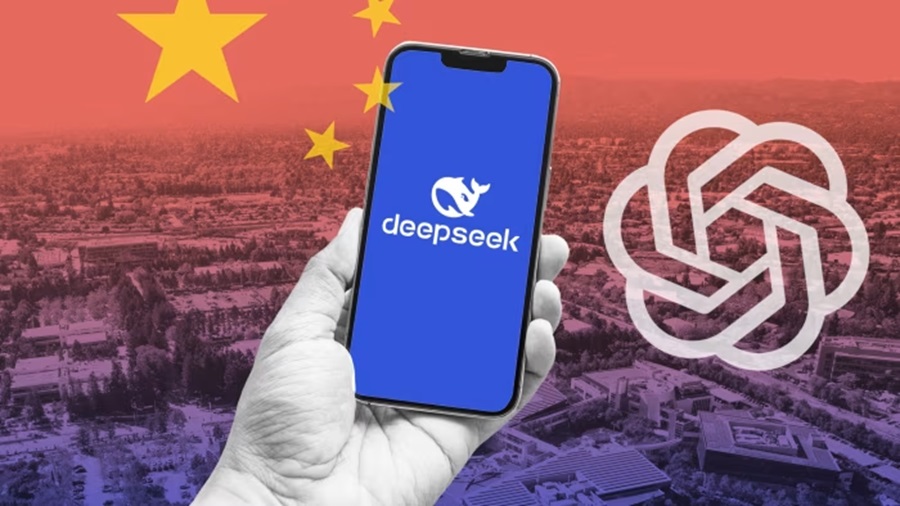
Chinese AI Models Gain Ground in U.S. as Lower Costs Challenge OpenAI and Anthropic
Chinese artificial intelligence models are rapidly gaining acceptance among U.S. businesses as companies seek to reduce soaring AI costs without sacrificing performance, marking a significant shift in a market long dominated by American technology firms. Developers and businesses are increasingly turning to open-source and open-weight AI models from Chinese companies such as DeepSeek, Z.ai and Alibaba's Qwen, attracted by systems that many say now deliver capabilities approaching those of leading U.S. models at a fraction of the cost. The trend is emerging at a sensitive moment for the United States, as the Trump administration weighs tighter oversight of advanced AI technologies while also grappling with the growing global influence of Chinese AI developers. Industry data suggests the shift is no longer confined to experimentation. According to OpenRouter, a platform that allows developers to access and compare AI models from multiple providers, more than 30% of tokens used by U.S. companies each week since February 8 have been processed through Chinese AI models. At one point, that share climbed to 46%. The figures represent a dramatic change from previous usage patterns. Over the preceding 12 months, Chinese models accounted for an average of just 11% of OpenRouter's token usage, while their share fell to only 4.5% during the first half of 2025. The sharp increase shows how quickly developers are reconsidering the economics of artificial intelligence as operating costs become a larger concern. Early enterprise AI adoption was largely driven by access to the most capable models available, regardless of price. Increasingly, companies are evaluating whether premium AI systems justify their significantly higher operating costs. Kyle Chan, a fellow at the John L. Thornton China Center at the Brookings Institution, said rising prices at American AI companies are changing purchasing decisions. "Chinese AI models are particularly attractive to American companies now as AI costs skyrocket," Chan told CNBC. "Where previously U.S. companies were prioritizing AI adoption regardless of model, now they're getting more cost-conscious." That shift is disrupting the status quo. Many of the newest Chinese AI systems are distributed as open-source or open-weight models, allowing developers to inspect, customize, or build applications using technology that is not fully locked behind proprietary platforms. This contrasts with many flagship models from OpenAI, Anthropic and Google, whose internal architectures, training methods and core technologies remain proprietary. The flexibility of open models has become attractive for businesses seeking greater control over their AI infrastructure while reducing dependence on commercial application programming interfaces (APIs). The cost savings can be substantial. According to Justin Summerville, who works on data and analytics at OpenRouter, leading Chinese open-source models are typically between 60% and 90% cheaper than comparable offerings from OpenAI and Anthropic. Those economics are beginning to influence real business decisions. AI startup Lindy recently migrated all of its AI workloads from Anthropic's Claude models to DeepSeek, one of China's fastest-rising AI companies. DeepSeek attracted global attention in early 2025 with a highly competitive reasoning model before introducing another major model upgrade in April. Lindy's Chief Executive Officer, Flo Crivello, said the transition immediately transformed the company's operating costs. "We did it, and you could see that cost curve go down, like, crash to the ground," Crivello told CNBC. He estimated the move would save the company millions of dollars within a matter of months. The growing adoption extends beyond DeepSeek. Developer platform Vercel reported that DeepSeek significantly increased its share of AI token usage between May and June. Even more striking has been the rapid rise of Z.ai's GLM 5.2 model. Released in June, GLM 5.2 recorded the fastest adoption of any AI model tracked by Vercel during 2026. According to Harpreet Arora, the company's Head of Agentic Infrastructure, daily token volume surged approximately 27-fold during the model's first full week after launch, while the number of customers using it increased about 80 times. Arora said economics, rather than ideology, is increasingly determining which models companies deploy. "Price is doing the work here," he said. "When a task doesn't need the best model, teams are beginning to route it to the cheapest one that's good enough, and the recent wave of models coming out of China is winning that trade." This shows that companies are now routing different tasks to different models depending on complexity, accuracy requirements and cost, rather than relying on a single AI provider. Routine customer support, document processing, and software development tasks may be assigned to lower-cost models, while more demanding reasoning or research tasks continue to use premium frontier systems. The approach allows organizations to reduce AI expenses while maintaining performance where it matters most. LaunchLemonade, an AI platform serving regulated industries, has observed the same trend. Although Anthropic's Claude and OpenAI's ChatGPT remain its most widely used models, Z.ai's GLM 5.2 has already entered the platform's five most-used AI systems. Chief Executive Officer Cien Solon said businesses are becoming increasingly pragmatic. "Chinese models like Z.ai and Alibaba's Qwen are becoming options for companies as they offer an attractive combination of performance and cost for specific workloads," Solon told CNBC. "Businesses with more mature AI strategies are increasingly willing to use them where they make technical or commercial sense." The growing interest is not driven by price alone. Researchers say Chinese AI models are closing the performance gap with the industry's leading American systems. Chan estimates that China's most advanced models now trail the top U.S. frontier models by approximately six to nine months while costing only a fraction as much to operate. "The new open-source models are performing well and prove capable for all but the most complex LLM tasks," Summerville said. Independent benchmarks increasingly support those assessments. On one closely watched benchmark measuring autonomous AI agent performance, GLM 5.2 finished within roughly one percentage point of Anthropic's Opus 4.8 while operating at around one-fifth of the cost. Some researchers have also reported that GLM 5.2 performs competitively with leading U.S. models on cybersecurity benchmarks, an area traditionally viewed as one of the most technically demanding applications of generative AI. Lindy's experience echoed those findings. Crivello said migrating to DeepSeek V4 improved performance across many of the company's core AI applications, demonstrating that lower cost did not necessarily require sacrificing capability. The rapid rise of Chinese AI is also complicating U.S. technology policy. As Washington considers tighter controls on advanced AI systems, Chinese open-source models remain widely accessible around the world. At the end of June, OpenAI delayed the rollout of a new family of models following requests from the U.S. government. During the same period, export restrictions affecting Anthropic's cybersecurity-focused Mythos and Fable models were lifted after months of negotiations between the company and the Trump administration. Those policy debates reflect broader concerns about maintaining U.S. leadership in artificial intelligence while limiting the international availability of the country's most advanced technologies. Yet some researchers warn that restricting American AI too aggressively could unintentionally strengthen overseas competitors. Yacine Jernite, Head of Machine Learning at Hugging Face, said businesses increasingly want AI systems that they can modify, deploy independently and control without relying entirely on commercial providers. "We're seeing companies increasingly motivated to turn to cheaper AI stacks they can control and adapt themselves, and given the state of open-source and open-weight models that often means leveraging Chinese options," Jernite told CNBC. He cautioned that enterprises could eventually face an uncomfortable choice. "There is a real risk that users get stuck having to choose between performant but expensive U.S. proprietary models whose price and accessibility can quickly fluctuate, or using Chinese models as the only feasible alternative whenever they want to control costs or own their AI stack." That tension highlights the next phase of the global AI race. While American companies continue to lead in developing the world's most advanced frontier models, Chinese developers are steadily narrowing the capability gap while competing aggressively on price. For businesses focused on controlling costs rather than on possessing the absolute best-performing AI, that combination is proving increasingly difficult to ignore.