News & Updates
The latest news and updates from companies in the WLTH portfolio.
Sam Altman mocks Anthropic's 'hard questions' campaign -- 'I thought this was satire'
After an amusing exchange of words with SpaceXAI's Elon Musk, Sam Altman has now taken a fresh jab at another competitor - Anthropic. In his latest post on X, Altman dismissed a new promotional video from Anthropic, touting it as what he initially assumed to be satire, but it wasn't. The video, which asks Anthropic's users to pose the toughest of questions to AI, caught Altman's attention, leading him to call out Anthropic for silently downgrading its service and withholding access. In the post, Altman went on to say, "i thought this was satire, kept looking for the handle to be spelled c1audeai or something." In another follow-up post, he added, "hard questions are great but only if we deem you worthy enough to not silently downgrade you, or even get access at all". Altman's comment comes a day after his heated exchange of words with Elon Musk, who accused the OpenAI CEO of scamming people, with Altman calling out Musk for selling public market investors on "short-term data centres". What Anthropic's video says about AI The original Anthropic post promotes a cinematic advertising-style video and initiative inviting the public to submit their toughest, most uncomfortable questions about AI. Titled "There's hope in hard questions," the 90-second film features real voices from surveys and user conversations raising concerns such as: "Can AI be trusted?", "Will it benefit the majority of people?", impacts on jobs and society, misuse risks, and broader philosophical issues about humanity and technology. Anthropic positioned the campaign as a commitment to transparent AI. The video is based on extensive research, including a 52,000-person US survey and feedback from over 81,000 ClaudeClaude users, promising to publicly track progress on addressing these questions while admitting shortcomings. The company directs people to claude.com/hard-questions to participate. Altman accuses Anthropic of hypocrisy, gatekeeping Altman's response to Anthropic highlights the ongoing rivalry between the two AI safety-focused labs. Previously, Altman has criticised Anthropic for what he sees as an elitist approach, i.e., serving premium products to wealthier users while allegedly restricting broader access and controlling AI usage (such as blocking certain companies from their coding tools). This comes at a time when Anthropic is witnessing runaway success with its Claude Fable - an AI model that's considered among the most powerful ones available to humans today. OpenAI followed suit with its GPT-5.6 models, promising similar levels of AI processing performance. The timing of Altman's comments adds extra spice to Altman's slew of controversies, which reemerged after a while over a renewed public feud with Elon Musk. Over the weekend, Musk accused Altman of scamming, especially in light of an Apple lawsuit against OpenAI alleging trade secret theft. Musk posted jabs like "Scam Altman strikes again" and referenced alleged theft of "open source AI charity" and Apple's technology. Altman responded by highlighting benchmarks suggesting that OpenAI's latest model (5.6 Sol) as potentially the world's best, adding that "the most reliable way to tell is that elon is obsessed with me again." Musk retorted about upcoming orbital data centers and parole officer quips.

SpaceX is gearing up for Starship's 13th test flight later this week
The next test flight of SpaceX's Starship spacecraft and Super Heavy booster could take off as soon as Thursday, and much of the hour-long mission will look a lot like the last Starship flight in May. But there are a few key differences for this launch, set to occur during a launch window that opens at 5:45 pm CDT (22:45 UTC) on Thursday. The most notable change is the inclusion of real, functioning Starlink satellites inside Starship's cargo bay. SpaceX previously tested the ship's payload deployment mechanism using simulators mimicking the mass and dimensions of the company's next-generation Starlink Version 3 broadband satellites. This time -- Starship's 13th full-scale test flight and the second to use SpaceX's newest version of Starship -- technicians have installed 20 Starlink V3 satellites into the ship's deployer, a system of pulleys and cables designed to eject a stack of satellites one at a time through an opening on side of the spacecraft. The satellites will not be part of SpaceX's operational network, but engineers will attempt to briefly establish laser communication links between the Starlink V3s and other spacecraft flying in low-Earth orbit. If successful, these links will validate Starlink V3's interoperability with SpaceX's previous generation of Starlink satellites. As with all of SpaceX's previous Starship test flights, the more than 400-foot-tall rocket will fly on a long suborbital trajectory arcing halfway around the world from the launch site at Starbase, Texas, to a predetermined location in the Indian Ocean. The flight of Starship and the 20 Starlink satellites will last a little more than an hour before they fall back into the atmosphere. The ship will target a controlled splashdown northwest of Australia, while the Starlink satellites will burn up during reentry. A new ingredient The flight plan for this week's mission has just enough time in space for the Starlink satellites to extend their solar arrays and antennas. The satellites will also attempt to connect with ground stations in South Africa as they soar nearly more than 100 miles overhead. What's more, some of the Starlink V3s will host cameras to scan Starship's heat shield and transmit the imagery down to engineers on the ground, according to SpaceX. The imagery will allow ground teams to "continue testing methods of analyzing Starship's heat shield readiness for return to launch site on future missions," SpaceX said in a post on its website. Two of the Starlink mockups carried cameras for external imaging on the last Starship mission, returning views of the ship set against the ghostly darkness of space. This time, SpaceX has affixed cameras to six of the Starlink satellites. The imaging opportunity on this week's mission will occur during nighttime, just as it did on the last flight. The presence of Starlink V3s on the next Starship test flight is a harbinger for what's to come. Fully-loaded Starships will be capable of launching up to 60 Starlink V3s on a single flight, unlocking a dramatic expansion of the network's capacity. Each Falcon 9 launch with V2 satellites adds about 2.6 Tbps to the constellation. Pairing Starship with a full stack of V3 satellites will add 60 Tbps to the network. Starship is designed to carry other kinds of satellites, too, including customer payloads and massive platforms for SpaceX's proposed orbital data center network. The rocket is also designed for flights to the Moon and Mars. Starship is a core part of NASA's Artemis program to land astronauts at the Moon's south pole. But the first real operational missions for Starship will begin fielding SpaceX's third-generation Starlink constellation, perhaps later this year if all goes according to plan. Lessons learned SpaceX must send Starship into low-Earth orbit before achieving any these lofty objectives. A near-perfect test flight Thursday would put the company on the cusp of an orbital launch. That, in turn, would allow Starship to move toward several important milestones, such bona fide satellite launches, in-orbit refueling demos, and the first return of Starship to Starbase, Texas, for future reuse. One reason SpaceX isn't attempting an orbital flight this week is Starship's failure to complete one of its test objectives on the last launch, when the spacecraft was supposed to ignite one of its six Raptor engines for a brief burn in space. The spacecraft skipped the burn after a Raptor engine shut down prematurely during the launch sequence. The rest of the ship's flight went according to plan, culminating in a pinpoint splashdown in the Indian Ocean. It was the first flight of SpaceX's Starship V3 debuting new, more powerful Raptor engines. But officials need confidence in the Raptor engine's ability to reignite in the airless vacuum of space before proceeding to an orbital flight. In a worst-case scenario, a failed Raptor engine relight would strand Starship in orbit, leaving the enormous stainless steel vehicle to an unguided reentry that could become a risk to public safety. The flight plan for this week's mission includes the Raptor restart objective left unaccomplished in May. In an update posted to its website over the weekend, SpaceX did not address what caused the premature shutdown of the Raptor engine on Flight 12. "The vehicle was able to demonstrate its engine out capability and reach its planned suborbital trajectory," the company wrote on its website. "Several hardware and operational modifications have been made to address the interconnected causes with additional reliability improvements planned in upcoming versions of the Raptor engine." The other goal left incomplete on Starship's last flight involved the splashdown of the rocket's Super Heavy booster, or first stage, which lost control moments separating from the ship, or upper stage, a few minutes after liftoff. SpaceX intended for the booster to fly itself to a water landing in the Gulf of Mexico downrange from its launch base in South Texas. "At stage separation on Flight 12, slight differences in engine startup on the ship caused the directional flip of the booster to be off by approximately 90 degrees," SpaceX wrote. "The startup sequence has been modified to be more robust to timing variability and more reliably flip in the desired direction, which is done to increase overall performance. "After stage separation and the flip, the Super Heavy booster attempted its boostback burn," SpaceX continued. "Five of its 33 engines experienced issues when attempting to relight causing the boostback burn to end early. The Super Heavy on this upcoming flight has hardware modifications to improve relight reliability along with updates to engine alarms and aborts to match the conditions seen in the multi-engine flight environment." SpaceX will also use Flight 13 to continue experimenting with Starship's heat shield, one of the most daunting technical challenges on the program. If the full rocket is to become rapidly reusable, as SpaceX intends, the heat shield's thousands of ceramic tiles must not only protect the ship once. They have to be robust enough to handle the extreme heating of reentry over and over again without refurbishment or replacement. "What's single biggest remaining problem for Starship? It's having the heat shield be reusable," Musk said in February on the Dwarkesh Podcast. "No one has ever made a reusable orbital heat shield. The heat shield's got to make it through the ascent phase without shucking a bunch of tiles, and then it's got to come back in and also not lose a bunch of tiles or overheat the main airframe." "We have brought the ship back and had it do a soft landing in the ocean. We've done it a few times, but it lost a lot of tiles, and it ... would not have been reusable without a lot of work," Musk said. "If you want to be able to land it, refill propellant and fly again, you can't do this laborious inspection of 40,000 tiles type of thing." On this flight, SpaceX will test out modified tiles and attachment mechanisms to gather flight data on different heat shield options. The shield will also have "load sensing tiles" to take measurements as the vehicle experiences higher dynamic pressure during ascent than on previous flights. This higher dynamic pressure will put "added stress on the tile attachments in exchange for increased payload to orbit capability," SpaceX said.
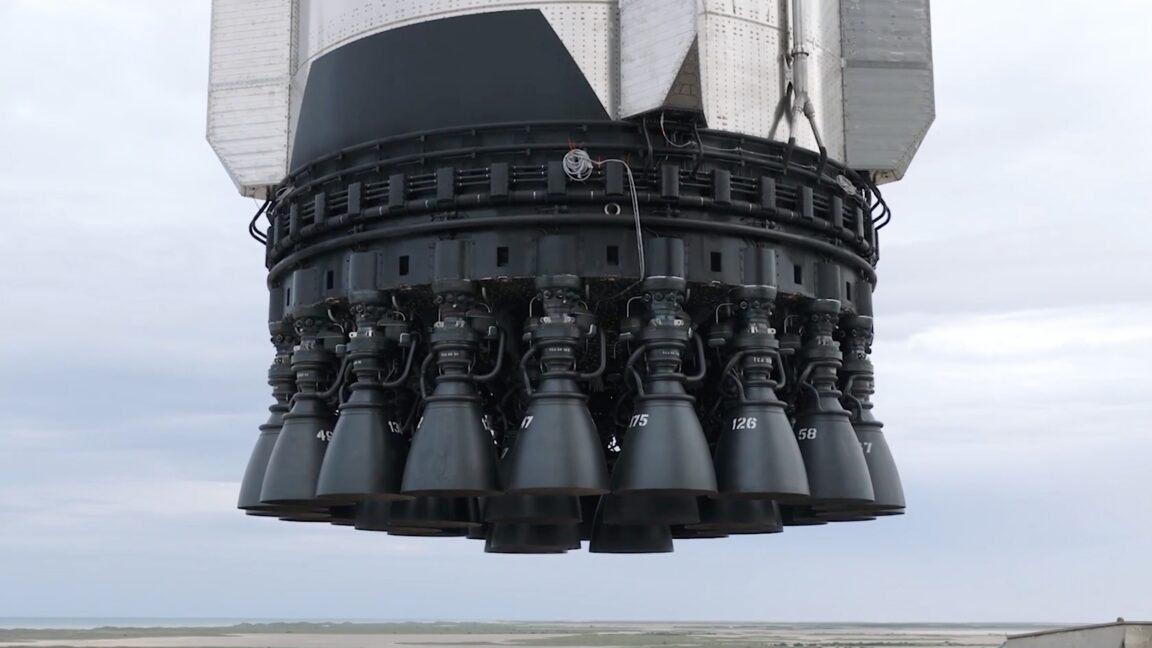
Analysts Are Bullish on Top NA Stocks: HawkEye 360, Inc. (HAWK), SpaceX (SPCX)
There's a lot to be optimistic about in the NA sector as 3 analysts just weighed in on HawkEye 360, Inc. (HAWK), SpaceX (SPCX) and Hemab Therapeutics Holdings, Inc. (COAG) with bullish sentiments. TipRanks Welcomes a New ETF - NYSE:RANK * TipRanks has entered a new arena in the investing world, powering the index of an ETF based on its unique data now trading under the ticker RANK on the NYSE. * RANK tracks the performance of the TipRanks US Momentum Analysts Index, a rules-based index of 50 large U.S. companies. HawkEye 360, Inc. (HAWK) In a report released today, Louie DiPalma from William Blair maintained a Buy rating on HawkEye 360, Inc.. The company's shares closed last Monday at $19.34, close to its 52-week low of $18.71. According to TipRanks.com, DiPalma is a 4-star analyst with an average return of 6.0% and a 51.8% success rate. DiPalma covers the Technology sector, focusing on stocks such as Palantir Technologies, Science Applications, and Caci International. HawkEye 360, Inc. has an analyst consensus of Strong Buy, with a price target consensus of $37.86. See the top stocks recommended by analysts >> SpaceX (SPCX) In a report released today, Douglas Harned from Bernstein maintained a Buy rating on SpaceX, with a price target of $239.00. The company's shares closed last Monday at $137.58. According to TipRanks.com, Harned is a 4-star analyst with an average return of 12.9% and a 56.1% success rate. Harned covers the Industrial Goods sector, focusing on stocks such as L3Harris Technologies, Huntington Ingalls, and Northrop Grumman. The word on The Street in general, suggests a Strong Buy analyst consensus rating for SpaceX with a $241.36 average price target, implying a 66.8% upside from current levels. In a report issued on June 30, Wedbush also initiated coverage with a Buy rating on the stock with a $190.00 price target. Hemab Therapeutics Holdings, Inc. (COAG) Jefferies analyst Maury Raycroft maintained a Buy rating on Hemab Therapeutics Holdings, Inc. today and set a price target of $47.00. The company's shares closed last Monday at $40.75. According to TipRanks.com, Raycroft is a 4-star analyst with an average return of 12.2% and a 44.2% success rate. Raycroft covers the Healthcare sector, focusing on stocks such as Corbus Pharmaceuticals, Dianthus Therapeutics, and Compass Therapeutics. Hemab Therapeutics Holdings, Inc. has an analyst consensus of Strong Buy, with a price target consensus of $43.80, which is a 14.1% upside from current levels. In a report issued on June 29, Wedbush also maintained a Buy rating on the stock with a $42.00 price target.

FAA Closes SpaceX Starship Flight 12 Investigation, Clears Flight 13 for Launch
The Federal Aviation Administration (FAA) closed its investigation into the SpaceX Starship Flight 12 mishap, clearing Tesla ($TSLA) CEO Elon Musk's SpaceX to proceed with Starship Flight 13 once all remaining safety and licensing requirements are satisfied. The FAA accepted SpaceX's findings and corrective actions, concluding there were no reports of public injuries or property damage from the May test flight. * The FAA accepted SpaceX's investigation into the Flight 12 Super Heavy booster failure. * The final report identified heat effects on propulsion system components and erroneous engine alarm settings as the two most probable causes of the mishap. * SpaceX implemented four corrective actions, including hardware and software configuration updates. * The FAA said Starship Flight 13 may proceed after all remaining safety and licensing requirements are met, potentially allowing a launch as soon as this week. Relevant Companies * Tesla ($TSLA) - CEO Elon Musk also leads SpaceX, making major Starship milestones closely watched by investors.

SpaceX targets Thursday for new Starship flight test
LOS ANGELES, July 13 (Xinhua) -- SpaceX is targeting Thursday for the 13th flight test of its giant Starship rocket, the company announced on Monday. The 90-minute launch window is scheduled to open at 5:45 p.m. U.S. Central Time. The mission will continue testing the Version 3 Starship and Super Heavy vehicles. The booster's primary objectives include a successful launch, ascent, stage separation, boostback burn and landing burn before splashing down at an offshore landing site in the Gulf of Mexico, according to SpaceX. The Starship upper stage will attempt to deploy 20 next-generation Starlink V3 satellites, relight a single Raptor engine in space, and conduct another controlled reentry, descent and splashdown in the Indian Ocean. The flight will also test several upgrades and experiments related to Starship's heat shield as SpaceX continues developing a fully and rapidly reusable launch system. SpaceX conducted Starship's 12th flight test on May 22. During that mission, the Super Heavy booster failed to complete its planned boostback burn after stage separation and later made a hard splashdown in the Gulf of Mexico, according to the company. Following the test, the U.S. Federal Aviation Administration (FAA) required SpaceX to conduct a mishap investigation into the booster's failure. The FAA announced on Monday that the investigation has been closed, clearing the way for Flight 13 to proceed, provided all safety and licensing requirements are met. According to the FAA, it oversaw and accepted the findings and corrective actions from the SpaceX-led investigation. The final mishap report identified two most probable root causes for the loss of the Super Heavy booster: heat effects on propulsion system components during ascent and erroneous engine alarm system settings. The FAA said SpaceX has identified four corrective actions, including hardware and software configuration updates, to prevent a recurrence of the incident. ■

SpaceX targets Thursday for new Starship flight test
LOS ANGELES, July 13 (Xinhua) -- SpaceX is targeting Thursday for the 13th flight test of its giant Starship rocket, the company announced on Monday. The 90-minute launch window is scheduled to open at 5:45 p.m. U.S. Central Time. The mission will continue testing the Version 3 Starship and Super Heavy vehicles. The booster's primary objectives include a successful launch, ascent, stage separation, boostback burn and landing burn before splashing down at an offshore landing site in the Gulf of Mexico, according to SpaceX. The Starship upper stage will attempt to deploy 20 next-generation Starlink V3 satellites, relight a single Raptor engine in space, and conduct another controlled reentry, descent and splashdown in the Indian Ocean. The flight will also test several upgrades and experiments related to Starship's heat shield as SpaceX continues developing a fully and rapidly reusable launch system. SpaceX conducted Starship's 12th flight test on May 22. During that mission, the Super Heavy booster failed to complete its planned boostback burn after stage separation and later made a hard splashdown in the Gulf of Mexico, according to the company. Following the test, the U.S. Federal Aviation Administration (FAA) required SpaceX to conduct a mishap investigation into the booster's failure. The FAA announced on Monday that the investigation has been closed, clearing the way for Flight 13 to proceed, provided all safety and licensing requirements are met. According to the FAA, it oversaw and accepted the findings and corrective actions from the SpaceX-led investigation. The final mishap report identified two most probable root causes for the loss of the Super Heavy booster: heat effects on propulsion system components during ascent and erroneous engine alarm system settings. The FAA said SpaceX has identified four corrective actions, including hardware and software configuration updates, to prevent a recurrence of the incident. ■
SpaceX targets Thursday for new Starship flight test
LOS ANGELES, July 13 (Xinhua) -- SpaceX is targeting Thursday for the 13th flight test of its giant Starship rocket, the company announced on Monday. The 90-minute launch window is scheduled to open at 5:45 p.m. U.S. Central Time. The mission will continue testing the Version 3 Starship and Super Heavy vehicles. The booster's primary objectives include a successful launch, ascent, stage separation, boostback burn and landing burn before splashing down at an offshore landing site in the Gulf of Mexico, according to SpaceX. The Starship upper stage will attempt to deploy 20 next-generation Starlink V3 satellites, relight a single Raptor engine in space, and conduct another controlled reentry, descent and splashdown in the Indian Ocean. The flight will also test several upgrades and experiments related to Starship's heat shield as SpaceX continues developing a fully and rapidly reusable launch system. SpaceX conducted Starship's 12th flight test on May 22. During that mission, the Super Heavy booster failed to complete its planned boostback burn after stage separation and later made a hard splashdown in the Gulf of Mexico, according to the company. Following the test, the U.S. Federal Aviation Administration (FAA) required SpaceX to conduct a mishap investigation into the booster's failure. The FAA announced on Monday that the investigation has been closed, clearing the way for Flight 13 to proceed, provided all safety and licensing requirements are met. According to the FAA, it oversaw and accepted the findings and corrective actions from the SpaceX-led investigation. The final mishap report identified two most probable root causes for the loss of the Super Heavy booster: heat effects on propulsion system components during ascent and erroneous engine alarm system settings. The FAA said SpaceX has identified four corrective actions, including hardware and software configuration updates, to prevent a recurrence of the incident. ■
SpaceX targets Thursday for new Starship flight test
GENEVA, 06 July 2026 - Minister of Information and Communication Technology, Emma Theofelus, pictured with Chairperson of the PowerCom Board, Eldorette Harmse, Director of the Telecommunication Development Bureau (BDT) at the International Telecommunication Union (ITU), Dr Cosmas Luckyson Zavazava; and Namibia's Ambassador to the Swiss Confederation and Permanent Representative to the United Nations Office in Geneva, Elvis Shiweda, during the Global Dialogue on AI Governance in Geneva, Switzerland, on Monday. (Photo by: Josephina Simeon) NAMPA

Elon Musk 'surprised' a couple of his SpaceX workers, and reached previously unseen levels of cringe - 16 savage burns
Just when you thought Elon Musk couldn't be any cringier, he pulls a new level out of the bag, and it's almost impressive. Almost. How does he do it? It's like a gift. A horrible, unwanted gift. While X Ethan obviously thought the clip from October last year was a Musk triumph, leading us to suspect that X Ethan is another Musk alt account, a lot of the replies had very different ideas. 1. 2. 3. 4. 5. 6. 7. 8. 9. 10. 11. 12. 13. 14. 15. 16. It reminded celia of an SNL cold open. 'Musk' shows up at about 4:16. This viral clip of Elon Musk 'doing Elon Musk things' has a shot at being the most cringeworthy thing you'll see this year - 23 epic facepalms Source X Ethan Image Screengrab

Europe just unveiled a reusable rocket concept that could challenge SpaceX's Starship
As SpaceX pushes ahead with Starship, researchers in Europe have proposed a different approach to building heavy rockets. A new study by the German Aerospace Center (DLR) presents a concept called RLV C5, a partially reusable launch vehicle that could give Europe its own super-heavy launch capability without following Starship's design.The study says Starship has already changed how the space industry thinks about heavy rocket launches. In 2023, the rocket successfully lifted off from Texas using all 33 of its engines. Later, during its fifth integrated flight test, the Super Heavy booster returned after launch and was caught by the giant mechanical arms of the launch tower, showing how reusable rocket technology is advancing.SpaceX is now developing Starship to carry more than 100 metric tonnes to low Earth orbit, the region of space closest to Earth where most satellites operate. The company also plans to make the entire rocket fully reusable so it can fly again after each mission.The DLR researchers said that instead of simply accepting SpaceX's published figures, they independently analysed videos from Starship's first four integrated flight tests. They extracted flight data and used it to build computer models to estimate the rocket's real performance.After analysing Starship, the researchers presented the RLV C5 as a possible European alternative. Rather than building a fully reusable rocket like Starship, the concept uses a partially reusable design.The RLV C5 uses a reusable winged booster from DLR's SpaceLiner project with an expendable upper stage that carries the payload into orbit. According to the study, this approach could reduce the complexity and cost of developing a fully reusable launch system.Unlike Starship, which uses methane and liquid oxygen, the RLV C5 would use liquid hydrogen and liquid oxygen. The researchers say this fuel combination is more efficient.The booster would also return differently. Instead of landing vertically using rocket engines, it would glide back through Earth's atmosphere on wings before being captured in mid-air by a large subsonic aircraft. According to the researchers, this means the booster would not need to keep fuel aside for landing, allowing more fuel to be used for carrying payload into space. The study estimates that the current reusable version of Starship can carry around 59 tonnes to low Earth orbit. A future version with Raptor 3 engines and larger fuel tanks could carry around 115 tonnes while remaining reusable. If flown as an expendable rocket, it could carry up to 188 tonnes into orbit.The proposed RLV C5 would be capable of launching more than 70 tonnes into orbit. While it cannot match Starship's maximum payload, the researchers say it makes more efficient use of its mass.According to the study, Starship is more than three times heavier than the RLV C5 because it is designed to be fully reusable. Much of that extra weight comes from features needed for repeated flights, including heat shield tiles, landing fuel and stronger structures.The researchers estimate that around 40 per cent of Starship's mass reaching orbit is useful payload. In comparison, the RLV C5 could send around 74 per cent of its mass-to-orbit as payload because of its simpler partially reusable design.
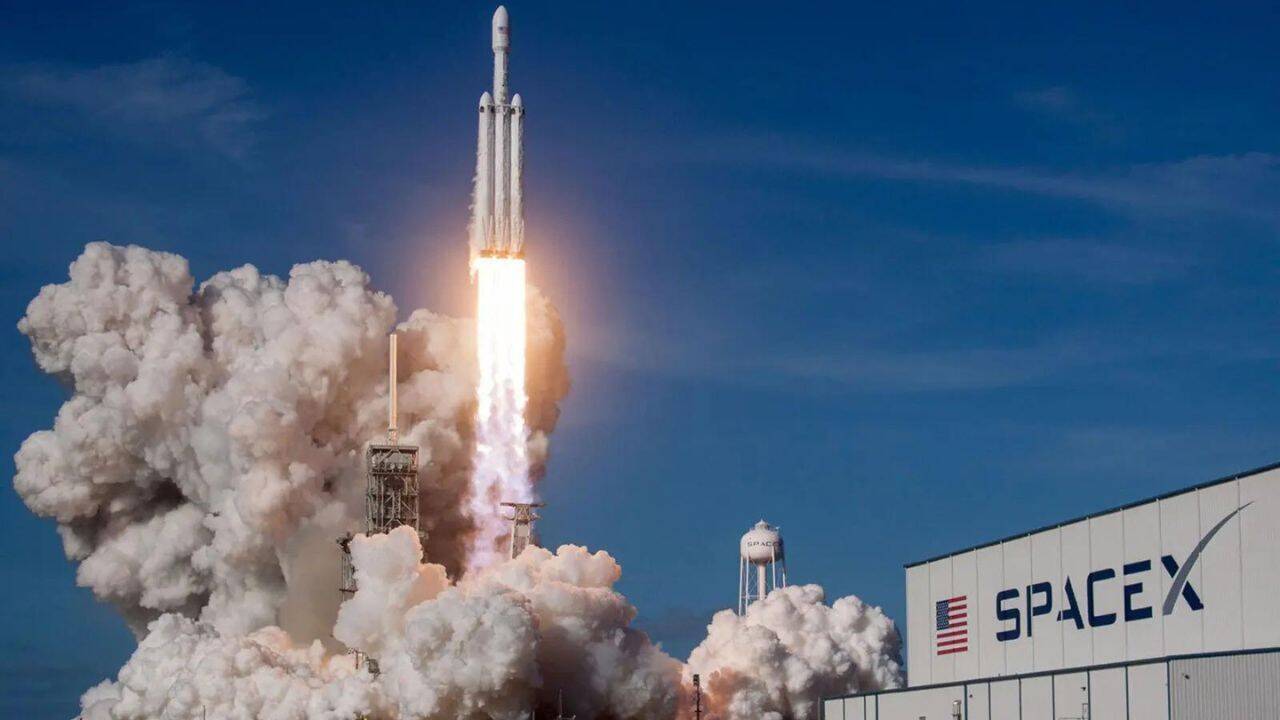
Lookup Thursday before sunrise for a SpaceX launch
SpaceX plans to launch a batch of Starlink satellites, designated Starlink 10-42, from Space Launch Complex 40 at Cape Canaveral Space Force Station in Florida. Timing of the scheduled 5:05 a.m. launch could make the rocket visible along parts of the East Coast, weather permitting, as it climbs into orbit. For observers in central North Carolina, the rocket should begin to rise above the southern horizon about two to three minutes after launch. Around six minutes after liftoff, look low in the southeast as the rocket reaches its highest point in the sky, about 17 degrees above the horizon. For many viewers, that will appear just above the treeline. Although sunrise will still be about an hour away on the ground, sunlight will already be reaching the upper atmosphere, where the rocket and its exhaust plume will be moving. That combination can make the plume appear to take on a jellyfish look as it expands reduced pressure of the upper reaches of the pre-dawn sky. The mission will carry 29 desk-sized Starlink satellites into orbit. These launches help replenish SpaceX's broadband internet constellation as older satellites de-orbit at the end of their useful lives. Some satellites may also de-orbit sooner than expected when increased solar activity heats and expands the upper atmosphere, increasing atmospheric drag. While you are looking for the rocket, note orange Mars and cream colored Saturn flanking the waxing crescent Moon in the southeastern sky.

SpaceX gears up for Starship Flight 13
WASHINGTON -- SpaceX plans to conduct its next Starship launch as soon as July 16 to test fixes to issues from the previous flight and deploy functioning Starlink satellites. The company said July 11 it is targeting a launch of the Flight 13 mission in a 90-minute window that opens at 6:45 p.m. Eastern from its Starbase, Texas, site. The announcement came a day after completing a static fire of the Super Heavy booster that will launch the mission. The upcoming mission will fly a similar 65-minute suborbital profile as Flight 12 on May 22. That was the first flight of the upgraded version 3 of the vehicle and was mostly successful, although it experienced some anomalies. The biggest issue was the failure of the Super Heavy booster to perform a controlled "soft" splashdown in the Gulf of Mexico. SpaceX said it traced the issue to how the engines in the Starship upper stage, or ship, ignited while still attached to the booster. "At stage separation on Flight 12, slight differences in engine startup on the ship caused the directional flip of the booster to be off by approximately 90 degrees," the company stated in its preview of Flight 13. Five Raptor engines failed to ignite for a boostback burn, causing the burn to shut down early. The company did not elaborate on how the change in the flip direction affected the startup of the boostback burn. "The startup sequence has been modified to be more robust to timing variability and more reliably flip in the desired direction, which is done to increase overall performance," SpaceX stated. "The Super Heavy on this upcoming flight has hardware modifications to improve relight reliability, along with updates to engine alarms and aborts to match the conditions seen in the multi-engine flight environment." Flight 12 also suffered a Raptor engine failure during the booster's ascent, as well as one on the ship. "Several hardware and operational modifications have been made to address the interconnected causes, with additional reliability improvements planned in upcoming versions of the Raptor engine," the company said, but did not explain what those interconnected causes were. Another change for Flight 13 involves the payloads that it will deploy from the upper stage during the suborbital flight. While several previous launches deployed mass simulators of Starlink V3 satellites, SpaceX said this mission will deploy 20 functioning Starlink V3 satellites. SpaceX said the satellites will deploy solar arrays and antennas and then attempt to connect with both a South African ground station and other Starlink satellites. Those demonstrations will be brief since the satellites will be on the same suborbital trajectory as Starship and will reenter after a handful of minutes in space. One factor in the timing of Flight 13 is the completion of a mishap investigation mandated by the Federal Aviation Administration after Flight 12. As of July 10, the FAA had not announced the completion of the investigation, which focused on the failure of Super Heavy to perform a soft splashdown. If Flight 13 is successful, it may allow SpaceX to perform the first orbital launch of Starship on the next flight. SpaceX is pushing to get Starship into service to deploy Starlink V3 satellites, as well as for Starship's use as a lunar lander for NASA's Artemis lunar exploration campaign.

China poses biggest long-term competitive threat to SpaceX - Morgan Stanley By Investing.com
Investing.com-- Morgan Stanley said China's rapidly advancing reusable rocket program is emerging as the biggest long-term competitive threat to SpaceX (NASDAQ:SPCX), after the country successfully recovered an orbital-class rocket booster for the first time. The Wall Street brokerage said China's successful recovery of the Long March 10B booster marked a major step toward routine rocket reuse, although it cautioned that Beijing still needs to demonstrate repeated launches and reflights before achieving an operational reusable launch system. Get premium analyst insights, AI-powered research with InvestingPro subscription The brokerage said the China Aerospace Science and Technology Corp. (CASC) became only the third entity after SpaceX and Blue Origin to recover an orbital-class booster, underscoring the country's accelerating ambitions in commercial space. Morgan Stanley analysts said China's deep space ecosystem, spanning state-backed launch programs and private companies such as LandSpace, Galactic Energy and Space Pioneer, makes it the most significant competitive challenge to SpaceX's launch business over the long run. The note highlighted that China carried out 90 orbital launches in 2025, compared with SpaceX's 165 Falcon 9 launches, making it the world's second-largest launch market by activity. U.S. Space Force officials had estimated earlier this year that China was still three to five years away from mastering rocket reusability, although the Long March 10B demonstration could shorten that timeline, Morgan Stanley said. The brokerage also pointed to China's broader space ambitions, including the planned Guowang and Qianfan low-Earth orbit satellite constellations, which together target about 28,000 satellites, as well as a proposed filing for more than 190,000 non-geostationary satellites. Morgan Stanley said China is also investing heavily in space-based computing, citing the launch of the first satellites in the planned 2,800-satellite "Star Compute" orbital supercomputer network. Despite the rising competition, Morgan Stanley maintained its "overweight" rating on SpaceX with a $300 price target, saying the company remains the global leader in launch cadence, reusable rocket technology and satellite connectivity, while warning investors not to underestimate China's progress in narrowing the gap.

Asia's Rocket Breakthroughs Challenge SpaceX Dominance
China recovers booster with net, Japan achieves vertical landing in reusable tech race Elon Musk's SpaceX (U.S.) has long dominated the reusable launch vehicle market, but now China and Japan are challenging its lead. On July 10, China successfully captured the first-stage booster of a rocket that deployed an actual satellite into space using a large net over the ocean. Japan, on July 11, achieved a vertical takeoff and landing of a small experimental rocket. Reusing the first-stage booster -- the most expensive part of a rocket -- reduces launch costs and increases frequency. This technology is critical for deploying satellite internet constellations and enabling lunar and Martian exploration. While SpaceX remains ahead, the entry of China and Japan signals intensifying global competition in reusable launch systems. ◇ China's Net-Based Booster Recovery China demonstrated the ability to perform a real orbital launch and recover the first-stage booster simultaneously. The China Aerospace Science and Technology Corporation (CASC) launched the Long March-10B from a commercial spaceport in Hainan on July 10, successfully placing a satellite into its designated orbit. The separated first-stage booster reignited its engines to slow its descent toward a designated maritime target. Four hooks attached to the booster were then caught by a large net on a floating platform. This marked the first time China recovered the first stage of a large rocket used in an actual orbital launch, following two previous failed attempts. Unlike SpaceX's Falcon 9, which uses landing legs to touch down on land or a drone ship, the Long March-10B employs a net-based recovery system. This approach reduces weight by eliminating landing legs, allowing for greater payload capacity. The net also accommodates movement from waves and wind, ensuring stable capture. However, full reusability requires repeated inspections and relaunches of recovered boosters. CASC plans to assess the recovered booster and attempt a reflight within the year. ◇ Japan's Low-Altitude Vertical Takeoff and Landing Test Japan validated core reusable rocket technologies -- vertical takeoff and landing, as well as precision flight control -- using a small experimental vehicle. The Japan Aerospace Exploration Agency (JAXA) successfully tested the reusable launch vehicle demonstrator "RV-X" at a test site in Noshiro City, Akita Prefecture, on July 11. The 7.3-meter-tall cylindrical RV-X is equipped with a throttleable engine, autonomous flight control systems, and four shock-absorbing landing legs. During the test, it ascended vertically to 11 meters, moved horizontally 16 meters while maintaining an upright position, and landed vertically. Though the flight lasted less than a minute, it proved the feasibility of key technologies. Japan plans to gradually increase the test altitude to approximately 100 meters and verify engine reignition and repeated flight capabilities. While still in early stages compared to China, the test marks Japan's first step toward entering the reusable rocket market. Foreign media framed these developments as challenges to SpaceX's dominance. Reuters called China's success a "major step forward in challenging the U.S.," while the Associated Press noted Japan's efforts to "secure core technologies for competing in the launch market dominated by SpaceX." ◇ South Korea Aims to Secure Core Reusability Technology by 2032 SpaceX, however, maintains a significant lead. It first landed a Falcon 9 first-stage booster in 2015 and began reusing recovered boosters for missions in 2017. To date, it has achieved over 600 successful booster recoveries and reused individual boosters more than 30 times. South Korea is still in the early stages of developing reusable launch vehicles. The Korea AeroSpace Administration plans to develop a next-generation launch vehicle based on an 80-ton methane engine, investing over 2 trillion Korean won in the project. The goal is to secure core reusability technologies by 2032 and advance toward a fully reusable launch system. With China and Japan achieving successive test successes, experts urge South Korea to accelerate its design and testing processes. "Reusable rockets are essential technology to avoid falling behind in the space race," said one industry source. "While there is consensus on its importance and direction, development must be expedited."
'Stole all of Apple's phone technology': Inside fresh Elon Musk-Sam Altman feud, SpaceX CEO's 'parole officer' jab
The feud comes as OpenAI faces a new legal battle, with Apple accusing the AI firm of misusing confidential information related to its future hardware products. Musk's recent jab at Altman has gained widespread attention because of its timing; the SpaceX CEO has repeatedly questioned OpenAI's leadership and business practices in the past. Also Read | Candace Owens says Elon Musk, Sam Altman are 'hybrid,' suggests they aren't humans, 'It's something in the eyes...' Reposting it, Musk wrote of Altman, "He takes scamming to a whole new level". Altman soon fired back, telling Musk, "homeboy you're the one sellling public market investors on short-term space datacenters," referring to orbital data centers Musk has championed and plans on launching as a solution to AI energy limitations on Earth. Also Read | OpenAI's Sam Altman proposes giving Trump administration 5% equity stake: Report Musk then replied, "We start flying them next year. Maybe you can come see them if your parole officer approves. After stealing an open source AI charity, you then stole all of Apple's phone technology! Wow. What do you plan for an encore? That's tough to beat." Altman recently also suggested that one of his company's latest AI models, 5.6 Sol, was the "best model in the world right now," taking a jab at Musk after he accused him of scamming users. Altman wrote on X, "there are a lot of benchmarks that suggest 5.6 sol is the best model in the world right now, but the most reliable way to tell is that elon is obsessed with me again".

SpaceX announces target date for 13th Starship launch
HARLINGEN, Texas (ValleyCentral) -- SpaceX has announced the target date for its thirteenth Starship test flight. The launch window is scheduled to open as early as 5:45 p.m. on Thursday, July 16, from Starbase. The thirteenth Starship test flight will be the second flight test of 2026. According to Starbase, the thirteenth Starship test flight aims to accomplish goals similar to those of the previous flight test, which included the debut of the third-generation Starship and Super Heavy vehicles. In addition to completing similar objectives, the flight will also carry the next-generation Starlink V3 satellites for the first time. SpaceX and local law enforcement have established a safety perimeter and coordinated temporary road closures along State Highway 4 and at Boca Chica Beach. SpaceX added that the target dates may change due to a variety of factors.

China's answer to SpaceX's reusable rockets literally catches boosters in a net
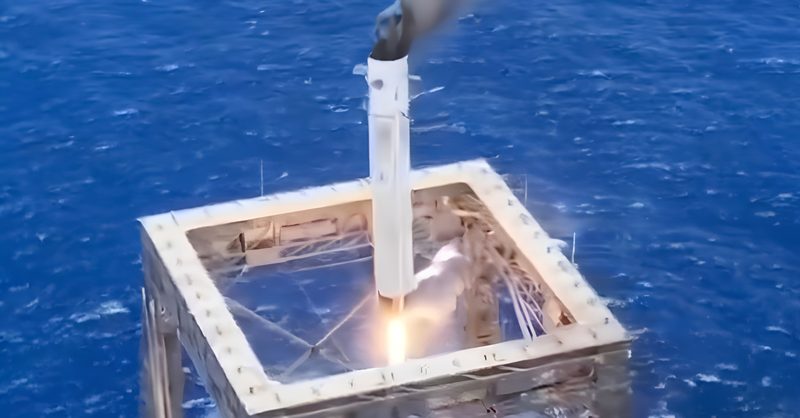
SpaceX's playbook for recovering a rocket booster generally involves legs, a precisely controlled vertical landing, and either a concrete pad or a drone ship. China just managed to pull off something similar, but in a slightly different way, and on July 10, it tested the method as well. So what exactly did China just pull off? China launched the Long March 10B from the Wenchang Spacecraft Launch Site in Hainan Province on July 10, 2026, at 12:15 PM local time. Recommended Videos About six minutes after liftoff, the rocket's first stage separated and began a controlled descent, which was caught by a cable net system aboard a specially designed recovery vessel called the Linghangzhe. No landing legs, no touchdowns, and a net on a ship. That is a world first. No other space program has ever captured an orbital-class booster this way, and that speaks volumes. China Aerospace Science and Technology Corporation confirmed that the primary mission succeeded, with the satellite payload reaching its designated orbit (via Ars Technica). For the uninitiated, the Long March 10B is a two-stage medium-lift rocket capable of carrying approximately 16 metric tons into low-Earth orbit, slightly below the Falcon 9's lift capacity. A total of seven YF-100K engines power the kerosene-and-liquid-oxygen first stage, with a single methane-fueled YF-219 engine pushing it through the second stage. China plans to refly the recovered booster before the end of 2026, which is basically the entire point if you ask me. Why does any of this matter beyond the headline? Because reusability is the entire reason why SpaceX can currently launch at roughly twice the rate of all Chinese rockets combined. It's the gap in the cadence that allows SpaceX to dominate commercial launch contracts. In fact, US Space Force officials have been explicit about their concern over what will happen when China closes it. The recovery of the Chinese rocket does not immediately close the gap, but it is the first credible sign that China is on the same path, and it could catch up quite soon. Net or legs, the destination is the same: reusable rockets.
SpaceX Launches 24 New Starlink Satellites
Washington, July 11 (QNA) - Space Exploration Technologies Corp., the American aerospace company known as SpaceX, has launched 24 Starlink satellites into low Earth orbit as part of its ongoing efforts to enhance and expand its global satellite internet network. The company stated that a Falcon 9 rocket lifted off from Vandenberg Space Force Base, carrying the satellites into their designated orbit. The rocket's first-stage booster successfully returned to Earth about eight minutes after liftoff, landing on the company's droneship stationed in the Pacific Ocean. The successful launch and landing marked the 35th flight for this specific booster, designated B1071. The milestone is part of a total of 657 missions conducted by the company using this class of rocket since 2010. The mission brings the total number of active satellites in the Starlink network to more than 10,700, directly expanding the coverage and capacity of high-speed internet services to meet the growing global demand for satellite communications. (QNA)
China achieves first controlled recovery of reusable rocket booster after SpaceX - Daily Excelsior
BEIJING, Jul 10 : China on Friday achieved its first controlled recovery of an orbital-class reusable rocket booster after the maiden launch of its Long March-10B carrier rocket, marking a major milestone in the country's reusable space technology. The achievement comes over a decade after US-based SpaceX, founded by Elon Musk, became the first company to successfully recover an orbital-class rocket booster in December 2015. Friday's mission marked China's first successful controlled recovery of a carrier rocket's first stage and represented a major breakthrough in the country's reusable rocket technology, state-run Xinhua news agency reported. A controlled recovery of a carrier rocket's first stage involves safely returning a rocket booster back to Earth for reuse after it delivers its payload. Last December, two other Chinese reusable rockets attempted SpaceX-style vertical landings using grid fins and landing legs, but both attempts ended in failure, the Hong Kong-based South China Morning Post reported. The Long March-10B carrier rocket was launched from south China's Hainan Province and successfully placed its payload into the designated orbit, Xinhua reported. After the separation of the rocket's first and second stages, the first-stage booster returned and was successfully captured on a sea-based platform using a net-capture system. Both the launch and the recovery of the first-stage booster were completed successfully, the report said. The SpaceX breakthrough of 2015 demonstrated the feasibility of reusable rockets, significantly reducing launch costs. Unlike SpaceX, whose boosters typically land on ground-based or drone-ship landing pads, the Long March-10B's first-stage booster was recovered at its launch site on a sea-based platform. Videos circulating on social media showed crowds cheering as the booster descended steadily onto the recovery platform. The Long March-10B is a reusable liquid-fuelled commercial launch vehicle measuring about 63 metres in height and five metres in diameter. It has a lift-off thrust of about 890 tonnes and a lift-off mass of around 760 tonnes. In its reusable configuration, the rocket is capable of carrying a payload of 16 tonnes to low-Earth orbit, according to the Xinhua report. (PTI)
China takes a page from SpaceX and recaptures the first stage of a rocket to reuse it
BEIJING (AP) -- China successfully recaptured the first stage of a rocket after a launch on Friday in a breakthrough for the country's space program, state media said. The first stage of a Long March-10B rocket separated from the second stage after liftoff and returned to a platform in the sea, the official Xinhua News Agency said. It was the first time China recovered the first stage of a rocket. America's SpaceX has been doing so for several years to drive down launch costs by reusing the booster that helps lift the satellites or whatever the rocket is carrying into space. Elon Musk's SpaceX and Jeff Bezos' Blue Origin have been recovering their rockets since 2015, saving vast amounts of money by recycling them rather than ditching them after liftoff. SpaceX leads the pack with more than 600 landings of its first-stage Falcon boosters, steering them to ocean barges as well as landing zones near the launch pads. Just this week, SpaceX launched a booster for the 36th time, a new record. For SpaceX's bigger and more powerful Starships making test flights out of Texas and soon to expand to Florida, the company is working to capture the returning rockets with giant mechanical arms at the launch pad. Blue Origin started out by landing its New Shepard boosters in Texas following short flights to the edge of space, and has since recovered its bigger New Glenn boosters on a floating platform off the Florida coast. Now that China has joined the rocket recycling boom, Japan is up next with a launch and landing attempt this weekend. The Long March rocket was launched from China's Hainan Island, a popular beach destination off the country's southern coast. The rocket's reusable configuration can launch a payload of up to 16,000 kilograms (35,275 pounds) into what is called low Earth orbit, Xinhua said. The maximum payload of the SpaceX Falcon 9 is 22,800 kilograms (50,265 pounds), according to the SpaceX website. The Falcon rockets transport astronauts and supplies to the International Space Station.