News & Updates
The latest news and updates from companies in the WLTH portfolio.
Anthropic confirms Claude acts differently depending on your language and which model you pick
A new study shows Claude's isn't nearly as consistent as you might assume. If you've ever felt like Claude gave you a completely different vibe on one day than another, you weren't imagining it. Anthropic just published research confirming that its chatbot's personality shifts depending on which model you pick and which language you type in, and the pattern is consistent enough that it's worth knowing before you ask your next question. The model you pick decides how Claude responds The company analyzed 300,000 real Claude conversations and mapped the chatbot's behavior across four traits, including how cautious versus accommodating it is and how encouraging versus rigorous its tone is. Its findings suggest that you may be talking to a somewhat different version of Claude depending on the model you choose. The split shows up clearly when different models were compared. Anthropic's data shows that Opus 4.7 tends to challenge your thinking and flag problems with your plan unprompted. On the other hand, Sonnet 4.6 leans toward quick, encouraging answers that affirm what you already believe. Neither is objectively better, and which one you should use depends largely on what you're doing. If you're drafting a risky business plan and want real feedback, Opus 4.7 is a better fit, while Sonnet 4.6 is more suited if you only want a quick pass. Your language changes Claude's tone too The data also reveals the language you use matters almost as much as the model. Claude reportedly comes across as warmer in Hindi and Arabic, while it gets more rigorous and skeptical in English and Russian. As such, if you're bilingual and asking Claude for a second opinion, switching languages might get you a genuinely different answer, not just a translated one. Recommended Videos Anthropic is careful to note it doesn't yet know whether these shifts are a problem or just Claude adapting to different cultural norms. Either way, the finding is a useful reminder for anyone using AI for real decisions. Don't assume the first answer you get is the only answer. Trying a different model or language could get you a meaningfully different result.

SpaceX is gearing up for Starship's 13th test flight later this week
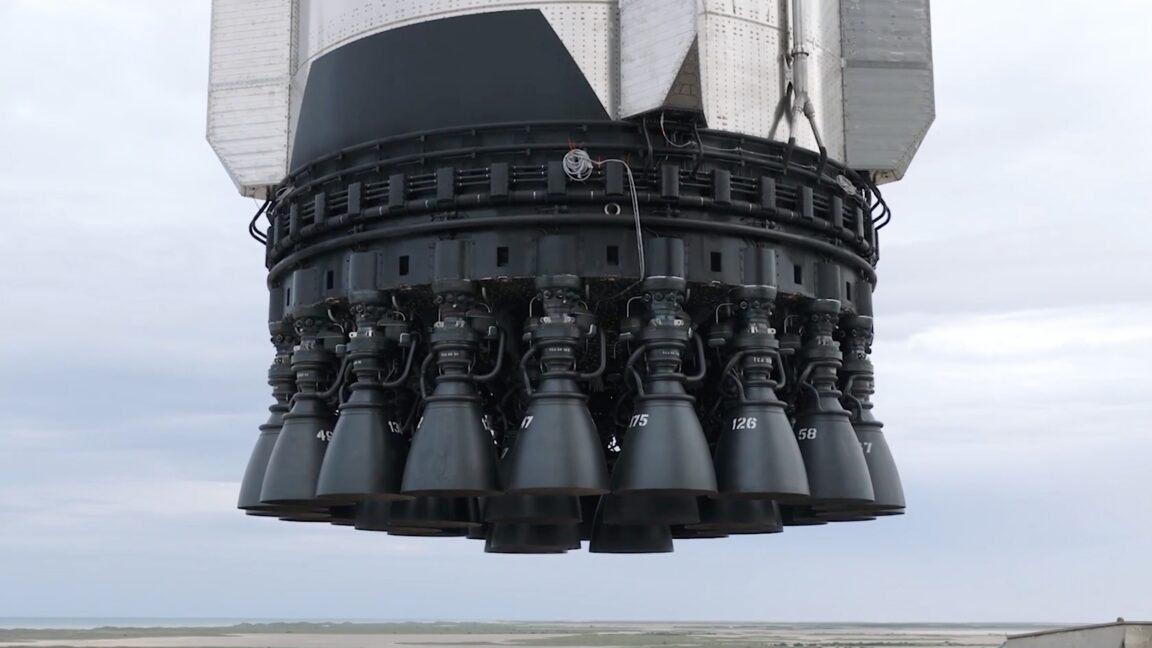
The next test flight of SpaceX's Starship spacecraft and Super Heavy booster could take off as soon as Thursday, and much of the hour-long mission will look a lot like the last Starship flight in May. But there are a few key differences for this launch, set to occur during a launch window that opens at 5:45 pm CDT (22:45 UTC) on Thursday. The most notable change is the inclusion of real, functioning Starlink satellites inside Starship's cargo bay. SpaceX previously tested the ship's payload deployment mechanism using simulators mimicking the mass and dimensions of the company's next-generation Starlink Version 3 broadband satellites. This time -- Starship's 13th full-scale test flight and the second to use SpaceX's newest version of Starship -- technicians have installed 20 Starlink V3 satellites into the ship's deployer, a system of pulleys and cables designed to eject a stack of satellites one at a time through an opening on side of the spacecraft. The satellites will not be part of SpaceX's operational network, but engineers will attempt to briefly establish laser communication links between the Starlink V3s and other spacecraft flying in low-Earth orbit. If successful, these links will validate Starlink V3's interoperability with SpaceX's previous generation of Starlink satellites. As with all of SpaceX's previous Starship test flights, the more than 400-foot-tall rocket will fly on a long suborbital trajectory arcing halfway around the world from the launch site at Starbase, Texas, to a predetermined location in the Indian Ocean. The flight of Starship and the 20 Starlink satellites will last a little more than an hour before they fall back into the atmosphere. The ship will target a controlled splashdown northwest of Australia, while the Starlink satellites will burn up during reentry. A new ingredient The flight plan for this week's mission has just enough time in space for the Starlink satellites to extend their solar arrays and antennas. The satellites will also attempt to connect with ground stations in South Africa as they soar nearly more than 100 miles overhead. What's more, some of the Starlink V3s will host cameras to scan Starship's heat shield and transmit the imagery down to engineers on the ground, according to SpaceX. The imagery will allow ground teams to "continue testing methods of analyzing Starship's heat shield readiness for return to launch site on future missions," SpaceX said in a post on its website. Two of the Starlink mockups carried cameras for external imaging on the last Starship mission, returning views of the ship set against the ghostly darkness of space. This time, SpaceX has affixed cameras to six of the Starlink satellites. The imaging opportunity on this week's mission will occur during nighttime, just as it did on the last flight. The presence of Starlink V3s on the next Starship test flight is a harbinger for what's to come. Fully-loaded Starships will be capable of launching up to 60 Starlink V3s on a single flight, unlocking a dramatic expansion of the network's capacity. Each Falcon 9 launch with V2 satellites adds about 2.6 Tbps to the constellation. Pairing Starship with a full stack of V3 satellites will add 60 Tbps to the network. Starship is designed to carry other kinds of satellites, too, including customer payloads and massive platforms for SpaceX's proposed orbital data center network. The rocket is also designed for flights to the Moon and Mars. Starship is a core part of NASA's Artemis program to land astronauts at the Moon's south pole. But the first real operational missions for Starship will begin fielding SpaceX's third-generation Starlink constellation, perhaps later this year if all goes according to plan. Lessons learned SpaceX must send Starship into low-Earth orbit before achieving any these lofty objectives. A near-perfect test flight Thursday would put the company on the cusp of an orbital launch. That, in turn, would allow Starship to move toward several important milestones, such bona fide satellite launches, in-orbit refueling demos, and the first return of Starship to Starbase, Texas, for future reuse. One reason SpaceX isn't attempting an orbital flight this week is Starship's failure to complete one of its test objectives on the last launch, when the spacecraft was supposed to ignite one of its six Raptor engines for a brief burn in space. The spacecraft skipped the burn after a Raptor engine shut down prematurely during the launch sequence. The rest of the ship's flight went according to plan, culminating in a pinpoint splashdown in the Indian Ocean. It was the first flight of SpaceX's Starship V3 debuting new, more powerful Raptor engines. But officials need confidence in the Raptor engine's ability to reignite in the airless vacuum of space before proceeding to an orbital flight. In a worst-case scenario, a failed Raptor engine relight would strand Starship in orbit, leaving the enormous stainless steel vehicle to an unguided reentry that could become a risk to public safety. The flight plan for this week's mission includes the Raptor restart objective left unaccomplished in May. In an update posted to its website over the weekend, SpaceX did not address what caused the premature shutdown of the Raptor engine on Flight 12. "The vehicle was able to demonstrate its engine out capability and reach its planned suborbital trajectory," the company wrote on its website. "Several hardware and operational modifications have been made to address the interconnected causes with additional reliability improvements planned in upcoming versions of the Raptor engine." The other goal left incomplete on Starship's last flight involved the splashdown of the rocket's Super Heavy booster, or first stage, which lost control moments separating from the ship, or upper stage, a few minutes after liftoff. SpaceX intended for the booster to fly itself to a water landing in the Gulf of Mexico downrange from its launch base in South Texas. "At stage separation on Flight 12, slight differences in engine startup on the ship caused the directional flip of the booster to be off by approximately 90 degrees," SpaceX wrote. "The startup sequence has been modified to be more robust to timing variability and more reliably flip in the desired direction, which is done to increase overall performance. "After stage separation and the flip, the Super Heavy booster attempted its boostback burn," SpaceX continued. "Five of its 33 engines experienced issues when attempting to relight causing the boostback burn to end early. The Super Heavy on this upcoming flight has hardware modifications to improve relight reliability along with updates to engine alarms and aborts to match the conditions seen in the multi-engine flight environment." SpaceX will also use Flight 13 to continue experimenting with Starship's heat shield, one of the most daunting technical challenges on the program. If the full rocket is to become rapidly reusable, as SpaceX intends, the heat shield's thousands of ceramic tiles must not only protect the ship once. They have to be robust enough to handle the extreme heating of reentry over and over again without refurbishment or replacement. "What's single biggest remaining problem for Starship? It's having the heat shield be reusable," Musk said in February on the Dwarkesh Podcast. "No one has ever made a reusable orbital heat shield. The heat shield's got to make it through the ascent phase without shucking a bunch of tiles, and then it's got to come back in and also not lose a bunch of tiles or overheat the main airframe." "We have brought the ship back and had it do a soft landing in the ocean. We've done it a few times, but it lost a lot of tiles, and it ... would not have been reusable without a lot of work," Musk said. "If you want to be able to land it, refill propellant and fly again, you can't do this laborious inspection of 40,000 tiles type of thing." On this flight, SpaceX will test out modified tiles and attachment mechanisms to gather flight data on different heat shield options. The shield will also have "load sensing tiles" to take measurements as the vehicle experiences higher dynamic pressure during ascent than on previous flights. This higher dynamic pressure will put "added stress on the tile attachments in exchange for increased payload to orbit capability," SpaceX said.
Analysts Are Bullish on Top NA Stocks: HawkEye 360, Inc. (HAWK), SpaceX (SPCX)
There's a lot to be optimistic about in the NA sector as 3 analysts just weighed in on HawkEye 360, Inc. (HAWK), SpaceX (SPCX) and Hemab Therapeutics Holdings, Inc. (COAG) with bullish sentiments. TipRanks Welcomes a New ETF - NYSE:RANK * TipRanks has entered a new arena in the investing world, powering the index of an ETF based on its unique data now trading under the ticker RANK on the NYSE. * RANK tracks the performance of the TipRanks US Momentum Analysts Index, a rules-based index of 50 large U.S. companies. HawkEye 360, Inc. (HAWK) In a report released today, Louie DiPalma from William Blair maintained a Buy rating on HawkEye 360, Inc.. The company's shares closed last Monday at $19.34, close to its 52-week low of $18.71. According to TipRanks.com, DiPalma is a 4-star analyst with an average return of 6.0% and a 51.8% success rate. DiPalma covers the Technology sector, focusing on stocks such as Palantir Technologies, Science Applications, and Caci International. HawkEye 360, Inc. has an analyst consensus of Strong Buy, with a price target consensus of $37.86. See the top stocks recommended by analysts >> SpaceX (SPCX) In a report released today, Douglas Harned from Bernstein maintained a Buy rating on SpaceX, with a price target of $239.00. The company's shares closed last Monday at $137.58. According to TipRanks.com, Harned is a 4-star analyst with an average return of 12.9% and a 56.1% success rate. Harned covers the Industrial Goods sector, focusing on stocks such as L3Harris Technologies, Huntington Ingalls, and Northrop Grumman. The word on The Street in general, suggests a Strong Buy analyst consensus rating for SpaceX with a $241.36 average price target, implying a 66.8% upside from current levels. In a report issued on June 30, Wedbush also initiated coverage with a Buy rating on the stock with a $190.00 price target. Hemab Therapeutics Holdings, Inc. (COAG) Jefferies analyst Maury Raycroft maintained a Buy rating on Hemab Therapeutics Holdings, Inc. today and set a price target of $47.00. The company's shares closed last Monday at $40.75. According to TipRanks.com, Raycroft is a 4-star analyst with an average return of 12.2% and a 44.2% success rate. Raycroft covers the Healthcare sector, focusing on stocks such as Corbus Pharmaceuticals, Dianthus Therapeutics, and Compass Therapeutics. Hemab Therapeutics Holdings, Inc. has an analyst consensus of Strong Buy, with a price target consensus of $43.80, which is a 14.1% upside from current levels. In a report issued on June 29, Wedbush also maintained a Buy rating on the stock with a $42.00 price target.

PIB Fact Check debunks report of MeitY advisory against OpenAI, Anthropic use
New Delhi [India], July 14 (ANI): The Press Information Bureau's (PIB) Fact Check on Monday dismissed as 'fake' a media report claiming that the Ministry of Electronics and Information Technology (MeitY) had directed government ministries not to deploy OpenAI and Anthropic cybersecurity models. PIB Fact Check clarified that MeitY had not issued any direction or advisory restricting ministries from using OpenAI or Anthropic. It also urged the public to rely only on official government websites and verified sources for authentic information. https://x.com/PIBFactCheck/status/2076679913965547670 In a post on X, PIB Fact Check shared, 'This claim is FAKE. MeitY has not issued any such direction or advisory prohibiting Ministries from using OpenAI or Anthropic. For authentic information, rely only on official government websites and verified sources.' (ANI)

Polymarket lifts Putin-out-by-2027 odds to 19.5% after Iran escalation
predict.info -- Premium Domain For Sale Domain only: USD 200,000. Prediction platform technology priced separately. predict.info Polymarket Reprices "Putin Out by June 30, 2027" Ladder After Iran-Strike Headlines Lift Tail-Risk Odds On Polymarket, the "Putin out as President of Russia by...?" ladder is currently pricing a 19.5% chance of being out by June 30, 2027 on $17.26M in volume. The repricing follows fresh headlines about US strikes and a reinstated blockade tied to Iran, which traders may be mapping into broader geopolitical tail-risk via the contract's per-deadline odds. Key Takeaways * Polymarket's leading strike implies 19.5% "Yes" that Putin is out by June 30, 2027 (80.5% "No"). * The Iran-related escalation headline is a plausible catalyst traders translate into higher long-horizon regime-change risk, reflected in the ladder's deadline-by-deadline pricing. * Resolution is June 30, 2027; near-term strikes remain low (e.g., 0.45% by July 31, 2026), while the market shows -2.0pp over 24h and 7d in the summary. The related report says the US conducted a third consecutive night of strikes in Iran and that President Donald Trump warned Iran would be "hit hard" on Monday and Tuesday. It also describes a reinstated naval blockade applying to vessels traveling to and from Iranian ports and notes claims around attacks on US bases in Kuwait, Bahrain, and Oman, alongside shipping-security concerns near the Strait of Hormuz. Odds Ladder & Liquidity Check: 19.5% "Yes" on June 30, 2027 With $17.26M Volume, While Near-Term Strikes Stay Sub‑1% This is a ladder (price_ladder) market: each row is a separate binary that pays out on whether Putin is out by that specific deadline, not a single "final date" bet. At the long strike, June 30, 2027 sits at Yes 19.5% / No 80.5%, while earlier deadlines are priced much lower -- December 31, 2026 at Yes 9.5% / No 90.5% and September 30, 2026 at Yes 4.05% / No 95.95% -- showing the market concentrates most probability in the longer horizon rather than the next 12-15 months. The structure matters for interpretation: a trader who thinks the risk is rising soon should look at the nearer strikes (e.g., July 31, 2026 at Yes 0.45% / No 99.55%), which remain close to zero despite the higher 2027 line. Even with $17.26M matched, the historical summary flags a bearish, strong-momentum tape with latest odds at 8.5% versus an average of 17.3 over the last five points, suggesting recent action has leaned toward "No" despite the headline-driven impulse traders may be reacting to. That contrast is exactly what continuously traded prediction markets surface: the same catalyst can lift long-dated tail risk while leaving near-term deadlines largely unchanged. Watch whether buying pressure shows up in the nearer deadlines (July/August/September 2026) rather than only the June 2027 strike; a move there would signal traders are shifting from "long-horizon tail risk" to "near-term transition risk" ahead of the June 30, 2027 resolution window. What Traders Watch Next on Polymarket: Near-Term 2026 Deadline Contracts and Cross-Market Geopolitical Tail-Risk Hedges Beyond the headline ladder, traders are also cross-checking nearby contracts that express the same tail-risk through shipping, regional escalation, and macro catalysts. In the Strait of Hormuz complex, 97.15% is on "No" for "Strait of Hormuz traffic returns to normal by July 31?" ($16.21M), while the longer-dated "Strait of Hormuz traffic returns to normal by December 31?" sits at 56.5% "Yes" ($5.07M), underscoring how timing drives pricing. The calendar-style "Iran military action against a gulf state on...?" is led by July 9 at 81.9% ($651.8K), and macro watchers keep one eye on policy sensitivity via "Fed Decision in July?" at 63.5% for "No change" ($52.83M). Odds Trend By the Numbers * Platform: Polymarket * Market: Putin out as President of Russia by...? * Contract type: Price strike ladder: each rung has separate Yes/No; Yes means the spot price is above that USD strike at settlement. * Resolution window: Jun 30, 2027 (UTC) * Status: Active (open for trading) * Volume: ~$17,260,705 Top strike rungs +1 more strikes not shown

FAA Closes SpaceX Starship Flight 12 Investigation, Clears Flight 13 for Launch
The Federal Aviation Administration (FAA) closed its investigation into the SpaceX Starship Flight 12 mishap, clearing Tesla ($TSLA) CEO Elon Musk's SpaceX to proceed with Starship Flight 13 once all remaining safety and licensing requirements are satisfied. The FAA accepted SpaceX's findings and corrective actions, concluding there were no reports of public injuries or property damage from the May test flight. * The FAA accepted SpaceX's investigation into the Flight 12 Super Heavy booster failure. * The final report identified heat effects on propulsion system components and erroneous engine alarm settings as the two most probable causes of the mishap. * SpaceX implemented four corrective actions, including hardware and software configuration updates. * The FAA said Starship Flight 13 may proceed after all remaining safety and licensing requirements are met, potentially allowing a launch as soon as this week. Relevant Companies * Tesla ($TSLA) - CEO Elon Musk also leads SpaceX, making major Starship milestones closely watched by investors.

India News | PIB Fact Check Debunks Report of MeitY Advisory Against OpenAI, Anthropic Use
Get latest articles and stories on India at LatestLY. The Press Information Bureau's (PIB) Fact Check on Monday dismissed as "fake" a media report claiming that the Ministry of Electronics and Information Technology (MeitY) had directed government ministries not to deploy OpenAI and Anthropic cybersecurity models. New Delhi [India], July 14 (ANI): The Press Information Bureau's (PIB) Fact Check on Monday dismissed as "fake" a media report claiming that the Ministry of Electronics and Information Technology (MeitY) had directed government ministries not to deploy OpenAI and Anthropic cybersecurity models. PIB Fact Check clarified that MeitY had not issued any direction or advisory restricting ministries from using OpenAI or Anthropic. Also Read | Shimla Weather Forecast & Update for Today, Tuesday, 14 July 2026: Expect Drizzle and High Humidity, High of 25?C. It also urged the public to rely only on official government websites and verified sources for authentic information. https://x.com/PIBFactCheck/status/2076679913965547670 Also Read | Kolkata Weather Forecast & Update for Today, Tuesday, 14 July 2026: Expect Thunderstorms and High Humidity, High of 33?C. In a post on X, PIB Fact Check shared, "This claim is FAKE. MeitY has not issued any such direction or advisory prohibiting Ministries from using OpenAI or Anthropic. For authentic information, rely only on official government websites and verified sources." (ANI)

SpaceX targets Thursday for new Starship flight test
LOS ANGELES, July 13 (Xinhua) -- SpaceX is targeting Thursday for the 13th flight test of its giant Starship rocket, the company announced on Monday. The 90-minute launch window is scheduled to open at 5:45 p.m. U.S. Central Time. The mission will continue testing the Version 3 Starship and Super Heavy vehicles. The booster's primary objectives include a successful launch, ascent, stage separation, boostback burn and landing burn before splashing down at an offshore landing site in the Gulf of Mexico, according to SpaceX. The Starship upper stage will attempt to deploy 20 next-generation Starlink V3 satellites, relight a single Raptor engine in space, and conduct another controlled reentry, descent and splashdown in the Indian Ocean. The flight will also test several upgrades and experiments related to Starship's heat shield as SpaceX continues developing a fully and rapidly reusable launch system. SpaceX conducted Starship's 12th flight test on May 22. During that mission, the Super Heavy booster failed to complete its planned boostback burn after stage separation and later made a hard splashdown in the Gulf of Mexico, according to the company. Following the test, the U.S. Federal Aviation Administration (FAA) required SpaceX to conduct a mishap investigation into the booster's failure. The FAA announced on Monday that the investigation has been closed, clearing the way for Flight 13 to proceed, provided all safety and licensing requirements are met. According to the FAA, it oversaw and accepted the findings and corrective actions from the SpaceX-led investigation. The final mishap report identified two most probable root causes for the loss of the Super Heavy booster: heat effects on propulsion system components during ascent and erroneous engine alarm system settings. The FAA said SpaceX has identified four corrective actions, including hardware and software configuration updates, to prevent a recurrence of the incident. ■

SpaceX targets Thursday for new Starship flight test
LOS ANGELES, July 13 (Xinhua) -- SpaceX is targeting Thursday for the 13th flight test of its giant Starship rocket, the company announced on Monday. The 90-minute launch window is scheduled to open at 5:45 p.m. U.S. Central Time. The mission will continue testing the Version 3 Starship and Super Heavy vehicles. The booster's primary objectives include a successful launch, ascent, stage separation, boostback burn and landing burn before splashing down at an offshore landing site in the Gulf of Mexico, according to SpaceX. The Starship upper stage will attempt to deploy 20 next-generation Starlink V3 satellites, relight a single Raptor engine in space, and conduct another controlled reentry, descent and splashdown in the Indian Ocean. The flight will also test several upgrades and experiments related to Starship's heat shield as SpaceX continues developing a fully and rapidly reusable launch system. SpaceX conducted Starship's 12th flight test on May 22. During that mission, the Super Heavy booster failed to complete its planned boostback burn after stage separation and later made a hard splashdown in the Gulf of Mexico, according to the company. Following the test, the U.S. Federal Aviation Administration (FAA) required SpaceX to conduct a mishap investigation into the booster's failure. The FAA announced on Monday that the investigation has been closed, clearing the way for Flight 13 to proceed, provided all safety and licensing requirements are met. According to the FAA, it oversaw and accepted the findings and corrective actions from the SpaceX-led investigation. The final mishap report identified two most probable root causes for the loss of the Super Heavy booster: heat effects on propulsion system components during ascent and erroneous engine alarm system settings. The FAA said SpaceX has identified four corrective actions, including hardware and software configuration updates, to prevent a recurrence of the incident. ■
SpaceX targets Thursday for new Starship flight test
LOS ANGELES, July 13 (Xinhua) -- SpaceX is targeting Thursday for the 13th flight test of its giant Starship rocket, the company announced on Monday. The 90-minute launch window is scheduled to open at 5:45 p.m. U.S. Central Time. The mission will continue testing the Version 3 Starship and Super Heavy vehicles. The booster's primary objectives include a successful launch, ascent, stage separation, boostback burn and landing burn before splashing down at an offshore landing site in the Gulf of Mexico, according to SpaceX. The Starship upper stage will attempt to deploy 20 next-generation Starlink V3 satellites, relight a single Raptor engine in space, and conduct another controlled reentry, descent and splashdown in the Indian Ocean. The flight will also test several upgrades and experiments related to Starship's heat shield as SpaceX continues developing a fully and rapidly reusable launch system. SpaceX conducted Starship's 12th flight test on May 22. During that mission, the Super Heavy booster failed to complete its planned boostback burn after stage separation and later made a hard splashdown in the Gulf of Mexico, according to the company. Following the test, the U.S. Federal Aviation Administration (FAA) required SpaceX to conduct a mishap investigation into the booster's failure. The FAA announced on Monday that the investigation has been closed, clearing the way for Flight 13 to proceed, provided all safety and licensing requirements are met. According to the FAA, it oversaw and accepted the findings and corrective actions from the SpaceX-led investigation. The final mishap report identified two most probable root causes for the loss of the Super Heavy booster: heat effects on propulsion system components during ascent and erroneous engine alarm system settings. The FAA said SpaceX has identified four corrective actions, including hardware and software configuration updates, to prevent a recurrence of the incident. ■
SpaceX targets Thursday for new Starship flight test
GENEVA, 06 July 2026 - Minister of Information and Communication Technology, Emma Theofelus, pictured with Chairperson of the PowerCom Board, Eldorette Harmse, Director of the Telecommunication Development Bureau (BDT) at the International Telecommunication Union (ITU), Dr Cosmas Luckyson Zavazava; and Namibia's Ambassador to the Swiss Confederation and Permanent Representative to the United Nations Office in Geneva, Elvis Shiweda, during the Global Dialogue on AI Governance in Geneva, Switzerland, on Monday. (Photo by: Josephina Simeon) NAMPA

LTM Partners with Anthropic to Scale Enterprise Adoption of Claude AI - BW Businessworld
Collaboration will integrate Claude into LTM's BlueVerse platform, establish a dedicated Centre of Excellence, and train AI specialists for enterprise deployments Mid-tier IT firm LTM has entered into a strategic partnership with AI company Anthropic to accelerate enterprise adoption of Claude, Anthropic's family of large language models, across software engineering, application modernisation and business operations. The partnership aims to help enterprises move artificial intelligence (AI) initiatives from pilot projects to large-scale deployment by combining Anthropic's AI models with LTM's implementation capabilities. The offering will target enterprises in the banking, financial services and insurance (BFSI), high-technology, consumer and industrial sectors, the companies said. Claude To Be Integrated Into BlueVerse As part of the partnership, LTM will integrate Claude and Claude Code into its BlueVerse AI Delivery Fabric, the company's enterprise AI platform. The integration will support AI-led software engineering, application modernisation, agent orchestration, site reliability engineering (SRE), observability and chaos engineering workflows. The companies said BlueVerse will serve as the implementation layer for enterprises adopting Claude across software development and technology transformation programmes. LTM To Expand AI Talent Programme LTM will also expand its AI1000 talent initiative to train and deploy thousands of professionals certified on Claude. These architects and Forward Deployed Engineers (FDEs) will support clients through AI strategy, architecture, implementation and ongoing optimisation. In addition, the company will establish a dedicated Claude Centre of Excellence (CoE) to develop reusable AI skills, agent-based minimum viable products (MVPs), reference architectures and implementation playbooks for enterprise applications. The CoE will also oversee governance related to responsible AI use, agent lifecycle management, model governance and compliance with data privacy and residency requirements. Joint GTM Initiatives The companies said the partnership will include joint go-to-market programmes aimed at accelerating enterprise AI adoption. LTM will also deploy Claude, Claude Code and Claude Cowork internally across its software delivery lifecycle to standardise AI adoption and improve productivity while feeding operational learnings back into its BlueVerse platform and the Claude CoE. Chris Ciauri, Managing Director of International at Anthropic, said the partnership combines Anthropic's AI models with LTM's enterprise delivery capabilities to help organisations integrate Claude into their existing technology environments. Venu Lambu, Chief Executive Officer and Managing Director of LTM, said the collaboration is intended to help enterprises scale AI adoption by combining Claude with LTM's BlueVerse platform, domain expertise, technology capabilities and AI talent programme.
Polymarket lifts Putin exit-by-2027 odds to 20% amid Russia fuel shortages
Polymarket Reprices Putin-Exit Odds After Russia Fuel-Shortage Headlines Hit the Ladder Curve Polymarket's ladder market on whether Vladimir Putin is out as Russia's president by June 30, 2027 is trading at 20% Yes (80% No) on $17.16M volume after a sharp repricing across the earlier date strikes. The move comes as traders digest reports of widening fuel shortages in Russia tied to attacks on refineries, with the ladder showing where timing risk is (and isn't) being priced. Key Takeaways * Polymarket prices a 20% chance that Putin is out as president by June 30, 2027 (80% No). * The repricing follows reports of Russia-wide fuel queues and refinery strikes, but traders still assign very low odds to an exit by mid-2026. * The market resolves on June 30, 2027; the latest summary shows -2.0pp over 24h and -2.0pp over 7d with moderate volatility. A report describes hours-long (and in some places multi-day) lines at gas stations across Russia as fuel shortages worsen, with some stations closing and tempers flaring in queues. It says Ukraine has increased drone strikes on oil refineries, including a July 6 strike on the Omsk refinery roughly 2,500 km from the border, and claims strikes have hit Russia's 10 largest refineries. The piece also cites knock-on effects like disrupted daily routines, pressure on taxi services, and claims of reselling and preferential access to fuel in some areas. Ladder Snapshot: $17.16M Volume With 20% "Yes by Jun 30, 2027" vs 8.5% (Dec 2026) and 0.55% (Jul 2026) This is a price-ladder, not a single binary: each date is its own Yes/No contract on whether Putin is out by that deadline, and the curve implies timing is the main disagreement. The June 30, 2027 strike sits at 20% Yes / 80% No, while the market remains far less willing to price near-term outcomes: December 31, 2026 is 8.5% Yes / 91.5% No; September 30, 2026 is 3.65% Yes / 96.35% No; July 31, 2026 is 0.55% Yes / 99.45% No. In other words, even with a macro-stress catalyst in the background, traders are primarily expressing "if it happens, it's later" rather than pulling forward high near-term odds. The historical summary flags a bearish, strong-momentum tape with moderate volatility: latest odds at 8.5 versus an 18.1 average over the last five points, and -2.0pp over both 24h and 7d -- signs that the market has recently walked back earlier-exit pricing even as headline risk persists. With $17.16M traded, the pricing looks less like a one-off headline spike and more like a ladder-wide recalibration of deadline-by-deadline probabilities, which is exactly what continuously traded prediction markets can surface faster than narrative-driven timelines. Watch whether pricing steepens (bigger gaps between 2026 strikes and the 2027 strike) or flattens (2026 Yes odds rising together), since a flatter curve would indicate traders are shifting from "late-only risk" toward materially higher near-term exit probability ahead of the June 30, 2027 resolution. What Traders Watch Next on Polymarket: Curve Steepening vs Flattening -- and Cross-Market Signals in Macro & Crypto Contrac Beyond the headline ladder, traders often triangulate the same risk-on/risk-off mood through other high-liquidity Polymarket boards, where positioning can shift quickly with fresh polling, data prints, or crypto volatility. One to keep on the radar is 53.5% "United Russia (ER)" in "Which party will gain most seats in Russian Parliamentary Election?" on $15,266,790 volume, a separate venue where sentiment around institutional stability can reprice independently. From there, many desks cross-check macro and crypto event contracts -- rates, recession timing, CPI/Fed outcomes, and major token milestones -- for correlated moves that sometimes show up on Polymarket before they're obvious elsewhere. Odds Trend By the Numbers * Platform: Polymarket * Market: Putin out as President of Russia by...? * Contract type: Price strike ladder: each rung has separate Yes/No; Yes means the spot price is above that USD strike at settlement. * Resolution window: Jun 30, 2027 (UTC) * Status: Active (open for trading) * Volume: ~$17,162,053 Top strike rungs +1 more strikes not shown

Polymarket odds jump as July 12 leads Iran Gulf action ladder at 84.5%
Polymarket Front-Loads "Iran Military Action vs Gulf State" Odds After Reported Third Round of US Strikes Polymarket traders are pricing a near-term window for the contract "Iran military action against a gulf state on...?", with the leading ladder rung "July 12" at 84.5% after a +6.5pp move on $474,811 in volume. The repricing follows fresh reporting about a third round of US strikes on Iran, and the market's date-by-date ladder shows where timing confidence is concentrated. Key Takeaways * Top pricing: "July 12" leads at 84.5% implied odds on Polymarket's date ladder. * Basis for the move: odds rose (+6.5pp vs 78.0%) as traders reacted to news of additional strikes and escalation signals. * Timing: the market resolves by 2026-07-31 23:59 UTC; near-term rungs are priced far higher than later July dates. US Central Command said it carried out a third round of strikes against Iran this week, targeting about 140 military sites including missile and drone sites. The report says the strikes followed an IRGC attack on the Cyprus-flagged M/V GFS Galaxy in the Strait of Hormuz, leaving one crew member missing and the ship disabled by a fire. Date-Ladder Pricing and Flow: "July 12" Jumps to 84.5% on $474,811 Volume as Mid-July Rungs Fade This is a price-ladder market, so each date is its own Yes/No bet on whether the specified action occurs on that date; it is not a single "settle price" outcome. The front of the curve is steep: "July 12" trades Yes 84.5% / No 15.5%, while "July 13" is lower at Yes 74.0% / No 26.0%, and the odds drop further out to "July 14" at Yes 44.0% / No 56.0% and "July 20" at Yes 17.0% / No 83.0%. The contract-level snapshot shows a +6.5pp rise from 78.0% to 84.5% alongside $474,811 matched, aligning with a "bullish" trend, "strong" momentum, "high" volatility, and "strengthening" consensus in the historical summary. That combination -- large positive 24h/7d change (+69.3) but high volatility -- signals traders are converging on an early-date thesis while still paying meaningful premiums to hedge into later rungs rather than treating the timing as settled. Watch whether the ladder's slope continues to flatten or steepen: if confidence shifts away from the front rung, it should show up as "July 12" compressing toward "July 13" while mid-July rungs (July 14-16) gain relative share. Also monitor whether volume continues to build while the leading rung holds above the recent average (avg_last_5: 79.6), which would indicate follow-through rather than a single headline spike. Cross-Market Watchlist: How Macro and Crypto Polymarket Contracts Reprice if Geopolitical Risk Tightens Liquidity Beyond the headline ladder, traders are also cross-checking adjacent Polymarket contracts that can reprice fast when liquidity tightens and hedges migrate. The deepest pool is 80.3% on "Iran leader end of 2026?" (volume $26,790,730), while shipping-risk gauges stay pinned with 99.65% "No" on "Strait of Hormuz traffic returns to normal by July 15?" (volume $9,792,180) and 97.25% "No" on the July 31 version (volume $16,019,709). For policy tail-risk, "US announces blockade on Iran by...?" is sitting at 59.5% (volume $2,424,931), giving traders another line to express timing and escalation views without touching the main contract. Odds Trend By the Numbers * Platform: Polymarket * Market: Iran military action against a gulf state on...? * Contract type: Price strike ladder: each rung has separate Yes/No; Yes means the spot price is above that USD strike at settlement. * Resolution window: Jul 31, 2026 (UTC) * Status: Active (open for trading) * Volume: ~$474,811 Top strike rungs +19 more strikes not shown

Anthropic Extends Claude Fable 5 Access For Eligible Paid Subscribers Until July 19
Anthropic has announced an extension of promotional access to Claude Fable 5 until July 19. Paid subscribers can utilize the AI model without incurring additional fees. Similarly, the temporary usage limits for Claude Code have also been prolonged until the same date. This extension allows users more time to experiment with the AI model before the expected shift to usage-based billing begins after July 19. Anthropic has pushed back the deadline on promotional access to Claude Fable 5, its flagship AI model, giving eligible paid subscribers extra time to keep using it, now through July 19 instead of whatever date was previously on the table. Alongside that, the company also extended the temporary bump in Claude Code's weekly usage limits to line up with the same date. This buys developers, businesses and other professional users a bit more breathing room to actually put Claude Fable 5 through its paces before the promotional window closes. Anthropic has said that wider subscription access going forward really comes down to infrastructure capacity, and once this promotional stretch wraps up, usage based billing is expected to kick in unless the company decides to extend things again.

LTM shares surge 4%; inks AI partnership with Anthropic to ramp up Claude adoption
According to LTM's regulatory filing, the partnership will focus on three areas, these include, LTM BlueVerseTM, the AI Delivery Fabric which will be the enterprise implementation layer for Claude adoption. The segment will integrate Claude and Claude Code in workspaces across various AI-led segments. The next is the LTM AI1000, which is the company's talent enablement program. Through this the IT major will accelerate its AI1000 initiative to train and deploy thousands of Claude-certified architects and forward deployed engineers. The company added the deployment will help with various assessment initiatives. Under the partnership, LTM will also establish a dedicated Claude Center of Excellence to build reusable skills, agentic MVPs, reference architectures and playbooks. "The CoE will provide governance backbone across responsible use, agent lifecycle, model governance, and data-privacy/residency compliance. It will also keep delivery aligned with Claude's evolving capabilities," the company said in its filing. Also under the scope of the collaboration, LTM will scale up internal adoption of Claude agents into its delivery model. LTM-Claude: Management commentary Commenting on the development, Chris Ciauri, Managing Director of International, Anthropic, said, "LTM is embedding Claude and Claude Code in BlueVerse, bringing trusted frontier AI technology to the center of how they do what they do best - help their clients build, modernize, and run their software." Also speaking on the occasion, Venu Lambu, CEO and Managing Director, LTM, said, "..through our partnership with Anthropic. Combining Claude with LTM's BlueVerse ecosystem, deep domain expertise, technology capabilities, and AI1000 talent initiative creates a powerful foundation for enterprises to embed AI across their business and modernize at scale." LTM share price In the intraday session the company's stock was up nearly 4%. Over the past one month it has delivered a return of nearly 8%, while over the past six months it has degraded around 6%.

Elon Musk 'surprised' a couple of his SpaceX workers, and reached previously unseen levels of cringe - 16 savage burns
Just when you thought Elon Musk couldn't be any cringier, he pulls a new level out of the bag, and it's almost impressive. Almost. How does he do it? It's like a gift. A horrible, unwanted gift. While X Ethan obviously thought the clip from October last year was a Musk triumph, leading us to suspect that X Ethan is another Musk alt account, a lot of the replies had very different ideas. 1. 2. 3. 4. 5. 6. 7. 8. 9. 10. 11. 12. 13. 14. 15. 16. It reminded celia of an SNL cold open. 'Musk' shows up at about 4:16. This viral clip of Elon Musk 'doing Elon Musk things' has a shot at being the most cringeworthy thing you'll see this year - 23 epic facepalms Source X Ethan Image Screengrab

The Rise of AI Website Builders: Where Bezier AI Fits Among Cursor, Lovable, Bolt.new, v0, Replit, and GitHub Copilot
The AI website builder market is evolving rapidly. Discover how Bezier AI compares with Cursor, Lovable, Bolt.new, v0, Replit, and GitHub Copilot. As artificial intelligence continues to reshape software development, a new generation of AI-powered website builders is changing how digital products are created. From AI coding assistants like GitHub Copilot and Cursor to prompt-based development platforms such as Lovable, Bolt.new, v0, and Replit, businesses and entrepreneurs now have more choices than ever. Among these emerging platforms, Bezier AI is positioning itself as a new entrant focused on simplifying website creation through natural language. The Shift from Coding to Conversations: For decades, building a website required a combination of programming skills, UI design, frontend development, backend integration, testing, deployment, and continuous maintenance. Even no-code platforms reduced only part of that complexity, often requiring users to understand layouts, workflows, and design principles. The emergence of generative AI is changing that equation. Marketing Technology News: MarTech Interview with Theresa Pham, Head of Product @ Wayvia Instead of writing HTML, CSS, JavaScript, or React components, users can now describe what they want in plain English. AI interprets those instructions and generates functioning interfaces, dramatically reducing the time required to move from an idea to a working prototype. This new approach has given rise to what many developers now refer to as AI-first development or vibe coding, where natural language becomes the primary interface for creating software. A Rapidly Expanding AI Development Ecosystem The AI software creation landscape has evolved quickly over the past two years. Developer-focused assistants such as Cursor, GitHub Copilot, and OpenAI Codex help programmers write, review, and refactor code more efficiently. Platforms like Replit combine cloud development environments with AI-assisted coding to simplify collaborative software development. Meanwhile, products including Lovable, Bolt.new, and v0 have popularized prompt-driven interface generation, enabling founders and designers to prototype products without manually building every component. Rather than replacing developers entirely, these tools are increasingly becoming productivity multipliers that reduce repetitive work and accelerate experimentation.

'Stop AI Race': Workers, students protest at OpenAI, Anthropic, Google's US offices as layoffs surge
People working in artificial intelligence and students were among a San Francisco crowd of about 400 protestors marching outside the offices of prominent tech companies OpenAI, Anthropic and Google DeepMind, which are leading the AI boom while thousands of employees continue to lose their jobs in the technology sector. The high-emotion march targeting AI companies on July 11 was organised by 'Stop the AI Race.' As established on its website, the group has a single demand: "Every major AI lab CEO must publicly commit to pausing frontier model development if every other major lab in the world credibly does the same." The same message was carried this weekend as a diverse group of protestors called for greater regulation of the AI industry, demanding that companies restrict all new AI model training. Anti-AI marchers cited concerns over rising rents, job cuts, existential risk and environmental harm, as seen in a video amplified by Reuters. Anti-AI protests at OpenAI, Anthropic and Google offices in San Francisco At first demonstrators gathered in front of the Mission Bay headquarters of Sam Altman's AI startup before marching to the offices of Anthropic and Google DeepMind on Saturday (US time), according to photos of the development shared by San Francisco-based nonprofit news site Mission Local. Protesters voiced their concerns through messages displayed on the many signs and banners they carried during the event, as they condemned the rise of artificial intelligence and the subsequent phasing out of the human workforce. Some of these anti-AI messages seen during the march were: * "Stop the AI Race" * "AI is a weapon of mass destruction" * "Survival over profits" * "Pause AI" * "AI is not inevitable" * "It would be bad to get into an arms race over AI" * "Stop slop" * "It's not too late to regulate" * "In a race off a cliff no one wins" Who was behind the 'Stop the AI Race' protests in San Francisco? The Stop the AI Race march was led by activist and former AI researcher Michael Trazzi. He first gained attention for going on a hunger strike last year outside Google DeepMind's office in London while demanding that AI development be frozen. On Saturday, Trazzi ended up leading the group of AI-hating protestors to chant expletives against OpenAI's Sam Altman and Anthropic CEO Dario Amodei, the San Francisco Chronicle reported. "We are in an emergency," he told others. "The problem is they can't stop the race, unless other people stop." Before this weekend's demonstration, the former AI researcher marched on Anthropic, OpenAI and Elon Musk's xAI, calling for a conditional pause on the advancing tech, in March as well. Although neither company has directly responded to the group's demands, the 'Stop the AI Race' website alludes to DeepMind CEO Demis Hassabis reacting to calls for a collective pause on development in an interview with a Bloomberg journalist. The January interaction caught the tech leader saying, "I think so." Elsewhere, Anthropic's CEO Dario Amodei has also repeatedly brought up dangers linked to AI. His assessment even landed the company in trouble with the Donald Trump administration as Anthropic and the Pentagon clashed over the military's use of AI. "Fundamentally, the enormous returns to intelligence in terms of power in the world, combined with the rapid pace of AI's progress, creates a perfect storm for a surprise seizure of power by a range of dangerous actors," Amodei wrote in a June blog post. "The danger could take a variety of specific technological or operational forms, but what they all have in common is the idea that AI could suddenly confer enormous power while routing around existing mechanisms of democratic oversight." "A fully automated drone army that sounds like science fiction today could, in the future, obey unlawful orders and allow governments to unilaterally entrench their power; professionally-trained humans are more likely to object to such illegal direction." The rising streak of 'Stop the AI Race' protests is a lot like the recent viral trend of fresh graduates "booing" numerous tech leaders addressing their university commencement speeches at a series of graduation ceremonies this year. Several top executives in their field, including former Google CEO Eric Schmidt and Tavistock Development VP Gloria Caulfield, faced relentless backlash in real time as they prompted the inevitability of AI at US universities. On its website, the Stop the AI Race group asserts "protest marches are just the start" of the calculated retaliatory efforts against architects of AI systems who continue to obsess over one-upping each other in a cut-throat competition of their own creation. The surge in criticism against artificial intelligence aligns with massive layoff waves across the industry, costing employees their jobs. As Big Tech firms like Microsoft, Meta, and many more assume a more AI-first business strategy, more than 120,000 employees have already been laid off across 228 tech companies as of this week, according to the live layoff tracker Layoffs.fyi.

Anthropic extends Claude Fable 5 access to paid subscribers until July 19: Here's what changes later
Claude power users have received an extra week to keep using Anthropic's most powerful AI model, Claude Fable 5. The AI startup on Sunday, July 12, announced that it will be extending access to Claude Fable 5 for paid subscribers until July 19. Subscribers of Claude Pro, Max, Team, and premium seats on seat-based Enterprise plans, where enabled by the organisation, are eligible for the extended promotion. However, free tier users, standard seats on seat-based Enterprise plans, usage-based Enterprise plans, or API usage of Fable 5 are not eligible. Earlier Anthropic had said Fable 5 would be accessible via its Pro, Max, Team, and premium Enterprise subscriptions only through July 7. After the deadline, users who want to continue using Fable 5 would need to pay for additional usage credits. The initial July 7 deadline was then extended to July 12. Now, it has been extended for a third time and is set to expire on July 19. To be sure, carving out Fable 5 access from its subscriptions is not a permanent move as Anthropic has plans to restore access when it has enough compute power to handle the demand. "We've extended this promotion through July 19, 2026 at 11:59:59 PM PT," Anthropic noted in a support document. The 50% increase to Claude Code weekly usage limits has also been extended through the same date," Anthropic said in a post on X. What does it mean for subscribers? Fable 5 draws from the same weekly usage pool as other Claude models. As part of the extended promotion, paid subscribers can use Fable 5 for up to 50 per cent of their weekly subscription limits at no extra cost without having to claim or activate anything. However, according to Anthropic, Fable 5 consumes weekly tokens faster than any other Claude AI models. Story continues below this ad Also Read | Anthropic set to restore Fable 5 and Mythos 5 after US lifts export restrictions There are several ways to access Fable 5 for paid subscribers. The high-performance, cutting-edge model can be accessed across Claude on the web, Claude Mobile, Claude Desktop, Claude Cowork, Claude Code, Claude Design, Claude for Microsoft 365, Claude for Teams, and Claude Tag. The web, desktop, and mobile versions of Claude allow users to select Fable 5 from the model picker. Once subscribers reach their 50 per cent weekly Fable 5 allowance, they can either continue accessing Fable 5 with usage credits which are billed separately from their subscriptions or switch to another Claude model in order to continue working within their remaining subscription limits at no additional cost.