News & Updates
The latest news and updates from companies in the WLTH portfolio.
China warns of 'security backdoor' in Anthropic AI coding tool
BEIJING: A Chinese industry regulator warned users on July 8 of a "security backdoor" embedded in versions of US artificial intelligence (AI) company Anthropic's coding tool, Claude Code. The alleged backdoor could allow the software to "transmit sensitive information", including users' locations and identity-related identifiers, back to Anthropic's servers without users' consent, said China's National Vulnerability Database (NVDB), a cybersecurity platform. Claude Code is an AI coding agent that can generate computer code, debug software and review code based on user prompts. San Francisco startup Anthropic blocks users and companies in China and other nations it deems adversarial from accessing its products, but it is still possible to use them in the country through VPN or third-party proxy services. The NVDB, which is affiliated with China's Ministry of Industry and Information Technology, said on its website it had recently "detected that the AI coding tool Claude Code contains security backdoor risks, posing a severe threat". Anthropic has not responded to AFP requests for comment on the allegations, which first emerged in specialist tech media. The NVDB advised relevant institutions and users "to conduct a comprehensive check immediately" and "promptly uninstall or upgrade to the latest secure version from which the relevant backdoor code has been removed". It also urged organisations to strengthen network traffic monitoring to prevent the unauthorised leakage of sensitive data. Chinese tech giant Alibaba told employees that the use of Claude Code would be banned from July 10 due to security concerns, people familiar with the matter said. Anthropic has previously accused Alibaba of reverse-engineering its AI models to mimic their abilities in a process known as "distillation". Claude Code engineer Thariq Shihipar responded in an X post last week to reports alleging that the tool was tracking certain data from Chinese users. "This is an experiment we launched in March that was meant to prevent account abuse from unauthorised resellers and protect against distillation," Shihipar wrote. "The team has landed stronger mitigations since then and we've actually been meaning to take this down for a while... this should be fully rolled back in tomorrow's (July 2) release." -- AFP
Grok gets creative tools as Musk pushes xAI deeper into image and video generation
The integration of Imagine into Grok's agentic mode signals xAI's aggressive expansion into autonomous content creation, with potential ripple effects across digital asset markets. Elon Musk just gave his AI chatbot a paintbrush. And a camera. And, if he's to be believed, eventually a director's chair. On July 8, Musk announced that Grok, the conversational AI built by his company xAI, will integrate the Imagine tool for autonomous image and video generation. The key detail: Grok will be able to call Imagine dynamically in "agentic mode," meaning the AI decides on its own when to generate visual content rather than waiting for explicit user commands. What Grok's agentic mode actually means The Imagine tool itself has been evolving rapidly. Grok Imagine Video 1.5 launched around June 16-17, bringing what Musk described as significant improvements in both quality and speed. Some updates have enabled image-to-video generation in under 15 seconds. Musk predicted that Grok could produce full movies by the end of 2026. The AI content creation arms race The competitive landscape in AI-generated video has intensified dramatically over the past year, with OpenAI's Sora, Google's Veo, and a constellation of smaller startups all racing to build tools that can produce broadcast-quality video from text prompts. What makes the Grok-Imagine integration notable isn't just the technology itself. It's the distribution. Grok lives inside X (formerly Twitter). If Imagine's video generation reaches even a fraction of that audience through agentic mode, xAI instantly becomes one of the largest deployments of AI video generation in the world. Where crypto and digital assets enter the picture Musk's announcement contained zero references to cryptocurrency, blockchain, tokens, or any digital asset infrastructure. Not a single one. xAI isn't launching a token. Imagine isn't minting NFTs. There's no on-chain component to any of this.
China warns of "security backdoor" in Anthropic AI coding tool
Beijing -- A Chinese industry regulator warned users on Wednesday of a "security backdoor" embedded in versions of U.S. artificial intelligence giant Anthropic's coding tool, Claude Code. The alleged backdoor could enable the software to "transmit sensitive information," including users' locations and identity-related identifiers, back to Anthropic's servers without users' consent, said China's National Vulnerability Database (NVDB), a cybersecurity platform. Claude Code is an AI coding agent that can generate computer code, debug software and review code based on user prompts. San Francisco startup Anthropic blocks users and companies in China and other nations it deems adversarial from accessing its products, but it is still possible to use them in the country through VPN or third-party proxy services. The NVDB, which is affiliated with China's Ministry of Industry and Information Technology, said on its website that it had recently "detected that the AI coding tool Claude Code contains security backdoor risks, posing a severe threat". Anthropic hasn't responded to AFP requests for comment on the allegations, which first emerged in specialist tech media last week. The NVDB advised relevant institutions and users "to conduct a comprehensive check immediately" and "promptly uninstall or upgrade to the latest secure version from which the relevant backdoor code has been removed." It also urged organizations to strengthen network traffic monitoring to prevent the unauthorized leakage of sensitive data. Chinese tech giant Alibaba told employees last week that the use of Claude Code would be banned starting July 10 due to security concerns, people familiar with the matter said. Anthropic has previously accused Alibaba of reverse-engineering its AI models to mimic their abilities in a process known as "distillation." Claude Code engineer Thariq Shihipar responded in an X post last week to reports alleging the tool was tracking certain data from Chinese users. "This is an experiment we launched in March that was meant to prevent account abuse from unauthorized resellers and protect against distillation," Shihipar wrote. "The team has landed stronger mitigations since then and we've actually been meaning to take this down for a while. ... This should be fully rolled back in tomorrow's release."
NVIDIA Vera CPU Demand Rises as Perplexity Backs Its AI Inference Performance - OnMSFT
NVIDIA Vera CPU demand is rising as more AI firms look for faster processors built for inference and agentic AI workloads, with Perplexity now joining the list of companies backing NVIDIA's latest data center CPU. According to Reuters, Perplexity VP Nate Kupp said Vera was a strong fit for the company's core workloads, as the chip delivered around 1.5 times faster performance than traditional CPUs in agentic AI coding tasks. Why NVIDIA Vera Matters for AI Workloads NVIDIA has positioned Vera as a CPU built for AI inference, where speed, predictable latency, and strong single-threaded performance matter more than simply adding more cores. Agentic AI workloads run in repeated loops, where the CPU handles a task, sends results back, and then helps the model decide the next step. NVIDIA says conventional CPUs do not handle this pattern well because more cores do not always reduce the time each step takes. Vera uses NVIDIA's custom Olympus cores and brings 50% higher IPC than Grace, which means each core can handle more instructions while staying efficient under load. Vera Focuses on Single-Threaded Speed NVIDIA describes Vera as a "Max Single-Threaded" CPU at scale, with strong per-core performance, high memory bandwidth, and predictable latency across workloads. The chip pairs its 88 cores with up to 1.2TB/s of LPDDR5X memory bandwidth while keeping memory power below 40W. NVIDIA also says Vera's monolithic compute die provides 3.4TB/s of core-to-core bandwidth, which helps reduce bottlenecks during demanding AI tasks. Perplexity's early results show why AI companies are paying attention. NVIDIA also claims stronger results in concurrent sandboxes, SQL analytics, and real-time streaming workloads when compared with traditional x86 CPU offerings. With Vera already reaching companies such as OpenAI, xAI, Oracle, Anthropic, and Perplexity, NVIDIA is now pushing deeper into the CPU market while preparing Rosa, its next-generation data center CPU with the newer Rigel core architecture.

UST Partners with Anthropic to Bring Claude Into UST's Platforms, Engineering, and Operations and Train 20,000 UST Employees Globally
Aliso Viejo / San Francisco (California) [US] / Bengaluru (Karnataka) [India], July 8: UST, a leading AI and technology transformation solutions company, today announced a strategic alliance with Anthropic, the AI safety and research company behind the Claude family of models. The partnership is focused on helping Global 1000 enterprises become AI-native. UST will embed Claude into the engineering environments and operational workflows it designs, builds, and runs for clients -- helping organizations move from isolated AI pilots to trusted, enterprise-scale AI embedded in the systems that drive their business. The alliance combines Claude models with UST's implementation, engineering, and domain expertise, enabling customers to adopt Claude more quickly and responsibly within existing enterprise environments. Rooted in a shared commitment to responsible AI, the alliance strengthens UST's position as a Global Premier Partner in the Claude Partner Network Services Tier and expands UST's ability to help organizations move from experimentation to trusted, large-scale deployment. By combining Claude models with UST's engineering expertise, deep industry knowledge, and global delivery model, customers can adopt Claude with greater confidence across complex enterprise environments. Claude for Physical AI: Enhancing UST's Engineering Platforms UST is integrating Claude into the engineering platforms that semiconductor, automotive, manufacturing, telecom, embedded, and IoT companies use for design verification, semiconductor validation, factory operations, and field service. This will enable teams to catch design flaws earlier, speed up chip validation, and integrate hardware and software into a single system from the factory floor to the field. These processes are foundational to physical AI, moving intelligence off the screen and into the equipment and robotics that run production. UST-iDEC is one of the clearest examples. The platform already changes the economics of hardware and silicon validation, cutting cycle times by 50-70% and compressing standard four-day turnarounds into 48 hours through a closed-loop, agentic validation pipeline. UST is now integrating Claude as the reasoning layer into that pipeline to further extend it. Claude Code reads chip pinouts and hardware schematics natively and writes and runs regression test scripts that engineers previously scripted by hand, while Claude's reasoning models compare live edge data against digital twins to flag firmware regressions and signal-integrity faults. UST is targeting an already-fast validation pipeline that gets even faster, with less manual scripting, earlier fault detection, without adding new tools for engineers. UST Platform solutions accelerated by Claude for Industry and Enterprise Workflows UST will integrate Claude into selected industry platforms and horizontal enterprise platforms. Together, these integrations will give clients a consistent way to apply AI across industry-specific and shared enterprise workflows where accuracy, data protection, compliance, and reliability are critical. Healthcare Payer: UST CarePath uses Claude to streamline member services, care management, and claims workflows, giving care teams a single, real-time view. Claude Code and MCP connectors link the platform directly to claims and care management systems, while an agentic layer routes each recommended action for approval before it reaches a member. The platform will help teams turn healthcare data into clear next steps, improve patient and member engagement, and resolve issues faster while staying within healthcare data governance controls. Telecom: UST IntelliOps will bring Claude into network operations, service assurance, and OSS/BSS modernization. The platform has Claude's reasoning layer wired in to help operators identify service issues, predict RAN failures, and reduce outage duration through approved response workflows and secure system integrations. This gives telecom operators fewer SLA penalties, shorter customer-facing outages, and less time NOC teams spend sorting signal from noise. Banking: Most mid-tier banks still run on core systems built for overnight batch processing, not real-time banking. Every new integration or product change requires months of vendor-dependent work. UST FinX connects legacy banking systems to a single modern, real-time platform built for open banking and API-first integration. Claude drives the platform's AI capabilities, accelerating onboarding, automating document processing, and providing staff with faster access to account and compliance data, all within FinX's built-in governance and audit controls. That's what lets a bank modernize without hiring a bigger compliance team just to keep up. Scaling Claude Across UST's Horizontal Platforms and Industries UST puts Claude to work everywhere clients feel the friction of change. In consulting, teams use Claude to redesign workflows and transformation roadmaps, helping enterprises adopt AI across functions and make change management repeatable rather than a one-off project. In business applications, Claude Code and approved MCP connectors handle configuration by hand, writing integration logic and letting teams describe what they need in plain language. In data and automation, Claude builds pipelines, accelerates analysis, and coordinates end-to-end handoffs between systems that once required manual stitching. In cloud, infrastructure, and security, Claude supports migration planning, writes infrastructure as code, checks it against policy before it ships, and helps teams get to the bottom of an incident faster, all under the same governance running across the alliance. Looking ahead, UST will also bring Claude into its retail, consumer goods, and manufacturing platforms to sharpen merchandising and inventory planning, strengthen digital commerce, and improve supply chain execution. UST's Own Operations, Accelerated by Claude UST already applies AI across its own operations and continues to expand its use of Claude and Claude Cowork. Within UST, deploying these capabilities across contracts, legal, talent, marketing, infrastructure, and finance demonstrates a commitment to innovation and operational excellence. Teams are transforming manual processes into reusable, Claude-native workflows and developing role-specific Claude skills to support key functions. These workflows operate with clear guardrails and human oversight at critical points, ensuring that automation supports accountability and informed judgment alongside speed. The result is more consistent operations and more time for employees to focus on judgment, negotiation, client work, and creative problem-solving. The impact is twofold. Operations run faster and cleaner, and people gain time for decisions, negotiations, and imagination that drive growth. By gaining firsthand experience with the operational, technical, and change management challenges of AI adoption, UST is building the foundation for how it helps customers reimagine their enterprise transformation. That experience is evolving into an operating playbook of tested workflows, governance models, and value frameworks, proven within a complex organization and designed to accelerate time-to-value while managing financial and operational risk. UST commits to training 20,000 developers and industry experts equipped to build with Claude at enterprise scale A core pillar of this alliance is powering UST's transformation into an AI-native company, starting with how UST works internally, not just what it delivers to clients. As part of the alliance, UST plans to certify 20,000 associates worldwide on Claude, across roles from architects and engineers to consultants, industry specialists, and forward-deployed engineers who can sit alongside client teams to think, build, and solve problems every day. This reflects UST's continued emphasis on talent enablement, grounded in its core values of Humility, Humanity, and Integrity, while developing a growing community of AI-native developers, FDE-style practitioners, architects, and industry experts equipped to build with Claude at enterprise scale. UST will build specialized teams to deploy Claude, with support from Anthropic enablement, technical guidance, and certification. 'Our alliance with Anthropic reflects UST's unwavering commitment to helping clients navigate the AI landscape with confidence and achieve meaningful business outcomes. By combining the capabilities of Claude with UST's engineering, industry knowledge, and delivery expertise, we are bringing to market industry-specific platforms and digital and engineering solutions that improve productivity, accelerate business outcomes, and help clients operationalize AI-led decisions in a safe and secure environment,' said Krishna Sudheendra, Chief Executive Officer, UST. 'UST helps the world's banks, telecoms, and manufacturers put new technology to work. They're proving Claude inside their own engineering first, training 20,000 of their own people on it, before bringing it into the systems they build and run for clients,' said Paul Smith, Chief Commercial Officer, Anthropic. 'We are wiring Claude into how UST designs, builds, and runs solutions across our consulting, platforms, engineering services, and industry offerings. This alliance with Anthropic helps us deliver higher-value outcomes for clients while advancing UST's transformation into an AI-native organization built on trust, human oversight, and long-term impact,' said Manu Gopinath, President, UST. (ADVERTORIAL DISCLAIMER: The above press release has been provided by BusinessWire India. ANI will not be responsible in any way for the content of the same)

Anthropic expands Claude Cowork to web, mobile - here's how
Feature is rolling out in beta to Claude Max subscribers first Anthropic has expanded its Claude Cowork AI assistant to the web and mobile, allowing it to continue working even after users close their laptops. The update removes one of the feature's biggest limitations by shifting long-running tasks to the cloud, enabling users to start work on one device and track progress from another. Since its launch, Claude Cowork required users to keep the desktop app running while it completed tasks. With the latest update, tasks now continue in the cloud, meaning users can close their laptops while Claude keeps working in the background. The feature is rolling out in beta to Claude Max subscribers first, with availability for other subscription plans expected in the coming weeks. Work across devices The update lets users begin a task on their computer and later check its progress from the Claude web app or mobile app. Whether it's organizing files, managing emails, reviewing calendars or handling connected workplace tools, Claude can continue processing tasks without requiring an active desktop session. Anthropic says the assistant will still notify users whenever a decision requires approval, ensuring it does not send messages or take important actions without permission. Most users aren't developers Alongside the rollout, Anthropic revealed new insights into how people use Claude Cowork. According to the company, more than 90% of Cowork usage comes from everyday business tasks, including content creation, business operations and administrative work, rather than software development or programming. The data suggests AI agents are increasingly being used by professionals to automate routine office tasks instead of purely technical workflows. Making AI More flexible By extending Claude Cowork to the cloud, Anthropic aims to make AI assistants more practical for users who frequently switch between devices or work remotely. The company believes the update will encourage wider adoption by allowing people to delegate lengthy tasks without remaining tied to their computers.
SpaceX Plans Up to 100,000 Gen3 Starlink Satellites With Major Speed Upgrades - OnMSFT
SpaceX is preparing a much larger Starlink expansion, as a new FCC filing points to plans for up to 100,000 Gen3 satellites in very-low Earth orbit. The next-generation network is expected to bring much higher capacity, faster speeds, and stronger satellite-to-satellite links than the current Starlink system. The Gen3 satellites, also called V3 satellites, represent a major redesign over the existing Gen2 Starlink satellites. Each unit is expected to weigh up to 2,000 kg, which makes them far heavier than the roughly 575 kg Gen2 satellites currently used in the constellation. What changes with Gen3 Starlink satellites The biggest upgrade comes in network capacity. SpaceX's Gen3 satellites are expected to support up to 1 Tbps of downlink capacity and around 160 to 200 Gbps of uplink capacity. Their combined RF and laser backhaul capacity is expected to reach around 4 Tbps per satellite. The satellites will operate in very-low Earth orbit, with planned altitude ranges around 323 to 327.5 km and 473 to 477.5 km. This lower orbit can help reduce latency, although it also requires stronger station-keeping and more frequent orbital management. SpaceX also plans to use advanced phased-array antennas, optical inter-satellite links, electronic beam steering, dynamic power control, and argon Hall thrusters for better performance and interference handling. Starship will play a key role Because Gen3 satellites are much larger and heavier, SpaceX is expected to launch them using Starship. This makes Starship an important part of the wider Starlink expansion plan. Existing Starlink dishes will likely need upgrades to fully use the higher speeds and improved capacity. The filing also remains separate from SpaceX's broader request tied to a much larger satellite network in the future.

AI trade war heats up: China warns of 'security backdoor' in Anthropic's Claude Code | Mint
China's National Vulnerability Database said the suspected vulnerability could allow the transfer of data, such as user location details and identity-related information. A Chinese cybersecurity regulator has warned users about an alleged "security backdoor" in certain versions of Anthropic's artificial intelligence coding assistant, Claude Code, claiming the tool could transmit sensitive user information to the company's servers without consent. China's National Vulnerability Database (NVDB), a government-backed cybersecurity platform, said the suspected vulnerability could allow the transfer of data such as user location details and identity-related information. The regulator urged organisations and individuals using the software to immediately review their systems and take precautionary measures. Claude Code is an AI-powered coding agent developed by US-based AI company Anthropic. The tool can create software code, identify and fix programming errors, and analyse existing code based on user instructions. Anthropic has restricted access to its products for users and organisations in China and several other countries it considers high-risk jurisdictions. However, Chinese users can still access the company's AI services through virtual private networks (VPNs) or third-party proxy platforms. Anthropic has not publicly responded to requests for comment regarding the allegations, which were initially reported by specialised technology outlets last week. The NVDB, which is affiliated with China's Ministry of Industry and Information Technology, said on its website it had recently "detected that the AI coding tool Claude Code contains security backdoor risks, posing a severe threat". The NVDB advised companies and users to conduct a detailed security review and either remove affected versions of Claude Code or upgrade to newer versions where the alleged backdoor code has been eliminated. It also recommended stronger monitoring of network traffic to prevent possible unauthorised transfer of sensitive information. The warning comes amid rising scrutiny of AI tools and data security risks as governments and companies worldwide compete to develop and deploy advanced artificial intelligence technologies. Chinese technology giant Alibaba Group has reportedly instructed employees to stop using Claude Code from 10 July due to security concerns, according to AFP . The move follows earlier tensions between Anthropic and Chinese technology firms. Anthropic has previously accused Alibaba of attempting to reverse-engineer its AI models through a process known as "distillation," in which one AI system is trained to replicate the capabilities of another. Meanwhile, Claude Code engineer Thariq Shihipar responded on X last week to claims that the tool was collecting or tracking certain data from Chinese users. "This is an experiment we launched in March that was meant to prevent account abuse from unauthorized resellers and protect against distillation," Shihipar wrote. "The team has landed stronger mitigations since then and we've actually been meaning to take this down for a while... this should be fully rolled back in tomorrow's release." The controversy highlights growing geopolitical tensions surrounding artificial intelligence, with cybersecurity, data privacy and control over advanced AI technologies becoming major issues in the competition between the United States and China.

MoffettNathanson Initiates SpaceX at $131 | Distribution | Cablefax
Seeking an INDUSTRY JOB or hiring for one? VIEW JOBS In conjunction with our sister brand, Cynopsis, we are offering hiring managers a deep pool of media-savvy, skilled candidates at a range of experience levels and sectors. The result will be an even more robust industry job board, to help both employers and job seekers. Contact us at [email protected], for more information about posting a job on the website and our Jobs newsletter, sent twice weekly to 85,000 media professionals.

Globant and Vercel Forge Strategic Alliance to Take Enterprises from Agentic AI to Full Production with AI Pods
Globant is also launching Vercel-powered AI Pods -- specialized agentic service units that design, develop, and modernize enterprise digital products on Next.js, offering record-time migration of legacy frontends. Globant, a global company that delivers AI-native services to turn AI ambition into measurable business performance, announced a multi-year strategic alliance with Vercel, the leading platform for building and running modern websites, applications, and agents, and the creator of Next.js. Enterprises can now benefit from Globant's signature AI Pods, specialized agent-orchestrated service units, and AI-built applications deployed directly to Vercel, streamlining the path beyond agentic workflow to production without the friction of traditional deployment cycles. This collaboration addresses a recurring bottleneck for enterprise technology leaders: the gap between building something and actually getting it live, secure, and ready to scale for real users. With this new offering, the same AI process that creates the solution also launches it -- returning a secure, live web address in minutes. For enterprise customers, this offering turns multi-month projects into same-week experiences, without leaving the platform, making AI ROI visible almost immediately. Marketing Technology News: MarTech Interview with Haley Trost, Group Product Marketing Manager @ Braze Globant is introducing a new line of AI Pods dedicated to modernizing older websites and applications. Built on Vercel, they redesign and rebuild enterprise digital products to be faster, more reliable, and ready for AI -- in a fraction of the usual time. Through this alliance, enterprise customers will benefit from: * AI-Powered Modern Web Development: Specialized AI Pods that design, build, and optimize digital products on Vercel -- fast, reliable, and ready to integrate AI from day one. * Record-Time Modernization: AI-accelerated upgrades that move outdated websites and apps onto modern technology, reducing time-to-market and ongoing maintenance costs. * One-Click Go-Live: From idea to a live, production-ready application on Vercel's platform -- purpose-built for AI and optimized to load fast for users anywhere in the world. Marketing Technology News: From Data to Impact: How AI is Transforming Interactive CTV Ads "At Globant, our AI Pods model is built on the principle that the best outcomes come from combining world-class technology with expert human supervision. Partnering with Vercel gives our clients access to the gold standard in front-end infrastructure -- and the agility to build, migrate, and scale AI-native digital products without compromise," said Martín Migoya, CEO and co-founder of Globant. "Globant's AI Pods model brings exactly the kind of structured, expert-led deployment that Vercel's platform is built to power intelligently, at scale. Together, we're enabling enterprises to modernize their stack and ship AI-native applications faster, with the reliability and performance their users expect," said Guillermo Rauch, Founder and CEO of Vercel.

Polymarket Enables Instant Bitcoin Lightning Deposits, Eliminating 10-60 Minute Waits | Bitcoin Crypto Market News
No one likes staring at a pending deposit screen for an hour while a market moves. Polymarket just erased that friction for Bitcoin users. The prediction market platform now supports instant deposits via the Bitcoin Lightning Network, powered by Spark's payment protocol, according to the original report. The old flow required ten to sixty minutes of on-chain confirmations before funds became usable. That's an eternity when a political event or a market swing won't wait. The integration swaps standard Bitcoin on-chain deposits for Lightning's fast path, but the real improvement sits in Spark's zero-confirmation layer. Zero-conf means the transaction is credited immediately once it's broadcast to the Lightning Network, without waiting for it to be cemented in a block. That shifts the risk model slightly -- the platform accepts a brief window of double-spend exposure in exchange for near-instant user satisfaction. For a site where timing dictates entry price, the trade-off is rational. What Spark and Zero-Conf Actually Change Before this update, Bitcoin deposits to Polymarket functioned like any standard on-chain transfer: generate an address, broadcast the transaction, and then wait for multiple confirmations depending on the platform's risk tolerance. Even one confirmation averages ten minutes under normal circumstances. During congestion, that stretches longer. Users who wanted to top up their account to catch a rapidly moving election contract had no practical way to do it with Bitcoin. Spark's Lightning integration bypasses that. The wallet generates a Lightning invoice, the user pays it, and Spark's protocol verifies the payment broadcast instantly. No block confirmations required. Other exchanges have adopted Lightning for Bitcoin withdrawals and deposits, but Polymarket's move is notable because the platform's core asset is speed-of-information arbitrage. Every minute of slippage costs the trader; eliminating that delay isn't just a convenience, it's a structural market improvement. The Prediction Market's Settlement Race Polymarket operates in a niche that depends on liquidity depth and rapid settlement. The platform runs on Polygon for most contract trades, but Bitcoin remains one of the key on-ramp currencies. Making Bitcoin deposits as smooth as card or stablecoin deposits targets a specific crowd -- Bitcoin-native traders who prefer to keep funds in BTC rather than converting to USDC before trading. That group tends to be sticky but impatient. The integration arrives against a backdrop of heightened developer focus on Bitcoin's usability as a medium of exchange, not just a store of value. Across the broader ecosystem, Lightning Network capacity and node count have continued to grow quietly even while attention swings to newer layer-1 chains. Data on weekly developer activity shows Ethereum and BNB Chain still lead, but Bitcoin's second-layer projects are carving out a distinct lane for instant settlement, often under the radar. For Polymarket, the feature might do more than improve existing user retention. It lowers the barrier for Bitcoin-only participants to jump into prediction markets, a segment that has often been separated by the extra step of swapping into an ERC-20 token. The fewer conversions a user has to make, the faster liquidity can pool around a hot contract. That matters when political cycles and breaking events drive traffic spikes. Regulation Looms Over Fast-Money Flows There's a shadow over every prediction market upgrade. Polymarket has already faced scrutiny from the CFTC, and any feature that makes money move faster onto the platform will inevitably invite questions from regulators watching for unregistered derivatives activity. Instant deposits are a neutral tool -- they don't change the legality of the markets themselves -- but they do compress the time between a user's decision to trade and their ability to act. In a regulatory environment where the biggest crypto bill in U.S. history faces last-minute banking pushback, every product decision at a platform like Polymarket gets read as a signal. What remains unspoken is how zero-conf Lightning will hold up under adversarial conditions. While Spark's implementation mitigates risk through fast gossip propagation and surveillance of attempted double-spends, no instant settlement is perfectly secure. The real test comes when liquidity rises and the incentive to exploit the a 10-second window becomes economically attractive. For now, Polymarket is betting that the benefit of frictionless deposits outweighs that low-probability threat. How that calculation plays out as trading volumes climb will be the real report card for this integration.

'Historic step' as SpaceX launches first ever nuclear-powered commercial satellite
The first ever commercial satellite carrying a nuclear-powered payload has launched to space aboard a SpaceX rocket. The Transporter-17 rideshare mission lifted off from Vandenberg Space Force Base in California on Tuesday aboard a Falcon 9 rocket, marking a historic first for commercial space flight. The BOHR (Betavoltaic Orbital High-Reliability) satellite, built by Miami-based City Labs, aims to prove the feasibility for commercial operators of using nuclear power for missions where traditional power systems like solar and battery fall short. This includes deep space missions, as well as activities in permanently shadowed regions like the dark side of the Moon. "This is a historic step for commercial nuclear power in space," said City Labs CEO Peter Cabauy. "BOHR demonstrates that safe, compact, and regulatory-approved nuclear power systems are ready for routine commercial deployment. This capability enables persistent, always-on payload operations that are not constrained by sunlight or battery life." The BOHR cubesat works by converting the beta particles emitted from the radioactive decay of tritium into electricity. If successful, it could introduce a new era of commercial space flight using the same technology that has previously been the domain of state-funded scientific and military applications. Previous nuclear-powered missions have included Nasa's Voyager 1 and 2 probes that have harnessed the energy source to operate and transmit data from interstellar space since launching in 1977. Nasa's Mars Curiosity and Perseverance Mars rovers also use a nuclear power system in order to operate during dust storms or seasonal light changes that would prevent solar panels from working properly. SpaceX's Transporter-17 mission was carrying 80 other payloads into low Earth orbit "Rideshare missions like today's significantly increase access to space for small satellite operators around the world, and we're excited to be able to offer these launch opportunities for SpaceX customers," SpaceX said during its webcast for the launch.
'Historic step' as SpaceX launches first ever nuclear-powered commercial satellite
The first ever commercial satellite carrying a nuclear-powered payload has launched to space aboard a SpaceX rocket. The Transporter-17 rideshare mission lifted off from Vandenberg Space Force Base in California on Tuesday aboard a Falcon 9 rocket, marking a historic first for commercial space flight. The BOHR (Betavoltaic Orbital High-Reliability) satellite, built by Miami-based City Labs, aims to prove the feasibility for commercial operators of using nuclear power for missions where traditional power systems like solar and battery fall short. This includes deep space missions, as well as activities in permanently shadowed regions like the dark side of the Moon. "This is a historic step for commercial nuclear power in space," said City Labs CEO Peter Cabauy. "BOHR demonstrates that safe, compact, and regulatory-approved nuclear power systems are ready for routine commercial deployment. This capability enables persistent, always-on payload operations that are not constrained by sunlight or battery life." The BOHR cubesat works by converting the beta particles emitted from the radioactive decay of tritium into electricity. If successful, it could introduce a new era of commercial space flight using the same technology that has previously been the domain of state-funded scientific and military applications. Previous nuclear-powered missions have included Nasa's Voyager 1 and 2 probes that have harnessed the energy source to operate and transmit data from interstellar space since launching in 1977. Nasa's Mars Curiosity and Perseverance Mars rovers also use a nuclear power system in order to operate during dust storms or seasonal light changes that would prevent solar panels from working properly. SpaceX's Transporter-17 mission was carrying 80 other payloads into low Earth orbit "Rideshare missions like today's significantly increase access to space for small satellite operators around the world, and we're excited to be able to offer these launch opportunities for SpaceX customers," SpaceX said during its webcast for the launch.

'Historic step' as SpaceX launches first ever nuclear-powered commercial satellite
Add Yahoo as a preferred source to see more of our stories on Google. The first ever commercial satellite carrying a nuclear-powered payload has launched to space aboard a SpaceX rocket. The Transporter-17 rideshare mission lifted off from Vandenberg Space Force Base in California on Tuesday aboard a Falcon 9 rocket, marking a historic first for commercial space flight. The BOHR (Betavoltaic Orbital High-Reliability) satellite, built by Miami-based City Labs, aims to prove the feasibility for commercial operators of using nuclear power for missions where traditional power systems like solar and battery fall short. This includes deep space missions, as well as activities in permanently shadowed regions like the dark side of the Moon. "This is a historic step for commercial nuclear power in space," said City Labs CEO Peter Cabauy. "BOHR demonstrates that safe, compact, and regulatory-approved nuclear power systems are ready for routine commercial deployment. This capability enables persistent, always-on payload operations that are not constrained by sunlight or battery life." The BOHR cubesat works by converting the beta particles emitted from the radioactive decay of tritium into electricity. If successful, it could introduce a new era of commercial space flight using the same technology that has previously been the domain of state-funded scientific and military applications. Previous nuclear-powered missions have included Nasa's Voyager 1 and 2 probes that have harnessed the energy source to operate and transmit data from interstellar space since launching in 1977. Nasa's Mars Curiosity and Perseverance Mars rovers also use a nuclear power system in order to operate during dust storms or seasonal light changes that would prevent solar panels from working properly. SpaceX's Transporter-17 mission was carrying 80 other payloads into low Earth orbit "Rideshare missions like today's significantly increase access to space for small satellite operators around the world, and we're excited to be able to offer these launch opportunities for SpaceX customers," SpaceX said during its webcast for the launch.
Trump urges US-Spain trade cutoff as Polymarket backs Starmer exit at 97.3%
Trump Calls to Cut Off All U.S. Trade With Spain, Pushing Polymarket's "Starmer Out Before 2027" Odds Up to 97.3% Donald Trump called for cutting off all U.S. trade with Spain, a headline that landed as Polymarket traders priced an even stronger consensus in the "Next leader out of power before 2027? (No Orban)" market. The contract's leading outcome, "Starmer - UK PM," ticked up to 97.3% from 97.05% as of the latest update. Key Takeaways * Polymarket prices "Starmer - UK PM" as the next leader out of power before 2027 at 97.3%. * Traders nudged the leader higher after headlines that Trump called to cut off all U.S. trade with Spain. * The market is scheduled to resolve by 2026-12-31, and the leading outcome is up 27.55 percentage points over 24 hours. Donald Trump called for cutting off all U.S. trade with Spain, according to a report published on July 8, 2026. The comments targeted the U.S. commercial relationship with Spain and framed trade ties as something that could be halted entirely. The report presented the call as a political statement tied to Trump's broader posture on foreign economic relations. The remarks drew attention because of their sweeping scope, touching on all trade rather than specific sectors. The report did not provide any execution details or a timeline for how such a cutoff would be implemented. Polymarket Data: $57.0M Volume as "Starmer - UK PM" Hits 97.3% and Jumps 27.55 Points in 24 Hours On Polymarket, the "Next leader out of power before 2027? (No Orban)" multi-outcome market is heavily skewed toward "Starmer - UK PM" at 97.3% Yes and 2.7% No, with total volume at $57,009,158. Smaller outcomes are priced as long shots, including "Petro - Colombia President" at 0.45% Yes and 99.55% No and "None before 2027" at 0.4% Yes and 99.6% No. Other low-probability lines include "Netanyahu - Israel PM" at 0.35% Yes and 99.65% No and "Merz - German Chancellor" at 0.35% Yes and 99.65% No. The tight clustering near zero for most alternatives signals traders are positioning for a single dominant resolution path into the 2026-12-31 deadline rather than a contested field. Watch whether the market's 24-hour gain of 27.55 percentage points holds as liquidity concentrates in the leading outcome ahead of the 2026-12-31 resolution date. Beyond This Market: Other High-Volume Polymarket Political Contracts Traders Are Tracking Ahead of 2026-12-31 Beyond the leadership-change contract, Polymarket activity remains concentrated in longer-dated U.S. political wagers with deep liquidity and shifting consensus. In the "Presidential Election Winner 2028" market, JD Vance leads at 20.05% with $651,799,872 in volume after a 3.65 percentage-point move, while the "Republican Presidential Nominee 2028" contract has Robert F. Kennedy Jr. on top at 49.0% with $669,485,544 traded. Together, the pricing underscores how traders are spreading risk across nomination dynamics and general-election outcomes as the platform's highest-volume political books evolve. Odds Trend By the Numbers * Platform: Polymarket * Market: Next leader out of power before 2027? (No Orban) * Contract type: Price strike ladder: each rung has separate Yes/No; Yes means the spot price is above that USD strike at settlement. * Resolution window: Dec 31, 2026 (UTC) * Status: Active (open for trading) * Volume: ~$57,009,158 Top strike rungs +20 more strikes not shown

UST to train 12,000 employees in India on Anthropic's Claude
IT services company UST has partnered with AI startup Anthropic to embed its Claude family of large language models across enterprise platforms, engineering services and internal operations, with plans to train and certify 12,000 employees in India as part of a broader global AI upskilling programme. The company said it will certify 20,000 employees worldwide on Claude, of which nearly 60% will be based in India, underscoring the country's growing role in building enterprise AI capabilities. The programme will cover architects, software engineers, consultants and industry specialists who will deploy AI solutions for global customers. The partnership comes as Indian IT services firms increasingly deepen their ties with frontier AI model providers to move enterprise customers beyond proof-of-concept projects towards production-scale deployments. Rather than building proprietary foundation models, service providers are focusing on integrating leading AI models into business workflows, software engineering and industry-specific platforms. Under the alliance, UST will integrate Claude into its proprietary platforms spanning semiconductor engineering, manufacturing, healthcare, banking, telecommunications and enterprise operations. The company said the collaboration will help customers modernise legacy systems, automate business processes and deploy AI with governance and human oversight built into enterprise workflows. A key focus for India will be engineering and semiconductor services, where UST plans to integrate Claude into design verification, chip validation and embedded engineering platforms. The company said its UST-iDEC platform, used for semiconductor validation, currently reduces validation cycle times by 50-70% and will now incorporate Claude's reasoning capabilities to automate test generation, analyse hardware schematics and detect design defects earlier. UST will also extend Claude across its healthcare, banking and telecom platforms. In banking, the company said Claude will support document processing, customer onboarding and compliance workflows on its FinX platform, while in telecom it will help predict network failures and automate service assurance through its IntelliOps platform. Internally, UST plans to deploy Claude across legal, finance, human resources, infrastructure and marketing functions, creating reusable AI workflows with governance controls and human review for critical decisions. Krishna Sudheendra, Chief Executive Officer of UST, said the partnership is aimed at helping enterprises operationalise AI securely while improving productivity and accelerating business outcomes. Paul Smith, Chief Commercial Officer at Anthropic, said UST is first deploying Claude across its own engineering and delivery organisation before taking those capabilities to enterprise customers, enabling clients to adopt AI with proven implementation models.

UST Partners with Anthropic to Bring Claude Into UST's Platforms, Engineering, and Operations and Train 20,000 UST Employees Globally
Aliso Viejo / San Francisco (California) [US] / Bengaluru (Karnataka) [India], July 8: UST, a leading AI and technology transformation solutions company, today announced a strategic alliance with Anthropic, the AI safety and research company behind the Claude family of models. The partnership is focused on helping Global 1000 enterprises become AI-native. UST will embed Claude into the engineering environments and operational workflows it designs, builds, and runs for clients -- helping organizations move from isolated AI pilots to trusted, enterprise-scale AI embedded in the systems that drive their business. The alliance combines Claude models with UST's implementation, engineering, and domain expertise, enabling customers to adopt Claude more quickly and responsibly within existing enterprise environments. Rooted in a shared commitment to responsible AI, the alliance strengthens UST's position as a Global Premier Partner in the Claude Partner Network Services Tier and expands UST's ability to help organizations move from experimentation to trusted, large-scale deployment. By combining Claude models with UST's engineering expertise, deep industry knowledge, and global delivery model, customers can adopt Claude with greater confidence across complex enterprise environments. Claude for Physical AI: Enhancing UST's Engineering Platforms UST is integrating Claude into the engineering platforms that semiconductor, automotive, manufacturing, telecom, embedded, and IoT companies use for design verification, semiconductor validation, factory operations, and field service. This will enable teams to catch design flaws earlier, speed up chip validation, and integrate hardware and software into a single system from the factory floor to the field. These processes are foundational to physical AI, moving intelligence off the screen and into the equipment and robotics that run production. UST-iDEC is one of the clearest examples. The platform already changes the economics of hardware and silicon validation, cutting cycle times by 50-70% and compressing standard four-day turnarounds into 48 hours through a closed-loop, agentic validation pipeline. UST is now integrating Claude as the reasoning layer into that pipeline to further extend it. Claude Code reads chip pinouts and hardware schematics natively and writes and runs regression test scripts that engineers previously scripted by hand, while Claude's reasoning models compare live edge data against digital twins to flag firmware regressions and signal-integrity faults. UST is targeting an already-fast validation pipeline that gets even faster, with less manual scripting, earlier fault detection, without adding new tools for engineers. UST Platform solutions accelerated by Claude for Industry and Enterprise Workflows UST will integrate Claude into selected industry platforms and horizontal enterprise platforms. Together, these integrations will give clients a consistent way to apply AI across industry-specific and shared enterprise workflows where accuracy, data protection, compliance, and reliability are critical. Healthcare Payer: UST CarePath uses Claude to streamline member services, care management, and claims workflows, giving care teams a single, real-time view. Claude Code and MCP connectors link the platform directly to claims and care management systems, while an agentic layer routes each recommended action for approval before it reaches a member. The platform will help teams turn healthcare data into clear next steps, improve patient and member engagement, and resolve issues faster while staying within healthcare data governance controls. Telecom: UST IntelliOps will bring Claude into network operations, service assurance, and OSS/BSS modernization. The platform has Claude's reasoning layer wired in to help operators identify service issues, predict RAN failures, and reduce outage duration through approved response workflows and secure system integrations. This gives telecom operators fewer SLA penalties, shorter customer-facing outages, and less time NOC teams spend sorting signal from noise. Banking: Most mid-tier banks still run on core systems built for overnight batch processing, not real-time banking. Every new integration or product change requires months of vendor-dependent work. UST FinX connects legacy banking systems to a single modern, real-time platform built for open banking and API-first integration. Claude drives the platform's AI capabilities, accelerating onboarding, automating document processing, and providing staff with faster access to account and compliance data, all within FinX's built-in governance and audit controls. That's what lets a bank modernize without hiring a bigger compliance team just to keep up. Scaling Claude Across UST's Horizontal Platforms and Industries UST puts Claude to work everywhere clients feel the friction of change. In consulting, teams use Claude to redesign workflows and transformation roadmaps, helping enterprises adopt AI across functions and make change management repeatable rather than a one-off project. In business applications, Claude Code and approved MCP connectors handle configuration by hand, writing integration logic and letting teams describe what they need in plain language. In data and automation, Claude builds pipelines, accelerates analysis, and coordinates end-to-end handoffs between systems that once required manual stitching. In cloud, infrastructure, and security, Claude supports migration planning, writes infrastructure as code, checks it against policy before it ships, and helps teams get to the bottom of an incident faster, all under the same governance running across the alliance. Looking ahead, UST will also bring Claude into its retail, consumer goods, and manufacturing platforms to sharpen merchandising and inventory planning, strengthen digital commerce, and improve supply chain execution. UST's Own Operations, Accelerated by Claude UST already applies AI across its own operations and continues to expand its use of Claude and Claude Cowork. Within UST, deploying these capabilities across contracts, legal, talent, marketing, infrastructure, and finance demonstrates a commitment to innovation and operational excellence. Teams are transforming manual processes into reusable, Claude-native workflows and developing role-specific Claude skills to support key functions. These workflows operate with clear guardrails and human oversight at critical points, ensuring that automation supports accountability and informed judgment alongside speed. The result is more consistent operations and more time for employees to focus on judgment, negotiation, client work, and creative problem-solving. The impact is twofold. Operations run faster and cleaner, and people gain time for decisions, negotiations, and imagination that drive growth. By gaining firsthand experience with the operational, technical, and change management challenges of AI adoption, UST is building the foundation for how it helps customers reimagine their enterprise transformation. That experience is evolving into an operating playbook of tested workflows, governance models, and value frameworks, proven within a complex organization and designed to accelerate time-to-value while managing financial and operational risk. UST commits to training 20,000 developers and industry experts equipped to build with Claude at enterprise scale A core pillar of this alliance is powering UST's transformation into an AI-native company, starting with how UST works internally, not just what it delivers to clients. As part of the alliance, UST plans to certify 20,000 associates worldwide on Claude, across roles from architects and engineers to consultants, industry specialists, and forward-deployed engineers who can sit alongside client teams to think, build, and solve problems every day. This reflects UST's continued emphasis on talent enablement, grounded in its core values of Humility, Humanity, and Integrity, while developing a growing community of AI-native developers, FDE-style practitioners, architects, and industry experts equipped to build with Claude at enterprise scale. UST will build specialized teams to deploy Claude, with support from Anthropic enablement, technical guidance, and certification. 'Our alliance with Anthropic reflects UST's unwavering commitment to helping clients navigate the AI landscape with confidence and achieve meaningful business outcomes. By combining the capabilities of Claude with UST's engineering, industry knowledge, and delivery expertise, we are bringing to market industry-specific platforms and digital and engineering solutions that improve productivity, accelerate business outcomes, and help clients operationalize AI-led decisions in a safe and secure environment,' said Krishna Sudheendra, Chief Executive Officer, UST. 'UST helps the world's banks, telecoms, and manufacturers put new technology to work. They're proving Claude inside their own engineering first, training 20,000 of their own people on it, before bringing it into the systems they build and run for clients,' said Paul Smith, Chief Commercial Officer, Anthropic. 'We are wiring Claude into how UST designs, builds, and runs solutions across our consulting, platforms, engineering services, and industry offerings. This alliance with Anthropic helps us deliver higher-value outcomes for clients while advancing UST's transformation into an AI-native organization built on trust, human oversight, and long-term impact,' said Manu Gopinath, President, UST. (ADVERTORIAL DISCLAIMER: The above press release has been provided by BusinessWire India. ANI will not be responsible in any way for the content of the same)
China issues 'backdoor' security alert over Anthropic's Claude Code
A cybersecurity platform operated by China's industry ministry warned on Wednesday that it had identified a serious security "backdoor" risk in Anthropic's AI coding tool, Claude Code. US-based Claude Code is an AI agent capable of generating, debugging and reviewing code based on user prompts. China's National Vulnerability Database (NVDB), in a statement posted on its WeChat account, said Claude Code contained a built-in monitoring mechanism capable of transmitting sensitive information, including users' geographic location and identity-related identifiers, to remote servers without users' consent. The warning applied to Claude Code versions 2.1.91 through 2.1.196, according to the state-operated cybersecurity platform. Read: A new, inexpensive Chinese AI model is catching up with Anthropic, OpenAI on their home turf NVDB advised that organisations and users in the country should immediately review affected systems and either uninstall the impacted versions or upgrade to the latest secure release in which the alleged backdoor code has been removed. It also urged organisations to tighten controls on external network access for development tools and strengthen traffic monitoring on core business networks to prevent the unauthorised transfer of sensitive data. China's Alibaba had banned employees from using Claude Code at work after the tool drew scrutiny for features enabling it to identify China-linked users, Reuters reported last week. Anthropic did not reply to a Reuters request for comment. Also Read: Alibaba.com sees CPEC 2.0 boosting trade
Discord: AI error blocks thousands of accounts because of chessboard images - Research Snipers
Due to an error in AI moderation, Discord has incorrectly blocked over 8,000 user accounts in the past few months. The triggers were harmless images and raster graphics. A software error also prevented human control from being carried out. Faulty AI bans thousands of users Between May and July 2026, the communications platform Discord permanently blocked around 8,200 accounts worldwide without authorization. The reason for the measure was an error in the service's automated security system. Affected users had previously uploaded harmless graphics, but the internal software incorrectly classified them as malicious material. The objectionable content included everyday motifs. Users shared images of simple chessboards, screenshots of spreadsheets or inventory views from the computer game Minecraft. Simple transparent image backgrounds with the familiar gray and white checkered pattern also triggered the filter. The fact that such raster images were targeted by the control systems has a concrete technical background in the prosecution of crimes. "Grid banned" for posting a game texture by u/Flynny__ in BannedFromDiscord Like the online magazine The Verge reported, malicious actors often use special grid patterns to obscure illegal material from detection systems and evade automated deletion. In order to detect and sort out illegal or abusive content on a large scale, platforms rely on an established process called perceptual hashing. The process first converts uploaded images into grayscale and greatly reduces the resolution. The system then divides the graphic into small square sections. Each area is assigned a specific brightness value, creating a unique digital fingerprint of the image. The security system then compares the result with known databases to automatically block prohibited content. Human control failed At Discord, the system is actually designed in such a way that if there is a suspected case, only the upload of the image is initially paused. A human moderator from the security team should then review the material in question. However, a program error in recent months led to accounts being immediately and permanently blocked. The system did not wait for the employees' final decision. Even when human reviewers unblocked the accounts after a manual review, the internal error prevented the ban from being automatically lifted. Discord technical director Stanislav Vishnevskiy explained that all affected accounts have now been unblocked. The company is currently working on better protective measures to reliably prevent similar incidents in the future. The incident shows the limits of automated moderation. While hashing processes are used effectively by technology companies such as Microsoft or Apple to prevent the spread of depictions of abuse, they carry the risk of false assessments. For users who use the platform every day for work or to exchange ideas in communities, a sudden exclusion has direct consequences.

World's first USV airdrop accomplished by Kraken and Capewell - Naval News
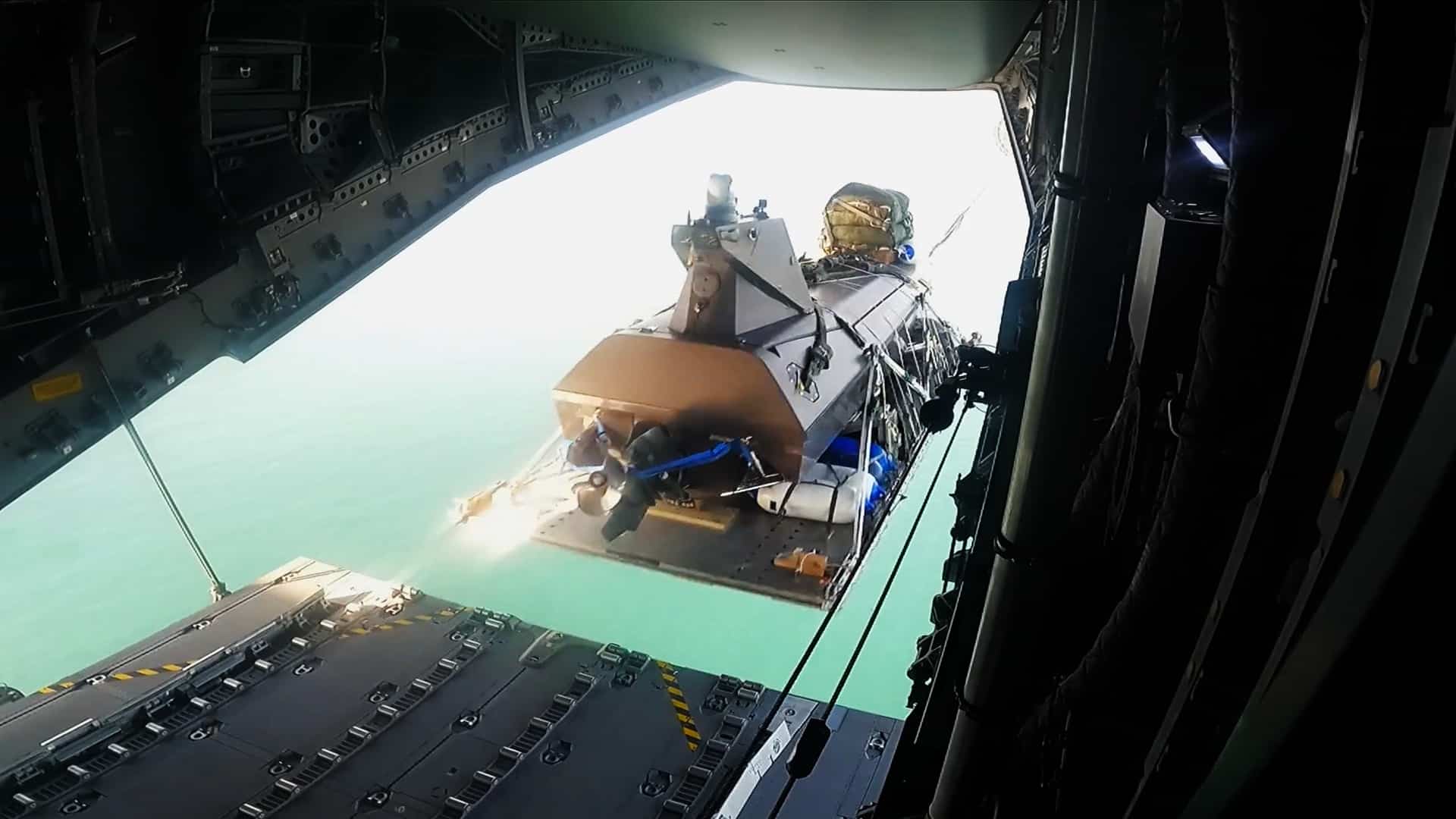
Kraken Technology Group and Capewell, supported by the Royal Navy under Project Beehive, have successfully completed the world's first extracted-load airdrop of an uncrewed surface vessel (USV) from an A400M military transport aircraft. Kraken press release During a series of pioneering trials, a Project Beehive specification K3 SCOUT USV was deployed on Capewell's Universal Maritime Craft Aerial Delivery System (UMCADS) multiple times from an altitude of 1,300 feet into waters of up to Sea State 4. These demonstrations successfully proved a new force projection capability to rapidly insert high-performance uncrewed vessels into contested or difficult-to-access maritime environments. The trials combined Kraken's K3 SCOUT optional airdrop kit with Capewell's reconfigurable Type V parachute-based UMCADS platform, which can airdrop various maritime vessels directly into military zones. The trial campaign culminated with a successful validation of a pioneering new IN-Release system, a configurable electro-mechanical release mechanism which enables reliable, synchronised load disconnect across a wide range of aerial and maritime applications. These tests prove that K3 SCOUTs can be inserted directly by air and enter the water ready for operation, significantly expanding the speed, range, and flexibility with which uncrewed maritime capabilities - such as those procured for the UK's Hybrid Navy in Project Beehive - can be deployed. Mal Crease, Founder and CEO of Kraken Technology Group, said: "Working in partnership with Capewell and the Royal Navy, we have demonstrated that K3 SCOUT can be rapidly deployed directly from a military transport aircraft into contested or difficult-to-access waters ready for operation. Kraken, alongside its partners and the Royal Navy, will continue to push boundaries to deliver novel and enhanced operational capabilities with our resilient, modular platforms." Mark Lavender, Director of Business Development and Training at Capewell said: "In collaboration with Kraken we were able to validate the integration of a complex payload with our UMCADS platform while demonstrating the ease with which the system can be reconfigured for alternative mission essential equipment be they maritime or land applications. This was further validated in that we conducted 4 live airdrops in 6 working days with the same boat and platform during this campaign."