News & Updates
The latest news and updates from companies in the WLTH portfolio.
Could AI Pay Americans $1 Million Each? New Think Tank Forecast Sparks Jim Chanos' SpaceX Jab: 'Seems Reasonable'
Benzinga and Yahoo Finance LLC may earn commission or revenue on some items through the links below. The AI Futures Project, a non-profit initiative that forecasts the future of artificial intelligence, recently outlined a proposal for a citizen's dividend by the U.S. government following AI-induced unemployment. Citizen's Dividend to Provide $1 Million Per Person By 2035 In the AI 2040 Plan A, the non-profit says that by 2033, AI-induced unemployment would rise due to the advent of millions of AI agents boosting productivity. "Across a variety of companies, there are now 60 million AI agents running continuously at 20x human speed," the project said. The non-profit then mentions a plan that involves the American government distributing the "majority of compute and robot permit fees as a Citizen's Dividend... to all American adults." The plan mentions the dividend starting at $45,000 per person in 2032, but climbing to $1 million per person by 2035 and $10 million by 2040. The plan also predicts AI reaching a labor share of 85% by 2035. The initiative also predicts the U.S. government "distributing an average of $1,200 per person per year to the rest of the world's adult population" of around 4 billion people. The plan excludes China because it would be "experiencing a similar AI wealth boom." The plan says it will reach $10k by 2035. Earlier, OpenAI was reportedly offering the President Donald Trump administration a 5% stake in the company amid CEO Sam Altman's past proposal for a universal basic capital model that involved distributing a small share of AI-generated wealth. Jim Chanos Weighs In Taking to the social media platform X on Thursday, short-seller James Chanos weighed in on the predictions. "At about the same time $SPCX's valuation exceeds global GDP. Seems reasonable," he said, pointing to Space Exploration Technologies Corp.. At about the same time $SPCX's valuation exceeds global GDP. Seems reasonable. https://t.co/cdQb9SpHfR -- James Chanos (@RealJimChanos) July 9, 2026 Trending: Avoid the #1 Investing Mistake: How Your 'Safe' Holdings Could Be Costing You Big Time SpaceX to Be Worth More Than Earth The comments come as SpaceX CEO Elon Musk had said that the company would be worth more than the entire planet in the future. "You don't seem to understand that SpaceX will be worth more than the rest of Earth if we accomplish our goals," Musk had said.
SpaceX's AI empire is built on data centers, not satellites - Cryptopolitan
Analysts caution that the contracts carry termination clauses and that space computing is still 10 years or more away. SpaceX's AI returns over the next few years will not come from space. According to Wall Street analysts, the money is coming from Earth data centers rather than the orbital compute that Elon Musk has promised. This reframes SpaceX (NASDAQ: SPCX) as primarily an infrastructure company. Space computing is a bet for the future, not now, for anyone considering SpaceX as an AI play. SpaceX already charges for computing. Reuters reported that the company signed enterprise deals for its Colossus supercomputer clusters with Anthropic, Alphabet's Google, and Reflection AI. Those contracts alone are expected to generate more than $28 billion annually. SpaceX's AI revenue in 2025 is ~$3.2 billion, which is significantly higher than the new deals. The compute contracts also outperformed SpaceX's earnings from rocket launches and Starlink, when counted separately. The contracts, however, include termination clauses, so analysts caution against reading them as recurring revenue. What SpaceX spent to get here SpaceX invested ~$18 billion in AI infrastructure and research in 2025. According to company filings, ~$12.7 billion was spent on capital expenditures and $5.1 billion on research and development. That expenditure outpaced spending on space and connectivity lines. Colossus and a second cluster, Colossus II, together provide ~1 gigawatt of AI compute. That makes SpaceX one of the world's largest compute operators. J.P. Morgan predicts that terrestrial capacity will reach ~9 gigawatts by 2029, which is equivalent to four times the output of the Hoover Dam. Brokerages cited by Reuters pointed to its $60 billion purchase of AI coding startup Cursor as a sign the company wants to sell AI applications, not just the machines that run them. The deal ties into Musk's model plans on the software side. A separate Cryptopolitan report said Musk's lab, now renamed SpaceXAI, built its Grok 4.5 model jointly with Cursor, and Musk has said SpaceX is buying the startup for that same $60 billion figure. Why orbit is still a distant bet Musk has proposed a future in which computers run in space. Analysts Reuters spoke with view this as a later chapter. "The narrative that (orbital) will fundamentally disrupt terrestrial data centers is a little bit overblown," said Anthony Milovantsev, a partner at consultancy Altman Solon, who estimated that any real displacement of ground-based data centers would take "ten years plus." The case is based on hardware that does not currently exist at scale. Orbital computing relies on SpaceX's Starship flying frequently and cheaply, lower launch costs, and better satellites, according to analysts. Ground clusters continue to run regardless of direction. BofA analysts were more blunt, calling the long term viability of orbital data centers "unproven and heavily reliant on key technological milestones that have yet to be realized." If the engineering is delivered, the appeal will be valid. Starships could eventually launch solar computing satellites into orbit, avoiding ground based costs such as energy, cooling, and land use. Analysts aren't asking if SpaceX can build and sell AI infrastructure. J.P. Morgan's estimate of ~9 gigawatts in 2029 remains the benchmark for establishing a business beyond Earth.
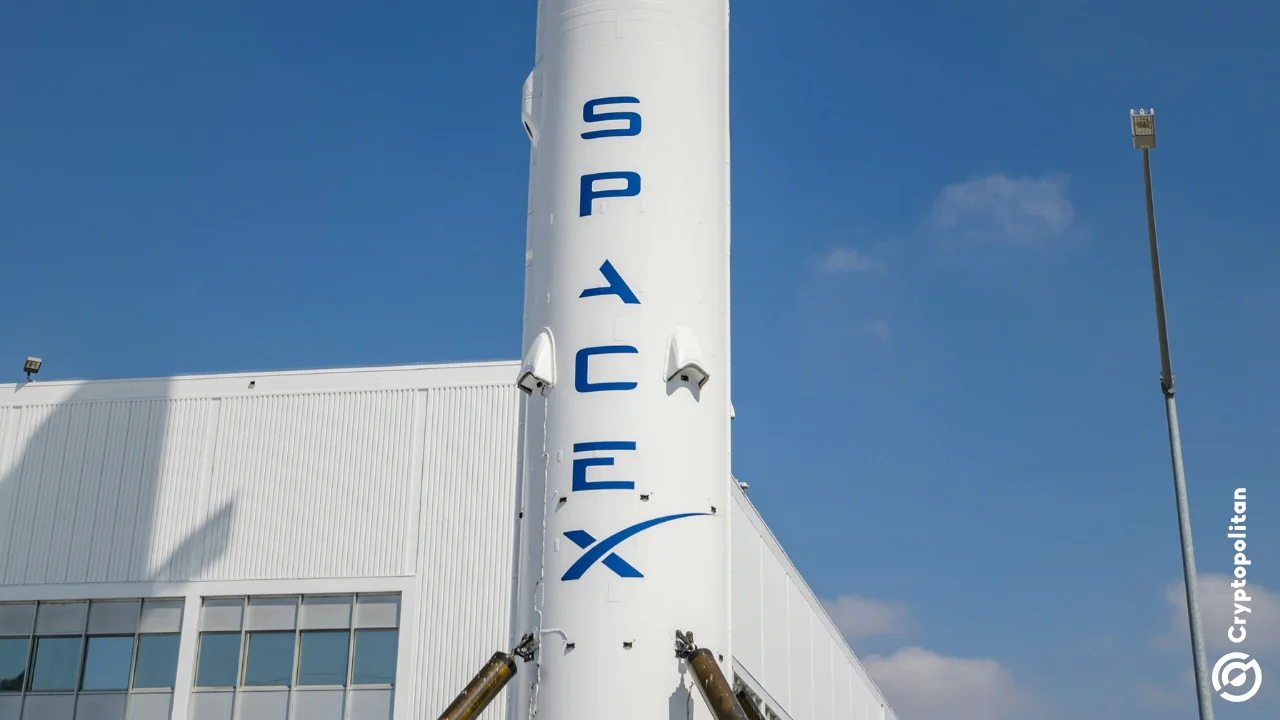
Looking for Exposure to SpaceX Stock (SPCX)? Consider These Two ETFs
After SpaceX's (SPCX) high-profile IPO last month, investors are looking for ways to get exposure to the company's fast growth in launch services, Starlink, and new AI‑compute deals. Following the company's recent inclusion into the Nasdaq-100 Index (NDX) on July 7, several ETFs added the stock to their portfolios. Currently, investors could consider investing in these two ETFs: Roundhill Space & Technology ETF (MARS) and VanEck Space ETF (WARP). TipRanks Welcomes a New ETF - NYSE:RANK * TipRanks has entered a new arena in the investing world, powering the index of an ETF based on its unique data now trading under the ticker RANK on the NYSE. * RANK tracks the performance of the TipRanks US Momentum Analysts Index, a rules-based index of 50 large U.S. companies. Roundhill Space & Technology ETF (MARS) MARS is an actively managed fund that invests in companies tied to the growing space economy. Its portfolio includes firms involved in launch services, satellite networks, space hardware, communications, and emerging orbital technologies. SPCX stock constitutes 22.86% of the ETF's holdings. Some other top holdings in the MARS ETF include Rocket Lab USA (RKLB), AST SpaceMobile (ASTS), and ViaSat (VSAT). Overall, the ETF has $66.72 million in assets under management (AUM) and an expense ratio of 0.75%. On TipRanks, the MARS ETF has a Moderate Buy consensus rating based on 18 Buys and 12 Holds assigned in the last three months. The average MARS ETF price target of $40.18 implies 43.91% upside potential. VanEck Space ETF (WARP) WARP is a passively managed ETF, designed to track the performance of the MarketVector Space Index. The ETF targets four core sectors of the space economy, which include satellite communications, rockets and propulsion systems, Earth observation and data analytics, and space exploration. SpaceX stock accounts for 21.58% of WARP's total holdings. Apart from SPCX, some of the top stocks in the WARP ETF are Iridium (IRDM), Planet Labs (PL), and Rocket Lab. Overall, the ETF has $41.25 million in AUM. Also, it has an expense ratio of 0.5%. Turning to Wall Street, the ETF has a Moderate Buy consensus rating. Of the 21 stocks held, 15 have Buy ratings and six have Hold ratings. The average WARP ETF price target of $32.96 implies a 48.51% upside potential. Bottom Line Investors who want exposure to the space boom around SpaceX can look at MARS and WARP, two ETFs that hold SPCX and offer diversified access to the sector. Both give exposure to companies tied to the same demand drivers, such as satellite growth, launch activity, and new space tech adoption.

Prediction: SpaceX Shares Can Reach $220 by End of 2026
Space Exploration Technologies (NASDAQ: SPCX) has become one of the market's most closely watched stocks after its rapid entry into the Nasdaq-100 index on July 7. Shares are trading close to $149 (as of July 10), still above its $135 IPO price, but nearly 34% below its post-IPO high of $225.60. This share price pullback has not ended investor interest in SpaceX, but it has changed the debate. Investors are now weighing the company's artificial intelligence (AI) compute opportunity, Starlink satellite internet network's room to expand in satellite communications, and progress on the next-generation reusable rocket system, Starship, as they assess where the stock could trade by the end of 2026. Missed Nvidia in 2009? This Rare Signal Is Flashing Again. In 2009, a "Double Down" signal flashed for a little-known chipmaker called Nvidia. For the first time in years, that same "Total Conviction" signal is flashing for a company 1/100th the size of Nvidia. Continue " Image source: Getty Images. SpaceX has growth drivers for its revenue SpaceX is already demonstrating impressive financial momentum. Revenue rose 33% year over year to $18.7 billion in 2025. But the company still reported a net loss of $4.9 billion after merging with money-losing xAI. Starlink remains the key growth engine, supported by roughly 10.3 million users and 9,600 satellites. But AI infrastructure is also becoming the next major catalyst. Alphabet has agreed to pay SpaceX $920 million per month from October 2026 through June 2029 for access to about 110,000 Nvidia GPUs and related computing resources. Anthropic has also signed a major compute-access deal with SpaceX, securing use of SpaceX's Colossus 1 data center. Reuters reported that SpaceX's two deals are worth about $26 billion annually if fully realized. Although not all the AI revenue from these deals is expected to materialize in 2026, it still gives investors a reason to value SpaceX based on future revenue potential rather than solely on 2025 sales. SpaceX's valuation will fall, but remain expensive At the end of 2026, investors will likely be looking toward SpaceX's expected 2027 revenue, since the stock's valuation depends on how quickly Starlink, AI compute, and Starship can expand the company's sales base. SpaceX's market capitalization is close to $2 trillion. Analysts' 2026 revenue estimates range from $34.3 billion on the low end to $43.2 billion on the high end, with a base case estimate of about $38.9 billion. Hence, SpaceX is already trading at roughly 51.4 times base case 2026 sales. By the end of 2026, that multiple will most likely compress, as post-IPO excitement usually cools and investors demand evidence of execution. But it also does not need to collapse if SpaceX continues to show progress in Starlink, AI infrastructure, and Starship. A reasonable base-case assumption is that SpaceX's sales multiple compresses by about 20% to 25% from today's 51.4x 2026 sales multiple. That gives a forward price-to-sales (P/S) multiple range of roughly 38.5 to 41 times expected 2027 sales. Analysts expect SpaceX's 2027 revenue to range from $54.8 billion to $85 billion, with an average estimate of $72.4 billion. Applying a forward sales multiple of 38.5 to 41 times to the 2027 base case revenue estimate yields an implied market capitalization of about $2.79 trillion to $2.97 trillion. Using roughly 13.1 billion shares outstanding, that points to a share price in the range of $213 to $227 at the end of 2026. Hence, $220 is a reasonable base case estimate. It assumes that while SpaceX's valuation multiple compresses, revenue growth offsets the pressure enough to lift the share price. Should you buy stock in Space Exploration Technologies right now? Before you buy stock in Space Exploration Technologies, consider this: The Motley Fool Stock Advisor analyst team just identified what they believe are the 10 best stocks for investors to buy now... and Space Exploration Technologies wasn't one of them. The 10 stocks that made the cut could produce monster returns in the coming years. Consider when Netflix made this list on December 17, 2004... if you invested $1,000 at the time of our recommendation, you'd have $395,679!* Or when Nvidia made this list on April 15, 2005... if you invested $1,000 at the time of our recommendation, you'd have $1,294,805!* Now, it's worth noting Stock Advisor's total average return is 929% -- a market-crushing outperformance compared to 211% for the S&P 500. Don't miss the latest top 10 list, available with Stock Advisor, and join an investing community built by individual investors for individual investors. See the 10 stocks " *Stock Advisor returns as of July 12, 2026. Manali Pradhan, CFA has no position in any of the stocks mentioned. The Motley Fool has positions in and recommends Alphabet and Nvidia. The Motley Fool has a disclosure policy. The views and opinions expressed herein are the views and opinions of the author and do not necessarily reflect those of Nasdaq, Inc.

J.P. Morgan Called a Potential Elon Musk SpaceX-Tesla Merger "Strategically Coherent"
Now that Elon Musk's rocket and satellite company Space Exploration Technologies (NASDAQ: SPCX) trades publicly, Wall Street has started hunting for the next best thing: stocks that can ride its coattails. The most eye-catching call came from J.P. Morgan, whose analysts described a possible combination of SpaceX and Tesla (NASDAQ: TSLA) as "strategically coherent on paper." That single phrase has revived a long-running fantasy among investors, and it's worth understanding what the analyst company actually means before treating any of these names as a back door into SpaceX. Why J.P. Morgan sees logic in a Tesla-SpaceX tie-up J.P. Morgan's argument is that Musk's companies already share engineering talent, an artificial intelligence ambition, and a common leader, so uniting them could let him run one integrated vision across cars, robots, energy, and space. The analysts also noted that SpaceX's blockbuster public debut gives Musk valuable stock to make a deal, and that his growing voting control at Tesla makes him better positioned to push one through. Where to invest $1,000 right now? Our analyst team just revealed what they believe are the 10 best stocks to buy right now, when you join Stock Advisor. See the stocks " Image source: Getty Images. J.P. Morgan was careful, though, and so am I. It flagged real obstacles: securing regulatory approvals across many countries, especially China, where Tesla builds cars; the awkward gap between Musk's near-total control of SpaceX and his smaller stake in Tesla; and the likelihood that any deal would look like SpaceX swallowing Tesla rather than a merger of equals. "Coherent on paper" is a long way from "likely to happen." The other SpaceX-by-association plays Tesla isn't the only name catching the halo. Deutsche Bank started coverage of EchoStar (NASDAQ: ECHO) with a buy rating, framing it as a cheaper way to own SpaceX. EchoStar holds roughly $11 billion of SpaceX shares it received for handing over wireless spectrum, so the bank argues you're effectively buying SpaceX at a discount and getting EchoStar's other assets thrown in. The catch is serious: EchoStar's pay-TV subsidiary recently filed for bankruptcy, and the stock has tumbled. Then there's Charter Communications (NASDAQ: CHTR), which, according to Bloomberg, has held talks with SpaceX about a consumer mobile phone service that would route some traffic through Charter's network. It's a genuine strategic fit, but it's only talk for now. Here's my honest read. Buying a stock because it's linked to a hot company is a strategy built on hope, not fundamentals, and all three of these names are down this year for reasons of their own. A merger that's merely "coherent on paper," a spectrum stake wrapped around a bankruptcy, and a rumored partnership are not the same as durable businesses. If you like Tesla, EchoStar, or Charter, buy them for what they do today, and treat any SpaceX connection as a bonus rather than the thesis. Should you buy stock in Space Exploration Technologies right now? Before you buy stock in Space Exploration Technologies, consider this: The Motley Fool Stock Advisor analyst team just identified what they believe are the 10 best stocks for investors to buy now... and Space Exploration Technologies wasn't one of them. The 10 stocks that made the cut could produce monster returns in the coming years. Consider when Netflix made this list on December 17, 2004... if you invested $1,000 at the time of our recommendation, you'd have $395,679!* Or when Nvidia made this list on April 15, 2005... if you invested $1,000 at the time of our recommendation, you'd have $1,294,805!* Now, it's worth noting Stock Advisor's total average return is 929% -- a market-crushing outperformance compared to 211% for the S&P 500. Don't miss the latest top 10 list, available with Stock Advisor, and join an investing community built by individual investors for individual investors. See the 10 stocks " *Stock Advisor returns as of July 12, 2026. JPMorgan Chase is an advertising partner of Motley Fool Money. Micah Zimmerman has no position in any of the stocks mentioned. The Motley Fool has positions in and recommends JPMorgan Chase and Tesla. The Motley Fool has a disclosure policy. The views and opinions expressed herein are the views and opinions of the author and do not necessarily reflect those of Nasdaq, Inc.
J.P. Morgan Called a Potential Elon Musk SpaceX-Tesla Merger "Strategically Coherent"
Now that Elon Musk's rocket and satellite company Space Exploration Technologies (SPCX 4.51%) trades publicly, Wall Street has started hunting for the next best thing: stocks that can ride its coattails. The most eye-catching call came from J.P. Morgan, whose analysts described a possible combination of SpaceX and Tesla (TSLA +0.22%) as "strategically coherent on paper." That single phrase has revived a long-running fantasy among investors, and it's worth understanding what the analyst company actually means before treating any of these names as a back door into SpaceX. Why J.P. Morgan sees logic in a Tesla-SpaceX tie-up J.P. Morgan's argument is that Musk's companies already share engineering talent, an artificial intelligence ambition, and a common leader, so uniting them could let him run one integrated vision across cars, robots, energy, and space. The analysts also noted that SpaceX's blockbuster public debut gives Musk valuable stock to make a deal, and that his growing voting control at Tesla makes him better positioned to push one through. J.P. Morgan was careful, though, and so am I. It flagged real obstacles: securing regulatory approvals across many countries, especially China, where Tesla builds cars; the awkward gap between Musk's near-total control of SpaceX and his smaller stake in Tesla; and the likelihood that any deal would look like SpaceX swallowing Tesla rather than a merger of equals. "Coherent on paper" is a long way from "likely to happen." The other SpaceX-by-association plays Tesla isn't the only name catching the halo. Deutsche Bank started coverage of EchoStar (ECHO 2.00%) with a buy rating, framing it as a cheaper way to own SpaceX. EchoStar holds roughly $11 billion of SpaceX shares it received for handing over wireless spectrum, so the bank argues you're effectively buying SpaceX at a discount and getting EchoStar's other assets thrown in. The catch is serious: EchoStar's pay-TV subsidiary recently filed for bankruptcy, and the stock has tumbled. Then there's Charter Communications (CHTR 2.69%), which, according to Bloomberg, has held talks with SpaceX about a consumer mobile phone service that would route some traffic through Charter's network. It's a genuine strategic fit, but it's only talk for now. Here's my honest read. Buying a stock because it's linked to a hot company is a strategy built on hope, not fundamentals, and all three of these names are down this year for reasons of their own. A merger that's merely "coherent on paper," a spectrum stake wrapped around a bankruptcy, and a rumored partnership are not the same as durable businesses. If you like Tesla, EchoStar, or Charter, buy them for what they do today, and treat any SpaceX connection as a bonus rather than the thesis.

J.P. Morgan Called a Potential Elon Musk SpaceX-Tesla Merger "Strategically Coherent"
Now that Elon Musk's rocket and satellite company Space Exploration Technologies (NASDAQ: SPCX) trades publicly, Wall Street has started hunting for the next best thing: stocks that can ride its coattails. The most eye-catching call came from J.P. Morgan, whose analysts described a possible combination of SpaceX and Tesla (NASDAQ: TSLA) as "strategically coherent on paper." That single phrase has revived a long-running fantasy among investors, and it's worth understanding what the analyst company actually means before treating any of these names as a back door into SpaceX. Why J.P. Morgan sees logic in a Tesla-SpaceX tie-up J.P. Morgan's argument is that Musk's companies already share engineering talent, an artificial intelligence ambition, and a common leader, so uniting them could let him run one integrated vision across cars, robots, energy, and space. The analysts also noted that SpaceX's blockbuster public debut gives Musk valuable stock to make a deal, and that his growing voting control at Tesla makes him better positioned to push one through. Missed Nvidia in 2009? This Rare Signal Is Flashing Again. In 2009, a "Double Down" signal flashed for a little-known chipmaker called Nvidia. For the first time in years, that same "Total Conviction" signal is flashing for a company 1/100th the size of Nvidia. Continue " J.P. Morgan was careful, though, and so am I. It flagged real obstacles: securing regulatory approvals across many countries, especially China, where Tesla builds cars; the awkward gap between Musk's near-total control of SpaceX and his smaller stake in Tesla; and the likelihood that any deal would look like SpaceX swallowing Tesla rather than a merger of equals. "Coherent on paper" is a long way from "likely to happen." The other SpaceX-by-association plays Tesla isn't the only name catching the halo. Deutsche Bank started coverage of EchoStar (NASDAQ: ECHO) with a buy rating, framing it as a cheaper way to own SpaceX. EchoStar holds roughly $11 billion of SpaceX shares it received for handing over wireless spectrum, so the bank argues you're effectively buying SpaceX at a discount and getting EchoStar's other assets thrown in. The catch is serious: EchoStar's pay-TV subsidiary recently filed for bankruptcy, and the stock has tumbled. Then there's Charter Communications (NASDAQ: CHTR), which, according to Bloomberg, has held talks with SpaceX about a consumer mobile phone service that would route some traffic through Charter's network. It's a genuine strategic fit, but it's only talk for now.
Prediction: SpaceX Shares Can Reach $220 by End of 2026
Space Exploration Technologies (SPCX 4.51%) has become one of the market's most closely watched stocks after its rapid entry into the Nasdaq-100 index on July 7. Shares are trading close to $149 (as of July 10), still above its $135 IPO price, but nearly 34% below its post-IPO high of $225.60. This share price pullback has not ended investor interest in SpaceX, but it has changed the debate. Investors are now weighing the company's artificial intelligence (AI) compute opportunity, Starlink satellite internet network's room to expand in satellite communications, and progress on the next-generation reusable rocket system, Starship, as they assess where the stock could trade by the end of 2026. SpaceX has growth drivers for its revenue SpaceX is already demonstrating impressive financial momentum. Revenue rose 33% year over year to $18.7 billion in 2025. But the company still reported a net loss of $4.9 billion after merging with money-losing xAI. Starlink remains the key growth engine, supported by roughly 10.3 million users and 9,600 satellites. But AI infrastructure is also becoming the next major catalyst. Alphabet has agreed to pay SpaceX $920 million per month from October 2026 through June 2029 for access to about 110,000 Nvidia GPUs and related computing resources. Anthropic has also signed a major compute-access deal with SpaceX, securing use of SpaceX's Colossus 1 data center. Reuters reported that SpaceX's two deals are worth about $26 billion annually if fully realized. Although not all the AI revenue from these deals is expected to materialize in 2026, it still gives investors a reason to value SpaceX based on future revenue potential rather than solely on 2025 sales. SpaceX's valuation will fall, but remain expensive At the end of 2026, investors will likely be looking toward SpaceX's expected 2027 revenue, since the stock's valuation depends on how quickly Starlink, AI compute, and Starship can expand the company's sales base. SpaceX's market capitalization is close to $2 trillion. Analysts' 2026 revenue estimates range from $34.3 billion on the low end to $43.2 billion on the high end, with a base case estimate of about $38.9 billion. Hence, SpaceX is already trading at roughly 51.4 times base case 2026 sales. By the end of 2026, that multiple will most likely compress, as post-IPO excitement usually cools and investors demand evidence of execution. But it also does not need to collapse if SpaceX continues to show progress in Starlink, AI infrastructure, and Starship. A reasonable base-case assumption is that SpaceX's sales multiple compresses by about 20% to 25% from today's 51.4x 2026 sales multiple. That gives a forward price-to-sales (P/S) multiple range of roughly 38.5 to 41 times expected 2027 sales. Analysts expect SpaceX's 2027 revenue to range from $54.8 billion to $85 billion, with an average estimate of $72.4 billion. Applying a forward sales multiple of 38.5 to 41 times to the 2027 base case revenue estimate yields an implied market capitalization of about $2.79 trillion to $2.97 trillion. Using roughly 13.1 billion shares outstanding, that points to a share price in the range of $213 to $227 at the end of 2026. Hence, $220 is a reasonable base case estimate. It assumes that while SpaceX's valuation multiple compresses, revenue growth offsets the pressure enough to lift the share price.

SpaceX Went Nowhere for a Month, but It Easily Beat Other Space Stocks
* SpaceX (SPCX) trades near its $150 opening price, but a flat price performance is a relative win when the broader space sector is down sharply. * Virgin Galactic (SPCE) crashed 45% and Rocket Lab (RKLB) fell 22% over the past month as sector rotation hammered speculative space names hard. * SpaceX's $1.96 trillion market cap and Starlink's global reach anchor the bull case, but its surrendered IPO pop and rich valuation are real risks. * Act now: the analyst who called NVIDIA in 2010 just named his top 10 AI stocks -- and Rocket Lab didn't make the cut. Grab the names FREE today. Shares of SpaceX (NASDAQ:SPCX) are trading at $148 and change on Friday afternoon, essentially back where they opened one month ago. That flat tape looks dull on the surface, but against the rest of the space sector, it's the best performance in the group. SpaceX priced its debut at $135 but commenced trading at $150 on June 12, and has since round-tripped to basically the same price. That's disappointing, no doubt, but SpaceX's peers fared worse over the past month. The market cap of Elon Musk's space company sits at $1.96 trillion, making SpaceX one of the largest listings ever and by far the biggest name in the sector. That scarcity value may have helped to shield SPCX stock from the broader sector rotation. Peers Sold Off, SpaceX Held the Line It's been a challenging month for the space sector overall. Speculative, high-beta space names have been hit with profit-taking and cooling risk appetite over the past four weeks, though SpaceX evidently refused to participate on the downside. Over the trailing month, Virgin Galactic (NYSE:SPCE) is down 45%, Intuitive Machines (NASDAQ:LUNR) is down 40%, and Rocket Lab (NASDAQ:RKLB) is down 22%. AST SpaceMobile (NASDAQ:ASTS) is down 16%, and Planet Labs (NYSE:PL) is down 15%. Act now: the analyst who called NVIDIA in 2010 just named his top 10 AI stocks -- and Rocket Lab didn't make the cut. Grab the names FREE today. The takeaway isn't that SpaceX rallied, since it actually popped and dropped. Being flat versus the opening price still counts as a win in this hard-hit sector. The Space Sector Proxy Confirms the Rotation The Procure Space ETF (NYSEARCA:UFO) is down 10% over the same month, though it did cushion the space sector group's drawdowns with satellite operators and aerospace specialists. The UFO ETF is a narrow, volatile thematic fund with concentration risk, though it's not leveraged. The fund's top holdings include Planet Labs at 6% and Rocket Lab at 5%, both of which weighed on the UFO ETF.
Elon Musk Accuses Sam Altman Of Stealing A Charity And Apple's Technology, While Vowing That SpaceX's AI1 Satellites Will Fly Next Year But That Altman Will Be In Jail By Then
Elon Musk was never the gracious sort to let an opportunity to take a jab against his fiercest opponent pass him by. And now that Apple has lobbed a figurative thermonuclear warhead on OpenAI in the form of a damning lawsuit, Musk is using the ensuing social media buzz to land a few choice punches on his nemesis number one, OpenAI's Sam Altman. Elon Musk now believes SpaceX will start deploying AI1 satellites by next year, but wonders if Sam Altman would be able to see the launch, strongly implying that OpenAI's CEO would be in jail by then While the tale of the legendary animosity between Elon Musk and Sam Altman is long and sordid, the latest bout of verbal jousting between the two began in the wake of a damning lawsuit filed by Apple against OpenAI, accusing it of stealing its proprietary technology, circuit designs, and component architecture for a slew of upcoming consumer-geared AI devices. Apple has tallied that over 400 of its former employees have ended up at OpenAI, with the iPhone maker's former VP of Design, Tang Tan, reportedly playing a pivotal role by encouraging Apple employees vying for a stint at OpenAI to bring actual Apple hardware components and samples for "show and tell" sessions. Of course, this development has come as a manna from heaven for Elon Musk, who then jabbed that Altman had taken scamming to a "whole new level." Altman then responded with a riposte, suggesting that Musk was "sellling public market investors on short-term space datacenters." Never one to leave a jab unanswered, Musk then tore a strip out of Altman by declaring: "We start flying them next year. Maybe you can come see them if your parole officer approves. After stealing an open source AI charity, you then stole all of Apple's phone technology! Wow. What do you plan for an encore? That's tough to beat." Basically, Musk has just declared that SpaceX's ambitious satellite-based data center project will enter its deployment phase next year, while strongly suggesting that Sam Altman would be in jail by then. For the benefit of those who might not be aware, SpaceX recently unveiled its first dedicated satellite design for AI compute. Dubbed the AI1 satellite, it can support up to 150kW of peak compute payload, replete with liquid radiators, meteoride shielding, a centralized compute module, and deployable solar arrays. These satellites will be manufactured at SpaceX's Gigasat facility in Texas. Coming back, as mentioned earlier, the bad blood between Musk and Altman is one for the history books. Their feud can be traced to the inception of OpenAI, when Musk was the primary financier of the-then non-profit. Unsatisfied with the pace of development at the non-profit, Musk tried to take over the control of OpenAI in 2018 but was rebuffed by Altman and the board. Musk then departed the non-profit in a fit of rage. Then, once Sam Altman began advocating for converting OpenAI into a for-profit enterprise, Musk took Altman and OpenAI to court, where the defendants were able to claim a victory on technical grounds, with the court ruling that Musk had waited too long to file his claims. Follow Wccftech on Google to get more of our news coverage in your feeds.

SpaceX vs. the Last 5 Biggest IPOs in History. How Did Those Stocks Perform a Year Later?
Two notable trends continue to bolster the capital markets landscape. Of course, investor appetite for businesses in artificial intelligence (AI) remains robust. The view is that this is a groundbreaking technology that will have a meaningful impact on the economy. Missed Nvidia in 2009? This Rare Signal Is Flashing Again. In 2009, a "Double Down" signal flashed for a little-known chipmaker called Nvidia. For the first time in years, that same "Total Conviction" signal is flashing for a company 1/100th the size of Nvidia. Continue " Additionally, the market is captivated by anything Elon Musk is working on. His grand visions drive excitement. These factors created the perfect backdrop for the most anticipated initial public offering (IPO) ever. On June 12, Space Exploration Technologies (NASDAQ: SPCX) went public. It raised $86 billion, after underwriters exercised their greenshoe option. The company currently sports a massive $2 trillion market capitalization. And the stock has traded 13% up from its opening price (as of July 9). The hype is hard to overstate. But how will SpaceX's shares perform over the 12-month period following its IPO? Investors can try to glean insights by looking at the five largest previous deals. A wide range of industries The five largest IPOs prior to SpaceX are ranked by the amount of capital raised. The list includes Saudi Arabian Oil ($26 billion raised in 2019), Alibaba Group ($22 billion in 2014), SoftBank Corp. (not the investment holding company) ($21 billion in 2018), NTT DoCoMo ($18 billion in 1998), and Visa ($18 billion in 2008). Investors will notice that these deals come from different industries. Whether it's energy, technology, communication services, or financial services, no single sector dominates. Their subsequent 12-month performances are a mixed bag. Saudi Aramco shares were down by a single-digit percentage. Alibaba's stock price tanked 30%. SoftBank's shares were up about 10%. NTT Mobile soared 68%. And Visa's stock was essentially flat one year later. These figures are all over the place. It's telling that these companies were able to raise such massive amounts of capital. However, the timing of their IPOs, as well as their competitive positions, management teams, and financial performance, all weighed on their respective stocks' performances. Based on these volatile numbers, investors can't come to a definitive conclusion about where SpaceX shares will be trading 12 months after its IPO. It's really a toss-up at this point.
Elon Musk's SpaceX Just Joined the Nasdaq-100. Now What?
Space Exploration Technologies (NASDAQ: SPCX) entered the Nasdaq-100 index on July 7, and investors will hope it provides additional support for an already successful initial public offering (IPO). But what does the index inclusion really mean, and what can SpaceX investors expect in the future? Where next for SpaceX? The Nasdaq-100 index inclusion does matter. It triggers forced passive buying of the stock by funds (including exchange-traded funds, or ETFs) that track the Nasdaq-100 index. In addition, many actively managed funds may invest only in stocks listed in the Nasdaq-100 index, and others may require holdings in SpaceX stock to meet their fund's weighting requirements. All of this is likely to provide some support for the share price. Missed Nvidia in 2009? This Rare Signal Is Flashing Again. In 2009, a "Double Down" signal flashed for a little-known chipmaker called Nvidia. For the first time in years, that same "Total Conviction" signal is flashing for a company 1/100th the size of Nvidia. Continue " Image source: Getty Images. While this will occur, investors also need to be mindful of periodic bouts of selling as SpaceX's lock-up expiry dates approach. Digging into the company's Securities and Exchange Commission (SEC) filings makes it clear that the potential for periodic supply hitting the market is real. For reference, around 639 million shares were sold at IPO, and SpaceX has 13.17 billion shares outstanding. Data source: Space Exploration Technologies SEC filings. As you can see, significantly more shares could come to market than were sold at IPO, and that could prove more impactful than the Nasdaq-100 listing. Should you buy stock in Space Exploration Technologies right now? Before you buy stock in Space Exploration Technologies, consider this: The Motley Fool Stock Advisor analyst team just identified what they believe are the 10 best stocks for investors to buy now... and Space Exploration Technologies wasn't one of them. The 10 stocks that made the cut could produce monster returns in the coming years. Consider when Netflix made this list on December 17, 2004... if you invested $1,000 at the time of our recommendation, you'd have $395,679!* Or when Nvidia made this list on April 15, 2005... if you invested $1,000 at the time of our recommendation, you'd have $1,294,805!* Now, it's worth noting Stock Advisor's total average return is 929% -- a market-crushing outperformance compared to 211% for the S&P 500. Don't miss the latest top 10 list, available with Stock Advisor, and join an investing community built by individual investors for individual investors. See the 10 stocks " *Stock Advisor returns as of July 11, 2026. Lee Samaha has no position in any of the stocks mentioned. The Motley Fool has no position in any of the stocks mentioned. The Motley Fool has a disclosure policy. The views and opinions expressed herein are the views and opinions of the author and do not necessarily reflect those of Nasdaq, Inc.
Elon Musk's SpaceX Just Joined the Nasdaq-100. Now What?
Space Exploration Technologies (NASDAQ: SPCX) entered the Nasdaq-100 index on July 7, and investors will hope it provides additional support for an already successful initial public offering (IPO). But what does the index inclusion really mean, and what can SpaceX investors expect in the future? Where next for SpaceX? The Nasdaq-100 index inclusion does matter. It triggers forced passive buying of the stock by funds (including exchange-traded funds, or ETFs) that track the Nasdaq-100 index. In addition, many actively managed funds may invest only in stocks listed in the Nasdaq-100 index, and others may require holdings in SpaceX stock to meet their fund's weighting requirements. All of this is likely to provide some support for the share price. Missed Nvidia in 2009? This Rare Signal Is Flashing Again. In 2009, a "Double Down" signal flashed for a little-known chipmaker called Nvidia. For the first time in years, that same "Total Conviction" signal is flashing for a company 1/100th the size of Nvidia. Continue " While this will occur, investors also need to be mindful of periodic bouts of selling as SpaceX's lock-up expiry dates approach. Digging into the company's Securities and Exchange Commission (SEC) filings makes it clear that the potential for periodic supply hitting the market is real. For reference, around 639 million shares were sold at IPO, and SpaceX has 13.17 billion shares outstanding. Data source: Space Exploration Technologies SEC filings. As you can see, significantly more shares could come to market than were sold at IPO, and that could prove more impactful than the Nasdaq-100 listing. Should you buy stock in Space Exploration Technologies right now? Before you buy stock in Space Exploration Technologies, consider this:
Elon Musk's SpaceX Just Joined the Nasdaq-100. Now What?
Space Exploration Technologies (SPCX 4.51%) entered the Nasdaq-100 index on July 7, and investors will hope it provides additional support for an already successful initial public offering (IPO). But what does the index inclusion really mean, and what can SpaceX investors expect in the future? Where next for SpaceX? The Nasdaq-100 index inclusion does matter. It triggers forced passive buying of the stock by funds (including exchange-traded funds, or ETFs) that track the Nasdaq-100 index. In addition, many actively managed funds may invest only in stocks listed in the Nasdaq-100 index, and others may require holdings in SpaceX stock to meet their fund's weighting requirements. All of this is likely to provide some support for the share price. While this will occur, investors also need to be mindful of periodic bouts of selling as SpaceX's lock-up expiry dates approach. Digging into the company's Securities and Exchange Commission (SEC) filings makes it clear that the potential for periodic supply hitting the market is real. For reference, around 639 million shares were sold at IPO, and SpaceX has 13.17 billion shares outstanding. Data source: Space Exploration Technologies SEC filings. As you can see, significantly more shares could come to market than were sold at IPO, and that could prove more impactful than the Nasdaq-100 listing.

Watch China land a reusable rocket for the first time, a new challenge for Elon Musk's SpaceX
China is racing to catch up with Musk's SpaceX by launching powerful reusable rockets and its own Starlink rival. SpaceX is flying high off the back of a record-breaking IPO, but China looks determined to bring Elon Musk back down to Earth. China successfully landed the booster stage of its Long March-10B reusable rocket on Friday, the first time it has launched and partially returned a reusable orbital rocket safely to Earth. It means that China's Aerospace Science and Technology Corp, which built the rocket, joins Musk's SpaceX and Jeff Bezos' Blue Origin as the only organizations to have successfully landed a rocket booster. Mao Ning, the spokesperson for China's Ministry of Foreign Affairs, said in an X post that it is a "major leap toward reusable launch capabilities." Local media reported that the Long March rocket's first stage touched down on a barge around six minutes after launch and was captured by a large net -- reportedly the world's first ever "net-based recovery" of a rocket. Landing a first-stage booster, rather than letting it burn up on reentry, is a key milestone in building reusable rockets, which significantly lowers launch costs. SpaceX landed its first booster in 2015 and has since launched and successfully recovered its Falcon 9 rocket hundreds of times. In 2024, SpaceX wowed the world by catching the nearly 400-foot-tall superheavy booster -- which is used to propel its next-generation Starship rocket into orbit -- with the chopstick-like arms of its "Mechazilla" launch tower. Blue Origin scored its first booster landing last November, with the first stage of its towering New Glenn rocket successfully landing on a platform in the Atlantic Ocean. Bezos' rocket company has suffered setbacks since then, with New Glenn exploding on the launchpad in May. Landing a booster is a significant step toward China's ambition of catching up with SpaceX, which launches far more material into orbit than any other country or company. The Asian superpower is also attempting to build a rival to SpaceX's Starlink satellite internet service, with state-backed company SpaceSail launching around 200 satellites into orbit since 2024. That's well behind Starlink, which has an estimated 10,000 satellites in low-earth orbit. China's Long March rocket also lags behind SpaceX's Falcon 9, with a max payload capacity of 16 tons compared to the Falcon's 25 tons and Starship's planned 100+ tons. In a post on X in October, however, Musk said that China's reusable rockets were catching up with SpaceX's workhorse rocket -- even if they were still some way behind the cutting edge. "They have added aspects of Starship, such as use of stainless steel and methalox, to a Falcon 9 architecture, which would enable it to beat Falcon 9," he wrote. "But Starship [is] in another league," Musk added. If you enjoyed this story, be sure to follow Business Insider on Yahoo.
Europe just unveiled a new rival to SpaceX's Starship
When SpaceX's Starship lifted off from the Texas coast in the summer of 2023, it marked a milestone that aerospace engineers had discussed for decades but few expected to witness so soon. The towering stainless steel rocket, standing taller than a 30 story building, ignited all 33 of its engines and climbed into the sky. The mission did not unfold perfectly, but it proved the concept could fly. The significance became even clearer during Starship's fifth integrated flight test, when the returning Super Heavy booster was successfully caught in mid air by the giant mechanical arms of the launch tower. That demonstration suggested a new era of reusable spaceflight had begun. Starship is ultimately intended to carry more than 100 tonnes into low Earth orbit while remaining fully reusable. If SpaceX achieves that goal, it could become the most powerful and cost effective launch vehicle ever built. As a result, space agencies and aerospace companies are now focused less on whether Starship will reshape the industry and more on how they should respond. Independent Analysis Confirms Starship's Capabilities Researchers at the German Aerospace Center (DLR) recently completed one of the most comprehensive independent evaluations of Starship to date. Rather than relying on SpaceX's published specifications, the team reconstructed the rocket's performance by extracting telemetry from publicly available video of its first four integrated flight tests. They analyzed the data second by second to build and validate their own performance models. Their findings suggest Starship's capabilities are both realistic and impressive. According to the analysis, the current fully reusable version of Starship could deliver about 59 tonnes to low Earth orbit. That is roughly comparable to what Falcon Heavy can launch when none of its boosters are recovered. The researchers also evaluated SpaceX's planned next generation Starship, which is expected to feature larger propellant tanks and more powerful Raptor 3 engines. Their models project a reusable payload of about 115 tonnes to low Earth orbit, with as much as 188 tonnes possible in an expendable configuration. That would exceed the lift capability of NASA's legendary Saturn V rocket. Europe's RLV C5 Takes a Different Approach The study also introduces a European concept for a super heavy launch vehicle called the RLV C5. Instead of attempting full reusability from the beginning, the design focuses on partial reuse while maximizing efficiency. The concept combines the reusable winged booster from DLR's long running SpaceLiner program with an expendable upper stage. It uses liquid hydrogen and liquid oxygen, a more efficient propellant combination than the methane and oxygen used by Starship's Raptor engines. Unlike Starship, the RLV C5 booster would not perform a powered vertical landing. After reentering the atmosphere, it would glide on wings before being captured in mid air by a large subsonic aircraft. Although the recovery method sounds futuristic, the researchers argue it offers important advantages. Because the booster does not need to reserve propellant for landing, more of its fuel can be devoted to reaching orbit. Efficiency Versus Maximum Payload The study highlights the different engineering priorities behind the two vehicles. Starship weighs more than three times as much as the proposed RLV C5 at liftoff. Much of that additional mass comes from the hardware required for complete reusability, including heat shield tiles, landing propellant, structural reinforcements, and other recovery systems. As a result, only about 40% of the mass Starship places into orbit is useful payload. By comparison, the partially reusable RLV C5 would dedicate about 74% of its mass to payload. Although it cannot match Starship's enormous lifting capacity, it achieves much greater efficiency. Different Missions, Different Solutions The DLR researchers stress that the two rockets are not direct competitors so much as different solutions to different problems. Starship's enormous payload capacity and planned rapid reuse make it well suited for ambitious projects such as lunar bases, Mars missions, and massive satellite constellations. The RLV C5, on the other hand, is intended to provide Europe with an independent super heavy launch capability without the enormous cost of developing a fully reusable system immediately. Because it builds on technologies already being studied through the SpaceLiner program, the researchers believe it could serve as an intermediate step before Europe eventually develops a fully reusable launcher. A Concept Versus a Flying Rocket The study also acknowledges an important reality. Starship is already conducting flight tests, despite continuing technical challenges. The RLV C5 remains a paper concept, and transforming it into an operational launch vehicle would require years of additional development. Starship itself still faces major engineering hurdles. During its fourth integrated flight test, damage to its thermal protection system was severe enough that the design had to be substantially revised. Achieving rapid, reliable, and fully reusable operations remains one of the biggest unsolved challenges behind the rocket's long term economic model. Even so, lead author Moritz Herberhold and his colleagues conclude that the "RLV C5 offers an effective path for Europe to independently develop partially reusable super-heavy launch capabilities." Whether the future belongs to fully reusable giants like Starship or more efficient partially reusable systems, the study suggests there may be more than one successful path to the next generation of spaceflight.

Elon Musk Predicts SpaceX Value to Surpass Entire Earth
Amid Wall Street valuations, analysts project SpaceX stock from $75 to $900 per share Elon Musk, CEO of U.S. electric vehicle company Tesla, claimed that the future value of SpaceX, the aerospace company he founded, would surpass the combined value of the entire Earth. According to financial weekly Barron's on July 10 (local time), Musk stated via X (formerly Twitter) the previous afternoon, "If we achieve our goals, SpaceX's value will grow larger than the rest of the planet combined." Barron's reported that Musk made this remark amid ongoing Wall Street valuations of SpaceX following its June initial public offering (IPO). In a radio interview, Musk also revealed a concrete goal of sending tens of thousands of people to a lunar base within the next 10 years. He added that astronauts would be sent to the Moon within 2-3 years, with plans to expand operations. He argued that, at some point, anyone who wishes could travel to the Moon or Mars. Musk stated, "We will build a self-sustaining city on the Moon, like a metropolis," where people could permanently relocate or take vacations. Market forecasts for SpaceX's valuation are mixed. Morgan Stanley projected that under a pessimistic scenario -- where Starship does not achieve normal operations by 2029 -- the stock price could drop to 75 dollars per share. Under an optimistic scenario, it estimated 600 dollars per share, with a target price of 300 dollars. Conversely, Citi assumed an optimistic scenario, projecting a stock price of 900 dollars, a corporate value of 12 trillion dollars, or approximately 18,000 trillion Korean won. According to financial data provider FactSet, the average analyst target price was 240 dollars per share. Sales are expected to reach 630 billion dollars by 2031, with operating profits exceeding 340 billion dollars in the same year.
Cathie Wood's ARK sees major moves in Coinbase and SpaceX stocks By Investing.com
Cathie Wood's ARK ETF published their daily trades for Friday, July 10th, 2026, revealing significant activity in the tech and biotech sectors. Leading the day's trades, ARK made a substantial purchase of 116,971 shares of Space Exploration Technologies Corp (SPCX), with a total dollar value of $17,798,307. This marks a continuation of ARK's interest in the aerospace giant, following a consistent buying pattern over the past week. In another major move, ARK acquired 87,409 shares of Coinbase Global Inc (NASDAQ:COIN) across its ARKK, ARKW, and ARKF ETFs, amounting to $13,849,081. This purchase indicates ARK's ongoing confidence in the cryptocurrency exchange platform, as it follows recent acquisitions earlier in the week. On the selling side, ARK offloaded 19,540 shares of Advanced Micro Devices Inc (NASDAQ:AMD) through its ARKK, ARKQ, and ARKX ETFs, totaling $10,682,908. This sale continues a trend of reducing its position in AMD, with significant shares sold throughout the week. ARK also sold 158,592 shares of 10X Genomics Inc (NASDAQ:TXG) from its ARKK ETF, totaling $6,835,315, and 45,625 shares of Roku Inc (NASDAQ:ROKU), amounting to $6,399,362. These sales suggest a shift in ARK's focus within the genomics and streaming sectors. In the biotech space, ARK added 293,106 shares of Prime Medicine, Inc (NASDAQ:PRME) through its ARKG ETF, with a total investment of $1,239,838, continuing its recent accumulation of the stock. Additionally, ARK purchased 54,804 shares of Generate Biomedicines Inc (GENB) for $861,518, and 28,276 shares of Tempus AI Inc (TEM) for $1,738,974, reflecting its interest in innovative biotech companies. Other notable trades include the sale of 11,092 shares of Deere & Co (NYSE:DE) for $6,576,446 and the acquisition of 137,071 shares of X-Energy Inc (XE) for $2,275,378, highlighting ARK's diverse investment strategy across various sectors. These trades underscore Cathie Wood's ARK Invest's strategic adjustments within its portfolios, reflecting both confidence in emerging technologies and a reevaluation of existing positions. Investors will be closely watching ARK's next moves as it navigates the evolving market landscape. This article was generated with the support of AI and reviewed by an editor. For more information see our T&C.

Trump Praises SpaceX President Gwynne Shotwell's 'Extreme Generosity' After Her $325 Million Trump Accounts Stock Donation
Benzinga and Yahoo Finance LLC may earn commission or revenue on some items through the links below. President Donald Trump expressed his gratitude to Space Exploration Technologies Corp. President Gwynne Shotwell and her husband, Robert Shotwell, for their donation of SpaceX stock to help children achieve the American Dream through the Trump Accounts. Late Wednesday, Trump took to Truth Social to acknowledge the Shotwells' $325 million contribution of SpaceX stock. He praised the couple's "extreme generosity" and highlighted the positive impact their donation will have on thousands of children. Trump Accounts Gain Support The President's post came in response to Shotwell's announcement that she and her husband would donate SpaceX shares to "Trump Accounts" for more than 2 million American children. The gift is intended for children aged 11 to 17 from lower-income households, with a particular focus on those living near the Shotwells' central Texas home. The Shotwells' donation comes as part of the Invest America program, which aims to provide financial support to children in need. The funds are automatically invested in an S&P 500 index fund, and additional contributions can be made by families, employers, and other parties up to $5,000 annually. See Also: Avoid the #1 Investing Mistake: How Your 'Safe' Holdings Could Be Costing You Big Time Trump's recognition of the Shotwells' contribution comes after he expressed confidence that CEO Elon Musk might also donate SpaceX stock to the program. The president has expressed confidence in his relationship with Musk, despite past disagreements over electric vehicle mandates. The donation adds Gwynne Shotwell to a growing list of wealthy supporters of Trump Accounts. Michael and Susan Dell of Dell Technologies Inc. pledged $6.25 billion to provide $250 to 25 million children, while Ray Dalio and his wife Barbara committed at least $75 million for over 300,000 children in Connecticut. Ray Dalio has said the program can help teach young people about finance, investing and capitalism. According to Robinhood Markets Inc. CEO Vlad Tenev, the growth of Trump Accounts has outpaced that of many of America's most successful tech companies. As of June, nearly 6 million children had enrolled in the program.
SpaceX Scored a New Street-High Price Target of $800. What Comes Next for SPCX Stock.
Raymond James analyst Brian Gesuale has set a new Street-high price target on SpaceX (SPCX) shares at $800 with a "Strong Buy" rating, representing a staggering 430% potential upside from current levels. Should SPCX reach that target, the company's market cap would balloon to roughly $10.5 trillion, making it larger than any publicly traded company currently in existence. More News from Barchart Gesuale frames SPCX as the defining industrial infrastructure company of the 21st century, comparing its potential to that of railroads, electric grids, and the internet in reshaping entire economic eras. That said, SpaceX stock is currently down more than 10% versus its year-to-date high. Why Raymond James Is Uber Bullish on SpaceX Stock Raymond James' price objective rests on extraordinarily aggressive revenue assumptions. These include SpaceX launching data centers into space and selling mass orbital computing power, and Starship scaling up to reduce the cost of moving mass into orbit by more than 99%, completely commoditizing space transport. All in all, Gesuale models SpaceX surpassing $5 trillion in annual sales within the next 10 years. Caution Is Warranted in Playing SPCX Shares Despite the bullish coverage, SPCX stock has so far moved in the opposite direction as the Nasdaq-100 ($IUXX) inclusion, which was expected to generate roughly $4.3 billion in passive inflows from index-tracking funds, failed to provide a sustained bid. Several structural factors also complicate the near-term outlook. SpaceX's public float remains about 5% of total shares outstanding, creating outsized volatility in both directions. Short sellers reportedly hold a third of all tradable shares, and the first major insider sell window opens after Q2 earnings next month -- when 20% of early-release-eligible shares become available for trading. Prediction markets assign only a 20% probability that SPCX will close above $210 by month-end, placing real money far below the median analyst target. How Wall Street Recommends Playing SpaceX In total, 29 Wall Street firms have initiated coverage on SpaceX shares so far, with the consensus rating set at "Strong Buy" tied to a mean price target of about $202.