News & Updates
The latest news and updates from companies in the WLTH portfolio.
SpaceX Post-Listing Collapse Threatens IPO Market's AI Euphoria
SpaceX shares slumped2.97%Thursday, on pace for an eighth drop in nine sessions, as it wiped out $903 billion from a closing high last month. SpaceX's fall from its post-listing peak to below its IPO price in just a month poured cold water on the market for newly public companies, dragging a key gauge of this year's debuts down with it. The pullback across stocks linked to themes such as artificial intelligence infrastructure and aerospace and defense -- two of the hottest sectors for newly-public companies -- depressed the weighted average return for this year's US initial public offerings to 6%, lagging the S&P 500 Index's 11% return, data compiled by Bloomberg through July 15 show. Broader market volatility, including share price declines for recent listings, is set to dampen enthusiasm for what a Blackstone Inc. executive dubbed the year of the IPO. The majority of US debuts over the past two months are trading below their offer price, data compiled by Bloomberg show. ALSO READ: SpaceX Craters Below IPO Price For First Time; Shares Down 40% From Post-Listing Peak SpaceX shares slumped 2.97% Thursday, on pace for an eighth drop in nine sessions, as it wiped out $903 billion from a closing high last month. Shares of SK Hynix Inc., which raised $26.5 billion in a record-setting debut of its own last week, dropped 12% bringing it just a few dollars above the $149 level where it sold American depositary receipts to investors. Add image caption here Activity in the near-term will "be less busy than we thought," Michael Ventura, co-head of US equity capital markets at Royal Bank of Canada, said in an interview. "You will have transactions that launch and price but outside of the headline names it'll be quieter." Blockbuster Deals Even without blockbuster deals like SpaceX and SK Hynix, the broader US IPO market hasn't shot out the lights. The weighted-average return for those 2026 US IPOs has pulled back to roughly 10% through July 15's close, modestly lagging the return for the S&P 500. The underlying market volatility over the past month, despite an S&P 500 that is virtually unchanged, has prompted investors to rotate away from once-favored themes. While the benchmark is up roughly 0.3% over that stretch, the Philadelphia Stock Exchange Semiconductor Index has slumped 11% and a momentum basket of stocks down more than 8%. "We had a ton of momentum with the AI theme that led to the deals trading well out of the gates but with markets trading how they are, the steam will come off of that a little bit, and that's to be expected," said Eddie Molloy, co-head of global equity capital markets at Morgan Stanley. Investors will likely get a taste of companies that sit away from AI with Blackstone-backed Jersey Mike's Subs Inc. and gas-station and convenience-store operator Cumberland Farms Ltd. able to launch formal marketing of their IPOs as soon as Monday. They would be the first consumer-oriented firms to go public with sizable deals since Suja Life Inc. debuted in May. The handful of notable consumer companies to IPO this year have lagged, ranging from Suja Life's 48% decline to Yesway Inc.'s 3.3% gain. Still, it's too early to rule out a second-half surge led by Anthropic PBC, which could go public as soon as October, Bloomberg News reported. Wall Street's biggest investment banks announced in the last few days that they hauled in the most revenue from advising on equity offerings in the second quarter since 2021, fueled by SpaceX's record-setting IPO and a fundraising blitz for AI infrastructure. ALSO READ: SpaceX, Apple, PayPal, Micron Dominate Wall Street Action Amid Muted Moves In Dow, S&P 500 Companies have already raised $157 billion through July 16, excluding blank-check companies and other financial vehicles, data compiled by Bloomberg show. Bankers are optimistic that deals will flow after September's Labor Day holiday. "Is there volatility in the broader market and that impacts the IPO market? Yes," said Arnaud Blanchard, co-head of global ECM at Morgan Stanley. "But overall we're not seeing a decrease in appetite for deals which we expect to come to market over the coming quarters." (This story has not been edited by NDTV staff and is auto-generated from a syndicated feed.) Essential Business Intelligence, Sharp Market Insights, Practical Personal Finance Advice, Daily Fuel, Gold and Silver Prices and Latest Stories -- On NDTV Profit.
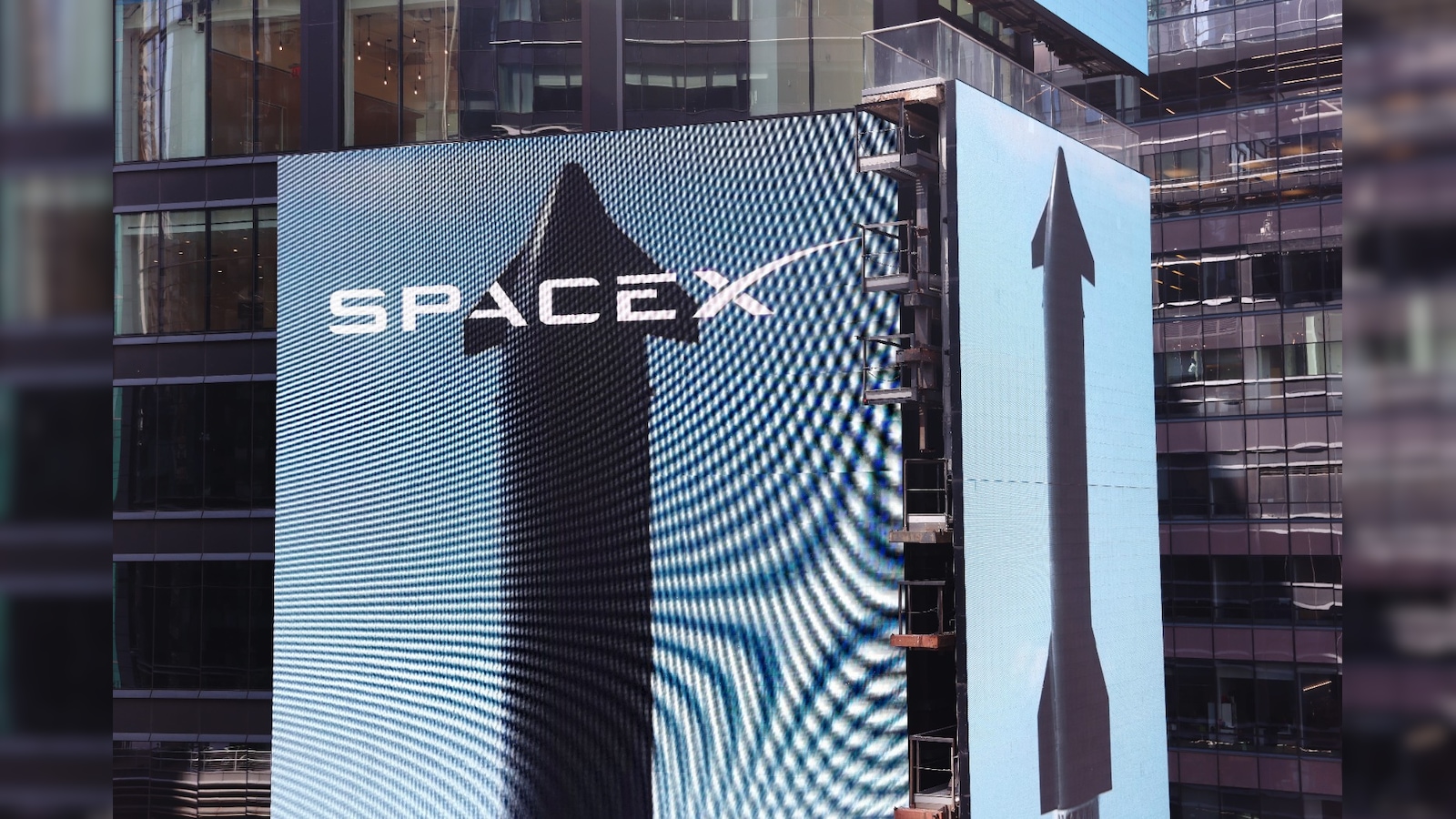
AST SpaceMobile vs. Rocket Lab: Which Stock Is The Superior SpaceX Competitor?
Space Exploration Technologies (SPCX 3.07%) made headlines when it raised $75 billion from investors in an initial public offering (nearly $86 billion if you include the investment bankers' overallotment). The stock rocketed higher after the IPO, but it has now fallen back down to the $135 IPO price. There are alternatives to consider, such as AST SpaceMobile (ASTS 17.03%) and Rocket Lab (RKLB 11.62%). Here's why you might want to buy one of these stocks over SpaceX. What does SpaceX do? The simple answer is SpaceX does a lot. For example, it builds and launches rockets. In fact, it appears well ahead of the competition in terms of technology, with rockets that return and land after use. Reusing launch rockets materially reduces launch costs. SpaceX also operates Starlink, a satellite-based telecommunication network. And it is building an artificial intelligence business. This is where things get interesting. SpaceX is a money-losing start-up, but its Starlink business is profitable. As the company clearly spelled out in its IPO prospectus, space launches and AI are burning through cash. You can avoid the money-losing businesses and just focus on the one segment of SpaceX that is profitable, the satellite-based broadband network, if you buy AST SpaceMobile. AST SpaceMobile: Not up to speed, but getting close AST SpaceMobile isn't profitable yet, either. However, it operates a satellite-based broadband network. And it is working to expand that network to cover the entire planet. It is getting close to a commercial launch of its network, but there's a vital difference between Starlink and AST SpaceMobile: Starlink's service is bespoke, while AST SpaceMobile is partnered with large cellphone service providers. That means it has a built-in customer base and is likely to hit the ground running when its service starts operating. It still has material spending needs as it works to broaden its geographic coverage, but it also has major telecom partners as supporters. If you are worried that Elon Musk is pulling SpaceX in too many directions, AST SpaceMobile would be a way to focus on the one part of that company that actually makes money today. That said, AST SpaceMobile likely won't be profitable for a while longer, given the huge cost of building and launching satellites. Rocket Lab: Everything but the AI One sizable drawback with AST SpaceMobile is that it doesn't launch its own satellites. It has to contract that out to other companies, which means, in some ways, it is at the mercy of its space-focused competitors. Rocket Lab currently builds and launches rockets and makes other space technology. However, it has agreed to buy Iridium Communications (IRDM 4.23%), which operates a space-based broadband network, in an $8 billion deal. That will, effectively, make Rocket Lab a fully integrated space company, just like SpaceX. But it will leave out the AI part of the business, which is currently eating up huge amounts of SpaceX cash. It isn't that Rocket Lab doesn't use AI; it does. But it uses AI internally to support its own business. Rocket Lab isn't profitable either, so it, too, is still a money-losing start-up. As with SpaceX and AST SpaceMobile, only the most aggressive investors should consider it. However, it lets you focus on space and avoid getting caught up in the AI hype running through the stock market today. What are you looking to own? When you step back and look at SpaceX, AST SpaceMobile, and Rocket Lab, there are a few big takeaways. First, the only way to get direct access to Elon Musk is to buy SpaceX. If that's what has you interested in space, then stick with the "original." Second, you can focus on the one part of SpaceX that's profitable if you buy AST SpaceMobile. AST SpaceMobile isn't profitable, as it is still building out its satellite business, but it has major partners to help it along. Third, if you want everything but SpaceX's AI business, your best option is Rocket Lab. The caveat here is that it still hasn't completed the purchase of Iridium. If you choose to go this route, you might want to hold off until the deal is consummated. One final consideration here: All three companies are still money-losing start-ups. Only the most aggressive growth investors should probably consider buying any of them. The space sector is still very early in its development, and it is far from clear which companies will be the long-term winners.

AST SpaceMobile vs. Rocket Lab: Which Stock Is The Superior SpaceX Competitor?
Space Exploration Technologies (NASDAQ: SPCX) made headlines when it raised $75 billion from investors in an initial public offering (nearly $86 billion if you include the investment bankers' overallotment). The stock rocketed higher after the IPO, but it has now fallen back down to the $135 IPO price. There are alternatives to consider, such as AST SpaceMobile (NASDAQ: ASTS) and Rocket Lab (NASDAQ: RKLB). Here's why you might want to buy one of these stocks over SpaceX. What does SpaceX do? The simple answer is SpaceX does a lot. For example, it builds and launches rockets. In fact, it appears well ahead of the competition in terms of technology, with rockets that return and land after use. Reusing launch rockets materially reduces launch costs. SpaceX also operates Starlink, a satellite-based telecommunication network. And it is building an artificial intelligence business. Missed Nvidia in 2009? This Rare Signal Is Flashing Again. In 2009, a "Double Down" signal flashed for a little-known chipmaker called Nvidia. For the first time in years, that same "Total Conviction" signal is flashing for a company 1/100th the size of Nvidia. Continue " This is where things get interesting. SpaceX is a money-losing start-up, but its Starlink business is profitable. As the company clearly spelled out in its IPO prospectus, space launches and AI are burning through cash. You can avoid the money-losing businesses and just focus on the one segment of SpaceX that is profitable, the satellite-based broadband network, if you buy AST SpaceMobile. AST SpaceMobile: Not up to speed, but getting close AST SpaceMobile isn't profitable yet, either. However, it operates a satellite-based broadband network. And it is working to expand that network to cover the entire planet. It is getting close to a commercial launch of its network, but there's a vital difference between Starlink and AST SpaceMobile: Starlink's service is bespoke, while AST SpaceMobile is partnered with large cellphone service providers. That means it has a built-in customer base and is likely to hit the ground running when its service starts operating. It still has material spending needs as it works to broaden its geographic coverage, but it also has major telecom partners as supporters. If you are worried that Elon Musk is pulling SpaceX in too many directions, AST SpaceMobile would be a way to focus on the one part of that company that actually makes money today. That said, AST SpaceMobile likely won't be profitable for a while longer, given the huge cost of building and launching satellites.
Netflix, SpaceX, Alphabet, Alcoa and Intuitive Surgical: Why These 5 Stocks Are on Investors' Radars Toda
Major U.S. indices ended Thursday in the red, with the Dow Jones Industrial Average slipping 0.2% to 52,552.97. The S&P 500 declined 0.51% to 7,533.77, while the Nasdaq dropped 1.47% to 25,881.95. Across U.S. equity markets, trading was mixed beneath the surface at midday, with gains in defensive and value stocks offsetting weakness in chipmakers and speculative technology shares, prompting a rotation into smaller-cap stocks. These are the top stocks that gained the attention of retail traders and investors through the day: Netflix Inc. (NASDAQ:NFLX) Netflix's stock closed up 0.91% at $74.35, reaching an intraday high of $74.68 and a low of $72.94. The streaming giant's shares are nearing critical lows, with a 52-week range of $127.75 to $70.86. In the after-hours session, the stock plumetted 9.05% to $67.62. Looking ahead, Netflix guided third-quarter revenue of $12.86 billion and EPS of 82 cents, both below Wall Street expectations, while narrowing its full-year revenue outlook to $51.0 billion-$51.4 billion, around the low end of its previous range. The softer guidance appeared to weigh on investor sentiment. Space Exploration Technologies Corp (NASDAQ:SPCX) SpaceX shares fell 3.08% to close at $131.11, with a high of $137.76 and a low of $130.74. The stock's 52-week range is $225.64 to $130.74. The shares declined 3.08% to $127.07 in extended trading. Meanwhile, SpaceX's launch of its Starship mega rocket was aborted Thursday night after "some of the engines didn't start," CEO Elon Musk said on X, triggering an automatic launch abort. Alphabet Inc. (NASDAQ:GOOG) Alphabet's Class C stock dropped 4.43% to $353.81, with an intraday high of $374.35 and a low of $351.67. The 52-week range is $404.44 to $181.50. Reports of delays in Google's Gemini project have raised concerns about the company's competitive position in AI. Alcoa Corp. (NYSE:AA) Alcoa's shares decreased by 3.56%, closing at $46.85, with a high of $47.90 and a low of $46.39. The stock's 52-week range is $84.38 to $28.11. The stock fell 2.8% to $45.54 in after-hours trading. Alcoa shares fell in the after-hours session after the aluminum producer reported second-quarter earnings of $2.12 per share, missing Wall Street estimates of $2.25, although revenue of $3.97 billion edged past the $3.94 billion consensus. The earnings miss appeared to outweigh solid top-line performance. During the quarter, aluminum production rose 5% sequentially and shipments increased 18%, while total third-party revenue climbed 24%. CEO William Oplinger also highlighted favorable aluminum prices and the company's recently announced agreement with South32 as key strategic achievements. Intuitive Surgical Inc. (NASDAQ:ISRG) Intuitive Surgical's stock rose 3.43% to $402.33, with a high of $405.50 and a low of $393.68. The 52-week range is $603.88 to $378.50. In extended trading, the stock fell sharply by 10.79% to $358.93. The medical device maker reported second-quarter results that topped Wall Street expectations, with EPS of $2.80 beating the $2.50 consensus and revenue of $2.89 billion exceeding estimates of $2.82 billion. The company also reported strong operating metrics, with combined da Vinci and Ion procedures up 16% year over year, 468 da Vinci systems placed during the quarter and continued growth in its installed base. CEO Dave Rosa said the results reflected the strength of the company's portfolio across robotic surgery, lung diagnostics and digital solutions. Benzinga Edge Stock Rankings indicate Netflix stock has a Momentum score in the 5th percentile and a Value score in the 19th percentile. Disclaimer: This content was partially produced with the help of AI tools and was reviewed and published by Benzinga editors. Market News and Data brought to you by Benzinga APIs To add Benzinga News as your preferred source on Google, click here.

SpaceX aborts planned 13th launch of Starship from South Texas
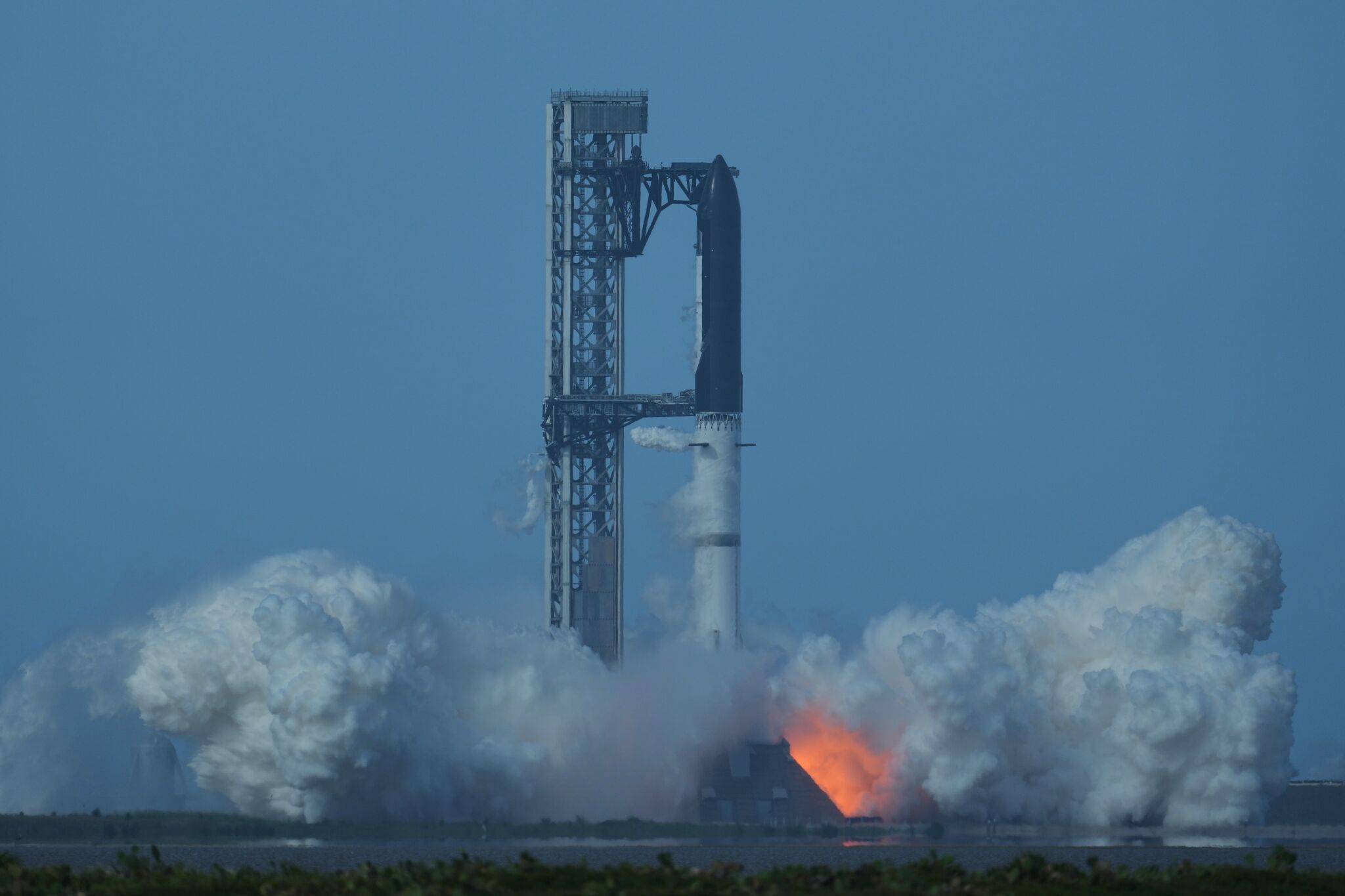
CEO Elon Musk said some engines failed to start, triggering an automatic abort of the launch. SpaceX came within a few seconds Thursday of Starship's 13th test flight and the first to deploy actual Starlink satellites, but the launch was aborted when some of the mega-rocket's engines failed to start. The Texas company's stock, which has been generally declining since its record initial public offering last month, fell sharply in after-hours trading. SpaceX said it will have to figure out what went wrong before making another attempt. "Some of the engines didn't start, triggering an automatic launch abort," CEO Elon Musk said later on X. "Next launch attempt hopefully in a few days." A dashboard showing the rocket's status during the SpaceX livestream of the planned launch indicated that only 29 of the Super Heavy Booster's 33 Raptor engines ignited. Though countdown holds to deal with such issues are not uncommon, SpaceX was unable to restart its countdown Thursday in part because there wasn't enough water. When the Super Heavy booster's Raptor engines briefly fired, they triggered the water deluge system under the rocket, which diffuses heat and vibration. Though the engines were immediately shut down, the system released thousands of gallons of water from tanks that need to be refilled before the next launch attempt. The launch team immediately began draining the fuel from the rocket. Twenty of SpaceX's newest and most advanced Starlinks were on board for release during the planned hourlong flight. The internet satellites were going to try communicating with Starlinks already in orbit while taking photos of Starship's heat shield. Neither the first-stage booster nor the upper-stage Starship spacecraft were meant to be recovered, with both ending up in the sea. NASA is counting on Starship to land its astronauts on the moon in the next few years. Delays in its development have already caused years of delays in the NASA program.
SpaceX Short Sellers Rack Up $3.88 Billion as Stock Falls Below IPO Price
This article first appeared on GuruFocus. SpaceX (NASDAQ:SPCX), Elon Musk's rocket, satellite, and artificial intelligence company, is facing mounting pressure as its stock trades near the $135 per-share price set in its initial public offering. Short sellers have generated approximately $3.88 billion in paper profits, according to data compiled by S3 Partners, after the shares fell as low as $132.15 and moved toward a fourth consecutive session of losses. The stock has also slipped below its IPO price for the first time, while bearish investors have continued increasing their positions as enthusiasm surrounding the newly public company appears to weaken. S3 Partners data show that roughly 181 million SpaceX shares, representing about 28% of the stock available for trading, have been sold short. Ihor Dusaniwsky of S3 Partners said this represents one of the highest short-interest levels recorded by a newly listed company during its first month of trading. Investors added nearly 37 million shares, valued at approximately $5 billion, to short positions over the past week as the stock continued to decline. SpaceX has now lost about one-third of its value since its June 16 closing high, erasing approximately $860 billion in market capitalization during that period. Investors are now focusing on the company's 13th Starship test flight, which could take place as soon as Thursday, along with SpaceX's first quarterly earnings report, which may be released in the coming weeks. The earnings report is expected to allow certain shareholders to sell their stock for the first time, beginning a period during which millions of additional shares could become available for trading. Dusaniwsky noted that the recent share-price weakness and expectations surrounding upcoming lockup expirations have contributed to increased short selling. These developments could keep SpaceX shares volatile as investors assess the rocket launch, the company's financial results, and the potential increase in tradable stock.

SpaceX Bears Gain as Stock Drops
This article first appeared on GuruFocus. SpaceX (NASDAQ:SPCX) short sellers have made an estimated $3.8 bilion in paper gains after the stock slid below its IPO price during a four-day losing streak. According to S3 Partners, short interest has climbed to 181 million shares, or about 28% of the company's 646 million-share tradable float. Shares have fallen 11% over the past 4 sessions, touching an intraday low of $132.15 before closing just above their $135 IPO price. Led by Elon Musk, who is also CEO of Tesla (NASDAQ:TSLA), SpaceX designs and launches rockets, operates the Starlink satellite internet network and develops spacecraft for commercial and government customers. The company is also building Starship, its next-generation launch system aimed at missions to the Moon and Mars. The recent pullback comes as investors wait for 2 major catalysts: SpaceX's 13th Starship test flight and its earnings report, expected in the first week of August.
SpaceX scrubs Starship launch attempt right as engines begin to light
SpaceX tried to get its 13th suborbital test flight of its Starship and Super Heavy rocket off the ground from Texas on Thursday, but its engines had an automatic shutdown just as they were beginning to fire with the countdown clock hitting 0. "We're not going to be launching today. We got all the way down to startup, triggered a hold on the booster, and that shut down the engines as they were starting to ignite," said SpaceX commentator Dan Huot. Teams will offload propellants and a new launch date will be announced at a later time. "We'll dig in with the teams, figure out what happened, and figure out when our next attempt is going to be," Huot said. The delay comes as the company attempts to drive toward its goal of beginning operational missions from Florida potentially before the end of the year. The massive rocket had been targeting launch during a 90-minute window that opened at 6:45 p.m. from the company's Starbase site on the southeast Texas coast. When it does eventually launch, the flight plan looks to send the Starship upper stage more than halfway around the world to land with a controlled splashdown in the Indian Ocean off the coast of western Australia while the Super Heavy booster will try for a controlled landing in the Gulf shortly after liftoff and separation. The launch comes about two months since the 12th test flight that was the first time Elon Musk's company flew Version 3 of the rocket. That mission suffered an uncontrolled landing of its booster in the Gulf that ultimately led to the rocket's grounding by the Federal Aviation Administration. The required mishap investigation that was led by SpaceX was accepted by the FAA, which announced Monday Starship was clear to fly again. "There have been several modifications to hardware and software to address issues seen on the previous flight," SpaceX stated on a mission update on its website. The company said that on the 12th flight after the booster separation, the engine setup and flip maneuver caused it to be off by about 90 degrees, which led to its failure and ultimate crash into the Gulf. Five of its 33 Raptor engines had issues as they tried to relight and that caused a planned "boostback burn" to end early. "The startup sequence has been modified to be more robust to timing variability and more reliably flip in the desired direction, which is done to increase overall performance," SpaceX stated. "The Super Heavy on this upcoming flight has hardware modifications to improve re-light reliability along with updates to engine alarms and aborts to match the conditions seen in the multi-engine flight environment." While the booster failed to make a controlled return on Flight 12, the upper stage achieved its goals of getting to the landing site in the Indian Ocean, although minus one of the three Raptor vacuum engines, which was lost about 40 seconds after stage separation. "The vehicle was able to demonstrate its engine out capability and reach its planned suborbital trajectory," SpaceX stated. "Several hardware and operational modifications have been made to address the interconnected causes with additional reliability improvements planned in upcoming versions of the Raptor engine." Something new on this mission will be the deployment of real Starlink satellites during flight. Previous Starship test flights have tried out simulators deployed during the suborbital missions. These large V3 satellites, which are too big for launches on SpaceX's current Falcon 9 rockets, will have a test run during which they will attempt to extend their solar array and antennas, and connect to the existing Starlink satellite constellation using high-capacity lasers. The Starlink satellites' lives will be short-lived, though, as they follow the Starship upper stage after deployment for an eventual reentry into the Earth's atmosphere to crash down over the Indian Ocean about 20 minutes after their deployment. Six of the 20 satellites also have cameras on board to scan Starship's heat shield, which continues to be modified for the rocket's ultimate operational configuration. Those flights are slated to take place in Florida where SpaceX continues to build out three Starship launch towers. The first is at Kennedy Space Center's Launch Complex 39-A while two more are in the works at Cape Canaveral Space Force Station's Space Launch Complex 37. The Space Force in late 2025 indicated it was prepared to support the first Starship launch on the Space Coast by mid 2026 while SpaceX has stated it would still try to launch before the end of the year. SpaceX also is nearing completion of its Gigabay manufacturing site at KSC where it will build out future Starship upper stages and Super Heavy boosters, part of a $1.8 billion investment in Space Coast operations. The first flights from KSC, though, will feature rockets shipped over from Texas until Florida's Gigabay is up and running. SpaceX ultimately is aiming for as many as 120 flights a year from across the three launch pads in Florida, a number that has raised criticism for its impact on commercial airspace. Also of concern has been its sonic boom potential during both booster landings and upper stage Starship return-to-launch-site flights that would bring it across Central Florida similar to how the space shuttle used to land back at KSC. The rocket is the most powerful to ever launch to space with nearly 17 million pounds of thrust at liftoff, nearly doubling the power of NASA's Space Launch System rocket. Starship's first test flight came in April 2023 and progress seemed to be on a good trajectory with the company managing to capture its first Super Heavy booster back at the launch tower using its swiveling "chopsticks" arms on its fifth-ever launch in October 2024. Flights in early 2025, though, ended in a series of failures including two in which the Starship upper stage disintegrated in a fiery cascade of debris across the skies visible from Florida and the Caribbean. It ended 2025, though, with two successful test flights using Version 2 of Starship followed by more than a seven-month lull before the first launch of Version 3 in May of this year. NASA is eagerly awaiting operational Starship flights as a version of the rocket is tasked to become a moon lander as part of the Artemis program. The Artemis III mission planned for mid 2027 is seeking to test out a crewed Orion spacecraft's ability to dock with a pathfinder version of Starship as well as Blue Origin's Blue Moon MK2 lander. Blue Origin, though, has to get its Canaveral launch site rebuilt after a New Glenn rocket exploded on the pad during a test hot fire earlier this year.

SpaceX scrubs Starship launch attempt right as engines begin to light
By clicking submit, I authorize Arcamax and its affiliates to: (1) use, sell, and share my information for marketing purposes, including cross-context behavioral advertising, as described in our Privacy Policy , (2) add to information that I provide with other information like interests inferred from web page views, or data lawfully obtained from data brokers, such as past purchase or location data, or publicly available data, (3) contact me or enable others to contact me by email or other means with offers for different types of goods and services, and (4) retain my information while I am engaging with marketing messages that I receive and for a reasonable amount of time thereafter. I understand I can opt out at any time through an email that I receive, or by clicking here SpaceX tried to get its 13th suborbital test flight of its Starship and Super Heavy rocket off the ground from Texas on Thursday, but its engines had an automatic shutdown just as they were beginning to fire with the countdown clock hitting zero. "We're not going to be launching today. We got all the way down to startup, triggered a hold on the booster, and that shut down the engines as they were starting to ignite," said SpaceX commentator Dan Huot. Teams will offload propellants and a new launch date will be announced at a later time. "We'll dig in with the teams, figure out what happened, and figure out when our next attempt is going to be," Huot said. The delay comes as the company attempts to drive toward its goal of beginning operational missions from Florida potentially before the end of the year. The massive rocket had been targeting launch during a 90-minute window that opened at 6:45 p.m. from the company's Starbase site on the southeast Texas coast. When it does eventually launch, the flight plan looks to send the Starship upper stage more than halfway around the world to land with a controlled splashdown in the Indian Ocean off the coast of western Australia while the Super Heavy booster will try for a controlled landing in the Gulf shortly after liftoff and separation. The launch comes about two months since the 12th test flight that was the first time Elon Musk's company flew Version 3 of the rocket. That mission suffered an uncontrolled landing of its booster in the Gulf that ultimately led to the rocket's grounding by the Federal Aviation Administration. The required mishap investigation that was led by SpaceX was accepted by the FAA, which announced Monday Starship was clear to fly again. "There have been several modifications to hardware and software to address issues seen on the previous flight," SpaceX stated on a mission update on its website. The company said that on the 12th flight after the booster separation, the engine setup and flip maneuver caused it to be off by about 90 degrees, which led to its failure and ultimate crash into the Gulf. Five of its 33 Raptor engines had issues as they tried to relight and that caused a planned "boostback burn" to end early. "The startup sequence has been modified to be more robust to timing variability and more reliably flip in the desired direction, which is done to increase overall performance," SpaceX stated. "The Super Heavy on this upcoming flight has hardware modifications to improve re-light reliability along with updates to engine alarms and aborts to match the conditions seen in the multi-engine flight environment." While the booster failed to make a controlled return on Flight 12, the upper stage achieved its goals of getting to the landing site in the Indian Ocean, although minus one of the three Raptor vacuum engines, which was lost about 40 seconds after stage separation. "The vehicle was able to demonstrate its engine out capability and reach its planned suborbital trajectory," SpaceX stated. "Several hardware and operational modifications have been made to address the interconnected causes with additional reliability improvements planned in upcoming versions of the Raptor engine." Something new on this mission will be the deployment of real Starlink satellites during flight. Previous Starship test flights have tried out simulators deployed during the suborbital missions. These large V3 satellites, which are too big for launches on SpaceX's current Falcon 9 rockets, will have a test run during which they will attempt to extend their solar array and antennas, and connect to the existing Starlink satellite constellation using high-capacity lasers. The Starlink satellites' lives will be short-lived, though, as they follow the Starship upper stage after deployment for an eventual reentry into the Earth's atmosphere to crash down over the Indian Ocean about 20 minutes after their deployment. Six of the 20 satellites also have cameras on board to scan Starship's heat shield, which continues to be modified for the rocket's ultimate operational configuration. Those flights are slated to take place in Florida where SpaceX continues to build out three Starship launch towers. The first is at Kennedy Space Center's Launch Complex 39-A while two more are in the works at Cape Canaveral Space Force Station's Space Launch Complex 37. The Space Force in late 2025 indicated it was prepared to support the first Starship launch on the Space Coast by mid 2026 while SpaceX has stated it would still try to launch before the end of the year. SpaceX also is nearing completion of its Gigabay manufacturing site at KSC where it will build out future Starship upper stages and Super Heavy boosters, part of a $1.8 billion investment in Space Coast operations. The first flights from KSC, though, will feature rockets shipped over from Texas until Florida's Gigabay is up and running. SpaceX ultimately is aiming for as many as 120 flights a year from across the three launch pads in Florida, a number that has raised criticism for its impact on commercial airspace. Also of concern has been its sonic boom potential during both booster landings and upper stage Starship return-to-launch-site flights that would bring it across Central Florida similar to how the space shuttle used to land back at KSC. The rocket is the most powerful to ever launch to space with nearly 17 million pounds of thrust at liftoff, nearly doubling the power of NASA's Space Launch System rocket. Starship's first test flight came in April 2023 and progress seemed to be on a good trajectory with the company managing to capture its first Super Heavy booster back at the launch tower using its swiveling "chopsticks" arms on its fifth-ever launch in October 2024. Flights in early 2025, though, ended in a series of failures including two in which the Starship upper stage disintegrated in a fiery cascade of debris across the skies visible from Florida and the Caribbean. It ended 2025, though, with two successful test flights using Version 2 of Starship followed by more than a seven-month lull before the first launch of Version 3 in May of this year. NASA is eagerly awaiting operational Starship flights as a version of the rocket is tasked to become a moon lander as part of the Artemis program. The Artemis III mission planned for mid-2027 is seeking to test out a crewed Orion spacecraft's ability to dock with a pathfinder version of Starship as well as Blue Origin's Blue Moon MK2 lander. Blue Origin, though, has to get its Canaveral launch site rebuilt after a New Glenn rocket exploded on the pad during a test hot fire earlier this year.
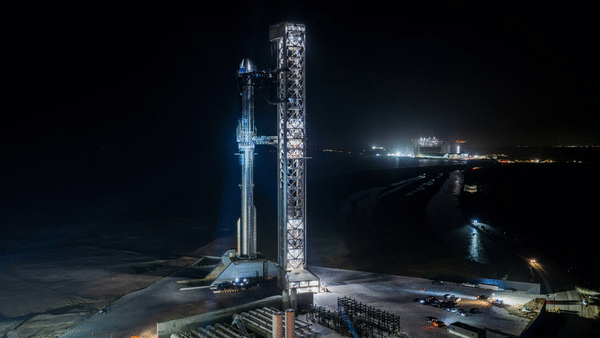
SpaceX vs. Rocket Lab: Which Is the Better Space Stock to Buy Right Now?
Space stocks are on many investors' minds these days, but going all-in on this sector right now comes with considerable risk, as most rocket stocks are volatile. Still, two stocks that are no doubt near the top of many investors' watch lists are Space Exploration Technologies (NASDAQ: SPCX) and Rocket Lab (NASDAQ: RKLB). Here's which one looks like the better buy right now. Missed Nvidia in 2009? This Rare Signal Is Flashing Again. In 2009, a "Double Down" signal flashed for a little-known chipmaker called Nvidia. For the first time in years, that same "Total Conviction" signal is flashing for a company 1/100th the size of Nvidia. Continue " Image source: Getty Images. The case for SpaceX What was once just a rocket company has morphed into an expanding technology behemoth with its sights set on both the space and artificial intelligence (AI) markets. SpaceX has highly ambitious goals for both, including colonizing Mars, launching orbital data centers, expanding its Starlink satellite internet business, and building what some analysts are calling a "sovereign AI" platform in which the company controls the AI model, chip designs, processor manufacturing, and everything in between. That's part of the appeal of SpaceX for some investors -- the company is trying big things, like developing its Starship rocket, which it says will reduce the costs of putting payloads into orbit by at least 90%, or deploying a constellation of data center satellites. Morningstar research puts the total addressable market for its Starlink connectivity business at $129 billion. And the company is making headway on some of its goals. It has 12 million Starlink internet subscribers and generated $1.9 billion in operating profit from that business in the most recent quarter. SpaceX is also making progress with its neocloud business, which leases data center capacity (Earth-bound, for now) to tech companies including Alphabet and Anthropic. That business has already signed more than $81 billion in contracts. And then there's the potential for SpaceX to merge with Elon Musk's other large company, Tesla. That could expand SpaceX's opportunities into the autonomous vehicle and humanoid robot markets, the latter of which could be worth $3 trillion by 2050, according to a Morgan Stanley forecast. The case for Rocket Lab There's some overlap between Rocket Lab and SpaceX, though Rocket Lab isn't building AI data centers or planning to merge with a humanoid robotics company (as of now). The company is instead mostly focused on launching rockets for its customers and on expanding its satellite communications network through its recently announced purchase of Iridium Communications. Rocket Lab has agreed to pay $8 billion for Iridium, and is expected to close on the deal next year, giving it 2.5 million satellite-based mobile subscribers. The service is mainly geared toward the private and government sectors, in contrast to Starlink, which caters more to customers who want at-home internet service. Iridium is profitable, with $114 million in net earnings last year, and the deal will help Rocket Lab expand its satellite communications network to better compete with SpaceX. But Rocket Lab's primary business is sending payloads into space, and in the first quarter, the company signed 31 new deals, selling more launches than it did in all of 2025. The company also has some major launch contracts already signed, including with the U.S. government to establish the satellite system for the proposed Golden Dome missile defense system. It also has contracts for missile tracking and military communications. Verdict: Rocket Lab is the better stock to buy right now While Rocket Lab isn't profitable, its loss of $0.07 per share in Q1 was an improvement from its loss of $0.12 per share in the prior-year quarter. Revenue is also growing at a healthy clip, rising 64% to $200 million. In contrast, SpaceX's sales rose just 15% in Q1 to $4.7 billion, and the company's loss of $3.29 per share was dramatically worse than its $0.41 per share loss in the year-ago quarter. SpaceX's massive losses have been fueled by sharp increases in its capital expenditures, which reached $10 billion in Q1 2026 alone, compared to $27 billion for all of 2025. That heavy spending should give investors pause, and so should the lofty valuation of its stock. SpaceX trades at a price-to-sales (P/S) ratio of about 94 compared to Rocket Lab's P/S ratio of 66. While neither stock is cheap, SpaceX's shares trade at a much higher premium even as the company ramps up spending and its losses widen. All of which means that Rocket Lab looks like the better space stock to buy right now. Don't miss this second chance at a potentially lucrative opportunity Ever feel like you missed the boat in buying the most successful stocks? Then you'll want to hear this. On rare occasions, our expert team of analysts issues a "Double Down" stock recommendation for companies that they think are about to pop. If you're worried you've already missed your chance to invest, now is the best time to buy before it's too late. And the numbers speak for themselves: * Nvidia: if you invested $1,000 when we doubled down in 2009, you'd have $550,021!* * Apple: if you invested $1,000 when we doubled down in 2008, you'd have $60,010!* * Netflix: if you invested $1,000 when we doubled down in 2004, you'd have $396,542!* Right now, we're issuing "Double Down" alerts for three incredible companies, available when you join Stock Advisor, and there may not be another chance like this anytime soon. See the 3 stocks " *Stock Advisor returns as of July 16, 2026. Chris Neiger has no position in any of the stocks mentioned. The Motley Fool has positions in and recommends Alphabet, Rocket Lab, and Tesla. The Motley Fool has a disclosure policy. The views and opinions expressed herein are the views and opinions of the author and do not necessarily reflect those of Nasdaq, Inc.

SpaceX shares slide below IPO price for first time - Peoples Gazette Nigeria
Elon Musk-owned SpaceX's shares stumbled below their initial public offering (IPO) price for the first time on Wednesday, just over a month after the company went public. The process made the South African-born businessman the world's first trillionaire. According to Reuters, the share price stumbled as low as $132.28 -- below the $135 IPO price on Wednesday -- before crawling back to close the day's trading at $135.27. According to experts, the fall was a reminder that enthusiasm on Wall Street can wane rapidly after the rockets-to-AI firm raised $85.7 billion and briefly propelled the company to a market value of more than $2.6 trillion, surpassing technology giants such as Microsoft and Amazon. However, SpaceX's market value dropped sharply to $1.78 trillion on Wednesday afternoon before slowly recovering. Despite the share price closing 28 cents above its IPO price, it marked a 40 per cent decline from a high of $225.64 reached shortly after the stock started trading. Meanwhile, Justus Parmar, chief executive officer of SpaceX investor Fortuna Investments, attributed the shares' decline to investors liquidating their holdings in large numbers. Interactive Brokers' chief market analyst, Steve Sosnick, stated, "There hasn't been anything lately to remind people of some of the catalysts for why they bought SpaceX. The fact that a stock has fallen a couple of dollars below its IPO price in itself is not a tragedy, but SpaceX is heavily watched and has an important role in investor psyche."
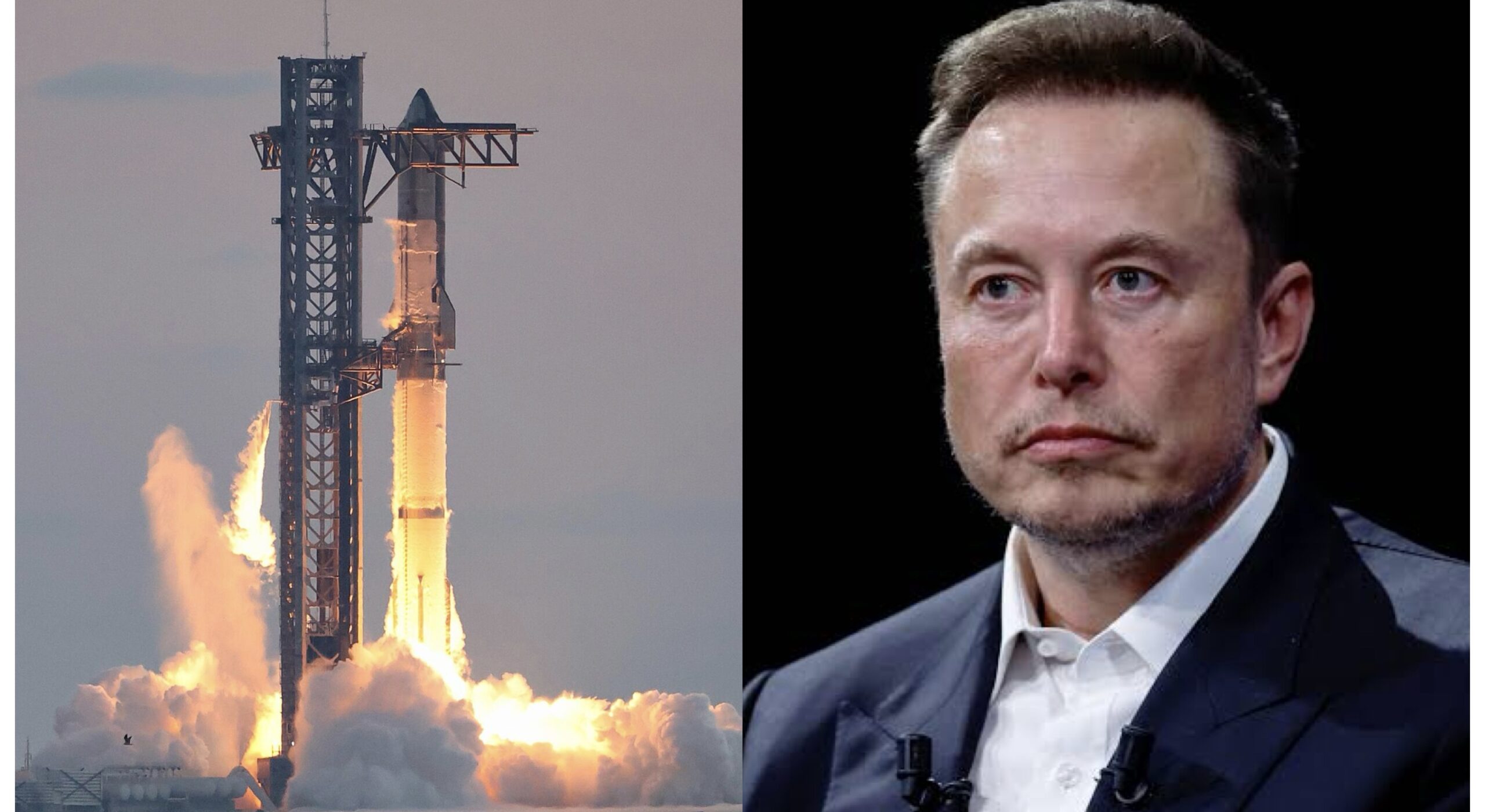
SpaceX vs. Rocket Lab: Which Is the Better Space Stock to Buy Right Now?
Space stocks are on many investors' minds these days, but going all-in on this sector right now comes with considerable risk, as most rocket stocks are volatile. Still, two stocks that are no doubt near the top of many investors' watch lists are Space Exploration Technologies (NASDAQ: SPCX) and Rocket Lab (NASDAQ: RKLB). Here's which one looks like the better buy right now. Missed Nvidia in 2009? This Rare Signal Is Flashing Again. In 2009, a "Double Down" signal flashed for a little-known chipmaker called Nvidia. For the first time in years, that same "Total Conviction" signal is flashing for a company 1/100th the size of Nvidia. Continue " The case for SpaceX What was once just a rocket company has morphed into an expanding technology behemoth with its sights set on both the space and artificial intelligence (AI) markets. SpaceX has highly ambitious goals for both, including colonizing Mars, launching orbital data centers, expanding its Starlink satellite internet business, and building what some analysts are calling a "sovereign AI" platform in which the company controls the AI model, chip designs, processor manufacturing, and everything in between. That's part of the appeal of SpaceX for some investors -- the company is trying big things, like developing its Starship rocket, which it says will reduce the costs of putting payloads into orbit by at least 90%, or deploying a constellation of data center satellites. Morningstar research puts the total addressable market for its Starlink connectivity business at $129 billion. And the company is making headway on some of its goals. It has 12 million Starlink internet subscribers and generated $1.9 billion in operating profit from that business in the most recent quarter. SpaceX is also making progress with its neocloud business, which leases data center capacity (Earth-bound, for now) to tech companies including Alphabet and Anthropic. That business has already signed more than $81 billion in contracts. And then there's the potential for SpaceX to merge with Elon Musk's other large company, Tesla. That could expand SpaceX's opportunities into the autonomous vehicle and humanoid robot markets, the latter of which could be worth $3 trillion by 2050, according to a Morgan Stanley forecast. The case for Rocket Lab There's some overlap between Rocket Lab and SpaceX, though Rocket Lab isn't building AI data centers or planning to merge with a humanoid robotics company (as of now). The company is instead mostly focused on launching rockets for its customers and on expanding its satellite communications network through its recently announced purchase of Iridium Communications.
SpaceX to launch giant starship rocket in first flight since IPO
Success could lead to the first orbital mission and supports NASA contracts worth US$4 billion for moon landings by 2028. SpaceX will attempt a major test flight of its massive Starship rocket on July 16, a milestone for a vehicle that's a critical part of Elon Musk's plans for the space, satellite and artificial intelligence conglomerate. The launch, targeted for 5.45pm local time (6.45am on July 17 Singapore time) from SpaceX's Starbase facility in South Texas, marks the second flight of the latest iteration of the rocket, dubbed Version 3 or V3. The rocket will be carrying to space upgraded Starlink satellites that are intended to burn up later in the atmosphere as part of the test mission. The rocket is central to Musk's ambitions to put data centres in space, expand the Starlink communications network and send humans to the moon and Mars. But it has faced a rocky development path marred by explosive setbacks, malfunctions and delays. The Starship test is the rocket's 13th flight and first since SpaceX's blockbuster initial public offering in June that raised some US$86 billion (S$111 billion). Shares of SpaceX soared shortly after their debut but more recently slumped, closing on July 15 near its IPO price of US$135. Despite the decline, Wall Street analysts still remain largely bullish on the stock. Musk's company has designed Starship to be fully reusable, something no other rocket maker has achieved, with both the Super Heavy booster and the Starship spacecraft intended to return to Earth intact after each launch so they can fly to space again. Musk has predicted that SpaceX could achieve full reusability with the upgraded V3 rocket before the end of the year. SpaceX has spent more than US$15 billion developing Starship. During the most recent test flight in May, Starship successfully deployed mock satellites, although the rocket's booster spun out of control and one of its engines shut down early. SpaceX has since made hardware and software modifications to correct these issues, according to a post on the company's website. "We believe that if SpaceX can keep all major engines healthy, execute the planned relight and landing sequence, and bring back stronger heat-shield and control-surface data, Flight 13 would represent a meaningful step beyond Flight 12," said Raymond James analyst Brian Gesuale in a note on July 13. Starship becoming operational "is the critical path to the SpaceX investment thesis," he added. A successful Starship test could also lead to the company attempting to reach orbit with the vehicle for the first time on the next flight, according to Stifel analyst Jonathan Siegmann. SpaceX holds US$4 billion worth of NASA contracts for Starship to land astronauts on the moon as soon as 2028. To do so, SpaceX will have to refuel the vehicle in space, launch it a dozen times or more in a row and ensure the vehicle is safe to hold humans - a demanding list of tasks for a vehicle which has yet to complete a full orbital mission. The July 16 flight plan will look similar to previous test missions. At lift-off, the Super Heavy booster will ignite 33 Raptor engines and send Starship on its way to space, where it will reach near orbital speeds. The booster will separate from Starship and then attempt to splash down in the Gulf of Mexico. While in space, Starship will attempt a number of tests, including relighting one of its engines and deploying 20 Starlink satellites. These satellites will extend their solar arrays and attempt to connect to the broader Starlink network using laser-based communications. About 20 minutes after deployment, the satellites should fall back to Earth, burning up in the atmosphere. About an hour after liftoff, Starship is scheduled to splash down in the Indian Ocean. BLOOMBERG
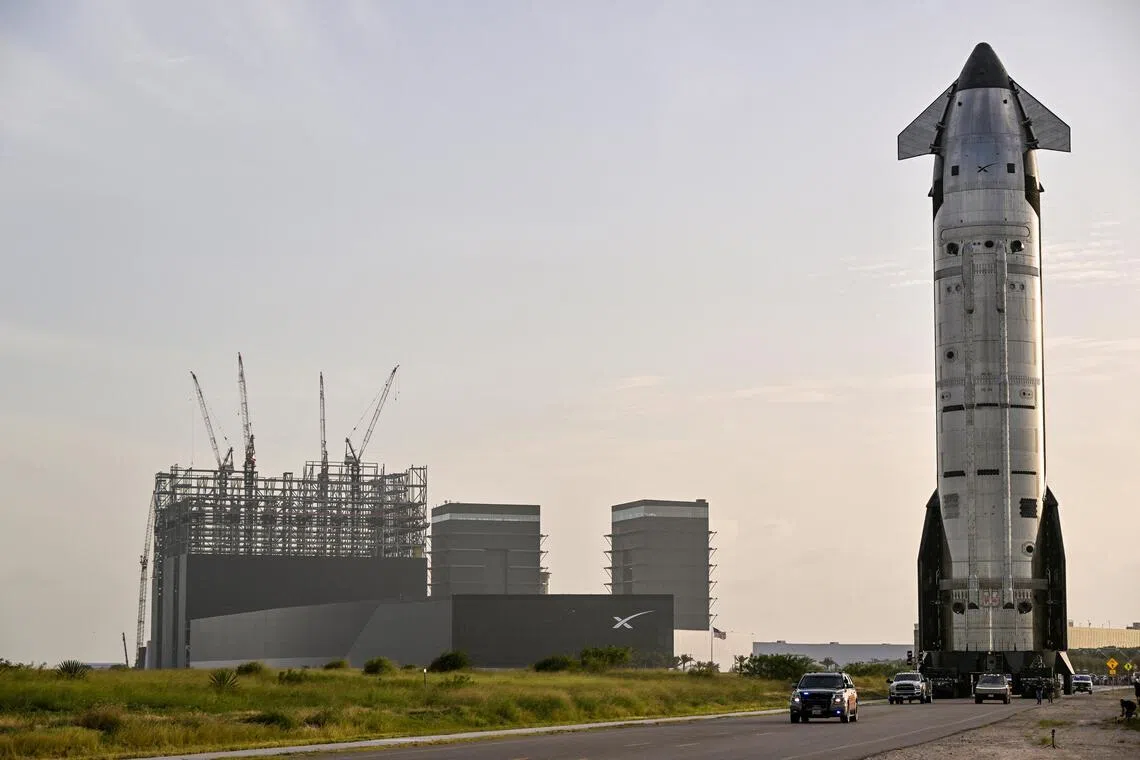
Elon Musk loses trillionaire status as SpaceX stock deflates -- and Wisconsin officials want him investigated for election 'bribery' | Fortune
📬 Would you prefer to receive this information in your email inbox every morning before the markets open in New York? Sign up here. SpaceX loses $1 trillion in market cap as tech stocks lead sharp declines in Asia and Europe Asian markets led a global selloff in the stock markets today as the central bank of South Korea raised its interest rates and warned there would be more rate hikes to come, to fight off persistent inflation. Asia is particularly exposed to increasing oil prices caused by the Iran war because it imports much of its fuel. The tech-heavy KOSPI was down 6.37% today, sinking deeper into correction territory -- it has shed 21.84% over the last month. Nasdaq 100 futures are down 0.19% this morning prior to the open in New York. SpaceX was down 0.6% at the close yesterday and although it gained 0.37% in overnight trading the stock has lost more than $1 trillion in value since its peak price of $225 per share. The stock dipped below its IPO launch price of $135, recovering to just $135.27. The downward drift of the stock means that Elon Musk is no longer technically a trillionaire. He's worth "only" $856 billion today, according to Bloomberg's billionaire index. * S&P 500 futures were flat this morning. The index rose 0.38% yesterday. * In Europe, the Stoxx 600 was down 0.26% in early trading and the U.K.'s FTSE 100 was down 0.37% before lunch. * Asia: South Korea's KOSPI was down 6.37%. Japan's Nikkei 225 was down 2.79%. India's Nifty 50 was up 0.15%. China's CSI 300 was down 1.85%. * Brent crude was $84 per barrel this morning, down from a high of $86 yesterday. * Bitcoin was $64K. MORE FROM FORTUNE The MacKenzie Scott paradox: How a bull market lets billionaires give away tens of billions without getting poorer - Sydney Lake As banks post blowout earnings, CEOs reckon with America's inequality gap - Diane Brady Klook cofounder Ethan Lin thinks the U.S. can help grow one of Asia's largest travel platforms - Angelica Ang 'We did not adapt and move quickly enough': IBM CEO's admission of weakness fails to prevent historic 25% stock crash - Tatiana Sataua Why IBM just suffered its worst stock crash of all time -- and what it says about the market's two bubbles - Nick Lichtenberg LAPD was one of Flock Safety's biggest government customers. Now it's renegotiating its partnership over 'serious concerns around civil liberties' - Sasha Rogelberg Chipotle is trying to take over Mexico through its softest border town - Mia Osmonbekov Pete Hegseth wants to test troops for 'testosterone deficiency' -- literally - AP ONE BIG THING Hiding in plain sight: Disney's $3 billion cruise ship business Disney has historically refused to describe in detail the revenues earned by its growing cruise ship business. Its CFO, Hugh Johnston, has declined to do so on previous earnings calls. "We don't break out cruise ships," explained Hugh Johnston on its Q3 call last year. But Fortune's Christian Sylt can reveal that a Disney filing in the U.K. -- where its ships are based for tax reasons -- reveals that cruise revenue passed the $3 billion mark last year for the first time, fuelled by the addition of a sixth ship to its fleet as part of a $12 billion expansion. * Read all the details here. CRUDE REALITY Why is oil so cheap? The price of oil is $84 per barrel this morning, which is bad enough (before the war with Iran started it was just over $60). Following the outbreak of the hostilities, it peaked at $114. So one question is, why is the price of oil so low? After all, the Strait of Hormuz is now in its sixth month of total or partial closure. The supply of oil is more constrained than ever, but its price is nowhere near peak pessimism. One reason for that is that, in fact, the world still has an unusually large amount of stored oil on hand, as this chart from Bridget Payne of Oxford Economics shows. "Despite record drawdowns, total global oil inventories remain above their recent historical average, continuing to reduce the risk of an acute crude shortage. However, much of this buffer is held as crude and offers limited protection against lower refinery output, weaker middle-distillate yields, and the loss of major diesel exporters" such as Russia. She warns that the Strait could be closed for much of the rest of the year. IRAN Trump considers boots-on-the-ground escalation of war against Iran President Trump is considering an escalation of the war against Iran, and has been briefed on options such an invasion of Kharg Island (long a Trump obsession) or bombing "Pickaxe Mountain," a nuclear site with an underground tunnel complex, according to the Wall Street Journal. The Kharg operation would put U.S. boots on the ground in Iranian territory. Over the last 24 hours, Iran attacked U.S. sites in Jordan, Kuwait and Bahrain. The U.S. continued a wave of attacks on Iranian coastal sites to "further degrade Iran's ability to threaten innocent mariners" in the Strait of Hormuz," Centcom said. The U.S. also disabled an oil tanker in the Gulf. What Iran says: "As long as the United States does not accept the Iranian legal system, this strait will remain closed," according to the semi-official Iranian Students' News Agency. TRUMPWORLD Dan Ives' new merchant bank has longstanding ties to Trump Media & Technology Group When tech bull analyst Dan Ives announced he was leaving Wedbush to start what he described as a "modern merchant bank for the age of AI," many were puzzled by the news. Ives is possibly the most famous tech stock analyst in the U.S. and he is a regular on CNN. It was also not entirely clear why the world of AI needs a merchant bank, given that AI companies have not had difficulty finding investment capital. The FT has shone some light on the situation. The bank will be named "Yorkville Ives." The Yorkville name refers to Yorkville Securities or Yorkville Advisors, the New Jersey-based group that has bankrolled Trump Media & Technology Group, the company that owns Truth Social and a host of video streaming services. TMTG's stock is down 27.72% year-to-date. Fortune's archive has a ton of stories on Yorkville and its dealings with the Trump empire. Here are three of them: CHART OF THE DAY Countries ranked by average inflation since COVID If you think inflation is bad in the U.S. or Europe, remember, it could be worse. Argentina and Turkey have both had the worst inflation since the pandemic. The best performers, however, are Switzerland and China, both of which have had inflation near 1% throughout. "Switzerland remains in a league of its own," says Deutsche Bank's Jim Reid in an email. "It's the only country globally to have seen CPI average below 2% since the end of Bretton Woods (>1971), and since Covid inflation has averaged just 1%." NUMBER OF THE DAY 1,000 The number of terawatt hours of electricity AI data centers will need by 2030 -- double the amount they consume today, according to Alpine Macro's Kelly Xu. The biggest source of that extra energy will be renewable, Xu estimates: "Renewables are expected to account for roughly 40% of additional electricity generation for data centers between 2025 and 2030 and more than one-third of the data center power mix by 2030." THE FRONT PAGES TODAY Dimon Warns of Broad Mythos Access, Calling It a Real Issue - Bloomberg Goldman's Former Top Lawyer Calls Epstein a 'Masterful Liar' - NYT TSMC to invest additional $100 billion in Arizona after second-quarter profit soars 77% - CNBC Trump imposes 25% tariffs on Brazilian goods - Axios The AI Backlash Has Tech Executives Fearing for Their Lives - WSJ JD Vance tells Joe Rogan Israel wants to keep Iran war going 'indefinitely,' Trump admin 'screwed up' on Epstein files - NY Post ONE MORE THING Wisconsin election panel asks prosecutors to probe Elon Musk over "bribery" allegations Remember when Elon Musk handed out money to people in Wisconsin if they promised to vote for his favored state Supreme Court candidates? That was probably illegal, a bipartisan panel has found. Musk likely broke Wisconsin law when he promised to hand out $1 million checks to voters in the 2025 election, according to the Wisconsin Elections Commission. The panel last week referred two complaints to the Brown County district attorney's office, according to the AP. Musk potentially faces criminal charges for election bribery. Prosecutors have 40 days to report back to the commission.

SpaceX to launch giant starship rocket in first flight since IPO
SpaceX will attempt a major test flight of its massive Starship rocket on Thursday, a milestone for a vehicle that's a critical part of Elon Musk's plans for the space, satellite and artificial intelligence conglomerate. The launch, targeted for 5:45 p.m. local time from SpaceX's Starbase facility in South Texas, marks the second flight of the latest iteration of the rocket, dubbed Version 3 or V3. The rocket will be carrying to space upgraded Starlink satellites that are intended to burn up later in the atmosphere as part of the test mission. The rocket is central to Musk's ambitions to put data centres in space, expand the Starlink communications network and send humans to the moon and Mars. But it has faced a rocky development path marred by explosive setbacks, malfunctions and delays. The Starship test is the rocket's 13th flight and first since SpaceX's blockbuster initial public offering in June that raised some $86 billion. Shares of SpaceX soared shortly after their debut but more recently slumped, closing on July 15 near its IPO price of $135. Despite the decline, Wall Street analysts still remain largely bullish on the stock. Musk's company has designed Starship to be fully reusable, something no other rocket maker has achieved, with both the Super Heavy booster and the Starship spacecraft intended to return to Earth intact after each launch so they can fly to space again. Musk has predicted that SpaceX could achieve full reusability with the upgraded V3 rocket before the end of the year. SpaceX has spent more than $15 billion developing Starship. During the most recent test flight in May, Starship successfully deployed mock satellites, although the rocket's booster spun out of control and one of its engines shut down early. SpaceX has since made hardware and software modifications to correct these issues, according to a post on the company's website. "We believe that if SpaceX can keep all major engines healthy, execute the planned relight and landing sequence, and bring back stronger heat-shield and control-surface data, Flight 13 would represent a meaningful step beyond Flight 12," said Raymond James analyst Brian Gesuale in a note on July 13. Starship becoming operational "is the critical path to the SpaceX investment thesis," he added. A successful Starship test could also lead to the company attempting to reach orbit with the vehicle for the first time on the next flight, according to Stifel analyst Jonathan Siegmann. SpaceX holds $4 billion worth of NASA contracts for Starship to land astronauts on the moon as soon as 2028. To do so, SpaceX will have to refuel the vehicle in space, launch it a dozen times or more in a row and ensure the vehicle is safe to hold humans -- a demanding list of tasks for a vehicle which has yet to complete a full orbital mission. Thursday's flight plan will look similar to previous test missions. At liftoff, the Super Heavy booster will ignite 33 Raptor engines and send Starship on its way to space, where it will reach near orbital speeds. The booster will separate from Starship and then attempt to splash down in the Gulf of Mexico. While in space, Starship will attempt a number of tests, including relighting one of its engines and deploying 20 Starlink satellites. These satellites will extend their solar arrays and attempt to connect to the broader Starlink network using laser-based communications. About 20 minutes after deployment, the satellites should fall back to Earth, burning up in the atmosphere. About an hour after liftoff, Starship is scheduled to splash down in the Indian Ocean. More stories like this are available on bloomberg.com ©2026 Bloomberg L.P. Published on July 16, 2026

SpaceX stock erases all its gains and slides below IPO price in intraday trading
SpaceX stock dropped below its initial public offering price for the first time on Wednesday, signaling dwindling hype around the Elon Musk company. Shares dipped below their IPO price of $135 on Wednesday morning for the first time since listing, a humbling loss for the stock, which had skyrocketed more than 50% in its first days of trading last month. The shares regained some ground later in the day, closing at $135.27. The initial offering gave the company a market cap of $2.2 trillion, making it one of the world's most valuable public companies. For a short period, the IPO also made owner Elon Musk the world's first trillionaire, though his net worth now is about $800 billion. On July 7, the company was added to the Nasdaq-100 after a rule change allowed companies to join 15 days after their IPOs. SpaceX raised a total of $86 billion after underwriters exercised their right to sell additional shares, on top of the $75 billion initially raised. It was the largest IPO in history. SpaceX, based near Austin, Texas, is the leading launch services company in the world, with its Falcon 9 rocket accounting for the vast majority of satellites launched last year. It is also the leading satellite-based broadband provider with its Starlink service. The extraordinary interest in the IPO was driven by Musk's plans to make the company an AI leader -- including plans to launch orbiting satellite data centers powered by the sun that crunch AI data. The company's headquarters moved from Hawthorne to Texas in 2024, but it retains large operations in the South Bay city and blasts off regularly from Vandenberg Space Force Base in Santa Barbara County. Since the IPO, SpaceX has used its newfound wealth to expand in the AI space. It announced last month that it was acquiring the AI coding startup Cursor for $60 billion, with the deal expected to close in the third quarter. The San Francisco company, founded in 2022, enables engineers to instruct software in English to run coding tasks autonomously. Musk also merged his xAI artificial intelligence company into SpaceX earlier this year. The combined entity recently announced it was leasing computing power to rivals Anthropic and Google at two terrestrial data centers it has constructed. Since the IPO, investors have expressed concerns about the company's spending plans and debt load. Even with the volatility of the last month, there's still more uncertainty to come. The stock could fall further as locked-up shares held by current and former employees are released.
Watch SpaceX's Starship flight 13 launch tonight
I agree my information will be processed in accordance with the Scientific American and Springer Nature Limited Privacy Policy. We leverage third party services to both verify and deliver email. By providing your email address, you also consent to having the email address shared with third parties for those purposes. SpaceX is gearing up to launch its Starship megarocket. On Thursday, no earlier than 6:45 P.M. EDT, Elon Musk's space company will attempt a thirteenth flight test of Starship that will see the rocket put through its paces once again. But as with its last test flight, Starship will not enter Earth orbit; nor will SpaceX try to catch the vehicle's Super Heavy V3 first stage. Instead, after helping Starship get to space, the technically reusable booster will attempt a controlled descent and landing at splashdown in the Gulf of Mexico. Overall, this flight will look much like the last one, which was largely a success. Riding atop the Super Heavy V3 booster, Starship will lift off from SpaceX's Starbase complex in Boca Chica, Texas. Its payload includes a cache of Starlink V3 satellites -- next-generation spacecraft that are the largest and heaviest yet launched for SpaceX's relentless expansion of its broadband internet mega constellation. Ultimately, SpaceX wants this flight to iron out the kinks that arose in the last test, chief among them performance issues with the Raptor engines that provide thrust for Starship and its booster. On supporting science journalism If you're enjoying this article, consider supporting our award-winning journalism by subscribing. By purchasing a subscription you are helping to ensure the future of impactful stories about the discoveries and ideas shaping our world today. The flight will also test various upgrades to Starship's heat shield -- one of the most crucial components for the spacecraft, which is designed to be fully reusable. That reusability, SpaceX hopes, will eventually allow the company to phase out its partially reusable workhorse rocket, the Falcon 9, in favor of launching Starships multiple times per day with a mass-to-orbit price tag that competitors can't beat. The system, in short, is SpaceX's all-in bet for continuing its global dominance of space launch and satellite communications. If successful, it could catapult the now-publicly traded company and the world alike into a revolutionary new era of spaceflight. SpaceX will have a 90-minute window in which to launch Starship, with a livestream of the rocket beginning some 30 minutes before liftoff on X, and SpaceX's website. Once in space, Starship will attempt to deploy its batch of 20 Starlink satellites. These will seek to connect to the Starlink network via laser-based communications; six of the satellites carry cameras to relay images of Starship's heat shield to engineers on the ground. All 20 satellites are expected to burn up in Earth's atmosphere about 20 minutes post-deployment. The whole test from launch to splashdown in the Indian Ocean should last just over an hour. Even without its core goal of full reusability, Starship would be extremely ambitious. It's SpaceX's largest vehicle -- indeed, the spacecraft is the world's largest rocket. Fully stacked with its booster, the vehicle is about 407 feet tall and has enough thrust to launch 100 metric tons of cargo into space. Leaving aside SpaceX's lofty business goals, NASA hopes to use Starship to further U.S. moon base ambitions as part of its Artemis program. If SpaceX can get a NASA-sponsored lunar-lander variant of Starship ready on time, the space agency could use it to send humans to the surface of the moon for the first time in more than 50 years as soon as 2028. A watchdog report published in March made plain that SpaceX wasn't keeping to schedule, however, and the space agency is also funding development of a Blue Origin lunar lander for the task. The clock is ticking for both companies: NASA's Artemis III, a crewed mission to test key capabilities for both vehicles in low-Earth orbit, is targeted for launch before the end of next year. But regardless of what happens on Starship's 13th flight, the vehicle -- and the nation -- still has a long and perilous ahead, with many more test flights to come before bringing astronauts to the moon, or anywhere else.
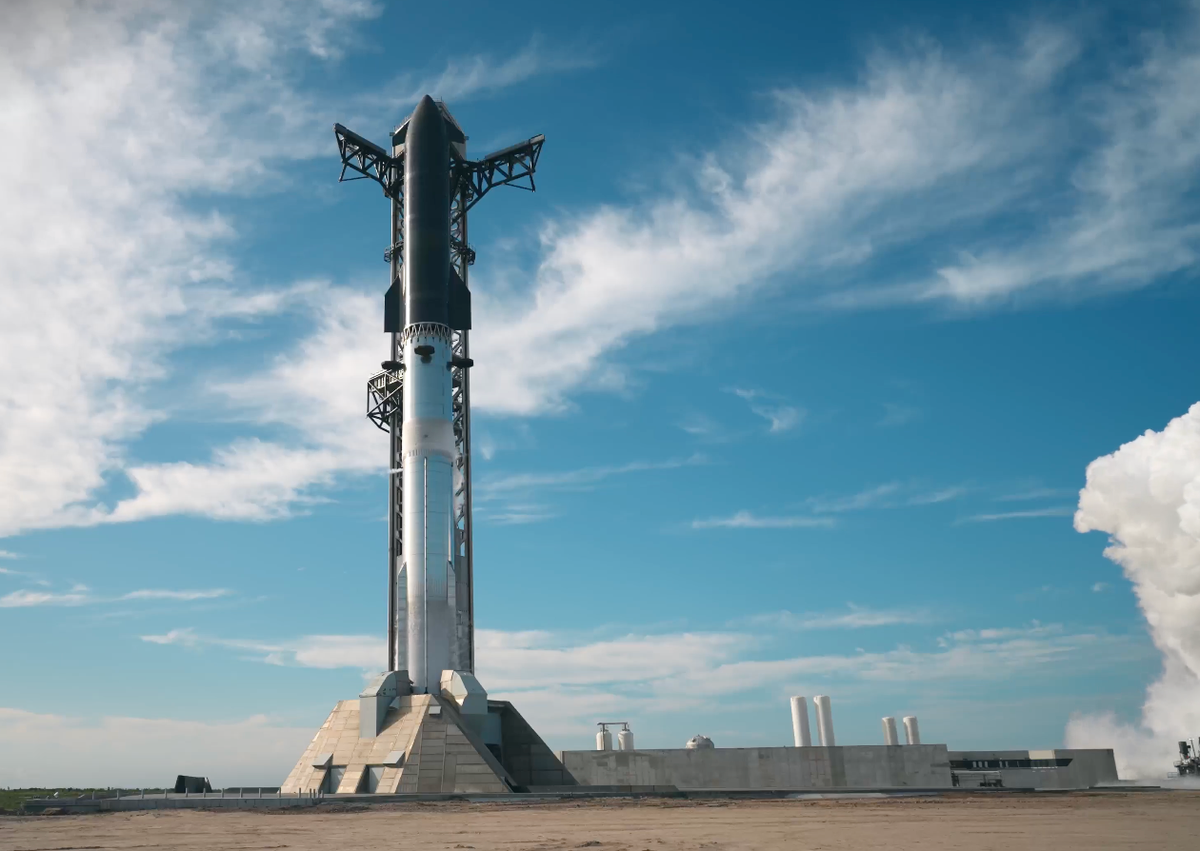
SpaceX vs. Rocket Lab: Which Is the Better Space Stock to Buy Right Now?
Space stocks are on many investors' minds these days, but going all-in on this sector right now comes with considerable risk, as most rocket stocks are volatile. Still, two stocks that are no doubt near the top of many investors' watch lists are Space Exploration Technologies (SPCX 0.59%) and Rocket Lab (RKLB 3.36%). Here's which one looks like the better buy right now. The case for SpaceX What was once just a rocket company has morphed into an expanding technology behemoth with its sights set on both the space and artificial intelligence (AI) markets. SpaceX has highly ambitious goals for both, including colonizing Mars, launching orbital data centers, expanding its Starlink satellite internet business, and building what some analysts are calling a "sovereign AI" platform in which the company controls the AI model, chip designs, processor manufacturing, and everything in between. That's part of the appeal of SpaceX for some investors -- the company is trying big things, like developing its Starship rocket, which it says will reduce the costs of putting payloads into orbit by at least 90%, or deploying a constellation of data center satellites. Morningstar research puts the total addressable market for its Starlink connectivity business at $129 billion. And the company is making headway on some of its goals. It has 12 million Starlink internet subscribers and generated $1.9 billion in operating profit from that business in the most recent quarter. SpaceX is also making progress with its neocloud business, which leases data center capacity (Earth-bound, for now) to tech companies including Alphabet and Anthropic. That business has already signed more than $81 billion in contracts. And then there's the potential for SpaceX to merge with Elon Musk's other large company, Tesla. That could expand SpaceX's opportunities into the autonomous vehicle and humanoid robot markets, the latter of which could be worth $3 trillion by 2050, according to a Morgan Stanley forecast. The case for Rocket Lab There's some overlap between Rocket Lab and SpaceX, though Rocket Lab isn't building AI data centers or planning to merge with a humanoid robotics company (as of now). The company is instead mostly focused on launching rockets for its customers and on expanding its satellite communications network through its recently announced purchase of Iridium Communications. Rocket Lab has agreed to pay $8 billion for Iridium, and is expected to close on the deal next year, giving it 2.5 million satellite-based mobile subscribers. The service is mainly geared toward the private and government sectors, in contrast to Starlink, which caters more to customers who want at-home internet service. Iridium is profitable, with $114 million in net earnings last year, and the deal will help Rocket Lab expand its satellite communications network to better compete with SpaceX. But Rocket Lab's primary business is sending payloads into space, and in the first quarter, the company signed 31 new deals, selling more launches than it did in all of 2025. The company also has some major launch contracts already signed, including with the U.S. government to establish the satellite system for the proposed Golden Dome missile defense system. It also has contracts for missile tracking and military communications. Verdict: Rocket Lab is the better stock to buy right now While Rocket Lab isn't profitable, its loss of $0.07 per share in Q1 was an improvement from its loss of $0.12 per share in the prior-year quarter. Revenue is also growing at a healthy clip, rising 64% to $200 million. In contrast, SpaceX's sales rose just 15% in Q1 to $4.7 billion, and the company's loss of $3.29 per share was dramatically worse than its $0.41 per share loss in the year-ago quarter. SpaceX's massive losses have been fueled by sharp increases in its capital expenditures, which reached $10 billion in Q1 2026 alone, compared to $27 billion for all of 2025. That heavy spending should give investors pause, and so should the lofty valuation of its stock. SpaceX trades at a price-to-sales (P/S) ratio of about 94 compared to Rocket Lab's P/S ratio of 66. While neither stock is cheap, SpaceX's shares trade at a much higher premium even as the company ramps up spending and its losses widen. All of which means that Rocket Lab looks like the better space stock to buy right now.

SpaceX Drops to $132.75 All-Time Low as Lockup Overhang and AI Repricing Weigh on SpaceX Stock
All reviews, research, news and assessments of any kind on The Tokenist are compiled using a strict editorial review process by our editorial team. Neither our writers nor our editors receive direct compensation of any kind to publish information on tokenist.com. Our company, Tokenist Media LLC, is community supported and may receive a small commission when you purchase products or services through links on our website. Click here for a full list of our partners and an in-depth explanation on how we get paid. SpaceX (NASDAQ: SPCX) touched an all-time low of $132.75 on July 15, 2026, breaching its $135 IPO price just five weeks after the stock first traded on June 12, where it debuted at $150, before closing at $135.27. The stock went on to hit its prior all-time high of $225.64 on June 16 and then slid again in the weeks that followed. The price action sets up one of the starkest analyst-vs-market disconnects in recent IPO history. According to Yahoo Finance analyst insights, 27 of the 31 Wall Street analysts covering SPCX rate it Buy or Strong Buy, with a consensus price target of $242, implying upside from the July 15 close. Three compounding structural forces are driving the gap: AI-linked valuations repricing broadly across the IPO cohort; lockup-related supply overhang; and post-IPO euphoria unwinding as early support fades. SpaceX Price Timeline: How $135 Became a Ceiling Instead of a Floor The mechanics of the decline begin with a distinction the market initially ignored: the IPO price of $135 per share was the institutional clearing price set alongside the offering, not the $150 at which SPCX debuted on June 12. The difference between those two figures represented immediate first-day euphoria - a premium that late retail buyers paid on top of what institutions received. The stock went on to close its first full trading day near $161 and briefly pushed to $225.64 on June 16 as momentum and AI-infrastructure positioning drove inflows, and has deteriorated in a near-uninterrupted sequence since. The breach of $135 on July 15 matters beyond symmetry. That level marked the IPO reference price beneath which investors who bought in the offering are now sitting at a loss. With early post-IPO market support fading, the stock is increasingly trading as a true secondary-market bid. Analyst Consensus vs. Current Price: Why 27 of 31 Buy Ratings Haven't Moved the Stock The 27-of-31 Buy consensus is real, but its signal value requires adjustment for IPO-specific distortions. The majority of the analyst pool covering SPCX includes banks that participated in the underwriting process, institutions whose research departments are structurally incentivized toward constructive ratings in the immediate post-IPO window. Needham, the most recent firm to publish, maintained its Buy and raised its price target to $250 from $200 as of this week. Evercore ISI's Kutgun Maral, who is discussed as a bull, remains constructive but has noted that Starship has yet to prove it can scale, a material qualifier given that the rocket's first operational payload launch is expected in the second half of 2026. The mechanism behind the analyst-market divergence is supply-and-demand arithmetic at the float level. SPCX's freely tradeable float at IPO represented roughly 5% of total shares outstanding, a thin market in which sentiment and momentum dominate price formation, while the overwhelming majority of shares are locked up and not available to absorb or generate a signal. The $242 consensus target, which implies the full enterprise value of SpaceX's launch, Starlink, satellite-to-phone, and AI infrastructure businesses discounted at long-dated growth assumptions, is analytically coherent but is being priced against a float so narrow that it functionally cannot reflect fundamental value yet. Goldman Sachs's long-term AI revenue forecasts for SpaceX's infrastructure segment provide the underpinning for the highest targets in the distribution, as detailed in Goldman Sachs's SpaceX AI revenue forecast through 2030, but those projections are years from validation.

SpaceX bears are taking a victory lap as the stock struggles a month after the IPO - AOL
"I think it could be half over the course of the year," one bearish commentator said. SpaceX stock has struggled after a brief burst of post-IPO enthusiasm, and the bears are taking a moment to reiterate their downbeat views on the stock. A month after a historic IPO, SpaceX stock dropped below the initial offering price of $135 on Wednesday, marking a 40% decline from its peak of around $225. Wall Street analysts rushed to issue bullish price targets when the stock joined the Nasdaq 100 earlier this month, but the bears are feeling emboldened by the plunge that they say bolsters the view that the stock was overvalued from the get-go. "Expect the price to completely crash," former Fidelity Overseas Fund manager and hedge fund founder George Noble told Business Insider. "I think it could be half over the course of the year." Noble said $30 is a fair price target for SpaceX stock, a forecast that implies a drop of 78% from Wednesday's price. He's also previously criticized Tesla, describing Musk's EV company as the biggest bubble in stock market history. Jay Ritter, an economist and market commentator dubbed "Mr. IPO" for his expertise and research on companies and capital markets, told Business Insider that he was considering shorting SpaceX prior to its IPO. While Ritter didn't say whether he is betting against the stock yet, he added that he's not at all surprised by the post-IPO slide. CFRA analyst Keith Snyder labeled the stock with a "sell" rating directly following its IPO and hasn't wavered, even as many of his peers on Wall Street dole out bullish price targets and commentary in their initial coverage. "I am still negative on the valuation at these levels and haven't seen anything that would change the story for me," Snyder told Business Insider last week. The only thing he says would change his mind is actual growth. Ed Elson, a day trader who co-hosts Scott Galloway's Prof G Markets podcast, said in June that he saw the stock as highly overvalued, predicting that it would be cut in half within the coming year. On July 14, Elson shared an updated take on SpaceX, highlighting concerns about the bullish sentiment among Wall Street analysts. Elson laid out why this may be problematic for investors, especially as many bullish analysts are from banks that underwrote the SpaceX IPO. In his view, they still have financial incentive to describe the stock favorably, even after the end of the legal 'quiet period' for underwriters. "Anyone who bought post-IPO is now underwater," he said. "This is in line with the trend: Research shows IPOs recommended by analysts at underwriting banks underperform and, on average, lose value." If you enjoyed this story, be sure to follow Business Insider on Yahoo.
