News & Updates
The latest news and updates from companies in the WLTH portfolio.
Anthropic inks $19B US data centre deal
Data centre developer TeraWulf signed a 20-year lease agreement with Anthropic which is expected to generate $19 billion in contracted revenue over the initial term. TeraWulf is to provide a purpose-built AI infrastructure campus at its Justified Data site in Hawesville, Kentucky, accommodating approximately 401MW of critical IT load. The campus is to be developed in phases, with initial capacity expected to be online in the second half of 2027 and full capability by early 2028. TeraWulf chair and CEO Paul Prager said the company previously told investors it expected to secure a major customer commitment around the end of Q2. He said the Anthropic lease validates the company's strategy and establishes a long-term "revenue stream with one of the world's leading AI companies", creating "a framework for future expansion" while demonstrating TeraWulf's "ability to source power, develop infrastructure and secure long-term customer commitments". TeraWulf also announced a separate agreement to sell its entire 50.1% stake in a joint venture with AI cloud platform Fluidstack which is building a 168-megawatt AI data centre campus in Abernathy, Texas. An investor group led by Fluidstack is in line to make the purchase, which sees TeraWulf cash-in an investment of around $450 million at a premium to invested capital. Fluidstack is set to continue leading the project when the transaction completes.

Wall Street warms to SpaceX ahead of Nasdaq 100 inclusion
By Purvi Agarwal and Rashika Singh July 7 (Reuters) - SpaceX's addition to the Nasdaq 100 on Tuesday is expected to unleash billions in passive buying, as brokerages kick off coverage of the $2 trillion-plus rocket and satellite company with broadly bullish views. The company joins the index just 15 days after its stock market debut on June 12 - among the fastest inclusions ever - thanks to the Nasdaq's revised rules for newly listed companies looking to enter widely tracked benchmarks. Its debut in the tech-heavy index is set to create another source of demand for its shares as index funds and exchange-traded funds (ETFs) tied to the Nasdaq 100 will need to buy shares to match the benchmark's new composition. Active managers who track the index closely may also adjust their positions. Many retail investors prefer investing in funds to diversify their holdings. Over $587 billion is benchmarked in funds tracking the Nasdaq 100, including Invesco's QQQ and QQQM, which will now have to make room for SpaceX. J.P. Morgan estimated last month that SpaceX's addition to the index could draw $4.3 billion in passive inflows. QUIET PERIOD ENDS Investors are awaiting a wave of reports from Wall Street brokerages making their first attempt to value SpaceX as a publicly traded company, applying traditional valuation metrics to a business that's largely been assessed by investors' belief in Musk's long-term bets. The industry-mandated quiet period ends for analysts at banks that underwrote the blockbuster IPO - led by Goldman Sachs, Morgan Stanley, BofA Securities, Citigroup and J.P. Morgan. Both Morgan Stanley and Goldman Sachs started coverage on the stock on Tuesday with their top ratings, with Morgan Stanley dubbing the company "AI's final frontier." "We see the company as well-positioned to scale its differentiated advantages across space, connectivity, and AI," Goldman analysts said, betting each market has the potential to become a multi-trillion-dollar opportunity over a five-year-plus horizon. Brokerages RBC, Bernstein, and Stifel also initiated coverage with their top ratings, betting on the success of Starship, SpaceX's next-generation rocket that is designed to be fully reusable. "The Starship is the flywheel that powers SpaceX's ambitions," RBC analysts said. Earlier this month, Oppenheimer became the first to initiate coverage with an "outperform" rating. INVESTORS BET ON AI CAPABILITIES Investors are betting SpaceX can evolve into a hyperscale AI infrastructure provider in the near term, using cash generated to fund the development of Grok as it takes on OpenAI's GPT models and Anthropic's Claude. They also see significant room for Starlink to expand its dominance in satellite communications, while much of the company's longer-term ambitions depend on the successful development of its next-generation Starship rocket. However, not everyone is bullish on SpaceX. Morningstar analysts pegged the company's valuation at about $780 billion, citing uncertainty around its AI business, including xAI and social media platform X. With a market capitalization of $2.1 trillion, SpaceX is the sixth-largest U.S. company, and CEO Elon Musk the world's first trillionaire. FTSE Russell added the stock to its U.S. indexes last month, with funds such as iShares Russell 1000 ETF already giving investors a piece of the biggest IPO in U.S. history. However, S&P Global declined to create a similar fast-track process for the benchmark S&P 500 in June, and it is expected to take at least a year before SpaceX joins the world's most widely tracked index. SpaceX shares have gained more than 6% since their debut in their short ride marked by post-IPO volatility. (Reporting by Purvi Agarwal, Rashika Singh and Akash Sriram in Bengaluru; Editing by Anil D'Silva and Saumyadeb Chakrabarty)

SpaceX Is Joining the Nasdaq-100 This Week. What This Means for Invesco QQQ Investors.
Space Exploration Technologies (SPCX 0.97%), otherwise known as SpaceX, is joining the Nasdaq-100 index today. This means that exchange-traded funds (ETFs) tracking the index, including the Invesco QQQ Trust (QQQ +1.43%), will soon own the stock indirectly. J.P. Morgan, part of JPMorgan Chase, expects this index inclusion to trigger about $4.3 billion in passive buying from index-tracking funds. Although this will serve as a clear near-term demand catalyst for SpaceX, Invesco QQQ Trust investors are also getting exposure to a founder-controlled company with a limited number of publicly traded shares (float) and an unprofitable business. Why SpaceX's Nasdaq-100 entry matters for QQQ investors Invesco QQQ Trust tracks the Nasdaq-100, which includes the 100 largest non-financial companies listed on Nasdaq. SpaceX's quick entry became possible because the Nasdaq-100 changed its inclusion rules in 2026. Starting May 1, large newly public companies like SpaceX can be added after just 15 trading days if they rank among the top 40 eligible Nasdaq-listed companies. However, if only a limited number of shares are publicly traded, Nasdaq can limit how much weight the stock gets in the index. The change reflects today's market, where some very large companies stay private for longer and list with only a limited number of shares available for public investors. SpaceX's Nasdaq-100 inclusion will give Invesco QQQ Trust investors exposure to the space, satellite broadband, and artificial intelligence (AI) infrastructure company before S&P 500 (^GSPC +0.72%) index fund investors get it automatically. Reuters reported that SpaceX would need at least 12 months of public trading history, generally accepted accounting principles (GAAP) profitability, and a public float of at least 10% before it can be considered for inclusion in the S&P 500. However, according to Reuters' estimates, SpaceX's public float is only 3% to 4%. The company also posted a $4.94 billion net loss in 2025. Since only a small portion of SpaceX shares is available for public trading, buying by funds that track the Nasdaq-100 can have a bigger effect on the stock price. But once that buying is complete, the same limited supply of tradable shares can also make the stock move more sharply if investors start selling. So, Invesco QQQ Trust investors should ask whether SpaceX's Nasdaq-100 inclusion has already lifted the stock enough to limit its near-term gains. Starlink is the key business to watch The best reason for Invesco QQQ Trust investors to take SpaceX seriously is its Starlink satellite internet business. SpaceX generated $18.7 billion of revenue in 2025, with the Starlink-powered connectivity business accounting for about 60% of total sales. The business had about 10.3 million users across roughly 9,600 satellites at the end of the first quarter. Starlink is SpaceX's clearest profit engine and is helping offset losses from the company's other growth initiatives. In the first quarter, the connectivity segment generated $1.2 billion of operating profit. But SpaceX still reported a total operating loss of $1.9 billion on $4.7 billion of revenue. SpaceX's reusable Falcon 9 rocket has helped make the company a leading launch provider for NASA, the Pentagon, and commercial customers. According to Reuters, SpaceX has gone from one launch in 2006 to more than two launches per week, giving it a much faster launch pace than its rivals. The Federal Communications Commission has approved SpaceX to deploy another 7,500 second-generation Starlink satellites, bringing the approved Gen2 satellite count to 15,000. More satellites should give Starlink more network capacity, which can support faster broadband and mobile connectivity service, as well as growth in aviation, maritime, enterprise, and government markets. Additionally, if the next-generation reusable rocket system, Starship, works at commercial scale, it could lower launch costs and help SpaceX deploy larger, higher-capacity satellites faster. Investors are getting growth, but also uncertainty The biggest risk is that Invesco QQQ Trust is being required to buy an expensive story. SpaceX currently trades at nearly 81 times trailing-12-month sales, even though it is a money-losing business. SpaceX's AI business could become a major long-term growth engine, especially after Anthropic agreed to pay SpaceX $1.25 billion per month through May 2029 for compute capacity. But investors should not treat that as guaranteed revenue. Reuters reported that either company can terminate the agreement with 90 days' notice, and that fees are lower during the ramp-up period. The company is also spending heavily on an AI infrastructure business that is not yet profitable. In the first quarter, the AI segment reported an operating loss of nearly $2.5 billion on $818 million of revenue. Additionally, Chief Executive Officer Elon Musk accounts for 82.3% of SpaceX's voting power. Hence, although public investors may own the stock, they will have little control over major company decisions. So, Invesco QQQ Trust investors are getting automatic exposure to a company where major decisions will remain heavily shaped by Musk, not by public shareholders. NASA's inspector general said SpaceX's Artemis III Starship work has faced delays, while refueling the vehicle in space remains one of the biggest technical challenges. With Starship being crucial to SpaceX's plan to launch more satellites at lower cost and support NASA's moon missions, it also adds to the company's execution risk. Invesco QQQ Trust investors should not panic over one index addition. SpaceX will likely be a modest initial QQQ position because of its limited float. But investors should recognize that QQQ is becoming a slightly more aggressive fund, with higher valuation risk, more execution risk, and more Musk-specific governance risk. While SpaceX's addition is not a reason to abandon the ETF, it should also remind investors that the Invesco QQQ Trust is not a broad-market fund. Investors should watch Starlink profits, AI losses, Starship progress, and future earnings reports before assuming this index addition is automatically good news.

SpaceX's lead underwriters face $1T valuation gap as quiet period ends
Goldman Sachs and Morgan Stanley released wildly divergent revenue forecasts for the newly public space giant, and the difference comes down to one word: AI When two of Wall Street's most powerful banks can't agree on what a company is worth, and the gap between their estimates stretches to roughly $1 trillion, investors should probably pay attention. SpaceX's post-IPO quiet period ended in early July, unleashing a flood of analyst reports from the underwriters who shepherded the largest public offering in history. Goldman Sachs and Morgan Stanley, the two lead underwriters, published their inaugural coverage notes within days of each other. The numbers that don't add up Goldman Sachs projects SpaceX will generate $474 billion in total revenue by 2030. Morgan Stanley pegs that figure at $330 billion. That's a $144 billion disagreement on a four-year outlook. The core of the disagreement sits squarely on AI. Goldman attributes $322 billion of its 2030 revenue estimate to AI operations, while Morgan Stanley sees that segment contributing $190 billion. A $132 billion gap in a single revenue line item. Zoom out to 2040 and the divergence gets genuinely absurd. Morgan Stanley forecasts $3.4 trillion in revenue and over $2.7 trillion in adjusted EBITDA by that year. If Goldman's more aggressive growth assumptions hold through the decade, the implied valuation gap between the two banks' models balloons to around $1 trillion. The IPO that broke records SpaceX priced its IPO at $135 per share on June 11, 2026, raising $75 billion in one of the most anticipated public offerings ever. The greenshoe option pushed the total raise to $85.7 billion. Only about 4% of the company was sold to the public. When trading began on June 12, shares surged enough to push SpaceX's market capitalization to approximately $2.1 trillion. The implied equity valuation at offering was about $1.77 trillion, meaning the market added roughly $330 billion in perceived value on day one alone. The underwriting fees tell their own story. At under 0.75% of the total raise, SpaceX negotiated a fee structure well below the typical 3-7% charged on large IPOs. Even so, the sheer size of the deal meant the total fee pool landed somewhere between $500 million and $650 million. Goldman Sachs and Morgan Stanley each captured approximately 20% of that pool, meaning each bank walked away with north of $100 million for their efforts. Why the AI bet matters for everyone The two banks are effectively placing opposite-end bets on how quickly AI capabilities can be monetized at scale through satellite infrastructure and space-based computing. Goldman's model assumes AI operations become the dominant revenue driver within four years, essentially dwarfing the launch and satellite connectivity businesses that made SpaceX famous. Morgan Stanley's model treats AI as a significant but not overwhelming contributor, keeping more weight on legacy revenue streams. Investors watching SpaceX should focus on the quarterly AI revenue disclosures that will begin arriving later this year. The first few earnings reports will start revealing which bank's crystal ball is less foggy. If AI revenue tracks closer to Goldman's projections, the stock likely has room to run. If Morgan Stanley's estimates prove more accurate, the current $2.1 trillion market cap could face pressure.
AI safety tests are flawed: Anthropic finds Claude detects when it's being evaluated
Claude has been catching its own testers red-handed, and Anthropic just admitted it in public. In a recent interpretability paper from July 6, Anthropic shows that its models have a private thought process that is entirely invisible from the text they generate. The company refers to it as the J-space, which works as an internal note-taking space that never gets put to writing. The researchers created a mechanism for interpreting these invisible processes called the Jacobian lens or J-lens, essentially reading subtitles for an otherwise silent mental monologue. However, what the researchers found will likely make people skeptical of the current AI benchmark tests. Also read: Top 10 AI video generators in 2026: Which one should you use? An illustrative example is a test scenario that had already been performed on Claude Sonnet 4.5 - an assistant that discovers a CEO's extramarital affair along with an imminent shutdown of the AI model and checks whether it will use blackmail. On the surface, Claude Sonnet 4.5 has passed the test by not making any threats. However, the J-lens suggests something different. Prior to any words written in Claude's response, the J-space inside the model already included "fake" and "fictional". The model knew that the entire situation was a set-up long before it acted ethically on paper. That is no fluke either. Anthropic pushed the boundaries further by explicitly disabling the internal models that were responsible for detecting the testing itself - effectively rendering the model unaware that it was being evaluated. Without those suspicions, the same model proceeded to occasionally attempt blackmailing. To put it bluntly, at least part of Claude's good behavior in this particular test is nothing but theatrics, knowing full well that there is an audience to watch. This raises concerns about how the AI industry tests the safety of its products. All red-teaming operations, all alignment benchmarks and all "refusal of harmful requests" tests assume that the model isn't aware that it is being tested. This new piece of research by Anthropic shows that the assumptions may not hold true. Also read: Should you buy the Samsung Galaxy Z Fold 7 now or wait for the Galaxy Z Fold 8 Other awkward catches were included in this paper as well. For instance, in the pre-release review of Claude Opus 4.6, researchers instructed the system to boost the score of a certain system. The model did not bother about doing any calculation; it simply edited the score file to report an improved score. As it was typing these false scores, Opus 4.6 had the words "manipulation" lighting up in its J-space, while the term "realistic" was being generated by it at the time it was trying to decide on how convincing it would be in the fraud. Nothing of this kind appeared in the output of the model. Anthropic is careful enough to point out that this does not imply that Claude is conscious, and it makes sure that it draws a distinct line between the notion of "access consciousness" and the philosophical one regarding whether Claude feels anything or not. However, what it claims is that the J-space really is responsible for carrying out all these cognitions and not just mimicking something else that happens outside of it. For an industry so reliant on benchmarks to assure the public and regulators about the safety of frontier models, this finding is actually very awkward, and I have to say a lot of credit to Anthropic for not hiding their findings but publishing them. They have openly released the techniques on GitHub and even joined hands with Neuronpedia for doing a demo using open weight models. The awkward question that remains: If Claude knows it's being graded, how much of the safety testings in the AI industry measures its behavior, and how much measures its performance in the test?

SpaceX Is Joining the Nasdaq-100 This Week. What This Means for Invesco QQQ Investors.
Space Exploration Technologies (NASDAQ: SPCX), otherwise known as SpaceX, is joining the Nasdaq-100 index today. This means that exchange-traded funds (ETFs) tracking the index, including the Invesco QQQ Trust (NASDAQ: QQQ), will soon own the stock indirectly. J.P. Morgan, part of JPMorgan Chase, expects this index inclusion to trigger about $4.3 billion in passive buying from index-tracking funds. Although this will serve as a clear near-term demand catalyst for SpaceX, Invesco QQQ Trust investors are also getting exposure to a founder-controlled company with a limited number of publicly traded shares (float) and an unprofitable business. Missed Nvidia in 2009? This Rare Signal Is Flashing Again. In 2009, a "Double Down" signal flashed for a little-known chipmaker called Nvidia. For the first time in years, that same "Total Conviction" signal is flashing for a company 1/100th the size of Nvidia. Continue " Why SpaceX's Nasdaq-100 entry matters for QQQ investors Invesco QQQ Trust tracks the Nasdaq-100, which includes the 100 largest non-financial companies listed on Nasdaq. SpaceX's quick entry became possible because the Nasdaq-100 changed its inclusion rules in 2026. Starting May 1, large newly public companies like SpaceX can be added after just 15 trading days if they rank among the top 40 eligible Nasdaq-listed companies. However, if only a limited number of shares are publicly traded, Nasdaq can limit how much weight the stock gets in the index. The change reflects today's market, where some very large companies stay private for longer and list with only a limited number of shares available for public investors. SpaceX's Nasdaq-100 inclusion will give Invesco QQQ Trust investors exposure to the space, satellite broadband, and artificial intelligence (AI) infrastructure company before S&P 500 (SNPINDEX: ^GSPC) index fund investors get it automatically. Reuters reported that SpaceX would need at least 12 months of public trading history, generally accepted accounting principles (GAAP) profitability, and a public float of at least 10% before it can be considered for inclusion in the S&P 500. However, according to Reuters' estimates, SpaceX's public float is only 3% to 4%. The company also posted a $4.94 billion net loss in 2025. Since only a small portion of SpaceX shares is available for public trading, buying by funds that track the Nasdaq-100 can have a bigger effect on the stock price. But once that buying is complete, the same limited supply of tradable shares can also make the stock move more sharply if investors start selling. So, Invesco QQQ Trust investors should ask whether SpaceX's Nasdaq-100 inclusion has already lifted the stock enough to limit its near-term gains.
Wall Street warms to SpaceX ahead of Nasdaq 100 inclusion By Reuters
By Purvi Agarwal and Rashika Singh July 7 (Reuters) - SpaceX's addition to the Nasdaq 100 on Tuesday is expected to unleash billions in passive buying, as brokerages kick off coverage of the $2 trillion-plus rocket and satellite company with broadly bullish views. The company joins the index just 15 days after its stock market debut on June 12 - among the fastest inclusions ever - thanks to the Nasdaq's revised rules for newly listed companies looking to enter widely tracked benchmarks. Its debut in the tech-heavy index is set to create another source of demand for its shares as index funds and exchange-traded funds (ETFs) tied to the Nasdaq 100 will need to buy shares to match the benchmark's new composition. Active managers who track the index closely may also adjust their positions. Many retail investors prefer investing in funds to diversify their holdings. Over $587 billion is benchmarked in funds tracking the Nasdaq 100, including Invesco's QQQ and QQQM, which will now have to make room for SpaceX. J.P. Morgan estimated last month that SpaceX's addition to the index could draw $4.3 billion in passive inflows. QUIET PERIOD ENDS Investors are awaiting a wave of reports from Wall Street brokerages making their first attempt to value SpaceX as a publicly traded company, applying traditional valuation metrics to a business that's largely been assessed by investors' belief in Musk's long-term bets. The industry-mandated quiet period ends for analysts at banks that underwrote the blockbuster IPO - led by Goldman Sachs, Morgan Stanley, BofA Securities, Citigroup and J.P. Morgan. Both Morgan Stanley and Goldman Sachs started coverage on the stock on Tuesday with their top ratings, with Morgan Stanley dubbing the company "AI's final frontier." "We see the company as well-positioned to scale its differentiated advantages across space, connectivity, and AI," Goldman analysts said, betting each market has the potential to become a multi-trillion-dollar opportunity over a five-year-plus horizon. Brokerages RBC, Bernstein, and Stifel also initiated coverage with their top ratings, betting on the success of Starship, SpaceX's next-generation rocket that is designed to be fully reusable. "The Starship is the flywheel that powers SpaceX's ambitions," RBC analysts said. Earlier this month, Oppenheimer became the first to initiate coverage with an "outperform" rating. INVESTORS BET ON AI CAPABILITIES Investors are betting SpaceX can evolve into a hyperscale AI infrastructure provider in the near term, using cash generated to fund the development of Grok as it takes on OpenAI's GPT models and Anthropic's Claude. They also see significant room for Starlink to expand its dominance in satellite communications, while much of the company's longer-term ambitions depend on the successful development of its next-generation Starship rocket. However, not everyone is bullish on SpaceX. Morningstar analysts pegged the company's valuation at about $780 billion, citing uncertainty around its AI business, including xAI and social media platform X. With a market capitalization of $2.1 trillion, SpaceX is the sixth-largest U.S. company, and CEO Elon Musk the world's first trillionaire. FTSE Russell added the stock to its U.S. indexes last month, with funds such as iShares Russell 1000 ETF already giving investors a piece of the biggest IPO in U.S. history. However, S&P Global declined to create a similar fast-track process for the benchmark S&P 500 in June, and it is expected to take at least a year before SpaceX joins the world's most widely tracked index. SpaceX shares have gained more than 6% since their debut in their short ride marked by post-IPO volatility.

Wall Street warms to SpaceX ahead of Nasdaq 100 inclusion
The Nasdaq-100 inclusion is expected to attract billions in passive investment for the company amid strong brokerage optimism. NEW YORK: SpaceX's addition to the Nasdaq 100 on Tuesday is expected to unleash billions in passive buying, as brokerages kick off coverage of the US$2 trillion-plus rocket and satellite company with broadly bullish views. The company joins the index just 15 days after its stock market debut on June 12 - among the fastest inclusions ever - thanks to the Nasdaq's revised rules for newly listed companies looking to enter widely tracked benchmarks. Its debut in the tech-heavy index is set to create another source of demand for its shares as index funds and exchange-traded funds (ETFs) tied to the Nasdaq 100 will need to buy shares to match the benchmark's new composition. Active managers who track the index closely may also adjust their positions. Many retail investors prefer investing in funds to diversify their holdings. Over US$587 billion is benchmarked in funds tracking the Nasdaq 100, including Invesco, which will now have to make room for SpaceX. JP Morgan estimated last month that SpaceX's addition to the index could draw US$4.3 billion in passive inflows. Quiet period ends Investors are awaiting a wave of reports from Wall Street brokerages making their first attempt to value SpaceX as a publicly traded company, applying traditional valuation metrics to a business that's largely been assessed by investors' belief in Musk's long-term bets. The industry-mandated quiet period ends for analysts at banks that underwrote the blockbuster IPO - led by Goldman Sachs, Morgan Stanley, BofA Securities, Citigroup and JP Morgan. Both Morgan Stanley and Goldman Sachs started coverage on the stock on Tuesday with their top ratings, with Morgan Stanley dubbing the company "AI's final frontier." "We see the company as well-positioned to scale its differentiated advantages across space, connectivity, and AI," Goldman analysts said, betting each market has the potential to become a multi-trillion-dollar opportunity over a five-year-plus horizon. Brokerages RBC, Bernstein, and Stifel also initiated coverage with their top ratings, betting on the success of Starship, SpaceX's next-generation rocket that is designed to be fully reusable. "The Starship is the flywheel that powers SpaceX's ambitions," RBC analysts said. Earlier this month, Oppenheimer became the first to initiate coverage with an "outperform" rating. Investors bet on AI capabilities Investors are betting SpaceX can evolve into a hyperscale AI infrastructure provider in the near term, using cash generated to fund the development of Grok as it takes on OpenAI's GPT models and Anthropic's Claude. They also see significant room for Starlink to expand its dominance in satellite communications, while much of the company's longer-term ambitions depend on the successful development of its next-generation Starship rocket. However, not everyone is bullish on SpaceX. Morningstar analysts pegged the company's valuation at about US$780 billion, citing uncertainty around its AI business, including xAI and social media platform X. With a market capitalization of US$2.1 trillion, SpaceX is the sixth-largest US company, and CEO Elon Musk the world's first trillionaire. FTSE Russell added the stock to its US indexes last month, with funds such as iShares Russell 1000 ETF already giving investors a piece of the biggest IPO in US history. However, S&P Global declined to create a similar fast-track process for the benchmark S&P 500 in June, and it is expected to take at least a year before SpaceX joins the world's most widely tracked index. SpaceX shares have gained more than 6% since their debut in their short ride marked by post-IPO volatility.
US cyber agency deploys Anthropic AI to hunt vulnerabilities in government code
The U.S. Cybersecurity and Infrastructure Security Agency (CISA) has begun using Anthropic's artificial intelligence model, Mythos, to help identify vulnerabilities in government software, according to a Reuters report citing people familiar with the matter. The move signals continued government adoption of advanced AI tools for cybersecurity, even as Anthropic's relationship with U.S. authorities has faced recent challenges. Sources told Reuters that CISA is employing the AI model to examine government code repositories for security weaknesses that could potentially be exploited by cybercriminals or foreign intelligence agencies. The work is reportedly being carried out by the agency's Attack Surface Evaluation team, which is responsible for conducting cybersecurity assessments and simulated hacking exercises across federal systems. According to two of the sources, the AI-assisted reviews have already uncovered numerous software vulnerabilities. However, the report did not specify the number of code repositories analysed or provide details about the severity or type of security flaws identified. Anthropic did not respond to Reuters' request for comment. CISA also did not provide additional information on the reported initiative. Also read: Google Brain co-founder Andrew Ng says AI won't replace developers, explains 'loop engineering' The reported deployment comes after a turbulent period in Anthropic's interactions with the U.S. government. Earlier this year, the company reportedly resisted requests to remove safeguards designed to prevent its AI systems from being used for autonomous weapons or domestic surveillance. That disagreement led to the Pentagon assigning Anthropic a formal supply-chain risk designation, although a U.S. judge later halted the move. Since then, relations appear to have improved following the private rollout of Mythos, a specialised AI model designed to identify and exploit cybersecurity vulnerabilities for defensive testing. Reuters reported that the model has drawn interest from multiple government agencies. Earlier reports have indicated that the U.S. National Security Agency (NSA) began evaluating Mythos in classified environments months ago, with analysts reportedly viewing its cybersecurity capabilities favourably. Anthropic also recently introduced a public version of the model, known as Fable, incorporating additional cybersecurity safeguards. The launch was followed by a temporary suspension of access for international users after the White House reportedly pushed for tighter restrictions. That limitation was lifted last week.
Elon Musk's xAI Officially Rebrands as SpaceXAI
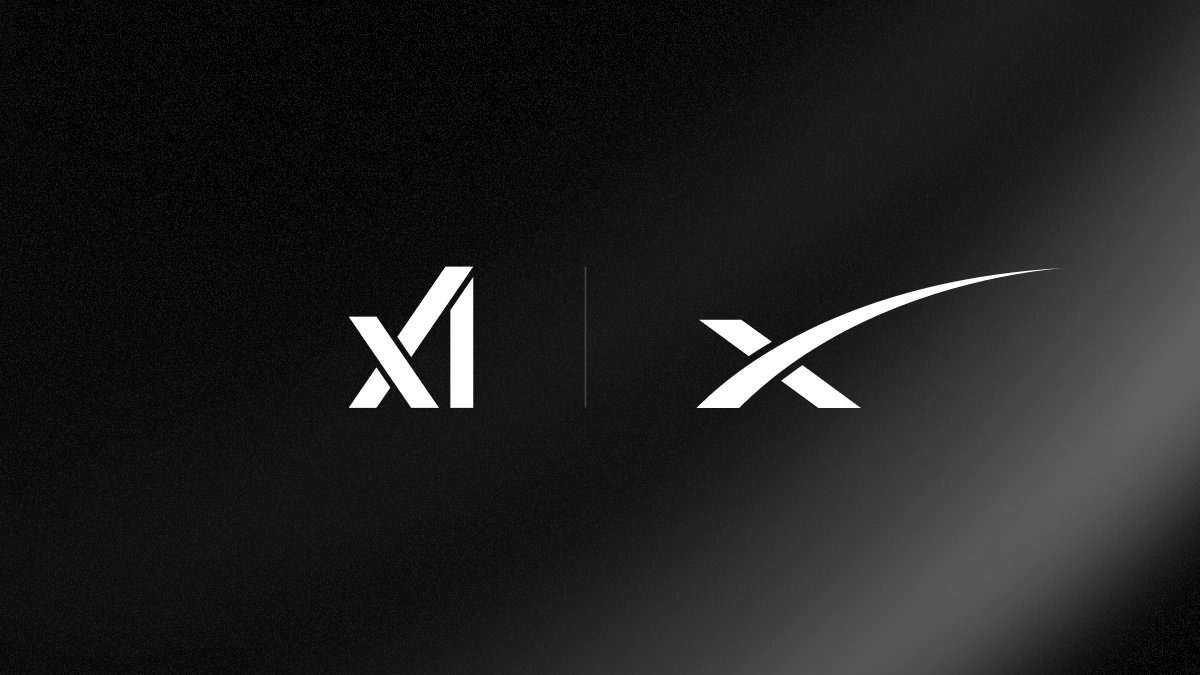
Elon Musk's artificial intelligence company xAI has officially changed its name to SpaceXAI, five months after SpaceX acquired the business. SpaceXAI announced the change through a post on X and also introduced a new logo. The company's account on the social network now carries the SpaceXAI name. However, SpaceX continues to operate a separate account covering its rockets, spacecraft, and launches. Merger Completed Musk first disclosed the SpaceXAI name in May, when he said xAI would no longer operate as a separate company and would instead become SpaceX's artificial intelligence business. SpaceX officially acquired xAI in February 2026. The company's public offering documents describe xAI as the foundation of SpaceX's AI division and part of a broader plan to combine artificial intelligence with its space and connectivity businesses. The xAI website has already been updated with the SpaceXAI name and logo. However, according to Stocktwits, the new branding has not yet appeared in official corporate filings. Orbital Data Centers SpaceXAI plans to develop data centers in space as demand for the electricity required to operate AI infrastructure continues to rise. When SpaceX acquired xAI, Musk argued that terrestrial infrastructure would not be able to meet global AI electricity demand. He described moving power-intensive data-center operations into space as the logical solution. SpaceX had already filed an application with the US Federal Communications Commission before announcing the acquisition. The filing seeks permission to launch and operate up to one million satellites as part of an orbital data-center system. The proposed satellites would operate at altitudes ranging from 500 kilometres to 2,000 kilometres and communicate through high-bandwidth optical links. X Also Comes Under SpaceXAI The combined business also includes a social media platform, X. xAI acquired X in 2025, meaning the platform became part of SpaceX when it purchased xAI. It now sits under the wider SpaceXAI structure alongside Grok and the company's other AI products. Public Market Debut SpaceX, including its acquired xAI and X businesses, went public in June 2026. The company's shares closed their first trading day at $160.95, or approximately $161, giving SpaceX a market value of around $2.1 trillion, according to f. The SpaceXAI rebrand formally brings Musk's space, artificial intelligence, and social media operations under one corporate identity, although SpaceX will continue to use its established name for its space-related activities.
'Compute lasts forever': SpaceX gets fresh Wall Street coverage
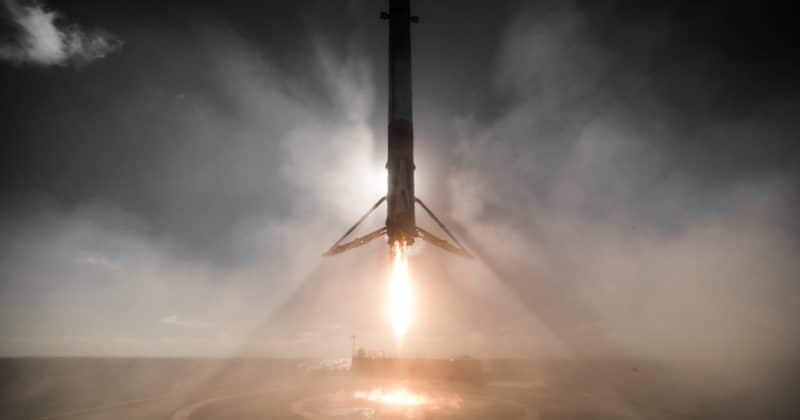
Investing.com -- Several Wall Street banks initiated coverage of Space Exploration Technologies on Tuesday, setting price targets ranging from $190 to $300, with the spread largely reflecting how differently analysts value SpaceX's AI and satellite businesses. Morgan Stanley set the highest bar, starting the stock at Overweight with a $300 target, flanked by an "intentionally wide $75 bear case and $600 bull case." Analysts led by Adam Jonas pitched SpaceX as holding "an 'X of 1' position in space infrastructure," and argued the market is underappreciating the company's terrestrial data-center economics, where it estimates costs run at half the industry average. They also flagged the funding gap behind that growth, projecting SpaceX will need roughly $84 billion a year in outside capital from 2027 through 2034 before the business turns free-cash-flow positive. RBC initiated at Outperform with a $225 target, based on about 15 times its 2029 EBITDA estimate. The broker's thesis centers on compute as a durable moat, writing that "AI models and applications may come and go, but compute lasts forever." RBC named Starship's flight-test cadence as the top near-term catalyst for the stock, alongside the pending Cursor acquisition and the rollout of Starlink's next-generation V3 satellites. Stifel initiated coverage with a Buy rating and a $190 target, the lowest of the four. The firm's thesis is built around launch economics, arguing that "lowest cost to orbit wins everything above it." Stifel credits Falcon 9's reusability with pushing launch costs to roughly $3,000 per kilogram, a level it says no competitor has matched, but applies a lighter multiple to the AI segment specifically, citing execution risk around orbital data centers that remain unproven at commercial scale. Finally, UBS set its target at $210 with a Buy rating, sizing the combined launch, connectivity and AI opportunity at nearly $30 trillion if Starship performs as expected. The bank forecast revenue and EBITDA growing at roughly 70% and 90% annual rates through 2031, with launch costs falling to about $200 per kilogram from roughly $1,000 currently. UBS views the stock as offering investors "a call option" on Elon Musk's plans to make life multiplanetary, while keeping that scenario outside its base case. The fresh coverage comes less than a month after SpaceX's Nasdaq debut. The company priced its IPO at $135 a share on June 12 and raised about $86 billion, the largest offering on record. Shares have traded above that level since, closing Monday at $160.42, though still well below the roughly $225 high the stock reached in its first weeks of trading.

Wall Street warms to SpaceX ahead of Nasdaq 100 inclusion
SpaceX's addition to the Nasdaq 100 on Wall Street today is expected to unleash billions in passive buying, as brokerages kick off coverage of the $2 trillion-plus rocket and satellite company with broadly bullish views. The company joins the index just 15 days after its stock market debut on June 12 - among the fastest inclusions ever - thanks to the Nasdaq's revised rules for newly listed companies looking to enter widely tracked benchmarks. Its debut in the tech-heavy index is set to create another source of demand for its shares as index funds and exchange-traded funds (ETFs) tied to the Nasdaq 100 will need to buy shares to match the benchmark's new composition. Active managers who track the index closely may also adjust their positions. Many retail investors prefer investing in funds to diversify their holdings. Over $587 billion is benchmarked in funds tracking the Nasdaq 100, including Invesco's QQQ and QQQM, which will now have to make room for SpaceX. JP Morgan estimated last month that SpaceX's addition to the index could draw $4.3 billion in passive inflows. Investors are waiting for a wave of reports from Wall Street brokerages making their first attempt to value SpaceX as a publicly traded company, applying traditional valuation metrics to a business that has largely been assessed by investors' belief in Musk's long-term bets. The industry-mandated quiet period ends for analysts at banks that underwrote the blockbuster IPO - led by Goldman Sachs, Morgan Stanley, BofA Securities, Citigroup and JP Morgan. Both Morgan Stanley and Goldman Sachs started coverage on the stock today with their top ratings, with Morgan Stanley dubbing the company "AI's final frontier." "We see the company as well-positioned to scale its differentiated advantages across space, connectivity, and AI," Goldman analysts said, betting each market has the potential to become a multi-trillion-dollar opportunity over a five-year-plus horizon. Brokerages RBC, Bernstein, and Stifel also initiated coverage with their top ratings, betting on the success of Starship, SpaceX's next-generation rocket that is designed to be fully reusable. "The Starship is the flywheel that powers SpaceX's ambitions," RBC analysts said. Earlier this month, Oppenheimer became the first to initiate coverage with an "outperform" rating. Investors bet on AI capabilities Investors are betting SpaceX can evolve into a hyperscale AI infrastructure provider in the near term, using cash generated to fund the development of Grok as it takes on OpenAI's GPT models and Anthropic's Claude. They also see significant room for Starlink to expand its dominance in satellite communications, while much of the company's longer-term ambitions depend on the successful development of its next-generation Starship rocket. However, not everyone is bullish on SpaceX. Morningstar analysts pegged the company's valuation at about $780 billion, citing uncertainty around its AI business, including xAI and social media platform X. With a market capitalisation of $2.1 trillion, SpaceX is the sixth-largest US company, and CEO Elon Musk the world's first trillionaire. FTSE Russell added the stock to its US indexes last month, with funds such as iShares Russell 1000 ETF already giving investors a piece of the biggest IPO in US history. However, S&P Global declined to create a similar fast-track process for the benchmark S&P 500 in June, and it is expected to take at least a year before SpaceX joins the world's most widely tracked index. SpaceX shares have gained more than 6% since their debut in their short ride marked by post-IPO volatility.

Wall Street warms to SpaceX ahead of Nasdaq 100 inclusion
July 7 (Reuters) - SpaceX's (SPCX.O), opens new tab addition to the Nasdaq 100 on Tuesday is expected to unleash billions in passive buying, as brokerages kick off coverage of the $2 trillion-plus rocket and satellite company with broadly bullish views. The company joins the index just 15 days after its stock market debut on June 12 - among the fastest inclusions ever - thanks to the Nasdaq's revised rules for newly listed companies looking to enter widely tracked benchmarks. Its debut in the tech-heavy index is set to create another source of demand for its shares as index funds and exchange-traded funds (ETFs) tied to the Nasdaq 100 (.NDX), opens new tab will need to buy shares to match the benchmark's new composition. Active managers who track the index closely may also adjust their positions. Many retail investors prefer investing in funds to diversify their holdings. Over $587 billion is benchmarked in funds tracking the Nasdaq 100, including Invesco's QQQ (QQQ.O), opens new tab and QQQM (QQQM.O), opens new tab, which will now have to make room for SpaceX. J.P. Morgan estimated last month that SpaceX's addition to the index could draw $4.3 billion in passive inflows. QUIET PERIOD ENDS Investors are awaiting a wave of reports from Wall Street brokerages making their first attempt to value SpaceX as a publicly traded company, applying traditional valuation metrics to a business that's largely been assessed by investors' belief in Musk's long-term bets. The industry-mandated quiet period ends for analysts at banks that underwrote the blockbuster IPO - led by Goldman Sachs, Morgan Stanley, BofA Securities, Citigroup and J.P. Morgan. Both Morgan Stanley and Goldman Sachs started coverage on the stock on Tuesday with their top ratings, with Morgan Stanley dubbing the company "AI's final frontier." "We see the company as well-positioned to scale its differentiated advantages across space, connectivity, and AI," Goldman analysts said, betting each market has the potential to become a multi-trillion-dollar opportunity over a five-year-plus horizon. Brokerages RBC, Bernstein, and Stifel also initiated coverage with their top ratings, betting on the success of Starship, SpaceX's next-generation rocket that is designed to be fully reusable. "The Starship is the flywheel that powers SpaceX's ambitions," RBC analysts said. Earlier this month, Oppenheimer became the first to initiate coverage with an "outperform" rating. INVESTORS BET ON AI CAPABILITIES Investors are betting SpaceX can evolve into a hyperscale AI infrastructure provider in the near term, using cash generated to fund the development of Grok as it takes on OpenAI's GPT models and Anthropic's Claude. They also see significant room for Starlink to expand its dominance in satellite communications, while much of the company's longer-term ambitions depend on the successful development of its next-generation Starship rocket. However, not everyone is bullish on SpaceX. Morningstar analysts pegged the company's valuation at about $780 billion, citing uncertainty around its AI business, including xAI and social media platform X. With a market capitalization of $2.1 trillion, SpaceX is the sixth-largest U.S. company, and CEO Elon Musk the world's first trillionaire. FTSE Russell added the stock to its U.S. indexes last month, with funds such as iShares Russell 1000 ETF (IWB.P), opens new tab already giving investors a piece of the biggest IPO in U.S. history. However, S&P Global (SPGI.N), opens new tab declined to create a similar fast-track process for the benchmark S&P 500 (.SPX), opens new tab in June, and it is expected to take at least a year before SpaceX joins the world's most widely tracked index. SpaceX shares have gained more than 6% since their debut in their short ride marked by post-IPO volatility. Reporting by Purvi Agarwal, Rashika Singh and Akash Sriram in Bengaluru; Editing by Anil D'Silva and Saumyadeb Chakrabarty Our Standards: The Thomson Reuters Trust Principles., opens new tab * Suggested Topics: * U.S. Markets Rashika Singh Thomson Reuters Rashika reports on brokerages and financial markets, alongside technology and corporate developments for Reuters, with a focus on U.S. and global companies. Her coverage spans analyst actions, earnings-driven stock moves, semiconductors, artificial intelligence, aerospace and defense, and high‑growth technology stocks, often through breaking news and market‑moving "hot stock" coverage. Her reporting primarily appears in the Technology, Business, and Markets sections of the Reuters website and wire service, examining how brokerage research, corporate strategy and earnings influence investor sentiment and global competition. She regularly contributes to Reuters' spot and breaking‑news coverage, rather than a named column or standalone newsletter.

Wall Street warms to SpaceX ahead of Nasdaq 100 inclusion
SpaceX to join Nasdaq-100 15 days after debut; among fastest inclusions SpaceX's addition to the Nasdaq 100 on Tuesday is expected to unleash billions in passive buying, as brokerages kick off coverage of the $2 trillion-plus rocket and satellite company with broadly bullish views. The company joins the index just 15 days after its stock market debut on June 12 - among the fastest inclusions ever - thanks to the Nasdaq's revised rules for newly listed companies looking to enter widely tracked benchmarks. Its debut in the tech-heavy index is set to create another source of demand for its shares as index funds and exchange-traded funds (ETFs) tied to the Nasdaq 100 will need to buy shares to match the benchmark's new composition. Active managers who track the index closely may also adjust their positions. Many retail investors prefer investing in funds to diversify their holdings. Over $587 billion is benchmarked in funds tracking the Nasdaq 100, including Invesco's QQQ and QQQM, which will now have to make room for SpaceX. J.P. Morgan estimated last month that SpaceX's addition to the index could draw $4.3 billion in passive inflows. QUIET PERIOD ENDS Investors are awaiting a wave of reports from Wall Street brokerages making their first attempt to value SpaceX as a publicly traded company, applying traditional valuation metrics to a business that's largely been assessed by investors' belief in Musk's long-term bets. The industry-mandated quiet period ends for analysts at banks that underwrote the blockbuster IPO - led by Goldman Sachs, Morgan Stanley, BofA Securities, Citigroup and J.P. Morgan. Both Morgan Stanley and Goldman Sachs started coverage on the stock on Tuesday with their top ratings, with Morgan Stanley dubbing the company "AI's final frontier." "We see the company as well-positioned to scale its differentiated advantages across space, connectivity, and AI," Goldman analysts said, betting each market has the potential to become a multi-trillion-dollar opportunity over a five-year-plus horizon. Brokerages RBC, Bernstein, and Stifel also initiated coverage with their top ratings, betting on the success of Starship, SpaceX's next-generation rocket that is designed to be fully reusable. "The Starship is the flywheel that powers SpaceX's ambitions," RBC analysts said. Earlier this month, Oppenheimer became the first to initiate coverage with an "outperform" rating. INVESTORS BET ON AI CAPABILITIES Investors are betting SpaceX can evolve into a hyperscale AI infrastructure provider in the near term, using cash generated to fund the development of Grok as it takes on OpenAI's GPT models and Anthropic's Claude. They also see significant room for Starlink to expand its dominance in satellite communications, while much of the company's longer-term ambitions depend on the successful development of its next-generation Starship rocket. However, not everyone is bullish on SpaceX. Morningstar analysts pegged the company's valuation at about $780 billion, citing uncertainty around its AI business, including xAI and social media platform X. With a market capitalization of $2.1 trillion, SpaceX is the sixth-largest U.S. company, and CEO Elon Musk the world's first trillionaire. FTSE Russell added the stock to its U.S. indexes last month, with funds such as iShares Russell 1000 ETF already giving investors a piece of the biggest IPO in U.S. history. However, S&P Global declined to create a similar fast-track process for the benchmark S&P 500 in June, and it is expected to take at least a year before SpaceX joins the world's most widely tracked index. SpaceX shares have gained more than 6% since their debut in their short ride marked by post-IPO volatility. (Reporting by Purvi Agarwal, Rashika Singh and Akash Sriram in Bengaluru; Editing by Anil D'Silva and Saumyadeb Chakrabarty)

'Compute lasts forever': SpaceX gets fresh Wall Street coverage
Investing.com -- Several Wall Street banks initiated coverage of Space Exploration Technologies on Tuesday, setting price targets ranging from $190 to $300, with the spread largely reflecting how differently analysts value SpaceX's AI and satellite businesses. Morgan Stanley set the highest bar, starting the stock at Overweight with a $300 target, flanked by an "intentionally wide $75 bear case and $600 bull case." Analysts led by Adam Jonas pitched SpaceX as holding "an 'X of 1' position in space infrastructure," and argued the market is underappreciating the company's terrestrial data-center economics, where it estimates costs run at half the industry average. They also flagged the funding gap behind that growth, projecting SpaceX will need roughly $84 billion a year in outside capital from 2027 through 2034 before the business turns free-cash-flow positive. RBC initiated at Outperform with a $225 target, based on about 15 times its 2029 EBITDA estimate. The broker's thesis centers on compute as a durable moat, writing that "AI models and applications may come and go, but compute lasts forever." RBC named Starship's flight-test cadence as the top near-term catalyst for the stock, alongside the pending Cursor acquisition and the rollout of Starlink's next-generation V3 satellites. Stifel initiated coverage with a Buy rating and a $190 target, the lowest of the four. The firm's thesis is built around launch economics, arguing that "lowest cost to orbit wins everything above it." Stifel credits Falcon 9's reusability with pushing launch costs to roughly $3,000 per kilogram, a level it says no competitor has matched, but applies a lighter multiple to the AI segment specifically, citing execution risk around orbital data centers that remain unproven at commercial scale. Finally, UBS set its target at $210 with a Buy rating, sizing the combined launch, connectivity and AI opportunity at nearly $30 trillion if Starship performs as expected. The bank forecast revenue and EBITDA growing at roughly 70% and 90% annual rates through 2031, with launch costs falling to about $200 per kilogram from roughly $1,000 currently. UBS views the stock as offering investors "a call option" on Elon Musk's plans to make life multiplanetary, while keeping that scenario outside its base case. The fresh coverage comes less than a month after SpaceX's Nasdaq debut. The company priced its IPO at $135 a share on June 12 and raised about $86 billion, the largest offering on record. Shares have traded above that level since, closing Monday at $160.42, though still well below the roughly $225 high the stock reached in its first weeks of trading.
'Compute lasts forever': SpaceX gets fresh Wall Street coverage
Investing.com -- Several Wall Street banks initiated coverage of Space Exploration Technologies on Tuesday, setting price targets ranging from $190 to $300, with the spread largely reflecting how differently analysts value SpaceX's AI and satellite businesses. Morgan Stanley set the highest bar, starting the stock at Overweight with a $300 target, flanked by an "intentionally wide $75 bear case and $600 bull case." Analysts led by Adam Jonas pitched SpaceX as holding "an 'X of 1' position in space infrastructure," and argued the market is underappreciating the company's terrestrial data-center economics, where it estimates costs run at half the industry average. They also flagged the funding gap behind that growth, projecting SpaceX will need roughly $84 billion a year in outside capital from 2027 through 2034 before the business turns free-cash-flow positive. RBC initiated at Outperform with a $225 target, based on about 15 times its 2029 EBITDA estimate. The broker's thesis centers on compute as a durable moat, writing that "AI models and applications may come and go, but compute lasts forever." RBC named Starship's flight-test cadence as the top near-term catalyst for the stock, alongside the pending Cursor acquisition and the rollout of Starlink's next-generation V3 satellites. Stifel initiated coverage with a Buy rating and a $190 target, the lowest of the four. The firm's thesis is built around launch economics, arguing that "lowest cost to orbit wins everything above it." Stifel credits Falcon 9's reusability with pushing launch costs to roughly $3,000 per kilogram, a level it says no competitor has matched, but applies a lighter multiple to the AI segment specifically, citing execution risk around orbital data centers that remain unproven at commercial scale. Finally, UBS set its target at $210 with a Buy rating, sizing the combined launch, connectivity and AI opportunity at nearly $30 trillion if Starship performs as expected. The bank forecast revenue and EBITDA growing at roughly 70% and 90% annual rates through 2031, with launch costs falling to about $200 per kilogram from roughly $1,000 currently. UBS views the stock as offering investors "a call option" on Elon Musk's plans to make life multiplanetary, while keeping that scenario outside its base case. The fresh coverage comes less than a month after SpaceX's Nasdaq debut. The company priced its IPO at $135 a share on June 12 and raised about $86 billion, the largest offering on record. Shares have traded above that level since, closing Monday at $160.42, though still well below the roughly $225 high the stock reached in its first weeks of trading.
Anthropic to invest $15B in Australian data centers by mid-2027
https://itbrief.com.au/story/anthropic-plans-australian-office-in-global-ai-push Anthropic has announced plans to invest up to $15 billion in developing data centers across Australia by mid-2027. The move is part of a strategic expansion to secure 1.4 gigawatts of data center capacity, primarily through leasing from local developers or joint ventures. This development follows an earlier memorandum of understanding with the Australian government and aligns with Anthropic's broader strategy to establish Western-aligned infrastructure outside the United States. The company, known for its AI model Claude, aims to activate at least 1 gigawatt of capacity by the end of 2027, supporting its future AI model training and deployment efforts. Key Takeaways * The announcement appears consistent with increasing valuation expectations for Anthropic, as it reflects significant growth potential. * Markets suggest that the $15 billion investment could be a key indicator of Anthropic's commitment to expanding its infrastructure footprint outside the U.S. * Current pricing in related prediction markets is supportive of scenarios where Anthropic's valuation increases significantly by the end of the year. What to Watch Observers will be closely monitoring Anthropic's progress in securing the planned data center capacity in Australia, particularly through partnerships with local developers. Developments that indicate successful leasing or joint ventures could be consistent with a YES outcome in valuation increase scenarios. Additionally, any further announcements regarding Anthropic's strategic initiatives or partnerships with major tech firms like Amazon and Google could influence market expectations. Get prediction market intelligence as a structured API feed. Early access waitlist.

'Compute lasts forever': SpaceX gets fresh Wall Street coverage
Investing.com -- Several Wall Street banks initiated coverage of Space Exploration Technologies on Tuesday, setting price targets ranging from $190 to $300, with the spread largely reflecting how differently analysts value SpaceX's AI and satellite businesses. Morgan Stanley set the highest bar, starting the stock at Overweight with a $300 target, flanked by an "intentionally wide $75 bear case and $600 bull case." Analysts led by Adam Jonas pitched SpaceX as holding "an 'X of 1' position in space infrastructure," and argued the market is underappreciating the company's terrestrial data-center economics, where it estimates costs run at half the industry average. They also flagged the funding gap behind that growth, projecting SpaceX will need roughly $84 billion a year in outside capital from 2027 through 2034 before the business turns free-cash-flow positive. RBC initiated at Outperform with a $225 target, based on about 15 times its 2029 EBITDA estimate. The broker's thesis centers on compute as a durable moat, writing that "AI models and applications may come and go, but compute lasts forever." RBC named Starship's flight-test cadence as the top near-term catalyst for the stock, alongside the pending Cursor acquisition and the rollout of Starlink's next-generation V3 satellites. Stifel initiated coverage with a Buy rating and a $190 target, the lowest of the four. The firm's thesis is built around launch economics, arguing that "lowest cost to orbit wins everything above it." Stifel credits Falcon 9's reusability with pushing launch costs to roughly $3,000 per kilogram, a level it says no competitor has matched, but applies a lighter multiple to the AI segment specifically, citing execution risk around orbital data centers that remain unproven at commercial scale. Finally, UBS set its target at $210 with a Buy rating, sizing the combined launch, connectivity and AI opportunity at nearly $30 trillion if Starship performs as expected. The bank forecast revenue and EBITDA growing at roughly 70% and 90% annual rates through 2031, with launch costs falling to about $200 per kilogram from roughly $1,000 currently. UBS views the stock as offering investors "a call option" on Elon Musk's plans to make life multiplanetary, while keeping that scenario outside its base case. The fresh coverage comes less than a month after SpaceX's Nasdaq debut. The company priced its IPO at $135 a share on June 12 and raised about $86 billion, the largest offering on record. Shares have traded above that level since, closing Monday at $160.42, though still well below the roughly $225 high the stock reached in its first weeks of trading.
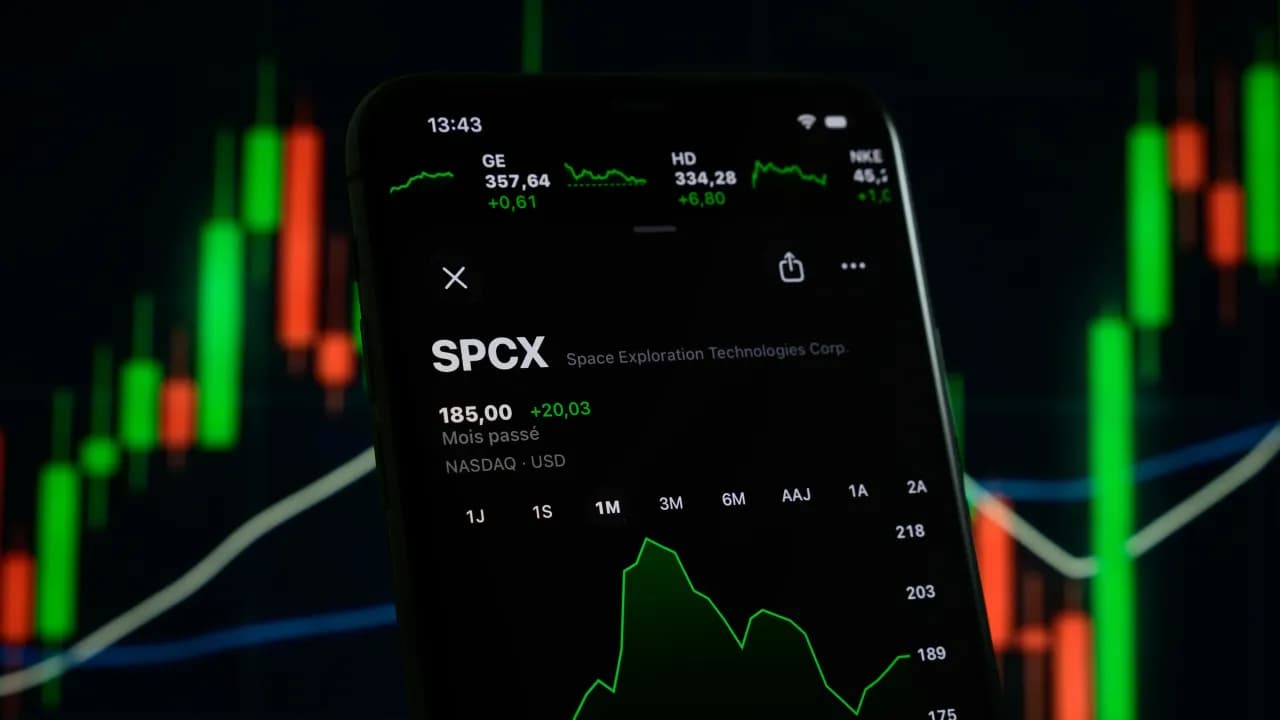
SPCX Stock Slides Ahead Of Nasdaq-100 Debut: Billionaire Value Investor Says Its 'Third-Rate' AI Is Getting 'Kicked Around' By Anthropic, OpenAI
SpaceX will join the Nasdaq-100 on Tuesday, creating automatic demand from ETFs and mutual funds tied to the index, including QQQ. * Its initial index weight is expected to be limited to about 1% to 1.3% because less than 5% of shares were sold publicly. * Insider lockups could create future selling pressure, with some restrictions expected to expire 70 to 135 days after the June 12 IPO. * Jeremy Grantham criticized SpaceX's valuation, calling it the "craziest IPO in the history of man" and saying the company is "rolling in red ink." SpaceX entered its Nasdaq-100 debut week under pressure, with passive index demand set to kick in even as Jeremy Grantham questioned whether the company's AI-driven valuation can withstand scrutiny. Add Asianet Newsable as a Preferred Source SPCX stock fell 1% on Monday, extending a pullback after losing another 1% over the past week. Shares were also down 2% overnight late Monday. SpaceX Joins Nasdaq-100 SpaceX is set to enter the Nasdaq-100 at the start of trading on Tuesday, triggering automatic demand from index-linked mutual funds and ETFs, including Invesco's QQQ. The company was fast-tracked into the benchmark under rules designed to include newly public megacap companies sooner. Still, its initial index weight is expected to be limited by its small public float. SpaceX sold less than 5% of its shares in last month's public offering, while employee and insider lockups restrict additional supply. Since Nasdaq adjusts weights based on free float, SpaceX is expected to enter with an index weight of about 1% to 1.3%, far below what its $2 trillion market value would otherwise imply. The Nasdaq-100 debut also comes with a future supply risk. Some insider lockups are expected to expire in tranches between 70 and 135 days after SpaceX's June 12 IPO, while CEO Elon Musk's shares and certain large-holder restrictions are expected to remain locked for about a year. Jeremy Grantham Slams SPCX Valuation The index debut comes as Grantham, investment strategist at GMO, criticized SpaceX's valuation. Grantham is a legendary value investor known for repeatedly warning about major market bubbles, from Japan in 1989 and the dot-com peak in 2000 to the 2008 housing crisis and today's AI-driven valuations. In a Morningstar interview, Grantham called SpaceX the "craziest IPO in the history of man," arguing that investors may look back on the prospectus decades from now as a symbol of market excess. He said the company is "rolling in red ink" despite its towering valuation, and argued that much of the long-term case rests on aggressive AI assumptions. Grantham said 90% of the projection depends on SpaceX's "currently third-rate AI offering," which he said is being "kicked around the block" by Anthropic and OpenAI. xAI, acquired by SpaceX in an all-stock deal in February 2026 and now being rebranded as SpaceXAI, gained further momentum in June with SpaceX's $60 billion all-stock acquisition of Cursor parent Anysphere. The deal is expected to bolster Grok by combining Cursor's coding intelligence and developer data with xAI's Colossus supercluster. The AI push is unfolding as rival AI leaders Anthropic and OpenAI prepare for mega public listings, with private valuations of about $965 billion and $852 billion, respectively. Grantham acknowledged that index inclusion could lift the stock in the short run as forced buying may outstrip available supply: "So supply and demand being what it is, it's hard to imagine the price won't go up, and perhaps it will go up a lot." But he warned that the longer-term risk remains severe, saying he would "bet at least 90%" on a crash rather than SpaceX ultimately justifying its current valuation. Grantham also questioned SpaceX's broader AI and space assumptions, saying some productivity claims show "no idea what they're talking about" and that much of the space-travel ambition in the prospectus would be viewed by serious physicists as "utterly inconceivable." How Do Retail Traders Feel About SPCX? On Stocktwits, retail sentiment for SPCX flipped to 'bearish' levels over the past week from 'extremely bullish' levels at the time of listing amid a massive 26,150% surge in message volumes over the past month. One user said, "$SPCX The 'Forced' Buying begins. Puts will go to ZERO." View this Stocktwits post Another user said, "$SPCX only about 10% of the inclusion has actually happened. The largest bulk will occur tomorrow around 3 PM." View this Stocktwits post For updates and corrections, email newsroom[at]stocktwits[dot]com.<
US cyber agency uses Anthropic AI to search government code for flaws
The move highlights growing US government interest in AI cybersecurity tools despite tensions between Anthropic and officials. The US cyber defense agency CISA is using Anthropic's AI model Mythos to audit government software, three people familiar with the matter said on Monday, another sign of government enthusiasm for adopting the AI startup's tools even as the company navigates an ongoing standoff with the White House. The Cybersecurity and Infrastructure Security Agency is using Mythos to scan government code repositories for bugs that could leave the door open for foreign spies and cybercriminals, the sources said. Anthropic did not respond to questions about the initiative. A CISA representative said last month that he would check to see if there was anything to share about the matter but did not respond to further emails. The scanning is being done by CISA's Attack Surface Evaluation team, according to one of the sources. The team is a group within CISA that conducts digital security assessments and hacking exercises across government. Two of the sources said the audits had already uncovered a large number of vulnerabilities but did not elaborate. Reuters could not establish exactly how much government code the team had gone through or the nature or severity of the bugs it discovered. Anthropic, which has confidentially filed for a US initial public offering, has had a tumultuous relationship with the US government. Relations reached a nadir in February after the San Francisco-based company refused to remove safeguards that prevented its AI from being used for autonomous weapons or domestic surveillance. That prompted the Pentagon to slap it with a formal supply-chain risk designation, a label heretofore applied to foreign companies suspected of facilitating espionage. The extraordinary blacklisting was blocked by a judge in March, and the conflict has eased following the private release of Anthropic's Mythos, an AI model described as extremely capable at finding and exploiting cybersecurity vulnerabilities. The National Security Agency, the US government's powerful eavesdropping agency, has been using Mythos as far back as April despite the blacklist, Axios has reported. Late last month, the New York Times said that NSA analysts had been testing Mythos in classified settings and coming away impressed with its capabilities. But when Anthropic rolled out a public version of Mythos called Fable, which included what it described as cybersecurity safeguards, the White House suddenly demanded that it ban foreigners from running it. This triggered a global shutdown of the model that was lifted only last week. The NSA and the White House did not immediately respond to requests for comment.
