News & Updates
The latest news and updates from companies in the WLTH portfolio.
SpaceXAI Announces Name Change Following Merger with SpaceX
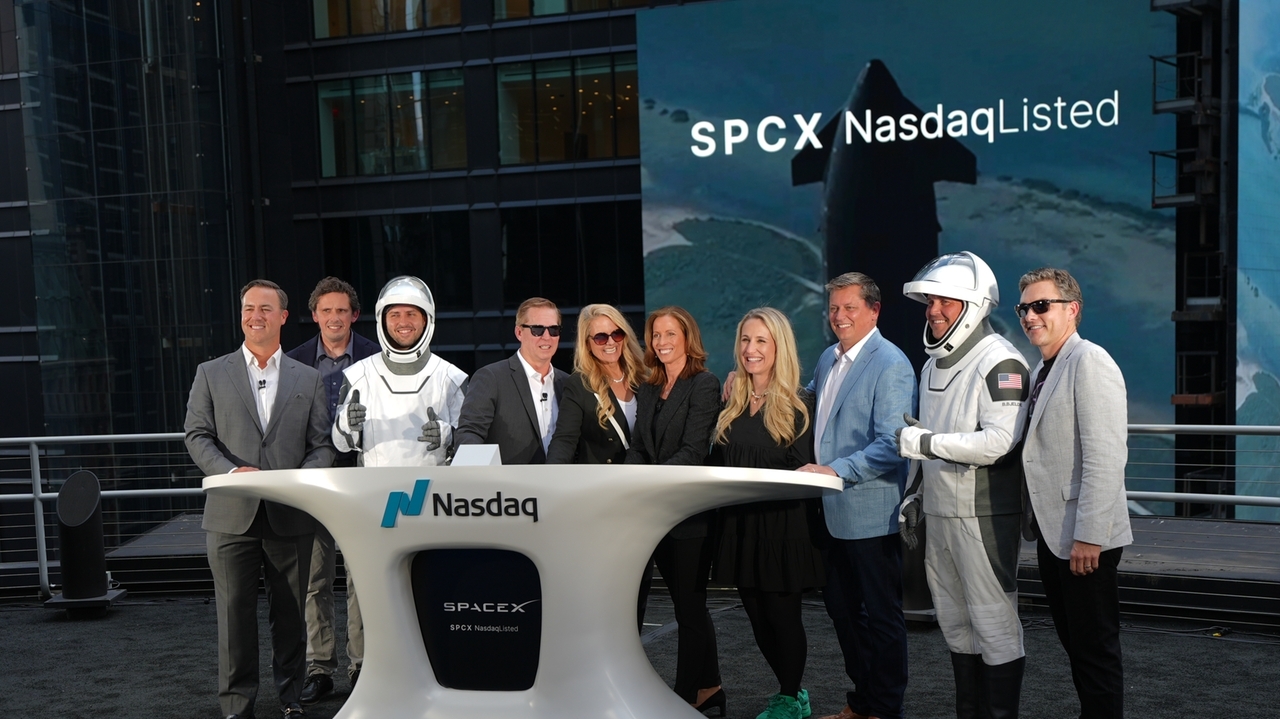
The merged entity plans to deploy AI compute satellites as space data centers starting 2028, aiming to expand AI infrastructure The AI company xAI, led by Tesla CEO Elon Musk, has changed its name to SpaceXAI. xAI announced the name change on the social media platform X (formerly Twitter) on the 6th (local time), stating, "We are now SpaceXAI." Musk's space company SpaceX, which recently entered Nasdaq through the largest-ever initial public offering (IPO), merged with xAI in February to integrate its space, AI, and social media businesses. The company plans to integrate AI into its space business in the long term, aiming to expand its AI infrastructure business, including space data centers. Although xAI is currently running losses, SpaceX has assessed that the AI business has significant growth potential. The company stated, "We plan to deploy AI compute satellites serving as space data centers starting in 2028."
Anti-Musk retail investors scramble to keep SpaceX out of their portfolios
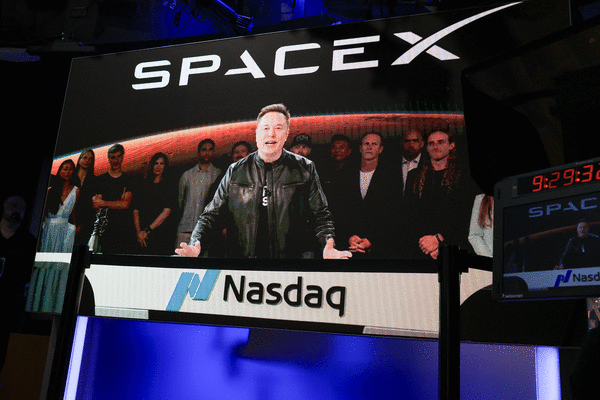
Christopher Bejnar has spent the last couple of months combing through the fine print of exchange-traded funds, emailing financial advisers and moving money into European stocks - all to keep SpaceX out of his $1 million portfolio. As Elon Musk's newest public company heads into Nasdaq's stock indexes this week, the 46-year-old software engineer in Philadelphia is making sure that none of his money is backing the Tesla and SpaceX founder who recently became the world's first trillionaire. To stay away, Bejnar said he's moved $50,000 into European index funds and bought shares of Rocket Lab Corp, a SpaceX rival. "I'm on the anti-Elon side," Bejnar said, pointing to Musk's inflammatory political activism, and his extensive borrowing to support what Bejnar views as unproven technology at SpaceX. "Even if I'm only exposed by a tenth of a percent, I still wouldn't want that going to him." Across Reddit, TikTok and online forums, investors like Bejnar have been swapping advice on how to avoid SpaceX as it enters flagship benchmarks like Russell 1000 Index and CRSP U.S. Total Market Index, even if that means abandoning familiar ETFs or paying more for customized portfolios. They are all part of the financial and personal maneuvering provoked by the rise of Musk, one of the most polarizing figures on Wall Street, if not the world. The shares of Musk's first public company, Tesla, have been sent into the stratosphere by Musk's loyal fan base of retail investors. That same crowd allowed SpaceX to make its spectacular debut on the stock market in June as the largest initial public offering in history. Australia's richest person Gina Rinehart described Musk as a "truly exceptional person," and in June said she made a "significant investment" in SpaceX from her company Hancock Prospecting. Betting against the staying power of these believers has been a dangerous endeavor in the past, as many Tesla short sellers have learned. An investor who put $10,000 into Tesla would have roughly $3.5 million today, according to Bloomberg calculations. That success, though, has led to some vehement critics. Musk's role in President Donald Trump's second administration and his strident participation in the culture wars have prompted protests, boycotts and a cottage industry of anti-Musk bumper stickers, turning opposition to the trillionaire into a movement that is spilling over into investor portfolios. The strong personal feelings are compounded by the significant financial and occasional regulatory risks attached to Musk's companies. SpaceX and Musk's other public company, Tesla, both sit at valuations that dwarf peers and worry analysts. SpaceX surged right after it went public, but then fell as much as 24%, underscoring concerns that expectations had run ahead of fundamentals. SpaceX and Musk didn't respond to requests for comment. The problem for Musk skeptics is that his stocks are so big they are becoming default holdings in most standard portfolios. Tesla already ranks among the largest companies in the S&P 500 and Nasdaq 100, which dictate the holdings of the broad-market ETFs that sit at the core of many retirement accounts. The electric carmaker accounts for 2% of the popular $980-billion Vanguard S&P 500 ETF (VOO) and more than 3% of the $490-billion Invesco QQQ Trust Series 1. SpaceX's entry into the public markets raises the stakes further. With a roughly $2.1 trillion market capitalization - 1.4 times that of Tesla - the company vaulted into the top tier of U.S. stocks almost overnight. After trading closes on Monday, SpaceX will be added to the Nasdaq 100 index following its previous entrance into the FTSE Russell and MSCI Inc. indexes. The moves are triggering billions of dollars of mechanical buying and put the stock into millions of passive investment portfolios. At a time when the shares are under pressure, they are likely to be buoyed by at least $5.4 billion of buying from index-tracking funds. The unusually rapid addition of SpaceX to the indexes has sparked criticism because several providers made exceptions or revised their methodologies to accommodate the company despite its relatively small public float. That float means that SpaceX's weighting in major indexes will initially be relatively small, making up less than 1% in most indexes - well below Tesla. Still, financial advisers say they've fielded questions from a wide array of clients who want no part of a company controlled by Musk. "I don't think we'd be having this conversation if it wasn't him," said Emily Green, head of wealth management at Ellevest, who likened the current anti-Musk sentiment to the public fallout Meta Platforms faced after a series of scandals following the 2016 election. "There's a number of people that didn't want to own Tesla over the past couple of years" and they're asking the same with SpaceX. Direct indexing is the solution Ellevest offers clients - buying a basket of individual stocks that mirror an index, making it possible to exclude shares of companies an investor doesn't want. Green said restricting just one or two stocks in a broad portfolio shouldn't affect the overall performance due to returns from other holdings, and her clients who sought to avoid Tesla were at peace with the stock's rise. "How we do it is we buy about 300 individual positions that span U.S. large cap, mid cap, small cap and developed-market international stocks," Green said. "People can customize it in a deep way and it can be a very personal thing." Bejnar said he wasn't as concerned about having money in Tesla, but SpaceX changed the balance for him because of the way the company is borrowing and banking on Musk's big but untested vision. "It almost to me feels like he's opening up credit cards to pay off other credit cards," he said. "What I didn't anticipate is that these index funds would change the rules to actually help him out." In recent weeks, Reddit posts about dodging SpaceX exposure have sprung up in subreddit groups like r/investing, r/ETFs and r/EnoughMuskSpam, generating reams of heated threads like one titled, "How to avoid investing in Elon Musk Companies." One of the posters was David Greer, a 30-year-old data analyst, who said he moved his $650,000 in retirement savings out of U.S. index funds into international ones in April. Greer has been disillusioned with the second Trump administration and views Musk as "Trump of the tech world." With Trump threatening to exit the North Atlantic Treaty Organization and exerting his "America First" foreign policy, Greer has lost confidence that the U.S. will continue having the same strength, and stock returns, as before. "I don't think it's necessarily SpaceX exclusively that I'm trying to avoid," said Greer, who lives in Davis, California. "But when it became clear that SpaceX was going to the market and that I would be invested, it felt like the straw that broke the camel's back." Omar Qureshi, a financial adviser, has stayed away from buying SpaceX shares himself because he feels Musk is "an evil human being." But as managing director at Hightower Signature Wealth, he's helped clients participate in the IPO. To him, the debate goes beyond Musk and highlights the consequences of the passive investing boom that has transformed Wall Street over the past two decades. As more retirement savings automatically flow into passively managed funds, index inclusion has become increasingly valuable, Qureshi said. The biggest companies receive a disproportionate share of new money, helping support their stock prices and making it harder for active managers to outperform. "If you're one of the big boys, you're guaranteed to get flow," said Qureshi. "It becomes a self-fulfilling prophecy. The inflows drive performance, which drives more money into the indexes." Still, neither Greer nor Bejnar wants to turn to actively managed funds. Greer prefers doing his own research and is still fond of the "set it and forget it" strategy with index funds. Bejnar, meantime, discussed options with his financial advisor before putting money from his managed brokerage account into a subset of ETFs that won't contain SpaceX. His advisor cautioned that if the stock does well and gets added to every benchmark, it'll become harder to avoid. Bejnar believes it won't be added to the S&P 500 any time soon given the index provider's 12-month seasoning period and requirements for profitability and public float. SpaceX's $25 billion debt sale in late June reinforced his conviction that it's helping prop up debt associated with Musk's broader business empire. He's been encouraging friends and others on Reddit to join the anti-Musk exodus. And what if SpaceX shares climb in the long run? "I would not feel bad about never buying SpaceX, no matter how well it does," he said. (With assistance from Henry Ren.) Copyright 2026 Tribune Content Agency. All Rights Reserved. This story was originally published July 6, 2026 at 7:06 PM.
Anti-Musk retail investors scramble to keep SpaceX out of their portfolios
Christopher Bejnar has spent the last couple of months combing through the fine print of exchange-traded funds, emailing financial advisers and moving money into European stocks - all to keep SpaceX out of his $1 million portfolio. As Elon Musk's newest public company heads into Nasdaq's stock indexes this week, the 46-year-old software engineer in Philadelphia is making sure that none of his money is backing the Tesla and SpaceX founder who recently became the world's first trillionaire. To stay away, Bejnar said he's moved $50,000 into European index funds and bought shares of Rocket Lab Corp, a SpaceX rival. "I'm on the anti-Elon side," Bejnar said, pointing to Musk's inflammatory political activism, and his extensive borrowing to support what Bejnar views as unproven technology at SpaceX. "Even if I'm only exposed by a tenth of a percent, I still wouldn't want that going to him." Across Reddit, TikTok and online forums, investors like Bejnar have been swapping advice on how to avoid SpaceX as it enters flagship benchmarks like Russell 1000 Index and CRSP U.S. Total Market Index, even if that means abandoning familiar ETFs or paying more for customized portfolios. They are all part of the financial and personal maneuvering provoked by the rise of Musk, one of the most polarizing figures on Wall Street, if not the world. The shares of Musk's first public company, Tesla, have been sent into the stratosphere by Musk's loyal fan base of retail investors. That same crowd allowed SpaceX to make its spectacular debut on the stock market in June as the largest initial public offering in history. Australia's richest person Gina Rinehart described Musk as a "truly exceptional person," and in June said she made a "significant investment" in SpaceX from her company Hancock Prospecting. Betting against the staying power of these believers has been a dangerous endeavor in the past, as many Tesla short sellers have learned. An investor who put $10,000 into Tesla would have roughly $3.5 million today, according to Bloomberg calculations. That success, though, has led to some vehement critics. Musk's role in President Donald Trump's second administration and his strident participation in the culture wars have prompted protests, boycotts and a cottage industry of anti-Musk bumper stickers, turning opposition to the trillionaire into a movement that is spilling over into investor portfolios. The strong personal feelings are compounded by the significant financial and occasional regulatory risks attached to Musk's companies. SpaceX and Musk's other public company, Tesla, both sit at valuations that dwarf peers and worry analysts. SpaceX surged right after it went public, but then fell as much as 24%, underscoring concerns that expectations had run ahead of fundamentals. SpaceX and Musk didn't respond to requests for comment. The problem for Musk skeptics is that his stocks are so big they are becoming default holdings in most standard portfolios. Tesla already ranks among the largest companies in the S&P 500 and Nasdaq 100, which dictate the holdings of the broad-market ETFs that sit at the core of many retirement accounts. The electric carmaker accounts for 2% of the popular $980-billion Vanguard S&P 500 ETF (VOO) and more than 3% of the $490-billion Invesco QQQ Trust Series 1. SpaceX's entry into the public markets raises the stakes further. With a roughly $2.1 trillion market capitalization - 1.4 times that of Tesla - the company vaulted into the top tier of U.S. stocks almost overnight. After trading closes on Monday, SpaceX will be added to the Nasdaq 100 index following its previous entrance into the FTSE Russell and MSCI Inc. indexes. The moves are triggering billions of dollars of mechanical buying and put the stock into millions of passive investment portfolios. At a time when the shares are under pressure, they are likely to be buoyed by at least $5.4 billion of buying from index-tracking funds. The unusually rapid addition of SpaceX to the indexes has sparked criticism because several providers made exceptions or revised their methodologies to accommodate the company despite its relatively small public float. That float means that SpaceX's weighting in major indexes will initially be relatively small, making up less than 1% in most indexes - well below Tesla. Still, financial advisers say they've fielded questions from a wide array of clients who want no part of a company controlled by Musk. "I don't think we'd be having this conversation if it wasn't him," said Emily Green, head of wealth management at Ellevest, who likened the current anti-Musk sentiment to the public fallout Meta Platforms faced after a series of scandals following the 2016 election. "There's a number of people that didn't want to own Tesla over the past couple of years" and they're asking the same with SpaceX. Direct indexing is the solution Ellevest offers clients - buying a basket of individual stocks that mirror an index, making it possible to exclude shares of companies an investor doesn't want. Green said restricting just one or two stocks in a broad portfolio shouldn't affect the overall performance due to returns from other holdings, and her clients who sought to avoid Tesla were at peace with the stock's rise. "How we do it is we buy about 300 individual positions that span U.S. large cap, mid cap, small cap and developed-market international stocks," Green said. "People can customize it in a deep way and it can be a very personal thing." Bejnar said he wasn't as concerned about having money in Tesla, but SpaceX changed the balance for him because of the way the company is borrowing and banking on Musk's big but untested vision. "It almost to me feels like he's opening up credit cards to pay off other credit cards," he said. "What I didn't anticipate is that these index funds would change the rules to actually help him out." In recent weeks, Reddit posts about dodging SpaceX exposure have sprung up in subreddit groups like r/investing, r/ETFs and r/EnoughMuskSpam, generating reams of heated threads like one titled, "How to avoid investing in Elon Musk Companies." One of the posters was David Greer, a 30-year-old data analyst, who said he moved his $650,000 in retirement savings out of U.S. index funds into international ones in April. Greer has been disillusioned with the second Trump administration and views Musk as "Trump of the tech world." With Trump threatening to exit the North Atlantic Treaty Organization and exerting his "America First" foreign policy, Greer has lost confidence that the U.S. will continue having the same strength, and stock returns, as before. "I don't think it's necessarily SpaceX exclusively that I'm trying to avoid," said Greer, who lives in Davis, California. "But when it became clear that SpaceX was going to the market and that I would be invested, it felt like the straw that broke the camel's back." Omar Qureshi, a financial adviser, has stayed away from buying SpaceX shares himself because he feels Musk is "an evil human being." But as managing director at Hightower Signature Wealth, he's helped clients participate in the IPO. To him, the debate goes beyond Musk and highlights the consequences of the passive investing boom that has transformed Wall Street over the past two decades. As more retirement savings automatically flow into passively managed funds, index inclusion has become increasingly valuable, Qureshi said. The biggest companies receive a disproportionate share of new money, helping support their stock prices and making it harder for active managers to outperform. "If you're one of the big boys, you're guaranteed to get flow," said Qureshi. "It becomes a self-fulfilling prophecy. The inflows drive performance, which drives more money into the indexes." Still, neither Greer nor Bejnar wants to turn to actively managed funds. Greer prefers doing his own research and is still fond of the "set it and forget it" strategy with index funds. Bejnar, meantime, discussed options with his financial advisor before putting money from his managed brokerage account into a subset of ETFs that won't contain SpaceX. His advisor cautioned that if the stock does well and gets added to every benchmark, it'll become harder to avoid. Bejnar believes it won't be added to the S&P 500 any time soon given the index provider's 12-month seasoning period and requirements for profitability and public float. SpaceX's $25 billion debt sale in late June reinforced his conviction that it's helping prop up debt associated with Musk's broader business empire. He's been encouraging friends and others on Reddit to join the anti-Musk exodus. And what if SpaceX shares climb in the long run? "I would not feel bad about never buying SpaceX, no matter how well it does," he said. (With assistance from Henry Ren.) Copyright 2026 Tribune Content Agency. All Rights Reserved. This story was originally published July 6, 2026 at 6:06 PM.
Anti-Musk retail investors scramble to keep SpaceX out of their portfolios
Christopher Bejnar has spent the last couple of months combing through the fine print of exchange-traded funds, emailing financial advisers and moving money into European stocks - all to keep SpaceX out of his $1 million portfolio. As Elon Musk's newest public company heads into Nasdaq's stock indexes this week, the 46-year-old software engineer in Philadelphia is making sure that none of his money is backing the Tesla and SpaceX founder who recently became the world's first trillionaire. To stay away, Bejnar said he's moved $50,000 into European index funds and bought shares of Rocket Lab Corp, a SpaceX rival. "I'm on the anti-Elon side," Bejnar said, pointing to Musk's inflammatory political activism, and his extensive borrowing to support what Bejnar views as unproven technology at SpaceX. "Even if I'm only exposed by a tenth of a percent, I still wouldn't want that going to him." Across Reddit, TikTok and online forums, investors like Bejnar have been swapping advice on how to avoid SpaceX as it enters flagship benchmarks like Russell 1000 Index and CRSP U.S. Total Market Index, even if that means abandoning familiar ETFs or paying more for customized portfolios. They are all part of the financial and personal maneuvering provoked by the rise of Musk, one of the most polarizing figures on Wall Street, if not the world. The shares of Musk's first public company, Tesla, have been sent into the stratosphere by Musk's loyal fan base of retail investors. That same crowd allowed SpaceX to make its spectacular debut on the stock market in June as the largest initial public offering in history. Australia's richest person Gina Rinehart described Musk as a "truly exceptional person," and in June said she made a "significant investment" in SpaceX from her company Hancock Prospecting. Betting against the staying power of these believers has been a dangerous endeavor in the past, as many Tesla short sellers have learned. An investor who put $10,000 into Tesla would have roughly $3.5 million today, according to Bloomberg calculations. That success, though, has led to some vehement critics. Musk's role in President Donald Trump's second administration and his strident participation in the culture wars have prompted protests, boycotts and a cottage industry of anti-Musk bumper stickers, turning opposition to the trillionaire into a movement that is spilling over into investor portfolios. The strong personal feelings are compounded by the significant financial and occasional regulatory risks attached to Musk's companies. SpaceX and Musk's other public company, Tesla, both sit at valuations that dwarf peers and worry analysts. SpaceX surged right after it went public, but then fell as much as 24%, underscoring concerns that expectations had run ahead of fundamentals. SpaceX and Musk didn't respond to requests for comment. The problem for Musk skeptics is that his stocks are so big they are becoming default holdings in most standard portfolios. Tesla already ranks among the largest companies in the S&P 500 and Nasdaq 100, which dictate the holdings of the broad-market ETFs that sit at the core of many retirement accounts. The electric carmaker accounts for 2% of the popular $980-billion Vanguard S&P 500 ETF (VOO) and more than 3% of the $490-billion Invesco QQQ Trust Series 1. SpaceX's entry into the public markets raises the stakes further. With a roughly $2.1 trillion market capitalization - 1.4 times that of Tesla - the company vaulted into the top tier of U.S. stocks almost overnight. After trading closes on Monday, SpaceX will be added to the Nasdaq 100 index following its previous entrance into the FTSE Russell and MSCI Inc. indexes. The moves are triggering billions of dollars of mechanical buying and put the stock into millions of passive investment portfolios. At a time when the shares are under pressure, they are likely to be buoyed by at least $5.4 billion of buying from index-tracking funds. The unusually rapid addition of SpaceX to the indexes has sparked criticism because several providers made exceptions or revised their methodologies to accommodate the company despite its relatively small public float. That float means that SpaceX's weighting in major indexes will initially be relatively small, making up less than 1% in most indexes - well below Tesla. Still, financial advisers say they've fielded questions from a wide array of clients who want no part of a company controlled by Musk. "I don't think we'd be having this conversation if it wasn't him," said Emily Green, head of wealth management at Ellevest, who likened the current anti-Musk sentiment to the public fallout Meta Platforms faced after a series of scandals following the 2016 election. "There's a number of people that didn't want to own Tesla over the past couple of years" and they're asking the same with SpaceX. Direct indexing is the solution Ellevest offers clients - buying a basket of individual stocks that mirror an index, making it possible to exclude shares of companies an investor doesn't want. Green said restricting just one or two stocks in a broad portfolio shouldn't affect the overall performance due to returns from other holdings, and her clients who sought to avoid Tesla were at peace with the stock's rise. "How we do it is we buy about 300 individual positions that span U.S. large cap, mid cap, small cap and developed-market international stocks," Green said. "People can customize it in a deep way and it can be a very personal thing." Bejnar said he wasn't as concerned about having money in Tesla, but SpaceX changed the balance for him because of the way the company is borrowing and banking on Musk's big but untested vision. "It almost to me feels like he's opening up credit cards to pay off other credit cards," he said. "What I didn't anticipate is that these index funds would change the rules to actually help him out." In recent weeks, Reddit posts about dodging SpaceX exposure have sprung up in subreddit groups like r/investing, r/ETFs and r/EnoughMuskSpam, generating reams of heated threads like one titled, "How to avoid investing in Elon Musk Companies." One of the posters was David Greer, a 30-year-old data analyst, who said he moved his $650,000 in retirement savings out of U.S. index funds into international ones in April. Greer has been disillusioned with the second Trump administration and views Musk as "Trump of the tech world." With Trump threatening to exit the North Atlantic Treaty Organization and exerting his "America First" foreign policy, Greer has lost confidence that the U.S. will continue having the same strength, and stock returns, as before. "I don't think it's necessarily SpaceX exclusively that I'm trying to avoid," said Greer, who lives in Davis, California. "But when it became clear that SpaceX was going to the market and that I would be invested, it felt like the straw that broke the camel's back." Omar Qureshi, a financial adviser, has stayed away from buying SpaceX shares himself because he feels Musk is "an evil human being." But as managing director at Hightower Signature Wealth, he's helped clients participate in the IPO. To him, the debate goes beyond Musk and highlights the consequences of the passive investing boom that has transformed Wall Street over the past two decades. As more retirement savings automatically flow into passively managed funds, index inclusion has become increasingly valuable, Qureshi said. The biggest companies receive a disproportionate share of new money, helping support their stock prices and making it harder for active managers to outperform. "If you're one of the big boys, you're guaranteed to get flow," said Qureshi. "It becomes a self-fulfilling prophecy. The inflows drive performance, which drives more money into the indexes." Still, neither Greer nor Bejnar wants to turn to actively managed funds. Greer prefers doing his own research and is still fond of the "set it and forget it" strategy with index funds. Bejnar, meantime, discussed options with his financial advisor before putting money from his managed brokerage account into a subset of ETFs that won't contain SpaceX. His advisor cautioned that if the stock does well and gets added to every benchmark, it'll become harder to avoid. Bejnar believes it won't be added to the S&P 500 any time soon given the index provider's 12-month seasoning period and requirements for profitability and public float. SpaceX's $25 billion debt sale in late June reinforced his conviction that it's helping prop up debt associated with Musk's broader business empire. He's been encouraging friends and others on Reddit to join the anti-Musk exodus. And what if SpaceX shares climb in the long run? "I would not feel bad about never buying SpaceX, no matter how well it does," he said. (With assistance from Henry Ren.) Copyright 2026 Tribune Content Agency. All Rights Reserved. This story was originally published July 6, 2026 at 9:06 PM.
Anti-Musk retail investors scramble to keep SpaceX out of their portfolios
By clicking submit, I authorize Arcamax and its affiliates to: (1) use, sell, and share my information for marketing purposes, including cross-context behavioral advertising, as described in our Privacy Policy , (2) add to information that I provide with other information like interests inferred from web page views, or data lawfully obtained from data brokers, such as past purchase or location data, or publicly available data, (3) contact me or enable others to contact me by email or other means with offers for different types of goods and services, and (4) retain my information while I am engaging with marketing messages that I receive and for a reasonable amount of time thereafter. I understand I can opt out at any time through an email that I receive, or by clicking here Christopher Bejnar has spent the last couple of months combing through the fine print of exchange-traded funds, emailing financial advisers and moving money into European stocks -- all to keep SpaceX out of his $1 million portfolio. As Elon Musk's newest public company heads into Nasdaq's stock indexes this week, the 46-year-old software engineer in Philadelphia is making sure that none of his money is backing the Tesla and SpaceX founder who recently became the world's first trillionaire. To stay away, Bejnar said he's moved $50,000 into European index funds and bought shares of Rocket Lab Corp, a SpaceX rival. "I'm on the anti-Elon side," Bejnar said, pointing to Musk's inflammatory political activism, and his extensive borrowing to support what Bejnar views as unproven technology at SpaceX. "Even if I'm only exposed by a tenth of a percent, I still wouldn't want that going to him." Across Reddit, TikTok and online forums, investors like Bejnar have been swapping advice on how to avoid SpaceX as it enters flagship benchmarks like Russell 1000 Index and CRSP U.S. Total Market Index, even if that means abandoning familiar ETFs or paying more for customized portfolios. They are all part of the financial and personal maneuvering provoked by the rise of Musk, one of the most polarizing figures on Wall Street, if not the world. The shares of Musk's first public company, Tesla, have been sent into the stratosphere by Musk's loyal fan base of retail investors. That same crowd allowed SpaceX to make its spectacular debut on the stock market in June as the largest initial public offering in history. Australia's richest person Gina Rinehart described Musk as a "truly exceptional person," and in June said she made a "significant investment" in SpaceX from her company Hancock Prospecting. Betting against the staying power of these believers has been a dangerous endeavor in the past, as many Tesla short sellers have learned. An investor who put $10,000 into Tesla would have roughly $3.5 million today, according to Bloomberg calculations. That success, though, has led to some vehement critics. Musk's role in President Donald Trump's second administration and his strident participation in the culture wars have prompted protests, boycotts and a cottage industry of anti-Musk bumper stickers, turning opposition to the trillionaire into a movement that is spilling over into investor portfolios. The strong personal feelings are compounded by the significant financial and occasional regulatory risks attached to Musk's companies. SpaceX and Musk's other public company, Tesla, both sit at valuations that dwarf peers and worry analysts. SpaceX surged right after it went public, but then fell as much as 24%, underscoring concerns that expectations had run ahead of fundamentals. SpaceX and Musk didn't respond to requests for comment. The problem for Musk skeptics is that his stocks are so big they are becoming default holdings in most standard portfolios. Tesla already ranks among the largest companies in the S&P 500 and Nasdaq 100, which dictate the holdings of the broad-market ETFs that sit at the core of many retirement accounts. The electric carmaker accounts for 2% of the popular $980-billion Vanguard S&P 500 ETF (VOO) and more than 3% of the $490-billion Invesco QQQ Trust Series 1. SpaceX's entry into the public markets raises the stakes further. With a roughly $2.1 trillion market capitalization -- 1.4 times that of Tesla -- the company vaulted into the top tier of U.S. stocks almost overnight. After trading closes on Monday, SpaceX will be added to the Nasdaq 100 index following its previous entrance into the FTSE Russell and MSCI Inc. indexes. The moves are triggering billions of dollars of mechanical buying and put the stock into millions of passive investment portfolios. At a time when the shares are under pressure, they are likely to be buoyed by at least $5.4 billion of buying from index-tracking funds. The unusually rapid addition of SpaceX to the indexes has sparked criticism because several providers made exceptions or revised their methodologies to accommodate the company despite its relatively small public float. That float means that SpaceX's weighting in major indexes will initially be relatively small, making up less than 1% in most indexes -- well below Tesla. Still, financial advisers say they've fielded questions from a wide array of clients who want no part of a company controlled by Musk. "I don't think we'd be having this conversation if it wasn't him," said Emily Green, head of wealth management at Ellevest, who likened the current anti-Musk sentiment to the public fallout Meta Platforms faced after a series of scandals following the 2016 election. "There's a number of people that didn't want to own Tesla over the past couple of years" and they're asking the same with SpaceX. Direct indexing is the solution Ellevest offers clients -- buying a basket of individual stocks that mirror an index, making it possible to exclude shares of companies an investor doesn't want. Green said restricting just one or two stocks in a broad portfolio shouldn't affect the overall performance due to returns from other holdings, and her clients who sought to avoid Tesla were at peace with the stock's rise. "How we do it is we buy about 300 individual positions that span U.S. large cap, mid cap, small cap and developed-market international stocks," Green said. "People can customize it in a deep way and it can be a very personal thing." Bejnar said he wasn't as concerned about having money in Tesla, but SpaceX changed the balance for him because of the way the company is borrowing and banking on Musk's big but untested vision. "It almost to me feels like he's opening up credit cards to pay off other credit cards," he said. "What I didn't anticipate is that these index funds would change the rules to actually help him out." In recent weeks, Reddit posts about dodging SpaceX exposure have sprung up in subreddit groups like r/investing, r/ETFs and r/EnoughMuskSpam, generating reams of heated threads like one titled, "How to avoid investing in Elon Musk Companies." One of the posters was David Greer, a 30-year-old data analyst, who said he moved his $650,000 in retirement savings out of U.S. index funds into international ones in April. Greer has been disillusioned with the second Trump administration and views Musk as "Trump of the tech world." With Trump threatening to exit the North Atlantic Treaty Organization and exerting his "America First" foreign policy, Greer has lost confidence that the U.S. will continue having the same strength, and stock returns, as before. "I don't think it's necessarily SpaceX exclusively that I'm trying to avoid," said Greer, who lives in Davis, California. "But when it became clear that SpaceX was going to the market and that I would be invested, it felt like the straw that broke the camel's back." Omar Qureshi, a financial adviser, has stayed away from buying SpaceX shares himself because he feels Musk is "an evil human being." But as managing director at Hightower Signature Wealth, he's helped clients participate in the IPO. To him, the debate goes beyond Musk and highlights the consequences of the passive investing boom that has transformed Wall Street over the past two decades. As more retirement savings automatically flow into passively managed funds, index inclusion has become increasingly valuable, Qureshi said. The biggest companies receive a disproportionate share of new money, helping support their stock prices and making it harder for active managers to outperform. "If you're one of the big boys, you're guaranteed to get flow," said Qureshi. "It becomes a self-fulfilling prophecy. The inflows drive performance, which drives more money into the indexes." Still, neither Greer nor Bejnar wants to turn to actively managed funds. Greer prefers doing his own research and is still fond of the "set it and forget it" strategy with index funds. Bejnar, meantime, discussed options with his financial advisor before putting money from his managed brokerage account into a subset of ETFs that won't contain SpaceX. His advisor cautioned that if the stock does well and gets added to every benchmark, it'll become harder to avoid. Bejnar believes it won't be added to the S&P 500 any time soon given the index provider's 12-month seasoning period and requirements for profitability and public float. SpaceX's $25 billion debt sale in late June reinforced his conviction that it's helping prop up debt associated with Musk's broader business empire. He's been encouraging friends and others on Reddit to join the anti-Musk exodus. And what if SpaceX shares climb in the long run? "I would not feel bad about never buying SpaceX, no matter how well it does," he said. (With assistance from Henry Ren.)
Anti-Musk retail investors scramble to keep SpaceX out of their portfolios
By clicking submit, I authorize Arcamax and its affiliates to: (1) use, sell, and share my information for marketing purposes, including cross-context behavioral advertising, as described in our Privacy Policy , (2) add to information that I provide with other information like interests inferred from web page views, or data lawfully obtained from data brokers, such as past purchase or location data, or publicly available data, (3) contact me or enable others to contact me by email or other means with offers for different types of goods and services, and (4) retain my information while I am engaging with marketing messages that I receive and for a reasonable amount of time thereafter. I understand I can opt out at any time through an email that I receive, or by clicking here Christopher Bejnar has spent the last couple of months combing through the fine print of exchange-traded funds, emailing financial advisers and moving money into European stocks -- all to keep SpaceX out of his $1 million portfolio. As Elon Musk's newest public company heads into Nasdaq's stock indexes this week, the 46-year-old software engineer in Philadelphia is making sure that none of his money is backing the Tesla and SpaceX founder who recently became the world's first trillionaire. To stay away, Bejnar said he's moved $50,000 into European index funds and bought shares of Rocket Lab Corp, a SpaceX rival. "I'm on the anti-Elon side," Bejnar said, pointing to Musk's inflammatory political activism, and his extensive borrowing to support what Bejnar views as unproven technology at SpaceX. "Even if I'm only exposed by a tenth of a percent, I still wouldn't want that going to him." Across Reddit, TikTok and online forums, investors like Bejnar have been swapping advice on how to avoid SpaceX as it enters flagship benchmarks like Russell 1000 Index and CRSP U.S. Total Market Index, even if that means abandoning familiar ETFs or paying more for customized portfolios. They are all part of the financial and personal maneuvering provoked by the rise of Musk, one of the most polarizing figures on Wall Street, if not the world. The shares of Musk's first public company, Tesla, have been sent into the stratosphere by Musk's loyal fan base of retail investors. That same crowd allowed SpaceX to make its spectacular debut on the stock market in June as the largest initial public offering in history. Australia's richest person Gina Rinehart described Musk as a "truly exceptional person," and in June said she made a "significant investment" in SpaceX from her company Hancock Prospecting. Betting against the staying power of these believers has been a dangerous endeavor in the past, as many Tesla short sellers have learned. An investor who put $10,000 into Tesla would have roughly $3.5 million today, according to Bloomberg calculations. That success, though, has led to some vehement critics. Musk's role in President Donald Trump's second administration and his strident participation in the culture wars have prompted protests, boycotts and a cottage industry of anti-Musk bumper stickers, turning opposition to the trillionaire into a movement that is spilling over into investor portfolios. The strong personal feelings are compounded by the significant financial and occasional regulatory risks attached to Musk's companies. SpaceX and Musk's other public company, Tesla, both sit at valuations that dwarf peers and worry analysts. SpaceX surged right after it went public, but then fell as much as 24%, underscoring concerns that expectations had run ahead of fundamentals. SpaceX and Musk didn't respond to requests for comment. The problem for Musk skeptics is that his stocks are so big they are becoming default holdings in most standard portfolios. Tesla already ranks among the largest companies in the S&P 500 and Nasdaq 100, which dictate the holdings of the broad-market ETFs that sit at the core of many retirement accounts. The electric carmaker accounts for 2% of the popular $980-billion Vanguard S&P 500 ETF (VOO) and more than 3% of the $490-billion Invesco QQQ Trust Series 1. SpaceX's entry into the public markets raises the stakes further. With a roughly $2.1 trillion market capitalization -- 1.4 times that of Tesla -- the company vaulted into the top tier of U.S. stocks almost overnight. After trading closes on Monday, SpaceX will be added to the Nasdaq 100 index following its previous entrance into the FTSE Russell and MSCI Inc. indexes. The moves are triggering billions of dollars of mechanical buying and put the stock into millions of passive investment portfolios. At a time when the shares are under pressure, they are likely to be buoyed by at least $5.4 billion of buying from index-tracking funds. The unusually rapid addition of SpaceX to the indexes has sparked criticism because several providers made exceptions or revised their methodologies to accommodate the company despite its relatively small public float. That float means that SpaceX's weighting in major indexes will initially be relatively small, making up less than 1% in most indexes -- well below Tesla. Still, financial advisers say they've fielded questions from a wide array of clients who want no part of a company controlled by Musk. "I don't think we'd be having this conversation if it wasn't him," said Emily Green, head of wealth management at Ellevest, who likened the current anti-Musk sentiment to the public fallout Meta Platforms faced after a series of scandals following the 2016 election. "There's a number of people that didn't want to own Tesla over the past couple of years" and they're asking the same with SpaceX. Direct indexing is the solution Ellevest offers clients -- buying a basket of individual stocks that mirror an index, making it possible to exclude shares of companies an investor doesn't want. Green said restricting just one or two stocks in a broad portfolio shouldn't affect the overall performance due to returns from other holdings, and her clients who sought to avoid Tesla were at peace with the stock's rise. "How we do it is we buy about 300 individual positions that span U.S. large cap, mid cap, small cap and developed-market international stocks," Green said. "People can customize it in a deep way and it can be a very personal thing." Bejnar said he wasn't as concerned about having money in Tesla, but SpaceX changed the balance for him because of the way the company is borrowing and banking on Musk's big but untested vision. "It almost to me feels like he's opening up credit cards to pay off other credit cards," he said. "What I didn't anticipate is that these index funds would change the rules to actually help him out." In recent weeks, Reddit posts about dodging SpaceX exposure have sprung up in subreddit groups like r/investing, r/ETFs and r/EnoughMuskSpam, generating reams of heated threads like one titled, "How to avoid investing in Elon Musk Companies." One of the posters was David Greer, a 30-year-old data analyst, who said he moved his $650,000 in retirement savings out of U.S. index funds into international ones in April. Greer has been disillusioned with the second Trump administration and views Musk as "Trump of the tech world." With Trump threatening to exit the North Atlantic Treaty Organization and exerting his "America First" foreign policy, Greer has lost confidence that the U.S. will continue having the same strength, and stock returns, as before. "I don't think it's necessarily SpaceX exclusively that I'm trying to avoid," said Greer, who lives in Davis, California. "But when it became clear that SpaceX was going to the market and that I would be invested, it felt like the straw that broke the camel's back." Omar Qureshi, a financial adviser, has stayed away from buying SpaceX shares himself because he feels Musk is "an evil human being." But as managing director at Hightower Signature Wealth, he's helped clients participate in the IPO. To him, the debate goes beyond Musk and highlights the consequences of the passive investing boom that has transformed Wall Street over the past two decades. As more retirement savings automatically flow into passively managed funds, index inclusion has become increasingly valuable, Qureshi said. The biggest companies receive a disproportionate share of new money, helping support their stock prices and making it harder for active managers to outperform. "If you're one of the big boys, you're guaranteed to get flow," said Qureshi. "It becomes a self-fulfilling prophecy. The inflows drive performance, which drives more money into the indexes." Still, neither Greer nor Bejnar wants to turn to actively managed funds. Greer prefers doing his own research and is still fond of the "set it and forget it" strategy with index funds. Bejnar, meantime, discussed options with his financial advisor before putting money from his managed brokerage account into a subset of ETFs that won't contain SpaceX. His advisor cautioned that if the stock does well and gets added to every benchmark, it'll become harder to avoid. Bejnar believes it won't be added to the S&P 500 any time soon given the index provider's 12-month seasoning period and requirements for profitability and public float. SpaceX's $25 billion debt sale in late June reinforced his conviction that it's helping prop up debt associated with Musk's broader business empire. He's been encouraging friends and others on Reddit to join the anti-Musk exodus. And what if SpaceX shares climb in the long run? "I would not feel bad about never buying SpaceX, no matter how well it does," he said. (With assistance from Henry Ren.)
Anthropic is launching its own drug discovery programs for rare diseases using Claude superintelligence - NaturalNews.com
preclinical drug-discovery programs targeting neglected diseases, including rare conditions, while simultaneously unveiling Claude Science, an AI workbench built for researchers and drug-makers. This development could become a direct challenge to the pharmaceutical establishment, a sector that has spent decades perfecting the art of maximizing profit margins while leaving millions of patients with rare and overlooked conditions to suffer in silence. If we're betting on humanity's best intentions, Anthropic is in a position to unleash super-intelligence that could upend decades of corporate greed and Big Pharma's exploitation of human patients. But the super-intelligence could go both ways and be leveraged by Big Pharma to continue making customers for life. The deeper question remains: Will this super-intelligence be used to genuinely heal, or will it become the most sophisticated tool yet for manufacturing lifelong customers? Key points: * Anthropic will run its own preclinical drug programs for neglected and rare diseases, targeting conditions that are ignored for economic reasons. * The company launched Claude Science, an AI workbench for researchers, on June 30, 2026, at a San Francisco event. * Eric Kauderer-Abrams, Anthropic's head of life sciences, stated the company needs to "live it along with all of you" to build the right tools. * Rare diseases offer clearer biological targets, often stemming from single damaged genes, making them more amenable to AI-driven solutions. * Anthropic acquired Coefficient Bio for $400 million and placed Novartis CEO Vas Narasimhan on its board, signaling deep industry entanglement. * The dual-agent approach used in tools like Cursor Code demonstrates AI's growing capacity for complex, multi-step tasks like drug discovery. The hard truth about why your disease gets ignored To understand what Anthropic is really doing, you must first understand the brutal economics that dictate which diseases get researched and which get abandoned. Major pharmaceutical companies operate on a simple calculus. Developing a single drug can cost anywhere from $1 billion to $2.6 billion when factoring in the cost of failed trials. The process takes ten to fifteen years. And even then, the Food and Drug Administration approves only about ten percent of drugs that enter human trials. For a company like Pfizer or Merck, investing that kind of money into a condition that affects 10,000 people worldwide is financial suicide. The math simply does not work. This is why thousands of rare diseases have no approved treatments at all. According to the National Institutes of Health, there are more than 7,000 known rare diseases, and approximately 95 percent of them lack any FDA-approved therapy. Patients are told to manage symptoms, to hope, to wait. Behind closed doors, executives admit the truth. The return on investment is too low. The patient populations are too small. The Wall Street analysts would revolt. Anthropic's Jonah Cool, the head of life sciences partnerships and deployment, put it bluntly when speaking to STAT. "These are areas that normal drug development economics don't incentivize or favor." He added, "The idea here is that the biology is often clear; the economics, if you're trying to run a drug development business, are challenging." People are dying, suffering, and deteriorating because the profit motive has failed them. Utilizing super-intelligence, drug researchers could find solutions that don't depend on these profit motives. The double-edged sword of super-intelligence Here is where the story gets both hopeful and deeply troubling. Anthropic's Claude, like all frontier AI models, can process and analyze biological data at a scale no human team could match. The company's Claude Science workbench is pre-configured for genomics, single-cell analysis, proteomics, and cheminformatics, backed by more than 60 scientific databases. The company claims every result is reproducible and traced to its code. This is the same kind of architecture that powers tools like Cursor Code, where one agent plans the project and another handles execution, automatically summarizing context and starting fresh when it reaches the end of its processing window. Apply that dual-agent capability to biology, and you have a system that could theoretically identify molecular targets, design candidate compounds, run virtual simulations, and propose delivery mechanisms all within a fraction of the time human researchers would need. But who controls the intelligence? That is the question that should keep every patient awake at night. A super-intelligence capable of designing novel drugs is also a superintelligence capable of designing novel dependencies. Big Pharma has a well-documented history of taking simple health problems and medicalizing them into chronic conditions requiring lifelong pharmaceutical management. High blood pressure, high cholesterol, acid reflux, anxiety, depression. All natural human variations or responses to environmental stressors. All transformed into profit centers. The same technology that could design a phytochemical delivery system to activate your body's own genetic repair mechanisms could also design a molecule that creates a brand new disease classification, complete with a branded drug that must be taken forever. The same AI that could match your unique microbiome with targeted nutritive compounds could also engineer a dependence that leaves you no alternative but the company's patented product. Reason for hope and skepticism Anthropic's acquisition of Coefficient Bio for approximately $400 million and the placement of Novartis CEO Vas Narasimhan on its board should give every discerning observer pause. Novartis is one of the largest pharmaceutical companies in the world. It has a revenue stream built on selling patented drugs at monopoly prices. It has every incentive to use whatever tools are available, including super-intelligence, to maintain and expand that model. Eric Kauderer-Abrams, Anthropic's head of life sciences, told the San Francisco audience, "We believe in the power of tight feedback loops, and there's no substitute for having our own experiences alongside you all in the trenches trying to develop drugs." That sounds noble. But the trenches are dug by whoever controls the shovel. If the feedback loop connects Claude's super-intelligence to Big Pharma's profit incentives, the output will inevitably be more patents, more lifelong prescriptions, more conditions that require chemical management rather than genuine healing. The potential for good is immense. A true benevolent application of this technology would focus on optimizing the use of nutritive elements, phytochemicals, and natural compounds that work with the human body rather than against it. It would design delivery systems that target specific genetic on-off switches, activating repair mechanisms and silencing disease pathways without the toxic side effects of synthetic drugs. It would match treatments to individual microbiomes, recognizing that no two humans are biochemically identical. That is the promise. But the track record of corporate America, and of the pharmaceutical industry specifically, argues strongly for skepticism. When a company like Anthropic says it will pursue diseases that "normal drug development economics don't incentivize," it is simultaneously admitting that it has the ability to work outside those economics. The question is whether it will. Or whether, once the technology proves itself on rare diseases, the same super-intelligence will be turned toward engineering the next blockbuster condition that keeps the prescription pads filled for generations to come.

xAI is no more: Elon Musk rebrands AI venture as SpaceXAI
Elon Musk's AI venture has taken another step towards becoming part of the SpaceX ecosystem after xAI's public identity shifted to SpaceXAI. While the branding reinforces Musk's long-term strategy of combining space, connectivity and artificial intelligence, the corporate structure, product roadmap and governance behind the move remain largely unexplained. Elon Musk's effort to bring his artificial intelligence business under the SpaceX umbrella has become more visible after xAI's public identity shifted to SpaceXAI, marking the latest stage in a broader corporate consolidation that has been unfolding for months. The change became public on Monday when the X account formerly associated with xAI adopted the @SpaceXAI identity and posted a short announcement declaring, "We are now @SpaceXAI." Beyond the new branding and accompanying promotional video, however, the company disclosed little about how the business will operate, leaving unanswered questions over ownership, management, products and corporate responsibilities. A strategy that has been building for months The account rebrand follows earlier indications that Musk intended to fold xAI into SpaceX rather than continue operating it as an independent AI company. In May, Chinese state news agency Xinhua reported Musk as saying that xAI would no longer exist as a standalone business and instead become "SpaceXAI, the AI products from SpaceX". The report also said SpaceX had completed its acquisition of xAI in February. The rebranding appears to complete the public-facing portion of that transition. A newly unveiled SpaceXAI logo incorporates the xAI lettering into the familiar SpaceX branding, reinforcing the message that artificial intelligence is being presented as another core SpaceX business alongside launch services and Starlink, rather than as a separate subsidiary. Musk has previously argued that combining the two businesses would accelerate plans to build AI infrastructure beyond Earth. Following the acquisition, SpaceX also sought regulatory approval from the US Federal Communications Commission for up to one million satellites intended to support orbital AI computing, a proposal Musk has linked to overcoming power limitations affecting terrestrial AI development. AI expands beyond software into infrastructure The merger also reflects a broader shift in how Musk is positioning his AI ambitions. Rather than focusing solely on models such as Grok, SpaceXAI increasingly appears to be centred on the infrastructure needed to build and operate frontier AI systems. A SpaceX prospectus issued in June identified AI as one of the company's three strategic business segments, alongside space and connectivity. The document described AI as the company's newest expansion area and highlighted investments in large-scale computing infrastructure, including a gigawatt-scale training cluster completed during 2026. Meanwhile, public trademark filings suggest the company is preparing for a wider commercial push. Applications under the SpaceXAI name cover services ranging from satellite-based data centres and orbital computing infrastructure to cloud computing and software-as-a-service offerings designed for AI workloads. Because the filings are based on intent-to-use applications, they indicate future commercial plans rather than currently available products. Commercial activity has already begun emerging around computing capacity. Axios reported in June that Nvidia-backed AI startup Reflection had agreed to lease computing resources from SpaceXAI at the company's Colossus 2 facility under a multi-year agreement reportedly worth up to $150 million per month after an initial ramp-up period. Earlier reporting from Xinhua also said Anthropic had reached a separate agreement for access to computing infrastructure under the SpaceXAI banner. The consolidation also reflects the increasingly intertwined nature of Musk's business empire. SpaceX contributes launch capabilities, Starlink's satellite network and financial strength, while xAI brings Grok, AI software development, X's distribution platform and the Colossus supercomputing facilities. For now, the confirmed development is relatively modest: SpaceXAI has become the public identity for Musk's AI business. But taken alongside the acquisition, trademark filings, infrastructure investments and growing compute contracts, the rebrand signals that artificial intelligence is becoming central to SpaceX's long-term strategy. Whether the new identity ultimately represents a unified technology platform or simply a new label for several interconnected businesses remains one of the biggest unanswered questions surrounding Musk's expanding AI empire.
)
Here's Who Owns the Most SpaceX Stock
The question of who owns the most stock means more when you're asking about Space Exploration Technologies (NASDAQ: SPCX) than when you're asking about a typical public company. The June 2026 IPO floated a thin slice of the business -- nearly 4.3% of the equity -- which means the people and firms who held shares before the debut own the rest. The ownership structure that developed across two private decades when SpaceX was a private company is the one that governs it now that it's public, and it puts a small number of names in charge of a $2 trillion enterprise. Elon Musk owns the most SpaceX stock There is no contest at the top. Elon Musk holds close to 42% of the equity, a stake worth more than $1 trillion at the IPO valuation. Musk's block sits under a lockup that lasts until June 2027, with no early release provision, so the largest holder is a seller of nothing for the first year on the market. Where to invest $1,000 right now? Our analyst team just revealed what they believe are the 10 best stocks to buy right now, when you join Stock Advisor. See the stocks " Image source: Getty Images. The outside investors who own the most SpaceX stock Behind Musk, the biggest holder is a name many investors miss. Alphabet (NASDAQ: GOOG) (NASDAQ: GOOGL), the parent of Google, owns close to 7% of SpaceX, a position that can be traced to a $1 billion investment it made alongside Fidelity in January 2015 (Alphabet invested $900 million, with Fidelity contributing the remaining $100 million). That single check turned Google into the largest outside shareholder in the company, a bet on rockets from a search and advertising business. The early venture backers hold the most striking returns rather than the largest slices. Founders Fund, a firm co-founded by Peter Thiel, wrote a $20 million check in SpaceX's 2008 Series C round, and that stake is now worth $50 billion. Sequoia Capital, Andreessen Horowitz, and Valor Equity Partners each hold positions of around 2% or below. The February 2026 merger with xAI added new faces to the list, including Nvidia and the Qatar Investment Authority, a sovereign wealth fund. The employees and the public shareholders One large block hides in plain sight. SpaceX pays its workforce with restricted stock units and options, so employees hold a collective stake that the company does not break out in its filings. That group has waited years for the tender offers, and the staggered lockup schedule that lets them sell, and the size of their holdings is one of the least visible parts of the ownership story. You don't have much power if you buy SpaceX Beyond them sit everyone who bought at the IPO or after. Public shareholders own the small float, and more shares will reach the market as insider lockups expire throughout late 2026. The ownership map delivers one clear message: Buying SpaceX stock makes you an owner of the economics, but it doesn't give you a voice in the company's direction. SpaceX uses a dual-class structure: Musk's Class B shares carry 10 votes each, giving him 82.4% of the voting power. A public shareholder who buys Class A stock gains economic exposure to the rocket and satellite business without a real say in how it is run. Put plainly, the float exists so the public can fund the vision while the people who already own it decide what that vision costs and who profits from it. You get a ticker, a price that moves, and the privilege of watching Musk run a $2 trillion company on your money. If the board ever faces a hard call between what serves Class A holders and what serves the man holding 82.4% of the votes, the math has been settled since before you showed up. You are along for the ride, not steering it, and the ride is being priced at a valuation that assumes almost everything goes right. Whether that's a risk you want to take is up to you. Should you buy stock in Space Exploration Technologies right now? Before you buy stock in Space Exploration Technologies, consider this: The Motley Fool Stock Advisor analyst team just identified what they believe are the 10 best stocks for investors to buy now... and Space Exploration Technologies wasn't one of them. The 10 stocks that made the cut could produce monster returns in the coming years. Consider when Netflix made this list on December 17, 2004... if you invested $1,000 at the time of our recommendation, you'd have $418,761!* Or when Nvidia made this list on April 15, 2005... if you invested $1,000 at the time of our recommendation, you'd have $1,195,804!* Now, it's worth noting Stock Advisor's total average return is 918% -- a market-crushing outperformance compared to 208% for the S&P 500. Don't miss the latest top 10 list, available with Stock Advisor, and join an investing community built by individual investors for individual investors. See the 10 stocks " *Stock Advisor returns as of July 6, 2026. Micah Zimmerman has no position in any of the stocks mentioned. The Motley Fool has positions in and recommends Alphabet and Nvidia. The Motley Fool has a disclosure policy. The views and opinions expressed herein are the views and opinions of the author and do not necessarily reflect those of Nasdaq, Inc.

xAI Expands Grok Voice with 21 Multilingual AI Voices
predict.info -- Premium Domain For Sale Domain only: USD 200,000. Prediction platform technology priced separately. predict.info Elon Musk's artificial intelligence company xAI has announced the release of 21 new flagship voices for Grok Voice, its real-time conversational AI speech platform. These voices are fully multilingual, supporting over 25 languages, and are now available via the Grok Voice Agent Builder and xAI's developer APIs. Alongside the new additions, the original five Grok voices have been upgraded for improved pacing, phrasing, and emphasis. Each new voice has been tailored for specific use cases such as customer support, education, advertising, and entertainment. For example, the voice 'Carina' is designed to handle customer service interactions with a soft and empathetic tone: "Thanks for your patience -- I found the issue. [pause] Your account was still on the legacy plan, so I've moved you over and applied the credit to this month. You're all set. Anything else I can take care of?" Users can customize delivery with speech tags like and . Developers can access these voices through the Text-to-Speech API or build custom voice agents using the Grok Voice Agent Builder. xAI also offers a voice-cloning feature that allows users to replicate unique voices with as little as one minute of audio input. Strategic Expansion of Grok Voice This update marks a significant milestone in xAI's broader strategy to position Grok Voice as more than just a chatbot feature. Following the April 2026 launch of standalone speech-to-text and text-to-speech APIs, Grok Voice has evolved into a robust platform for enterprise and developer applications. These capabilities aim to compete with similar offerings from OpenAI, Anthropic, and Google DeepMind. Grok Voice is part of the larger Grok ecosystem, which integrates seamlessly into X (formerly Twitter) and other platforms. First launched in November 2023, Grok combines conversational AI with real-time data access, making it a key competitor to ChatGPT, Gemini, and Claude. Context and Challenges While xAI's innovations have pushed the boundaries of AI capabilities, the company has also faced challenges. In January 2026, California regulators ordered xAI to cease generating sexualized deepfake images of minors, an issue that highlighted the risks of generative AI misuse. Despite this, xAI has continued to scale aggressively, with Elon Musk stating in mid-2025 that the company plans to deploy the equivalent of 50 million H100 GPUs in AI compute over five years. As of July 7, 2026, Grok Voice remains a central component of xAI's AI ecosystem. Its integration with the X platform and developer tools underscores xAI's ambitions to dominate the conversational AI and voice tech markets. For developers and enterprises, the latest expansion of Grok Voice offers new opportunities to enhance user experiences, particularly in multilingual and customer-facing applications. With Musk's xAI aggressively advancing its AI infrastructure, Grok Voice is positioned to be a competitive player in the evolving AI space.
Anthropic inks $19B AI data center lease with TeraWulf
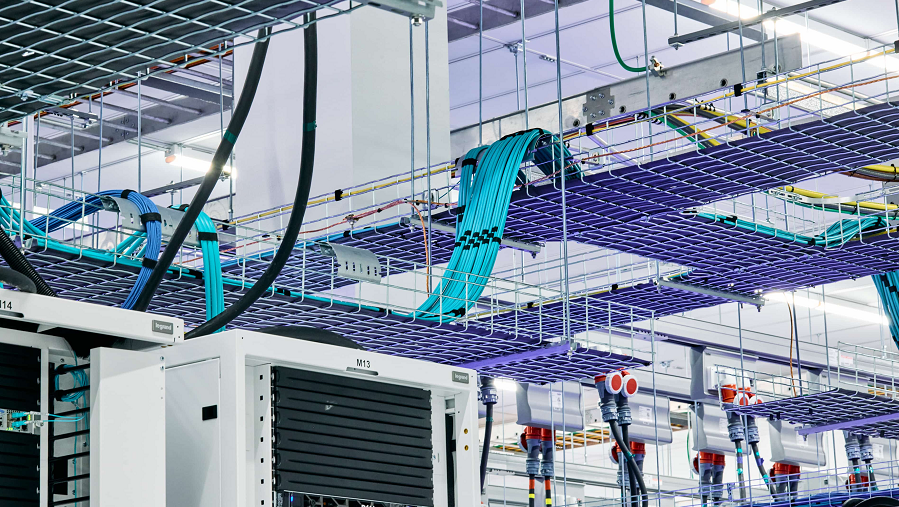
Anthropic PBC will pay $19 billion to lease a TeraWulf Inc. data center for 20 years. TeraWulf, a Nasdaq-listed developer of artificial intelligence infrastructure, announced the deal today. The company's shares rose 4.8% on the news. The data center that Anthropic has agreed to lease is currently being built on the site of a former aluminum smelting facility in Hawesville, Kentucky. The 790-acre campus has existing power transmission and fiber-optic infrastructure, which will speed up construction. Building new overhead power lines can take years in some cases. TeraWulf expects to bring an unspecified amount of "initial capacity" online in the second half of 2027. The facility will become fully operational the following year with 401 megawatts of computing power. TeraWulf will use a so-called closed-loop cooling system to dissipate heat from the graphics cards inside the data center. According to the company, the system doesn't draw water from local reservoirs but rather recycles the same cooling liquid. The coolant is a mix of water and a material called propylene glycol that is also used as a food additive. TeraWulf circulates the liquid through closet-like structures behind server racks to absorb heat from graphics cards. Pumps subsequently move the coolant outside the data center, where fans help radiate the heat into the atmosphere. The coolant then returns to the server rack and the process repeats itself. TeraWulf stands to realize a significant return on investment from its deal with Anthropic. A company presentation states that it intends to invest between $3 billion and $4 billion in the data center, or less than one fifth the lease's value. Last quarter, TeraWulf posted $34 million in revenue. It's unclear what chips Anthropic will install in the facility. Last week, rumors emerged that it may partner with Samsung Electronics Co. to produce a custom inference accelerator. The AI developer also uses chips from Nvidia Corp., Advanced Micro Devices Inc. and Google LLC. "When we announced the Justified Data campus acquisition in February, we told investors that we expected to secure a major customer commitment by around the end of the second quarter of 2026," said TeraWulf Chief Executive Officer Paul Prager. "The timing of today's announcement reflects the completion of final documentation and customary transaction processes." The Anthropic lease is not the only data center deal that TeraWulf announced today. Last year, the company teamed up with fellow data center developer Fluidstack Ltd. to build a 168-megawatt AI facility in Abernathy, Texas. TeraWulf today disclosed that it has agreed to sell its 50.1% stake in the facility to Fluidstack for $450 million. The deal is expected to provide a "premium to invested capital." Last November, Anthropic partnered with Fluidstack to build a network of data centers in the US. The companies indicated that the first facilities will be constructed in Texas and New York. As a result, it's possible that the Abernathy data center will host Anthropic workloads much like the Hawesville campus.
Here's Who Owns the Most SpaceX Stock
The question of who owns the most stock means more when you're asking about Space Exploration Technologies (NASDAQ: SPCX) than when you're asking about a typical public company. The June 2026 IPO floated a thin slice of the business -- nearly 4.3% of the equity -- which means the people and firms who held shares before the debut own the rest. The ownership structure that developed across two private decades when SpaceX was a private company is the one that governs it now that it's public, and it puts a small number of names in charge of a $2 trillion enterprise. Elon Musk owns the most SpaceX stock There is no contest at the top. Elon Musk holds close to 42% of the equity, a stake worth more than $1 trillion at the IPO valuation. Musk's block sits under a lockup that lasts until June 2027, with no early release provision, so the largest holder is a seller of nothing for the first year on the market. Missed Nvidia in 2009? This Rare Signal Is Flashing Again. In 2009, a "Double Down" signal flashed for a little-known chipmaker called Nvidia. For the first time in years, that same "Total Conviction" signal is flashing for a company 1/100th the size of Nvidia. Continue " The outside investors who own the most SpaceX stock Behind Musk, the biggest holder is a name many investors miss. Alphabet (NASDAQ: GOOG) (NASDAQ: GOOGL), the parent of Google, owns close to 7% of SpaceX, a position that can be traced to a $1 billion investment it made alongside Fidelity in January 2015 (Alphabet invested $900 million, with Fidelity contributing the remaining $100 million). That single check turned Google into the largest outside shareholder in the company, a bet on rockets from a search and advertising business. The early venture backers hold the most striking returns rather than the largest slices. Founders Fund, a firm co-founded by Peter Thiel, wrote a $20 million check in SpaceX's 2008 Series C round, and that stake is now worth $50 billion. Sequoia Capital, Andreessen Horowitz, and Valor Equity Partners each hold positions of around 2% or below. The February 2026 merger with xAI added new faces to the list, including Nvidia and the Qatar Investment Authority, a sovereign wealth fund. The employees and the public shareholders One large block hides in plain sight. SpaceX pays its workforce with restricted stock units and options, so employees hold a collective stake that the company does not break out in its filings. That group has waited years for the tender offers, and the staggered lockup schedule that lets them sell, and the size of their holdings is one of the least visible parts of the ownership story.
Why TeraWulf (WULF) Is Down 13.2% After Signing a 20-Year AI Data Campus Lease with Anthropic - And What's Next
* In early July 2026, TeraWulf announced that its subsidiary Raylan Data LLC entered a 20-year Justified Data Campus lease with Anthropic, committing approximately 401 MW of critical IT load at its Hawesville, Kentucky data center campus and targeting about US$19.00 billions in contracted revenue over the initial term. * The agreement signals a shift in TeraWulf's business mix, as it leans into long-duration, high-performance computing infrastructure for artificial intelligence alongside selling non-core assets. * We'll examine how this long-term Anthropic lease, and the move toward AI-focused recurring revenue, reshapes TeraWulf's investment narrative. Uncover the next big thing with 20 elite penny stocks that balance risk and reward. What Is TeraWulf's Investment Narrative? To own TeraWulf today, you need to believe the company can successfully pivot from loss‑making bitcoin mining into a capital‑intensive, AI infrastructure platform with long‑dated, contracted cash flows. The new 20‑year Anthropic lease, with about US$19.00 billions in contracted revenue backed by investment‑grade credit, materially tilts the story toward recurring, high‑performance computing income and away from more volatile digital asset exposure. In the near term, the key catalysts shift to execution milestones: securing and building out the roughly 401 MW at Hawesville on time and budget, closing the US$530 million Abernathy sale, and managing dilution after recent equity raises. At the same time, the biggest risks now look less about pure bitcoin prices and more about construction, funding and delivering on very large AI commitments without further eroding an already weak balance sheet. However, the size of these AI commitments introduces new execution and funding risks that investors should be aware of.The analysis detailed in our TeraWulf valuation report hints at an inflated share price compared to its estimated value. Exploring Other Perspectives Five Simply Wall St Community fair value estimates span roughly US$18 to US$57.04, reflecting wide dispersion in expectations. Against that backdrop, TeraWulf's huge Anthropic lease and ongoing losses may pull opinions even further apart, so it is worth weighing several viewpoints before deciding how this evolving AI story fits into your portfolio. Explore 5 other fair value estimates on TeraWulf - why the stock might be worth over 2x more than the current price! Form Your Own Verdict Don't just follow the ticker - dig into the data and build a conviction that's truly your own.
Why TeraWulf (WULF) Is Down 13.2% After Signing a 20-Year AI Data Campus Lease with Anthropic - And What's Next
* In early July 2026, TeraWulf announced that its subsidiary Raylan Data LLC entered a 20-year Justified Data Campus lease with Anthropic, committing approximately 401 MW of critical IT load at its Hawesville, Kentucky data center campus and targeting about US$19.00 billions in contracted revenue over the initial term. * The agreement signals a shift in TeraWulf's business mix, as it leans into long-duration, high-performance computing infrastructure for artificial intelligence alongside selling non-core assets. * We'll examine how this long-term Anthropic lease, and the move toward AI-focused recurring revenue, reshapes TeraWulf's investment narrative. Uncover the next big thing with 20 elite penny stocks that balance risk and reward. What Is TeraWulf's Investment Narrative? To own TeraWulf today, you need to believe the company can successfully pivot from loss‑making bitcoin mining into a capital‑intensive, AI infrastructure platform with long‑dated, contracted cash flows. The new 20‑year Anthropic lease, with about US$19.00 billions in contracted revenue backed by investment‑grade credit, materially tilts the story toward recurring, high‑performance computing income and away from more volatile digital asset exposure. In the near term, the key catalysts shift to execution milestones: securing and building out the roughly 401 MW at Hawesville on time and budget, closing the US$530 million Abernathy sale, and managing dilution after recent equity raises. At the same time, the biggest risks now look less about pure bitcoin prices and more about construction, funding and delivering on very large AI commitments without further eroding an already weak balance sheet. However, the size of these AI commitments introduces new execution and funding risks that investors should be aware of.The analysis detailed in our TeraWulf valuation report hints at an inflated share price compared to its estimated value. Exploring Other Perspectives Five Simply Wall St Community fair value estimates span roughly US$18 to US$57.04, reflecting wide dispersion in expectations. Against that backdrop, TeraWulf's huge Anthropic lease and ongoing losses may pull opinions even further apart, so it is worth weighing several viewpoints before deciding how this evolving AI story fits into your portfolio. Explore 5 other fair value estimates on TeraWulf - why the stock might be worth over 2x more than the current price! Form Your Own Verdict Don't just follow the ticker - dig into the data and build a conviction that's truly your own.
Here's Who Owns the Most SpaceX Stock
The question of who owns the most stock means more when you're asking about Space Exploration Technologies (SPCX 0.99%) than when you're asking about a typical public company. The June 2026 IPO floated a thin slice of the business -- nearly 4.3% of the equity -- which means the people and firms who held shares before the debut own the rest. The ownership structure that developed across two private decades when SpaceX was a private company is the one that governs it now that it's public, and it puts a small number of names in charge of a $2 trillion enterprise. Elon Musk owns the most SpaceX stock There is no contest at the top. Elon Musk holds close to 42% of the equity, a stake worth more than $1 trillion at the IPO valuation. Musk's block sits under a lockup that lasts until June 2027, with no early release provision, so the largest holder is a seller of nothing for the first year on the market. The outside investors who own the most SpaceX stock Behind Musk, the biggest holder is a name many investors miss. Alphabet (NASDAQ: GOOG) (GOOGL +1.87%), the parent of Google, owns close to 7% of SpaceX, a position that can be traced to a $1 billion investment it made alongside Fidelity in January 2015 (Alphabet invested $900 million, with Fidelity contributing the remaining $100 million). That single check turned Google into the largest outside shareholder in the company, a bet on rockets from a search and advertising business. The early venture backers hold the most striking returns rather than the largest slices. Founders Fund, a firm co-founded by Peter Thiel, wrote a $20 million check in SpaceX's 2008 Series C round, and that stake is now worth $50 billion. Sequoia Capital, Andreessen Horowitz, and Valor Equity Partners each hold positions of around 2% or below. The February 2026 merger with xAI added new faces to the list, including Nvidia and the Qatar Investment Authority, a sovereign wealth fund. The employees and the public shareholders One large block hides in plain sight. SpaceX pays its workforce with restricted stock units and options, so employees hold a collective stake that the company does not break out in its filings. That group has waited years for the tender offers, and the staggered lockup schedule that lets them sell, and the size of their holdings is one of the least visible parts of the ownership story. You don't have much power if you buy SpaceX Beyond them sit everyone who bought at the IPO or after. Public shareholders own the small float, and more shares will reach the market as insider lockups expire throughout late 2026. The ownership map delivers one clear message: Buying SpaceX stock makes you an owner of the economics, but it doesn't give you a voice in the company's direction. SpaceX uses a dual-class structure: Musk's Class B shares carry 10 votes each, giving him 82.4% of the voting power. A public shareholder who buys Class A stock gains economic exposure to the rocket and satellite business without a real say in how it is run. Put plainly, the float exists so the public can fund the vision while the people who already own it decide what that vision costs and who profits from it. You get a ticker, a price that moves, and the privilege of watching Musk run a $2 trillion company on your money. If the board ever faces a hard call between what serves Class A holders and what serves the man holding 82.4% of the votes, the math has been settled since before you showed up. You are along for the ride, not steering it, and the ride is being priced at a valuation that assumes almost everything goes right. Whether that's a risk you want to take is up to you.
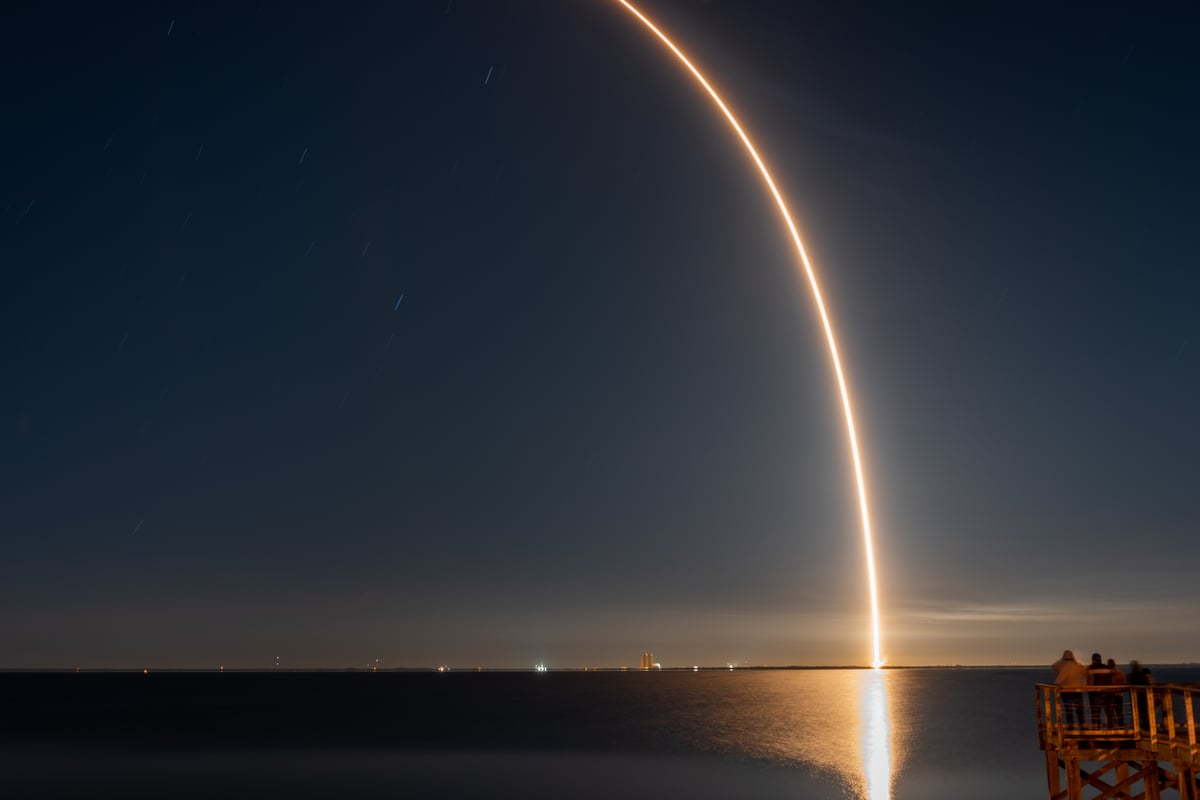
Bitcoin in Trump Accounts? Pres Says 'Something Could Happen,' Dells, SpaceX Back Billions in Donations
President leaves door open to Bitcoin as Dell and SpaceX pledge billions to expand Trump Accounts. President Donald Trump's child investment scheme has secured more than $6 billion in private backing from technology leaders, as he hinted that Bitcoin-linked contributions to 'Trump Accounts' could be on the horizon, saying 'something could happen' when asked about the cryptocurrency's role in the programme. The comments came as the initiative received major private-sector backing from technology leaders, including a $6.25 billion commitment from Michael and Susan Dell and a pledge from SpaceX President Gwynne Shotwell and her husband involving a share of SpaceX stock. Bitcoin Inclusion Remains Unconfirmed Trump did not announce any changes to the programme's investment options, but used the question to argue that cryptocurrency has become strategically important for the United States in its competition with China. Trump Accounts are designed as long-term investment vehicles for children, with funds directed towards approved investment options rather than direct ownership of digital assets. Any move to include Bitcoin or other cryptocurrencies would represent a significant change to the programme's current structure and could raise questions around volatility, regulation and suitability for child-focused savings accounts. His remarks focused instead on potential contributions from crypto industry figures rather than changes to the investment options available through Trump Accounts. Tech Titans Pledge Billions To Trump Accounts Trump Accounts received major backing from technology leaders, with Michael and Susan Dell committing $6.25 billion and SpaceX President Gwynne Shotwell announcing a contribution involving a share of SpaceX stock. The Dells said the contribution would provide an additional $250 investment for up to 25 million eligible children born between 2016 and 2024, extending support to children who were not included in the programme's initial government contribution. 'Susan and I didn't want the children that were born just before to be completely left out, so we are contributing $6.25 billion, $250 to 25 million eligible American children,' Dell said. Shotwell said she and her husband would gift a share of SpaceX stock to Trump Accounts for more than two million children aged 11 to 17, with priority given to those in areas with lower average household incomes. 'We have been fortunate in our careers and hope this gift encourages the next generation to continue the journey of enabling humanity to live and fly amongst the stars,' Shotwell said. Trump Hints At Future Crypto-Linked Gifts Trump suggested further contributions could come from wealthy business leaders, including figures from the crypto industry. 'I think something could happen in that regard too with a contribution to the people of our country,' Trump said when discussing crypto's potential connection to Trump Accounts. He added, 'I think you're going to see a contribution made by those because they're making tremendous amounts of money.' Asked whether he had spoken with Elon Musk about further share donations, Trump said he regularly speaks with leading technology executives. 'I'm like a cheerleader for geniuses. I love geniuses,' Trump said, adding that he speaks with executives including Musk, Mark Zuckerberg and Jeff Bezos. 'I speak to all of them, and I encourage them,' Trump added. Trump did not announce any additional commitments from cryptocurrency figures or other companies, but said he expected further support for the programme. The programme's announced private-sector backing currently comes from figures including the Dells and Shotwell, while the role of digital assets in Trump Accounts remains unclear.
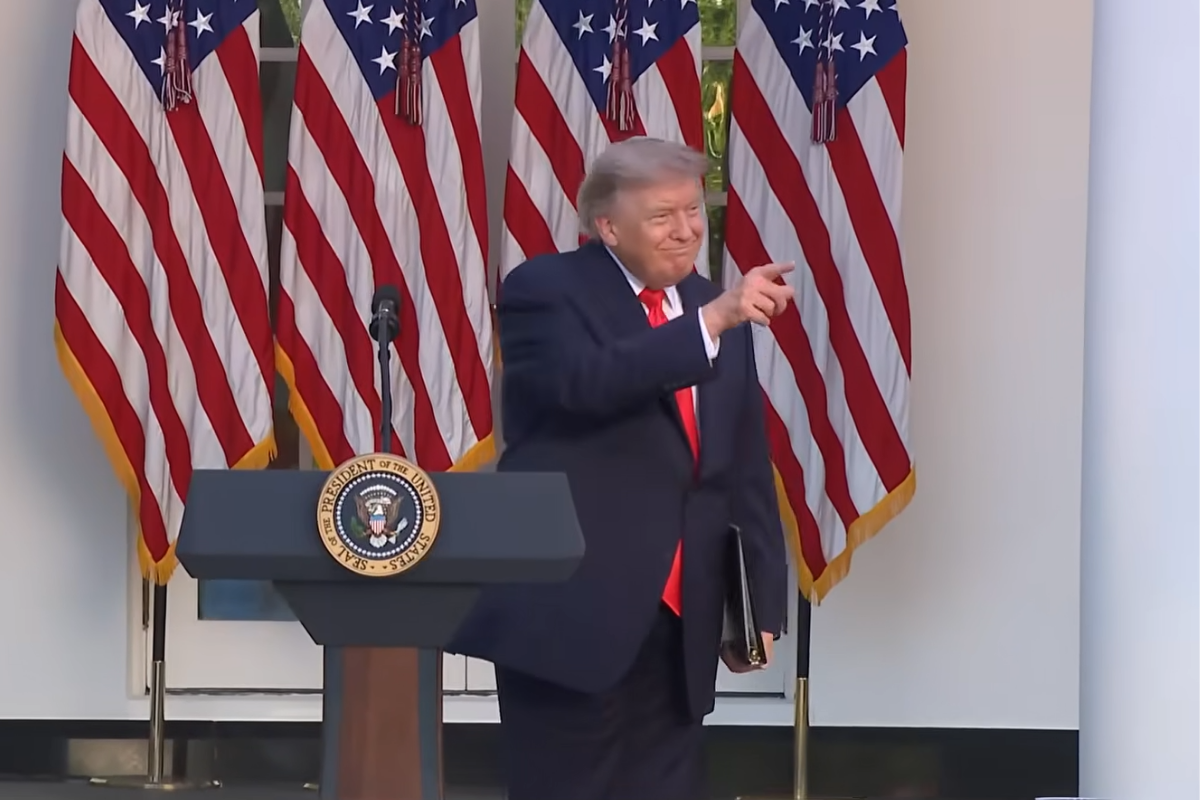
Iran funeral preparations hit Hormuz normalization bet to 59.5% on Polymarket
Tehran Funeral for Iran's Slain Supreme Leader: Strait of Hormuz "Normal Traffic" Odds Slide to 59.5% on Polymarket Tehran is preparing for a major funeral procession after Iran's supreme leader was killed, an escalation that has kept regional security risks in focus. On Polymarket, the contract "Strait of Hormuz traffic returns to normal by December 31?" implies a 59.5% chance of normal traffic by the deadline, down sharply from 85.5%. Key Takeaways * Polymarket prices a 59.5% chance that Strait of Hormuz traffic returns to normal by Dec. 31, 2026. * Odds fell from 85.5% as headlines around Iran's leadership and mass funeral events underscored persistent regional risk. * The market resolves on Dec. 31, 2026; the Yes contract is down 26.0 percentage points versus the prior reading. Iran is preparing for a funeral procession in Tehran for its slain supreme leader, with organizers expecting millions to attend. The event is set to take place today in the capital. The anticipated turnout highlights the scale of public mobilization around the leadership's death. The report frames the procession as a central moment in the ongoing Iran war coverage. Attention is focused on Tehran as the ceremony proceeds amid heightened tensions. Polymarket Data: $4.20M Volume as "Yes" Drops 26 Points (85.5% to 59.5%) Ahead of Dec. 31, 2026 Resolution On Polymarket, "Strait of Hormuz traffic returns to normal by December 31?" was last priced at Yes 59.5% and No 40.5%, with about $4.20 million in volume. The move marks a steep repricing from the prior 85.5% level for Yes, a 26.0 percentage-point drop. The current split shows traders still leaning toward normalization by the Dec. 31, 2026 resolution date, but with materially less conviction than earlier pricing. Watch whether the Yes price stabilizes around the high-50s or continues to slide on fresh liquidity, and monitor any follow-through in volume that would confirm the shift in positioning ahead of the Dec. 31, 2026 resolution. Beyond the Strait of Hormuz: Other High-Volume Geopolitical and Macro Polymarket Contracts Traders Are Watching Elsewhere on Polymarket, traders are spreading risk across adjacent Iran-focused timelines and diplomacy bets that could move broader geopolitical pricing. "Iran leader end of 2026?" is led by Mojtaba Khamenei at 83.3% with about $18.13 million in volume, while shorter-dated shipping contracts remain heavily skewed to disruption, with "Strait of Hormuz traffic returns to normal by July 15?" at 98.25% No ($7.33 million) and "Strait of Hormuz traffic returns to normal by July 31?" at 90.5% No ($12.32 million). On the negotiation front, "Next round of US-Iran peace talks by...?" points to July 31 at 72.0% ($4.94 million), as "US-Iran Final Nuclear Deal by...?" sits at 45.5% for December 31 with roughly $7.43 million traded. Odds Trend By the Numbers * Platform: Polymarket * Market: Strait of Hormuz traffic returns to normal by December 31? * Resolution window: Dec 31, 2026 (UTC) * Status: Active (open for trading) * Leading implied prob.: 59.5% * Volume: ~$4,201,899 * Top outcomes: Yes: Yes 59.5% / No 40.5%; No: Yes 59.5% / No 40.5%

FCA Official Urges Crackdown on OpenAI, Google, and Anthropic AI Models
A senior U.K. Financial Conduct Authority (FCA) official, Sheldon Mills, said the country should consider regulating well-known artificial intelligence (AI) models such as OpenAI's ChatGPT, Anthropic's Claude, and Google's (GOOGL) Gemini. The proposal comes as regulators worldwide debate how to regulate advanced AI systems now being used in banking, investing, and other financial services. 4th of July Sale - 70% Off * Unlock powerful investing tools and data-driven insights with TipRanks Premium for more confident investment decisions. * Discover top stock picks and new investment opportunities through TipRanks' Smart Investor Newsletter. FCA Wants Review of AI Models Used for Financial Advice After concluding a personal review of popular AI models on July 6, Mills stated that Britain should consider setting new rules for these systems. The review found that more than one in four people in the U.K. trust ChatGPT, Claude, and Gemini for financial advice, even though these AI tools are not bound by the same rules as regulated financial services. As a result, Mills said the FCA should use the next three to six months to decide whether existing rules should apply to these AI models as they become more widely used. FCA Chair Ashley Alder also said regulators must keep pace with the fast-changing AI landscape while continuing to protect consumers. Growing AI Adoption Raises System-Wide Risk Concerns The FCA's review also signaled how quickly AI is being adopted across the financial industry. According to a recent report, 81% of financial firms worldwide now use AI in some form, while 40% are already deploying it at a more advanced level. Although AI is still mainly used behind the scenes, more financial firms are employing it to handle user complaints and provide investment advice. Mills also warned that relying on a small number of AI firms, cloud providers, and tech platforms could create risks for financial systems. If many firms use the same tech, a single outage or failure could disrupt multiple businesses at once. Is Google a Good Stock to Buy and Hold? Wall Street analysts tracked by TipRanks have rated Google (GOOGL) a Strong Buy. Out of 33 analysts, 28 rated the stock a Buy, 5 a Hold, and 0 a Sell. GOOGL also currently trades around $364 and has a 12-month projected average price target of $428.12. (See GOOGL's Stock Forecast)

Anthropic restores global AI model access after US lifts restrictions
Anthropic restored global access to its AI model Claude Fable 5 on July 1, 2026, after the U.S. Department of Commerce lifted export controls that had restricted foreign use since June 12. The restrictions were imposed due to national security concerns, according to Commerce officials. The initial export control order required Anthropic to disable access to its two most advanced AI models, Claude Fable 5 and Mythos 5, for all foreign nationals due to national security concerns, according to Commerce officials and company statements. Amazon researchers had demonstrated vulnerabilities in Fable 5's safeguards during a red-team exercise, raising fears the model could be exploited to facilitate cyberattacks, sources confirmed. The U.S. Department of Commerce lifted export controls on Anthropic's Claude Fable 5 model around June 30, 2026, allowing the company to restore global access starting July 1, ending a 19-day suspension that began June 12. Following the June 12 order, Anthropic requested Amazon Web Services to revoke access "for all users in all regions," resulting in a global blackout of both models, according to AWS statements and public records. The suspension lasted over two weeks, during which Anthropic engaged in "productive conversations" and weeks-long negotiations with the Trump administration and the Commerce Department to address security issues and implement enhanced safety measures, company communications and government sources said. On June 27, the Commerce Department partially lifted export controls on Mythos 5, restoring access for a controlled list of more than 100 U.S.-linked companies, federal agencies, and critical infrastructure organizations. However, Mythos 5 remained offline for general foreign users, with no public timeline for broader availability. Commerce Secretary Howard Lutnick, who confirmed the government's involvement on social media platform X, said the partial restoration was contingent on "appropriate safeguards" being in place for trusted partners, including entities responsible for operating and defending critical infrastructure. The full lifting of export controls on Claude Fable 5 marked a significant policy shift, sources said, enabling Anthropic to begin phased reactivation of the model across its consumer and developer platforms. Starting July 1, Fable 5 was restored globally on Claude.ai, the consumer interface, as well as the Claude API, Claude Platform, and Claude Code, an agentic coding assistant, according to Anthropic's public announcements and platform updates. Cloud integrations with AWS Bedrock, Google Cloud Vertex AI, and Microsoft Foundry are also being reestablished, although some reports noted no firm timelines for complete availability on all cloud services. Anthropic implemented an upgraded safety classifier for Fable 5 designed to block cybersecurity-related tasks and address the exploit techniques identified during the Amazon red-team exercise. The company claimed the new classifier prevents the identified exploit in over 99% of tested instances, based on evaluations coordinated with the Commerce Department's Center for AI Standards and Innovation. Lutnick emphasized that the restoration was contingent on Anthropic rectifying the vulnerabilities that allowed researchers to bypass previous safeguards. The export control episode represents one of the first instances of the U.S. government directly ordering the suspension of a leading commercial AI model, highlighting increased regulatory scrutiny over advanced AI technologies with potential dual-use risks. Analysts and media coverage have described the lifting of restrictions as a notable development in U.S. AI export policy, balancing national security concerns with the desire to maintain global competitiveness in AI innovation. Anthropic has committed to continuing collaboration with the U.S. government to expand access to Mythos 5 beyond the current trusted-partner framework and to maintain Fable 5's availability under strengthened safety protocols. The controlled-access model for Mythos 5, limited to select U.S. companies and allied organizations under Commerce Department oversight, illustrates emerging approaches to managing high-risk AI deployments. The incident underscores the White House's active role in shaping AI security policy and sets a precedent for future government intervention in commercial AI operations. As of July 2026, enterprise users and investors are closely monitoring how the resolution affects the reliability and security of AI services across major cloud platforms, given the abrupt suspension and subsequent restoration of Anthropic's top-tier models.

You can ignore AI giants like SpaceX, but your 401(k) won't
NEW YORK -- While you might want to ignore all the hubbub around SpaceX, Elon Musk and IPOs, your 401(k) likely can't. SpaceX is now worth more than $2.1 trillion following its ballyhooed debut on Wall Street last month. Whether or not you believe it deserves to be worth roughly the same as Walmart, Exxon Mobil, Bank of America and IBM combined, the collective market does. And because it's that big, SpaceX is about to join a high-profile index on Tuesday, the Nasdaq 100. Many stock indexes don't care about how realistic a company's growth plans are or who its CEO is. They're simply trying to show how slices of the market, or the whole thing, are performing. That matters for investors and their 401(k) accounts because they're depending more than ever on funds that simply mimic these indexes. It's a lower-cost way to invest, allowing savers to keep more of their investments. Partly because of that, such index funds have usually proven to be better performers than funds that try to pick and choose individual stocks. Just one in five actively managed U.S. stock funds survived and beat their average index peer over the last decade, at 21%, according to Morningstar's data through 2025. Such disparities in performance meant investors had more money invested in U.S. index funds than actively managed ones beginning in 2024, and the gap has only grown since then. Here's a look at what's going on: Indexes measure the market Indexes are things the investment industry has created to answer the question: What is the market doing? It's otherwise tough to answer quickly when the U.S. market has thousands of stocks moving in different directions at any moment. The S&P 500 is perhaps the most famous and influential index. It tracks 500 of the biggest U.S. stocks, and trillions of dollars in investments are either directly mimicking it or at least benchmarking themselves against it. The Dow Jones Industrial Average is well known because it's been around since the 19th century, but it tracks only 30 big stocks so Wall Street pays it little attention. Companies want to be in indexes Because index funds are the way so many investors put money into the stock market, companies want to be part of indexes. Stocks can see a big jump in their prices after S&P Dow Jones Indices, Nasdaq, FTSE Russell or other companies announce they'll be joining their indexes. The investment industry has created funds, including both traditional mutual funds and exchange-traded funds, to track almost every kind of index. More than 1,000 index funds were available at the end of last year, according to the Investment Company Institute. Of them, 185 tracked the S&P 500. SpaceX is joining indexes Nasdaq changed its rules to allow some huge companies to join its Nasdaq 100 index after just 15 trading days. That's a break from the past, where it would wait until each December to add new members in an annual reconstitution to make sure it includes the 100 largest non-financial companies on the Nasdaq. SpaceX will join the Nasdaq 100 before trading begins Tuesday. Some popular funds track the Nasdaq 100 index, including the QQQ exchange-traded fund from Invesco that has roughly $480 billion in total investments. That means QQQ holders will soon own shares of SpaceX, without doing anything on their own. Other AI giants could as well Anthropic and OpenAI are two other huge AI-related companies looking to sell their own stocks soon on a U.S. exchange for the first time. Their IPOs could potentially make each worth close to $1 trillion. It used to be that companies would have an IPO long before they got that big. But SpaceX, Anthropic and OpenAI swelled to tremendous sizes thanks to dollars from private investors, including pension funds, companies and rich investors, away from the public market. That's forcing the reconsideration for the investment industry about how quickly to add companies to indexes that they say track the biggest companies. Not every index is making changes to fast-track big IPOs The company behind the S&P 500 is not making changes to allow SpaceX and other "mega" IPOs faster entry into the index. For it, a stock needs to trade on an eligible exchange for at least 12 months before it can join the index. Not only that, S&P Dow Jones Indices also requires companies to have made a profit in its most recent quarter and over the sum of its last four quarters. SpaceX lost $4.9 billion last year and another $4.3 billion through the first three months of 2026. It acknowledges that it "may not achieve profitability in the future." Over the long term, a stock's price tends to track with how much profit the company is making. Not everyone is happy about SpaceX's IPO entry to indexes Officials from pension funds for firefighters, teachers and other workers in California and New York sent a letter to SpaceX before its IPO decrying its corporate governance, including how much power Musk will hold over the company through his ownership of a special class of stock with more voting power. They said they could become owners of SpaceX stock because they hold index funds. If Musk is able to control so much of the voting power on the board of directors, it would make him tremendously powerful atop SpaceX, "essentially making him unfireable without his own consent," the CEO of California Public Employees' Retirement System, the New York state comptroller and the New York City comptroller wrote in their letter. If an investor doesn't like certain companies in the index, choices are limited Index funds track indexes. And if a stock is in an index, the index fund will buy it, even if investors may not like it. Tesla has remained in the S&P 500 even though critics called it overvalued for years, for example, and Musk's electric-vehicle company has grown to become one of Wall Street's 10 biggest companies. Some indexes say they will not include companies that have poor corporate governance standards or other narrowed criteria, but investors need to look for them. The S&P 500 ESG index famously kicked Tesla out in 2022, for example.