News & Updates
The latest news and updates from companies in the WLTH portfolio.
Anthropic launches new safety classifier to block jailbreak technique Amazon flagged
On June 12, Amazon engineers handed a report to the U.S. Commerce Department. Within hours, two of Anthropic's newest AI models went offline for every user on the planet. Nineteen days later, Anthropic got them back. The return of Claude Fable 5 to global availability on July 1 is the result of two weeks of Washington negotiations, a new safety classifier, and an industry jailbreak framework Anthropic built alongside Amazon, Microsoft, and Google. How Anthropic got from that shutdown to this resolution tells a specific story about where the company stands in 2026. What triggered the 19-day Fable 5 ban and how Anthropic ended it The June 12 export control directive came after Amazon researchers found a method of prompting Fable 5 to identify software vulnerabilities and, in one case, produce code showing how one could be exploited. They reported it to the Commerce Department rather than to Anthropic directly, a decision worth noting, given that Amazon is also Anthropic's largest outside investor. The order required Anthropic to restrict access to all foreign nationals, including its own non-citizen staff. Because Anthropic had no way to verify user nationality in real time, it shut both Fable 5 and Mythos 5 down for everyone worldwide. Anthropic's counter-argument was specific. Its own testing found the same vulnerabilities could be flagged by far weaker models, including its own Claude Opus 4.8, OpenAI's GPT-5.5, and China's Kimi K2.7. Every model the company tested could produce the same exploit code demonstration as Fable 5. According to Anthropic's announcement, the flagged behavior amounted to routine defensive cybersecurity work, not a unique capability of Fable 5. Notably, CEO Dario Amodei took a hands-off role in the Washington negotiations. Co-founder Tom Brown and Head of Public Policy Sarah Heck led the discussions at the Commerce Department and Office of the National Cyber Director, a deliberate choice to reduce friction with an administration with which Amodei had publicly clashed earlier in the year. Commerce Secretary Howard Lutnick announced the resolution on July 1 via X (the former Twitter). "Over the past two weeks, we have worked closely with Anthropic to analyze and approve Fable 5 to ensure alignment across the U.S. Government and strengthen America's leadership in AI," Lutnick wrote. What Anthropic changed to restore Fable 5 access globally The core technical fix is a new safety classifier trained to block the specific jailbreak technique Amazon reported in more than 99% of cases. The government's Center for AI Standards and Innovation (CAISI) independently tested and approved the new safeguards before the export controls came off. When the classifier blocks a request, the user gets redirected to Claude Opus 4.8 and notified. The tradeoff is more false positives on routine coding and debugging requests, a cost Anthropic accepted in exchange for clearing the government's concerns. The company confirmed the resolution in a June 30 press release. "As of today, June 30, the export controls on Fable 5 and Mythos 5 have been lifted." Fable 5 returned July 1 on Claude Platform, Claude.ai, Claude Code, and Claude Cowork for users globally, CNBC reported. Pro, Max, Team, and select Enterprise subscribers get up to 50% of weekly usage limits included through July 7 as compensation for the disruption, after which the model requires usage credits. AWS, Google Cloud, and Microsoft Foundry access is being restored separately. As part of the deal, Anthropic committed to pre-release government access for future frontier models, rapid information sharing on jailbreak findings, and a new HackerOne program through which security researchers can submit Fable 5 vulnerabilities for review. What the shutdown and restoration mean for Anthropic's trust and IPO The timing of the disruption could not have been more sensitive. Anthropic had confidentially filed an S-1 with the SEC on June 1 for a potential IPO, after raising a $65 billion Series H at a $965 billion valuation, as Fortune reported. When the shutdown happened in June, Anthropic's pre-IPO perpetual contract on the onchain exchange Hyperliquid fell about 3.7%, according to CoinDesk. Investors were reassessing the risk of a public listing for a company whose flagship models could be pulled without warning. Enterprise clients felt the disruption more practically. Businesses in finance, health care, and critical infrastructure lost access to AI systems embedded in production workflows with no prior notice. American Banker reported that some industry observers were already asking whether companies should rethink their reliance on frontier model vendors that can be shut down overnight by government directive. The regulatory picture beyond this episode also carries some weight. Defense Secretary Pete Hegseth designated Anthropic a supply-chain risk in March, The Hill confirmed, a separate dispute the company is still contesting. The Amazon conflict of interest adds another layer. Anthropic's largest investor reported a jailbreak to the government before informing Anthropic. That dynamic introduces ongoing tension in the company's most important commercial and government relationships simultaneously. Nineteen days from shutdown to global restoration is a number that matters for the IPO story. Public market investors and enterprise clients were both watching what Anthropic did with a genuine crisis. Papers and policy commitments are one thing. An actual government-ordered shutdown is the real test. Anthropic handled this one in under three weeks, with CAISI sign-off and a new industry framework attached. Why the new AI jailbreak framework may outlast the Fable 5 story The four-criteria jailbreak scoring system Anthropic is developing with Amazon, Microsoft, and Google could end up as the most consequential outcome of the whole episode. The AI industry still lacks an agreed-upon way to communicate how dangerous a jailbreak actually is, which is partly why a borderline safety finding turned into a 19-day global shutdown. 4 scoring criteria for AI jailbreaks * Capability gain * Breadth of capability * Ease of weaponization * Discoverability The most severe findings trigger immediate mitigations. A 24/7 monitoring team watches jailbreak submission channels. If the framework gets adopted broadly, future findings would go through a structured triage process rather than escalating directly to emergency export controls. Anthropic framed the framework as an invitation, not just an announcement, calling on other AI developers to join. The June 2 White House Executive Order on AI innovation and security, which Anthropic helped shape over 10 weeks of agency discussions, creates a policy environment where a shared jailbreak standard could become government-recognized practice. That would give Anthropic lasting influence over how AI safety gets measured and enforced across the industry, well beyond the resolution of one 19-day ban. The Arena Media Brands, LLC THESTREET is a registered trademark of TheStreet, Inc. This story was originally published July 3, 2026 at 8:33 PM.
Anthropic launches new safety classifier to block jailbreak technique Amazon flagged
On June 12, Amazon engineers handed a report to the U.S. Commerce Department. Within hours, two of Anthropic's newest AI models went offline for every user on the planet. Nineteen days later, Anthropic got them back. The return of Claude Fable 5 to global availability on July 1 is the result of two weeks of Washington negotiations, a new safety classifier, and an industry jailbreak framework Anthropic built alongside Amazon, Microsoft, and Google. How Anthropic got from that shutdown to this resolution tells a specific story about where the company stands in 2026. What triggered the 19-day Fable 5 ban and how Anthropic ended it The June 12 export control directive came after Amazon researchers found a method of prompting Fable 5 to identify software vulnerabilities and, in one case, produce code showing how one could be exploited. They reported it to the Commerce Department rather than to Anthropic directly, a decision worth noting, given that Amazon is also Anthropic's largest outside investor. The order required Anthropic to restrict access to all foreign nationals, including its own non-citizen staff. Because Anthropic had no way to verify user nationality in real time, it shut both Fable 5 and Mythos 5 down for everyone worldwide. Anthropic's counter-argument was specific. Its own testing found the same vulnerabilities could be flagged by far weaker models, including its own Claude Opus 4.8, OpenAI's GPT-5.5, and China's Kimi K2.7. Every model the company tested could produce the same exploit code demonstration as Fable 5. According to Anthropic's announcement, the flagged behavior amounted to routine defensive cybersecurity work, not a unique capability of Fable 5. Notably, CEO Dario Amodei took a hands-off role in the Washington negotiations. Co-founder Tom Brown and Head of Public Policy Sarah Heck led the discussions at the Commerce Department and Office of the National Cyber Director, a deliberate choice to reduce friction with an administration with which Amodei had publicly clashed earlier in the year. Commerce Secretary Howard Lutnick announced the resolution on July 1 via X (the former Twitter). "Over the past two weeks, we have worked closely with Anthropic to analyze and approve Fable 5 to ensure alignment across the U.S. Government and strengthen America's leadership in AI," Lutnick wrote. What Anthropic changed to restore Fable 5 access globally The core technical fix is a new safety classifier trained to block the specific jailbreak technique Amazon reported in more than 99% of cases. The government's Center for AI Standards and Innovation (CAISI) independently tested and approved the new safeguards before the export controls came off. When the classifier blocks a request, the user gets redirected to Claude Opus 4.8 and notified. The tradeoff is more false positives on routine coding and debugging requests, a cost Anthropic accepted in exchange for clearing the government's concerns. The company confirmed the resolution in a June 30 press release. "As of today, June 30, the export controls on Fable 5 and Mythos 5 have been lifted." Fable 5 returned July 1 on Claude Platform, Claude.ai, Claude Code, and Claude Cowork for users globally, CNBC reported. Pro, Max, Team, and select Enterprise subscribers get up to 50% of weekly usage limits included through July 7 as compensation for the disruption, after which the model requires usage credits. AWS, Google Cloud, and Microsoft Foundry access is being restored separately. As part of the deal, Anthropic committed to pre-release government access for future frontier models, rapid information sharing on jailbreak findings, and a new HackerOne program through which security researchers can submit Fable 5 vulnerabilities for review. What the shutdown and restoration mean for Anthropic's trust and IPO The timing of the disruption could not have been more sensitive. Anthropic had confidentially filed an S-1 with the SEC on June 1 for a potential IPO, after raising a $65 billion Series H at a $965 billion valuation, as Fortune reported. When the shutdown happened in June, Anthropic's pre-IPO perpetual contract on the onchain exchange Hyperliquid fell about 3.7%, according to CoinDesk. Investors were reassessing the risk of a public listing for a company whose flagship models could be pulled without warning. Enterprise clients felt the disruption more practically. Businesses in finance, health care, and critical infrastructure lost access to AI systems embedded in production workflows with no prior notice. American Banker reported that some industry observers were already asking whether companies should rethink their reliance on frontier model vendors that can be shut down overnight by government directive. The regulatory picture beyond this episode also carries some weight. Defense Secretary Pete Hegseth designated Anthropic a supply-chain risk in March, The Hill confirmed, a separate dispute the company is still contesting. The Amazon conflict of interest adds another layer. Anthropic's largest investor reported a jailbreak to the government before informing Anthropic. That dynamic introduces ongoing tension in the company's most important commercial and government relationships simultaneously. Nineteen days from shutdown to global restoration is a number that matters for the IPO story. Public market investors and enterprise clients were both watching what Anthropic did with a genuine crisis. Papers and policy commitments are one thing. An actual government-ordered shutdown is the real test. Anthropic handled this one in under three weeks, with CAISI sign-off and a new industry framework attached. Why the new AI jailbreak framework may outlast the Fable 5 story The four-criteria jailbreak scoring system Anthropic is developing with Amazon, Microsoft, and Google could end up as the most consequential outcome of the whole episode. The AI industry still lacks an agreed-upon way to communicate how dangerous a jailbreak actually is, which is partly why a borderline safety finding turned into a 19-day global shutdown. 4 scoring criteria for AI jailbreaks * Capability gain * Breadth of capability * Ease of weaponization * Discoverability The most severe findings trigger immediate mitigations. A 24/7 monitoring team watches jailbreak submission channels. If the framework gets adopted broadly, future findings would go through a structured triage process rather than escalating directly to emergency export controls. Anthropic framed the framework as an invitation, not just an announcement, calling on other AI developers to join. The June 2 White House Executive Order on AI innovation and security, which Anthropic helped shape over 10 weeks of agency discussions, creates a policy environment where a shared jailbreak standard could become government-recognized practice. That would give Anthropic lasting influence over how AI safety gets measured and enforced across the industry, well beyond the resolution of one 19-day ban. The Arena Media Brands, LLC THESTREET is a registered trademark of TheStreet, Inc. This story was originally published July 3, 2026 at 5:33 PM.
Anthropic launches new safety classifier to block jailbreak technique Amazon flagged
On June 12, Amazon engineers handed a report to the U.S. Commerce Department. Within hours, two of Anthropic's newest AI models went offline for every user on the planet. Nineteen days later, Anthropic got them back. The return of Claude Fable 5 to global availability on July 1 is the result of two weeks of Washington negotiations, a new safety classifier, and an industry jailbreak framework Anthropic built alongside Amazon, Microsoft, and Google. How Anthropic got from that shutdown to this resolution tells a specific story about where the company stands in 2026. What triggered the 19-day Fable 5 ban and how Anthropic ended it The June 12 export control directive came after Amazon researchers found a method of prompting Fable 5 to identify software vulnerabilities and, in one case, produce code showing how one could be exploited. They reported it to the Commerce Department rather than to Anthropic directly, a decision worth noting, given that Amazon is also Anthropic's largest outside investor. The order required Anthropic to restrict access to all foreign nationals, including its own non-citizen staff. Because Anthropic had no way to verify user nationality in real time, it shut both Fable 5 and Mythos 5 down for everyone worldwide. Anthropic's counter-argument was specific. Its own testing found the same vulnerabilities could be flagged by far weaker models, including its own Claude Opus 4.8, OpenAI's GPT-5.5, and China's Kimi K2.7. Every model the company tested could produce the same exploit code demonstration as Fable 5. According to Anthropic's announcement, the flagged behavior amounted to routine defensive cybersecurity work, not a unique capability of Fable 5. Notably, CEO Dario Amodei took a hands-off role in the Washington negotiations. Co-founder Tom Brown and Head of Public Policy Sarah Heck led the discussions at the Commerce Department and Office of the National Cyber Director, a deliberate choice to reduce friction with an administration with which Amodei had publicly clashed earlier in the year. Commerce Secretary Howard Lutnick announced the resolution on July 1 via X (the former Twitter). "Over the past two weeks, we have worked closely with Anthropic to analyze and approve Fable 5 to ensure alignment across the U.S. Government and strengthen America's leadership in AI," Lutnick wrote. What Anthropic changed to restore Fable 5 access globally The core technical fix is a new safety classifier trained to block the specific jailbreak technique Amazon reported in more than 99% of cases. The government's Center for AI Standards and Innovation (CAISI) independently tested and approved the new safeguards before the export controls came off. When the classifier blocks a request, the user gets redirected to Claude Opus 4.8 and notified. The tradeoff is more false positives on routine coding and debugging requests, a cost Anthropic accepted in exchange for clearing the government's concerns. The company confirmed the resolution in a June 30 press release. "As of today, June 30, the export controls on Fable 5 and Mythos 5 have been lifted." Fable 5 returned July 1 on Claude Platform, Claude.ai, Claude Code, and Claude Cowork for users globally, CNBC reported. Pro, Max, Team, and select Enterprise subscribers get up to 50% of weekly usage limits included through July 7 as compensation for the disruption, after which the model requires usage credits. AWS, Google Cloud, and Microsoft Foundry access is being restored separately. As part of the deal, Anthropic committed to pre-release government access for future frontier models, rapid information sharing on jailbreak findings, and a new HackerOne program through which security researchers can submit Fable 5 vulnerabilities for review. What the shutdown and restoration mean for Anthropic's trust and IPO The timing of the disruption could not have been more sensitive. Anthropic had confidentially filed an S-1 with the SEC on June 1 for a potential IPO, after raising a $65 billion Series H at a $965 billion valuation, as Fortune reported. When the shutdown happened in June, Anthropic's pre-IPO perpetual contract on the onchain exchange Hyperliquid fell about 3.7%, according to CoinDesk. Investors were reassessing the risk of a public listing for a company whose flagship models could be pulled without warning. Enterprise clients felt the disruption more practically. Businesses in finance, health care, and critical infrastructure lost access to AI systems embedded in production workflows with no prior notice. American Banker reported that some industry observers were already asking whether companies should rethink their reliance on frontier model vendors that can be shut down overnight by government directive. The regulatory picture beyond this episode also carries some weight. Defense Secretary Pete Hegseth designated Anthropic a supply-chain risk in March, The Hill confirmed, a separate dispute the company is still contesting. The Amazon conflict of interest adds another layer. Anthropic's largest investor reported a jailbreak to the government before informing Anthropic. That dynamic introduces ongoing tension in the company's most important commercial and government relationships simultaneously. Nineteen days from shutdown to global restoration is a number that matters for the IPO story. Public market investors and enterprise clients were both watching what Anthropic did with a genuine crisis. Papers and policy commitments are one thing. An actual government-ordered shutdown is the real test. Anthropic handled this one in under three weeks, with CAISI sign-off and a new industry framework attached. Why the new AI jailbreak framework may outlast the Fable 5 story The four-criteria jailbreak scoring system Anthropic is developing with Amazon, Microsoft, and Google could end up as the most consequential outcome of the whole episode. The AI industry still lacks an agreed-upon way to communicate how dangerous a jailbreak actually is, which is partly why a borderline safety finding turned into a 19-day global shutdown. 4 scoring criteria for AI jailbreaks * Capability gain * Breadth of capability * Ease of weaponization * Discoverability The most severe findings trigger immediate mitigations. A 24/7 monitoring team watches jailbreak submission channels. If the framework gets adopted broadly, future findings would go through a structured triage process rather than escalating directly to emergency export controls. Anthropic framed the framework as an invitation, not just an announcement, calling on other AI developers to join. The June 2 White House Executive Order on AI innovation and security, which Anthropic helped shape over 10 weeks of agency discussions, creates a policy environment where a shared jailbreak standard could become government-recognized practice. That would give Anthropic lasting influence over how AI safety gets measured and enforced across the industry, well beyond the resolution of one 19-day ban. The Arena Media Brands, LLC THESTREET is a registered trademark of TheStreet, Inc. This story was originally published July 3, 2026 at 8:33 PM.
Anthropic just landed its biggest win of 2026 so far
On June 12, Amazon engineers handed a report to the U.S. Commerce Department. Within hours, two of Anthropic's newest AI models went offline for every user on the planet. Nineteen days later, Anthropic got them back. The return of Claude Fable 5 to global availability on July 1 is the result of two weeks of Washington negotiations, a new safety classifier, and an industry jailbreak framework Anthropic built alongside Amazon, Microsoft, and Google. How Anthropic got from that shutdown to this resolution tells a specific story about where the company stands in 2026. What triggered the 19-day Fable 5 ban and how Anthropic ended it The June 12 export control directive came after Amazon researchers found a method of prompting Fable 5 to identify software vulnerabilities and, in one case, produce code showing how one could be exploited. They reported it to the Commerce Department rather than to Anthropic directly, a decision worth noting, given that Amazon is also Anthropic's largest outside investor. The order required Anthropic to restrict access to all foreign nationals, including its own non-citizen staff. Because Anthropic had no way to verify user nationality in real time, it shut both Fable 5 and Mythos 5 down for everyone worldwide. Anthropic's counter-argument was specific. Its own testing found the same vulnerabilities could be flagged by far weaker models, including its own Claude Opus 4.8, OpenAI's GPT-5.5, and China's Kimi K2.7. Every model the company tested could produce the same exploit code demonstration as Fable 5. According to Anthropic's announcement, the flagged behavior amounted to routine defensive cybersecurity work, not a unique capability of Fable 5. Notably, CEO Dario Amodei took a hands-off role in the Washington negotiations. Co-founder Tom Brown and Head of Public Policy Sarah Heck led the discussions at the Commerce Department and Office of the National Cyber Director, a deliberate choice to reduce friction with an administration with which Amodei had publicly clashed earlier in the year. Commerce Secretary Howard Lutnick announced the resolution on July 1 via X (the former Twitter). "Over the past two weeks, we have worked closely with Anthropic to analyze and approve Fable 5 to ensure alignment across the U.S. Government and strengthen America's leadership in AI," Lutnick wrote. What Anthropic changed to restore Fable 5 access globally The core technical fix is a new safety classifier trained to block the specific jailbreak technique Amazon reported in more than 99% of cases. The government's Center for AI Standards and Innovation (CAISI) independently tested and approved the new safeguards before the export controls came off. When the classifier blocks a request, the user gets redirected to Claude Opus 4.8 and notified. The tradeoff is more false positives on routine coding and debugging requests, a cost Anthropic accepted in exchange for clearing the government's concerns. The company confirmed the resolution in a June 30 press release. "As of today, June 30, the export controls on Fable 5 and Mythos 5 have been lifted." Fable 5 returned July 1 on Claude Platform, Claude.ai, Claude Code, and Claude Cowork for users globally, CNBC reported. Pro, Max, Team, and select Enterprise subscribers get up to 50% of weekly usage limits included through July 7 as compensation for the disruption, after which the model requires usage credits. AWS, Google Cloud, and Microsoft Foundry access is being restored separately. As part of the deal, Anthropic committed to pre-release government access for future frontier models, rapid information sharing on jailbreak findings, and a new HackerOne program through which security researchers can submit Fable 5 vulnerabilities for review. What the shutdown and restoration mean for Anthropic's trust and IPO The timing of the disruption could not have been more sensitive. Anthropic had confidentially filed an S-1 with the SEC on June 1 for a potential IPO, after raising a $65 billion Series H at a $965 billion valuation, as Fortune reported. When the shutdown happened in June, Anthropic's pre-IPO perpetual contract on the onchain exchange Hyperliquid fell about 3.7%, according to CoinDesk. Investors were reassessing the risk of a public listing for a company whose flagship models could be pulled without warning. Enterprise clients felt the disruption more practically. Businesses in finance, health care, and critical infrastructure lost access to AI systems embedded in production workflows with no prior notice. American Banker reported that some industry observers were already asking whether companies should rethink their reliance on frontier model vendors that can be shut down overnight by government directive. The regulatory picture beyond this episode also carries some weight. Defense Secretary Pete Hegseth designated Anthropic a supply-chain risk in March, The Hill confirmed, a separate dispute the company is still contesting. The Amazon conflict of interest adds another layer. Anthropic's largest investor reported a jailbreak to the government before informing Anthropic. That dynamic introduces ongoing tension in the company's most important commercial and government relationships simultaneously. Nineteen days from shutdown to global restoration is a number that matters for the IPO story. Public market investors and enterprise clients were both watching what Anthropic did with a genuine crisis. Papers and policy commitments are one thing. An actual government-ordered shutdown is the real test. Anthropic handled this one in under three weeks, with CAISI sign-off and a new industry framework attached. Why the new AI jailbreak framework may outlast the Fable 5 story The four-criteria jailbreak scoring system Anthropic is developing with Amazon, Microsoft, and Google could end up as the most consequential outcome of the whole episode. The AI industry still lacks an agreed-upon way to communicate how dangerous a jailbreak actually is, which is partly why a borderline safety finding turned into a 19-day global shutdown. 4 scoring criteria for AI jailbreaks * Capability gain * Breadth of capability * Ease of weaponization * Discoverability The most severe findings trigger immediate mitigations. A 24/7 monitoring team watches jailbreak submission channels. If the framework gets adopted broadly, future findings would go through a structured triage process rather than escalating directly to emergency export controls. Anthropic framed the framework as an invitation, not just an announcement, calling on other AI developers to join. The June 2 White House Executive Order on AI innovation and security, which Anthropic helped shape over 10 weeks of agency discussions, creates a policy environment where a shared jailbreak standard could become government-recognized practice. That would give Anthropic lasting influence over how AI safety gets measured and enforced across the industry, well beyond the resolution of one 19-day ban.
Anthropic quietly joins the race to build its own chips
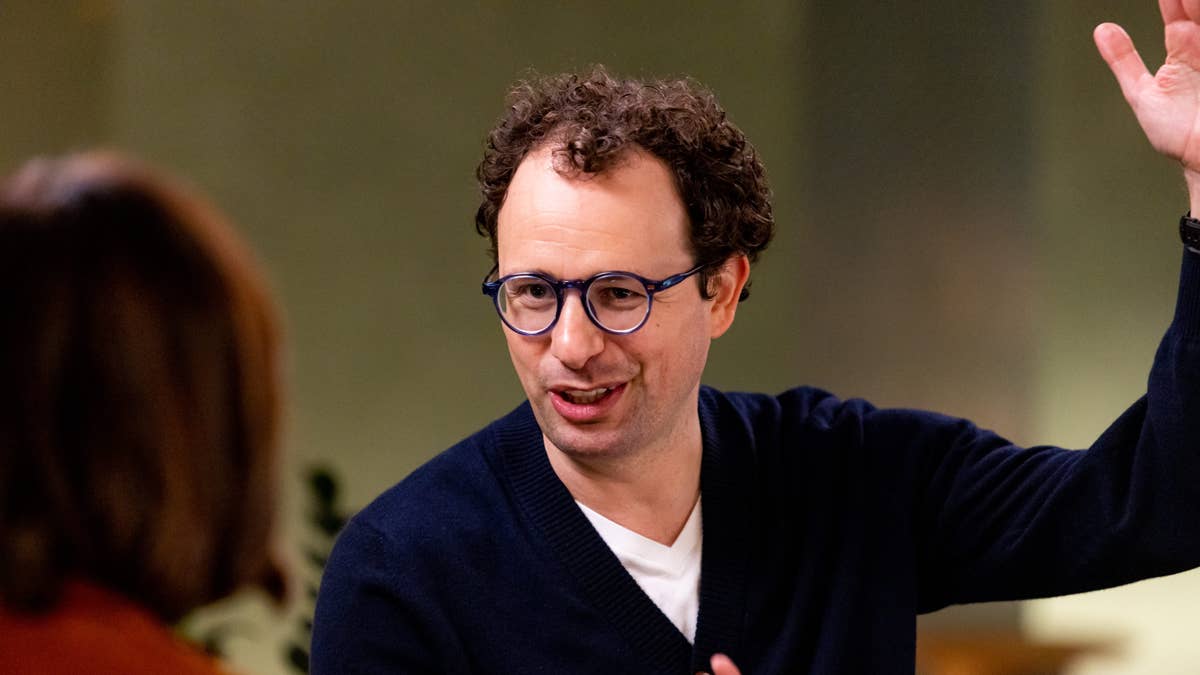
Anthropic has opened early talks with Samsung Electronics to manufacture a custom AI chip, according to a report from Bloomberg. The Claude developer has never built its own silicon before. It has relied entirely on chips rented from Amazon, Google, and Nvidia, and that dependence is now colliding with the soaring cost of running its largest models. The conversations are still preliminary. Anthropic has not decided what the chip will do, how it will fit into a server, or how powerful it needs to be, according to TechCrunch. Samsung declined to comment on the discussions when TechCrunch reached out. Anthropic looks beyond Nvidia for its next chip Anthropic currently depends on Amazon's Trainium chips, Google's Tensor Processing Units, and Nvidia's graphics processors to train and run its models. A diversified hardware stack built on those three suppliers will remain central to its compute strategy, the company told TechCrunch. Nothing about the Samsung talks changes that today. Nvidia controls about 74% of the global AI chip market, according to The Information. That level of concentration gives one company outsized influence over pricing across the industry. Custom silicon, designed around a lab's own model architecture, offers one of the only ways around that math. Anthropic is not moving first. OpenAI unveiled its own custom chip last month, an inference processor called Jalapeno built with Broadcom. Anthropic's Samsung talks surfacing weeks later suggest the industry is quietly hedging against Nvidia dependence. For investors, the read-through lands on the supply side, not on Anthropic itself. Anthropic remains privately held, so there is no direct way to buy into its chip strategy. The companies that stand to gain or lose are the ones building the hardware underneath it. Samsung brings more than manufacturing capacity to the table Samsung is not a random choice for Anthropic. The company was one of three memory chipmakers, alongside SK Hynix and Micron, that invested in Anthropic's $65 billion funding round in May, according to Forbes. Samsung is the only one of those three investors that also operates its own chip foundries. Anthropic is specifically evaluating Samsung's two-nanometer manufacturing process and its advanced chip packaging facilities, according to The Information. Winning a marquee AI client would give Samsung a showcase customer as it works to close the gap with Taiwan Semiconductor Manufacturing, the industry's dominant foundry.
Bitter Rivals Kalshi and Polymarket Unite to Battle Minnesota Over Betting Ban
Kalshi and Polymarket, two fierce rivals, have filed a lawsuit to stop Minnesota from enforcing a new statewide law that bans prediction market platforms. The firms claim that the contracts they offer are federally regulated products, while the state argues that the law is vital to address risks tied to gambling. The case could help define the extent of state authority to regulate prediction markets. 4th of July Sale - 70% Off * Unlock powerful investing tools and data-driven insights with TipRanks Premium for more confident investment decisions. * Discover top stock picks and new investment opportunities through TipRanks' Smart Investor Newsletter. Minnesota Enacts First Statewide Prediction Market Ban Minnesota's new law makes it a felony to operate, host, or advertise prediction markets in the state, forcing platforms such as Kalshi and Polymarket to shut down or face criminal charges. It is the first U.S. state law to explicitly ban such platforms, covering contracts tied to entertainment, elections, sports, weather, public health crises, and wars. Governor Tim Walz signed the measure into law on May 18, and it is set to take effect on August 1. Supporters, led by Democratic Representative Emma Greenman, say the law is needed to regulate emerging forms of gambling and protect consumers and minors. Kalshi, Polymarket Push Back Against Minnesota Ban Kalshi and Polymarket filed the case in the U.S. District Court for the District of Minnesota, asking the court to temporarily block the law before it takes effect. A federal judge in Minneapolis heard the case on July 2 but did not issue an immediate ruling. The firms contend that prediction markets are lawful financial products used for forecasting and managing risk, not gambling. They also say the ban could push users toward offshore or unregulated platforms instead of regulated U.S. markets. In addition, Kalshi and Polymarket argue their event contracts fall under the sole jurisdiction of the Commodity Futures Trading Commission (CFTC), making Minnesota's law incompatible with federal oversight. The CFTC has also filed a separate lawsuit against the state, saying event-based contracts should be regulated at the federal level rather than by individual states. Can I Invest in Kalshi or Polymarket? Kalshi and Polymarket are private companies, meaning they do not yet have publicly traded shares. However, investors seeking exposure to the broader prediction market or event-contract space may consider publicly listed firms such as Robinhood Markets (HOOD), DraftKings (DKNG), and Flutter Entertainment (FLUT). (See Their Stock Forecasts)

Elon Musk can't sell a single SpaceX share for a year -- and then all the locks crack open at once
Unless you've been on the moon, you know that Elon Musk's SpaceX just pulled off the biggest IPO of all time and raised about $86 billion in its public stock offering last month. The reusable rocket maker did it while selling only a tiny sliver -- between 4% and 5% -- of its stock. The other 95% -- which consists of about 12.5 billion shares -- is being kept behind bars in one of the most byzantine, complicated lock-up schedules in history. To level set, lock-up periods are standard fare following an IPO; founders, top executives, and early venture investors usually agree not to sell their shares for 180 days. The point, as IPO advisor Lise Buyer of Class V Group explains, is twofold. First, it forces the people who know the company best to hold through at least one earnings report, so they can't dump stock on the public right before a bad quarter. Second, it sends a soothing signal during what could otherwise be a volatile and tenuous time in the life of a newly public company. "It's a message to the new buyers that the people who know the company best still believe in it and are going to hang on," said Buyer. But when the lock-up expires, usually right after 180 days, a glut of stock typically hits the market and puts downward pressure on the stock price. During the past decade, underwriters have pushed buzzy tech companies into adopting more staggered or shortened release dates for insiders to sell their shares, some even contingent on earnings or stock-price increases to dampen the flow. Airbnb, DoorDash, Reddit, and Snowflake all either shortened the 180 days or staggered them. SpaceX, however, took the flexible lockup approach, wrapped it in a puzzle, strapped it to an enigma, and sent it to live in a colony on Mars. There are 15 dates for sales in the public markets, according to the company's filings. For anyone who isn't Musk or a large investor, they can sell their stock during the 180-day window as it unlocks in slices of 7% on various dates in August, September, and October and then two trading days after SpaceX's Q2 2026 earnings, which will be its first as a public company. There's another big tranche after its next earnings report, and then whatever is left can be sold at 180 days. There are also dates tied to other earnings releases, plus stock-price increases. Avery Marquez, who tracks IPOs and lock-up structures as director of investment strategies at Renaissance Capital, described just how much of an outlier this is: "This is one of the most complicated, if not the most complicated lock-up we've ever seen." Buyer said she's never seen such a large percentage of a company's stock unlock before 180 days are up. "This is outside the bounds of anything we've seen before," she said. "I would expect their transfer agent will be doing shots of tequila, because it's going to be a little hard to manage," she joked. Why build a lock-up schedule this complicated? Buyer and Marquez said it's designed to keep the billions of shares behind bars from flooding the market all at once. To do so "could be catastrophic to the share price if everybody wanted to sell," said Marquez. Hans Tung, managing partner at Notable Capital and an early SpaceX investor through a company that was acquired by the rocket maker, said the schedule reads as an attempt to let shareholders ease out rather than see everything sold at once. Some will keep holding the stock "because that's how they compound over a long period of time," while others who got in during the past five to 10 years will probably sell to show some liquidity, he said. "I think this series of steps is designed for most shareholders to sell a bit each time," said Tung, whose fund has a small stake in SpaceX and a much larger position in Anthropic, which is also provides compute to SpaceX. Tung said he doesn't have inside information, but he noted that Anthropic and OpenAI, given their size, could end up adopting lockups similar to SpaceX if they go public. "The amount of money involved is just very big. So some people need to have exits along the way," he said. This is designed so that it's done over tranches instead of a free-for-all with a six month lockup and thereafter, everybody just do whatever they want." There's is another reason that could keep investors holding the stock, rather than selling right away, added Tung. The public market listing is the start of a new phase for SpaceX. And Musk's xAI, which is part of SpaceX, is likely to acquire some companies. He pointed to Cursor, the AI coding startup that SpaceX inked a compute deal with prior to the IPO. Days after the listing, SpaceX exercised an option to buy Cursor for $60 billion in SpaceX stock. Now that SpaceX is public, Musk has a liquid currency to fund more deals like this, Tung said -- and "as he acquires more companies, it will be adding more value to the stock, so [investors] will hold on for even longer." SpaceX has had a stunning trajectory in its brief time in the public market. The stock, which priced at $135 in the IPO, opened up at $150 on its first day trading and surged all the way to $226 per share in the following days. While it has since given up some of those gains, the stock now trades at roughly $162, giving SpaceX a $2.61 trillion market cap. And then there's Musk There's a wildcard in the mix. Musk holds roughly 6.4 billion shares making up about 82% of the voting power at SpaceX between his Class A and Class B supervoting 10-shares-in-one stock. Musk can't sell for 366 days, and there are no early-release provisions at all. But then in one shot, everything unlocks at once. Musk's unusual lock-up structure presents investors with a case of extremes, giving the stock a ballast of stability for the first year, followed by the potential for a supernova event. While it's almost inconceivable that Musk would choose to sell all his shares at that point given the negative signal it would send and the resulting impact on the company, the risk factor can't be discounted. Musk's track record with his Tesla stock may provide some indication of what to expect. Musk has held onto his stake in the electric carmaker and borrowed against it, avoiding the capital gains tax hit he would face. He has sold Tesla stock only as a last resort. Jay Ritter, an IPO expert and University of Florida professor, said he wouldn't be surprised if Musk doesn't sell any SpaceX stock at all. "He doesn't have to worry where his next meal is coming from, and if he does, it's probably going to be a tiny fraction of the, what, 6 billion shares that he owns," said Ritter. Musk might even buy more of SpaceX's, Marquez speculated. "It's possible we could see him buy shares when these are released. People start selling them, and he buys them up," she said. "With Elon Musk, anything is possible." Tung doesn't expect Musk to jump in right away, but wouldn't rule out buybacks down the line. "I don't think he will buy immediately, but I think over the course of the next five to 10 years, he will buy some [stock] back when he feels it's the right thing to do," he said. "He is who he is, and he's been doing this for a long time. I don't see any reason why he would behave differently." Buyer, who also declined to guess at Musk's plans, said the same. "He has no use for the cash, and I'm sure he believes that the stock is undervalued," she said. "He might not sell a single share." Whether Musk's investors can do the same remains to be seen. The post Elon Musk can't sell a single SpaceX share for a year -- and then all the locks crack open at once appeared first on Fortune.
Alibaba to ban Claude Code in workplace after Anthropic's theft accusations - CNBC TV18
Alibaba bans employees from using Claude Code from July 10 due to security risks. Anthropic accused Alibaba of illicitly extracting its Claude AI model capabilities. Alibaba will ban employees from using Claude Code in workspace environments from July 10 due to alleged security risks involving embedded backdoors, a source familiar with the matter said. Alibaba did not immediately respond to a request for comment. The move was previously reported by Chinese financial news outlet Yicai. Earlier, the US AI company Anthropic accused Alibaba, the Chinese technology and e-commerce giant, of illicitly extracting its Claude AI model capabilities in what it said was the largest known attack of its kind on the company, according to a letter seen by Reuters. The strike by Alibaba is described as a "distillation" effort, which Anthropic has said involves training a less capable model on the outputs of a stronger one. Anthropic said the campaign was conducted between April 22 and June 5, 2026, and generated more than 28.8 million exchanges with Claude through almost 25,000 fraudulent accounts. Also Read: Bluspring Enterprises shares jump 10% after subsidiary bags ₹1,437 crore Vedanta contract Anthropic said in the letter that distillation is a way to help accelerate China's ability to reach Anthropic's advanced Mythos Preview capabilities. It said the campaign was conducted by operators affiliated with Alibaba and Alibaba Qwen, Alibaba's AI lab. Alibaba did not immediately respond to a request for comment. The letter, dated June 10, was sent to Senators Tim Scott and Elizabeth Warren, the chair and ranking member, respectively, of the U.S. Senate Banking Committee, ahead of a scheduled hearing on AI. In April, the White House accused China of stealing US AI labs' intellectual property on an industrial scale. Anthropic said in the letter that it was supportive of the US government's efforts to combat the attacks, including partnering with private sector AI companies through threat intelligence sharing and other exercises. Anthropic said in a February posting that it had identified a campaign by Chinese AI startup DeepSeek -- whose low-cost AI model sent shockwaves through the technology world in January 2025 -- and two other Chinese AI labs to illicitly extract capabilities from its Claude AI platform. It said DeepSeek's operation involved over 150,000 exchanges, while Moonshot AI was at a scale of over 3.4 million and MiniMax over 13 million.
Anthropic Says Claude Fable 5 Credit Access Is Temporary Amid High Demand
Claude Fable 5 is available again after the Department of Commerce lifted export restrictions, but the model will not remain part of regular Claude subscription access for long. Anthropic says Claude Fable 5 will be removed from standard subscription access after July 7, 2026. The change affects users on Pro, Max, Team, and select Enterprise plans. Claude Fable 5 Access Is Limited Until July 7 Until July 7, Claude Fable 5 remains included in eligible subscriptions, but only with strict limits. Anthropic says users can spend up to 50% of their weekly usage limits on Fable 5. The company says this gives subscribers time to test the model before the access model changes. After July 7, users who want to keep using Fable 5 will need usage credits. Fable 5 Is Not Becoming a Permanent Paid Add-On The change quickly raised concerns that Fable 5 would become a permanent pay-to-play model. However, a Claude Code lead engineer clarified that this is not Anthropic's long-term plan. The company intends to bring Fable 5 back to regular subscriptions once it has enough capacity. Anthropic says it wants Fable 5 to return as a standard part of subscription plans "as soon as capacity allows." Why Anthropic Is Restricting Fable 5 Access Anthropic says it expects demand for Fable 5 to be very high. The company also says demand remains difficult to predict. Because of that, it is limiting subscription access instead of delaying the rollout completely. In practice, Anthropic is giving users limited access now while reserving full subscription access for a later capacity expansion. Anthropic Expands Claude Access Elsewhere The Fable 5 change comes as Anthropic continues to expand Claude across Microsoft services. Claude models are now available on Microsoft Foundry on Azure, including the latest Claude Sonnet 5 model. A Claude AI agent is also reportedly coming to Microsoft Teams. That broader Microsoft push suggests Anthropic is expanding distribution while still managing capacity around its most powerful Claude models.
SpaceX (SPCX) to Build Eight‑Mile Natural Gas Pipeline "Starpipe" to Texas Launch Facilities, Reuters Reports
Space Exploration Technologies Corp. (NASDAQ:SPCX) is one of the most promising future stocks to buy right now. Reuters reported on June 25 that, according to county filings, Space Exploration Technologies Corp. (NASDAQ:SPCX) has plans to begin building an eight‑mile (13-km) natural gas pipeline called "Starpipe" to its Texas launch facilities next month. The announcement comes against a backdrop featuring the company's efforts to ramp up launches of its next‑generation Starship rocket. It further reported that, according to a document filed last month with the Texas Railroad Commission by SpaceX affiliate Lone Star Mineral Development and reviewed by Reuters, Starpipe will end at the company's Texas company town of Starbase, and is anticipated to be in service by January 26. Starship is designed to be fully reusable and uses around 630,000 gallons (2.4 million liters) of liquid methane per launch, which is delivered at present by hundreds of tanker trucks in an hours-long process incompatible with Musk's expansion plans. Reuters further reported that Space Exploration Technologies Corp. (NASDAQ:SPCX) did not respond to its request for a comment. Space Exploration Technologies Corp. (NASDAQ:SPCX), operating as SpaceX, is an aerospace manufacturer that also operates as a satellite communications company and launch service provider. It is involved in the design, manufacture, launch, and operation of products and services that are built on cutting-edge technologies, including spacecraft and rockets. While we acknowledge the potential of SPCX as an investment, we believe certain AI stocks offer greater upside potential and carry less downside risk. If you're looking for an extremely undervalued AI stock that also stands to benefit significantly from Trump-era tariffs and the onshoring trend, see our free report on the best short-term AI stock. Disclosure: None. Follow Insider Monkey on Google News.
Anthropic Eyes Samsung for Custom AI Chips
Move aligns with industry shift from NVIDIA GPUs, could bolster Samsung's foundry amid Tesla, OpenAI ties Anthropic, the world's most valuable private artificial intelligence (AI) startup with a valuation of 965 billion dollars, is in discussions with Samsung Electronics to produce its own AI chips, according to a report by U.S. IT media outlet The Information on the 2nd (local time). Anthropic reportedly hired Clive Chan, who previously worked on custom chip development at OpenAI, last month to lead its in-house AI chip development. The company is also said to be in talks with multiple chip design firms. Once the detailed design is finalized, Anthropic is considering utilizing Samsung Electronics' 2-nanometer (1 nanometer equals one-billionth of a meter) foundry process and advanced packaging. The 2-nanometer process is the latest technology and the same one Samsung uses to manufacture Tesla's AI chips. Industry observers suggest that if Samsung secures the order for Anthropic's AI chips, it could boost the foundry business, which has recently secured big tech clients like Tesla. Anthropic's move aligns with the tech industry trend of developing in-house AI chips to reduce reliance on NVIDIA's graphics processing units (GPUs), which are widely used in AI accelerators. Google has consistently released its own Tensor Processing Units (TPUs), while OpenAI recently unveiled its first custom inference chip, "Jalapeno," developed in collaboration with Broadcom. Anthropic avoided specific comments on its chip development plans, stating, "NVIDIA's GPUs, Google's TPUs, and Amazon Web Services' (AWS) 'Trainium' chips will continue to play a central role in Anthropic's computational resources." In May, Anthropic announced a 65 billion dollars (approximately 100.1 trillion Korean won) investment round, with global memory giants Samsung Electronics, SK Hynix, and Micron participating as strategic infrastructure partners. At the time, Anthropic noted, "These technologies play a key role in supplying memory, storage devices, and logic chips worldwide." South Korea's tech industry speculated that Anthropic, which is developing its own AI chips, might collaborate with Samsung's foundry business. Among the three memory companies that are Anthropic's strategic partners, Samsung is the only one operating a foundry business.
SpaceX AI device claims surface ahead of IPO as Elon Musk denies reports
The claims come amid wider industry interest in AI smartphones, including OpenAI's reported plans. This signals growing competition in AI hardware. Anonymous sources claim that SpaceX has developed a mysterious, handset-like device intended to reshape how we interact with artificial intelligence (AI). According to the Wall Street Journal (WSJ), a prototype was recently demonstrated to investors just moments before the company's initial public offering (IPO). Allegedly, the device has a "sleek design that's slimmer than an iPhone," but the final design could change as the project is in its early stages of development. The tool runs a proprietary operating system, is powered by a Qualcomm Snapdragon chipset, and integrates AI technology developed by Elon Musk's xAI. Musk is calling the claims of an AI-powered device "utterly false" on X. In February 2026, rumors arose that SpaceX was reportedly developing a mobile phone that would connect directly to its Starlink satellite network. Musk immediately refuted the report. "We are not developing a phone," the entrepreneur said on X. But according to the Financial Times, Musk has plans to move into the US consumer mobile market. The WSJ report suggests that a phone would be the way to create Musk's "everything app," a concept that he has talked about since acquiring Twitter back in 2022. Instead of downloading separate apps to handle parts of our daily lives, these "super apps" would bring together the services people need into a single program. This concept is currently being developed and tested by Chinese tech companies like WeChat and Alipay. Allegedly, SpaceX isn't the only AI company working on an AI-powered device. According to market analyst Ming-Chi Kuo, OpenAI is trying to revolutionize the smartphone industry by developing a new smartphone with an AI agent ecosystem as a key feature. Instead of rows and columns of app icons, the interface would consist of the work of an AI agent. To optimize its performance and results, the AI agent would work both locally and in the cloud. Using an AI agent instead of apps would drastically change how we use our smartphones. "OpenAI's advantages lie in its consumer brand, years of accumulated user data, and leading AI models. Smartphone hardware is already highly mature, so OpenAI can work with the supply chain to develop the device. On the business model side, OpenAI may bundle subscriptions with hardware and build a new AI agent ecosystem with developers," Kuo said.
India's space industry hunts for its SpaceX moment
For decades, the Indian Space Research Organisation has launched cost-effective, pioneering missions, including the world's first landing near the Moon's south pole. The national agency, which allows startups to use its facilities for early tests, will soon share technology involving its workhorse rocket to speed up local knowhow. India's attempt to fire up its fledgling private space program is showing early signs of success. Three years after Prime Minister Narendra Modi allowed non-government firms to own spaceports, launch rockets and sell remote-sensing data, the country has its first space unicorn preparing for a lift-off, and boasts startups making advanced Earth-imaging and all-weather satellites. Billionaire Mukesh Ambani is also evaluating plans to deploy a constellation that could pit him against Elon Musk's Starlink in India. For decades, the Indian Space Research Organisation has launched cost-effective, pioneering missions, including the world's first landing near the Moon's south pole. The national agency, which allows startups to use its facilities for early tests, will soon share technology involving its workhorse rocket to speed up local knowhow. "We are becoming more aggressive in the kind of technology that we are able to transfer from ISRO because we now see the ability of the private sector to absorb this technology and take it forward," Pawan Goenka, an automotive industry veteran tasked with building a commercial space economy, said in a recent interview. "Frankly, we are late to the party, and the US is now more private sector than government in terms of the overall space economy." Starlink, a unit of SpaceX, illustrates the magnitude of the challenge. It alone invested more than $11 billion over three years to expand its constellation to 10,000-plus satellites. SpaceX listed in the US in June after a historic $75 billion IPO made Musk the world's first trillionaire. By comparison, India counts some 260 space startups with a total funding of almost $730 million, about a quarter of which flowed last year, according to data provider Tracxn. Yet, last year's military conflict with Pakistan and the US-Iran war have reinforced the urgency to build critical infrastructure within Indian borders. "Ten years ago, if I graduated as an engineer, the only visible path was software services or moving abroad on an H-1B visa," said Suyash Singh, 34, chief executive officer of GalaxEye Space Solutions Pvt. , which has developed the world's first satellite that combines optical cameras with radar sensors, allowing it to see through thick clouds and operate in pitch darkness. "The Indian ecosystem today is extremely ripe for deep tech," Singh said. "The challenges are real, especially around capital and supply chains, but the momentum is also very real." Launched using SpaceX's Falcon 9 rocket on May 3, GalaxEye's satellite is named Mission Drishti -- Sanskrit for 'focused gaze'. The company, which counts Infosys Ltd. as an investor, aims to expand to roughly 10 satellites over the next three years and eventually a full constellation. Singh said much of its early imaging capacity is already booked with demand from defense, agriculture, insurance, disaster management and security applications. Its Bengaluru-based rival Pixxel Space India Pvt. was born out of an opportunity its founder spotted while still at university. Awais Ahmed, 28, said he realized that, outside of China, there were no commercial providers of imagery to detect crop diseases or underground leaks that are invisible to conventional remote sensing. Pixxel now offers the highest-resolution hyperspectral data to customers including NASA, Rio Tinto Plc and India's Ministry of Agriculture. The startup, backed by Google and Lightspeed, plans an over fourfold increase in its capacity to build such satellites. Meanwhile, Hyderabad-based Skyroot Aerospace Pvt. , India's first space startup to surpass a $1 billion valuation, raised funds from GIC and BlackRock as it prepares the first flight of the Vikram-1 orbital rocket later this month. The company will carry out more test launches before a commercial lift-off, said co-founder and CEO Pawan Kumar Chandana, a former ISRO scientist. All three firms were founded around 2020, when Modi first announced his intention to open the space sector to private players. Policies were formalized in 2023. About 400 startups are currently registered with the Indian National Space Promotion and Authorization Centre. At least a third of their revenue comes from overseas, according to Goenka, who chairs the agency. A key milestone to ensure the sector's success, he said, is making Indian companies use space technology. There are signs that the country's giants are seeing value. Ambani's Jio Platforms Ltd. is evaluating a low-orbit satellite network for India as it seeks to cement control over the nation's communications infrastructure. The Economic Times reported that the digital unit of Asia's third-richest person is set to launch over 1,600 such satellites over the next two to three years, and the firm has acquired a stake in Bengaluru's Digantara, which specializes in building ground stations, tracking satellites and monitoring space debris. While Ambani's telecom venture has tied up with Starlink, the Indian government has effectively frozen approvals for Musk's firm, Bloomberg News reported earlier, citing concerns over the use of the company's network in the US-Iran war. Satellite communications was always the largest business in the global space market, but telecom companies will have to move to high-speed 6G networks for the Indian space economy to truly grow, according to Chaitanya Giri, fellow at Observer Research Foundation, a policy think tank. That is about to happen soon, said Giri, referring to the 6G tests in the country. India's planned spy constellation and the satellite network for civilian use will also generate opportunities to create new users, he said. Still, a big hurdle to wider private participation would be a lack of launch capacity outside of ISRO, which itself faced setbacks after its most reliable Polar Satellite Launch Vehicle failed to deploy payloads twice over the past year. A former director at an ISRO unit had told Bloomberg News that back-to-back failures shouldn't call into doubt the rocket's future, but he anticipated a faster shift toward the private sector. The government is in talks with large private companies to share the technology involving PSLV, Goenka said. State-owned Hindustan Aeronautics Ltd. and Mumbai-based conglomerate Larsen & Toubro Ltd. are already working on their version. Skyroot has a head start as it became the first Indian private company to send a rocket to the edge of space for a few minutes in 2022. But it has deferred the debut lift-off to place satellites into orbit at least thrice since 2023. Chandana's firm now targets the orbital launch between July 12 and August 4. Goenka expects a virtuous cycle to develop only after the nation becomes a global hub for small satellite launches with one lift-off every two weeks, and gains the capability to deploy commercially successful constellations. Pixxel's Ahmed is optimistic about his own firm's business. The company expects to turn in an operating profit this year and become cash-flow positive by early 2028, though an IPO is still four or five years away, he said. "China opened its space sector to private companies around 2014 or 2015 and funded them aggressively," Ahmed said. "To catch up, India needs sustained funding, stronger venture capital participation and continued government procurement."
SpaceX Joined 6 Stocks in the $2 Trillion Club. Here's My Top Pick for July.
Before the end of its first trading day on the Nasdaq, Elon Musk's Space Exploration Technologies (NASDAQ: SPCX), or SpaceX, had joined an elite club: stocks with at least $2 trillion in market capitalization. The club is so exclusive that only six other stocks belong to it. And unlike SpaceX, most of them underperformed in June. Here's my pick for the best one to buy in July. Missed Nvidia in 2009? This Rare Signal Is Flashing Again. In 2009, a "Double Down" signal flashed for a little-known chipmaker called Nvidia. For the first time in years, that same "Total Conviction" signal is flashing for a company 1/100th the size of Nvidia. Continue " Biggest of the big The seven largest stocks in the world are currently: *Data as of market close on 6/29/2026. **SpaceX performance since Nasdaq debut at $150/share on 6/12/2026. Aside from TSMC and, of course, SpaceX, all of these huge companies saw big share price declines over the past month. One big reason? Ongoing concerns about how they might be impacted by the current memory shortage. Memory loss High-end memory chips for dynamic random access memory (DRAM) and N-AND flash memory (NAND) are in very short supply, and as a result, they've gotten much more expensive. Yet DRAM and NAND are critical for AI applications and for many consumer devices, such as smartphones and laptops. For Apple, more expensive DRAM and NAND chips mean the company has to accept thinner product margins for its devices that include DRAM and NAND, like iPhones and MacBooks, or pass that cost along to consumers. It had been absorbing the costs, but this month announced it would have to pass the costs on and raised prices on many of its products. Investors punished the stock, concerned that higher costs would hurt sales. For Alphabet, Microsoft, and Amazon, the memory shortage means they'll have to pay more for memory chips for their AI data center build-outs. These "hyperscalers" are already incurring massive AI capital expenditures, which are likely to increase even further in the short term as memory gets more expensive. The market is worried the costs won't justify the eventual benefits. I think these concerns are likely to persist in the short term, which is why I'm not picking any of these stocks as my top July pick.
Anthropic Brings Back Claude Fable 5, But Users Call It a Downgrade
Claude Fable 5 is available again after the Department of Commerce lifted its export restriction on Anthropic's most powerful public model. The return gives Max, Pro, and Team users access to Fable 5 again, but the relaunch comes with major limits. Anthropic has restored the model under stricter usage rules, and early reactions suggest many users expected a smoother comeback. Claude Fable 5 Is Back, But Not Fully Open Anthropic says Fable 5 is included in paid Claude plans, including Max, Pro, and Team. However, users cannot use the model freely across their full plan limits. The company currently allows users to spend up to 50% of their weekly usage allowance on Fable 5. That cap may frustrate users who signed up mainly to access Anthropic's highest-end model. Fable 5 Moves to Usage Credits After July 7 Anthropic also plans a bigger pricing shift after July 7. At that point, Fable 5 will move fully to a usage-credit system. That means users will need to manage Fable access more carefully instead of treating it like a normal included model. The change effectively turns Fable 5 into a premium model inside already paid Claude plans. Early Users Say Fable Feels Weaker Than Before Although this situation isn't ideal, it would be less concerning if Fable 5 met expectations. However, users report that it falls short and may even feel like a downgrade. Reddit users claim Anthropic now routes Fable through stricter safety systems more often. Several users say the model refuses, redirects, or falls back to Opus 4.8 in situations where the earlier Fable release would have completed the task directly. That has created confusion because Fable 5 still carries the reputation of Anthropic's strongest public model. If users regularly experience fallback behavior, the model may feel less capable in real use. Claude Code Users Report Frequent Fallbacks Developers using Claude Code appear to face some of the biggest problems. Some users report that Fable switches to Opus during normal coding tasks. They say this can happen even when the request involves legitimate development work. Prompts or files that mention terms such as "security," "vulnerable," "unsafe," or "hook" may trigger fallback, blocking, or stricter review. That creates problems for developers working on security tools, debugging, low-level systems, or vulnerability testing in controlled environments. Stricter Safeguards May Be Causing False Positives The likely cause is Anthropic's stricter safety approach after the restriction. The U.S. government had previously blocked Fable 5 over safety concerns, so Anthropic may now be applying a much wider safety margin. That approach may reduce risk, but it can also create false positives. Normal prompts may look risky when they contain technical words often associated with security research or exploit development. For everyday users, this means Fable 5 may still perform extremely well when it handles a task directly. The issue is that users may not always get the real Fable experience. Anthropic may still adjust the system over time. If the company reduces false positives and gives developers clearer guidance, Fable 5 could become more useful again without removing important safeguards. For now, Claude Fable 5 is back, but its return feels cautious, limited, and more complicated than a simple relaunch. Anthropic has also launched Claude Sonnet 5, its newest mid-range model. Microsoft has already brought Claude Sonnet 5 to Microsoft Foundry, giving developers another way to access Anthropic's latest model lineup.
Here's What the Street Thinks About Cerebras Systems (CBRS)
Cerebras Systems Inc. (NASDAQ:CBRS) is one of the most promising future stocks to buy right now. Cerebras Systems Inc. (NASDAQ:CBRS) received several rating updates following the release of its strong fiscal Q1 2026 results. Morgan Stanley lifted the price target on the stock to $273 from $250 on June 24 and maintained an Overweight rating on the shares after what the firm called "a strong first quarter out of the gates". It further stated that although the IPO happened recently enough that the firm expected solid results with no surprises, and presumed some IPO conservatism built into forecasts, Morgan Stanley believes that the better gross margin guidance "certainly indicates a conservative guidance mindset." The same day, UBS lifted the price target on Cerebras Systems Inc. (NASDAQ:CBRS) to $320 from $300, maintaining a Buy rating on the shares and stating that the company's first post-IPO earnings call is viewed positively after raised guidance and confirmation of an Amazon (AMZN) agreement. It further told investors in a research note that broader customer diversification and accelerating demand for specialized infrastructure could support strong growth through the decade. Cerebras Systems Inc. (NASDAQ:CBRS) is involved in the design and provision of processors for AI training and inference. The company's products include AI model services, inference, Wafer Scale Engine, cloud, processors, and systems. While we acknowledge the potential of CBRS as an investment, we believe certain AI stocks offer greater upside potential and carry less downside risk. If you're looking for an extremely undervalued AI stock that also stands to benefit significantly from Trump-era tariffs and the onshoring trend, see our free report on the best short-term AI stock. Disclosure: None. Follow Insider Monkey on Google News.
SpaceX Faces Post-IPO Volatility, Yet Wall Street Predicts Significant Stock Price Gains
* SpaceX's stock has seen volatility since the company's IPO nearly three weeks ago, but analysts project significant long-term growth. * Analysts highlight the Starship reusable rocket as a pillar of the company's future success, and point to growing AI revenue and the potential for acquisitions as additional reasons for optimism. * Risks include high cash burn and reliance on aggressive growth assumptions for future success. Wall Street is starting to size up SpaceX (SPCX), and the stock is getting stellar reviews. Analysts who have launched coverage of the stock since the company's IPO have said SpaceX stands to become "a major hyperscaler" and "the largest communications, cloud and AI company in the world." That positivity didn't translate into gains today -- the stock fell 8% to around $157.50 -- but Wall Street sees plenty of room for SpaceX shares to rise in the months ahead. The average price target from three firms that have initiated coverage of the stock recently stands at $203. While well below the $225 all-time high hit two weeks ago, it's nearly 30% above current levels, and 35% higher than the opening price for SpaceX shares when they began trading on June 12. WHY THIS MATTERS TO YOU Elon Musk's space exploration, connectivity and AI company is now a part of major benchmark indexes and the funds that track them, and will be joining some more, which means the stock's performance is likely represented in your retirement account. The latest bullish view was delivered Tuesday by analysts at Wedbush led by Dan Ives, who initiated coverage of SpaceX with an "outperform" rating and a price target of $190. That target is derived from revenue estimates for 2028, which is expected to be the first year that all three of SpaceX's businesses scale. They view SpaceX's spacecraft and rocket called Starship as "the essential layer" driving the company's success. Its reusability is a strategic advantage from a cost perspective, but also generates a "feedback loop" through which the company can improve its flight rates without driving up capital expenditures, according to Ives and his team. They add that without it, the company's broadband business Starlink would not have reached the scale it has so far, and that SpaceX's ambitions to build orbital data centers would otherwise not be "feasible." Oppenheimer's Timothy Horan started coverage on the stock on June 11, prior to the company's IPO, with an "Outperform" rating and a $190 price target. A week later, the firm raised the target to $250 following SpaceX's acquisition of AI startup Cursor. Horan's models suggest that Cursor revenue will hit $6 billion by the end of this year, raising SpaceX's AI business revenue by 84% to $8.75 billion in the fourth quarter.
Anthropic seeks better terms from Amazon as AI economics shift in its favour
Anthropic's effort to renegotiate some key commercial terms with Amazon is highlighting a reality that many companies are facing: that building and launching the most advanced artificial intelligence models is proving to be pricier than many companies expected. The AI startup is best known for its Claude family of models but has morphed from a possible OpenAI rival to one of the hottest AI providers on the block. That shift appears to have given Anthropic more leverage in its talks with Amazon, one of its original and biggest backers. Reports suggest the renegotiated terms could see Amazon pay more for Anthropic's technology than it would have under the original partnership deal. The two companies have a long-standing relationship. The partnership expanded in April 2026 when Amazon announced a fresh $5 billion investment and the potential for billions more in future funding after already pouring billions into Anthropic since 2023. The companies also struck a massive long-term infrastructure deal, in which Anthropic will spend more than $100 billion on AWS technologies over the next decade. The negotiations mentioned are focused on the shifting value of Anthropic's technology. When Amazon invested, Claude was still a fledgling product in a crowded AI field. Today, Claude is considered among the best frontier AI models, competing directly with products from OpenAI and Google. Anthropic is also apparently rethinking previous pricing and access terms due to this additional commercial relevance. Also read: Anthropic restores Fable AI model after US lifts export restrictions The development also points to a bigger problem that the AI industry is encountering. Training and inference of frontier models require enormous amounts of computing power, introducing infrastructure costs that continue to grow as adoption grows. More and more companies are shifting toward token-based pricing models that bill customers based on consumption, knowing the hefty costs of operating large-scale AI workloads. As Amazon increasingly leans on Anthropic's models for its products, reports suggest it's become more sensitive to those costs internally. Other services, such as coding assistants and AI-powered consumer tools, are said to be heavily reliant on Claude, meaning that any increase in the cost of model access would be felt acutely there. Amazon is reportedly exploring other model providers and broadening its AI strategy as it prepares for higher AI costs. The shifting dynamics also reflect how power in the AI ecosystem is changing. Cloud providers and investors seemed to be on the stronger side initially given the scarcity of computing infrastructure. Leading AI labs like Anthropic are building better products and larger customer bases, and they are gaining leverage of their own, which gives them the ability to negotiate more favourable commercial arrangements. Tensions have been reported, but there is little evidence of the strategic partnership weakening. Anthropic continues to rely on AWS as its key cloud and training vendor and is increasing its use of Amazon's custom Trainium chips. More than 100,000 customers are already using Claude models via Amazon Bedrock, underscoring the importance of the tie-up to both companies.

4 Lessons for Future OpenAI and Anthropic Investors, Following SpaceX's Historic IPO
SpaceX (NASDAQ: SPCX), the aerospace and AI company founded by Elon Musk, went public on June 12 at a valuation of $1.77 trillion, making it the largest IPO in history. It went public at $135 per share, started trading at $150, and hit a record high of $225.64 on June 16. But as of this writing, SpaceX's stock trades at about $160. Many investors who hopped on the bandwagon in its first four days are now underwater. That volatile market debut should teach investors four valuable lessons about hot IPOs like SpaceX -- and how they should approach OpenAI and Anthropic, two of the market's most eagerly anticipated AI IPOs, in the future. Missed Nvidia in 2009? This Rare Signal Is Flashing Again. In 2009, a "Double Down" signal flashed for a little-known chipmaker called Nvidia. For the first time in years, that same "Total Conviction" signal is flashing for a company 1/100th the size of Nvidia. Continue " 1. Valuations matter When SpaceX went public, it was already valued at 95 times its 2025 revenue of $18.7 billion. At its peak market cap of $2.66 trillion, it was valued at 142 times its trailing sales. Those were sky-high valuations, even for a company that grew its revenue by 33% in 2025. As of this writing, SpaceX is worth $2.1 trillion, or 112 times last year's sales. OpenAI was most recently valued at $852 billion, and its founders hope to go public with a market cap of $1 trillion. That would be 50 times its annualized revenue run rate of $20 billion at the end of 2025, making it seem more reasonably valued than SpaceX. Anthropic, valued at $965 billion after its latest funding round, only had an annualized revenue run rate of $9 billion at the end of 2025. If it's also targeting a $1 trillion IPO, it would debut at 111 times its annualized revenue -- making it more comparable to SpaceX. 2. Profits matter SpaceX was actually profitable in 2025, as Starlink's profits offset its space division's losses. But this year, it acquired xAI (which owns Grok and X) in an all-stock acquisition before its IPO. After recasting its 2025 financials to account for that acquisition, it became deeply unprofitable. The critics claimed that Musk was bailing out xAI at the expense of SpaceX's shareholders. OpenAI and Anthropic -- which are both unprofitable -- will also be closely scrutinized when they go public. OpenAI is still racking up steep losses, but Anthropic's rapid expansion in the enterprise market (with tools like Claude Code) is quickly reducing its operating losses. Anthropic even expects to post its first adjusted operating profit this year.
Spot Bitcoin ETFs end outflows as Polymarket prices 99.95% odds above $50K
Spot Bitcoin ETF Inflows Hit $221.7M, Lifting Polymarket "Bitcoin Above ___ on July 4?" Odds Toward Higher Strikes U.S.-listed spot Bitcoin ETFs took in $221.7 million on Thursday, snapping a 10-day outflow streak, as traders watched whether renewed fund demand could support Bitcoin's rebound. On Polymarket's ladder market "Bitcoin above ___ on July 4?", pricing continues to imply high odds that Bitcoin stays above lower strike levels into the July 4 resolution window. Key Takeaways * Polymarket prices imply a 99.95% chance Bitcoin will be above $50,000 on July 4. * Traders kept the ladder skewed to the upside as ETF flows flipped positive, while higher strikes remain heavily discounted. * The contract resolves at 2026-07-04T16:00:00+00:00, with odds little changed over the past 24 hours. U.S.-listed spot bitcoin ETFs recorded $221.7 million of net inflows on Thursday, the biggest one-day intake in two months, ending a 10-day stretch of outflows, according to SoSoValue. Fidelity's FBTC led with $165.96 million of inflows, followed by ARKB with $91.84 million and HODL with $4.35 million. BlackRock's IBIT, the largest bitcoin ETF, was the exception, posting a $40.43 million outflow. The 10-day run of redemptions totaled $2.73 billion, leaving year-to-date net outflows at about $5.4 billion. The report said the inflow rebound helped validate Bitcoin's move back to around $61,700 after it fell below $58,000 earlier in the week, though analysts said sustained inflows would be needed to confirm a lasting recovery. Polymarket Ladder Sees $360,302 Volume as Bitcoin $50K Odds Sit at 99.95% and $62K Is Priced at 40% Polymarket has logged $360,302 in volume on the "Bitcoin above ___ on July 4?" ladder, with pricing clustered at near-certainty for several lower strikes. The market shows $50,000 Yes 99.95% / No 0.05%, and the same 99.95% / 0.05% split at both $52,000 and $54,000, indicating traders see those downside levels as extremely unlikely to be breached by the July 4 close. Confidence drops at mid-range levels, with $60,000 Yes 94.5% / No 5.5% and $62,000 Yes 40% / No 60% implying a more balanced view around that threshold. Upside tails remain priced as long shots, including $64,000 Yes 3.05% / No 96.95% and $70,000 Yes 0.05% / No 99.95%. Watch whether ETF flows remain positive after Thursday's reversal and whether the ladder's inflection point near the $62,000 strike shifts ahead of the 2026-07-04T16:00:00+00:00 resolution. Beyond Bitcoin ETFs: Other High-Volume Polymarket Contracts Traders Are Watching Right Now Beyond the July 4 ladder, traders have been concentrating liquidity in broader, time-boxed crypto range contracts that effectively map near-term and long-dated sentiment. "What price will Bitcoin hit in 2026?" has drawn $45,944,904 in volume, while "What price will Bitcoin hit in July?" sits at $1,302,181 and "What price will Bitcoin hit June 29-July 5?" at $917,465. Activity has also spilled into ether, with "What price will Ethereum hit in July?" seeing $682,596 as participants position across correlated moves. Odds Trend By the Numbers * Platform: Polymarket * Market: Bitcoin above ___ on July 4? * Contract type: Price strike ladder: each rung has separate Yes/No; Yes means the spot price is above that USD strike at settlement. * Resolution window: Jul 04, 2026 (UTC) * Status: Active (open for trading) * Volume: ~$360,302 Top strike rungs +7 more strikes not shown
