News & Updates
The latest news and updates from companies in the WLTH portfolio.
Musk leaves door open to Tesla-SpaceX merger
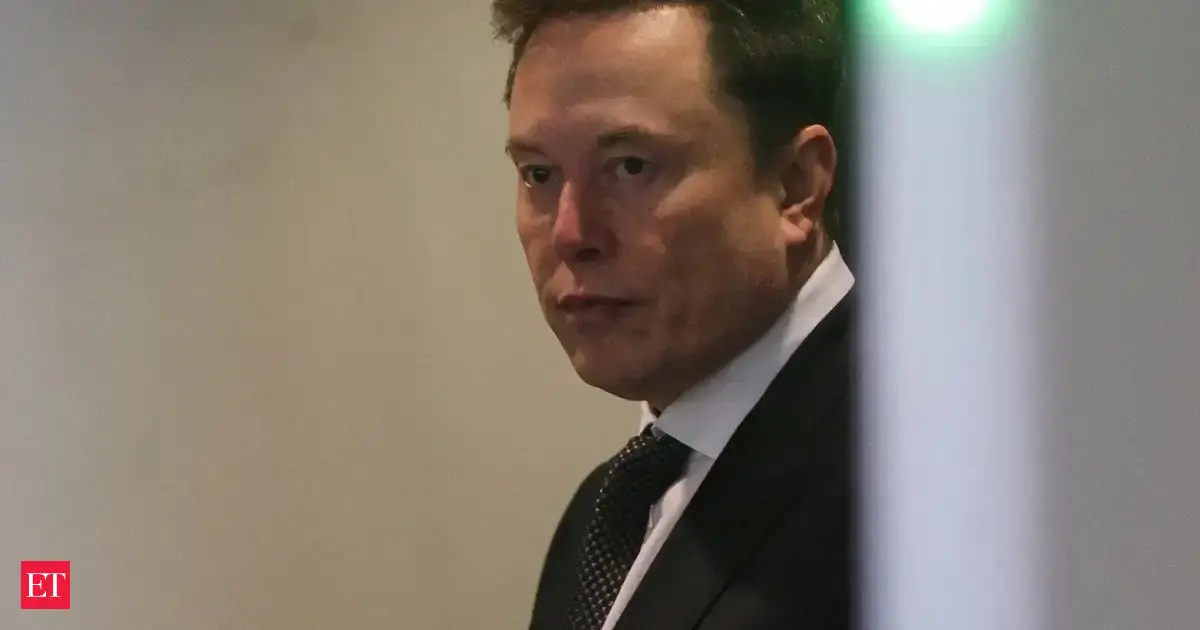
Elon Musk has suggested a possible merger between Tesla and SpaceX, citing increasing overlap. Investors now believe a combination of these companies is highly probable within years. Tesla already supplies batteries and manufacturing technologies for SpaceX projects. The companies are also jointly developing a semiconductor manufacturing facility for AI chips. However, regulatory approvals and governance complexities present significant hurdles to any such transaction. Tesla CEO Elon Musk on Wednesday left the door open to the EV maker merging with his other trillion-dollar-plus-valued firm SpaceX, declining to dismiss the possibility and citing growing overlap between the companies. "As you can tell from the many collaborations on so many fronts with SpaceX, there's more and more overlap," Musk said on Tesla's earnings call. "We can't talk about, you know, combining companies and that kind of thing on an earnings call," he added. Also Read: Elon Musk breaks the $800 billion barrier after SpaceX-xAI mega merger "It's got to be done with the appropriate process." Investors and analysts have long speculated about the possibility of combining Musk's electric vehicle and space firms, with the discussion intensifying during SpaceX's record $75 billion initial public offering process. After Musk's comments, he called on Tesla General Counsel Brandon Ehrhart, who stuck to boilerplate language calling SpaceX a "great partner" that provides "numerous beneficial transactions." Gene Munster, managing partner at Tesla investor Deepwater Asset Management, said the call left him more convinced the companies were destined to be joined over the next few years. "I would put the odds that these two will combine at 90% today," he said in a video posted on social media. "If you were going to ask me yesterday I would have said it's 80%." Tesla already supplies batteries and manufacturing technologies for some SpaceX projects, while the companies are jointly developing Terafab, a semiconductor manufacturing facility designed to produce AI chips. Also Read: Elon Musk's SpaceX in merger talks with xAI ahead of planned IPO, source says Proponents argue that combining the companies could simplify Musk's corporate empire and create a more integrated company spanning artificial intelligence, robotics, manufacturing, energy and space infrastructure. JPMorgan analysts said this month that "operational integration between the two entities is already deep," citing shared engineering talent, AI infrastructure, Terafab and Musk's leadership as factors that "would facilitate an eventual combination." Stifel analysts struck an even more bullish note, writing that "many investors consider it inevitable that Musk will move to combine SpaceX with Tesla - for them the question is not if but when." SpaceX President and Chief Operating Officer Gwynne Shotwell has also acknowledged potential benefits, telling CNBC in June that folding the companies together "might make Elon's life a little easier" by streamlining management across his businesses. Others, however, caution that any transaction could face formidable hurdles. In the same research note, JPMorgan pointed to the "practical bottleneck" of getting regulatory approvals for both companies, particularly in China, where national security concerns over SpaceX's U.S. government ties could pose problems. Analysts also note that Musk controls a much larger voting stake in SpaceX than in Tesla, complicating governance considerations for Tesla's public shareholders.
SpaceX targets July 23 for next Starship launch after last-minute abort
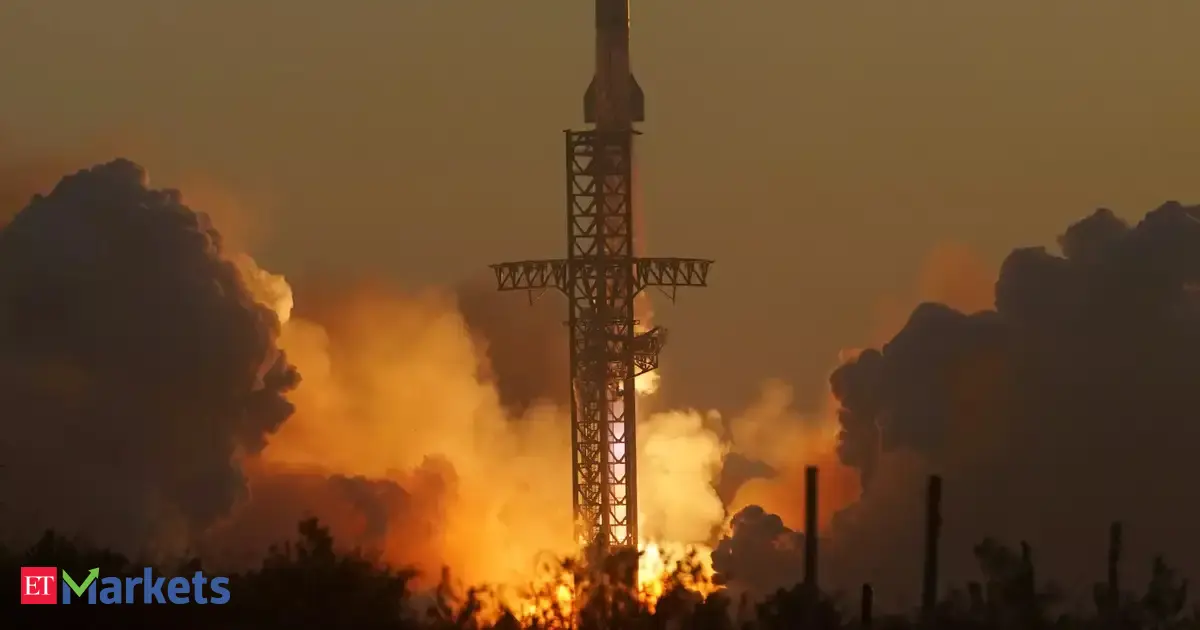
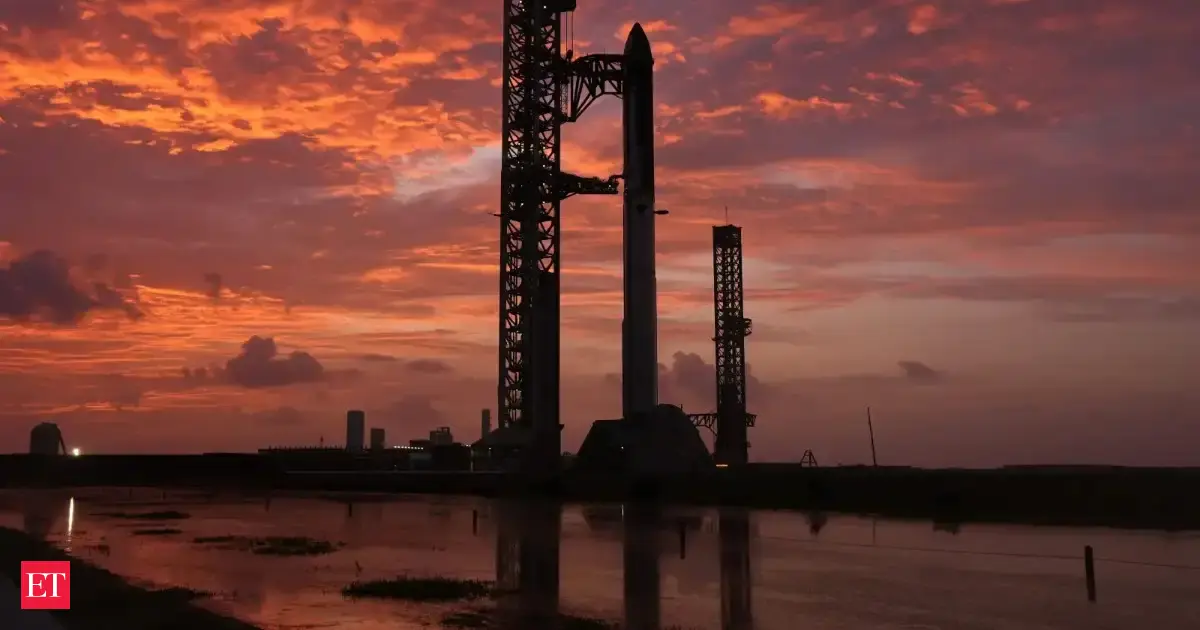
Elon Musk's SpaceX is targeting July 23 for the 13th Starship test flight after a last-second launch abort last week. The mission will carry 20 Starlink satellites on a suborbital test as the company pushes toward routine orbital deployments by year-end. SpaceX is targeting Thursday, July 23, for another attempt to launch its Starship rocket, the company said in a statement on Sunday. SpaceX CEO Elon Musk posted on X later on Sunday that the next Starship launch would occur on Friday, contradicting the earlier statement from his company. He did not say whether the original Thursday date was wrong. On July 16, SpaceX's Starship rocket triggered a last-second abort before liftoff for its 13th flight test from Texas, which erased about $100 billion from the company's market value. SpaceX said it has modified Starship's propulsion system to address the engine issue experienced on the previous flight. A launch delay for the $15 billion rocket development program better known for dramatic engineering feats and explosive testing failures is not uncommon. On Friday, SpaceX said it would attempt the launch on July 20. The company has launched 12 Starship test flights since 2023. On its 13th flight test, Starship will carry 20 Starlink satellites to demonstrate its satellite-dispensing system and the Starlink network's laser communication links, but those satellites will follow the ship's suborbital trajectory and burn up in Earth's atmosphere soon after deployment. In its prospectus, SpaceX said that it aims to launch the first Starlink satellites to orbit on Starship by year's end, followed by routine launches.
SpaceX aborts Starship launch seconds before liftoff
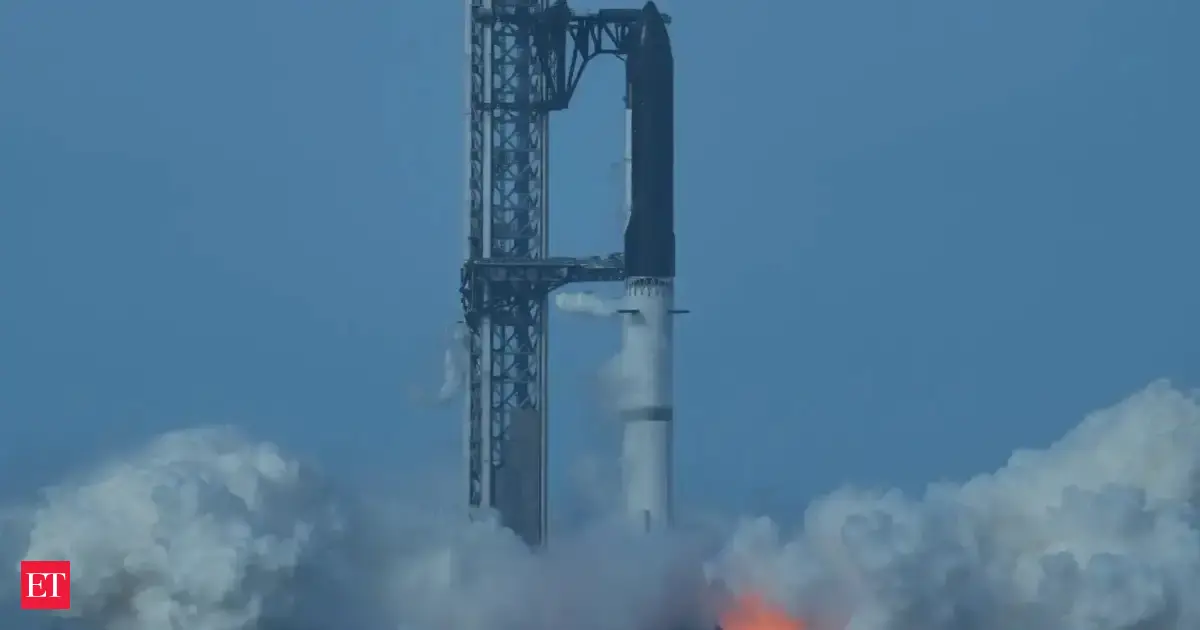
SpaceX's Starship rocket experienced a last-second launch abort on Thursday. Some of the rocket's 33 engines failed to ignite properly before liftoff. This engine issue triggered an automatic abort sequence just before the scheduled launch. SpaceX CEO Elon Musk indicated a probable launch attempt early next week. The company's stock saw a slight decline following the scrubbed launch event. Washington: SpaceX's Starship rocket triggered a last-second abort before liftoff for its 13th flight test from Texas on Thursday as some of its 33 engines failed to start, with CEO Elon Musk saying it will likely try to launch again early next week. Shares of SpaceX, which went public last month, fell about 3% in aftermarket trading following the scrubbed launch. The stock ended at $131.11 on Thursday, closing below its IPO price of $135 for the first time since listing. "Some of the engines didn't start, triggering an automatic launch abort," Musk said in a post on X, without disclosing the number of engines on the Super Heavy rocket that did not start. "To be confident of a good flight, 2 Raptors will be removed & replaced. Most probable launch timing is early next week." The launch abort came less than a second before Starship's planned liftoff from Starbase, SpaceX's company town in south Texas, at 5:45 p.m. CT (2245 GMT). The rocket's engines ignited but cut off shortly after. "We did trigger a hold on the booster that aborted our liftoff as we were starting to light those Raptor engines," said SpaceX spokesperson Dan Huot, speaking on the company's live stream after the launch was scrubbed.
Pollution from Elon Musk's unpermitted xAI power project hits hardest in Black communities
Potential emissions from the turbines are far beyond the threshold that would require a federal permit, and would be released near predominantly Black communities already estimated to be suffering disproportionately high rates of lung disease, according to a Reuters analysis based on government data and information in the correspondence with regulators. Elon Musk's artificial intelligence company xAI has installed 59 natural gas turbines for its Colossus 2 data center project in Tennessee without securing federal clean air permits, according to communications between regulators and xAI representatives. Potential emissions from the turbines are far beyond the threshold that would require a federal permit, and would be released near predominantly Black communities already estimated to be suffering disproportionately high rates of lung disease, according to a Reuters analysis based on government data and information in the correspondence with regulators. The findings, which have not been previously reported, reflect how exploding electricity demand from AI data centers is driving companies to build off-grid power plants at a pace outstripping environmental oversight, with potentially big risks to public health. The number of unpermitted turbines identified by Reuters is about double what xAI has publicly acknowledged. The company previously said it was running 27 unpermitted turbines for Colossus 2 as of January and has argued the permits are not required. At least 57 of the 59 turbines are located in Mississippi, just over the state line from Tennessee where the data center is located. The xAI turbines are among scores of off-grid power plants for data centers proposed or under construction around the country. Local authorities often fast-track approvals in just weeks or months, without the years of environmental studies and public hearings typically required for such power generation projects that connect to the grid, Reuters has reported. Mississippi regulators in March issued a permit for permanent turbines for Colossus 2, allowing construction of 41 gas-fired turbines. The approval came three weeks after the state's only public hearing on the project. The xAI cluster of temporary turbines in Mississippi is already among the biggest off-grid data center power projects, according to Ben King, an analyst with think tank Rhodium Group, who reviewed the Reuters analysis. "This looks to be an unprecedented level of behind-the-meter gas being installed in one place," he said, referring to off-grid natural gas plants serving just one customer. The communications reviewed by Reuters show xAI, now owned by trillionaire Musk's SpaceX, has installed 57 off-grid turbines in Southaven, Mississippi, just across the state line from its Colossus 2 data center in Memphis, a facility supporting the Grok chatbot and other AI systems. The records show the company has also installed two other unpermitted turbines for the project on a different site. Reuters could not determine the location. The communications, obtained through a Reuters public records request, included emails between Trinity Consultants, representing xAI and subsidiary MZX Tech, and the Mississippi Department of Environmental Quality (MDEQ). xAI did not respond to Reuters' request for comment. xAI's turbines are part of a widening environmental justice battle over whether the AI boom is adding disproportionate pollution burdens to communities of color. Civil rights groups including the NAACP and the Southern Environmental Law Center sued xAI in April to halt their operations, arguing the turbines produce emissions subject to the federal Clean Air Act and shouldn't be operated without permits. They contend the turbines are polluting homes, schools and churches in historically Black communities. "The scale of it is astonishing," said Patrick Anderson, an attorney with the Southern Environmental Law Center. "This is an absolutely huge Clean Air Act violation that threatens public health." Securing a Clean Air Act permit would have exposed xAI's project to extensive review and public comment, potentially taking years. Mississippi environmental regulators and xAI have argued in court filings that the turbines are exempt because they are "mobile" and intended to operate onsite for less than a year. "MDEQ has determined that portable/temporary turbines do not require an air permit," the agency said in a statement to Reuters. The U.S. Environmental Protection Agency said in January 2026 that even temporary turbines exceeding emissions thresholds must obtain permits. The agency, however, told Reuters it's considering changes allowing "regulatory flexibilities" for portable units while continuing to protect public health. xAI, the MDEQ and the EPA did not answer questions from Reuters about pollution impacts on communities of color from power generation to serve data centers. The U.S. Justice Department weighed in on the lawsuit in a June 15 filing, saying that restricting the turbines could threaten national security interests because xAI's systems support U.S. military operations, including operations involving Iran. The outcome of the lawsuit filed by civil rights groups could help define how environmental laws apply to the fast-growing AI sector, where companies are scrambling to bring power supplies online to support energy-intensive computing. "This sets up scenarios where the government can create sacrifice zones and tell communities they have to breathe illegal air pollution," said Mary Rock, a senior attorney for Earthjustice which is representing the NAACP and SELC. The dispute echoes the findings of a 2022 study by researchers from UCLA and Columbia University and published in the Nature Energy journal that found that previously redlined communities - where banks historically discriminated against Black mortgage applicants - now face disproportionately high exposure to pollutants from fossil fuel facilities. "Air pollution from these and other sources contributes to systemic racial disparities in chronic disease and ultimately shorter lives," Lara Cushing, a UCLA public health professor who co-authored the study, told Reuters. Big emissions The emails reviewed by Reuters included the manufacturer emissions profiles for 32 of the 59 turbines, including 30 at the Southaven site. A Reuters analysis based on that information found that those 30 turbines alone could emit nearly 2,500 short tons of nitrogen oxide, 4,000 short tons of carbon monoxide and 22 short tons of formaldehyde annually, assuming they operate continuously at 80% of capacity. According to the EPA, gas turbines are typically operated at loads of 80% or more to achieve efficiency. Nitrogen oxides contribute to smog and respiratory inflammation, according to the American Lung Association. Carbon monoxide deprives the body of oxygen, and formaldehyde is a carcinogen. The xAI site's potential emissions far exceed a Clean Air Act threshold that requires permitting for facilities capable of more than 100 short tons annually of pollutants such as nitrogen oxide. "This is a massive amount of turbines and an unfathomable amount of air pollution," Southaven resident Shannon Samsa said in an interview. "It's not a hypothetical," she said, "that air pollution is bad for you." The nitrogen oxide emissions calculated by Reuters for about half the plant's turbines would put the facility "up there with some of the heaviest polluting natural gas power plants across the entire country," said Nicholas Mailloux, a postdoctoral researcher at the University of Wisconsin-Madison who studies air quality and health benefits of the clean-energy transition. He said the facility would be on par with the top 25 U.S. gas plants for nitrogen oxide emissions, citing EPA data for actual emissions. The people affected In the Colonial Hills neighborhood of Southaven, the turbines serving Colossus 2 can be heard around the clock, often firing off noisy bursts that residents compare to jet engines. Ervin Laws, a Colonial Hills resident in his 20s, said the noise wakes him up at night. "I can't do anything about it, because he's got more money than me," he said, referring to Musk. The turbines were installed in communities already estimated to be facing relatively high respiratory disease burdens, according to a Reuters analysis of CDC data. In 27 of 28 census tracts within five miles of the site - spanning both Mississippi and Tennessee - the estimated asthma rates were higher than their respective countywide figures. In 24 tracts, chronic obstructive pulmonary disease rates were also higher. Five miles is a distance commonly used in environmental health research to capture populations likely to be exposed to air pollution from a stationary source. A separate Reuters analysis of Census Bureau data found that the residents living near the facility are disproportionately Black. Because the five-mile radius crosses state lines, Reuters compared each side against its own county baseline. Within five miles of the facility in DeSoto county, Mississippi - where the turbines are located - about 46% of residents are Black, compared with 33% countywide, according to census data. Across the state line in Tennessee, where residents have no say in Mississippi's permitting process, about 94% of residents within five miles of the facility are Black, compared to 52% in surrounding Shelby County. Jayajit Chakraborty, a professor at the University of California, Santa Barbara, said the Reuters analysis was consistent with research that shows communities of color face higher exposure to fossil fuel pollution. Shelby County and portions of DeSoto County have also previously failed to meet federal ozone standards and remain subject to EPA-approved plans to ensure they do not slip back into violation, according to regulatory documents. Nitrogen oxide is a key precursor to ozone formation, which the EPA says can harm respiratory health. "Given this community struggles with high asthma rates, additional NOx exposure at such high rates could exacerbate public health issues in a community that is already seeing more than its fair share of exposure to toxic air pollution," said Victoria Nelson, an independent environmental engineer, formerly at EPA. Sarah Gladney, 72, has watched the rapid expansion of xAI's Memphis-area presence from her home in the historically Black neighborhood of Boxtown, a few miles from where the company built its Colossus 1 data center in 2024. "Once they got their foot in the door in Memphis, I feel like it's going to be a continuous movement of xAI into these other communities," she said. "It's all about the money, and it's not about the health or wellness of the people that live in or near these communities."
Anthropic Claude India Pricing announced: Check what users will have to pay for Claude services
Anthropic Claude Cost India: Anthropic now offers its Claude AI assistant with pricing in Indian rupees. This move simplifies payments and removes currency conversion fees for users. India has become Anthropic's second-largest global market after the United States. The company recently opened an office in Bengaluru to support its growth. Localized pricing is crucial for competing in India's tech market. Anthropic has quietly done something Indian users have been asking for: it has started charging for its Claude AI assistant in rupees instead of US dollars. The switch means anyone signing up for a paid Claude plan in India will now see prices in familiar currency, without the extra math or the surprise dollar conversion charges that usually show up on the credit card bill. What Changes for Anthropic UsersIndian subscribers browsing Claude's web and mobile apps will now find rupee price tags on every paid tier. Gone is the need to route payments through international cards or absorb currency conversion fees, a hurdle that has long kept budget-conscious users away from foreign AI subscriptions. Anthropic Claude India Pricing: The New Price TagsClaude Pro: Rs 2,000 a month if billed yearly, or Rs 2,399 a month if paid monthly Claude Max: Two new tiers at Rs 11,999 and Rs 23,999 a month, built for developers, researchers and anyone who burns through AI credits quickly Claude Team: Starts at Rs 2,399 per user per month on annual billing, aimed at businesses Claude Team Premium: Rs 11,999 per user per month for companies wanting higher limits All these figures already include GST, so there are no hidden add-ons at checkout. Why Anthropic Is Betting Big on IndiaThe numbers explain the urgency. India now makes up 5.8% of Claude's entire global user base, enough to place it just behind the US in Anthropic's rankings. Growth has been sharp too. Anthropic CEO Dario Amodei said Anthropic's revenue run rate in India had doubled in just four months, a pace that has clearly caught the company's attention. That kind of momentum is hard to ignore, and it explains why Anthropic has been laying down roots rather than just testing the waters. Anthropic Setting Up Shop in BengaluruThe rupee pricing is the latest step in a broader India push. Anthropic opened its first Indian office in Bengaluru back in February, giving it a direct line to the country's massive developer and enterprise community. It has also teamed up with homegrown fintech player Razorpay, making it easier for Indian businesses to plug Claude into their own products and services. A Crowded BattlefieldAnthropic is not the only one eyeing India's AI appetite. OpenAI, Google, Microsoft and Perplexity have all ramped up their India game with new launches, partnerships and enterprise deals of their own. Local pricing gives Anthropic one less excuse for price-sensitive Indian users to look elsewhere, and one more reason to believe the country is no longer just another market on the map, but a genuine growth engine for the company.
Meet DeepSeek's Liang Wenfeng, the Chinese entrepreneur who is now world's richest AI founder, surpassing Anthropic's Dario Amodei
DeepSeek founder Liang Wenfeng's net worth has significantly increased after a recent funding round. He is now the world's wealthiest creator of artificial intelligence models. This surge in valuation makes him a prominent figure in China's tech landscape. His company's success is attributed to early investments in computing power. Liang's substantial equity retention distinguishes him from Silicon Valley peers. DeepSeek founder Liang Wenfeng has emerged as the world's richest AI model creator after his company's latest fundraising round more than doubled his personal fortune. According to the Bloomberg Billionaires Index, Liang's net worth has surged to $36 billion, up from around $16.7 billion, placing him ahead of Anthropic co-founder Dario Amodei and OpenAI co-founder Greg Brockman among founders of AI model companies. Most of Liang's wealth stems from his ownership of DeepSeek. The company's valuation climbed nearly fivefold from the $10 billion reported in April, driven by strong investor demand. DeepSeek's $7.4 billion funding round in June 2026 valued the startup at $50 billion. During the round, Liang personally invested $3 billion, and despite dilution, he is estimated to retain a 78% stake in the company, according to the Bloomberg Billionaires Index. Who is Liang? Liang was born in 1985 in Zhanjiang, in China's southern Guangdong province, where his father was an elementary school teacher. He studied electronic engineering at Zhejiang University, a prestigious college in the city of Hangzhou where he also earned a master's degree in information and communication engineering. Liang created DeepSeek in 2023 as an offshoot of the AI division of his hedge fund, Zhejiang High-Flyer Asset Management, which he set up with two former university classmates. The trio had begun trading as students during the global financial crisis. Chinese engineer Liang Wenfeng rose to prominence in the AI industry after founding DeepSeek, building on the success of his quantitative hedge fund, High-Flyer. As DeepSeek continues to make waves in the global tech industry, here's a look at the man behind the company. He later founded High-Flyer, a quantitative hedge fund that now manages around $8 billion in assets, making it one of China's largest firms in the space. Liang has cited legendary mathematician and Renaissance Technologies founder Jim Simons as a key inspiration for his investment approach. Recognising the potential of artificial intelligence early, Liang's team began investing heavily in computing infrastructure in 2019, building powerful systems powered by Nvidia graphics processing units (GPUs). That early investment laid the groundwork for the launch of DeepSeek, which has since emerged as one of the most closely watched AI startups globally. How did Liang get so rich?Liang Wenfeng stands out from many of his Silicon Valley counterparts for retaining an unusually large ownership stake in his company. Unlike many US AI founders, who often dilute their holdings significantly to raise capital from venture capital firms and technology giants, Liang has maintained a stake of nearly 78% in DeepSeek. That high level of ownership has not only given him greater control over the company but has also significantly boosted his personal wealth. While leading AI firms such as OpenAI and Anthropic boast enormous valuations, ownership in those companies is typically spread across multiple founders, investors and institutional backers, reported Bloomberg. With an estimated net worth of $36 billion, Liang is now China's eighth-richest person, ranking just behind Cambricon Technologies co-founder Chen Tianshi, another prominent figure in the country's AI industry.
Mulling AI investment, Anthropic lobbied Australia on copyright law
Anthropic's chief executive Dario Amodei has lobbied Australian officials for "copyright reform" as the artificial intelligence giant seeks to make a major investment in the country, official briefing notes released Monday show. According to briefing notes released under freedom of information law, Amodei had requested the meeting to discuss barriers to AI training in Australia, "particularly copyright reform". Anthropic's chief executive Dario Amodei has lobbied Australian officials for "copyright reform" as the artificial intelligence giant seeks to make a major investment in the country, official briefing notes released Monday show. Amodei met Australia's Treasurer Jim Chalmers in April to discuss plans to enter the Australian market, including building data centres. According to briefing notes released under freedom of information law, Amodei had requested the meeting to discuss barriers to AI training in Australia, "particularly copyright reform". Australia's centre-left Labor government is under pressure from musicians, screenwriters and artists to reject proposals they say seek to let AI models use copyrighted works for free. Prime Minister Anthony Albanese is set to deliver a speech on AI and "social licence" on Wednesday. A briefing note government officials had sent to Chalmers ahead of his meeting with Amodei said: "Anthropic will raise that investment in AI model development capability and associated infrastructure, like data centres, is contingent on clarity of copyright settings." In the United States, Anthropic has argued AI training is covered as "fair use" of material, which does not require rightsholders' consent. The Australian officials disputed this in the briefing note, saying the matter was "not settled". In Australia, AI companies require permission from copyright holders through a voluntary licence. Anthropic was told Australia would not introduce a text and data mining exception in its copyright law, and was in talks with a range of stakeholders over the issue. Anthropic "purport there is a 'long tail' of smaller rights holders which impedes efforts to identify and purchase licensing rights", the officials wrote. Anthropic did not immediately respond to a request for comment on the Australian meeting.
Elon Musk says Anthropic is the current AI leader, praises Mythos and Fable models
Elon Musk now calls Anthropic the industry's current leader in artificial intelligence. He admitted being clearly wrong about the AI startup's potential outcomes. Anthropic is a major customer of Musk's SpaceXAI infrastructure company. The AI startup uses SpaceXAI's supercomputer for its advanced models. Musk stated he would never harm a competitor, citing Tesla and SpaceX examples. Elon Musk has praised artificial intelligence (AI) startup Anthropic, saying it is the industry's current frontrunner, in a significant shift from his earlier criticism of the company.Responding to a user on X, the billionaire entrepreneur said he had been 'clearly wrong' about Anthropic and described it as 'currently the leader in AI'. He also said no company had released a model comparable to Anthropic's latest ones, Mythos and Fable.
SpaceX's biggest bull sees valuation soaring above $10 trillion
Raymond James analyst Brian Gesuale initiated coverage on SpaceX with a strong buy. He set an $800 price target, projecting significant future stock appreciation. Gesuale sees SpaceX revenue soaring to $5.2 trillion by 2035. This growth is primarily based on its nascent artificial intelligence business. The analyst believes AI will become SpaceX's largest revenue source by 2027. New York: SpaceX has no shortage of fans on Wall Street, but one analyst stands out among the rest as by far the most bullish: Raymond James' Brian Gesuale. Gesuale initiated coverage on the rocket, satellite, and artificial intelligence company Tuesday with a strong buy rating and an $800 price target, the highest among Wall Street analysts and roughly 430% above where the stock is trading in Tuesday's selloff. Should the shares hit that level, the company's market valuation would balloon to roughly $10.5 trillion. US MarketsPowered By As on 08 Jul 2026, 01:30 AM IST S&P 500 Top Gainers Cognizant Tech Solns43.94(6.21%) Occidental Petroleum51.68(5.88%) Cboe Global Markets258.64(5.53%) Gilead Sciences136.36(5.21%) Gainers" S&P 500 Top Losers Intel110.39(-9.66%) Teradyne343.11(-9.59%) Solstice Advanced Mat62.10(-8.74%) Coterra Energy32.56(-8.62%) Losers" At the moment, SpaceX's market valuation is less than $2 trillion. "We see the company as one of the defining industrial infrastructure companies of the 21st century," Gesuale wrote in a note to clients on Tuesday. "Just as railroads, electric grids, and the Internet reshaped prior economic eras, we believe SpaceX is building the foundational platform for the next generation of industrial capacity." The projection is based on some eye-popping assumptions. For example, SpaceX posted revenues of $19 billion last year. Gesuale sees that soaring to $5.2 trillion by 2035. What's more, that growth isn't tied to the company's high profile rocket or connectivity segments. Rather it's based on its nascent artificial intelligence business. Right now, AI accounts for $16 billion of SpaceX's revenue, up from $3 billion in 2024 when "substantially all AI revenue came from X, primarily through advertising, subscriptions, and data licensing," Gesuale wrote. Raymond James estimates that the figure will rise to about $650 billion by 2031, "making AI the company's largest business by revenue beginning in 2027, and by 2035 it will represent nearly 94% of SpaceX's revenue, or $4.9 trillion, Gesuale wrote. Shifting toward a business model that focuses on monetising compute rather than space travel is how Gesuale believes SpaceX will achieve his revenue targets. "That growth is underpinned by a rapid expansion in installed compute capacity, initially through terrestrial AI infrastructure before progressively extending into orbital compute later in the decade," he wrote. Gesuale notes that the bullish forecasts aren't without their risks. In a scenario where SpaceX experiences unexpected launch failures, the stock could fall to $125, below its $135 initial public offering price. Launch failures would "raise concerns about the pace of orbital AI, Starlink Mobile, and Starship-enabled infrastructure optionality," Gesuale said.