News & Updates
The latest news and updates from companies in the WLTH portfolio.
China's Moonshot AI stole from Anthropic, Trump tech adviser says - VANNY RADIO
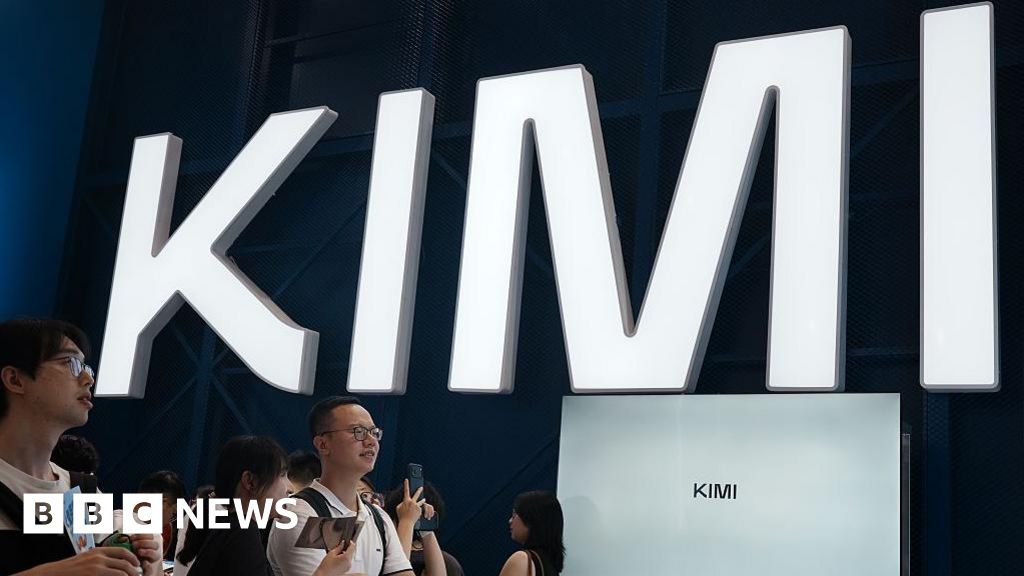
A White House adviser has accused China's Moonshot AI of a "large scale" effort to steal the capabilities of top US artificial intelligence (AI) models. US President Donald Trump's Science and Technology adviser Michael Kratsios said Moonshot AI carried out the campaign through what is known as distillation - when a weaker AI model extracts answers from a stronger one. Moonshot also gained access to restricted cutting-edge Nvidia servers to train its models, Kratsios said in a social post, external on Wednesday. The BBC has contacted Moonshot, Anthropic, the White House and Nvidia for comment. Kratsios said on X that the US government has information that Moonshot AI "distilled" capabilities from Anthropic's Fable AI for the development of its K3 model. Kimi K3 gained attention around the world after it was unveiled last week, with many believing it to have narrowed the gap between Western and Chinese AI models. Moonshot said its K3 model is able to rival top US technology. Kratsios' allegations come just a day after Treasury Secretary Scott Bessent said the US would examine whether Chinese AI models have stolen the capabilities from American rivals. "We've seen a lot of talk about open-source models coming and threatening the large language models in the US," Bessent told Fox Business on Tuesday. "If we see, especially, that overseas models are stealing from our great companies, we have the ability to sanction them," he added. The increased scrutiny by the US of Chinese AI companies also comes as Trump is expected to meet his Chinese counterpart Xi Jinping in September.

China's Moonshot AI stole from Anthropic, Trump tech advisor says
A White House advisor has accused China's Moonshot AI of a "large scale" effort to steal the capabilities of top US artificial intelligence (AI) models. US President Donald Trump's Science and Technology advisor Michael Kratsios said Moonshot AI carried out the campaign through what is known as distillation - when a weaker AI model extracts answers from a stronger one. Moonshot also gained access to restricted cutting-edge Nvidia servers to train its models, Kratsios said in a social post on Wednesday. The BBC has contacted Moonshot, Anthropic, the White House and Nvidia for comment. Kratsios said on X that the US government has information that Moonshot AI "distilled" capabilities from Anthropic's Fable AI for the development of its K3 model. Kimi K3 gained attention around the world after it was unveiled last week, with many believing it to have narrowed the gap between Western and Chinese AI models. Moonshot said its K3 model is able to rival top US technology. Kratsios' allegations come just a day after Treasury Secretary Scott Bessent said the US would examine whether Chinese AI models have stolen the capabilities from American rivals. "We've seen a lot of talk about open-source models coming and threatening the large language models in the US," Bessent told Fox Business on Tuesday. "If we see, especially, that overseas models are stealing from our great companies, we have the ability to sanction them," he added. The increased scrutiny by the US of Chinese AI companies also comes as Trump is expected to meet his Chinese counterpart Xi Jinping in September.
China's Moonshot AI stole from Anthropic, Trump tech advisor says
Add Yahoo as a preferred source to see more of our stories on Google. A White House advisor has accused China's Moonshot AI of a "large scale" effort to steal the capabilities of top US artificial intelligence (AI) models. US President Donald Trump's Science and Technology advisor Michael Kratsios said Moonshot AI carried out the campaign through what is known as distillation - when a weaker AI model extracts answers from a stronger one. Moonshot also gained access to restricted cutting-edge Nvidia servers to train its models, Kratsios said in a social post on Wednesday. The BBC has contacted Moonshot, Anthropic, the White House and Nvidia for comment. Kratsios said on X that the US government has information that Moonshot AI "distilled" capabilities from Anthropic's Fable AI for the development of its K3 model. Kimi K3 gained attention around the world after it was unveiled last week, with many believing it to have narrowed the gap between Western and Chinese AI models. Moonshot said its K3 model is able to rival top US technology. Kratsios' allegations come just a day after Treasury Secretary Scott Bessent said the US would examine whether Chinese AI models have stolen the capabilities from American rivals. "We've seen a lot of talk about open-source models coming and threatening the large language models in the US," Bessent told Fox Business on Tuesday. "If we see, especially, that overseas models are stealing from our great companies, we have the ability to sanction them," he added. The increased scrutiny by the US of Chinese AI companies also comes as Trump is expected to meet his Chinese counterpart Xi Jinping in September.
China's Moonshot AI stole from Anthropic, Trump tech advisor says
A White House advisor has accused China's Moonshot AI of a "large scale" effort to steal the capabilities of top US artificial intelligence (AI) models. US President Donald Trump's Science and Technology advisor Michael Kratsios said Moonshot AI carried out the campaign through what is known as distillation - when a weaker AI model extracts answers from a stronger one. Moonshot also gained access to restricted cutting-edge Nvidia servers to train its models, Kratsios said in a social post on Wednesday. The BBC has contacted Moonshot, Anthropic, the White House and Nvidia for comment. Kratsios said on X that the US government has information that Moonshot AI "distilled" capabilities from Anthropic's Fable AI for the development of its K3 model. Kimi K3 gained attention around the world after it was unveiled last week, with many believing it to have narrowed the gap between Western and Chinese AI models. Moonshot said its K3 model is able to rival top US technology. Kratsios' allegations come just a day after Treasury Secretary Scott Bessent said the US would examine whether Chinese AI models have stolen the capabilities from American rivals. "We've seen a lot of talk about open-source models coming and threatening the large language models in the US," Bessent told Fox Business on Tuesday. "If we see, especially, that overseas models are stealing from our great companies, we have the ability to sanction them," he added. The increased scrutiny by the US of Chinese AI companies also comes as Trump is expected to meet his Chinese counterpart Xi Jinping in September.
Q3 2026 Anthropic Is Winning on Value, Not Price - PitchBook
The market is pricing tokens, but it should be pricing work Frontier token prices collapsed in July, and the coverage has the story backwards. Buyers do not purchase tokens; they purchase completed tasks, and once you price the work rather than the tokens, the ranking inverts. The near-priciest model on the sheet becomes the cheapest to run, and the models winning the price-cut headlines become the most expensive way to get an agentic job done. The best model for the money is currently Claude Opus 4.8, but Google's Gemini 3.1 Pro, a frontier model at a fraction of the price, closes the gap to a whisker. This note shows why, and it argues that the price war is a trap that transfers the appearance of savings to the buyer and the real cost of failure right back to them.
Nozomi Networks Joins Anthropic's Project Glasswing | iTWire
Nozomi Networks is joining Anthropic's Project Glasswing to bring AI-driven vulnerability discovery to operational technology (OT), Internet of Things (IoT) and cyber-physical systems (CPS). AI models like Mythos are on track to fundamentally change how vulnerabilities are identified. They can help defenders find risks faster and at greater scale. Project Glasswing brings together providers of critical infrastructure and software to apply these capabilities defensively, helping identify and mitigate vulnerabilities before they can be exploited, and secure critical software infrastructure. Nozomi Networks is working alongside peers, partners, and customers to help address the unique cybersecurity challenges and requirements of critical infrastructure environments. Operational and critical infrastructure environments face unique constraints, including long lifecycles, patching limitations, and direct physical consequences from cyber incidents. Recognising this, critical infrastructure sectors are a core piece of Project Glasswing. OT and IoT cybersecurity expertise are important contributions to Project Glasswing and ensuring advanced, AI-driven vulnerability discovery is applied to real-world environments. Through Project Glasswing, Nozomi Networks will: * Apply advanced AI models to OT & IoT-focused vulnerability discovery in our own platform * Contribute insights to Anthropic's collaborative research * Share findings with the broader cybersecurity community AI is Strengthening Security for Critical Infrastructure Project Glasswing reflects a broader shift: AI is accelerating vulnerability discovery and raising the stakes for both aggressors and defenders. Anthropic understands that collaboration among technology providers, infrastructure operators, and security experts is essential to keep pace with evolving threats and to ensure these capabilities are used safely and effectively. By joining Project Glasswing, Nozomi Networks is helping ensure that the unique requirements of OT and CPS environments are fully represented in the next phase of cybersecurity.

Nozomi Networks joins Anthropic's Project Glasswing - Enterprise IT News
Nozomi Networks is joining Anthropic's Project Glasswing to bring AI-driven vulnerability discovery to operational technology (OT), Internet of Things (IoT) and cyber-physical systems (CPS). AI models like Mythos are on track to fundamentally change how vulnerabilities are identified. They can help defenders find risks faster and at greater scale. Project Glasswing brings together providers of critical infrastructure and software to apply these capabilities defensively, helping identify and mitigate vulnerabilities before they can be exploited, and secure critical software infrastructure. Nozomi Networks is working alongside peers, partners, and customers to help address the unique cybersecurity challenges and requirements of critical infrastructure environments. Operational and critical infrastructure environments face unique constraints, including long lifecycles, patching limitations, and direct physical consequences from cyber incidents. Recognising this, critical infrastructure sectors are a core piece of Project Glasswing. OT and IoT cybersecurity expertise are important contributions to Project Glasswing and ensuring advanced, AI-driven vulnerability discovery is applied to real-world environments. Through Project Glasswing, Nozomi Networks will: * Apply advanced AI models to OT & IoT-focused vulnerability discovery in our own platform * Contribute insights to Anthropic's collaborative research * Share findings with the broader cybersecurity community AI is Strengthening Security for Critical Infrastructure Project Glasswing reflects a broader shift: AI is accelerating vulnerability discovery and raising the stakes for both aggressors and defenders. Anthropic understands that collaboration among technology providers, infrastructure operators, and security experts is essential to keep pace with evolving threats and to ensure these capabilities are used safely and effectively. By joining Project Glasswing, Nozomi Networks is helping ensure that the unique requirements of OT and CPS environments are fully represented in the next phase of cybersecurity. ## About Nozomi Networks: Named the company to beat for AI in CPS Security in Gartner's AI Vendor Race, Nozomi Networks brings more than a decade of experience securing OT, IoT, and CPS environments. Nozomi Networks has been building and training our AI engine in-house since 2013, refining it based on insights from thousands of real-world OT and IoT environments. We use a variety of AI and machine learning (ML) models, including Claude, throughout our Vantage platform and Vantage IQ™ - the world's first private, company-trained AI assistant for OT/IoT security teams.

Anthropic merges Chat and Cowork modes into unified Claude interface
The AI company is rolling out a streamlined experience that lets users toggle between conversation and autonomous task execution from a single message box. Anthropic is blending two previously separate ways of interacting with Claude into one unified home screen. The company's Chat mode and Cowork mode now live under the same roof, letting users switch between casual conversation and hands-on task execution without leaving the message box. What's actually changing The core update is architectural. Chat and Cowork, which previously existed as distinct environments, now share a single interface accessible on both web and desktop. Users can select their preferred mode directly from the message box rather than navigating to separate sections of the platform. The distinction between the two modes still matters, though. Chat handles what you'd expect: ideation, drafting, back-and-forth conversation. Cowork, on the other hand, is Claude acting more like an autonomous agent, capable of reading and writing local files on your machine. Cowork workspaces support local folders, persistent context, and memory features. In English: Claude can remember what you were working on, access your project files, and pick up where you left off. The Cowork functionality remains in beta and is rolling out progressively, starting with Max plan subscribers. Anthropic publicized the update through social media channels in early July, including a detailed Threads post on July 7 that walked through the new functionality. The bigger picture for AI platforms This evolution traces back to project capabilities Anthropic first introduced in 2024. Those earlier features let users organize conversations around specific goals. Project workspaces in Cowork are now distinct from earlier projects in Chat, with dedicated support for managing artifacts and executions across both environments. What this means for investors and the crypto-adjacent crowd Anthropic's latest update has zero direct connection to crypto, DeFi, or digital assets. There are no blockchain integrations, no wallet connectivity, no on-chain execution features tucked into the release notes. The AI sector and the crypto market have become increasingly intertwined through the AI token narrative. Projects like Fetch.ai, SingularityNET, and Ocean Protocol have built entire ecosystems around the premise that AI and decentralized infrastructure will converge. The key metric to watch is adoption velocity once Cowork exits beta and rolls out beyond Max plan users.
Microsoft CEO Satya Nadella sharply criticises Claude Fable, claiming Anthropic exerts editorial control over the model
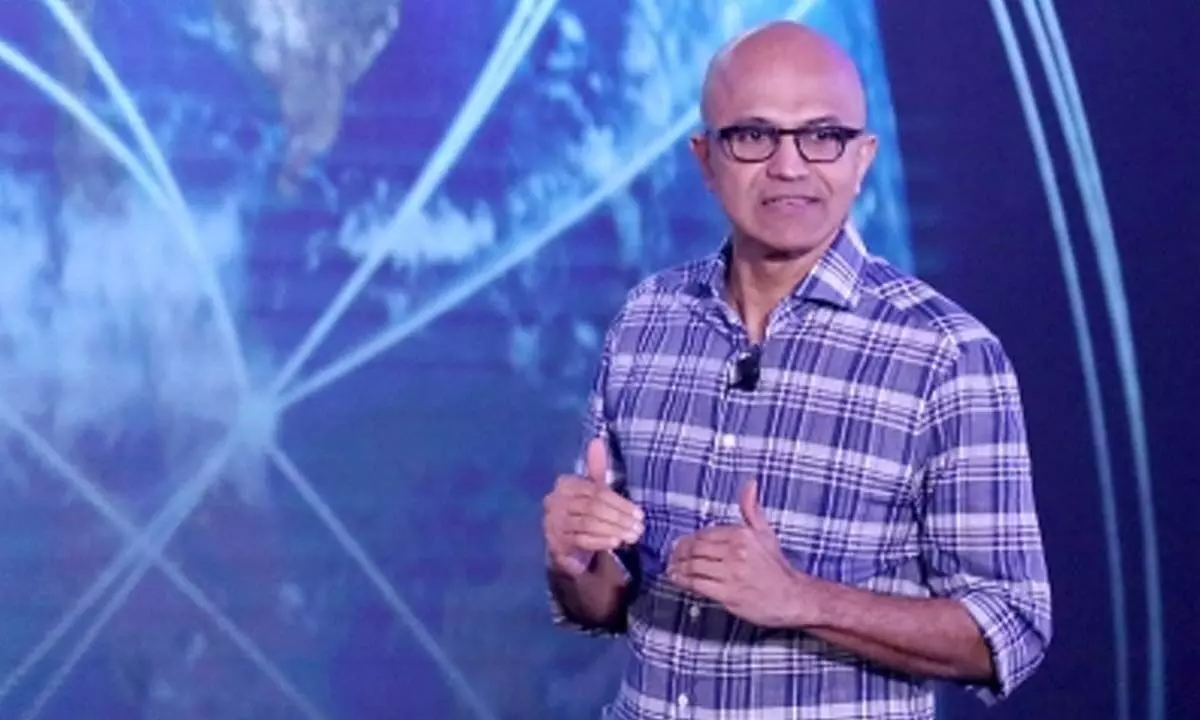
Satya Nadella has criticised Anthropic's Claude Fable, noting that the AI rejects too many requests and is overly restrictive. These criticisms come as Microsoft is heavily investing in more cost-effective AI models and questioning the industry's reliance on a handful of companies leading the field of cutting-edge AI. Microsoft CEO Satya Nadella is unimpressed with Anthropic's latest AI model, Claude Fable. He views the model as too restrictive and prone to rejecting too many user requests, raising questions about whether such strict safety measures make sense for an AI designed to help people create and work. According to a famous publication, Nadella made these remarks on Wednesday during an internal meeting with engineers working on Microsoft's Copilot AI software. Discussing Anthropic's new model, Nadella suggested that Claude Fable's frequent refusals limited its utility. "If you use Fable and it just rejects things out of hand, you ask yourself: when was the last time you had a creation tool that was so editorially controlled? It makes no sense," Nadella stated, according to a meeting transcript cited by the outlet. Anthropic introduced Claude Fable as one of its most capable AI models but also incorporated stricter safety measures than in previous versions. According to the company's support documentation, Fable can automatically redirect users to an older Claude model if it detects requests related to sensitive topics -- such as offensive cybersecurity, biology, chemistry, AI model distillation, or certain cutting-edge AI development tasks. Anthropic maintains that these safeguards aim to reduce misuse while ensuring compliance with government regulations. However, these restrictions have drawn criticism from some users. Several posts on X have noted that Claude Fable would redirect even seemingly harmless prompts -- including in-depth questions about cancer research and other technical topics -- to an older model. Anthropic has also acknowledged that it is working to reduce false positives, aiming to avoid unnecessary rejections without compromising robust safety measures. "Implementing these safeguards presents a complex technical challenge: users may experience more false positives as we refine classifiers to address new threats. We are working to reduce them as quickly as possible," the company previously stated. Nadella's remarks come as Microsoft seeks to cut AI costs by investing more in its own models and offering customers a wider range of AI systems. Rather than relying on a handful of expensive, cutting-edge models, the company has been expanding Azure AI Foundry, which provides access to thousands of AI models from providers such as OpenAI, Anthropic, and Microsoft's own internal portfolio. Additionally, Microsoft has been developing smaller, more efficient models that companies can customise using their own data. The company has also taken a cautious approach regarding Anthropic's latest model. Earlier this year, Microsoft reportedly restricted internal employee use of Claude Fable due to concerns over the model's data retention policy, which allows Anthropic to store user prompts for a limited period for safety monitoring purposes. During the meeting, Nadella reaffirmed this strategy, arguing that companies should not rely on a small number of AI providers. "It cannot be the case that there are only two companies in the world with 'token capital' and everyone else has to rent it. It makes no economic sense," he stated, referring to the computing resources required to run advanced AI models.
'I thought it was satire': Sam Altman mocks Anthropic's latest AI ad that's getting widely blasted for being 'dystopian marketing slop'
* Anthropic has a new 'hard questions' ad for Claude and AI * Reactions to the short clip have been mixed * OpenAI boss Sam Altman says the ad feels like satire Anthropic has a new ad out for its Claude AI chatbot, and it ties into its Hard Questions project -- an attempt to bring attention to some of the main concerns and hopes that people have about the future of AI. Will it take my job? Can it lead to new scientific discoveries? Why is there a new data center in my neighborhood? You can see the short film below, which features voices "from real people" that Anthropic has spoken to. Alongside shots of burning buildings, lab researchers, and racks and racks of hard drives, we have ruminations over whether AI can be trusted and how it might affect communities, education, and what it means to be human. Anthropic has boldly left the comments enabled on the video, and it's fair to say there's a mix of opinion: various posters have branded the clip as "dystopian marketing slop", a sign of "dark times", and "pretty horrifying". One commenter points out that the final "keep thinking" tagline is a strange choice for a technology that generally makes us think less. There are plenty of positive opinions too, with some calling the ad "profoundly beautiful", "great", and "thought-provoking", and even "the greatest commercial I've ever seen" in one case. Quite a few YouTuber users in the comments are simply asking for more access to the latest Claude Fable AI model. Questions and answers The ad has even caught the attention of Sam Altman, CEO of Anthropic rival OpenAI. His response to the clip was to say that he "thought this was satire", though it's worth remembering that he's not the most neutral of observers. Anthropic CEO Dario Amodei was previously vice president of research at OpenAI. What we can say for sure about the ad is that it's addressing many of the issues that are in the public conversation right now when it comes to AI technology. Anthropic has also launched a Hard Questions web portal where you can listen to some of the conversations the company has had with people across the US. The topics covered include the use of AI in medical diagnosis, safeguards around the misuse of AI, the resources needed to run data centers, how the technology might impact our critical thinking skills and creativity, which jobs might ultimately be replaced by AI, and what it's going to be like for kids to grow up with AI. Clearly this debate is going to go on and on across the years to come, but it does feel like the tension has never been greater between the hype and the backlash around AI. Big AI companies like Anthropic are going to have to work hard to keep users and governments on side as the technology becomes even more powerful and pervasive. Follow TechRadar on Google News and add us as a preferred source to get our expert news, reviews, and opinion in your feeds.

AI Is Becoming a Commodity, and That's a Problem for OpenAI and Anthropic
A handful of remarkable things that recently happened in the world of artificial intelligence all point in one direction: AI is becoming a widely available commodity. First, the price of AI good enough to accomplish most everyday tasks has dropped precipitously. This is due to lightweight models ...

Microsoft CEO Questions Anthropic's Request Restrictions on Fable AI
Satya Nadella occupies the position of Chairman at The Business Council and Chief Executive Officer & Non-Independent Director at Microsoft Corp. He is also on the board of Starbucks Corp., The University of Chicago and Fred Hutchinson Cancer Research Center. He previously occupied the position of Member-Technology Staff at Sun Microsystems, Inc. Mr. Nadella received an MBA from The University of Chicago, a graduate degree from the University of Wisconsin-Milwaukee and an undergraduate degree from Mangalore University.

FIS and Anthropic extend partnership
FIS, a global technology provider, has joined Project Glasswing, Anthropic's initiative that uses frontier AI to identify and address security vulnerabilities in software infrastructure. FIS operates systems that clear payments, move money, and run core banking for different institutions worldwide. The technology provider is actively testing Mythos 5, Anthropic's AI model, using it to scan and evaluate its own systems through Project Glasswing. Through Project Glasswing, which brings together organisations that build or maintain foundational software, FIS is putting Mythos 5, Anthropic's frontier model, to work as an additional layer within its security program.
Chinese startup Moonshot AI unveils Kimi model it says rivals OpenAI, Anthropic
Chinese startup Moonshot AI has unveiled a new model it says closes the gap with leading U.S. offerings and surpasses OpenAI and Anthropic's most capable systems on some benchmarks. Kimi K3 still trails Anthropic's Claude Fable 5 and OpenAI's GPT 5.6 Sol on overall performance, the company said on Friday, but consistently outperformed other tested models. The model beat Claude Opus 4.8 and GPT 5.5 -- models that sit just behind Anthropic and OpenAI's leading-edge systems -- on benchmarks including coding and general agents, according to Moonshot. It's China's largest AI model so far, with 2.8 trillion parameters, referring to the size of its neural network. "Despite persistent hardware/compute capacity constraints in China, K3 demonstrates that pre-training scaling, paired with architectural innovation, can still deliver step-change gains for flagship Chinese models," Bank of America analysts said in a note led by Alex Liu. The release comes as the race for AI supremacy between the U.S. and China intensifies. Chinese AI models are already gaining traction among Western companies as they close the performance gap with U.S. rivals and remain cheaper to use than the most advanced offerings from American labs. U.S. lawmakers are considering how to curb the growing adoption of Chinese AI models by homegrown companies.

FIS Joins Anthropic's Project Glasswing to Test its Software Security
Fidelity National Information Services, Inc. is one of the world's leading providers of technology solutions, payment card issuance and transaction processing services management and outsourcing services to financial institutions and retailers. Net sales break down by activity as follows: - payment card issuance services (68.2%); - financial services (29.9%); - other (1.9%). The group also develops banking management software used to file primary records of customer accounts, electronic transfer of funds software, bank and online payment services, detection and prevention of frauds services, payment card issuance services, etc. North America accounts for 77.8% of net sales.
Microsoft Turns On OpenAI And Anthropic As AI Alliance Frays
For a decade, Microsoft was OpenAI's landlord, bank and shopfront. It now wants to be its rival. At an internal meeting on Tuesday, executives told the company's sales organisation to start negatively comparing AI products from OpenAI, Google and Anthropic against Microsoft's own, pitching the efficiency and lower cost of its in-house models, according to people familiar with the session . The meeting, billed as a strategy session for fiscal year 2027, which began on 1 July, produced two quotes that will follow Microsoft around for some time. At heart, I am a storyteller drawn to the watershed moments that bend the technology landscape. I braid narrative with data, humanise statistics, and trace the arc from first spark to world-changing impact. My reportage, features and reviews are witty, sardonic, visual and vivid, using anecdote to illuminate rather than eviscerate. As a technology journalist with over sixteen years of experience, I have travelled the world and the seven seas, covered every major tech conference worth its lanyard, chronicled the defining breakthroughs of the last decade and a half, and played a pivotal role in launching some of India's most important technology publishing platforms across web, print and TV. In my current role as Editor of Gadgets Now Studios, I bring that experience, instinct and editorial firepower to the table, with the mandate of scaling the brand to towering heights. When I am off the clock, I am usually lost in music, from underground electronic and progressive rock to stone-cold blues. I am also an incurable F1 nut, a hangover from my previous life as an auto journalist, and always game for a jam session with friends, where I do my best to make my guitar gently weep.

Microsoft sharpens AI sales pitch against OpenAI and Anthropic
Microsoft is reportedly training its sales teams to compete aggressively against leading artificial intelligence (AI) firms, Anthropic and OpenAI. The strategy involves highlighting the shortcomings of their products. According to a Bloomberg report, the tech giant is focusing on lower costs, better security controls, and a more comprehensive suite of products in its pitch.

Microsoft Coaching Sales Teams on Pitches to Win Against OpenAI, Anthropic
Microsoft Corporation is the world's leader in the design, development and marketing of operating systems and software programs for PC's and servers. The group also builds and sells computer equipment. Net sales break down by activity as follows: - sale of operating systems and application development tools (42.9%): primarily for servers (Azure, SQL Server, Windows Server, Visual Studio, System Center, GitHub, etc.) and (Windows); - development of cloud-based software applications (37.7%): programs for productivity (Microsoft 365; Word, Excel, PowerPoint, Outlook, OneNote, Publisher and Access), integrated management and customer relationship management (Dynamics 365), online file sharing and management (OneDrive), and unified and collaborative communications (Microsoft Teams); - other (19.4%): primarily sale of software licenses (Windows), tablets (Microsoft Surface), video game consoles and software (Xbox), computer accessories, etc. The United States accounts for 51.3% of net sales.
The AI burn book: Decoding the cat fights between Sam Altman, Elon Musk, and Anthropic - AOL
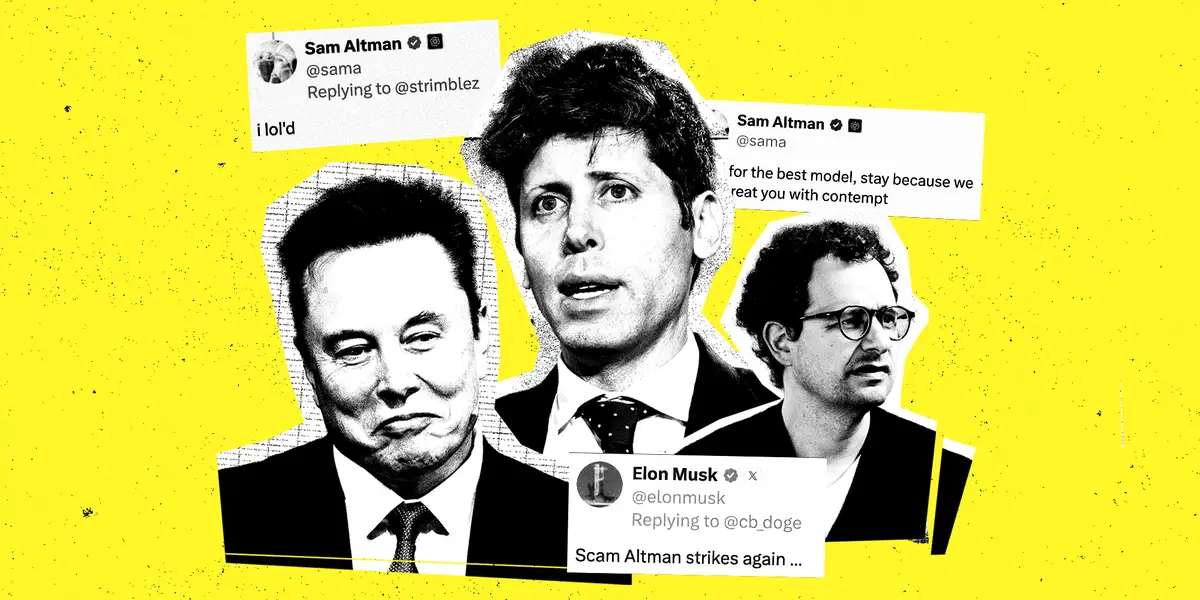
Business Insider decoded the shade and subtweets, from the punctuation to the emojis. As the summer temperatures rise, tech tempers flare. Sam Altman is back to his old ways: openly feuding with Elon Musk and taking jabs at Anthropic once again, to the shock of no one. With Altman and Musk's courtroom dispute wrapped up (Musk lost but vowed to appeal), the dueling AI leaders are now dragging each other online over data privacy and an Apple legal battle. The OpenAI CEO has also poked at Anthropic, his primary competitor, run by Dario Amodei. Altman and Amodei were once colleagues; now, they avoid holding hands. Altman hasn't called a rival CEO a "pusher" or a "grotsky little byotch" yet. Still, a Burn Book is forming under his fingertips -- and we decoded it for you. Round One: Sam Altman vs Elon Musk Elon Musk threw the first punch last Friday. Apple sued OpenAI that day, alleging that the AI lab stole trade secrets to build its upcoming hardware device. Musk replied to posts about the suit with exclamation points, the word "wow," and a quick reaction: "Sounds pretty bad." He ramped up on Saturday, calling the OpenAI CEO "Scam Altman," a favorite phrase of his. The digs kept coming throughout the day. Altman took scamming "to a whole new level," Musk wrote, and might love scamming "more than any human alive!" Altman responded in his typical, lower-case fashion: "homeboy you're the one sellling public market investors on short-term space datacenters." Note the term of endearment (or lack thereof): "homeboy." Note the typo: "sellling." Note the lack of punctuation. Three minutes later, Altman fired off another. This time, he used the feud as an opportunity to promote his product, writing that the most reliable benchmark for GPT-5.6 Sol's success "is that elon is obsessed with me again." (Again, no capitalization.) Musk responded to Altman's space data center skepticism a few hours later with a zinger. "We start flying them next year. Maybe you can come see them if your parole officer approves," Musk wrote. In the same post, Musk took another shot at Altman by referencing their messy breakup from almost a decade ago. "After stealing an open source AI charity, you then stole all of Apple's phone technology!" he wrote. "Wow." For the record, Altman doesn't have a parole officer. OpenAI disputes Apple's allegations stating it is "not aware of any evidence that this complaint has merit." OpenAI and SpaceX did not respond to Business Insider's requests for comment. After Saturday's brawl, Altman wasn't done. He took one last stab at Musk on Tuesday, reposting some data privacy concerns about SpaceXAI. "Concerning," he wrote. And yet, the enemies could find some common ground. Both Musk and Altman posted approving messages about an AI safety essay published Tuesday by Google DeepMind's CEO Demis Hassabis. Round Two: Sam Altman vs Anthropic Throughout the Musk mess, Altman continued to kick at his No. 1 opponent: Anthropic. Last Thursday, Anthropic released an eyebrow-raising ad saying there was "hope in hard questions." Those questions include: what will humans do when AI takes over all the jobs? And why do we even have to have AI? The leading image is of a house on fire; it's an AI doomer's dream. Altman clowned the ad on Monday, saying that he "thought this was satire" posted from a fake account. He also put words in Anthropic's mouth: "Hard questions are great but only if we deem you worthy enough to not silently downgrade you, or even get access at all." He appeared to reference how Anthropic quietly rejected or altered some Fable 5 prompts in its initial launch. The company has since made these safeguards more visible. Earlier that day, he laughed at an X user who called the use of Anthropic's Fable 5 an unhealthy situationship. Since its release, Anthropic has rolled back and re-deployed the model and lifted and lowered guardrails, to the frustration of some users. (In typical Altman fashion, he "lol'd.") Altman also got philosophical. He reposted a reply to a criticism of Amodei that quoted C.S. Lewis. "Of all tyrannies, a tyranny sincerely exercised for the good of its victims may be the most oppressive," the post read. It's similar to criticisms other AI leaders have shared: that Anthropic warns of AI's safety concerns while claiming only its AI can fix it. And then, the vague-post of all vague-posts. "Come for the best model, stay because we don't treat you with contempt," Altman wrote on Monday, without specifying which AI rival he was taking a shot at. Amodei seems to be steering clear of the drama. As of Wednesday evening, he hadn't responded, nor has he updated his X account in over a month. Anthropic did not respond to a request for comment. If you enjoyed this story, be sure to follow Business Insider on Yahoo.

The AI burn book: Decoding the cat fights between Sam Altman, Elon Musk, and Anthropic
* The AI industry's burn book is an increasingly public spectacle. * Sam Altman and Elon Musk threw jabs on X. Altman also dragged Anthropic, though CEO Dario Amodei stayed quiet. * Business Insider decoded the shade and subtweets, from the punctuation to the emojis. As the summer temperatures rise, tech tempers flare. Sam Altman is back to his old ways: openly feuding with Elon Musk and taking jabs at Anthropic once again, to the shock of no one. With Altman and Musk's courtroom dispute wrapped up (Musk lost but vowed to appeal), the dueling AI leaders are now dragging each other online over data privacy and an Apple legal battle. The OpenAI CEO has also poked at Anthropic, his primary competitor, run by Dario Amodei. Altman and Amodei were once colleagues; now, they avoid holding hands. Altman hasn't called a rival CEO a "pusher" or a "grotsky little byotch" yet. Still, a Burn Book is forming under his fingertips -- and we decoded it for you. Round One: Sam Altman vs Elon Musk Elon Musk threw the first punch last Friday. Apple sued OpenAI that day, alleging that the AI lab stole trade secrets to build its upcoming hardware device. Musk replied to posts about the suit with exclamation points, the word "wow," and a quick reaction: "Sounds pretty bad." He ramped up on Saturday, calling the OpenAI CEO "Scam Altman," a favorite phrase of his. The digs kept coming throughout the day. Altman took scamming "to a whole new level," Musk wrote, and might love scamming "more than any human alive!" Altman responded in his typical, lower-case fashion: "homeboy you're the one sellling public market investors on short-term space datacenters." Note the term of endearment (or lack thereof): "homeboy." Note the typo: "sellling." Note the lack of punctuation. Three minutes later, Altman fired off another. This time, he used the feud as an opportunity to promote his product, writing that the most reliable benchmark for GPT-5.6 Sol's success "is that elon is obsessed with me again." (Again, no capitalization.) Musk responded to Altman's space data center skepticism a few hours later with a zinger. "We start flying them next year. Maybe you can come see them if your parole officer approves," Musk wrote. In the same post, Musk took another shot at Altman by referencing their messy breakup from almost a decade ago. "After stealing an open source AI charity, you then stole all of Apple's phone technology!" he wrote. "Wow." For the record, Altman doesn't have a parole officer. OpenAI disputes Apple's allegations stating it is "not aware of any evidence that this complaint has merit." OpenAI and SpaceX did not respond to Business Insider's requests for comment. After Saturday's brawl, Altman wasn't done. He took one last stab at Musk on Tuesday, reposting some data privacy concerns about SpaceXAI. "Concerning," he wrote. And yet, the enemies could find some common ground. Both Musk and Altman posted approving messages about an AI safety essay published Tuesday by Google DeepMind's CEO Demis Hassabis. Round Two: Sam Altman vs Anthropic Throughout the Musk mess, Altman continued to kick at his No. 1 opponent: Anthropic. Last Thursday, Anthropic released an eyebrow-raising ad saying there was "hope in hard questions." Those questions include: what will humans do when AI takes over all the jobs? And why do we even have to have AI? The leading image is of a house on fire; it's an AI doomer's dream. Altman clowned the ad on Monday, saying that he "thought this was satire" posted from a fake account. He also put words in Anthropic's mouth: "Hard questions are great but only if we deem you worthy enough to not silently downgrade you, or even get access at all." He appeared to reference how Anthropic quietly rejected or altered some Fable 5 prompts in its initial launch. The company has since made these safeguards more visible. Earlier that day, he laughed at an X user who called the use of Anthropic's Fable 5 an unhealthy situationship. Since its release, Anthropic has rolled back and re-deployed the model and lifted and lowered guardrails, to the frustration of some users. (In typical Altman fashion, he "lol'd.") Altman also got philosophical. He reposted a reply to a criticism of Amodei that quoted C.S. Lewis. "Of all tyrannies, a tyranny sincerely exercised for the good of its victims may be the most oppressive," the post read. It's similar to criticisms other AI leaders have shared: that Anthropic warns of AI's safety concerns while claiming only its AI can fix it. And then, the vague-post of all vague-posts. "Come for the best model, stay because we don't treat you with contempt," Altman wrote on Monday, without specifying which AI rival he was taking a shot at. Amodei seems to be steering clear of the drama. As of Wednesday evening, he hadn't responded, nor has he updated his X account in over a month. Anthropic did not respond to a request for comment. Read the original article on Business Insider The post The AI burn book: Decoding the cat fights between Sam Altman, Elon Musk, and Anthropic appeared first on Business Insider.