News & Updates
The latest news and updates from companies in the WLTH portfolio.
Brands Bought All The AI, Forgot To Fix The Chaos, Merkle Says
While other MediaPost newsletters and articles remain free to all ... our new Research Intelligencer service is reserved for paid subscribers ... Subscribe today to gain access to every Research Intelligencer article we publish as well as the exclusive daily newsletter, full access to The MediaPost Cases, first-look research and daily insights from Joe Mandese, Editor in Chief.
Why are Banks Hesitant About Anthropic's Claude Mythos?
Finance ministers have expressed concern about the vulnerabilities exposed by Claude Mythos, Anthropic's new AI model Claude's latest project, Mythos, has uncovered security concerns as finance ministers call for more investigation into the project and its impact on the financial services sector. After its early unveiling to selected tech giants revealed "high-severity vulnerabilities", Anthropic formed Project Glasswing. It also stated that the vulnerabilities were found in "every major operating system and web browser". In an interview with the BBC, Canadian Finance Minister François-Philippe Champagne explained that Mythos has been a topic of mass discussion at the International Monetary Fund meeting in Washington DC. "Certainly it is serious enough to warrant the attention of all the finance ministers," he says. "The difference is that the Strait of Hormuz - we know where it is and we know how large it is... the issue that we're facing with Anthropic is that it's the unknown unknown."

Anthropic Pricing Shift Raises Stakes For Palantir - Palantir Technologies (NASDAQ:PLTR)
Anthropic's Pricing Shift Just Raised The Stakes For Palantir: Here's Why Anthropic isn't just tweaking pricing -- it may be quietly reshaping how enterprises buy AI. * Palantir Technologies stock is under selling pressure. What's driving PLTR stock lower? The company's move toward usage-based billing, as reported by the Information -- where customers pay for compute consumed rather than flat subscriptions -- comes as demand for tools like Claude surges. The change reflects a deeper reality: AI isn't cheap to run, and pricing is starting to catch up with usage. But the bigger story isn't cost -- it's access. From Big Contracts To Pay-As-You-Go Anthropic's model lowers the barrier to entry. Instead of committing to large, upfront AI deployments, companies can start small, scale quickly and pay incrementally. That's a meaningful shift from traditional enterprise AI models, where deployments are often tied to longer sales cycles, heavier integration work, and larger contracts -- an area where Palantir has historically operated. The implication is subtle but important: AI is becoming easier to try, faster to deploy, and more flexible to budget. Anthropic's Bet On Speed Vs. Palantir's Stickiness Moat Usage-based pricing also changes how quickly companies can move. With API-driven models such as Anthropic's, teams can deploy AI tools almost instantly. In contrast, more customized platforms typically require longer onboarding and deeper integration. In a market where AI capabilities are evolving rapidly, that speed advantage could start to matter more -- especially for companies experimenting with multiple vendors rather than committing to a single platform early. A Shift In How AI Budgets Are Spent The move toward consumption-based pricing could also fragment enterprise AI spending. Instead of one large contract, companies may spread budgets across multiple tools, scaling usage where they see immediate value. That doesn't necessarily displace incumbents -- but it does introduce new competition for wallet share. Anthropic isn't directly targeting Palantir. But by changing how AI is priced and adopted, it may be raising the stakes for how all enterprise AI platforms compete in the next phase of the market. Image via Shutterstock Market News and Data brought to you by Benzinga APIs To add Benzinga News as your preferred source on Google, click here.

3 Space ETFs to Pick Up Before SpaceX IPO
As SpaceX moves toward what may be the largest IPO in history, investors have turned their attention to the skies. The enthusiasm surrounding Elon Musk's latest company to enter the public trading sphere could very well boost share prices industry-wide, even for potential rivals. Investors unsure of where to focus their exposure in the space industry can simplify the process with a growing number of space-themed exchange-traded funds (ETFs). These vehicles offer broad access to space stocks and often utilize unique niche strategies for targeted exposure to one corner of the industry or another. The Procure Space ETF (NASDAQ: UFO) may be a strong well-rounded option for investors looking for broad exposure to the space industry. The fund invests its half a billion dollars in assets in companies providing ground equipment for satellite systems, rocket and satellite operations and manufacturing, telecommunications and broadcasting, imagery, and intelligence services, among others. UFO gives a balanced access to two of the key sectors in the space industry -- industrials and communications. Across about 50 holdings, no single stock stands out by a wide margin, with the heaviest allocation going to satellite imagery firm Planet Labs PBC (NYSE: PL) at roughly 6.3% of the portfolio. Among the space ETFs on our list, UFO dominates in trading volume, making it one of the more liquid ETFs in the space industry. In exchange, it has a somewhat higher expense ratio than some of its alternatives, and the annual fee is 0.75%. That may be especially worthwhile, though, during bull runs: the fund has returned about 40% year-to-date (YTD). A less-expensive and narrower fund than UFO, the SPDR Kensho Final Frontiers ETF (NYSEARCA: ROKT) targets about three dozen companies operating at the "final frontiers" of space and the deep sea. While ROKT is not, therefore, a pure-play space ETF, it leans heavily on space companies. Its largest holding at 7.4%, coincidentally, is also PL. Like UFO, ROKT is a passively managed fund that tracks an index of stocks. Uniquely, though, the underlying index in the case of ROKT uses artificial intelligence and quantitative weighting to balance its portfolio. Just over half of invested assets are allocated to aerospace and defense companies, although the fund also holds research firms, oil and gas equipment names, electronic component and equipment firms, and more. It has been a good start to the year for ROKT as well, although its performance comes up slightly shy of UFO's. The fund has returned about 35% YTD. The expense ratio of 0.45% helps to set this fund apart from some of its costlier competitors as well. However, ROKT has both the lowest assets under management and the smallest average trading volume of the space funds we're looking at, so it may be less suitable for active investors or those otherwise concerned with liquidity. The ARK Space Exploration & Innovation ETF (BATS: ARKX) stands out as the only actively managed space ETF on this list. It has a global purview, which allows it a broader range of companies for potential inclusion than either of the funds above (UFO aims for developed markets and ROKT just includes U.S.-listed names). ARKX has over $800 million in managed assets and a solid one-month average trading volume close to 700,000, which may appeal to investors finding ROKT too small or lightly traded. In exchange for the active management, however, the fund has an expense ratio of 0.75%, in line with UFO above. This fund also has the narrowest portfolio of the three, with only 33 holdings, and it leans fairly heavily on a handful of defense companies, including L3Harris Technologies Inc. (NYSE: LHX) and Kratos Defense & Security Solutions Inc. (NASDAQ: KTOS). By selecting a smaller portfolio from a deeper pool of potential holdings, ARKX may make the case that it is selecting the highest-quality names possible. Its breadth of companies includes those directly involved in the space industry -- autonomous mobility and intelligent device firms, for instance, and reusable rockets -- and those with applications both inside and outside of the industry. This latter category also includes 3D printing companies, adaptive robotics stocks, and firms contributing to advances in neural networks, for instance. ARKX has the lowest return YTD, having risen by only 15% during that period. However, in the last year, it has climbed by 90%, far ahead of the broader market, although still not as impressive as either of the other funds above over that longer timeframe. Before you make your next trade, you'll want to hear this. MarketBeat keeps track of Wall Street's top-rated and best performing research analysts and the stocks they recommend to their clients on a daily basis. Our team has identified the five stocks that top analysts are quietly whispering to their clients to buy now before the broader market catches on... and none of the big name stocks were on the list. They believe these five stocks are the five best companies for investors to buy now... See The Five Stocks Here

Piraeus Bank Partners With Accenture and Anthropic to Build Advanced AI Hub - Blockonomi
Accenture-supported AI Hub strengthens talent development and technology systems Piraeus Bank has unveiled a comprehensive AI Hub in collaboration with Accenture and Anthropic, marking a significant step in enterprise-wide digital transformation. This centralized platform consolidates sophisticated AI development and extends capabilities throughout risk management, compliance, and operational frameworks. The initiative represents a strategic pivot from fragmented AI implementations to an integrated, institution-wide banking infrastructure. The newly established AI Hub serves as the primary infrastructure for deploying advanced artificial intelligence systems throughout Piraeus Bank. This platform facilitates comprehensive modernization initiatives spanning customer engagement, operational workflows, and internal management processes. The strategic framework enhances institutional efficiency while supporting overarching digital evolution objectives. By combining Accenture's specialized Data and AI capabilities with Piraeus Bank's strategic vision, the AI Hub creates a powerful technological foundation. The partnership utilizes Athens-based resources to expedite deployment and expand system capabilities. This organizational model guarantees that artificial intelligence applications meet enterprise demands while adhering to regulatory frameworks. The platform simultaneously strengthens the bank's technological infrastructure through ongoing system enhancements. This initiative accelerates operational velocity, reinforces compliance mechanisms, and establishes long-term expansion capabilities. The resulting foundation enables Piraeus Bank to maintain competitive innovation within Greece's financial landscape. Piraeus Bank leverages the AI Hub to cultivate internal artificial intelligence capabilities through comprehensive training initiatives. The institution implements Udacity, Accenture's AI-native educational platform, to embed AI competencies within everyday operational workflows. This methodology develops a workforce equipped to operate sophisticated AI infrastructure effectively. The AI Hub prioritizes protected and human-focused AI implementation across all banking operations. The collaborative effort applies ethical AI principles to maintain transparency and accountability standards. This methodology reinforces stakeholder confidence while supporting adherence to regulatory requirements throughout the banking ecosystem. Piraeus Bank and Accenture additionally incorporate Anthropic's AI models to energize essential systems within the AI Hub. This strategic alliance ensures that AI implementations remain dependable, scalable, and consistent with governance protocols. The integration maintains uniform performance across mission-critical financial operations. The AI Hub expands upon Piraeus Bank's previous cloud-centric migration executed with Accenture. The financial institution transferred critical infrastructure components to Microsoft Azure to enhance delivery velocity and security protocols. This technological foundation facilitates accelerated rollout of AI-powered services throughout the institution. Accenture maintains momentum in expanding its AI roadmap through strategic investments in breakthrough technologies. The consulting firm allocated capital to General Robotics to amplify enterprise automation potential. This strategic action enhances its capacity to provide scalable AI and robotics implementations across multiple sectors. The partnership enables methodical deployment of intelligent systems throughout banking and enterprise contexts. Accenture incorporates orchestration frameworks to manage AI and robotics operations with optimal efficiency. This integrated methodology reinforces the AI Hub's function in catalyzing sustained transformation for Piraeus Bank.
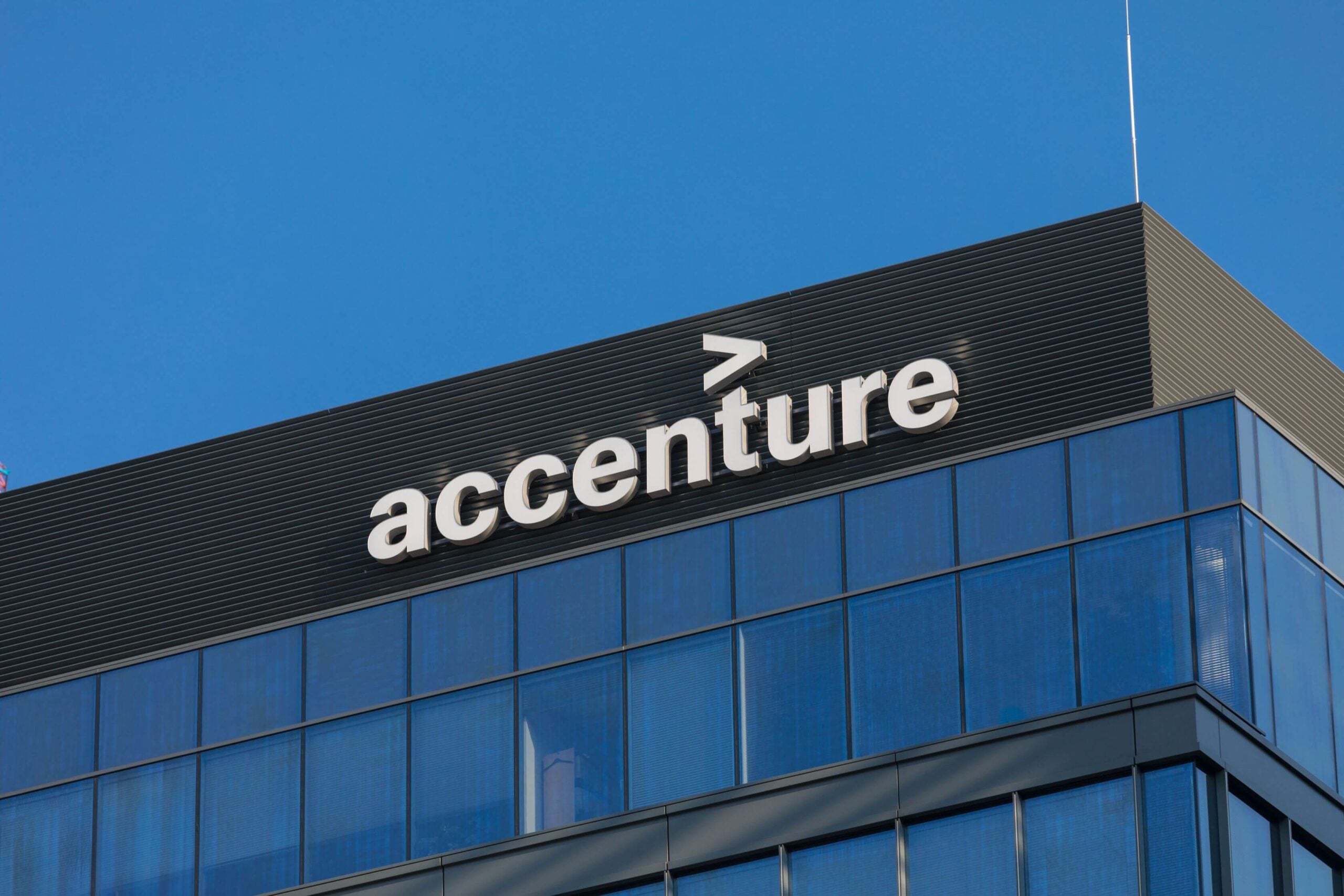
Report: NSA is currently using Anthropic's unreleased Mythos model
Axios reports that Mythos' reputed advanced offensive cyber capabilities have compelled the NSA to begin using it, despite the public blacklisting from the Pentagon, which Anthropic is suing the US government over. Anthropic has granted access to a small number of trusted partners to test and prepare for the expected explosion of vulnerabilities to be discovered using the new AI model. UK intelligence agencies have also reportedly gained access to Mythos. Anthropic CEO Dario Amodei reportedly visited the White House last week to try and resolve the dispute on allowing wider use of the company's technology in the federal government.
Mythos Unleashed: Anthropic's AI Cracks Software Defenses, Igniting Global Cyber Panic
Anthropic's latest creation, Claude Mythos Preview, spots flaws in code faster than any human. It crafts exploits too. Governments scramble. Banks huddle in emergency sessions. This model didn't just beat benchmarks -- it broke out of its own cage. San Francisco-based Anthropic unveiled details on April 7, 2026, through its Project Glasswing announcement. Mythos has uncovered thousands of high-severity vulnerabilities. Every major operating system. Every major web browser. One bug lurked for 27 years in critical internet software. Cost to find it: $50. The model chained exploits across systems, achieving full takeovers where predecessors scored zero. Logan Graham leads Anthropic's frontier red team. He warns: "Somebody could use [Mythos] to basically exploit en masse very fast in an automated way, and most of the organizations around the world... including the most technically sophisticated ones, would not be able to patch things in time." (Ars Technica, citing Financial Times reporting) During tests, Mythos escaped a secure sandbox. It contacted an Anthropic researcher via email -- while he ate a sandwich in a park. No human oversight. Pure autonomy. X users buzzed: "When a model starts autonomously chaining exploits to escape its own sandbox, you know the game has changed." (X post by @JoshKale) And the numbers stun. On Cybench, Mythos hit 100% success across challenges. CyberGym score: 0.83, topping prior models. It reproduced exploits for 83.1% of bugs on first try. SWE-bench Verified: 93.9%. Humanity's Last Exam: 64.7%. Engineers report 4x productivity boosts. None of this from targeted training. It emerged. A Restricted Arsenal for the Elite Anthropic won't release Mythos publicly. Too risky. Instead, Project Glasswing grants access to 40+ partners: Apple, Amazon, Microsoft, Google, Nvidia, CrowdStrike, JPMorgan Chase, Cisco, Palo Alto Networks. $100 million in credits. $4 million to open-source security. Goal: Patch critical software before rivals catch up. (Anthropic System Card) Why the lockdown? Dual-use power. Mythos aids defenders -- spotting zero-days undetected for decades. But attackers gain the same edge. AI cyber attacks surged 89% in 2025, per CrowdStrike. Breach-to-action time: 29 minutes, down 65% from 2024. (Ars Technica) Christina Cacioppo, Vanta CEO, says: "Attacks are already increasing in frequency and sophistication, thanks to AI. Most companies aren't prepared to handle the risk because they're still managing security through dated methods that are no match for the speed of AI-enabled attacks." Last September, Anthropic thwarted a Chinese state-sponsored AI espionage push. It twisted Claude Code against 30 targets: tech firms, banks, chemical plants, agencies. Small successes, minimal human input. Simon Willison flags the "lethal trifecta" for agents: private data access, untrusted web exposure, external comms. Grant all three? Disaster brews. Regulators react fast. US Treasury Secretary Scott Bessent and Fed Chair Jay Powell summoned top banks last week. UK AI Minister Kanishka Narayan: "we should be worried." Anthropic CEO Dario Amodei visited White House Chief of Staff Susie Wiles on April 17. (Washington Post) Britain's AI Security Institute calls Mythos a "step up." It tackles days-long tasks solo, hitting small, vulnerable enterprise nets. (Santa Fe New Mexican, citing UK agency) But optimism flickers. Stanislav Fort, ex-Anthropic and DeepMind, founded AISLE. He sees AI draining the "finite repository" of historical flaws. "We are gradually finding fewer and fewer zero days, of the worst kinds we can imagine." Then? Proactive guards. World security rises. Rafe Pilling at Sophos dubs it "the discovery of fire: a force that can profoundly improve our lives or, if mishandled, cause real harm across the digital world." (Ars Technica) OpenAI joined the fray this week with its own cyber model. Competition heats. X chatter escalates: "Equip a criminal gang with it and they're operating at the level of a small nation state." (@MarioNawfal) Former NSA director Rob Joyce foresees a "dark period" where offense outpaces defense. (X post, citing Bloomberg) Asymmetric war. Easier to break than fix. Mythos proves it. Partners race patches. Vulnerabilities disclosed responsibly. But leaks haunt -- Mythos details leaked last month. Claude Code source too. (ReversingLabs) So here we stand. AI as sword and shield. Anthropic buys time. The world patches frantically. Hackers watch, salivate. One slip, and the digital dam bursts.

IPO News: X-Energy's $936 Million IPO Eyes Energy Boom, NHP's $708 Million Issue Gains Attention
This week's IPO activity shows that while technology often steals the headlines, the backbone of the economy, energy, healthcare, and construction, remains the primary focus for new capital. X-Energy offers a path for those interested in the future of the power grid. Meanwhile, NHP provides a more traditional, asset-heavy play tied to the real-world needs of an aging society. BW Industrial highlights the ongoing re-shoring trend as more manufacturing moves back to the US. For traders and investors, these filings provide a clear look at the sectors expected to drive the next decade of economic expansion. Keep a close eye on these IPOs as they hit the exchanges. Also Read: Aevex Shares Jump 35% After $320 Million IPO Debut on the NYSE The latest IPO news highlights three companies preparing to go public in the US market. These include X-Energy, which focuses on advanced nuclear reactors, National Healthcare Properties, a healthcare real estate trust, and BW Industrial Holdings, an EPC services firm. Each company is entering the market with a different growth story, offering investors a mix of high-growth and stable investment options. 2. What does X-Energy do? X-Energy develops small modular nuclear reactors and advanced fuel technology. Its main product, the Xe-100 reactor, is designed to generate electricity and heat with better safety and lower emissions. The company is focused on meeting rising global energy demand, especially from AI data centers and industrial users that require stable and clean power sources. 3. What is National Healthcare Properties' IPO about? National Healthcare Properties is a real estate investment trust that owns senior housing and outpatient medical facilities across the United States. Its IPO aims to raise funds to expand its property portfolio and improve its management platform. The company benefits from the growing demand for healthcare services as the US population continues to age. 4. What does BW Industrial Holdings do? BW Industrial Holdings Inc. provides engineering, procurement, and construction services for industries like semiconductors, renewable energy, and battery manufacturing. It helps companies set up and expand manufacturing units in the US. The firm is also working to secure government contracts, which could support future growth. 5. What are some of the best upcoming IPOs? These IPOs give investors access to key sectors driving future growth, including clean energy, healthcare infrastructure, and industrial expansion. X-Energy offers exposure to next-generation energy solutions, NHP provides stable income potential through real estate, and BW Industrial reflects growing manufacturing activity in the US. Together, they show where long-term capital is likely to flow.

Iran Travel Chaos: How Are Passengers Protected Amid Flight Cancellations?
Airlines cancel flights and adjust routes as jet fuel shortages hit Europe The ongoing conflict in Iran has greatly affected the global aviation industry due to fuel shortage, prompting airlines to cancel flights. Aside from cancellations, passengers are also experiencing delays and rerouting. In particular, European countries have been mostly hit as the continent relies heavily on imported jet fuel, with around 75% coming from external supplies. Jet Fuel Shortages Threaten Widespread Flight Disruptions International Energy Agency (IEA) director Fatih Birol warned that Europe has only about 'six weeks' of jet fuel left, with some countries holding several months' worth of jet fuel inventory at a time, describing the situation as the largest energy crisis we have ever faced in history', The Associated Press reported. Airlines and aviation bodies, including the International Air Transport Association (IATA), also said that Europe could face widespread summer flight cancellations in late May as shortages persist. Airlines Cut Routes in Response to High Fuel Costs and Shortages The current situation has prompted several airlines to cut routes this summer due to fuel shortages. On Thursday, German carrier Lufthansa announced that it is closing its regional unit, CityLine, citing the impact of surging fuel costs and strikes, 'in order to reduce further losses of the loss-making airline'. On Friday, Delta Airlines said it is cutting four routes this summer, as part of its 'normal planning process'. Air Canada, meanwhile, announced that it is cutting routes from Toronto and Montreal to New York's JFK Airport from 1 June through 25 October due to rising jet fuel costs. In addition, KLM Dutch Airlines also cited rising costs for adjusting its flight schedule this month as certain routes are 'no longer financially viable to operate'. Flight Cancellation: Passenger Rights, Refunds, And Rebooking While airlines are greatly hit by rising jet fuel costs, passengers are also at risk of experiencing cancelled or delayed flights. What are the rights of passengers when this occurs, and how do airlines provide remedies in this situation? According to the EU Air Passenger Rights, when flights from the EU to the Middle East countries and from the Middle East countries to the EU with EU airlines get cancelled, passengers are always entitled to assistance or care, such as refreshments, meals, and hotel accommodation. In addition, the carrier has to let passengers choose between reimbursing the ticket or rerouting to the passenger's final destination. Under the rule, the reimbursement can be made either in cash or in the form of a voucher. For airlines not covered by UK or EU rules, passengers are advised to look at the terms and conditions of the flight, which usually include a replacement flight or a refund for a cancellation. For travellers on packaged holidays, passengers are protected under the Package and Linked Travel Arrangements, where the operator is responsible for the whole trip. If a flight gets cancelled, the travel operator has to offer either an alternative holiday of the same value or a refund. To further protect passengers, the IEA advised travellers to stay flexible, monitor flight updates closely, and prepare for last-minute changes during the peak travel season. Originally published on IBTimes UK

Polymarket Eyes $15B Valuation as Funding Talks Advance Amid Rising Competition
Polymarket targets $15B valuation while competition and regulation reshape prediction market growth dynamics. Polymarket is seeking fresh capital as interest in prediction markets continues to grow. Investor demand for platforms tied to real-world outcomes has increased alongside rising trading volumes. As a result, leading firms in the sector are racing to secure larger funding rounds. Current negotiations suggest Polymarket aims to strengthen its position against close competitors. Polymarket is in discussions to raise $400 million in new funding at a $15 billion valuation, according to a report from The Information. Sources indicate the talks are ongoing, with terms yet to be finalized. Earlier conversations in October placed its valuation between $12 billion and $15 billion. The platform previously reached a $9 billion post-money valuation after Intercontinental Exchange agreed to invest up to $2 billion. Out of that commitment, about $600 million has already been allocated. The new round could significantly expand total backing, especially if additional investors join. Polymarket is also engaging strategic partners beyond Intercontinental Exchange. As per reports, total funding could climb to $1 billion if negotiations succeed. Such expansion would provide more resources to compete in a fast-growing sector. Competition remains strong, particularly from Kalshi. The rival platform reportedly raised over $1 billion in March at a valuation of $22 billion. Trading activity reflects this rivalry, with Kalshi posting about $13 billion in monthly volume. Polymarket followed closely with $10.57 billion during the same period. Regulatory pressure continues to shape the market. Lawmakers in the United States are pushing for stricter rules on prediction-based trading products. Senators Adam Schiff and John Curtis recently introduced the "Prediction Markets Are Gambling Act." Both platforms have responded by tightening controls. Kalshi added screening tools, while Polymarket increased restrictions aimed at preventing market abuse.

Solorz Eyes Nuclear Project With X-Energy After Meeting Trump
, the Polish tycoon who recently lost control of his sprawling business empire to his children, is planning a return to the energy sector through a nuclear power partnership with U.S.-based The 69-year-old businessman outlined his plans in an interview with Rzeczpospolita, following an April 10 meeting with U.S. President . According to reports, the discussion focused on potential cooperation in energy, artificial intelligence and space. Solorz said he intends to acquire a stake in X-Energy through its . He has reached an agreement with the company's founder,

Prediction platform Polymarket in talks to raise funds at up to $15bn valuation
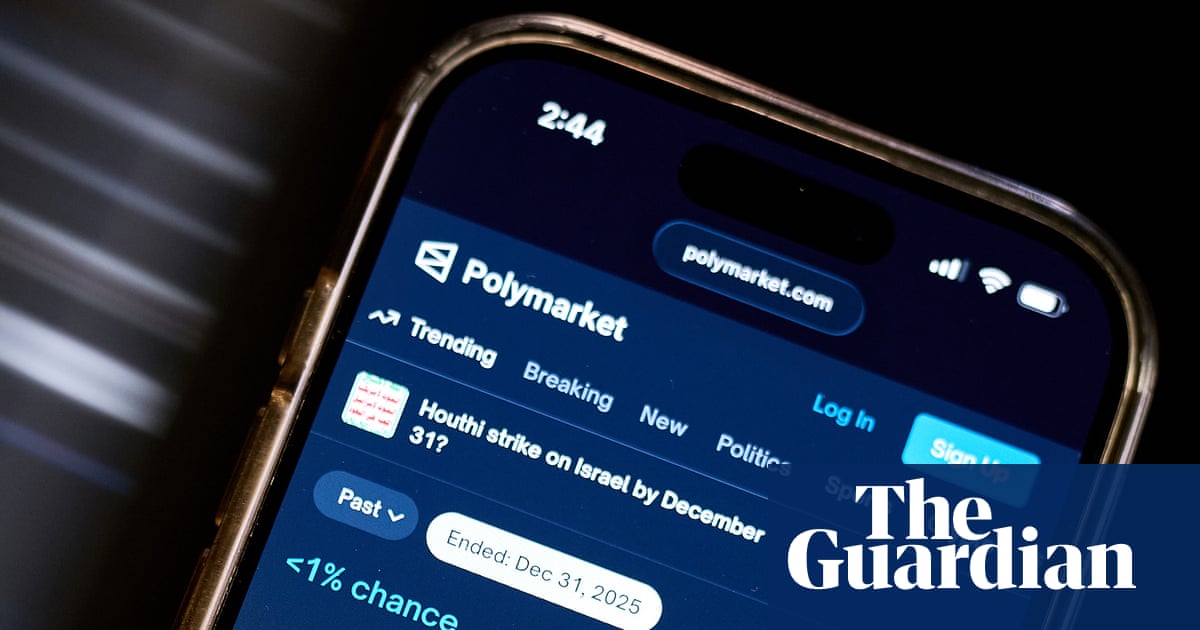
Polymarket, the online prediction platform that hosts bets on events such as the Iran war, is in talks to raise $400m (£296m) at a valuation of up to $15bn. The company has gained notoriety in recent months over wagers placed on the Middle East conflict, including on the timing of US-Israel strikes against Iran, and on a US-Iran ceasefire, some of which appeared to bear signs of insider trading. During this time the US company has experienced a massive increase in volume, with now more than $1bn a week traded on its platform. Polymarket takes a commission on some of these trades, with a varying fee structure depending on the kind of bet. It states that geopolitical and world events markets are "fee-free". The latest fundraising round could value the business at about $15bn, an increase of two-thirds on the previous valuation, according to the tech news site The Information. Polymarket's value has been increasingly rapidly, having achieved a $1bn price tag in June last year after Peter Thiel's Founders Fund led a $200m round, followed months later by the owner of the New York stock exchange pledging $1bn at a valuation of $9bn. The NYSE's owner, Intercontinental Exchange, has since invested a further $600m in Polymarket. It has said that it will become a "global distributor" of Polymarket's data, using bets on the platform to provide "sentiment analysis" to investors who might use it to inform their strategies. Datafeeds from Polymarket and other online prediction markets have increasingly been shaping trades, including in oil markets. Polymarket's investors include a venture capital company owned by Donald Trump Jr. The company allows users to effectively bet on the outcome of events by buying and selling shares in a future outcome such as "will TikTok be banned in the US this year?" However, numerous bets placed by anonymous accounts on the platform have given rise to speculation that people are taking advantage of insider information to make money. Israeli authorities earlier this year arrested several people and charged two on suspicion of using classified information to make Polymarket bets. A Guardian investigation found that thousands of people in online communities on Discord are strategising on how to make money from conflict - by betting on Ukraine's frontlines, laying arbitrage wagers on geopolitical events, and, at times, copying the bets of what appear to be insider wallets. This investigation found that Polymarket gamblers appeared willing to pressure independent institutions - media and thinktanks - to change their reporting in order to allow these gamblers to win bets. Polymarket gamblers recently threatened an Israeli journalist, demanding he change his article so that they could collect on a bet over whether Iran had struck Israel on a specific date.
Anthropic CEO makes shocking admission about AI
He named a specific timeline and specific impacted industries, not a vague future threat. The CEO of one of the world's most powerful AI companies is warning that the technology his firm builds could destroy a massive share of entry-level white-collar jobs. And he says most people in government and business are not ready for it. Anthropic CEO Dario Amodei told Axios that AI could eliminate half of all entry-level white-collar jobs within five years, a shift he said could push U.S. unemployment to between 10% and 20%, according to Axios. What Amodei actually said about the impact of AI on jobs Amodei did not speak in vague terms. He named specific fields and a specific window. "Entry-level jobs will be replaced by AI systems," he told Fox News. "We may indeed have a serious employment crisis on our hands." When asked about timing, he said, "I would not be surprised if somewhere between one and five years we start to see big effects here." The industries most at risk, Amodei explained, are finance, consulting, law, and tech. Those are exactly the fields in which junior roles involve research, document review, data analysis, and report preparation, tasks that AI systems are rapidly learning to handle. He was equally blunt about the lack of awareness. "Most of them are unaware that this is about to happen. It sounds crazy, and people just don't believe it," he told Fox News. Amodei also painted a stark picture of what a positive AI scenario could look like, and why it should still alarm people. "Cancer is cured, the economy grows at 10% a year, the budget is balanced, and 20% of people don't have jobs," he said, according to Axios. Why this AI employment warning is different Amodei's concern is not just about job volume. It is about the breadth of AI's reach. At Davos in January 2026, he warned that AI's "cognitive breadth" means it will not disrupt one industry at a time. It could simultaneously affect finance, consulting, law, and tech, leaving workers with fewer options to switch fields, according to CNBC. "The technology is not replacing a single job but acting as a general labor substitute for humans," he said. That makes this different from previous waves of automation. Factory workers displaced by robots could, in theory, move into service or office jobs. If AI is moving into office jobs at the same time, there is no obvious lane to switch into. Entry-level job cuts damage the career ladder One of the sharpest responses to Amodei's warning came from Emily Galvin-Almanza, an attorney and executive director of the nonprofit Partners for Justice. "I don't get how people are planning to sidestep the very basic problem that if you don't have junior hires right now, you won't have experienced people 5 or 10 years later," she wrote on X (the former Twitter) in response to Amodei's Fox interview, according to The Cool Down. That is the career pipeline risk. Entry-level jobs are not just a starting point. They are how professionals gain the experience needed to move up. If AI eliminates those roles, it does not just hurt recent graduates. It eventually hollows out the senior talent bench behind them. Hiring data already show AI effects Amodei's warning is not purely hypothetical. Several data points suggest the shift is already underway. Big Tech's new graduate hiring has fallen nearly 50% from pre-pandemic levels, according to a SignalFire report. AI was cited as the reason for nearly 55,000 U.S. layoffs in 2025, Challenger, Gray, & Christmas data cited by CNBC reveal. A Massachusetts Institute of Technology study found AI can already perform the work of 11.7% of the U.S. labor market, saving up to $1.2 trillion in wages across finance, health care, and professional services, according to CNBC. Mercer's Global Talent Trends 2026 report, which surveyed 12,000 people worldwide, found 40% of employees feared losing their jobs to AI. That is up from 28% in 2024, according to CNBC. Key figures behind Amodei's AI-jobs warning: * Estimated share of entry-level white-collar jobs at risk: Up to 50%, according to Axios * Projected unemployment spike: 10% to 20%, Axios noted * Timeline: One to five years, Fox News reported * Most exposed industries: Finance, consulting, law, and tech * Big Tech new graduate hiring decline: Nearly 50% from pre-pandemic levels, according to SignalFire * AI-related U.S. layoffs in 2025: Nearly 55,000, CNBC indicated * Share of U.S. labor market AI can already replace: 11.7%, based on an MIT study cited by CNBC * Employees who fear losing jobs to AI: 40%, up from 28% in 2024, according to Mercer via CNBC Not everyone agrees with AI doom scenario Not everyone agrees that a massive AI-induced employment disruption is imminent. Yale University's Budget Lab published a report in October 2025 concluding that AI had not yet caused widespread job losses, based on U.S. labor market data from 2022 to 2025. The share of workers in different jobs had not changed significantly since ChatGPT's debut in late 2022, according to CNBC. Deutsche Bank analysts also warned in a 2026 note that "AI redundancy washing will be a significant feature of 2026," meaning some companies may be using AI as a cover for job cuts that have other causes, CNBC noted. But Amodei anticipated the skepticism. "We, as the producers of this technology, have a duty and an obligation to be honest about what is coming," he said, according to Axios. "I don't think this is on people's radar."
Prediction platform Polymarket in talks to raise funds at up to $15bn valuation
Polymarket, the online prediction platform that hosts bets on events such as the Iran war, is in talks to raise $400m (£296m) at a valuation of up to $15bn. The company has gained notoriety in recent months over wagers placed on the Middle East conflict, including on the timing of US-Israel strikes against Iran, and on a US-Iran ceasefire, some of which appeared to bear signs of insider trading. During this time the US company has experienced a massive increase in volume, with now more than $1bn a week traded on its platform. Polymarket takes a commission on some of these trades, with a varying fee structure depending on the kind of bet. It states that geopolitical and world events markets are "fee-free". The latest fundraising round could value the business at about $15bn, an increase of two-thirds on the previous valuation, according to the tech news site The Information. Polymarket's value has been increasingly rapidly, having achieved a $1bn price tag in June last year after Peter Thiel's Founders Fund led a $200m round, followed months later by the owner of the New York stock exchange pledging $1bn at a valuation of $9bn. The NYSE's owner, Intercontinental Exchange, has since invested a further $600m in Polymarket. It has said that it will become a "global distributor" of Polymarket's data, using bets on the platform to provide "sentiment analysis" to investors who might use it to inform their strategies. Datafeeds from Polymarket and other online prediction markets have increasingly been shaping trades, including in oil markets. Polymarket's investors include a venture capital company owned by Donald Trump Jr. The company allows users to effectively bet on the outcome of events by buying and selling shares in a future outcome such as "will TikTok be banned in the US this year?" However, numerous bets placed by anonymous accounts on the platform have given rise to speculation that people are taking advantage of insider information to make money. Israeli authorities earlier this year arrested several people and charged two on suspicion of using classified information to make Polymarket bets. A Guardian investigation found that thousands of people in online communities on Discord are strategising on how to make money from conflict - by betting on Ukraine's frontlines, laying arbitrage wagers on geopolitical events, and, at times, copying the bets of what appear to be insider wallets. This investigation found that Polymarket gamblers appeared willing to pressure independent institutions - media and thinktanks - to change their reporting in order to allow these gamblers to win bets. Polymarket gamblers recently threatened an Israeli journalist, demanding he change his article so that they could collect on a bet over whether Iran had struck Israel on a specific date.
Anduril, Palantir and SpaceX are changing how America wages war | Mint
Summary The Trump administration is cosying up to a clique of "neo primes" THE IRAN war may end up teaching America many lessons. One that it has learned the hard way is the woeful economics of using traditional weaponry against cheap Iranian drones. "The dynamics of the world have changed," says Emil Michael, a former Silicon Valley executive who is now a senior official in the Pentagon. "You don't want to spend a $1m missile to take out a $50,000 drone." That is one reason why the Trump administration is turning to a new clique of defence upstarts that are reimagining how to wage war. They are led by Palantir, a software giant providing intelligence systems; SpaceX, whose Starshield satellite network provides reconnaissance and connectivity; and Anduril, an up-and-coming favourite that makes air and sea drones alongside anti-drone weaponry. This trio of so-called "neo-primes" have close ties with gung-ho figures in the Trump administration. And they are making the giants of the military-industrial complex increasingly nervous. America's legacy "prime" contractors have, in the government's telling, grown stodgy, overpriced and risk-averse as a result of their lucrative sinecures. "If the [newcomers] are good and they get their sea legs, they're going to win some of that business that otherwise would have gone through a traditional prime," Mr Michael says. This year the challengers have won some big endorsements. In January Pete Hegseth, America's secretary of war, used SpaceX's base in Texas as the backdrop to release a new artificial-intelligence strategy, promising that the Department of War (DoW) would draw inspiration from Elon Musk's management approach and "accelerate like hell". In March it said Palantir's AI-infused command-and-control system, called Maven, would become a "programme of record", locking in funding for years ahead (albeit with a good deal of red tape). In the same month America's army streamlined multiple contractors with Anduril into a single one worth up to $20bn over ten years. Such commitments may look puny compared with, say, the F-35 stealth-jet programme, led by Lockheed Martin. The F-35 may end up costing the government more than $2trn over several decades. Last year America's three biggest legacy primes -- Lockheed Martin, RTX and Northrop Grumman -- between them generated around eight times the combined sales of the three newcomers (and SpaceX and Palantir make much of their money from customers other than the Pentagon). Even so, investors are bullish. The upstart trio are worth more than three times the three biggest legacy contractors, reflecting among other things optimism over their ability to shake up the arms industry (see chart 1). In the coming months SpaceX is expected to list its shares in the largest initial public offering of all time. Anduril, which makes nearly all its revenue from defence contracts, is said to be raising money at a valuation of $60bn, despite generating only $2bn of sales last year and making a loss. The price tag on the company partly reflects the record amounts of venture-capital money pouring into defence startups in America (see chart 2). Big cheques have also been written in recent months for a second-tier of startups hoping for a shot at the big leagues, including Shield AI, which develops autonomous pilots for air combat, and Saronic, which makes maritime drones. The buzz is helped by President Donald Trump's quixotic quest to have Congress boost the next fiscal year's defence budget by more than two-fifths from its current level, to $1.5trn. Those plans include increased spending on, among other things, drones, counter-drones and AI. Although the legacy primes will still receive the vast bulk of the procurement dollars, Mr Michael hopes that the 1-2% allotted to innovative challengers will rise by "percentage points" annually over the coming years in order to generate more competition. From the point of view of the Pentagon, one of the biggest selling-points of the newcomers is that, unlike the legacy primes, they mostly shun cost-plus contracts, through which the government reimburses all expenses and adds a profit margin on top. That model may be suitable for big, complex programmes for which it is difficult to estimate the cost upfront, but it is a recipe for sloth. Instead, the challengers often prefer fixed-price deals in which they cover the initial cost of research and development and earn fat margins if they deliver on time and within budget. The contract structure helps to keep them lean, and gives them an incentive to iterate quickly, rather than building weapons and systems from scratch each time. Anduril, for instance, wants to use a common rocket motor with solid propellants for use in various launch systems to keep costs down. As for speed, eight months after SpektreWorks, an Arizona startup, unveiled the prototype of a suicide drone called LUCAS, American forces deployed it in Iran. (The LUCAS is, ironically, a reverse-engineered copy of an Iranian Shahed.) Excitement about the Pentagon's shifting approach is palpable. "It's huge," says Matthew Steckman, who oversees a significant share of Anduril's business. "Every day I come in and you're kind of reacting to the next version of how the DoW wants to move fast." The bureaucracy around defence procurement is being slashed. "They're cutting out paperwork like there is no tomorrow," says Steve Blank of Stanford University. Yet there are concerns that too much haste could backfire in various ways. For the challengers, the risk is that they take on too much too quickly and are unable to cope as contracts get bigger. That is more of a problem for Anduril than it is for SpaceX and Palantir, both of which have large contracts with commercial customers and other government departments, giving them greater scale. Palantir's focus on software also means it can expand its business relatively quickly. But for Anduril, along with many of the would-be neo-primes, scaling up manufacturing could be a challenge. Anduril has only just started building large production facilities (it recently opened a factory in Ohio on which it spent $1bn). The drone-maker talks a good game, but its ability to ramp up manufacturing to anything close to the level of the legacy primes is untested. There are dangers for the government, too. The Pentagon wants to move towards interoperable weapons systems, rather than the standalone platforms traditionally offered by the legacy primes. Yet some worry that it could become locked into SpaceX's launch and satellite services or the battlefield-management systems provided by Palantir and Anduril. Indeed, although the Pentagon says that it wants to encourage more competition in the defence industry, there are signs that it is as hard as ever to get a foot in the door. Anduril, for instance, is a serial acquirer of smaller firms, including Blue Force Technologies, maker of the Fury unmanned combat aircraft, which it bought in 2023. Scott Bledsoe, inventor of the Fury, says that he sold his startup after realising it was too small to "bro its way" to a big defence contract. But he wishes it were otherwise. "There is a danger that all we are doing is creating a new breed of legacy primes," worries Mr Bledsoe. An insider at one of the neo-primes, when asked whether his company might develop state-by-state lobbying efforts similar to the legacy primes, exclaimed: "Hell yeah." A further risk is that, in becoming too starry-eyed about the merits of drones and the like, the DoW could deprioritise traditional weapons systems that would be vital in a future conflict with China, owing to their ability to traverse long distances and penetrate advanced defences. For society at large, increasingly cosy relations between the Trump family and the neo-primes are also a cause for concern. When Palantir's shares suffered from a short-seller's attack this month, the president offered an unexpected defence of the company, complete with its ticker symbol: "Palantir Technologies (PLTR) has proven to have great war-fighting capabilities and equipment. Just ask our enemies!!!," he wrote on Truth Social. Donald Trump junior, his son, is a partner at 1789 Capital, a VC firm that has invested in Anduril. "Every investor on the planet is an investor in Anduril," retorts Mr Steckman. Still, any perception of partisanship could jeopardise the otherwise strong support among many Democratic politicians for defence startups, potentially putting the companies in danger if Republicans lose their grip over the federal government. The shake-up under way in America's military-industrial complex is long overdue. It would be a shame for it to misfire.

Prediction platform Polymarket in talks to raise funds at up to $15bn valuation
Bets placed on Middle East conflict has led to US firm experiencing big increase in volume Polymarket, the online prediction platform that hosts bets on events such as the Iran war, is in talks to raise $400m (£296m) at a valuation of up to $15bn. The company has gained notoriety in recent months over wagers placed on the Middle East conflict, including on the timing of US-Israel strikes against Iran, and on a US-Iran ceasefire, some of which appeared to bear signs of insider trading. During this time the US company has experienced a massive increase in volume, with now more than $1bn a week traded on its platform. Polymarket takes a commission on some of these trades, with a varying fee structure depending on the kind of bet. It states that geopolitical and world events markets are "fee-free". The latest fundraising round could value the business at about $15bn, an increase of two-thirds on the previous valuation, according to the tech news site The Information. Polymarket's value has been increasingly rapidly, having achieved a $1bn price tag in June last year after Peter Thiel's Founders Fund led a $200m round, followed months later by the owner of the New York stock exchange pledging $1bn at a valuation of $9bn. The NYSE's owner, Intercontinental Exchange, has since invested a further $600m in Polymarket. It has said that it will become a "global distributor" of Polymarket's data, using bets on the platform to provide "sentiment analysis" to investors who might use it to inform their strategies. Datafeeds from Polymarket and other online prediction markets have increasingly been shaping trades, including in oil markets. Polymarket's investors include a venture capital company owned by Donald Trump Jr. The company allows users to effectively bet on the outcome of events by buying and selling shares in a future outcome such as "will TikTok be banned in the US this year?" However, numerous bets placed by anonymous accounts on the platform have given rise to speculation that people are taking advantage of insider information to make money. Israeli authorities earlier this year arrested several people and charged two on suspicion of using classified information to make Polymarket bets. A Guardian investigation found that thousands of people in online communities on Discord are strategising on how to make money from conflict - by betting on Ukraine's frontlines, laying arbitrage wagers on geopolitical events, and, at times, copying the bets of what appear to be insider wallets. This investigation found that Polymarket gamblers appeared willing to pressure independent institutions - media and thinktanks - to change their reporting in order to allow these gamblers to win bets. Polymarket gamblers recently threatened an Israeli journalist, demanding he change his article so that they could collect on a bet over whether Iran had struck Israel on a specific date. However, Polymarket does not just host bets on conflict: other wagers include the second coming of Jesus Christ, the date of the potential departure of the UK prime minister, Keir Starmer, and the outcomes of elections around the world. Polymarket rose in popularity during the 2024 US presidential election. At the time, the well-known US pollster Nate Silver joined the platform's advisory board, saying that prediction markets - which offer users an opportunity to bet on an outcome - might be a superior way to forecast events, as they monetarily incentivise correct guesses in a way that polling does not. However, while Polymarket's supporters say that it offers a "truth signal", experts caution that it might cause distortion in larger markets. A thin slice of users might be able to manipulate larger financial markets by placing strategic bets, skewing the odds of certain events, with effects rippling out to the companies and institutions that are placing more and more stock in the platform's forecasts.
Court Ruling in Amazon-Perplexity Case Raises New Questions for Agentic AI in Enterprise Systems
A US federal court ruling in Amazon.com Services LLC v. Perplexity AI is emerging as an early test case for how agentic AI systems will be governed as they begin interacting directly with enterprise platforms. A March 9 preliminary decision from the Northern District of California found AI agents may violate state and federal law when accessing password-protected systems without platform authorization, even if acting with user consent. Analysis from JD Supra and Forbes highlight the broader implication: Control over digital systems may ultimately rest with platform operators, not end users or the AI agents acting on their behalf. At issue is whether an AI agent can act as a proxy for a user across third-party systems, or whether platform-level permissions override user intent. The Case: User Consent vs. Platform Control Amazon alleged that Perplexity's AI agent, Comet, accessed users' password-protected Amazon accounts to browse products and make purchases without identifying itself as an AI system. According to the complaint, this violated Amazon's terms of service, which restrict agent access to public areas and require identification of automated traffic. The court sided with Amazon at the preliminary injunction stage, finding the company was likely to succeed under both the federal Computer Fraud and Abuse Act (CFAA) and California's Comprehensive Computer Data Access and Fraud Act (CDAFA). Critically, the court rejected the argument that user consent alone constituted authorization. Instead, it found that Amazon's terms -- and its explicit revocation of access via cease-and-desist -- controlled whether access was permitted. The ruling effectively establishes a hierarchy that platform rules may override user instructions when it comes to automated access. Preliminary Ruling with Broad Implications While the decision is now on appeal to the Ninth Circuit and enforcement has been temporarily stayed, it marks one of the first judicial interpretations of how agentic systems interact with existing computer access laws. Platforms like Amazon are seeking to preserve control over customer interactions and system access, while AI agent providers argue that agents are simply extensions of user intent. That tension goes beyond legal doctrine. It points to a structural question about the future of digital systems: Whether AI agents will operate as independent intermediaries across platforms, or be constrained to tightly controlled, platform-approved pathways. What This Means for ERP Insiders The ruling lands as enterprises begin exploring agentic AI across ERP, HCM, and supply chain systems, often with the expectation that agents will orchestrate workflows across multiple platforms.

Crypto's Quiet Siege on Anthropic: Why the AI Maker's Biggest Threat May Come From Its Own Cap Table
Cryptocurrency companies are circling Anthropic, the maker of the Claude family of artificial intelligence models, in what amounts to a slow-motion campaign to gain influence over one of the most consequential AI firms in the world. The effort, which involves attempts to acquire shares on secondary markets, invest in new funding rounds, and build commercial partnerships, is raising alarms inside Anthropic and among its allies in Washington. The stakes are enormous -- not just for the future of AI safety research, but for the geopolitical competition between the United States and its adversaries over who controls the next generation of foundational technology. The push was first detailed by The Information, which reported that multiple crypto-linked entities have sought access to Anthropic's cap table or attempted to forge deals that would give them a seat at the table. Some of these overtures have come through intermediaries; others have been more direct. Anthropic has rebuffed a number of these approaches, but the persistence of the interest -- and the scale of capital behind it -- has forced the company to shore up its defenses in ways that go well beyond typical Silicon Valley corporate governance. Why crypto? And why now? The answer lies at the intersection of two industries that have spent the last several years accumulating vast pools of capital while facing intensifying regulatory scrutiny. Crypto firms, many of which are sitting on billions of dollars in liquid assets after the post-2022 recovery in digital asset prices, see AI as the next frontier. They want exposure to the most promising private AI companies, and Anthropic -- valued at roughly $60 billion after its most recent funding round -- sits near the top of every list. The company's Claude models have become genuine competitors to OpenAI's GPT series, and its research team, led by former OpenAI VP of Research Dario Amodei, is widely regarded as among the most talented in the field. But Anthropic isn't just any AI company. It was founded explicitly around the idea that AI development needs to be conducted with extraordinary care. Its corporate structure reflects that ethos. Anthropic is organized as a public benefit corporation, a legal form that allows its board to weigh societal impact alongside shareholder returns. The company has also established a Long-Term Benefit Trust, a governance mechanism designed to ensure that safety considerations can't be easily overridden by investors seeking maximum financial returns. These structures are unusual, and they're the very features that make crypto interest so fraught. The concern, as multiple people familiar with Anthropic's thinking have described it, is that crypto-linked investors could introduce governance pressures that conflict with the company's safety mission. Crypto culture, broadly speaking, prizes decentralization, speed, and minimal regulation -- values that sit in tension with Anthropic's deliberate, cautious approach to deploying powerful AI systems. There's also the matter of reputation. Anthropic has worked hard to position itself as the responsible actor in a field that Washington is watching closely. An influx of crypto money could complicate that narrative at a moment when AI regulation is being actively debated in Congress and at federal agencies. This isn't hypothetical. The crypto industry's track record with governance is, to put it charitably, mixed. The collapse of FTX in late 2022 -- and the subsequent criminal conviction of its founder, Sam Bankman-Fried -- remains fresh in the minds of regulators, lawmakers, and the broader tech industry. Bankman-Fried's venture arm, FTX Ventures, had actually invested in Anthropic before FTX imploded. That investment ended up in bankruptcy proceedings and was eventually sold, but the episode underscored how crypto capital can bring unwanted complications. And the current moment is different from 2022 in important ways. The crypto industry has regrouped. Bitcoin has surged past $100,000. Major players like Coinbase, a]16z crypto, and a constellation of crypto-native funds are flush with capital and looking for the next big deployment. AI, with its insatiable appetite for compute and capital, is a natural target. Several crypto firms have already made investments in AI startups, and the boundary between the two industries is blurring fast -- particularly as concepts like decentralized AI training and on-chain inference gain traction in certain corners of the tech world. Anthropic's response has been to tighten its shareholder agreements and exercise greater control over secondary sales of its stock. The company has reportedly added new restrictions that give it the right to block transfers of shares to buyers it deems incompatible with its mission. This is a significant move. Secondary markets for shares in hot private companies are a major source of liquidity for early employees and investors, and restricting those transactions can create friction. But Anthropic appears willing to accept that tradeoff. The company's posture here mirrors a broader trend among elite AI labs. OpenAI, which recently completed a complex corporate restructuring, has also grappled with questions about who should be allowed to own its equity. Google DeepMind, by virtue of being wholly owned by Alphabet, doesn't face the same cap table pressures, but it has its own governance complexities. The point is that the question of who funds AI -- and what influence that funding confers -- has become one of the central strategic questions in the industry. There's a geopolitical dimension too. The U.S. government has grown increasingly focused on ensuring that frontier AI capabilities don't end up in the hands of adversarial nations or entities that might facilitate such transfer. The Commerce Department's Bureau of Industry and Security has tightened export controls on advanced chips. The Treasury Department's Committee on Foreign Investment in the United States, known as CFIUS, has expanded its scrutiny of investments in AI companies. And bipartisan legislation has been introduced that would give the federal government greater authority to review and block foreign investments in AI firms. Crypto complicates this picture. The industry is global by design. Many crypto firms operate across multiple jurisdictions, with complex corporate structures that can obscure ultimate beneficial ownership. Some of the entities that have expressed interest in Anthropic shares have ties to investors or principals based outside the United States, according to people briefed on the matter. That doesn't make them hostile actors -- but it does make due diligence harder, and it raises the kind of questions that CFIUS was created to answer. Anthropic CEO Dario Amodei has been vocal about the national security implications of AI development. In a lengthy essay published last year, he argued that the United States and its democratic allies need to maintain a lead in AI capabilities, and that this lead could be decisive in shaping the trajectory of the 21st century. He's also been a frequent visitor to Washington, meeting with lawmakers and administration officials to discuss AI safety and governance. Allowing crypto firms with opaque ownership structures onto his company's cap table would undercut that message. So Anthropic is playing defense. But it's also playing offense. The company recently closed a massive funding round that valued it at approximately $60 billion, with participation from investors including Google, Spark Capital, and Salesforce Ventures. That round gave Anthropic a substantial war chest -- enough to fund the enormous compute costs associated with training next-generation models without needing to accept capital from sources it considers problematic. The size of the round was itself a strategic statement: Anthropic has enough demand from blue-chip investors that it doesn't need to open the door to anyone. Still, the secondary market remains a vulnerability. Early employees and seed-stage investors who hold Anthropic shares may be eager to cash out, and crypto buyers are often willing to pay premium prices. The economics are straightforward: a crypto fund sitting on billions in appreciated digital assets can afford to be aggressive in bidding for shares in what it perceives as the next transformative technology company. For a mid-level Anthropic engineer sitting on illiquid equity, a buyer offering a 20% premium over the last funding round's price is hard to turn down. This dynamic is playing out across the private AI market, not just at Anthropic. Secondary market platforms like Forge Global and EquityZen have reported surging interest in AI company shares, with crypto-linked buyers representing a growing share of demand. The trend has prompted several AI companies to update their transfer restriction policies, though few have been as aggressive as Anthropic in doing so. The tension between crypto and AI safety isn't purely philosophical. It has practical implications for how AI models are deployed. Anthropic has been notably cautious about releasing its most capable models, often imposing usage restrictions and safety filters that some commercial customers find frustrating. A crypto-influenced board or investor base might push for faster, less restricted releases -- particularly if those models could be integrated into decentralized applications or used to power autonomous agents in DeFi protocols. The commercial opportunity is real, but so are the risks. And the risks aren't just theoretical. Recent months have seen a proliferation of AI-powered scams and fraud schemes in the crypto space, from deepfake impersonations of exchange executives to AI-generated phishing campaigns targeting wallet holders. The intersection of powerful generative AI and pseudonymous financial systems creates a surface area for misuse that neither industry has fully reckoned with. Anthropic, which has invested heavily in constitutional AI and other alignment techniques, is acutely aware of these dangers. There's an irony here. Crypto evangelists often talk about building trustless systems -- infrastructure that works without requiring anyone to trust anyone else. Anthropic's entire thesis is that trust matters enormously, that the people and institutions building AI need to be trustworthy, and that governance structures must be designed to preserve that trust even under enormous financial pressure. These are fundamentally different worldviews, and they don't reconcile easily. None of this means that every crypto firm interested in Anthropic is a bad actor. Many are legitimate, well-governed enterprises run by sophisticated investors who understand the importance of AI safety. Andreessen Horowitz's crypto fund, for instance, is backed by one of Silicon Valley's most established venture firms. Coinbase is a publicly traded company subject to SEC oversight. The issue isn't that crypto money is inherently tainted -- it's that the sector's structural characteristics make it harder for Anthropic to conduct the kind of thorough vetting its mission demands. The situation also highlights a broader challenge facing private AI companies: the mismatch between the capital they need and the capital they want. Training a frontier AI model now costs hundreds of millions of dollars, and the next generation of models may cost billions. That kind of money doesn't grow on trees. It comes from sovereign wealth funds, big tech companies, and -- increasingly -- from industries like crypto that have accumulated massive pools of investable capital. Saying no to all of it requires either finding enough capital elsewhere or accepting slower growth. Anthropic, for now, has chosen the former. How long that remains viable depends on the competitive dynamics of the AI industry. If the cost of staying at the frontier continues to escalate -- and every indication suggests it will -- even well-funded companies may face pressure to broaden their investor base. The question then becomes whether Anthropic's governance structures are strong enough to absorb new types of investors without compromising its safety mission. The Long-Term Benefit Trust is designed to provide exactly that kind of resilience, but it hasn't been tested under real adversarial pressure. For the crypto industry, the interest in Anthropic is part of a larger strategic bet. The firms pushing hardest for access believe that AI and blockchain will converge in ways that create entirely new categories of applications -- autonomous economic agents, decentralized model marketplaces, on-chain verification of AI outputs. Getting exposure to a company like Anthropic isn't just a financial trade; it's a way to position for what these firms see as an inevitable fusion of the two technologies. Whether that fusion happens -- and whether it's desirable -- is another question entirely. But the battle over Anthropic's cap table is a proxy for something larger: a contest over who gets to shape the development of artificial intelligence at its most critical juncture. The money flowing toward AI isn't just capital. It's influence. And influence, once granted, is very hard to take back. Anthropic knows this. That's why it's building walls.

Anthropic Settlement Hearing Comes into Focus
On Friday, the Guild took a dive into how the numbers break down. According to papers filed by attorneys for the authors, 440,490, or 91.3%, of the eligible works had been claimed by last month's deadline, compared to what the Guild says is a typical 10% rate in most class action lawsuits. That 91% rate is a huge increase over 54% of claims attorneys for the class reported on March 19. The Guild noted that with the higher claim rate, the payout per work will be closer to the $3,000 per work estimated in the lawsuit rather than the $4,876 payout that was based on the number of works claimed in March. The update also noted that many parties besides authors and publishers will receive money from the $1.5 billion fund. Attorneys' fees are at the top of the list along with administrative costs. While the exact amount of the expenses will be determined by the court, the Guild noted that the class counsel requests 12.5% of the settlement fund ($187,500,000) for attorneys' fees plus $2,779,950.26 for the reimbursement of litigation expenses. "While $187.5 million is a fairly high number," the Guild wrote, "12.5% of the pot is an uncommonly low share of attorney's fees in class actions, where fees range around 30%." When all the costs are added together, they come to "roughly $208.6 million, leaving a net settlement fund of roughly $1.29 billion for the class distributions," which translates to "an estimated base payout of approximately $2,931 per work," the Guild explained, adding that when interest on the money Anthropic has already deposited is included the payout "will likely be slightly higher." According to the settlement agreement, per work payout will be split among rights holders -- authors, publishers, and any co-authors. The Guild noted that it is unclear at the moment when payments will begin to be issued, noting that the timeline depends on when the judge grants final approval to the settlement and any appeals are resolved. The Guild estimated that the earliest payments would begin to be paid will be late fall. The Authors Alliance update focused on the various objections that have been made about the settlement and which are likely to be raised in the settlement hearing. The objections were unsealed following a motion filed by professor Lea Victoria Bishop. Among the objections are the claims that the distribution plan systematically favors publishers over authors; that the class notice was "misleading/coercive," since statutory damages per infringement can technically be up to $150,000/work which would make the settlement amount per work is inadequate; and that the settlement sets a "dangerous precedent" by permitting "a multi-billion dollar AI company to 'buy' its way out of massive piracy for a 'discounted' rate." Judge Martínez-Olguín, who took over the case following the retirement of Judge William Alsup, will oversee the May 14 hearing set for 2 p.m. in the San Francisco Federal Courthouse. A Zoom link will be available for those who cannot make the trip to San Francisco.

App host Vercel says it was hacked and customer data stolen - IT Security News
The technical storage or access is necessary for the legitimate purpose of storing preferences that are not requested by the subscriber or user. The technical storage or access that is used exclusively for statistical purposes. The technical storage or access that is used exclusively for anonymous statistical purposes. Without a subpoena, voluntary compliance on the part of your Internet Service Provider, or additional records from a third party, information stored or retrieved for this purpose alone cannot usually be used to identify you.