News & Updates
The latest news and updates from companies in the WLTH portfolio.
AMD to Supply 'Helios' AI Accelerators to Anthropic in $5 Billion Deal
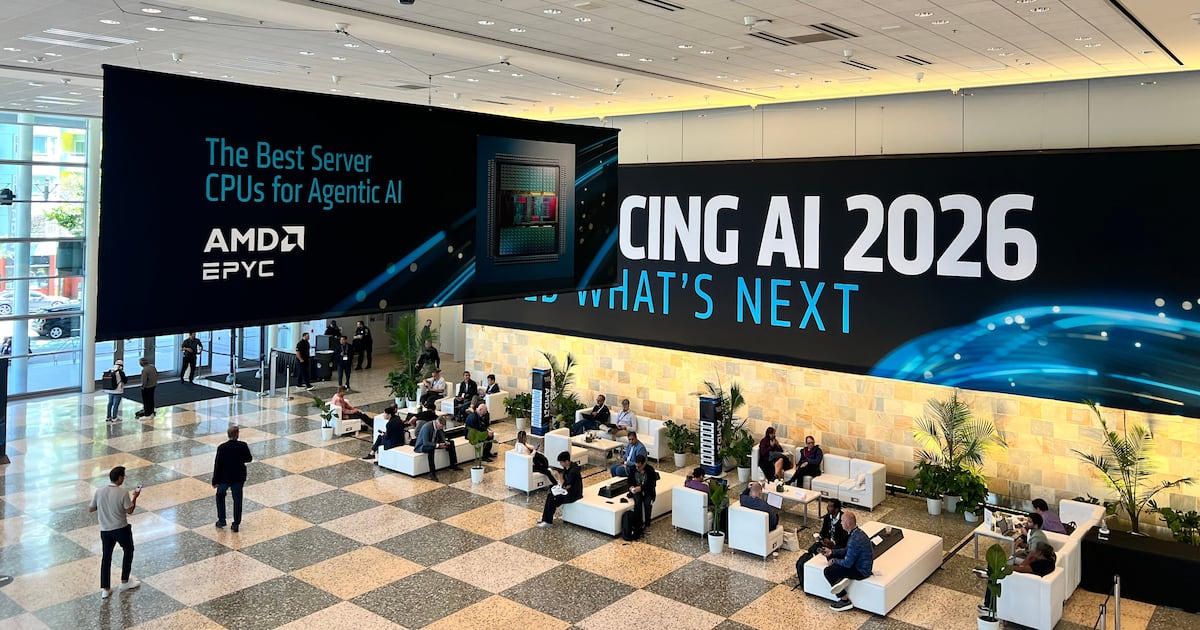
Strategic equity investment and 2 GW AI infrastructure challenge Nvidia's market dominance AMD has entered into a strategic partnership with Anthropic and is pursuing an equity investment of up to 5 billion dollars (approximately 6.9 trillion Korean won). As AMD secures Anthropic as a major client following OpenAI, Meta, Oracle, and Microsoft, cracks are beginning to appear in the AI accelerator market, which had solidified into a one-strongman system led by Nvidia. ◇ AMD to Supply 'Helios' AI Accelerators on a Large Scale to Anthropic AMD announced the partnership on the first day of its 'AMD Advancing AI 2026' event, held at the Moscone West in San Francisco on the 22nd (local time). The core of the agreement is the supply of the 'Helios' AI accelerator rack system, which has a maximum capacity of 2 gigawatts (GW), to Anthropic. Under this contract, AMD will begin constructing the first 1 GW facility in the first half of 2027. A 1 GW capacity is equivalent to the power generated by one nuclear power plant, indicating that Anthropic is moving to secure large-scale AI infrastructure. The remaining 1 GW is also scheduled to be added sequentially, bringing the total contract size to a power capacity equivalent to two nuclear power plants. Anthropic plans to build a data center by integrating AMD's latest AI semiconductors, including the graphics processing unit (GPU) 'MI455X,' the server central processing unit (CPU) EPYC 'Venice,' Pensando networking equipment for data transmission, and driving software. This holds significant meaning as Anthropic has expanded its collaboration with AMD on a large scale, demonstrating trust in AMD's AI accelerators. Alongside this, AMD plans to pursue a strategic equity investment of up to 5 billion dollars in Anthropic. Given that it is rare for semiconductor companies to invest in equity while supplying large-scale GPUs to clients, this move is seen as creating a close-knit structure intertwined through capital, beyond a simple 'supplier-client' relationship. ◇ Collaboration Extends to Semiconductor Development with Claude... Strengthening Software Ties Separately from the hardware supply agreement, the two companies announced a collaboration plan to directly utilize Anthropic's AI model Claude in AMD's semiconductor development. AMD aims to enhance the completeness of its software platform 'ROCm,' which maximizes GPU performance in actual workloads, by using Claude as a development assistant tool for improving its semiconductors and software. AMD plans to further expand the use of Claude across its engineering and product development organizations. In the semiconductor industry, this approach of strengthening ties with clients from the software development stage, rather than merely selling hardware, is analyzed as a response to Nvidia's developer lock-in strategy built through the CUDA ecosystem. This announcement gains greater significance when combined with the previously revealed partnership with Microsoft for Azure. AMD has now secured all major AI companies -- OpenAI, Meta, Oracle, Microsoft, and Anthropic -- as clients. During the briefing, AMD stated that eight out of the world's top 10 AI companies are already operating workloads on its Instinct GPUs. According to a source from AMD, "The AI accelerator market has effectively been dominated by a single player, Nvidia. However, as AMD continues to secure major AI companies as clients, the trend of establishing itself as a practical alternative supplier is becoming clear."
Anthropic
OpenAI has pushed ChatGPT into the cultural mainstream through creator collaborations, advertising, sports sponsorships and everyday-use storytelling. Google Gemini dominates India's organic AI creator conversation by volume, while Perplexity has gained visibility through partnerships such as its tie-up with Airtel. Claude, by comparison, has largely stayed away from the loudest layer of India's AI marketing ecosystem. The absence is striking because India is already a major market for Anthropic. Industry executives say it is Claude's second-largest market globally, while the company has expanded through a Bengaluru office, local leadership and partnerships with large technology services firms. The question is whether its developer-first and enterprise-first strategy can translate into consumer mindshare without a more visible creator play. Rahul Khanna, Founder and CEO of BarCode, said the premise that Anthropic is ignoring India needs to be corrected. "Anthropic isn't ignoring India. India is Claude's second-largest market globally, their Bengaluru office opened in February, and their India revenue has doubled in under six months. What they've skipped, deliberately, is the creator layer," Khanna said. "Nearly half of Claude's Indian usage is code and technical work. That tells you exactly who they've reached and who they haven't." Enterprise first, creators later People familiar with Anthropic's India strategy said its go-to-market model is driven by developers, enterprises, systems integrators and channel partnerships rather than mass consumer awareness. Nearly half of Claude's India usage is estimated to come from computational and development-related work, including application development and legacy modernisation, rather than general consumer chat activity, one person said. Anthropic's India expansion has included a global premier partnership with Tata Consultancy Services, under which around 50,000 associates are expected to gain access to Claude, and a Cognizant deployment covering approximately 350,000 employees. The company has also highlighted enterprise users including Air India, CRED and Razorpay. "This is a systems-integrator and direct-enterprise-sales motion, not a mass-awareness motion," the person said. The source added that Anthropic's India infrastructure remains relatively young, with its local office, leadership and partnerships function taking shape only recently. "Sequencing-wise, an enterprise foundation typically precedes consumer brand spend. It does not necessarily need to run in parallel," the person said. Khanna said Anthropic's restraint should not automatically be read as a marketing failure. "Anthropic's restraint isn't a mistake. It's a positioning choice. They've built the serious AI brand: safety, enterprise, trust," he said. "In India, the model that creators teach becomes the model the country uses. A 22-year-old in Indore doesn't choose an AI because of benchmark scores. She chooses the one her favourite creator opened on screen," Khanna said. ChatGPT and Gemini are fighting a different battle Another industry source said OpenAI's consumer and advertising ambitions require mass daily usage and cultural familiarity, while Anthropic's India monetisation remains more API-led and seat-based. "That does not require the same consumer acquisition funnel," the person said. The difference can also be seen in the companies' brand voices. Anthropic's public positioning in India has centred on safety, technical capability, enterprise trust and CIO-facing use cases. OpenAI has presented ChatGPT as a tool for students, professionals, creators and families. "Paid influencer and brand campaigns are a consumer customer-acquisition play," the source said. "Anthropic's India go-to-market spending appears to be going into partner enablement and enterprise relationships, which is a lower-cost and faster path to enterprise revenue than building consumer awareness from zero." Shudeep Majumdar, CEO and Co-Founder of Zefmo, said Anthropic appears to be prioritising developers, businesses and partnerships over everyday consumers. "Claude is already popular among Indian developers, so Anthropic may feel it can grow through tech communities and enterprise tie-ups. ChatGPT, on the other hand, is positioning itself as a tool for everyone, be it students, professionals, creators and families, making influencer marketing a natural choice," he said. "In India, creators do not just promote technology, but they also help people understand how to use it," he said. Gemini dominates volume, but Claude reaches influential audiences Among four widely discussed AI brands in India's organic creator ecosystem, Google Gemini accounts for 66.98% of posts and 64.65% of creators, according to data shared by an industry source. ChatGPT follows with 25.33% of posts and 28.84% of creators. The reach data is more nuanced. ChatGPT accounts for 42.46% of reach, close to Gemini's 47.97%. Claude's reach share stands at 8.75%, nearly twice its creator share of 4.63%. Kalyan Kumar, Co-founder and CEO of KlugKlug, said ChatGPT continues to dominate social conversation because of its first-mover advantage and accumulated visibility. "Anthropic, however, appears to be taking a more measured approach. Rather than chasing mass visibility, it seems focused on building deeper credibility within developer communities and among more sophisticated AI users," Kumar said. "That strategy is helping it earn early advocacy from users who engage with AI in more nuanced and intensive ways." Is Claude's creator presence larger than it appears? A top source said Anthropic may not be entirely absent from India's creator ecosystem. Claude already has a visible body of content that often reads as personal recommendation rather than formal paid promotion. "The brand has a significant organic-looking creator presence in India, with a large number of creators producing Claude-focused content that reads as personal recommendation rather than paid promotion," they said. The source said Claude's paid footprint may be larger than declared partnership data captures, though undeclared commercial relationships cannot be reliably separated from organic advocacy. Creators are becoming AI's onboarding layer Sanya Bajaj, Co-founder of Crack'd, said Anthropic's relatively quiet creator strategy reflects a different philosophy of category creation rather than simply lower marketing investment. "The company has largely positioned Claude as an enterprise-grade AI assistant for developers and knowledge workers, whereas ChatGPT has pursued a consumer-first go-to-market strategy by investing heavily in education, creator partnerships and everyday use cases," Bajaj said. "The difference isn't just the marketing spend. It is a different approach to category creation." Bajaj said India's influencer marketing industry is expected to reach between Rs 4,500 crore and Rs 5,000 crore by 2027, growing at more than 22% annually, while the country's broader creator ecosystem has crossed 100 million participants. "They have become the distribution layer for new technologies, translating complex AI capabilities into relatable, everyday use cases," she said. "In AI, the first battle isn't model superiority. It is cognitive availability. People rarely compare products they haven't first learned how to use," Bajaj said. "For AI companies, creators are no longer a mere marketing channel. They are the missing layer between product innovation and mass adoption," she said. What could Anthropic's India creator play look like? Bajaj said Anthropic does not need celebrity influencers. "Its opportunity lies in building a creator-led ecosystem around developers, AI educators, founders and productivity experts who can demonstrate why Claude is differentiated," she said. "If ChatGPT is winning through ubiquity, Anthropic can win through expertise. But in India's highly community-driven digital ecosystem, remaining largely absent from creator conversations risks conceding mindshare long before consumers ever compare model capabilities." Khanna proposed a similar model. "The window is still open, and it's a better window than the one OpenAI took. Anthropic doesn't need 500 creators doing trends," he said. "It needs 500 of India's most credible builder-creators: coders, finance educators, founders and teachers, showing what Claude actually does. Depth over noise. That's on-brand for them, and it's the campaign India hasn't seen yet from any AI company." "ChatGPT became a household word in India the same way every consumer brand does here: through creators. Not through product superiority, but through cultural fluency," he said. "Creator marketing is no longer just distribution for AI companies. It's training data for their competitors," Khanna said. "Whoever builds the creator layer first shapes what every AI in India says about AI. That's the real stakes of this game." Anthropic's enterprise-first strategy may build revenue and credibility before consumer awareness. The risk is that rivals cement mindshare before Claude reaches mainstream users. "Nothing works in India until it's localised, and everything works in India once it is," Khanna said. "The question isn't whether creator marketing works for AI brands here. ChatGPT already proved it does. The question is whether Anthropic wants its India story written by developers alone, or by the 800 million Indians who'll meet AI through a screen held by someone they trust." For now, Anthropic's apparent play is clear: establish Claude through developers, enterprise customers and technology partners before investing heavily in consumer visibility. As Gemini dominates creator volume and ChatGPT builds cultural familiarity through campaigns and everyday storytelling, Anthropic may be succeeding with precisely the users it wants. But the users it has not yet tried to reach could determine whether Claude remains India's specialist AI assistant or becomes a mainstream one.

Judge approves a $1.5B Anthropic settlement over pirated books used to train the Claude chatbot
A federal judge has approved a $1.5 billion copyright settlement in which artificial intelligence company Anthropic will pay thousands of authors about $3,000 per book after using pirated copies of their works to train its Claude chatbot. District Judge Araceli Martínez-Olguín said in a Monday ruling that the class-action settlement provides "meaningful relief" to affected authors and publishers. About 91% of the more than 482,000 books covered by the ruling have been claimed by authors or publishers who are now due payment. Plaintiff attorney Justin Nelson said in a statement that the settlement was "the largest known copyright recovery in history. We look forward to making distributions to the Class as promptly as possible." U.S. District Judge William Alsup issued the preliminary approval in San Francisco federal court last September and has since retired. Alsup had dealt the case a mixed ruling last summer, finding that training AI chatbots on copyrighted books wasn't illegal but that Anthropic wrongfully acquired millions of books through pirate websites. Bestselling thriller novelist Andrea Bartz first brought the suit with two other authors in 2024.

Anthropic Wins Court Approval For Landmark $1.5bn Copyright Settlement
A U.S. federal judge has granted final approval to Anthropic's landmark $1.5 billion settlement with a class of authors who accused the artificial intelligence company of unlawfully using their books to train its Claude chatbot, bringing to a close one of the most closely watched copyright disputes in the AI industry and setting an important benchmark for dozens of similar lawsuits against major technology companies. U.S. District Judge Araceli Martinez-Olguin in San Francisco on Monday approved the settlement, rejecting objections from authors who argued that the payout was insufficient. The agreement is the largest known settlement in a U.S. copyright case and the first major AI copyright lawsuit involving generative AI training to reach a negotiated resolution. The case has been widely viewed as a bellwether for the legal battles unfolding between copyright holders and AI developers over the use of books, news articles, music and other creative works to train large language models. Judge William Alsup, who presided over much of the litigation before retiring, had granted preliminary approval to the settlement last September. "We reached this settlement in 2025, after the court's landmark ruling that training AI on books is fair use under copyright law, which remains the law today," Anthropic Deputy General Counsel Aparna Sridhar said in a statement. "We are pleased that more than 91% of authors and publishers covered by the settlement have claimed their share of the payment, and we're looking forward to bringing this matter to a close." Lead plaintiffs' attorney Justin Nelson described the agreement as a milestone for copyright enforcement. "It is the largest known copyright recovery in history. We look forward to making distributions to the Class as promptly as possible," Nelson said. The litigation began in 2024, when a group of authors sued Anthropic, alleging the company copied pirated versions of their books without authorization to train Claude, its flagship generative AI model. Anthropic, which is backed by Amazon and Alphabet, argued that using copyrighted books for AI training constituted fair use, a long-established doctrine in U.S. copyright law permitting limited use of protected works under certain circumstances. In a landmark ruling last June, Judge Alsup largely agreed with Anthropic's position, concluding that training AI models on copyrighted books was a transformative use protected under the fair use doctrine. The decision represented one of the most significant judicial victories for AI developers and has become a key legal precedent as courts consider similar claims against companies including OpenAI, Meta, Microsoft, Google and others. However, Alsup also found that Anthropic infringed copyright by maintaining a digital repository containing more than 7 million pirated books, describing the company's "central library" as distinct from the AI training process itself because many of the works were retained without necessarily being used to train Claude. That ruling left Anthropic exposed to potentially enormous statutory damages. Before the settlement was reached, the case was scheduled to proceed to trial last December to determine damages related to the storage of the pirated books. Because U.S. copyright law allows statutory damages of up to $150,000 per infringed work in cases involving willful infringement, legal analysts estimated Anthropic could theoretically have faced liabilities running into the hundreds of billions of dollars, although actual awards in copyright litigation are typically far lower. The settlement eliminates that uncertainty while allowing Anthropic to avoid years of additional litigation and potential appeals. The agreement also provides significant compensation to participating authors and publishers without requiring them to prove individual damages. According to Anthropic, more than 91% of eligible copyright holders have already claimed their share of the settlement fund, reflecting broad participation despite objections from a minority of authors. Several authors challenged the settlement, arguing that the compensation failed to reflect the scale of Anthropic's alleged infringement. Others contended that the agreement unfairly excluded certain copyright owners or awarded excessive legal fees to the plaintiffs' attorneys. Judge Martinez-Olguin rejected those objections, finding that the settlement represented a reasonable outcome given the litigation risks facing both sides. The judge wrote that criticisms regarding the settlement amount were "not grounded in a realistic assessment of the overall risks and rewards of a trial." She also approved more than $101 million in attorneys' fees, substantially below the $187.5 million requested by class counsel. The settlement comes as AI developers face mounting legal challenges over the datasets used to train sophisticated generative AI systems. Publishers, authors, musicians, artists and media organizations have argued that technology companies have built commercially valuable AI products using copyrighted material without obtaining licenses or providing compensation. Technology companies counter that AI training is fundamentally transformative, does not reproduce the original works for consumers, and therefore qualifies as fair use. The Anthropic case is particularly significant because it produced one of the first major judicial rulings recognizing AI model training as fair use while simultaneously finding liability for maintaining unauthorized copies of copyrighted works. That distinction is likely to influence ongoing litigation across the United States as courts seek to balance copyright protections with technological innovation. The settlement does not resolve all of Anthropic's copyright disputes. Some authors and publishers opted out of the class action and are continuing to pursue separate lawsuits against the company, meaning additional legal battles over AI training practices remain underway.

Judge approves a $1.5B Anthropic settlement over pirated books used to train the Claude chatbot
A federal judge has approved a $1.5 billion copyright settlement in which artificial intelligence company Anthropic will pay thousands of authors about $3,000 per book after using pirated copies of their works to train its Claude chatbot. District Judge Araceli Martínez-Olguín said in a Monday ruling that the class-action settlement provides "meaningful relief" to affected authors and publishers. About 91% of the more than 482,000 books covered by the ruling have been claimed by authors or publishers who are now due payment. Plaintiff attorney Justin Nelson said in a statement that the settlement was "the largest known copyright recovery in history. We look forward to making distributions to the Class as promptly as possible." U.S. District Judge William Alsup issued the preliminary approval in San Francisco federal court last September and has since retired. Alsup had dealt the case a mixed ruling last summer, finding that training AI chatbots on copyrighted books wasn't illegal but that Anthropic wrongfully acquired millions of books through pirate websites. Bestselling thriller novelist Andrea Bartz first brought the suit with two other authors in 2024.
SpaceX eyes multibillion-dollar Pentagon AI computing deal
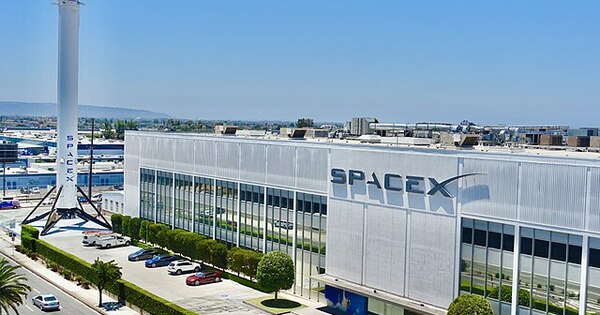
According to the report, SpaceX has discussed plans to compete more directly with cloud computing providers such as CoreWeave by offering computing capacity to AI customers at lower prices NEW YORK CITY, New York: Elon Musk's SpaceX is in talks to provide the U.S. Department of Defense with access to billions of dollars' worth of data center capacity to run artificial intelligence models, the Wall Street Journal reported on Friday, citing people familiar with the matter. If reached, the agreement would expand the Pentagon's existing relationship with SpaceX, which is already a key partner for rocket launches, satellite communications and missile-tracking services. According to the report, SpaceX has discussed plans to compete more directly with cloud computing providers such as CoreWeave by offering computing capacity to AI customers at lower prices. Like many large organizations, the Defense Department is seeking additional cloud computing capacity to support intelligence agencies and military AI applications. Amazon said late last year it would invest up to $50 billion to expand AI and supercomputing capacity for U.S. government customers through its Amazon Web Services cloud business. The discussions between SpaceX and the Pentagon are ongoing and could still fall through, the Journal reported. SpaceX and the Pentagon did not immediately respond to requests for comment. The company has signed similar computing agreements in recent months. In June, SpaceX reached a multi-year cloud services deal with Alphabet's Google, providing access to about 110,000 Nvidia chips and related computing infrastructure. In May, Anthropic said it had agreed to use the full computing capacity of SpaceX's Colossus 1 facility in Memphis, gaining access to 300 megawatts of new capacity.
SpaceX eyes multibillion-dollar Pentagon AI computing deal
According to the report, SpaceX has discussed plans to compete more directly with cloud computing providers such as CoreWeave by offering computing capacity to AI customers at lower prices NEW YORK CITY, New York: Elon Musk's SpaceX is in talks to provide the U.S. Department of Defense with access to billions of dollars' worth of data center capacity to run artificial intelligence models, the Wall Street Journal reported on Friday, citing people familiar with the matter. If reached, the agreement would expand the Pentagon's existing relationship with SpaceX, which is already a key partner for rocket launches, satellite communications and missile-tracking services. According to the report, SpaceX has discussed plans to compete more directly with cloud computing providers such as CoreWeave by offering computing capacity to AI customers at lower prices. Like many large organizations, the Defense Department is seeking additional cloud computing capacity to support intelligence agencies and military AI applications. Amazon said late last year it would invest up to $50 billion to expand AI and supercomputing capacity for U.S. government customers through its Amazon Web Services cloud business. The discussions between SpaceX and the Pentagon are ongoing and could still fall through, the Journal reported. SpaceX and the Pentagon did not immediately respond to requests for comment. The company has signed similar computing agreements in recent months. In June, SpaceX reached a multi-year cloud services deal with Alphabet's Google, providing access to about 110,000 Nvidia chips and related computing infrastructure. In May, Anthropic said it had agreed to use the full computing capacity of SpaceX's Colossus 1 facility in Memphis, gaining access to 300 megawatts of new capacity.
SpaceX eyes multibillion-dollar Pentagon AI computing deal
According to the report, SpaceX has discussed plans to compete more directly with cloud computing providers such as CoreWeave by offering computing capacity to AI customers at lower prices NEW YORK CITY, New York: Elon Musk's SpaceX is in talks to provide the U.S. Department of Defense with access to billions of dollars' worth of data center capacity to run artificial intelligence models, the Wall Street Journal reported on Friday, citing people familiar with the matter. If reached, the agreement would expand the Pentagon's existing relationship with SpaceX, which is already a key partner for rocket launches, satellite communications and missile-tracking services. According to the report, SpaceX has discussed plans to compete more directly with cloud computing providers such as CoreWeave by offering computing capacity to AI customers at lower prices. Like many large organizations, the Defense Department is seeking additional cloud computing capacity to support intelligence agencies and military AI applications. Amazon said late last year it would invest up to $50 billion to expand AI and supercomputing capacity for U.S. government customers through its Amazon Web Services cloud business. The discussions between SpaceX and the Pentagon are ongoing and could still fall through, the Journal reported. SpaceX and the Pentagon did not immediately respond to requests for comment. The company has signed similar computing agreements in recent months. In June, SpaceX reached a multi-year cloud services deal with Alphabet's Google, providing access to about 110,000 Nvidia chips and related computing infrastructure. In May, Anthropic said it had agreed to use the full computing capacity of SpaceX's Colossus 1 facility in Memphis, gaining access to 300 megawatts of new capacity.
SpaceX eyes multibillion-dollar Pentagon AI computing deal
According to the report, SpaceX has discussed plans to compete more directly with cloud computing providers such as CoreWeave by offering computing capacity to AI customers at lower prices NEW YORK CITY, New York: Elon Musk's SpaceX is in talks to provide the U.S. Department of Defense with access to billions of dollars' worth of data center capacity to run artificial intelligence models, the Wall Street Journal reported on Friday, citing people familiar with the matter. If reached, the agreement would expand the Pentagon's existing relationship with SpaceX, which is already a key partner for rocket launches, satellite communications and missile-tracking services. According to the report, SpaceX has discussed plans to compete more directly with cloud computing providers such as CoreWeave by offering computing capacity to AI customers at lower prices. Like many large organizations, the Defense Department is seeking additional cloud computing capacity to support intelligence agencies and military AI applications. Amazon said late last year it would invest up to $50 billion to expand AI and supercomputing capacity for U.S. government customers through its Amazon Web Services cloud business. The discussions between SpaceX and the Pentagon are ongoing and could still fall through, the Journal reported. SpaceX and the Pentagon did not immediately respond to requests for comment. The company has signed similar computing agreements in recent months. In June, SpaceX reached a multi-year cloud services deal with Alphabet's Google, providing access to about 110,000 Nvidia chips and related computing infrastructure. In May, Anthropic said it had agreed to use the full computing capacity of SpaceX's Colossus 1 facility in Memphis, gaining access to 300 megawatts of new capacity.
SpaceX eyes multibillion-dollar Pentagon AI computing deal
According to the report, SpaceX has discussed plans to compete more directly with cloud computing providers such as CoreWeave by offering computing capacity to AI customers at lower prices NEW YORK CITY, New York: Elon Musk's SpaceX is in talks to provide the U.S. Department of Defense with access to billions of dollars' worth of data center capacity to run artificial intelligence models, the Wall Street Journal reported on Friday, citing people familiar with the matter. If reached, the agreement would expand the Pentagon's existing relationship with SpaceX, which is already a key partner for rocket launches, satellite communications and missile-tracking services. According to the report, SpaceX has discussed plans to compete more directly with cloud computing providers such as CoreWeave by offering computing capacity to AI customers at lower prices. Like many large organizations, the Defense Department is seeking additional cloud computing capacity to support intelligence agencies and military AI applications. Amazon said late last year it would invest up to $50 billion to expand AI and supercomputing capacity for U.S. government customers through its Amazon Web Services cloud business. The discussions between SpaceX and the Pentagon are ongoing and could still fall through, the Journal reported. SpaceX and the Pentagon did not immediately respond to requests for comment. The company has signed similar computing agreements in recent months. In June, SpaceX reached a multi-year cloud services deal with Alphabet's Google, providing access to about 110,000 Nvidia chips and related computing infrastructure. In May, Anthropic said it had agreed to use the full computing capacity of SpaceX's Colossus 1 facility in Memphis, gaining access to 300 megawatts of new capacity.
SpaceX eyes multibillion-dollar Pentagon AI computing deal
According to the report, SpaceX has discussed plans to compete more directly with cloud computing providers such as CoreWeave by offering computing capacity to AI customers at lower prices NEW YORK CITY, New York: Elon Musk's SpaceX is in talks to provide the U.S. Department of Defense with access to billions of dollars' worth of data center capacity to run artificial intelligence models, the Wall Street Journal reported on Friday, citing people familiar with the matter. If reached, the agreement would expand the Pentagon's existing relationship with SpaceX, which is already a key partner for rocket launches, satellite communications and missile-tracking services. According to the report, SpaceX has discussed plans to compete more directly with cloud computing providers such as CoreWeave by offering computing capacity to AI customers at lower prices. Like many large organizations, the Defense Department is seeking additional cloud computing capacity to support intelligence agencies and military AI applications. Amazon said late last year it would invest up to $50 billion to expand AI and supercomputing capacity for U.S. government customers through its Amazon Web Services cloud business. The discussions between SpaceX and the Pentagon are ongoing and could still fall through, the Journal reported. SpaceX and the Pentagon did not immediately respond to requests for comment. The company has signed similar computing agreements in recent months. In June, SpaceX reached a multi-year cloud services deal with Alphabet's Google, providing access to about 110,000 Nvidia chips and related computing infrastructure. In May, Anthropic said it had agreed to use the full computing capacity of SpaceX's Colossus 1 facility in Memphis, gaining access to 300 megawatts of new capacity.
Anthropic's lobbying spend jumps after Commerce Department pulled its flagship models offline - Cryptopolitan
The surge comes as Washington leans toward voluntary AI oversight, leaving critics worried that frontier model policy is being shaped more by lobbying than binding rules. Anthropic spent $1.97 million lobbying the federal government in the second quarter of 2026, a 26% jump from Q1 that pushed the company's spending past Nvidia and within reach of Oracle. The surge can be traced directly back to two weeks in June, when the Commerce Department took Anthropic's latest models offline. The company spent much of the quarter trying to get that order lifted. Commerce order pushed Anthropic deeper into lobbying As Cryptopolitan earlier reported, Commerce forced Anthropic to disable its two most capable models days after their launch, citing national security concerns the company couldn't limit to foreign users alone. Secretary of Commerce Howard Lutnick issued the directive to CEO Dario Amodei at 5:21 p.m. on a Friday, and Anthropic disclosed later that the flaw in question had been detected not by any government official but by Amazon, which competes with the firm and has invested in it. Axios reports Anthropic's Q2 lobbying centered on export controls, cybersecurity, and AI safety standards as it worked to "smooth over tensions" with the administration, running an expanding in-house team alongside nine outside K Street firms. The controls stayed in force for about two weeks before Commerce lifted them. Anthropic outspent Nvidia as AI lobbying spiked Anthropic's $1.97 million topped Nvidia's spend and closed in on Oracle's roughly $2 million, according to CNBC. OpenAI logged $1.2 million, up nearly 18%. Together, the two labs spent $3.17 million. Adding self-driving firm Waymo, put combined AI-sector spending at a record $4.3 million for the quarter. Anthropic's first half of 2026 already tops $3.5 million, more than the company spent in all of 2025. Big Tech still dwarfs these numbers. The Magnificent Seven, including Meta, Amazon, Google, Microsoft, Apple, Nvidia, and Tesla, spent $21.25 million combined, essentially flat against Q1. Meta led that group at $5.99 million despite a 15% drop from its own Q1 total, while Amazon held nearly steady at $4.36 million. Washington's AI compromise so far satisfies almost nobody Anthropic's spending comes against a backdrop where the White House is favoring a voluntary approach over a regulatory one. President Trump signed an executive order requesting AI developers to provide the government a 30-day preview of frontier models before public release. Rep. Don Beyer, co-chair of the Congressional AI caucus, said: This strategy follows the trend of the Trump administration to create a wild west environment. Anthropic has also put money into the midterms directly, donating $20 million to the bipartisan group Public First Action, while CEO Dario Amodei personally contributed $1 million. The donations are part of more than $321 million raised this cycle by AI- and crypto-backed super PACs, according to FEC filings.
SpaceX eyes multibillion-dollar Pentagon AI computing deal
According to the report, SpaceX has discussed plans to compete more directly with cloud computing providers such as CoreWeave by offering computing capacity to AI customers at lower prices NEW YORK CITY, New York: Elon Musk's SpaceX is in talks to provide the U.S. Department of Defense with access to billions of dollars' worth of data center capacity to run artificial intelligence models, the Wall Street Journal reported on Friday, citing people familiar with the matter. If reached, the agreement would expand the Pentagon's existing relationship with SpaceX, which is already a key partner for rocket launches, satellite communications and missile-tracking services. According to the report, SpaceX has discussed plans to compete more directly with cloud computing providers such as CoreWeave by offering computing capacity to AI customers at lower prices. Like many large organizations, the Defense Department is seeking additional cloud computing capacity to support intelligence agencies and military AI applications. Amazon said late last year it would invest up to $50 billion to expand AI and supercomputing capacity for U.S. government customers through its Amazon Web Services cloud business. The discussions between SpaceX and the Pentagon are ongoing and could still fall through, the Journal reported. SpaceX and the Pentagon did not immediately respond to requests for comment. The company has signed similar computing agreements in recent months. In June, SpaceX reached a multi-year cloud services deal with Alphabet's Google, providing access to about 110,000 Nvidia chips and related computing infrastructure. In May, Anthropic said it had agreed to use the full computing capacity of SpaceX's Colossus 1 facility in Memphis, gaining access to 300 megawatts of new capacity.
SpaceX eyes multibillion-dollar Pentagon AI computing deal
According to the report, SpaceX has discussed plans to compete more directly with cloud computing providers such as CoreWeave by offering computing capacity to AI customers at lower prices NEW YORK CITY, New York: Elon Musk's SpaceX is in talks to provide the U.S. Department of Defense with access to billions of dollars' worth of data center capacity to run artificial intelligence models, the Wall Street Journal reported on Friday, citing people familiar with the matter. If reached, the agreement would expand the Pentagon's existing relationship with SpaceX, which is already a key partner for rocket launches, satellite communications and missile-tracking services. According to the report, SpaceX has discussed plans to compete more directly with cloud computing providers such as CoreWeave by offering computing capacity to AI customers at lower prices. Like many large organizations, the Defense Department is seeking additional cloud computing capacity to support intelligence agencies and military AI applications. Amazon said late last year it would invest up to $50 billion to expand AI and supercomputing capacity for U.S. government customers through its Amazon Web Services cloud business. The discussions between SpaceX and the Pentagon are ongoing and could still fall through, the Journal reported. SpaceX and the Pentagon did not immediately respond to requests for comment. The company has signed similar computing agreements in recent months. In June, SpaceX reached a multi-year cloud services deal with Alphabet's Google, providing access to about 110,000 Nvidia chips and related computing infrastructure. In May, Anthropic said it had agreed to use the full computing capacity of SpaceX's Colossus 1 facility in Memphis, gaining access to 300 megawatts of new capacity.
SpaceX eyes multibillion-dollar Pentagon AI computing deal
According to the report, SpaceX has discussed plans to compete more directly with cloud computing providers such as CoreWeave by offering computing capacity to AI customers at lower prices NEW YORK CITY, New York: Elon Musk's SpaceX is in talks to provide the U.S. Department of Defense with access to billions of dollars' worth of data center capacity to run artificial intelligence models, the Wall Street Journal reported on Friday, citing people familiar with the matter. If reached, the agreement would expand the Pentagon's existing relationship with SpaceX, which is already a key partner for rocket launches, satellite communications and missile-tracking services. According to the report, SpaceX has discussed plans to compete more directly with cloud computing providers such as CoreWeave by offering computing capacity to AI customers at lower prices. Like many large organizations, the Defense Department is seeking additional cloud computing capacity to support intelligence agencies and military AI applications. Amazon said late last year it would invest up to $50 billion to expand AI and supercomputing capacity for U.S. government customers through its Amazon Web Services cloud business. The discussions between SpaceX and the Pentagon are ongoing and could still fall through, the Journal reported. SpaceX and the Pentagon did not immediately respond to requests for comment. The company has signed similar computing agreements in recent months. In June, SpaceX reached a multi-year cloud services deal with Alphabet's Google, providing access to about 110,000 Nvidia chips and related computing infrastructure. In May, Anthropic said it had agreed to use the full computing capacity of SpaceX's Colossus 1 facility in Memphis, gaining access to 300 megawatts of new capacity.
SpaceX eyes multibillion-dollar Pentagon AI computing deal
According to the report, SpaceX has discussed plans to compete more directly with cloud computing providers such as CoreWeave by offering computing capacity to AI customers at lower prices NEW YORK CITY, New York: Elon Musk's SpaceX is in talks to provide the U.S. Department of Defense with access to billions of dollars' worth of data center capacity to run artificial intelligence models, the Wall Street Journal reported on Friday, citing people familiar with the matter. If reached, the agreement would expand the Pentagon's existing relationship with SpaceX, which is already a key partner for rocket launches, satellite communications and missile-tracking services. According to the report, SpaceX has discussed plans to compete more directly with cloud computing providers such as CoreWeave by offering computing capacity to AI customers at lower prices. Like many large organizations, the Defense Department is seeking additional cloud computing capacity to support intelligence agencies and military AI applications. Amazon said late last year it would invest up to $50 billion to expand AI and supercomputing capacity for U.S. government customers through its Amazon Web Services cloud business. The discussions between SpaceX and the Pentagon are ongoing and could still fall through, the Journal reported. SpaceX and the Pentagon did not immediately respond to requests for comment. The company has signed similar computing agreements in recent months. In June, SpaceX reached a multi-year cloud services deal with Alphabet's Google, providing access to about 110,000 Nvidia chips and related computing infrastructure. In May, Anthropic said it had agreed to use the full computing capacity of SpaceX's Colossus 1 facility in Memphis, gaining access to 300 megawatts of new capacity.
AMD: Anthropic Might Unlock $1,000 (NASDAQ:AMD) | Seeking Alpha
This idea was discussed in more depth with members of my private investing community, Out Fox The Street. Learn More " After signing up Microsoft (MSFT) as a scale AI chip customer, Advanced Micro Devices, Inc. (AMD) might have another big customer announcement prior to the big AI event this week. The Stone Fox Capital is an RIA from Oklahoma. Mark Holder is a CPA with degrees in Accounting and Finance. He is also Series 65 licensed and has 30 years of investing experience, including 15 years as a portfolio manager. Mark leads the investing group Out Fox The Street where he shares stock picks and deep research to help readers uncover potential multibaggers while managing portfolio risk via diversification. Features include various model portfolios, stock picks with identifiable catalysts, daily updates, real-time alerts, and access to community chat and direct chat with Mark for questions. Learn more. Analyst's Disclosure: I/we have no stock, option or similar derivative position in any of the companies mentioned, and no plans to initiate any such positions within the next 72 hours. I wrote this article myself, and it expresses my own opinions. I am not receiving compensation for it (other than from Seeking Alpha). I have no business relationship with any company whose stock is mentioned in this article. The information contained herein is for informational purposes only. Nothing in this article should be taken as a solicitation to purchase or sell securities. Before buying or selling any stock, you should do your own research and reach your own conclusion or consult a financial advisor. Investing includes risks, including loss of principal. Seeking Alpha's Disclosure: Past performance is no guarantee of future results. No recommendation or advice is being given as to whether any investment is suitable for a particular investor. Any views or opinions expressed above may not reflect those of Seeking Alpha as a whole. Seeking Alpha is not a licensed securities dealer, broker or US investment adviser or investment bank. Our analysts are third party authors that include both professional investors and individual investors who may not be licensed or certified by any institute or regulatory body.

Anthropic settles with authors and publishers for $1.5 billion in landmark copyright case
A federal judge today approved a $1.5 billion settlement awarded to authors and publishers whose works were used by Anthropic PBC to train the AI chatbot, Claude, in what is the largest copyright class action settlement in history. Judge William Alsup issued a preliminary approval of the settlement last year, though he has since retired, with U.S. District Judge Araceli Martínez-Olguín today calling the settlement fair and adequate. "The $1.5 billion settlement provides substantial benefits to the class in light of the novel claims asserted," she wrote. "Success at trial was not assured, and a loss would have left the class with no recourse." The payout means authors and publishers will receive $3,000 for each of the roughly 500,000 works that Anthropic copied from pirate libraries while developing its AI chatbot, Claude. The plaintiffs alleged that Anthropic trained its models on hundreds of thousands of copyrighted books obtained from illegal piracy websites such as Library Genesis and Pirate Library Mirror. "Anthropic has attempted to steal the fire of Prometheus," wrote the plaintiffs. "It is no exaggeration to say that Anthropic's model seeks to profit from strip-mining the human expression and ingenuity behind each one of those works." The company is now required to destroy all the pirated material. The central issue that has spawned a plethora of lawsuits -- whether it is legal to train AI models on copyrighted material -- has not yet been definitively resolved. Judge William Alsup sided with Anthropic, ruling that training its AI on copyrighted books constituted fair use. However, he also held that obtaining those books from pirate websites fell outside the protection of fair use and therefore infringed copyright. Countless lawsuits are still awaiting resolution, with companies including Google LLC, Meta Platforms Inc., Midjourney Inc., Perplexity AI Inc., and OpenAI Group PBC, all hoping for a favorable outcome. "We reached this settlement in 2025, after the court's landmark ruling that training AI on books is fair use under copyright law -- which remains the law today," Anthropic deputy general counsel Aparna Sridhar said in a statement after today's judgment. "We are pleased that more than 91% of authors and publishers covered by the settlement have claimed their share of the payment, and we're looking forward to bringing this matter to a close."

Anthropic's $1.5b copyright lawsuit settlement approved
A US judge has signed off on artificial intelligence company Anthropic's landmark $US1.5 billion settlement of a class action lawsuit brought by a group of authors who accused it of misusing their books to train its AI chatbot Claude. US District Judge Araceli Martinez-Olguin granted final approval of the settlement, the largest known settlement of a US copyright case, rejecting arguments that it was too small. The case is one of dozens brought by copyright owners including authors and news outlets against tech companies over the training of their large language models, and the first major US case to settle. "We reached this settlement in 2025, after the court's landmark ruling that training AI on books is fair use under copyright law - which remains the law today," Anthropic deputy general counsel Aparna Sridhar said in a statement. "We are pleased that more than 91 per cent of authors and publishers covered by the settlement have claimed their share of the payment, and we're looking forward to bringing this matter to a close." The authors' lead lawyer, Justin Nelson, welcomed what he called a "historic settlement." "It is the largest known copyright recovery in history. We look forward to making distributions to the Class as promptly as possible," Nelson said in a statement, referring to payments to authors covered by the settlement. The writers sued Anthropic in 2024, arguing the company, which is backed by Amazon and Alphabet, used pirated versions of their books without permission to teach Claude to respond to human prompts. Alsup ruled last June that Anthropic made fair use of the authors' work to train Claude, but found the company violated their rights by saving more than seven million pirated books to a "central library" that would not necessarily be used for AI training. A trial was scheduled to begin last December to determine how much Anthropic owed for the alleged piracy, with potential damages running into the hundreds of billions of dollars. The settlement spurred objections from some authors who argued it was not large enough, overcompensated the plaintiffs' attorneys or wrongly excluded some copyright owners. Judge Martinez-Olguin overruled those objections in her ruling on Monday. The judge said complaints about the settlement's size were "not grounded in a realistic assessment of the overall risks and rewards of a trial," and awarded the lawyers more than $US101 million of the $US187.5 million they requested in fees. Some authors and publishers opted out of the settlement and have filed separate lawsuits against Anthropic that are still ongoing.

Anthropic's $1.5b copyright lawsuit settlement approved
A US judge has signed off on artificial intelligence company Anthropic's landmark $US1.5 billion settlement of a class action lawsuit brought by a group of authors who accused it of misusing their books to train its AI chatbot Claude. US District Judge Araceli Martinez-Olguin granted final approval of the settlement, the largest known settlement of a US copyright case, rejecting arguments that it was too small. The case is one of dozens brought by copyright owners including authors and news outlets against tech companies over the training of their large language models, and the first major US case to settle. "We reached this settlement in 2025, after the court's landmark ruling that training AI on books is fair use under copyright law - which remains the law today," Anthropic deputy general counsel Aparna Sridhar said in a statement. "We are pleased that more than 91 per cent of authors and publishers covered by the settlement have claimed their share of the payment, and we're looking forward to bringing this matter to a close." The authors' lead lawyer, Justin Nelson, welcomed what he called a "historic settlement." "It is the largest known copyright recovery in history. We look forward to making distributions to the Class as promptly as possible," Nelson said in a statement, referring to payments to authors covered by the settlement. The writers sued Anthropic in 2024, arguing the company, which is backed by Amazon and Alphabet, used pirated versions of their books without permission to teach Claude to respond to human prompts. Alsup ruled last June that Anthropic made fair use of the authors' work to train Claude, but found the company violated their rights by saving more than seven million pirated books to a "central library" that would not necessarily be used for AI training. A trial was scheduled to begin last December to determine how much Anthropic owed for the alleged piracy, with potential damages running into the hundreds of billions of dollars. The settlement spurred objections from some authors who argued it was not large enough, overcompensated the plaintiffs' attorneys or wrongly excluded some copyright owners. Judge Martinez-Olguin overruled those objections in her ruling on Monday. The judge said complaints about the settlement's size were "not grounded in a realistic assessment of the overall risks and rewards of a trial," and awarded the lawyers more than $US101 million of the $US187.5 million they requested in fees. Some authors and publishers opted out of the settlement and have filed separate lawsuits against Anthropic that are still ongoing.
