News & Updates
The latest news and updates from companies in the WLTH portfolio.
Tesla plus SpaceX? Elon Musk leaves the merger door open- Moneycontrol.com
* Musk hints at potential Tesla-SpaceX merger. * Cites growing overlap between the companies. * Analysts see a merger as highly probable. Tesla CEO Elon Musk on Wednesday left the door open to the EV maker merging with his other trillion-dollar-plus-valued firm SpaceX, declining to dismiss the possibility and citing growing overlap between the companies. "As you can tell from the many collaborations on so many fronts with SpaceX, there's more and more overlap," Musk said on Tesla's earnings call. "We can't talk about, you know, combining companies and that kind of thing on an earnings call," he added. "It's got to be done with the appropriate process." Investors and analysts have long speculated about the possibility of combining Musk's electric vehicle and space firms, with the discussion intensifying during SpaceX's record $75 billion initial public offering process. After Musk's comments, he called on Tesla General Counsel Brandon Ehrhart, who stuck to boilerplate language calling SpaceX a "great partner" that provides "numerous beneficial transactions." Gene Munster, managing partner at Tesla investor Deepwater Asset Management, said the call left him more convinced the companies were destined to be joined over the next few years. "I would put the odds that these two will combine at 90% today," he said in a video posted on social media. "If you were going to ask me yesterday I would have said it's 80%." Tesla already supplies batteries and manufacturing technologies for some SpaceX projects, while the companies are jointly developing Terafab, a semiconductor manufacturing facility designed to produce AI chips. Proponents argue that combining the companies could simplify Musk's corporate empire and create a more integrated company spanning artificial intelligence, robotics, manufacturing, energy and space infrastructure. JPMorgan analysts said this month that "operational integration between the two entities is already deep," citing shared engineering talent, AI infrastructure, Terafab and Musk's leadership as factors that "would facilitate an eventual combination." Stifel analysts struck an even more bullish note, writing that "many investors consider it inevitable that Musk will move to combine SpaceX with Tesla -- for them the question is not if but when." SpaceX President and Chief Operating Officer Gwynne Shotwell has also acknowledged potential benefits, telling CNBC in June that folding the companies together "might make Elon's life a little easier" by streamlining management across his businesses. Others, however, caution that any transaction could face formidable hurdles. In the same research note, JPMorgan pointed to the "practical bottleneck" of getting regulatory approvals for both companies, particularly in China, where national security concerns over SpaceX's U.S. government ties could pose problems. Analysts also note that Musk controls a much larger voting stake in SpaceX than in Tesla, complicating governance considerations for Tesla's public shareholders.
Are SpaceX Bulls Deluding Themselves? This Wall Street Analyst Might Convince You So
It's been over a month since the Space Exploration Technologies (NASDAQ: SPCX) IPO, and the shine may be starting to come off. SpaceX stock sank below its $135 IPO price for the first time on July 15, and today, it hit an all-time low, closing down 6.7% at $115.26 on a broader sell-off in the software sector. Missed Nvidia in 2009? This Rare Signal Is Flashing Again. In 2009, a "Double Down" signal flashed for a little-known chipmaker called Nvidia. For the first time in years, that same "Total Conviction" signal is flashing for a company 1/100th the size of Nvidia. Continue " Wall Street, which lined up behind the stock to push the IPO in unprecedented fashion, has released a bullish set of price targets, following the end of the stock's quiet period. Of the 13 analysts covering the stock, the lowest price target belongs to Needham at $200, implying a roughly 70% gain in the stock over the next year. The average price target on the stock is $278, implying the stock will more than double over the next year, reaching a valuation of more than $3.5 trillion, and the Street-high target is Raymond James' $800, which would make SpaceX easily the most valuable company in the world at a valuation above $8 trillion. A dose of reality One analyst, who gave a buy recommendation on the stock, shared one comment that shows SpaceX investors will need an extraordinary amount of patience for the stock to pay off. Citing the company's funding risk, a Morgan Stanley analyst said, "We forecast no free cash flow-positive year before 2035 and average external capital needs of roughly $84 billion per year from 2027 to 2034. If debt markets cannot absorb this financing need, SpaceX may need to issue equity, reduce growth investment, or slow deployment." Assuming this is a base-case scenario, this analyst sees no positive cash flow from the company for nearly a decade. In itself, that's not entirely remarkable. Amazon founder Jeff Bezos ran that company with a famously long-term mentality, and didn't generate positive free cash flow until 2003. Bringing in more than $1 billion in free cash flow annually took the company until 2007. However, Amazon was a much different company from SpaceX shortly after its IPO. First, it went public less than three years after it was founded, while SpaceX waited 24 years. Amazon was also growing much faster at that stage, putting up triple-digit growth before the dot-com bust. SpaceX, on the other hand, reported just 15% revenue growth in its first quarter.
Musk Won't Rule Out A Tesla-SpaceX Merger
Musk raised the idea on Tesla's earnings call, saying there's "more and more overlap" between the companies while adding that an earnings call isn't the place to discuss a combination and that any move would need an "appropriate process." That overlap is real: Reuters noted Tesla already supplies batteries and manufacturing know-how for some SpaceX work, and both companies are developing Terafab, a semiconductor site meant to produce AI chips that could feed M.. usk's plans in AI, robotics, and advanced manufacturing. Some on Wall Street think that makes a tie-up increasingly plausible. JPMorgan, an investment banking firm, recently pointed to shared engineering talent, AI infrastructure, and Musk's leadership as signs the businesses are already operating in tandem; other commentators have gone further, arguing a merger feels inevitable. But "possible" isn't the same as "easy." Analysts also flagged regulatory hurdles, especially outside the US. And governance may be the biggest complication: Musk controls a much larger voting stake in privately held SpaceX than he does in publicly traded Tesla, which can make any proposed exchange of ownership highly sensitive for Tesla's outside shareholders. Why should I care? For markets: Tesla could pick up a governance risk premium if merger talk persists. If a Tesla-SpaceX deal ever moved from talk to term sheet, it would likely be treated as a related-party transaction, since the same person effectively influences both sides. That typically triggers an independent board committee, fairness opinions, and intense proxy scrutiny focused on whether the exchange ratio and post-deal control shift value away from Tesla's public shareholders. Until investors see that kind of credible, arms-length process and clear protections, the headline risk can linger. That can translate into a bigger "event-risk" discount on Tesla shares, where price moves reflect governance uncertainty as much as the underlying business.

Musk keeps Tesla-SpaceX merger speculation alive, cites growing overlap | New Straits Times
KUALA LUMPUR: Tesla chief executive officer Elon Musk on Wednesday left the door open to the EV maker merging with his other trillion-dollar-plus-valued firm SpaceX, declining to dismiss the possibility and citing growing overlap between the companies. "As you can tell from the many collaborations on so many fronts with SpaceX, there's more and more overlap," Musk said on Tesla's earnings call. "We can't talk about, you know, combining companies and that kind of thing on an earnings call," he added. "It's got to be done with the appropriate process." Investors and analysts have long speculated about the possibility of combining Musk's electric vehicle and space firms, with the discussion intensifying during SpaceX's record US$75 billion initial public offering process. What To Read Next After Musk's comments, he called on Tesla general counsel Brandon Ehrhart, who stuck to boilerplate language calling SpaceX a "great partner" that provides "numerous beneficial transactions." × 00:01 01:00 Tonton Non Stop, On Top! Player Insights Video- Viewport / Frames- Audio- Buffer Video / Audio- Time- Stream- Player version- Bitmovin PlayerAdaptive Streaming for the WebPlayer: 8.268.0UI: 4.17.0 Show Player Insights Copy link at current time Video Qualityauto Speednormal Audio Track- Audio Qualityauto Subtitlesoff (0) BackReset Font sizedefault Font styledefault Font familydefault Font colordefault Font opacitydefault Character edgedefault Character edge colordefault Background colordefault Background opacitydefault Window colordefault Window opacitydefault Gene Munster, managing partner at Tesla investor Deepwater Asset Management, said the call left him more convinced the companies were destined to be joined over the next few years. "I would put the odds that these two will combine at 90 per cent today," he said in a video posted on social media. "If you were going to ask me yesterday I would have said it's 80 per cent." Tesla already supplies batteries and manufacturing technologies for some SpaceX projects, while the companies are jointly developing Terafab, a semiconductor manufacturing facility designed to produce AI chips. Proponents argue that combining the companies could simplify Musk's corporate empire and create a more integrated company spanning artificial intelligence, robotics, manufacturing, energy and space infrastructure. JPMorgan analysts said this month that "operational integration between the two entities is already deep," citing shared engineering talent, AI infrastructure, Terafab and Musk's leadership as factors that "would facilitate an eventual combination." Stifel analysts struck an even more bullish note, writing that "many investors consider it inevitable that Musk will move to combine SpaceX with Tesla -- for them the question is not if but when." SpaceX president and chief operating officer Gwynne Shotwell has also acknowledged potential benefits, telling CNBC in June that folding the companies together "might make Elon's life a little easier" by streamlining management across his businesses. Others, however, caution that any transaction could face formidable hurdles. In the same research note, JPMorgan pointed to the "practical bottleneck" of getting regulatory approvals for both companies, particularly in China, where national security concerns over SpaceX's US government ties could pose problems. Analysts also note that Musk controls a much larger voting stake in SpaceX than in Tesla, complicating governance considerations for Tesla's public shareholders.

Musk keeps Tesla-SpaceX merger speculation alive, cites growing overlap
Tesla CEO Elon Musk on Wednesday left the door open to the EV maker merging with his other trillion-dollar-plus-valued firm SpaceX, declining to dismiss the possibility and citing growing overlap between the companies. "As you can tell from the many collaborations on so many fronts with SpaceX, there's more and more overlap," Musk said on Tesla's earnings call. "We can't talk about, you know, combining companies and that kind of thing on an earnings call," he added. "It's got to be done with the appropriate process." Investors and analysts have long speculated about the possibility of combining Musk's electric vehicle and space firms, with the discussion intensifying during SpaceX's record $75 billion initial public offering process. After Musk's comments, he called on Tesla General Counsel Brandon Ehrhart, who stuck to boilerplate language calling SpaceX a "great partner" that provides "numerous beneficial transactions." Gene Munster, managing partner at Tesla investor Deepwater Asset Management, said the call left him more convinced the companies were destined to be joined over the next few years. "I would put the odds that these two will combine at 90% today," he said in a video posted on social media. "If you were going to ask me yesterday I would have said it's 80%." Tesla already supplies batteries and manufacturing technologies for some SpaceX projects, while the companies are jointly developing Terafab, a semiconductor manufacturing facility designed to produce AI chips. Proponents argue that combining the companies could simplify Musk's corporate empire and create a more integrated company spanning artificial intelligence, robotics, manufacturing, energy and space infrastructure. JPMorgan analysts said this month that "operational integration between the two entities is already deep," citing shared engineering talent, AI infrastructure, Terafab and Musk's leadership as factors that "would facilitate an eventual combination." Stifel analysts struck an even more bullish note, writing that "many investors consider it inevitable that Musk will move to combine SpaceX with Tesla - for them the question is not if but when." SpaceX President and Chief Operating Officer Gwynne Shotwell has also acknowledged potential benefits, telling CNBC in June that folding the companies together "might make Elon's life a little easier" by streamlining management across his businesses. Others, however, caution that any transaction could face formidable hurdles. In the same research note, JPMorgan pointed to the "practical bottleneck" of getting regulatory approvals for both companies, particularly in China, where national security concerns over SpaceX's U.S. government ties could pose problems. Analysts also note that Musk controls a much larger voting stake in SpaceX than in Tesla, complicating governance considerations for Tesla's public shareholders. (Reporting by Akash Sriram in Bengaluru, Chris Kirkham in Los Angeles and Abhirup Roy in San Francisco; Editing by Mike Colias and Jamie Freed) Copyright Reuters or USA Today Network via Reuters Connect This story was originally published July 22, 2026 at 6:14 PM.
Musk keeps Tesla-SpaceX merger speculation alive, cites growing overlap
Tesla CEO Elon Musk on Wednesday left the door open to the EV maker merging with his other trillion-dollar-plus-valued firm SpaceX, declining to dismiss the possibility and citing growing overlap between the companies. "As you can tell from the many collaborations on so many fronts with SpaceX, there's more and more overlap," Musk said on Tesla's earnings call. "We can't talk about, you know, combining companies and that kind of thing on an earnings call," he added. "It's got to be done with the appropriate process." Investors and analysts have long speculated about the possibility of combining Musk's electric vehicle and space firms, with the discussion intensifying during SpaceX's record $75 billion initial public offering process. After Musk's comments, he called on Tesla General Counsel Brandon Ehrhart, who stuck to boilerplate language calling SpaceX a "great partner" that provides "numerous beneficial transactions." Gene Munster, managing partner at Tesla investor Deepwater Asset Management, said the call left him more convinced the companies were destined to be joined over the next few years. "I would put the odds that these two will combine at 90% today," he said in a video posted on social media. "If you were going to ask me yesterday I would have said it's 80%." Tesla already supplies batteries and manufacturing technologies for some SpaceX projects, while the companies are jointly developing Terafab, a semiconductor manufacturing facility designed to produce AI chips. Proponents argue that combining the companies could simplify Musk's corporate empire and create a more integrated company spanning artificial intelligence, robotics, manufacturing, energy and space infrastructure. JPMorgan analysts said this month that "operational integration between the two entities is already deep," citing shared engineering talent, AI infrastructure, Terafab and Musk's leadership as factors that "would facilitate an eventual combination." Stifel analysts struck an even more bullish note, writing that "many investors consider it inevitable that Musk will move to combine SpaceX with Tesla - for them the question is not if but when." SpaceX President and Chief Operating Officer Gwynne Shotwell has also acknowledged potential benefits, telling CNBC in June that folding the companies together "might make Elon's life a little easier" by streamlining management across his businesses. Others, however, caution that any transaction could face formidable hurdles. In the same research note, JPMorgan pointed to the "practical bottleneck" of getting regulatory approvals for both companies, particularly in China, where national security concerns over SpaceX's U.S. government ties could pose problems. Analysts also note that Musk controls a much larger voting stake in SpaceX than in Tesla, complicating governance considerations for Tesla's public shareholders. (Reporting by Akash Sriram in Bengaluru, Chris Kirkham in Los Angeles and Abhirup Roy in San Francisco; Editing by Mike Colias and Jamie Freed) Copyright Reuters or USA Today Network via Reuters Connect This story was originally published July 22, 2026 at 8:14 PM.
Musk keeps Tesla-SpaceX merger speculation alive, cites growing overlap
Tesla CEO Elon Musk on Wednesday left the door open to the EV maker merging with his other trillion-dollar-plus-valued firm SpaceX, declining to dismiss the possibility and citing growing overlap between the companies. "As you can tell from the many collaborations on so many fronts with SpaceX, there's more and more overlap," Musk said on Tesla's earnings call. "We can't talk about, you know, combining companies and that kind of thing on an earnings call," he added. "It's got to be done with the appropriate process." Investors and analysts have long speculated about the possibility of combining Musk's electric vehicle and space firms, with the discussion intensifying during SpaceX's record $75 billion initial public offering process. After Musk's comments, he called on Tesla General Counsel Brandon Ehrhart, who stuck to boilerplate language calling SpaceX a "great partner" that provides "numerous beneficial transactions." Gene Munster, managing partner at Tesla investor Deepwater Asset Management, said the call left him more convinced the companies were destined to be joined over the next few years. "I would put the odds that these two will combine at 90% today," he said in a video posted on social media. "If you were going to ask me yesterday I would have said it's 80%." Tesla already supplies batteries and manufacturing technologies for some SpaceX projects, while the companies are jointly developing Terafab, a semiconductor manufacturing facility designed to produce AI chips. Proponents argue that combining the companies could simplify Musk's corporate empire and create a more integrated company spanning artificial intelligence, robotics, manufacturing, energy and space infrastructure. JPMorgan analysts said this month that "operational integration between the two entities is already deep," citing shared engineering talent, AI infrastructure, Terafab and Musk's leadership as factors that "would facilitate an eventual combination." Stifel analysts struck an even more bullish note, writing that "many investors consider it inevitable that Musk will move to combine SpaceX with Tesla - for them the question is not if but when." SpaceX President and Chief Operating Officer Gwynne Shotwell has also acknowledged potential benefits, telling CNBC in June that folding the companies together "might make Elon's life a little easier" by streamlining management across his businesses. Others, however, caution that any transaction could face formidable hurdles. In the same research note, JPMorgan pointed to the "practical bottleneck" of getting regulatory approvals for both companies, particularly in China, where national security concerns over SpaceX's U.S. government ties could pose problems. Analysts also note that Musk controls a much larger voting stake in SpaceX than in Tesla, complicating governance considerations for Tesla's public shareholders. (Reporting by Akash Sriram in Bengaluru, Chris Kirkham in Los Angeles and Abhirup Roy in San Francisco; Editing by Mike Colias and Jamie Freed) Copyright Reuters or USA Today Network via Reuters Connect This story was originally published July 22, 2026 at 7:14 PM.
Musk keeps Tesla-SpaceX merger speculation alive, cites growing overlap
By Akash Sriram and Chris Kirkham July 22 (Reuters) - Tesla CEO Elon Musk on Wednesday left the door open to the EV maker merging with his other trillion-dollar-plus-valued firm SpaceX, declining to dismiss the possibility and citing growing overlap between the companies. "As you can tell from the many collaborations on so many fronts with SpaceX, there's more and more overlap," Musk said on Tesla's earnings call. "We can't talk about, you know, combining companies and that kind of thing on an earnings call," he added. "It's got to be done with the appropriate process." Investors and analysts have long speculated about the possibility of combining Musk's electric vehicle and space firms, with the discussion intensifying during SpaceX's record $75 billion initial public offering process. After Musk's comments, he called on Tesla General Counsel Brandon Ehrhart, who stuck to boilerplate language calling SpaceX a "great partner" that provides "numerous beneficial transactions." Gene Munster, managing partner at Tesla investor Deepwater Asset Management, said the call left him more convinced the companies were destined to be joined over the next few years. "I would put the odds that these two will combine at 90% today," he said in a video posted on social media. "If you were going to ask me yesterday I would have said it's 80%." Tesla already supplies batteries and manufacturing technologies for some SpaceX projects, while the companies are jointly developing Terafab, a semiconductor manufacturing facility designed to produce AI chips. Proponents argue that combining the companies could simplify Musk's corporate empire and create a more integrated company spanning artificial intelligence, robotics, manufacturing, energy and space infrastructure. JPMorgan analysts said this month that "operational integration between the two entities is already deep," citing shared engineering talent, AI infrastructure, Terafab and Musk's leadership as factors that "would facilitate an eventual combination." Stifel analysts struck an even more bullish note, writing that "many investors consider it inevitable that Musk will move to combine SpaceX with Tesla -- for them the question is not if but when." SpaceX President and Chief Operating Officer Gwynne Shotwell has also acknowledged potential benefits, telling CNBC in June that folding the companies together "might make Elon's life a little easier" by streamlining management across his businesses. Others, however, caution that any transaction could face formidable hurdles. In the same research note, JPMorgan pointed to the "practical bottleneck" of getting regulatory approvals for both companies, particularly in China, where national security concerns over SpaceX's U.S. government ties could pose problems. Analysts also note that Musk controls a much larger voting stake in SpaceX than in Tesla, complicating governance considerations for Tesla's public shareholders. (Reporting by Akash Sriram in Bengaluru, Chris Kirkham in Los Angeles and Abhirup Roy in San Francisco; Editing by Mike Colias and Jamie Freed)

Musk keeps Tesla-SpaceX merger speculation alive, cites growing overlap
Tesla CEO Elon Musk on Wednesday left the door open to the EV maker merging with his other trillion-dollar-plus-valued firm SpaceX, declining to dismiss the possibility and citing growing overlap between the companies. "As you can tell from the many collaborations on so many fronts with SpaceX, there's more and more overlap," Musk said on Tesla's earnings call. "We can't talk about, you know, combining companies and that kind of thing on an earnings call," he added. "It's got to be done with the appropriate process." Investors and analysts have long speculated about the possibility of combining Musk's electric vehicle and space firms, with the discussion intensifying during SpaceX's record $75 billion initial public offering process. After Musk's comments, he called on Tesla General Counsel Brandon Ehrhart, who stuck to boilerplate language calling SpaceX a "great partner" that provides "numerous beneficial transactions." Gene Munster, managing partner at Tesla investor Deepwater Asset Management, said the call left him more convinced the companies were destined to be joined over the next few years. "I would put the odds that these two will combine at 90% today," he said in a video posted on social media. "If you were going to ask me yesterday I would have said it's 80%." Tesla already supplies batteries and manufacturing technologies for some SpaceX projects, while the companies are jointly developing Terafab, a semiconductor manufacturing facility designed to produce AI chips. Proponents argue that combining the companies could simplify Musk's corporate empire and create a more integrated company spanning artificial intelligence, robotics, manufacturing, energy and space infrastructure. JPMorgan analysts said this month that "operational integration between the two entities is already deep," citing shared engineering talent, AI infrastructure, Terafab and Musk's leadership as factors that "would facilitate an eventual combination." Stifel analysts struck an even more bullish note, writing that "many investors consider it inevitable that Musk will move to combine SpaceX with Tesla - for them the question is not if but when." SpaceX President and Chief Operating Officer Gwynne Shotwell has also acknowledged potential benefits, telling CNBC in June that folding the companies together "might make Elon's life a little easier" by streamlining management across his businesses. Others, however, caution that any transaction could face formidable hurdles. In the same research note, JPMorgan pointed to the "practical bottleneck" of getting regulatory approvals for both companies, particularly in China, where national security concerns over SpaceX's U.S. government ties could pose problems. Analysts also note that Musk controls a much larger voting stake in SpaceX than in Tesla, complicating governance considerations for Tesla's public shareholders. (Reporting by Akash Sriram in Bengaluru, Chris Kirkham in Los Angeles and Abhirup Roy in San Francisco; Editing by Mike Colias and Jamie Freed) Copyright Reuters or USA Today Network via Reuters Connect This story was originally published July 22, 2026 at 9:14 PM.
Musk keeps Tesla-SpaceX merger speculation alive, cites growing overlap
Tesla CEO Elon Musk on Wednesday left the door open to the EV maker merging with his other trillion-dollar-plus-valued firm SpaceX, declining to dismiss the possibility and citing growing overlap between the companies. "As you can tell from the many collaborations on so many fronts with SpaceX, there's more and more overlap," Musk said on Tesla's earnings call. "We can't talk about, you know, combining companies and that kind of thing on an earnings call," he added. "It's got to be done with the appropriate process." Investors and analysts have long speculated about the possibility of combining Musk's electric vehicle and space firms, with the discussion intensifying during SpaceX's record $75 billion initial public offering process. After Musk's comments, he called on Tesla General Counsel Brandon Ehrhart, who stuck to boilerplate language calling SpaceX a "great partner" that provides "numerous beneficial transactions." Gene Munster, managing partner at Tesla investor Deepwater Asset Management, said the call left him more convinced the companies were destined to be joined over the next few years. "I would put the odds that these two will combine at 90% today," he said in a video posted on social media. "If you were going to ask me yesterday I would have said it's 80%." Tesla already supplies batteries and manufacturing technologies for some SpaceX projects, while the companies are jointly developing Terafab, a semiconductor manufacturing facility designed to produce AI chips. Proponents argue that combining the companies could simplify Musk's corporate empire and create a more integrated company spanning artificial intelligence, robotics, manufacturing, energy and space infrastructure. JPMorgan analysts said this month that "operational integration between the two entities is already deep," citing shared engineering talent, AI infrastructure, Terafab and Musk's leadership as factors that "would facilitate an eventual combination." Stifel analysts struck an even more bullish note, writing that "many investors consider it inevitable that Musk will move to combine SpaceX with Tesla - for them the question is not if but when." SpaceX President and Chief Operating Officer Gwynne Shotwell has also acknowledged potential benefits, telling CNBC in June that folding the companies together "might make Elon's life a little easier" by streamlining management across his businesses. Others, however, caution that any transaction could face formidable hurdles. In the same research note, JPMorgan pointed to the "practical bottleneck" of getting regulatory approvals for both companies, particularly in China, where national security concerns over SpaceX's U.S. government ties could pose problems. Analysts also note that Musk controls a much larger voting stake in SpaceX than in Tesla, complicating governance considerations for Tesla's public shareholders. (Reporting by Akash Sriram in Bengaluru, Chris Kirkham in Los Angeles and Abhirup Roy in San Francisco; Editing by Mike Colias and Jamie Freed) Copyright Reuters or USA Today Network via Reuters Connect This story was originally published July 22, 2026 at 7:15 PM.
SPCX Gains After Hours Ahead Of Upcoming Starship Test Flight -- Tesla Books $1B SpaceX Gain
* During Tesla's Q2 2026 earnings call, CEO Elon Musk emphasized the growing strategic relationship between Tesla and SpaceX. * The most significant joint initiative mentioned was TerraFab, a planned large-scale semiconductor facility. * Tesla is also integrating SpaceX's Starlink satellite internet connectivity directly into the Cybercab. Tesla reported a $1-billion mark-to-market gain on its SpaceX holdings in the second quarter, the company's CFO said on Wednesday, as rumors of a potential merger between the two Elon Musk-owned companies persist. "Net income was positively impacted by a mark-to-market gain of 1 billion on our SpaceX holdings, which was offset by losses on FX of approximately 300 million and on Bitcoin of about 100 million," CFO Vaibhav Taneja said on Tesla's second-quarter earnings call. A mark-to-market gain is an increase in the value of an asset that a company owns, based on its current market price. SPCX shares closed down 7% on Wednesday but edged up 1% after-hours. SpaceX is now gearing up for the next test flight of its Starship launch vehicle, targeted for July 23. Tesla's SpaceX Stake Tesla acquired its stake in SpaceX through the conversion of an earlier investment rather than a direct purchase. In January 2026, Tesla invested $2 billion in xAI by purchasing convertible preferred stock. The company converted that investment into around 18.99 million shares of SpaceX Class A common stock, representing less than 1% of SpaceX, following the acquisition of xAI by SpaceX. The $1-billion unrealized gain on SpaceX holdings provided a notable boost to Tesla's reported net income for the quarter. However, Tesla still recorded negative free cash flow of $1.1 billion, primarily due to a sharp increase in capital expenditures as the company ramps up investments in autonomy, robotics, and AI infrastructure. Strengthened Ties With SpaceX During Tesla's Q2 2026 earnings call, CEO Elon Musk emphasized the growing strategic relationship between Tesla and SpaceX. Musk highlighted increasing operational overlap between the two companies, particularly around AI infrastructure and compute needs. The most significant joint initiative mentioned was TerraFab, a planned large-scale semiconductor facility. Musk described it as a critical project required to scale production of Tesla's humanoid robot Optimus, adding that Tesla would otherwise face constraints due to insufficient AI chip supply. Starlink To Power Cybercab Connectivity Tesla is also integrating SpaceX's Starlink satellite internet connectivity directly into the Cybercab, the company's dedicated robotaxi product. Musk explained that reliable, high-bandwidth connectivity is essential for robotaxi operations, as cellular coverage remains inconsistent in many areas. Starlink will help ensure continuous operation and enable premium in-car experiences, such as 4K video streaming, for passengers, once the vehicles are in unsupervised service, the company said. Tesla, however, refused to address the rumors of a potential Tesla-SpaceX merger on Wednesday's earnings call, terming it not the right place for the same. How Did TSLA, SPCX Retail Traders React? On Stocktwits, retail sentiment around TSLA stock fell from 'bullish' to 'neutral' over the past 24 hours, while message volume rose from 'normal' to 'high' levels. Meanwhile, sentiment around SPCX stayed at 'bearish' levels, accompanied by 'normal' levels of retail chatter. While TSLA stock has slipped 17% year-to-date, SPCX has dropped 28% since its listing on Nasdaq in June.
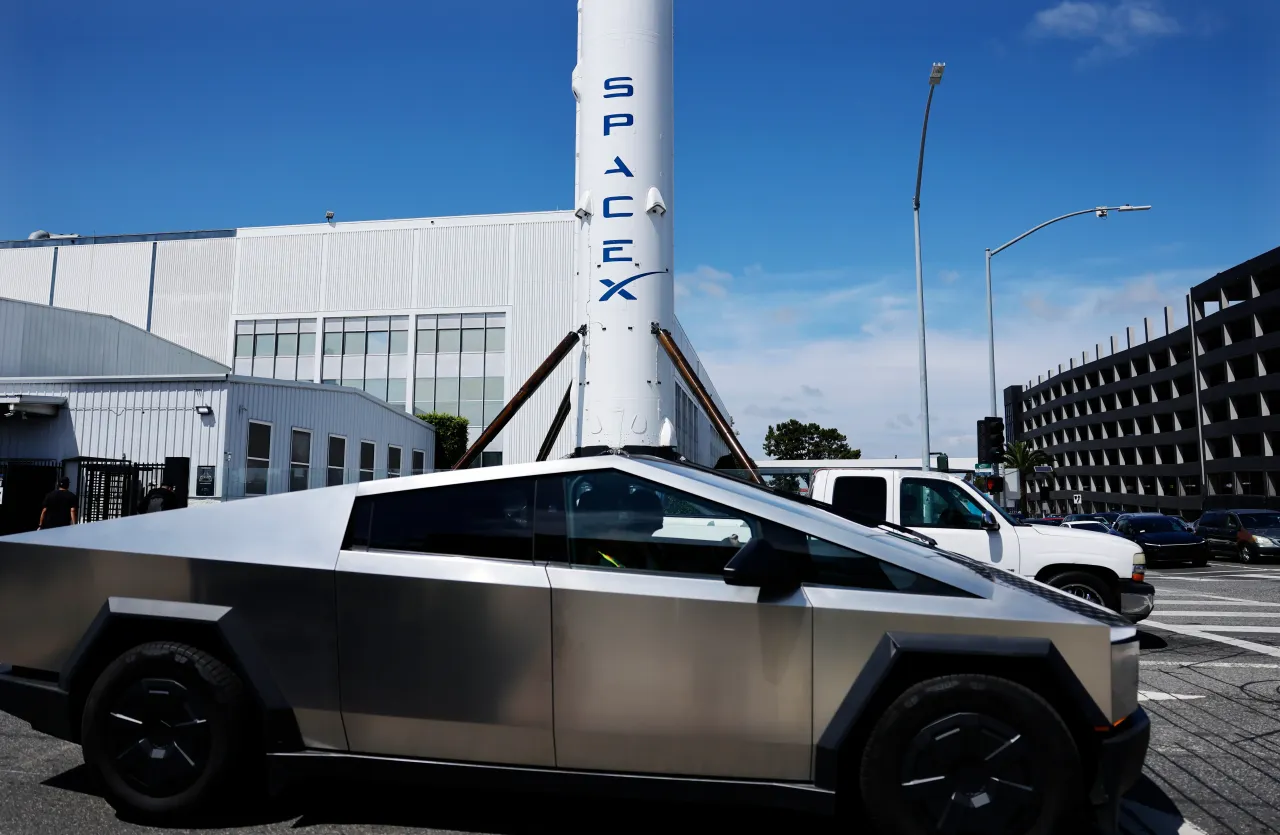
Musk keeps Tesla-SpaceX merger speculation alive, cites growing overlap
Tesla CEO Elon Musk on Wednesday left the door open to the EV maker merging with his other trillion-dollar-plus-valued firm SpaceX, declining to dismiss the possibility and citing growing overlap between the companies. "As you can tell from the many collaborations on so many fronts with SpaceX, there's more and more overlap," Musk said on Tesla's earnings call. "We can't talk about, you know, combining companies and that kind of thing on an earnings call," he added. "It's got to be done with the appropriate process." Investors and analysts have long speculated about the possibility of combining Musk's electric vehicle and space firms, with the discussion intensifying during SpaceX's record $75 billion initial public offering process. After Musk's comments, he called on Tesla General Counsel Brandon Ehrhart, who stuck to boilerplate language calling SpaceX a "great partner" that provides "numerous beneficial transactions." Gene Munster, managing partner at Tesla investor Deepwater Asset Management, said the call left him more convinced the companies were destined to be joined over the next few years. "I would put the odds that these two will combine at 90% today," he said in a video posted on social media. "If you were going to ask me yesterday I would have said it's 80%." Tesla already supplies batteries and manufacturing technologies for some SpaceX projects, while the companies are jointly developing Terafab, a semiconductor manufacturing facility designed to produce AI chips. Proponents argue that combining the companies could simplify Musk's corporate empire and create a more integrated company spanning artificial intelligence, robotics, manufacturing, energy and space infrastructure. JPMorgan analysts said this month that "operational integration between the two entities is already deep," citing shared engineering talent, AI infrastructure, Terafab and Musk's leadership as factors that "would facilitate an eventual combination." Stifel analysts struck an even more bullish note, writing that "many investors consider it inevitable that Musk will move to combine SpaceX with Tesla - for them the question is not if but when." SpaceX President and Chief Operating Officer Gwynne Shotwell has also acknowledged potential benefits, telling CNBC in June that folding the companies together "might make Elon's life a little easier" by streamlining management across his businesses. Others, however, caution that any transaction could face formidable hurdles. In the same research note, JPMorgan pointed to the "practical bottleneck" of getting regulatory approvals for both companies, particularly in China, where national security concerns over SpaceX's U.S. government ties could pose problems. Analysts also note that Musk controls a much larger voting stake in SpaceX than in Tesla, complicating governance considerations for Tesla's public shareholders. (Reporting by Akash Sriram in Bengaluru, Chris Kirkham in Los Angeles and Abhirup Roy in San Francisco; Editing by Mike Colias and Jamie Freed) Copyright Reuters or USA Today Network via Reuters Connect This story was originally published July 22, 2026 at 8:15 PM.
Musk keeps Tesla-SpaceX merger speculation alive, cites growing overlap
Tesla CEO Elon Musk on Wednesday left the door open to the EV maker merging with his other trillion-dollar-plus-valued firm SpaceX, declining to dismiss the possibility and citing growing overlap between the companies. "As you can tell from the many collaborations on so many fronts with SpaceX, there's more and more overlap," Musk said on Tesla's earnings call. "We can't talk about, you know, combining companies and that kind of thing on an earnings call," he added. "It's got to be done with the appropriate process." Investors and analysts have long speculated about the possibility of combining Musk's electric vehicle and space firms, with the discussion intensifying during SpaceX's record $75 billion initial public offering process. After Musk's comments, he called on Tesla General Counsel Brandon Ehrhart, who stuck to boilerplate language calling SpaceX a "great partner" that provides "numerous beneficial transactions." Gene Munster, managing partner at Tesla investor Deepwater Asset Management, said the call left him more convinced the companies were destined to be joined over the next few years. "I would put the odds that these two will combine at 90% today," he said in a video posted on social media. "If you were going to ask me yesterday I would have said it's 80%." Tesla already supplies batteries and manufacturing technologies for some SpaceX projects, while the companies are jointly developing Terafab, a semiconductor manufacturing facility designed to produce AI chips. Proponents argue that combining the companies could simplify Musk's corporate empire and create a more integrated company spanning artificial intelligence, robotics, manufacturing, energy and space infrastructure. JPMorgan analysts said this month that "operational integration between the two entities is already deep," citing shared engineering talent, AI infrastructure, Terafab and Musk's leadership as factors that "would facilitate an eventual combination." Stifel analysts struck an even more bullish note, writing that "many investors consider it inevitable that Musk will move to combine SpaceX with Tesla - for them the question is not if but when." SpaceX President and Chief Operating Officer Gwynne Shotwell has also acknowledged potential benefits, telling CNBC in June that folding the companies together "might make Elon's life a little easier" by streamlining management across his businesses. Others, however, caution that any transaction could face formidable hurdles. In the same research note, JPMorgan pointed to the "practical bottleneck" of getting regulatory approvals for both companies, particularly in China, where national security concerns over SpaceX's U.S. government ties could pose problems. Analysts also note that Musk controls a much larger voting stake in SpaceX than in Tesla, complicating governance considerations for Tesla's public shareholders. (Reporting by Akash Sriram in Bengaluru, Chris Kirkham in Los Angeles and Abhirup Roy in San Francisco; Editing by Mike Colias and Jamie Freed) Copyright Reuters or USA Today Network via Reuters Connect This story was originally published July 22, 2026 at 9:15 PM.
Musk keeps Tesla-SpaceX merger speculation alive, cites growing overlap
Tesla CEO Elon Musk on Wednesday left the door open to the EV maker merging with his other trillion-dollar-plus-valued firm SpaceX, declining to dismiss the possibility and citing growing overlap between the companies. "As you can tell from the many collaborations on so many fronts with SpaceX, there's more and more overlap," Musk said on Tesla's earnings call. "We can't talk about, you know, combining companies and that kind of thing on an earnings call," he added. "It's got to be done with the appropriate process." Investors and analysts have long speculated about the possibility of combining Musk's electric vehicle and space firms, with the discussion intensifying during SpaceX's record $75 billion initial public offering process. After Musk's comments, he called on Tesla General Counsel Brandon Ehrhart, who stuck to boilerplate language calling SpaceX a "great partner" that provides "numerous beneficial transactions." Gene Munster, managing partner at Tesla investor Deepwater Asset Management, said the call left him more convinced the companies were destined to be joined over the next few years. "I would put the odds that these two will combine at 90% today," he said in a video posted on social media. "If you were going to ask me yesterday I would have said it's 80%." Tesla already supplies batteries and manufacturing technologies for some SpaceX projects, while the companies are jointly developing Terafab, a semiconductor manufacturing facility designed to produce AI chips. Proponents argue that combining the companies could simplify Musk's corporate empire and create a more integrated company spanning artificial intelligence, robotics, manufacturing, energy and space infrastructure. JPMorgan analysts said this month that "operational integration between the two entities is already deep," citing shared engineering talent, AI infrastructure, Terafab and Musk's leadership as factors that "would facilitate an eventual combination." Stifel analysts struck an even more bullish note, writing that "many investors consider it inevitable that Musk will move to combine SpaceX with Tesla - for them the question is not if but when." SpaceX President and Chief Operating Officer Gwynne Shotwell has also acknowledged potential benefits, telling CNBC in June that folding the companies together "might make Elon's life a little easier" by streamlining management across his businesses. Others, however, caution that any transaction could face formidable hurdles. In the same research note, JPMorgan pointed to the "practical bottleneck" of getting regulatory approvals for both companies, particularly in China, where national security concerns over SpaceX's U.S. government ties could pose problems. Analysts also note that Musk controls a much larger voting stake in SpaceX than in Tesla, complicating governance considerations for Tesla's public shareholders. (Reporting by Akash Sriram in Bengaluru, Chris Kirkham in Los Angeles and Abhirup Roy in San Francisco; Editing by Mike Colias and Jamie Freed) Copyright Reuters or USA Today Network via Reuters Connect This story was originally published July 22, 2026 at 6:15 PM.
Musk Keeps Tesla-SpaceX Merger Speculation Alive, Cites Growing Overlap
By Akash Sriram and Chris Kirkham July 22 (Reuters) - Tesla CEO Elon Musk on Wednesday left the door open to the EV maker merging with his other trillion-dollar-plus-valued firm SpaceX, declining to dismiss the possibility and citing growing overlap between the companies. "As you can tell from the many collaborations on so many fronts with SpaceX, there's more and more overlap," Musk said on Tesla's earnings call. "We can't talk about, you know, combining companies and that kind of thing on an earnings call," he added. "It's got to be done with the appropriate process." Investors and analysts have long speculated about the possibility of combining Musk's electric vehicle and space firms, with the discussion intensifying during SpaceX's record $75 billion initial public offering process. After Musk's comments, he called on Tesla General Counsel Brandon Ehrhart, who stuck to boilerplate language calling SpaceX a "great partner" that provides "numerous beneficial transactions." Gene Munster, managing partner at Tesla investor Deepwater Asset Management, said the call left him more convinced the companies were destined to be joined over the next few years. "I would put the odds that these two will combine at 90% today," he said in a video posted on social media. "If you were going to ask me yesterday I would have said it's 80%." Tesla already supplies batteries and manufacturing technologies for some SpaceX projects, while the companies are jointly developing Terafab, a semiconductor manufacturing facility designed to produce AI chips. Proponents argue that combining the companies could simplify Musk's corporate empire and create a more integrated company spanning artificial intelligence, robotics, manufacturing, energy and space infrastructure. JPMorgan analysts said this month that "operational integration between the two entities is already deep," citing shared engineering talent, AI infrastructure, Terafab and Musk's leadership as factors that "would facilitate an eventual combination." Stifel analysts struck an even more bullish note, writing that "many investors consider it inevitable that Musk will move to combine SpaceX with Tesla -- for them the question is not if but when." SpaceX President and Chief Operating Officer Gwynne Shotwell has also acknowledged potential benefits, telling CNBC in June that folding the companies together "might make Elon's life a little easier" by streamlining management across his businesses. Others, however, caution that any transaction could face formidable hurdles. In the same research note, JPMorgan pointed to the "practical bottleneck" of getting regulatory approvals for both companies, particularly in China, where national security concerns over SpaceX's U.S. government ties could pose problems. Analysts also note that Musk controls a much larger voting stake in SpaceX than in Tesla, complicating governance considerations for Tesla's public shareholders. (Reporting by Akash Sriram in Bengaluru, Chris Kirkham in Los Angeles and Abhirup Roy in San Francisco; Editing by Mike Colias and Jamie Freed)

Musk keeps Tesla-SpaceX merger speculation alive, cites growing overlap By Reuters
By Akash Sriram and Chris Kirkham July 22 (Reuters) - Tesla CEO Elon Musk on Wednesday left the door open to the EV maker merging with his other trillion-dollar-plus-valued firm SpaceX, declining to dismiss the possibility and citing growing overlap between the companies. "As you can tell from the many collaborations on so many fronts with SpaceX, there's more and more overlap," Musk said on Tesla's earnings call. "We can't talk about, you know, combining companies and that kind of thing on an earnings call," he added. "It's got to be done with the appropriate process." Investors and analysts have long speculated about the possibility of combining Musk's electric vehicle and space firms, with the discussion intensifying during SpaceX's record $75 billion initial public offering process. After Musk's comments, he called on Tesla General Counsel Brandon Ehrhart, who stuck to boilerplate language calling SpaceX a "great partner" that provides "numerous beneficial transactions." Gene Munster, managing partner at Tesla investor Deepwater Asset Management, said the call left him more convinced the companies were destined to be joined over the next few years. "I would put the odds that these two will combine at 90% today," he said in a video posted on social media. "If you were going to ask me yesterday I would have said it's 80%." Tesla already supplies batteries and manufacturing technologies for some SpaceX projects, while the companies are jointly developing Terafab, a semiconductor manufacturing facility designed to produce AI chips. Proponents argue that combining the companies could simplify Musk's corporate empire and create a more integrated company spanning artificial intelligence, robotics, manufacturing, energy and space infrastructure. JPMorgan analysts said this month that "operational integration between the two entities is already deep," citing shared engineering talent, AI infrastructure, Terafab and Musk's leadership as factors that "would facilitate an eventual combination." Stifel analysts struck an even more bullish note, writing that "many investors consider it inevitable that Musk will move to combine SpaceX with Tesla -- for them the question is not if but when." SpaceX President and Chief Operating Officer Gwynne Shotwell has also acknowledged potential benefits, telling CNBC in June that folding the companies together "might make Elon's life a little easier" by streamlining management across his businesses. Others, however, caution that any transaction could face formidable hurdles. In the same research note, JPMorgan pointed to the "practical bottleneck" of getting regulatory approvals for both companies, particularly in China, where national security concerns over SpaceX's U.S. government ties could pose problems. Analysts also note that Musk controls a much larger voting stake in SpaceX than in Tesla, complicating governance considerations for Tesla's public shareholders.
Musk keeps Tesla-SpaceX merger speculation alive, cites growing overlap
By Akash Sriram and Chris Kirkham July 22 (Reuters) - Tesla CEO Elon Musk on Wednesday left the door open to the EV maker merging with his other trillion-dollar-plus-valued firm SpaceX, declining to dismiss the possibility and citing growing overlap between the companies. "As you can tell from the many collaborations on so many fronts with SpaceX, there's more and more overlap," Musk said on Tesla's earnings call. "We can't talk about, you know, combining companies and that kind of thing on an earnings call," he added. "It's got to be done with the appropriate process." Investors and analysts have long speculated about the possibility of combining Musk's electric vehicle and space firms, with the discussion intensifying during SpaceX's record $75 billion initial public offering process. After Musk's comments, he called on Tesla General Counsel Brandon Ehrhart, who stuck to boilerplate language calling SpaceX a "great partner" that provides "numerous beneficial transactions." Gene Munster, managing partner at Tesla investor Deepwater Asset Management, said the call left him more convinced the companies were destined to be joined over the next few years. "I would put the odds that these two will combine at 90% today," he said in a video posted on social media. "If you were going to ask me yesterday I would have said it's 80%." Tesla already supplies batteries and manufacturing technologies for some SpaceX projects, while the companies are jointly developing Terafab, a semiconductor manufacturing facility designed to produce AI chips. Proponents argue that combining the companies could simplify Musk's corporate empire and create a more integrated company spanning artificial intelligence, robotics, manufacturing, energy and space infrastructure. JPMorgan analysts said this month that "operational integration between the two entities is already deep," citing shared engineering talent, AI infrastructure, Terafab and Musk's leadership as factors that "would facilitate an eventual combination." Stifel analysts struck an even more bullish note, writing that "many investors consider it inevitable that Musk will move to combine SpaceX with Tesla -- for them the question is not if but when." SpaceX President and Chief Operating Officer Gwynne Shotwell has also acknowledged potential benefits, telling CNBC in June that folding the companies together "might make Elon's life a little easier" by streamlining management across his businesses. Others, however, caution that any transaction could face formidable hurdles. In the same research note, JPMorgan pointed to the "practical bottleneck" of getting regulatory approvals for both companies, particularly in China, where national security concerns over SpaceX's U.S. government ties could pose problems.
Musk keeps Tesla-SpaceX merger speculation alive, cites growing overlap
By Akash Sriram and Chris Kirkham July 22 (Reuters) - Tesla CEO Elon Musk on Wednesday left the door open to the EV maker merging with his other trillion-dollar-plus-valued firm SpaceX, declining to dismiss the possibility and citing growing overlap between the companies. "As you can tell from the many collaborations on so many fronts with SpaceX, there's more and more overlap," Musk said on Tesla's earnings call. "We can't talk about, you know, combining companies and that kind of thing on an earnings call," he added. "It's got to be done with the appropriate process." Investors and analysts have long speculated about the possibility of combining Musk's electric vehicle and space firms, with the discussion intensifying during SpaceX's record $75 billion initial public offering process. After Musk's comments, he called on Tesla General Counsel Brandon Ehrhart, who stuck to boilerplate language calling SpaceX a "great partner" that provides "numerous beneficial transactions." Gene Munster, managing partner at Tesla investor Deepwater Asset Management, said the call left him more convinced the companies were destined to be joined over the next few years. "I would put the odds that these two will combine at 90% today," he said in a video posted on social media. "If you were going to ask me yesterday I would have said it's 80%." Tesla already supplies batteries and manufacturing technologies for some SpaceX projects, while the companies are jointly developing Terafab, a semiconductor manufacturing facility designed to produce AI chips. Proponents argue that combining the companies could simplify Musk's corporate empire and create a more integrated company spanning artificial intelligence, robotics, manufacturing, energy and space infrastructure. JPMorgan analysts said this month that "operational integration between the two entities is already deep," citing shared engineering talent, AI infrastructure, Terafab and Musk's leadership as factors that "would facilitate an eventual combination." Stifel analysts struck an even more bullish note, writing that "many investors consider it inevitable that Musk will move to combine SpaceX with Tesla -- for them the question is not if but when." SpaceX President and Chief Operating Officer Gwynne Shotwell has also acknowledged potential benefits, telling CNBC in June that folding the companies together "might make Elon's life a little easier" by streamlining management across his businesses. Others, however, caution that any transaction could face formidable hurdles. In the same research note, JPMorgan pointed to the "practical bottleneck" of getting regulatory approvals for both companies, particularly in China, where national security concerns over SpaceX's U.S. government ties could pose problems.
Musk leaves door open to Tesla-SpaceX merger
Elon Musk has suggested a possible merger between Tesla and SpaceX, citing increasing overlap. Investors now believe a combination of these companies is highly probable within years. Tesla already supplies batteries and manufacturing technologies for SpaceX projects. The companies are also jointly developing a semiconductor manufacturing facility for AI chips. However, regulatory approvals and governance complexities present significant hurdles to any such transaction. Tesla CEO Elon Musk on Wednesday left the door open to the EV maker merging with his other trillion-dollar-plus-valued firm SpaceX, declining to dismiss the possibility and citing growing overlap between the companies. "As you can tell from the many collaborations on so many fronts with SpaceX, there's more and more overlap," Musk said on Tesla's earnings call. "We can't talk about, you know, combining companies and that kind of thing on an earnings call," he added. Also Read: Elon Musk breaks the $800 billion barrier after SpaceX-xAI mega merger "It's got to be done with the appropriate process." Investors and analysts have long speculated about the possibility of combining Musk's electric vehicle and space firms, with the discussion intensifying during SpaceX's record $75 billion initial public offering process. After Musk's comments, he called on Tesla General Counsel Brandon Ehrhart, who stuck to boilerplate language calling SpaceX a "great partner" that provides "numerous beneficial transactions." Gene Munster, managing partner at Tesla investor Deepwater Asset Management, said the call left him more convinced the companies were destined to be joined over the next few years. "I would put the odds that these two will combine at 90% today," he said in a video posted on social media. "If you were going to ask me yesterday I would have said it's 80%." Tesla already supplies batteries and manufacturing technologies for some SpaceX projects, while the companies are jointly developing Terafab, a semiconductor manufacturing facility designed to produce AI chips. Also Read: Elon Musk's SpaceX in merger talks with xAI ahead of planned IPO, source says Proponents argue that combining the companies could simplify Musk's corporate empire and create a more integrated company spanning artificial intelligence, robotics, manufacturing, energy and space infrastructure. JPMorgan analysts said this month that "operational integration between the two entities is already deep," citing shared engineering talent, AI infrastructure, Terafab and Musk's leadership as factors that "would facilitate an eventual combination." Stifel analysts struck an even more bullish note, writing that "many investors consider it inevitable that Musk will move to combine SpaceX with Tesla - for them the question is not if but when." SpaceX President and Chief Operating Officer Gwynne Shotwell has also acknowledged potential benefits, telling CNBC in June that folding the companies together "might make Elon's life a little easier" by streamlining management across his businesses. Others, however, caution that any transaction could face formidable hurdles. In the same research note, JPMorgan pointed to the "practical bottleneck" of getting regulatory approvals for both companies, particularly in China, where national security concerns over SpaceX's U.S. government ties could pose problems. Analysts also note that Musk controls a much larger voting stake in SpaceX than in Tesla, complicating governance considerations for Tesla's public shareholders.
Elon Musk Fuels Tesla-SpaceX Merger Speculation Amid Growing Overlap
Elon Musk Leaves Door Open to Tesla-SpaceX Merger as Overlap Grows Speculation Grows Around Potential Tesla-SpaceX Merger By Akash Sriram and Chris Kirkham July 22 (Reuters) - Tesla CEO Elon Musk on Wednesday left the door open to the EV maker merging with his other trillion-dollar-plus-valued firm SpaceX, declining to dismiss the possibility and citing growing overlap between the companies. Comments from Musk Fuel Merger Rumors "As you can tell from the many collaborations on so many fronts with SpaceX, there's more and more overlap," Musk said on Tesla's earnings call. "We can't talk about, you know, combining companies and that kind of thing on an earnings call," he added. "It's got to be done with the appropriate process." Investor and Analyst Reactions Investors and analysts have long speculated about the possibility of combining Musk's electric vehicle and space firms, with the discussion intensifying during SpaceX's record $75 billion initial public offering process. After Musk's comments, he called on Tesla General Counsel Brandon Ehrhart, who stuck to boilerplate language calling SpaceX a "great partner" that provides "numerous beneficial transactions." Market Sentiment and Predictions Gene Munster, managing partner at Tesla investor Deepwater Asset Management, said the call left him more convinced the companies were destined to be joined over the next few years. "I would put the odds that these two will combine at 90% today," he said in a video posted on social media. "If you were going to ask me yesterday I would have said it's 80%." Existing Collaborations and Synergies Tesla already supplies batteries and manufacturing technologies for some SpaceX projects, while the companies are jointly developing Terafab, a semiconductor manufacturing facility designed to produce AI chips. Proponents argue that combining the companies could simplify Musk's corporate empire and create a more integrated company spanning artificial intelligence, robotics, manufacturing, energy and space infrastructure. Analyst Insights on Integration JPMorgan analysts said this month that "operational integration between the two entities is already deep," citing shared engineering talent, AI infrastructure, Terafab and Musk's leadership as factors that "would facilitate an eventual combination." Stifel analysts struck an even more bullish note, writing that "many investors consider it inevitable that Musk will move to combine SpaceX with Tesla -- for them the question is not if but when." Executive Perspectives SpaceX President and Chief Operating Officer Gwynne Shotwell has also acknowledged potential benefits, telling CNBC in June that folding the companies together "might make Elon's life a little easier" by streamlining management across his businesses. Challenges and Considerations Regulatory and Governance Hurdles Others, however, caution that any transaction could face formidable hurdles. In the same research note, JPMorgan pointed to the "practical bottleneck" of getting regulatory approvals for both companies, particularly in China, where national security concerns over SpaceX's U.S. government ties could pose problems. Analysts also note that Musk controls a much larger voting stake in SpaceX than in Tesla, complicating governance considerations for Tesla's public shareholders. (Reporting by Akash Sriram in Bengaluru, Chris Kirkham in Los Angeles and Abhirup Roy in San Francisco; Editing by Mike Colias and Jamie Freed)