News & Updates
The latest news and updates from companies in the WLTH portfolio.
Kraken Pro Options Upgrade Brings More Structure To Retail Crypto Hedging
Trusted Editorial content, reviewed by leading industry experts and seasoned editors. Ad Disclosure Kraken is expanding its options trading infrastructure, giving crypto traders another way to manage exposure beyond spot buying and perpetual futures. That matters because crypto risk is still often handled with blunt tools. Traders buy tokens, sell tokens, or use leveraged futures that can become dangerous quickly when volatility spikes. Options offer a different approach. They allow traders to define risk, hedge positions, and express views on volatility without relying only on directional leverage. The product still requires care. Options are not simple, and retail traders can misunderstand them easily. But a more structured options market can help move crypto derivatives away from the most chaotic parts of the leverage cycle. Kraken's update is part of that shift. TL;DR * Kraken Pro is expanding options trading infrastructure for crypto users. * Options can help traders hedge, manage volatility, and structure risk more carefully. * The update is part of a broader move toward more mature crypto derivatives access. Crypto Traders Need More Than Perpetual Futures Perpetual futures have dominated much of crypto derivatives trading because they are simple, liquid, and easy to access. They are also risky. A trader can take a leveraged long or short quickly, but the same structure can lead to forced liquidations when the market moves against crowded positioning. That is one reason crypto often sees violent moves in both directions. Leverage builds up, funding becomes stretched, and then the market flushes. Options do not remove risk, but they offer more ways to shape it. A trader can buy a put to hedge downside. A trader can use calls to gain upside exposure with defined premium risk. More advanced users can build spreads, volatility trades, or strategies around expected ranges. The point is not that every retail user should trade options. The point is that options give the market more tools than simple leveraged direction. That is why Kraken's infrastructure upgrade matters. If options become easier to access inside a regulated or more carefully controlled environment, some traders may move away from the most aggressive offshore products. The Details Will Decide Adoption Options products live or die on design. Contract sizes matter. Expiration formats matter. Strike selection matters. Collateral rules matter. Liquidity matters more than almost anything. If spreads are too wide or markets are too thin, the product may look useful in theory but feel difficult in practice. Kraken's challenge is to make options accessible without making them feel falsely simple. Retail users need clear explanations of premium, expiry, time decay, volatility, and the fact that an option can expire worthless. They also need risk controls that prevent the product from becoming just another way to blow up an account. If Kraken can get that balance right, the exchange can offer traders a more serious hedging tool. If the product is poorly understood, the risks may outweigh the benefits for less experienced users. That is why education and interface design matter almost as much as the product itself. A More Mature Derivatives Market The broader crypto market has been moving toward more sophisticated derivatives for years. Institutional desks already use options to manage exposure, hedge spot positions, and trade volatility. Retail access has been more uneven. Some platforms offer deep derivatives markets, but jurisdiction, regulation, and user protection vary widely. Kraken's move suggests more exchanges want to compete on structured access rather than simply offering the highest leverage. That is healthy if it leads to better risk management. Crypto will always be volatile. A more mature derivatives market will not change that. What it can change is how traders handle volatility. Instead of every move becoming a leveraged long or short, traders can use products that define risk more clearly. The timing also makes sense. As ETFs, institutional products, and regulated crypto infrastructure expand, traders will expect more familiar tools around the assets they hold. Options are part of that financial toolkit. The risk is that retail users treat them as a shortcut. They are not. Options require understanding, and the wrong strategy can lose money quickly. Still, Kraken's expansion points in the right direction for market structure. It gives traders more flexibility, and it pushes crypto derivatives closer to the way mature markets already operate. That does not guarantee immediate adoption, but it does show where the market is heading: less reliance on raw leverage, more focus on structured risk. This article is based on information from Kraken. This article was written by the News Desk and edited by Samuel Rae.

Kraken Institutional Turns To Upshot To Price The Illiquid Side Of Crypto
Trusted Editorial content, reviewed by leading industry experts and seasoned editors. Ad Disclosure Kraken Institutional is adding valuation tools through a partnership with Upshot, taking aim at one of the hardest problems in digital assets: pricing things that do not trade cleanly. That includes NFTs and other illiquid crypto holdings, where market value is not always obvious. A Bitcoin price is easy to find. Ethereum trades continuously across deep markets. But an NFT portfolio, a thinly traded token, or a niche on-chain asset can be much harder to value with confidence. For institutional clients, that is not a small problem. It affects reporting, collateral, risk management, custody, lending, and portfolio construction. Kraken's move suggests the exchange sees demand for tools that make crypto portfolios easier to manage beyond the major liquid assets. TL;DR * Kraken Institutional has partnered with Upshot to support valuation tools for NFTs and illiquid digital holdings. * The update is aimed at a part of crypto where pricing is often inconsistent or difficult to verify. * Better valuation tools can support reporting, lending, collateral management, and institutional portfolio oversight. The Illiquid Part Of Crypto Needs Better Tools Crypto markets are often described as if everything trades like Bitcoin. That is not true. Large tokens can have deep liquidity, narrow spreads, and continuous pricing. Smaller assets, NFT collections, tokenized claims, and niche on-chain positions can behave very differently. Some trade rarely. Some have wide spreads. Some rely on floor prices that may not reflect real executable value. That creates problems for institutions. A fund cannot simply guess what an illiquid holding is worth. A lender cannot accept collateral without understanding how that collateral may behave under stress. A custodian servicing professional clients needs credible data when clients ask for portfolio reporting. Upshot's valuation approach is designed for that harder-to-price side of the market. Kraken bringing that into its institutional offering gives clients another layer of data around assets that do not fit neatly into normal exchange order books. That does not make valuations perfect. Models can be wrong. Illiquid markets can gap lower. NFTs can lose demand quickly. But a structured model is still more useful than relying only on last sale, floor price, or sentiment. Why This Matters For Collateral The collateral use case is where this becomes more interesting. Crypto borrowing works best when the collateral is easy to price and easy to liquidate. Bitcoin and Ethereum are relatively straightforward. Illiquid assets are not. If a borrower wants to use an NFT portfolio or a less liquid digital asset as collateral, the lender needs to understand what the asset might actually be worth if it has to be sold. That requires more than a headline price. A proper valuation framework can consider comparable sales, rarity, liquidity, market depth, historical volatility, and other data points. It can also help set more conservative loan-to-value ratios or risk limits. For Kraken Institutional, this can make the platform more useful to clients managing complex portfolios. It allows the exchange to offer more than custody and execution. It starts to look like part of a wider institutional workflow. That is the direction many major crypto platforms are moving in. Trading remains central, but serious clients also want risk tools, reporting, credit, and data. A Sign Of Crypto Market Maturity The most important part of this update is not that it will immediately change NFT markets or cause a sudden wave of institutional borrowing. It probably will not. The more important point is that exchanges are building infrastructure for a market that is becoming more complicated. In earlier cycles, crypto platforms could grow by offering more listings, more leverage, and faster access. That is still part of the business, but institutional clients need different things. They need confidence that assets can be priced, monitored, reported, and managed inside a risk framework. Valuation tools are part of that shift. They also show that the NFT market is not being treated only as a speculative retail category. Even after the hype cooled, the underlying issue of unique digital assets remains relevant. Institutions may still hold them, lend against them, custody them, or evaluate tokenized assets with similar valuation problems. Kraken's Upshot partnership sits in that practical layer of crypto infrastructure. It is not a flashy market-moving announcement. It is a piece of the machinery that could make harder-to-price digital assets more usable for professional clients. That is the real signal. Crypto is slowly building the same kind of support systems that exist around other asset classes. Pricing, valuation, collateral, risk, and reporting may not generate the loudest headlines, but they are what institutions need before they can treat a market seriously. This article is based on information from Kraken. This article was written by the News Desk and edited by Samuel Rae.
Get Razer's Kraken Kitty V2 wired or wireless headset while they're starting at just $58 (Nearly 50% off)
We are now tracking a deal at Amazon, which drops the wireless Razer Kraken Kitty V2 Hello Kitty headset down to $102.98 shipped. Don't forget to clip the on-page coupon to see the discounted price during checkout. That is down from its $140 list price and roughly $6 below the previous $109 low, marking the best price we have tracked for it so far. The wired USB version of this headset is also discounted to $57.95 shipped with a similar promo code. Amazon lists that model at $110, so today's offer takes just over $52 off and delivers up to 47% in savings. This remains one of the more popular headsets in Razer's catalog, and it's available at a solid price today at nearly 50% off. The USB model connects directly to a PC and includes 7.1 surround sound, 40mm drivers, a cardioid microphone, and RGB lighting that can react while you stream. It is the better option if you mainly play at a desk and want a dedicated mic for voice chat. The Bluetooth version skips the cable and works with phones, tablets, laptops, and other compatible devices. It also uses 40mm drivers and includes RGB lighting, but its main advantage is the rated 40-hour battery life and USB-C charging. Both headsets carry a similar Hello Kitty styling and cat-ear design, though the wired model is more focused on gaming and streaming, while the wireless version is easier to use on the go. Looking for more battlestation upgrades? CHERRY's XTRFY M68 lightweight wireless gaming mouse is just $20 today. Also, the Glorious GMMK barebone DIY kit is still at $60, down from its usual price of $80. Razer Kraken Kitty V2 BT Wireless RGB Headset features:

Kraken Borrow: spend more than your cash balance
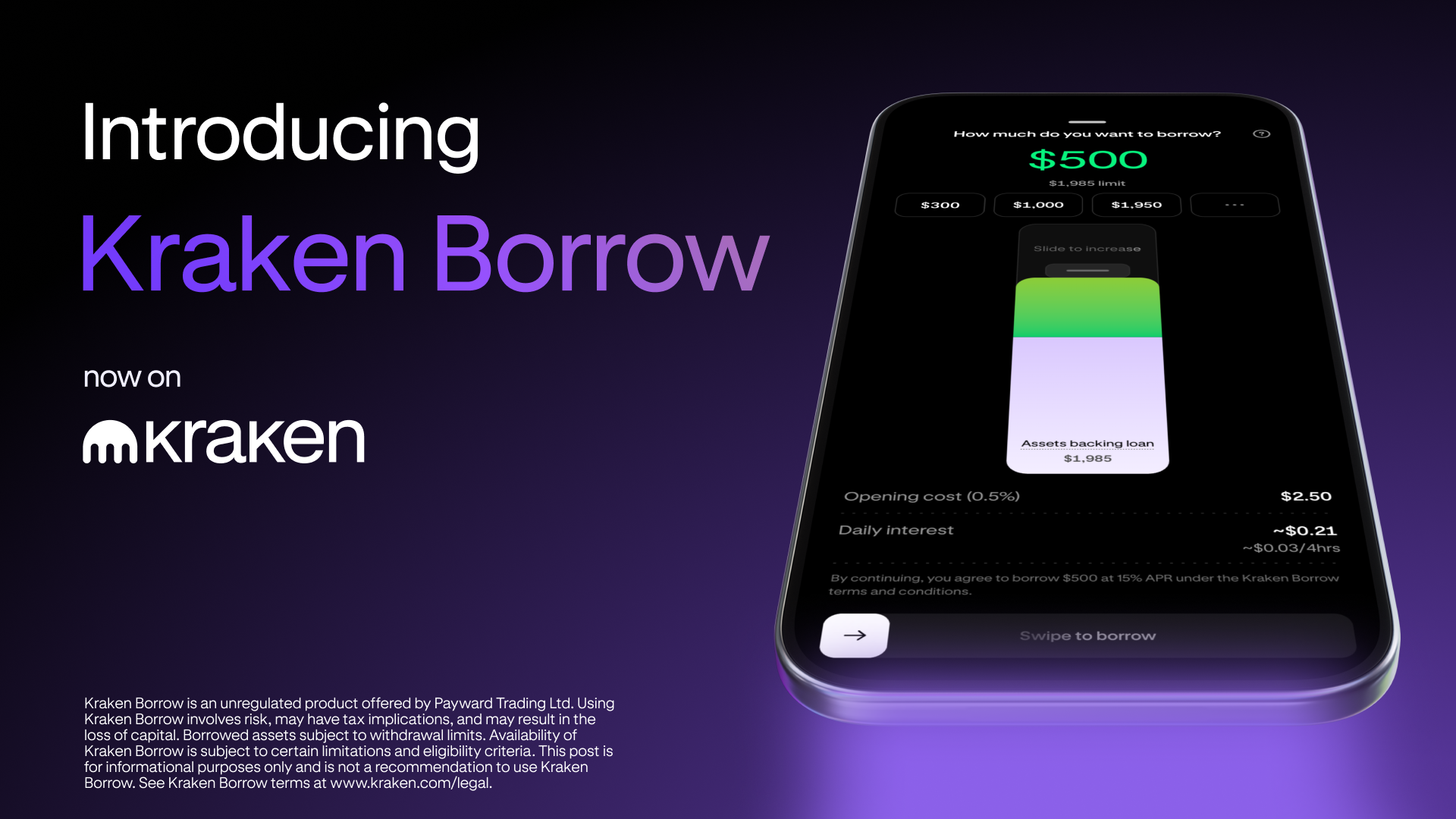
Use your cash first. Then use the crypto already in your portfolio to cover the rest. * Kraken Borrow now works inside your normal buy flow. Your cash goes first, and eligible crypto you already hold covers the rest. * Your buying power combines your cash balance and your on-platform crypto, so you can buy more without selling anything. * Repayment is flexible: no fixed term and no early repayment fee. * A 1x leverage cap keeps the feature simple and accessible for everyday investors, not just professional traders. Every investor has faced this situation: You're holding an asset you believe in. Then something new catches your attention, but you don't have free cash on hand, and suddenly you're doing mental math about what to sell to fund this next move. It's a frustrating position. Not because the opportunity isn't real, but because the choice feels artificial. You don't have the dry powder to act on it. In an ideal world, you shouldn't have to exit a long-term position you believe in just to enter one you're excited about. That's the problem Kraken Borrow is designed to solve. What is Kraken Borrow? Kraken Borrow is a feature that extends your buying power beyond your cash balance, backed by the crypto you already hold on Kraken. Your portfolio now counts toward every buy, without having to sell anything. The mechanics are straightforward. You buy the way you always have, on the same screen. Your cash is spent first. When a purchase goes beyond your cash, Kraken Borrow covers the rest, backed by eligible assets in your portfolio. At confirmation, you see exactly what's cash and what's borrowed. When you're ready, you repay on your own terms, with no fixed repayment schedule and no rigid deadlines. It's a revolving structure, meaning you can draw, repay, and draw again as your needs change. Built for everyday investors Crypto-backed borrowing isn't a new concept, but it has historically skewed toward professional traders comfortable with complex instruments and high leverage. Kraken Borrow is built for a different audience. Designed for a range of everyday investors, the feature includes a 1x leverage cap, a familiar buy screen with borrowing built in, and a structure that prioritizes clarity over complexity. Whether you're a long-term holder looking to stay invested through a volatile period, or an active investor looking to capitalize on something new, Kraken Borrow gives you a practical trading tool without requiring you to navigate a steep learning curve. Collateral and margin levels are clearly defined throughout, so the experience stays transparent from start to finish. Put your portfolio to work The best financial tools remove tradeoffs that don't need to exist. With Kraken Borrow, selling a position to fund another doesn't have to be your only option. Now, instead of choosing between holding and acting, you can do both. Kraken Borrow is available in the Kraken app for eligible customers. Kraken Borrow is a crypto-collateralized borrowing feature. Borrowing involves risk, including the potential loss of collateral through liquidation if your Loan Maintenance Ratio falls below the required threshold. Interest rates are variable and may change over the life of an open-ended loan. An origination fee of 0.5% applies. Collateral assets are ring-fenced and cannot be withdrawn while a loan is active. Kraken Borrow is not available in all jurisdictions and is not currently available in the US, UK, Canada, Australia, UAE, Brazil, or India. Geographic restrictions and eligibility criteria apply. See https://support.kraken.com/articles/borrow for full terms. These materials are for general information purposes only and are not investment advice or a recommendation or solicitation to buy, sell, stake, or hold any cryptoasset or to engage in any specific trading strategy. Kraken does not and will not work to increase or decrease the price of any particular cryptoasset it makes available. The unpredictable nature of the cryptoasset markets can lead to loss of funds. Tax may be payable on any return and/or on any increase in the value of your cryptoassets and you should seek independent advice on your taxation position.
My favorite Razer Kraken Kitty headset has never been this cheap, but there's less than 50% left of this purr-fectly ridiculous deal
A meowvelous good deal for those after a cute, quality headset Razer is known for its cat-ear headsets, but the Kraken Kitty V3 Pro is the set I'd recommend the most for those after the purrr-fect pair. While the majority of the Kraken Kitty line is full of limiting wired or Bluetooth-only headsets, the Kraken Kitty V3 Pro is the first to bring 2.4GHz into the mix. Its extra wireless options don't make it an entirely no-brainer recommendation as its $179.99 MSRP is a bit much for its boasted features. However, today's discounted $104.99 rate at Amazon feels far more reasonable, especially as it's never been this cheap before. There's always a bit of an assumption that headsets that cater to players with a love of everything cute and cozy must be pretty rubbish, but the Kraken Kitty V3 Pro is proof that's not the case. While it's definitely priced a bit higher than I'd like on a normal discount-free day, this is still a fantastic wireless option. Finding a pair with a trio of connectivity options around the $100 mark isn't a difficult feat, but it's important when you consider that so many of Razer's other pairs aimed at 'cute and cozy' players are usually wired or Bluetooth only. Even the most recently announced Cinnamoroll Edition Razer Kraken Kitty V2 BT pair drops 2.4GHz. Those after a cute pair with customizable Chroma-powered RGB ears deserve to take advantage of a low-latency wireless connection as much as anyone. * Join GamesRadar+ Deals on WhatsApp for our top daily discounts The headset also features the brand's 40 mm Razer TriForce Titanium audio drivers, the very ones found in the Razer Barracuda X Chroma -one of my favorite Razer releases. Amazon states that today's Razer Kraken Kitty V3 Pro headset is a "limited time" deal, and as of typing, 53% of people have already claimed one for their own setups. That's not too surprising given this is the lowest I've ever seen for this headset, which I'm more used to seeing marked down to $129.99, as it was during March earlier this year. But with that in mind, you need to be quick if you want to pick this up for a price that seems more than reasonable for its specs on offer. * View all Razer Kraken Kitty gaming headsets at Amazon If you're not a cat person, I've also rounded up the best PC headsets for gaming, the best PS5 headsets, and the best Xbox Series X headsets for your setup.

Release The Kraken Genome!
Sailors have told tales of giant tentacled sea monsters for millennia. In ancient times, it was the Kraken. In more recent work, Jules Verne delighted and terrified the public while reading 20,000 Leagues Under The Sea.The monstrous Architeuthis dux, the giant squid, must have been terrifying to ancient mariners. They were the size of modern school buses, never a good thing when you are in a wooden trireme, with eyes as big as dinner plates and tentacles that can snatch prey 10 yards away.During an evolutionary scale when most creatures got smaller, how did this squid get so big?Publication of its full genome sequence may give us clues. Sailors have told tales of giant tentacled sea monsters for millennia. In ancient times, it was the Kraken. In more recent work, Jules Verne delighted and terrified the public while reading 20,000 Leagues Under The Sea. The monstrous Architeuthis dux, the giant squid, must have been terrifying to ancient mariners. They were the size of modern school buses, never a good thing when you are in a wooden trireme, with eyes as big as dinner plates and tentacles that can snatch prey 10 yards away. During an evolutionary scale when most creatures got smaller, how did this squid get so big? Publication of its full genome sequence may give us clues. Release the Kraken genome! Illustration from Jules Verne's 20,000 Leagues Under the Sea. Credit: Alphonse de Neuville A rare sighting now as then Giant squid are rarely sighted and have never been caught and kept alive, meaning their biology (even how they reproduce) is still largely a mystery. The genome sequence can help. "In terms of their genes, we found the giant squid look a lot like other animals. This means we can study these truly bizarre animals to learn more about ourselves," says Dr. Caroline Albertin of the Marine Biological Laboratory (MBL), Woods Hole, who in 2015 led the team that sequenced the first genome of a cephalopod (the group that includes squid, octopus, cuttlefish, and nautilus). The giant squid genome is also big. At around 2.7 billion DNA base pairs, it's about 90 percent the size of the human genome. Important developmental genes in almost all animals (Hox and Wnt) were present in single copies only in the giant squid genome. That means this gigantic, invertebrate creature - long a source of sea-monster lore - did not get so big through whole-genome duplication, a strategy that evolution took long ago to increase the size of vertebrates. Analysis identified more than 100 genes in the protocadherin family -- typically not found in abundance in invertebrates -- in the giant squid genome. Protocadherins are thought to be important in wiring up a complicated brain correctly and were thought to be a vertebrate innovation. Albertin says they were really intrigued to find more than 100 of them in the octopus genome (in 2015). That seemed like a smoking gun to how you make a complicated brain. They found a similar expansion of protocadherins in the giant squid, as well. The team also analyzed a gene family that (so far) is unique to cephalopods, called reflectins. "Reflectins encode a protein that is involved in making iridescence. Color is an important part of camouflage, so we are trying to understand what this gene family is doing and how it works," Albertin says. So how did it get so big? "A genome is a first step for answering a lot of questions about the biology of these very weird animals," Albertin said, such as how they acquired the largest brain among the invertebrates, their sophisticated behaviors and agility, and their incredible skill at instantaneous camouflage. "While cephalopods have many complex and elaborate features, they are thought to have evolved independently of the vertebrates. By comparing their genomes we can ask, 'Are cephalopods and vertebrates built the same way or are they built differently?'"

Kraken rolls out Mastercard crypto debit card in UK and Europe
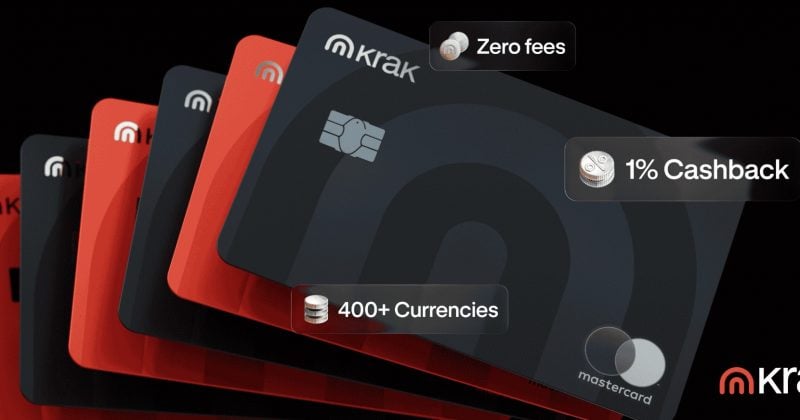
The exchange's new card lets users spend from over 600 crypto and cash balances at 150 million merchants, with up to 2% cash back in Bitcoin. Kraken just made it possible to buy your morning coffee with Dogecoin. Whether that's progress or a sign of the end times depends on your perspective, but the exchange officially launched the Kraken Card on July 13, a Mastercard-enabled debit card available to verified users across the UK and European Economic Area. The card supports spending from more than 600 crypto and cash balances held on Kraken's platform, with near real-time conversion at the point of sale. It works at over 150 million merchants worldwide. No monthly fees, no forex fees, and cash-back rewards of up to 2% paid in Bitcoin, euros, or pounds sterling. From exchange to neobank This launch has been a slow build. Kraken first announced its partnership with Mastercard back in April 2025, laying the groundwork for crypto-linked payment products. The initial rollout came in November 2025 with a more modest 1% cash-back structure tied to Kraken's peer-to-peer payment features. The July 2026 version is the full package. Both physical and virtual card options are available, issued through Monavate, an FCA-authorized provider. In English: instead of selling your Bitcoin on an exchange, withdrawing to a bank account, waiting two days, and then spending those funds, you just tap the card and Kraken handles the conversion instantly. The bigger picture: crypto meets traditional finance Competitors have been circling this space too. Coinbase has had its own Visa-linked card for years. Crypto.com built an entire brand identity around its metal cards. But Kraken's version stands out in a couple of ways: the sheer breadth of supported assets (600-plus is significantly more than most competitors offer) and the 2% cash-back tier, which is competitive with many traditional rewards cards, not just crypto ones. The geographic focus is also notable. By targeting the UK and EEA specifically, Kraken is leaning into markets where crypto regulation has become increasingly clear under frameworks like MiCA in the EU. What this means for investors The cash-back structure is worth watching closely. Offering up to 2% back in Bitcoin creates a passive accumulation mechanism for users who might not otherwise buy Bitcoin directly. The risk side is straightforward. Tax reporting on crypto-to-fiat conversions at point of sale remains a headache in many jurisdictions, and users will need to understand that every coffee purchase could technically be a taxable event depending on local rules. Kraken's partnership with FCA-authorized Monavate helps on the compliance front, but tax treatment ultimately sits with the user.
Kraken rolls out Mastercard crypto debit card in UK and Europe
Kraken has launched a Mastercard debit card in the UK and Europe, allowing users to spend from a wide range of cryptocurrency and cash balances. The crypto exchange said the card can be used for everyday purchases online and in stores wherever Mastercard is accepted. Users can pay from more than 600 supported crypto and cash currency balances. The funds are converted in near real time at the point of purchase. Kraken said the card offers up to 2% cashback, paid weekly in Bitcoin, euros or pounds. It also said there are no transaction or ATM fees. The product is being introduced first in the UK and the European Economic Area (EEA), with other markets expected to follow "soon," according to the company. In the UK, the Kraken Card is issued by Monavate, which is authorised by the Financial Conduct Authority (FCA) to carry out electronic money activities and related payment services. In the EEA, the card is issued by UAB Monavate, which is authorised by the Bank of Lithuania. The launch forms part of Kraken's broader effort to develop a "holistic financial offering". The company is also redesigning its app to include more personalised features and a more intuitive interface. The card launch follows a recent agreement by Kraken parent Payward to acquire Reap Technologies in a $600m deal. Reap Technologies focuses on stablecoin-based card issuing and payments infrastructure. The company has developed a card issuing and cross-border payments platform linking traditional financial systems with digital assets for global business payments. Kamo Asatryan, global head of consumer at Kraken and chief AI and data officer of Payward, said: "People shouldn't have to worry about where their money is sitting before they spend it. Our customers already earn, save, invest, and trade with Kraken. "The Kraken Card adds 'spend' to that list, bringing it all together into one experience that just works." "Kraken rolls out Mastercard crypto debit card in UK and Europe" was originally created and published by Electronic Payments International, a GlobalData owned brand.
Kraken rolls out Mastercard crypto debit card in UK and Europe
Kraken has launched a Mastercard debit card in the UK and Europe, allowing users to spend from a wide range of cryptocurrency and cash balances. The crypto exchange said the card can be used for everyday purchases online and in stores wherever Mastercard is accepted. Users can pay from more than 600 supported crypto and cash currency balances. The funds are converted in near real time at the point of purchase. Kraken said the card offers up to 2% cashback, paid weekly in Bitcoin, euros or pounds. It also said there are no transaction or ATM fees. The product is being introduced first in the UK and the European Economic Area (EEA), with other markets expected to follow "soon," according to the company. In the UK, the Kraken Card is issued by Monavate, which is authorised by the Financial Conduct Authority (FCA) to carry out electronic money activities and related payment services. In the EEA, the card is issued by UAB Monavate, which is authorised by the Bank of Lithuania. The launch forms part of Kraken's broader effort to develop a "holistic financial offering". The company is also redesigning its app to include more personalised features and a more intuitive interface. The card launch follows a recent agreement by Kraken parent Payward to acquire Reap Technologies in a $600m deal. Reap Technologies focuses on stablecoin-based card issuing and payments infrastructure. The company has developed a card issuing and cross-border payments platform linking traditional financial systems with digital assets for global business payments. Kamo Asatryan, global head of consumer at Kraken and chief AI and data officer of Payward, said: "People shouldn't have to worry about where their money is sitting before they spend it. Our customers already earn, save, invest, and trade with Kraken. "The Kraken Card adds 'spend' to that list, bringing it all together into one experience that just works."
Crypto Exchanges Close the Gap to Wall Street as MEXC Logs 7.1 Billion in SpaceX Futures
The build-out is happening almost entirely offshore, with US retail locked out and MEXC still operating in Europe without a MiCA license. Crypto exchange MEXC said today (Tuesday) that perpetual futures tied to SpaceX shares drew more than 7.1 billion USDT in trading volume in the weeks after the rocket company listed on June 12. The figure comes from the exchange's own second-quarter report and has not been independently audited. Users could subscribe to SpaceX before it went public, trade futures on it afterward, hold a tokenized version, and buy the actual share, without ever leaving the platform. MEXC ran two SPACEX(PRE) subscription rounds while the company was still private, collecting over 173 million USDT from more than 74,000 entries, the report said. One name went from private to publicly traded inside a single quarter, and MEXC sold a product at every stage of the journey. RealStocks, which went live June 1, supplied the last piece. The service routes orders for actual US shares and ETFs through a licensed securities broker partner, giving buyers dividends rather than price exposure alone. The exchange has still not named the broker, disclosed custody arrangements, or explained how the USDT-to-dollar conversion is priced. More than 120,000 users signed up in the first month and 52% of them funded an account, according to the company. By June 18, it had settled dividends on 34 stocks and ETFs. Stock futures carried much of the equity flow. Micron's June earnings lifted MU futures volume on the platform by roughly 142% in a single day, MEXC said, with activity spilling into SanDisk, SK hynix and a DRAM ETF. "Q2 put real numbers behind the word gateway," said Vugar Usi, who took over as chief executive during the quarter. Binance, Kraken and Coinbase Are Building the Same Thing Binance opened access to roughly 7,000 US stocks on June 1, the same day RealStocks launched. Orders are arranged through broker-dealer Nest Trading, with Alpaca handling custody, dividends and corporate actions, and fractional purchases start at $5, funded in USDC, USDT or BNB. Kraken went the tokenized route instead. Its xStocks brand passed $25 billion in cumulative transaction volume in under eight months, listed on Deutsche Börse's 360X venue, and now accounts for eight of the eleven largest tokenized equities. Coinbase has described its own version of the plan as an "Everything Exchange" covering crypto, stocks, derivatives and event contracts. Prediction markets are the other shared front. MEXC opened a zero-fee event contract platform in March and added multi-outcome Combo positions on June 9. Average daily volume there rose more than 6,700% between early and late June, the company said, off a starting base it did not disclose. Traffic Runs Both Ways as Brokers Copy the Perpetual The borrowing is not one-directional. On Monday, Pepperstone said it would extend its perpetual CFD range beyond SpaceX into metals, stock indices and energy, with gold, silver, Nasdaq, S&P 500, WTI and Brent versions listed as planned. The perpetual, a contract with no expiry that uses periodic funding payments to stay near the underlying, began life in crypto and is now being fitted onto shares and commodities inside a regulated CFD wrapper. "We believe perpetual markets will become a standard feature of modern finance," Pepperstone group chief executive Tamas Szabo said. European regulators have already told firms that perpetual futures fall under EU CFD rules, which drags the format inside the same retail leverage caps that MEXC's offshore version sits outside. The Refund the Report Does Not Mention MEXC's Launchpad section says SPACEX(PRE) traded 12% above its subscription price at listing and reached a 38% peak return. It says nothing about refunds. On June 12, MEXC cancelled tokenized SpaceX allocations and returned money to subscribers, along with Binance, Bybit and Bitget Wallet, after xStocks failed to source the underlying shares. All four had been reselling access to allocations that Kraken's tokenization arm promised to procure, and when that single supplier came up empty, so did everyone hanging off it. Demand was never the constraint. Binance's campaign drew more than $557 million in USDC before it was pulled, and MEXC's first round ran 15.5 times oversubscribed. The shares just never showed up. US Retail Stays Outside the Perimeter None of this touches American investors. Tokenized equity products are closed to US persons, and Kraken's SpaceX token also excluded users in the UK, Canada and Australia. Europe is narrowing as well. MEXC entered July without a MiCA license and without any public update on its application, and its published list of restricted jurisdictions, last revised in May, does not include EU member states. Hong Kong's securities regulator put the exchange on its warning list over unlicensed activity in 2024. MEXC put its June reserve ratio at 156.5% across major assets, with bitcoin backed at 269%, and said its futures insurance fund hit $753 million in July. Both numbers are the exchange's own, and neither has been verified by an outside auditor.
Kraken to rebuild mobile app around AI trading agents - Cryptopolitan
It puts Kraken alongside Gemini, Coinbase, Binance, and OKX in a race to increasingly merge AI into crypto trading. Crypto exchange Kraken has announced that it will relaunch its mobile app with autonomous AI agents integrated, giving retail traders software that can observe the markets and place orders on their behalf. The plan was announced in a company blog post and will involve a complete revamp of the existing app instead of a regular update to the existing one. "Unlike other trading platforms, this won't be an AI assistant or a copilot bolted onto the old version of the app," the post reads. "The financial intelligence is built into the fabric of Kraken itself. That's what will make it feel alive." Agentic AI gains more traction The agents will be able to track conditions across markets, recommend trades, and execute them without requiring a user to supervise or approve every single action. The bots can also act on user prompts and adjust based on how earlier decisions played out. The user sets a goal for the agents, and the app organizes itself around this goal, all while running in the background, Kraken explained. The exchange also emphasized that the user keeps the final say on each trade. The statement also mentioned in-built risk management features tied to a user's preset risk tolerance, a standard feature across the AI trading tools that are being released in recent days. The company noted that AI-generated recommendations for trading carry risk, which includes the loss of capital, and are not guaranteed to work for every individual. Kraken also stated that in the U.S., advice on crypto assets comes from Payward Interactive, Inc., while advice on securities comes from Kraken Adviser LLC, an SEC-registered investment adviser. Kraken joins the AI agent industry race Kraken is joining up with other crypto institutions in leaning on AI agents. Gemini opened its platform and APIs to users' AI agent setups in April, while Coinbase used a June product event to preview Coinbase Advisor, an SEC-registered, AI-powered financial adviser. OKX and Binance have also added AI features of their own. However, Kraken is the first major exchange to place AI agents at the center of its application instead of simply as a feature. This shift could point to a new age where exchanges reposition themselves from simple buy-and-sell platforms into more extensive financial software. It comes with obvious risks, however, as autonomous systems can increase losses by a huge margin, and competing agents trading based off the same signals raise the odds of flash crashes in the market. Regulators continue to work out how existing rules apply when an AI agent is making the trading decisions. The app relaunch is coming during a busy stretch for Kraken. The exchange has rolled out crypto perpetual futures in the US and added Solana DEX trading through its main app. The company has also started preparations for a possible public listing since last year.
Kraken To Relaunch Mobile App With Agentic Trading
Crypto exchange Kraken is relaunching its mobile app with new agentic trading features. In a blog post, Kraken said, "Unlike other trading platforms, this won't be an AI assistant or a copilot bolted onto the old version of the app." Kraken is not the only crypto exchange looking to artificial intelligence (A.I.) to revitalize its app and trading experience. More From Cryptoprowl: Crypto exchange Gemini (NASDAQ: $GEMI) was the first major U.S. firm to open its platform and app to agentic A.I. earlier this year. Coinbase Global (NASDAQ: $COIN) recently rolled out a new A.I.-powered financial advisor that it describes as a "robo-advisor on steroids." Kraken's agentic trading system will feature autonomous A.I. agents capable of monitoring markets and suggesting trades to users aligned with pre-define goals. Kraken's new agentic AI offering is similar to a full-fledged advisory system, said the company in its blog post. The new app will be able to curate news and investment suggestions based on a user's portfolio and preferences. This is the latest new offering from Kraken, which recently announced crypto perpetual future contracts in the U.S., as well as tokenized IPO access and new lending programs. Kraken is privately held and its stock does not trade on a public exchange.
Kraken launches AI investing assistant to challenge traditional advisors
Kraken has launched an AI-powered investing assistant that delivers personalized portfolio recommendations and market insights while keeping final trading decisions in users' hands. According to Kraken, the new mobile experience replaces a trading-first interface with a goal-based approach that asks users about their financial objectives before suggesting investments. Instead of requiring customers to navigate charts and order books, the platform customizes recommendations around targets such as buying a home, building an emergency fund, or saving for retirement. The exchange said its "financial intelligence" system continuously tracks market conditions, identifies potential investment opportunities, and recommends trades, but does not execute transactions on its own. Every suggested trade requires user approval before it is placed, with Kraken describing the feature as a decision-support tool rather than an autonomous trading system. According to CNBC, the assistant also considers a user's risk tolerance, funding preferences, and financial profile to generate a suggested portfolio. Users can modify those recommendations before investing, while the app continues providing portfolio updates and tailored investment ideas based on their existing holdings. Commenting on the launch in an interview with CNBC, Kraken chief data officer Kamo Asatryan said the technology is intended to give everyday investors access to market awareness comparable to the exchange's most active traders by continuously monitoring markets and surfacing trading opportunities. "[T]here's an opportunity for everyday people to become high-frequency traders and do so using plain English." AI tools are becoming a new battleground for crypto exchanges Kraken's latest rollout comes as cryptocurrency exchanges increasingly compete by embedding AI assistants into trading platforms instead of limiting users to traditional exchange interfaces. Earlier in June, OKX introduced a beta marketplace that allows AI agents to complete onchain tasks, build blockchain-based reputations, and transact autonomously. During the same month, Coinbase launched a tool that enables AI agents to make payments and trade cryptocurrencies on behalf of users through its x402 payments protocol. Supporting that trend, blockchain analytics firm Chainalysis reported last month that agentic payment activity on Coinbase's Base network had exceeded 100 million transactions. According to the report, although transaction growth has moderated, the average value of transfers has increased, suggesting AI-driven payments are expanding beyond low-value experiments into more meaningful financial activity. Human approval remains central to AI-assisted investing While exchanges are adding more AI capabilities, they continue to keep users in control of trade execution. On Friday, fintech company Revolut expanded its Revolut X exchange by allowing customers to connect external AI assistants including Claude, Gemini, Cursor, and OpenClaw. According to the company, those assistants can analyze markets, backtest trading strategies, and submit trading instructions using natural-language prompts. Like Kraken's platform, Revolut requires users to review and approve every order before execution rather than allowing AI systems to trade independently. Across these products, companies are positioning AI as a research and portfolio management assistant instead of giving automated agents unrestricted authority over customer funds.

Friday newspaper round-up: Nigel Farage, diesel prices, Kraken Technology
Chancellor Rachel Reeves is to announce a new City "skills compact" that will commit firms such as Barclays and Lloyds to retraining thousands of financial sector workers for the AI revolution. The financial services skills compact will be launched on Tuesday, during what is likely to be Reeves's final Mansion House speech to City bosses before Andy Burnham's expected takeover of No 10. The government-backed initiative will commit employers to improving workers' skills and helping them "keep pace" with significant technological changes that have prompted fears of mass redundancies. - Guardian Police are investigating donations worth £500,000 made to Reform UK by the mother of a convicted fraudster and ally of Nigel Farage. The investigation concerns two donations of £250,000 made by Fiona Cottrell, whose son George has often accompanied Farage to Reform events and media appearances. The May 2024 donations are under investigation over whether they were intended to conceal a donation by an impermissible donor. - Guardian Drivers are braced for higher diesel prices after Russia triggered a global supply crunch by halting exports. The wholesale price of diesel jumped by almost 14pc in the wake of the Kremlin's announcement on Wednesday, which threatens to drive up costs at the pump. Diesel prices in the UK are already up by 8p since the start of the month, pushing the average cost of a litre to 164.8p. - Telegraph The City regulator says it has slashed the time it takes to handle some cases from hours to a matter of minutes after bringing in artificial intelligence technology. The Financial Conduct Authority is turning to AI to boost the efficiency of its staff, like many of the tens of thousands of financial services businesses that it oversees. - The Times A British defence start-up whose uncrewed vessels support military and defence operations has secured unicorn status after raising $175 million from investors including the British Business Bank. Kraken Technology, based in Fareham, Hampshire, has been valued at $1 billion in an investment round led by Digital Transformation Capital Partners, a German investor, which also included backing from the Nato Innovation Fund and Rheinmetall, the German defence group. - The Times

Friday newspaper round-up: Nigel Farage, diesel prices, Kraken Technology
(Sharecast News) - Chancellor Rachel Reeves is to announce a new City "skills compact" that will commit firms such as Barclays and Lloyds to retraining thousands of financial sector workers for the AI revolution. The financial services skills compact will be launched on Tuesday, during what is likely to be Reeves's final Mansion House speech to City bosses before Andy Burnham's expected takeover of No 10. The government-backed initiative will commit employers to improving workers' skills and helping them "keep pace" with significant technological changes that have prompted fears of mass redundancies. - Guardian Police are investigating donations worth £500,000 made to Reform UK by the mother of a convicted fraudster and ally of Nigel Farage. The investigation concerns two donations of £250,000 made by Fiona Cottrell, whose son George has often accompanied Farage to Reform events and media appearances. The May 2024 donations are under investigation over whether they were intended to conceal a donation by an impermissible donor. - Guardian Drivers are braced for higher diesel prices after Russia triggered a global supply crunch by halting exports. The wholesale price of diesel jumped by almost 14pc in the wake of the Kremlin's announcement on Wednesday, which threatens to drive up costs at the pump. Diesel prices in the UK are already up by 8p since the start of the month, pushing the average cost of a litre to 164.8p. - Telegraph The City regulator says it has slashed the time it takes to handle some cases from hours to a matter of minutes after bringing in artificial intelligence technology. The Financial Conduct Authority is turning to AI to boost the efficiency of its staff, like many of the tens of thousands of financial services businesses that it oversees. - The Times A British defence start-up whose uncrewed vessels support military and defence operations has secured unicorn status after raising $175 million from investors including the British Business Bank. Kraken Technology, based in Fareham, Hampshire, has been valued at $1 billion in an investment round led by Digital Transformation Capital Partners, a German investor, which also included backing from the Nato Innovation Fund and Rheinmetall, the German defence group. - The Times
Autonomous ship startup Kraken raises $175M at $1B valuation
Kraken Technology Group Ltd., a British defense startup that makes autonomous ships, has raised $175 million in funding. Private equity firm DTCP led the Series B deal. It was joined by the UK government's British Business Bank, the NATO Innovation Fund and more than a half dozen others. Kraken disclosed in its announcement of the round today that its valuation has increased to $1 billion. Kraken's most advanced vessel is a 36-feet-long ship called the K5 Kraken that operates without a crew. It has a top speed of 50 knots, which corresponds to about 57 miles per second. Kraken says that it can stay at sea for up to a month at a time and cover 1,000 nautical miles. Customers can pilot the K5 remotely or entrust navigation to an onboard autonomy system. The system makes steering decisions based on data collected by radar and sonar sensors built into the K5. Sonar technology, which uses soundwaves to map out the environment, enables ships to track underwater objects. Operators can extend the K5's capabilities by adding custom modules. For example, a customer looking to enhance the vessel's sensing capabilities could add a towed sonar array. That's a submerged cable equipped with sensors optimized to detect underwater activity. Kraken offers the K5 alongside two smaller ships that are designed for other missions. The K4 Manta is a 18-feet-long autonomous vessel that resembles a manta ray. According to Kraken, it can alternate between floating like a regular ship and diving at depths of more than 30 feet. That capability makes the vessel particularly useful for reconnaissance tasks. Like the larger K5, the K4 is customizable. It's capable of carrying up to 220 pounds of equipment per trip. Kraken says that customers can swap the ship's payload in a few minutes. Rounding out the company's product portfolio is a compact vessel called the K3 Scout that is light enough to be deployed from the air. It can cover up to 650 nautical miles per trip with a top speed of about 28 miles per hour. Kraken's funding milestone comes a few weeks after it inked a shipbuilding partnership with Anduril Industries Inc., a fellow defense technology startup. The companies plan to manufacture two autonomous ships in the US. The first is Kraken's existing K5 system while the other is an upcoming long-range vessel called the K7. The company stated today that it plans to announce more manufacturing partnerships in the near future. "This significant funding round will accelerate Kraken's global roll-out, enabling the deployment of hardened, reliable, mission-ready capabilities for NATO and its worldwide partners at an unprecedented scale in the maritime domain," said Kraken founder and Chief Executive Officer Mal Crease.

Kraken leads with $400M in spot liquidity across MiCA exchanges
DefiLlama's new compliance dashboard shows Kraken pulling ahead of Coinbase and rivals as Europe's crypto regulation fully kicks in Kraken is sitting on roughly $400 million in spot liquidity across MiCA-licensed exchanges, making it the clear frontrunner in Europe's newly regulated crypto marketplace. The exchange also holds about $207 million in perpetual liquidity, putting meaningful distance between itself and every other compliant competitor on the continent. The numbers come from DefiLlama's freshly launched MiCA compliance dashboard, which went live on July 1, 2026. That date coincides with the full enforcement of the Markets in Crypto-Assets Regulation for crypto asset service providers across the European Union. The liquidity leaderboard takes shape The exchange's $399.71 million in spot liquidity dwarfs its nearest competitor. Coinbase, the second-place finisher, reports approximately $305 million in spot liquidity and $167 million in perpetuals. That's a roughly $95 million gap in spot alone. From there, the drop-off gets steep. Crypto.com trails with around $131 million in spot liquidity. Bitstamp, one of Europe's legacy exchanges, comes in at roughly $55 million. And OKX sits near the bottom with about $12 million in spot liquidity and lower or no perpetual liquidity to speak of. Kraken's platform currently supports trading across 1,704 markets, covering both spot and perpetual products. Why MiCA changes the game The Markets in Crypto-Assets Regulation represents the EU's attempt to build a single, unified licensing framework for crypto service providers. One license, one set of rules, access to all 27 member states. Kraken moved early. The exchange secured its MiCA authorization from the Central Bank of Ireland back in June 2025, a full year before the regulation's enforcement deadline for crypto asset service providers. That head start gave Kraken time to build out its European operations, including spot, futures, and derivatives offerings, while competitors were still working through the licensing process. DefiLlama's MiCA compliance dashboard lets users compare exchanges on liquidity, compliance status, and transaction fees, all in one place. What this means for investors Coinbase, sitting in second place with $305 million in spot liquidity, remains a formidable competitor. But the $95 million gap to Kraken is significant enough to influence where large orders get routed. Smaller MiCA-licensed platforms like OKX, with just $12 million in spot liquidity, face a difficult question: can they grow fast enough to remain viable, or will they become acquisition targets for larger players looking to expand their European footprint?
How Kraken's Market Coverage Dominates MiCA-Approved Platforms -- What It Means for Investors
DefiLlama data highlights Kraken's dominance in market coverage. DefiLlama has reported that Kraken leads MiCA-regulated exchanges in liquidity, showing $399.71 million in spot liquidity and $206.90 million in perpetual liquidity. This data highlights Kraken's competitive edge in the European market, particularly under the MiCA regulations. The Latest The broader crypto market is currently experiencing mixed signals, but Kraken's performance stands out. The exchange has positioned itself as a leader in liquidity among platforms operating under the MiCA regulatory framework. The reported spot liquidity of $399.71 million and a substantial $206.90 million in perpetual liquidity underscore Kraken's ability to attract trading volume and investor interest. This strong liquidity could reinforce Kraken's reputation and operational stability within the rapidly evolving cryptocurrency landscape. At a Glance * Kraken, liquidity leader, effective_date: 2026-07-08 Token Metrics Despite the overall market's fluctuations, Kraken's liquidity figures suggest a strong demand for its services. The reported spot and perpetual liquidity levels indicate that traders are increasingly turning to Kraken for their trading needs. This trend may reflect broader confidence in the exchange's regulatory compliance and operational capabilities as the market continues to mature. Kraken has been actively adapting to regulatory changes, especially with the recent MiCA framework in Europe. The exchange's commitment to liquidity and market coverage positions it favorably among competitors, particularly in a market where regulatory compliance is becoming increasingly critical. The Road Ahead Traders should closely monitor Kraken's liquidity metrics as they could signal broader trends in market demand for regulated exchanges. Additionally, the performance of Kraken in relation to Bitcoin dominance and overall market cycles will likely influence trader sentiment moving forward. Understanding these dynamics will be essential for navigating the evolving landscape of cryptocurrency trading. This article is for informational purposes only and does not constitute financial advice. Always conduct your own research before making investment decisions.

Polymarket Adds Spark for Instant Bitcoin Lightning Deposits | BanklessTimes
Joseph is a content writer and editor who has actively participated in crypto for over 6 years. He enjoys educating others about Web3 and covering its updates, regulatory developments, and exciting stories. Polymarket is making it much faster to move Bitcoin into prediction markets by turning on Lightning Network deposits powered by Spark. The platform now lets users fund their accounts with self-custodial BTC almost instantly, instead of waiting for on-chain confirmations. Users can now select a "Bitcoin via Lightning" option within the deposit flow, according to announcements from Spark and Polymarket. If they do, Spark creates a Lightning invoice, the user pays it from any compatible wallet, and the system credits the funds in under a second. Until this, BTC deposits had to go via regular network confirmations, which may take 10 to 60 minutes depending on fees and congestion. Spark calls its model "zero-conf" because it validates the Bitcoin transaction as soon as it is broadcast, rather than waiting for a block. Before approving a deposit, the protocol checks for double-spend risks, fee levels, and replace-by-fee signals. Then it takes the confirmation risk itself, so Polymarket may report a funded balance nearly immediately. Self-Custodial Design and Supported Wallets At the same time, Polymarket keeps the setup self-custodial, which is important to many crypto-native traders. Each user's wallet still links to their keys on the platform's side, while Spark only handles the Lightning payment route in the background. That design means users do not have to park coins on a centralized exchange just to bet on events. Spark also said the feature is compatible with a long list of popular apps that already enable Lightning withdrawals. These include, but are not limited to, Cash App, Coinbase, Kraken, Binance, OKX, Wallet of Satoshi, Tether Wallet, and Cake Wallet. So now many Bitcoin users can jump directly from their normal wallet into Polymarket with just a tiny Lightning payment. Since Polymarket already converts deposits into its pUSD collateral on Polygon, the new BTC path is primarily about speed and convenience rather than trading mechanics. Now, Bitcoin traders who like to hold Bitcoin can use it as their funding asset without worrying about large delays each time they move money. In fact, this can make it easier to react to fast-moving news as users can deposit and place trades within seconds. As Lightning continues to grow, more platforms are experimenting with instant BTC flows into DeFi and betting apps. Polymarket's move suggests that prediction markets want to tap into that liquidity while keeping users in control of their coins.

Kraken Reportedly Seeking Full EU Banking License Via Lithuania
* Kraken has reportedly applied to the Bank of Lithuania (Lithuania's central bank and financial regulator) for a full banking license. * If approved, this would make Kraken the first major crypto exchange to hold full banking status in the EU. * The license would let Kraken offer regulated banking services across the European Economic Area (EEA) -- the EU member states plus Iceland, Liechtenstein, and Norway. * Neither Kraken nor the Bank of Lithuania has confirmed the application as of this report. Kraken, the U.S.-based cryptocurrency exchange, has reportedly applied for a full banking license from the Bank of Lithuania, according to a person familiar with the matter. If confirmed and approved, the license would make Kraken the first major crypto exchange to hold full banking status in Europe, following a regulatory path previously used by fintech company Revolut to scale across the bloc. A full banking license would let Kraken offer regulated banking services across the EEA, extending beyond its existing cryptocurrency trading and custody business. Founded in 2011, Kraken is one of the world's largest cryptocurrency exchanges, offering spot trading, derivatives, custody, and institutional crypto services. Banking authorization would potentially allow Kraken to accept customer deposits, provide lending services, and offer other banking products permitted under EU regulations. Why is Kraken Seeking a Banking License in Lithuania? Lithuania offers a fast route to EU-wide market access through "passporting" -- a system that lets a financial institution licensed in one EEA country offer services across all other EEA member states without separate approvals in each one. Lithuania has positioned itself as a fintech-friendly jurisdiction within the EU to attract companies seeking this kind of access. The Bank of Lithuania granted Revolut a specialized banking license in 2018, which allowed Revolut to expand services -- including current accounts, lending, and investment products -- across the EEA via passporting. By reportedly applying to the same regulator, Kraken appears to be pursuing that same established route rather than seeking separate licenses country by country. How is Kraken Expanding Beyond Cryptocurrency Trading? The reported Lithuanian application fits into a broader pattern of regulatory expansion Kraken has pursued globally. In March 2026, Kraken Financial became the first crypto firm to gain direct access to the U.S. Federal Reserve's payment infrastructure. In May 2026, Kraken's parent company, Payward, secured authorization from the UAE's Virtual Assets Regulatory Authority (VARA). Kraken CEO Arjun Sethi has outlined a 10-year strategy focused on expanding the company's global regulatory footprint, either by acquiring already-licensed businesses or building out licensed operations market by market. Why Does a Banking License Matter Before Kraken's IPO? The timing of the reported Lithuanian banking license application comes as Kraken prepares for a possible U.S. initial public offering (IPO), making regulatory expansion a strategic priority. For public-market investors, banking capabilities and regulatory approvals often serve as signals of operational maturity and risk management. A European banking license, combined with U.S. payment system access and other international authorizations, could strengthen Kraken's positioning as it moves closer to traditional financial markets. Are Crypto Exchanges Becoming Banks? Rival exchange Coinbase received authorization in the United Kingdom to offer traditional investment products alongside its cryptocurrency services. This reflects a broader industry shift: major crypto platforms are increasingly seeking banking, payments, and investment capabilities that bring them closer to traditional financial institutions. As of this report, Kraken's reported Lithuanian banking application remains unconfirmed by both parties. Kraken has not issued a public statement, and the Bank of Lithuania has not disclosed any pending application. Why This Matters The reported Kraken banking license application, if confirmed and approved, would represent a major step in the evolution of crypto exchanges from trading platforms into regulated financial institutions operating within Europe's banking system. Check out DailyCoin's popular crypto scoops right now: SWIFT Brings Back 'Policy Lab', Fast-Tracking XRP Adoption Germany's Top Bank Quietly Expands Its Use of Ripple Tech