News & Updates
The latest news and updates from companies in the WLTH portfolio.
Thariq Says He Left Anthropic After More Than a Year on Claude Code | EconoTimes
He plans to take a break before starting something new and did not identify his next destination. Leaving Anthropic after more than a year with its Claude Code tool, Thariq said Saturday, Oct. 24, that he would pause before starting something new. Claude Code is the company's coding tool. He did not name where he plans to go next. In describing his time at Anthropic, Thariq praised the company's mission and said he trusted his colleagues to lead it. He called the job his most enjoyable, though at times his most stressful, and thanked the X community. For Claude Code updates, Thariq named Anthropic's @ClaudeDevs account and colleagues Lydia Hallie, Addy Osmani, Cat Wu and Boris Cherny.

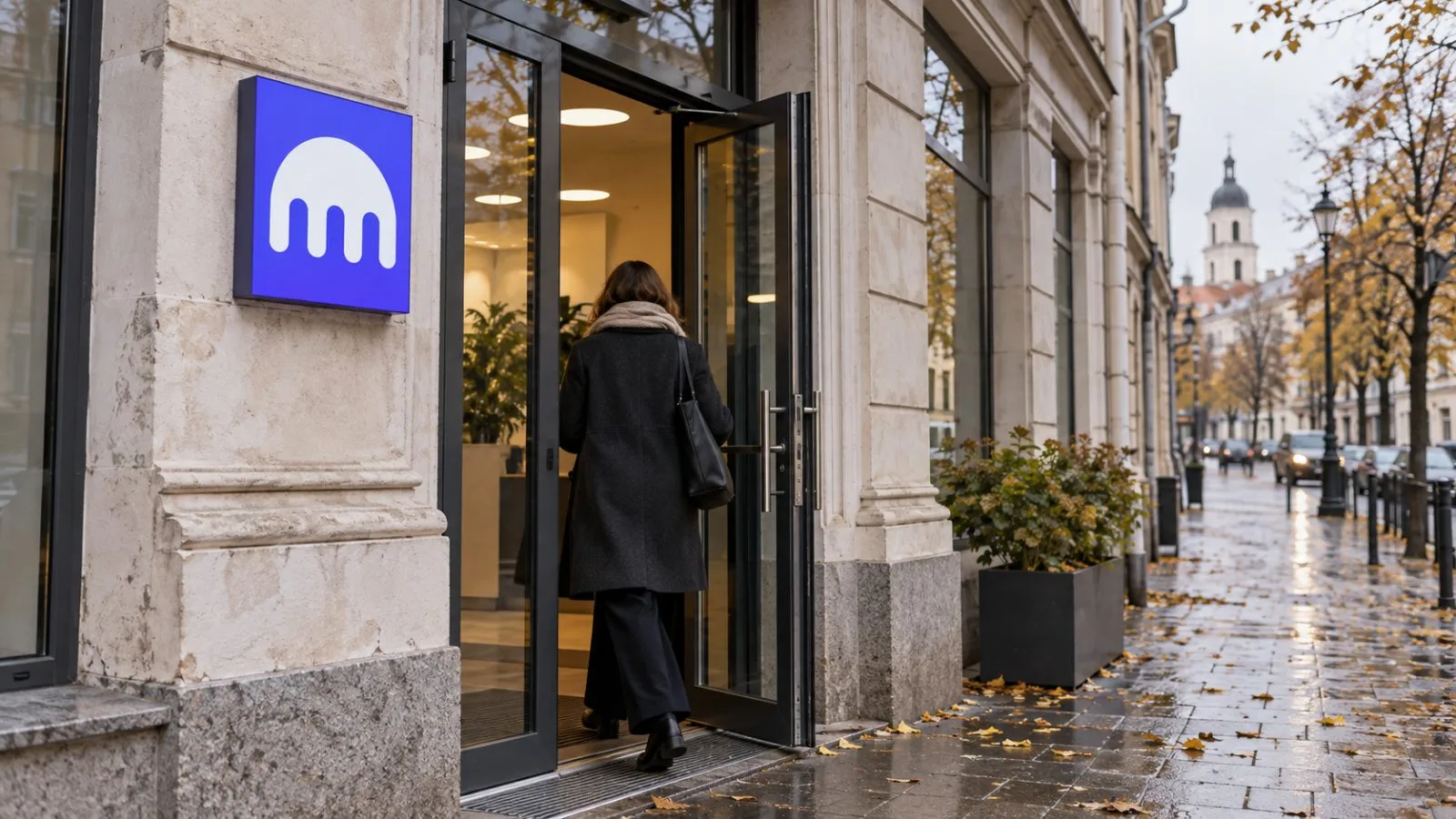
Kraken Lets Customers Ask ChatGPT About Their Crypto Balances | EconoTimes
The link provides read-only account data, while any purchase still requires customer review and confirmation on Kraken. Kraken customers can now ask ChatGPT about linked balances and account performance, adding an AI interface for portfolio reviews while requiring users to approve any purchase through the exchange. Kraken said customers must connect an account and authorize read-only access to balances to ask account-specific questions. Examples include checking gains for a day or asking which holdings lost money during a month. General questions about prices, charts and news do not require an account connection. A prompt can open Kraken's buy process with an amount already entered, but ChatGPT does not complete the purchase. Customers must review and confirm the order on Kraken. The account connection also cannot transfer funds or change account settings, Kraken said. Kraken says its systems provide the figures in account cards. ChatGPT writes the accompanying explanations, which the exchange says it does not review.
Anthropic IPO Valuation Reports Range From $1.5 Trillion to $2 Trillion | EconoTimes
Reports on Anthropic's potential public offering describe investor valuation discussions at different levels, but none establishes a price for the company's shares in an IPO. Reuters reported that some attendees discussed a possible valuation of about $1.5 trillion. Bloomberg separately reported discussions between $1.8 trillion and $2 trillion. The lower figure is 25% below the $2 trillion upper end of Bloomberg's reported range. Anthropic, the maker of the Claude AI assistant, said June 1 that it had confidentially submitted a draft Form S-1 to the U.S. Securities and Exchange Commission. The company's announcement did not set an offering date, share count or price, and said any sale would depend on market conditions. The valuation figures come from separate reports of investor discussions, not announced IPO terms. Earlier EconoTimes coverage of Anthropic valuation discussions also described reported estimates around $1.5 trillion to $2 trillion.
Anthropic's Claude Duet Requires Approval for Sensitive Actions | EconoTimes
The U.S. preview is limited to invited Pro and Max subscribers and uses their existing Claude plan allowance. Anthropic's Claude Duet is a cloud-based work agent for invited U.S. subscribers, designed to handle tasks across connected apps even when devices are off, while requiring approval before certain actions. Anthropic's announcement, dated Oct. 21, introduced a waitlist for the research preview. The company says access is going to invited subscribers in the United States on its Pro and Max plans. Team and Enterprise accounts are excluded for now, and invitations are being sent in waves. EconoTimes previously reported on the U.S. preview rollout. Duet compiles a morning summary from connected services and revisits those accounts at intervals during the day. Anthropic says the agent runs in a cloud virtual machine and is built around Claude Opus 5.5, enabling it to keep working after a user closes the app or powers down a device. The company lists scheduling meetings, building dashboards, preparing forecasts and making web apps among possible assignments. Anthropic says Duet can use more than 6,000 connectors and plugins in the Claude Marketplace. Gmail, Slack, QuickBooks, Gusto, Docusign, HubSpot and Shopify are among the services it names. Before taking certain actions, Duet must show what it plans to do and wait for the user's approval, Anthropic says. Examples include sending a message, making a payment, signing a document or deleting content. The rules prohibit securities trading and transfers between accounts, even with user approval. Anthropic warns that Duet may misunderstand a conversation or misjudge urgency. Because it reviews accounts periodically, an urgent message could arrive before its next check; users also cannot yet watch or take control of its browser. The company says emails and web pages can contain hidden instructions intended to manipulate an AI agent, and cautions that its safeguards are not perfect. Anthropic says Duet does not directly see passwords or sign-in tokens. The preview carries no extra fee, but its work uses subscribers' usual Claude plan allowance. Background monitoring and larger assignments may draw down that capacity sooner. Anthropic says it designed Duet for professionals and small-business owners managing many decisions. The company has not given a date for broader availability.

Canadian Publishers Sue Anthropic Over Alleged Use of News in Claude | EconoTimes
The Ontario case also challenges Anthropic's alleged access to publishers' websites when Claude users ask questions. Canadian news publishers have sued Anthropic over claims it used their journalism to develop Claude and retrieved content from their websites for user queries, bringing both practices before an Ontario court. Cartt.ca first reported the publishers' Oct. 6 lawsuit, The Canadian Press and Broadcast Dialogue said. The Canadian Press is a plaintiff, along with The Globe and Mail, Torstar and Postmedia. They allege copyright infringement, violations of website terms and circumvention of measures intended to limit copying. A court has not decided those claims. The publishers describe two ways they say Anthropic uses their work: incorporating reporting into the development of Claude and accessing their sites after users submit questions. The allegations concern both material collected for an AI model and content retrieved while people use the service. Anthropic's crawler policy describes separate tools for those activities. ClaudeBot gathers web material that might contribute to training, while Claude-User can fetch pages following a user's request. Anthropic says its bots observe website restrictions set through robots.txt. The policy describes its general practices and does not address the Ontario lawsuit. Broadcast Dialogue reported that the publishers say Anthropic benefits from their work without a license while they risk losing potential advertising, subscription and licensing revenue. Those claimed losses have not been assessed by a court. The Canadian Press said Anthropic had not answered its request for comment by the time of its Oct. 19 report. The publishers brought a separate Ontario action against OpenAI, with CBC/Radio-Canada joining them, on Nov. 28, 2024. On Nov. 7, 2025, a judge rejected a jurisdiction challenge from six OpenAI entities, allowing the claims against them to proceed in Ontario. That ruling addressed where the case could be heard; it did not decide the copyright allegations.
Claude Rated "Lead" for 26% of Anthropic R&D Work; None Fully Autonomous | EconoTimes
Andreessen Horowitz co-founder Ben Horowitz said four conditions for models to build improved successors remain unmet. Anthropic's Sept. 17 report on its internal AI research and development rated Claude in the "lead" category for 26% of measured work in August and found no task fully autonomous. The report also recorded AI involvement at Level 3 or higher in more than 90% of tasks. Those figures describe AI's role in Anthropic's own work; they do not compare AI performance with that of human researchers. Andreessen Horowitz co-founder Ben Horowitz said a cycle of models creating improved successors would depend on four conditions: lower computing needs, faster training, stronger capabilities and continued gains in later generations. "Zero of those four have been met," he said in a podcast episode released Oct. 16. He also cited heavier training demands and constraints on GPU supplies and electricity. For a process to count as full recursive self-improvement, a model would have to create its successor independently. The Anthropic assessment measures models' roles in research tasks. Horowitz's four conditions describe a higher threshold: models driving a continuing cycle of independently created successors.

Vercel Makes Drives Generally Available, Puts Two Agent Tools in Beta | EconoTimes
Sandbox customers on Hobby, Pro and Enterprise plans can use Drives. At its Oct. 15 Ship 2026 event, Vercel made persistent Drives generally available and put Daemons and MCP Events in public beta, adding storage and background processing options for agent software. The release spans three parts of agent development. Daemons run background jobs, Drives retain files between Sandbox sessions, and MCP Events route notices from compatible services to apps. Drives are generally available; Daemons and MCP Events are in public beta. Vercel's Daemons use Fluid compute to process jobs arriving from queues, databases or external systems, without exposing an HTTP endpoint. Teams choose how many instances to run in each region, and Vercel brings up replacements when one stops or crashes. Drive content lives outside the Sandbox runtime, so ending a session does not remove the files. Developers may reconnect a Drive during a later session. They can also branch from one Drive into writable copies, allowing different workers to start from common files but keep changes separate. The feature is generally available on Sandbox's Hobby, Pro and Enterprise plans. Vercel Connect now offers MCP Events in public beta. Through Connect, an app can be set up to receive webhook notifications from an MCP server that supports the feature. The service administers subscriptions, validates incoming messages and sends events with authentication. Together, the releases add options for persistent files, unattended jobs and event notifications in agent workflows. Vercel introduced the features at Ship 2026 on Oct. 15.

Anthropic Expands Claude Access for Cyber Defense Teams
Anthropic has expanded access to its most advanced artificial intelligence models for verified cybersecurity professionals and select government partners, aiming to strengthen defenses against threats targeting critical infrastructure. The San Francisco-based AI company announced an expanded Cyber Verification Program on Tuesday, folding its previous Project Glasswing initiative into a three-tier access framework. Qualified security teams can receive calibrated access to Anthropic's most capable AI models, including Claude Opus 5.5, Claude Sonnet 5.5 and Claude Mythos 5.1. Anthropic said the program is designed to address the dual-use risks associated with powerful AI cybersecurity capabilities. While public models will continue operating under conservative safeguards, verified professionals can receive fewer automated restrictions when conducting legitimate defensive security work. The framework includes Defense, Red Team and Specialized access levels, with permissions tailored to organizational responsibilities and security requirements. The Specialized tier offers the broadest capabilities and is administered in close coordination with the U.S. government. It is intended for testing systems where failures or disruptions could have significant real-world or financial consequences. Anthropic's CyScenarioBench testing indicated that the revised safeguards can reduce obstacles for authorized cybersecurity teams without broadly weakening protections. Claude Opus 5.5 achieved a 68% task completion rate under Red Team Access with no automated blocks, matching the performance recorded by unrestricted models. The expansion follows results from Project Glasswing, which helped participating organizations uncover more than 129,000 verified software vulnerabilities between April and July. Partners including Booz Allen and Comcast said Anthropic's advanced AI tools significantly accelerated vulnerability discovery, potentially reducing timelines by months or even years. Anthropic is also introducing additional enterprise safeguards as access expands. Participants must comply with mandatory data-retention requirements intended to help detect potential misuse. Later this fall, organizations are expected to gain options for storing program data within their own cloud infrastructure through Enterprise Frontier Safeguards. Anthropic also plans broader availability through major cloud platforms, including Google Cloud Vertex AI and Microsoft Foundry.