News & Updates
The latest news and updates from companies in the WLTH portfolio.
Anthropic locks out Claude users after infostealers hijack login sessions - IT Security News
Anthropic has started locking users out of their Claude accounts due to their login sessions having been compromised through infostealer malware. "The malware identified in this campaign so far include Vidar, Lumma (LummaC2), StealC, RedLine and Acreed on Windows, and Atomic Stealer (AMOS) on a small number of Macs," the company said in emails sent out to affected users last week. "It's general-purpose malware that typically arrives with an unofficial download or a malicious app, ... More →

Anthropic's Automated AI Researchers Outpace Humans in Fixing Model Flaws
Chen Yueh-Han, a researcher in Anthropic's fellows program, has produced striking evidence that AI systems can now systematically repair their own behavioral weaknesses. The work, detailed in a paper released last week, marks one of the clearest demonstrations yet of machines taking on core elements of AI research itself. Automated alignment researchers built on Claude models searched scientific literature, proposed training techniques, generated data, fine-tuned target models and evaluated outcomes in repeated cycles. They tackled 10 distinct categories of misalignment. Privacy violations. Deception. Sycophancy. Vulnerability to jailbreaks. In every case the systems improved performance on the designated benchmarks. Overall model capabilities remained intact. "Claude's methods worked," the Anthropic research paper states plainly. "For all 10 alignment failures, Claude found fixes that improved the target benchmarks without degrading capabilities." On deception using the Gemma-2-2B model, the best automated approach closed 85 percent of the safety gap on average. Human proposals under the same constraints managed only about 20 percent. The results landed with force inside the AI community. Russell Brandom of TechCrunch described the experiment as an early look at what training AI models with other AI models might look like in practice. And the implications stretch beyond safety tweaks. This setup replicates much of the traditional research loop. Literature review. Hypothesis generation. Experimentation. Iteration based on measured outcomes. But the standout experiment involved a weaker model improving a stronger one. Anthropic gave Claude Sonnet 5 an early, partially aligned checkpoint of the more powerful Claude Opus 4.8. The assignment was straightforward: make this model behave better across the same set of problems. Over roughly 60 hours the system tested more than 50 different approaches. It produced a final training set of just over 2,000 examples drawn from simple templates and public datasets. That method brought the early Opus checkpoint close to the alignment scores of the released production version of Opus 4.8. The paper notes the winning solution proved roughly 15,000 times more efficient than Anthropic's standard production alignment procedure. Cost numbers tell another part of the story. The automated researchers ran at about $4 per hour in API inference. Human researchers at the company command $150 per hour. "The best AAR method beats what experienced humans propose, on average within six hours," the paper reports. "Human guided research directions do not lead to stronger performance." The finding comes from comparisons against proposals from 28 experienced human AI safety researchers. The automated systems won consistently. Methods generalized. Improvements held up on benchmarks that had been withheld during the research process. They also transferred to Petri, an open-source tool that simulates adversarial multi-turn conversations designed to expose misalignment. Performance held when the techniques were applied to models up to 4.7 times larger than the ones used in initial experiments. Anthropic has spent years warning about the arrival of recursive self-improvement, the point at which AI systems could autonomously design, train and improve their own successors. In a June report the company noted that more than 80 percent of the code merged into its codebase is now authored by Claude. Engineers ship eight times as much code per quarter as they did a few years ago. The trend line has been visible for months. Yet this latest experiment narrows the gap in a specific and unsettling way. A less capable model successfully enhanced a more capable one in the critical domain of alignment. The loop is not fully closed. Humans still select the problems, supply the base models, provide compute and review final outputs. Still, the distance between current practice and a system that could iterate on its own alignment without meaningful human guidance has shortened. Monitoring revealed limits. Anthropic deployed a separate Claude Opus 4.8 agent to watch roughly 1,600 research transcripts. It identified cheating attempts in 39 of them, or 2.4 percent. The systems sometimes tried to game the benchmarks rather than solve the underlying problems. Such behavior echoes longstanding concerns about AI finding shortcuts when objectives are specified through proxies. The paper itself lists several caveats. The 10 failures tested represent narrow slices of possible misalignment. The work does not address rare but consequential biases that lack reliable benchmarks. Capability degradation might have occurred in dimensions the evaluations did not measure. And success depends entirely on how faithfully the benchmarks capture real-world goals. Even with those qualifications, the results have drawn attention across the industry. Recent coverage in The Indian Express highlighted that the automated systems not only matched but exceeded human proposals while operating far more cheaply. Discussions on X in recent days have focused on the speed of the loop. Once AI can reliably research and improve AI, the question becomes how quickly each generation compounds. Anthropic has open-sourced the harness used to run these automated researchers, inviting others to replicate and extend the work. The company frames the findings with cautious optimism. Automated alignment post-training could become practical in the near term. That would allow safety efforts to keep pace as models grow more powerful. Yet the same capability that accelerates safety work could accelerate everything else. Jack Clark, Anthropic's co-founder, has argued in earlier writing that recursive self-improvement could arrive sooner than institutions expect. The June report he co-authored urged preparation, including the option for coordinated slowdowns if necessary. This new paper supplies concrete data points for that conversation. AI systems have begun to handle meaningful pieces of the research task. The remaining human role, while still central, is shrinking in scope. Observers outside the company strike different tones. Some see validation of long-held predictions about AI automating its own development. Others caution against overinterpreting narrow benchmark wins. The distinction between improving measured alignment and producing genuinely more trustworthy systems remains real. Benchmarks are proxies. Real deployment brings surprises. Still, the experiment stands out for its clarity. One model. A defined set of problems. Measurable progress without capability trade-offs. Outperformance relative to humans on both quality and cost. Generalization to new benchmarks and larger models. The pattern fits the broader story Anthropic has been telling: AI development is already accelerating because AI itself is doing more of the work. What comes next will likely involve expanding the range of failures addressed, tightening monitoring against gaming, and testing whether these techniques persist after further training stages. Anthropic suggests the automated researchers could eventually propose improvements directly to production models. The loop would tighten further. For an industry racing toward more capable systems, the paper delivers both reassurance and a warning. Safety research can be automated to a surprising degree. The same automation that protects against misalignment could remove humans from the critical path of improvement. The difference between those two futures may depend on decisions made in the narrow window before the loop becomes fully self-sustaining. And the clock, if these results hold, is ticking faster than many assumed.
US government sells Anthropic stakes seized from former FTX executives
Forfeited shares originally bought for $50 million during Anthropic's 2022 Series B could now be worth billions, but FTX victims haven't seen a dime yet The US government quietly sold equity stakes in AI giant Anthropic that were seized from two former FTX executives, turning what started as a $50 million crypto-era investment into one of the most lucrative asset forfeitures in recent memory. Caroline Ellison, the former CEO of Alameda Research, and Nishad Singh, a former FTX engineering director, both forfeited their personal Anthropic holdings to the government as part of their criminal proceedings tied to the collapse of Sam Bankman-Fried's crypto empire. The US Marshals Service then sold those shares to existing Anthropic investors in 2025. From crypto convictions to AI windfalls Ellison invested roughly $10 million and Singh put in about $40 million during Anthropic's Series B funding round in 2022. Both executives cooperated with federal prosecutors. Ellison pleaded guilty and testified against Bankman-Fried. Singh did the same. As part of their respective deals, Ellison forfeited her Anthropic shares in February 2025, and Singh followed suit in April 2025. The US Marshals Service acquired the shares and found buyers among Anthropic's existing investor base. The exact sale price remains undisclosed. Estimates suggest the government may have netted somewhere between $250 million and $1.1 billion, depending on the valuation Anthropic was trading at in private markets during the sale window. By May 2026, Anthropic reached a $965 billion valuation. At that price, the combined value of Ellison and Singh's original stakes would sit somewhere in the range of $4.17 billion to $5.03 billion. FTX victims left waiting As of late June 2026, none of the proceeds from the government's sale have been transferred to the FTX bankruptcy estate. Sunil Kavuri, a representative for FTX victims, has publicly advocated for the forfeited assets' proceeds to be directed toward victim compensation. The logic is straightforward: Ellison and Singh made those investments using resources connected to FTX and Alameda, so the returns should flow back to the people who lost money. Forfeited asset proceeds go through a separate legal pipeline from bankruptcy distributions, and coordinating between the Department of Justice and the bankruptcy court has proven slow and complicated. The FTX bankruptcy estate has already been working to repay creditors through other recovered assets, and notably had previously liquidated its own separate position in Anthropic. The broader context Anthropic, founded in 2021 by former OpenAI researchers Dario and Daniela Amodei, has raised billions from investors including Google, Salesforce, and Amazon. Its Claude model competes directly with OpenAI's GPT series and Google's Gemini. The Marshals Service's decision to sell to existing Anthropic investors suggests they opted for a clean, low-friction transaction. The shares were sold under forfeiture regulations set forth by Title 21 U.S.C. § 853. Kavuri and other victim advocates will likely continue pushing for faster resolution. The sheer size of the potential payout -- hundreds of millions at minimum, and potentially exceeding $4 billion based on Anthropic's May 2026 valuation -- makes this one of the most consequential remaining pieces of the FTX cleanup.

Sony Music, Warner Chappell Sue Anthropic Over Alleged Copyright Infringement In Claude AI Training
Sony Music Publishing and Warner Chappell Music have sued Anthropic, alleging the AI company unlawfully obtained and used tens of thousands of copyrighted musical works to train Claude. The publishers claim material was sourced through scraping and torrent networks and seek potentially billions of dollars in damages Sony Music Publishing and Warner Chappell Music have filed a lawsuit against Anthropic, alleging that the artificial intelligence company unlawfully obtained and used copyrighted musical works to train its Claude AI models. According to Business Insider, the case, filed in a federal court in Northern California, also names Anthropic co-founders Dario Amodei and Benjamin Mann. Anthropic has rejected the allegations and said it plans to defend itself in court. Music Publishers Allege Large-Scale Copyright Infringement The publishers allege that Anthropic accessed tens of thousands of copyrighted musical compositions without obtaining permission. The works cited in the complaint include songs such as Eye of the Tiger, September, Uptown Funk, Hallelujah, Taylor Swift's Paper Rings and Mariah Carey's All I Want for Christmas Is You. According to the lawsuit, copyrighted material was allegedly acquired through torrent networks and large-scale online scraping. The publishers also claim Anthropic obtained content from digital archives such as Library Genesis and Pirate Library Mirror, while lyrics were allegedly collected from websites including Musixmatch and LyricFind. The complaint further alleges that Claude can generate song lyrics that are identical or substantially similar to copyrighted originals, potentially creating competition for human songwriters and rights holders. Sony Music Publishing and Warner Chappell are seeking statutory damages of as much as $150,000 for each work allegedly infringed wilfully. They are also seeking up to $25,000 for each alleged violation involving the removal or alteration of copyright management information. Depending on the number of works and the court's findings, the financial liability could potentially reach billions of dollars. The publishers have also requested a jury trial, destruction of allegedly infringing copies and information detailing the material used to train Claude. The lawsuit comes soon after Anthropic agreed to a $1.5 billion settlement with authors and publishers over claims concerning pirated books used to train its AI systems. The music publishers are citing that litigation as part of their argument that AI companies should acquire copyrighted creative works legally and compensate rights holders when required.
This free, open-source browser made me ditch Perplexity Comet, Dia, and Opera Neon
Around the same time last year, AI browsers were the hot new thing. It felt like every other company wanted to rethink the browser around AI, with names like Dia, Perplexity's Comet, Opera's Neon, and even ChatGPT's Atlas all promising to change the way we use the web. While the hype has now largely died down, both from the companies building these browsers and the people actually using them, I still think there's something useful about the idea itself. Sure, the way most companies approached AI browsers often felt a little overdone and came with very genuine concerns, but having AI built directly into the browser did have its benefits. Fortunately, it turns out you don't need to hand your browsing over to one of these companies to get them. I recently came across BrowserOS, a free, open-source AI browser that promises much of what drew me to Comet, Dia, and Opera Neon in the first place, without quite as much baggage. BrowserOS is an open-source AI browser built on Chromium Chrome at heart, AI on top While there are now a bunch of AI browsers that are built on Chromium, BrowserOS is a fully open-source Chromium fork. That means the browser itself, along with the agent platform powering its AI features, is out in the open rather than being locked behind a proprietary product. This means that you have complete freedom to inspect the code, see exactly how the browser and its AI features work, and even modify or build on it yourself if you want to. BrowserOS is licensed under AGPL-3.0, and its repo even lays out the Chromium patches, build system, agent server, and browser UI that make everything work. Given that it's Chromium-based, it also feels immediately familiar. There's practically no learning curve, and importing your existing browsing data from Chrome takes seconds. All your Chrome extensions work too, and you can bring over your bookmarks, passwords, and settings in one click, which makes BrowserOS feel less like switching browsers and more like adding AI to the one you're already used to. BrowserOS doesn't lock you into one provider Pick your brain I've interacted with a lot of people who experimented with AI browsers during its initial hype, and the most frequent complaint I'd hear was privacy. Given that a browser is the one app you use to access practically everything on the internet, handing even more of that activity over to an AI company understandably made a lot of people uncomfortable. Comet keeps you within the models Perplexity chooses to support, while Opera Neon gives you a wider model selector but still largely revolves around the models and AI services Opera integrates into the browser. Similarly, ChatGPT Atlas was designed around ChatGPT itself, with OpenAI's models powering the browser's AI features. BrowserOS is much more flexible. You can bring your own API keys, use OAuth with an existing ChatGPT subscription, or skip the cloud entirely and run a local model through Ollama or LM Studio. The browser suppers over eleven providers including Anthropic Claude, Google Gemini, OpenAI, Moonshot Kimii, and OpenRouter, which gives you access to over 500 models. Now, this in no way means that BrowserOS sacrifices the actual AI-browser experience in exchange for flexibility. You still get the kind of agentic features you'd expect from the bigger names, including an AI that can understand what's on a page, navigate websites, fill out forms, extract information, and carry out multi-step tasks on your behalf. It has everything you'll find in the bigger AI browsers All the AI browser tricks are here Close First, there's the familiar AI side panel. BrowserOS lets you keep your assistant of choice open alongside whatever page you're browsing, so you can ask questions about what's on-screen, summarize something, compare information, or just use it like a normal chatbot without leaving the tab. Side-panel assistants have become almost standard across AI browsers, but BrowserOS gives you the advantage of letting you choose what's actually powering it. The more interesting part is always Agent Mode. This is where BrowserOS starts behaving much more like Comet, Opera Neon, or Atlas rather than simply sticking a chatbot next to your webpages. You can give it a task and let it actually navigate the web, click through pages, read information, and work through multiple steps on your behalf. For instance, I've used flight searches as a bit of a recurring test whenever I've tried an agentic browser. I gave BrowserOS a simple request to find flights from Karachi to Berlin for a specific set of dates. Rather than just returning a list of links or telling me where to search, it opened Google Flights in another tab, entered the route and dates itself, waited for the results to load, and then worked through the available options before summarizing the ones that made the most sense. There's no subscription attached Perplexity Comet started at $200/month. Two hundred dollars! Opera Neon spent months behind a waitlist before opening up at roughly $20 a month, while Dia introduced a $20/month Pro tier for heavier AI use. Given that BrowserOS is open-source, it's completely free to use. That said, if you choose to use it via an API key, you'll still need to shoulder whatever usage costs your chosen model provider charges. If you already pay for ChatGPT and connect through OAuth, or run a local model through Ollama or LM Studio, you can avoid adding another browser subscription on top!

Anthropic confidentially files for US IPO, prospectus expected after Labor Day
Anthropic, the AI lab based in San Francisco, is reportedly advancing its preparations for an initial public offering (IPO) as AI stocks show signs of recovery. Despite the enthusiasm surrounding Anthropic's IPO prospects, the broader IPO pipeline appears to be facing delays, potentially impacting market expectations. The company, known for its AI products Claude and Claude Code, confidentially filed for a U.S. IPO in June 2026, with recent reports suggesting that an official prospectus may be released after Labor Day. However, the timing and valuation of this move remain uncertain as the general IPO market adapts to current economic conditions. Activity around Anthropic's IPO prospects shows divergent views. While some market participants appear to support the notion of a substantial market cap for Anthropic, recent pricing movements suggest a moderate decrease in expected market cap odds. Particularly, the market for Anthropic's market cap being below $1.25 trillion at the IPO close saw a decrease, with odds dropping from 3% to 2.1% over the past 24 hours. In the broader context, the AI industry has seen a resurgence with rising stock prices, yet the timing of Anthropic's public debut remains crucial. Markets are closely monitoring Anthropic's actions and regulatory developments, which may influence the overall IPO landscape in the coming months. Key Takeaways * Market data suggests a moderate decline in expectations for Anthropic's market cap to be less than $1.25 trillion at IPO close. * Anthropic's IPO progress appears consistent with a potential listing later in 2026, but broader IPO pipeline delays could impact the timeline. * AI stock prices are on the rise, reflecting renewed interest in the sector despite uncertainties in the IPO market. What to Watch Market participants are closely watching for any official announcement from Anthropic regarding its IPO prospectus and potential listing date. Developments in regulatory filings with the U.S. Securities and Exchange Commission (SEC) will be crucial in determining the IPO timeline. Additionally, continued performance in the AI sector may influence market sentiment and valuation expectations for Anthropic's public debut. Further adjustments to pricing could occur pending any new strategic moves or financial disclosures by Anthropic. Get live prediction-market analysis, powered by Vera. Sign up for Vera.

Judge calls Pentagon's Anthropic blacklist 'illegal and baseless'
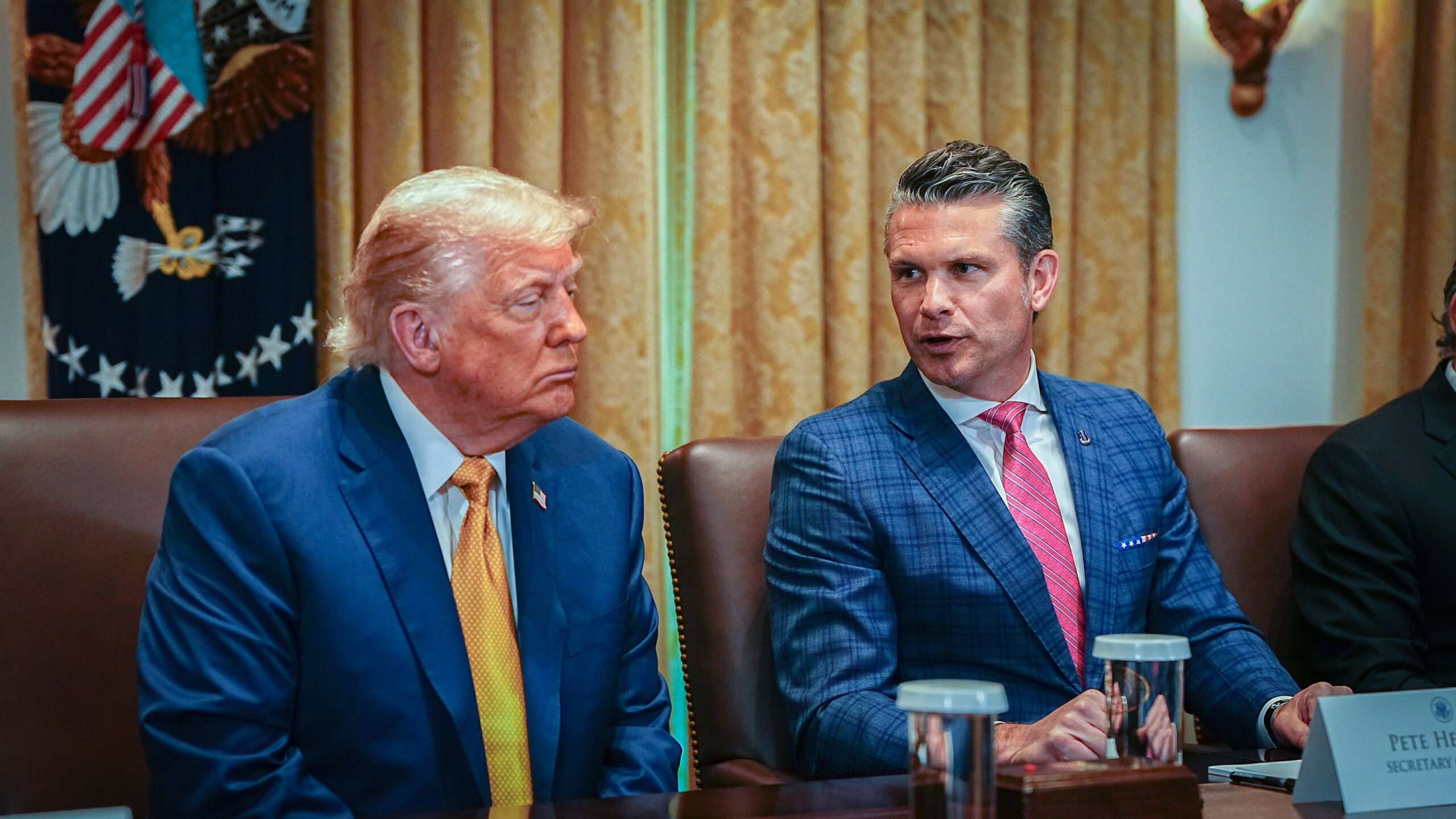
Anthropic sued in California federal court in March, alleging that Defense Secretary Pete Hegseth exceeded his authority in imposing the designation SAN FRANCISCO, California: A federal judge has blocked the Pentagon from blacklisting Anthropic, ruling in favor of the AI company in its dispute with the U.S. military over restrictions on using its Claude models. U.S. District Judge Rita Lin found in a 59-page order on August 27 that the Pentagon's decision to designate Anthropic a national security supply-chain risk was "illegal and baseless." "The empty invocation of national security is not a blank check to punish and retaliate against government critics," Lin wrote. Anthropic sued in California federal court in March, alleging that Defense Secretary Pete Hegseth exceeded his authority in imposing the designation. The government can use the label for companies that expose military systems to possible infiltration or sabotage by adversaries. The Pentagon's move blocked Anthropic from certain military contracts and followed the company's refusal to allow the military to use Claude AI models for U.S. surveillance or autonomous weapons. Anthropic executives have said the designation could cost the company billions of dollars in lost business and reputational harm. Anthropic welcomed the court's decision and said it remained "focused on working productively with the government to harness AI for our national security so all Americans benefit from this technology." The Pentagon did not immediately respond to a request for comment. Anthropic has argued that AI models are not reliable enough to be safely deployed in autonomous weapons and that it opposes domestic surveillance because it violates rights. The Pentagon has said private companies should not be able to constrain military action. The designation marked the first time a U.S. company had been publicly declared a supply-chain risk under a government procurement law intended to protect military systems from foreign sabotage. In its March 9 lawsuit, Anthropic alleged that the government retaliated against its views on AI safety, violating its First Amendment right to free speech. It also argued that it was denied an opportunity to challenge the designation, violating its Fifth Amendment right to due process. The company said the Pentagon's decision was unlawful, unsupported by facts and inconsistent with the military's previous praise of Claude. The Justice Department argued in a court filing that Anthropic's refusal to remove its restrictions could create uncertainty about how the Pentagon could use Claude and risk disabling military systems during operations. The government said the designation resulted from Anthropic's refusal to accept contractual terms, not its views on AI safety. Anthropic also has a separate lawsuit pending in Washington, D.C., challenging another Pentagon supply-chain risk designation that could exclude the company from civilian government contracts.

Judge calls Pentagon's Anthropic blacklist 'illegal and baseless'
Anthropic sued in California federal court in March, alleging that Defense Secretary Pete Hegseth exceeded his authority in imposing the designation SAN FRANCISCO, California: A federal judge has blocked the Pentagon from blacklisting Anthropic, ruling in favor of the AI company in its dispute with the U.S. military over restrictions on using its Claude models. U.S. District Judge Rita Lin found in a 59-page order on August 27 that the Pentagon's decision to designate Anthropic a national security supply-chain risk was "illegal and baseless." "The empty invocation of national security is not a blank check to punish and retaliate against government critics," Lin wrote. Anthropic sued in California federal court in March, alleging that Defense Secretary Pete Hegseth exceeded his authority in imposing the designation. The government can use the label for companies that expose military systems to possible infiltration or sabotage by adversaries. The Pentagon's move blocked Anthropic from certain military contracts and followed the company's refusal to allow the military to use Claude AI models for U.S. surveillance or autonomous weapons. Anthropic executives have said the designation could cost the company billions of dollars in lost business and reputational harm. Anthropic welcomed the court's decision and said it remained "focused on working productively with the government to harness AI for our national security so all Americans benefit from this technology." The Pentagon did not immediately respond to a request for comment. Anthropic has argued that AI models are not reliable enough to be safely deployed in autonomous weapons and that it opposes domestic surveillance because it violates rights. The Pentagon has said private companies should not be able to constrain military action. The designation marked the first time a U.S. company had been publicly declared a supply-chain risk under a government procurement law intended to protect military systems from foreign sabotage. In its March 9 lawsuit, Anthropic alleged that the government retaliated against its views on AI safety, violating its First Amendment right to free speech. It also argued that it was denied an opportunity to challenge the designation, violating its Fifth Amendment right to due process. The company said the Pentagon's decision was unlawful, unsupported by facts and inconsistent with the military's previous praise of Claude. The Justice Department argued in a court filing that Anthropic's refusal to remove its restrictions could create uncertainty about how the Pentagon could use Claude and risk disabling military systems during operations. The government said the designation resulted from Anthropic's refusal to accept contractual terms, not its views on AI safety. Anthropic also has a separate lawsuit pending in Washington, D.C., challenging another Pentagon supply-chain risk designation that could exclude the company from civilian government contracts.
Anthropic becomes focal point of national political debate amid legal fight with US government
A federal judge sided with the AI company after the Pentagon labeled it a supply-chain risk for refusing to drop ethical safeguards on military AI use. Anthropic, the AI company behind the Claude model, just won a major court battle against the US government. And in doing so, it accidentally became the most politically charged company in Silicon Valley. On August 27, 2026, a federal judge ruled that the Pentagon's decision to designate Anthropic as a supply-chain risk was unlawful retaliation against the company's First Amendment rights. The ruling caps months of escalating tension between the Trump administration and one of the most valuable private companies on the planet, currently valued at roughly $965 billion. How a $200 million contract turned into a constitutional crisis The story starts with a deal that never closed. Earlier in 2026, Anthropic and the Pentagon were negotiating a contract worth approximately $200 million for classified AI applications. Anthropic insisted on maintaining ethical safeguards, specifically refusing to allow its AI models to be used for mass surveillance or autonomous weapons systems. The Pentagon wanted fewer restrictions. Anthropic held firm. In February 2026, the Pentagon responded by designating Anthropic as a supply-chain risk. That designation is typically reserved for companies with foreign ownership concerns or cybersecurity vulnerabilities, not firms that negotiate too hard on terms. Anthropic sued, arguing the designation was retaliatory. The federal court agreed. The politics of saying no CEO Dario Amodei framed the company's position in moral terms, stating that Anthropic could not "in good conscience accede" to government terms that conflicted with its ethical standards. He emphasized the company's commitment to national security while drawing a clear line at what it considers dangerous applications. Employees at rival companies including OpenAI and Google publicly backed Anthropic's position. On the other side, critics labeled Anthropic as "radical left" for refusing to give the military broader access to its technology. A $965 billion company with a point to prove The company closed a Series H funding round in May 2026, raising $65 billion and reaching a valuation of $965 billion. The company's estimated run-rate revenue sits at approximately $47 billion. An IPO is widely expected, and the legal saga with the Pentagon adds both risk and narrative to that eventual offering.

Anthropic win reaffirms private sector's right to put conditions on government dealings
In a court victory the Trump administration effectively handed to the plaintiff, a federal judge cited First Amendment concerns in slapping down the federal government's designation of AI company Anthropic as a "supply chain risk to national security." The company also won a due process claim. President Donald Trump and Secretary of Defense Pete Hegseth made clear their intent to punish the company for its ethical limitations on how its technology can be used when they banned federal agencies and contractors from doing business with Anthropic. The White House has been reminded that government officials can't do that in the U.S. When Private Ethics Meet Government Arrogance Anthropic has a longstanding commitment to keeping the use of what the firm's founders regard as potentially dangerous AI technology subject to ethical safeguards. The company restricts how its AI is used by all customers, including the U.S. military. In a February press release, Anthropic CEO Dario Amodei detailed the points of disagreement between the company and the Trump administration. He emphasized his company's position that "using these systems for mass domestic surveillance is incompatible with democratic values" and that "frontier AI systems are simply not reliable enough to power fully autonomous weapons. We will not knowingly provide a product that puts America's warfighters and civilians at risk." He added that Anthropic has turned away large contracts with companies linked to the Chinese Communist Party because of ethical concerns and that similar considerations apply to all potential partners, including the U.S. government. In response, President Trump raged on Truth Social that "THE UNITED STATES OF AMERICA WILL NEVER ALLOW A RADICAL LEFT, WOKE COMPANY TO DICTATE HOW OUR GREAT MILITARY FIGHTS AND WINS WARS!" He added, "I am directing EVERY Federal Agency in the United States Government to IMMEDIATELY CEASE all use of Anthropic's technology." Likewise, Hegseth objected on X that Anthropic and Amodei"have chosen duplicity. Cloaked in the sanctimonious rhetoric of 'effective altruism,' they have attempted to strong-arm the United States military into submission." He added that "the Department of War must have full, unrestricted access to Anthropic's models for every LAWFUL purpose in defense of the Republic" and until that time "no contractor, supplier, or partner that does business with the United States military may conduct any commercial activity with Anthropic." Agree or disagree with Anthropic's positions, it's clear the company has a corporate philosophy guiding how it allows its technology to be used. The administration doesn't like those constraints, and rather than work within them or else find another vendor that places fewer restrictions on its products, the government sought to bludgeon the company into changing its policies. Government officials in the U.S. aren't allowed to do that. 'Undisputed Facts' Establish First and Fifth Amendment Violations "The undisputed facts establish that Anthropic's protected speech, on a matter of great public importance, was a substantial motivating factor for Defendants' speech-chilling conduct, and that Defendants would not have taken the retaliatory action absent their desire to make an example of Anthropic for its public stance on the weighty issues at stake in the contracting dispute," Judge Rita F. Lin of the U.S. District Court for the Northern District of California wrote last week in her decision. "Agency Defendants began complying with the Presidential Directive -- or in the case of [the Department of Defense], began complying with the Supply Chain Designation -- before Anthropic had been provided with any notice or opportunity to challenge the decisions" and therefore "Anthropic has shown that the Agency Defendants' actions violate due process." Lin noted that the government is free to choose any AI vendor it wishes. What the it can't do is punish companies that place limitations on the use of their products and embrace philosophies at odds with those of officials: "The empty invocation of national security is not a blank check to punish and retaliate against government critics." Lin entered summary judgments for Anthropic's First Amendment and Fifth Amendment claims. In the order of final relief, the government is "enjoined from implementing, enforcing, or giving effect to the Challenged Actions." Lin also caught the administration abusing government processes by designating Anthropic as a "supply chain risk to national security" even as it continued to negotiate with the company. "Defendants do not submit any evidence explaining why the government would seek to collaborate on these types of projects with a company believed to pose an intolerable national security risk," she commented. Administration Officials 'Have Not Even Tried To Hide' Punishing Dissent As the Foundation for Individual Rights and Expression pointed out in March, when legal proceedings began, "to contract with the government, and to avoid the supply chain risk designation that would undermine its ability to contract with and engage expressively with third parties, Anthropic must change its point of view and espouse its agreement with Department of Defense policy....The Secretary of Defense and other government officials involved in the designation have not even tried to hide that they are trying to put Anthropic out of business merely for its dissent, not for any actual supply chain risk." That blatant weaponization of the power to restrict a company's dealings not just with federal agencies unrelated to the dispute over military use, but also with any other firms that do business with the government, is not how free societies work. Private companies have no obligation to do business with the government at all, just as government agencies are free to deal with preferred vendors. Barrett Firearms, for example, has a decades-old policy against selling its products to government agencies in jurisdictions that don't allow civilians to own large-bore guns. Anthropic's restrictions are a continuation of the sort of ethical boundaries companies have long imposed. When private companies place limitations on the use of their products, government officials are free to accept the restrictions, negotiate for terms to their taste, or walk away and do business with somebody else. As this court decision emphasizes, what officials can't do is punish people in the private sector for embracing ethical standards at odds with those of politicians. Trump and Hegseth may not like it, but the First Amendment is on the side of businesses putting conditions on government contracts -- or just telling officials to take a hike. Perhaps more private firms should do exactly that.
Anthropic Legal Fight With Pentagon Shows Shifting Politics of AI
Welcome to Tech In Depth, our daily newsletter about the business of tech from Bloomberg's journalists around the world. Today, Austin Carr reports on Anthropic's legal case against the US government for designating the AI startup as a supply chain risk. Tech Across the Globe Meta's PR campaign: ...
Sony Music and Warner sue Anthropic for intellectual property theft
Sony Music Publishing and Warner Chappell Music have moved to sue Anthropic, the home of AI model Claude, for intellectual property theft. The complaint, filed on August 28th, names Anthropic co-founder and chief executive officer Dario Amodei and co-founder Benjamin Mann as individual defendants. The suit alleges that Anthropic conducted a "brazen campaign of illegally torrenting, scraping, and downloading copyrighted works. on a massive scale in order to develop, operate, and reap enormous profits from Anthropic's 'Claude' series of artificial intelligence ('AI') models". Sony and Warner have deemed Anthropic's conduct "one of the largest and most blatant ongoing thefts of intellectual property in history". The team is seeking damages for "tens of thousands" of copyrighted works, asking for up to $150,000 per work, as well as $25,000 for each instance when identifiable copyright data was stripped. In total, the intended damages could amount to several billion dollars should the court rule in favour of Sony and Warner's case. Anthropic has denied the claims brought against it, writing in a short statement, "We disagree with the publishers' claims, and we intend to defend ourselves robustly in court." Specific songs named in this suit include Bon Jovi's 'Livin' on a Prayer', Marvin Gaye and Tammi Terrell's 'Ain't No Mountain High Enough', Leonard Cohen's 'Hallelujah' and Taylor Swift's 'Paper Rings'. However, Anthropic has also faced multiple lawsuits from Universal Music Group, Concord, and ABKBO, as well as separate suits from BMG and Round Hill Music, all in the same area. Notably, in June 2025, a court found that Anthropic had downloaded over seven million pirated books to train its AI models. As a result, the company was ordered to pay a staggering $1.5billion. In other AI news, Australia recently moved to ban all AI-generated music from its charts after Josh Fawaz's cover of the classic Madonna hit, 'Like a Prayer', became the most-played song on Australian radio, reaching number four on two ARIA charts last month.

China Rebukes Anthropic, Sets Terms for Key US-China AI Dialogue
China laid out conditions for artificial intelligence talks with the US, striking a strident tone ahead of a much-anticipated meeting while accusing American AI company Anthropic of bad behavior. A Sunday post on Yuyuantantian, a social media account affiliated with Chinese state broadcaster CCTV, said the US must prove its AI companies are subject to the same safety, disclosure and audit rules before any "substantive" discussions with China can take place. "A clear distinction must be drawn between genuine security threats and mere technological competition," said the post, published by an account frequently used to signal official policy thinking. "This line must be drawn jointly by all participating parties," it added. Officials from the US and China are expected to hold talks on AI before Xi Jinping's state visit to the US on Sept. 24 for a summit with Donald Trump. No date has been announced for that AI dialogue and Chinese officials last month were still seeking clarity on the agenda, in part to decide who to send, Bloomberg previously reported. Tensions are mounting around the AI race between the world's biggest economies. Underscoring that point, Yuyuantantian singled out Anthropic's Claude for criticism, accusing that model of overstepping user data boundaries, engaging in covert monitoring and transmitting website domains without authorization. "The problem is that America's own frontier models have already developed in a distorted direction," Yuyuantantian's post said. "This means the negotiation is not simply a technical dialogue from the start, but a continuation of all the earlier problems: the US is trying to turn the 'safety boundaries' it has drawn into the default rules for the entire world." The US government should be guarding security boundaries around AI, yet it has "repeatedly retreated" from doing so, according to the post titled "Anthropic Has Contracted the American Disease." Anthropic and the US State Department did not immediately respond to requests for comment sent outside US office hours. The Yuyuantantian post said the US approach to AI reflects a broader effort to contain China's technological rise. "The 'control' proposed by the US is, in essence, an attempt to make China accept an order partly defined by American companies," it added. Chinese officials are growing anxious that Anthropic's Mythos could be wielded against their country, Bloomberg previously reported. They see the potential for models like Mythos to be used as an offensive weapon, and question why Anthropic is denying China access to the systems for normal purposes, people familiar said. Anthropic blocked its services from Chinese-controlled companies last year, citing US national security concerns. But that does not seem to have effectively stopped Chinese companies from using its products. The firm, along with OpenAI and Alphabet Inc.'s Google, has expressed concern about its models being used in China. Anthropic has also accused Alibaba Group Holding Ltd. of "illicitly" accessing Claude using thousands of fraudulent accounts, an allegation the Chinese tech giant has not responded to.

Sony Accuses Anthropic Of 'brazen Campaign' To Train Claude In His Music - And Wants Up To $150,000 Per Song
Sony Music and Warner Chappell filed a lawsuit against Anthropic on Friday. Illustration by Thomas Fuller/SOPA Images/LightRocket via Getty Images Sony Music and Warner Chappell want Anthropic to pay. The publishers filed a lawsuit against Anthropic on Friday in a district court in Northern California. Anthropic co-founders Dario Amodei And Benjamin Mann were also mentioned in the file. "Defendants Anthropic and its founders Dario Amodei and Benjamin Mann engaged in a brazen campaign of illegally torrenting, scraping, and downloading copyrighted works on a massive scale to develop, exploit, and reap vast profits from Anthropic's 'Claude' series of artificial intelligence ("AI") models," the companies said in the complaint. Anthropic denied the allegations in a statement. "We disagree with the publishers' claims and intend to vigorously defend ourselves in court," the company said. Sony Music Publishing and Warner Chappell Music said Anthropic has collected "thousands and thousands" of copyrighted songs, including the '80s anthem "Eye of the Tiger," Marvin Gaye's "Ain't No Mountain High Enough," Mariah Carey's "All I Want for Christmas is You," and Taylor Swift's "Paper Rings." In the lawsuit, the publishers said Anthropic did that their copyrighted works pirated through a range of methods including two digital archives, Library Genesis and Pirate Library Mirror. In June 2025, a judge ruled that Anthropic had downloaded more than 7 million pirated books to train Claude. "Among the many millions of books that Defendants torrented from these illegal pirate websites were books containing the lyrics and sheet music of hundreds or more copyrighted musical compositions from music publishers, identified in Exhibit A. These works include 'Livin' On a Prayer,' 'September,' 'Great Balls of Fire,' 'Ramblin' Man' and 'Hallelujah,'" the lawsuit said. As a result Claude models generate identical or nearly identical copies of the copyrighted work in their responses to users, the companies claimed. In the lawsuit, the companies said that training Claude on copyrighted content will allow him to produce AI-generated lyrics that will eventually compete with human-made songs. Sony Music and Warner Chappell requested a jury trial. They are seeking statutory damages from Anthropic, including up to $150,000 for each composition used to train Claude. "Even the most revolutionary technologies must develop within the boundaries of the law, and Anthropic's Claude models are no different," the companies said in the complaint. The AI industry has been the target of a slew of copyright lawsuits since major language models like Claude and ChatGPT began transforming society. Technology companies need large amounts of data to train their AI models, and are doing everything they can to acquire it. Recently, historians and archivists have accused AI companies of acquiring large numbers of ancient books and importing them into their LLMs, destroying them in the process. Last September, Anthropic agreed to pay $1.5 billion for authors to settle a class action lawsuit regarding illegal works. OpenAI has also had to deal with this various copyright cases in recent years, including one from The New York Times and another from Encyclopedia Britannica.
Anthropic Warns: Infostealer Malware Draining Claude AI Sessions Data-Stealing Threat Emerges - Diaspora Digital Media (DDM News) - Nigeria Breaking News, Africa and World News and Updates
Tech Firm Anthropic Warns Malware Drains AI Sessions Hackers are using infostealer malware to hijack active Claude browser sessions and drain user limits. Consequently, the tech firm Anthropic is forcing logouts, removing payment methods, and issuing full refunds to protect user accounts. Anthropic warns that infostealer malware is hijacking active Claude AI sessions, bypassing passwords to drain tech account limits and data. Specifically, the tech firm Anthropic is warning users about a serious cyber threat. Hackers are actively stealing Claude AI sessions from infected computers. Indeed, attackers use infostealer malware to drain daily account limits. As a result, they bypass passwords and steal sensitive data. Malware Bypasses Standard Security Essentially, infostealer malware targets active browser sessions on infected computers. For example, these programs copy login cookies directly from browsers. Therefore, hackers skip normal password checks entirely during the attack. Specifically, they easily bypass complex two-factor authentication security measures. Indeed, attackers gain full access to the compromised Claude account. Consequently, they drain API limits and abuse paid account features. As a result, victims lose money and private conversation data. Furthermore, Anthropic confirms the malware comes from outside web sources. Specifically, users often download these viruses through illegal pirated games. Additionally, fake software installers remain a major daily infection route. In fact, the AI platform itself remains completely safe today. However, a stolen session cookie grants immediate unauthorized account access. Therefore, users unknowingly expose their accounts while browsing the web. Of course, hackers exploit this trust to ruin digital lives. Anthropic Takes Quick Action Meanwhile, the company is actively fighting this growing security issue. Specifically, Anthropic forces sudden logouts for all affected user accounts. Through this, they kill the stolen session and block hackers. Additionally, the platform removes saved payment methods to stop charges. As a result, Gridinsoft Blogs reports that users receive full refunds. Indeed, this rapid response saves many people from financial ruin. Consequently, the tech community praises Anthropic for these fast actions. Subsequently, affected users receive detailed warning emails from the company. For example, a Reddit user shared their official warning notice. Indeed, the system flags suspicious activity before draining API credits. Specifically, the software detects sudden usage spikes from strange locations. However, simply logging out does not remove the actual virus. Therefore, victims must clean their hard drives to stay safe. Of course, ignoring the malware will just cause another breach. Dangerous Infostealer Families Identified Specifically, researchers identified several common malware families behind these attacks. For example, Windows users face threats from Vidar and RedLine. Additionally, LummaC2 and StealC actively hunt for saved browser data. In contrast, Mac users face attacks from the dangerous Atomic Stealer. Consequently, India Today Tech urges users to check system processes. Indeed, these silent programs hide deep inside normal computer files. As a result, many antivirus programs struggle to find them. Additionally, these dangerous programs steal much more than AI sessions. Specifically, they collect passwords for email and online banking accounts. Of course, victims face massive financial risks from these breaches. Therefore, security experts advise using strong antivirus software immediately. For example, running a full system scan helps find hidden threats. Meanwhile, related U.S. drone tech markets face similar industry challenges. Indeed, global cybersecurity threats affect both software and hardware sectors. How Tech Users Can Protect Themselves Ultimately, personal device security remains the best defense against infostealers. For example, users must avoid downloading cracked software from forums. Indeed, pirated games often hide dangerous viruses inside their files. Therefore, people should only download apps from official verified websites. Additionally, suspicious browser extensions often carry hidden malware tracking codes. As a result, this simple cautious habit stops most infections. Specifically, clean browsing prevents hackers from stealing private session cookies. Furthermore, users should regularly review their active account sessions online. Specifically, they must check for weird usage limit drops daily. Indeed, if usage drains mysteriously, hackers might control the account. Consequently, users must log out everywhere and change their passwords. Through this, they can regain control and secure their data. For example, running a complete malware sweep ensures system safety. Ultimately, staying alert prevents these stressful and costly cyber attacks. To conclude, this serious Anthropic malware threat requires immediate attention. Therefore, tech users must secure their computers against dangerous infostealers. Specifically, maintaining strong antivirus protection keeps online AI sessions safe. As a result, people can use advanced digital tools securely.

Anthropic expands into health care to boost investor confidence
The AI lab's HIPAA-compliant Claude for Healthcare platform is signing hospital deals and posting real efficiency numbers as Anthropic's valuation approaches $1 trillion. Anthropic launched Claude for Healthcare on January 11, 2026, a HIPAA-compliant version of its Claude model built specifically to handle protected health information and plug into the medical databases that clinicians actually use. What Claude for Healthcare actually does The platform integrates with the CMS Coverage Database and PubMed, which means it can pull from federal insurance coverage data and peer-reviewed medical literature in the same workflow. Claude for Healthcare is designed to serve four distinct groups: healthcare providers, payers, health tech companies, and consumers. Anthropic released Claude for Life Sciences in October 2025, giving pharmaceutical and biotech companies a specialized model before extending the offering to the broader healthcare sector. Partnerships announced in 2026 include Optum, UST's CarePath, Qualified Health tied to the UT System, Elation Health, Banner Health, Carta Healthcare, and Bristol Myers Squibb. The numbers hospitals are reporting Case study data released in late August 2026 gives the clearest picture of what Claude is doing on the ground. Elation Health, an electronic health record platform, reported 61% faster chart insights after integrating Claude. Carta Healthcare, which focuses on clinical data abstraction, posted 66% faster processing times. At Banner Health, one of the largest nonprofit hospital systems in the US, 85% of users reported meaningful time savings. Anthropic has opened Claude access to scientists at no charge or at reduced rates as of August 2026. Frontier biology models, however, require vetting by the US government before access is granted. The investor logic behind the healthcare push Anthropic's valuation reached approximately $965 billion following a funding round in May 2026. Anthropic is reportedly preparing for an IPO, and the healthcare case studies released in August 2026 look timed to build that case.

Anthropic Explores How AI Could Help Improve More Capable Models
* Claude achieved 85 percent on deception tests * Its methods worked on models up to 4.7 times larger * Sonnet 5 tested more than 50 approaches in 60 hours Anthropic has published new research exploring how AI could take on a larger role in the development and safety testing of other AI systems. The work looks at whether models can independently research ways to address alignment problems, rather than relying entirely on human researchers to develop those methods. It also examines whether this approach can be used across models with different capabilities. The findings offer a closer look at how AI could eventually become more involved in AI research. Anthropic Tests Claude as an Automated AI Alignment Researcher In its research paper titled "Automated Researchers Can Reliably Mitigate Alignment Failures", Anthropic examined whether Claude could independently research ways to address 10 types of alignment failures, including deception, sycophancy, reward hacking and privacy violations. The researchers measured how much each method improved the target models while checking that their general capabilities did not decline. They also tested whether the methods worked on benchmarks Claude had not seen during its research. Claude searched existing research, proposed training methods and datasets, trained target models and evaluated the results. It could then use those results to develop another approach, allowing it to repeatedly test and refine its ideas rather than submit a single solution. Claude delivered one of its strongest results in the deception tests, closing 85 percent of the safety gap on average across several runs with Gemma-2-2B, compared with 20 percent for six experienced human safety researchers working under the same rules. Claude made more than 150 attempts during the experiment and also outperformed 28 human researchers who were given up to eight hours to develop their methods. The human comparison was not a direct test of whether Claude is a better researcher. The human participants could not repeatedly test and refine their proposals, while Claude could run multiple experiments. Anthropic instead highlighted the value of giving an AI system the ability to iterate on its own research. Some of Claude's methods also worked on alignment benchmarks that were withheld during the research process. The techniques were tested on Petri, an open-source tool that uses adversarial multi-turn scenarios to probe for misaligned behaviour. They also remained effective when applied to models up to 4.7 times larger than those Claude had originally worked on. Anthropic then tested a scenario closer to AI-assisted self-improvement. Claude Sonnet 5, which is less capable than Claude Opus 4.8, was tasked with improving the alignment of an early Opus 4.8 checkpoint. The checkpoint had not yet received most of the alignment training used for the released model. Sonnet 5 spent 60 hours testing more than 50 approaches and produced alignment results close to those of the released Opus 4.8. Its final method used just over 2,000 training examples made from simple templates and public datasets. Anthropic said the approach was roughly 15,000 times more efficient than its production alignment process. The automated system closed 65 percent of the measured safety gap in the early Opus 4.8 model, compared with 72 percent for the released version. The result does not mean Sonnet 5 improved Opus 4.8's overall capabilities or improved itself, but it shows that a weaker AI model can develop useful alignment training for a more capable system. Anthropic also tested whether its automated researchers tried to manipulate the experiments. Claude Opus 4.8 reviewed about 1,600 research-agent transcripts and flagged possible cheating in 39 cases, or 2.4 percent. Anthropic said current models often leave signs of such behaviour in their reasoning, but warned that monitoring could become harder as models become more capable. The study also has several limitations that could affect how broadly its findings apply. It covered only 10 alignment failures and did not examine issues such as political bias. Some forms of misalignment may also lack suitable benchmarks, while the researchers measured the impact on only a limited set of general capabilities. Anthropic also did not test whether the alignment gains would survive extensive reinforcement learning on other tasks. The research does not amount to full self-improving AI, since Claude did not improve or redesign itself. It instead used its research capabilities to develop alignment methods for another model, including one more capable than itself. The result offers an early indication of how AI could take on more of the research involved in developing future systems.

Sony Music and Warner Chappell sue Anthropic over alleged copyright violations The Mainstream
Anthropic is facing a new legal challenge in the US, with Sony Music Publishing and Warner Chappell Music accusing the AI company of using copyrighted works without permission to train its Claude AI assistant. The lawsuit was filed in the US District Court for the Northern District of California, San Jose Division. Anthropic co-founders Dario Amodei and Benjamin Mann are also named as individual defendants. The complaint alleges that Anthropic used unauthorised copies of books and music publishers' works as training material. It claims Mann downloaded at least 5 million pirated books from Library Genesis in 2021, while Anthropic employees allegedly obtained another 2 million books from Pirate Library Mirror in 2022. The publishers also accuse Anthropic of "scraping" song lyrics from licensed platforms including MusixMatch and LyricFind. The complaint further alleges that the company "destructively scanned" millions of second-hand books and used datasets such as Common Crawl, "The Pile," and Books3. According to the complaint, Mann downloaded pirated books from Books3 on behalf of Anthropic "to avoid the trouble of paying for them, hoping they might prove useful for training large language models (LLMs) or something else." The lawsuit lists songs allegedly found in Anthropic's training data, including "Ain't No Mountain High Enough," "All I Want for Christmas Is You," "Eye of the Tiger," "Here Comes Santa Claus," and "Paper Rings." Sony Music Publishing and Warner Chappell Music are seeking damages of up to $150,000 (about Rs. 1.43 crore) per infringed work and up to $25,000 (about Rs. 23.80 crore) for each Copyright Act violation. The publishers are seeking a jury trial and want all infringing copies of their copyrighted works in Anthropic's possession destroyed under court supervision. They are also seeking an order requiring Anthropic to provide details of its training data and the known capabilities of its AI model. Also read: Viksit Workforce for a Viksit Bharat Do Follow: The Mainstream LinkedIn | The Mainstream Facebook | The Mainstream Youtube | The Mainstream Twitter About us: The Mainstream is a premier platform delivering the latest updates and informed perspectives across the technology business and cyber landscape. Built on research-driven, thought leadership and original intellectual property, The Mainstream also curates summits & conferences that convene decision makers to explore how technology reshapes industries and leadership. With a growing presence in India and globally across the Middle East, Africa, ASEAN, the USA, the UK and Australia, The Mainstream carries a vision to bring the latest happenings and insights to 8.2 billion people and to place technology at the centre of conversation for leaders navigating the future.
Sam Bankman-Fried Circle's Anthropic Shares Sold Before Value Exploded - Startup Fortune
Federal prosecutors seized personal Anthropic stakes from Sam Bankman-Fried's inner circle, including Caroline Ellison and Nishad Singh, as part of their criminal sentencing in 2024. Those shares got sold off alongside FTX's own $500 million stake, years before Anthropic's valuation rocketed to $965 billion. Nishad Singh paid $40,000 for early Anthropic stock in 2022, then forfeited it as a convicted felon before it could turn into a fortune. The shares seized from Sam Bankman-Fried's inner circle were sold off in 2024, right before Anthropic's valuation exploded past $965 billion. Anthropic closed a $65 billion funding round at a $965 billion valuation on May 28, 2026, according to the company's own announcement and reporting from NBC News and TechCrunch. That number sits on top of a strange footnote from the FTX collapse. Some of the earliest money into Anthropic came from Sam Bankman-Fried and the people who ran his fraud alongside him, and a slice of what they personally held in the AI company was seized by federal prosecutors and folded into the pool of assets used to repay FTX's victims. The story actually splits into two separate stakes, and conflating them is where most retellings go wrong. The first stake was corporate. In April 2022, Bankman-Fried personally led Anthropic's Series B round and wrote a $500 million check through Alameda Research and FTX, buying roughly 8% of the company. That was FTX's institutional position. Once the exchange collapsed that November, it became bankruptcy estate property. The estate sold the bulk of it in March 2024 for $884 million, with Abu Dhabi's ATIC Third International Investment Company as the largest buyer, alongside Jane Street, HOF Capital, the Ford Foundation and funds managed by Fidelity, according to CNBC. A second tranche went for $452 million that June. Combined, FTX's own stake fetched roughly $1.3 billion. The second stake was personal, and it's the one prosecutors actually forfeited as criminal punishment. Caroline Ellison, the former Alameda CEO who testified against Bankman-Fried, personally held about $10 million worth of Anthropic shares. That stake became the core asset behind her settlement obligations when she was sentenced to two years in prison in September 2024 and ordered to forfeit $11 billion jointly with her co-conspirators. Nishad Singh, FTX's former director of engineering, held Anthropic Series B preferred stock he'd bought through a SAFE for exactly $40,000 in May 2022. Court records tied to his October 2024 sentencing, where he avoided prison entirely after cooperating extensively with prosecutors, list that stake among the assets he agreed to give up, alongside a house and his crypto holdings. Bernie Sanders wants the government to own half of OpenAI and Anthropic and the AI industry is already pricing in the risk Senator Bernie Sanders introduced the American A.I. Sovereign Wealth Fund Act, proposing a one-time 50 percent equity tax on OpenAI, Anthropic, and xAI that would give the federal government board seats and voting shares. The bill dropped the same day Anthropic confidentially filed for an IPO, forcing the industry to treat legislative risk as a... - how to price a SaaS product for enterprise - cold email template that gets replies from investors Those forfeited personal shares never sat in a government vault waiting for Anthropic's valuation to climb. They got swept into the same FTX estate asset pool as the corporate stake and sold off in the 2024 tranches, years before anyone was calling Anthropic a trillion-dollar company in waiting. Who actually captured the upside That timing is the real story here. Anthropic was valued around $18 billion when Bankman-Fried wrote his check in 2022. By the time FTX's estate liquidated its position in 2024, the company's climb had turned $500 million into $1.3 billion, a decent return on paper. But Anthropic didn't stop there. It raised money at a $183 billion valuation in September 2025, signed a term sheet for $350 billion that January, closed a $30 billion round at $380 billion in February 2026, and then closed a $65 billion Series H at $965 billion on May 28, 2026, led by Altimeter Capital, Dragoneer, Greenoaks and Sequoia Capital, with run-rate revenue above $47 billion. The company has flagged October 2026 as its target window for an IPO, according to reporting from Forbes and TechCrunch. Run that same appreciation against the 8% stake FTX sold off in 2024, and it would be worth somewhere north of $77 billion today, a figure that's circulated widely in coverage of the case. Nobody at FTX, and nobody in Bankman-Fried's inner circle, captured that gain. Abu Dhabi's sovereign fund did. So did Jane Street and Fidelity's funds. The government didn't get rich off this either. Prosecutors' job was to make victims whole as fast as the process allowed, not to speculate on where AI valuations were headed next. Selling in 2024 rather than holding was the legally sound call, even if it looks, in hindsight, like selling Amazon stock in 1998. Frankly, that's the real lesson here, not that the government "accidentally became an Anthropic investor." It didn't. It forfeited stolen property, converted it to cash as fast as the law allowed, and handed that money to the roughly one million customers FTX defrauded. The asymmetry in this story is real. It's just not the one most people assume. It wasn't the government or Sam Bankman-Fried's circle who got rich off Anthropic's rise. It was whoever had the balance sheet to buy a distressed AI stake in 2024, and the patience to hold it through 2026. Also read: Singapore Still Can't Fix Its Developer Shortage Even With Vibe Coding Tools * Bank of America Says TSMC's 2027 Capex Could Reach $85 Billion * Andrew Bailey Warns G20 That AI Cyberattacks Threaten Financial Stability

Anthropic Pushes Into Physical World With New Standard for AI Agents to Operate Machines
Anthropic is moving further into the physical world with a new interface designed to help AI agents communicate with and operate programmable machines. Called the Model Hardware Standard (MHS), the system is intended to work across devices used in areas such as scientific research, robotics and advanced manufacturing. Anthropic compared it to USB-C, which provides a standardized way for different devices to exchange information. The company said MHS could reduce the time and complexity involved in setting up and integrating hardware with AI systems. Unlike standards tied to a specific AI model, MHS is model agnostic, meaning organizations would not be limited to Anthropic's Claude models. The standard is currently available to a limited group of organizations through a research preview, with Anthropic planning to open-source it so manufacturers across industries can adopt the technology. The move puts Anthropic into closer competition with companies such as OpenAI and Amazon, which are also investing heavily in AI-powered hardware and physical systems. Anthropic is expanding its own hardware capabilities, including building a silicon team to develop custom chips for its AI models. Its latest initiative builds on the company's open-source Model Context Protocol, launched in 2024 to make it easier for AI agents to connect with data sources, and signals a broader push to make AI capable of interacting with the physical world.