News & Updates
The latest news and updates from companies in the WLTH portfolio.
Banning Open-Weight AI Is a $10 Trillion Gift to Anthropic and a Death Sentence for Enterprise AI Sovereignty
Notice who isn't signing the letter. On July 24, 2026, fifty of the most significant names in technology - Meta, Microsoft, Nvidia, Hugging Face, Mistral, Replit - sent an open letter to Washington urging policymakers not to impose broad restrictions on open-weight AI models. The signatories spanned chip manufacturers, cloud providers, open-source platforms, and enterprise software companies. All united around one argument: restricting open-weight models would devastate American enterprise AI capability while doing almost nothing to slow the Chinese development it supposedly targets. Two companies were conspicuously absent. Anthropic. And Amazon - which has committed $110 billion to Anthropic's infrastructure. That absence is not an oversight. It is a business model. What Washington is actually debating - and what it's missing The policy conversation has been deliberately framed as a national security question: Chinese open-weight models like DeepSeek represent a distillation threat, a data exfiltration risk, a vector for adversarial capability transfer. On October 1, Representatives Gottheimer and LaLota introduced the China FIREWALL Act, which would prohibit federal contractors from using applications built on restricted Chinese foundation models. That is a legitimate, narrowly targeted policy response to a real concern. What is not legitimate is the regulatory creep from "restrict Chinese open-weight models in government systems" to "restrict open-weight models as a category." And that creep is already happening - in congressional framing, in policy memos, in the hearings where this decision is being shaped. As the CEO of Replit said directly: "Banning Chinese open models is as good as banning open models in general. It's an ecosystem, and the precedent a ban would set is bad." He is correct. And the companies that understood this signed the letter. The companies that benefit from the confusion did not. The data sovereignty argument nobody is making loudly enough The primary reason Fortune 500 companies are migrating to open-weight models is not cost, ideology, or politics. It is data sovereignty - the non-negotiable requirement that their most sensitive proprietary data never leaves their own infrastructure. Enterprise adoption of open-weight models went from 23% to 67% in 2026 alone. Companies running self-hosted models report 70-90% cost savings. But the CIOs making these decisions will tell you the cost argument is secondary. The primary argument is that sending proprietary data to a third-party API - even under a zero-retention guarantee - moves that data outside the security perimeter the enterprise controls, audits, and is regulated against. A hospital fine-tuning an open-weight model on patient data inside its own HIPAA-compliant infrastructure keeps the data inside the perimeter. A financial institution fine-tuning on trading history inside its own SOC 2 environment satisfies its regulators. A defense contractor building AI on classified operational data can only do so with weights it controls entirely. These are not ideological choices. They are compliance choices - and open-weight models are the only architecture that enables AI capability while maintaining them. An open-weight restriction reverses all of that. It forces regulated enterprises to send their most sensitive data to third-party infrastructure in the name of protecting it. That is not a security policy. That is a security regression dressed as one. The moat that a ban destroys - and who profits from the destruction Here is what closed-model companies will tell you: they don't train on your data. Believe them. It doesn't matter. The question was never what they do with your data. The question is what you build with it - and you cannot build anything that lasts on a model you don't own. A closed-model API produces outputs. A fine-tuned open-weight model produces a reasoning system - one that has internalized your domain, your vocabulary, your risk thresholds, your institutional decision logic. That model is an asset. It runs in your infrastructure. It compounds with every operation it executes. Your competitor cannot buy it at any price because it was trained on data only you possess. Every quarter it runs, the moat widens. Every token you spend on a closed API, you are funding the commodity input your competitor is buying on identical terms. That distinction maps directly to EBITDA. The enterprise that owns its intelligence is building a balance sheet asset. The enterprise renting it is running a cost center with no exit. Over a five-year horizon those are not the same company. Who benefits and why that should end the debate Let's name the incentive structure precisely. An open-weight restriction that forces enterprises onto closed-model APIs creates a captive market for the companies providing those APIs. Every Fortune 500 company that would have fine-tuned a Llama or Mistral model on its own infrastructure becomes a potential Anthropic or OpenAI customer. Every token those companies would have processed inside their own data centers becomes a billable API call. Anthropic is targeting a $2 trillion IPO - 435 times its 2025 revenue - on a growth trajectory that requires enterprise API adoption to keep expanding. A policy that eliminates the self-hosted open-weight alternative doesn't just help Anthropic at the margins. It eliminates the primary competitive threat to the closed-model revenue model entirely. OpenAI and Anthropic have urged the administration to respond aggressively to Chinese AI. Their absence from the coalition letter defending open weights is the tell. These are not companies staying neutral on a complex policy question. These are companies whose business model benefits directly from the restriction they are declining to oppose. Washington should name that conflict of interest before it passes legislation shaped by it. The China FIREWALL Act, narrowly targeted at Chinese-origin models in federal procurement, is defensible. Extending that logic to a broad open-weight restriction would be among the most self-defeating technology policy decisions in American history - delivered as a gift to the closed-model labs that would profit most from it, at the precise moment Fortune 500 enterprises are deciding whether to rent their AI or own it.
Replit Names OpenAI Its Preferred Partner, Making ChatGPT the Default Over Anthropic's Claude
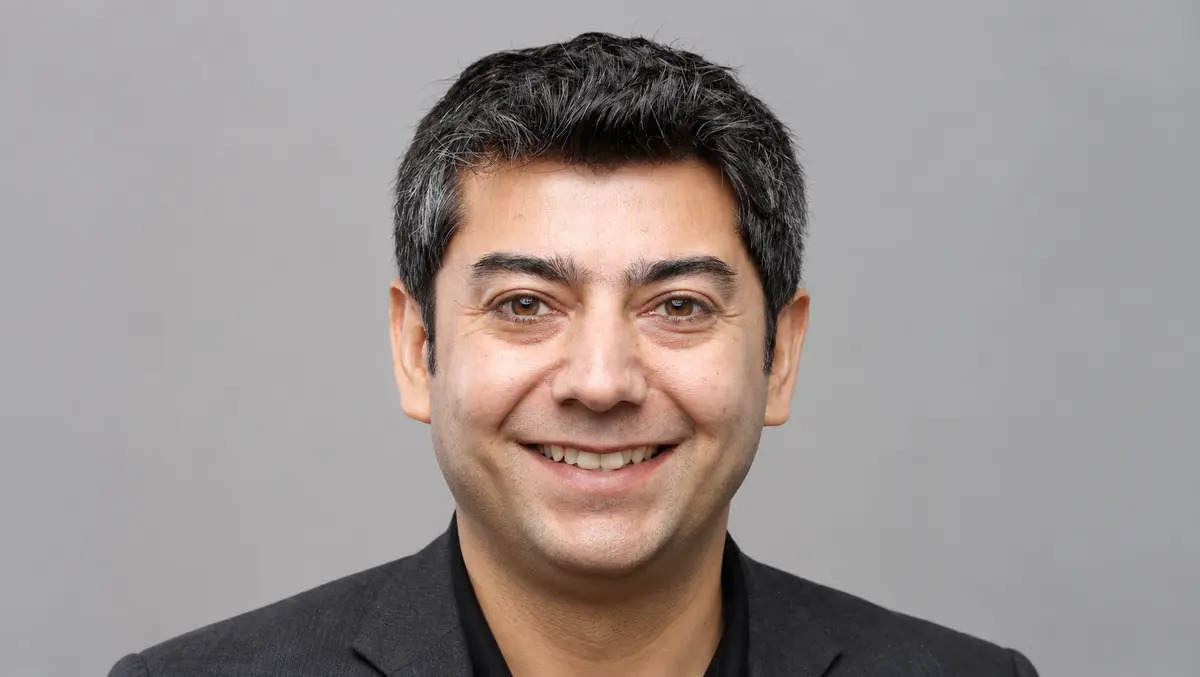
Replit has made OpenAI its preferred partner for Replit Agent, with ChatGPT now the default model. CEO Amjad Masad cited cost, partnership and performance onstage at TechCrunch Disrupt on Thursday, Oct. 15. Customers can still choose Claude models, and a person familiar with the Anthropic partnership told TechCrunch it is still in place. Replit no longer counts Anthropic as its preferred partner for AI models. CEO and co-founder Amjad Masad announced the change on Thursday, Oct. 15, while onstage at TechCrunch Disrupt, and said cost was one of several reasons. OpenAI's ChatGPT is now the default model for Replit Agent, though customers can still pick Anthropic's Claude models. Because most customers stick with the default rather than choosing a model themselves, TechCrunch reported, the shift could significantly reduce Replit's spending with Anthropic. Masad said onstage that Replit had been, until recently, one of Anthropic's top five customers. "I think ChatGPT is better now," Masad said. He pointed to an internal benchmark Replit uses and a public one it publishes, where he said Sol and Astra "perform better on building vibe-coded applications from scratch." "It was a decision based on both cost, partnership, and performance. And for all these reasons, we just felt like they were a better partner for now," he said. Shift Follows Earlier Collaboration Replit had kept working with both companies. Its October 2 changelog added new models from each: GPT-6.1 Sol in Max Mode and Claude Sonnet 5.5 in Power Mode. Replit announced its OpenAI partnership in August, but nothing public had suggested the Anthropic relationship was ending. "Replit remains model agnostic," Masad told TechCrunch afterward, calling OpenAI "our preferred partner for powering Replit Agent, based on performance, economics, and the strength of our partnership." He repeated the point on X on Saturday, Oct. 17, writing, "What I meant at TC Disrupt is that OpenAI is now our preferred partner powering Agent based on performance, cost, and strength of our partnership." In a reply, he added that "OpenAI models are generally more affordable." People familiar with the Anthropic-Replit partnership rejected Masad's onstage comments, according to TechCrunch. One of them, who asked not to be named, said the partnership was still in place. Replit sells a cloud-based software development platform where users build and deploy apps from inside a browser. At Disrupt on Thursday, Masad also described Replit as a "self-driving company," with agents doing much of the routine work while people supply judgment. "You need human judgment; you need taste," he said. Claude is still on the menu. A day after Masad's remarks, Replit's October 16 changelog said builders on Core and Pro plans can now choose Claude Haiku 5.5 from the model selector in Power Mode, and Replit's AI Integrations documentation still lists Anthropic's Claude models.

Replit is no longer working with Anthropic, CEO says - Skeptic Society Magazine
Replit, the AI coding platform that has become a favorite of startup founders and developers, is no longer working with Anthropic, the company's CEO and co-founder Amjad Masad said Thursday while onstage at TechCrunch Disrupt. Masad said the decision was made for a number of different reasons, including cost. Replit announced a partnership with OpenAI in August, but there was never any indication that it was no longer with Anthropic. "I think ChatGPT is better now," Masad said, adding that the company uses an internal benchmark to help assess metrics like performance. "We publish a public benchmark as well, and consistently, Sol and Astra perform better on building vibe-coded applications from scratch. It was a decision based on both cost, partnership, and performance. And for all these reasons, we just felt like they were a better partner for now." Replit sells a cloud-based software development platform where users can develop and deploy apps directly from inside their browser. Under its partnership with Anthropic, Replit used the AI lab's Claude models to run its platform. That partnership was said to have helped the company grow its revenue significantly. Masad's comments were rejected by insiders familiar with the partnership between the Anthropic and Replit, however. One person familiar, who asked not to be named, said the partnership was still in place. There is evidence on the company's website, blog posts, and social media posts that Replit was using Anthropic products as recently as a few weeks ago. For instance, a blog post in late September cites Anthropic's Claude Fable 5 and Claude Fable 5.1 as models running in Replit Agent's production environment. Around the same time, one of Replit's product employees posted on X about using Anthropic's flagship model Opus 5.5 and promoting its capabilities. TechCrunch reached back out to Replit for clarification and will update this story if we hear back. Masad shared insights about the company's growth while onstage at Disrupt, noting that enterprise is starting to provide a larger slice of revenue. "We're not sharing ARR numbers just yet, but in terms of growth, like, I would say, enterprise was like 2% of revenue last year," Masad said. "This year, I would say like 15% of our revenue is enterprise contracts, and more than 50% of our revenue is B2B." Masad also commented on the necessity for good AI safety measures. "In the same way that us humans need a certain environment to work -- you need a nice office, maybe nice good food in the office, air-conditioning, computer -- agents need a habitat for them to exist and do good work," he said. "So that habitat has good orchestration, good error recovery, good safety and security and sandboxing, good networking, good identity and authorization. And once you figure all of that out, then you can deploy AI safely."

Orange Jordan Sponsors Amman AI Hackathon Organized by Fikr & in Partnership with Replit
As part of its ongoing efforts to empower youth and enhance their digital skills, Orange Jordan sponsored the Amman AI Hackathon, organized by Fikr and in partnership with the international Replit platform. The event brought together a group of young talents to develop innovative ideas with a positive impact, contributing to supporting the entrepreneurial ecosystem and driving the Kingdom's digital economic growth. Over the course of two days, the event gathered around 180 founders, engineers, students, and fresh graduates to compete in building AI-powered products and solutions using Replit platform. Participants successfully developed 50 working prototypes that keep pace with rapid tech advancements in this modern era. Chief Corporate, Internal Communications, & Sustainability Officer at Orange Jordan, Eng. Rana Al Dababneh, affirmed the significance of supporting this hackathon, which focuses on AI applications and smart technology. The challenge featured two main tracks, Education Tech and Future of Work, underscoring the company's commitment to fostering both educational and professional journeys and providing new entrepreneurship opportunities, which aligns with its efforts in promoting innovation and helping shape the digital future. From his side, General Partner at Fikr, Amer Nasereddin, affirmed that the company's goal from this hackathon is to move young people from being users of AI to becoming builders with it. In just two days, we watched participants turn their ideas into real, working products, and that is the shift we want to see across an entire generation in the region. He said that the partnership with Replit closes the gap between idea and product, giving every young person, whether an engineer, a student, or someone with an idea, the ability to build and launch their own app without technical barriers. The Amman AI Hackathon is the second stop in a series of AI hackathons that began in Jeddah and continues to Dubai and Riyadh, building a regional community of builders and entrepreneurs who can compete globally. He also expressed his gratitude to Orange Jordan for believing in young people and supporting this initiative. As the hackathon wrapped up, four winners received smart tablets provided by Orange Jordan, in addition to Replit credit, internship opportunities, incubator workspace access, as well as guidance and mentorship sessions to help scale their ideas and transform them into real, applicable projects.
