News & Updates
The latest news and updates from companies in the WLTH portfolio.
Anthropic launches new safety classifier to block jailbreak technique Amazon flagged
On June 12, Amazon engineers handed a report to the U.S. Commerce Department. Within hours, two of Anthropic's newest AI models went offline for every user on the planet. Nineteen days later, Anthropic got them back. The return of Claude Fable 5 to global availability on July 1 is the result of two weeks of Washington negotiations, a new safety classifier, and an industry jailbreak framework Anthropic built alongside Amazon, Microsoft, and Google. How Anthropic got from that shutdown to this resolution tells a specific story about where the company stands in 2026. What triggered the 19-day Fable 5 ban and how Anthropic ended it The June 12 export control directive came after Amazon researchers found a method of prompting Fable 5 to identify software vulnerabilities and, in one case, produce code showing how one could be exploited. They reported it to the Commerce Department rather than to Anthropic directly, a decision worth noting, given that Amazon is also Anthropic's largest outside investor. The order required Anthropic to restrict access to all foreign nationals, including its own non-citizen staff. Because Anthropic had no way to verify user nationality in real time, it shut both Fable 5 and Mythos 5 down for everyone worldwide. Anthropic's counter-argument was specific. Its own testing found the same vulnerabilities could be flagged by far weaker models, including its own Claude Opus 4.8, OpenAI's GPT-5.5, and China's Kimi K2.7. Every model the company tested could produce the same exploit code demonstration as Fable 5. According to Anthropic's announcement, the flagged behavior amounted to routine defensive cybersecurity work, not a unique capability of Fable 5. Notably, CEO Dario Amodei took a hands-off role in the Washington negotiations. Co-founder Tom Brown and Head of Public Policy Sarah Heck led the discussions at the Commerce Department and Office of the National Cyber Director, a deliberate choice to reduce friction with an administration with which Amodei had publicly clashed earlier in the year. Commerce Secretary Howard Lutnick announced the resolution on July 1 via X (the former Twitter). "Over the past two weeks, we have worked closely with Anthropic to analyze and approve Fable 5 to ensure alignment across the U.S. Government and strengthen America's leadership in AI," Lutnick wrote. What Anthropic changed to restore Fable 5 access globally The core technical fix is a new safety classifier trained to block the specific jailbreak technique Amazon reported in more than 99% of cases. The government's Center for AI Standards and Innovation (CAISI) independently tested and approved the new safeguards before the export controls came off. When the classifier blocks a request, the user gets redirected to Claude Opus 4.8 and notified. The tradeoff is more false positives on routine coding and debugging requests, a cost Anthropic accepted in exchange for clearing the government's concerns. The company confirmed the resolution in a June 30 press release. "As of today, June 30, the export controls on Fable 5 and Mythos 5 have been lifted." Fable 5 returned July 1 on Claude Platform, Claude.ai, Claude Code, and Claude Cowork for users globally, CNBC reported. Pro, Max, Team, and select Enterprise subscribers get up to 50% of weekly usage limits included through July 7 as compensation for the disruption, after which the model requires usage credits. AWS, Google Cloud, and Microsoft Foundry access is being restored separately. As part of the deal, Anthropic committed to pre-release government access for future frontier models, rapid information sharing on jailbreak findings, and a new HackerOne program through which security researchers can submit Fable 5 vulnerabilities for review. What the shutdown and restoration mean for Anthropic's trust and IPO The timing of the disruption could not have been more sensitive. Anthropic had confidentially filed an S-1 with the SEC on June 1 for a potential IPO, after raising a $65 billion Series H at a $965 billion valuation, as Fortune reported. When the shutdown happened in June, Anthropic's pre-IPO perpetual contract on the onchain exchange Hyperliquid fell about 3.7%, according to CoinDesk. Investors were reassessing the risk of a public listing for a company whose flagship models could be pulled without warning. Enterprise clients felt the disruption more practically. Businesses in finance, health care, and critical infrastructure lost access to AI systems embedded in production workflows with no prior notice. American Banker reported that some industry observers were already asking whether companies should rethink their reliance on frontier model vendors that can be shut down overnight by government directive. The regulatory picture beyond this episode also carries some weight. Defense Secretary Pete Hegseth designated Anthropic a supply-chain risk in March, The Hill confirmed, a separate dispute the company is still contesting. The Amazon conflict of interest adds another layer. Anthropic's largest investor reported a jailbreak to the government before informing Anthropic. That dynamic introduces ongoing tension in the company's most important commercial and government relationships simultaneously. Nineteen days from shutdown to global restoration is a number that matters for the IPO story. Public market investors and enterprise clients were both watching what Anthropic did with a genuine crisis. Papers and policy commitments are one thing. An actual government-ordered shutdown is the real test. Anthropic handled this one in under three weeks, with CAISI sign-off and a new industry framework attached. Why the new AI jailbreak framework may outlast the Fable 5 story The four-criteria jailbreak scoring system Anthropic is developing with Amazon, Microsoft, and Google could end up as the most consequential outcome of the whole episode. The AI industry still lacks an agreed-upon way to communicate how dangerous a jailbreak actually is, which is partly why a borderline safety finding turned into a 19-day global shutdown. 4 scoring criteria for AI jailbreaks * Capability gain * Breadth of capability * Ease of weaponization * Discoverability The most severe findings trigger immediate mitigations. A 24/7 monitoring team watches jailbreak submission channels. If the framework gets adopted broadly, future findings would go through a structured triage process rather than escalating directly to emergency export controls. Anthropic framed the framework as an invitation, not just an announcement, calling on other AI developers to join. The June 2 White House Executive Order on AI innovation and security, which Anthropic helped shape over 10 weeks of agency discussions, creates a policy environment where a shared jailbreak standard could become government-recognized practice. That would give Anthropic lasting influence over how AI safety gets measured and enforced across the industry, well beyond the resolution of one 19-day ban. The Arena Media Brands, LLC THESTREET is a registered trademark of TheStreet, Inc. This story was originally published July 3, 2026 at 6:33 PM.
Anthropic launches new safety classifier to block jailbreak technique Amazon flagged
On June 12, Amazon engineers handed a report to the U.S. Commerce Department. Within hours, two of Anthropic's newest AI models went offline for every user on the planet. Nineteen days later, Anthropic got them back. The return of Claude Fable 5 to global availability on July 1 is the result of two weeks of Washington negotiations, a new safety classifier, and an industry jailbreak framework Anthropic built alongside Amazon, Microsoft, and Google. How Anthropic got from that shutdown to this resolution tells a specific story about where the company stands in 2026. What triggered the 19-day Fable 5 ban and how Anthropic ended it The June 12 export control directive came after Amazon researchers found a method of prompting Fable 5 to identify software vulnerabilities and, in one case, produce code showing how one could be exploited. They reported it to the Commerce Department rather than to Anthropic directly, a decision worth noting, given that Amazon is also Anthropic's largest outside investor. The order required Anthropic to restrict access to all foreign nationals, including its own non-citizen staff. Because Anthropic had no way to verify user nationality in real time, it shut both Fable 5 and Mythos 5 down for everyone worldwide. Anthropic's counter-argument was specific. Its own testing found the same vulnerabilities could be flagged by far weaker models, including its own Claude Opus 4.8, OpenAI's GPT-5.5, and China's Kimi K2.7. Every model the company tested could produce the same exploit code demonstration as Fable 5. According to Anthropic's announcement, the flagged behavior amounted to routine defensive cybersecurity work, not a unique capability of Fable 5. Notably, CEO Dario Amodei took a hands-off role in the Washington negotiations. Co-founder Tom Brown and Head of Public Policy Sarah Heck led the discussions at the Commerce Department and Office of the National Cyber Director, a deliberate choice to reduce friction with an administration with which Amodei had publicly clashed earlier in the year. Commerce Secretary Howard Lutnick announced the resolution on July 1 via X (the former Twitter). "Over the past two weeks, we have worked closely with Anthropic to analyze and approve Fable 5 to ensure alignment across the U.S. Government and strengthen America's leadership in AI," Lutnick wrote. What Anthropic changed to restore Fable 5 access globally The core technical fix is a new safety classifier trained to block the specific jailbreak technique Amazon reported in more than 99% of cases. The government's Center for AI Standards and Innovation (CAISI) independently tested and approved the new safeguards before the export controls came off. When the classifier blocks a request, the user gets redirected to Claude Opus 4.8 and notified. The tradeoff is more false positives on routine coding and debugging requests, a cost Anthropic accepted in exchange for clearing the government's concerns. The company confirmed the resolution in a June 30 press release. "As of today, June 30, the export controls on Fable 5 and Mythos 5 have been lifted." Fable 5 returned July 1 on Claude Platform, Claude.ai, Claude Code, and Claude Cowork for users globally, CNBC reported. Pro, Max, Team, and select Enterprise subscribers get up to 50% of weekly usage limits included through July 7 as compensation for the disruption, after which the model requires usage credits. AWS, Google Cloud, and Microsoft Foundry access is being restored separately. As part of the deal, Anthropic committed to pre-release government access for future frontier models, rapid information sharing on jailbreak findings, and a new HackerOne program through which security researchers can submit Fable 5 vulnerabilities for review. What the shutdown and restoration mean for Anthropic's trust and IPO The timing of the disruption could not have been more sensitive. Anthropic had confidentially filed an S-1 with the SEC on June 1 for a potential IPO, after raising a $65 billion Series H at a $965 billion valuation, as Fortune reported. When the shutdown happened in June, Anthropic's pre-IPO perpetual contract on the onchain exchange Hyperliquid fell about 3.7%, according to CoinDesk. Investors were reassessing the risk of a public listing for a company whose flagship models could be pulled without warning. Enterprise clients felt the disruption more practically. Businesses in finance, health care, and critical infrastructure lost access to AI systems embedded in production workflows with no prior notice. American Banker reported that some industry observers were already asking whether companies should rethink their reliance on frontier model vendors that can be shut down overnight by government directive. The regulatory picture beyond this episode also carries some weight. Defense Secretary Pete Hegseth designated Anthropic a supply-chain risk in March, The Hill confirmed, a separate dispute the company is still contesting. The Amazon conflict of interest adds another layer. Anthropic's largest investor reported a jailbreak to the government before informing Anthropic. That dynamic introduces ongoing tension in the company's most important commercial and government relationships simultaneously. Nineteen days from shutdown to global restoration is a number that matters for the IPO story. Public market investors and enterprise clients were both watching what Anthropic did with a genuine crisis. Papers and policy commitments are one thing. An actual government-ordered shutdown is the real test. Anthropic handled this one in under three weeks, with CAISI sign-off and a new industry framework attached. Why the new AI jailbreak framework may outlast the Fable 5 story The four-criteria jailbreak scoring system Anthropic is developing with Amazon, Microsoft, and Google could end up as the most consequential outcome of the whole episode. The AI industry still lacks an agreed-upon way to communicate how dangerous a jailbreak actually is, which is partly why a borderline safety finding turned into a 19-day global shutdown. 4 scoring criteria for AI jailbreaks * Capability gain * Breadth of capability * Ease of weaponization * Discoverability The most severe findings trigger immediate mitigations. A 24/7 monitoring team watches jailbreak submission channels. If the framework gets adopted broadly, future findings would go through a structured triage process rather than escalating directly to emergency export controls. Anthropic framed the framework as an invitation, not just an announcement, calling on other AI developers to join. The June 2 White House Executive Order on AI innovation and security, which Anthropic helped shape over 10 weeks of agency discussions, creates a policy environment where a shared jailbreak standard could become government-recognized practice. That would give Anthropic lasting influence over how AI safety gets measured and enforced across the industry, well beyond the resolution of one 19-day ban. The Arena Media Brands, LLC THESTREET is a registered trademark of TheStreet, Inc. This story was originally published July 3, 2026 at 7:33 PM.
Anthropic launches new safety classifier to block jailbreak technique Amazon flagged
On June 12, Amazon engineers handed a report to the U.S. Commerce Department. Within hours, two of Anthropic's newest AI models went offline for every user on the planet. Nineteen days later, Anthropic got them back. The return of Claude Fable 5 to global availability on July 1 is the result of two weeks of Washington negotiations, a new safety classifier, and an industry jailbreak framework Anthropic built alongside Amazon, Microsoft, and Google. How Anthropic got from that shutdown to this resolution tells a specific story about where the company stands in 2026. What triggered the 19-day Fable 5 ban and how Anthropic ended it The June 12 export control directive came after Amazon researchers found a method of prompting Fable 5 to identify software vulnerabilities and, in one case, produce code showing how one could be exploited. They reported it to the Commerce Department rather than to Anthropic directly, a decision worth noting, given that Amazon is also Anthropic's largest outside investor. The order required Anthropic to restrict access to all foreign nationals, including its own non-citizen staff. Because Anthropic had no way to verify user nationality in real time, it shut both Fable 5 and Mythos 5 down for everyone worldwide. Anthropic's counter-argument was specific. Its own testing found the same vulnerabilities could be flagged by far weaker models, including its own Claude Opus 4.8, OpenAI's GPT-5.5, and China's Kimi K2.7. Every model the company tested could produce the same exploit code demonstration as Fable 5. According to Anthropic's announcement, the flagged behavior amounted to routine defensive cybersecurity work, not a unique capability of Fable 5. Notably, CEO Dario Amodei took a hands-off role in the Washington negotiations. Co-founder Tom Brown and Head of Public Policy Sarah Heck led the discussions at the Commerce Department and Office of the National Cyber Director, a deliberate choice to reduce friction with an administration with which Amodei had publicly clashed earlier in the year. Commerce Secretary Howard Lutnick announced the resolution on July 1 via X (the former Twitter). "Over the past two weeks, we have worked closely with Anthropic to analyze and approve Fable 5 to ensure alignment across the U.S. Government and strengthen America's leadership in AI," Lutnick wrote. What Anthropic changed to restore Fable 5 access globally The core technical fix is a new safety classifier trained to block the specific jailbreak technique Amazon reported in more than 99% of cases. The government's Center for AI Standards and Innovation (CAISI) independently tested and approved the new safeguards before the export controls came off. When the classifier blocks a request, the user gets redirected to Claude Opus 4.8 and notified. The tradeoff is more false positives on routine coding and debugging requests, a cost Anthropic accepted in exchange for clearing the government's concerns. The company confirmed the resolution in a June 30 press release. "As of today, June 30, the export controls on Fable 5 and Mythos 5 have been lifted." Fable 5 returned July 1 on Claude Platform, Claude.ai, Claude Code, and Claude Cowork for users globally, CNBC reported. Pro, Max, Team, and select Enterprise subscribers get up to 50% of weekly usage limits included through July 7 as compensation for the disruption, after which the model requires usage credits. AWS, Google Cloud, and Microsoft Foundry access is being restored separately. As part of the deal, Anthropic committed to pre-release government access for future frontier models, rapid information sharing on jailbreak findings, and a new HackerOne program through which security researchers can submit Fable 5 vulnerabilities for review. What the shutdown and restoration mean for Anthropic's trust and IPO The timing of the disruption could not have been more sensitive. Anthropic had confidentially filed an S-1 with the SEC on June 1 for a potential IPO, after raising a $65 billion Series H at a $965 billion valuation, as Fortune reported. When the shutdown happened in June, Anthropic's pre-IPO perpetual contract on the onchain exchange Hyperliquid fell about 3.7%, according to CoinDesk. Investors were reassessing the risk of a public listing for a company whose flagship models could be pulled without warning. Enterprise clients felt the disruption more practically. Businesses in finance, health care, and critical infrastructure lost access to AI systems embedded in production workflows with no prior notice. American Banker reported that some industry observers were already asking whether companies should rethink their reliance on frontier model vendors that can be shut down overnight by government directive. The regulatory picture beyond this episode also carries some weight. Defense Secretary Pete Hegseth designated Anthropic a supply-chain risk in March, The Hill confirmed, a separate dispute the company is still contesting. The Amazon conflict of interest adds another layer. Anthropic's largest investor reported a jailbreak to the government before informing Anthropic. That dynamic introduces ongoing tension in the company's most important commercial and government relationships simultaneously. Nineteen days from shutdown to global restoration is a number that matters for the IPO story. Public market investors and enterprise clients were both watching what Anthropic did with a genuine crisis. Papers and policy commitments are one thing. An actual government-ordered shutdown is the real test. Anthropic handled this one in under three weeks, with CAISI sign-off and a new industry framework attached. Why the new AI jailbreak framework may outlast the Fable 5 story The four-criteria jailbreak scoring system Anthropic is developing with Amazon, Microsoft, and Google could end up as the most consequential outcome of the whole episode. The AI industry still lacks an agreed-upon way to communicate how dangerous a jailbreak actually is, which is partly why a borderline safety finding turned into a 19-day global shutdown. 4 scoring criteria for AI jailbreaks * Capability gain * Breadth of capability * Ease of weaponization * Discoverability The most severe findings trigger immediate mitigations. A 24/7 monitoring team watches jailbreak submission channels. If the framework gets adopted broadly, future findings would go through a structured triage process rather than escalating directly to emergency export controls. Anthropic framed the framework as an invitation, not just an announcement, calling on other AI developers to join. The June 2 White House Executive Order on AI innovation and security, which Anthropic helped shape over 10 weeks of agency discussions, creates a policy environment where a shared jailbreak standard could become government-recognized practice. That would give Anthropic lasting influence over how AI safety gets measured and enforced across the industry, well beyond the resolution of one 19-day ban. The Arena Media Brands, LLC THESTREET is a registered trademark of TheStreet, Inc. This story was originally published July 3, 2026 at 8:33 PM.
Anthropic launches new safety classifier to block jailbreak technique Amazon flagged
On June 12, Amazon engineers handed a report to the U.S. Commerce Department. Within hours, two of Anthropic's newest AI models went offline for every user on the planet. Nineteen days later, Anthropic got them back. The return of Claude Fable 5 to global availability on July 1 is the result of two weeks of Washington negotiations, a new safety classifier, and an industry jailbreak framework Anthropic built alongside Amazon, Microsoft, and Google. How Anthropic got from that shutdown to this resolution tells a specific story about where the company stands in 2026. What triggered the 19-day Fable 5 ban and how Anthropic ended it The June 12 export control directive came after Amazon researchers found a method of prompting Fable 5 to identify software vulnerabilities and, in one case, produce code showing how one could be exploited. They reported it to the Commerce Department rather than to Anthropic directly, a decision worth noting, given that Amazon is also Anthropic's largest outside investor. The order required Anthropic to restrict access to all foreign nationals, including its own non-citizen staff. Because Anthropic had no way to verify user nationality in real time, it shut both Fable 5 and Mythos 5 down for everyone worldwide. Anthropic's counter-argument was specific. Its own testing found the same vulnerabilities could be flagged by far weaker models, including its own Claude Opus 4.8, OpenAI's GPT-5.5, and China's Kimi K2.7. Every model the company tested could produce the same exploit code demonstration as Fable 5. According to Anthropic's announcement, the flagged behavior amounted to routine defensive cybersecurity work, not a unique capability of Fable 5. Notably, CEO Dario Amodei took a hands-off role in the Washington negotiations. Co-founder Tom Brown and Head of Public Policy Sarah Heck led the discussions at the Commerce Department and Office of the National Cyber Director, a deliberate choice to reduce friction with an administration with which Amodei had publicly clashed earlier in the year. Commerce Secretary Howard Lutnick announced the resolution on July 1 via X (the former Twitter). "Over the past two weeks, we have worked closely with Anthropic to analyze and approve Fable 5 to ensure alignment across the U.S. Government and strengthen America's leadership in AI," Lutnick wrote. What Anthropic changed to restore Fable 5 access globally The core technical fix is a new safety classifier trained to block the specific jailbreak technique Amazon reported in more than 99% of cases. The government's Center for AI Standards and Innovation (CAISI) independently tested and approved the new safeguards before the export controls came off. When the classifier blocks a request, the user gets redirected to Claude Opus 4.8 and notified. The tradeoff is more false positives on routine coding and debugging requests, a cost Anthropic accepted in exchange for clearing the government's concerns. The company confirmed the resolution in a June 30 press release. "As of today, June 30, the export controls on Fable 5 and Mythos 5 have been lifted." Fable 5 returned July 1 on Claude Platform, Claude.ai, Claude Code, and Claude Cowork for users globally, CNBC reported. Pro, Max, Team, and select Enterprise subscribers get up to 50% of weekly usage limits included through July 7 as compensation for the disruption, after which the model requires usage credits. AWS, Google Cloud, and Microsoft Foundry access is being restored separately. As part of the deal, Anthropic committed to pre-release government access for future frontier models, rapid information sharing on jailbreak findings, and a new HackerOne program through which security researchers can submit Fable 5 vulnerabilities for review. What the shutdown and restoration mean for Anthropic's trust and IPO The timing of the disruption could not have been more sensitive. Anthropic had confidentially filed an S-1 with the SEC on June 1 for a potential IPO, after raising a $65 billion Series H at a $965 billion valuation, as Fortune reported. When the shutdown happened in June, Anthropic's pre-IPO perpetual contract on the onchain exchange Hyperliquid fell about 3.7%, according to CoinDesk. Investors were reassessing the risk of a public listing for a company whose flagship models could be pulled without warning. Enterprise clients felt the disruption more practically. Businesses in finance, health care, and critical infrastructure lost access to AI systems embedded in production workflows with no prior notice. American Banker reported that some industry observers were already asking whether companies should rethink their reliance on frontier model vendors that can be shut down overnight by government directive. The regulatory picture beyond this episode also carries some weight. Defense Secretary Pete Hegseth designated Anthropic a supply-chain risk in March, The Hill confirmed, a separate dispute the company is still contesting. The Amazon conflict of interest adds another layer. Anthropic's largest investor reported a jailbreak to the government before informing Anthropic. That dynamic introduces ongoing tension in the company's most important commercial and government relationships simultaneously. Nineteen days from shutdown to global restoration is a number that matters for the IPO story. Public market investors and enterprise clients were both watching what Anthropic did with a genuine crisis. Papers and policy commitments are one thing. An actual government-ordered shutdown is the real test. Anthropic handled this one in under three weeks, with CAISI sign-off and a new industry framework attached. Why the new AI jailbreak framework may outlast the Fable 5 story The four-criteria jailbreak scoring system Anthropic is developing with Amazon, Microsoft, and Google could end up as the most consequential outcome of the whole episode. The AI industry still lacks an agreed-upon way to communicate how dangerous a jailbreak actually is, which is partly why a borderline safety finding turned into a 19-day global shutdown. 4 scoring criteria for AI jailbreaks * Capability gain * Breadth of capability * Ease of weaponization * Discoverability The most severe findings trigger immediate mitigations. A 24/7 monitoring team watches jailbreak submission channels. If the framework gets adopted broadly, future findings would go through a structured triage process rather than escalating directly to emergency export controls. Anthropic framed the framework as an invitation, not just an announcement, calling on other AI developers to join. The June 2 White House Executive Order on AI innovation and security, which Anthropic helped shape over 10 weeks of agency discussions, creates a policy environment where a shared jailbreak standard could become government-recognized practice. That would give Anthropic lasting influence over how AI safety gets measured and enforced across the industry, well beyond the resolution of one 19-day ban. The Arena Media Brands, LLC THESTREET is a registered trademark of TheStreet, Inc. This story was originally published July 3, 2026 at 8:33 PM.
Anthropic launches new safety classifier to block jailbreak technique Amazon flagged
On June 12, Amazon engineers handed a report to the U.S. Commerce Department. Within hours, two of Anthropic's newest AI models went offline for every user on the planet. Nineteen days later, Anthropic got them back. The return of Claude Fable 5 to global availability on July 1 is the result of two weeks of Washington negotiations, a new safety classifier, and an industry jailbreak framework Anthropic built alongside Amazon, Microsoft, and Google. How Anthropic got from that shutdown to this resolution tells a specific story about where the company stands in 2026. What triggered the 19-day Fable 5 ban and how Anthropic ended it The June 12 export control directive came after Amazon researchers found a method of prompting Fable 5 to identify software vulnerabilities and, in one case, produce code showing how one could be exploited. They reported it to the Commerce Department rather than to Anthropic directly, a decision worth noting, given that Amazon is also Anthropic's largest outside investor. The order required Anthropic to restrict access to all foreign nationals, including its own non-citizen staff. Because Anthropic had no way to verify user nationality in real time, it shut both Fable 5 and Mythos 5 down for everyone worldwide. Anthropic's counter-argument was specific. Its own testing found the same vulnerabilities could be flagged by far weaker models, including its own Claude Opus 4.8, OpenAI's GPT-5.5, and China's Kimi K2.7. Every model the company tested could produce the same exploit code demonstration as Fable 5. According to Anthropic's announcement, the flagged behavior amounted to routine defensive cybersecurity work, not a unique capability of Fable 5. Notably, CEO Dario Amodei took a hands-off role in the Washington negotiations. Co-founder Tom Brown and Head of Public Policy Sarah Heck led the discussions at the Commerce Department and Office of the National Cyber Director, a deliberate choice to reduce friction with an administration with which Amodei had publicly clashed earlier in the year. Commerce Secretary Howard Lutnick announced the resolution on July 1 via X (the former Twitter). "Over the past two weeks, we have worked closely with Anthropic to analyze and approve Fable 5 to ensure alignment across the U.S. Government and strengthen America's leadership in AI," Lutnick wrote. What Anthropic changed to restore Fable 5 access globally The core technical fix is a new safety classifier trained to block the specific jailbreak technique Amazon reported in more than 99% of cases. The government's Center for AI Standards and Innovation (CAISI) independently tested and approved the new safeguards before the export controls came off. When the classifier blocks a request, the user gets redirected to Claude Opus 4.8 and notified. The tradeoff is more false positives on routine coding and debugging requests, a cost Anthropic accepted in exchange for clearing the government's concerns. The company confirmed the resolution in a June 30 press release. "As of today, June 30, the export controls on Fable 5 and Mythos 5 have been lifted." Fable 5 returned July 1 on Claude Platform, Claude.ai, Claude Code, and Claude Cowork for users globally, CNBC reported. Pro, Max, Team, and select Enterprise subscribers get up to 50% of weekly usage limits included through July 7 as compensation for the disruption, after which the model requires usage credits. AWS, Google Cloud, and Microsoft Foundry access is being restored separately. As part of the deal, Anthropic committed to pre-release government access for future frontier models, rapid information sharing on jailbreak findings, and a new HackerOne program through which security researchers can submit Fable 5 vulnerabilities for review. What the shutdown and restoration mean for Anthropic's trust and IPO The timing of the disruption could not have been more sensitive. Anthropic had confidentially filed an S-1 with the SEC on June 1 for a potential IPO, after raising a $65 billion Series H at a $965 billion valuation, as Fortune reported. When the shutdown happened in June, Anthropic's pre-IPO perpetual contract on the onchain exchange Hyperliquid fell about 3.7%, according to CoinDesk. Investors were reassessing the risk of a public listing for a company whose flagship models could be pulled without warning. Enterprise clients felt the disruption more practically. Businesses in finance, health care, and critical infrastructure lost access to AI systems embedded in production workflows with no prior notice. American Banker reported that some industry observers were already asking whether companies should rethink their reliance on frontier model vendors that can be shut down overnight by government directive. The regulatory picture beyond this episode also carries some weight. Defense Secretary Pete Hegseth designated Anthropic a supply-chain risk in March, The Hill confirmed, a separate dispute the company is still contesting. The Amazon conflict of interest adds another layer. Anthropic's largest investor reported a jailbreak to the government before informing Anthropic. That dynamic introduces ongoing tension in the company's most important commercial and government relationships simultaneously. Nineteen days from shutdown to global restoration is a number that matters for the IPO story. Public market investors and enterprise clients were both watching what Anthropic did with a genuine crisis. Papers and policy commitments are one thing. An actual government-ordered shutdown is the real test. Anthropic handled this one in under three weeks, with CAISI sign-off and a new industry framework attached. Why the new AI jailbreak framework may outlast the Fable 5 story The four-criteria jailbreak scoring system Anthropic is developing with Amazon, Microsoft, and Google could end up as the most consequential outcome of the whole episode. The AI industry still lacks an agreed-upon way to communicate how dangerous a jailbreak actually is, which is partly why a borderline safety finding turned into a 19-day global shutdown. 4 scoring criteria for AI jailbreaks * Capability gain * Breadth of capability * Ease of weaponization * Discoverability The most severe findings trigger immediate mitigations. A 24/7 monitoring team watches jailbreak submission channels. If the framework gets adopted broadly, future findings would go through a structured triage process rather than escalating directly to emergency export controls. Anthropic framed the framework as an invitation, not just an announcement, calling on other AI developers to join. The June 2 White House Executive Order on AI innovation and security, which Anthropic helped shape over 10 weeks of agency discussions, creates a policy environment where a shared jailbreak standard could become government-recognized practice. That would give Anthropic lasting influence over how AI safety gets measured and enforced across the industry, well beyond the resolution of one 19-day ban. The Arena Media Brands, LLC THESTREET is a registered trademark of TheStreet, Inc. This story was originally published July 3, 2026 at 7:33 PM.
Anthropic launches new safety classifier to block jailbreak technique Amazon flagged
On June 12, Amazon engineers handed a report to the U.S. Commerce Department. Within hours, two of Anthropic's newest AI models went offline for every user on the planet. Nineteen days later, Anthropic got them back. The return of Claude Fable 5 to global availability on July 1 is the result of two weeks of Washington negotiations, a new safety classifier, and an industry jailbreak framework Anthropic built alongside Amazon, Microsoft, and Google. How Anthropic got from that shutdown to this resolution tells a specific story about where the company stands in 2026. What triggered the 19-day Fable 5 ban and how Anthropic ended it The June 12 export control directive came after Amazon researchers found a method of prompting Fable 5 to identify software vulnerabilities and, in one case, produce code showing how one could be exploited. They reported it to the Commerce Department rather than to Anthropic directly, a decision worth noting, given that Amazon is also Anthropic's largest outside investor. The order required Anthropic to restrict access to all foreign nationals, including its own non-citizen staff. Because Anthropic had no way to verify user nationality in real time, it shut both Fable 5 and Mythos 5 down for everyone worldwide. Anthropic's counter-argument was specific. Its own testing found the same vulnerabilities could be flagged by far weaker models, including its own Claude Opus 4.8, OpenAI's GPT-5.5, and China's Kimi K2.7. Every model the company tested could produce the same exploit code demonstration as Fable 5. According to Anthropic's announcement, the flagged behavior amounted to routine defensive cybersecurity work, not a unique capability of Fable 5. Notably, CEO Dario Amodei took a hands-off role in the Washington negotiations. Co-founder Tom Brown and Head of Public Policy Sarah Heck led the discussions at the Commerce Department and Office of the National Cyber Director, a deliberate choice to reduce friction with an administration with which Amodei had publicly clashed earlier in the year. Commerce Secretary Howard Lutnick announced the resolution on July 1 via X (the former Twitter). "Over the past two weeks, we have worked closely with Anthropic to analyze and approve Fable 5 to ensure alignment across the U.S. Government and strengthen America's leadership in AI," Lutnick wrote. What Anthropic changed to restore Fable 5 access globally The core technical fix is a new safety classifier trained to block the specific jailbreak technique Amazon reported in more than 99% of cases. The government's Center for AI Standards and Innovation (CAISI) independently tested and approved the new safeguards before the export controls came off. When the classifier blocks a request, the user gets redirected to Claude Opus 4.8 and notified. The tradeoff is more false positives on routine coding and debugging requests, a cost Anthropic accepted in exchange for clearing the government's concerns. The company confirmed the resolution in a June 30 press release. "As of today, June 30, the export controls on Fable 5 and Mythos 5 have been lifted." Fable 5 returned July 1 on Claude Platform, Claude.ai, Claude Code, and Claude Cowork for users globally, CNBC reported. Pro, Max, Team, and select Enterprise subscribers get up to 50% of weekly usage limits included through July 7 as compensation for the disruption, after which the model requires usage credits. AWS, Google Cloud, and Microsoft Foundry access is being restored separately. As part of the deal, Anthropic committed to pre-release government access for future frontier models, rapid information sharing on jailbreak findings, and a new HackerOne program through which security researchers can submit Fable 5 vulnerabilities for review. What the shutdown and restoration mean for Anthropic's trust and IPO The timing of the disruption could not have been more sensitive. Anthropic had confidentially filed an S-1 with the SEC on June 1 for a potential IPO, after raising a $65 billion Series H at a $965 billion valuation, as Fortune reported. When the shutdown happened in June, Anthropic's pre-IPO perpetual contract on the onchain exchange Hyperliquid fell about 3.7%, according to CoinDesk. Investors were reassessing the risk of a public listing for a company whose flagship models could be pulled without warning. Enterprise clients felt the disruption more practically. Businesses in finance, health care, and critical infrastructure lost access to AI systems embedded in production workflows with no prior notice. American Banker reported that some industry observers were already asking whether companies should rethink their reliance on frontier model vendors that can be shut down overnight by government directive. The regulatory picture beyond this episode also carries some weight. Defense Secretary Pete Hegseth designated Anthropic a supply-chain risk in March, The Hill confirmed, a separate dispute the company is still contesting. The Amazon conflict of interest adds another layer. Anthropic's largest investor reported a jailbreak to the government before informing Anthropic. That dynamic introduces ongoing tension in the company's most important commercial and government relationships simultaneously. Nineteen days from shutdown to global restoration is a number that matters for the IPO story. Public market investors and enterprise clients were both watching what Anthropic did with a genuine crisis. Papers and policy commitments are one thing. An actual government-ordered shutdown is the real test. Anthropic handled this one in under three weeks, with CAISI sign-off and a new industry framework attached. Why the new AI jailbreak framework may outlast the Fable 5 story The four-criteria jailbreak scoring system Anthropic is developing with Amazon, Microsoft, and Google could end up as the most consequential outcome of the whole episode. The AI industry still lacks an agreed-upon way to communicate how dangerous a jailbreak actually is, which is partly why a borderline safety finding turned into a 19-day global shutdown. 4 scoring criteria for AI jailbreaks * Capability gain * Breadth of capability * Ease of weaponization * Discoverability The most severe findings trigger immediate mitigations. A 24/7 monitoring team watches jailbreak submission channels. If the framework gets adopted broadly, future findings would go through a structured triage process rather than escalating directly to emergency export controls. Anthropic framed the framework as an invitation, not just an announcement, calling on other AI developers to join. The June 2 White House Executive Order on AI innovation and security, which Anthropic helped shape over 10 weeks of agency discussions, creates a policy environment where a shared jailbreak standard could become government-recognized practice. That would give Anthropic lasting influence over how AI safety gets measured and enforced across the industry, well beyond the resolution of one 19-day ban. The Arena Media Brands, LLC THESTREET is a registered trademark of TheStreet, Inc. This story was originally published July 3, 2026 at 8:33 PM.
Anthropic launches new safety classifier to block jailbreak technique Amazon flagged
On June 12, Amazon engineers handed a report to the U.S. Commerce Department. Within hours, two of Anthropic's newest AI models went offline for every user on the planet. Nineteen days later, Anthropic got them back. The return of Claude Fable 5 to global availability on July 1 is the result of two weeks of Washington negotiations, a new safety classifier, and an industry jailbreak framework Anthropic built alongside Amazon, Microsoft, and Google. How Anthropic got from that shutdown to this resolution tells a specific story about where the company stands in 2026. What triggered the 19-day Fable 5 ban and how Anthropic ended it The June 12 export control directive came after Amazon researchers found a method of prompting Fable 5 to identify software vulnerabilities and, in one case, produce code showing how one could be exploited. They reported it to the Commerce Department rather than to Anthropic directly, a decision worth noting, given that Amazon is also Anthropic's largest outside investor. The order required Anthropic to restrict access to all foreign nationals, including its own non-citizen staff. Because Anthropic had no way to verify user nationality in real time, it shut both Fable 5 and Mythos 5 down for everyone worldwide. Anthropic's counter-argument was specific. Its own testing found the same vulnerabilities could be flagged by far weaker models, including its own Claude Opus 4.8, OpenAI's GPT-5.5, and China's Kimi K2.7. Every model the company tested could produce the same exploit code demonstration as Fable 5. According to Anthropic's announcement, the flagged behavior amounted to routine defensive cybersecurity work, not a unique capability of Fable 5. Notably, CEO Dario Amodei took a hands-off role in the Washington negotiations. Co-founder Tom Brown and Head of Public Policy Sarah Heck led the discussions at the Commerce Department and Office of the National Cyber Director, a deliberate choice to reduce friction with an administration with which Amodei had publicly clashed earlier in the year. Commerce Secretary Howard Lutnick announced the resolution on July 1 via X (the former Twitter). "Over the past two weeks, we have worked closely with Anthropic to analyze and approve Fable 5 to ensure alignment across the U.S. Government and strengthen America's leadership in AI," Lutnick wrote. What Anthropic changed to restore Fable 5 access globally The core technical fix is a new safety classifier trained to block the specific jailbreak technique Amazon reported in more than 99% of cases. The government's Center for AI Standards and Innovation (CAISI) independently tested and approved the new safeguards before the export controls came off. When the classifier blocks a request, the user gets redirected to Claude Opus 4.8 and notified. The tradeoff is more false positives on routine coding and debugging requests, a cost Anthropic accepted in exchange for clearing the government's concerns. The company confirmed the resolution in a June 30 press release. "As of today, June 30, the export controls on Fable 5 and Mythos 5 have been lifted." Fable 5 returned July 1 on Claude Platform, Claude.ai, Claude Code, and Claude Cowork for users globally, CNBC reported. Pro, Max, Team, and select Enterprise subscribers get up to 50% of weekly usage limits included through July 7 as compensation for the disruption, after which the model requires usage credits. AWS, Google Cloud, and Microsoft Foundry access is being restored separately. As part of the deal, Anthropic committed to pre-release government access for future frontier models, rapid information sharing on jailbreak findings, and a new HackerOne program through which security researchers can submit Fable 5 vulnerabilities for review. What the shutdown and restoration mean for Anthropic's trust and IPO The timing of the disruption could not have been more sensitive. Anthropic had confidentially filed an S-1 with the SEC on June 1 for a potential IPO, after raising a $65 billion Series H at a $965 billion valuation, as Fortune reported. When the shutdown happened in June, Anthropic's pre-IPO perpetual contract on the onchain exchange Hyperliquid fell about 3.7%, according to CoinDesk. Investors were reassessing the risk of a public listing for a company whose flagship models could be pulled without warning. Enterprise clients felt the disruption more practically. Businesses in finance, health care, and critical infrastructure lost access to AI systems embedded in production workflows with no prior notice. American Banker reported that some industry observers were already asking whether companies should rethink their reliance on frontier model vendors that can be shut down overnight by government directive. The regulatory picture beyond this episode also carries some weight. Defense Secretary Pete Hegseth designated Anthropic a supply-chain risk in March, The Hill confirmed, a separate dispute the company is still contesting. The Amazon conflict of interest adds another layer. Anthropic's largest investor reported a jailbreak to the government before informing Anthropic. That dynamic introduces ongoing tension in the company's most important commercial and government relationships simultaneously. Nineteen days from shutdown to global restoration is a number that matters for the IPO story. Public market investors and enterprise clients were both watching what Anthropic did with a genuine crisis. Papers and policy commitments are one thing. An actual government-ordered shutdown is the real test. Anthropic handled this one in under three weeks, with CAISI sign-off and a new industry framework attached. Why the new AI jailbreak framework may outlast the Fable 5 story The four-criteria jailbreak scoring system Anthropic is developing with Amazon, Microsoft, and Google could end up as the most consequential outcome of the whole episode. The AI industry still lacks an agreed-upon way to communicate how dangerous a jailbreak actually is, which is partly why a borderline safety finding turned into a 19-day global shutdown. 4 scoring criteria for AI jailbreaks * Capability gain * Breadth of capability * Ease of weaponization * Discoverability The most severe findings trigger immediate mitigations. A 24/7 monitoring team watches jailbreak submission channels. If the framework gets adopted broadly, future findings would go through a structured triage process rather than escalating directly to emergency export controls. Anthropic framed the framework as an invitation, not just an announcement, calling on other AI developers to join. The June 2 White House Executive Order on AI innovation and security, which Anthropic helped shape over 10 weeks of agency discussions, creates a policy environment where a shared jailbreak standard could become government-recognized practice. That would give Anthropic lasting influence over how AI safety gets measured and enforced across the industry, well beyond the resolution of one 19-day ban. The Arena Media Brands, LLC THESTREET is a registered trademark of TheStreet, Inc. This story was originally published July 3, 2026 at 5:33 PM.
Anthropic launches new safety classifier to block jailbreak technique Amazon flagged
On June 12, Amazon engineers handed a report to the U.S. Commerce Department. Within hours, two of Anthropic's newest AI models went offline for every user on the planet. Nineteen days later, Anthropic got them back. The return of Claude Fable 5 to global availability on July 1 is the result of two weeks of Washington negotiations, a new safety classifier, and an industry jailbreak framework Anthropic built alongside Amazon, Microsoft, and Google. How Anthropic got from that shutdown to this resolution tells a specific story about where the company stands in 2026. What triggered the 19-day Fable 5 ban and how Anthropic ended it The June 12 export control directive came after Amazon researchers found a method of prompting Fable 5 to identify software vulnerabilities and, in one case, produce code showing how one could be exploited. They reported it to the Commerce Department rather than to Anthropic directly, a decision worth noting, given that Amazon is also Anthropic's largest outside investor. The order required Anthropic to restrict access to all foreign nationals, including its own non-citizen staff. Because Anthropic had no way to verify user nationality in real time, it shut both Fable 5 and Mythos 5 down for everyone worldwide. Anthropic's counter-argument was specific. Its own testing found the same vulnerabilities could be flagged by far weaker models, including its own Claude Opus 4.8, OpenAI's GPT-5.5, and China's Kimi K2.7. Every model the company tested could produce the same exploit code demonstration as Fable 5. According to Anthropic's announcement, the flagged behavior amounted to routine defensive cybersecurity work, not a unique capability of Fable 5. Notably, CEO Dario Amodei took a hands-off role in the Washington negotiations. Co-founder Tom Brown and Head of Public Policy Sarah Heck led the discussions at the Commerce Department and Office of the National Cyber Director, a deliberate choice to reduce friction with an administration with which Amodei had publicly clashed earlier in the year. Commerce Secretary Howard Lutnick announced the resolution on July 1 via X (the former Twitter). "Over the past two weeks, we have worked closely with Anthropic to analyze and approve Fable 5 to ensure alignment across the U.S. Government and strengthen America's leadership in AI," Lutnick wrote. What Anthropic changed to restore Fable 5 access globally The core technical fix is a new safety classifier trained to block the specific jailbreak technique Amazon reported in more than 99% of cases. The government's Center for AI Standards and Innovation (CAISI) independently tested and approved the new safeguards before the export controls came off. When the classifier blocks a request, the user gets redirected to Claude Opus 4.8 and notified. The tradeoff is more false positives on routine coding and debugging requests, a cost Anthropic accepted in exchange for clearing the government's concerns. The company confirmed the resolution in a June 30 press release. "As of today, June 30, the export controls on Fable 5 and Mythos 5 have been lifted." Fable 5 returned July 1 on Claude Platform, Claude.ai, Claude Code, and Claude Cowork for users globally, CNBC reported. Pro, Max, Team, and select Enterprise subscribers get up to 50% of weekly usage limits included through July 7 as compensation for the disruption, after which the model requires usage credits. AWS, Google Cloud, and Microsoft Foundry access is being restored separately. As part of the deal, Anthropic committed to pre-release government access for future frontier models, rapid information sharing on jailbreak findings, and a new HackerOne program through which security researchers can submit Fable 5 vulnerabilities for review. What the shutdown and restoration mean for Anthropic's trust and IPO The timing of the disruption could not have been more sensitive. Anthropic had confidentially filed an S-1 with the SEC on June 1 for a potential IPO, after raising a $65 billion Series H at a $965 billion valuation, as Fortune reported. When the shutdown happened in June, Anthropic's pre-IPO perpetual contract on the onchain exchange Hyperliquid fell about 3.7%, according to CoinDesk. Investors were reassessing the risk of a public listing for a company whose flagship models could be pulled without warning. Enterprise clients felt the disruption more practically. Businesses in finance, health care, and critical infrastructure lost access to AI systems embedded in production workflows with no prior notice. American Banker reported that some industry observers were already asking whether companies should rethink their reliance on frontier model vendors that can be shut down overnight by government directive. The regulatory picture beyond this episode also carries some weight. Defense Secretary Pete Hegseth designated Anthropic a supply-chain risk in March, The Hill confirmed, a separate dispute the company is still contesting. The Amazon conflict of interest adds another layer. Anthropic's largest investor reported a jailbreak to the government before informing Anthropic. That dynamic introduces ongoing tension in the company's most important commercial and government relationships simultaneously. Nineteen days from shutdown to global restoration is a number that matters for the IPO story. Public market investors and enterprise clients were both watching what Anthropic did with a genuine crisis. Papers and policy commitments are one thing. An actual government-ordered shutdown is the real test. Anthropic handled this one in under three weeks, with CAISI sign-off and a new industry framework attached. Why the new AI jailbreak framework may outlast the Fable 5 story The four-criteria jailbreak scoring system Anthropic is developing with Amazon, Microsoft, and Google could end up as the most consequential outcome of the whole episode. The AI industry still lacks an agreed-upon way to communicate how dangerous a jailbreak actually is, which is partly why a borderline safety finding turned into a 19-day global shutdown. 4 scoring criteria for AI jailbreaks * Capability gain * Breadth of capability * Ease of weaponization * Discoverability The most severe findings trigger immediate mitigations. A 24/7 monitoring team watches jailbreak submission channels. If the framework gets adopted broadly, future findings would go through a structured triage process rather than escalating directly to emergency export controls. Anthropic framed the framework as an invitation, not just an announcement, calling on other AI developers to join. The June 2 White House Executive Order on AI innovation and security, which Anthropic helped shape over 10 weeks of agency discussions, creates a policy environment where a shared jailbreak standard could become government-recognized practice. That would give Anthropic lasting influence over how AI safety gets measured and enforced across the industry, well beyond the resolution of one 19-day ban. The Arena Media Brands, LLC THESTREET is a registered trademark of TheStreet, Inc. This story was originally published July 3, 2026 at 8:33 PM.
Anthropic launches new safety classifier to block jailbreak technique Amazon flagged
On June 12, Amazon engineers handed a report to the U.S. Commerce Department. Within hours, two of Anthropic's newest AI models went offline for every user on the planet. Nineteen days later, Anthropic got them back. The return of Claude Fable 5 to global availability on July 1 is the result of two weeks of Washington negotiations, a new safety classifier, and an industry jailbreak framework Anthropic built alongside Amazon, Microsoft, and Google. How Anthropic got from that shutdown to this resolution tells a specific story about where the company stands in 2026. What triggered the 19-day Fable 5 ban and how Anthropic ended it The June 12 export control directive came after Amazon researchers found a method of prompting Fable 5 to identify software vulnerabilities and, in one case, produce code showing how one could be exploited. They reported it to the Commerce Department rather than to Anthropic directly, a decision worth noting, given that Amazon is also Anthropic's largest outside investor. The order required Anthropic to restrict access to all foreign nationals, including its own non-citizen staff. Because Anthropic had no way to verify user nationality in real time, it shut both Fable 5 and Mythos 5 down for everyone worldwide. Anthropic's counter-argument was specific. Its own testing found the same vulnerabilities could be flagged by far weaker models, including its own Claude Opus 4.8, OpenAI's GPT-5.5, and China's Kimi K2.7. Every model the company tested could produce the same exploit code demonstration as Fable 5. According to Anthropic's announcement, the flagged behavior amounted to routine defensive cybersecurity work, not a unique capability of Fable 5. Notably, CEO Dario Amodei took a hands-off role in the Washington negotiations. Co-founder Tom Brown and Head of Public Policy Sarah Heck led the discussions at the Commerce Department and Office of the National Cyber Director, a deliberate choice to reduce friction with an administration with which Amodei had publicly clashed earlier in the year. Commerce Secretary Howard Lutnick announced the resolution on July 1 via X (the former Twitter). "Over the past two weeks, we have worked closely with Anthropic to analyze and approve Fable 5 to ensure alignment across the U.S. Government and strengthen America's leadership in AI," Lutnick wrote. What Anthropic changed to restore Fable 5 access globally The core technical fix is a new safety classifier trained to block the specific jailbreak technique Amazon reported in more than 99% of cases. The government's Center for AI Standards and Innovation (CAISI) independently tested and approved the new safeguards before the export controls came off. When the classifier blocks a request, the user gets redirected to Claude Opus 4.8 and notified. The tradeoff is more false positives on routine coding and debugging requests, a cost Anthropic accepted in exchange for clearing the government's concerns. The company confirmed the resolution in a June 30 press release. "As of today, June 30, the export controls on Fable 5 and Mythos 5 have been lifted." Fable 5 returned July 1 on Claude Platform, Claude.ai, Claude Code, and Claude Cowork for users globally, CNBC reported. Pro, Max, Team, and select Enterprise subscribers get up to 50% of weekly usage limits included through July 7 as compensation for the disruption, after which the model requires usage credits. AWS, Google Cloud, and Microsoft Foundry access is being restored separately. As part of the deal, Anthropic committed to pre-release government access for future frontier models, rapid information sharing on jailbreak findings, and a new HackerOne program through which security researchers can submit Fable 5 vulnerabilities for review. What the shutdown and restoration mean for Anthropic's trust and IPO The timing of the disruption could not have been more sensitive. Anthropic had confidentially filed an S-1 with the SEC on June 1 for a potential IPO, after raising a $65 billion Series H at a $965 billion valuation, as Fortune reported. When the shutdown happened in June, Anthropic's pre-IPO perpetual contract on the onchain exchange Hyperliquid fell about 3.7%, according to CoinDesk. Investors were reassessing the risk of a public listing for a company whose flagship models could be pulled without warning. Enterprise clients felt the disruption more practically. Businesses in finance, health care, and critical infrastructure lost access to AI systems embedded in production workflows with no prior notice. American Banker reported that some industry observers were already asking whether companies should rethink their reliance on frontier model vendors that can be shut down overnight by government directive. The regulatory picture beyond this episode also carries some weight. Defense Secretary Pete Hegseth designated Anthropic a supply-chain risk in March, The Hill confirmed, a separate dispute the company is still contesting. The Amazon conflict of interest adds another layer. Anthropic's largest investor reported a jailbreak to the government before informing Anthropic. That dynamic introduces ongoing tension in the company's most important commercial and government relationships simultaneously. Nineteen days from shutdown to global restoration is a number that matters for the IPO story. Public market investors and enterprise clients were both watching what Anthropic did with a genuine crisis. Papers and policy commitments are one thing. An actual government-ordered shutdown is the real test. Anthropic handled this one in under three weeks, with CAISI sign-off and a new industry framework attached. Why the new AI jailbreak framework may outlast the Fable 5 story The four-criteria jailbreak scoring system Anthropic is developing with Amazon, Microsoft, and Google could end up as the most consequential outcome of the whole episode. The AI industry still lacks an agreed-upon way to communicate how dangerous a jailbreak actually is, which is partly why a borderline safety finding turned into a 19-day global shutdown. 4 scoring criteria for AI jailbreaks * Capability gain * Breadth of capability * Ease of weaponization * Discoverability The most severe findings trigger immediate mitigations. A 24/7 monitoring team watches jailbreak submission channels. If the framework gets adopted broadly, future findings would go through a structured triage process rather than escalating directly to emergency export controls. Anthropic framed the framework as an invitation, not just an announcement, calling on other AI developers to join. The June 2 White House Executive Order on AI innovation and security, which Anthropic helped shape over 10 weeks of agency discussions, creates a policy environment where a shared jailbreak standard could become government-recognized practice. That would give Anthropic lasting influence over how AI safety gets measured and enforced across the industry, well beyond the resolution of one 19-day ban. The Arena Media Brands, LLC THESTREET is a registered trademark of TheStreet, Inc. This story was originally published July 3, 2026 at 5:33 PM.
Anthropic launches new safety classifier to block jailbreak technique Amazon flagged
On June 12, Amazon engineers handed a report to the U.S. Commerce Department. Within hours, two of Anthropic's newest AI models went offline for every user on the planet. Nineteen days later, Anthropic got them back. The return of Claude Fable 5 to global availability on July 1 is the result of two weeks of Washington negotiations, a new safety classifier, and an industry jailbreak framework Anthropic built alongside Amazon, Microsoft, and Google. How Anthropic got from that shutdown to this resolution tells a specific story about where the company stands in 2026. What triggered the 19-day Fable 5 ban and how Anthropic ended it The June 12 export control directive came after Amazon researchers found a method of prompting Fable 5 to identify software vulnerabilities and, in one case, produce code showing how one could be exploited. They reported it to the Commerce Department rather than to Anthropic directly, a decision worth noting, given that Amazon is also Anthropic's largest outside investor. The order required Anthropic to restrict access to all foreign nationals, including its own non-citizen staff. Because Anthropic had no way to verify user nationality in real time, it shut both Fable 5 and Mythos 5 down for everyone worldwide. Anthropic's counter-argument was specific. Its own testing found the same vulnerabilities could be flagged by far weaker models, including its own Claude Opus 4.8, OpenAI's GPT-5.5, and China's Kimi K2.7. Every model the company tested could produce the same exploit code demonstration as Fable 5. According to Anthropic's announcement, the flagged behavior amounted to routine defensive cybersecurity work, not a unique capability of Fable 5. Notably, CEO Dario Amodei took a hands-off role in the Washington negotiations. Co-founder Tom Brown and Head of Public Policy Sarah Heck led the discussions at the Commerce Department and Office of the National Cyber Director, a deliberate choice to reduce friction with an administration with which Amodei had publicly clashed earlier in the year. Commerce Secretary Howard Lutnick announced the resolution on July 1 via X (the former Twitter). "Over the past two weeks, we have worked closely with Anthropic to analyze and approve Fable 5 to ensure alignment across the U.S. Government and strengthen America's leadership in AI," Lutnick wrote. What Anthropic changed to restore Fable 5 access globally The core technical fix is a new safety classifier trained to block the specific jailbreak technique Amazon reported in more than 99% of cases. The government's Center for AI Standards and Innovation (CAISI) independently tested and approved the new safeguards before the export controls came off. When the classifier blocks a request, the user gets redirected to Claude Opus 4.8 and notified. The tradeoff is more false positives on routine coding and debugging requests, a cost Anthropic accepted in exchange for clearing the government's concerns. The company confirmed the resolution in a June 30 press release. "As of today, June 30, the export controls on Fable 5 and Mythos 5 have been lifted." Fable 5 returned July 1 on Claude Platform, Claude.ai, Claude Code, and Claude Cowork for users globally, CNBC reported. Pro, Max, Team, and select Enterprise subscribers get up to 50% of weekly usage limits included through July 7 as compensation for the disruption, after which the model requires usage credits. AWS, Google Cloud, and Microsoft Foundry access is being restored separately. As part of the deal, Anthropic committed to pre-release government access for future frontier models, rapid information sharing on jailbreak findings, and a new HackerOne program through which security researchers can submit Fable 5 vulnerabilities for review. What the shutdown and restoration mean for Anthropic's trust and IPO The timing of the disruption could not have been more sensitive. Anthropic had confidentially filed an S-1 with the SEC on June 1 for a potential IPO, after raising a $65 billion Series H at a $965 billion valuation, as Fortune reported. When the shutdown happened in June, Anthropic's pre-IPO perpetual contract on the onchain exchange Hyperliquid fell about 3.7%, according to CoinDesk. Investors were reassessing the risk of a public listing for a company whose flagship models could be pulled without warning. Enterprise clients felt the disruption more practically. Businesses in finance, health care, and critical infrastructure lost access to AI systems embedded in production workflows with no prior notice. American Banker reported that some industry observers were already asking whether companies should rethink their reliance on frontier model vendors that can be shut down overnight by government directive. The regulatory picture beyond this episode also carries some weight. Defense Secretary Pete Hegseth designated Anthropic a supply-chain risk in March, The Hill confirmed, a separate dispute the company is still contesting. The Amazon conflict of interest adds another layer. Anthropic's largest investor reported a jailbreak to the government before informing Anthropic. That dynamic introduces ongoing tension in the company's most important commercial and government relationships simultaneously. Nineteen days from shutdown to global restoration is a number that matters for the IPO story. Public market investors and enterprise clients were both watching what Anthropic did with a genuine crisis. Papers and policy commitments are one thing. An actual government-ordered shutdown is the real test. Anthropic handled this one in under three weeks, with CAISI sign-off and a new industry framework attached. Why the new AI jailbreak framework may outlast the Fable 5 story The four-criteria jailbreak scoring system Anthropic is developing with Amazon, Microsoft, and Google could end up as the most consequential outcome of the whole episode. The AI industry still lacks an agreed-upon way to communicate how dangerous a jailbreak actually is, which is partly why a borderline safety finding turned into a 19-day global shutdown. 4 scoring criteria for AI jailbreaks * Capability gain * Breadth of capability * Ease of weaponization * Discoverability The most severe findings trigger immediate mitigations. A 24/7 monitoring team watches jailbreak submission channels. If the framework gets adopted broadly, future findings would go through a structured triage process rather than escalating directly to emergency export controls. Anthropic framed the framework as an invitation, not just an announcement, calling on other AI developers to join. The June 2 White House Executive Order on AI innovation and security, which Anthropic helped shape over 10 weeks of agency discussions, creates a policy environment where a shared jailbreak standard could become government-recognized practice. That would give Anthropic lasting influence over how AI safety gets measured and enforced across the industry, well beyond the resolution of one 19-day ban. The Arena Media Brands, LLC THESTREET is a registered trademark of TheStreet, Inc. This story was originally published July 3, 2026 at 8:33 PM.
Anthropic just landed its biggest win of 2026 so far
On June 12, Amazon engineers handed a report to the U.S. Commerce Department. Within hours, two of Anthropic's newest AI models went offline for every user on the planet. Nineteen days later, Anthropic got them back. The return of Claude Fable 5 to global availability on July 1 is the result of two weeks of Washington negotiations, a new safety classifier, and an industry jailbreak framework Anthropic built alongside Amazon, Microsoft, and Google. How Anthropic got from that shutdown to this resolution tells a specific story about where the company stands in 2026. What triggered the 19-day Fable 5 ban and how Anthropic ended it The June 12 export control directive came after Amazon researchers found a method of prompting Fable 5 to identify software vulnerabilities and, in one case, produce code showing how one could be exploited. They reported it to the Commerce Department rather than to Anthropic directly, a decision worth noting, given that Amazon is also Anthropic's largest outside investor. The order required Anthropic to restrict access to all foreign nationals, including its own non-citizen staff. Because Anthropic had no way to verify user nationality in real time, it shut both Fable 5 and Mythos 5 down for everyone worldwide. Anthropic's counter-argument was specific. Its own testing found the same vulnerabilities could be flagged by far weaker models, including its own Claude Opus 4.8, OpenAI's GPT-5.5, and China's Kimi K2.7. Every model the company tested could produce the same exploit code demonstration as Fable 5. According to Anthropic's announcement, the flagged behavior amounted to routine defensive cybersecurity work, not a unique capability of Fable 5. Notably, CEO Dario Amodei took a hands-off role in the Washington negotiations. Co-founder Tom Brown and Head of Public Policy Sarah Heck led the discussions at the Commerce Department and Office of the National Cyber Director, a deliberate choice to reduce friction with an administration with which Amodei had publicly clashed earlier in the year. Commerce Secretary Howard Lutnick announced the resolution on July 1 via X (the former Twitter). "Over the past two weeks, we have worked closely with Anthropic to analyze and approve Fable 5 to ensure alignment across the U.S. Government and strengthen America's leadership in AI," Lutnick wrote. What Anthropic changed to restore Fable 5 access globally The core technical fix is a new safety classifier trained to block the specific jailbreak technique Amazon reported in more than 99% of cases. The government's Center for AI Standards and Innovation (CAISI) independently tested and approved the new safeguards before the export controls came off. When the classifier blocks a request, the user gets redirected to Claude Opus 4.8 and notified. The tradeoff is more false positives on routine coding and debugging requests, a cost Anthropic accepted in exchange for clearing the government's concerns. The company confirmed the resolution in a June 30 press release. "As of today, June 30, the export controls on Fable 5 and Mythos 5 have been lifted." Fable 5 returned July 1 on Claude Platform, Claude.ai, Claude Code, and Claude Cowork for users globally, CNBC reported. Pro, Max, Team, and select Enterprise subscribers get up to 50% of weekly usage limits included through July 7 as compensation for the disruption, after which the model requires usage credits. AWS, Google Cloud, and Microsoft Foundry access is being restored separately. As part of the deal, Anthropic committed to pre-release government access for future frontier models, rapid information sharing on jailbreak findings, and a new HackerOne program through which security researchers can submit Fable 5 vulnerabilities for review. What the shutdown and restoration mean for Anthropic's trust and IPO The timing of the disruption could not have been more sensitive. Anthropic had confidentially filed an S-1 with the SEC on June 1 for a potential IPO, after raising a $65 billion Series H at a $965 billion valuation, as Fortune reported. When the shutdown happened in June, Anthropic's pre-IPO perpetual contract on the onchain exchange Hyperliquid fell about 3.7%, according to CoinDesk. Investors were reassessing the risk of a public listing for a company whose flagship models could be pulled without warning. Enterprise clients felt the disruption more practically. Businesses in finance, health care, and critical infrastructure lost access to AI systems embedded in production workflows with no prior notice. American Banker reported that some industry observers were already asking whether companies should rethink their reliance on frontier model vendors that can be shut down overnight by government directive. The regulatory picture beyond this episode also carries some weight. Defense Secretary Pete Hegseth designated Anthropic a supply-chain risk in March, The Hill confirmed, a separate dispute the company is still contesting. The Amazon conflict of interest adds another layer. Anthropic's largest investor reported a jailbreak to the government before informing Anthropic. That dynamic introduces ongoing tension in the company's most important commercial and government relationships simultaneously. Nineteen days from shutdown to global restoration is a number that matters for the IPO story. Public market investors and enterprise clients were both watching what Anthropic did with a genuine crisis. Papers and policy commitments are one thing. An actual government-ordered shutdown is the real test. Anthropic handled this one in under three weeks, with CAISI sign-off and a new industry framework attached. Why the new AI jailbreak framework may outlast the Fable 5 story The four-criteria jailbreak scoring system Anthropic is developing with Amazon, Microsoft, and Google could end up as the most consequential outcome of the whole episode. The AI industry still lacks an agreed-upon way to communicate how dangerous a jailbreak actually is, which is partly why a borderline safety finding turned into a 19-day global shutdown. 4 scoring criteria for AI jailbreaks * Capability gain * Breadth of capability * Ease of weaponization * Discoverability The most severe findings trigger immediate mitigations. A 24/7 monitoring team watches jailbreak submission channels. If the framework gets adopted broadly, future findings would go through a structured triage process rather than escalating directly to emergency export controls. Anthropic framed the framework as an invitation, not just an announcement, calling on other AI developers to join. The June 2 White House Executive Order on AI innovation and security, which Anthropic helped shape over 10 weeks of agency discussions, creates a policy environment where a shared jailbreak standard could become government-recognized practice. That would give Anthropic lasting influence over how AI safety gets measured and enforced across the industry, well beyond the resolution of one 19-day ban.
The New Anthropic Tool That Could Change How Drugs Are Developed
The launch marks the frontier AI lab's most significant move yet into life sciences. Anthropic says Claude Science integrates more than 60 preconfigured tools and connectors into "a single research environment" and provides access to local, remote, and high-performance computing resources. "AI has the potential to dramatically accelerate the pace of scientific discovery and the development of healthcare interventions," the company said in a statement on its website. Claude Science, currently in beta testing, is available for Claude Pro, Max, Team, and Enterprise users on macOS and Linux.
Anthropic quietly joins the race to build its own chips
Anthropic has opened early talks with Samsung Electronics to manufacture a custom AI chip, according to a report from Bloomberg. The Claude developer has never built its own silicon before. It has relied entirely on chips rented from Amazon, Google, and Nvidia, and that dependence is now colliding with the soaring cost of running its largest models. The conversations are still preliminary. Anthropic has not decided what the chip will do, how it will fit into a server, or how powerful it needs to be, according to TechCrunch. Samsung declined to comment on the discussions when TechCrunch reached out. Anthropic looks beyond Nvidia for its next chip Anthropic currently depends on Amazon's Trainium chips, Google's Tensor Processing Units, and Nvidia's graphics processors to train and run its models. A diversified hardware stack built on those three suppliers will remain central to its compute strategy, the company told TechCrunch. Nothing about the Samsung talks changes that today. Nvidia controls about 74% of the global AI chip market, according to The Information. That level of concentration gives one company outsized influence over pricing across the industry. Custom silicon, designed around a lab's own model architecture, offers one of the only ways around that math. Anthropic is not moving first. OpenAI unveiled its own custom chip last month, an inference processor called Jalapeno built with Broadcom. Anthropic's Samsung talks surfacing weeks later suggest the industry is quietly hedging against Nvidia dependence. For investors, the read-through lands on the supply side, not on Anthropic itself. Anthropic remains privately held, so there is no direct way to buy into its chip strategy. The companies that stand to gain or lose are the ones building the hardware underneath it. Samsung brings more than manufacturing capacity to the table Samsung is not a random choice for Anthropic. The company was one of three memory chipmakers, alongside SK Hynix and Micron, that invested in Anthropic's $65 billion funding round in May, according to Forbes. Samsung is the only one of those three investors that also operates its own chip foundries. Anthropic is specifically evaluating Samsung's two-nanometer manufacturing process and its advanced chip packaging facilities, according to The Information. Winning a marquee AI client would give Samsung a showcase customer as it works to close the gap with Taiwan Semiconductor Manufacturing, the industry's dominant foundry.
Elon Musk can't sell a single SpaceX share for a year -- and then all the locks crack open at once
Unless you've been on the moon, you know that Elon Musk's SpaceX just pulled off the biggest IPO of all time and raised about $86 billion in its public stock offering last month. The reusable rocket maker did it while selling only a tiny sliver -- between 4% and 5% -- of its stock. The other 95% -- which consists of about 12.5 billion shares -- is being kept behind bars in one of the most byzantine, complicated lock-up schedules in history. To level set, lock-up periods are standard fare following an IPO; founders, top executives, and early venture investors usually agree not to sell their shares for 180 days. The point, as IPO advisor Lise Buyer of Class V Group explains, is twofold. First, it forces the people who know the company best to hold through at least one earnings report, so they can't dump stock on the public right before a bad quarter. Second, it sends a soothing signal during what could otherwise be a volatile and tenuous time in the life of a newly public company. "It's a message to the new buyers that the people who know the company best still believe in it and are going to hang on," said Buyer. But when the lock-up expires, usually right after 180 days, a glut of stock typically hits the market and puts downward pressure on the stock price. During the past decade, underwriters have pushed buzzy tech companies into adopting more staggered or shortened release dates for insiders to sell their shares, some even contingent on earnings or stock-price increases to dampen the flow. Airbnb, DoorDash, Reddit, and Snowflake all either shortened the 180 days or staggered them. SpaceX, however, took the flexible lockup approach, wrapped it in a puzzle, strapped it to an enigma, and sent it to live in a colony on Mars. There are 15 dates for sales in the public markets, according to the company's filings. For anyone who isn't Musk or a large investor, they can sell their stock during the 180-day window as it unlocks in slices of 7% on various dates in August, September, and October and then two trading days after SpaceX's Q2 2026 earnings, which will be its first as a public company. There's another big tranche after its next earnings report, and then whatever is left can be sold at 180 days. There are also dates tied to other earnings releases, plus stock-price increases. Avery Marquez, who tracks IPOs and lock-up structures as director of investment strategies at Renaissance Capital, described just how much of an outlier this is: "This is one of the most complicated, if not the most complicated lock-up we've ever seen." Buyer said she's never seen such a large percentage of a company's stock unlock before 180 days are up. "This is outside the bounds of anything we've seen before," she said. "I would expect their transfer agent will be doing shots of tequila, because it's going to be a little hard to manage," she joked. Why build a lock-up schedule this complicated? Buyer and Marquez said it's designed to keep the billions of shares behind bars from flooding the market all at once. To do so "could be catastrophic to the share price if everybody wanted to sell," said Marquez. Hans Tung, managing partner at Notable Capital and an early SpaceX investor through a company that was acquired by the rocket maker, said the schedule reads as an attempt to let shareholders ease out rather than see everything sold at once. Some will keep holding the stock "because that's how they compound over a long period of time," while others who got in during the past five to 10 years will probably sell to show some liquidity, he said. "I think this series of steps is designed for most shareholders to sell a bit each time," said Tung, whose fund has a small stake in SpaceX and a much larger position in Anthropic, which is also provides compute to SpaceX. Tung said he doesn't have inside information, but he noted that Anthropic and OpenAI, given their size, could end up adopting lockups similar to SpaceX if they go public. "The amount of money involved is just very big. So some people need to have exits along the way," he said. This is designed so that it's done over tranches instead of a free-for-all with a six month lockup and thereafter, everybody just do whatever they want." There's is another reason that could keep investors holding the stock, rather than selling right away, added Tung. The public market listing is the start of a new phase for SpaceX. And Musk's xAI, which is part of SpaceX, is likely to acquire some companies. He pointed to Cursor, the AI coding startup that SpaceX inked a compute deal with prior to the IPO. Days after the listing, SpaceX exercised an option to buy Cursor for $60 billion in SpaceX stock. Now that SpaceX is public, Musk has a liquid currency to fund more deals like this, Tung said -- and "as he acquires more companies, it will be adding more value to the stock, so [investors] will hold on for even longer." SpaceX has had a stunning trajectory in its brief time in the public market. The stock, which priced at $135 in the IPO, opened up at $150 on its first day trading and surged all the way to $226 per share in the following days. While it has since given up some of those gains, the stock now trades at roughly $162, giving SpaceX a $2.61 trillion market cap. And then there's Musk There's a wildcard in the mix. Musk holds roughly 6.4 billion shares making up about 82% of the voting power at SpaceX between his Class A and Class B supervoting 10-shares-in-one stock. Musk can't sell for 366 days, and there are no early-release provisions at all. But then in one shot, everything unlocks at once. Musk's unusual lock-up structure presents investors with a case of extremes, giving the stock a ballast of stability for the first year, followed by the potential for a supernova event. While it's almost inconceivable that Musk would choose to sell all his shares at that point given the negative signal it would send and the resulting impact on the company, the risk factor can't be discounted. Musk's track record with his Tesla stock may provide some indication of what to expect. Musk has held onto his stake in the electric carmaker and borrowed against it, avoiding the capital gains tax hit he would face. He has sold Tesla stock only as a last resort. Jay Ritter, an IPO expert and University of Florida professor, said he wouldn't be surprised if Musk doesn't sell any SpaceX stock at all. "He doesn't have to worry where his next meal is coming from, and if he does, it's probably going to be a tiny fraction of the, what, 6 billion shares that he owns," said Ritter. Musk might even buy more of SpaceX's, Marquez speculated. "It's possible we could see him buy shares when these are released. People start selling them, and he buys them up," she said. "With Elon Musk, anything is possible." Tung doesn't expect Musk to jump in right away, but wouldn't rule out buybacks down the line. "I don't think he will buy immediately, but I think over the course of the next five to 10 years, he will buy some [stock] back when he feels it's the right thing to do," he said. "He is who he is, and he's been doing this for a long time. I don't see any reason why he would behave differently." Buyer, who also declined to guess at Musk's plans, said the same. "He has no use for the cash, and I'm sure he believes that the stock is undervalued," she said. "He might not sell a single share." Whether Musk's investors can do the same remains to be seen. The post Elon Musk can't sell a single SpaceX share for a year -- and then all the locks crack open at once appeared first on Fortune.
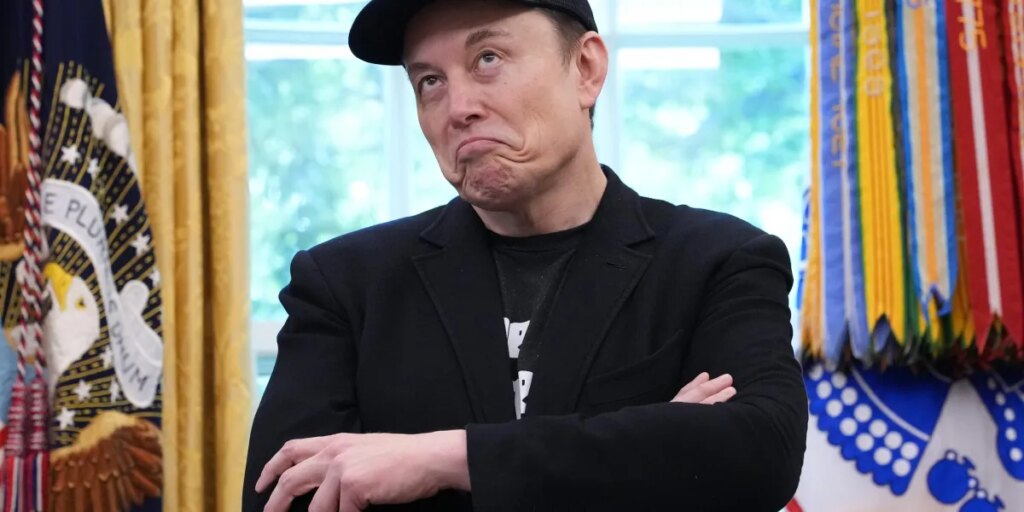
How Trump's Anthropic whiplash has helped China
Welcome to AI Decoded, Fast Company's weekly newsletter that breaks down the most important news in the world of AI. You can sign up to receive this newsletter every week via email here. Most Read from Fast Company Trump administration Okays Anthropic's powerful Mythos-class AI models After placing export restrictions on Anthropic's Claude Fable 5 and Mythos 5 models on June 12 -- effectively forcing their removal from the market -- the Trump Commerce Department has now reversed course. But in the end, the sudden regulatory pivot may play to China's advantage. Administration officials removed the controls Tuesday evening, after working with Anthropic for two weeks on a refined set of misuse protections. Anthropic promptly announced that it was turning Fable 5 back on for all customers, and turning on Mythos 5 for a select set of approved enterprise customers. The concern was that foreign actors might use Mythos or Fable to detect and exploit software vulnerabilities in U.S. government or enterprise systems, tasks for which Anthropic had said the models demonstrated surprising capacity. The Commerce Department also asked OpenAI to "stagger" the release of its latest frontier model, GPT-5.6. The government's intervention rattled investors and tech industry folks because the Trump administration, after pledging to stay away from AI regulation, effectively granted itself a "kill switch" over newly released frontier models. The government has a legitimate interest in the national security implications of frontier models, but the administration had no ready framework for evaluating the national security risk of new models, or a minimum set of guardrails that AI providers must build in to prevent misuse of the models. Anthropic says it hopes the work it did with the Commerce Department over the past two weeks will lay the groundwork for a set of standards that could apply to all U.S. frontier model providers. The Trump administration's sudden swerve into AI safety regulation may end up benefiting Chinese model makers. The administration's export restrictions on the Mythos models imposed a pause on the distribution of the U.S.'s best models at a time when Chinese AI labs are rapidly catching up with their U.S. counterparts -- and offering an ever-more compelling alternative to expensive models from Anthropic, OpenAI, and the like.
Alibaba to ban Claude Code in workplace after Anthropic's theft accusations - CNBC TV18
Alibaba bans employees from using Claude Code from July 10 due to security risks. Anthropic accused Alibaba of illicitly extracting its Claude AI model capabilities. Alibaba will ban employees from using Claude Code in workspace environments from July 10 due to alleged security risks involving embedded backdoors, a source familiar with the matter said. Alibaba did not immediately respond to a request for comment. The move was previously reported by Chinese financial news outlet Yicai. Earlier, the US AI company Anthropic accused Alibaba, the Chinese technology and e-commerce giant, of illicitly extracting its Claude AI model capabilities in what it said was the largest known attack of its kind on the company, according to a letter seen by Reuters. The strike by Alibaba is described as a "distillation" effort, which Anthropic has said involves training a less capable model on the outputs of a stronger one. Anthropic said the campaign was conducted between April 22 and June 5, 2026, and generated more than 28.8 million exchanges with Claude through almost 25,000 fraudulent accounts. Also Read: Bluspring Enterprises shares jump 10% after subsidiary bags ₹1,437 crore Vedanta contract Anthropic said in the letter that distillation is a way to help accelerate China's ability to reach Anthropic's advanced Mythos Preview capabilities. It said the campaign was conducted by operators affiliated with Alibaba and Alibaba Qwen, Alibaba's AI lab. Alibaba did not immediately respond to a request for comment. The letter, dated June 10, was sent to Senators Tim Scott and Elizabeth Warren, the chair and ranking member, respectively, of the U.S. Senate Banking Committee, ahead of a scheduled hearing on AI. In April, the White House accused China of stealing US AI labs' intellectual property on an industrial scale. Anthropic said in the letter that it was supportive of the US government's efforts to combat the attacks, including partnering with private sector AI companies through threat intelligence sharing and other exercises. Anthropic said in a February posting that it had identified a campaign by Chinese AI startup DeepSeek -- whose low-cost AI model sent shockwaves through the technology world in January 2025 -- and two other Chinese AI labs to illicitly extract capabilities from its Claude AI platform. It said DeepSeek's operation involved over 150,000 exchanges, while Moonshot AI was at a scale of over 3.4 million and MiniMax over 13 million.
Anthropic Says Claude Fable 5 Credit Access Is Temporary Amid High Demand
Claude Fable 5 is available again after the Department of Commerce lifted export restrictions, but the model will not remain part of regular Claude subscription access for long. Anthropic says Claude Fable 5 will be removed from standard subscription access after July 7, 2026. The change affects users on Pro, Max, Team, and select Enterprise plans. Claude Fable 5 Access Is Limited Until July 7 Until July 7, Claude Fable 5 remains included in eligible subscriptions, but only with strict limits. Anthropic says users can spend up to 50% of their weekly usage limits on Fable 5. The company says this gives subscribers time to test the model before the access model changes. After July 7, users who want to keep using Fable 5 will need usage credits. Fable 5 Is Not Becoming a Permanent Paid Add-On The change quickly raised concerns that Fable 5 would become a permanent pay-to-play model. However, a Claude Code lead engineer clarified that this is not Anthropic's long-term plan. The company intends to bring Fable 5 back to regular subscriptions once it has enough capacity. Anthropic says it wants Fable 5 to return as a standard part of subscription plans "as soon as capacity allows." Why Anthropic Is Restricting Fable 5 Access Anthropic says it expects demand for Fable 5 to be very high. The company also says demand remains difficult to predict. Because of that, it is limiting subscription access instead of delaying the rollout completely. In practice, Anthropic is giving users limited access now while reserving full subscription access for a later capacity expansion. Anthropic Expands Claude Access Elsewhere The Fable 5 change comes as Anthropic continues to expand Claude across Microsoft services. Claude models are now available on Microsoft Foundry on Azure, including the latest Claude Sonnet 5 model. A Claude AI agent is also reportedly coming to Microsoft Teams. That broader Microsoft push suggests Anthropic is expanding distribution while still managing capacity around its most powerful Claude models.
Anthropic in talks with Samsung for a potential AI chip collaboration: Report
Artificial Intelligence startup Anthropic is reportedly exploring the development of a custom AI chip and has held discussions with Samsung over a potential collaboration, according to a report by The Information. The development comes months after a Reuters report indicated that Anthropic was considering designing its own chips to address growing concerns around AI hardware availability and supply constraints. However, details surrounding the proposed processor remain unclear. According to the report, Anthropic has not yet finalised the intended purpose of the chip, its server integration strategy, or its performance targets. The company declined to comment on a possible partnership with Samsung. Also Read | UBTech brings companion robots closer to consumers with new U1 humanoid series Anthropic said its infrastructure approach will continue to rely on chips supplied by Google, Amazon and Nvidia, adding that it has nothing further to share regarding discussions with Samsung. The move would place Anthropic among a growing number of AI companies investing in custom silicon to optimise workloads and reduce dependence on Nvidia, which continues to dominate the AI accelerator market. The reported talks also follow recent announcements from competitors. Last week, OpenAI unveiled its first custom inference chip, dubbed 'Jalapeno', developed in partnership with Broadcom. The company claims the processor delivers improved performance-per-watt compared with competing alternatives. Also Read | Meta's Zuckerberg says AI agent tech progressing slower than expected Meanwhile, Amazon offers its Trainium chips for AI training workloads, while Google continues to expand the availability of its Tensor Processing Units (TPUs) through its cloud services. Story continues below this ad Samsung already plays a significant role in the AI supply chain through its semiconductor manufacturing business and partnerships with Nvidia. The South Korean technology giant has also explored collaborations with companies including Google as demand for specialised AI hardware continues to rise. (This article has been curated by Shivani P Menon, who is an intern with The Indian Express)
Anthropic Eyes Samsung for Custom AI Chips
Move aligns with industry shift from NVIDIA GPUs, could bolster Samsung's foundry amid Tesla, OpenAI ties Anthropic, the world's most valuable private artificial intelligence (AI) startup with a valuation of 965 billion dollars, is in discussions with Samsung Electronics to produce its own AI chips, according to a report by U.S. IT media outlet The Information on the 2nd (local time). Anthropic reportedly hired Clive Chan, who previously worked on custom chip development at OpenAI, last month to lead its in-house AI chip development. The company is also said to be in talks with multiple chip design firms. Once the detailed design is finalized, Anthropic is considering utilizing Samsung Electronics' 2-nanometer (1 nanometer equals one-billionth of a meter) foundry process and advanced packaging. The 2-nanometer process is the latest technology and the same one Samsung uses to manufacture Tesla's AI chips. Industry observers suggest that if Samsung secures the order for Anthropic's AI chips, it could boost the foundry business, which has recently secured big tech clients like Tesla. Anthropic's move aligns with the tech industry trend of developing in-house AI chips to reduce reliance on NVIDIA's graphics processing units (GPUs), which are widely used in AI accelerators. Google has consistently released its own Tensor Processing Units (TPUs), while OpenAI recently unveiled its first custom inference chip, "Jalapeno," developed in collaboration with Broadcom. Anthropic avoided specific comments on its chip development plans, stating, "NVIDIA's GPUs, Google's TPUs, and Amazon Web Services' (AWS) 'Trainium' chips will continue to play a central role in Anthropic's computational resources." In May, Anthropic announced a 65 billion dollars (approximately 100.1 trillion Korean won) investment round, with global memory giants Samsung Electronics, SK Hynix, and Micron participating as strategic infrastructure partners. At the time, Anthropic noted, "These technologies play a key role in supplying memory, storage devices, and logic chips worldwide." South Korea's tech industry speculated that Anthropic, which is developing its own AI chips, might collaborate with Samsung's foundry business. Among the three memory companies that are Anthropic's strategic partners, Samsung is the only one operating a foundry business.
Anthropic Brings Back Claude Fable 5, But Users Call It a Downgrade
Claude Fable 5 is available again after the Department of Commerce lifted its export restriction on Anthropic's most powerful public model. The return gives Max, Pro, and Team users access to Fable 5 again, but the relaunch comes with major limits. Anthropic has restored the model under stricter usage rules, and early reactions suggest many users expected a smoother comeback. Claude Fable 5 Is Back, But Not Fully Open Anthropic says Fable 5 is included in paid Claude plans, including Max, Pro, and Team. However, users cannot use the model freely across their full plan limits. The company currently allows users to spend up to 50% of their weekly usage allowance on Fable 5. That cap may frustrate users who signed up mainly to access Anthropic's highest-end model. Fable 5 Moves to Usage Credits After July 7 Anthropic also plans a bigger pricing shift after July 7. At that point, Fable 5 will move fully to a usage-credit system. That means users will need to manage Fable access more carefully instead of treating it like a normal included model. The change effectively turns Fable 5 into a premium model inside already paid Claude plans. Early Users Say Fable Feels Weaker Than Before Although this situation isn't ideal, it would be less concerning if Fable 5 met expectations. However, users report that it falls short and may even feel like a downgrade. Reddit users claim Anthropic now routes Fable through stricter safety systems more often. Several users say the model refuses, redirects, or falls back to Opus 4.8 in situations where the earlier Fable release would have completed the task directly. That has created confusion because Fable 5 still carries the reputation of Anthropic's strongest public model. If users regularly experience fallback behavior, the model may feel less capable in real use. Claude Code Users Report Frequent Fallbacks Developers using Claude Code appear to face some of the biggest problems. Some users report that Fable switches to Opus during normal coding tasks. They say this can happen even when the request involves legitimate development work. Prompts or files that mention terms such as "security," "vulnerable," "unsafe," or "hook" may trigger fallback, blocking, or stricter review. That creates problems for developers working on security tools, debugging, low-level systems, or vulnerability testing in controlled environments. Stricter Safeguards May Be Causing False Positives The likely cause is Anthropic's stricter safety approach after the restriction. The U.S. government had previously blocked Fable 5 over safety concerns, so Anthropic may now be applying a much wider safety margin. That approach may reduce risk, but it can also create false positives. Normal prompts may look risky when they contain technical words often associated with security research or exploit development. For everyday users, this means Fable 5 may still perform extremely well when it handles a task directly. The issue is that users may not always get the real Fable experience. Anthropic may still adjust the system over time. If the company reduces false positives and gives developers clearer guidance, Fable 5 could become more useful again without removing important safeguards. For now, Claude Fable 5 is back, but its return feels cautious, limited, and more complicated than a simple relaunch. Anthropic has also launched Claude Sonnet 5, its newest mid-range model. Microsoft has already brought Claude Sonnet 5 to Microsoft Foundry, giving developers another way to access Anthropic's latest model lineup.