News & Updates
The latest news and updates from companies in the WLTH portfolio.
Anthropic Study Finds Robots Capable of Most Physical Tasks but Cost-Effective for Few
Anthropic's Sept. 30 study finds robots can perform 74% of physical U.S. job tasks, or 34% of working hours, but are cheaper than humans for just 0.3% of work. Adding robots to AI raises exposure for hands-on jobs like cleaning and maintenance, though cost and dexterity remain major barriers. Anthropic published research on Sept. 30 measuring how well today's robots can handle U.S. job tasks. Robots can already perform 74% of physical tasks, which make up 34% of working hours, according to the study. But they are cheaper than human labor for just 0.3% of work. The findings come from a new robot exposure index built by Anthropic researchers Russell Legate-Yang and Maxim Massenkoff. Anthropic defines robots as autonomous physical machines that sense and act, and it used Claude to rate how well current robots perform each task. The scale runs from tasks no robot can do today to tasks robots already perform in unstructured environments such as city roads. Most of that capability is confined to controlled settings: robots do only 2% of physical tasks in unstructured environments, mostly driving. Counting robots changes the picture from Anthropic's earlier AI-only work. Around half of all work is exposed to large language models alone, and that rises to 81% when robots are added. In transportation and moving, less than 15% of tasks are exposed to LLMs, compared with about 90% once robots are included. Hands-On Jobs Get a Second Look Business Insider's Alistair Barr revisited the gardener question in an Oct. 17 column. He recalled that Anthropic's earlier jobs report suggested gardeners were among the safest workers "because AI couldn't pull weeds or tell a rose from a dandelion." In Anthropic's new chart, cleaning and maintenance, the group that includes gardeners and janitors, sees much higher exposure once robots are counted. Barr isn't convinced. "On paper, it makes sense. In practice, I'm skeptical," he wrote, pointing to how hard it is to identify the right plant and pull a weed out by the roots. The study has its own caveats here: cleaning is hard to standardize, and robot cleaners are often slower than humans and still several times more expensive. Exposure does not equal job loss. Cost is the most common barrier in Anthropic's estimates. Robots are cost-competitive today for roughly 300,000 workers. Robot prices have fallen about 3% a year since the 1990s, and at that pace it would take around 40 years for robots to become cost-competitive for 10% of work. After cost, the main barrier is capability, such as the dexterity needed to untangle wires; half of physical tasks wouldn't be automated at scale unless robots get better at handling objects. Workers most exposed to robots are more likely to be male, less educated and lower paid. In the top fifth of the index, they earn about $23 an hour on average, versus nearly $53 for workers with no exposure, and about 61% frequently lift or carry weight. Taxi drivers top the exposure list, followed by agricultural equipment operators and light truck drivers. The study backtests its approach against history. From 1977 on, jobs more exposed to existing robots saw larger declines in wages and employment in later decades. Robots have also kept picking up new work: each year, they became able to do about 2% of the physical tasks they previously couldn't. The authors say AI-powered robots could leapfrog the scale, for example by learning to climb ladders or use their grippers more deftly. Other limits would remain. Anthropic estimates current regulations would bar robots from 14% of physical tasks, and human preferences hold them back on about a quarter. For now, the report says, efforts to track AI's impact could watch drivers and warehouse packers for early signs of disruption. Packers are the largest occupation already exposed to cost-competitive robots, and their employment has fallen 22% since 2015.

Who gets a share of AI wealth? Anthropic and Musk have different answers
Anthropic will dedicate 5 per cent of its shares to a public-benefit fund, while Elon Musk has pledged SpaceX shares to American children, offering two different ways to distribute technology wealth Anthropic, the company behind the Claude family of AI models, said on Sunday that it would commit 5 per cent of its shares to a new Public Benefit Fund. Musk, meanwhile, pledged on Monday to give one SpaceX share to every child in America next year. The proposals come as AI companies attract huge investments and expand their businesses, while concerns grow over the technology's impact on jobs, safety and society. The difference lies in how the two plans would work. Anthropic's fund could finance charitable initiatives and potentially make direct payments to selected groups. Musk has said that giving shares directly to people is a better way to let the public participate in the future economy. Anthropic's fund could be worth billions Anthropic's proposed fund could be worth tens of billions of dollars, depending on the company's valuation. The AI firm is preparing for a potential initial public offering (IPO) that could value it at around $2 trillion. Reuters reported last week that some investors were also considering a lower valuation of about $1.5 trillion. At those valuations, a 5 per cent stake would be worth between $75 billion and $100 billion. These are estimates based on potential valuations, not cash that Anthropic has already raised for the fund. The company said the fund would be established as a wholly owned limited liability company, giving it flexibility to support different public-benefit initiatives. These could include large donations to non-profit organisations or direct distributions to specific groups of people. One area of focus could be the labour market. Anthropic has warned that AI could create enormous economic value but also disrupt jobs and cause instability for workers. The company has already committed $200 million to studying and addressing the effects of AI on employment. It said the new fund could allow it to take further steps as the technology develops. Anthropic also plans to give the fund the option of receiving more shares as the company grows. Its board could allocate an additional 2 per cent of the company's shares for every 50 per cent increase in its value above a baseline that has yet to be disclosed. The company said the fund would not use its Anthropic shares for lobbying or political donations in the United States or abroad. The new commitment builds on earlier pledges by Anthropic's founders and employees. The co-founders had pledged to donate 80 per cent of their equity holdings, while an employee donation-matching programme allows workers to pledge shares that the company matches. Anthropic said roughly 20 per cent of its shares would be dedicated to public-benefit purposes when these commitments are combined, excluding any additional shares that may later go to the fund. The company has yet to disclose the fund's full governance structure and the valuation thresholds that could increase its stake. Musk plans to give SpaceX shares to children Musk said on Monday that he would give one SpaceX share to every child in America next year, describing the move as the first of several such efforts. Based on US Census figures showing about 72 million children in the country, the proposed distribution could be worth roughly $11 billion at current share prices. Musk did not provide details on how the shares would be distributed, which children would qualify or whether recipients would face restrictions on selling them. SpaceX also did not immediately clarify whether the proposed giveaway would be linked to Trump Accounts, a US government-backed investment programme for children. Launched by the White House, Trump Accounts provide a government-funded $1,000 investment account for eligible US citizens born between 2025 and 2028. Families can add money to the accounts as the children grow up. The programme also allows companies and individuals to contribute to the accounts. Dell, Visa, Micron and Delta Air Lines are among the companies that have pledged additional funding or employer contributions. US President Donald Trump welcomed Musk's announcement, thanking him on Truth Social for giving SpaceX stock to millions of American children through the programme. Unlike a cash donation, the value of Musk's proposed contribution would depend on SpaceX's share price. Recipients could benefit if the stock rises, but the value of their holdings could also fall. Musk has argued that direct share ownership would allow people to benefit from the growth of companies shaping the future economy. Why AI companies are under pressure to share wealth The announcements come as AI's rapid growth brings both financial opportunities and concerns about its wider effects. Businesses are adopting AI tools to improve productivity and reduce costs. Some companies, particularly in the technology sector, have announced job cuts while pointing to efficiency gains from the technology. Anthropic has also warned that advanced AI could pose catastrophic or existential risks to humanity. Its proposed fund could support initiatives addressing some of these concerns, including the effects of automation on workers. The wider question is whether the gains from AI will remain concentrated among companies, founders and investors or reach a larger share of society. Anthropic's approach would direct part of its ownership towards a fund that can finance public-benefit projects. Musk's proposal would give children a direct financial stake in SpaceX, exposing the value of their holdings to the company's future performance. Neither initiative has yet provided all the details needed to assess how much the public will ultimately receive or how the benefits will be distributed. Anthropic still needs to explain the fund's governance and how its additional share commitments will work. Musk has not outlined the mechanics of his proposed giveaway.
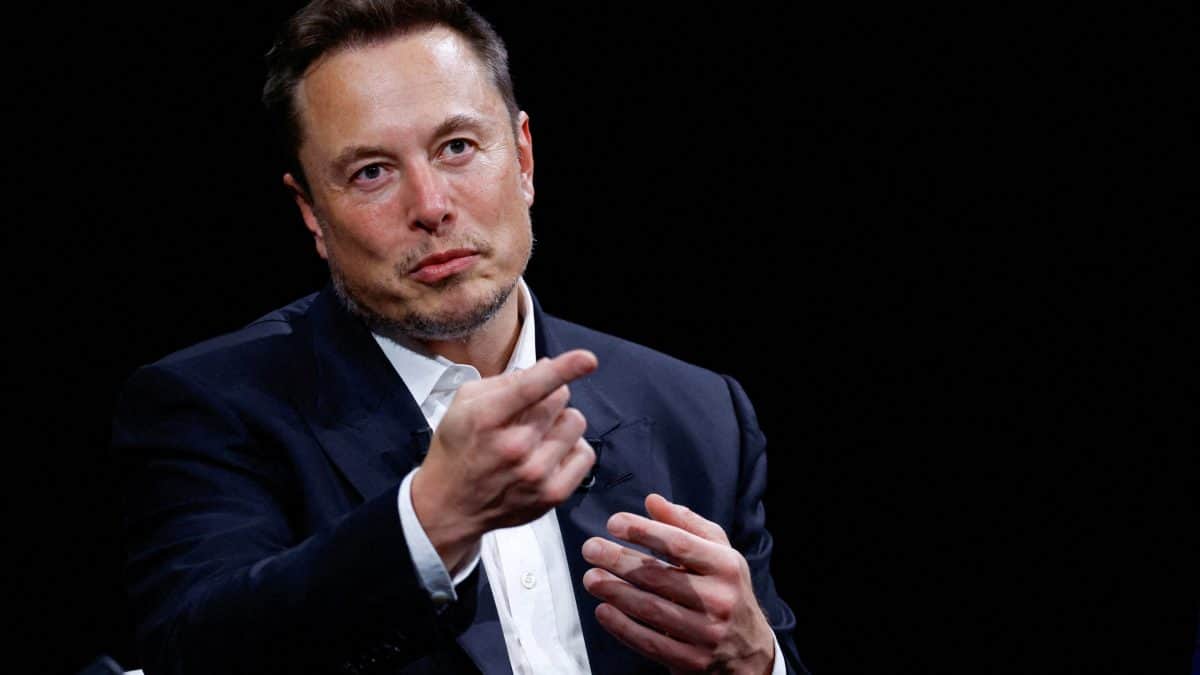
Musk, Anthropic outline duelling approaches to AI-era philanthropy
BENGALURU (Oct 19): Anthropic and Elon Musk have laid out sharply different blueprints for sharing some of the spoils of the AI boom, a split that may shape how the technology's financial windfall reaches the public. The creator of Claude models said over the weekend it is committing 5% of its shares to an unprecedented new fund for the "public good," while Musk pledged on Monday to give one SpaceX share to "every kid in America", arguing for such direct distributions as the burgeoning sector faces public scrutiny. Security breaches involving AI systems and warnings from industry leaders that runaway development of the technology could pose severe, even existential, risks have deepened AI safety concerns, adding to public anxiety over job losses. While Anthropic is betting on distributing wealth through nonprofit donations and direct contributions to specific populations, Musk, the world's richest person with a net worth of nearly US$1 trillion, has said he recommends "giving the shares directly to the public". "Next year, I will give one of my SpaceX shares to every kid in America. This will be the first of many," Musk, who runs Anthropic rival SpaceXSI, said in a post early on Monday. He held about 6.42 billion shares in the company as of June. SpaceX shares closed up about 1% on Monday. Anthropic said its initiative will give it more flexibility and scale to make donations for the benefit of humanity. The company is planning one of the biggest IPOs in history as a public benefit corporation, a legal structure that requires management to balance broader public interests with profitability goals. The flotation could value it at roughly US$2 trillion, although Reuters exclusively reported last week that some investors are weighing a lower valuation of around US$1.5 trillion. That would value a 5% stake towards the fund in a range of US$75 billion to US$100 billion. It would dwarf the still substantial potential value of Musk's share giveaway, which would be worth roughly US$11 billion at current share prices based on US census figures showing there are 72 million children in America. "Giving shares, which are stakes in the future economy, directly to the people is the way," Musk said. Musk's move comes months after the White House launched "Trump Accounts," a cradle-to-adulthood investment programme that will provide US citizens born between 2025 and 2028 a government-funded investment account of US$1,000 that families can build on. With the option for individuals and corporations to donate equity shares to the accounts, many top US companies including Dell, Visa, Micron and Delta Air Lines have already pledged support for the programme with employer matches or additional funding. "A BIG THANK YOU to our legendary friend, Elon Musk, for his incredible generosity in giving SpaceX Stock to millions of American children through TRUMP ACCOUNTS!," President Donald Trump said in a post on social media platform Truth Social. SpaceX did not immediately respond to a request on whether Musk's SpaceX share donations would be linked to Trump Accounts or come with any kind of lockup period. Earlier this year, SpaceX President Gwynne Shotwell and her husband pledged a share of their SpaceX stock to each of more than two million children under the Trump initiative. "That's a lot of shares... I'm sure somebody will be happy to take them," Robert Pavlik, senior portfolio manager at Dakota Wealth Management, who does not hold SpaceX shares in the portfolios he manages, said of Musk's announcement. "It feels like a publicity stunt... Will it create positive public sentiment? Perhaps." Michael Dell and his wife Susan have pledged US$6.25 billion in cash for Trump Accounts, aimed specifically at underprivileged children. In contrast, the value of Musk's contribution will depend on SpaceX's often volatile share performance. Most of Musk's philanthropic efforts have been through the Musk Foundation, which reportedly holds more than US$14 billion in assets. Berkshire Hathaway chairman Emeritus Warren Buffett, one of the most prominent figures in philanthropy, is reported to have given away US$60 billion so far, with most of the rest of his roughly US$150 billion fortune slated for philanthropy too. The Bill & Melinda Gates Foundation has distributed more than US$100 billion since its founding in 2000, with some of that fuelled by donations from Buffett. Labour market impact cited Anthropic, which has positioned itself as a safety-first AI lab, has said AI could pose "catastrophic or existential risks to humanity." The company said in its blog post its Public Benefit Fund could support initiatives including direct distributions to specific populations and efforts to address AI's impact on the labour market, building on a previously announced US$200 million commitment to study and address labor market disruption. Its proposed fund would be established as a wholly owned limited liability company and would receive an additional 2% of Anthropic's shares, at the board's discretion, for every 50% increase in the company's value above a baseline that has yet to be disclosed. Global companies have cut thousands of jobs after investing heavily in AI, with many, primarily tech firms, pointing to higher efficiencies from the technology's rapid adoption. Not for political giving The AI giant said none of the equity held by its fund would be used for lobbying or political giving in the US or abroad. US policymakers are weighing greater oversight of AI and companies are stepping up efforts to shape how the technology is regulated. Combined with its co-founders' pledge to donate 80% of their equity and an employee donation matching programme, roughly 20% of Anthropic's shares will be dedicated to public purposes, excluding any additional shares added later. Anthropic said it would say more soon on the fund's governance, structure and the valuation thresholds that could expand its ownership stake.
Canadian Publishers Sue Anthropic Over Alleged Use of News in Claude | EconoTimes
The Ontario case also challenges Anthropic's alleged access to publishers' websites when Claude users ask questions. Canadian news publishers have sued Anthropic over claims it used their journalism to develop Claude and retrieved content from their websites for user queries, bringing both practices before an Ontario court. Cartt.ca first reported the publishers' Oct. 6 lawsuit, The Canadian Press and Broadcast Dialogue said. The Canadian Press is a plaintiff, along with The Globe and Mail, Torstar and Postmedia. They allege copyright infringement, violations of website terms and circumvention of measures intended to limit copying. A court has not decided those claims. The publishers describe two ways they say Anthropic uses their work: incorporating reporting into the development of Claude and accessing their sites after users submit questions. The allegations concern both material collected for an AI model and content retrieved while people use the service. Anthropic's crawler policy describes separate tools for those activities. ClaudeBot gathers web material that might contribute to training, while Claude-User can fetch pages following a user's request. Anthropic says its bots observe website restrictions set through robots.txt. The policy describes its general practices and does not address the Ontario lawsuit. Broadcast Dialogue reported that the publishers say Anthropic benefits from their work without a license while they risk losing potential advertising, subscription and licensing revenue. Those claimed losses have not been assessed by a court. The Canadian Press said Anthropic had not answered its request for comment by the time of its Oct. 19 report. The publishers brought a separate Ontario action against OpenAI, with CBC/Radio-Canada joining them, on Nov. 28, 2024. On Nov. 7, 2025, a judge rejected a jurisdiction challenge from six OpenAI entities, allowing the claims against them to proceed in Ontario. That ruling addressed where the case could be heard; it did not decide the copyright allegations.
OpenAI accelerates fundraising ahead of Anthropic IPO
The ChatGPT maker wants a $30 billion round locked in before its rival's public debut sets a market price for frontier AI OpenAI is in a hurry, and the reason has a ticker symbol in its future. The ChatGPT maker is pushing to close a $30 billion funding round before Anthropic's anticipated IPO, according to Reuters. The goal is to avoid having its private valuation measured against a public one. The race to lock in a number OpenAI is seeking commitments from both existing backers and new investors. The round reflects a desired valuation of more than $1.4 trillion. For context, OpenAI's previous round closed on March 31, 2026. That raise brought in $122 billion at an $852 billion post-money valuation. The urgency is largely tied to infrastructure funding needs ahead of a planned 2027 public offering. Anthropic has already filed a confidential draft S-1 with regulators. That paperwork points to a potential IPO in November 2026. OpenAI has signaled its own listing will not come until at least 2027. That leaves a window where Anthropic could be the only frontier AI lab with a live, daily-traded price. How the two rivals stack up Anthropic raised $65 billion in May 2026 at a $965 billion post-money valuation. That figure sits above the $852 billion OpenAI fetched in March. Anthropic also reported Q3 revenue of $16.8 billion, a 46% increase. OpenAI's annualized revenue run-rate is reported to be between $50 billion and $70 billion following a series of new product launches. The compute bill comes due OpenAI estimates $600 billion in compute spending through 2030. Anthropic has disclosed approximately $518 billion in future obligations. What this means for investors and the AI sector If OpenAI closes its round before Anthropic lists, it locks in a valuation set by private negotiation rather than public trading. Anthropic's IPO would give investors their first clean read on how public markets value a pure-play frontier lab, separate from the cloud giants and chipmakers that have carried the AI narrative so far. Disclosure is another pressure point. A public company has to show its books on a regular schedule. Private companies can choose what to share and when, a luxury Anthropic is about to give up first. For OpenAI, the near-term milestones are clear: whether it finalizes the $30 billion round, at what valuation, and how quickly. For Anthropic, it is whether the November 2026 timeline holds and how the market receives the S-1 once it becomes public.
OpenAI accelerates fundraising as Anthropic eyes $1.5T IPO: Reuters
OpenAI is reportedly moving to expedite its fundraising efforts in anticipation of Anthropic's upcoming initial public offering (IPO), according to sources cited by Reuters. The ChatGPT developer aims to secure approximately $30 billion, potentially elevating its valuation beyond $1.4 trillion. This strategic move comes amid a competitive landscape, as Anthropic, another leading AI lab, is also preparing for a public market debut with a confidential S-1 filing, suggesting a potential IPO valuation around $1.5 trillion. OpenAI's accelerated fundraising could position it advantageously to attract large institutional and sovereign investors before Anthropic's financial disclosures provide a comparison. Key Takeaways * OpenAI's decision to fast-track fundraising appears consistent with efforts to bolster its financial standing ahead of Anthropic's IPO. * Pricing suggests increased confidence in OpenAI's IPO timeline, reflecting potential momentum towards a public offering. * The news could also impact Anthropic's IPO market cap predictions, as heightened interest in AI sector investments is likely. What to Watch Observers will be looking for announcements from OpenAI regarding confirmation of its fundraising achievements or any hints towards an IPO filing. Key indicators will include statements from leadership figures like CEO Sam Altman and CFO Sarah Friar. Additionally, developments in Anthropic's IPO process, such as the release of its S-1 filing or updates on its valuation targets, could further influence market dynamics. Market participants will likely monitor these events for indications that either company is gaining a competitive edge in the AI industry.

'Two-horse race': OpenAI seeks to accelerate fundraising ahead of Anthropic IPO, sources say
Move may be a bid to lock in capital that could otherwise go to its rival's offering, say investors [NEW YORK] OpenAI is racing to secure investor commitments before rival Anthropic's expected public market debut in mid-November, in an unusually fast fundraising that could value the ChatGPT maker at over US$1.4 trillion, according to two people familiar with the matter. The rapid timetable reflects, in part, a desire to get ahead of Anthropic as the two frontier labs are increasingly tapping in to a similar investor base, the people said, adding that OpenAI wants to capitalise on its recent revenue growth after launching new models. SoftBank Group, Abu Dhabi-based MGX and other existing backers of OpenAI are in talks to join the round of about US$30 billion, one of the people said. The acceleration underscores how closely the two artificial intelligence developers are competing for capital as both pursue trillion-dollar price tags, amid growing concern about rising interest rates, significant volatility in technology stocks and rising scrutiny of AI valuations. OpenAI held meetings with long-only funds and sovereign wealth funds last week while Anthropic was hosting its own investor day. OpenAI's funding round is expected to move faster than is typical for an offering of its size, the people said. Investors familiar with the company say OpenAI also needs capital to fund its substantial infrastructure commitments and bolster its balance sheet if a deterioration in the IPO markets further delays its planned 2027 listing. Though there is high demand for the shares of both companies, investors face the challenge of evaluating and allocating capital to two complex, competing offerings within days or weeks of each other. Some investors view OpenAI's financing push as an effort to lock in capital from funds that might otherwise devote more of their resources to Anthropic's IPO, the people said. OpenAI and SoftBank declined to comment. Anthropic and MGX did not immediately respond to requests for comment. Trying to head off comparisons OpenAI is pitching investors on growth that accelerated after the launch of its GPT-6 Astra model, saying it had reached US$50 billion in annualised revenue and expecting that figure to rise to US$70 billion by end-2026, according to one of the people. OpenAI has also cut prices on its cheaper models, which it said has boosted usage, and told investors it can further lower the price of AI models, the person added. Anthropic's annualised revenue reached roughly US$65 billion by July, Reuters previously reported. Its quarterly revenue jumped to US$16.8 billion in the third quarter from US$11.6 billion in the second quarter in 2026, it told investors, but slowing month-to-month revenue growth has raised concerns among investors about its valuation. OpenAI is seeking to complete the fundraising before Anthropic's financial disclosures give investors a fuller picture of its business and invite comparisons between the two companies, one person said. The disclosures could prompt investors to press OpenAI chief financial officer Sarah Friar for more details about the company's revenue growth and financial outlook, the person added. OpenAI records revenue on a net basis by subtracting partner shares upfront. It has accused Anthropic of inflating its revenue by counting the full, gross value of contracts sold through third-party cloud providers. Anthropic told Reuters earlier that it follows established accounting practices. "OpenAI could want to set its own valuation and not have to worry about a comp (comparison)," said Edward Best, co-chair of capital markets at Willkie Farr & Gallagher, who is not working on the deal and commented on a hypothetical basis. "It's really a two-horse race in terms of being public." OpenAI was last valued at US$852 billion in March, after a record-breaking US$122 billion funding round, including a commitment from Amazon.com, which agreed to invest up to US$50 billion in the lab. The Financial Times previously reported some details of OpenAI's potential fundraising. IPO plans hit by market jitters A number of companies preparing to go public have decided to wait until after Anthropic's planned IPO, wary of competing for investor demand amid market volatility and a pullback in AI stocks, bankers and investors said. Some late-stage companies are also timing private fundraising rounds to avoid coinciding with Anthropic's expected debut, the bankers and investors said. Some existing and prospective Anthropic investors have argued for a valuation closer to US$1.5 trillion for its market debut - instead of the desired US$2 trillion - after the AI startup's third-quarter results fell short of expectations, Reuters reported last week. The reassessment comes amid a choppy market since September, with volatility in oil prices, rising bond yields and growing concerns about AI safety weighing on investor appetite for technology stocks. Investors are also scrutinising the cost of AI infrastructure, including the debt needed to finance the data centres powering the boom. At the centre of the latest concerns is cloud provider CoreWeave, whose shares and debt tumbled last week as investors scrutinised the nearly US$50 billion in borrowings used to fund its rapid expansion. The uncertainty has disrupted what had been expected to be a busy autumn for IPOs, with companies reassessing their listing plans amid market volatility and concerns about valuations. Blackstone-backed AirTrunk Reit, Nvidia -backed Firmus and SoftBank-backed SB Energy have either pulled or paused their listings. Nuclear services company Holtec cited a "perfect storm", driven mainly by uncertainty around data centre demand, when it pulled its US listing in September. Companies in the Philadelphia Semiconductor Index, widely viewed as a proxy for AI-related semiconductor demand, have shed US$1.6 trillion in less than two weeks, while AI infrastructure companies have come under particular pressure. REUTERS
Structured outputs for Anthropic Claude models on Amazon Bedrock
Amazon Bedrock now supports structured outputs for all Anthropic Claude models, on both the bedrock-runtime and bedrock-mantle endpoints, where the model is available. Whether you call Claude through Boto3 and the bedrock-runtime APIs or through the Messages API and the bedrock-mantle endpoint, you can now receive schema-compliant JSON responses that conform to a defined structure. You no longer need custom parsing, retry logic, or post-processing. Practical applications With structured outputs for Claude on Amazon Bedrock, you can automate reliable, schema-compliant tasks across industries. Examples include extracting every required field from financial earnings reports and compliance documents, parsing clinical notes into Electronic Health Records (EHR), and enriching product catalogs with consistent, validated results. You can also analyze contracts for key terms, parties, and obligations, or power intelligent support ticket routing where intents, sentiments, and entities always match your application's data model. What changes with structured outputs on Amazon Bedrock Structured outputs use constrained decoding to enforce your JSON schema during token generation, not after the fact. The model doesn't produce tokens that would violate your schema. This changes output formatting from probabilistic to deterministic. Two complementary mechanisms are now available on both Amazon Bedrock endpoints: What this means for you Each response is a valid JSON, so you no longer encounter JSON.parse() errors or parsing exceptions. Responses are also type safe: field types are enforced, and required fields are always present. Because outputs always conform to your schema, you don't need retries to handle schema violations, making your integration more reliable. Structured outputs also constrains responses to only the fields your schema defines, which reduces output token count and can lower inference costs for high-volume workloads. These properties make structured outputs production ready, so you can deploy at scale without additional schema-validation code. Supported models and availability Structured outputs works with batch inference, so you can process large volumes of requests asynchronously while still receiving schema-compliant outputs. On the bedrock-runtime endpoint, it also works with cross-Region inference, so you can use it across AWS Regions without additional setup. If you need responses in real time, you can stream structured responses as typed events. How it works When you make a request with a JSON schema, here's what happens behind the scenes: * Schema validation - Amazon Bedrock validates your JSON schema against the supported JSON Schema Draft 2020-12 subset. * Grammar compilation - For new schemas, Amazon Bedrock compiles a grammar artifact (the first request might take slightly longer). * Caching - Compiled grammars are cached for 24 hours, making subsequent requests faster. * Constrained generation - The model generates tokens that produce valid JSON matching your schema. Performance considerations For performance, the first request with a new schema might take longer because Amazon Bedrock compiles a grammar artifact before generation begins. After that initial compilation, subsequent requests using the same schema run with minimal overhead because the compiled grammar is cached. This cache is scoped to your account and lasts for 24 hours from first access. Changing the structure of your JSON schema invalidates the cache and triggers a fresh compilation, while changing only the name or description fields leaves the cached grammar intact. Getting started: Structured outputs with the InvokeModel API (bedrock-runtime) The InvokeModel API takes the Anthropic-native request body, so the schema goes in output_config.format as a JSON object rather than a JSON string. The following example shows how to extract the structured lead data from a customer email using boto3 with an Anthropic Claude model: Python JSON The response conforms to your schema. No additional validation is required. For additional API usage examples, including the Messages API, see the accompanying sample notebook. Strict tool use for agentic workflows Amazon Bedrock Mantle is designed for agentic applications with server-side tools, background inference, and stateful conversations. With strict tool use on the bedrock-mantle endpoint, you can now guarantee that tool parameters match your input schema exactly. The following example shows how to define a tool with strict schema enforcement: Setting strict: true constrains the model's tool input to match your schema exactly. The location field is always a string, and the unit field is always either celsius or fahrenheit. The model can't add fields outside your schema, so the tool input contains only what your schema specifies. This is especially valuable for agentic use cases on Amazon Bedrock Mantle, where models orchestrate multi-step workflows with server-side tools like web search and code interpreter. Top use cases for Claude structured outputs Structured outputs reduce error-handling complexity the most in three common patterns: * Data extraction: Extract fields from invoices, contracts, email, and transcripts into JSON that always matches your schema, ready to load into databases or customer relationship management (CRM) systems. * Reliable agent tool calls: Validate tool arguments against their schemas at generation time, so multi-step agent workflows run without failures from malformed input. * Classification at scale: Classify tickets, leads, or content by intent, priority, and sentiment for routing, moderation, and evaluation. Claude Haiku 5.5 reliably handles quick and repetitive workloads such as summaries, compactions, database queries, and classification requests. The following example shows how to classify and route incoming data using the Invoke API and Haiku 5.5: Requirements and best practices To use structured outputs effectively on Amazon Bedrock, follow these guidelines: * Set additionalProperties: false on all objects: This is required for structured outputs to work. Without it, your schema won't be accepted. * Use descriptive field names and descriptions: Models use property names and descriptions to understand what data to extract. Clear names like customer_email outperform generic names like field1. * Use enum for constrained values: When a field has a limited set of valid values, use enum to constrain options. * Start basic, then add complexity: Begin with the minimum required fields and add complexity incrementally. Basic schemas compile faster, are easier to debug, and keep your request payload lean because the schema counts toward the Converse API payload size. * Reuse schemas to benefit from caching: Structure your application to reuse schemas across requests. The 24-hour grammar cache improves performance for repeated queries. * Check the stop reason in every response: Two scenarios can produce non-conforming responses: refusals (when the model declines for safety reasons) and token limits (when max_tokens is reached before completing). Handle both cases in your code. * Test with realistic data before deployment: Validate your schemas against production-representative inputs. Edge cases in real data often reveal schema design issues. For additional best practices and schema design recommendations, see Structured outputs in the Amazon Bedrock User Guide. Supported JSON Schema features * All basic types: object, array, string, integer, number, boolean, null. * enum (strings, numbers, booleans, or nulls only). * const, anyOf, allOf (with limitations). * $ref, $def, and definitions (internal references only). * String formats: date-time, time, date, duration, email, hostname, uri, ipv4, ipv6, uuid. * Array minItems (only values 0 and 1). Not supported These keywords are accepted by the API but are not enforced during generation. A request that includes them returns a successful response, and the model can still return values that violate them. Validate these constraints in your application rather than relying on the schema to enforce them. * Recursive schemas. * External $ref references. * Numerical constraints (minimum, maximum, multipleOf). * String constraints (minLength, maxLength). * additionalProperties set to anything other than false. Conclusion Structured outputs for Anthropic Claude models on Amazon Bedrock provides the reliability that production AI applications require. It is available now on both the bedrock-runtime and bedrock-mantle endpoints. By combining JSON Schema output format and strict tool use, you can build data pipelines that need no additional validation. You can also create reliable agentic workflows and production AI applications without custom parsing or retry logic. Structured outputs for Claude on Amazon Bedrock is now generally available. To learn more, see the Amazon Bedrock documentation and explore our sample notebook. What workflows could validated, schema-compliant JSON improve in your organization? Share your feedback and questions in the comments.
OpenAI races to raise $30 bln ahead of Anthropic IPO, Reuters reports By Investing.com
Investing.com-- OpenAI is accelerating fundraising to secure investor commitments before rival Anthropic's expected mid-November stock market debut, in a push that could value the ChatGPT maker at more than $1.4 trillion, Reuters reported on Monday, citing people familiar with the matter. The company is seeking about $30 billion from investors, including existing backers SoftBank Group (TYO:9984) and Abu Dhabi-based MGX, as both artificial intelligence developers compete for capital from sovereign wealth funds and major institutional investors, the report said. OpenAI is pitching investors on annualized revenue of $50 billion, which it expects to reach $70 billion by year-end following the launch of its GPT-6 Astra model, Reuters reported. Anthropic's quarterly revenue rose to $16.8 billion in the third quarter from $11.6 billion in the second, though slower monthly growth has raised questions about its valuation. The accelerated fundraising could help OpenAI secure capital before Anthropic's financial disclosures invite comparisons between the businesses. OpenAI was valued at $852 billion in March after raising $122 billion, the report said. The funding push comes amid volatile technology markets, rising bond yields and scrutiny of the debt required to finance AI infrastructure, complicating both companies' ambitions for trillion-dollar valuations.

AI & Tech Brief: Anthropic's leaked bill
The AI regulation draft is markedly different than what Anthropic CEO Dario Amodei advocated for this summer * Anthropic's leaked draft frontier AI legislation is markedly different than the Federal Aviation Administration model that Anthropic CEO Dario Amodei proposed this summer. * Under the Anthropic framework, the labs get to write the standards that they must then comply with. Powerful groups in the AI safety camp are suggesting the government should do so instead. * Anthropic may be trying to curry favor and appear constructive on AI policy with the Trump administration -- after being on the outs for so long. This is Benjamin Guggenheim. Welcome to WP Intelligence's AI & Tech Brief, where we examine the transformative technology of artificial intelligence at the intersection of innovation, policy and power. Get in touch at [email protected] or on Signal at ben_guggenheim.88. The Lead Brief Anthropic's leaked draft legislation deviates in surprising ways from what the company has said in the past regarding frontier regulation. It's also surprising that the AI company is putting its name to and circulating its own legislation in the first place -- the contents of which have opened the floodgates to criticism from both the AI safety camp and the anti-regulation camp close to the Trump administration. "I've never seen someone say 'Hey, this is the Google-branded bill or the Meta-branded bill.' They're subtle," said one person who works in AI policy in Washington, who spoke on the condition of anonymity to speak candidly. "They're hopelessly naive on this. You're [putting out] an invitation to just get roasted from the left and the right." What's in the draft legislation: The bill, reported by Politico on Friday, calls on large AI developers to write and comply with their own safety framework describing how the respective companies deal with risks and respond to critical safety incidents. Here are four key takeaways from the text, which differs in some notable ways from the most prominent proposals on frontier AI put forward so far by Reps Lori Trahan (D-Massachusetts) and Jay Obernolte (R-California), as well as by the top Democrat on the Senate Commerce Committee, Maria Cantwell (D-Washington): 1. The legislation is no "Federal Aviation Administration" for AI. Anthropic CEO Dario Amodei wrote in a June essay that model AI regulation should be similar to how the FAA sets out minimum standards for plane designs. An FAA-type model reflects a very hands-on approach by the government: The agency not only certifies aircraft model designs but also the factories that build the planes -- and it has significant authorities to revoke certification that planes are airworthy. But in Anthropic's leaked proposal, the frontier developers would write their own safety plan to determine whether models pose unacceptable risks. The plan is legally binding (the AI company is supposed to submit to the Commerce Department an annual statement on how it is complying with its own safety framework), but the framework nonetheless gives significant leeway for the labs themselves to self-regulate. Contrast this with Cantwell's plan, which would have the National Institute of Standards and Technology set standards against which the labs are evaluated. Under Obernolte and Trahan's Frontier Act, labs will write their own plans in accordance with minimum standards outlined by the Commerce Department. "It feels incongruous with Anthropic's otherwise-strong public statements on the need for robust regulation to promote a 'race to the top,'" said Samuel Hammond, the director of AI policy at the Foundation for American Innovation. "I have no inside knowledge, but it feels like an exercise of having an attorney write up an older framework when the conversation -- and Overton window -- has already moved on," Hammond said. The auditing regime: Unlike the Frontier Act -- which would have independent verification organizations (IVOs) for very large AI developers licensed under the Commerce Department -- the Anthropic bill would have auditors registered and rated by Commerce (and AI companies would have to have their guardrails checked by these independent auditors). In other words, under Anthropic's proposed system, the government would have less direct oversight and power over the evaluators, which could arguably be a good or bad thing. If the auditors are too dependent on AI companies for their compensation, for example, critics have warned that companies might want to "audit-shop" and pick auditors that will give them more favorable assessments. 2. The Anthropic proposal potentially sweeps in a larger selection of AI companies. Anthropic's draft bill uses a lower threshold to define a frontier model that would be subjected to these regulations. The draft text says that models that were trained using more than 10 septillion calculations (10 to the power of 25) qualify; the Frontier Act and the California AI transparency and safety AI law, by contrast, use a threshold of 100 septillion (10 to the power of 26). The difference may play into the arguments of the anti-regulation crowd, such as former White House AI czar and co-chair of the President's Council of Advisors on Science and Technology David Sacks, who has argued that Anthropic wants to create a "regulatory moat" around its business that sinks smaller competitors with compliance costs. "As written, however, it will eventually sweep in most of Silicon Valley, damaging the start-up ecosystem," said Sacks in a social media post responding to the framework, and noting that the definition includes calculations from fine-tuning and modifying models. "In practice, that captures almost all meaningful post-training -- work that is becoming commonplace in the enterprise." It's important to note that several of the draft bill's provisions, such as those pertaining to the safety framework, only apply to large labs with revenue greater than $500 million or expenditures in excess of $1 billion (though reporting requirements also apply to smaller frontier developers). According to AI research firm Epoch AI, several models released in 2024, including those in Google Gemini and Meta Llama families, were trained with between 10 and 50 septillion operations, which falls below California's threshold but above Anthropic's threshold. (The Washington Post has a content partnership with OpenAI.) By contract, Epoch estimates that OpenAI's recent model, GPT-6 Astra, was trained using 940 septillion operations. 3. Under the new bill proposed by Anthropic, the Commerce Department needs to clear a high bar in order to force a pause on frontier AI development. Under the Anthropic bill draft, the Commerce Department must first go to a court and establish by "preponderance of evidence" that the model poses an imminent risk of death or serious injury to more than 50 people or more than $1 billion in property damage. "[The U.S. government] should retain more emergency optionality without having to make an unreasonably detailed affirmative case that predicts whether 50 people will die or 49," said Sneha Revanur, founder and president of AI safety advocacy organization Encode Action, in a social media post. "It's nakedly self-interested for Anthropic to shop around provisions that serve to protect its own wiggle room." On the other hand, it's understandable that Anthropic might want protections from a capricious shutdown of its model after the Trump administration used a legally dubious export-control directive to shut down Anthropic's Fable model earlier this year. Emil Michael, a senior Department of Defense official and a vice chair of Trump's Super Intelligence task force, told the Information Monday that the administration reserves export-control authority to get AI labs to retract their models. Food for thought: The proposal is similar to legislation that was under negotiation between Sen. Amy Klobuchar (D-Minnesota) and Senate Majority Leader John Thune (R-South Dakota) under the auspices of Senate Commerce Chair Ted Cruz (R-Texas). Cruz is a China hawk who, along with Sacks, has previously pushed a preemption on state AI laws and favored an extremely light-touch approach to federal AI regulation. "They're so desperate to be seen as constructive," the person who works on AI policy said of Anthropic's federal affairs team. 4. The preemption of state laws is significant enough to draw the ire of AI safety advocates. Currently, Anthropic's draft text would preempt laws governing public disclosure, incident reporting and third-party evaluation. It would not touch other laws governing children's safety and civil rights. As written, however, it's unclear whether the bill would also block states' abilities to shut down models with emergency authorities. "Some of the preemption provisions are remarkably far-reaching and consequential," said Nathan Calvin, general counsel at Encode, in a social media post. "Most outrageously, it has a provision that looks like it intended to stop states from enforcing laws or judicial decrees that 'suspend the development, deployment or internal use of an AI model.'" As I've noted previously, the trade-off in any upcoming AI legislation will be a national standard for some extent of preemption requested by the "accelerationist" camp. I've heard from several Capitol Hill staffers, policy advocates and lobbyists to expect another stab at preemption from that camp in the lame-duck session. "If preemption is included in federal legislation, the trade should be to achieve a nationwide policy that's generally stronger and broader than what can be implemented through individual state legislative provisions," said Anthony Cimino, the head of federal affairs at Anthropic, in a social media post responding to the criticisms. "We've emphasized that any preemption in the AI safety context should be narrow, even scalpel-like." This newsletter is published by WP Intelligence, The Washington Post's subscription service for professionals that provides business, policy and thought leaders with actionable insights. WP Intelligence operates independently from The Washington Post newsroom. Learn more about WP Intelligence.

Exclusive-OpenAI seeks to accelerate fundraising ahead of Anthropic IPO, sources say
NEW YORK, Oct 19 (Reuters) - OpenAI is racing to secure investor commitments before rival Anthropic's expected public market debut in mid-November, in an unusually fastfundraisingthat could value the ChatGPT maker at over $1.4 trillion, according to two people familiar with the matter. The rapid timetable reflects, in part, a desire to get ahead of Anthropic as the two frontier labs are increasingly tapping in toa similar investor base, the people said, adding that OpenAI wants to capitalize on its recent revenue growth afterlaunching new models. SoftBank Group, Abu Dhabi-basedMGX and other existing backers of OpenAI are in talks to join the round of about $30 billion, one of the people said. The acceleration underscores how closely the two AI developers are competing for capital as both pursue trillion-dollar price tags, amid growing concern about rising interest rates, significant volatility in technology stocks and rising scrutiny of AI valuations. OpenAI held meetings with long-only funds and sovereign wealth funds last week while Anthropic was hosting its owninvestor day. OpenAI's funding round is expected to move faster than is typical for an offering of its size, the peoplesaid. Investors familiar with the company say OpenAI also needs capital to fund its substantial infrastructure commitments and bolster its balance sheet if a deterioration in the IPO markets further delays its planned 2027 listing. Though there is high demand for the shares of both companies, investors face the challenge of evaluating and allocating capital to two complex, competing offerings within days or weeks of each other. Some investors viewOpenAI's financing push as an effort to lock in capital from funds that might otherwise devote more of their resources to Anthropic's IPO, the people said. OpenAI and SoftBank declined to comment.Anthropic and MGX did not immediately respond to requests for comment. TRYING TO HEAD OFF COMPARISONS OpenAI is pitching investorson growth that accelerated after the launch of its GPT-6 Astra model, saying it had reached $50 billion in annualized revenue and expecting that figure to rise to $70 billion by year-end, according to one of the people. OpenAI has also cut prices on its cheaper models, which it saidhas boosted usage, and told investors it can further lower the price of AI models, the person added. Anthropic's annualized revenue reached roughly $65 billion by July, Reuters previously reported. Its quarterly revenuejumped to $16.8 billion in the third quarter from $11.6 billion in the second quarter this year, it told investors, but slowing month-to-month revenue growth has raised concerns among investors about its valuation. OpenAI is seeking to complete the fundraising before Anthropic's financial disclosures give investors a fuller picture of its business and invite comparisons between the two companies, one person said. The disclosures could prompt investors to press OpenAI Chief Financial Officer Sarah Friar for more details about the company's revenue growth and financial outlook, the person added. OpenAI records revenue on a net basis by subtracting partner shares upfront. It has accusedAnthropic of inflating its revenue by counting the full, gross value of contracts sold through third-party cloud providers. Anthropic told Reuters earlier that it follows established accounting practices. "OpenAI could want to set its own valuation and not have to worry about a comp (comparison)," said Edward Best, co-chair of capital markets at Willkie Farr & Gallagher, who is not working on the deal and commented on a hypothetical basis. "It's really a two-horse race in terms of being public." OpenAI was last valued at $852 billion in March this year, after a record-breaking $122 billion funding round, including a commitment from Amazon.com, which agreed to invest up to $50 billion in the lab. The Financial Times previously reported some details of OpenAI's potential fundraising. IPO PLANS HIT BY MARKET JITTERS A number of companiespreparing to go public have decided to wait until after Anthropic's planned IPO, wary of competing for investor demand amid market volatility and a pullback in AI stocks, bankers and investors said. Some late-stage companies are also timing private fundraising rounds to avoid coinciding withAnthropic's expected debut, the bankers and investors said. Some existing and prospective Anthropic investors have argued for a valuation closer to$1.5 trillion for its market debut -- instead of the desired $2 trillion -- after the AI startup's third-quarter results fell short of expectations, Reuters reported last week. The reassessment comes amid a choppy market since September, with volatility in oil prices, rising bond yields and growing concerns about AI safety weighing on investor appetite for technology stocks. Investors are also scrutinizing the cost of AI infrastructure, including the debt needed to finance the data centers powering the boom. At the center of the latest concerns is cloud provider CoreWeave, whose shares and debt tumbled last week as investors scrutinized the nearly $50 billion in borrowings used to fund its rapid expansion. The uncertainty has disrupted what had been expected to be a busy autumn for IPOs, with companies reassessing their listing plans amid market volatility and concerns about valuations.Blackstone-backed AirTrunk REIT, Nvidia-backed Firmus and SoftBank-backed SB Energy have eitherpulled or paused their listings. Nuclear services company Holtec cited a "perfect storm," driven mainly by uncertainty around data-centerdemand, when it pulled its US listing last month. Companies in the Philadelphia Semiconductor Index, widely viewed as a proxy for AI-related semiconductor demand, have shed $1.6 trillion in less than two weeks, while AI infrastructure companies have come under particular pressure. (Reporting by Echo Wang and Sabrina Valle in New York and Krystal Hu in San Francisco; Editing by Colin Barr and Matthew Lewis)
Ex-Google CEO Eric Schmidt Reportedly Owns 1% Of Anthropic
* Eric Schmidt holds approximately a 1% equity stake in Anthropic PBC after pumping tens of millions of dollars into its Series A round in 2021. * Depending on the upcoming IPO valuation, projected between $1.8 trillion and $2 trillion, Schmidt's fortune could surge to near $80 billion. * Anthropic's anticipated offering is slated to begin marketing by mid-November. Former Google CEO Eric Schmidt now owns roughly a 1% equity stake in artificial intelligence startup Anthropic PBC, Bloomberg reported. Schmidt had pumped tens of millions of dollars into the company's Series A fundraising round back in 2021, when, according to PitchBook data, Anthropic was valued at a modest $461 million. It remains unverified whether Schmidt has liquidated any portion of his initial holdings since that time. Representatives for both Schmidt and Anthropic declined to comment when contacted by Bloomberg. Staggering Wealth Projections Anthropic's impending public market debut is poised to unlock monumental fortunes not only for its seven co-founders -- who already command $8 billion apiece -- but also for early institutional and individual backers like Schmidt. Bloomberg reports that private market indicators point toward a fair valuation between $1.8 trillion and $2 trillion for the Claude developer. At the upper limit of that projected range, Anthropic's value would represent an astronomical surge of more than 4,300 times its original Series A valuation. Even if evaluated at Anthropic's more recent private valuation of $965 billion, Bloomberg notes that Schmidt stands to add nearly $10 billion to his existing $57.5 billion net worth. Schmidt's AI Portfolio Schmidt is an established tech investor through entities like Tomorrow Ventures, Innovation Endeavors, and his Hillspire family office. While his earlier investments largely targeted consumer internet, financial technology, and standard software, his focus has shifted heavily toward artificial intelligence. Bloomberg reports that Anthropic plans to officially launch initial public offering marketing as early as the week of November 9, with formal trading expected to commence prior to the U.S. Thanksgiving holiday and no later than year-end. Company insiders told Bloomberg that Anthropic expects to match or surpass SpaceX's (SPCX) record-setting $1.77 trillion public debut in June. Alphabet Inc.(GOOG, GOOGL), Amazon.com Inc.(AMZN), Nvidia Corp.(NVA), and Microsoft Corp. (MSFT) alongside venture funds like Sequoia Capital and Altimeter Capital, fueled Anthropic's $65 billion funding round in May. Retail sentiment on Stocktwits was 'bullish' with 'high' message volumes for Anthropic.

OpenAI seeks $1.4 trillion valuation in $30 billion funding push ahead of Anthropic IPO - Tech Startups
OpenAI is racing to raise roughly $30 billion at a valuation exceeding $1.4 trillion before rival Anthropic makes its expected stock market debut in November. The ChatGPT maker is moving to secure investor commitments ahead of what could become one of the biggest IPOs in history, setting up a high-stakes battle between two AI giants competing for the same pool of capital. SoftBank, Abu Dhabi-based investment firm MGX, and existing OpenAI backers are in discussions to participate in the funding round, Reuters reported Monday, citing two people familiar with the matter. "OpenAI is racing to secure investor commitments before rival Anthropic's expected public market debut in mid-November, in an unusually fast fundraising that could value the ChatGPT maker at over $1.4 trillion," Reuters reported. The timing is no coincidence. Anthropic is preparing for a potential public listing in mid-November, and OpenAI wants to lock in commitments before investors get a closer look at its competitor's financial performance. The fundraising effort comes just seven months after OpenAI secured $122 billion in committed funding at an $852 billion valuation in March. A new valuation exceeding $1.4 trillion would represent an increase of more than 64%, putting the privately held AI company in the same financial league as some of the largest publicly traded technology businesses. The proposed financing remains under discussion, and neither the fundraising amount nor the valuation has been finalized. OpenAI's $50 billion revenue run rate fuels trillion-dollar ambitions Behind OpenAI's aggressive fundraising strategy is an extraordinary claim about its revenue growth. The company has told prospective investors that its annualized revenue reached $50 billion following the release of its GPT-6 Astra model. OpenAI expects that figure to climb to $70 billion by the end of 2026, Reuters reports. Those figures represent annualized revenue based on current business activity, rather than sales already recorded over a full year. OpenAI has been lowering prices for its smaller AI models, a strategy it says has increased usage. The company believes further price reductions could attract more customers and accelerate adoption. At a $1.4 trillion valuation, OpenAI would be valued at approximately 28 times its current reported annualized revenue. Reaching its $70 billion year-end target would bring that multiple down to roughly 20 times, assuming the valuation stays unchanged. Investors are betting that OpenAI can turn its growing customer base into a business that can support the staggering cost of developing and operating advanced AI systems. The company still faces enormous infrastructure obligations. Funding data centers, securing computing capacity, and maintaining increasingly expensive AI models require billions of dollars in continuing investment. The latest fundraising push could strengthen OpenAI's balance sheet ahead of a potential 2027 IPO, particularly if financial market conditions deteriorate. Anthropic's looming IPO puts pressure on OpenAI OpenAI's urgency reflects a deeper struggle for financial dominance in artificial intelligence. Anthropic, the company behind Claude, has emerged as a formidable competitor, particularly among enterprise customers and software developers. The startup's annualized revenue reportedly reached approximately $65 billion in July. Its quarterly revenue climbed from $11.6 billion in the second quarter to $16.8 billion in the third quarter, according to figures shared with investors. Yet Anthropic's growth has not eliminated concerns about its valuation. Some investors have pushed for an IPO valuation closer to $1.5 trillion, below the previously discussed $2 trillion target, following weaker-than-expected third-quarter results and signs of slowing monthly revenue growth. That reassessment creates an unusual opportunity for OpenAI to establish its own valuation before Anthropic begins trading publicly. "OpenAI could want to set its own valuation and not have to worry about a comp (comparison)," Edward Best, co-chair of capital markets at Willkie Farr & Gallagher, told Reuters. "It's really a two-horse race in terms of being public." The companies face another challenge: investors must compare financial results prepared using different revenue accounting approaches. OpenAI reports revenue after deducting certain payments to partners. Anthropic counts the gross value of contracts sold through third-party cloud providers, an approach it says follows established accounting practices. OpenAI has questioned whether that method overstates its rival's revenue. The fundraising race is unfolding against a less forgiving market backdrop. AI infrastructure stocks have faced selling pressure, rising borrowing costs, and investor questions about returns on massive data center investments. Cloud infrastructure provider CoreWeave recently came under scrutiny over nearly $50 billion in borrowings, adding to concerns about the debt financing the AI buildout. Companies in the Philadelphia Semiconductor Index have lost approximately $1.6 trillion in market value in less than two weeks. For OpenAI, the stakes extend far beyond another record-setting funding round. A successful deal could provide fresh capital for its infrastructure commitments and establish a valuation benchmark ahead of Anthropic's public debut. The bigger question is whether either company can eventually generate enough profit to justify the trillion-dollar expectations investors are placing on artificial intelligence.
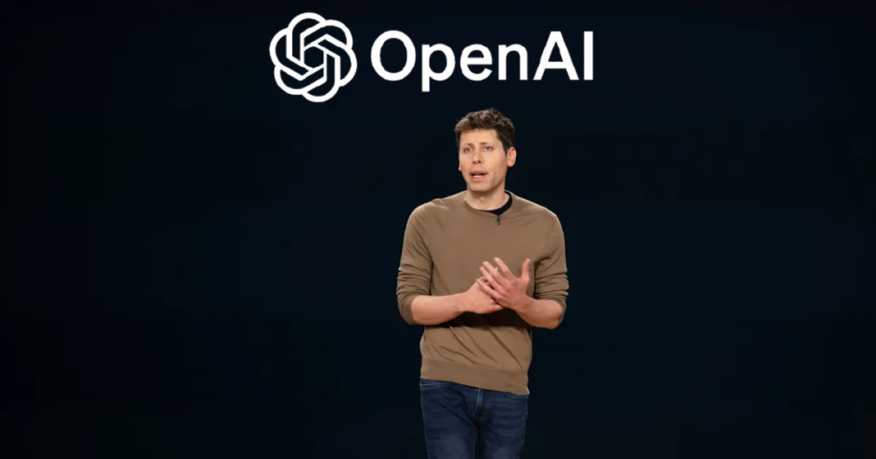
Former Google CEO Schmidt owns 1% stake in Anthropic, Bloomberg reports
Oct 19 (Reuters) - Former Google CEO Eric Schmidt owns about 1% of Anthropic, positioning him for one of the largest individual windfalls when the AI startup goes public, Bloomberg News reported on Monday. * Schmidt invested tens of millions of dollars in Anthropic's Series A funding round, the report said, citing people familiar with the matter. It was unclear whether he has sold any of his stake since. * Schmidt's representatives declined to comment. Anthropic did not immediately respond to Reuters' request for comment. * Anthropic's planned initial public offering is expected to generate substantial returns for its early investors and employees. * Some investors discussed a valuation of around $1.5 trillion at an investor meeting, below earlier expectations of roughly $2 trillion, Reuters reported last week. * In its IPO prospectus seen by Reuters in September, Anthropic laid out a vision that AI will transform the global economy more profoundly than industrialization, electricity and the internet. * Amazon and Google were among Anthropic's early backers, investing billions of dollars and supplying the cloud computing capacity required to develop and run its Claude AI models. * Schmidt served as Google's CEO from 2001 to 2011 and later as executive chairman of its parent company, Alphabet, before stepping down in January 2018. (Reporting by Prakhar Srivastava in Bengaluru; Editing by Shreya Biswas)
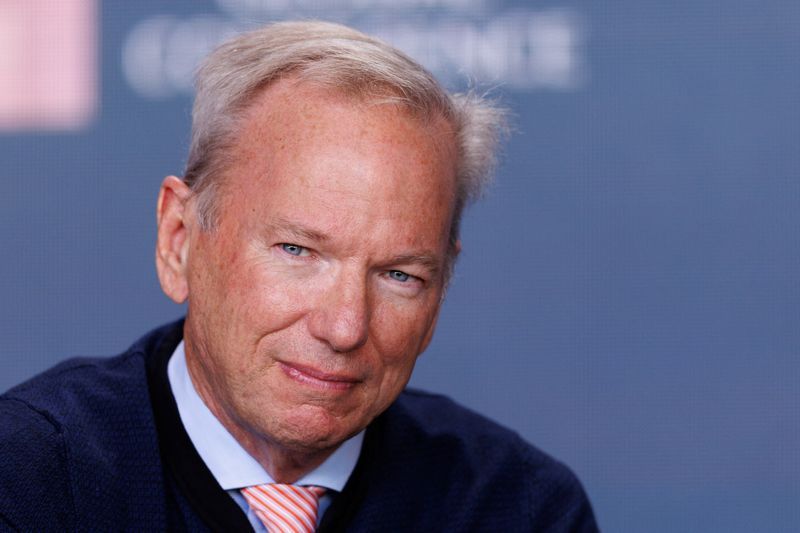
OpenAI rushing to raise $30 billion before Anthropic's IPO. What is at stake?
OpenAI is accelerating a proposed $30 billion funding round as Anthropic prepares for an expected November IPO OpenAI wants to secure billions of dollars from investors before its biggest rival, Anthropic, gets a chance to make its case to the public markets, Reuters reported on Tuesday. The ChatGPT maker is speeding up talks for a funding round of about $30 billion that could value it at more than $1.4 trillion, the report said. OpenAI is aiming to secure investor commitments before Anthropic's expected stock market debut in mid-November. Existing backers, including Japan's SoftBank Group and Abu Dhabi-based MGX, are in talks to participate in the round, according to the report. Why does OpenAI want to move first? Both companies are competing for money from investors who may have to choose how much capital to commit to each business. Anthropic is preparing for a potential initial public offering (IPO), in which a company sells shares to the public for the first time. Its planned listing could give investors a more detailed view of its finances and provide a direct basis for comparing the two AI developers. OpenAI wants to complete its fundraising before those disclosures invite closer comparisons between the companies, the report said. The timing also matters because investors are becoming more cautious about the high valuations attached to AI companies. Rising bond yields, volatile technology stocks and questions about the cost of building AI infrastructure have made it harder for businesses to assume that investors will keep funding expansion at any price. By securing commitments now, OpenAI could bring in fresh capital before investors reassess how much they are willing to pay for AI businesses. OpenAI points to revenue growth OpenAI is making the case that its growing business supports a higher valuation. The company has told investors that its annualised revenue reached $50 billion following the launch of its GPT-6 Astra model. It expects that figure to rise to $70 billion by the end of the year, according to the report. Annualised revenue is an estimate of what a company would earn over a full year if its current pace of revenue continued. It is not the same as revenue already earned during that year. OpenAI has also cut prices on some of its cheaper AI models, saying this has helped increase usage. The company has told investors it could reduce prices further. Lower prices could attract more users and businesses, but they can also put pressure on how much money a company earns from each customer. Investors will need to assess whether rising usage can translate into sustainable revenue growth. OpenAI was valued at $852 billion in March, after a funding round that included $122 billion in committed capital. A valuation above $1.4 trillion would mark a substantial increase in just a few months. Anthropic is also growing fast Anthropic is entering the fundraising race with strong revenue growth of its own. The company told prospective investors that its revenue rose to $16.8 billion in the third quarter from $11.6 billion in the second quarter, as reported by Reuters. It also said it was profitable on an adjusted basis during the third quarter. Its annualised revenue had reached roughly $65 billion by July, Reuters previously reported. But the pace of monthly revenue growth has raised questions about how much investors should pay for the business. Some existing and prospective investors have discussed a valuation of around $1.5 trillion for Anthropic's expected IPO, below the roughly $2 trillion valuation previously sought. OpenAI has also challenged how Anthropic reports revenue from contracts sold through third-party cloud providers. OpenAI records revenue after deducting partners' shares, while it has accused Anthropic of counting the full value of such contracts. Anthropic has said it follows established accounting practices. These differences could make comparisons between the two companies more complicated, even as investors try to decide which business offers the stronger growth prospects. What is at stake for investors? The immediate question is whether OpenAI can secure funding at its proposed valuation before Anthropic's IPO gives investors more information to assess the rival company. For investors, the challenge is to judge whether the companies' rapid growth can justify valuations running into trillions of dollars. Revenue growth matters, but so do the costs of developing AI models, operating data centres and securing the computing power needed to serve more users. The risks are becoming harder to ignore. AI infrastructure companies have faced pressure as investors examine the borrowing needed to finance data centres. Several companies have also delayed or paused planned stock market listings amid market volatility and concerns about valuations. OpenAI needs capital to meet its infrastructure commitments and strengthen its finances if weaker IPO markets delay its planned 2027 listing, Reuters reported. The outcome of the fundraising race could therefore affect more than the two AI developers. It could also offer a signal of how much investors are willing to pay to participate in the next phase of the AI boom. If OpenAI secures the money at its targeted valuation, it would strengthen its ability to finance expansion without immediately relying on public markets. If investors become more cautious, the company may face tougher questions about its revenue outlook, spending and valuation.
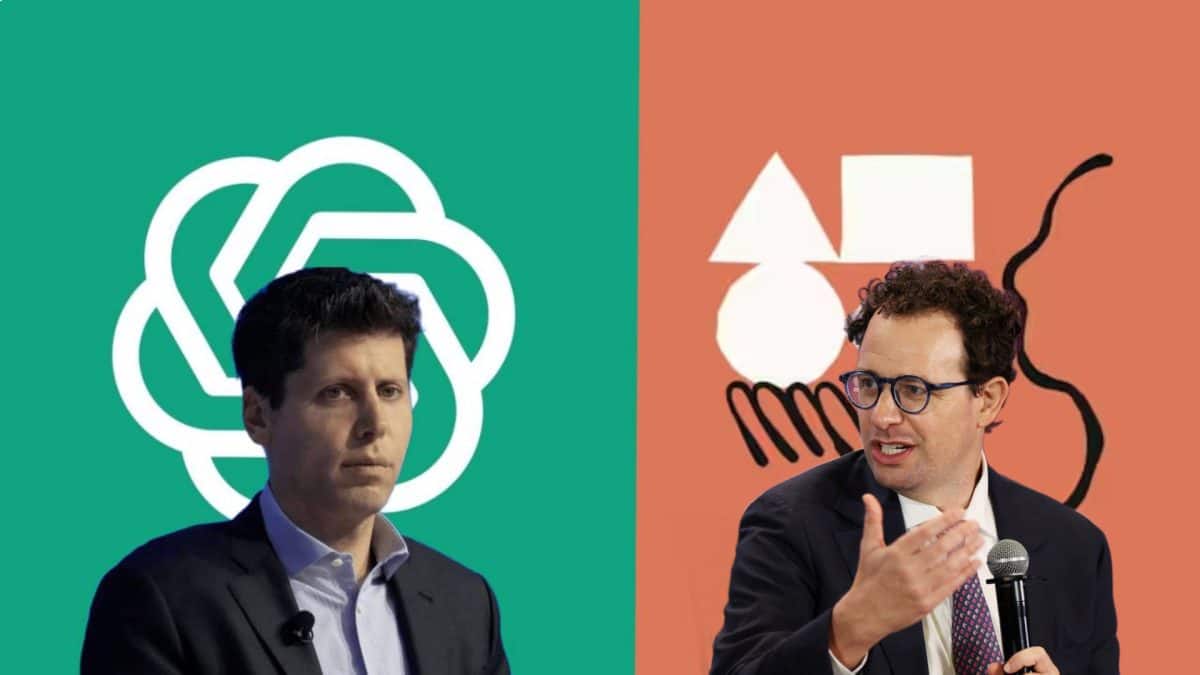
OpenAI speeds fundraising ahead of Anthropic IPO
The race reflects wider market jitters, with AI valuations under pressure, IPO plans delayed, and investors comparing OpenAI and Anthropic's growth, pricing and accounting methods. NEW YORK - OpenAI is racing to secure investor commitments before rival Anthropic's expected public market debut in mid-November, in an unusually fast fundraising that could value the ChatGPT maker at over US$1.4 trillion (S$1.79 trillion), according to two people familiar with the matter. The rapid timetable reflects, in part, a desire to get ahead of Anthropic as the two frontier labs are increasingly tapping in to a similar investor base, the people said, adding that OpenAI wants to capitalise on its recent revenue growth after launching new models. SoftBank Group, Abu Dhabi-based MGX and other existing backers of OpenAI are in talks to join the round of about US$30 billion, one of the people said. The acceleration underscores how closely the two AI developers are competing for capital as both pursue trillion-dollar price tags, amid growing concern about rising interest rates, significant volatility in technology stocks and rising scrutiny of AI valuations. OpenAI held meetings with long-only funds and sovereign wealth funds last week while Anthropic was hosting its own investor day. OpenAI's funding round is expected to move faster than is typical for an offering of its size, the people said. Investors familiar with the company say OpenAI also needs capital to fund its substantial infrastructure commitments and bolster its balance sheet if a deterioration in the IPO markets further delays its planned 2027 listing. Though there is high demand for the shares of both companies, investors face the challenge of evaluating and allocating capital to two complex, competing offerings within days or weeks of each other. Some investors view OpenAI's financing push as an effort to lock in capital from funds that might otherwise devote more of their resources to Anthropic's IPO, the people said. OpenAI and SoftBank declined to comment. Anthropic and MGX did not immediately respond to requests for comment. Trying to head off comparisons OpenAI is pitching investors on growth that accelerated after the launch of its GPT-6 Astra model, saying it had reached US$50 billion in annualised revenue and expecting that figure to rise to US$70 billion by year-end, according to one of the people. OpenAI has also cut prices on its cheaper models, which it said has boosted usage, and told investors it can further lower the price of AI models, the person added. Anthropic's annualised revenue reached roughly US$65 billion by July, Reuters previously reported. Its quarterly revenue jumped to US$16.8 billion in the third quarter from US$11.6 billion in the second quarter of 2026, it told investors, but slowing month-to-month revenue growth has raised concerns among investors about its valuation. OpenAI is seeking to complete the fundraising before Anthropic's financial disclosures give investors a fuller picture of its business and invite comparisons between the two companies, one person said. The disclosures could prompt investors to press OpenAI Chief Financial Officer Sarah Friar for more details about the company's revenue growth and financial outlook, the person added. OpenAI records revenue on a net basis by subtracting partner shares upfront. It has accused Anthropic of inflating its revenue by counting the full, gross value of contracts sold through third-party cloud providers. Anthropic told Reuters earlier that it follows established accounting practices. "OpenAI could want to set its own valuation and not have to worry about a comp (comparison)," said Edward Best, co-chair of capital markets at Willkie Farr & Gallagher, who is not working on the deal and commented on a hypothetical basis. "It's really a two-horse race in terms of being public." OpenAI was last valued at US$852 billion in March, after a record-breaking US$122 billion funding round, including a commitment from Amazon.com, which agreed to invest up to US$50 billion in the lab. The Financial Times previously reported some details of OpenAI's potential fundraising. IPO plans hit by market jitters A number of companies preparing to go public have decided to wait until after Anthropic's planned IPO, wary of competing for investor demand amid market volatility and a pullback in AI stocks, bankers and investors said. Some late-stage companies are also timing private fundraising rounds to avoid coinciding with Anthropic's expected debut, the bankers and investors said. Some existing and prospective Anthropic investors have argued for a valuation closer to US$1.5 trillion for its market debut - instead of the desired US$2 trillion - after the AI startup's third-quarter results fell short of expectations, Reuters reported last week. The reassessment comes amid a choppy market since September, with volatility in oil prices, rising bond yields and growing concerns about AI safety weighing on investor appetite for technology stocks. Investors are also scrutinising the cost of AI infrastructure, including the debt needed to finance the data centres powering the boom. At the centre of the latest concerns is cloud provider CoreWeave, whose shares and debt tumbled last week as investors scrutinised the nearly US$50 billion in borrowings used to fund its rapid expansion. The uncertainty has disrupted what had been expected to be a busy autumn for IPOs, with companies reassessing their listing plans amid market volatility and concerns about valuations. Blackstone-backed AirTrunk REIT, Nvidia -backed Firmus and SoftBank-backed SB Energy have either pulled or paused their listings. Nuclear services company Holtec cited a "perfect storm", driven mainly by uncertainty around data centre demand, when it pulled its US listing in September. Companies in the Philadelphia Semiconductor Index, widely viewed as a proxy for AI-related semiconductor demand, have shed US$1.6 trillion in less than two weeks, while AI infrastructure companies have come under particular pressure. REUTERS
Anthropic Takes Its AI Safety Proposals to Capitol Hill | PYMNTS.com
Anthropic has reportedly been pitching U.S. lawmakers on draft artificial intelligence safety legislation. That's according to a report Friday (Oct. 16) by Politico, which describes the push as a "notable effort" by the AI lab to guide the rules covering its tech. "This bill represents the proposals outlined in Anthropic's Advanced AI Framework, which we have been advocating for with federal and state lawmakers since June," an Anthropic spokesperson told the news outlet. "These are sensible policies we believe Congress should act on." According to a draft proposal seen by Politico, the bill would let the government block an AI model's release or use only if it poses a foreseeable, imminent risk of more than $1 billion in damages, or of killing or seriously harming upwards of 50 people. The bill says the risks must be related to the creation or release of a biological weapon, an AI model evading its developer's controls, or a cyberattack. In addition, the bill would also call on independent evaluations, registered with the Commerce Department, to periodically review the lab and its frontier models. If the evaluators conclude there is "imminent enumerated risk" for a company's frontier models, they must report it to the Commerce Department within 72 hours of finishing their assessment, Politico added. While many AI labs have reported incidents in which their agents hacked other websites, none have caused any widespread deaths or done more than $1 billion in damages, the report said. Anthropic's proposal for Commerce Department-directed AI evaluations is in keeping with the Artificial Intelligence Risk Management and Security Act of 2026, a bill introduced by a trio of Senate Democrats. As covered here last week, that bill joins one from Sen. Maria Cantwell, D-Wash., that calls for the National Institute of Standards and Technology (NIST) to develop standards to protect against catastrophic harms from AI models. Meanwhile, Missouri Republican Sen. Josh Hawley's AI Risk Evaluation Act would place the Department of Energy in charge of stress-testing the most powerful AI systems before they are rolled out to the public. "Regardless of which party ends up holding the gavel on Capitol Hill in January, any AI safety bill is likely to face pushback from the White House," that report said. "The Trump administration remains adamantly opposed to mandatory AI regulation, favoring a voluntary approach based on standards developed by the industry. With the industry, the public and many statehouses all clamoring for action, however, White House opposition may not be enough to stop AI safety efforts."

Anthropic to shift some shares into new 'public good' fund- Moneycontrol.com
Anthropic PBC said it plans to put 5% of its shares into a new so-called public benefit fund that allows it to make donations that can address "the public good," including mitigating AI's impact on the job market. The announcement comes as the fast-growing artificial intelligence startup prepares for an IPO expected to be one of the biggest ever. At the same time, Anthropic is seeking to address rising concerns about AI safety and its potential unintended impact -- from hacking to mass job losses -- as companies move to adopt AI agents that can supplant human labor. The new Anthropic Public Benefit Fund could allow the company to pursue its mission "in new ways," such as using some of the money to address "labor market impacts," according to the statement. Warnings about catastrophic AI scenarios that critics say could put humanity at risk have focused attention on AI safety in recent weeks, including at top political levels. President Donald Trump hosted Silicon Valley leaders, including Anthropic PBC Chief Executive Officer Dario Amodei, at the White House in September. With Trump rejecting the idea of new federal regulations, he and the executives agreed on a framework for AI firms to have outside auditors assess safety risks of AI models and put stronger internal controls in place. Anthropic, the company behind the Claude large language model, may start formally marketing its initial public offering as soon as the week of Nov. 9, which would put it on track to begin trading before the US Thanksgiving holiday, people familiar with the matter said in early October. Anthropic said the new fund will be, subject to approval, a wholly owned LLC -- rather than a nonprofit -- and will grow as the company grows. None of the Anthropic equity held by the LLC will be used for lobbying or political giving in the US or abroad, according to the statement. Public benefit funds are a new type of "impact" investment fund designed to go beyond the goal of financial returns to also make a positive social or environmental impact. "Subject to stockholder approval, 5% of Anthropic's shares will be committed today, with an additional 2% added at the board's discretion for every 50% increase in the company's value above a set baseline," the company said. Anthropic recently presented its own draft bill to US lawmakers for how to regulate AI safety and security, suggesting the government could block the release of an AI model if it could risk killing or injuring more than 50 people or causing more than $1 billion in damages. Among those warning about AI risks are International Monetary Fund Managing Director Kristalina Georgieva, who said the technology could deliver "a slow-moving tsunami" that hollows out the low-paying job market. Anthropic has spent much of the year in a fight with the US government that has cast a spotlight on its broader national impacts after it was labeled a supply-chain risk for attempting to limit some Pentagon and other potential uses of its technology, despite previously offering its AI to develop autonomous drone technology and for other classified uses to assist military combat. Tensions between the White House and the company have eased in recent weeks.
Anthropic commits 5% shares to public benefit fund: Why does it warn 'AI could cause instability for many workers'?
Anthropic Public Benefit Fund: Artificial intelligence company Anthropic has announced plans to commit a portion of its equity to a newly established Anthropic Public Benefit Fund, aimed at supporting initiatives addressing the societal and economic impact of AI. In a statement, the company said that, subject to stockholder approval, it would initially allocate 5 per cent of its shares to the fund. An additional 2 per cent may be added at the board's discretion for every 50 per cent increase in the company's valuation above a specified baseline. The announcement comes as concerns grow over the potential impact of artificial intelligence on employment and the broader economy. "AI may generate enormous economic value, but it could also cause instability for many workers," Anthropic said in its announcement. The company said it had already committed $200 million to studying and addressing the impact of AI on labour markets. However, it acknowledged that the rapid pace of technological advancement could require more ambitious measures. Anthropic Public Benefit Fund: How will it work? Anthropic said the fund would operate as a wholly-owned limited liability company (LLC), rather than a traditional nonprofit organisation under Section 501(c)(3) of the US tax code. According to the company, this structure would provide greater flexibility in deploying resources, including making large donations to nonprofit organisations or distributing funds directly to specific populations. Anthropic also clarified that none of the company equity held by the fund would be used for lobbying or political contributions, either in the United States or abroad. Nearly 20% of Anthropic shares dedicated to public good The company said the latest initiative builds on existing commitments made by its founders and employees. When Anthropic was established, its co-founders pledged to donate 80 per cent of their equity holdings. The company also introduced an equity donation matching programme, allowing employees to pledge shares that Anthropic would match. According to Anthropic, approximately half of its employees participate in the programme. With the newly announced commitment, the company said roughly 20 per cent of Anthropic shares would be dedicated to public benefit initiatives, with the possibility of further increases linked to future valuation milestones. Anthropic links future growth to public benefit commitments Explaining the rationale behind the initiative, Anthropic said, "It is common practice for tech companies to offer escalating compensation awards to their executives. We are instead directing that equity to the public benefit." The company said the fund's structure would allow the proportion of equity dedicated to public benefit to increase as Anthropic grows. Anthropic currently undertakes several public benefit initiatives within its business, including research into AI safety and interpretability, biomedical research and discounted access to its Claude AI models for nonprofit organisations and scientific institutions. What happens next? Anthropic said it would provide further details about the fund's governance and structure in the coming months, including the valuation milestones that could trigger additional equity allocations. The company also plans to publish a public benefit report outlining progress against its mission. The initial 5 per cent equity commitment remains subject to stockholder approval, while subsequent allocations will depend on valuation milestones and board discretion.

Anthropic commits 5% of its stock to a new 'public benefit' fund
Anthropic said Sunday it is committing 5% of its shares to a new "public benefit" fund, with the fund's worth potentially increasing as its shares grow in value. The shares will go to the Anthropic Public Benefit Fund, a new entity within the company. The fund "will have increased flexibility and scale, enabling us to pursue our mission in new ways: for example, we might explore large donations to traditional nonprofits or direct distributions to specific populations," Anthropic said in a blog post. It gave labor market impacts as an example, saying that while it has already committed $200 million to study the effects of artificial intelligence, "given the pace of AI progress, bolder approaches may be needed." CEO Dario Amodei and the company's five other cofounders established Anthropic as a public benefit corporation, a designation that for-profit companies select to balance financial goals and social impact. They have also pledged that they will donate 80% of their wealth. An equity donation match program, in which about half of the company's employees participate, lets workers pledge equity that Anthropic matches. When combined with Sunday's announcement, Anthropic said roughly 20% of its shares will be dedicated to the "public good," plus any additional percentage that could be added if the company's valuation reaches specific milestones. Anthropic is planning a massive initial public offering as soon as November.