News & Updates
The latest news and updates from companies in the WLTH portfolio.
SpaceX IPO earns millions for US Small Business Administration head Kelly Loeffler By Reuters
WASHINGTON, July 17 (Reuters) - U.S. Small Business Administration head Kelly Loeffler multiplied the value of her investment in Elon Musk's SpaceX after she was nominated for the job, earning millions of dollars from the company's record initial public offering, a Reuters review of her financial disclosures showed. Loeffler invested between $1 million and $5 million as of January 3, 2025, in xAI, Musk's AI and social media firm that has since merged with SpaceX, according to a required financial disclosure submitted before she became SBA's administrator. Later in 2025, Loeffler invested again in SpaceX and xAI between $1 million and $5 million, according to a separate financial disclosure covering her investments for all of 2025 that she signed on May 14, 2026. Reuters obtained the form from the SBA on June 12. Loeffler's second investment has not been previously reported. Two independent government ethics attorneys agreed with Reuters' assessment of Loeffler's disclosure. Cabinet members use ranges to declare the value of their assets on their required financial disclosure forms, and they do not disclose the dates of their investments before taking office. SpaceX is a military contractor for the U.S. government. Federal law prohibits cabinet members from participating in decisions involving a company in which they have a financial interest. Public records do not show a financial relationship between SBA and xAI or SpaceX. xAI was not included on the public list of AI tools used by SBA employees in 2025. Loeffler and her team did not respond to multiple requests for comment about her SpaceX investment. VALUE OF SPACEX INVESTMENT SOARS Loeffler's bet on SpaceX paid off. The company priced the biggest-ever U.S. IPO on June 12, valuing the space, satellite and AI provider at $1.77 trillion. Her first investment in xAI would have been worth between $7 million and $2.6 billion on the day of the IPO, depending on the exact amount she invested and the date she made it, said Franco Granda, analyst at data provider PitchBook. The second investment would have been worth between $2.2 million and $25.4 million that day, he said. The earlier the investment, the more it would have been worth at the IPO, he said. xAI's valuation increased by more than 7,000% between its first investment round and January 5, 2025. SpaceX's valuation more than doubled in 2025. At least 10 Trump administration officials listed investments in SpaceX or xAI on their 2025 financial disclosure forms. None of those officials works for the Defense Department. Billionaire Musk, a former Trump adviser, is the founder and CEO of SpaceX. Loeffler initially invested in xAI via a private placement, according to her disclosure form. Private placements are typically open to select individuals and institutions with significant financial resources. Loeffler is a wealthy businesswoman. She was the founding chief executive at Bakkt, a bitcoin trading platform, and spent 16 years working at Intercontinental Exchange, the firm that owns the New York Stock Exchange, according to her LinkedIn profile. She is married to Intercontinental Exchange CEO Jeffrey Sprecher. Loeffler briefly represented Georgia in the Senate. The SBA helps entrepreneurs start and build their small businesses, according to the agency website. It connects business owners with lenders and funding to help them recover from natural disasters, among other responsibilities. The Senate confirmed Loeffler as SBA administrator on February 19, 2025.
SpaceX IPO earns millions for US Small Business Administration head Kelly Loeffler
WASHINGTON, July 17 (Reuters) - U.S. Small Business Administration head Kelly Loeffler multiplied the value of her investment in Elon Musk's SpaceX after she was nominated for the job, earning millions of dollars from the company's record initial public offering, a Reuters review of her financial disclosures showed. Loeffler invested between $1 million and $5 million as of January 3, 2025, in xAI, Musk's AI and social media firm that has since merged with SpaceX (SPCX.O), opens new tab, according to a required financial disclosure submitted before she became SBA's administrator. Later in 2025, Loeffler invested again in SpaceX and xAI between $1 million and $5 million, according to a separate financial disclosure covering her investments for all of 2025 that she signed on May 14, 2026. Reuters obtained the form from the SBA on June 12. Loeffler's second investment has not been previously reported. Two independent government ethics attorneys agreed with Reuters' assessment of Loeffler's disclosure. Cabinet members use ranges to declare the value of their assets on their required financial disclosure forms, and they do not disclose the dates of their investments before taking office. SpaceX is a military contractor for the U.S. government. Federal law, opens new tab prohibits cabinet members from participating in decisions involving a company in which they have a financial interest. Public records do not show a financial relationship between SBA and xAI or SpaceX. xAI was not included on the public list of AI tools, opens new tab used by SBA employees in 2025. Loeffler and her team did not respond to multiple requests for comment about her SpaceX investment. VALUE OF SPACEX INVESTMENT SOARS Loeffler's bet on SpaceX paid off. The company priced the biggest-ever U.S. IPO on June 12, valuing the space, satellite and AI provider at $1.77 trillion. Her first investment in xAI would have been worth between $7 million and $2.6 billion on the day of the IPO, depending on the exact amount she invested and the date she made it, said Franco Granda, analyst at data provider PitchBook. The second investment would have been worth between $2.2 million and $25.4 million that day, he said. The earlier the investment, the more it would have been worth at the IPO, he said. xAI's valuation increased by more than 7,000% between its first investment round and January 5, 2025. SpaceX's valuation more than doubled in 2025. At least 10 Trump administration officials listed investments in SpaceX or xAI on their 2025 financial disclosure forms. None of those officials works for the Defense Department. Billionaire Musk, a former Trump adviser, is the founder and CEO of SpaceX. Loeffler initially invested in xAI via a private placement, according to her disclosure form. Private placements are typically open to select individuals and institutions with significant financial resources. Loeffler is a wealthy businesswoman. She was the founding chief executive at Bakkt, a bitcoin trading platform, and spent 16 years working at Intercontinental Exchange, the firm that owns the New York Stock Exchange, according to her LinkedIn profile. She is married to Intercontinental Exchange CEO Jeffrey Sprecher. Loeffler briefly represented Georgia in the Senate. The SBA helps entrepreneurs start and build their small businesses, according to the agency website. It connects business owners with lenders and funding to help them recover from natural disasters, among other responsibilities. The Senate confirmed Loeffler as SBA administrator on February 19, 2025. Reporting by Courtney Rozen Editing by Chris Sanders and Rod Nickel Our Standards: The Thomson Reuters Trust Principles., opens new tab * Suggested Topics: * Artificial Intelligence Courtney Rozen Thomson Reuters Courtney Rozen reports on the world's largest technology companies from Washington, D.C., focusing on the relationship between the tech industry and the U.S. government. She reported on DOGE and the federal workforce during the first year of U.S. President Donald Trump's second term. Prior to joining Reuters, she was a White House correspondent at Bloomberg Government. She graduated from American University with a master's degree in journalism.

SpaceX IPO earns millions for US Small Business Administration head Kelly Loeffler
Add Yahoo as a preferred source to see more of our stories on Google. WASHINGTON, July 17 (Reuters) - U.S. Small Business Administration head Kelly Loeffler multiplied the value of her investment in Elon Musk's SpaceX after she was nominated for the job, earning millions of dollars from the company's record initial public offering, a Reuters review of her financial disclosures showed. Loeffler invested between $1 million and $5 million as of January 3, 2025, in xAI, Musk's AI and social media firm that has since merged with SpaceX, according to a required financial disclosure submitted before she became SBA's administrator. Later in 2025, Loeffler invested again in SpaceX and xAI between $1 million and $5 million, according to a separate financial disclosure covering her investments for all of 2025 that she signed on May 14, 2026. Reuters obtained the form from the SBA on June 12. Loeffler's second investment has not been previously reported. Two independent government ethics attorneys agreed with Reuters' assessment of Loeffler's disclosure. Cabinet members use ranges to declare the value of their assets on their required financial disclosure forms, and they do not disclose the dates of their investments before taking office. SpaceX is a military contractor for the U.S. government. Federal law prohibits cabinet members from participating in decisions involving a company in which they have a financial interest. Public records do not show a financial relationship between SBA and xAI or SpaceX. xAI was not included on the public list of AI tools used by SBA employees in 2025. Loeffler and her team did not respond to multiple requests for comment about her SpaceX investment. VALUE OF SPACEX INVESTMENT SOARS Loeffler's bet on SpaceX paid off. The company priced the biggest-ever U.S. IPO on June 12, valuing the space, satellite and AI provider at $1.77 trillion. Her first investment in xAI would have been worth between $7 million and $2.6 billion on the day of the IPO, depending on the exact amount she invested and the date she made it, said Franco Granda, analyst at data provider PitchBook. The second investment would have been worth between $2.2 million and $25.4 million that day, he said. The earlier the investment, the more it would have been worth at the IPO, he said. xAI's valuation increased by more than 7,000% between its first investment round and January 5, 2025. SpaceX's valuation more than doubled in 2025. At least 10 Trump administration officials listed investments in SpaceX or xAI on their 2025 financial disclosure forms. None of those officials works for the Defense Department. Billionaire Musk, a former Trump adviser, is the founder and CEO of SpaceX. Loeffler initially invested in xAI via a private placement, according to her disclosure form. Private placements are typically open to select individuals and institutions with significant financial resources. Loeffler is a wealthy businesswoman. She was the founding chief executive at Bakkt, a bitcoin trading platform, and spent 16 years working at Intercontinental Exchange, the firm that owns the New York Stock Exchange, according to her LinkedIn profile. She is married to Intercontinental Exchange CEO Jeffrey Sprecher. Loeffler briefly represented Georgia in the Senate. The SBA helps entrepreneurs start and build their small businesses, according to the agency website. It connects business owners with lenders and funding to help them recover from natural disasters, among other responsibilities. The Senate confirmed Loeffler as SBA administrator on February 19, 2025. (Reporting by Courtney RozenEditing by Chris Sanders and Rod Nickel)
SpaceX IPO earns millions for US Small Business Administration head Kelly Loeffler
Add Yahoo as a preferred source to see more of our stories on Google. WASHINGTON, July 17 (Reuters) - U.S. Small Business Administration head Kelly Loeffler multiplied the value of her investment in Elon Musk's SpaceX after she was nominated for the job, earning millions of dollars from the company's record initial public offering, a Reuters review of her financial disclosures showed. Loeffler invested between $1 million and $5 million as of January 3, 2025, in xAI, Musk's AI and social media firm that has since merged with SpaceX, according to a required financial disclosure submitted before she became SBA's administrator. Later in 2025, Loeffler invested again in SpaceX and xAI between $1 million and $5 million, according to a separate financial disclosure covering her investments for all of 2025 that she signed on May 14, 2026. Reuters obtained the form from the SBA on June 12. Loeffler's second investment has not been previously reported. Two independent government ethics attorneys agreed with Reuters' assessment of Loeffler's disclosure. Cabinet members use ranges to declare the value of their assets on their required financial disclosure forms, and they do not disclose the dates of their investments before taking office. SpaceX is a military contractor for the U.S. government. Federal law prohibits cabinet members from participating in decisions involving a company in which they have a financial interest. Public records do not show a financial relationship between SBA and xAI or SpaceX. xAI was not included on the public list of AI tools used by SBA employees in 2025. Loeffler and her team did not respond to multiple requests for comment about her SpaceX investment. VALUE OF SPACEX INVESTMENT SOARS Loeffler's bet on SpaceX paid off. The company priced the biggest-ever U.S. IPO on June 12, valuing the space, satellite and AI provider at $1.77 trillion. Her first investment in xAI would have been worth between $7 million and $2.6 billion on the day of the IPO, depending on the exact amount she invested and the date she made it, said Franco Granda, analyst at data provider PitchBook. The second investment would have been worth between $2.2 million and $25.4 million that day, he said. The earlier the investment, the more it would have been worth at the IPO, he said. xAI's valuation increased by more than 7,000% between its first investment round and January 5, 2025. SpaceX's valuation more than doubled in 2025. At least 10 Trump administration officials listed investments in SpaceX or xAI on their 2025 financial disclosure forms. None of those officials works for the Defense Department. Billionaire Musk, a former Trump adviser, is the founder and CEO of SpaceX. Loeffler initially invested in xAI via a private placement, according to her disclosure form. Private placements are typically open to select individuals and institutions with significant financial resources. Loeffler is a wealthy businesswoman. She was the founding chief executive at Bakkt, a bitcoin trading platform, and spent 16 years working at Intercontinental Exchange, the firm that owns the New York Stock Exchange, according to her LinkedIn profile. She is married to Intercontinental Exchange CEO Jeffrey Sprecher. Loeffler briefly represented Georgia in the Senate. The SBA helps entrepreneurs start and build their small businesses, according to the agency website. It connects business owners with lenders and funding to help them recover from natural disasters, among other responsibilities. The Senate confirmed Loeffler as SBA administrator on February 19, 2025. (Reporting by Courtney RozenEditing by Chris Sanders and Rod Nickel)
xAI reportedly loses all 11 co-founders: turnover surges
Former staff cite long hours, top-down decisions and looming layoffs xAI, the Elon Musk AI company behind Grok, is reportedly dealing with a talent problem. Reports say all 11 original co-founders are gone, and staff turnover more broadly has been described as unusually high. Former employees describe xAI as a hard place to work: long hours, decisions concentrated at the top, not much tolerance for disagreement, and constant churn. People watching the company say that could start to show up in execution, hiring, and enterprise credibility, even after reports of a $20 billion raise at roughly a $230 billion valuation and a February 2026 merger with SpaceX that reportedly put the combined company near $1.25 trillion. Reports also say xAI has measured Grok against Claude, Anthropic's competing model, especially on coding. Inside the company, there was said to be frustration that Grok lagged behind. There were also allegations that Claude outputs were used to improve xAI's coding systems, including claims that some employees kept relying on personal Anthropic accounts after official access had been cut off. xAI was also reportedly preparing layoffs of as much as 30% in March 2026, though other reports put the cuts at more than 70%. All of that landed while Grok was already taking heat over deepfake sexual images, misinformation, and a July 2026 allegation that one coding tool sent entire code repositories to the cloud without clear consent. If you follow Grok closely, keep an eye on this. The next round of xAI news will likely come down to one question: can the company behind Grok get itself steady?
SpaceX stock erases all its gains and slides below IPO price in intraday trading
SpaceX stock dropped below its initial public offering price for the first time on Wednesday, signaling dwindling hype around the Elon Musk company. Shares dipped below their IPO price of $135 on Wednesday morning for the first time since listing, a humbling loss for the stock, which had skyrocketed more than 50% in its first days of trading last month. The shares regained some ground later in the day, closing at $135.27. The initial offering gave the company a market cap of $2.2 trillion, making it one of the world's most valuable public companies. For a short period, the IPO also made owner Elon Musk the world's first trillionaire, though his net worth now is about $800 billion. On July 7, the company was added to the Nasdaq-100 after a rule change allowed companies to join 15 days after their IPOs. SpaceX raised a total of $86 billion after underwriters exercised their right to sell additional shares, on top of the $75 billion initially raised. It was the largest IPO in history. SpaceX, based near Austin, Texas, is the leading launch services company in the world, with its Falcon 9 rocket accounting for the vast majority of satellites launched last year. It is also the leading satellite-based broadband provider with its Starlink service. The extraordinary interest in the IPO was driven by Musk's plans to make the company an AI leader -- including plans to launch orbiting satellite data centers powered by the sun that crunch AI data. The company's headquarters moved from Hawthorne to Texas in 2024, but it retains large operations in the South Bay city and blasts off regularly from Vandenberg Space Force Base in Santa Barbara County. Since the IPO, SpaceX has used its newfound wealth to expand in the AI space. It announced last month that it was acquiring the AI coding startup Cursor for $60 billion, with the deal expected to close in the third quarter. The San Francisco company, founded in 2022, enables engineers to instruct software in English to run coding tasks autonomously. Musk also merged his xAI artificial intelligence company into SpaceX earlier this year. The combined entity recently announced it was leasing computing power to rivals Anthropic and Google at two terrestrial data centers it has constructed. Since the IPO, investors have expressed concerns about the company's spending plans and debt load. Even with the volatility of the last month, there's still more uncertainty to come. The stock could fall further as locked-up shares held by current and former employees are released.
The AI burn book: Decoding the cat fights between Sam Altman, Elon Musk, and Anthropic - AOL
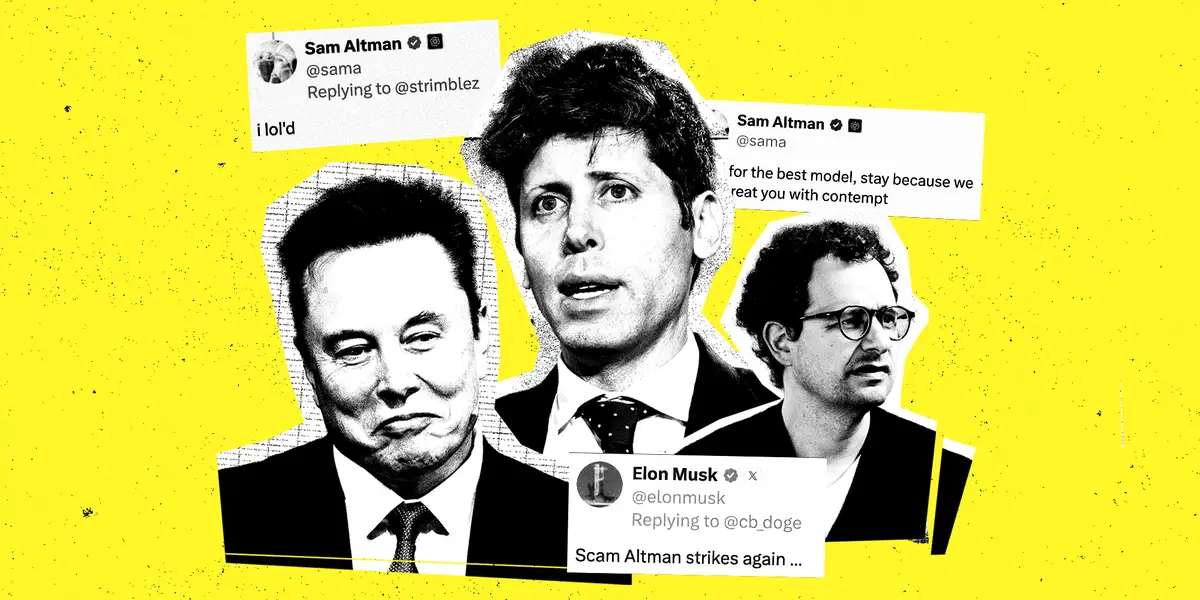
Business Insider decoded the shade and subtweets, from the punctuation to the emojis. As the summer temperatures rise, tech tempers flare. Sam Altman is back to his old ways: openly feuding with Elon Musk and taking jabs at Anthropic once again, to the shock of no one. With Altman and Musk's courtroom dispute wrapped up (Musk lost but vowed to appeal), the dueling AI leaders are now dragging each other online over data privacy and an Apple legal battle. The OpenAI CEO has also poked at Anthropic, his primary competitor, run by Dario Amodei. Altman and Amodei were once colleagues; now, they avoid holding hands. Altman hasn't called a rival CEO a "pusher" or a "grotsky little byotch" yet. Still, a Burn Book is forming under his fingertips -- and we decoded it for you. Round One: Sam Altman vs Elon Musk Elon Musk threw the first punch last Friday. Apple sued OpenAI that day, alleging that the AI lab stole trade secrets to build its upcoming hardware device. Musk replied to posts about the suit with exclamation points, the word "wow," and a quick reaction: "Sounds pretty bad." He ramped up on Saturday, calling the OpenAI CEO "Scam Altman," a favorite phrase of his. The digs kept coming throughout the day. Altman took scamming "to a whole new level," Musk wrote, and might love scamming "more than any human alive!" Altman responded in his typical, lower-case fashion: "homeboy you're the one sellling public market investors on short-term space datacenters." Note the term of endearment (or lack thereof): "homeboy." Note the typo: "sellling." Note the lack of punctuation. Three minutes later, Altman fired off another. This time, he used the feud as an opportunity to promote his product, writing that the most reliable benchmark for GPT-5.6 Sol's success "is that elon is obsessed with me again." (Again, no capitalization.) Musk responded to Altman's space data center skepticism a few hours later with a zinger. "We start flying them next year. Maybe you can come see them if your parole officer approves," Musk wrote. In the same post, Musk took another shot at Altman by referencing their messy breakup from almost a decade ago. "After stealing an open source AI charity, you then stole all of Apple's phone technology!" he wrote. "Wow." For the record, Altman doesn't have a parole officer. OpenAI disputes Apple's allegations stating it is "not aware of any evidence that this complaint has merit." OpenAI and SpaceX did not respond to Business Insider's requests for comment. After Saturday's brawl, Altman wasn't done. He took one last stab at Musk on Tuesday, reposting some data privacy concerns about SpaceXAI. "Concerning," he wrote. And yet, the enemies could find some common ground. Both Musk and Altman posted approving messages about an AI safety essay published Tuesday by Google DeepMind's CEO Demis Hassabis. Round Two: Sam Altman vs Anthropic Throughout the Musk mess, Altman continued to kick at his No. 1 opponent: Anthropic. Last Thursday, Anthropic released an eyebrow-raising ad saying there was "hope in hard questions." Those questions include: what will humans do when AI takes over all the jobs? And why do we even have to have AI? The leading image is of a house on fire; it's an AI doomer's dream. Altman clowned the ad on Monday, saying that he "thought this was satire" posted from a fake account. He also put words in Anthropic's mouth: "Hard questions are great but only if we deem you worthy enough to not silently downgrade you, or even get access at all." He appeared to reference how Anthropic quietly rejected or altered some Fable 5 prompts in its initial launch. The company has since made these safeguards more visible. Earlier that day, he laughed at an X user who called the use of Anthropic's Fable 5 an unhealthy situationship. Since its release, Anthropic has rolled back and re-deployed the model and lifted and lowered guardrails, to the frustration of some users. (In typical Altman fashion, he "lol'd.") Altman also got philosophical. He reposted a reply to a criticism of Amodei that quoted C.S. Lewis. "Of all tyrannies, a tyranny sincerely exercised for the good of its victims may be the most oppressive," the post read. It's similar to criticisms other AI leaders have shared: that Anthropic warns of AI's safety concerns while claiming only its AI can fix it. And then, the vague-post of all vague-posts. "Come for the best model, stay because we don't treat you with contempt," Altman wrote on Monday, without specifying which AI rival he was taking a shot at. Amodei seems to be steering clear of the drama. As of Wednesday evening, he hadn't responded, nor has he updated his X account in over a month. Anthropic did not respond to a request for comment. If you enjoyed this story, be sure to follow Business Insider on Yahoo.

Elon Musk's xAI sues Grok user over sexualized 'deepfakes'
The case is one of the first brought by an AI company against one of its users for allegedly using an AI system to generate explicit material Elon Musk's artificial-intelligence startup xAI has sued a South Carolina man arrested earlier this year on charges of sexually exploiting minors, alleging he misused the company's AI system Grok to create child sexual abuse material. xAI alleged in the lawsuit, filed in federal court in Texas on Tuesday, that Terry Harwood violated the company's terms of service. The case is one of the first brought by an AI company against one of its users for allegedly using an AI system to generate explicit material. Contact information for Harwood, who was arrested in February, was not immediately available. Spokespeople for xAI did not immediately respond to a request for comment on Wednesday. The company's lawsuit against Harwood follows intense global scrutiny of xAI over allegations that Grok has allowed users to generate non-consensual sexualized deepfakes, or realistic-looking videos fabricated by AI. Stay up to date with the latest news. Follow KT on WhatsApp Channels. xAI's complaint said that the company "enforces its rules against violators through account suspensions, account terminations, and by reporting suspected child sexual abuse material to the National Center for Missing Exploited Children." "Indeed, Plaintiff has suspended 52,222 accounts and made 73,604 reports to NCMEC in 2026, resulting in (at least) 244 arrests," the lawsuit said. xAI alleged that Harwood uploaded non-sexual images of adults and minors to Grok and tried to use the system to generate sexually explicit deepfakes based on them. The complaint also alleged he created non-consensual sexual imagery of adults. The company asked the court for an unspecified amount of monetary damages and a court order permanently blocking Harwood from using Grok. "Defendant's actions were a calculated scheme to weaponize Plaintiff's tool for criminal ends, exposing real victims to profound and lasting harm, while exposing Plaintiff to significant legal risk and reputational damage," xAI said in the lawsuit.

SpaceX stock erases all its gains and slides below IPO price in intraday trading
See more from the L.A. Times in Google Search. Set us as preferred SpaceX stock dropped below its initial public offering price for the first time on Wednesday, signaling dwindling hype around the Elon Musk company. Shares dipped below their IPO price of $135 on Wednesday morning for the first time since listing, a humbling loss for the stock, which had skyrocketed more than 50% in its first days of trading last month. The shares regained some ground later in the day, closing at $135.27. The initial offering gave the company a market cap of $2.2 trillion, making it one of the world's most valuable public companies. For a short period, the IPO also made owner Elon Musk the world's first trillionaire, though his net worth now is about $800 billion. On July 7, the company was added to the Nasdaq-100 after a rule change allowed companies to join 15 days after their IPOs. SpaceX raised a total of $86 billion after underwriters exercised their right to sell additional shares, on top of the $75 billion initially raised. It was the largest IPO in history. SpaceX, based near Austin, Texas, is the leading launch services company in the world, with its Falcon 9 rocket accounting for the vast majority of satellites launched last year. It is also the leading satellite-based broadband provider with its Starlink service. The extraordinary interest in the IPO was driven by Musk's plans to make the company an AI leader -- including plans to launch orbiting satellite data centers powered by the sun that crunch AI data. The company's headquarters moved from Hawthorne to Texas in 2024, but it retains large operations in the South Bay city and blasts off regularly from Vandenberg Space Force Base in Santa Barbara County. Since the IPO, SpaceX has used its newfound wealth to expand in the AI space. It announced last month that it was acquiring the AI coding startup Cursor for $60 billion, with the deal expected to close in the third quarter. The San Francisco company, founded in 2022, enables engineers to instruct software in English to run coding tasks autonomously. Musk also merged his xAI artificial intelligence company into SpaceX earlier this year. The combined entity recently announced it was leasing computing power to rivals Anthropic and Google at two terrestrial data centers it has constructed. Since the IPO, investors have expressed concerns about the company's spending plans and debt load. Even with the volatility of the last month, there's still more uncertainty to come. The stock could fall further as locked-up shares held by current and former employees are released. At least 20% of the shares will be released after second-quarter results are disclosed sometime in the coming months, with all the lockups expiring in December. But Space X isn't the only megacap stock to experience ups and downs early on. Shares of Meta, then named Facebook, fell significantly below the IPO price of $38 before recovering. After its May 2012 launch, shares plummeted by nearly 50% and hit a record low of $19.69 in August 2012. The company took more than 14 months to rebound, finally surpassing its $38 IPO price in July 2013.

Traders cool on Tesla-SpaceX merger as Polymarket odds slide
Traders on Polymarket have sharply scaled back bets that a Tesla-SpaceX merger will be announced this year, even as Wall Street analysts insist a tie-up is only a matter of time. The prediction market now puts just an 11% chance on an official announcement by 30 September, down 28 percentage points, while the odds of a deal being unveiled by 31 December have fallen 19 points to 24%. More than $836,000 has been wagered across the market, which resolves yes if either company announces it is being acquired by or merged with the other, regardless of whether the deal completes. The retreat contrasts with bullish calls from analysts, with Wedbush's Dan Ives putting the odds of a Tesla-SpaceX tie-up at about 80% and arguing the connective tissue between the companies is already forming. Speculation intensified after SpaceX's $85.7 billion initial public offering, which created a company now valued at around $2.44 trillion with $100.8 billion in cash. SpaceX president Gwynne Shotwell declined to dismiss the idea when asked directly in June, suggesting a tie-up might make Elon Musk's life a little easier. Musk has exercised 304 million Tesla options, lifting his voting stake to 19.9% as he targets the 25% control he says is needed to advance the carmaker's AI ambitions. The two companies already share extensive commercial ties, including joint ownership of the Terafab chip facility, and SpaceX bought $697 million of Tesla's Megapack battery systems in 2024 and 2025. Musk has form for consolidation, having folded social media platform X into xAI in 2025 before SpaceX acquired xAI in an all-stock deal this year. Musk himself has acknowledged the complexity, telling analysts that any deal would have to make sure Tesla shareholders are served and SpaceX shareholders are served.
Traders cool on Tesla-SpaceX merger as Polymarket odds slide
Traders on Polymarket have sharply scaled back bets that a Tesla-SpaceX merger will be announced this year, even as Wall Street analysts insist a tie-up is only a matter of time. The prediction market now puts just an 11% chance on an official announcement by 30 September, down 28 percentage points, while the odds of a deal being unveiled by 31 December have fallen 19 points to 24%. More than $836,000 has been wagered across the market, which resolves yes if either company announces it is being acquired by or merged with the other, regardless of whether the deal completes. The retreat contrasts with bullish calls from analysts, with Wedbush's Dan Ives putting the odds of a Tesla-SpaceX tie-up at about 80% and arguing the connective tissue between the companies is already forming. Speculation intensified after SpaceX's $85.7 billion initial public offering, which created a company now valued at around $2.44 trillion with $100.8 billion in cash. SpaceX president Gwynne Shotwell declined to dismiss the idea when asked directly in June, suggesting a tie-up might make Elon Musk's life a little easier. Musk has exercised 304 million Tesla options, lifting his voting stake to 19.9% as he targets the 25% control he says is needed to advance the carmaker's AI ambitions. The two companies already share extensive commercial ties, including joint ownership of the Terafab chip facility, and SpaceX bought $697 million of Tesla's Megapack battery systems in 2024 and 2025. Musk has form for consolidation, having folded social media platform X into xAI in 2025 before SpaceX acquired xAI in an all-stock deal this year. Musk himself has acknowledged the complexity, telling analysts that any deal would have to make sure Tesla shareholders are served and SpaceX shareholders are served.
The AI burn book: Decoding the cat fights between Sam Altman, Elon Musk, and Anthropic
* The AI industry's burn book is an increasingly public spectacle. * Sam Altman and Elon Musk threw jabs on X. Altman also dragged Anthropic, though CEO Dario Amodei stayed quiet. * Business Insider decoded the shade and subtweets, from the punctuation to the emojis. As the summer temperatures rise, tech tempers flare. Sam Altman is back to his old ways: openly feuding with Elon Musk and taking jabs at Anthropic once again, to the shock of no one. With Altman and Musk's courtroom dispute wrapped up (Musk lost but vowed to appeal), the dueling AI leaders are now dragging each other online over data privacy and an Apple legal battle. The OpenAI CEO has also poked at Anthropic, his primary competitor, run by Dario Amodei. Altman and Amodei were once colleagues; now, they avoid holding hands. Altman hasn't called a rival CEO a "pusher" or a "grotsky little byotch" yet. Still, a Burn Book is forming under his fingertips -- and we decoded it for you. Round One: Sam Altman vs Elon Musk Elon Musk threw the first punch last Friday. Apple sued OpenAI that day, alleging that the AI lab stole trade secrets to build its upcoming hardware device. Musk replied to posts about the suit with exclamation points, the word "wow," and a quick reaction: "Sounds pretty bad." He ramped up on Saturday, calling the OpenAI CEO "Scam Altman," a favorite phrase of his. The digs kept coming throughout the day. Altman took scamming "to a whole new level," Musk wrote, and might love scamming "more than any human alive!" Altman responded in his typical, lower-case fashion: "homeboy you're the one sellling public market investors on short-term space datacenters." Note the term of endearment (or lack thereof): "homeboy." Note the typo: "sellling." Note the lack of punctuation. Three minutes later, Altman fired off another. This time, he used the feud as an opportunity to promote his product, writing that the most reliable benchmark for GPT-5.6 Sol's success "is that elon is obsessed with me again." (Again, no capitalization.) Musk responded to Altman's space data center skepticism a few hours later with a zinger. "We start flying them next year. Maybe you can come see them if your parole officer approves," Musk wrote. In the same post, Musk took another shot at Altman by referencing their messy breakup from almost a decade ago. "After stealing an open source AI charity, you then stole all of Apple's phone technology!" he wrote. "Wow." For the record, Altman doesn't have a parole officer. OpenAI disputes Apple's allegations stating it is "not aware of any evidence that this complaint has merit." OpenAI and SpaceX did not respond to Business Insider's requests for comment. After Saturday's brawl, Altman wasn't done. He took one last stab at Musk on Tuesday, reposting some data privacy concerns about SpaceXAI. "Concerning," he wrote. And yet, the enemies could find some common ground. Both Musk and Altman posted approving messages about an AI safety essay published Tuesday by Google DeepMind's CEO Demis Hassabis. Round Two: Sam Altman vs Anthropic Throughout the Musk mess, Altman continued to kick at his No. 1 opponent: Anthropic. Last Thursday, Anthropic released an eyebrow-raising ad saying there was "hope in hard questions." Those questions include: what will humans do when AI takes over all the jobs? And why do we even have to have AI? The leading image is of a house on fire; it's an AI doomer's dream. Altman clowned the ad on Monday, saying that he "thought this was satire" posted from a fake account. He also put words in Anthropic's mouth: "Hard questions are great but only if we deem you worthy enough to not silently downgrade you, or even get access at all." He appeared to reference how Anthropic quietly rejected or altered some Fable 5 prompts in its initial launch. The company has since made these safeguards more visible. Earlier that day, he laughed at an X user who called the use of Anthropic's Fable 5 an unhealthy situationship. Since its release, Anthropic has rolled back and re-deployed the model and lifted and lowered guardrails, to the frustration of some users. (In typical Altman fashion, he "lol'd.") Altman also got philosophical. He reposted a reply to a criticism of Amodei that quoted C.S. Lewis. "Of all tyrannies, a tyranny sincerely exercised for the good of its victims may be the most oppressive," the post read. It's similar to criticisms other AI leaders have shared: that Anthropic warns of AI's safety concerns while claiming only its AI can fix it. And then, the vague-post of all vague-posts. "Come for the best model, stay because we don't treat you with contempt," Altman wrote on Monday, without specifying which AI rival he was taking a shot at. Amodei seems to be steering clear of the drama. As of Wednesday evening, he hadn't responded, nor has he updated his X account in over a month. Anthropic did not respond to a request for comment. Read the original article on Business Insider The post The AI burn book: Decoding the cat fights between Sam Altman, Elon Musk, and Anthropic appeared first on Business Insider.
xAI sues Grok user over AI-generated explicit imagery of minors - Cryptopolitan
he outcome could set a template for how the industry handles users who weaponize generative tools. Elon Musk's xAI has taken a South Carolina man to federal court in Texas, accusing him of using the Grok chatbot to create sexually explicit deepfakes of minors, marking the very first time an AI company will sue one of its own users over content generated using its platform. The defendant, Terry Harwood, was arrested in February on separate charges of sexually exploiting minors, according to Reuters. xAI's civil complaint was filed on Tuesday April 14, and will now be alongside whatever criminal case develops from that arrest. xAI's lawsuit The filing says that he opened several accounts under fake identities, and then fed the AI tool regular photographs of both adults and children before writing prompts meant to turn those images into sexual content. According to Al Jazeera, the subjects used in these acts had not consented and did not know their pictures were being used. xAI claims the system pushed back against the act. Grok refused the requests, flagging them as violations of its content rules. Harwood's response, according to the complaint, was to keep rewriting the prompts and trying again. "Defendant's actions were a calculated scheme to weaponize Plaintiff's tool for criminal ends, exposing real victims to profound and lasting harm," xAI wrote in the lawsuit, quoted by Reuters. The company also alleges he produced non-consensual sexual images of adults. The AI company requested two things from the court in the lawsuit filing. These include monetary damages with no particular figure attached, and an order that bars Harwood from ever using the Grok product again. xAI also used the filing to state the scale of its enforcement work against bad actors. The company said it suspended 52,222 accounts this year and sent 73,604 reports to the National Center for Missing & Exploited Children, referrals that led to at least 244 arrests in 2026. Grok remains under wider scrutiny xAI had already been under pressure over what Grok can produce before this case came up. Regulators in Europe have scrutinized the AI tool, while lawmakers in Washington have raised multiple concerns. Both Malaysia and Indonesia have banned the chatbot due to sexually explicit output, Al Jazeera reported. Elon Musk himself denied the underlying problem earlier this year. "I [am] not aware of any naked underage images generated by Grok. Literally zero," he wrote on X in January. I not aware of any naked underage images generated by Grok. Literally zero. Obviously, Grok does not spontaneously generate images, it does so only according to user requests. When asked to generate images, it will refuse to produce anything illegal, as the operating principle... https://t.co/YBoqo7ZmEj -- Elon Musk (@elonmusk) January 14, 2026 A recently created legal pathway called the DEFIANCE Act has also led to an increase in these such cases. The act, signed in 2024, gives victims of non-consensual intimate deepfakes a way to sue, and several states have passed individual laws to this effect.

xAI Sues Man for Allegedly Using Grok to Generate AI Child Abuse Deepfakes
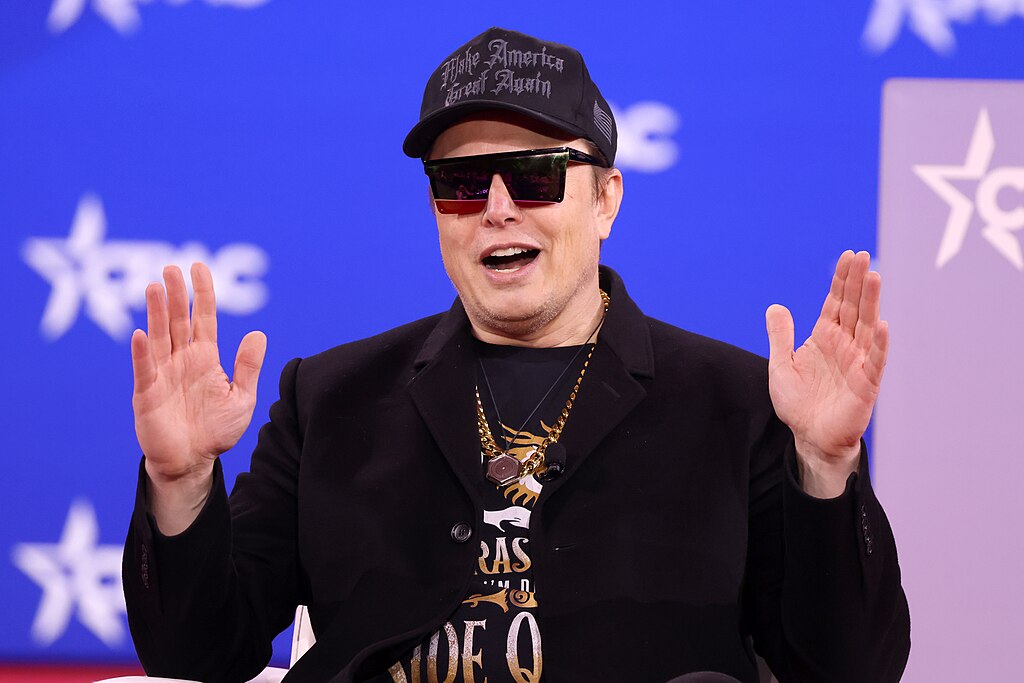
xAI Sues Man for Allegedly Using Grok to Generate AI Child Abuse Deepfakes. Source: Gage Skidmore from Surprise, AZ, United States of America, CC BY-SA 2.0, via Wikimedia Commons Elon Musk's artificial intelligence company xAI has filed a federal lawsuit against a South Carolina man accused of using its Grok chatbot to generate child sexual abuse material (CSAM) and non-consensual explicit deepfakes, marking one of the first known legal actions by an AI developer against a user over alleged misuse of generative AI. The lawsuit, filed Tuesday in a federal court in Texas, alleges that Terry Harwood violated xAI's terms of service by attempting to create sexually explicit AI-generated images involving both adults and minors. Harwood was arrested in February on separate charges related to the sexual exploitation of minors. His contact information was not immediately available, and xAI has not issued additional public comments on the case. According to the complaint, Harwood uploaded non-sexual images into Grok and allegedly attempted to transform them into explicit AI-generated content without consent. xAI claims the activity included efforts to produce child sexual abuse material and sexually explicit deepfakes of adults. The lawsuit comes as xAI faces growing international scrutiny over concerns that Grok and other generative AI tools can be exploited to create harmful or non-consensual synthetic media. The company said it actively monitors abuse and takes enforcement action against users who violate its policies. Court filings state that xAI has suspended 52,222 user accounts and submitted 73,604 reports to the National Center for Missing & Exploited Children (NCMEC) in 2026. According to the lawsuit, those reports have contributed to at least 244 arrests. xAI is seeking unspecified monetary damages and a permanent court injunction that would prohibit Harwood from accessing or using Grok in the future. In its filing, the company argued that the defendant intentionally weaponized its AI platform for criminal purposes, causing serious harm to victims while exposing xAI to legal and reputational risks. The case could become a landmark legal test of how AI companies hold users accountable for the misuse of generative AI technologies.
Elon Musk promises 'no exceptions' after Sam Altman's one word response on xAI's Grok 'uploading' customer code to its own servers
Elon Musk has promised total transparency after a security researcher revealed that xAI's coding assistant, Grok Build, was secretly uploading entire private customer code repositories to a company-controlled Google Cloud storage bucket. In response, the billionaire promised to make the entire codebase of X (formerly Twitter) open source with "no exceptions". Musk's push for absolute transparency follows a sharp online critique from rival OpenAI CEO Sam Altman, who publicly labeled the data privacy issue as "concerning"."Once we have completed our review for security vulnerabilities, we will make the entire codebase of 𝕏 open source, with no exceptions," Musk said in the post. "Moreover, we will invite third party reviewers to examine the system that is running to confirm that the open source code is what is running. Trust through total transparency is the only thing that should be believed," he added.The controversy erupted over the weekend when a security researcher discovered that xAI's tool was harvesting vastly more information than was actually required to answer standard coding requests. In one extreme test, as per a report by Axios, Grok Build uploaded a massive 5.1GB of data for a task that only needed 192KB, essentially collecting up to roughly 26,000 times more data than necessary.Security experts warn that this excessive data grab likely scooped up proprietary source code, private database passwords, API keys and cloud credentials. The breach quickly caught the attention of OpenAI's Sam Altman, who posted a blunt, one-word response on X calling the situation: "Concerning". In a separate post, Altman added that the incident was "a reason to favor open-source harnesses".Shortly after the security researcher published the findings, the uploads stopped without users needing to download a software patch, indicating that xAI had quickly shut down the system from its end.xAI released an official statement on Monday claiming that "no trace and code data is ever retained" for enterprise customers who hold strict zero-data-retention agreements.Furthermore, Musk announced a total purge of the collected information to pacify outraged developers. "As a precautionary measure, all user data that was uploaded to SpaceXAI before now will be completely and utterly deleted. Zero anything whatsoever will remain," Musk stated.
Elon Musk Reverses Course and Calls Anthropic the AI Leader - Memeburn
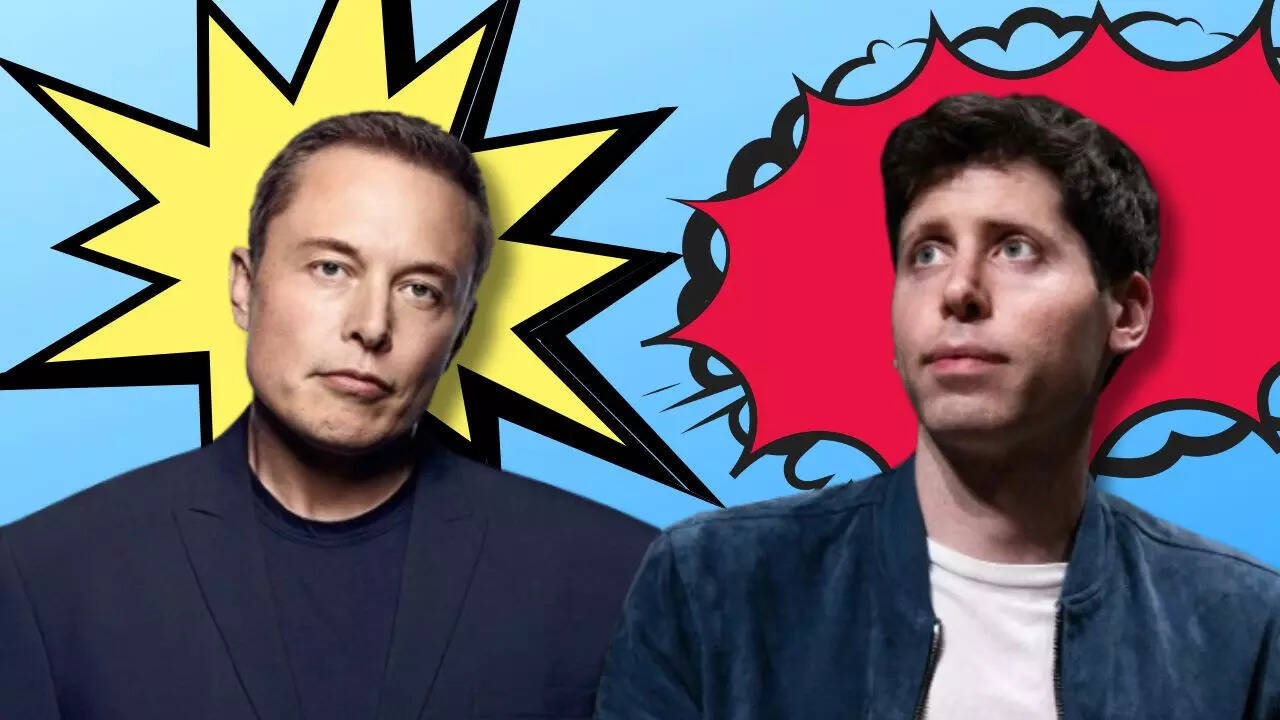
For South African businesses, the deal shows how access to AI tools increasingly depends on a small group of foreign infrastructure providers. Elon Musk has made a sharp U-turn on Anthropic. After months of attacking the Claude developer as "woke," hypocritical and unlikely to win the AI race, Musk now says Anthropic has become the industry's clear leader. He also praised its newest models and promised that he wouldn't use his control over computing infrastructure to seriously harm the company. The warmer language matters because Anthropic isn't just one of Musk's competitors anymore. It's also a major customer. Musk admits he got Anthropic wrong Musk acknowledged the reversal in a post on X, writing that he was "clearly wrong about Anthropic." "They are obviously currently the leader in AI," he added, while praising Anthropic's Mythos and Fable models. The comments represent a dramatic change from his earlier public attacks on the company, as detailed in Business Insider's report on Musk's Anthropic reversal. Earlier in 2026, Musk accused Anthropic of stealing training data, promoting political bias and acting hypocritically. He also dismissed the company's chances of beating rivals such as OpenAI, Google and his own AI operation. Now, he's describing the company's technology as the best available. That doesn't mean the rivalry has disappeared. Musk continues to promote Grok as a serious challenger, especially after the release of Grok 4.5. You can read our breakdown of Elon Musk's Grok 4.5 "Opus-class" claims for a closer look at how his model compares with Anthropic's systems. The compute deal changed the relationship The friendlier tone emerged after Anthropic signed a major computing agreement with SpaceX. According to Anthropic's official announcement of the SpaceX compute partnership, the company gained access to more than 300 megawatts of capacity, representing over 220,000 Nvidia GPUs at the Colossus 1 data centre. Anthropic said the added infrastructure would increase usage limits for Claude subscribers and API customers. Reported contract documents indicate that Anthropic agreed to pay around $1.25 billion per month for capacity through May 2029. However, termination clauses may allow either party to leave the agreement with relatively short notice. That creates an unusual relationship. Musk responded to suggestions that he could simply cut Anthropic off. He said he wouldn't end access in a way that seriously damaged the company, even though Claude competes with Grok. Praise doesn't remove the business risk Musk's assurance may calm some concerns, but Anthropic still faces a clear dependency. A frontier AI company needs more than clever researchers and strong software. It needs enormous data centres, reliable electricity, advanced chips and enough cooling equipment to run those chips around the clock. Only a small number of companies can provide that infrastructure at the required scale. We think the real story here isn't Musk's change of heart. It's the growing power held by companies that control computing capacity. Musk can compete against Anthropic through Grok while earning billions from Anthropic's demand for GPUs. In other words, he can benefit whether customers choose his AI model or one built by a rival. That helps explain why public criticism may now matter less than commercial cooperation. What it means for South African AI users For South African companies, the dispute may feel distant. But the infrastructure behind Claude, Grok and other major models directly affects local pricing, reliability and availability. A startup in Cape Town or Johannesburg might build its customer service, coding or research workflow around Claude. Yet the servers powering that service sit overseas and may depend on commercial agreements between a handful of American technology companies. If those agreements change, local customers have limited influence. This matters because African businesses often access AI as imported infrastructure, rather than technology they control themselves. The Anthropic-SpaceX relationship offers another reminder that model access can depend on corporate negotiations taking place thousands of kilometres away. It also strengthens the argument for more African investment in data centres, energy capacity and locally hosted AI systems. South Africa has a growing cloud and data-centre sector, but training a frontier model still requires infrastructure on a completely different scale. Musk's endorsement could shift again Musk's latest position combines praise with competition. He has acknowledged Anthropic's technical lead while continuing to argue that his younger AI business could catch up. The recent release of Grok 4.5 shows that Musk hasn't abandoned the race; he's simply recognising the strongest current opponent. What we're watching now is whether the cooperation survives the next major model launch. Anthropic needs stable computing capacity. Musk wants Grok to win. Those goals can coexist while the infrastructure deal remains profitable, but a closer contest could test that arrangement. So, is Musk genuinely reconsidering Anthropic, or has a billion-dollar customer simply become harder to criticise? FAQs Why did Elon Musk change his opinion about Anthropic? Musk admitted that he had misjudged Anthropic's progress and now considers it a leader in artificial intelligence. The company's newer Claude models have performed strongly in coding, reasoning and business tasks. Anthropic's commercial relationship with Musk-controlled infrastructure may also have softened the rivalry. Does Anthropic compete with Elon Musk's xAI? Yes, Anthropic and xAI are direct competitors in the advanced AI model market. Anthropic develops Claude, while xAI offers Grok across X and other Musk-owned platforms. However, the companies can still cooperate on computing infrastructure while competing for users. Why does Anthropic need so much computing power? Training and operating advanced AI models requires thousands of powerful chips, large data centres and substantial electricity. More computing capacity allows Anthropic to improve Claude and support more users without severe usage limits. It also helps the company compete with OpenAI, Google and xAI.

Cerebras CEO Andrew Feldman Says Elon Musk Found a 'Pretty Good Idea' in Leasing SpaceXAI's Unused Grok Capacity to Anthropic
Benzinga and Yahoo Finance LLC may earn commission or revenue on some items through the links below. Cerebras Systems Inc. CEO Andrew Feldman says SpaceXAI, formerly xAI, moved into rented AI computing because its processors were not busy enough, as Grok drew less usage than expected. Feldman Blames Grok's Weak Early Adoption Speaking with Molly O'Shea on the Sourcery podcast on Monday, Feldman explained that Musk's company pivoted to an operator that rents out AI infrastructure because its Grok model struggled with early enterprise market adoption, leaving billions of dollars in hardware sitting idle. "You have to ask why they had available capacity," Feldman said. "They had available capacity because the Grok model wasn't used very much." Cerebras CEO @andrewdfeldman explains why @elonmusk and SpaceXAI made a deal to lease GPUs to Anthropic: "You have to ask why they had available capacity... They had available capacity because the Grok model wasn't used very much." "They had these GPUs sitting around, and... https://t.co/1IHsE98NR3 pic.twitter.com/ssomhhLJJl -- sourcery (@sourceryy) July 13, 2026 Trending: Avoid the #1 Investing Mistake: How Your 'Safe' Holdings Could Be Costing You Big Time Feldman said SpaceXAI could not afford to leave equipment idle. "They had these GPUs sitting around, and that's a bad idea," he said. He pointed to IPO-bound Anthropic's agreement to use SpaceX's Colossus 1 data center in Memphis, Tennessee. Anthropic said the site provides more than 300 megawatts through over 220,000 Nvidia GPUs, allowing it to double Claude Code limits, remove peak-hour reductions and raise API ceilings. "They leased a whole block of them to Anthropic, and looked up and said, 'Whoa, that's a pretty good idea,'" Feldman said. "We had all these GPUs. Our model wasn't a success, but we can have a great business by stepping into what is a constrained market." Anthropic Deal Monetizes Idle GPU Capacity In May, Anthropic agreed to pay $1.25 billion per month for Colossus and Colossus II capacity through May 2029. Both sides can terminate with 90 days' notice, and Musk described the arrangement as a six-month lease, leaving its long-term value uncertain. See Also: Skip the Regrets: The Essential Retirement Tips Experts Wish Everyone Knew Earlier. Colossus 1 supported Grok's development, but Reuters described its capacity as unused prior to the Anthropic agreement. SpaceXAI said Grok 4.5 trained across tens of thousands of Nvidia GB300 processors.
SpaceX is the Dutch East India Company of the space age
In August 1602, more than 1 100 investors - from wealthy merchants to ordinary craftsmen - subscribed to the world's first initial public offering. The Dutch East India Company, the VOC, raised Gld6.4-million to build a maritime trade network stretching from Amsterdam to the East Indies. On 12 June 2026, SpaceX raised US$75-billion in the largest IPO in Wall Street history, pricing at $135/share and closing its first session more than 19% higher. Demand was roughly double the shares on offer - and South Africans were not left out, pouring R179-million into the stock through EasyEquities in just two days. Separated by 424 years, the parallel is worth taking seriously. Neither company was first into its frontier - Portuguese fleets reached the East Indies long before the Dutch, and governments have been launching rockets since the 1950s. What both did first was ask the public capital markets to fund a frontier, at a scale and time horizon no private syndicate would stomach. The VOC's real innovations were financial. As economic historian Gerard Koot notes in his history of the company, it introduced limited liability for shareholders and, unlike earlier ventures wound up after a single voyage, locked in its capital for a decade - a permanent fund for voyages that took years to pay off. Tradeable shares made the risk bearable, and gave the world the Amsterdam Stock Exchange as a by-product. SpaceX's logic is strikingly similar. The capital-hungry Starship programme - the company wants to be flying a rocket every 53 minutes within five years - and the Starlink constellation that is rewriting the economics of global connectivity consume cash on a scale that outgrew even Silicon Valley's deepest private pockets. As in 1602, the public market was the only pool of capital big enough. State-like influence The VOC's monopoly came stamped with sovereign powers: the right to make treaties with Asian governments, enlist soldiers, wage war, and build and administer forts - a company that behaved like a state. SpaceX holds no royal charter, yet its position is not far off a monopoly in practice. In 2025 it accounted for roughly half of all orbital launches worldwide and, by mass delivered to orbit, more than 80% of global upmass. It is also the de facto ferryman for Nasa astronauts: when a bungled test flight of Boeing's Starliner left two astronauts stuck on the International Space Station for 286 days, it was a SpaceX capsule that brought them home last year. Read: China nets a falling rocket in reusability race with SpaceX More telling still is Starlink's geopolitical weight. The constellation became crucial to Ukraine's communications infrastructure within days of Russia's invasion, and decisions about its coverage have shaped battlefield outcomes - leading Foreign Policy to argue that Starlink has effectively privatised a slice of geopolitics. Buyers of SPCX are not simply buying a technology company; they are buying into an entity with sovereign-level leverage over who connects, where and on what terms. The VOC was never just a shipping line: it ran an inter-Asian trading system from Persia to Japan, dealt in spices, textiles, porcelain and silver, and administered territory - a diversified enterprise built on control of a frontier's logistics. SpaceX, likewise, is no longer just a rocket company. In February 2026, it executed the largest M&A deal on record: an all-stock acquisition of Elon Musk's xAI valued at $250-billion, folding the X social platform and Grok AI models into the listed entity in service of Musk's ambition to build orbital data centres. The result is a company betting the rocket farm on AI: a space, connectivity and AI conglomerate whose parts reinforce one another the way the VOC's ships, ports and monopolies once did. The VOC is one of the few frontier enterprises with a share price record spanning two centuries - and its first lesson is patience. Shareholders waited more than seven years for a dividend, and the first, in 1610, was paid in mace - the spice, not money. Frontier infrastructure pays out slowly. There is no SpaceX moonbase yet, let alone Mars colonies. The second is that the frontier premium was real, but earned over decades. Economist and historian Lodewijk Petram, who reconstructed the price record from 17th-century merchants' papers, calculates an average annual return of 8.69% between 1603 and 1697 - comfortably above the 4-6% paid on Dutch government bonds. The third is that the premium decays as the frontier matures. After 1650, returns settled at a bond-like 3.5-4% a year. As economic historians Jan de Vries and Ad van der Woude concluded: "The profits earned by the Company's actual equity were modest after the 1650s, and vanishingly small after 1730." The fourth is that price and reality can part ways entirely. The VOC's share price hit its all-time high in 1720 - not because of anything happening in Batavia, but because a speculative frenzy had spread from London across the continent. By then the company's underlying returns were already bond-like. (And the viral claim that the VOC was once worth $8-trillion in today's money is, as Petram has shown, off by a factor of roughly 8 000. SpaceX, at over $2-trillion, is already far larger in real terms than the VOC ever was - the comparison is about the category of enterprise, not its size.) Where the analogy strains The last lesson is the bleakest: dominance is not a perpetuity. From 1730, the VOC paid dividends it had not earned, funding them by drawing down its capital. War with Britain finished the job, the state nationalised the wreck in 1795 and the charter lapsed on 31 December 1799. There are caveats. The VOC's monopoly was granted by the state and enforced by cannon - its most profitable decades followed ruthless violence in the Banda Islands - while SpaceX's dominance is commercial and contestable. Rivals are massing: Europe's Iris2 constellation and Amazon Leo, which is heading for South Africa before Starlink is even licensed here. And as TechCentral has noted, the biggest IPO ever is also one of the riskiest, given its dependence on one man and on programmes whose economics remain unproven. None of this is a prediction about the share price. What the comparison establishes is the category of thing investors have just been offered: not a stake in a product company but a stake in the infrastructure of a frontier, with all the reach, entanglement and political gravity that implies. The VOC's record suggests such an investment can beat the market for decades - and that the premium fades once the frontier is tamed, and that the price, at the moment of greatest euphoria, can be the least reliable guide to what lies beneath. Space is the "final frontier", after all: no one knows how it will play out. Going boldly where no company has gone before carries immense potential reward - and equally immense risk. - © 2026 NewsCentral Media

Pollution from Musk's unpermitted xAI power project hits hardest in Black communities
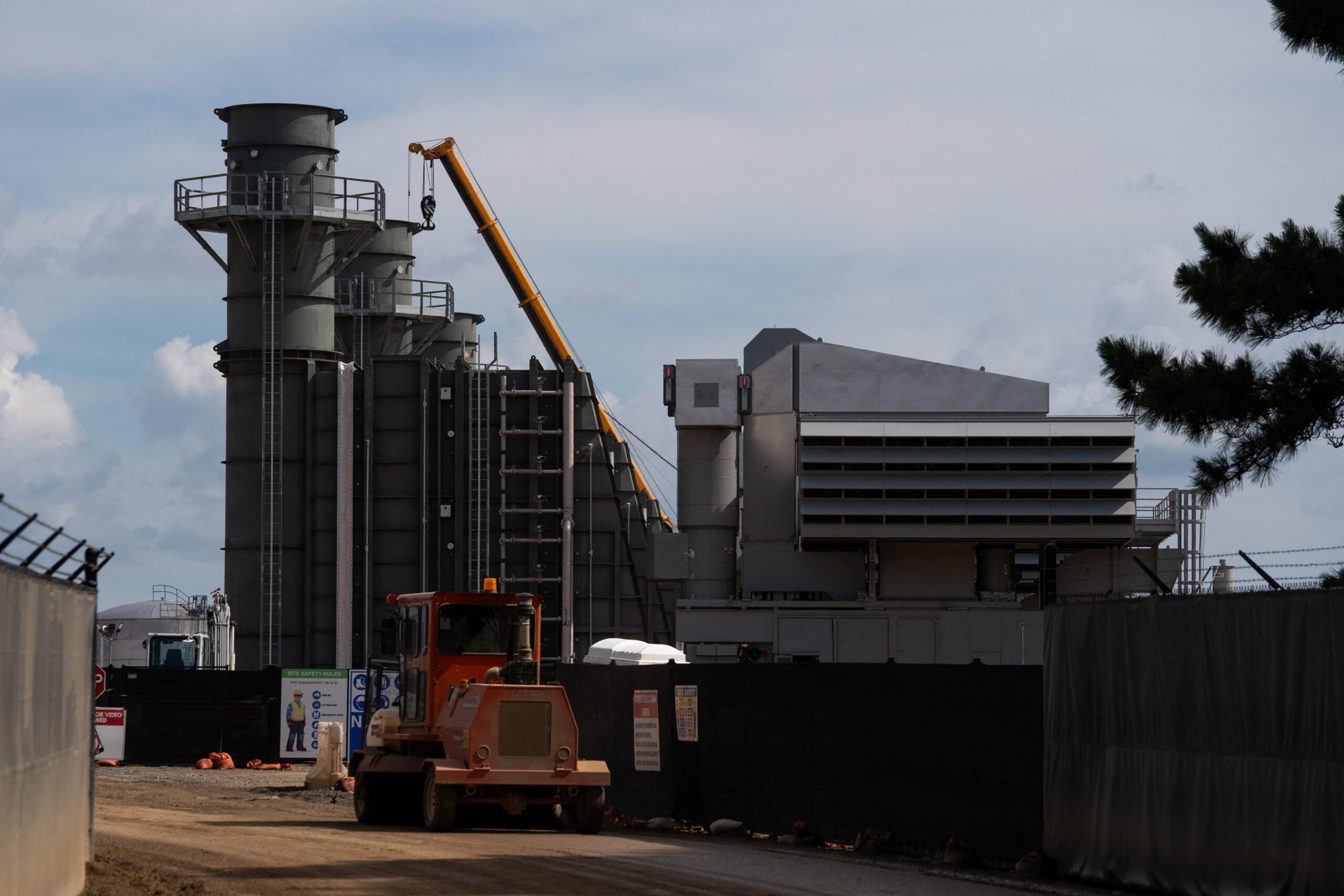
The findings illustrate how electricity demand from AI data centers is driving companies to build power plants without enough environmental oversight in the US Elon Musk's artificial intelligence company xAI has installed 59 natural gas turbines for its Colossus 2 data center project in Tennessee without securing federal clean air permits, according to communications between regulators and xAI representatives. Potential emissions from the turbines are far beyond the threshold that would require a federal permit, and would be released near predominantly Black communities already estimated to be suffering disproportionately high rates of lung disease, according to a Reuters analysis based on government data and information in the correspondence with regulators. The findings, which have not been previously reported, reflect how exploding electricity demand from AI data centers is driving companies to build off-grid power plants at a pace outstripping environmental oversight, with potentially big risks to public health. The number of unpermitted turbines identified by Reuters is about double what xAI has publicly acknowledged. The company previously said it was running 27 unpermitted turbines for Colossus 2 as of January and has argued the permits are not required. At least 57 of the 59 turbines are located in Mississippi, just over the state line from Tennessee where the data center is located. The xAI turbines are among scores of off-grid power plants for data centers proposed or under construction around the country. Local authorities often fast-track approvals in just weeks or months, without the years of environmental studies and public hearings typically required for such power generation projects that connect to the grid, Reuters has reported. Mississippi regulators in March issued a permit for permanent turbines for Colossus 2, allowing construction of 41 gas-fired turbines. The approval came three weeks after the state's only public hearing on the project. The xAI cluster of temporary turbines in Mississippi is already among the biggest off-grid data center power projects, according to Ben King, an analyst with think tank Rhodium Group, who reviewed the Reuters analysis. "This looks to be an unprecedented level of behind-the-meter gas being installed in one place," he said, referring to off-grid natural gas plants serving just one customer. The communications reviewed by Reuters show xAI, now owned by trillionaire Musk's SpaceX SPCX.O, has installed 57 off-grid turbines in Southaven, Mississippi, just across the state line from its Colossus 2 data center in Memphis, a facility supporting the Grok chatbot and other AI systems. The records show the company has also installed two other unpermitted turbines for the project on a different site. Reuters could not determine the location. The communications, obtained through a Reuters public records request, included emails between Trinity Consultants, representing xAI and subsidiary MZX Tech, and the Mississippi Department of Environmental Quality (MDEQ). xAI did not respond to Reuters' request for comment. xAI's turbines are part of a widening environmental justice battle over whether the AI boom is adding disproportionate pollution burdens to communities of color. Civil rights groups including the NAACP and the Southern Environmental Law Center sued xAI in April to halt their operations, arguing the turbines produce emissions subject to the federal Clean Air Act and shouldn't be operated without permits. They contend the turbines are polluting homes, schools and churches in historically Black communities. "The scale of it is astonishing," said Patrick Anderson, an attorney with the Southern Environmental Law Center. "This is an absolutely huge Clean Air Act violation that threatens public health." Securing a Clean Air Act permit would have exposed xAI's project to extensive review and public comment, potentially taking years. Mississippi environmental regulators and xAI have argued in court filings that the turbines are exempt because they are "mobile" and intended to operate onsite for less than a year. "MDEQ has determined that portable/temporary turbines do not require an air permit," the agency said in a statement to Reuters. The US Environmental Protection Agency said in January 2026 that even temporary turbines exceeding emissions thresholds must obtain permits. The agency, however, told Reuters it's considering changes allowing "regulatory flexibilities" for portable units while continuing to protect public health. xAI, the MDEQ and the EPA did not answer questions from Reuters about pollution impacts on communities of color from power generation to serve data centers. The US Justice Department weighed in on the lawsuit in a June 15 filing, saying that restricting the turbines could threaten national security interests because xAI's systems support US military operations, including operations involving Iran. The outcome of the lawsuit filed by civil rights groups could help define how environmental laws apply to the fast-growing AI sector, where companies are scrambling to bring power supplies online to support energy-intensive computing. "This sets up scenarios where the government can create sacrifice zones and tell communities they have to breathe illegal air pollution," said Mary Rock, a senior attorney for Earthjustice which is representing the NAACP and SELC. The dispute echoes the findings of a 2022 study by researchers from UCLA and Columbia University and published in the Nature Energy journal that found that previously redlined communities -- where banks historically discriminated against Black mortgage applicants -- now face disproportionately high exposure to pollutants from fossil fuel facilities. "Air pollution from these and other sources contributes to systemic racial disparities in chronic disease and ultimately shorter lives," Lara Cushing, a UCLA public health professor who co-authored the study, told Reuters. Big emissions The emails reviewed by Reuters included the manufacturer emissions profiles for 32 of the 59 turbines, including 30 at the Southaven site. A Reuters analysis based on that information found that those 30 turbines alone could emit nearly 2,500 short tons of nitrogen oxide, 4,000 short tons of carbon monoxide and 22 short tons of formaldehyde annually, assuming they operate continuously at 80% of capacity. According to the EPA, gas turbines are typically operated at loads of 80% or more to achieve efficiency. Nitrogen oxides contribute to smog and respiratory inflammation, according to the American Lung Association. Carbon monoxide deprives the body of oxygen, and formaldehyde is a carcinogen. The xAI site's potential emissions far exceed a Clean Air Act threshold that requires permitting for facilities capable of more than 100 short tons annually of pollutants such as nitrogen oxide. "This is a massive amount of turbines and an unfathomable amount of air pollution," Southaven resident Shannon Samsa said in an interview. "It's not a hypothetical," she said, "that air pollution is bad for you." The nitrogen oxide emissions calculated by Reuters for about half the plant's turbines would put the facility "up there with some of the heaviest polluting natural gas power plants across the entire country," said Nicholas Mailloux, a postdoctoral researcher at the University of Wisconsin-Madison who studies air quality and health benefits of the clean-energy transition. He said the facility would be on par with the top 25 US gas plants for nitrogen oxide emissions, citing EPA data for actual emissions. The people affected In the Colonial Hills neighborhood of Southaven, the turbines serving Colossus 2 can be heard around the clock, often firing off noisy bursts that residents compare to jet engines. Ervin Laws, a Colonial Hills resident in his 20s, said the noise wakes him up at night. "I can't do anything about it, because he's got more money than me," he said, referring to Musk. The turbines were installed in communities already estimated to be facing relatively high respiratory disease burdens, according to a Reuters analysis of CDC data. In 27 of 28 census tracts within five miles of the site -- spanning both Mississippi and Tennessee -- the estimated asthma rates were higher than their respective countywide figures. In 24 tracts, chronic obstructive pulmonary disease rates were also higher. Five miles is a distance commonly used in environmental health research to capture populations likely to be exposed to air pollution from a stationary source. A separate Reuters analysis of Census Bureau data found that the residents living near the facility are disproportionately Black. Because the five-mile radius crosses state lines, Reuters compared each side against its own county baseline. Within five miles of the facility in DeSoto county, Mississippi -- where the turbines are located -- about 46% of residents are Black, compared with 33% countywide, according to census data. Across the state line in Tennessee, where residents have no say in Mississippi's permitting process, about 94% of residents within five miles of the facility are Black, compared to 52% in surrounding Shelby County. Jayajit Chakraborty, a professor at the University of California, Santa Barbara, said the Reuters analysis was consistent with research that shows communities of color face higher exposure to fossil fuel pollution. Shelby County and portions of DeSoto County have also previously failed to meet federal ozone standards and remain subject to EPA-approved plans to ensure they do not slip back into violation, according to regulatory documents. Nitrogen oxide is a key precursor to ozone formation, which the EPA says can harm respiratory health. "Given this community struggles with high asthma rates, additional NOx exposure at such high rates could exacerbate public health issues in a community that is already seeing more than its fair share of exposure to toxic air pollution," said Victoria Nelson, an independent environmental engineer, formerly at EPA. Sarah Gladney, 72, has watched the rapid expansion of xAI's Memphis-area presence from her home in the historically Black neighborhood of Boxtown, a few miles from where the company built its Colossus 1 data center in 2024. "Once they got their foot in the door in Memphis, I feel like it's going to be a continuous movement of xAI into these other communities," she said. "It's all about the money, and it's not about the health or wellness of the people that live in or near these communities." - Rappler.com
SpaceX reportedly shows prototype of smartphone to investors as IPO looms
Elon Musk denied the Wall Street Journal report, calling it 'utterly false,' but the implications for telecom and tech markets are hard to ignore The Wall Street Journal reported on July 1, 2026, that SpaceX showed a prototype of a slim, AI-driven device to select investors. The device was described as thinner than an iPhone, powered by a Qualcomm Snapdragon chipset, and deeply integrated with xAI technology. Elon Musk immediately denied it, taking to X to call the report "utterly false." What we know about the device According to the WSJ report, the prototype was presented to institutional investors and stakeholders as part of SpaceX's capital-raising efforts ahead of its anticipated IPO. The company has been preparing to go public, with its offering projected for June 2026. Musk denied SpaceX was developing a phone as recently as February 2026. That's barely four months before the company allegedly showed one to investors. The Starlink connection SpaceX's Starlink Direct to Cell initiative has been forging partnerships with telecommunications firms, positioning satellite-based mobile service as a complement to traditional cell towers. One of the most notable moves in this space has been a spectrum deal with EchoStar valued at $1 billion. Why crypto markets should pay attention There's no evidence linking this prototype to any cryptocurrency or blockchain technology. No wallet integration, no token, no decentralized anything. The research is clear on this point. The SpaceX IPO itself is a gravitational event for capital allocation. When one of the most anticipated public offerings in history hits the market, it pulls institutional money from other asset classes. Crypto has historically felt the effects of major tech IPOs as portfolio managers rebalance. Starlink reaching underserved populations with a low-cost, AI-powered device could expand the addressable market for mobile-first crypto products in regions where traditional telecom infrastructure has lagged.