News & Updates
The latest news and updates from companies in the WLTH portfolio.
SpaceX makes Wall Street history with record $75bn IPO
SpaceX has made history with the world's largest initial public offering (IPO), raising $75 billion in a landmark stock market debut that values Elon Musk's space and satellite company at approximately $1.8 trillion. The company priced 555.6 million Class A shares at $135 each ahead of its June 12 debut on the Nasdaq Global Select Market and Nasdaq Texas under the ticker symbol, SPCX, surpassing every previous IPO in terms of capital raised. The offering marks a moment for the commercial space industry by opening one of the world's most closely watched private companies to public investors after more than two decades of remaining privately held. Investor appetite proved strong, with reports indicating demand exceeded $250 billion, which is approxately more than three times the size of the offering as institutional investors rushed to secure allocations. SpaceX subsequently increased the size of the deal after underwriters exercised their full overallotment option, bringing total gross proceeds to approximately $85.7 billion from the sale of 638.9 million shares. Founded in 2002 by Elon Musk, SpaceX has transformed the global space industry through reusable rockets, commercial satellite launches and its Starlink satellite internet network. The company has become a critical launch provider for NASA, the U.S. Department of Defense and commercial customers while expanding broadband access globally through Starlink. The IPO provides SpaceX with fresh capital to improve development of its next-generation Starship rocket programme, expand its Starlink constellation and invest in future technologies aimed at enabling interplanetary travel. At its IPO valuation, SpaceX joins the ranks of the world's most valuable publicly traded technology companies despite remaining unprofitable. The company generated roughly $19 billion in revenue last year, driven largely by Starlink subscriptions and launch services, according to its public filings. The listing is also expected to increase Musk's wealth, reinforcing his position among the world's richest individuals. A consortium of major investment banks led by Goldman Sachs, Morgan Stanley, BofA Securities, Citigroup and JPMorgan managed the offering. The transaction has already boosted underwriting revenues across Wall Street, with Goldman Sachs reporting a sharp increase in equity underwriting fees following the blockbuster listing. Since its market debut, however, SpaceX shares have experienced heightened volatility as investors reassess the company's premium valuation, future profitability and growing competition in the commercial space sector. The stock has retreated significantly from its post-IPO highs amid concerns over valuation and the potential increase in tradable shares after lock-up periods expire.
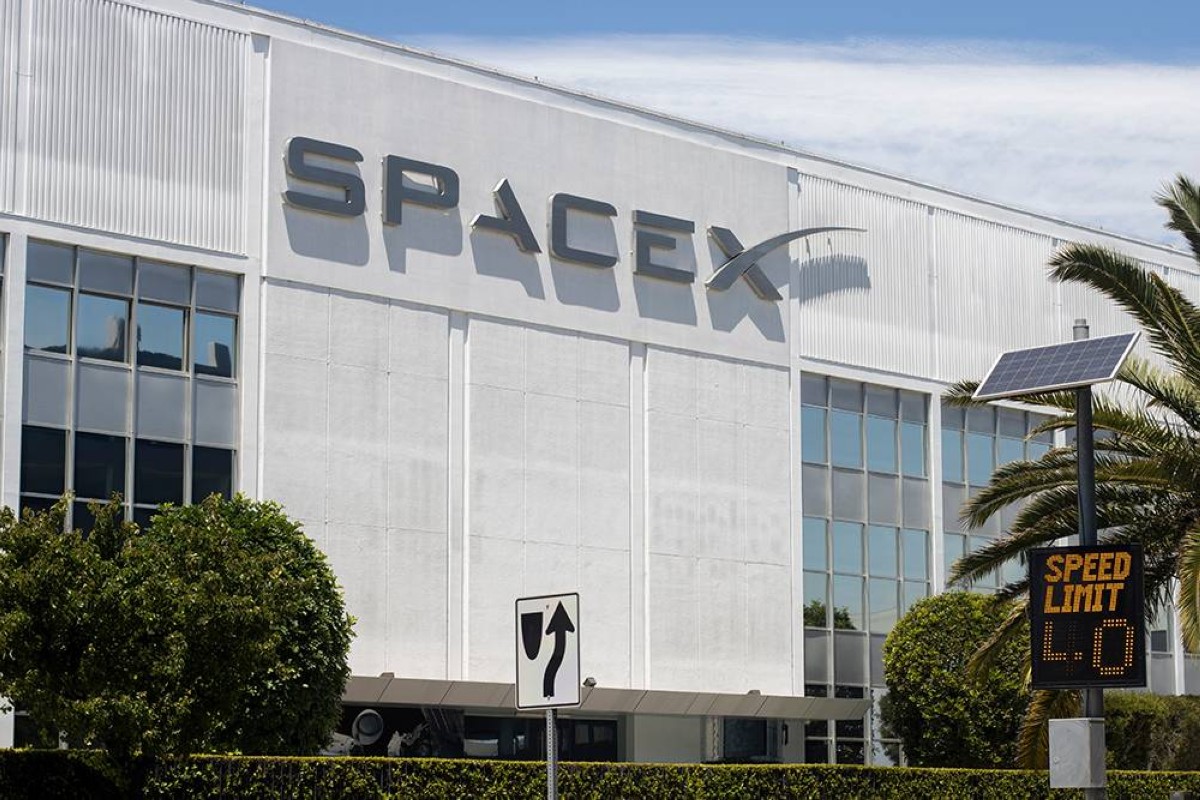
SpaceX seeks to send data centers into orbit
SpaceX has announced that the 13th test flight of its Starship super heavy-lift launch system is scheduled for July 16. The launch window from the company's Starbase facility in Texas will open at 17:45 local time, which corresponds to 00:45 on July 17 in Baku time, AzerNEWS reports. The upcoming Flight 13 mission will feature the Ship 40 spacecraft and the Booster 20 Super Heavy rocket. This will mark the second test flight of the upgraded Starship V3 configuration, which includes improvements to both hardware and flight systems. One of the most important milestones of the mission will be the first attempt to deploy a real payload into orbit. Starship is expected to carry 20 next-generation Starlink V3 satellites, with six of them equipped with cameras designed to monitor the condition of the spacecraft's thermal protection system during flight. However, because the mission will follow a suborbital trajectory, the satellites will not remain in orbit and will eventually re-enter Earth's atmosphere and burn up. During the test, SpaceX plans to evaluate several critical technologies, including the in-space restart of a Raptor engine, the performance of the upgraded heat shield during atmospheric re-entry, and the controlled splashdown of the spacecraft in the Indian Ocean. The company has also introduced software and hardware improvements based on data collected during the previous test flight in May. During that mission, the Super Heavy booster failed to complete its planned soft landing after experiencing an engine-related issue during the landing sequence. Meanwhile, SpaceX CEO Elon Musk has shared new details about the company's long-term plans to build data centers in low Earth orbit. According to Musk, SpaceX could begin launching the first components of these orbital computing systems as early as next year, with major progress expected by 2028. Earlier, SpaceX revealed additional information about the Starmind project, a planned orbital network of data centers designed to provide large-scale computing capacity for artificial intelligence applications. If successful, the project could become one of the most ambitious attempts to move AI infrastructure beyond Earth, using space-based solar power and advanced satellite networks. The Starship program remains central to SpaceX's future plans, including NASA's Artemis lunar missions, potential Mars exploration, and the expansion of global satellite services.

SpaceX Listing Drives CommSec Expansion Into US IPOs
Space Exploration Technologies Corp. designs, manufactures, launches, and operates products and services built on technologies, including rockets and spacecraft. The Company's segments include Space, Connectivity, and artificial intelligence (AI). Its Space segment designs, manufactures, and launches reusable rockets to provide access to space. Its Connectivity segment operates broadband data and communications network powered by approximately 9,600 Starlink broadband and mobile satellites in Low-Earth orbit, delivering connectivity to consumer, enterprises, and government customers over 164 countries, territories, and other markets. In its AI segment, it operates a vertically integrated AI platform spanning its truth-seeking frontier model Grok, AI solutions for consumer and enterprise customers, X-its real-time information, entertainment, and free speech platform and AI computational infrastructure.

SpaceX Fell Below Its Debut Price. History Says a $10,000 Investment Will be Worth This Much in a Year.
Space Exploration Technologies (NASDAQ: SPCX) splashed onto the scene just a few weeks ago when it completed the world's biggest initial public offering, raising more than $85 billion after the exercise of an overallotment option. Of course, SpaceX wasn't new to investors -- the company had been making headlines for years, particularly for its rocket launches for NASA. But this was the first time investors, from retail to professional, could easily invest in the company. Demand was high during the IPO -- it was greatly oversubscribed -- and during the first days of trading. The stock soared 50% from its $150 debut price to a peak of $225 on June 16. In recent days, though, SpaceX has lost the positive momentum. In fact, the stock has slipped below its debut price. Missed Nvidia in 2009? This Rare Signal Is Flashing Again. In 2009, a "Double Down" signal flashed for a little-known chipmaker called Nvidia. For the first time in years, that same "Total Conviction" signal is flashing for a company 1/100th the size of Nvidia. Continue " If you had invested $10,000 in SpaceX's early days of trading, how much would this investment be worth in a year? History offers us a very clear answer. Exciting growth businesses First, though, let's take a quick look at the SpaceX story. The company has attracted investors thanks to its exciting growth businesses and its ambitious leader, Elon Musk. SpaceX operates in rocket launches, satellite-based internet, and artificial intelligence (AI), areas that each could drive significant revenue gains if they reach certain goals. And speaking of goals, many are ambitious, but if the company can accomplish them, they could be game changers. For example, SpaceX aims to develop data centers in space, and its most ambitious goal may be to colonize Mars. What's interesting about this mix of businesses is that they fit together nicely, with accomplishments of one driving gains in another. SpaceX's work to make reusable rockets and drive down the costs of launches will help it launch equipment more cheaply and quickly into space for its other businesses. Elon Musk is the chief executive officer behind these ambitions, and while some investors aren't fans of his strategies, others are -- and they generally rush to bet on Musk. The popularity of the SpaceX IPO is proof of this. $18 billion in revenue SpaceX has made progress in various areas -- it aims to launch its fully reusable rocket, Starship, with payloads later this year -- and is delivering growth. Revenue last year climbed more than 30% to $18 billion. But SpaceX needs to invest heavily to support the development of its technology, and this pushed the company to a $4.9 billion loss. This may continue, considering the complexity of the technology involved in the company's businesses.
One Month in and SpaceX Stock Is Down More Than 35% from Its Post-IPO Peak. How to Play SPCX Here.
A month ago, SpaceX Corporation (SPCX) arrived on the public markets with the kind of excitement few companies have ever generated. Investors rushed in, betting not just on rockets and satellites, but on Elon Musk's vision of building the next great technology powerhouse. The stock wasted no time rewarding that optimism, soaring well above its IPO price within days and briefly cementing itself among the world's most valuable companies. But Wall Street has a habit of sobering up after the celebration. More News from Barchart Since peaking just days after its blockbuster debut, SpaceX stock has tumbled 38.5%, giving back much of its early gains. The pullback came despite a steady stream of headline-grabbing announcements, including a major artificial intelligence (AI)-related acquisition, its first bond offering, inclusion in key stock indexes, and bullish analyst initiations. In other words, the news flow stayed strong, but the stock stopped listening. That shift reflects a familiar pattern. IPO excitement can push expectations sky-high, but eventually investors start asking tougher questions about valuation, execution, and whether ambitious promises can translate into real financial results. Now that the initial IPO euphoria is in the rearview mirror, the conversation is beginning to shift. Instead of chasing the headlines, investors are now weighing the company's fundamentals, valuation, and long-term growth prospects. So, has the recent sell-off created an attractive buying opportunity, or does SPCX still have more room to cool before it becomes compelling? About SpaceX Stock Founded in 2002, SpaceX has evolved from an ambitious rocket startup into one of the world's most influential technology companies. Headquartered in Starbase, Texas, the company operates across several fast-growing industries, including space transportation, satellite connectivity, and AI. SpaceX is best known for its reusable Falcon rockets, Dragon spacecraft, and the next-generation Starship program, which are reshaping access to space. Its Starlink unit provides high-speed satellite internet to consumers, businesses, and governments around the globe. Following its acquisition of xAI, SpaceX has also expanded deeper into AI, combining AI software with large-scale computing infrastructure. Together, these businesses have positioned SpaceX as a major player at the intersection of space, communications, and AI.
Is SpaceX Stock a Millionaire Maker? There Are 2 Things That Will Define That Answer.
There's a strong case to be made that Space Exploration Technologies (NASDAQ: SPCX), better known as SpaceX, is the most hyped initial public offering (IPO) of all time. It raised a record $75 billion during its IPO, hitting the market with an initial valuation of $1.77 trillion -- making it one of the world's most valuable companies. Where to invest $1,000 right now? Our analyst team just revealed what they believe are the 10 best stocks to buy right now, when you join Stock Advisor. See the stocks " There are tons of people excited about SpaceX as a company, but there are also tons of people who are only excited about the stock and how much money it could potentially make them. They see CEO Elon Musk as a visionary who made plenty of millionaires through Tesla (NASDAQ: TSLA) and wonder if SpaceX is on that same path. Image source: Getty Images. Two questions that may guide the answer Two key factors will heavily influence whether or not a stock can be a millionaire maker: How much someone can initially invest and how much time they have to stay invested in the stock. If you have $800,000 to invest in a stock, it's much easier to hit the million-dollar mark, since the investment only needs to grow 25%, compared with having $100,000 to invest and needing it to grow tenfold. The same goes for timing. If you have $100,000 to invest and 20 years on your side, the chances of hitting the million-dollar mark are much higher than if you were trying to accomplish it in five years. So, which is most important in SpaceX's case? The numbers don't currently work in SpaceX's favor The average investor is much more likely to have 20 years to invest than to have hundreds of thousands to invest in a lump sum. So, for the sake of this example, we'll assume someone has $50,000 to invest in SpaceX right now (which is still a lot, to be fair), meaning their investment would need to grow by 20x to reach $1 million. At the time of this writing, SpaceX is valued at $1.82 trillion, so increasing its value by 20x would put it at $36.4 trillion. Some Wall Street analysts have said they see SpaceX's valuation reaching the $30 trillion ballpark in the next 15 to 20 years, so it's not impossible by any means. However, it's very unlikely, in my opinion. SpaceX's initial large valuation works against it. This isn't a situation like Tesla, whose initial valuation was $1.7 billion when it went public in June 2010. It's much easier to increase 20x in valuation to reach $34 billion from there than it is when you're starting from nearly $2 trillion. A $5,000 investment in Tesla during its IPO would be worth over $1.2 million today -- with most gains coming after 2020 -- but I don't see that happening with SpaceX. TSLA data by YCharts SpaceX needs to deliver on ambitious projects I do not doubt that SpaceX will eventually make some retail investors millionaires (it has already made plenty of private investors millionaires). Some people have large lump sums to invest, and others realistically have at least 30 years of investing ahead of them to take advantage of compounding growth. However, I don't believe it will happen for the average investor anytime in the next decade or so. SpaceX's business is solid right now, as the largest space launch company, owner of lucrative AI infrastructure, and with a flourishing Starlink business, but that's not what will make the average investor a millionaire. It's going to take delivering on very ambitious projects, such as space data centers, and growing into what SpaceX has predicted is the largest total addressable market in history ($28.5 trillion). Of course, we can never predict how the stock market will perform, and anything is possible, but realistically, investors are better off looking elsewhere for a millionaire-maker stock. And it's likely not one that's currently valued in the trillions. Should you buy stock in Space Exploration Technologies right now? Before you buy stock in Space Exploration Technologies, consider this: The Motley Fool Stock Advisor analyst team just identified what they believe are the 10 best stocks for investors to buy now... and Space Exploration Technologies wasn't one of them. The 10 stocks that made the cut could produce monster returns in the coming years. Consider when Netflix made this list on December 17, 2004... if you invested $1,000 at the time of our recommendation, you'd have $398,160!* Or when Nvidia made this list on April 15, 2005... if you invested $1,000 at the time of our recommendation, you'd have $1,249,202!* Now, it's worth noting Stock Advisor's total average return is 918% -- a market-crushing outperformance compared to 209% for the S&P 500. Don't miss the latest top 10 list, available with Stock Advisor, and join an investing community built by individual investors for individual investors. See the 10 stocks " *Stock Advisor returns as of July 14, 2026. Stefon Walters has no position in any of the stocks mentioned. The Motley Fool has positions in and recommends Tesla. The Motley Fool has a disclosure policy. The views and opinions expressed herein are the views and opinions of the author and do not necessarily reflect those of Nasdaq, Inc.

Is SpaceX Stock a Millionaire Maker? There Are 2 Things That Will Define That Answer.
There's a strong case to be made that Space Exploration Technologies (NASDAQ: SPCX), better known as SpaceX, is the most hyped initial public offering (IPO) of all time. It raised a record $75 billion during its IPO, hitting the market with an initial valuation of $1.77 trillion -- making it one of the world's most valuable companies. Missed Nvidia in 2009? This Rare Signal Is Flashing Again. In 2009, a "Double Down" signal flashed for a little-known chipmaker called Nvidia. For the first time in years, that same "Total Conviction" signal is flashing for a company 1/100th the size of Nvidia. Continue " There are tons of people excited about SpaceX as a company, but there are also tons of people who are only excited about the stock and how much money it could potentially make them. They see CEO Elon Musk as a visionary who made plenty of millionaires through Tesla (NASDAQ: TSLA) and wonder if SpaceX is on that same path. Two questions that may guide the answer Two key factors will heavily influence whether or not a stock can be a millionaire maker: How much someone can initially invest and how much time they have to stay invested in the stock. If you have $800,000 to invest in a stock, it's much easier to hit the million-dollar mark, since the investment only needs to grow 25%, compared with having $100,000 to invest and needing it to grow tenfold. The same goes for timing. If you have $100,000 to invest and 20 years on your side, the chances of hitting the million-dollar mark are much higher than if you were trying to accomplish it in five years. So, which is most important in SpaceX's case? The numbers don't currently work in SpaceX's favor The average investor is much more likely to have 20 years to invest than to have hundreds of thousands to invest in a lump sum. So, for the sake of this example, we'll assume someone has $50,000 to invest in SpaceX right now (which is still a lot, to be fair), meaning their investment would need to grow by 20x to reach $1 million. At the time of this writing, SpaceX is valued at $1.82 trillion, so increasing its value by 20x would put it at $36.4 trillion. Some Wall Street analysts have said they see SpaceX's valuation reaching the $30 trillion ballpark in the next 15 to 20 years, so it's not impossible by any means. However, it's very unlikely, in my opinion. SpaceX's initial large valuation works against it. This isn't a situation like Tesla, whose initial valuation was $1.7 billion when it went public in June 2010. It's much easier to increase 20x in valuation to reach $34 billion from there than it is when you're starting from nearly $2 trillion.
Is SpaceX Stock a Millionaire Maker? There Are 2 Things That Will Define That Answer.
There's a strong case to be made that Space Exploration Technologies (SPCX 2.20%), better known as SpaceX, is the most hyped initial public offering (IPO) of all time. It raised a record $75 billion during its IPO, hitting the market with an initial valuation of $1.77 trillion -- making it one of the world's most valuable companies. There are tons of people excited about SpaceX as a company, but there are also tons of people who are only excited about the stock and how much money it could potentially make them. They see CEO Elon Musk as a visionary who made plenty of millionaires through Tesla (TSLA +0.39%) and wonder if SpaceX is on that same path. Two questions that may guide the answer Two key factors will heavily influence whether or not a stock can be a millionaire maker: How much someone can initially invest and how much time they have to stay invested in the stock. If you have $800,000 to invest in a stock, it's much easier to hit the million-dollar mark, since the investment only needs to grow 25%, compared with having $100,000 to invest and needing it to grow tenfold. The same goes for timing. If you have $100,000 to invest and 20 years on your side, the chances of hitting the million-dollar mark are much higher than if you were trying to accomplish it in five years. So, which is most important in SpaceX's case? The numbers don't currently work in SpaceX's favor The average investor is much more likely to have 20 years to invest than to have hundreds of thousands to invest in a lump sum. So, for the sake of this example, we'll assume someone has $50,000 to invest in SpaceX right now (which is still a lot, to be fair), meaning their investment would need to grow by 20x to reach $1 million. At the time of this writing, SpaceX is valued at $1.82 trillion, so increasing its value by 20x would put it at $36.4 trillion. Some Wall Street analysts have said they see SpaceX's valuation reaching the $30 trillion ballpark in the next 15 to 20 years, so it's not impossible by any means. However, it's very unlikely, in my opinion. SpaceX's initial large valuation works against it. This isn't a situation like Tesla, whose initial valuation was $1.7 billion when it went public in June 2010. It's much easier to increase 20x in valuation to reach $34 billion from there than it is when you're starting from nearly $2 trillion. A $5,000 investment in Tesla during its IPO would be worth over $1.2 million today -- with most gains coming after 2020 -- but I don't see that happening with SpaceX. TSLA data by YCharts SpaceX needs to deliver on ambitious projects I do not doubt that SpaceX will eventually make some retail investors millionaires (it has already made plenty of private investors millionaires). Some people have large lump sums to invest, and others realistically have at least 30 years of investing ahead of them to take advantage of compounding growth. However, I don't believe it will happen for the average investor anytime in the next decade or so. SpaceX's business is solid right now, as the largest space launch company, owner of lucrative AI infrastructure, and with a flourishing Starlink business, but that's not what will make the average investor a millionaire. It's going to take delivering on very ambitious projects, such as space data centers, and growing into what SpaceX has predicted is the largest total addressable market in history ($28.5 trillion). Of course, we can never predict how the stock market will perform, and anything is possible, but realistically, investors are better off looking elsewhere for a millionaire-maker stock. And it's likely not one that's currently valued in the trillions.
Tens of Billions in Time Value of AI Data Centers - More SpaceX AI Deals in 2026
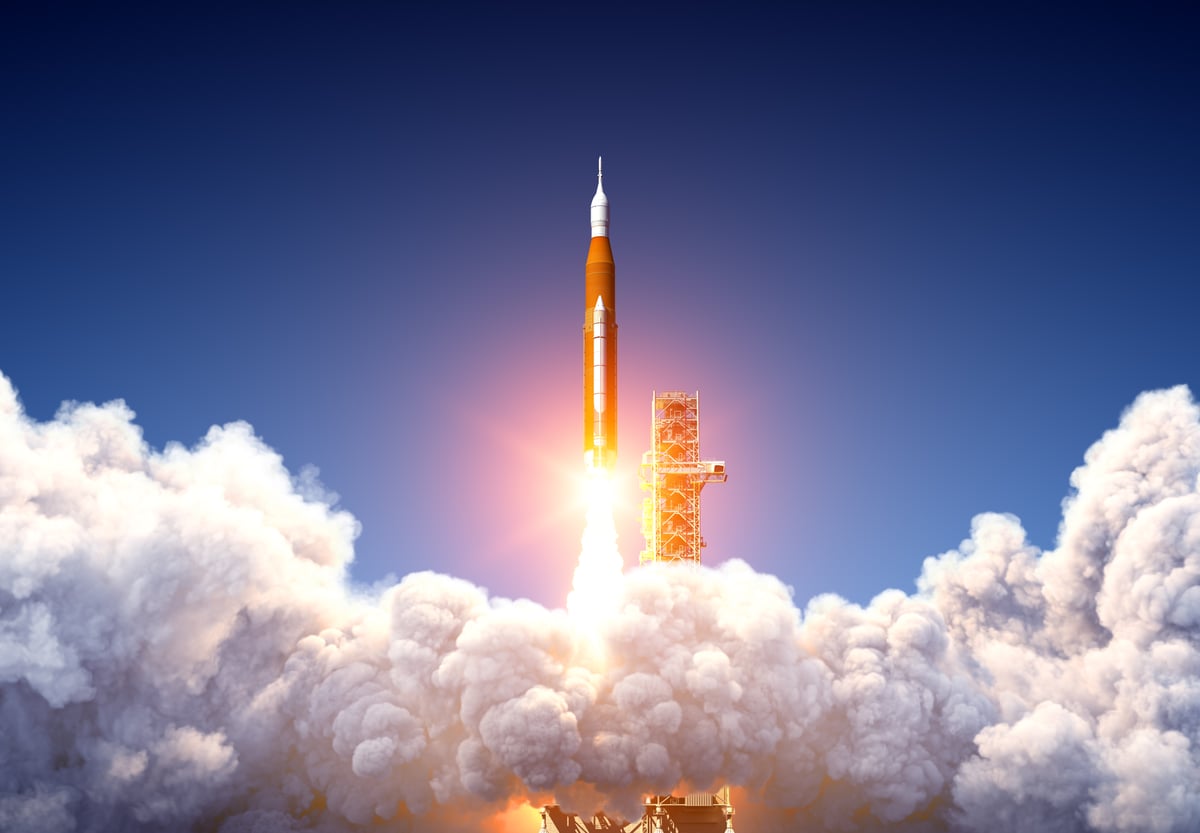
SpaceXAI has real-world proof of 6-12 month deployments for large clusters via warehouse retrofits, phased build-out, and on-site/mobile power. They have gas turbines from partners like Solar Turbines + APR Energy that can install in days to 6-12 weeks. SpaceXAI already has 440k B200-B300 chips at Colossus 2. They need to get more cooling to activate those chips. Current power already installed supports another ~460k B300 chips. Of that new capacity, at 50-60% rented, they can do roughly 2 - 2.5 more Google-sized (110k chip, $11 Billion per year) deals by the end of 2026. By August/September, expect about 1 - 1.3 additional Google sized deals to be live and billable. Colossus 1 had 100k H100 GPUs live in ~122 days (~4 months) from groundbreaking/announcement in a former factory. Doubled to 200k GPUs in ~92 additional days. Colossus 2 (Southaven/Memphis area) had a warehouse acquired March 2025. ~200 MW cooling/IT capacity online by August 2025 (~6 months). Epoch.ai Jul 1, 2026 UPDATE on Colossus 2 and MACROHARDRR The site is estimated to have at least ~830 MW of GPU server power, with at least "at least 220,000 additional GB300 processors and over 400 additional megawatts of compute power", corresponding to the "next phase of expansion" found in the following company S-1 filing, page 76. The timing is based on the air-cooled condensers needing to be complete to handle this power capacity. The second array at MACROHARD and the first array at MACROHARDRR, although both projected to be completed prior, are not enough and more cooling capacity is needed. We estimate this expansion to be completed 90 days after April 6th. On one hand, SpaceXAI has progressively added more capacity in less time with their Colossus projects. On the other hand, 400 MW is more capacity than the previous expansions of 210 MW and 220 MW. We also believe that MACROHARDRR will be partly operational with this expansion, because its air-cooled condensor array is expected to be completed by then and fitting the entire expansion into only MACROHARD would result in extremely high levels of power density. More cooling is being added. SemiAnalysis notes this is dramatically faster than comparable efforts. xAI has publicly stated they achieved in 4 months what others estimated at 24 months. Google, Microsoft, Amazon, Meta, etc.) can make the building (aka shell) for AI construction in about 12-18 months in aggressive cases, but power/grid infrastructure is the dominant bottleneck (4-7+ years for utility interconnection in many markets. median queues >5 years historically). Overall planning-to-fully-live revenue-generating GW-scale clusters often span 3-5+ years, with frequent 1-2+ year delays. The huge money is being spent but how fast does the money go out before the AI chips and memory turn on? The gap is the time from cash being spent before the incremental revenue comes back.
SpaceX launches flight-proven rocket for 600th time, sending Starlink satellites to orbit
Both flights successfully recovered their Falcon 9 first stage boosters, with B1093 completing its 15th flight from Florida and B1080 achieving its 28th mission from California, contributing to SpaceX's total of 83 Falcon 9 missions this year. When you buy through links on our articles, Future and its syndication partners may earn a commission. SpaceX reached a milestone with its latest Starlink launch, sending the satellites into orbit on its 600th flight of a flight-proven booster. The sexacentennial launch came on the second of two Falcon 9 missions that lifted off less than eight hours apart overnight from Monday to Tuesday (July 13 to July 14). The first flight, with Starlink batch 15-14, launched at 9:28 p.m. EDT (0128 GMT or 6:28 p.m. PDT local time) from Space Launch Complex 4 East at Vandenberg Space Force Base in California. The second flight, with Starlink group 10-45, followed at 5:10 a.m. EDT (0910 GMT) from Space Launch Complex 40 at Cape Canaveral Space Force Station in Florida. Both launches successfully deployed their payloads -- 27 and 29 Starlink satellites, respectively -- into their intended orbits, as confirmed by SpaceX. Previous Booster B0193 missions SDA-T1TL-B | SDA-T1TL-C | Transporter-16 | 11 Starlink missions Previous Booster B1080 missions Ax-2 | Euclid | Ax-3 | CRS-30 | SES ASTRA 1P | NG-21 | 21 Starlink missions Both flights also successfully recovered their Falcon 9 first stage boosters. B1093, launched from Florida, completed its 15th flight. B1080, launched from California, achieved its 28th mission. The record for a single Falcon 9 first stage's re-flight stands at 36 launches. The addition of 56 more Starlink satellites to SpaceX's megaconstellation brought the total active number of broadband internet relay units to 10,839, according to tracker Jonathan McDowell. In addition to Tuesday's launch being the 600th launch of a flight-proven Falcon 9 stage, SpaceX now stands at 83 Falcon 9 missions this year to date.
Not OpenAI or Anthropic: DeepSeek founder Liang Wenfeng is world's richest creator of AI models
DeepSeek founder Liang Wenfeng's net worth more than doubled to US$36 billion after his firm's most recent fundraising round. Hong Kong - DeepSeek founder Liang Wenfeng's net worth more than doubled after his firm's most recent fundraising round, making the Chinese entrepreneur the world's richest among creators of AI models. Liang is now worth US$36 billion (S$46.5 billion), up from about US$16.7 billion previously, according to the Bloomberg Billionaires Index. That ranks him well above OpenAI president Greg Brockman (No 100), with an estimated net worth of US$25.5 billion, and Anthropic co-founder Dario Amodei's (No 491) whose fortune stands at US$7.98 billion. Ironically, OpenAI co-founder and CEO Samuel Altman, with $3.4 billion, did not even make Bloomberg's list of the Top 500 richest people. In the ranking, Bloomberg looked at firms whose primary business and majority of revenue come directly from AI models, instead of other businesses in the AI supply chain - notably, data centres and semiconductors. As such it rules out Big Tech founders like Tesla and SpaceX's Elon Musk, Google's Larry Page, Amazon's Jeff Bezos, Meta's Mark Zuckerberg and Nvidia's Jensen Huang. For Liang, most of his fortune is derived from his stake in DeepSeek. What sets him apart from his Silicon Valley peers is the sheer scale of his equity retention. In the United States, building a US$50 billion frontier AI company typically requires giving up massive chunks of equity to tech giants and VCs. By contrast, maintaining a near-78 per cent stake in DeepSeek gives Liang a boost to his personal wealth and control that is unusual among modern AI founders. While US giants like OpenAI and Anthropic command massive valuations approaching US$1 trillion, their equity is more fragmented across larger investor bases or multiple co-founders. Strong demand for investment boosted DeepSeek's valuation about fivefold from the initial US$10 billion reported in April. Following the start-up's US$7.4 billion funding round in June 2026 - which valued the company at US$50 billion and saw Liang personally invest US$3 billion - his stake is estimated to have diluted to approximately 78 per cent, according to the Bloomberg Billionaires Index. Liang was born in 1985 in Zhanjiang, in China's southern Guangdong province, where his father was an elementary school teacher. He studied electronic engineering at Zhejiang University, a prestigious college in the city of Hangzhou where he also earned a master's degree in information and communication engineering. Liang created DeepSeek in 2023 as an offshoot of the AI division of his hedge fund, Zhejiang High-Flyer Asset Management, which he set up with two former university classmates. The trio had begun trading as students during the global financial crisis. Early on, High-Flyer used its massive trading profits to stockpile advanced graphics chips before US export restrictions tightened. Those early investments gave DeepSeek the computing power necessary to develop its breakthrough models without relying on traditional venture capital. DeepSeek shocked the global tech industry in early 2025 by releasing a model that achieved performance comparable to US rivals like OpenAI, but at a fraction of the cost. The start-up is keeping up that momentum, recently showcasing its latest V4 model and publicly touting its compatibility with chips made by domestic tech giant Huawei Technologies. For years, consumer internet tycoons like Alibaba's Jack Ma defined tech wealth in China. That era is now giving way to state-backed artificial intelligence. The influx of state and corporate capital marks DeepSeek's transition from a private software experiment into a critical national asset. Liang's US$36 billion fortune makes him China's eighth-richest person, just behind Chen Tianshi, the hardware AI billionaire and Cambricon Technologies co-founder. BLOOMBERG
SpaceX targets Thursday for Starship's 13th test flight from South Texas
SpaceX's latest test flight is currently scheduled for Thursday with the 90-minute launch window opening at 5:45 p.m. SpaceX is looking at later this week for its next flight test of Starship from its South Texas launch site. The 13th test looks to test modifications to hardware and software from previous flights, while launching Starlink satellites for the first time. SpaceX to launch 13th Starship flight test What we know: SpaceX's latest test flight is currently scheduled for Thursday with the 90-minute launch window opening at 5:45 p.m. The latest test flight will test the company's Super Heavy booster with the objective of a successful launch, ascent, stage separation, boostback burn and landing burn. SpaceX said the booster's hardware has been modified to improve relight reliability. For Starship, the company hopes to launch 20 Starlink satellites and have a successful relight of an engine while in space with a controlled entry, descent and splashdown in the Indian Ocean. The company is also doing some testing of Starship's heat shields. What went wrong during test flight 12? SpaceX had issues with both the Super Heavy booster and Starship during its last test flight. During the previous test flight, SpaceX said differences in engine startup on the ship caused the booster's directional flip to be off by 90 degrees. Some of the booster's engines also failed to reignite, causing its boostback burn to end early. The Federal Aviation Administration cited "heat effects on propulsion system components during the ascent and erroneous engine alarm system settings" as causes for the booster's failure. SpaceX said those issues have been addressed for the upcoming test. Starship also experienced issues during the test flight, when one of it lost one of its engines. Starship was still able to hit its planned trajectory.
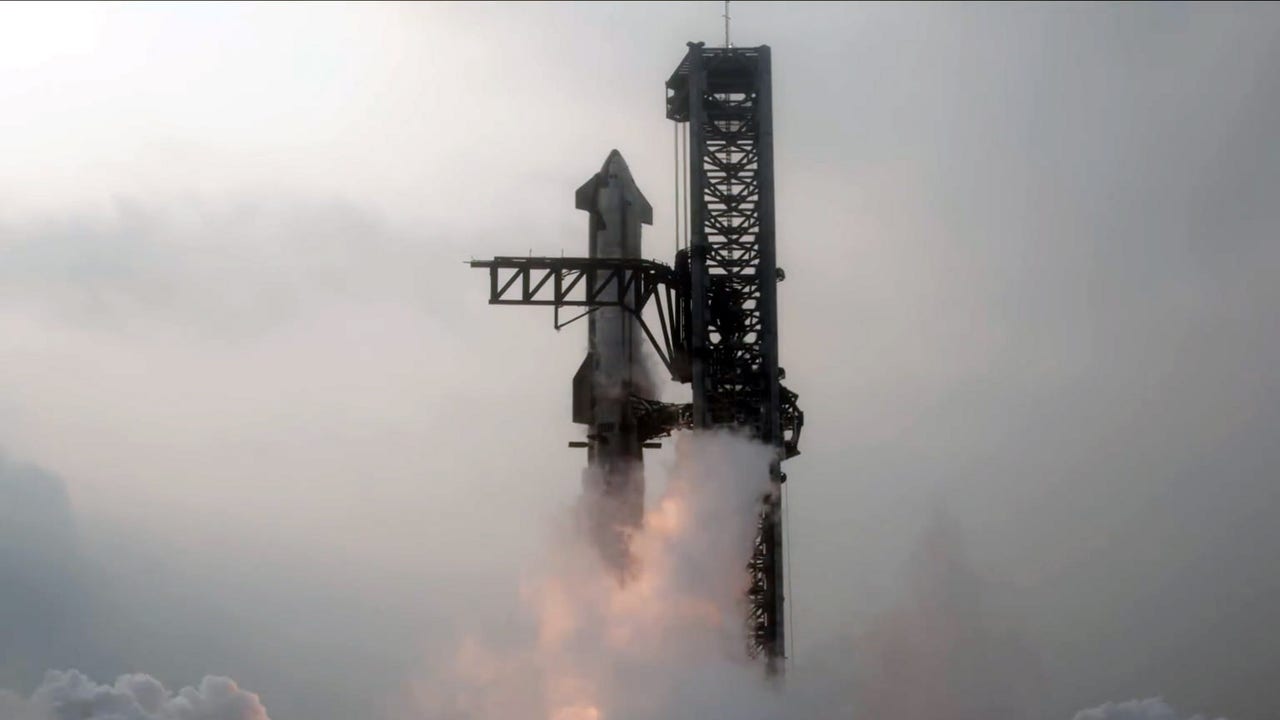
Frontier Airlines to Roll Out SpaceX Starlink In-Flight Wi-Fi Beginning in 2027
Frontier Airlines ($ULCC) announced it will introduce in-flight Wi-Fi powered by SpaceX ($SPCX)'s Starlink, with installations across its fleet beginning in early 2027. Frontier becomes the first U.S. ultra-low-cost carrier to adopt Starlink as airlines continue investing in premium passenger amenities to attract higher-spending travelers. * Frontier plans to begin installing Starlink Wi-Fi across its fleet in early 2027. * The airline is the first U.S. ultra-low-cost carrier to partner with Starlink for in-flight connectivity. * Frontier is one of five Indigo Partners portfolio airlines expected to install Starlink on more than 1,000 aircraft. * The carrier recently introduced first-class seating and loyalty program enhancements as part of its broader product strategy. * Financial terms of the agreement were not disclosed. Relevant Companies * Frontier Airlines ($ULCC) - The Starlink rollout expands the airline's onboard offerings as it targets higher-value customers. * SpaceX ($SPCX) - Starlink continues expanding its commercial aviation customer base through new airline connectivity agreements. * Amazon ($AMZN) - Its Kuiper satellite internet service competes with Starlink for airline connectivity contracts.

SpaceX Fizzles to Close $1 Above IPO Price Weeks After Debut
(Bloomberg) -- Three days of losses have brought SpaceX shares to the brink of falling below their initial public offering price, a key level that traders and investors watch to assess the health of new issues. Most Read from Bloomberg Shares fell 2.2% Tuesday to close at $136.08 each, just $1 above the $135 price tag buyers paid last month in the biggest first-time share sale ever. Elon Musk's rocket, satellite and artificial intelligence company has plunged one-third from its post-listing peak, erasing nearly $850 billion in value. A company's shares falling below the IPO price within days or weeks of its first trading day punctures the narrative that's been carefully choreographed by the company and its bankers to hype up expectations. Putting shareholders in the red at such an early stage is a blow to confidence that some newly-listed firms don't recover from. Skeptics note that the stock trades at a forward estimated price-to-sales ratio of more than 30 times, among the highest in the Nasdaq-100 Index and modestly lagging that of Palantir Technologies Inc. SpaceX is also facing an extended lock-up that will see insiders periodically releasing shares into the market over the coming months. "We still don't think SpaceX has found its low," according to Ken Mahoney, chief executive officer of Mahoney Asset Management. "There will be continuous supply coming on in the coming months, and you would have to monitor how much demand would be there as you move down the quality spectrum." Index Addition SpaceX's slip near the IPO price comes just a week after the company was added to the Nasdaq 100 through fast-entry rules, and after analysts gave the company -- whose unconventional pitch included a base on the moon and eventually a colony on Mars -- a resoundingly bullish reception. More than a dozen bankers including Morgan Stanley, JPMorgan Chase & Co. and Goldman Sachs Group Inc. started coverage with buy-equivalent ratings, according to data compiled by Bloomberg. Over 80% of Wall Street analysts covering SpaceX say to buy shares and see major upside ahead. The average price target of $236.25 is more than 70% above Tuesday's close. It's normal for newly-public stocks to experience volatility. A Truist Wealth analysis of 30 major technology IPOs over the past 15 years found that they averaged a maximum decline of 55% in the first year of trading.

SpaceX Fizzles to Close $1 Above IPO Price Weeks After Debut
(Bloomberg) -- Three days of losses have brought SpaceX shares to the brink of falling below their initial public offering price, a key level that traders and investors watch to assess the health of new issues. Most Read from Bloomberg Shares fell 2.2% Tuesday to close at $136.08 each, just $1 above the $135 price tag buyers paid last month in the biggest first-time share sale ever. Elon Musk's rocket, satellite and artificial intelligence company has plunged one-third from its post-listing peak, erasing nearly $850 billion in value. A company's shares falling below the IPO price within days or weeks of its first trading day punctures the narrative that's been carefully choreographed by the company and its bankers to hype up expectations. Putting shareholders in the red at such an early stage is a blow to confidence that some newly-listed firms don't recover from. Skeptics note that the stock trades at a forward estimated price-to-sales ratio of more than 30 times, among the highest in the Nasdaq-100 Index and modestly lagging that of Palantir Technologies Inc. SpaceX is also facing an extended lock-up that will see insiders periodically releasing shares into the market over the coming months. "We still don't think SpaceX has found its low," according to Ken Mahoney, chief executive officer of Mahoney Asset Management. "There will be continuous supply coming on in the coming months, and you would have to monitor how much demand would be there as you move down the quality spectrum." Index Addition SpaceX's slip near the IPO price comes just a week after the company was added to the Nasdaq 100 through fast-entry rules, and after analysts gave the company -- whose unconventional pitch included a base on the moon and eventually a colony on Mars -- a resoundingly bullish reception. More than a dozen bankers including Morgan Stanley, JPMorgan Chase & Co. and Goldman Sachs Group Inc. started coverage with buy-equivalent ratings, according to data compiled by Bloomberg. Over 80% of Wall Street analysts covering SpaceX say to buy shares and see major upside ahead. The average price target of $236.25 is more than 70% above Tuesday's close. It's normal for newly-public stocks to experience volatility. A Truist Wealth analysis of 30 major technology IPOs over the past 15 years found that they averaged a maximum decline of 55% in the first year of trading.
MoffettNathanson Initiates Cautious "Neutral" Coverage on Post-IPO SpaceX Valuations
On Tuesday, July 14, 2026, technology and telecom research firm MoffettNathanson issued a comprehensive 93-page report initiating coverage on Space Exploration Technologies Corp. (SpaceX) with a "Neutral" rating and a target share price of $131. The cautious outlook represents the low end of a wide Wall Street valuation spectrum following the expiration of the quiet period for the underwriting syndicate of SpaceX's historic Initial Public Offering (IPO). While other investment firms issued highly optimistic forecasts ranging from $143 (Deutsche Bank) to $800 (Raymond James), MoffettNathanson warned that current market expectations disconnect from quantifiable financial realities. Analysis of the Trillion-Dollar S-1 Disclosures The analytical report compared and contrasted the economic trajectories of SpaceX and its direct-to-device (D2D) competitor, AST SpaceMobile. MoffettNathanson's lead analyst, Julie Zhu, identified multiple points of friction within the optimistic metrics outlined in the aerospace giant's S-1 regulatory filings: * Absurd TAM Projections: The prospectus defines Starlink's total addressable market (TAM) at almost $30 trillion, which the report labels as highly unrealistic. * D2D Niche Modeling: The highly publicized mobility and direct-to-device cellular segments are modeled as niche services rather than mass-market consumer replacements. * Orbital Compute Bottlenecks: Founder and CEO Elon Musk's public target of deploying 100 gigawatts (GW) of orbital data center compute annually by 2029 exceeds current global in-service terrestrial data center capacity and faces severe raw material input constraints over the next three and a half years. Monopoly Leverage and Sovereign Antitrust Risks Despite the cautious pricing model, the researchers acknowledged that SpaceX maintains a functional monopoly in the rocket launch segment, estimating that its nearest competitor, Blue Origin, remains at least 10 years behind in heavy-lift reuse development. However, MoffettNathanson warned that leveraging this dominance to control adjacent sectors like consumer telecommunications and orbital AI hosting introduces severe political risks. Specifically, the report notes that international governments may resist relying on foreign-owned space systems for critical national telecommunications infrastructure, exposing the company to global regulatory and antitrust pushback. Projected Market Volatility and Volumetric Disconnect MoffettNathanson anticipates significant stock price volatility for the Nasdaq-listed SPCX shares as early-stage index inclusions and pre-IPO lock-up periods expire. The firm concluded that the current market capital tier -- implied at roughly $1.77 trillion post-debut -- is highly reliant on broad economic sentiment rather than near-term cash flow. The analysis suggests that while public markets may extend the benefit of the doubt to SpaceX's "unknown unknown" opportunities during general bull markets, the stock remains highly exposed to downward corrections should broader market sentiment shift toward skepticism.
How to watch SpaceX launch Starship Flight 13 on July 16
These will be the first Starlink Version 3 satellites to deploy in space. SpaceX's next Starship test flight aims to achieve a major milestone by deploying 20 upgraded Starlink satellites, marking the first Starlink Version 3s to deploy in space.. Liftoff for the spacecraft's upcoming 13th test flight is scheduled for Wednesday, July 16, at 6:45 p.m. EDT (2245 GMT) from the company's Starbase facility in South Texas. You can watch the launch live on Space.com, courtesy of SpaceX, beginning 30 minutes before liftoff. Follow our Starship live blog for more mission updates. The mission follows a nearly two-month pause after Flight 12 ended with the loss of the Super Heavy booster during its return to the Gulf after stage separation. After reviewing the anomaly and SpaceX's corrective actions, the Federal Aviation Administration cleared the company to resume Starship launches. "The upcoming flight will aim to complete similar objectives targeted on the previous flight test, which debuted the Starship and Super Heavy V3 vehicles, while also carrying next-generation Starlink V3 satellites for the first time," SpaceX officials said in a statement announcing the test flight. As with previous flights, Flight 13's primary goal is to gather engineering data while testing upgrades to the world's most powerful rocket. Here's what to watch for: The mission will begin with all 33 Raptor 3 engines igniting on the Super Heavy booster, generating up to 18 million pounds (about 8,200 metric tons) of thrust at liftoff. About 2.5 minutes later, the booster will separate from the Starship upper stage and begin its return toward the Gulf of Mexico for a controlled splashdown rather than a launch tower catch. SpaceX is continuing to refine its booster recovery procedures following Flight 12's landing burn failure. One of Flight 13's biggest milestones will come after stage separation, when Starship is expected to deploy 20 Starlink V3 satellites for the first time. The satellites are designed to test Starship's payload deployment capabilities and will intentionally reenter Earth's atmosphere after completing the demonstration rather than remain in orbit. The flight will also continue testing SpaceX's upgraded Starship vehicle, including improvements to its propulsion system, avionics and overall performance. Engineers will closely monitor the rocket throughout ascent to evaluate how the latest design performs under flight conditions. After completing its satellite deployment, Starship will continue along a suborbital trajectory before reentering Earth's atmosphere over the Indian Ocean. The spacecraft's descent will provide additional data on its heat shield, flight controls and guidance systems before ending with a planned splashdown roughly an hour after launch. While Flight 13 remains another developmental mission, it represents an important step toward making Starship an operational launch vehicle. Successfully deploying Starlink satellites would demonstrate the rocket's ability to begin carrying real payloads while continuing to advance SpaceX's goal of building a fully reusable system for missions to Earth orbit, the moon and eventually Mars.
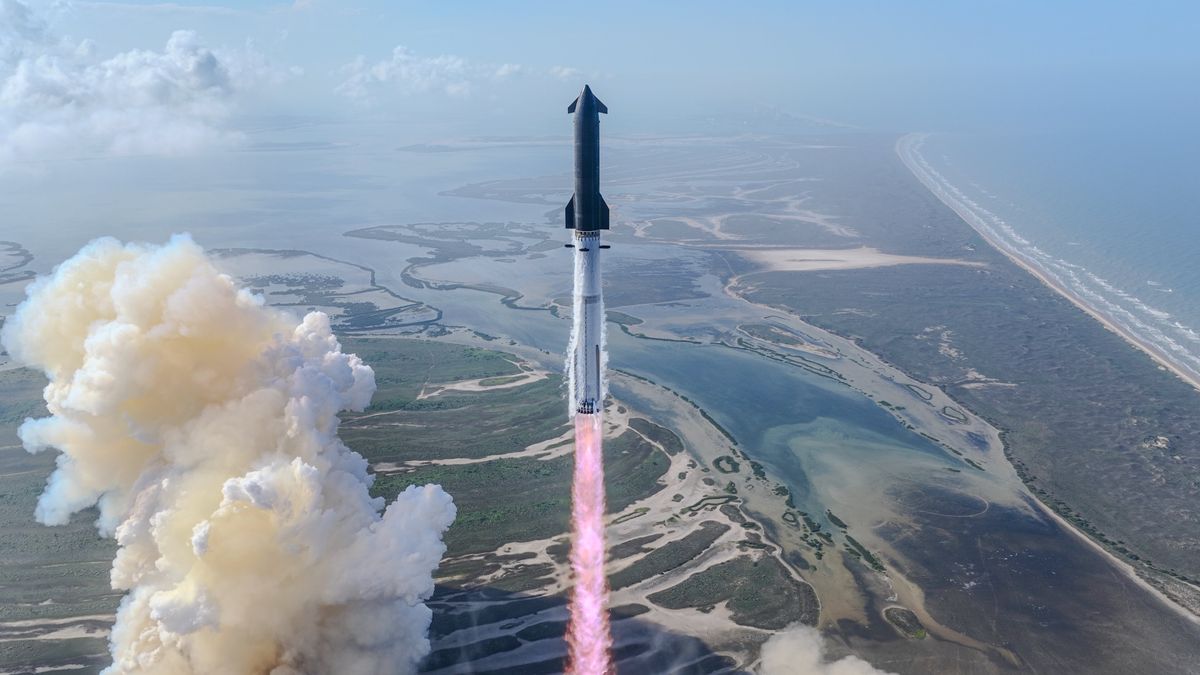
Deutsche Bank sees SpaceX orbital data centers matching ground costs By Investing.com
Investing.com -- Deutsche Bank released analysis on Tuesday suggesting SpaceX could achieve cost parity between orbital and terrestrial data centers by the early 2030s through vertical integration and scaled Starship launches. The bank examined SpaceX's Starmind constellation, which will use AI1 satellites equipped with optical inter-satellite links to route traffic through the existing Starlink network. The AI1 satellites will not require complex phased-array antennas, relying instead on optical terminals for communication with possible Ka-band backup for telemetry. Deutsche Bank estimates more than 10,000 Starlink satellites are currently in orbit, with V2 mini satellites each carrying three optical terminals capable of handling approximately 600 gigabits per second of capacity. The bank anticipates V3 satellites may have at least 2-3 terabits per second of capacity per satellite. Leading providers of optical terminals include Tesat-Spacecom, a subsidiary of Airbus, Mynaric, SA Photonics, which CACI acquired in 2021, and SpaceX itself. SpaceX is utilizing E-band, V-band, W-band, and proposed D-band spectrum for gateway backhaul, in addition to traditional Ku and Ka bands. The FCC recently adopted new standards replacing 1990s-era limits, which Deutsche Bank said could allow up to seven times more capacity from the same number of satellites. SpaceX is building a solar cell manufacturing facility in Bastrop, Texas, targeting 10 gigawatts of capacity across two floors. Construction began in late March, with equipment installation underway. The plant aims for production ramp-up by the end of 2027, initially producing silicon solar cells with approximately 19% efficiency. The AI1 satellite will use a double-sided active deployable liquid radiator covering 110 square meters, capable of dissipating 1,400 watts per square meter. SpaceX is targeting prototype deployments of AI1 satellites late next year, with FCC filings outlining a constellation of up to one million satellites in low Earth orbit. Each AI1 satellite is expected to run at approximately 120 kilowatts, similar to the power consumption of a NVIDIA GB300 NVL72 rack. SpaceX expressed openness to hosting Nvidia GPUs, Google TPUs, Amazon Trainium, and Tesla AI chips. Deutsche Bank estimates upfront capital expenditure for 1 gigawatt of AI compute on the ground is $38 billion with $900 million in annual operating expenses, totaling $42.5 billion over five years based on Epoch AI analysis. The bank calculates that deploying a 1 gigawatt space data center constellation would currently cost six times more than terrestrial alternatives excluding compute costs. This gap could narrow to 1.0-1.5 times by the end of the decade and become cheaper in the early-to-mid 2030s through Starship reusability and satellite optimization. This article was generated with the support of AI and reviewed by an editor. For more information see our T&C.

Raymond James sets $800 price target on SpaceX, valuing company at $10.5 trillion
The Street-high target implies a 450% upside and would make SpaceX worth more than any company in history, and its 18,712 BTC treasury adds a crypto wrinkle worth watching. A Wall Street analyst just looked at SpaceX and essentially said: "This company should be worth more than the entire GDP of Japan." Raymond James analyst Brian Gesuale initiated coverage of SpaceX with a Strong Buy rating and an $800 price target, implying a market capitalization of roughly $10.5 trillion. The current Street-high target represents a potential 425-450% upside from SpaceX's recent trading levels around $145 per share. The numbers behind the moonshot thesis Gesuale's model projects SpaceX generating over $837 billion in revenue by 2031, with $696 billion in EBITDA. The analyst used a 27x exit multiple on discounted cash flows from 2031 to arrive at the $800 figure, anchoring the thesis to what he estimates is a total addressable market approaching $30 trillion in the long term. SpaceX debuted on public markets via the SPCX ticker in mid-June 2026. Shares initially surged more than 40%, pushing the company's market cap to approximately $2.5 trillion before the inevitable profit-taking set in. The stock has since pulled back to a 52-week low range of $138-$145. The bull case rests on SpaceX's positioning as what Gesuale calls a crucial industrial infrastructure player of the 21st century. Between Starlink's satellite internet constellation, the company's dominant launch services business, and the upcoming Starship launch planned for July 16, 2026, there's no shortage of catalysts on the calendar. The Bitcoin treasury angle crypto investors should watch Buried in the analyst note is a detail that bridges the gap between traditional aerospace investing and digital asset markets: SpaceX holds a confirmed 18,712 BTC on its balance sheet. That figure exceeds earlier estimates from prior blockchain tracking services, suggesting SpaceX has been quietly accumulating Bitcoin beyond what public trackers had identified. SpaceX's recent acquisition of xAI, the artificial intelligence company Musk founded in 2023, adds another dimension. The deal, completed in early 2026, combined with ongoing compute collaborations with Tesla, positions SpaceX at the intersection of space infrastructure, AI, and potentially decentralized compute networks. What this means for investors on both sides of the aisle For crypto investors, SpaceX's 18,712 BTC treasury means that every institutional dollar flowing into SPCX shares is, in a fractional sense, also a bet on Bitcoin. If Gesuale's thesis attracts even a portion of the capital it implies, the downstream effects on BTC demand through corporate treasury expansion could be material. If SpaceX's valuation compresses, management might face pressure to liquidate Bitcoin holdings to shore up the balance sheet. That scenario would create selling pressure in crypto markets at precisely the wrong moment. The Starship launch on July 16 will be the first real test of whether SpaceX can deliver on the kind of operational milestones that justify even a fraction of Gesuale's projections.
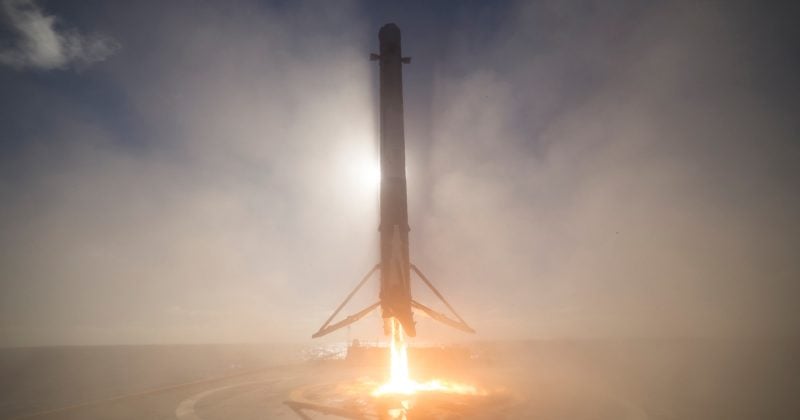
How to Spot a Stock Market Bubble 101: Raymond James Just Placed an $800 Price Target on SpaceX, Valuing Elon Musk's Company at $10.5 Trillion
One month ago, on June 12, Elon Musk's artificial intelligence (AI) and space economy conglomerate, Space Exploration Technologies (SpaceX) (NASDAQ: SPCX), rewrote history with its initial public offering (IPO). The $85.7 billion raised, including the underwriters' overallotment, nearly tripled the previous IPO record holder, Saudi Aramco. But in kicking off IPO mania -- large language model developers Anthropic and OpenAI are expected to follow in SpaceX's footsteps -- SpaceX may also be fueling the final stages of an AI bubble that history suggests is waiting to pop. Where to invest $1,000 right now? Our analyst team just revealed what they believe are the 10 best stocks to buy right now, when you join Stock Advisor. See the stocks " Rarely are stock market bubble warning signs as glaring as Raymond James Financial's price target assigned to SpaceX. Image source: Getty Images. Wall Street's high-water price target foresees SpaceX reaching $800 in 2031 Given that 21 underwriters helped bring SpaceX public and received shares for doing so, it should come as no surprise that Wall Street analysts have, as a whole, presented an overwhelmingly positive outlook for the company. But Raymond James Financial analyst Brian Gesuale is a true outlier. His $800 price target by 2031 implies 451% upside, based on where SpaceX's shares ended on July 10, and assumes a valuation of roughly $10.5 trillion. For context, this would be more than double Nvidia's current market cap. Gesuale foresees SpaceX's full-year sales scaling from an estimated $38.5 billion in 2026 to approximately $837 billion by 2031. More importantly, earnings before interest, taxes, depreciation, and amortization (EBITDA) are projected to catapult from $17.7 billion in 2026 to $696 billion by 2031. While there's no question that AI and the space economy are two of the hottest addressable opportunities on Wall Street, several headwinds suggest Gesuale's pie-in-the-sky price target is pure fiction and the sign of an end-stage bubble that's about to burst. Image source: Getty Images. SpaceX spotlights everything wrong with Wall Street Although the stock market is a long-term wealth-creating machine, it's prone to occasional bubble-bursting events. SpaceX's current $1.91 trillion valuation and Raymond James' $800 price target for the company spotlight everything that's wrong with Wall Street over the short term. For starters, SpaceX hasn't demonstrated that its operating model is sustainable. While satellite-based broadband services provider Starlink is profitable, AI start-up xAI -- the segment responsible for the lion's share of SpaceX's $28.5 trillion addressable market -- is burning cash as Musk's company chases AI compute capacity. Elon Musk also has a terrible track record of fulfilling lofty promises and innovative expectations. As CEO of Tesla, Musk proclaimed that 1 million robotaxis would be on public roads by the end of 2020, which never happened. He's also assured investors that Level 5 full self-driving is "one year away" annually for more than a decade. Musk continually overpromises and underdelivers. SpaceX is likely to be haunted by historical precedent, as well. No company at the forefront of a game-changing technology has sustained a price-to-sales (P/S) ratio above 30 for any extended period. SpaceX is trading at roughly 50 times Gesuale's forecast sales for this year. Lastly, every game-changing technology for more than three decades has navigated an early stage bubble-bursting event. These bubbles have formed because investors constantly overestimate the optimization timeline of innovations. It'll likely be years before SpaceX's solutions are optimized, making Raymond James' high-water price target highly unlikely. Should you buy stock in Space Exploration Technologies right now? Before you buy stock in Space Exploration Technologies, consider this: The Motley Fool Stock Advisor analyst team just identified what they believe are the 10 best stocks for investors to buy now... and Space Exploration Technologies wasn't one of them. The 10 stocks that made the cut could produce monster returns in the coming years. Consider when Netflix made this list on December 17, 2004... if you invested $1,000 at the time of our recommendation, you'd have $395,679!* Or when Nvidia made this list on April 15, 2005... if you invested $1,000 at the time of our recommendation, you'd have $1,294,805!* Now, it's worth noting Stock Advisor's total average return is 929% -- a market-crushing outperformance compared to 211% for the S&P 500. Don't miss the latest top 10 list, available with Stock Advisor, and join an investing community built by individual investors for individual investors. See the 10 stocks " *Stock Advisor returns as of July 14, 2026. Sean Williams has no position in any of the stocks mentioned. The Motley Fool has positions in and recommends Nvidia and Tesla. The Motley Fool has a disclosure policy. The views and opinions expressed herein are the views and opinions of the author and do not necessarily reflect those of Nasdaq, Inc.