News & Updates
The latest news and updates from companies in the WLTH portfolio.
What SpaceX's Starship flight 13 test means for Florida's Space Coast
SpaceX has big plans for Starship during its 13th test flight from South Texas as the pressure is on for the rocket to be ready for missions to the moon and Mars. * The upcoming launch will be the second for the new, larger V3 prototype and will carry 20 Starlink satellites for the first time. * SpaceX is developing Starship for NASA's Artemis moon missions and Elon Musk's long-term goal of colonizing Mars. * The launch is scheduled for Thursday, July 16, with a window opening from 6:45 to 8:15 p.m. ET. * The latest flight test also comes as SpaceX continues preparations to bring Starship to Florida's Space Coast at both the Kennedy Space Center and Cape Canaveral Space Force Station. For just the second time in 2026, SpaceX is preparing to launch the world's largest rocket. Starship, the commercial spaceflight company's super heavy-lift launch vehicle, is due to get off the ground in South Texas on the heels of a largely successful May flight test. And as usual, the stakes are high for SpaceX and its chief executive, tech mogul Elon Musk. The upcoming flight will be the 13th for Starship overall, including its April 2023 debut, and the second for SpaceX's new prototype that serves as the largest iteration of the rocket to date. The pressure is on for SpaceX, which is working under a strict deadline to have Starship ready for NASA's fast-approaching moon landing missions. Musk, of course, also still dreams of sending the rocket on interplanetary voyages to Mars. The latest flight test also comes as SpaceX continues preparations to bring Starship to Florida's Space Coast. Here's everything to know about the next Starship launch, which SpaceX refers to as flight 13, as well as the latest on plans for its maiden flight in Florida. When is the next Starship launch date? SpaceX is working toward a Thursday, July 16, launch of its Starship rocket, the company announced. The launch window is due to open from 6:45 to 8:15 p.m. ET. Where does Starship launch? As it has since its maiden launch in April 2023, Starship will once again get off the ground from SpaceX's Starbase company town and headquarters in South Texas. Starbase is located close to the U.S.-Mexico border near the well-known Boca Chica Beach. In May 2025, Texas voters in Cameron County - most of whom are SpaceX employees - approved a measure to officially recognize the company's headquarters as its own town, complete with a mayor and city commissioners. What is Starship? Starship is the massive rocket that SpaceX, the commercial company founded by tech entrepreneur Elon Musk, has been testing since April 2023. SpaceX is developing the rocket to be a fully reusable transportation system that can carry huge satellites and other payloads to space, meaning both the rocket and vehicle can return to the ground for additional missions. How tall is Starship? Is it the world's largest rocket? Starship's most recent flight test in May marked the debut of SpaceX's third-generation prototype of the rocket. Standing at 407 feet tall when fully stacked, the new iteration of Starship - known as Version 3, or V3 - became the largest and most powerful rocket SpaceX has ever launched. Similar to previous designs, the fully integrated Starship spacecraft is composed of both a 236-feet-tall lower-stage booster known as Super Heavy, as well as a 171-feet-tall upper stage simply called Starship. What is SpaceX planning for flight 13? For the next Starship test flight, SpaceX said it is aiming to complete similar objectives as the last launch in May in which it debuted its Version 3 prototype. SpaceX plans to push the performance of the Super Heavy booster - responsible for the initial burst of thrust at liftoff - before it lands in the Gulf of Mexico, renamed in the U.S. under executive order as the Gulf of America. The upper stage, which is designed to eventually fly in orbit, will also be put to the test as it flies halfway around the world ahead of a landing in the Indian Ocean. Starship to carry Starlink satellites to space In a major first, Starship will be carrying 20 larger versions of SpaceX's Starlink internet satellites that it will attempt to deliver into suborbital space. The satellites will deploy solar arrays and antennas while attempeting to connect with SpaceX's larger Starlink constellation higher up in orbit before they fall toward the ground and burn up in the atmosphere about 20 minutes later. If this sounds familiar, that's because SpaceX has deployed mock Starlink satellites during previous Starship flight tests. Why is SpaceX testing Starship? Elon Musk envisions colony on Mars Musk's vision has long been for Starship to be an interplanetary vehicle that takes humans to Mars, where they can establish a self-sustaining colony. While the world's richest man has indicated that SpaceX will focus on building a lunar city first, the company has already announced a human-led expedition to Mars' orbit - though it has not set a target date. In order for that to be possible, Starship will need to be capable of refueling midflight in a complex process that requires two Starships equipped with docking adapters to meet in orbit to transfer propellant. The maneuver is one SpaceX has yet to test. When could Starship launch in Florida? Florida's first landmark Starship launch from NASA's Kennedy Space Center could also take flight in 2026 in late summer or early fall, according to the U.S. Space Force. Plans to get the rocket off the ground from the Sunshine State come as SpaceX continues to ready longterm launch and landing operations at not only Kennedy Space Center's Launch Complex 39A, but Launch Complex 37 at the neighboring Cape Canaveral Space Force Station. Super Heavy boosters could begin arriving on SpaceX's drone barge You'll Thank Me Later in the coming months. And at NASA's Kennedy Space Center, Gigabay - an enormous Starship maintenance facility - is rising beam-by-beam off Roberts Road. NASA relies on Starship for Artemis moon missions SpaceX is also under contract with NASA to develop a lunar lander configuration of its Starship to ferry astronauts to the moon, known as the Human Landing System. NASA is relying on Starship to be ready for a mission due in 2027 known as Artemis III. SpaceX and Jeff Bezos' Blue Origin are competing to develop lunar landers for future crewed and uncrewed Artemis missions, both of which will be tested first in Earth orbit during the crewed Artemis III mission. See photos of Starship rocket launches What happened on the last Starship flight test in May? During Starship's last flight test on May 22, the booster helped propel the upper stage on its journey before it made a water landing in the Gulf Coast. The upper stage, sometimes referred to simply as 'Ship, then used its own six Raptor engines to fly halfway around the world before landing and exploding as expected in the Indian Ocean. Along the way, Starship succeeded in deploying 20 mock versions of SpaceX's Starlink satellites and two modified satellites that, in a major first, imaged Starship while it climbed into space. Contributing: Rick Neale, Brooke Edwards, Florida Today Eric Lagatta is the Space Connect reporter for the USA TODAY Network. Reach him at [email protected]. Subscribe to the free Florida TODAY newsletter.

Elon Musk Reverses Course and Calls Anthropic the AI Leader - Memeburn
For South African businesses, the deal shows how access to AI tools increasingly depends on a small group of foreign infrastructure providers. Elon Musk has made a sharp U-turn on Anthropic. After months of attacking the Claude developer as "woke," hypocritical and unlikely to win the AI race, Musk now says Anthropic has become the industry's clear leader. He also praised its newest models and promised that he wouldn't use his control over computing infrastructure to seriously harm the company. The warmer language matters because Anthropic isn't just one of Musk's competitors anymore. It's also a major customer. Musk admits he got Anthropic wrong Musk acknowledged the reversal in a post on X, writing that he was "clearly wrong about Anthropic." "They are obviously currently the leader in AI," he added, while praising Anthropic's Mythos and Fable models. The comments represent a dramatic change from his earlier public attacks on the company, as detailed in Business Insider's report on Musk's Anthropic reversal. Earlier in 2026, Musk accused Anthropic of stealing training data, promoting political bias and acting hypocritically. He also dismissed the company's chances of beating rivals such as OpenAI, Google and his own AI operation. Now, he's describing the company's technology as the best available. That doesn't mean the rivalry has disappeared. Musk continues to promote Grok as a serious challenger, especially after the release of Grok 4.5. You can read our breakdown of Elon Musk's Grok 4.5 "Opus-class" claims for a closer look at how his model compares with Anthropic's systems. The compute deal changed the relationship The friendlier tone emerged after Anthropic signed a major computing agreement with SpaceX. According to Anthropic's official announcement of the SpaceX compute partnership, the company gained access to more than 300 megawatts of capacity, representing over 220,000 Nvidia GPUs at the Colossus 1 data centre. Anthropic said the added infrastructure would increase usage limits for Claude subscribers and API customers. Reported contract documents indicate that Anthropic agreed to pay around $1.25 billion per month for capacity through May 2029. However, termination clauses may allow either party to leave the agreement with relatively short notice. That creates an unusual relationship. Musk responded to suggestions that he could simply cut Anthropic off. He said he wouldn't end access in a way that seriously damaged the company, even though Claude competes with Grok. Praise doesn't remove the business risk Musk's assurance may calm some concerns, but Anthropic still faces a clear dependency. A frontier AI company needs more than clever researchers and strong software. It needs enormous data centres, reliable electricity, advanced chips and enough cooling equipment to run those chips around the clock. Only a small number of companies can provide that infrastructure at the required scale. We think the real story here isn't Musk's change of heart. It's the growing power held by companies that control computing capacity. Musk can compete against Anthropic through Grok while earning billions from Anthropic's demand for GPUs. In other words, he can benefit whether customers choose his AI model or one built by a rival. That helps explain why public criticism may now matter less than commercial cooperation. What it means for South African AI users For South African companies, the dispute may feel distant. But the infrastructure behind Claude, Grok and other major models directly affects local pricing, reliability and availability. A startup in Cape Town or Johannesburg might build its customer service, coding or research workflow around Claude. Yet the servers powering that service sit overseas and may depend on commercial agreements between a handful of American technology companies. If those agreements change, local customers have limited influence. This matters because African businesses often access AI as imported infrastructure, rather than technology they control themselves. The Anthropic-SpaceX relationship offers another reminder that model access can depend on corporate negotiations taking place thousands of kilometres away. It also strengthens the argument for more African investment in data centres, energy capacity and locally hosted AI systems. South Africa has a growing cloud and data-centre sector, but training a frontier model still requires infrastructure on a completely different scale. Musk's endorsement could shift again Musk's latest position combines praise with competition. He has acknowledged Anthropic's technical lead while continuing to argue that his younger AI business could catch up. The recent release of Grok 4.5 shows that Musk hasn't abandoned the race; he's simply recognising the strongest current opponent. What we're watching now is whether the cooperation survives the next major model launch. Anthropic needs stable computing capacity. Musk wants Grok to win. Those goals can coexist while the infrastructure deal remains profitable, but a closer contest could test that arrangement. So, is Musk genuinely reconsidering Anthropic, or has a billion-dollar customer simply become harder to criticise? FAQs Why did Elon Musk change his opinion about Anthropic? Musk admitted that he had misjudged Anthropic's progress and now considers it a leader in artificial intelligence. The company's newer Claude models have performed strongly in coding, reasoning and business tasks. Anthropic's commercial relationship with Musk-controlled infrastructure may also have softened the rivalry. Does Anthropic compete with Elon Musk's xAI? Yes, Anthropic and xAI are direct competitors in the advanced AI model market. Anthropic develops Claude, while xAI offers Grok across X and other Musk-owned platforms. However, the companies can still cooperate on computing infrastructure while competing for users. Why does Anthropic need so much computing power? Training and operating advanced AI models requires thousands of powerful chips, large data centres and substantial electricity. More computing capacity allows Anthropic to improve Claude and support more users without severe usage limits. It also helps the company compete with OpenAI, Google and xAI.

What SpaceX's Starship flight 13 test means for Florida's Space Coast
Add Yahoo as a preferred source to see more of our stories on Google. For just the second time in 2026, SpaceX is preparing to launch the world's largest rocket. Starship, the commercial spaceflight company's super heavy-lift launch vehicle, is due to get off the ground in South Texas on the heels of a largely successful May flight test. And as usual, the stakes are high for SpaceX and its chief executive, tech mogul Elon Musk. The upcoming flight will be the 13th for Starship overall, including its April 2023 debut, and the second for SpaceX's new prototype that serves as the largest iteration of the rocket to date. The pressure is on for SpaceX, which is working under a strict deadline to have Starship ready for NASA's fast-approaching moon landing missions. Musk, of course, also still dreams of sending the rocket on interplanetary voyages to Mars. The latest flight test also comes as SpaceX continues preparations to bring Starship to Florida's Space Coast. Here's everything to know about the next Starship launch, which SpaceX refers to as flight 13, as well as the latest on plans for its maiden flight in Florida. Starship: Recapping all 12 previous flight tests When is the next Starship launch date? SpaceX is working toward a Thursday, July 16, launch of its Starship rocket, the company announced. The launch window is due to open from 6:45 to 8:15 p.m. ET. Where does Starship launch? As it has since its maiden launch in April 2023, Starship will once again get off the ground from SpaceX's Starbase company town and headquarters in South Texas. Starbase is located close to the U.S.-Mexico border near the well-known Boca Chica Beach. In May 2025, Texas voters in Cameron County - most of whom are SpaceX employees - approved a measure to officially recognize the company's headquarters as its own town, complete with a mayor and city commissioners. What is Starship? Starship is the massive rocket that SpaceX, the commercial company founded by tech entrepreneur Elon Musk, has been testing since April 2023. SpaceX is developing the rocket to be a fully reusable transportation system that can carry huge satellites and other payloads to space, meaning both the rocket and vehicle can return to the ground for additional missions. How tall is Starship? Is it the world's largest rocket? Starship's most recent flight test in May marked the debut of SpaceX's third-generation prototype of the rocket. Standing at 407 feet tall when fully stacked, the new iteration of Starship - known as Version 3, or V3 - became the largest and most powerful rocket SpaceX has ever launched. Similar to previous designs, the fully integrated Starship spacecraft is composed of both a 236-feet-tall lower-stage booster known as Super Heavy, as well as a 171-feet-tall upper stage simply called Starship. What is SpaceX planning for flight 13? For the next Starship test flight, SpaceX said it is aiming to complete similar objectives as the last launch in May in which it debuted its Version 3 prototype. SpaceX plans to push the performance of the Super Heavy booster - responsible for the initial burst of thrust at liftoff - before it lands in the Gulf of Mexico, renamed in the U.S. under executive order as the Gulf of America. The upper stage, which is designed to eventually fly in orbit, will also be put to the test as it flies halfway around the world ahead of a landing in the Indian Ocean. Starship to carry Starlink satellites to space In a major first, Starship will be carrying 20 larger versions of SpaceX's Starlink internet satellites that it will attempt to deliver into suborbital space. The satellites will deploy solar arrays and antennas while attempeting to connect with SpaceX's larger Starlink constellation higher up in orbit before they fall toward the ground and burn up in the atmosphere about 20 minutes later. If this sounds familiar, that's because SpaceX has deployed mock Starlink satellites during previous Starship flight tests. Why is SpaceX testing Starship? Elon Musk envisions colony on Mars Musk's vision has long been for Starship to be an interplanetary vehicle that takes humans to Mars, where they can establish a self-sustaining colony. While the world's richest man has indicated that SpaceX will focus on building a lunar city first, the company has already announced a human-led expedition to Mars' orbit - though it has not set a target date. In order for that to be possible, Starship will need to be capable of refueling midflight in a complex process that requires two Starships equipped with docking adapters to meet in orbit to transfer propellant. The maneuver is one SpaceX has yet to test. When could Starship launch in Florida? Florida's first landmark Starship launch from NASA's Kennedy Space Center could also take flight in 2026 in late summer or early fall, according to the U.S. Space Force. Plans to get the rocket off the ground from the Sunshine State come as SpaceX continues to ready longterm launch and landing operations at not only Kennedy Space Center's Launch Complex 39A, but Launch Complex 37 at the neighboring Cape Canaveral Space Force Station. Super Heavy boosters could begin arriving on SpaceX's drone barge You'll Thank Me Later in the coming months. And at NASA's Kennedy Space Center, Gigabay - an enormous Starship maintenance facility - is rising beam-by-beam off Roberts Road. NASA relies on Starship for Artemis moon missions SpaceX is also under contract with NASA to develop a lunar lander configuration of its Starship to ferry astronauts to the moon, known as the Human Landing System. NASA is relying on Starship to be ready for a mission due in 2027 known as Artemis III. SpaceX and Jeff Bezos' Blue Origin are competing to develop lunar landers for future crewed and uncrewed Artemis missions, both of which will be tested first in Earth orbit during the crewed Artemis III mission. See photos of Starship rocket launches What happened on the last Starship flight test in May? During Starship's last flight test on May 22, the booster helped propel the upper stage on its journey before it made a water landing in the Gulf Coast. The upper stage, sometimes referred to simply as 'Ship, then used its own six Raptor engines to fly halfway around the world before landing and exploding as expected in the Indian Ocean. Along the way, Starship succeeded in deploying 20 mock versions of SpaceX's Starlink satellites and two modified satellites that, in a major first, imaged Starship while it climbed into space. Contributing: Rick Neale, Brooke Edwards, Florida Today Eric Lagatta is the Space Connect reporter for the USA TODAY Network. Reach him at [email protected]. Subscribe to the free Florida TODAY newsletter. This article originally appeared on Florida Today: What SpaceX's Starship flight 13 test means for Florida's Space Coast

What SpaceX's Starship flight 13 test means for Florida's Space Coast
SpaceX has big plans for Starship during its 13th test flight from South Texas as the pressure is on for the rocket to be ready for missions to the moon and Mars. For just the second time in 2026, SpaceX is preparing to launch the world's largest rocket. Starship, the commercial spaceflight company's super heavy-lift launch vehicle, is due to get off the ground in South Texas on the heels of a largely successful May flight test. And as usual, the stakes are high for SpaceX and its chief executive, tech mogul Elon Musk. The upcoming flight will be the 13th for Starship overall, including its April 2023 debut, and the second for SpaceX's new prototype that serves as the largest iteration of the rocket to date. The pressure is on for SpaceX, which is working under a strict deadline to have Starship ready for NASA's fast-approaching moon landing missions. Musk, of course, also still dreams of sending the rocket on interplanetary voyages to Mars. The latest flight test also comes as SpaceX continues preparations to bring Starship to Florida's Space Coast. Here's everything to know about the next Starship launch, which SpaceX refers to as flight 13, as well as the latest on plans for its maiden flight in Florida. When is the next Starship launch date? SpaceX is working toward a Thursday, July 16, launch of its Starship rocket, the company announced. The launch window is due to open from 6:45 to 8:15 p.m. ET. Where does Starship launch? As it has since its maiden launch in April 2023, Starship will once again get off the ground from SpaceX's Starbase company town and headquarters in South Texas. Starbase is located close to the U.S.-Mexico border near the well-known Boca Chica Beach. In May 2025, Texas voters in Cameron County - most of whom are SpaceX employees - approved a measure to officially recognize the company's headquarters as its own town, complete with a mayor and city commissioners. What is Starship? Starship is the massive rocket that SpaceX, the commercial company founded by tech entrepreneur Elon Musk, has been testing since April 2023. SpaceX is developing the rocket to be a fully reusable transportation system that can carry huge satellites and other payloads to space, meaning both the rocket and vehicle can return to the ground for additional missions. How tall is Starship? Is it the world's largest rocket? Starship's most recent flight test in May marked the debut of SpaceX's third-generation prototype of the rocket. Standing at 407 feet tall when fully stacked, the new iteration of Starship - known as Version 3, or V3 - became the largest and most powerful rocket SpaceX has ever launched. Similar to previous designs, the fully integrated Starship spacecraft is composed of both a 236-feet-tall lower-stage booster known as Super Heavy, as well as a 171-feet-tall upper stage simply called Starship. What is SpaceX planning for flight 13? For the next Starship test flight, SpaceX said it is aiming to complete similar objectives as the last launch in May in which it debuted its Version 3 prototype. SpaceX plans to push the performance of the Super Heavy booster - responsible for the initial burst of thrust at liftoff - before it lands in the Gulf of Mexico, renamed in the U.S. under executive order as the Gulf of America. The upper stage, which is designed to eventually fly in orbit, will also be put to the test as it flies halfway around the world ahead of a landing in the Indian Ocean. Starship to carry Starlink satellites to space In a major first, Starship will be carrying 20 larger versions of SpaceX's Starlink internet satellites that it will attempt to deliver into suborbital space. The satellites will deploy solar arrays and antennas while attempeting to connect with SpaceX's larger Starlink constellation higher up in orbit before they fall toward the ground and burn up in the atmosphere about 20 minutes later. If this sounds familiar, that's because SpaceX has deployed mock Starlink satellites during previous Starship flight tests. Why is SpaceX testing Starship? Elon Musk envisions colony on Mars Musk's vision has long been for Starship to be an interplanetary vehicle that takes humans to Mars, where they can establish a self-sustaining colony. While the world's richest man has indicated that SpaceX will focus on building a lunar city first, the company has already announced a human-led expedition to Mars' orbit - though it has not set a target date. In order for that to be possible, Starship will need to be capable of refueling midflight in a complex process that requires two Starships equipped with docking adapters to meet in orbit to transfer propellant. The maneuver is one SpaceX has yet to test. When could Starship launch in Florida? Florida's first landmark Starship launch from NASA's Kennedy Space Center could also take flight in 2026 in late summer or early fall, according to the U.S. Space Force. Plans to get the rocket off the ground from the Sunshine State come as SpaceX continues to ready longterm launch and landing operations at not only Kennedy Space Center's Launch Complex 39A, but Launch Complex 37 at the neighboring Cape Canaveral Space Force Station. Super Heavy boosters could begin arriving on SpaceX's drone barge You'll Thank Me Later in the coming months. And at NASA's Kennedy Space Center, Gigabay - an enormous Starship maintenance facility - is rising beam-by-beam off Roberts Road. NASA relies on Starship for Artemis moon missions SpaceX is also under contract with NASA to develop a lunar lander configuration of its Starship to ferry astronauts to the moon, known as the Human Landing System. NASA is relying on Starship to be ready for a mission due in 2027 known as Artemis III. SpaceX and Jeff Bezos' Blue Origin are competing to develop lunar landers for future crewed and uncrewed Artemis missions, both of which will be tested first in Earth orbit during the crewed Artemis III mission. See photos of Starship rocket launches What happened on the last Starship flight test in May? During Starship's last flight test on May 22, the booster helped propel the upper stage on its journey before it made a water landing in the Gulf Coast. The upper stage, sometimes referred to simply as 'Ship, then used its own six Raptor engines to fly halfway around the world before landing and exploding as expected in the Indian Ocean. Along the way, Starship succeeded in deploying 20 mock versions of SpaceX's Starlink satellites and two modified satellites that, in a major first, imaged Starship while it climbed into space. Contributing: Rick Neale, Brooke Edwards, Florida Today Eric Lagatta is the Space Connect reporter for the USA TODAY Network. Reach him at [email protected]. Subscribe to the free Florida TODAY newsletter.

SpaceX ushered in a 'new era' for investing in space. Why the stock is now cratering.
2026 has already broken records for investment in the so-called 'space economy' with half a year left to go Rocket-launch businesses can enable companies like SpaceX or Rocket Lab to pursue more lucrative markets, experts say. SpaceX has paved the way for the space industry to flourish, and its initial public offering drove investment to new heights. Space Capital, a venture-capital firm, reported Wednesday that some $31.6 billion had been invested in 129 companies in what it calls the "space economy" in the second quarter of 2026. That includes companies developing space-related infrastructure and those making hardware and software connecting and using space-based assets, as well as ventures that benefit from those assets. In just six months, 2026 is already a record-breaking year for investment in the sector, according to Space Capital. Both the first and second quarters of 2026 are the top periods ever tracked by the firm, which declared a "new era" for the space economy marked by the SpaceX (SPCX) IPO. Much of that investment is tied to dozens of infrastructure-related funding rounds. That includes the orbital-data-center startup Cowboy Space's $275 million fundraise and orbital-transfer-vehicle maker Impulse Space's $500 million fundraise. Prometheus, the Jeff Bezos-backed physical artificial-intelligence startup, raised $12 billion last month in the biggest round tracked by Space Capital for the quarter. It's reportedly pursuing technology for aerospace activities; Bezos' Blue Origin is also raising outside cash to fund its own space business. Space investing has grown over the last few decades, largely thanks to SpaceX, according to Space Capital's Chad Anderson. The company "made the space economy an investible category," he told MarketWatch, when it began flying the Falcon 9 rocket. Leading up to SpaceX's record-breaking IPO in June, space stocks surged. But those gains were sharply reversed last month, and losses have continued this month. After soaring 26.5% in May, the Procure Space exchange-traded fund UFO fell 22.4% in June and has so far shed 9.7% in July, according to FactSet. The Tema Space Innovators ETF NASA has shown comparatively steeper losses of 24% in June and 17% so far in July, per FactSet, after running up 36.7% in May. Anderson and others chalk the recent selloff to a case of "FOMO," which stands for "fear of missing out." First, that drove investment in public space companies while SpaceX lingered in the private market, then sold those stocks to buy SpaceX's newly minted shares. One expert previously told MarketWatch that space ETFs are feeling an "investment coma" as investors grapple with owning volatile space stocks. "People wanted access to SpaceX and they couldn't get it, and so they got similar exposure to other companies playing in the space," Anderson said. While there's "a lot of opportunity" with some of those companies, he said, some investors probably sold their shares to buy SpaceX, which has been volatile since its IPO. On both Monday and Tuesday, SpaceX nearly retreated to its IPO price of $135 a share, which valued the company at more than $1.7 trillion. The stock closed on Tuesday at $136.08 a share, down 32.6% from its June 16 closing price of $201.80. On Wednesday, the stock bounced 0.7% to get back to the $137 level in premarket trading. Don't miss: SpaceX's stock threatens to fall below the IPO price. Do investors face a 'crisis' if it does? "There's going to be even more volatility," Anderson said, citing the immense demand around the IPO and interest in SpaceX, the "apex player" in the space economy. Thanks to SpaceX's complicated lockup schedule, a large portion of insider-held shares is set to be released for trading next month. But if investors can stick it out, they could reap the rewards, analysts say. The average target price for SpaceX stock is $241.80 a share, according to the FactSet consensus, implying about 78% upside to Tuesday's closing price. And some analysts see potential in its rivals as well. KeyBanc analyst Michael Leshock sees room for Rocket Lab (RKLB) and Firefly Aerospace (FLY) to compete in "niche" markets for rocket launches, according to a note to clients last month. Both companies are currently working on new vehicles. Rocket Lab has also agreed to buy Iridium Communications (IRDM), its latest acquisition - one it called a "shortcut" to offering space-based applications. It somewhat mimics Amazon's purchase of Globalstar (GSAT) in April, which includes valuable spectrum licenses. Anderson said his firm expects to see more mergers and acquisitions in this quarter as space companies expand their offerings in search of profits. "Launch alone doesn't make a great business," he said. Most of SpaceX's revenue comes from its Starlink internet business, which comes from its rockets that send satellites into orbit. SpaceX has also agreed to buy an AI-coding startup to boost its Grok models. It also plans to eventually give its AI offerings a boost with space-based data centers. -William Gavin This content was created by MarketWatch, which is operated by Dow Jones & Co. MarketWatch is published independently from Dow Jones Newswires and The Wall Street Journal. (END) Dow Jones Newswires 07-15-26 0758ET Copyright (c) 2026 Dow Jones & Company, Inc.

What time is SpaceX's Starship Flight 13 launch on July 16? (Full mission timeline)
Viewers can watch the launch online through SpaceX's livestream or Space.com's simulcast, with in-person viewing options available near the launch site in South Padre Island or Port Isabel, Texas. When you buy through links on our articles, Future and its syndication partners may earn a commission. SpaceX is just a day away from its first Starship test flight of the summer, and if you're hoping to watch the world's largest rocket lift off, you'll need to know where and when to tune in. But don't worry -- we've got you covered. The next Starship test flight, called Flight 13 (SpaceX doesn't appear to be superstitious), is scheduled to launch from the company's test site in Starbase, Texas near Boca Chica Beach on Thursday, July 16. Liftoff is set for 6:45 p.m. EDT (2245 GMT). As its name suggests, the upcoming flight will be the 13th test launch overall of SpaceX's Starship megarocket. It will be the second such flight this year, after the May 22 launch of Starship Flight 12. SpaceX is designing Starship, which stands more than 400 feet (121 meters) tall, to be a fully reusable rocket capable of launching missions to the moon, Mars or beyond. NASA picked Starship to land its Artemis IV astronauts on the moon by 2028, and SpaceX has sold at least one Starship passenger flight to Mars as well. But before SpaceX can carry astronauts to other worlds with Starship, it has to complete a series of suborbital flights and, eventually, reach Earth orbit for in-flight fueling tests, docking demonstrations and more. SpaceX's Starship Flight 13 is a suborbital test that will be the second flight of SpaceX's new V3 Starship. Below you'll find details on what time Flight 13 will launch, what the mission will do and a full timeline for the mission. What time is SpaceX's Starship Flight 13 launch? SpaceX is currently targeting the launch of Starship Flight 13 for no earlier than 6:45 p.m. EDT (2245 GMT) on Thursday, July 16. However, the exact timing of the launch could change. That's because SpaceX has a 90-minute window in which to launch Flight 13 from Starbase Pad 2. Liftoff could occur anytime between 6:45 p.m. and 8:15 p.m. EDT (2245 to 0015 GMT). SpaceX's launch webcast will begin 30 minutes before liftoff. And remember, SpaceX has at least one backup day, so the launch could slip to July 17 if needed. In that case, it would likely lift off at the same time -- 6:45 p.m. EDT -- and have a 90-minute window, as on the first attempt. Related: Read our SpaceX Starship and Super Heavy guide for a detailed look Can I watch SpaceX's Starship Flight 13 launch? Yes, you'll be able to watch SpaceX's Starship Flight 13 launch online, but you'll have your pick on where to watch. SpaceX will provide its own livestream of the launch via its X account and the official Flight 13 mission page. If everything is on time, that livestream will begin at 6:15 p.m. EDT (2215 GMT) -- 30 minutes before the planned Flight 13 liftoff. Space.com will simulcast the SpaceX Flight 13 launch webcast on this page, as well as an our homepage and YouTube channel. A prelaunch show Now, if you need to get your Starship Flight 13 fix earlier than SpaceX's stream, a good place to look is the NASASpaceflight preshow. They'll have a livestream the day before launch, then constant live views of the pad on launch day many hours ahead of SpaceX's livestream. The NASASpaceflight preflight show will begin on July 15 at 3 p.m. EDT (1900 GMT). NASASpaceflight has a wealth of cameras installed around SpaceX's Starbase test facility, and the company will share up-close views and live commentary for all preflight activities. In-person launch options While SpaceX does not have an official Starship launch viewing site, there are several places where you can see the launch in person around the Starbase area. For first-time spectators, I recommend watching Starship launch from near the Cameron County Amphitheater at Isla Blanca Park on South Padre Island, which is just across the bay from Starbase. The rocky beaches around the amphitheater offer a clear line of sight of the Starship launch pad, and there are often spectators on boats out of nearby Port Isabel offering a picturesque view. It's about 5 miles (8 kilometers) from the launch site, and the park has bathrooms. The traffic getting to South Padre Island (if you're not staying at a hotel on the island) can be heavy on launch days, so another option is watching from the shore in Port Isabel, which is home to Hopper Haus, a SpaceX-themed bar and grill that I can confirm makes awesome burgers. There is also a shoreline stretch of Highway 48 between Brownsville and Port Isabel, from 6 to 8 miles (10 to 13 km) from the launch site, where you can pull up for the day to watch the launch. It's just the side of the highway, so you won't find amenities like bathrooms there. You can learn more about that at the site SpaceLaunchSchedule.com. If you're looking for a more rustic experience (and have cash for a $200 ticket, though kids under 17 are $40), you can camp at the Rocket Ranch, which is 3.8 miles (6.1 km) from the Starbase launch site, and camp there for one day and night. It has two viewing locations available, one at an "Outpost" and the other on the campground itself. The Outpost location is the closest and has "unmatched media service," so you can stay connected. Larger four-day camping packages are also available. The ticket includes bus transportation from the ranch campground to a viewing site and back for one launch attempt. I've actually never visited this ranch, but I wanted to include it so you know it's an option. Be sure to read the full Rocket Ranch FAQ so you know what to expect. How long is SpaceX's Starship Flight 13? SpaceX's Starship Flight 13 test flight will last just over 1 hour and 5 minutes and should follow the same mission profile as the company's last test, Flight 12, in May. This will be the second flight of SpaceX's new Starship Version 3, or V3. During Flight 12, the giant Super Heavy booster stage failed to return to Earth properly for a controlled landing and splashdown in the Gulf of Mexico (which the Trump Administration has renamed the Gulf of America). Instead, the booster crashed into the ocean. "The booster's primary test objective will be executing a successful launch, ascent, stage separation, boostback burn, and landing burn at an offshore landing point in the Gulf of America," SpaceX wrote in a mission overview. "There have been several modifications to hardware and software to address issues seen on the previous flight." Starship Flight 13 will launch from SpaceX's new Pad 2 at Starbase, which the company upgraded with shorter, faster "chopsticks" -- capture arms that can catch returning Starship Super Heavy boosters and Ship upper stages during landing, as well as lift vehicles into place on the pad for launch. Check out our full overview on how SpaceX changed Starship for V3 here. SpaceX will not try to reach orbit with Starship Flight 13 or return its Ship back to Earth for a capture at the launch pad. Instead, both vehicles aim to make controlled descent and water landings, before falling over and sliding into the sea. While the Super Heavy booster will splash down in the Gulf of Mexico off the coast of Boca Chica, the Ship upper stage will follow a suborbital trajectory for a target splashdown in the Indian Ocean off the coast of Western Australia. During the flight, the Ship vehicle will attempt to deploy 20 Starlink V3 satellites, the company's newer and larger satellite-internet units, but they won't reach orbit. They will follow Starship's suborbital trajectory back down to Earth and burn up in the atmosphere. Six of the Starlink V3 satellites are equipped with cameras to record live views of Starship and its heat shield and beam them back to Earth for analysis. "For the first time, Starship will carry V3 Starlink satellites to space, which aim to greatly expand the network's capacity and user speeds. As part of this initial test, Starship is planned to deploy 20 satellites which will extend solar arrays and antennas and will attempt to connect with the larger Starlink constellation via high-capacity lasers," SpaceX wrote in the mission overview. "The Starlink satellites will be on the same suborbital trajectory as Starship and are expected to demise upon reentry approximately 20 minutes after deployment." What if Starship Flight 13 can't launch? If SpaceX can't launch Starship Flight 13 on July 16, the company does have at least one backup day available. According to a Starship town beach closure notice, SpaceX is targeting both July 16 and July 17 as launch days for Flight 13. So, it bad weather or a minor technical issue delays launch, SpaceX could try again on Friday, July 17, at the same time as the original target. It is possible that SpaceX may have additional backup days beyond July 17. That was the case in May for Flight 12, when a series of delays postponed launch from May 19 to May 22. Whichever date SpaceX launches Starship Flight 13, you will be able to follow the mission on Space.com. Be sure to return to Space.com on launch day for complete Starship Flight 13 coverage.
Cerebras CEO Andrew Feldman Says Elon Musk Found a 'Pretty Good Idea' in Leasing SpaceXAI's Unused Grok Capacity to Anthropic
Benzinga and Yahoo Finance LLC may earn commission or revenue on some items through the links below. Cerebras Systems Inc. CEO Andrew Feldman says SpaceXAI, formerly xAI, moved into rented AI computing because its processors were not busy enough, as Grok drew less usage than expected. Feldman Blames Grok's Weak Early Adoption Speaking with Molly O'Shea on the Sourcery podcast on Monday, Feldman explained that Musk's company pivoted to an operator that rents out AI infrastructure because its Grok model struggled with early enterprise market adoption, leaving billions of dollars in hardware sitting idle. "You have to ask why they had available capacity," Feldman said. "They had available capacity because the Grok model wasn't used very much." Cerebras CEO @andrewdfeldman explains why @elonmusk and SpaceXAI made a deal to lease GPUs to Anthropic: "You have to ask why they had available capacity... They had available capacity because the Grok model wasn't used very much." "They had these GPUs sitting around, and... https://t.co/1IHsE98NR3 pic.twitter.com/ssomhhLJJl -- sourcery (@sourceryy) July 13, 2026 Trending: Avoid the #1 Investing Mistake: How Your 'Safe' Holdings Could Be Costing You Big Time Feldman said SpaceXAI could not afford to leave equipment idle. "They had these GPUs sitting around, and that's a bad idea," he said. He pointed to IPO-bound Anthropic's agreement to use SpaceX's Colossus 1 data center in Memphis, Tennessee. Anthropic said the site provides more than 300 megawatts through over 220,000 Nvidia GPUs, allowing it to double Claude Code limits, remove peak-hour reductions and raise API ceilings. "They leased a whole block of them to Anthropic, and looked up and said, 'Whoa, that's a pretty good idea,'" Feldman said. "We had all these GPUs. Our model wasn't a success, but we can have a great business by stepping into what is a constrained market." Anthropic Deal Monetizes Idle GPU Capacity In May, Anthropic agreed to pay $1.25 billion per month for Colossus and Colossus II capacity through May 2029. Both sides can terminate with 90 days' notice, and Musk described the arrangement as a six-month lease, leaving its long-term value uncertain. See Also: Skip the Regrets: The Essential Retirement Tips Experts Wish Everyone Knew Earlier. Colossus 1 supported Grok's development, but Reuters described its capacity as unused prior to the Anthropic agreement. SpaceXAI said Grok 4.5 trained across tens of thousands of Nvidia GB300 processors.
SpaceX is the Dutch East India Company of the space age
In August 1602, more than 1 100 investors - from wealthy merchants to ordinary craftsmen - subscribed to the world's first initial public offering. The Dutch East India Company, the VOC, raised Gld6.4-million to build a maritime trade network stretching from Amsterdam to the East Indies. On 12 June 2026, SpaceX raised US$75-billion in the largest IPO in Wall Street history, pricing at $135/share and closing its first session more than 19% higher. Demand was roughly double the shares on offer - and South Africans were not left out, pouring R179-million into the stock through EasyEquities in just two days. Separated by 424 years, the parallel is worth taking seriously. Neither company was first into its frontier - Portuguese fleets reached the East Indies long before the Dutch, and governments have been launching rockets since the 1950s. What both did first was ask the public capital markets to fund a frontier, at a scale and time horizon no private syndicate would stomach. The VOC's real innovations were financial. As economic historian Gerard Koot notes in his history of the company, it introduced limited liability for shareholders and, unlike earlier ventures wound up after a single voyage, locked in its capital for a decade - a permanent fund for voyages that took years to pay off. Tradeable shares made the risk bearable, and gave the world the Amsterdam Stock Exchange as a by-product. SpaceX's logic is strikingly similar. The capital-hungry Starship programme - the company wants to be flying a rocket every 53 minutes within five years - and the Starlink constellation that is rewriting the economics of global connectivity consume cash on a scale that outgrew even Silicon Valley's deepest private pockets. As in 1602, the public market was the only pool of capital big enough. State-like influence The VOC's monopoly came stamped with sovereign powers: the right to make treaties with Asian governments, enlist soldiers, wage war, and build and administer forts - a company that behaved like a state. SpaceX holds no royal charter, yet its position is not far off a monopoly in practice. In 2025 it accounted for roughly half of all orbital launches worldwide and, by mass delivered to orbit, more than 80% of global upmass. It is also the de facto ferryman for Nasa astronauts: when a bungled test flight of Boeing's Starliner left two astronauts stuck on the International Space Station for 286 days, it was a SpaceX capsule that brought them home last year. Read: China nets a falling rocket in reusability race with SpaceX More telling still is Starlink's geopolitical weight. The constellation became crucial to Ukraine's communications infrastructure within days of Russia's invasion, and decisions about its coverage have shaped battlefield outcomes - leading Foreign Policy to argue that Starlink has effectively privatised a slice of geopolitics. Buyers of SPCX are not simply buying a technology company; they are buying into an entity with sovereign-level leverage over who connects, where and on what terms. The VOC was never just a shipping line: it ran an inter-Asian trading system from Persia to Japan, dealt in spices, textiles, porcelain and silver, and administered territory - a diversified enterprise built on control of a frontier's logistics. SpaceX, likewise, is no longer just a rocket company. In February 2026, it executed the largest M&A deal on record: an all-stock acquisition of Elon Musk's xAI valued at $250-billion, folding the X social platform and Grok AI models into the listed entity in service of Musk's ambition to build orbital data centres. The result is a company betting the rocket farm on AI: a space, connectivity and AI conglomerate whose parts reinforce one another the way the VOC's ships, ports and monopolies once did. The VOC is one of the few frontier enterprises with a share price record spanning two centuries - and its first lesson is patience. Shareholders waited more than seven years for a dividend, and the first, in 1610, was paid in mace - the spice, not money. Frontier infrastructure pays out slowly. There is no SpaceX moonbase yet, let alone Mars colonies. The second is that the frontier premium was real, but earned over decades. Economist and historian Lodewijk Petram, who reconstructed the price record from 17th-century merchants' papers, calculates an average annual return of 8.69% between 1603 and 1697 - comfortably above the 4-6% paid on Dutch government bonds. The third is that the premium decays as the frontier matures. After 1650, returns settled at a bond-like 3.5-4% a year. As economic historians Jan de Vries and Ad van der Woude concluded: "The profits earned by the Company's actual equity were modest after the 1650s, and vanishingly small after 1730." The fourth is that price and reality can part ways entirely. The VOC's share price hit its all-time high in 1720 - not because of anything happening in Batavia, but because a speculative frenzy had spread from London across the continent. By then the company's underlying returns were already bond-like. (And the viral claim that the VOC was once worth $8-trillion in today's money is, as Petram has shown, off by a factor of roughly 8 000. SpaceX, at over $2-trillion, is already far larger in real terms than the VOC ever was - the comparison is about the category of enterprise, not its size.) Where the analogy strains The last lesson is the bleakest: dominance is not a perpetuity. From 1730, the VOC paid dividends it had not earned, funding them by drawing down its capital. War with Britain finished the job, the state nationalised the wreck in 1795 and the charter lapsed on 31 December 1799. There are caveats. The VOC's monopoly was granted by the state and enforced by cannon - its most profitable decades followed ruthless violence in the Banda Islands - while SpaceX's dominance is commercial and contestable. Rivals are massing: Europe's Iris2 constellation and Amazon Leo, which is heading for South Africa before Starlink is even licensed here. And as TechCentral has noted, the biggest IPO ever is also one of the riskiest, given its dependence on one man and on programmes whose economics remain unproven. None of this is a prediction about the share price. What the comparison establishes is the category of thing investors have just been offered: not a stake in a product company but a stake in the infrastructure of a frontier, with all the reach, entanglement and political gravity that implies. The VOC's record suggests such an investment can beat the market for decades - and that the premium fades once the frontier is tamed, and that the price, at the moment of greatest euphoria, can be the least reliable guide to what lies beneath. Space is the "final frontier", after all: no one knows how it will play out. Going boldly where no company has gone before carries immense potential reward - and equally immense risk. - © 2026 NewsCentral Media

SpaceX's slide risks turning blockbuster IPO into confidence test
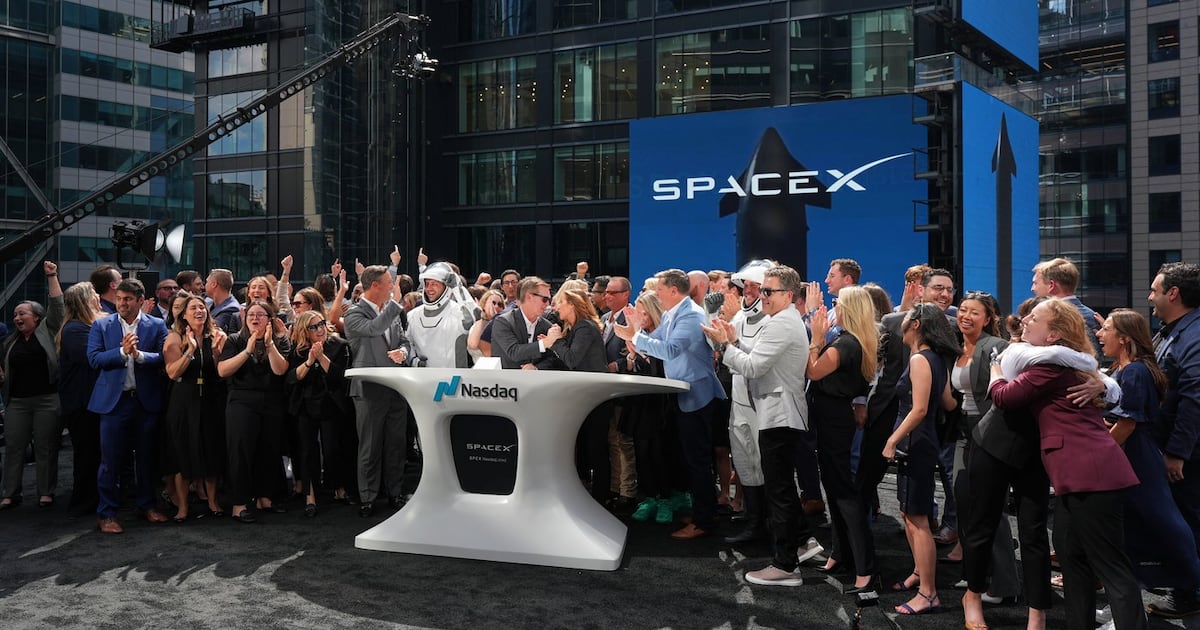
NEW YORK -- SpaceX's slip close to its initial public offering price risks turning a marquee stock-market debut into a confidence test, potentially unsettling retail investors and complicating decisions for other companies weighing high-profile listings. Elon Musk's company, spanning rockets to AI, debuted on June 12 and soared in the ensuing days, at one point valuing the company at well above US$2 trillion. Since then, trading has been rocky. The stock has slipped below its $150 opening price, but remained above the $135 offer price, with concerns about lofty tech stock valuations continuing to weigh on global indexes. SpaceX shares are at risk of falling below that level. They ended on Tuesday down 2.2 per cent at $136.08, their lowest closing level since the IPO, a week after they started trading as part of the Nasdaq 100 index. The stock dipped as low as $135.52. A break below the IPO price would be a psychological blow for SpaceX shares, said Matthew Maley, chief market strategist at Miller Tabak. "It raises the narrative that the stock is up on fluff, on speculation, on froth, and not on real fundamentals," Maley said. Investors who bought into the excitement around SpaceX's listing, "hoping to 'make a killing' will be disappointed," said Greg Halter, director of research at Carnegie Investment Counsel. He said weakness in SpaceX would put it more in line with 30 years of heavily hyped IPOs, where average and median returns over the first month are often negative. SpaceX did not immediately respond to a request for comment. Price discovery not panic? A drop below the IPO price would not be unusual for a newly listed company. Shares of Cerebras Systems, which went public in May, have dropped below the IPO price, and Meta, formerly known as Facebook, fell similarly after its debut. Investors often fixate on IPO prices and early trading, said Ryan Lee, senior vice president of product and strategy at financial services firm Direxion. "The reality is, (SpaceX) is still undergoing some of this price discovery process," Lee said. A fall for SpaceX below $135 would reflect "normal, albeit painful" market mechanics, especially as investors, venture capitalists and employees sell shares after lockups expire, said Gabriel Shahin, CEO at Falcon Wealth Planning. "A near-term dip below the $135 threshold would not fundamentally alter our current positioning or cause us to panic-sell," he said. Caution or green light for next IPOs? Some investors think SpaceX's stock performance could influence the market for future public listings. OpenAI and Anthropic are eyeing the public markets. Neither company responded to a request for comment. Carnegie's Halter said companies and investment banks considering large IPOs this year are watching SpaceX closely. "No one wants an IPO to flop or have the initial price be ratcheted down," Halter said. He suspects some IPOs would be pulled rather than priced at lower valuations. But Direxion's Lee said SpaceX's capital raise could encourage some companies with large funding needs to move faster. "If I'm OpenAI or if I'm Anthropic and I'm in this true arms race to build the frontier AI model and I need capital, I'm going to try to beat the other one out the door," Lee said. Risking retail traders' skepticism A drop below the IPO price could hit retail investors, who received about 20 per cent of the allocation, hard. "Many novice investors have approached SpaceX with a 'meme stock' mentality, buying in with capital they cannot afford to lose," Shahin said, warning that losses could fuel perceptions that markets favor insiders. "The market needs to understand that post-IPO volatility is normal." SpaceX's first earnings report will be a major test for the stock. Underwriters typically support stocks in the first 30 days and may do more for SpaceX given the deal's size, the public attention and the fact other high-profile offerings are imminent, said Maria Llerena, director of financial research at Domini Impact Investments. "Loss-making companies without a clear path to profitability are typically volatile and can fall below their IPO price," said Llerena.
Every SpaceX Starlink satellite has to dodge a collision almost weekly, and experts fear the worst
"I think we're heading towards a situation where there will be a collision involving an operational satellite in the constellation." SpaceX's Starlink satellites made over 355,000 collision avoidance maneuvers throughout the past year, with each satellite now dodging debris and other spacecraft on an almost weekly basis. The numbers are based on disclosures made by SpaceX in its latest semiannual report to the Federal Communications Commission (FCC). According to the latest report, Starlink satellites performed an overall 207,152 avoidance maneuvers between December 2025 and May 2026, up nearly 60,000 from the 148,696 reported in the previous half year. That brings the yearly total to over 355,000, more than three times as many as the constellation performed in 2024. On average, each Starlink satellite performed more than 40 space dodging maneuvers per year between June 1, 2025 and May 31, 2026. Experts fear the situation might soon get out of hand. "I think we're heading towards a situation where there will be a collision involving an operational satellite in the constellation," Hugh Lewis, a space sustainability expert and professor of astronautics at the University of Birmingham in the U.K., told Space.com. "And it will not be for the lack of trying to avoid those things. It will be in spite of all those maneuvers." The increase coincides with the growth of the internet-beaming constellation and the overall number of satellites in space in the past five years. Starlink grew from about 6,000 satellites in 2024 to more than 10,000 as of June 2026. Over the same time period, the overall number of operational spacecraft in orbit rose from around 10,000 to about 16,000. The SpaceX constellation orbits at altitudes between 298 miles (480 km) and 342 miles (550 kilometers) and uses an autonomous collision avoidance system that initiates a maneuver when the probability of a collision appears higher than 3 in 10 million. Lewis says that although SpaceX is "doing an excellent job" managing orbital traffic, the steep growth cannot continue without risks. "The avoidance maneuvers reduce the probability of a collision to about one in a million, which is so small that it's negligible," Lewis said. "The problem is that if you make a million manoeuvres and you have a residual probability of one in a million, you end up with an aggregate risk across your entire constellation that you can't get rid of." Lewis points out that with the expected continued rise in avoidance maneuvers (SpaceX has applied to the FCC to increase the size of its constellation to 100,000 satellites), SpaceX will have made a million avoidance maneuvers over the lifetime of the Starlink constellation as early as June 2027. By 2030, the constellation may be making more than a million maneuvers every year. At that point, the one in a million risk of a collision may no longer be negligible at all. Tommaso Sgobba, the Director of the International Association for the Advancement of Space Safety, told Space.com that the increase in collision avoidance maneuvers is a predictable certainty. "The more satellites you pack into [an orbital] shell, the more pairs of satellites exist that could potentially cross paths," he wrote in an email. "Adding satellites does not just add risk one unit at a time, it multiplies the number of possible pairings. Double the satellites in a shell and you roughly quadruple the number of pairs that need to be watched." Sgobba also said that the collision probabilities predicted are highly inaccurate as the effects of air drag, which change frequently with space weather, are currently impossible to predict. He said that due to the vast uncertainties in satellite trajectory predictions "operators lack tools to tell a real threat from statistical confusion," adding that "satellites are frequently dodging ghosts, burning fuel and shortening their operational lives in the process." SpaceX, being the largest constellation currently in orbit, takes the bulk of responsibilities for orbital maneuvering. Instead of communicating with the other operator to decide who will make the dodge, Starlink satellites automatically avoid other objects -- both space debris fragments or operational satellites -- whenever there is a conjunction alert. Other ambitious constellations, such as Amazon LEO or China's Thousand Sails, or Qianfan, are currently being deployed. Lewis said that the only way to safely manage multiple constellations is to make sure their orbits do not intersect. That, however, is not the case based on available information. The Thousand Sails constellation, in particular, is expected to occupy similar regions as Starlink. Many of the recently announced orbital data center projects want to launch into particular orbital regions that are convenient for their operations and are therefore likely to overlap. "The safe thing to do is to separate the constellations," Lewis said. "But then you are talking about orbital carrying capacity and the first mover benefit, because if I go into a particular altitude with my constellation, then nobody else can use it." Sgobba calls for predicted numbers of collision avoidance maneuvers based on satellite numbers to be mandatorily disclosed to regulators before applications are granted. "Right now, there is no clear requirement for a company to say, before launch, how many collision avoidance maneuvers a constellation of this size and density will need every year and whether the satellites carry enough fuel and automation to actually perform them all," Sgobba wrote. "In short, the crowding of orbit is not an accident waiting to happen. It is a manageable, predictable engineering workload and the argument worth making publicly is that regulators should be treating it that way, by asking for these numbers up front rather than reacting to headlines about near misses after the fact."

SpaceX Engineers Raise $115 Million to Make Construction Faster, Cheaper and Safer After Learning At 'a C
TerraFirma Raises Funds For Robotic Construction TerraFirma, in a press release on Tuesday, said Kleiner Perkins led a $100 million Series A. CEO Noah Schochet and co-founder Noah McGuinness previously worked at SpaceX on Starship, Starshield and Starlink. The company remotely operates construction equipment through tools including Xbox controllers and says its semi-autonomous machinery can cut costs and improve safety. It plans to hire 300 workers and to build a Texas factory and mission control center. "Infrastructure is a bottleneck to basically every single industry that needs to innovate over the next couple of decades," Schochet told CNBC. "There's such a deficit of people taking all of the great tech that has existed and been built for the last couple of decades and bringing it" to construction. SpaceX Lessons Target Construction Productivity Gap The pitch targets a sector with a productivity problem. The Federal Reserve Bank of Richmond said U.S. construction labor productivity fell more than 30% from 1970 to 2020, while overall U.S. productivity doubled. The Bureau of Labor Statistics projects 149,400 annual openings for construction laborers and helpers through 2034. Schochet said SpaceX showed him what construction lacks. "We're building rockets the size of skyscrapers at one a month, and all those processes for mass manufacturing automation, none of them are showing up in construction," he said. "It was all worth it," Schochet said. "We were learning at a crazy pace." Earth Projects Come Before Lunar Ambitions For now, Schochet said TerraFirma must prove itself on Earth. "The problem is you don't want to build a community based around a space economy that doesn't yet exist," he said. "You want to build it around the economic drivers that truly drive the world today." Image via Shutterstock Market News and Data brought to you by Benzinga APIs To add Benzinga News as your preferred source on Google, click here.

Is SpaceX Planning to Make a Smartphone to Rival the iPhone?
Space Exploration Technologies (NASDAQ: SPCX), also known as just SpaceX, is a company that could disrupt many different industries, including space travel and telecom. But one that investors may not have considered is the smartphone market. While its Starlink service offers mobile internet for smartphones, CEO Elon Musk has also hinted that entering the smartphone market may be a possibility. Image source: Getty Images. Where to invest $1,000 right now? Our analyst team just revealed what they believe are the 10 best stocks to buy right now, when you join Stock Advisor. See the stocks " The company reportedly has a prototype for a device that's similar to an iPhone According to a recent report from the Wall Street Journal, SpaceX has been working on a device that has a slimmer design than Apple's iPhone. While it's designed to help people interact with artificial intelligence (AI), its capabilities could certainly extend beyond that, as it's expected to use a Snapdragon chipset from Qualcomm. The device is nowhere near launching, and there is no certainty that it will even come to market. But with Musk being critical of Apple's restrictive app store policies, it also wouldn't be surprising if he were to want to bring his own smartphone or similar device to market, one that could rival Apple's popular devices. He has suggested in the past that while he isn't thrilled with the idea of doing so, he may feel compelled. "The idea of making a phone makes me want to die. But if we have to make a phone, we will. But we will aspire not to make a phone." Is SpaceX the ultimate growth stock to own? One of the most compelling reasons to invest in SpaceX despite its high valuation is that it has some tremendous growth opportunities. Not only can its reusable rockets revolutionize space travel, but its Starlink business could make it a big player in the telecom sector. And its biggest opportunities are in artificial intelligence (AI), with the company planning to put data centers into space. SpaceX arguably already has too many places to spend and invest in as it is. A smartphone may be a possibility down the road, but I wouldn't expect that to be a focus for the business at this stage. SpaceX has already been incurring billions in losses, and investing in too many different areas at once could prove to be costly and risky. While making risky investments can work for large tech companies with massive resources and strong financials, that strategy may not be as sound for a company such as SpaceX, which still needs to find its way out of the red. SpaceX may be an exciting stock to own, but it's also a highly risky one, and there are arguably far better growth stocks out there for investors that offer a better mix of growth and safety. Should you buy stock in Space Exploration Technologies right now? Before you buy stock in Space Exploration Technologies, consider this: The Motley Fool Stock Advisor analyst team just identified what they believe are the 10 best stocks for investors to buy now... and Space Exploration Technologies wasn't one of them. The 10 stocks that made the cut could produce monster returns in the coming years. Consider when Netflix made this list on December 17, 2004... if you invested $1,000 at the time of our recommendation, you'd have $398,160!* Or when Nvidia made this list on April 15, 2005... if you invested $1,000 at the time of our recommendation, you'd have $1,249,202!* Now, it's worth noting Stock Advisor's total average return is 918% -- a market-crushing outperformance compared to 209% for the S&P 500. Don't miss the latest top 10 list, available with Stock Advisor, and join an investing community built by individual investors for individual investors. See the 10 stocks " *Stock Advisor returns as of July 15, 2026. David Jagielski, CPA has no position in any of the stocks mentioned. The Motley Fool has positions in and recommends Apple and Qualcomm. The Motley Fool has a disclosure policy. The views and opinions expressed herein are the views and opinions of the author and do not necessarily reflect those of Nasdaq, Inc.

The 179 ETFs That Own SpaceX
This article mentions funds that have an issuer-initiated rating and/or track a Morningstar Index. For full disclosure information, please refer to the specific funds, which are demarcated with a * symbol, listed below. Space Exploration Technologies Corp. SPCX made its public market debut on June 12 to much fanfare. There was more demand than shares available, helping the stock open $15 higher than its $135 IPO price and end its first day as a public company above $160. It quickly rose to a high of $225 on June 16, then fell back to earth, dipping near its IPO price the week of July 13. Hundreds of exchange-traded funds and mutual funds bought shares of Elon Musk's space and artificial intelligence company for the first time amid these fluctuations. SpaceX is now the cornerstone of a few ETF portfolios and a satellite position in many others. Some ETFs that own the stock might surprise you. While space-themed, technology sector, or growth ETFs are expected landing places for the $2 trillion company, it also found its way into several value ETFs, one quality ETF, a Jewish advocacy ETF, and numerous broad market index ETFs. In total, US ETFs own around $16 billion worth of the stock across 179 products. Here are the categories where those owners are concentrated. Expected Buyers of SpaceX Two ETFs account for almost half of that $16 billion. Invesco QQQ Trust QQQ and its cheaper sibling, Invesco Nasdaq 100 ETF QQQM, held a 1.21% stake in SpaceX on July 10. That amounts to over 48 million shares worth over $7 billion. As one of the largest stocks listed on the Nasdaq exchange, it makes sense for these Nasdaq-100 tracking index ETFs to own sizable positions. How they got that weighting, however, is another story, which is covered in more detail here and touched on later. Other ETFs like ARK Innovation ETF ARKK and Baron First Principles ETF RONB own sizable chunks. The managers of these active ETFs prize innovative companies, and the inclusion of SpaceX in their lineups was mostly a foregone conclusion. In fact, Baron Funds owned SpaceX in Baron First Principles ETF and other funds before it was a public company. Elsewhere, SpaceX stock makes appearances in several ETFs covering themes from space to artificial intelligence to innovative technology. It makes the cut in a number of growth-oriented ETFs and a handful of options income ETFs, too. Across all 179, Baron First Principles ETF carries the highest weighting at over 30%, as of July 10. Unexpected Buyers of SpaceX Companies like SpaceX test the rules of portfolio construction. And sometimes those rules don't yield the portfolio you'd expect. Recently, Micron MU unexpectedly became a 25% position in a value ETF, for example. SpaceX also found its way into several value ETFs. The stock claims small positions in each, but its presence is surprising, given concerns with the stock's lofty market cap relative to its total sales and negative net earnings. Negative earnings do funny things to price ratios commonly used by index funds to distinguish value stocks from growth stocks. Indexes usually employ several measures of value to avoid one outlier from bringing an otherwise growth stock into a value index, and vice versa. SpaceX seems to have slipped through some cracks. Stocks without a clear style distinction can be partially allocated between both the Russell 1000 Value and Growth indexes. As a brand-new public company, the stock doesn't have enough data to be firmly categorized as growth or value yet, so it lands near the midpoint for now. IShares Russell 1000 Growth ETF IWF holds a 0.22% stake. Schwab US Large-Cap Value ETF SCHV is a little different. Unlike most, the Dow Jones index it tracks uses a stock's price/earnings ratio as a component in its value scoring system. SpaceX's negative earnings skews its P/E ratio far to the value side of the board, likely resulting in its inclusion here. Other index families use the inverse, earnings/price, to sidestep this peculiarity. As an actively managed ETF, Fidelity Enhanced Large Cap Value ETF FELV doesn't have to adhere to an index's binary rules. If its managers don't think a stock belongs in the Russell 1000 Value Index, they can remove it. Fidelity's managers haven't yet removed SpaceX from its value portfolio. How Big Is SpaceX in Major Indexes? Even a small position in SpaceX means a large stake in the largest index funds. Vanguard Total Stock Market ETF's VTI total fund size of nearly $2.3 trillion means that it owns over $3.2 billion worth of SpaceX shares despite its 0.14% weighting at the end of June. In total, US index ETFs hold roughly 14% of SpaceX's outstanding free-float shares, or $13.3 billion of $93.6 billion free float. Several major broad market indexes tweaked their rules earlier this year to allow SpaceX early entry. Much ink has been spilled on the purpose and validity of these changes (including from me), but now that the dust has settled, SpaceX is a component in 82 broad market index ETFs. Still, the stock carries a very small position in most and no weight in a couple of notable bogies. Nasdaq's relatively narrow portfolio and unique weighting scheme give the stock much more attention than other widely followed index ETFs.
SpaceX bond yields rocket towards junk
We're old enough to remember when the market cap of the lossmaking telecom SpaceX was bigger than Amazon's. Heck, for a few precious moments it was bigger than Microsoft's. Maybe one day it will be again, but for now the stock is down 38 per cent from its peak post-IPO valuation. Punters lucky enough to have been awarded a stock allocation at the outset are still sitting on a tasty [checks notes] 0.8 per cent paper profit at pixel time. But what about the bondholders? Given heavy issuance by hyperscalers, SpaceX's 2056 bonds were priced with a fairly hefty 175 basis points of additional yield over similar maturity US Treasuries. Sure, this was less than the 200 basis point initial price talk, but as we learnt in Alphaville's debt capital market boot camp, trailing a tasty IPT to lure punters into the deal and then reining it back in as the book builds is totally normal. And as we've already covered, the full $25bn of benchmark bonds -- issued across the curve -- had a rocky first couple of days of trading. Checking back today, it turns out that the inauspicious beginning was just a prelude to the train wreck that has since unfolded. If you'd been allocated $100mn of the SpaceX 2056 bonds, you've turned $100mn into $90.7mn in less than a month. Sure, long-dated US Treasury bonds have fallen in value, and this general sell-off at the long end has done some of the work. But the spread on SpaceX 2056 -- the additional yield you're paid to compensate you for the risk that you don't get repaid (among other things) has now widened from the initial +175bps to a whopping +231bps doing more than two-thirds of the work. For the non-bond-geeks, this is a lot of spread widening. Looking only at the nine days since the bonds were included in ICE BofA indices at the end of June, this spread-widening has made SpaceX 2056 the single worst-performing US dollar triple-B benchmark bond: Again, for the non-bond-geeks, there are a lot of benchmark triple-B corporate bonds. Of the 5,543 bonds in the ICE BofA triple-B US dollar corporate bond index, 1,450 have at least $1bn face value. That said, as the chart shows, Oracle bonds are giving SpaceX bonds a run for their money. When we pulled up the chart showing where the entire universe of triple-B US dollar corporate bonds are valued, it increasingly looks like the market is pricing SpaceX and Oracle in line with one another. And when we overlay the average spread for double-B US dollar corporate bonds across different maturities (the pink line), it looks a lot like the type of risk that the market has assigned to both SpaceX and Oracle bonds is junk risk. As long as Oracle and SpaceX don't go bust, these higher yield premiums should turn into higher annualised returns in the future. And this should be of some comfort to hold-to-maturity bondholders who'd prefer not to look at such short-term performance measures. But for the companies and their stockholders -- given that analysts had the companies down to tap bond markets as the main source of external finance for years to come -- the shift will be an unwelcome one. Still, there are always banks and private credit funds. Oh.

Is SpaceX Planning to Make a Smartphone to Rival the iPhone?
Space Exploration Technologies (NASDAQ: SPCX), also known as just SpaceX, is a company that could disrupt many different industries, including space travel and telecom. But one that investors may not have considered is the smartphone market. While its Starlink service offers mobile internet for smartphones, CEO Elon Musk has also hinted that entering the smartphone market may be a possibility. Missed Nvidia in 2009? This Rare Signal Is Flashing Again. In 2009, a "Double Down" signal flashed for a little-known chipmaker called Nvidia. For the first time in years, that same "Total Conviction" signal is flashing for a company 1/100th the size of Nvidia. Continue " The company reportedly has a prototype for a device that's similar to an iPhone According to a recent report from the Wall Street Journal, SpaceX has been working on a device that has a slimmer design than Apple's iPhone. While it's designed to help people interact with artificial intelligence (AI), its capabilities could certainly extend beyond that, as it's expected to use a Snapdragon chipset from Qualcomm. The device is nowhere near launching, and there is no certainty that it will even come to market. But with Musk being critical of Apple's restrictive app store policies, it also wouldn't be surprising if he were to want to bring his own smartphone or similar device to market, one that could rival Apple's popular devices. He has suggested in the past that while he isn't thrilled with the idea of doing so, he may feel compelled. "The idea of making a phone makes me want to die. But if we have to make a phone, we will. But we will aspire not to make a phone." Is SpaceX the ultimate growth stock to own? One of the most compelling reasons to invest in SpaceX despite its high valuation is that it has some tremendous growth opportunities. Not only can its reusable rockets revolutionize space travel, but its Starlink business could make it a big player in the telecom sector. And its biggest opportunities are in artificial intelligence (AI), with the company planning to put data centers into space. SpaceX arguably already has too many places to spend and invest in as it is. A smartphone may be a possibility down the road, but I wouldn't expect that to be a focus for the business at this stage. SpaceX has already been incurring billions in losses, and investing in too many different areas at once could prove to be costly and risky. While making risky investments can work for large tech companies with massive resources and strong financials, that strategy may not be as sound for a company such as SpaceX, which still needs to find its way out of the red.
Pollution from Musk's unpermitted xAI power project hits hardest in Black communities
The findings illustrate how electricity demand from AI data centers is driving companies to build power plants without enough environmental oversight in the US Elon Musk's artificial intelligence company xAI has installed 59 natural gas turbines for its Colossus 2 data center project in Tennessee without securing federal clean air permits, according to communications between regulators and xAI representatives. Potential emissions from the turbines are far beyond the threshold that would require a federal permit, and would be released near predominantly Black communities already estimated to be suffering disproportionately high rates of lung disease, according to a Reuters analysis based on government data and information in the correspondence with regulators. The findings, which have not been previously reported, reflect how exploding electricity demand from AI data centers is driving companies to build off-grid power plants at a pace outstripping environmental oversight, with potentially big risks to public health. The number of unpermitted turbines identified by Reuters is about double what xAI has publicly acknowledged. The company previously said it was running 27 unpermitted turbines for Colossus 2 as of January and has argued the permits are not required. At least 57 of the 59 turbines are located in Mississippi, just over the state line from Tennessee where the data center is located. The xAI turbines are among scores of off-grid power plants for data centers proposed or under construction around the country. Local authorities often fast-track approvals in just weeks or months, without the years of environmental studies and public hearings typically required for such power generation projects that connect to the grid, Reuters has reported. Mississippi regulators in March issued a permit for permanent turbines for Colossus 2, allowing construction of 41 gas-fired turbines. The approval came three weeks after the state's only public hearing on the project. The xAI cluster of temporary turbines in Mississippi is already among the biggest off-grid data center power projects, according to Ben King, an analyst with think tank Rhodium Group, who reviewed the Reuters analysis. "This looks to be an unprecedented level of behind-the-meter gas being installed in one place," he said, referring to off-grid natural gas plants serving just one customer. The communications reviewed by Reuters show xAI, now owned by trillionaire Musk's SpaceX SPCX.O, has installed 57 off-grid turbines in Southaven, Mississippi, just across the state line from its Colossus 2 data center in Memphis, a facility supporting the Grok chatbot and other AI systems. The records show the company has also installed two other unpermitted turbines for the project on a different site. Reuters could not determine the location. The communications, obtained through a Reuters public records request, included emails between Trinity Consultants, representing xAI and subsidiary MZX Tech, and the Mississippi Department of Environmental Quality (MDEQ). xAI did not respond to Reuters' request for comment. xAI's turbines are part of a widening environmental justice battle over whether the AI boom is adding disproportionate pollution burdens to communities of color. Civil rights groups including the NAACP and the Southern Environmental Law Center sued xAI in April to halt their operations, arguing the turbines produce emissions subject to the federal Clean Air Act and shouldn't be operated without permits. They contend the turbines are polluting homes, schools and churches in historically Black communities. "The scale of it is astonishing," said Patrick Anderson, an attorney with the Southern Environmental Law Center. "This is an absolutely huge Clean Air Act violation that threatens public health." Securing a Clean Air Act permit would have exposed xAI's project to extensive review and public comment, potentially taking years. Mississippi environmental regulators and xAI have argued in court filings that the turbines are exempt because they are "mobile" and intended to operate onsite for less than a year. "MDEQ has determined that portable/temporary turbines do not require an air permit," the agency said in a statement to Reuters. The US Environmental Protection Agency said in January 2026 that even temporary turbines exceeding emissions thresholds must obtain permits. The agency, however, told Reuters it's considering changes allowing "regulatory flexibilities" for portable units while continuing to protect public health. xAI, the MDEQ and the EPA did not answer questions from Reuters about pollution impacts on communities of color from power generation to serve data centers. The US Justice Department weighed in on the lawsuit in a June 15 filing, saying that restricting the turbines could threaten national security interests because xAI's systems support US military operations, including operations involving Iran. The outcome of the lawsuit filed by civil rights groups could help define how environmental laws apply to the fast-growing AI sector, where companies are scrambling to bring power supplies online to support energy-intensive computing. "This sets up scenarios where the government can create sacrifice zones and tell communities they have to breathe illegal air pollution," said Mary Rock, a senior attorney for Earthjustice which is representing the NAACP and SELC. The dispute echoes the findings of a 2022 study by researchers from UCLA and Columbia University and published in the Nature Energy journal that found that previously redlined communities -- where banks historically discriminated against Black mortgage applicants -- now face disproportionately high exposure to pollutants from fossil fuel facilities. "Air pollution from these and other sources contributes to systemic racial disparities in chronic disease and ultimately shorter lives," Lara Cushing, a UCLA public health professor who co-authored the study, told Reuters. Big emissions The emails reviewed by Reuters included the manufacturer emissions profiles for 32 of the 59 turbines, including 30 at the Southaven site. A Reuters analysis based on that information found that those 30 turbines alone could emit nearly 2,500 short tons of nitrogen oxide, 4,000 short tons of carbon monoxide and 22 short tons of formaldehyde annually, assuming they operate continuously at 80% of capacity. According to the EPA, gas turbines are typically operated at loads of 80% or more to achieve efficiency. Nitrogen oxides contribute to smog and respiratory inflammation, according to the American Lung Association. Carbon monoxide deprives the body of oxygen, and formaldehyde is a carcinogen. The xAI site's potential emissions far exceed a Clean Air Act threshold that requires permitting for facilities capable of more than 100 short tons annually of pollutants such as nitrogen oxide. "This is a massive amount of turbines and an unfathomable amount of air pollution," Southaven resident Shannon Samsa said in an interview. "It's not a hypothetical," she said, "that air pollution is bad for you." The nitrogen oxide emissions calculated by Reuters for about half the plant's turbines would put the facility "up there with some of the heaviest polluting natural gas power plants across the entire country," said Nicholas Mailloux, a postdoctoral researcher at the University of Wisconsin-Madison who studies air quality and health benefits of the clean-energy transition. He said the facility would be on par with the top 25 US gas plants for nitrogen oxide emissions, citing EPA data for actual emissions. The people affected In the Colonial Hills neighborhood of Southaven, the turbines serving Colossus 2 can be heard around the clock, often firing off noisy bursts that residents compare to jet engines. Ervin Laws, a Colonial Hills resident in his 20s, said the noise wakes him up at night. "I can't do anything about it, because he's got more money than me," he said, referring to Musk. The turbines were installed in communities already estimated to be facing relatively high respiratory disease burdens, according to a Reuters analysis of CDC data. In 27 of 28 census tracts within five miles of the site -- spanning both Mississippi and Tennessee -- the estimated asthma rates were higher than their respective countywide figures. In 24 tracts, chronic obstructive pulmonary disease rates were also higher. Five miles is a distance commonly used in environmental health research to capture populations likely to be exposed to air pollution from a stationary source. A separate Reuters analysis of Census Bureau data found that the residents living near the facility are disproportionately Black. Because the five-mile radius crosses state lines, Reuters compared each side against its own county baseline. Within five miles of the facility in DeSoto county, Mississippi -- where the turbines are located -- about 46% of residents are Black, compared with 33% countywide, according to census data. Across the state line in Tennessee, where residents have no say in Mississippi's permitting process, about 94% of residents within five miles of the facility are Black, compared to 52% in surrounding Shelby County. Jayajit Chakraborty, a professor at the University of California, Santa Barbara, said the Reuters analysis was consistent with research that shows communities of color face higher exposure to fossil fuel pollution. Shelby County and portions of DeSoto County have also previously failed to meet federal ozone standards and remain subject to EPA-approved plans to ensure they do not slip back into violation, according to regulatory documents. Nitrogen oxide is a key precursor to ozone formation, which the EPA says can harm respiratory health. "Given this community struggles with high asthma rates, additional NOx exposure at such high rates could exacerbate public health issues in a community that is already seeing more than its fair share of exposure to toxic air pollution," said Victoria Nelson, an independent environmental engineer, formerly at EPA. Sarah Gladney, 72, has watched the rapid expansion of xAI's Memphis-area presence from her home in the historically Black neighborhood of Boxtown, a few miles from where the company built its Colossus 1 data center in 2024. "Once they got their foot in the door in Memphis, I feel like it's going to be a continuous movement of xAI into these other communities," she said. "It's all about the money, and it's not about the health or wellness of the people that live in or near these communities." - Rappler.com
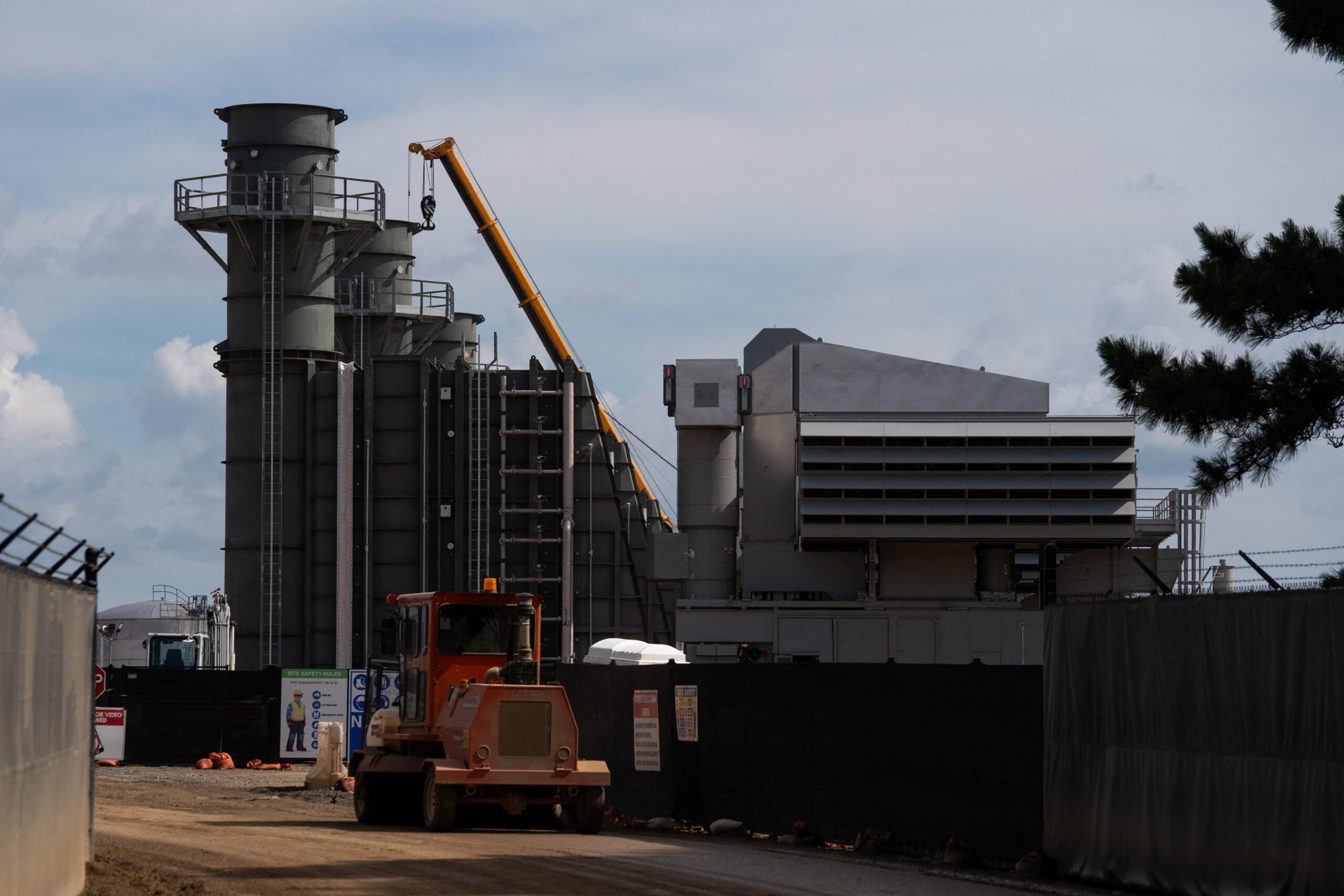
SpaceX Starship Flight 13 launch updates: Starship undergoing preparations to launch tomorrow
Even if you can't see SpaceX's Starship in person, you can score a model of your own. Standing at 13.77 inches (35 cm), this is a 1:375 ratio of SpaceX's Starship as a desktop model. The materials here are alloy steel and it weighs just 225g. Starship's next big test launch is just a day away. SpaceX has transported Booster 20, the Super Heavy first stage for the massive launch vehicle, back to pad 2 at the company's Starbase facility in Texas. If all goes according to plan, that will be its last relocation before launch, currently scheduled for tomorrow (July 15) during a 90-minute launch window beginning at 6:45 p.m. EDT (2245 GMT). Ship 40, Starship's upper stage for Flight 13, will be trasnported to the pad today, and stacked on Super Heavy for a full wet dress rehearsal to confirm the vehicle's readiness ahead of tomorrow's launch attempt. What time is SpaceX's Starship Flight 13 launch on July 16? (Full mission timeline) Following a static fire engine test last Friday (July 10), SpaceX has lowered the Flight 13 Super Heavy, Booster 20, from the launch stand and transported the stage back to its hangar at the company's Starbase, Texas, facility. The booster will roll back to the pad in the next day or so, along with Ship 40, the Flight 13 Starship upper stage. The pair will be stacked a Starbase's pad 2, where it's expected the rocket will undergo at least one additional engine test prior to launch. SpaceX is still targeting July 16 for liftoff of Starship's 13th test flight, scheduled to get off the ground during a 90-minute window that opens at 6:45 p.m. EDT (2245 GMT). Read how this launch will deploy SpaceX's first batch up upgraded Starlink Version 3 satellites into space. How to watch SpaceX launch Starship Flight 13 on July 16 The next Starship launch has arrived! SpaceX is targeting no earlier than July 16 for the next launch of its massive Starship rocket, the company announced on in a post on X. Flight 13 will be the second launch of the vehicle's Version 3 configuration and will be similar in profile to Flight 12. It will be the second launch for Starship "Version 3" (V3), a bigger, more powerful upgrade from previous Starship designs, and will come a little less than two months after V3's debut. A 90-minute launch window will begin on Thursday at 6:45 p.m. EDT (2245 GMT). A livestream of the mission will begin about 30 minutes prior to liftoff and stream on the company's mission page, profile on X and here on Space.com. Full story: SpaceX targets July 16 for Starship Flight 13, reveals what went wrong on previous launch
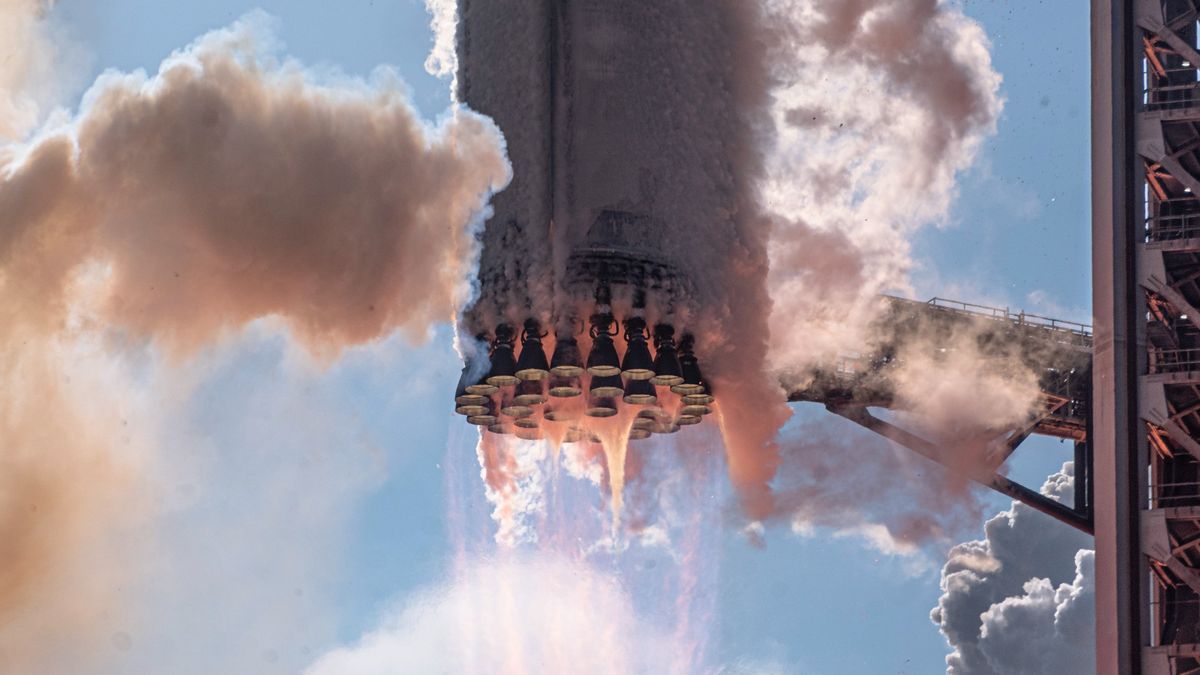
SpaceX reportedly shows prototype of smartphone to investors as IPO looms
Elon Musk denied the Wall Street Journal report, calling it 'utterly false,' but the implications for telecom and tech markets are hard to ignore The Wall Street Journal reported on July 1, 2026, that SpaceX showed a prototype of a slim, AI-driven device to select investors. The device was described as thinner than an iPhone, powered by a Qualcomm Snapdragon chipset, and deeply integrated with xAI technology. Elon Musk immediately denied it, taking to X to call the report "utterly false." What we know about the device According to the WSJ report, the prototype was presented to institutional investors and stakeholders as part of SpaceX's capital-raising efforts ahead of its anticipated IPO. The company has been preparing to go public, with its offering projected for June 2026. Musk denied SpaceX was developing a phone as recently as February 2026. That's barely four months before the company allegedly showed one to investors. The Starlink connection SpaceX's Starlink Direct to Cell initiative has been forging partnerships with telecommunications firms, positioning satellite-based mobile service as a complement to traditional cell towers. One of the most notable moves in this space has been a spectrum deal with EchoStar valued at $1 billion. Why crypto markets should pay attention There's no evidence linking this prototype to any cryptocurrency or blockchain technology. No wallet integration, no token, no decentralized anything. The research is clear on this point. The SpaceX IPO itself is a gravitational event for capital allocation. When one of the most anticipated public offerings in history hits the market, it pulls institutional money from other asset classes. Crypto has historically felt the effects of major tech IPOs as portfolio managers rebalance. Starlink reaching underserved populations with a low-cost, AI-powered device could expand the addressable market for mobile-first crypto products in regions where traditional telecom infrastructure has lagged.
Is SpaceX Planning to Make a Smartphone to Rival the iPhone?
Space Exploration Technologies (SPCX 2.24%), also known as just SpaceX, is a company that could disrupt many different industries, including space travel and telecom. But one that investors may not have considered is the smartphone market. While its Starlink service offers mobile internet for smartphones, CEO Elon Musk has also hinted that entering the smartphone market may be a possibility. The company reportedly has a prototype for a device that's similar to an iPhone According to a recent report from the Wall Street Journal, SpaceX has been working on a device that has a slimmer design than Apple's iPhone. While it's designed to help people interact with artificial intelligence (AI), its capabilities could certainly extend beyond that, as it's expected to use a Snapdragon chipset from Qualcomm. The device is nowhere near launching, and there is no certainty that it will even come to market. But with Musk being critical of Apple's restrictive app store policies, it also wouldn't be surprising if he were to want to bring his own smartphone or similar device to market, one that could rival Apple's popular devices. He has suggested in the past that while he isn't thrilled with the idea of doing so, he may feel compelled. "The idea of making a phone makes me want to die. But if we have to make a phone, we will. But we will aspire not to make a phone." Is SpaceX the ultimate growth stock to own? One of the most compelling reasons to invest in SpaceX despite its high valuation is that it has some tremendous growth opportunities. Not only can its reusable rockets revolutionize space travel, but its Starlink business could make it a big player in the telecom sector. And its biggest opportunities are in artificial intelligence (AI), with the company planning to put data centers into space. SpaceX arguably already has too many places to spend and invest in as it is. A smartphone may be a possibility down the road, but I wouldn't expect that to be a focus for the business at this stage. SpaceX has already been incurring billions in losses, and investing in too many different areas at once could prove to be costly and risky. While making risky investments can work for large tech companies with massive resources and strong financials, that strategy may not be as sound for a company such as SpaceX, which still needs to find its way out of the red. SpaceX may be an exciting stock to own, but it's also a highly risky one, and there are arguably far better growth stocks out there for investors that offer a better mix of growth and safety.

SpaceX's slide risks turning blockbuster IPO into confidence test
NEW YORK, July 15 (Reuters) - SpaceX's slip close to its initial public offering price risks turning a marquee stock-market debut into a confidence test, potentially unsettling retail investors and complicating decisions for other companies weighing high-profile listings. Elon Musk's company, spanning rockets to AI, debuted on June 12 and soared in the ensuing days, at one point valuing the company at well above $2 trillion. Since then, trading has been rocky. The stock has slipped below its $150 opening price, but remained above the $135 offer price, with concerns about lofty tech stock valuations continuing to weigh on global indexes. SpaceX shares are at risk of falling below that level. They ended on Tuesday down 2.2% at $136.08, their lowest closing level since the IPO, a week after they started trading as part of the Nasdaq 100 index <.NDX>. The stock dipped as low as $135.52. A break below the IPO price would be a psychological blow for SpaceX shares, said Matthew Maley, chief market strategist at Miller Tabak. "It raises the narrative that the stock is up on fluff, on speculation, on froth, and not on real fundamentals," Maley said. Investors who bought into the excitement around SpaceX's listing, "hoping to 'make a killing' will be disappointed," said Greg Halter, director of research at Carnegie Investment Counsel. He said weakness in SpaceX would put it more in line with 30 years of heavily hyped IPOs, where average and median returns over the first month are often negative. SpaceX did not immediately respond to a request for comment. PRICE DISCOVERY NOT PANIC? A drop below the IPO price would not be unusual for a newly listed company. Shares of Cerebras Systems, which went public in May, have dropped below the IPO price, and Meta, formerly known as Facebook, fell similarly after its debut. Investors often fixate on IPO prices and early trading, said Ryan Lee, senior vice president of product and strategy at financial services firm Direxion. "The reality is, (SpaceX) is still undergoing some of this price discovery process," Lee said. A fall for SpaceX below $135 would reflect "normal, albeit painful" market mechanics, especially as investors, venture capitalists and employees sell shares after lockups expire, said Gabriel Shahin, CEO at Falcon Wealth Planning. "A near-term dip below the $135 threshold would not fundamentally alter our current positioning or cause us to panic-sell," he said. CAUTION OR GREEN LIGHT FOR NEXT IPOS Some investors think SpaceX's stock performance could influence the market for future public listings. OpenAI and Anthropic are eyeing the public markets. Neither company responded to a request for comment. Carnegie's Halter said companies and investment banks considering large IPOs this year are watching SpaceX closely. "No one wants an IPO to flop or have the initial price be ratcheted down," Halter said. He suspects some IPOs would be pulled rather than priced at lower valuations. But Direxion's Lee said SpaceX's capital raise could encourage some companies with large funding needs to move faster. "If I'm OpenAI or if I'm Anthropic and I'm in this true arms race to build the frontier AI model and I need capital, I'm going to try to beat the other one out the door," Lee said. RISKING RETAIL TRADERS' SKEPTICISM A drop below the IPO price could hit retail investors, who received about 20% of the allocation, hard. "Many novice investors have approached SpaceX with a 'meme stock' mentality, buying in with capital they cannot afford to lose," Shahin said, warning that losses could fuel perceptions that markets favor insiders. "The market needs to understand that post-IPO volatility is normal." SpaceX's first earnings report will be a major test for the stock. Underwriters typically support stocks in the first 30 days and may do more for SpaceX given the deal's size, the public attention and the fact other high-profile offerings are imminent, said Maria Llerena, director of financial research at Domini Impact Investments. "Loss-making companies without a clear path to profitability are typically volatile and can fall below their IPO price," said Llerena. (Reporting by Laura Matthews in New York; Additional reporting by Lewis Krauskopf in New York; editing by Megan Davies and Rod Nickel)
