News & Updates
The latest news and updates from companies in the WLTH portfolio.
SpaceXAI's newest AI model Grok 4.5 dramatically undercuts Anthropic and OpenAI on price
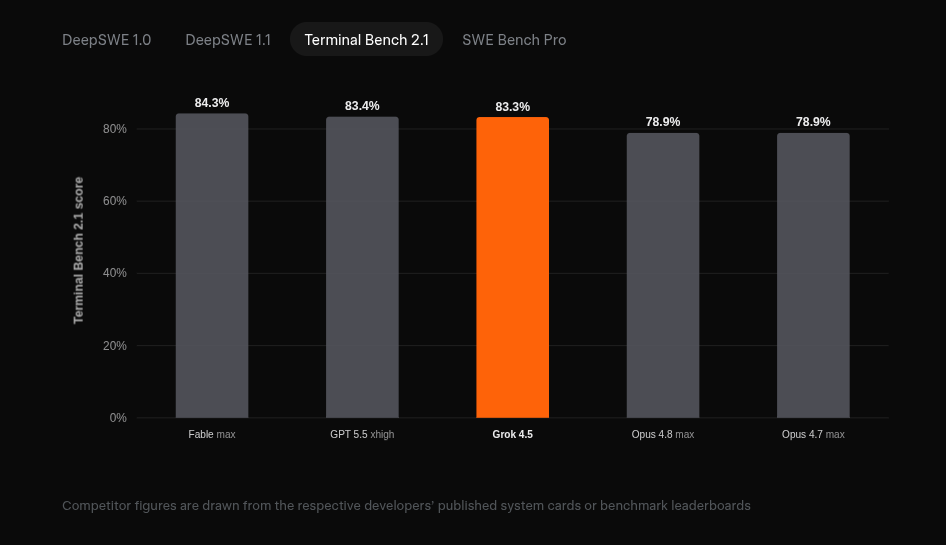
SpaceXAI's newest AI model Grok 4.5 dramatically undercuts Anthropic and OpenAI on price Elon Musk's SpaceXAI Corp. has released a new model called Grok 4.5, in what is its first major launch since it went public a few weeks earlier. In a blog post earlier today, the company said Grok 4.5 is designed to be a workhorse that's able to tackle all of the usual tasks that the artificial intelligence industry has been automating for some time already. That includes things like coding, writing emails and presentations, performing office and clerical work, doing research and other kinds of knowledge-based work. None of this sets Grok 4.5 apart, but SpaceXAI said that the difference is that it can do these tasks just as well as its peers at around half the cost, because it has "twice greater token efficiency" than its peers from other frontier model labs. If true, that could be a compelling advantage in a world where the cost of tokens has suddenly become a major issue for heavy AI users. SpaceXAI announced Grok 4.5's release alongside a host of benchmark results that highlight how competitive it is with the leading models of some of its major competitors, and it falls just short of their performance. In a post on the social media platform X, which is owned by SpaceXAI, founder Musk compared Grok 4.5 to Anthropic PBC's Opus, which is a large language model designed to handle intensive reasoning tasks. In a follow up, Musk added that the company's internal assessments show that Grok 4.5 is "roughly comparable" with Opus 4.7 in terms of its performance, but much faster at generating its results. "The combination of capability, faster speed and lower cost is what makes it competitive," he added. Grok 4.5's real calling card, however, appears to be its overall efficiency. The company said it costs around $2 per one million input tokens and $6 per one million output tokens, which makes it far cheaper than its rival's most capable models. In contrast, Opus 4.7 and 4.8 run at $5 per one million input tokens and $25 for one million outputs. Meanwhile, Fable 5, which is Anthropic's best model, costs $10 for inputs and $50 for outputs, based on one million tokens. OpenAI Group PBC, meanwhile, has a tiered pricing structure for different models. Its newest model, GPT-5.6 Sol, is priced at $5 for one million inputs and $30 for one million outputs, while Luna, its low cost version, costs $1 for one million inputs and $6 for one million outputs. This week is proving to be a big one in terms of new AI model launches. Earlier today, OpenAI announced the launch of GPT-5.6 Sol, its most powerful model so far, after being held up by the White House administration due to security concerns. According to OpenAI, GPT-5.6 Sol is its "strongest model yet," but those security concerns mean that it's currently only available to a limited number of customers. OpenAI also announced the launch of GPT-Live today, which is a family of AI models optimized to process spoken instructions.
In San Francisco, Some Home Sellers Now Ask for OpenAI or Anthropic Stock
When Nima Gabbay decided to sell his three-bedroom, two-bath San Francisco home for $2.995 million last month, his listing described the residence's soaring 10-foot ceilings, kitchen wrapped in Calacatta marble, remote-control skylights and oversize two-car garage. The 51-year-old real estate investor and developer also added an unusual clause: He would accept shares of OpenAI or Anthropic as payment for the home. Two OpenAI employees soon came forward offering some of their shares for the property, Mr. Gabbay said. One bid more than $1 million above the asking price, but appeared to inflate the value of his OpenAI stock. The other backed off when OpenAI filed to go public last month, deciding to hang on to the stock. Mr. Gabbay ultimately went with a third buyer who works in tech, and the sale is set to close this week. He was not at liberty to disclose the sale terms or the buyer's identity because he had signed a nondisclosure agreement, he said. "There's a bit of a gold rush situation right now in San Francisco," Mr. Gabbay said. Selling the home was "an avenue for me to potentially pick up some of this stock and be a part of the excitement of the companies going public." Even before OpenAI and Anthropic hold initial public offerings, the artificial intelligence companies -- which are based in San Francisco and leading the A.I. boom -- are distorting the city's housing market. Sellers are asking for pre-I.P.O. stock as payment for homes, property prices are surging as buyers bet that whatever they overpay today will look cheap tomorrow, and landlords are pushing out tenants to sell into the hotter market. The maneuvering is aimed at getting ahead of the wave of wealth when OpenAI and Anthropic, each valued at nearly $1 trillion, go public. Their I.P.O.s, plus the recent public offering of Elon Musk's SpaceX, could create more than 16,000 millionaires and more than 20 billionaires, according to Sacra, a private market research company. Already, San Francisco's sales of homes above $10 million have doubled over the past six months compared with a year earlier, said Joel Goodrich, an agent with Coldwell Banker Global Luxury. Forty-four homes closed at prices at least $1 million more than their asking price last month, said Mike Simonsen, the chief economist for Compass Real Estate. And there have been 144 such sales so far this year, up from eight in the first half of 2025. Fewer than 600 homes -- including single-family houses and condos -- are on the market today, about 40 percent below San Francisco's average of the past decade, according to Compass. The market is so frenzied that a six-bedroom, seven-bathroom 5,725-square-foot home in the Cow Hollow neighborhood with views of the Golden Gate Bridge and Alcatraz sold for $15 million in May, nearly double the list price of $7.9 million, according to John Caruso of Sotheby's International Realty. Even in a city that lived through the late-1990s dot-com boom and major public offerings by companies like Google (in 2004), Facebook (2012) and Uber (2019), property agents and wealth managers said they had never seen anything quite like this. "There's a hysteria that's out there right now," said Pete Rodway, a Compass agent who works mostly in the luxury market. One of his clients, an OpenAI employee, was scrambling to buy a $5 million home now to beat "a thousand other people that are going to have a budget of $30 million," he said. Garret Spiecker, who works at Citizens Private Bank and describes himself as a "financial therapist" for sudden wealth, said he had advised dozens of OpenAI and Anthropic employees on how to navigate the housing market. He has suggested they buy properties through trusts to protect their privacy, especially on homes above $5 million. "In this cycle, which differs from some of the others, a lot of these individuals are very young and quite wealthy very fast," he said. Anthropic and OpenAI, which have not set dates for their I.P.O.s, declined to comment. (The New York Times has sued OpenAI and Microsoft, claiming copyright infringement of news content related to A.I. systems. The companies have denied the claims.) Techies who do not work at OpenAI or Anthropic have accelerated their plans to buy homes. Sam Rosenstein, 31, a software engineer at the software company Databricks, and his partner, Michelle Huang, 31, who works in tech sales, jumped into the market this spring partly because they wanted to close on a deal before the flood of A.I. wealth, Ms. Huang said. "There was just a general acceptance that that time will eventually come," she said. Their urgency spiked when Mr. Rosenstein's landlord decided to sell his rental property to cash in on the rising market. But the competition for a home was so fierce that one house the couple bid $600,000 over asking for in April ended up selling for roughly $900,000 more than its asking price. In May, Mr. Rosenstein and Ms. Huang landed a four-bedroom, two-bathroom in the Hayes Valley neighborhood for $2.185 million, bidding $385,000 above asking. "When we put in the offer for the house, the seller came back and said we could pay the offer that we put in, or we could pay less money but provide 60 hours of A.I. consulting" on a personal project, Mr. Rosenstein said. "That's totally the weirdest thing that has happened." They declined the $10,000 discount. Like Mr. Gabbay, other home sellers are unabashedly angling for shares of OpenAI and Anthropic. In April, Storm Duncan, 56, the founder of the tech-focused investment bank Ignatious, quietly marketed his 4,372-square-foot four-bedroom, five-bath compound in nearby Mill Valley, Calif. -- featuring an infinity pool and views of the San Francisco skyline -- on a LinkedIn page he created just for his house, which he valued at approximately $8 million. He direct-messaged Anthropic employees and investors, hoping to trade the home for stock. The listing went viral after someone from Khosla Ventures, a venture capital firm that has invested in Anthropic and OpenAI, leaked the LinkedIn post, Mr. Duncan said. The California Post published an article about the property soon after. Mr. Duncan took the listing down, though he said he would still do the deal if the right opportunity arose. Anthropic is "narrowly focused on building a great product," he said. In May, Vijay Chattha, 49, a tech entrepreneur, listed his three-bedroom vacation home in Sonoma County wine country, an hour's drive from San Francisco, with a $500,000 discount off the $2.5 million price if the buyer paid in Anthropic stock. "I think Anthropic is going to grow faster than the real estate market, so why not just do a trade?" Mr. Chattha said. He added that he already had OpenAI stock and wanted to use the deal to build a stake in Anthropic. The vacation home, now listed at $2.35 million, has not sold. But Mr. Chattha said he was undeterred. He next plans to list a condo in San Francisco -- also for A.I. stock.

How SpaceX Spending Spree Could Threaten AT&T, Verizon, T-Mobile
Look for Elon Musk's SpaceX (SPCX) to invest some $200 billion over the next five years globally to expand its Starlink communications business, a Morgan Stanley analyst predicted on Wednesday, who also called broadband services the biggest near-term threat to AT&T (T), T-Mobile (TMUS), Verizon Communications (VZ). SpaceX stock has retreated about 7% since the company's initial public offering. "We...

Market Open: SpaceX Slides in Debut, Markets Pull Back as Oil Jumps | July 8th
Markets are under pressure as renewed geopolitical tensions and weakness in technology stocks weigh on sentiment. Canadian equities are lower, with the TSX declining as energy and industrial gains fail to offset broader weakness. The TSX Venture Index is also down, reflecting continued caution in growth‑oriented names. In the U.S., the Dow has pulled back after recent highs while the Nasdaq remains flat to slightly negative, signaling ongoing hesitation among tech investors. The macro backdrop is shifting again. Oil prices are surging following the end of a ceasefire, adding upward pressure to inflation expectations. Meanwhile, gold is falling sharply, reflecting reduced demand for safe‑haven assets in the short term. Copper is also lower, pointing to softer industrial sentiment, while natural gas remains relatively stable. Bitcoin is under significant pressure, continuing its recent decline amid broader volatility across risk assets. Market numbers TSX: Down (‑0.75%) 35,007.90 TSXV: Down (‑0.88%) 885.27 DOW: Down (‑0.82%) 52,463.0 NASDAQ: Down (‑0.04%) 29,142.4 FTSE 100: Down (‑1.11%) 10,533.69 In the headlines * SpaceX drops in Nasdaq 100 debut: SpaceX (NDAQ:SPCX) -- the high‑profile aerospace and satellite company -- fell about 7% during its Nasdaq 100 debut, erasing much of its earlier gains and falling back near its IPO price. The move highlights rising volatility in newly listed, high‑growth names. * Canada backs Teck with strategic investment: The Canadian government has agreed to a potential C$400‑million investment in Teck Resources (TSX:TECK.A) to support strategic metals production. The deal underscores growing emphasis on securing critical minerals supply chains. Currencies USD: Up (+0.20%) $0.7052 GBP: Up (+0.09%) $0.5273 EUR: Up (+0.21%) $0.61841 JPY: Up (+0.45%) ¥114.688 AUD: Up (+0.18%) $1.0185 Bitcoin (BTC/CAD): Down (‑2.43%) 87,796.0 (Conversion to C$1) Commodities Copper: Down (‑1.31%) 6.11432 Gold: Down (‑0.77%) 4,074.28 WTI: Up (+2.43%) 73.75 Natural Gas: Down (‑0.21%) 3.271 To stay up-to-date on all of your market news head to Stockhouse.com. Join the discussion: Find out what everybody’s saying about Space X and Teck on July 8th, 2026, on Stockhouse’s stock forums and message boards.

3 Forgotten Space Economy Stocks That Could Deliver Colossal Gains Over the Next 10 Years
The space economy is a popular investing topic right now, as Space Exploration Technologies completed its record-setting initial public offering. SpaceX stock remains a hot commodity, with the company sporting a market capitalization of more than $2 trillion. But while SpaceX is soaking up a lot of attention, several other companies are also playing important roles in building out the space economy. And while they're flying somewhat under the radar right now, I think AST SpaceMobile (NASDAQ: ASTS), Intuitive Machines (NASDAQ: LUNR), and Redwire (NYSE: RDW) have compelling cases to deliver big returns over the next decade. Missed Nvidia in 2009? This Rare Signal Is Flashing Again. In 2009, a "Double Down" signal flashed for a little-known chipmaker called Nvidia. For the first time in years, that same "Total Conviction" signal is flashing for a company 1/100th the size of Nvidia. Continue " Image source: Getty Images. 1. AST SpaceMobile The only profitable division for SpaceX right now is Starlink, the company's space-based internet and mobile connectivity network. But AST SpaceMobile is a primary competitor in the direct-to-cell satellite business. The two companies have different approaches. SpaceX currently has a constellation of 9,600 satellites in low-Earth orbit and about 10.2 million customers worldwide. AST SpaceMobile, meanwhile, aims to have a network of 45 larger BlueBird satellites in orbit this year to support its agreements with nearly 60 mobile network operators worldwide. AST announced that BlueBirds 11, 12, and 13, each measuring about 2,400 square feet, are scheduled to launch in August. "With each successful launch, we move closer to our goal of making space-based cellular broadband accessible wherever people live, work, and travel," AST SpaceMobile president Scott Wisniewski said. AST reported first-quarter revenue of $14.7 million, up from $718,000 a year ago, with a net loss of $191.01 million, or $0.66 per share. But it's growing quickly -- management projects full-year revenue of $150 million to $200 million. The company ended the quarter with $3.5 billion in cash and cash equivalents. 2. Intuitive Machines Intuitive Machines is a major NASA contractor and the first commercial company to soft-land a spacecraft on the Moon. The company successfully achieved a soft landing on the lunar surface in 2024 during its IM-1 mission, which carried the Odysseus lander. The company builds satellites and landers and is involved in NASA's Power and Propulsion Element (PPE), which is being repurposed to support NASA's planned 2028 Mars mission. Intuitive is also in a growth spurt, having recently closed its acquisition of spacecraft manufacturer Lanteris Space Systems. That allowed Intuitive to report record quarterly revenue of $186.7 million in the first quarter, nearly three times higher and driven primarily by the Lanteris deal, management said. The company reported a net loss of $52.5 million and $0.25 per share in the quarter but now has a backlog of $1.1 billion, up $852 million from Dec. 31. "The next phase of the space economy will not be defined only by who reaches new destinations," CEO Steve Altemus said. "It will be defined by who can build the infrastructure, connect it reliably, and operate it at scale. That is what Intuitive Machines is building." 3. Redwire Redwire also played a major role in a recent Moon mission, as its optical imaging and Sun sensor technologies were used in NASA's Artemis II mission, which completed a manned flyby of the Moon this year. The company is essential to figuring out how to grow food in space -- something that will be important if humanity is to realize the dream of extended spaceflight and, one day, inhabiting the Moon or other planets. It operates a greenhouse on the International Space Station, the first commercially owned facility in space to grow crops. The company reported revenue of $97 million in the first quarter, up 57.9% year over year, and projected revenue of $450 million to $500 million for the full year. Redwire had a backlog of $498.1 million at the end of the quarter. Redwire is also set up for success over the next decade, as it was one of 14 companies selected by the Space Force to compete for contracts under the 10-year Andromeda program that tracks and identifies objects in Earth orbit. The task order's size increased from $1.8 billion to $6 billion, giving Redwire plenty of opportunities to win work against a limited field of competitors. Should you buy stock in AST SpaceMobile right now? Before you buy stock in AST SpaceMobile, consider this: The Motley Fool Stock Advisor analyst team just identified what they believe are the 10 best stocks for investors to buy now... and AST SpaceMobile wasn't one of them. The 10 stocks that made the cut could produce monster returns in the coming years. Consider when Netflix made this list on December 17, 2004... if you invested $1,000 at the time of our recommendation, you'd have $410,833!* Or when Nvidia made this list on April 15, 2005... if you invested $1,000 at the time of our recommendation, you'd have $1,208,693!* Now, it's worth noting Stock Advisor's total average return is 917% -- a market-crushing outperformance compared to 209% for the S&P 500. Don't miss the latest top 10 list, available with Stock Advisor, and join an investing community built by individual investors for individual investors. See the 10 stocks " *Stock Advisor returns as of July 8, 2026. Patrick Sanders has no position in any of the stocks mentioned. The Motley Fool has positions in and recommends AST SpaceMobile and Intuitive Machines. The Motley Fool has a disclosure policy. The views and opinions expressed herein are the views and opinions of the author and do not necessarily reflect those of Nasdaq, Inc.

Wall Street Banks Are Sky-High About SpaceX, But Investors Remain Cautious
NEW YORK (AP) -- Wall Street banks have high hopes for SpaceX, but, at the moment, shares of Elon Musk's rocket market appear to be earthbound. Many of the investment firms that underwrote SpaceX's initial public offering issued their first research notes about the company Tuesday, and almost all recommended that investors buy the stock and forecast it to trade above $200 in the next 12 to 18 months. But after topping $200 in its first week of trading, the stock is trading around $150 per share, where it opened on June 12, its IPO day. Investors may be looking cautiously at the same factors that have Wall Street so enthusiastic about the stock. Analysts are focused on SpaceX's potential to lead the market for space transportation and infrastructure. The company's reusable rockets allow it to transport people and cargo into Earth's orbit and it is aiming for deeper exploration of the solar system. Most of the company's revenue currently comes from its Starlink satellites, and AI innovations are expected to advance that technology. "SpaceX's ambitions, and potential impact on humanity, are bigger than any company's we've ever seen," said a analysts from J.P. Morgan, in a research report. The bank expects the stock price to reach $225 by the end of 2027. It cited the company's competitive advantage in space transportation, with about 670 orbital launches and a nearly 99% success rate with its Falcon rockets. Most payloads launched into orbit since 2023 were through SpaceX. The company has dominated the reusable space rocket market with its Falcon 9, but its gigantic Starship rocket is the key to launching bigger pieces of cargo, including data centers. Investment bank Raymond James is by far the most optimistic. Its analysts expect the stock to eventually reach $800 per share and consider SpaceX a key industrial company for the 21st century. "Just as railroads, electric grids, and the Internet reshaped prior economic eras, we believe SpaceX is building the foundational platform for the next generation of industrial capacity," the analysts wrote in a research report. SpaceX founder Elon Musk decided to take the company public because it needs money to fund its ambitions, including putting more satellites and eventually data centers into space. It's more ambitious goals include establishing a colony on Mars. For now, Starship is still in the test phase and no technology exists to put data centers in space or send people to Mars. Wall Street analysts acknowledge that a delay or failure to establish a steady schedule of launches for Starship is a risk that could torpedo their forecasts. SpaceX ended its first day on Wall Street in June with a market value of more than $2 trillion and is still sitting around that level. That made Musk the world's first trillionaire, though his net worth has since fallen back below $1 trillion, according to Forbes. A few banks on Wall Street are more cautious about the company's prospects. Equity research firm MoffettNathanson said it sees the potential, but has given the company a more "neutral" rating and sees the stock eventually sitting at $131 per share. The concerns are over many of the unknowns related to regulatory issues, technology and demand. "It is, in short, a bet on any and all things made possible by a virtual lock on rocket manufacturing and launch," MoffettNathanson said in a report.
SpaceX Plans Up to 100,000 Gen3 Starlink Satellites With Major Speed Upgrades - OnMSFT
SpaceX is preparing a much larger Starlink expansion, as a new FCC filing points to plans for up to 100,000 Gen3 satellites in very-low Earth orbit. The next-generation network is expected to bring much higher capacity, faster speeds, and stronger satellite-to-satellite links than the current Starlink system. The Gen3 satellites, also called V3 satellites, represent a major redesign over the existing Gen2 Starlink satellites. Each unit is expected to weigh up to 2,000 kg, which makes them far heavier than the roughly 575 kg Gen2 satellites currently used in the constellation. What changes with Gen3 Starlink satellites The biggest upgrade comes in network capacity. SpaceX's Gen3 satellites are expected to support up to 1 Tbps of downlink capacity and around 160 to 200 Gbps of uplink capacity. Their combined RF and laser backhaul capacity is expected to reach around 4 Tbps per satellite. The satellites will operate in very-low Earth orbit, with planned altitude ranges around 323 to 327.5 km and 473 to 477.5 km. This lower orbit can help reduce latency, although it also requires stronger station-keeping and more frequent orbital management. SpaceX also plans to use advanced phased-array antennas, optical inter-satellite links, electronic beam steering, dynamic power control, and argon Hall thrusters for better performance and interference handling. Starship will play a key role Because Gen3 satellites are much larger and heavier, SpaceX is expected to launch them using Starship. This makes Starship an important part of the wider Starlink expansion plan. Existing Starlink dishes will likely need upgrades to fully use the higher speeds and improved capacity. The filing also remains separate from SpaceX's broader request tied to a much larger satellite network in the future.

3 Forgotten Space Economy Stocks That Could Deliver Colossal Gains Over the Next 10 Years
The space economy is a popular investing topic right now, as Space Exploration Technologies completed its record-setting initial public offering. SpaceX stock remains a hot commodity, with the company sporting a market capitalization of more than $2 trillion. But while SpaceX is soaking up a lot of attention, several other companies are also playing important roles in building out the space economy. And while they're flying somewhat under the radar right now, I think AST SpaceMobile (NASDAQ: ASTS), Intuitive Machines (NASDAQ: LUNR), and Redwire (NYSE: RDW) have compelling cases to deliver big returns over the next decade. Missed Nvidia in 2009? This Rare Signal Is Flashing Again. In 2009, a "Double Down" signal flashed for a little-known chipmaker called Nvidia. For the first time in years, that same "Total Conviction" signal is flashing for a company 1/100th the size of Nvidia. Continue " 1. AST SpaceMobile The only profitable division for SpaceX right now is Starlink, the company's space-based internet and mobile connectivity network. But AST SpaceMobile is a primary competitor in the direct-to-cell satellite business. The two companies have different approaches. SpaceX currently has a constellation of 9,600 satellites in low-Earth orbit and about 10.2 million customers worldwide. AST SpaceMobile, meanwhile, aims to have a network of 45 larger BlueBird satellites in orbit this year to support its agreements with nearly 60 mobile network operators worldwide. AST announced that BlueBirds 11, 12, and 13, each measuring about 2,400 square feet, are scheduled to launch in August. "With each successful launch, we move closer to our goal of making space-based cellular broadband accessible wherever people live, work, and travel," AST SpaceMobile president Scott Wisniewski said. AST reported first-quarter revenue of $14.7 million, up from $718,000 a year ago, with a net loss of $191.01 million, or $0.66 per share. But it's growing quickly -- management projects full-year revenue of $150 million to $200 million. The company ended the quarter with $3.5 billion in cash and cash equivalents. 2. Intuitive Machines Intuitive Machines is a major NASA contractor and the first commercial company to soft-land a spacecraft on the Moon. The company successfully achieved a soft landing on the lunar surface in 2024 during its IM-1 mission, which carried the Odysseus lander. The company builds satellites and landers and is involved in NASA's Power and Propulsion Element (PPE), which is being repurposed to support NASA's planned 2028 Mars mission.
MoffettNathanson Initiates SpaceX at $131 | Distribution | Cablefax
Seeking an INDUSTRY JOB or hiring for one? VIEW JOBS In conjunction with our sister brand, Cynopsis, we are offering hiring managers a deep pool of media-savvy, skilled candidates at a range of experience levels and sectors. The result will be an even more robust industry job board, to help both employers and job seekers. Contact us at [email protected], for more information about posting a job on the website and our Jobs newsletter, sent twice weekly to 85,000 media professionals.

'Historic step' as SpaceX launches first ever nuclear-powered commercial satellite
The first ever commercial satellite carrying a nuclear-powered payload has launched to space aboard a SpaceX rocket. The Transporter-17 rideshare mission lifted off from Vandenberg Space Force Base in California on Tuesday aboard a Falcon 9 rocket, marking a historic first for commercial space flight. The BOHR (Betavoltaic Orbital High-Reliability) satellite, built by Miami-based City Labs, aims to prove the feasibility for commercial operators of using nuclear power for missions where traditional power systems like solar and battery fall short. This includes deep space missions, as well as activities in permanently shadowed regions like the dark side of the Moon. "This is a historic step for commercial nuclear power in space," said City Labs CEO Peter Cabauy. "BOHR demonstrates that safe, compact, and regulatory-approved nuclear power systems are ready for routine commercial deployment. This capability enables persistent, always-on payload operations that are not constrained by sunlight or battery life." The BOHR cubesat works by converting the beta particles emitted from the radioactive decay of tritium into electricity. If successful, it could introduce a new era of commercial space flight using the same technology that has previously been the domain of state-funded scientific and military applications. Previous nuclear-powered missions have included Nasa's Voyager 1 and 2 probes that have harnessed the energy source to operate and transmit data from interstellar space since launching in 1977. Nasa's Mars Curiosity and Perseverance Mars rovers also use a nuclear power system in order to operate during dust storms or seasonal light changes that would prevent solar panels from working properly. SpaceX's Transporter-17 mission was carrying 80 other payloads into low Earth orbit "Rideshare missions like today's significantly increase access to space for small satellite operators around the world, and we're excited to be able to offer these launch opportunities for SpaceX customers," SpaceX said during its webcast for the launch.
After SpaceX, what investors must know about OpenAI and Anthropic IPOs
OpenAI and Anthropic, two of the leading artificial intelligence giants, are gearing up to hit the stock market for the first time through initial public offerings (IPO). The $2 trillion SpaceX IPO has shown that investor enthusiasm for AI companies is at fever pitch. While the shares in the rocket tech and AI firm have fallen back since, the fact that they shot up from the $135 IPO price to top $200 illustrates this, despite falling back somewhat afterwards. So what does that mean for OpenAI and Anthropic? This is a trillion-dollar question. Both companies have already made their 'S1 filings' in America, which acts as the regulatory starting gun on an IPO. There is no exact timeline announced for either company though, with estimates ranging from this autumn to the beginning of 2027. It was earlier thought that the OpenAI deal would follow very soon after SpaceX and take place in late summer or early Autumn. A change of plan has occurred though, with reports indicating executives including CEO Sam Altman decided it is still too early to get the best possible outcome from an IPO. With the company targeting a valuation of over a trillion dollars, they are wary of getting the timing wrong by going to the market when investor appetites are still recovering from the SpaceX deal, and while the huge volatility that shares in the rocket company have seen may have scared some investors away. It has also been reported that OpenAI revenues are not yet high enough to secure the stock market valuation its team wants, but may be so by next year. Anthropic is still expected to push ahead with its plans to do its IPO soon, with October suggested as the likeliest timeframe. Buying shares in either OpenAI or Anthropic - once available - is arguably one of the purest, most direct ways to profit from the AI boom in the long run. Owning a piece of either company would give you a stake in the future of AI. How much you believe in this future, and how profitable it will be for the companies involved, is the question you must contend with if considering an investment. While it is all far from guaranteed, if even a small proportion of the vast potential of AI is delivered upon in the coming years, whichever companies are at the forefront are sure to make huge amounts of money, and shares in them will potentially rise significantly over time. OpenAI's ChatGPT and Anthropic's Claude services have already shown impressive capabilities, and the companies are raking in billions of dollars in subscription fees from their users. That certainly shows these companies have moved far beyond theory and speculation - but it does not guarantee continued progress. Both companies are very well established already, both in practical terms such as securing relationships with key infrastructure suppliers, and in establishing their brand as cutting-edge AI firms. It will be hard for new players to overthrow them. The biggest concern over investing in OpenAI or Anthropic is execution risk, or the possibility that the business project isn't carried out as successfully as planned. The companies are both essentially being valued on what they will do in the future rather than what they do now and predicting whether they can deliver on their potential plans is not certain. Both companies have already produced groundbreaking technology and are continuing to innovate at pace, but what they have done so far does not justify the kind of trillion-dollar-plus valuations they are expected to target in their IPOs. While both firms are making significant revenues through subscriptions to their services, that is not the same as profits - because they are spending cash at phenomenal rates. The computer components required to run cutting edge AI models cost billions of dollars to buy at scale, and also have large electricity costs attached to running them. That is before you even pay the people who are working for the companies. There is also a large shadow cast over all American AI companies in the shape of China. The arrival of DeepSeek AI models last year was a wake-up call to American firms and investor, highlighting the risk that Chinese companies could offer similar AI services at much lower cost, or even for free. Another significant risk relating specifically to the IPOs is the share price volatility that may occur. SpaceX shares moved up and down dramatically in the days that followed the IPO and there is every chance OpenAI and Anthropic shares will too. Buying at the wrong time could leave you with a hefty paper loss, at least in the short term. The SpaceX IPO was made available to UK investors via some of the major investment platforms. It is likely to be similar for OpenAI and Anthropic when the IPOs take place. Once you have an account with a platform that offers IPO access, it is relatively simple to follow the menu system on their website and find the specific details of how to take part. While you cannot invest in either company directly before the IPOs it is straightforward to get exposure to many of the companies involved in AI via thematic exchange-traded funds (ETFs). There are many ETFs that offer exposure to the AI theme broadly, or specific parts on the industry such as semiconductors or GPUs, the computer chips which the likes of GPT and Claude are run on. Another option if you do not want to wait is to target the AI firms which already offer listed shares, such as Google (Alphabet), Meta Platforms, SpaceX and Microsoft.

'Historic step' as SpaceX launches first ever nuclear-powered commercial satellite
The first ever commercial satellite carrying a nuclear-powered payload has launched to space aboard a SpaceX rocket. The Transporter-17 rideshare mission lifted off from Vandenberg Space Force Base in California on Tuesday aboard a Falcon 9 rocket, marking a historic first for commercial space flight. The BOHR (Betavoltaic Orbital High-Reliability) satellite, built by Miami-based City Labs, aims to prove the feasibility for commercial operators of using nuclear power for missions where traditional power systems like solar and battery fall short. This includes deep space missions, as well as activities in permanently shadowed regions like the dark side of the Moon. "This is a historic step for commercial nuclear power in space," said City Labs CEO Peter Cabauy. "BOHR demonstrates that safe, compact, and regulatory-approved nuclear power systems are ready for routine commercial deployment. This capability enables persistent, always-on payload operations that are not constrained by sunlight or battery life." The BOHR cubesat works by converting the beta particles emitted from the radioactive decay of tritium into electricity. If successful, it could introduce a new era of commercial space flight using the same technology that has previously been the domain of state-funded scientific and military applications. Previous nuclear-powered missions have included Nasa's Voyager 1 and 2 probes that have harnessed the energy source to operate and transmit data from interstellar space since launching in 1977. Nasa's Mars Curiosity and Perseverance Mars rovers also use a nuclear power system in order to operate during dust storms or seasonal light changes that would prevent solar panels from working properly. SpaceX's Transporter-17 mission was carrying 80 other payloads into low Earth orbit "Rideshare missions like today's significantly increase access to space for small satellite operators around the world, and we're excited to be able to offer these launch opportunities for SpaceX customers," SpaceX said during its webcast for the launch.

Morgan Stanley sends strong signal on SpaceX stock price target
SpaceX priced its IPO at $135 on June 12, raised $85.7 billion, and watched the stock run to $225 in its first week of trading before it pulled back to $160. Twenty-five days later, the mandatory quiet period for IPO underwriters expired. The analyst notes started landing at dawn on July 7. By the time US markets opened, six major banks had initiated coverage of SpaceX ($SPCX), every one of them with a buy-equivalent rating. The same morning, SpaceX joined the Nasdaq-100. JPMorgan estimates the index inclusion alone sent roughly $4.3 billion in passive buying into the stock. What Morgan Stanley's $300 target is actually saying Adam Jonas, who led the Morgan Stanley coverage, set his base case at $300, representing 87% upside from the July 7 price of $160.42, according to Yahoo Finance. He left room for a $600 bull case. The bear case sits at $75. Morgan Stanley called the range intentionally wide, and it is: a $75 to $600 spread on a single stock is not a forecast, it's an acknowledgment that nobody really knows. The thesis is not primarily about rockets. Jonas is betting on vertical integration at a scale that has never been attempted. The note describes SpaceX as one of the few companies that can link orbital real estate, global connectivity, and computing capacity into one infrastructure stack. The word "frontier" in the report's title refers to AI, not space. More Elon Musk: "SpaceX can convert energy into intelligence at scale and monetize it through diverse consumer and enterprise solutions, leading the next era of AI," Morgan Stanley analysts wrote, according to Yahoo Finance. Morgan Stanley also flagged Cursor's estimated $4 billion in annual recurring revenue as an asset the market is undervaluing. SpaceX acquired Cursor's parent company Anysphere in a $60 billion deal, as TheStreet reported. On revenue, Jonas projects SpaceX hitting $319 billion by 2030 and $3.3 trillion by 2040. The company posted $18.67 billion in revenue in 2025 at a net loss of $4.94 billion. Goldman Sachs came in lower and the gap is enormous Goldman Sachs analyst Eric Sheridan set a $205 target, still a Buy, but the difference in implied valuation between $205 and $300 on a company the size of SpaceX works out to more than $1 trillion. Both men work at firms that underwrote the IPO, Quartz reported, which is worth keeping in mind when reading either note. Goldman's projections are aggressive on their own terms. The bank expects SpaceX to double sales this year, reach $352 billion in adjusted EBITDA by 2030, and turn free cash flow positive by 2031. Morgan Stanley's model doesn't reach positive free cash flow until 2035. Goldman also projects SpaceX's AI revenue growing from $3.2 billion in 2025 to $322 billion by 2030, roughly a hundredfold. That depends almost entirely on the February 2026 merger with xAI and on Musk's ambitions for orbital data centers actually working at commercial scale. Goldman is bullish, but as TheStreet reported, the bank is clear that SpaceX still needs to scale Starship, prove space-based AI compute, keep Starlink growing, and manage heavy capital needs without reliable positive cash flow. The bull case is big. So is the burden of proof. Raymond James went to $800 and the rest of the Street piled in Raymond James opened at $800 with a Strong Buy, calling SpaceX "one of the defining industrial infrastructure companies of the 21st Century," according to CNBC. That is the highest target on the street. Citi came in at $200 with a path to $900 or more. UBS set $210, Macquarie $250, Wells Fargo $230, Bank of America $235. LSEG data showed buy and strong buy ratings making up roughly two-thirds of all analyst recommendations on SpaceX by the end of July 7. SpaceX joining the Nasdaq-100 that same morning added another layer of demand. The company qualified under Nasdaq's revised fast-track rules, allowing newly listed companies to enter the index after just 15 trading days rather than waiting for the quarterly rebalance, as TheStreet reported. JPMorgan estimates the inclusion pushed $4.3 billion in passive inflows into the stock from funds benchmarked to the index. What investors need to weigh before acting on any of this SpaceX is trading at a price-to-sales ratio above 112. The stock has seen double-digit daily swings in multiple sessions since its June debut. Insider lockup expirations and the company's small public float create near-term volatility risk that no price target fully accounts for. The first major insider sell window opens with second-quarter earnings in August, when 20% of insiders become eligible to sell. On the target ranges alone, even the bears on Wall Street see upside. The lowest buy-side target, Goldman's $205, still implies roughly 28% upside from where the stock was trading on July 7. Morgan Stanley's $300 implies 87%. Raymond James at $800 implies the stock quintuples from here. Both Morgan Stanley and Goldman Sachs were lead underwriters on the $85.7 billion IPO. Banks in that position have a financial interest in the stock performing well in the aftermarket. That doesn't make their analysis wrong, but it is a relevant fact when six buy ratings land on the same morning the quiet period expires. The Arena Media Brands, LLC THESTREET is a registered trademark of TheStreet, Inc. This story was originally published July 8, 2026 at 9:33 AM.
Morgan Stanley sends strong signal on SpaceX stock price target
SpaceX priced its IPO at $135 on June 12, raised $85.7 billion, and watched the stock run to $225 in its first week of trading before it pulled back to $160. Twenty-five days later, the mandatory quiet period for IPO underwriters expired. The analyst notes started landing at dawn on July 7. By the time US markets opened, six major banks had initiated coverage of SpaceX ($SPCX), every one of them with a buy-equivalent rating. The same morning, SpaceX joined the Nasdaq-100. JPMorgan estimates the index inclusion alone sent roughly $4.3 billion in passive buying into the stock. What Morgan Stanley's $300 target is actually saying Adam Jonas, who led the Morgan Stanley coverage, set his base case at $300, representing 87% upside from the July 7 price of $160.42, according to Yahoo Finance. He left room for a $600 bull case. The bear case sits at $75. Morgan Stanley called the range intentionally wide, and it is: a $75 to $600 spread on a single stock is not a forecast, it's an acknowledgment that nobody really knows. The thesis is not primarily about rockets. Jonas is betting on vertical integration at a scale that has never been attempted. The note describes SpaceX as one of the few companies that can link orbital real estate, global connectivity, and computing capacity into one infrastructure stack. The word "frontier" in the report's title refers to AI, not space. More Elon Musk: "SpaceX can convert energy into intelligence at scale and monetize it through diverse consumer and enterprise solutions, leading the next era of AI," Morgan Stanley analysts wrote, according to Yahoo Finance. Morgan Stanley also flagged Cursor's estimated $4 billion in annual recurring revenue as an asset the market is undervaluing. SpaceX acquired Cursor's parent company Anysphere in a $60 billion deal, as TheStreet reported. On revenue, Jonas projects SpaceX hitting $319 billion by 2030 and $3.3 trillion by 2040. The company posted $18.67 billion in revenue in 2025 at a net loss of $4.94 billion. Goldman Sachs came in lower and the gap is enormous Goldman Sachs analyst Eric Sheridan set a $205 target, still a Buy, but the difference in implied valuation between $205 and $300 on a company the size of SpaceX works out to more than $1 trillion. Both men work at firms that underwrote the IPO, Quartz reported, which is worth keeping in mind when reading either note. Goldman's projections are aggressive on their own terms. The bank expects SpaceX to double sales this year, reach $352 billion in adjusted EBITDA by 2030, and turn free cash flow positive by 2031. Morgan Stanley's model doesn't reach positive free cash flow until 2035. Goldman also projects SpaceX's AI revenue growing from $3.2 billion in 2025 to $322 billion by 2030, roughly a hundredfold. That depends almost entirely on the February 2026 merger with xAI and on Musk's ambitions for orbital data centers actually working at commercial scale. Goldman is bullish, but as TheStreet reported, the bank is clear that SpaceX still needs to scale Starship, prove space-based AI compute, keep Starlink growing, and manage heavy capital needs without reliable positive cash flow. The bull case is big. So is the burden of proof. Raymond James went to $800 and the rest of the Street piled in Raymond James opened at $800 with a Strong Buy, calling SpaceX "one of the defining industrial infrastructure companies of the 21st Century," according to CNBC. That is the highest target on the street. Citi came in at $200 with a path to $900 or more. UBS set $210, Macquarie $250, Wells Fargo $230, Bank of America $235. LSEG data showed buy and strong buy ratings making up roughly two-thirds of all analyst recommendations on SpaceX by the end of July 7. SpaceX joining the Nasdaq-100 that same morning added another layer of demand. The company qualified under Nasdaq's revised fast-track rules, allowing newly listed companies to enter the index after just 15 trading days rather than waiting for the quarterly rebalance, as TheStreet reported. JPMorgan estimates the inclusion pushed $4.3 billion in passive inflows into the stock from funds benchmarked to the index. What investors need to weigh before acting on any of this SpaceX is trading at a price-to-sales ratio above 112. The stock has seen double-digit daily swings in multiple sessions since its June debut. Insider lockup expirations and the company's small public float create near-term volatility risk that no price target fully accounts for. The first major insider sell window opens with second-quarter earnings in August, when 20% of insiders become eligible to sell. On the target ranges alone, even the bears on Wall Street see upside. The lowest buy-side target, Goldman's $205, still implies roughly 28% upside from where the stock was trading on July 7. Morgan Stanley's $300 implies 87%. Raymond James at $800 implies the stock quintuples from here. Both Morgan Stanley and Goldman Sachs were lead underwriters on the $85.7 billion IPO. Banks in that position have a financial interest in the stock performing well in the aftermarket. That doesn't make their analysis wrong, but it is a relevant fact when six buy ratings land on the same morning the quiet period expires. The Arena Media Brands, LLC THESTREET is a registered trademark of TheStreet, Inc. This story was originally published July 8, 2026 at 8:33 AM.
Morgan Stanley sends strong signal on SpaceX stock price target
SpaceX priced its IPO at $135 on June 12, raised $85.7 billion, and watched the stock run to $225 in its first week of trading before it pulled back to $160. Twenty-five days later, the mandatory quiet period for IPO underwriters expired. The analyst notes started landing at dawn on July 7. By the time US markets opened, six major banks had initiated coverage of SpaceX ($SPCX), every one of them with a buy-equivalent rating. The same morning, SpaceX joined the Nasdaq-100. JPMorgan estimates the index inclusion alone sent roughly $4.3 billion in passive buying into the stock. What Morgan Stanley's $300 target is actually saying Adam Jonas, who led the Morgan Stanley coverage, set his base case at $300, representing 87% upside from the July 7 price of $160.42, according to Yahoo Finance. He left room for a $600 bull case. The bear case sits at $75. Morgan Stanley called the range intentionally wide, and it is: a $75 to $600 spread on a single stock is not a forecast, it's an acknowledgment that nobody really knows. The thesis is not primarily about rockets. Jonas is betting on vertical integration at a scale that has never been attempted. The note describes SpaceX as one of the few companies that can link orbital real estate, global connectivity, and computing capacity into one infrastructure stack. The word "frontier" in the report's title refers to AI, not space. More Elon Musk: "SpaceX can convert energy into intelligence at scale and monetize it through diverse consumer and enterprise solutions, leading the next era of AI," Morgan Stanley analysts wrote, according to Yahoo Finance. Morgan Stanley also flagged Cursor's estimated $4 billion in annual recurring revenue as an asset the market is undervaluing. SpaceX acquired Cursor's parent company Anysphere in a $60 billion deal, as TheStreet reported. On revenue, Jonas projects SpaceX hitting $319 billion by 2030 and $3.3 trillion by 2040. The company posted $18.67 billion in revenue in 2025 at a net loss of $4.94 billion. Goldman Sachs came in lower and the gap is enormous Goldman Sachs analyst Eric Sheridan set a $205 target, still a Buy, but the difference in implied valuation between $205 and $300 on a company the size of SpaceX works out to more than $1 trillion. Both men work at firms that underwrote the IPO, Quartz reported, which is worth keeping in mind when reading either note. Goldman's projections are aggressive on their own terms. The bank expects SpaceX to double sales this year, reach $352 billion in adjusted EBITDA by 2030, and turn free cash flow positive by 2031. Morgan Stanley's model doesn't reach positive free cash flow until 2035. Goldman also projects SpaceX's AI revenue growing from $3.2 billion in 2025 to $322 billion by 2030, roughly a hundredfold. That depends almost entirely on the February 2026 merger with xAI and on Musk's ambitions for orbital data centers actually working at commercial scale. Goldman is bullish, but as TheStreet reported, the bank is clear that SpaceX still needs to scale Starship, prove space-based AI compute, keep Starlink growing, and manage heavy capital needs without reliable positive cash flow. The bull case is big. So is the burden of proof. Raymond James went to $800 and the rest of the Street piled in Raymond James opened at $800 with a Strong Buy, calling SpaceX "one of the defining industrial infrastructure companies of the 21st Century," according to CNBC. That is the highest target on the street. Citi came in at $200 with a path to $900 or more. UBS set $210, Macquarie $250, Wells Fargo $230, Bank of America $235. LSEG data showed buy and strong buy ratings making up roughly two-thirds of all analyst recommendations on SpaceX by the end of July 7. SpaceX joining the Nasdaq-100 that same morning added another layer of demand. The company qualified under Nasdaq's revised fast-track rules, allowing newly listed companies to enter the index after just 15 trading days rather than waiting for the quarterly rebalance, as TheStreet reported. JPMorgan estimates the inclusion pushed $4.3 billion in passive inflows into the stock from funds benchmarked to the index. What investors need to weigh before acting on any of this SpaceX is trading at a price-to-sales ratio above 112. The stock has seen double-digit daily swings in multiple sessions since its June debut. Insider lockup expirations and the company's small public float create near-term volatility risk that no price target fully accounts for. The first major insider sell window opens with second-quarter earnings in August, when 20% of insiders become eligible to sell. On the target ranges alone, even the bears on Wall Street see upside. The lowest buy-side target, Goldman's $205, still implies roughly 28% upside from where the stock was trading on July 7. Morgan Stanley's $300 implies 87%. Raymond James at $800 implies the stock quintuples from here. Both Morgan Stanley and Goldman Sachs were lead underwriters on the $85.7 billion IPO. Banks in that position have a financial interest in the stock performing well in the aftermarket. That doesn't make their analysis wrong, but it is a relevant fact when six buy ratings land on the same morning the quiet period expires. The Arena Media Brands, LLC THESTREET is a registered trademark of TheStreet, Inc. This story was originally published July 8, 2026 at 9:33 AM.
'Historic step' as SpaceX launches first ever nuclear-powered commercial satellite
Add Yahoo as a preferred source to see more of our stories on Google. The first ever commercial satellite carrying a nuclear-powered payload has launched to space aboard a SpaceX rocket. The Transporter-17 rideshare mission lifted off from Vandenberg Space Force Base in California on Tuesday aboard a Falcon 9 rocket, marking a historic first for commercial space flight. The BOHR (Betavoltaic Orbital High-Reliability) satellite, built by Miami-based City Labs, aims to prove the feasibility for commercial operators of using nuclear power for missions where traditional power systems like solar and battery fall short. This includes deep space missions, as well as activities in permanently shadowed regions like the dark side of the Moon. "This is a historic step for commercial nuclear power in space," said City Labs CEO Peter Cabauy. "BOHR demonstrates that safe, compact, and regulatory-approved nuclear power systems are ready for routine commercial deployment. This capability enables persistent, always-on payload operations that are not constrained by sunlight or battery life." The BOHR cubesat works by converting the beta particles emitted from the radioactive decay of tritium into electricity. If successful, it could introduce a new era of commercial space flight using the same technology that has previously been the domain of state-funded scientific and military applications. Previous nuclear-powered missions have included Nasa's Voyager 1 and 2 probes that have harnessed the energy source to operate and transmit data from interstellar space since launching in 1977. Nasa's Mars Curiosity and Perseverance Mars rovers also use a nuclear power system in order to operate during dust storms or seasonal light changes that would prevent solar panels from working properly. SpaceX's Transporter-17 mission was carrying 80 other payloads into low Earth orbit "Rideshare missions like today's significantly increase access to space for small satellite operators around the world, and we're excited to be able to offer these launch opportunities for SpaceX customers," SpaceX said during its webcast for the launch.
Morgan Stanley sends strong signal on SpaceX stock price target
SpaceX priced its IPO at $135 on June 12, raised $85.7 billion, and watched the stock run to $225 in its first week of trading before it pulled back to $160. Twenty-five days later, the mandatory quiet period for IPO underwriters expired. The analyst notes started landing at dawn on July 7. By the time US markets opened, six major banks had initiated coverage of SpaceX ($SPCX), every one of them with a buy-equivalent rating. The same morning, SpaceX joined the Nasdaq-100. JPMorgan estimates the index inclusion alone sent roughly $4.3 billion in passive buying into the stock. What Morgan Stanley's $300 target is actually saying Adam Jonas, who led the Morgan Stanley coverage, set his base case at $300, representing 87% upside from the July 7 price of $160.42, according to Yahoo Finance. He left room for a $600 bull case. The bear case sits at $75. Morgan Stanley called the range intentionally wide, and it is: a $75 to $600 spread on a single stock is not a forecast, it's an acknowledgment that nobody really knows. The thesis is not primarily about rockets. Jonas is betting on vertical integration at a scale that has never been attempted. The note describes SpaceX as one of the few companies that can link orbital real estate, global connectivity, and computing capacity into one infrastructure stack. The word "frontier" in the report's title refers to AI, not space. More Elon Musk: "SpaceX can convert energy into intelligence at scale and monetize it through diverse consumer and enterprise solutions, leading the next era of AI," Morgan Stanley analysts wrote, according to Yahoo Finance. Morgan Stanley also flagged Cursor's estimated $4 billion in annual recurring revenue as an asset the market is undervaluing. SpaceX acquired Cursor's parent company Anysphere in a $60 billion deal, as TheStreet reported. On revenue, Jonas projects SpaceX hitting $319 billion by 2030 and $3.3 trillion by 2040. The company posted $18.67 billion in revenue in 2025 at a net loss of $4.94 billion. Goldman Sachs came in lower and the gap is enormous Goldman Sachs analyst Eric Sheridan set a $205 target, still a Buy, but the difference in implied valuation between $205 and $300 on a company the size of SpaceX works out to more than $1 trillion. Both men work at firms that underwrote the IPO, Quartz reported, which is worth keeping in mind when reading either note. Goldman's projections are aggressive on their own terms. The bank expects SpaceX to double sales this year, reach $352 billion in adjusted EBITDA by 2030, and turn free cash flow positive by 2031. Morgan Stanley's model doesn't reach positive free cash flow until 2035. Goldman also projects SpaceX's AI revenue growing from $3.2 billion in 2025 to $322 billion by 2030, roughly a hundredfold. That depends almost entirely on the February 2026 merger with xAI and on Musk's ambitions for orbital data centers actually working at commercial scale. Goldman is bullish, but as TheStreet reported, the bank is clear that SpaceX still needs to scale Starship, prove space-based AI compute, keep Starlink growing, and manage heavy capital needs without reliable positive cash flow. The bull case is big. So is the burden of proof. Raymond James went to $800 and the rest of the Street piled in Raymond James opened at $800 with a Strong Buy, calling SpaceX "one of the defining industrial infrastructure companies of the 21st Century," according to CNBC. That is the highest target on the street. Citi came in at $200 with a path to $900 or more. UBS set $210, Macquarie $250, Wells Fargo $230, Bank of America $235. LSEG data showed buy and strong buy ratings making up roughly two-thirds of all analyst recommendations on SpaceX by the end of July 7. SpaceX joining the Nasdaq-100 that same morning added another layer of demand. The company qualified under Nasdaq's revised fast-track rules, allowing newly listed companies to enter the index after just 15 trading days rather than waiting for the quarterly rebalance, as TheStreet reported. JPMorgan estimates the inclusion pushed $4.3 billion in passive inflows into the stock from funds benchmarked to the index. What investors need to weigh before acting on any of this SpaceX is trading at a price-to-sales ratio above 112. The stock has seen double-digit daily swings in multiple sessions since its June debut. Insider lockup expirations and the company's small public float create near-term volatility risk that no price target fully accounts for. The first major insider sell window opens with second-quarter earnings in August, when 20% of insiders become eligible to sell. On the target ranges alone, even the bears on Wall Street see upside. The lowest buy-side target, Goldman's $205, still implies roughly 28% upside from where the stock was trading on July 7. Morgan Stanley's $300 implies 87%. Raymond James at $800 implies the stock quintuples from here. Both Morgan Stanley and Goldman Sachs were lead underwriters on the $85.7 billion IPO. Banks in that position have a financial interest in the stock performing well in the aftermarket. That doesn't make their analysis wrong, but it is a relevant fact when six buy ratings land on the same morning the quiet period expires. The Arena Media Brands, LLC THESTREET is a registered trademark of TheStreet, Inc. This story was originally published July 8, 2026 at 8:33 AM.
Morgan Stanley sends strong signal on SpaceX stock price target
SpaceX priced its IPO at $135 on June 12, raised $85.7 billion, and watched the stock run to $225 in its first week of trading before it pulled back to $160. Twenty-five days later, the mandatory quiet period for IPO underwriters expired. The analyst notes started landing at dawn on July 7. By the time US markets opened, six major banks had initiated coverage of SpaceX ($SPCX), every one of them with a buy-equivalent rating. The same morning, SpaceX joined the Nasdaq-100. JPMorgan estimates the index inclusion alone sent roughly $4.3 billion in passive buying into the stock. What Morgan Stanley's $300 target is actually saying Adam Jonas, who led the Morgan Stanley coverage, set his base case at $300, representing 87% upside from the July 7 price of $160.42, according to Yahoo Finance. He left room for a $600 bull case. The bear case sits at $75. Morgan Stanley called the range intentionally wide, and it is: a $75 to $600 spread on a single stock is not a forecast, it's an acknowledgment that nobody really knows. The thesis is not primarily about rockets. Jonas is betting on vertical integration at a scale that has never been attempted. The note describes SpaceX as one of the few companies that can link orbital real estate, global connectivity, and computing capacity into one infrastructure stack. The word "frontier" in the report's title refers to AI, not space. More Elon Musk: "SpaceX can convert energy into intelligence at scale and monetize it through diverse consumer and enterprise solutions, leading the next era of AI," Morgan Stanley analysts wrote, according to Yahoo Finance. Morgan Stanley also flagged Cursor's estimated $4 billion in annual recurring revenue as an asset the market is undervaluing. SpaceX acquired Cursor's parent company Anysphere in a $60 billion deal, as TheStreet reported. On revenue, Jonas projects SpaceX hitting $319 billion by 2030 and $3.3 trillion by 2040. The company posted $18.67 billion in revenue in 2025 at a net loss of $4.94 billion. Goldman Sachs came in lower and the gap is enormous Goldman Sachs analyst Eric Sheridan set a $205 target, still a Buy, but the difference in implied valuation between $205 and $300 on a company the size of SpaceX works out to more than $1 trillion. Both men work at firms that underwrote the IPO, Quartz reported, which is worth keeping in mind when reading either note. Goldman's projections are aggressive on their own terms. The bank expects SpaceX to double sales this year, reach $352 billion in adjusted EBITDA by 2030, and turn free cash flow positive by 2031. Morgan Stanley's model doesn't reach positive free cash flow until 2035. Goldman also projects SpaceX's AI revenue growing from $3.2 billion in 2025 to $322 billion by 2030, roughly a hundredfold. That depends almost entirely on the February 2026 merger with xAI and on Musk's ambitions for orbital data centers actually working at commercial scale. Goldman is bullish, but as TheStreet reported, the bank is clear that SpaceX still needs to scale Starship, prove space-based AI compute, keep Starlink growing, and manage heavy capital needs without reliable positive cash flow. The bull case is big. So is the burden of proof. Raymond James went to $800 and the rest of the Street piled in Raymond James opened at $800 with a Strong Buy, calling SpaceX "one of the defining industrial infrastructure companies of the 21st Century," according to CNBC. That is the highest target on the street. Citi came in at $200 with a path to $900 or more. UBS set $210, Macquarie $250, Wells Fargo $230, Bank of America $235. LSEG data showed buy and strong buy ratings making up roughly two-thirds of all analyst recommendations on SpaceX by the end of July 7. SpaceX joining the Nasdaq-100 that same morning added another layer of demand. The company qualified under Nasdaq's revised fast-track rules, allowing newly listed companies to enter the index after just 15 trading days rather than waiting for the quarterly rebalance, as TheStreet reported. JPMorgan estimates the inclusion pushed $4.3 billion in passive inflows into the stock from funds benchmarked to the index. What investors need to weigh before acting on any of this SpaceX is trading at a price-to-sales ratio above 112. The stock has seen double-digit daily swings in multiple sessions since its June debut. Insider lockup expirations and the company's small public float create near-term volatility risk that no price target fully accounts for. The first major insider sell window opens with second-quarter earnings in August, when 20% of insiders become eligible to sell. On the target ranges alone, even the bears on Wall Street see upside. The lowest buy-side target, Goldman's $205, still implies roughly 28% upside from where the stock was trading on July 7. Morgan Stanley's $300 implies 87%. Raymond James at $800 implies the stock quintuples from here. Both Morgan Stanley and Goldman Sachs were lead underwriters on the $85.7 billion IPO. Banks in that position have a financial interest in the stock performing well in the aftermarket. That doesn't make their analysis wrong, but it is a relevant fact when six buy ratings land on the same morning the quiet period expires. The Arena Media Brands, LLC THESTREET is a registered trademark of TheStreet, Inc. This story was originally published July 8, 2026 at 9:33 AM.
Morgan Stanley sends strong signal on SpaceX stock price target
SpaceX priced its IPO at $135 on June 12, raised $85.7 billion, and watched the stock run to $225 in its first week of trading before it pulled back to $160. Twenty-five days later, the mandatory quiet period for IPO underwriters expired. The analyst notes started landing at dawn on July 7. By the time US markets opened, six major banks had initiated coverage of SpaceX ($SPCX), every one of them with a buy-equivalent rating. The same morning, SpaceX joined the Nasdaq-100. JPMorgan estimates the index inclusion alone sent roughly $4.3 billion in passive buying into the stock. What Morgan Stanley's $300 target is actually saying Adam Jonas, who led the Morgan Stanley coverage, set his base case at $300, representing 87% upside from the July 7 price of $160.42, according to Yahoo Finance. He left room for a $600 bull case. The bear case sits at $75. Morgan Stanley called the range intentionally wide, and it is: a $75 to $600 spread on a single stock is not a forecast, it's an acknowledgment that nobody really knows. The thesis is not primarily about rockets. Jonas is betting on vertical integration at a scale that has never been attempted. The note describes SpaceX as one of the few companies that can link orbital real estate, global connectivity, and computing capacity into one infrastructure stack. The word "frontier" in the report's title refers to AI, not space. More Elon Musk: "SpaceX can convert energy into intelligence at scale and monetize it through diverse consumer and enterprise solutions, leading the next era of AI," Morgan Stanley analysts wrote, according to Yahoo Finance. Morgan Stanley also flagged Cursor's estimated $4 billion in annual recurring revenue as an asset the market is undervaluing. SpaceX acquired Cursor's parent company Anysphere in a $60 billion deal, as TheStreet reported. On revenue, Jonas projects SpaceX hitting $319 billion by 2030 and $3.3 trillion by 2040. The company posted $18.67 billion in revenue in 2025 at a net loss of $4.94 billion. Goldman Sachs came in lower and the gap is enormous Goldman Sachs analyst Eric Sheridan set a $205 target, still a Buy, but the difference in implied valuation between $205 and $300 on a company the size of SpaceX works out to more than $1 trillion. Both men work at firms that underwrote the IPO, Quartz reported, which is worth keeping in mind when reading either note. Goldman's projections are aggressive on their own terms. The bank expects SpaceX to double sales this year, reach $352 billion in adjusted EBITDA by 2030, and turn free cash flow positive by 2031. Morgan Stanley's model doesn't reach positive free cash flow until 2035. Goldman also projects SpaceX's AI revenue growing from $3.2 billion in 2025 to $322 billion by 2030, roughly a hundredfold. That depends almost entirely on the February 2026 merger with xAI and on Musk's ambitions for orbital data centers actually working at commercial scale. Goldman is bullish, but as TheStreet reported, the bank is clear that SpaceX still needs to scale Starship, prove space-based AI compute, keep Starlink growing, and manage heavy capital needs without reliable positive cash flow. The bull case is big. So is the burden of proof. Raymond James went to $800 and the rest of the Street piled in Raymond James opened at $800 with a Strong Buy, calling SpaceX "one of the defining industrial infrastructure companies of the 21st Century," according to CNBC. That is the highest target on the street. Citi came in at $200 with a path to $900 or more. UBS set $210, Macquarie $250, Wells Fargo $230, Bank of America $235. LSEG data showed buy and strong buy ratings making up roughly two-thirds of all analyst recommendations on SpaceX by the end of July 7. SpaceX joining the Nasdaq-100 that same morning added another layer of demand. The company qualified under Nasdaq's revised fast-track rules, allowing newly listed companies to enter the index after just 15 trading days rather than waiting for the quarterly rebalance, as TheStreet reported. JPMorgan estimates the inclusion pushed $4.3 billion in passive inflows into the stock from funds benchmarked to the index. What investors need to weigh before acting on any of this SpaceX is trading at a price-to-sales ratio above 112. The stock has seen double-digit daily swings in multiple sessions since its June debut. Insider lockup expirations and the company's small public float create near-term volatility risk that no price target fully accounts for. The first major insider sell window opens with second-quarter earnings in August, when 20% of insiders become eligible to sell. On the target ranges alone, even the bears on Wall Street see upside. The lowest buy-side target, Goldman's $205, still implies roughly 28% upside from where the stock was trading on July 7. Morgan Stanley's $300 implies 87%. Raymond James at $800 implies the stock quintuples from here. Both Morgan Stanley and Goldman Sachs were lead underwriters on the $85.7 billion IPO. Banks in that position have a financial interest in the stock performing well in the aftermarket. That doesn't make their analysis wrong, but it is a relevant fact when six buy ratings land on the same morning the quiet period expires. The Arena Media Brands, LLC THESTREET is a registered trademark of TheStreet, Inc. This story was originally published July 8, 2026 at 6:33 AM.
Famed investor Jeremy Grantham says history will end up laughing at SpaceX, the 'craziest IPO in the history of man' that just joined the Nasdaq 100 | Fortune
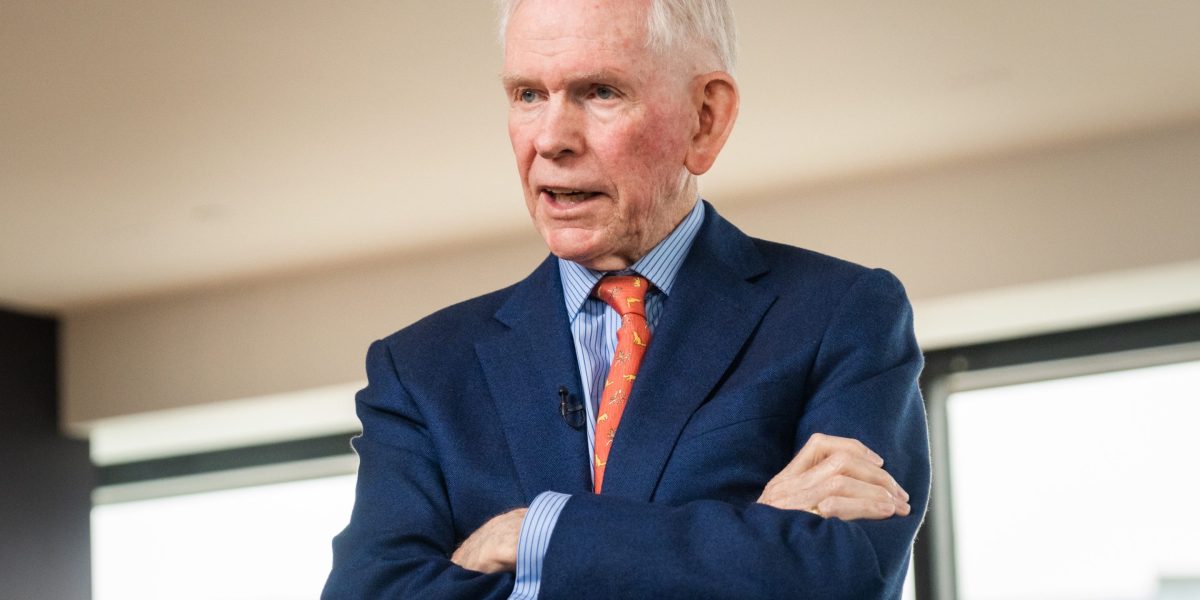
It is perhaps no surprise, then, that he is unimpressed by the (literally) out-of-this-world intentions of SpaceX. "Everyone's lining up to tell you to buy the craziest IPO in the history of man," Grantham told Morningstar's The Long View podcast in an episode released this morning, "In 50 years, they'll be telling and writing stories about SpaceX, and they'll be quoting you paragraphs from the prospectus, and you will be laughing at it." Even the most bullish of investors might be feeling a reality check since SpaceX launched. At the time of writing, SpaceX is down 7% over the past month, hovering at around $150 a share -- only slightly ahead of the $135 it targeted at launch. Wall Street is split on how high SpaceX can fly, though they generally agree it will soar: Morgan Stanley, for example, has reportedly set the price target at $300, while Goldman Sachs's Eric Sheridan and team wrote in a note seen by Fortune that they see it closer to $205. Sentiments among analysts are, generally, positive. J.P. Morgan wrote that its target is $225 , adding it believes Elon Musk's goal of reaching $1 trillion of revenue by 2031 is possible "but requires strong execution across an ambitious timeline." The note authored by Doug Anmuth, Seth Seifman, Sebastiano Petti, and Richard Choe highlighted some concerns, one of them being the fact that there's "only one Elon." They wrote that Musk's "outsized influence and control (82% voting power) is central to SpaceX's culture, vision, and operational strategy, and we believe his leadership has been a defining driver of the company's success. At the same time, that concentration of control raises governance considerations and exposes the company to leadership-transition risk." Grantham said he was baffled by Wall Street banks' recommendations to buy SpaceX for their clients. He added: "In the end, the reality will come out, and this will turn out to be, of course, one of the landmark historical events that I so value in history looking back. It will be amazing, by the way, if it doesn't collapse, because it will need such massive developments on AI that our entire lives are totally different." Even if the justification for a higher price becomes a reality, the world will be a "strange one" and "we'll be lucky not to be bossed around by our automaton friends." This "rather horrific" outlook is less likely than a crash, Grantham adds, "though both ways it will be historically notable." Fortune has contacted SpaceX for comment. "There'll be a lot of people who have to buy it for any index that is Nasdaq-y" Last month, Nasdaq announced it was launching new fast-track rules for older companies to reflect the changing IPO market. "When large companies stay private for a decade or more before going public, indexes that wait months to add them have less than a full picture of the market they track," the index said. Fast-tracking large IPOs helps "indexes better represent all the public companies that matter to the economy and the stock market," it said. This has had a direct impact on SpaceX's performance, insists Grantham: "What that means is there'll be a lot of people who have to buy it for any index that is Nasdaq-y. So there'll be much more demand than there are sellers. "So supply and demand being what it is, it's hard to imagine the price won't go up, and perhaps it will go up a lot."