News & Updates
The latest news and updates from companies in the WLTH portfolio.
Wall Street warms to SpaceX ahead of Nasdaq 100 inclusion
July 7 (Reuters) - SpaceX's (SPCX.O), opens new tab addition to the Nasdaq 100 on Tuesday is expected to unleash billions in passive buying, as brokerages kick off coverage of the $2 trillion-plus rocket and satellite company with broadly bullish views. The company joins the index just 15 days after its stock market debut on June 12 - among the fastest inclusions ever - thanks to the Nasdaq's revised rules for newly listed companies looking to enter widely tracked benchmarks. Its debut in the tech-heavy index is set to create another source of demand for its shares as index funds and exchange-traded funds (ETFs) tied to the Nasdaq 100 (.NDX), opens new tab will need to buy shares to match the benchmark's new composition. Active managers who track the index closely may also adjust their positions. Many retail investors prefer investing in funds to diversify their holdings. Over $587 billion is benchmarked in funds tracking the Nasdaq 100, including Invesco's QQQ (QQQ.O), opens new tab and QQQM (QQQM.O), opens new tab, which will now have to make room for SpaceX. J.P. Morgan estimated last month that SpaceX's addition to the index could draw $4.3 billion in passive inflows. QUIET PERIOD ENDS Investors are awaiting a wave of reports from Wall Street brokerages making their first attempt to value SpaceX as a publicly traded company, applying traditional valuation metrics to a business that's largely been assessed by investors' belief in Musk's long-term bets. The industry-mandated quiet period ends for analysts at banks that underwrote the blockbuster IPO - led by Goldman Sachs, Morgan Stanley, BofA Securities, Citigroup and J.P. Morgan. Both Morgan Stanley and Goldman Sachs started coverage on the stock on Tuesday with their top ratings, with Morgan Stanley dubbing the company "AI's final frontier." "We see the company as well-positioned to scale its differentiated advantages across space, connectivity, and AI," Goldman analysts said, betting each market has the potential to become a multi-trillion-dollar opportunity over a five-year-plus horizon. Brokerages RBC, Bernstein, and Stifel also initiated coverage with their top ratings, betting on the success of Starship, SpaceX's next-generation rocket that is designed to be fully reusable. "The Starship is the flywheel that powers SpaceX's ambitions," RBC analysts said. Earlier this month, Oppenheimer became the first to initiate coverage with an "outperform" rating. INVESTORS BET ON AI CAPABILITIES Investors are betting SpaceX can evolve into a hyperscale AI infrastructure provider in the near term, using cash generated to fund the development of Grok as it takes on OpenAI's GPT models and Anthropic's Claude. They also see significant room for Starlink to expand its dominance in satellite communications, while much of the company's longer-term ambitions depend on the successful development of its next-generation Starship rocket. However, not everyone is bullish on SpaceX. Morningstar analysts pegged the company's valuation at about $780 billion, citing uncertainty around its AI business, including xAI and social media platform X. With a market capitalization of $2.1 trillion, SpaceX is the sixth-largest U.S. company, and CEO Elon Musk the world's first trillionaire. FTSE Russell added the stock to its U.S. indexes last month, with funds such as iShares Russell 1000 ETF (IWB.P), opens new tab already giving investors a piece of the biggest IPO in U.S. history. However, S&P Global (SPGI.N), opens new tab declined to create a similar fast-track process for the benchmark S&P 500 (.SPX), opens new tab in June, and it is expected to take at least a year before SpaceX joins the world's most widely tracked index. SpaceX shares have gained more than 6% since their debut in their short ride marked by post-IPO volatility. Reporting by Purvi Agarwal, Rashika Singh and Akash Sriram in Bengaluru; Editing by Anil D'Silva and Saumyadeb Chakrabarty Our Standards: The Thomson Reuters Trust Principles., opens new tab * Suggested Topics: * U.S. Markets Rashika Singh Thomson Reuters Rashika reports on brokerages and financial markets, alongside technology and corporate developments for Reuters, with a focus on U.S. and global companies. Her coverage spans analyst actions, earnings-driven stock moves, semiconductors, artificial intelligence, aerospace and defense, and high‑growth technology stocks, often through breaking news and market‑moving "hot stock" coverage. Her reporting primarily appears in the Technology, Business, and Markets sections of the Reuters website and wire service, examining how brokerage research, corporate strategy and earnings influence investor sentiment and global competition. She regularly contributes to Reuters' spot and breaking‑news coverage, rather than a named column or standalone newsletter.

Wall Street warms to SpaceX ahead of Nasdaq 100 inclusion
SpaceX to join Nasdaq-100 15 days after debut; among fastest inclusions SpaceX's addition to the Nasdaq 100 on Tuesday is expected to unleash billions in passive buying, as brokerages kick off coverage of the $2 trillion-plus rocket and satellite company with broadly bullish views. The company joins the index just 15 days after its stock market debut on June 12 - among the fastest inclusions ever - thanks to the Nasdaq's revised rules for newly listed companies looking to enter widely tracked benchmarks. Its debut in the tech-heavy index is set to create another source of demand for its shares as index funds and exchange-traded funds (ETFs) tied to the Nasdaq 100 will need to buy shares to match the benchmark's new composition. Active managers who track the index closely may also adjust their positions. Many retail investors prefer investing in funds to diversify their holdings. Over $587 billion is benchmarked in funds tracking the Nasdaq 100, including Invesco's QQQ and QQQM, which will now have to make room for SpaceX. J.P. Morgan estimated last month that SpaceX's addition to the index could draw $4.3 billion in passive inflows. QUIET PERIOD ENDS Investors are awaiting a wave of reports from Wall Street brokerages making their first attempt to value SpaceX as a publicly traded company, applying traditional valuation metrics to a business that's largely been assessed by investors' belief in Musk's long-term bets. The industry-mandated quiet period ends for analysts at banks that underwrote the blockbuster IPO - led by Goldman Sachs, Morgan Stanley, BofA Securities, Citigroup and J.P. Morgan. Both Morgan Stanley and Goldman Sachs started coverage on the stock on Tuesday with their top ratings, with Morgan Stanley dubbing the company "AI's final frontier." "We see the company as well-positioned to scale its differentiated advantages across space, connectivity, and AI," Goldman analysts said, betting each market has the potential to become a multi-trillion-dollar opportunity over a five-year-plus horizon. Brokerages RBC, Bernstein, and Stifel also initiated coverage with their top ratings, betting on the success of Starship, SpaceX's next-generation rocket that is designed to be fully reusable. "The Starship is the flywheel that powers SpaceX's ambitions," RBC analysts said. Earlier this month, Oppenheimer became the first to initiate coverage with an "outperform" rating. INVESTORS BET ON AI CAPABILITIES Investors are betting SpaceX can evolve into a hyperscale AI infrastructure provider in the near term, using cash generated to fund the development of Grok as it takes on OpenAI's GPT models and Anthropic's Claude. They also see significant room for Starlink to expand its dominance in satellite communications, while much of the company's longer-term ambitions depend on the successful development of its next-generation Starship rocket. However, not everyone is bullish on SpaceX. Morningstar analysts pegged the company's valuation at about $780 billion, citing uncertainty around its AI business, including xAI and social media platform X. With a market capitalization of $2.1 trillion, SpaceX is the sixth-largest U.S. company, and CEO Elon Musk the world's first trillionaire. FTSE Russell added the stock to its U.S. indexes last month, with funds such as iShares Russell 1000 ETF already giving investors a piece of the biggest IPO in U.S. history. However, S&P Global declined to create a similar fast-track process for the benchmark S&P 500 in June, and it is expected to take at least a year before SpaceX joins the world's most widely tracked index. SpaceX shares have gained more than 6% since their debut in their short ride marked by post-IPO volatility. (Reporting by Purvi Agarwal, Rashika Singh and Akash Sriram in Bengaluru; Editing by Anil D'Silva and Saumyadeb Chakrabarty)

'Compute lasts forever': SpaceX gets fresh Wall Street coverage
Investing.com -- Several Wall Street banks initiated coverage of Space Exploration Technologies on Tuesday, setting price targets ranging from $190 to $300, with the spread largely reflecting how differently analysts value SpaceX's AI and satellite businesses. Morgan Stanley set the highest bar, starting the stock at Overweight with a $300 target, flanked by an "intentionally wide $75 bear case and $600 bull case." Analysts led by Adam Jonas pitched SpaceX as holding "an 'X of 1' position in space infrastructure," and argued the market is underappreciating the company's terrestrial data-center economics, where it estimates costs run at half the industry average. They also flagged the funding gap behind that growth, projecting SpaceX will need roughly $84 billion a year in outside capital from 2027 through 2034 before the business turns free-cash-flow positive. RBC initiated at Outperform with a $225 target, based on about 15 times its 2029 EBITDA estimate. The broker's thesis centers on compute as a durable moat, writing that "AI models and applications may come and go, but compute lasts forever." RBC named Starship's flight-test cadence as the top near-term catalyst for the stock, alongside the pending Cursor acquisition and the rollout of Starlink's next-generation V3 satellites. Stifel initiated coverage with a Buy rating and a $190 target, the lowest of the four. The firm's thesis is built around launch economics, arguing that "lowest cost to orbit wins everything above it." Stifel credits Falcon 9's reusability with pushing launch costs to roughly $3,000 per kilogram, a level it says no competitor has matched, but applies a lighter multiple to the AI segment specifically, citing execution risk around orbital data centers that remain unproven at commercial scale. Finally, UBS set its target at $210 with a Buy rating, sizing the combined launch, connectivity and AI opportunity at nearly $30 trillion if Starship performs as expected. The bank forecast revenue and EBITDA growing at roughly 70% and 90% annual rates through 2031, with launch costs falling to about $200 per kilogram from roughly $1,000 currently. UBS views the stock as offering investors "a call option" on Elon Musk's plans to make life multiplanetary, while keeping that scenario outside its base case. The fresh coverage comes less than a month after SpaceX's Nasdaq debut. The company priced its IPO at $135 a share on June 12 and raised about $86 billion, the largest offering on record. Shares have traded above that level since, closing Monday at $160.42, though still well below the roughly $225 high the stock reached in its first weeks of trading.

'Compute lasts forever': SpaceX gets fresh Wall Street coverage
Investing.com -- Several Wall Street banks initiated coverage of Space Exploration Technologies on Tuesday, setting price targets ranging from $190 to $300, with the spread largely reflecting how differently analysts value SpaceX's AI and satellite businesses. Morgan Stanley set the highest bar, starting the stock at Overweight with a $300 target, flanked by an "intentionally wide $75 bear case and $600 bull case." Analysts led by Adam Jonas pitched SpaceX as holding "an 'X of 1' position in space infrastructure," and argued the market is underappreciating the company's terrestrial data-center economics, where it estimates costs run at half the industry average. They also flagged the funding gap behind that growth, projecting SpaceX will need roughly $84 billion a year in outside capital from 2027 through 2034 before the business turns free-cash-flow positive. RBC initiated at Outperform with a $225 target, based on about 15 times its 2029 EBITDA estimate. The broker's thesis centers on compute as a durable moat, writing that "AI models and applications may come and go, but compute lasts forever." RBC named Starship's flight-test cadence as the top near-term catalyst for the stock, alongside the pending Cursor acquisition and the rollout of Starlink's next-generation V3 satellites. Stifel initiated coverage with a Buy rating and a $190 target, the lowest of the four. The firm's thesis is built around launch economics, arguing that "lowest cost to orbit wins everything above it." Stifel credits Falcon 9's reusability with pushing launch costs to roughly $3,000 per kilogram, a level it says no competitor has matched, but applies a lighter multiple to the AI segment specifically, citing execution risk around orbital data centers that remain unproven at commercial scale. Finally, UBS set its target at $210 with a Buy rating, sizing the combined launch, connectivity and AI opportunity at nearly $30 trillion if Starship performs as expected. The bank forecast revenue and EBITDA growing at roughly 70% and 90% annual rates through 2031, with launch costs falling to about $200 per kilogram from roughly $1,000 currently. UBS views the stock as offering investors "a call option" on Elon Musk's plans to make life multiplanetary, while keeping that scenario outside its base case. The fresh coverage comes less than a month after SpaceX's Nasdaq debut. The company priced its IPO at $135 a share on June 12 and raised about $86 billion, the largest offering on record. Shares have traded above that level since, closing Monday at $160.42, though still well below the roughly $225 high the stock reached in its first weeks of trading.
'Compute lasts forever': SpaceX gets fresh Wall Street coverage
Investing.com -- Several Wall Street banks initiated coverage of Space Exploration Technologies on Tuesday, setting price targets ranging from $190 to $300, with the spread largely reflecting how differently analysts value SpaceX's AI and satellite businesses. Morgan Stanley set the highest bar, starting the stock at Overweight with a $300 target, flanked by an "intentionally wide $75 bear case and $600 bull case." Analysts led by Adam Jonas pitched SpaceX as holding "an 'X of 1' position in space infrastructure," and argued the market is underappreciating the company's terrestrial data-center economics, where it estimates costs run at half the industry average. They also flagged the funding gap behind that growth, projecting SpaceX will need roughly $84 billion a year in outside capital from 2027 through 2034 before the business turns free-cash-flow positive. RBC initiated at Outperform with a $225 target, based on about 15 times its 2029 EBITDA estimate. The broker's thesis centers on compute as a durable moat, writing that "AI models and applications may come and go, but compute lasts forever." RBC named Starship's flight-test cadence as the top near-term catalyst for the stock, alongside the pending Cursor acquisition and the rollout of Starlink's next-generation V3 satellites. Stifel initiated coverage with a Buy rating and a $190 target, the lowest of the four. The firm's thesis is built around launch economics, arguing that "lowest cost to orbit wins everything above it." Stifel credits Falcon 9's reusability with pushing launch costs to roughly $3,000 per kilogram, a level it says no competitor has matched, but applies a lighter multiple to the AI segment specifically, citing execution risk around orbital data centers that remain unproven at commercial scale. Finally, UBS set its target at $210 with a Buy rating, sizing the combined launch, connectivity and AI opportunity at nearly $30 trillion if Starship performs as expected. The bank forecast revenue and EBITDA growing at roughly 70% and 90% annual rates through 2031, with launch costs falling to about $200 per kilogram from roughly $1,000 currently. UBS views the stock as offering investors "a call option" on Elon Musk's plans to make life multiplanetary, while keeping that scenario outside its base case. The fresh coverage comes less than a month after SpaceX's Nasdaq debut. The company priced its IPO at $135 a share on June 12 and raised about $86 billion, the largest offering on record. Shares have traded above that level since, closing Monday at $160.42, though still well below the roughly $225 high the stock reached in its first weeks of trading.
SPCX Stock Slides Ahead Of Nasdaq-100 Debut: Billionaire Value Investor Says Its 'Third-Rate' AI Is Getting 'Kicked Around' By Anthropic, OpenAI
SpaceX will join the Nasdaq-100 on Tuesday, creating automatic demand from ETFs and mutual funds tied to the index, including QQQ. * Its initial index weight is expected to be limited to about 1% to 1.3% because less than 5% of shares were sold publicly. * Insider lockups could create future selling pressure, with some restrictions expected to expire 70 to 135 days after the June 12 IPO. * Jeremy Grantham criticized SpaceX's valuation, calling it the "craziest IPO in the history of man" and saying the company is "rolling in red ink." SpaceX entered its Nasdaq-100 debut week under pressure, with passive index demand set to kick in even as Jeremy Grantham questioned whether the company's AI-driven valuation can withstand scrutiny. Add Asianet Newsable as a Preferred Source SPCX stock fell 1% on Monday, extending a pullback after losing another 1% over the past week. Shares were also down 2% overnight late Monday. SpaceX Joins Nasdaq-100 SpaceX is set to enter the Nasdaq-100 at the start of trading on Tuesday, triggering automatic demand from index-linked mutual funds and ETFs, including Invesco's QQQ. The company was fast-tracked into the benchmark under rules designed to include newly public megacap companies sooner. Still, its initial index weight is expected to be limited by its small public float. SpaceX sold less than 5% of its shares in last month's public offering, while employee and insider lockups restrict additional supply. Since Nasdaq adjusts weights based on free float, SpaceX is expected to enter with an index weight of about 1% to 1.3%, far below what its $2 trillion market value would otherwise imply. The Nasdaq-100 debut also comes with a future supply risk. Some insider lockups are expected to expire in tranches between 70 and 135 days after SpaceX's June 12 IPO, while CEO Elon Musk's shares and certain large-holder restrictions are expected to remain locked for about a year. Jeremy Grantham Slams SPCX Valuation The index debut comes as Grantham, investment strategist at GMO, criticized SpaceX's valuation. Grantham is a legendary value investor known for repeatedly warning about major market bubbles, from Japan in 1989 and the dot-com peak in 2000 to the 2008 housing crisis and today's AI-driven valuations. In a Morningstar interview, Grantham called SpaceX the "craziest IPO in the history of man," arguing that investors may look back on the prospectus decades from now as a symbol of market excess. He said the company is "rolling in red ink" despite its towering valuation, and argued that much of the long-term case rests on aggressive AI assumptions. Grantham said 90% of the projection depends on SpaceX's "currently third-rate AI offering," which he said is being "kicked around the block" by Anthropic and OpenAI. xAI, acquired by SpaceX in an all-stock deal in February 2026 and now being rebranded as SpaceXAI, gained further momentum in June with SpaceX's $60 billion all-stock acquisition of Cursor parent Anysphere. The deal is expected to bolster Grok by combining Cursor's coding intelligence and developer data with xAI's Colossus supercluster. The AI push is unfolding as rival AI leaders Anthropic and OpenAI prepare for mega public listings, with private valuations of about $965 billion and $852 billion, respectively. Grantham acknowledged that index inclusion could lift the stock in the short run as forced buying may outstrip available supply: "So supply and demand being what it is, it's hard to imagine the price won't go up, and perhaps it will go up a lot." But he warned that the longer-term risk remains severe, saying he would "bet at least 90%" on a crash rather than SpaceX ultimately justifying its current valuation. Grantham also questioned SpaceX's broader AI and space assumptions, saying some productivity claims show "no idea what they're talking about" and that much of the space-travel ambition in the prospectus would be viewed by serious physicists as "utterly inconceivable." How Do Retail Traders Feel About SPCX? On Stocktwits, retail sentiment for SPCX flipped to 'bearish' levels over the past week from 'extremely bullish' levels at the time of listing amid a massive 26,150% surge in message volumes over the past month. One user said, "$SPCX The 'Forced' Buying begins. Puts will go to ZERO." View this Stocktwits post Another user said, "$SPCX only about 10% of the inclusion has actually happened. The largest bulk will occur tomorrow around 3 PM." View this Stocktwits post For updates and corrections, email newsroom[at]stocktwits[dot]com.<
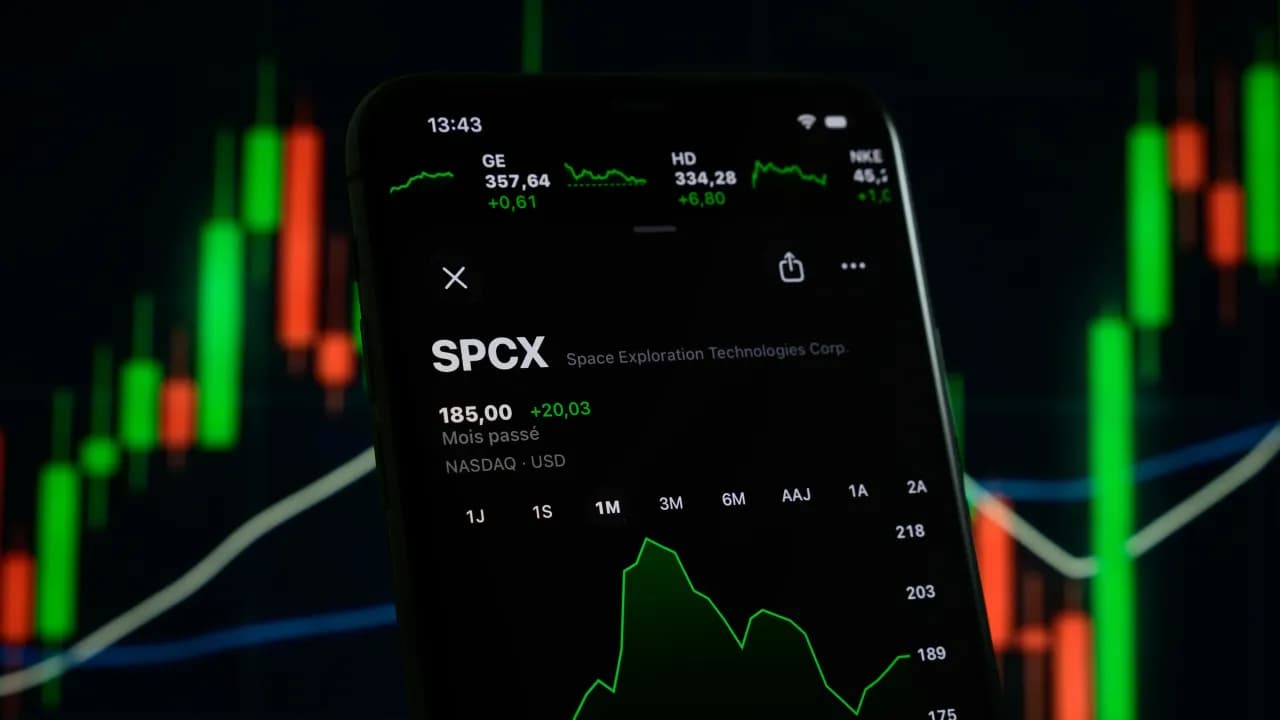
SpaceXAI Announces Name Change Following Merger with SpaceX
The merged entity plans to deploy AI compute satellites as space data centers starting 2028, aiming to expand AI infrastructure The AI company xAI, led by Tesla CEO Elon Musk, has changed its name to SpaceXAI. xAI announced the name change on the social media platform X (formerly Twitter) on the 6th (local time), stating, "We are now SpaceXAI." Musk's space company SpaceX, which recently entered Nasdaq through the largest-ever initial public offering (IPO), merged with xAI in February to integrate its space, AI, and social media businesses. The company plans to integrate AI into its space business in the long term, aiming to expand its AI infrastructure business, including space data centers. Although xAI is currently running losses, SpaceX has assessed that the AI business has significant growth potential. The company stated, "We plan to deploy AI compute satellites serving as space data centers starting in 2028."
Anti-Musk retail investors scramble to keep SpaceX out of their portfolios
Christopher Bejnar has spent the last couple of months combing through the fine print of exchange-traded funds, emailing financial advisers and moving money into European stocks - all to keep SpaceX out of his $1 million portfolio. As Elon Musk's newest public company heads into Nasdaq's stock indexes this week, the 46-year-old software engineer in Philadelphia is making sure that none of his money is backing the Tesla and SpaceX founder who recently became the world's first trillionaire. To stay away, Bejnar said he's moved $50,000 into European index funds and bought shares of Rocket Lab Corp, a SpaceX rival. "I'm on the anti-Elon side," Bejnar said, pointing to Musk's inflammatory political activism, and his extensive borrowing to support what Bejnar views as unproven technology at SpaceX. "Even if I'm only exposed by a tenth of a percent, I still wouldn't want that going to him." Across Reddit, TikTok and online forums, investors like Bejnar have been swapping advice on how to avoid SpaceX as it enters flagship benchmarks like Russell 1000 Index and CRSP U.S. Total Market Index, even if that means abandoning familiar ETFs or paying more for customized portfolios. They are all part of the financial and personal maneuvering provoked by the rise of Musk, one of the most polarizing figures on Wall Street, if not the world. The shares of Musk's first public company, Tesla, have been sent into the stratosphere by Musk's loyal fan base of retail investors. That same crowd allowed SpaceX to make its spectacular debut on the stock market in June as the largest initial public offering in history. Australia's richest person Gina Rinehart described Musk as a "truly exceptional person," and in June said she made a "significant investment" in SpaceX from her company Hancock Prospecting. Betting against the staying power of these believers has been a dangerous endeavor in the past, as many Tesla short sellers have learned. An investor who put $10,000 into Tesla would have roughly $3.5 million today, according to Bloomberg calculations. That success, though, has led to some vehement critics. Musk's role in President Donald Trump's second administration and his strident participation in the culture wars have prompted protests, boycotts and a cottage industry of anti-Musk bumper stickers, turning opposition to the trillionaire into a movement that is spilling over into investor portfolios. The strong personal feelings are compounded by the significant financial and occasional regulatory risks attached to Musk's companies. SpaceX and Musk's other public company, Tesla, both sit at valuations that dwarf peers and worry analysts. SpaceX surged right after it went public, but then fell as much as 24%, underscoring concerns that expectations had run ahead of fundamentals. SpaceX and Musk didn't respond to requests for comment. The problem for Musk skeptics is that his stocks are so big they are becoming default holdings in most standard portfolios. Tesla already ranks among the largest companies in the S&P 500 and Nasdaq 100, which dictate the holdings of the broad-market ETFs that sit at the core of many retirement accounts. The electric carmaker accounts for 2% of the popular $980-billion Vanguard S&P 500 ETF (VOO) and more than 3% of the $490-billion Invesco QQQ Trust Series 1. SpaceX's entry into the public markets raises the stakes further. With a roughly $2.1 trillion market capitalization - 1.4 times that of Tesla - the company vaulted into the top tier of U.S. stocks almost overnight. After trading closes on Monday, SpaceX will be added to the Nasdaq 100 index following its previous entrance into the FTSE Russell and MSCI Inc. indexes. The moves are triggering billions of dollars of mechanical buying and put the stock into millions of passive investment portfolios. At a time when the shares are under pressure, they are likely to be buoyed by at least $5.4 billion of buying from index-tracking funds. The unusually rapid addition of SpaceX to the indexes has sparked criticism because several providers made exceptions or revised their methodologies to accommodate the company despite its relatively small public float. That float means that SpaceX's weighting in major indexes will initially be relatively small, making up less than 1% in most indexes - well below Tesla. Still, financial advisers say they've fielded questions from a wide array of clients who want no part of a company controlled by Musk. "I don't think we'd be having this conversation if it wasn't him," said Emily Green, head of wealth management at Ellevest, who likened the current anti-Musk sentiment to the public fallout Meta Platforms faced after a series of scandals following the 2016 election. "There's a number of people that didn't want to own Tesla over the past couple of years" and they're asking the same with SpaceX. Direct indexing is the solution Ellevest offers clients - buying a basket of individual stocks that mirror an index, making it possible to exclude shares of companies an investor doesn't want. Green said restricting just one or two stocks in a broad portfolio shouldn't affect the overall performance due to returns from other holdings, and her clients who sought to avoid Tesla were at peace with the stock's rise. "How we do it is we buy about 300 individual positions that span U.S. large cap, mid cap, small cap and developed-market international stocks," Green said. "People can customize it in a deep way and it can be a very personal thing." Bejnar said he wasn't as concerned about having money in Tesla, but SpaceX changed the balance for him because of the way the company is borrowing and banking on Musk's big but untested vision. "It almost to me feels like he's opening up credit cards to pay off other credit cards," he said. "What I didn't anticipate is that these index funds would change the rules to actually help him out." In recent weeks, Reddit posts about dodging SpaceX exposure have sprung up in subreddit groups like r/investing, r/ETFs and r/EnoughMuskSpam, generating reams of heated threads like one titled, "How to avoid investing in Elon Musk Companies." One of the posters was David Greer, a 30-year-old data analyst, who said he moved his $650,000 in retirement savings out of U.S. index funds into international ones in April. Greer has been disillusioned with the second Trump administration and views Musk as "Trump of the tech world." With Trump threatening to exit the North Atlantic Treaty Organization and exerting his "America First" foreign policy, Greer has lost confidence that the U.S. will continue having the same strength, and stock returns, as before. "I don't think it's necessarily SpaceX exclusively that I'm trying to avoid," said Greer, who lives in Davis, California. "But when it became clear that SpaceX was going to the market and that I would be invested, it felt like the straw that broke the camel's back." Omar Qureshi, a financial adviser, has stayed away from buying SpaceX shares himself because he feels Musk is "an evil human being." But as managing director at Hightower Signature Wealth, he's helped clients participate in the IPO. To him, the debate goes beyond Musk and highlights the consequences of the passive investing boom that has transformed Wall Street over the past two decades. As more retirement savings automatically flow into passively managed funds, index inclusion has become increasingly valuable, Qureshi said. The biggest companies receive a disproportionate share of new money, helping support their stock prices and making it harder for active managers to outperform. "If you're one of the big boys, you're guaranteed to get flow," said Qureshi. "It becomes a self-fulfilling prophecy. The inflows drive performance, which drives more money into the indexes." Still, neither Greer nor Bejnar wants to turn to actively managed funds. Greer prefers doing his own research and is still fond of the "set it and forget it" strategy with index funds. Bejnar, meantime, discussed options with his financial advisor before putting money from his managed brokerage account into a subset of ETFs that won't contain SpaceX. His advisor cautioned that if the stock does well and gets added to every benchmark, it'll become harder to avoid. Bejnar believes it won't be added to the S&P 500 any time soon given the index provider's 12-month seasoning period and requirements for profitability and public float. SpaceX's $25 billion debt sale in late June reinforced his conviction that it's helping prop up debt associated with Musk's broader business empire. He's been encouraging friends and others on Reddit to join the anti-Musk exodus. And what if SpaceX shares climb in the long run? "I would not feel bad about never buying SpaceX, no matter how well it does," he said. (With assistance from Henry Ren.) Copyright 2026 Tribune Content Agency. All Rights Reserved. This story was originally published July 6, 2026 at 7:06 PM.
Anti-Musk retail investors scramble to keep SpaceX out of their portfolios
Christopher Bejnar has spent the last couple of months combing through the fine print of exchange-traded funds, emailing financial advisers and moving money into European stocks - all to keep SpaceX out of his $1 million portfolio. As Elon Musk's newest public company heads into Nasdaq's stock indexes this week, the 46-year-old software engineer in Philadelphia is making sure that none of his money is backing the Tesla and SpaceX founder who recently became the world's first trillionaire. To stay away, Bejnar said he's moved $50,000 into European index funds and bought shares of Rocket Lab Corp, a SpaceX rival. "I'm on the anti-Elon side," Bejnar said, pointing to Musk's inflammatory political activism, and his extensive borrowing to support what Bejnar views as unproven technology at SpaceX. "Even if I'm only exposed by a tenth of a percent, I still wouldn't want that going to him." Across Reddit, TikTok and online forums, investors like Bejnar have been swapping advice on how to avoid SpaceX as it enters flagship benchmarks like Russell 1000 Index and CRSP U.S. Total Market Index, even if that means abandoning familiar ETFs or paying more for customized portfolios. They are all part of the financial and personal maneuvering provoked by the rise of Musk, one of the most polarizing figures on Wall Street, if not the world. The shares of Musk's first public company, Tesla, have been sent into the stratosphere by Musk's loyal fan base of retail investors. That same crowd allowed SpaceX to make its spectacular debut on the stock market in June as the largest initial public offering in history. Australia's richest person Gina Rinehart described Musk as a "truly exceptional person," and in June said she made a "significant investment" in SpaceX from her company Hancock Prospecting. Betting against the staying power of these believers has been a dangerous endeavor in the past, as many Tesla short sellers have learned. An investor who put $10,000 into Tesla would have roughly $3.5 million today, according to Bloomberg calculations. That success, though, has led to some vehement critics. Musk's role in President Donald Trump's second administration and his strident participation in the culture wars have prompted protests, boycotts and a cottage industry of anti-Musk bumper stickers, turning opposition to the trillionaire into a movement that is spilling over into investor portfolios. The strong personal feelings are compounded by the significant financial and occasional regulatory risks attached to Musk's companies. SpaceX and Musk's other public company, Tesla, both sit at valuations that dwarf peers and worry analysts. SpaceX surged right after it went public, but then fell as much as 24%, underscoring concerns that expectations had run ahead of fundamentals. SpaceX and Musk didn't respond to requests for comment. The problem for Musk skeptics is that his stocks are so big they are becoming default holdings in most standard portfolios. Tesla already ranks among the largest companies in the S&P 500 and Nasdaq 100, which dictate the holdings of the broad-market ETFs that sit at the core of many retirement accounts. The electric carmaker accounts for 2% of the popular $980-billion Vanguard S&P 500 ETF (VOO) and more than 3% of the $490-billion Invesco QQQ Trust Series 1. SpaceX's entry into the public markets raises the stakes further. With a roughly $2.1 trillion market capitalization - 1.4 times that of Tesla - the company vaulted into the top tier of U.S. stocks almost overnight. After trading closes on Monday, SpaceX will be added to the Nasdaq 100 index following its previous entrance into the FTSE Russell and MSCI Inc. indexes. The moves are triggering billions of dollars of mechanical buying and put the stock into millions of passive investment portfolios. At a time when the shares are under pressure, they are likely to be buoyed by at least $5.4 billion of buying from index-tracking funds. The unusually rapid addition of SpaceX to the indexes has sparked criticism because several providers made exceptions or revised their methodologies to accommodate the company despite its relatively small public float. That float means that SpaceX's weighting in major indexes will initially be relatively small, making up less than 1% in most indexes - well below Tesla. Still, financial advisers say they've fielded questions from a wide array of clients who want no part of a company controlled by Musk. "I don't think we'd be having this conversation if it wasn't him," said Emily Green, head of wealth management at Ellevest, who likened the current anti-Musk sentiment to the public fallout Meta Platforms faced after a series of scandals following the 2016 election. "There's a number of people that didn't want to own Tesla over the past couple of years" and they're asking the same with SpaceX. Direct indexing is the solution Ellevest offers clients - buying a basket of individual stocks that mirror an index, making it possible to exclude shares of companies an investor doesn't want. Green said restricting just one or two stocks in a broad portfolio shouldn't affect the overall performance due to returns from other holdings, and her clients who sought to avoid Tesla were at peace with the stock's rise. "How we do it is we buy about 300 individual positions that span U.S. large cap, mid cap, small cap and developed-market international stocks," Green said. "People can customize it in a deep way and it can be a very personal thing." Bejnar said he wasn't as concerned about having money in Tesla, but SpaceX changed the balance for him because of the way the company is borrowing and banking on Musk's big but untested vision. "It almost to me feels like he's opening up credit cards to pay off other credit cards," he said. "What I didn't anticipate is that these index funds would change the rules to actually help him out." In recent weeks, Reddit posts about dodging SpaceX exposure have sprung up in subreddit groups like r/investing, r/ETFs and r/EnoughMuskSpam, generating reams of heated threads like one titled, "How to avoid investing in Elon Musk Companies." One of the posters was David Greer, a 30-year-old data analyst, who said he moved his $650,000 in retirement savings out of U.S. index funds into international ones in April. Greer has been disillusioned with the second Trump administration and views Musk as "Trump of the tech world." With Trump threatening to exit the North Atlantic Treaty Organization and exerting his "America First" foreign policy, Greer has lost confidence that the U.S. will continue having the same strength, and stock returns, as before. "I don't think it's necessarily SpaceX exclusively that I'm trying to avoid," said Greer, who lives in Davis, California. "But when it became clear that SpaceX was going to the market and that I would be invested, it felt like the straw that broke the camel's back." Omar Qureshi, a financial adviser, has stayed away from buying SpaceX shares himself because he feels Musk is "an evil human being." But as managing director at Hightower Signature Wealth, he's helped clients participate in the IPO. To him, the debate goes beyond Musk and highlights the consequences of the passive investing boom that has transformed Wall Street over the past two decades. As more retirement savings automatically flow into passively managed funds, index inclusion has become increasingly valuable, Qureshi said. The biggest companies receive a disproportionate share of new money, helping support their stock prices and making it harder for active managers to outperform. "If you're one of the big boys, you're guaranteed to get flow," said Qureshi. "It becomes a self-fulfilling prophecy. The inflows drive performance, which drives more money into the indexes." Still, neither Greer nor Bejnar wants to turn to actively managed funds. Greer prefers doing his own research and is still fond of the "set it and forget it" strategy with index funds. Bejnar, meantime, discussed options with his financial advisor before putting money from his managed brokerage account into a subset of ETFs that won't contain SpaceX. His advisor cautioned that if the stock does well and gets added to every benchmark, it'll become harder to avoid. Bejnar believes it won't be added to the S&P 500 any time soon given the index provider's 12-month seasoning period and requirements for profitability and public float. SpaceX's $25 billion debt sale in late June reinforced his conviction that it's helping prop up debt associated with Musk's broader business empire. He's been encouraging friends and others on Reddit to join the anti-Musk exodus. And what if SpaceX shares climb in the long run? "I would not feel bad about never buying SpaceX, no matter how well it does," he said. (With assistance from Henry Ren.) Copyright 2026 Tribune Content Agency. All Rights Reserved. This story was originally published July 6, 2026 at 6:06 PM.
Anti-Musk retail investors scramble to keep SpaceX out of their portfolios
Christopher Bejnar has spent the last couple of months combing through the fine print of exchange-traded funds, emailing financial advisers and moving money into European stocks - all to keep SpaceX out of his $1 million portfolio. As Elon Musk's newest public company heads into Nasdaq's stock indexes this week, the 46-year-old software engineer in Philadelphia is making sure that none of his money is backing the Tesla and SpaceX founder who recently became the world's first trillionaire. To stay away, Bejnar said he's moved $50,000 into European index funds and bought shares of Rocket Lab Corp, a SpaceX rival. "I'm on the anti-Elon side," Bejnar said, pointing to Musk's inflammatory political activism, and his extensive borrowing to support what Bejnar views as unproven technology at SpaceX. "Even if I'm only exposed by a tenth of a percent, I still wouldn't want that going to him." Across Reddit, TikTok and online forums, investors like Bejnar have been swapping advice on how to avoid SpaceX as it enters flagship benchmarks like Russell 1000 Index and CRSP U.S. Total Market Index, even if that means abandoning familiar ETFs or paying more for customized portfolios. They are all part of the financial and personal maneuvering provoked by the rise of Musk, one of the most polarizing figures on Wall Street, if not the world. The shares of Musk's first public company, Tesla, have been sent into the stratosphere by Musk's loyal fan base of retail investors. That same crowd allowed SpaceX to make its spectacular debut on the stock market in June as the largest initial public offering in history. Australia's richest person Gina Rinehart described Musk as a "truly exceptional person," and in June said she made a "significant investment" in SpaceX from her company Hancock Prospecting. Betting against the staying power of these believers has been a dangerous endeavor in the past, as many Tesla short sellers have learned. An investor who put $10,000 into Tesla would have roughly $3.5 million today, according to Bloomberg calculations. That success, though, has led to some vehement critics. Musk's role in President Donald Trump's second administration and his strident participation in the culture wars have prompted protests, boycotts and a cottage industry of anti-Musk bumper stickers, turning opposition to the trillionaire into a movement that is spilling over into investor portfolios. The strong personal feelings are compounded by the significant financial and occasional regulatory risks attached to Musk's companies. SpaceX and Musk's other public company, Tesla, both sit at valuations that dwarf peers and worry analysts. SpaceX surged right after it went public, but then fell as much as 24%, underscoring concerns that expectations had run ahead of fundamentals. SpaceX and Musk didn't respond to requests for comment. The problem for Musk skeptics is that his stocks are so big they are becoming default holdings in most standard portfolios. Tesla already ranks among the largest companies in the S&P 500 and Nasdaq 100, which dictate the holdings of the broad-market ETFs that sit at the core of many retirement accounts. The electric carmaker accounts for 2% of the popular $980-billion Vanguard S&P 500 ETF (VOO) and more than 3% of the $490-billion Invesco QQQ Trust Series 1. SpaceX's entry into the public markets raises the stakes further. With a roughly $2.1 trillion market capitalization - 1.4 times that of Tesla - the company vaulted into the top tier of U.S. stocks almost overnight. After trading closes on Monday, SpaceX will be added to the Nasdaq 100 index following its previous entrance into the FTSE Russell and MSCI Inc. indexes. The moves are triggering billions of dollars of mechanical buying and put the stock into millions of passive investment portfolios. At a time when the shares are under pressure, they are likely to be buoyed by at least $5.4 billion of buying from index-tracking funds. The unusually rapid addition of SpaceX to the indexes has sparked criticism because several providers made exceptions or revised their methodologies to accommodate the company despite its relatively small public float. That float means that SpaceX's weighting in major indexes will initially be relatively small, making up less than 1% in most indexes - well below Tesla. Still, financial advisers say they've fielded questions from a wide array of clients who want no part of a company controlled by Musk. "I don't think we'd be having this conversation if it wasn't him," said Emily Green, head of wealth management at Ellevest, who likened the current anti-Musk sentiment to the public fallout Meta Platforms faced after a series of scandals following the 2016 election. "There's a number of people that didn't want to own Tesla over the past couple of years" and they're asking the same with SpaceX. Direct indexing is the solution Ellevest offers clients - buying a basket of individual stocks that mirror an index, making it possible to exclude shares of companies an investor doesn't want. Green said restricting just one or two stocks in a broad portfolio shouldn't affect the overall performance due to returns from other holdings, and her clients who sought to avoid Tesla were at peace with the stock's rise. "How we do it is we buy about 300 individual positions that span U.S. large cap, mid cap, small cap and developed-market international stocks," Green said. "People can customize it in a deep way and it can be a very personal thing." Bejnar said he wasn't as concerned about having money in Tesla, but SpaceX changed the balance for him because of the way the company is borrowing and banking on Musk's big but untested vision. "It almost to me feels like he's opening up credit cards to pay off other credit cards," he said. "What I didn't anticipate is that these index funds would change the rules to actually help him out." In recent weeks, Reddit posts about dodging SpaceX exposure have sprung up in subreddit groups like r/investing, r/ETFs and r/EnoughMuskSpam, generating reams of heated threads like one titled, "How to avoid investing in Elon Musk Companies." One of the posters was David Greer, a 30-year-old data analyst, who said he moved his $650,000 in retirement savings out of U.S. index funds into international ones in April. Greer has been disillusioned with the second Trump administration and views Musk as "Trump of the tech world." With Trump threatening to exit the North Atlantic Treaty Organization and exerting his "America First" foreign policy, Greer has lost confidence that the U.S. will continue having the same strength, and stock returns, as before. "I don't think it's necessarily SpaceX exclusively that I'm trying to avoid," said Greer, who lives in Davis, California. "But when it became clear that SpaceX was going to the market and that I would be invested, it felt like the straw that broke the camel's back." Omar Qureshi, a financial adviser, has stayed away from buying SpaceX shares himself because he feels Musk is "an evil human being." But as managing director at Hightower Signature Wealth, he's helped clients participate in the IPO. To him, the debate goes beyond Musk and highlights the consequences of the passive investing boom that has transformed Wall Street over the past two decades. As more retirement savings automatically flow into passively managed funds, index inclusion has become increasingly valuable, Qureshi said. The biggest companies receive a disproportionate share of new money, helping support their stock prices and making it harder for active managers to outperform. "If you're one of the big boys, you're guaranteed to get flow," said Qureshi. "It becomes a self-fulfilling prophecy. The inflows drive performance, which drives more money into the indexes." Still, neither Greer nor Bejnar wants to turn to actively managed funds. Greer prefers doing his own research and is still fond of the "set it and forget it" strategy with index funds. Bejnar, meantime, discussed options with his financial advisor before putting money from his managed brokerage account into a subset of ETFs that won't contain SpaceX. His advisor cautioned that if the stock does well and gets added to every benchmark, it'll become harder to avoid. Bejnar believes it won't be added to the S&P 500 any time soon given the index provider's 12-month seasoning period and requirements for profitability and public float. SpaceX's $25 billion debt sale in late June reinforced his conviction that it's helping prop up debt associated with Musk's broader business empire. He's been encouraging friends and others on Reddit to join the anti-Musk exodus. And what if SpaceX shares climb in the long run? "I would not feel bad about never buying SpaceX, no matter how well it does," he said. (With assistance from Henry Ren.) Copyright 2026 Tribune Content Agency. All Rights Reserved. This story was originally published July 6, 2026 at 9:06 PM.
Anti-Musk retail investors scramble to keep SpaceX out of their portfolios
By clicking submit, I authorize Arcamax and its affiliates to: (1) use, sell, and share my information for marketing purposes, including cross-context behavioral advertising, as described in our Privacy Policy , (2) add to information that I provide with other information like interests inferred from web page views, or data lawfully obtained from data brokers, such as past purchase or location data, or publicly available data, (3) contact me or enable others to contact me by email or other means with offers for different types of goods and services, and (4) retain my information while I am engaging with marketing messages that I receive and for a reasonable amount of time thereafter. I understand I can opt out at any time through an email that I receive, or by clicking here Christopher Bejnar has spent the last couple of months combing through the fine print of exchange-traded funds, emailing financial advisers and moving money into European stocks -- all to keep SpaceX out of his $1 million portfolio. As Elon Musk's newest public company heads into Nasdaq's stock indexes this week, the 46-year-old software engineer in Philadelphia is making sure that none of his money is backing the Tesla and SpaceX founder who recently became the world's first trillionaire. To stay away, Bejnar said he's moved $50,000 into European index funds and bought shares of Rocket Lab Corp, a SpaceX rival. "I'm on the anti-Elon side," Bejnar said, pointing to Musk's inflammatory political activism, and his extensive borrowing to support what Bejnar views as unproven technology at SpaceX. "Even if I'm only exposed by a tenth of a percent, I still wouldn't want that going to him." Across Reddit, TikTok and online forums, investors like Bejnar have been swapping advice on how to avoid SpaceX as it enters flagship benchmarks like Russell 1000 Index and CRSP U.S. Total Market Index, even if that means abandoning familiar ETFs or paying more for customized portfolios. They are all part of the financial and personal maneuvering provoked by the rise of Musk, one of the most polarizing figures on Wall Street, if not the world. The shares of Musk's first public company, Tesla, have been sent into the stratosphere by Musk's loyal fan base of retail investors. That same crowd allowed SpaceX to make its spectacular debut on the stock market in June as the largest initial public offering in history. Australia's richest person Gina Rinehart described Musk as a "truly exceptional person," and in June said she made a "significant investment" in SpaceX from her company Hancock Prospecting. Betting against the staying power of these believers has been a dangerous endeavor in the past, as many Tesla short sellers have learned. An investor who put $10,000 into Tesla would have roughly $3.5 million today, according to Bloomberg calculations. That success, though, has led to some vehement critics. Musk's role in President Donald Trump's second administration and his strident participation in the culture wars have prompted protests, boycotts and a cottage industry of anti-Musk bumper stickers, turning opposition to the trillionaire into a movement that is spilling over into investor portfolios. The strong personal feelings are compounded by the significant financial and occasional regulatory risks attached to Musk's companies. SpaceX and Musk's other public company, Tesla, both sit at valuations that dwarf peers and worry analysts. SpaceX surged right after it went public, but then fell as much as 24%, underscoring concerns that expectations had run ahead of fundamentals. SpaceX and Musk didn't respond to requests for comment. The problem for Musk skeptics is that his stocks are so big they are becoming default holdings in most standard portfolios. Tesla already ranks among the largest companies in the S&P 500 and Nasdaq 100, which dictate the holdings of the broad-market ETFs that sit at the core of many retirement accounts. The electric carmaker accounts for 2% of the popular $980-billion Vanguard S&P 500 ETF (VOO) and more than 3% of the $490-billion Invesco QQQ Trust Series 1. SpaceX's entry into the public markets raises the stakes further. With a roughly $2.1 trillion market capitalization -- 1.4 times that of Tesla -- the company vaulted into the top tier of U.S. stocks almost overnight. After trading closes on Monday, SpaceX will be added to the Nasdaq 100 index following its previous entrance into the FTSE Russell and MSCI Inc. indexes. The moves are triggering billions of dollars of mechanical buying and put the stock into millions of passive investment portfolios. At a time when the shares are under pressure, they are likely to be buoyed by at least $5.4 billion of buying from index-tracking funds. The unusually rapid addition of SpaceX to the indexes has sparked criticism because several providers made exceptions or revised their methodologies to accommodate the company despite its relatively small public float. That float means that SpaceX's weighting in major indexes will initially be relatively small, making up less than 1% in most indexes -- well below Tesla. Still, financial advisers say they've fielded questions from a wide array of clients who want no part of a company controlled by Musk. "I don't think we'd be having this conversation if it wasn't him," said Emily Green, head of wealth management at Ellevest, who likened the current anti-Musk sentiment to the public fallout Meta Platforms faced after a series of scandals following the 2016 election. "There's a number of people that didn't want to own Tesla over the past couple of years" and they're asking the same with SpaceX. Direct indexing is the solution Ellevest offers clients -- buying a basket of individual stocks that mirror an index, making it possible to exclude shares of companies an investor doesn't want. Green said restricting just one or two stocks in a broad portfolio shouldn't affect the overall performance due to returns from other holdings, and her clients who sought to avoid Tesla were at peace with the stock's rise. "How we do it is we buy about 300 individual positions that span U.S. large cap, mid cap, small cap and developed-market international stocks," Green said. "People can customize it in a deep way and it can be a very personal thing." Bejnar said he wasn't as concerned about having money in Tesla, but SpaceX changed the balance for him because of the way the company is borrowing and banking on Musk's big but untested vision. "It almost to me feels like he's opening up credit cards to pay off other credit cards," he said. "What I didn't anticipate is that these index funds would change the rules to actually help him out." In recent weeks, Reddit posts about dodging SpaceX exposure have sprung up in subreddit groups like r/investing, r/ETFs and r/EnoughMuskSpam, generating reams of heated threads like one titled, "How to avoid investing in Elon Musk Companies." One of the posters was David Greer, a 30-year-old data analyst, who said he moved his $650,000 in retirement savings out of U.S. index funds into international ones in April. Greer has been disillusioned with the second Trump administration and views Musk as "Trump of the tech world." With Trump threatening to exit the North Atlantic Treaty Organization and exerting his "America First" foreign policy, Greer has lost confidence that the U.S. will continue having the same strength, and stock returns, as before. "I don't think it's necessarily SpaceX exclusively that I'm trying to avoid," said Greer, who lives in Davis, California. "But when it became clear that SpaceX was going to the market and that I would be invested, it felt like the straw that broke the camel's back." Omar Qureshi, a financial adviser, has stayed away from buying SpaceX shares himself because he feels Musk is "an evil human being." But as managing director at Hightower Signature Wealth, he's helped clients participate in the IPO. To him, the debate goes beyond Musk and highlights the consequences of the passive investing boom that has transformed Wall Street over the past two decades. As more retirement savings automatically flow into passively managed funds, index inclusion has become increasingly valuable, Qureshi said. The biggest companies receive a disproportionate share of new money, helping support their stock prices and making it harder for active managers to outperform. "If you're one of the big boys, you're guaranteed to get flow," said Qureshi. "It becomes a self-fulfilling prophecy. The inflows drive performance, which drives more money into the indexes." Still, neither Greer nor Bejnar wants to turn to actively managed funds. Greer prefers doing his own research and is still fond of the "set it and forget it" strategy with index funds. Bejnar, meantime, discussed options with his financial advisor before putting money from his managed brokerage account into a subset of ETFs that won't contain SpaceX. His advisor cautioned that if the stock does well and gets added to every benchmark, it'll become harder to avoid. Bejnar believes it won't be added to the S&P 500 any time soon given the index provider's 12-month seasoning period and requirements for profitability and public float. SpaceX's $25 billion debt sale in late June reinforced his conviction that it's helping prop up debt associated with Musk's broader business empire. He's been encouraging friends and others on Reddit to join the anti-Musk exodus. And what if SpaceX shares climb in the long run? "I would not feel bad about never buying SpaceX, no matter how well it does," he said. (With assistance from Henry Ren.)
Anti-Musk retail investors scramble to keep SpaceX out of their portfolios
By clicking submit, I authorize Arcamax and its affiliates to: (1) use, sell, and share my information for marketing purposes, including cross-context behavioral advertising, as described in our Privacy Policy , (2) add to information that I provide with other information like interests inferred from web page views, or data lawfully obtained from data brokers, such as past purchase or location data, or publicly available data, (3) contact me or enable others to contact me by email or other means with offers for different types of goods and services, and (4) retain my information while I am engaging with marketing messages that I receive and for a reasonable amount of time thereafter. I understand I can opt out at any time through an email that I receive, or by clicking here Christopher Bejnar has spent the last couple of months combing through the fine print of exchange-traded funds, emailing financial advisers and moving money into European stocks -- all to keep SpaceX out of his $1 million portfolio. As Elon Musk's newest public company heads into Nasdaq's stock indexes this week, the 46-year-old software engineer in Philadelphia is making sure that none of his money is backing the Tesla and SpaceX founder who recently became the world's first trillionaire. To stay away, Bejnar said he's moved $50,000 into European index funds and bought shares of Rocket Lab Corp, a SpaceX rival. "I'm on the anti-Elon side," Bejnar said, pointing to Musk's inflammatory political activism, and his extensive borrowing to support what Bejnar views as unproven technology at SpaceX. "Even if I'm only exposed by a tenth of a percent, I still wouldn't want that going to him." Across Reddit, TikTok and online forums, investors like Bejnar have been swapping advice on how to avoid SpaceX as it enters flagship benchmarks like Russell 1000 Index and CRSP U.S. Total Market Index, even if that means abandoning familiar ETFs or paying more for customized portfolios. They are all part of the financial and personal maneuvering provoked by the rise of Musk, one of the most polarizing figures on Wall Street, if not the world. The shares of Musk's first public company, Tesla, have been sent into the stratosphere by Musk's loyal fan base of retail investors. That same crowd allowed SpaceX to make its spectacular debut on the stock market in June as the largest initial public offering in history. Australia's richest person Gina Rinehart described Musk as a "truly exceptional person," and in June said she made a "significant investment" in SpaceX from her company Hancock Prospecting. Betting against the staying power of these believers has been a dangerous endeavor in the past, as many Tesla short sellers have learned. An investor who put $10,000 into Tesla would have roughly $3.5 million today, according to Bloomberg calculations. That success, though, has led to some vehement critics. Musk's role in President Donald Trump's second administration and his strident participation in the culture wars have prompted protests, boycotts and a cottage industry of anti-Musk bumper stickers, turning opposition to the trillionaire into a movement that is spilling over into investor portfolios. The strong personal feelings are compounded by the significant financial and occasional regulatory risks attached to Musk's companies. SpaceX and Musk's other public company, Tesla, both sit at valuations that dwarf peers and worry analysts. SpaceX surged right after it went public, but then fell as much as 24%, underscoring concerns that expectations had run ahead of fundamentals. SpaceX and Musk didn't respond to requests for comment. The problem for Musk skeptics is that his stocks are so big they are becoming default holdings in most standard portfolios. Tesla already ranks among the largest companies in the S&P 500 and Nasdaq 100, which dictate the holdings of the broad-market ETFs that sit at the core of many retirement accounts. The electric carmaker accounts for 2% of the popular $980-billion Vanguard S&P 500 ETF (VOO) and more than 3% of the $490-billion Invesco QQQ Trust Series 1. SpaceX's entry into the public markets raises the stakes further. With a roughly $2.1 trillion market capitalization -- 1.4 times that of Tesla -- the company vaulted into the top tier of U.S. stocks almost overnight. After trading closes on Monday, SpaceX will be added to the Nasdaq 100 index following its previous entrance into the FTSE Russell and MSCI Inc. indexes. The moves are triggering billions of dollars of mechanical buying and put the stock into millions of passive investment portfolios. At a time when the shares are under pressure, they are likely to be buoyed by at least $5.4 billion of buying from index-tracking funds. The unusually rapid addition of SpaceX to the indexes has sparked criticism because several providers made exceptions or revised their methodologies to accommodate the company despite its relatively small public float. That float means that SpaceX's weighting in major indexes will initially be relatively small, making up less than 1% in most indexes -- well below Tesla. Still, financial advisers say they've fielded questions from a wide array of clients who want no part of a company controlled by Musk. "I don't think we'd be having this conversation if it wasn't him," said Emily Green, head of wealth management at Ellevest, who likened the current anti-Musk sentiment to the public fallout Meta Platforms faced after a series of scandals following the 2016 election. "There's a number of people that didn't want to own Tesla over the past couple of years" and they're asking the same with SpaceX. Direct indexing is the solution Ellevest offers clients -- buying a basket of individual stocks that mirror an index, making it possible to exclude shares of companies an investor doesn't want. Green said restricting just one or two stocks in a broad portfolio shouldn't affect the overall performance due to returns from other holdings, and her clients who sought to avoid Tesla were at peace with the stock's rise. "How we do it is we buy about 300 individual positions that span U.S. large cap, mid cap, small cap and developed-market international stocks," Green said. "People can customize it in a deep way and it can be a very personal thing." Bejnar said he wasn't as concerned about having money in Tesla, but SpaceX changed the balance for him because of the way the company is borrowing and banking on Musk's big but untested vision. "It almost to me feels like he's opening up credit cards to pay off other credit cards," he said. "What I didn't anticipate is that these index funds would change the rules to actually help him out." In recent weeks, Reddit posts about dodging SpaceX exposure have sprung up in subreddit groups like r/investing, r/ETFs and r/EnoughMuskSpam, generating reams of heated threads like one titled, "How to avoid investing in Elon Musk Companies." One of the posters was David Greer, a 30-year-old data analyst, who said he moved his $650,000 in retirement savings out of U.S. index funds into international ones in April. Greer has been disillusioned with the second Trump administration and views Musk as "Trump of the tech world." With Trump threatening to exit the North Atlantic Treaty Organization and exerting his "America First" foreign policy, Greer has lost confidence that the U.S. will continue having the same strength, and stock returns, as before. "I don't think it's necessarily SpaceX exclusively that I'm trying to avoid," said Greer, who lives in Davis, California. "But when it became clear that SpaceX was going to the market and that I would be invested, it felt like the straw that broke the camel's back." Omar Qureshi, a financial adviser, has stayed away from buying SpaceX shares himself because he feels Musk is "an evil human being." But as managing director at Hightower Signature Wealth, he's helped clients participate in the IPO. To him, the debate goes beyond Musk and highlights the consequences of the passive investing boom that has transformed Wall Street over the past two decades. As more retirement savings automatically flow into passively managed funds, index inclusion has become increasingly valuable, Qureshi said. The biggest companies receive a disproportionate share of new money, helping support their stock prices and making it harder for active managers to outperform. "If you're one of the big boys, you're guaranteed to get flow," said Qureshi. "It becomes a self-fulfilling prophecy. The inflows drive performance, which drives more money into the indexes." Still, neither Greer nor Bejnar wants to turn to actively managed funds. Greer prefers doing his own research and is still fond of the "set it and forget it" strategy with index funds. Bejnar, meantime, discussed options with his financial advisor before putting money from his managed brokerage account into a subset of ETFs that won't contain SpaceX. His advisor cautioned that if the stock does well and gets added to every benchmark, it'll become harder to avoid. Bejnar believes it won't be added to the S&P 500 any time soon given the index provider's 12-month seasoning period and requirements for profitability and public float. SpaceX's $25 billion debt sale in late June reinforced his conviction that it's helping prop up debt associated with Musk's broader business empire. He's been encouraging friends and others on Reddit to join the anti-Musk exodus. And what if SpaceX shares climb in the long run? "I would not feel bad about never buying SpaceX, no matter how well it does," he said. (With assistance from Henry Ren.)
xAI is no more: Elon Musk rebrands AI venture as SpaceXAI
Elon Musk's AI venture has taken another step towards becoming part of the SpaceX ecosystem after xAI's public identity shifted to SpaceXAI. While the branding reinforces Musk's long-term strategy of combining space, connectivity and artificial intelligence, the corporate structure, product roadmap and governance behind the move remain largely unexplained. Elon Musk's effort to bring his artificial intelligence business under the SpaceX umbrella has become more visible after xAI's public identity shifted to SpaceXAI, marking the latest stage in a broader corporate consolidation that has been unfolding for months. The change became public on Monday when the X account formerly associated with xAI adopted the @SpaceXAI identity and posted a short announcement declaring, "We are now @SpaceXAI." Beyond the new branding and accompanying promotional video, however, the company disclosed little about how the business will operate, leaving unanswered questions over ownership, management, products and corporate responsibilities. A strategy that has been building for months The account rebrand follows earlier indications that Musk intended to fold xAI into SpaceX rather than continue operating it as an independent AI company. In May, Chinese state news agency Xinhua reported Musk as saying that xAI would no longer exist as a standalone business and instead become "SpaceXAI, the AI products from SpaceX". The report also said SpaceX had completed its acquisition of xAI in February. The rebranding appears to complete the public-facing portion of that transition. A newly unveiled SpaceXAI logo incorporates the xAI lettering into the familiar SpaceX branding, reinforcing the message that artificial intelligence is being presented as another core SpaceX business alongside launch services and Starlink, rather than as a separate subsidiary. Musk has previously argued that combining the two businesses would accelerate plans to build AI infrastructure beyond Earth. Following the acquisition, SpaceX also sought regulatory approval from the US Federal Communications Commission for up to one million satellites intended to support orbital AI computing, a proposal Musk has linked to overcoming power limitations affecting terrestrial AI development. AI expands beyond software into infrastructure The merger also reflects a broader shift in how Musk is positioning his AI ambitions. Rather than focusing solely on models such as Grok, SpaceXAI increasingly appears to be centred on the infrastructure needed to build and operate frontier AI systems. A SpaceX prospectus issued in June identified AI as one of the company's three strategic business segments, alongside space and connectivity. The document described AI as the company's newest expansion area and highlighted investments in large-scale computing infrastructure, including a gigawatt-scale training cluster completed during 2026. Meanwhile, public trademark filings suggest the company is preparing for a wider commercial push. Applications under the SpaceXAI name cover services ranging from satellite-based data centres and orbital computing infrastructure to cloud computing and software-as-a-service offerings designed for AI workloads. Because the filings are based on intent-to-use applications, they indicate future commercial plans rather than currently available products. Commercial activity has already begun emerging around computing capacity. Axios reported in June that Nvidia-backed AI startup Reflection had agreed to lease computing resources from SpaceXAI at the company's Colossus 2 facility under a multi-year agreement reportedly worth up to $150 million per month after an initial ramp-up period. Earlier reporting from Xinhua also said Anthropic had reached a separate agreement for access to computing infrastructure under the SpaceXAI banner. The consolidation also reflects the increasingly intertwined nature of Musk's business empire. SpaceX contributes launch capabilities, Starlink's satellite network and financial strength, while xAI brings Grok, AI software development, X's distribution platform and the Colossus supercomputing facilities. For now, the confirmed development is relatively modest: SpaceXAI has become the public identity for Musk's AI business. But taken alongside the acquisition, trademark filings, infrastructure investments and growing compute contracts, the rebrand signals that artificial intelligence is becoming central to SpaceX's long-term strategy. Whether the new identity ultimately represents a unified technology platform or simply a new label for several interconnected businesses remains one of the biggest unanswered questions surrounding Musk's expanding AI empire.
)
Here's Who Owns the Most SpaceX Stock
The question of who owns the most stock means more when you're asking about Space Exploration Technologies (NASDAQ: SPCX) than when you're asking about a typical public company. The June 2026 IPO floated a thin slice of the business -- nearly 4.3% of the equity -- which means the people and firms who held shares before the debut own the rest. The ownership structure that developed across two private decades when SpaceX was a private company is the one that governs it now that it's public, and it puts a small number of names in charge of a $2 trillion enterprise. Elon Musk owns the most SpaceX stock There is no contest at the top. Elon Musk holds close to 42% of the equity, a stake worth more than $1 trillion at the IPO valuation. Musk's block sits under a lockup that lasts until June 2027, with no early release provision, so the largest holder is a seller of nothing for the first year on the market. Where to invest $1,000 right now? Our analyst team just revealed what they believe are the 10 best stocks to buy right now, when you join Stock Advisor. See the stocks " Image source: Getty Images. The outside investors who own the most SpaceX stock Behind Musk, the biggest holder is a name many investors miss. Alphabet (NASDAQ: GOOG) (NASDAQ: GOOGL), the parent of Google, owns close to 7% of SpaceX, a position that can be traced to a $1 billion investment it made alongside Fidelity in January 2015 (Alphabet invested $900 million, with Fidelity contributing the remaining $100 million). That single check turned Google into the largest outside shareholder in the company, a bet on rockets from a search and advertising business. The early venture backers hold the most striking returns rather than the largest slices. Founders Fund, a firm co-founded by Peter Thiel, wrote a $20 million check in SpaceX's 2008 Series C round, and that stake is now worth $50 billion. Sequoia Capital, Andreessen Horowitz, and Valor Equity Partners each hold positions of around 2% or below. The February 2026 merger with xAI added new faces to the list, including Nvidia and the Qatar Investment Authority, a sovereign wealth fund. The employees and the public shareholders One large block hides in plain sight. SpaceX pays its workforce with restricted stock units and options, so employees hold a collective stake that the company does not break out in its filings. That group has waited years for the tender offers, and the staggered lockup schedule that lets them sell, and the size of their holdings is one of the least visible parts of the ownership story. You don't have much power if you buy SpaceX Beyond them sit everyone who bought at the IPO or after. Public shareholders own the small float, and more shares will reach the market as insider lockups expire throughout late 2026. The ownership map delivers one clear message: Buying SpaceX stock makes you an owner of the economics, but it doesn't give you a voice in the company's direction. SpaceX uses a dual-class structure: Musk's Class B shares carry 10 votes each, giving him 82.4% of the voting power. A public shareholder who buys Class A stock gains economic exposure to the rocket and satellite business without a real say in how it is run. Put plainly, the float exists so the public can fund the vision while the people who already own it decide what that vision costs and who profits from it. You get a ticker, a price that moves, and the privilege of watching Musk run a $2 trillion company on your money. If the board ever faces a hard call between what serves Class A holders and what serves the man holding 82.4% of the votes, the math has been settled since before you showed up. You are along for the ride, not steering it, and the ride is being priced at a valuation that assumes almost everything goes right. Whether that's a risk you want to take is up to you. Should you buy stock in Space Exploration Technologies right now? Before you buy stock in Space Exploration Technologies, consider this: The Motley Fool Stock Advisor analyst team just identified what they believe are the 10 best stocks for investors to buy now... and Space Exploration Technologies wasn't one of them. The 10 stocks that made the cut could produce monster returns in the coming years. Consider when Netflix made this list on December 17, 2004... if you invested $1,000 at the time of our recommendation, you'd have $418,761!* Or when Nvidia made this list on April 15, 2005... if you invested $1,000 at the time of our recommendation, you'd have $1,195,804!* Now, it's worth noting Stock Advisor's total average return is 918% -- a market-crushing outperformance compared to 208% for the S&P 500. Don't miss the latest top 10 list, available with Stock Advisor, and join an investing community built by individual investors for individual investors. See the 10 stocks " *Stock Advisor returns as of July 6, 2026. Micah Zimmerman has no position in any of the stocks mentioned. The Motley Fool has positions in and recommends Alphabet and Nvidia. The Motley Fool has a disclosure policy. The views and opinions expressed herein are the views and opinions of the author and do not necessarily reflect those of Nasdaq, Inc.

SpaceX Unveils Midwest AI Data Center Plan, Confirms Deorbiting About 100 First-Gen Starlink Satellites
SpaceX on Monday announced a new plan to build an AI-focused data center and confirmed it is proceeding as scheduled with deorbit operations for about 100 first-generation Starlink satellites, according to 36Kr. The company said it plans to construct the data center in the U. S. Midwest to support AI workloads, and it will directly use Starlink's high-speed, low-latency network for data backhaul.
Here's Who Owns the Most SpaceX Stock
The question of who owns the most stock means more when you're asking about Space Exploration Technologies (NASDAQ: SPCX) than when you're asking about a typical public company. The June 2026 IPO floated a thin slice of the business -- nearly 4.3% of the equity -- which means the people and firms who held shares before the debut own the rest. The ownership structure that developed across two private decades when SpaceX was a private company is the one that governs it now that it's public, and it puts a small number of names in charge of a $2 trillion enterprise. Elon Musk owns the most SpaceX stock There is no contest at the top. Elon Musk holds close to 42% of the equity, a stake worth more than $1 trillion at the IPO valuation. Musk's block sits under a lockup that lasts until June 2027, with no early release provision, so the largest holder is a seller of nothing for the first year on the market. Missed Nvidia in 2009? This Rare Signal Is Flashing Again. In 2009, a "Double Down" signal flashed for a little-known chipmaker called Nvidia. For the first time in years, that same "Total Conviction" signal is flashing for a company 1/100th the size of Nvidia. Continue " The outside investors who own the most SpaceX stock Behind Musk, the biggest holder is a name many investors miss. Alphabet (NASDAQ: GOOG) (NASDAQ: GOOGL), the parent of Google, owns close to 7% of SpaceX, a position that can be traced to a $1 billion investment it made alongside Fidelity in January 2015 (Alphabet invested $900 million, with Fidelity contributing the remaining $100 million). That single check turned Google into the largest outside shareholder in the company, a bet on rockets from a search and advertising business. The early venture backers hold the most striking returns rather than the largest slices. Founders Fund, a firm co-founded by Peter Thiel, wrote a $20 million check in SpaceX's 2008 Series C round, and that stake is now worth $50 billion. Sequoia Capital, Andreessen Horowitz, and Valor Equity Partners each hold positions of around 2% or below. The February 2026 merger with xAI added new faces to the list, including Nvidia and the Qatar Investment Authority, a sovereign wealth fund. The employees and the public shareholders One large block hides in plain sight. SpaceX pays its workforce with restricted stock units and options, so employees hold a collective stake that the company does not break out in its filings. That group has waited years for the tender offers, and the staggered lockup schedule that lets them sell, and the size of their holdings is one of the least visible parts of the ownership story.
Here's Who Owns the Most SpaceX Stock
The question of who owns the most stock means more when you're asking about Space Exploration Technologies (SPCX 0.99%) than when you're asking about a typical public company. The June 2026 IPO floated a thin slice of the business -- nearly 4.3% of the equity -- which means the people and firms who held shares before the debut own the rest. The ownership structure that developed across two private decades when SpaceX was a private company is the one that governs it now that it's public, and it puts a small number of names in charge of a $2 trillion enterprise. Elon Musk owns the most SpaceX stock There is no contest at the top. Elon Musk holds close to 42% of the equity, a stake worth more than $1 trillion at the IPO valuation. Musk's block sits under a lockup that lasts until June 2027, with no early release provision, so the largest holder is a seller of nothing for the first year on the market. The outside investors who own the most SpaceX stock Behind Musk, the biggest holder is a name many investors miss. Alphabet (NASDAQ: GOOG) (GOOGL +1.87%), the parent of Google, owns close to 7% of SpaceX, a position that can be traced to a $1 billion investment it made alongside Fidelity in January 2015 (Alphabet invested $900 million, with Fidelity contributing the remaining $100 million). That single check turned Google into the largest outside shareholder in the company, a bet on rockets from a search and advertising business. The early venture backers hold the most striking returns rather than the largest slices. Founders Fund, a firm co-founded by Peter Thiel, wrote a $20 million check in SpaceX's 2008 Series C round, and that stake is now worth $50 billion. Sequoia Capital, Andreessen Horowitz, and Valor Equity Partners each hold positions of around 2% or below. The February 2026 merger with xAI added new faces to the list, including Nvidia and the Qatar Investment Authority, a sovereign wealth fund. The employees and the public shareholders One large block hides in plain sight. SpaceX pays its workforce with restricted stock units and options, so employees hold a collective stake that the company does not break out in its filings. That group has waited years for the tender offers, and the staggered lockup schedule that lets them sell, and the size of their holdings is one of the least visible parts of the ownership story. You don't have much power if you buy SpaceX Beyond them sit everyone who bought at the IPO or after. Public shareholders own the small float, and more shares will reach the market as insider lockups expire throughout late 2026. The ownership map delivers one clear message: Buying SpaceX stock makes you an owner of the economics, but it doesn't give you a voice in the company's direction. SpaceX uses a dual-class structure: Musk's Class B shares carry 10 votes each, giving him 82.4% of the voting power. A public shareholder who buys Class A stock gains economic exposure to the rocket and satellite business without a real say in how it is run. Put plainly, the float exists so the public can fund the vision while the people who already own it decide what that vision costs and who profits from it. You get a ticker, a price that moves, and the privilege of watching Musk run a $2 trillion company on your money. If the board ever faces a hard call between what serves Class A holders and what serves the man holding 82.4% of the votes, the math has been settled since before you showed up. You are along for the ride, not steering it, and the ride is being priced at a valuation that assumes almost everything goes right. Whether that's a risk you want to take is up to you.
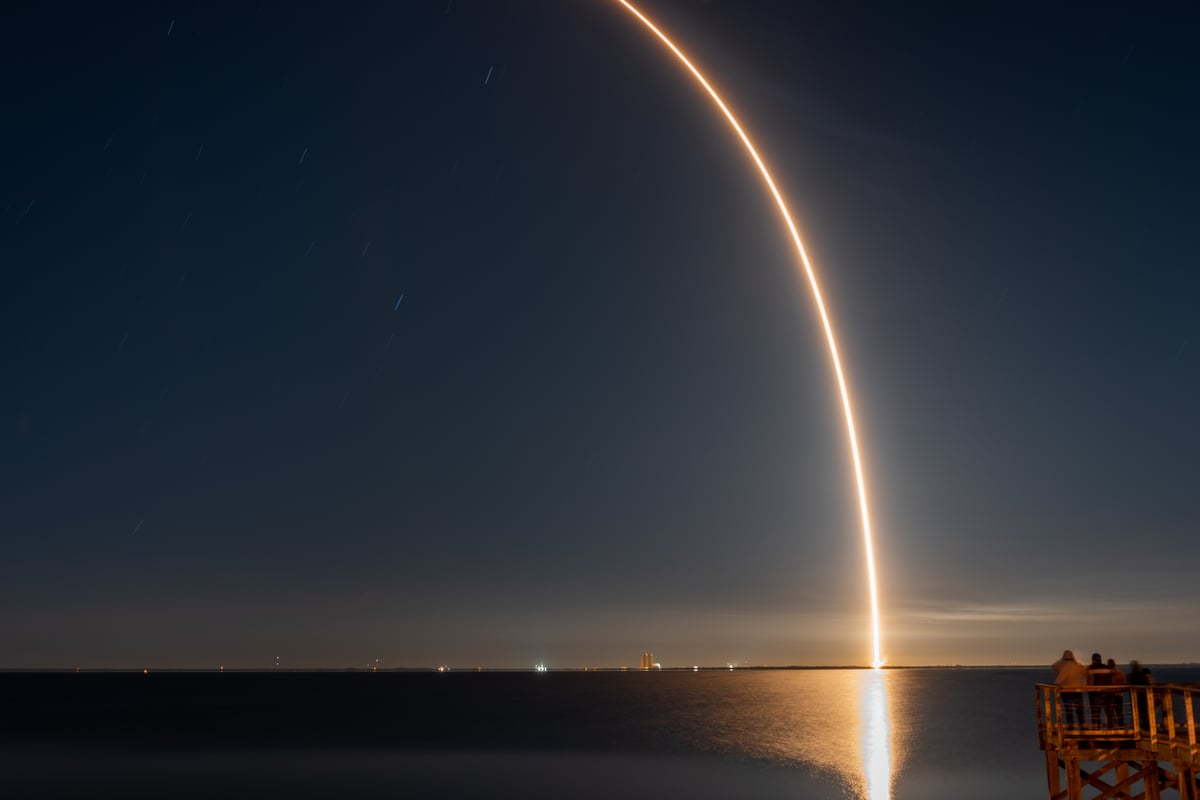
Bitcoin in Trump Accounts? Pres Says 'Something Could Happen,' Dells, SpaceX Back Billions in Donations
President leaves door open to Bitcoin as Dell and SpaceX pledge billions to expand Trump Accounts. President Donald Trump's child investment scheme has secured more than $6 billion in private backing from technology leaders, as he hinted that Bitcoin-linked contributions to 'Trump Accounts' could be on the horizon, saying 'something could happen' when asked about the cryptocurrency's role in the programme. The comments came as the initiative received major private-sector backing from technology leaders, including a $6.25 billion commitment from Michael and Susan Dell and a pledge from SpaceX President Gwynne Shotwell and her husband involving a share of SpaceX stock. Bitcoin Inclusion Remains Unconfirmed Trump did not announce any changes to the programme's investment options, but used the question to argue that cryptocurrency has become strategically important for the United States in its competition with China. Trump Accounts are designed as long-term investment vehicles for children, with funds directed towards approved investment options rather than direct ownership of digital assets. Any move to include Bitcoin or other cryptocurrencies would represent a significant change to the programme's current structure and could raise questions around volatility, regulation and suitability for child-focused savings accounts. His remarks focused instead on potential contributions from crypto industry figures rather than changes to the investment options available through Trump Accounts. Tech Titans Pledge Billions To Trump Accounts Trump Accounts received major backing from technology leaders, with Michael and Susan Dell committing $6.25 billion and SpaceX President Gwynne Shotwell announcing a contribution involving a share of SpaceX stock. The Dells said the contribution would provide an additional $250 investment for up to 25 million eligible children born between 2016 and 2024, extending support to children who were not included in the programme's initial government contribution. 'Susan and I didn't want the children that were born just before to be completely left out, so we are contributing $6.25 billion, $250 to 25 million eligible American children,' Dell said. Shotwell said she and her husband would gift a share of SpaceX stock to Trump Accounts for more than two million children aged 11 to 17, with priority given to those in areas with lower average household incomes. 'We have been fortunate in our careers and hope this gift encourages the next generation to continue the journey of enabling humanity to live and fly amongst the stars,' Shotwell said. Trump Hints At Future Crypto-Linked Gifts Trump suggested further contributions could come from wealthy business leaders, including figures from the crypto industry. 'I think something could happen in that regard too with a contribution to the people of our country,' Trump said when discussing crypto's potential connection to Trump Accounts. He added, 'I think you're going to see a contribution made by those because they're making tremendous amounts of money.' Asked whether he had spoken with Elon Musk about further share donations, Trump said he regularly speaks with leading technology executives. 'I'm like a cheerleader for geniuses. I love geniuses,' Trump said, adding that he speaks with executives including Musk, Mark Zuckerberg and Jeff Bezos. 'I speak to all of them, and I encourage them,' Trump added. Trump did not announce any additional commitments from cryptocurrency figures or other companies, but said he expected further support for the programme. The programme's announced private-sector backing currently comes from figures including the Dells and Shotwell, while the role of digital assets in Trump Accounts remains unclear.
You can ignore AI giants like SpaceX, but your 401(k) won't
NEW YORK -- While you might want to ignore all the hubbub around SpaceX, Elon Musk and IPOs, your 401(k) likely can't. SpaceX is now worth more than $2.1 trillion following its ballyhooed debut on Wall Street last month. Whether or not you believe it deserves to be worth roughly the same as Walmart, Exxon Mobil, Bank of America and IBM combined, the collective market does. And because it's that big, SpaceX is about to join a high-profile index on Tuesday, the Nasdaq 100. Many stock indexes don't care about how realistic a company's growth plans are or who its CEO is. They're simply trying to show how slices of the market, or the whole thing, are performing. That matters for investors and their 401(k) accounts because they're depending more than ever on funds that simply mimic these indexes. It's a lower-cost way to invest, allowing savers to keep more of their investments. Partly because of that, such index funds have usually proven to be better performers than funds that try to pick and choose individual stocks. Just one in five actively managed U.S. stock funds survived and beat their average index peer over the last decade, at 21%, according to Morningstar's data through 2025. Such disparities in performance meant investors had more money invested in U.S. index funds than actively managed ones beginning in 2024, and the gap has only grown since then. Here's a look at what's going on: Indexes measure the market Indexes are things the investment industry has created to answer the question: What is the market doing? It's otherwise tough to answer quickly when the U.S. market has thousands of stocks moving in different directions at any moment. The S&P 500 is perhaps the most famous and influential index. It tracks 500 of the biggest U.S. stocks, and trillions of dollars in investments are either directly mimicking it or at least benchmarking themselves against it. The Dow Jones Industrial Average is well known because it's been around since the 19th century, but it tracks only 30 big stocks so Wall Street pays it little attention. Companies want to be in indexes Because index funds are the way so many investors put money into the stock market, companies want to be part of indexes. Stocks can see a big jump in their prices after S&P Dow Jones Indices, Nasdaq, FTSE Russell or other companies announce they'll be joining their indexes. The investment industry has created funds, including both traditional mutual funds and exchange-traded funds, to track almost every kind of index. More than 1,000 index funds were available at the end of last year, according to the Investment Company Institute. Of them, 185 tracked the S&P 500. SpaceX is joining indexes Nasdaq changed its rules to allow some huge companies to join its Nasdaq 100 index after just 15 trading days. That's a break from the past, where it would wait until each December to add new members in an annual reconstitution to make sure it includes the 100 largest non-financial companies on the Nasdaq. SpaceX will join the Nasdaq 100 before trading begins Tuesday. Some popular funds track the Nasdaq 100 index, including the QQQ exchange-traded fund from Invesco that has roughly $480 billion in total investments. That means QQQ holders will soon own shares of SpaceX, without doing anything on their own. Other AI giants could as well Anthropic and OpenAI are two other huge AI-related companies looking to sell their own stocks soon on a U.S. exchange for the first time. Their IPOs could potentially make each worth close to $1 trillion. It used to be that companies would have an IPO long before they got that big. But SpaceX, Anthropic and OpenAI swelled to tremendous sizes thanks to dollars from private investors, including pension funds, companies and rich investors, away from the public market. That's forcing the reconsideration for the investment industry about how quickly to add companies to indexes that they say track the biggest companies. Not every index is making changes to fast-track big IPOs The company behind the S&P 500 is not making changes to allow SpaceX and other "mega" IPOs faster entry into the index. For it, a stock needs to trade on an eligible exchange for at least 12 months before it can join the index. Not only that, S&P Dow Jones Indices also requires companies to have made a profit in its most recent quarter and over the sum of its last four quarters. SpaceX lost $4.9 billion last year and another $4.3 billion through the first three months of 2026. It acknowledges that it "may not achieve profitability in the future." Over the long term, a stock's price tends to track with how much profit the company is making. Not everyone is happy about SpaceX's IPO entry to indexes Officials from pension funds for firefighters, teachers and other workers in California and New York sent a letter to SpaceX before its IPO decrying its corporate governance, including how much power Musk will hold over the company through his ownership of a special class of stock with more voting power. They said they could become owners of SpaceX stock because they hold index funds. If Musk is able to control so much of the voting power on the board of directors, it would make him tremendously powerful atop SpaceX, "essentially making him unfireable without his own consent," the CEO of California Public Employees' Retirement System, the New York state comptroller and the New York City comptroller wrote in their letter. If an investor doesn't like certain companies in the index, choices are limited Index funds track indexes. And if a stock is in an index, the index fund will buy it, even if investors may not like it. Tesla has remained in the S&P 500 even though critics called it overvalued for years, for example, and Musk's electric-vehicle company has grown to become one of Wall Street's 10 biggest companies. Some indexes say they will not include companies that have poor corporate governance standards or other narrowed criteria, but investors need to look for them. The S&P 500 ESG index famously kicked Tesla out in 2022, for example.
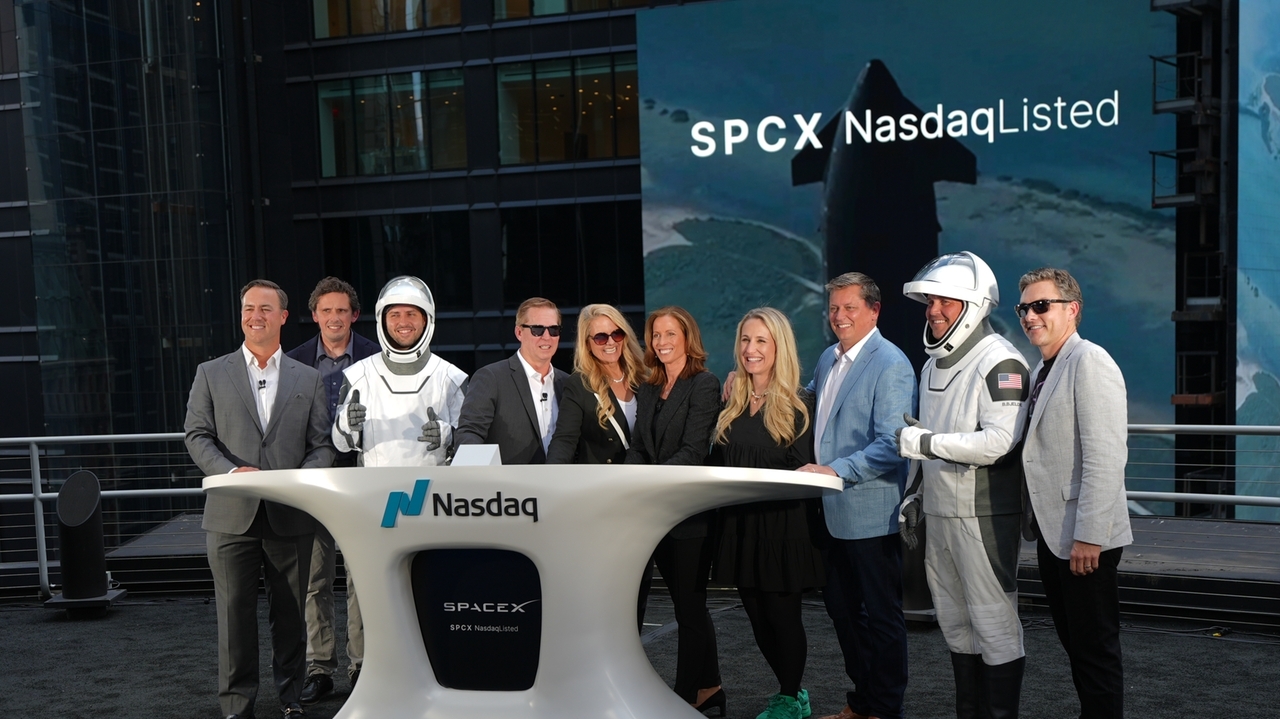
A More Than 80% Chance of a Tesla and SpaceX Merger? It Could Be a Game Changer.
Wedbush analyst Dan Ives has put the likelihood of a merger between Tesla (NASDAQ: TSLA) and Space Exploration Technologies (NASDAQ: SPCX) at more than 80% over the next year, as the potential deal fits Elon Musk's broader artificial intelligence (AI) and data strategy. Tesla invested $2 billion in SpaceX earlier in 2026, and that investment has given Tesla nearly 19 million SpaceX shares, representing less than 1% of SpaceX's outstanding shares. Missed Nvidia in 2009? This Rare Signal Is Flashing Again. In 2009, a "Double Down" signal flashed for a little-known chipmaker called Nvidia. For the first time in years, that same "Total Conviction" signal is flashing for a company 1/100th the size of Nvidia. Continue " Now, the bigger question for Tesla investors is whether a full merger would create a stronger AI, energy, connectivity, and robotics platform or dilute Tesla shareholder value by adding SpaceX's losses, heavy spending needs, and governance risks. Image source: Getty Images. Increasing credibility of the merger case SpaceX's June 2026 IPO has given the company a public stock price for the first time, which makes a possible stock-based merger of the two Elon Musk companies easier to value and structure. SpaceX would bring a growth engine that Tesla does not have. In 2025, SpaceX revenue rose to $18.7 billion, with the Starlink-powered connectivity unit accounting for about $11.4 billion of sales. Starlink's satellite internet user base had reached nearly 10.3 million by the end of the first quarter of 2026. If Tesla and SpaceX merge, Starlink would add a recurring-revenue business tied to satellites, consumer connectivity, and future mobile services. Tesla is already spending heavily on AI, robotics, custom chips, and manufacturing capacity. The company raised its 2026 capital spending plan to more than $25 billion, up from its earlier $20 billion forecast. Tesla also expects negative free cash flow for the rest of 2026, despite generating $1.44 billion in free cash flow in the first quarter. A merger with SpaceX could position Tesla as a broader platform company and create a more vertically integrated platform spanning AI, energy, mobility, and connectivity. Tesla would bring vehicles, robotaxis, Optimus robots, energy storage, and software-led services that generate customer demand. SpaceX would bring satellites, launch capacity, mobile connectivity, AI infrastructure, and xAI-related software needed to connect, power, and scale that platform. Potential synergies Reuters reported that SpaceX and xAI bought about $650 million in goods and services from Tesla in 2025, including $506 million in Tesla Megapack batteries and $131 million in Cybertrucks. With Tesla already supplying energy storage and vehicles to other Musk-controlled businesses, a merger could build on existing business relationships rather than relying solely on promised future synergies. Tesla's energy storage business could generate an estimated $18.3 billion of revenue in 2026, with gross profit of about $5.3 billion and gross margin near 29%. Since SpaceX and its xAI need large-scale power storage for AI and communications infrastructure, Tesla's Megapack business could become a more strategic internal supplier. Reuters has also reported that SpaceX, xAI -- which it acquired -- and Tesla plan to build two advanced chip factories at the Terafab facility in Austin, Texas, including one for Tesla vehicles and Optimus robots and another for future AI data centers in space. Tesla and SpaceX are also working on Macrohard , an early-stage AI platform designed to automate digital workflows and improve how people work with computers. These projects make the case for a merger more concrete by showing that Tesla and SpaceX may already be developing shared technology, not just operating under the same CEO. The Federal Communications Commission has approved 7,500 additional Gen2 Starlink satellites, bringing SpaceX's permitted Gen2 capacity to 15,000 satellites. SpaceX is also pushing deeper into direct-to-cell and U.S. mobile services. Over time, that could help Tesla's vehicles, robotaxis, charging sites, and energy assets stay connected. However, this is more of a future opportunity than something likely to add meaningful revenue right away. SpaceX's next-generation Starship reusable rocket system is designed to carry more than 100 metric tons to orbit. If it works reliably, SpaceX could deploy larger satellite networks and future space-based infrastructure at lower cost, strengthening a combined company's infrastructure story. But investors should also treat this as a major execution risk, not a guaranteed advantage. Tesla investors face risks The biggest challenge for a merger deal would be SpaceX's rich valuation. As I write this, the company trades at 77 times trailing-12-month sales, despite posting a $4.9 billion net loss in 2025. The company's AI business also had a $6.4 billion operating loss in 2025 and accounted for $12.7 billion of the company's capital expenditures that year. A merger could move those losses, capital needs, and AI-infrastructure risks closer to Tesla shareholders. Tesla also has major execution risks of its own. Reuters found that its robotaxi service in Texas still faced long wait times, limited availability, navigation problems, and safety challenges in some vehicles. If Tesla is still proving vehicle autonomy and SpaceX is still proving AI infrastructure, a merger would combine two long-term bets rather than clearly reducing risk. CEO Elon Musk reportedly controlled 42.5% of SpaceX's equity and 83.8% of its voting power before the IPO. After the offering, Musk was expected to retain about 82.4% of SpaceX's voting power. He also owns around 19.9% stake in Tesla's common stock. Musk's level of influence could make a Tesla-SpaceX deal easier to pursue, but it also makes fairness more important. Tesla shareholders would need confidence that the deal price properly reflects SpaceX's losses, Tesla's own growth potential, and the companies' existing business ties. So, the real question for shareholders is whether the deal would create more value than Tesla and SpaceX could create separately. Until investors see terms, valuation, board process, and a clearer path from synergy to cash flow, a potential merger should be treated as a serious possibility rather than a proven value creator. Don't miss this second chance at a potentially lucrative opportunity Ever feel like you missed the boat in buying the most successful stocks? Then you'll want to hear this. On rare occasions, our expert team of analysts issues a "Double Down" stock recommendation for companies that they think are about to pop. If you're worried you've already missed your chance to invest, now is the best time to buy before it's too late. And the numbers speak for themselves: * Nvidia: if you invested $1,000 when we doubled down in 2009, you'd have $505,952!* * Apple: if you invested $1,000 when we doubled down in 2008, you'd have $58,823!* * Netflix: if you invested $1,000 when we doubled down in 2004, you'd have $418,761!* Right now, we're issuing "Double Down" alerts for three incredible companies, available when you join Stock Advisor, and there may not be another chance like this anytime soon. See the 3 stocks " *Stock Advisor returns as of July 5, 2026. Manali Pradhan, CFA has no position in any of the stocks mentioned. The Motley Fool has positions in and recommends Tesla. The Motley Fool has a disclosure policy. The views and opinions expressed herein are the views and opinions of the author and do not necessarily reflect those of Nasdaq, Inc.