News & Updates
The latest news and updates from companies in the WLTH portfolio.
A More Than 80% Chance of a Tesla and SpaceX Merger? It Could Be a Game Changer.
Wedbush analyst Dan Ives has put the likelihood of a merger between Tesla (TSLA 7.35%) and Space Exploration Technologies (SPCX +2.83%) at more than 80% over the next year, as the potential deal fits Elon Musk's broader artificial intelligence (AI) and data strategy. Tesla invested $2 billion in SpaceX earlier in 2026, and that investment has given Tesla nearly 19 million SpaceX shares, representing less than 1% of SpaceX's outstanding shares. Now, the bigger question for Tesla investors is whether a full merger would create a stronger AI, energy, connectivity, and robotics platform or dilute Tesla shareholder value by adding SpaceX's losses, heavy spending needs, and governance risks. Increasing credibility of the merger case SpaceX's June 2026 IPO has given the company a public stock price for the first time, which makes a possible stock-based merger of the two Elon Musk companies easier to value and structure. SpaceX would bring a growth engine that Tesla does not have. In 2025, SpaceX revenue rose to $18.7 billion, with the Starlink-powered connectivity unit accounting for about $11.4 billion of sales. Starlink's satellite internet user base had reached nearly 10.3 million by the end of the first quarter of 2026. If Tesla and SpaceX merge, Starlink would add a recurring-revenue business tied to satellites, consumer connectivity, and future mobile services. Tesla is already spending heavily on AI, robotics, custom chips, and manufacturing capacity. The company raised its 2026 capital spending plan to more than $25 billion, up from its earlier $20 billion forecast. Tesla also expects negative free cash flow for the rest of 2026, despite generating $1.44 billion in free cash flow in the first quarter. A merger with SpaceX could position Tesla as a broader platform company and create a more vertically integrated platform spanning AI, energy, mobility, and connectivity. Tesla would bring vehicles, robotaxis, Optimus robots, energy storage, and software-led services that generate customer demand. SpaceX would bring satellites, launch capacity, mobile connectivity, AI infrastructure, and xAI-related software needed to connect, power, and scale that platform. Potential synergies Reuters reported that SpaceX and xAI bought about $650 million in goods and services from Tesla in 2025, including $506 million in Tesla Megapack batteries and $131 million in Cybertrucks. With Tesla already supplying energy storage and vehicles to other Musk-controlled businesses, a merger could build on existing business relationships rather than relying solely on promised future synergies. Tesla's energy storage business could generate an estimated $18.3 billion of revenue in 2026, with gross profit of about $5.3 billion and gross margin near 29%. Since SpaceX and its xAI need large-scale power storage for AI and communications infrastructure, Tesla's Megapack business could become a more strategic internal supplier. Reuters has also reported that SpaceX, xAI -- which it acquired -- and Tesla plan to build two advanced chip factories at the Terafab facility in Austin, Texas, including one for Tesla vehicles and Optimus robots and another for future AI data centers in space. Tesla and SpaceX are also working on Macrohard , an early-stage AI platform designed to automate digital workflows and improve how people work with computers. These projects make the case for a merger more concrete by showing that Tesla and SpaceX may already be developing shared technology, not just operating under the same CEO. The Federal Communications Commission has approved 7,500 additional Gen2 Starlink satellites, bringing SpaceX's permitted Gen2 capacity to 15,000 satellites. SpaceX is also pushing deeper into direct-to-cell and U.S. mobile services. Over time, that could help Tesla's vehicles, robotaxis, charging sites, and energy assets stay connected. However, this is more of a future opportunity than something likely to add meaningful revenue right away. SpaceX's next-generation Starship reusable rocket system is designed to carry more than 100 metric tons to orbit. If it works reliably, SpaceX could deploy larger satellite networks and future space-based infrastructure at lower cost, strengthening a combined company's infrastructure story. But investors should also treat this as a major execution risk, not a guaranteed advantage. Tesla investors face risks The biggest challenge for a merger deal would be SpaceX's rich valuation. As I write this, the company trades at 77 times trailing-12-month sales, despite posting a $4.9 billion net loss in 2025. The company's AI business also had a $6.4 billion operating loss in 2025 and accounted for $12.7 billion of the company's capital expenditures that year. A merger could move those losses, capital needs, and AI-infrastructure risks closer to Tesla shareholders. Tesla also has major execution risks of its own. Reuters found that its robotaxi service in Texas still faced long wait times, limited availability, navigation problems, and safety challenges in some vehicles. If Tesla is still proving vehicle autonomy and SpaceX is still proving AI infrastructure, a merger would combine two long-term bets rather than clearly reducing risk. CEO Elon Musk reportedly controlled 42.5% of SpaceX's equity and 83.8% of its voting power before the IPO. After the offering, Musk was expected to retain about 82.4% of SpaceX's voting power. He also owns around 19.9% stake in Tesla's common stock. Musk's level of influence could make a Tesla-SpaceX deal easier to pursue, but it also makes fairness more important. Tesla shareholders would need confidence that the deal price properly reflects SpaceX's losses, Tesla's own growth potential, and the companies' existing business ties. So, the real question for shareholders is whether the deal would create more value than Tesla and SpaceX could create separately. Until investors see terms, valuation, board process, and a clearer path from synergy to cash flow, a potential merger should be treated as a serious possibility rather than a proven value creator.

A More Than 80% Chance of a Tesla and SpaceX Merger? It Could Be a Game Changer.
Wedbush analyst Dan Ives has put the likelihood of a merger between Tesla (NASDAQ: TSLA) and Space Exploration Technologies (NASDAQ: SPCX) at more than 80% over the next year, as the potential deal fits Elon Musk's broader artificial intelligence (AI) and data strategy. Tesla invested $2 billion in SpaceX earlier in 2026, and that investment has given Tesla nearly 19 million SpaceX shares, representing less than 1% of SpaceX's outstanding shares. Missed Nvidia in 2009? This Rare Signal Is Flashing Again. In 2009, a "Double Down" signal flashed for a little-known chipmaker called Nvidia. For the first time in years, that same "Total Conviction" signal is flashing for a company 1/100th the size of Nvidia. Continue " Now, the bigger question for Tesla investors is whether a full merger would create a stronger AI, energy, connectivity, and robotics platform or dilute Tesla shareholder value by adding SpaceX's losses, heavy spending needs, and governance risks. Increasing credibility of the merger case SpaceX's June 2026 IPO has given the company a public stock price for the first time, which makes a possible stock-based merger of the two Elon Musk companies easier to value and structure. SpaceX would bring a growth engine that Tesla does not have. In 2025, SpaceX revenue rose to $18.7 billion, with the Starlink-powered connectivity unit accounting for about $11.4 billion of sales. Starlink's satellite internet user base had reached nearly 10.3 million by the end of the first quarter of 2026. If Tesla and SpaceX merge, Starlink would add a recurring-revenue business tied to satellites, consumer connectivity, and future mobile services. Tesla is already spending heavily on AI, robotics, custom chips, and manufacturing capacity. The company raised its 2026 capital spending plan to more than $25 billion, up from its earlier $20 billion forecast. Tesla also expects negative free cash flow for the rest of 2026, despite generating $1.44 billion in free cash flow in the first quarter. A merger with SpaceX could position Tesla as a broader platform company and create a more vertically integrated platform spanning AI, energy, mobility, and connectivity. Tesla would bring vehicles, robotaxis, Optimus robots, energy storage, and software-led services that generate customer demand. SpaceX would bring satellites, launch capacity, mobile connectivity, AI infrastructure, and xAI-related software needed to connect, power, and scale that platform. Potential synergies Reuters reported that SpaceX and xAI bought about $650 million in goods and services from Tesla in 2025, including $506 million in Tesla Megapack batteries and $131 million in Cybertrucks. With Tesla already supplying energy storage and vehicles to other Musk-controlled businesses, a merger could build on existing business relationships rather than relying solely on promised future synergies.
Retail Investors Are Turning To AST SpaceMobile (NASDAQ: ASTS) Over SpaceX IPO Hype
AST SpaceMobile (NASDAQ: ASTS) is gaining serious traction among retail investors who see it as a more accessible and operationally grounded alternative to the SpaceX phenomenon. The company is developing what it describes as the world's first space-based cellular broadband network, operating in Low Earth Orbit and targeting standard smartphones directly. Unlike competitors chasing speculative venture capital dreams, AST SpaceMobile has already built and deployed real infrastructure in the form of its BlueBird satellites, the largest commercial satellites currently in orbit. The Federal Communications Commission has approved AST to deploy and operate a full 248-satellite constellation, alongside authorization to conduct direct-to-cell operations at commercial scale. AST's business model targets regions where traditional cell tower infrastructure is economically unviable, including remote highways, national parks, mining operations, offshore energy platforms, disaster zones, and rural farmland. The company has secured agreements with 60 mobile network operators whose combined subscriber bases exceed 3 billion people across global markets. Major telecommunications carriers including AT&T, Verizon, and Vodafone have already signed on, lending the company significant commercial credibility and a clear path toward recurring revenue. Crossroads Capital, writing in its Q1 2026 investor letter, noted that AST's transition was moving from "underway" to "unmistakable," highlighting the shift from an R&D-stage startup to an operational scaleup over just three months. The firm also acknowledged a setback during the quarter, when a BlueBird satellite designated BB7 was placed in the wrong orbit by Blue Origin's New Glenn 3 rocket, a misplacement attributed entirely to the launch vehicle rather than any failure in AST's technology. Despite that disruption, which triggered a short-term market downturn, investor sentiment around the stock has remained constructive, with 39 hedge funds holding positions in the company. Reddit communities focused on space investment have increasingly pointed to ASTS as the more rational bet for investors who want genuine exposure to satellite infrastructure rather than chasing the private-market valuation of SpaceX. The stock ranked 11th on a recent list of recommended alternatives for investors seeking to avoid SpaceX while still gaining meaningful space-sector exposure with publicly traded equities.

Exclusive: Mirae Asset Securities to Pay 10% Interest on Failed SpaceX IPO
Firm to Compensate 1.42 Billion Won for Tied-Up Funds After Allocation Failure Mirae Asset Securities announced on the 6th that it is "strongly considering a plan to pay annual 10% passage interest to individual investors whose funds were tied up due to the failed subscription for SpaceX's initial public offering (IPO)." The compensation is estimated to amount to approximately 1.4 billion Korean won. Passage interest refers to interest calculated and paid based on the period during which funds were tied up. Mirae Asset Securities conducted the SpaceX IPO subscription for registered professional individual and corporate/institutional investors from June 5 to 10. The total offering amount was 1.14 billion dollars. Of this, 500 million dollars allocated to individual professional investors sold out within 1-2 minutes of the sale's start. However, the lead underwriter Goldman Sachs did not allocate any shares to Mirae Asset Securities during the final allocation process, causing the subscription to fail. Mirae Asset Securities fully refunded the subscription deposits on the morning of June 13. Previously, the virtual asset exchange Bybit set a precedent by paying annual 10% passage interest in a similar case. Mirae Asset Securities plans to apply the same 10% annual rate. Calculating compensation based on the amounts deposited by individual professional investors yields approximately 1.42 billion Korean won. The $300 million deposited on June 5 was tied up for 8 days until the refund date of the 13th, while the $200 million deposited on June 8 was tied up for 5 days. Applying the annual 10% rate on a daily basis, the $300 million portion accrues 657,534 dollars, and the $200 million portion accrues 273,973 dollars. The total of 931,507 dollars, when converted using the exchange rate at the time of refund (1 dollar = 1,524.8 Korean won), amounts to approximately 1.4204 billion Korean won. A Mirae Asset Securities official stated, "We deeply regret the inconvenience caused to customers awaiting subscription results. We will do our best to protect investors and provide stable services." Meanwhile, the Financial Supervisory Service has initiated an inspection into Mirae Asset Securities regarding this incident. Lee Chan-jin, head of the Financial Supervisory Service, recently said at a press briefing, "We never imagined such an incident could occur," and added that the inspection will determine whether the issue stemmed from communication failures by the lead underwriter or other factors. Mirae Asset Securities is also considering legal action if it determines that unfair treatment contributed to the allocation failure. Regarding Bloomberg's report, which claimed that a misunderstanding of the order submission process resulted in no shares being allocated, the company plans to hold Bloomberg accountable for legal responsibility.
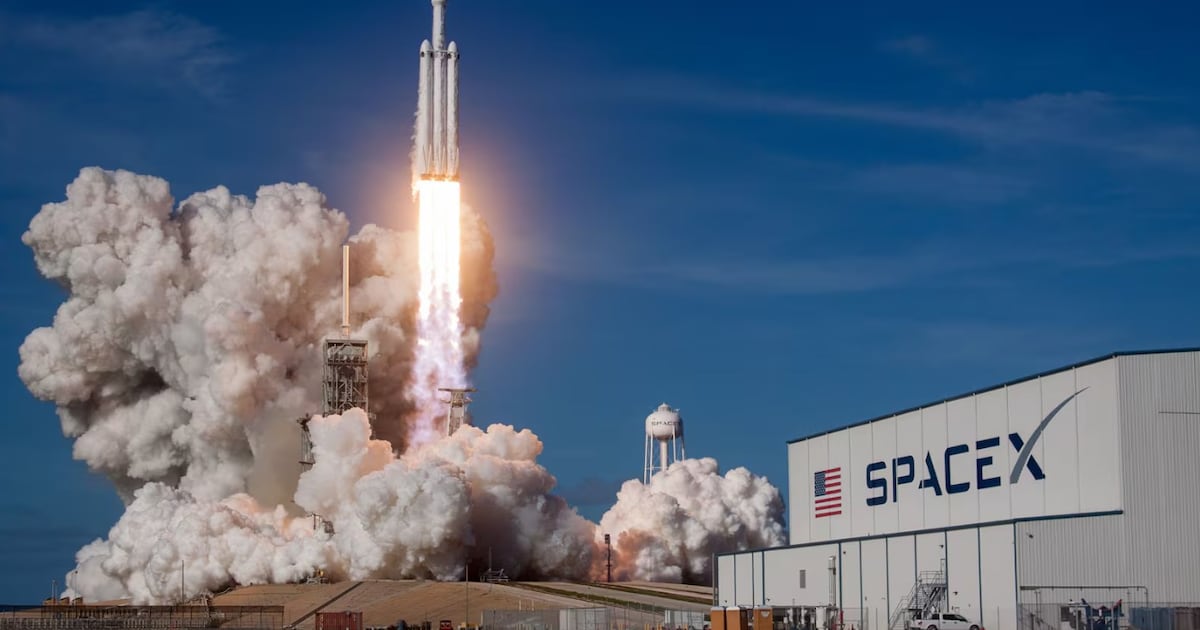
If You'd Invested $10,000 in the SpaceX IPO, Here's How Much You Would Have Now
Space Exploration Technologies (NASDAQ: SPCX) drew a lot of attention in the weeks leading up to its initial public offering, for many reasons -- from the sheer size of the operation, with SpaceX's goal to become a trillion-dollar company, to the focus on offering shares to retail investors. SpaceX earmarked more than 20% of shares for them, when generally in IPOs, only 5% to 10% go to non-professional investors. Some investors were also eager to get in on SpaceX for its range of growth businesses -- and to gain exposure to a company led by the ambitious Elon Musk. Missed Nvidia in 2009? This Rare Signal Is Flashing Again. In 2009, a "Double Down" signal flashed for a little-known chipmaker called Nvidia. For the first time in years, that same "Total Conviction" signal is flashing for a company 1/100th the size of Nvidia. Continue " So, if you happened to be one of the investors who was able to buy shares at the IPO price of $135, and if you had invested $10,000, how much would that be worth now? Let's find out. Image source: Getty Images. Why SpaceX has drawn attention First, though, let's talk quickly about SpaceX -- to fully understand why so many sets of eyes were turned toward the company on and before its June 12 market debut. As mentioned, the SpaceX operation promised to be big, pushing the company to a trillion-dollar market cap right out of the gate. The world's other trillion-dollar companies, such as Nvidia and Amazon, for example, had to wait years and even decades to reach such a level. And by the time they did, they already were highly profitable, well-established players. SpaceX, however, is still in earlier growth stages, developing technology and investing to reach its goals. The company's business units of space, connectivity, and artificial intelligence (AI) brought in $18 billion in revenue last year, but capital spending meant the company wasn't able to turn revenue into a profit. Instead, SpaceX reported a loss of $4.9 billion. While SpaceX has scored accomplishments like rocket launches with reusable boosters and growth in satellite-based internet service subscriptions, the company still must invest heavily to reach its biggest goals. And this may weigh on its ability to reach profitability. It also involves risk because a technology setback could call into question a certain revenue opportunity. Elon Musk's big dreams Still, some investors flocked to the company for this focus on innovation, driven by chief Elon Musk, who is known for big dreams -- as head of Tesla, he's deploying robotaxis, and at SpaceX, his most significant goal may be to colonize Mars. This combination of elements put the spotlight on SpaceX when it announced its IPO. And the operation went on to raise $75 billion for the biggest market launch on record -- the company raised a total of more than $85 billion after the exercise of an overallotment option a few days later. Now, let's consider how much you would have today, about three weeks after this massive operation, if you had gotten in on SpaceX for the $135 offer price. The stock has advanced about 18% from that level to early trading at about $160 on July 2. This means your investment would be worth $11,800. You would have gained, but this isn't an enormous increase, particularly considering all of the excitement surrounding the IPO. Look for long-term performance So, if you are in this situation, what should you do next? The way to benefit most from investing isn't to hope for a quick overnight win but instead for gains over a period of years. If you invested in SpaceX during the IPO, you likely believe in the company's growth story -- this means you should give the tech and industrial giant the chance to deliver. It's important to closely follow the upcoming earnings reports to monitor capital spending levels as well as revenue growth and any progress toward goals. But if you haven't yet invested in SpaceX, I wouldn't rush to do so. The company, as mentioned above, comes with considerable risk -- and in this case, it's a good idea to consider a few quarters of financial information to see how the situation evolves. So, even though SpaceX has delivered a moderate win so far, for most investors, it still may be too early to jump in. Should you buy stock in Space Exploration Technologies right now? Before you buy stock in Space Exploration Technologies, consider this: The Motley Fool Stock Advisor analyst team just identified what they believe are the 10 best stocks for investors to buy now... and Space Exploration Technologies wasn't one of them. The 10 stocks that made the cut could produce monster returns in the coming years. Consider when Netflix made this list on December 17, 2004... if you invested $1,000 at the time of our recommendation, you'd have $418,761!* Or when Nvidia made this list on April 15, 2005... if you invested $1,000 at the time of our recommendation, you'd have $1,195,804!* Now, it's worth noting Stock Advisor's total average return is 918% -- a market-crushing outperformance compared to 208% for the S&P 500. Don't miss the latest top 10 list, available with Stock Advisor, and join an investing community built by individual investors for individual investors. See the 10 stocks " *Stock Advisor returns as of July 5, 2026. Adria Cimino has positions in Amazon and Tesla. The Motley Fool has positions in and recommends Amazon, Nvidia, and Tesla. The Motley Fool has a disclosure policy. The views and opinions expressed herein are the views and opinions of the author and do not necessarily reflect those of Nasdaq, Inc.

If You'd Invested $10,000 in the SpaceX IPO, Here's How Much You Would Have Now
Space Exploration Technologies (NASDAQ: SPCX) drew a lot of attention in the weeks leading up to its initial public offering, for many reasons -- from the sheer size of the operation, with SpaceX's goal to become a trillion-dollar company, to the focus on offering shares to retail investors. SpaceX earmarked more than 20% of shares for them, when generally in IPOs, only 5% to 10% go to non-professional investors. Some investors were also eager to get in on SpaceX for its range of growth businesses -- and to gain exposure to a company led by the ambitious Elon Musk. Missed Nvidia in 2009? This Rare Signal Is Flashing Again. In 2009, a "Double Down" signal flashed for a little-known chipmaker called Nvidia. For the first time in years, that same "Total Conviction" signal is flashing for a company 1/100th the size of Nvidia. Continue " So, if you happened to be one of the investors who was able to buy shares at the IPO price of $135, and if you had invested $10,000, how much would that be worth now? Let's find out. Why SpaceX has drawn attention First, though, let's talk quickly about SpaceX -- to fully understand why so many sets of eyes were turned toward the company on and before its June 12 market debut. As mentioned, the SpaceX operation promised to be big, pushing the company to a trillion-dollar market cap right out of the gate. The world's other trillion-dollar companies, such as Nvidia and Amazon, for example, had to wait years and even decades to reach such a level. And by the time they did, they already were highly profitable, well-established players. SpaceX, however, is still in earlier growth stages, developing technology and investing to reach its goals. The company's business units of space, connectivity, and artificial intelligence (AI) brought in $18 billion in revenue last year, but capital spending meant the company wasn't able to turn revenue into a profit. Instead, SpaceX reported a loss of $4.9 billion. While SpaceX has scored accomplishments like rocket launches with reusable boosters and growth in satellite-based internet service subscriptions, the company still must invest heavily to reach its biggest goals. And this may weigh on its ability to reach profitability. It also involves risk because a technology setback could call into question a certain revenue opportunity. Elon Musk's big dreams Still, some investors flocked to the company for this focus on innovation, driven by chief Elon Musk, who is known for big dreams -- as head of Tesla, he's deploying robotaxis, and at SpaceX, his most significant goal may be to colonize Mars.
If You'd Invested $10,000 in the SpaceX IPO, Here's How Much You Would Have Now
Space Exploration Technologies (SPCX +2.83%) drew a lot of attention in the weeks leading up to its initial public offering, for many reasons -- from the sheer size of the operation, with SpaceX's goal to become a trillion-dollar company, to the focus on offering shares to retail investors. SpaceX earmarked more than 20% of shares for them, when generally in IPOs, only 5% to 10% go to non-professional investors. Some investors were also eager to get in on SpaceX for its range of growth businesses -- and to gain exposure to a company led by the ambitious Elon Musk. So, if you happened to be one of the investors who was able to buy shares at the IPO price of $135, and if you had invested $10,000, how much would that be worth now? Let's find out. Why SpaceX has drawn attention First, though, let's talk quickly about SpaceX -- to fully understand why so many sets of eyes were turned toward the company on and before its June 12 market debut. As mentioned, the SpaceX operation promised to be big, pushing the company to a trillion-dollar market cap right out of the gate. The world's other trillion-dollar companies, such as Nvidia and Amazon, for example, had to wait years and even decades to reach such a level. And by the time they did, they already were highly profitable, well-established players. SpaceX, however, is still in earlier growth stages, developing technology and investing to reach its goals. The company's business units of space, connectivity, and artificial intelligence (AI) brought in $18 billion in revenue last year, but capital spending meant the company wasn't able to turn revenue into a profit. Instead, SpaceX reported a loss of $4.9 billion. While SpaceX has scored accomplishments like rocket launches with reusable boosters and growth in satellite-based internet service subscriptions, the company still must invest heavily to reach its biggest goals. And this may weigh on its ability to reach profitability. It also involves risk because a technology setback could call into question a certain revenue opportunity. Elon Musk's big dreams Still, some investors flocked to the company for this focus on innovation, driven by chief Elon Musk, who is known for big dreams -- as head of Tesla, he's deploying robotaxis, and at SpaceX, his most significant goal may be to colonize Mars. This combination of elements put the spotlight on SpaceX when it announced its IPO. And the operation went on to raise $75 billion for the biggest market launch on record -- the company raised a total of more than $85 billion after the exercise of an overallotment option a few days later. Now, let's consider how much you would have today, about three weeks after this massive operation, if you had gotten in on SpaceX for the $135 offer price. The stock has advanced about 18% from that level to early trading at about $160 on July 2. This means your investment would be worth $11,800. You would have gained, but this isn't an enormous increase, particularly considering all of the excitement surrounding the IPO. Look for long-term performance So, if you are in this situation, what should you do next? The way to benefit most from investing isn't to hope for a quick overnight win but instead for gains over a period of years. If you invested in SpaceX during the IPO, you likely believe in the company's growth story -- this means you should give the tech and industrial giant the chance to deliver. It's important to closely follow the upcoming earnings reports to monitor capital spending levels as well as revenue growth and any progress toward goals. But if you haven't yet invested in SpaceX, I wouldn't rush to do so. The company, as mentioned above, comes with considerable risk -- and in this case, it's a good idea to consider a few quarters of financial information to see how the situation evolves. So, even though SpaceX has delivered a moderate win so far, for most investors, it still may be too early to jump in.

With Ambitious Growth Plans, SpaceX Stock Is Likely to Surge Higher
The buzz around SpaceX's (SPCX) initial public offering (IPO) in June was unprecedented. As the excitement sustained on listing, SPCX stock surged higher. However, as traders booked profits, a correction ensued. For investors betting on the long-term fundamentals of the business, this calm period may provide a good entry opportunity. Recently, Wedbush initiated coverage on SPCX stock with an "Outperform" rating and a price target of $190 per share. Wedbush analyst Dan Ives and his team believe that SpaceX is one of the "most differentiated assets within the tech market" with a "strong footprint" across connectivity, space, and AI infrastructure. With SpaceX's business segments offering immense potential, the growth story still seems to be at an early stage. About SpaceX Stock SpaceX was founded in 2002 with a mission to build the systems and technologies necessary to make life multi-planetary. Currently, SpaceX is building the integrated hardware and software infrastructure for space, connectivity, and AI. In the space segment, SpaceX was the first company to develop and launch a liquid-fuel rocket reaching orbit in 2008. Further, since 2023, SpaceX has launched more than 80% of mass to orbit each year. In the connectivity segment, SpaceX has more than 10,000 Starlink satellites with presence in more than 160 countries, while the company's AI segment has the world's largest coherent supercomputer -- Colossus -- under xAI. For fiscal 2025, SpaceX reported revenue of $18.7 billion and an operating loss of $2.6 billion. After a strong listing and highs near $225, SPCX stock has taken a breather. This seems like a good accumulation opportunity with innovation-driven value creation likely in the coming years. The Innovation Edge In 2008, SpaceX became the first private company to develop and launch a liquid-fuel rocket to reach orbit. Further, in 2020, it became the first company to transport astronauts to orbit and fly to and from the International Space Station. In the connectivity business, SpaceX runs a low-latency network that is available globally. Further, in the AI segment, SpaceX completed the first gigawatt-scale Megapack battery installation in 2026. The key point here is that the company has been an innovator. With roughly $86 billion in proceeds from its IPO, SpaceX is positioned to make big capital investments and accelerate innovation further. Some growth plans include an increase in launch payload capacity and establishing a lunar economy in the space segment. In connectivity, the company is focused on increasing its broadband customer base and expanding Starlink's mobile offering. Finally, in the AI business, SpaceX is looking to design and manufacture its own AI chips, while deployment of orbital AI compute at scale is also potentially in the cards. Accordingly, with many irons in the fire, the company's growth is likely to accelerate coupled with an increase in cash flows. What Do Analysts Say About SPCX Stock? Based on 11 analysts with coverage, SPCX stock has a consensus "Moderate Buy" rating. While five analysts have a "Strong Buy" rating for SPCX stock, five have a "Hold" rating, and one analyst has a "Moderate Sell" rating. The mean price target of $202.38 represents potential upside of 25% from current levels. Further, the most bullish price target of $401 suggests that SPCX stock could climb as much as 148% from here. Conclusion For the year ended December 2025, SpaceX reported capital expenditures of $20.7 billion. Of that figure, roughly 61% was allocated toward artificial intelligence investments. Further, for Q1 2026, capital expenditures came to $10.1 billion, with roughly 76% allocated toward AI. With a big addressable market, these investments are likely to spur significant growth for SpaceX. To put things into perspective, SpaceX believes that the current AI addressable market is worth $3.8 trillion. Further, if enterprise applications are included, the company's total addressable market (with space and connectivity) swells to $28.5 trillion. With big opportunities in AI and continued innovation-driven growth in space and connectivity, SpaceX is clearly positioned for long-term value creation. That makes SPCX stock appear attractive after the recent correction.
/A%20close-up%20of%20the%20SpaceX%20sign%20on%20a%20black%20building%20by%20IanDewarPhotography%20via%20Adobe%20Stock.jpeg)
Tesla, SpaceX fall from record highs, Elon Musk lose trillionaire status: Profit-booking or re-rating of AI pricing? | Mint
Tesla and SpaceX have both seen significant declines, impacting Elon Musk's net worth and triggering investor panic. CEO Viram Shah discusses if this is profit-booking or a deeper market re-rating, advising Indian retail investors to assess their positions and remain cautious amid volatility. Tesla and SpaceX have both fallen sharply from their recent highs. The drop has not only pushed Elon Musk below the trillionaire mark but has also triggered panic amonginvestors. Viram Shah, CEO and Founder of Vested Finance, weighs in on whether this is simply profit-booking or a deeper re-rating of AI and space-related valuations, and explains what Indian retail investors should do next. Tesla just posted its strongest Q2 deliveries in a while and the stock still fell about 8% that tells you the move isn't really about cars. It's about how much of that valuation rests on autonomy and robotaxi, which a delivery number can't settle either way. SpaceX is a similar story. Starlink is profitable and growing, the launch business is setting records. And as expected the IPO drew significant retail interest globally, including from Indian investors accessing US markets. However, the stock later saw a pullback due to profit booking after a strong debut, broader tech-sector jitters over AI profitability timelines, high-profile short positions, and also the usual volatility that comes with newly listed companies with limited shares available for trading. But, now a bigger shift is happening as market participant have started questioning about how they want to price these AI and space-related companies.This re-rating makes it difficult to predict where prices will eventually stabilise. Rather, investor should try to check whether their investment is the right size for how volatile these stocks can be, and for how long they plan to hold them. "If you're holding a five- or ten-year thesis on space and AI, a few weeks like this shouldn't change much. If a position got too big on the way up, that's worth looking at regardless of price." For Indian investors going global through the LRS route, the rule is the same as always: keep your position small enough that a weak quarter is just a small setback, not a major hit to your overall portfolio.

Elon Musk's SpaceX and the vision of off-planet industrialization | Mint
Summary Dhirendra Kumar reflects on a compelling conversation with a friend about the future of space mining and manufacturing, suggesting potential shifts in industry that could change life on Earth. For once, he's not telling you to ignore the news. Readers of this column know my standard advice: switch off the the news. I have written on many occasions that the day's headlines are no friend to your portfolio, that the urgent thing on your screen tonight will look like nothing in a year, and that the investor who reacts to every news development is usually the one who fares the worst. I stand by all of it. So, it is a little awkward to admit that a few weeks ago, I came across something I could not wave away and want to tell you about, even though it has little to do with your money. The occasion was the stock market listing of Elon Musk's SpaceX, which arrived this month at a price that made him, on paper, the world's first trillionaire. The press has been full of the number, and serious people have argued, persuasively, that the company is worth a great deal less than the market is paying. They are probably right, and I have nothing to add to the valuation. But that argument is the small game. The thing that stopped me was the large one, and it came not from the financial pages but from a conversation with a friend. He is a lifelong science fiction devotee and an unabashed admirer of Musk, the sort who was reading Robert Heinlein at an age when the rest of us were reading the sports pages. Over the course of an evening, he laid out where he believes this road eventually leads, and I have not been able to put it down since. It begins with mining the asteroids. Here, he told me something I have not stopped thinking about. Every mine for heavy metals on Earth, every source of gold and nickel and iron we have ever dug, is really the site of an ancient asteroid strike, a small fragment of which happened to bury itself here long ago. The metals were never ours to begin with. They fell. And out in space, where they came from, the same materials exist in quantities that make the richest mine on Earth look like a rounding error. From there, the logic builds one step at a time. Once you are drawing raw materials from the rocks up there, it makes little sense to haul them all the way down a gravity well to Earth, so the next step is to manufacture in space, where, closer to the sun, energy is effectively free and endless. And since most of what we build exists only so that we can build other things with it, the conclusion becomes hard to resist: keep the entire industrial chain in orbit, and let only the finished articles come down to us. The end of the story is the part that has stayed with me. If heavy industry can be carried on more cheaply off the planet than on it, then Earth need no longer be the place where we make things. It can go back to being the place where we grow things and where we live, with the mines and the furnaces and the smoke lifted clean off it, and only the finished goods descending quietly from above. That, my friend says, is the destination this whole enterprise is actually travelling towards. I do not quite know what to do with this. My entire working life has been spent puncturing grand visions, because in savings and investments, a grand vision is usually the wrapping on a poor product, and the moment something sounds too grand, I reach for my wallet to check it is still there. People have promised us the future for a very long time. Flying cars and Moon holidays were always a decade away, and the safe bet on any such prophecy is that it is too early, too expensive, or simply wrong. And yet, I could not file this conversation under noise, the way I file almost everything else, and that is unusual enough to be worth sharing with you. Let me be plain that this is not a column about what to do with your money. I am not suggesting you buy this share or any other, and I would be wary of anyone who used a vision of this sort to sell you something, because that is exactly how visions are usually put to work. My reason for writing is different. Every so often, it is worth setting the portfolio aside and remembering how small a thing it is against what may be coming. We argue about the new tax regime and the right number of mutual funds, rightly, because those shape the next few years. But if even a fraction of what my friend described comes to pass, we are looking at a change in ordinary life larger than the Industrial Revolution, which remade everything our great-great-grandparents had taken to be permanent. None of us can see that far ahead, and the people pricing the share today cannot see it either, no matter what their models tell them. The honest position, in front of a future this large, is not confidence but a kind of cheerful humility. So, my advice, for once, has nothing to do with your savings. Keep ignoring the news, because it still will not help your portfolio tonight. But once in a while, lift your eyes from the statement of account and wonder what your grandchildren might come to think of as perfectly ordinary. I cannot tell you whether my friend is a prophet or a dreamer. I can only say that I am not sure he is wrong. Dhirendra Kumar is founder and chief executive officer of Value Research, an independent investment advisory firm

SpaceX Is Set to Join the Nasdaq-100 on July 7. Here's Where History Says the Stock Could Trade 1 Year From Now.
On July 7, Space Exploration Technologies (NASDAQ: SPCX) is scheduled to begin trading as a member of the Nasdaq-100 index. The Nasdaq-100 comprises the 100 largest non-financial companies listed on Nasdaq, weighted by market capitalization. For SpaceX, inclusion in the index represents a significant step toward mainstream recognition beyond technology investors. With that said, history shows that inclusion in the Nasdaq-100 rarely serves as an independent driver of sustained outperformance. Missed Nvidia in 2009? This Rare Signal Is Flashing Again. In 2009, a "Double Down" signal flashed for a little-known chipmaker called Nvidia. For the first time in years, that same "Total Conviction" signal is flashing for a company 1/100th the size of Nvidia. Continue " Image source: Getty Images. Watch out for momentum traders The anticipation of inclusion in a major index tends to amplify trading volume and expand valuation multiples as momentum traders and growth funds pile in ahead of the official rebalancing date. Let's take a look at what happened with the share prices of some companies that joined the Nasdaq-100 in recent years. * Peloton Interactive was added to the Nasdaq-100 in December 2020. Leading up to its inclusion in the index, Peloton saw its shares surge nearly 400% as the COVID-19 pandemic supercharged demand for at-home fitness equipment. Shortly after joining the index, Peloton reached an all-time price of $167. But within about 13 months, Peloton had been removed from the Nasdaq-100 and the stock had fallen roughly 83% from its peak as pandemic tailwinds faded. * Also in 2020, Okta experienced meaningful appreciation in its share price as demand for cloud-based identity and access management solutions surged amid the rapid shift to remote work. By early 2021, Okta stock had climbed to an all-time high shortly after its inclusion in the Nasdaq-100. In a post-pandemic world, however, Okta's growth rates have normalized substantially. As a result, the stock has been stuck in a prolonged period of sideways trading for years now. * In December 2024, Strategy, formerly known as MicroStrategy, joined the Nasdaq-100. During this calendar year, the stock gained 358%, driven primarily by the company's high-profile Bitcoin treasury strategy. After peaking near the time of its late-2024 addition to the index, Strategy stock declined 68% by the end of 2025 amid shifting sentiment toward crypto proxies and Bitcoin's volatile price action. * Palantir Technologies also joined the Nasdaq-100 in December 2024. During that year, the artificial intelligence (AI) analytics darling posted a 340% return. Palantir stock continued to rally through much of 2025, supported by its strong business fundamentals. However, by mid-2026, shares have pulled back sharply from their late 2025 highs -- illustrating how even fundamentally sound companies will experience volatility once an initial wave of buying subsides. * Axon Enterprise also posted robust gains throughout 2024 as law enforcement and public safety agencies adopted its AI-enhanced hardware platform. After joining the index in December 2024, Axon -- like Palantir -- maintained upward share price momentum during 2025, yet has experienced notable pullbacks from its peaks this year. The common thread across these examples is that temporary inflows provide a one-time lift rather than a permanent valuation floor. A company's subsequent performance hinges on whether the underlying business consistently delivers impressive execution and guidance once the spotlight of index membership moves elsewhere. What will happen to SpaceX stock after joining the Nasdaq-100? Just like the companies explored above, SpaceX enters the Nasdaq-100 riding pre-inclusion momentum. This is driven by a combination of enthusiasm among retail investors and mechanical buying by exchange-traded funds. I would not be surprised to see SpaceX stock exhibit some near-term support -- possibly pushing it back toward its highs. Smart investors understand that this excitement does not alter the need for the company to prove durable progress over the coming quarters, though. Starlink subscriber growth, launch cadence, and an emerging AI infrastructure business must converge to demonstrate a path to sustained profitability. These factors will ultimately determine whether SpaceX's current valuation can be maintained or expanded. Should SpaceX's quarterly updates fall short of the market's already elevated expectations, the stock could easily face profit-taking and trade at a materially lower price one year from now. This is consistent with the pattern observed in several Nasdaq-100 additions in recent history. While index membership supports liquidity and credibility, it should be seen as a reflection of past achievements rather than a guarantee of strong future results. Investors evaluating SpaceX stock would be wise to focus on the company's operational milestones and cash-flow trajectory rather than the temporary tailwind of index-driven capital inflows. All told, a stock's record after inclusion in the Nasdaq-100 is quite mixed and frequently disappointing for investors expecting continued multibagger gains. Should you buy stock in Space Exploration Technologies right now? Before you buy stock in Space Exploration Technologies, consider this: The Motley Fool Stock Advisor analyst team just identified what they believe are the 10 best stocks for investors to buy now... and Space Exploration Technologies wasn't one of them. The 10 stocks that made the cut could produce monster returns in the coming years. Consider when Netflix made this list on December 17, 2004... if you invested $1,000 at the time of our recommendation, you'd have $418,761!* Or when Nvidia made this list on April 15, 2005... if you invested $1,000 at the time of our recommendation, you'd have $1,195,804!* Now, it's worth noting Stock Advisor's total average return is 918% -- a market-crushing outperformance compared to 208% for the S&P 500. Don't miss the latest top 10 list, available with Stock Advisor, and join an investing community built by individual investors for individual investors. See the 10 stocks " *Stock Advisor returns as of July 4, 2026. Adam Spatacco has positions in Palantir Technologies. The Motley Fool has positions in and recommends Axon Enterprise, Bitcoin, Okta, Palantir Technologies, and Peloton Interactive. The Motley Fool has a disclosure policy. The views and opinions expressed herein are the views and opinions of the author and do not necessarily reflect those of Nasdaq, Inc.
SpaceX Is Set to Join the Nasdaq-100 on July 7. Here's Where History Says the Stock Could Trade 1 Year From Now.
On July 7, Space Exploration Technologies (NASDAQ: SPCX) is scheduled to begin trading as a member of the Nasdaq-100 index. The Nasdaq-100 comprises the 100 largest non-financial companies listed on Nasdaq, weighted by market capitalization. For SpaceX, inclusion in the index represents a significant step toward mainstream recognition beyond technology investors. With that said, history shows that inclusion in the Nasdaq-100 rarely serves as an independent driver of sustained outperformance. Missed Nvidia in 2009? This Rare Signal Is Flashing Again. In 2009, a "Double Down" signal flashed for a little-known chipmaker called Nvidia. For the first time in years, that same "Total Conviction" signal is flashing for a company 1/100th the size of Nvidia. Continue " Watch out for momentum traders The anticipation of inclusion in a major index tends to amplify trading volume and expand valuation multiples as momentum traders and growth funds pile in ahead of the official rebalancing date. Let's take a look at what happened with the share prices of some companies that joined the Nasdaq-100 in recent years.
Lawmakers Snap Up SpaceX Stock Days After $2 Trillion IPO
Rep. Gil Cisneros (D-Calif.) bought SpaceX stock worth $1,001 to $15,000 on June 18, three days after one of Rep. Dan Meuser's (R-Pa.) three children purchased shares valued at $15,001 to $50,000. Both investments were reported in financial disclosure statements mandated by the STOCK Act of 2012, which requires public disclosure of certain securities transactions by members of Congress and their immediate families. STOCK is an acronym for Stop Trading on Congressional Knowledge. It's legal for members of Congress and immediate family members to buy and sell stock in individual companies as long as they do not trade on confidential information gleaned from their work and disclose those transactions within 45 days.
SpaceX Is Set to Join the Nasdaq-100 on July 7. Here's Where History Says the Stock Could Trade 1 Year From Now.
On July 7, Space Exploration Technologies (SPCX +2.69%) is scheduled to begin trading as a member of the Nasdaq-100 index. The Nasdaq-100 comprises the 100 largest non-financial companies listed on Nasdaq, weighted by market capitalization. For SpaceX, inclusion in the index represents a significant step toward mainstream recognition beyond technology investors. With that said, history shows that inclusion in the Nasdaq-100 rarely serves as an independent driver of sustained outperformance. Watch out for momentum traders The anticipation of inclusion in a major index tends to amplify trading volume and expand valuation multiples as momentum traders and growth funds pile in ahead of the official rebalancing date. Let's take a look at what happened with the share prices of some companies that joined the Nasdaq-100 in recent years. * Peloton Interactive was added to the Nasdaq-100 in December 2020. Leading up to its inclusion in the index, Peloton saw its shares surge nearly 400% as the COVID-19 pandemic supercharged demand for at-home fitness equipment. Shortly after joining the index, Peloton reached an all-time price of $167. But within about 13 months, Peloton had been removed from the Nasdaq-100 and the stock had fallen roughly 83% from its peak as pandemic tailwinds faded. * Also in 2020, Okta experienced meaningful appreciation in its share price as demand for cloud-based identity and access management solutions surged amid the rapid shift to remote work. By early 2021, Okta stock had climbed to an all-time high shortly after its inclusion in the Nasdaq-100. In a post-pandemic world, however, Okta's growth rates have normalized substantially. As a result, the stock has been stuck in a prolonged period of sideways trading for years now. * In December 2024, Strategy, formerly known as MicroStrategy, joined the Nasdaq-100. During this calendar year, the stock gained 358%, driven primarily by the company's high-profile Bitcoin treasury strategy. After peaking near the time of its late-2024 addition to the index, Strategy stock declined 68% by the end of 2025 amid shifting sentiment toward crypto proxies and Bitcoin's volatile price action. * Palantir Technologies also joined the Nasdaq-100 in December 2024. During that year, the artificial intelligence (AI) analytics darling posted a 340% return. Palantir stock continued to rally through much of 2025, supported by its strong business fundamentals. However, by mid-2026, shares have pulled back sharply from their late 2025 highs -- illustrating how even fundamentally sound companies will experience volatility once an initial wave of buying subsides. * Axon Enterprise also posted robust gains throughout 2024 as law enforcement and public safety agencies adopted its AI-enhanced hardware platform. After joining the index in December 2024, Axon -- like Palantir -- maintained upward share price momentum during 2025, yet has experienced notable pullbacks from its peaks this year. The common thread across these examples is that temporary inflows provide a one-time lift rather than a permanent valuation floor. A company's subsequent performance hinges on whether the underlying business consistently delivers impressive execution and guidance once the spotlight of index membership moves elsewhere. What will happen to SpaceX stock after joining the Nasdaq-100? Just like the companies explored above, SpaceX enters the Nasdaq-100 riding pre-inclusion momentum. This is driven by a combination of enthusiasm among retail investors and mechanical buying by exchange-traded funds. I would not be surprised to see SpaceX stock exhibit some near-term support -- possibly pushing it back toward its highs. Smart investors understand that this excitement does not alter the need for the company to prove durable progress over the coming quarters, though. Starlink subscriber growth, launch cadence, and an emerging AI infrastructure business must converge to demonstrate a path to sustained profitability. These factors will ultimately determine whether SpaceX's current valuation can be maintained or expanded. Should SpaceX's quarterly updates fall short of the market's already elevated expectations, the stock could easily face profit-taking and trade at a materially lower price one year from now. This is consistent with the pattern observed in several Nasdaq-100 additions in recent history. While index membership supports liquidity and credibility, it should be seen as a reflection of past achievements rather than a guarantee of strong future results. Investors evaluating SpaceX stock would be wise to focus on the company's operational milestones and cash-flow trajectory rather than the temporary tailwind of index-driven capital inflows. All told, a stock's record after inclusion in the Nasdaq-100 is quite mixed and frequently disappointing for investors expecting continued multibagger gains.
SpaceX Just Changed the Rules for Every Future IPO. The Market is Now Eyeing These 2 Upcoming IPOs.
The first half of 2026 is over, and nothing has sparked more excitement on Wall Street than blockbuster initial public offerings (IPOs). Investors watched AI chipmaker Cerebras Systems (CBRS) make a stunning debut with its IPO in May, proving that demand for next-generation artificial intelligence (AI) companies remains exceptionally strong. Then came Elon Musk's SpaceX (SPCX), which has long been one of the world's most sought-after private companies. The long-awaited IPO became the largest in history. The company priced its offering at $135 per share on June 11 and began trading on the Nasdaq under the ticker SPCX on June 12, raising $75 billion at an initial valuation of roughly $1.77 trillion. The stock surged 19% on its debut, briefly lifting SpaceX's market cap above $2 trillion. However, shares have now pulled back amid broader concerns about lofty valuations and the company's aggressive spending plans. SPCX stock is still seeing quite a lot of volatility and is down another 6% as of this writing. It is presently trading just a little above its all-time low price. More News from Barchart These 2 Stocks Could Be Next Founded in 2002, SpaceX remained private for a long time. It repeatedly raised tens of billions from private investors and reached an enormous valuation before considering a public listing. After SpaceX's explosive entry, the market is now looking forward to OpenAI and Anthropic's IPOs. Both companies have taken the first formal step by confidentially filing the draft registration statements with the U.S. Securities and Exchange Commission (SEC). A confidential filing lets a company start the IPO review process while keeping its financial statements and offering details private until a later stage. OpenAI Is Taking a Patient Approach OpenAI is an AI company best known for ChatGPT. The company develops generative AI models and software that allow users and businesses to create content, write code, analyze data, and automate complex tasks. Earlier this month, OpenAI confirmed that it had confidentially filed for a U.S. IPO. However, more recently, Reuters reported that OpenAI is considering delaying its IPO until 2027 rather than rushing to market this year, as it seeks a valuation of up to $1 trillion. This could be because of recent investors' caution towards AI stocks that has led to a broader tech selloff. This decision aligns with SpaceX's strategy to remain private until it has reached enormous scale.
Trump floats intriguing Elon Musk, SpaceX plan
On July 2, Trump sat down with CNBC for an interview in the Oval Office. He talked about tariffs, the Federal Reserve, and his business dealings. Then he was asked about Elon Musk. His answer says more about the current state of their relationship than almost anything that has come out of Washington recently. Trump told CNBC he expects Musk to donate SpaceX stock to Trump Accounts, the federal savings program for American children that officially launched on July 4. Musk has not publicly confirmed or commented on the claim. But the government had already been in talks with SpaceX about the idea before Trump said a word about it publicly. What Trump said about Musk in the CNBC interview When asked whether Musk might donate SpaceX shares to the program, Trump replied in the original interview: "Well, I think that he will do that." He was careful with that phrasing. He thinks. He did not announce a deal or confirm a commitment. Trump also told the interviewer he had not spoken with Musk directly since SpaceX completed its IPO last month. "I wrote him a note," Trump said. "I said, 'Congratulations, very good.' I have a very good relationship with Elon." A note, not a call. Good, not great. The language was measured. SpaceX's IPO was the largest in history at approximately $86 billion, briefly making Musk the world's first trillionaire before share prices pulled back. Separately, Semafor reported on June 29, before Trump's interview, that the administration had actually spoken directly with SpaceX about donating stock to Trump Accounts. Whether Musk has agreed, or how a contribution might be structured, remains unresolved. Why the Trump-Musk relationship makes this complicated Musk spent roughly $300 million to help elect Trump in 2024 and then served as a special government employee running DOGE, the administration's aggressive government-cutting effort, CNBC reported. Their public falling out came over Trump's sweeping tax-and-spending legislation last year. Musk called the bill "utterly insane" in a post on X. Trump responded publicly that Musk had "just went CRAZY." The dispute was loud and fast. The reconciliation followed a similar trajectory. By the fall, they were seen shaking hands at a public event. By November, Musk was attending a White House dinner. Trump has repeatedly described their relationship as intact. On July 2, he cited other executives who had contributed to Trump Accounts as he discussed Musk's potential involvement. "Micron, which is a great company, just did it. Michael Dell is a fantastic guy," Trump said, referencing other donors to the program. On Dell's contribution specifically, Trump made clear he understood the scale. "That's a tremendous amount, I don't care how rich you are," Trump said, referring to Dell's $6.25 billion pledge to seed 25 million accounts. What Trump Accounts are and why SpaceX stock would be different Trump Accounts were created under last year's Republican tax-and-spending law. The federal government seeds each account with $1,000 for eligible children born in the U.S. between January 1, 2025 and December 31, 2028. The money goes into low-fee U.S. equity index funds and converts to a retirement-style account when the child turns 18. Treasury partnered with Bank of New York Mellon and Robinhood to run the program's infrastructure, NBC News reported. Goldman Sachs, Morgan Stanley, BlackRock, Intel, JPMorgan Chase, Uber, Comcast, and Wells Fargo are among the companies that have committed to matching or contributing for employees' children. Michael Dell pledged $6.25 billion. Micron committed contributions in several states. All of those are cash contributions or stock from publicly traded companies with established markets. SpaceX stock is different. The company's IPO was completed last month, but shares remain volatile and access is still far more limited than conventional large-cap equities. Any formal donation of SpaceX stock to Trump Accounts would require clarity on valuation, lock-up periods, and how shares get distributed across millions of potential beneficiaries. None of that structure currently exists. How much traction Trump Accounts have actually gotten so far Adoption has been gradual. More than 6 million accounts had been opened ahead of the program's launch, but only 1.4 million of those are eligible for the $1,000 government seed, out of roughly 75 million children under 18 in the United States, NBC News reported. The administration has been relying on high-profile commitments to maintain momentum. A SpaceX stock donation would generate significant attention for the program, regardless of what it means practically for most families. SpaceX is one of the most closely watched companies in the world, and Musk remains one of the most recognizable figures in American business. Trump's statement puts Musk in a position where silence starts to carry its own meaning. Whether Musk follows through, and in what form, is the question Trump's July 2 comment left open. The administration has spoken with SpaceX. Trump expects a donation. Musk has said nothing. That is where things stood heading into the program's launch. The Arena Media Brands, LLC THESTREET is a registered trademark of TheStreet, Inc. This story was originally published July 4, 2026 at 3:37 PM.
Trump floats intriguing Elon Musk, SpaceX plan
On July 2, Trump sat down with CNBC for an interview in the Oval Office. He talked about tariffs, the Federal Reserve, and his business dealings. Then he was asked about Elon Musk. His answer says more about the current state of their relationship than almost anything that has come out of Washington recently. Trump told CNBC he expects Musk to donate SpaceX stock to Trump Accounts, the federal savings program for American children that officially launched on July 4. Musk has not publicly confirmed or commented on the claim. But the government had already been in talks with SpaceX about the idea before Trump said a word about it publicly. What Trump said about Musk in the CNBC interview When asked whether Musk might donate SpaceX shares to the program, Trump replied in the original interview: "Well, I think that he will do that." He was careful with that phrasing. He thinks. He did not announce a deal or confirm a commitment. Trump also told the interviewer he had not spoken with Musk directly since SpaceX completed its IPO last month. "I wrote him a note," Trump said. "I said, 'Congratulations, very good.' I have a very good relationship with Elon." A note, not a call. Good, not great. The language was measured. SpaceX's IPO was the largest in history at approximately $86 billion, briefly making Musk the world's first trillionaire before share prices pulled back. Separately, Semafor reported on June 29, before Trump's interview, that the administration had actually spoken directly with SpaceX about donating stock to Trump Accounts. Whether Musk has agreed, or how a contribution might be structured, remains unresolved. Why the Trump-Musk relationship makes this complicated Musk spent roughly $300 million to help elect Trump in 2024 and then served as a special government employee running DOGE, the administration's aggressive government-cutting effort, CNBC reported. Their public falling out came over Trump's sweeping tax-and-spending legislation last year. Musk called the bill "utterly insane" in a post on X. Trump responded publicly that Musk had "just went CRAZY." The dispute was loud and fast. The reconciliation followed a similar trajectory. By the fall, they were seen shaking hands at a public event. By November, Musk was attending a White House dinner. Trump has repeatedly described their relationship as intact. On July 2, he cited other executives who had contributed to Trump Accounts as he discussed Musk's potential involvement. "Micron, which is a great company, just did it. Michael Dell is a fantastic guy," Trump said, referencing other donors to the program. On Dell's contribution specifically, Trump made clear he understood the scale. "That's a tremendous amount, I don't care how rich you are," Trump said, referring to Dell's $6.25 billion pledge to seed 25 million accounts. What Trump Accounts are and why SpaceX stock would be different Trump Accounts were created under last year's Republican tax-and-spending law. The federal government seeds each account with $1,000 for eligible children born in the U.S. between January 1, 2025 and December 31, 2028. The money goes into low-fee U.S. equity index funds and converts to a retirement-style account when the child turns 18. Treasury partnered with Bank of New York Mellon and Robinhood to run the program's infrastructure, NBC News reported. Goldman Sachs, Morgan Stanley, BlackRock, Intel, JPMorgan Chase, Uber, Comcast, and Wells Fargo are among the companies that have committed to matching or contributing for employees' children. Michael Dell pledged $6.25 billion. Micron committed contributions in several states. All of those are cash contributions or stock from publicly traded companies with established markets. SpaceX stock is different. The company's IPO was completed last month, but shares remain volatile and access is still far more limited than conventional large-cap equities. Any formal donation of SpaceX stock to Trump Accounts would require clarity on valuation, lock-up periods, and how shares get distributed across millions of potential beneficiaries. None of that structure currently exists. How much traction Trump Accounts have actually gotten so far Adoption has been gradual. More than 6 million accounts had been opened ahead of the program's launch, but only 1.4 million of those are eligible for the $1,000 government seed, out of roughly 75 million children under 18 in the United States, NBC News reported. The administration has been relying on high-profile commitments to maintain momentum. A SpaceX stock donation would generate significant attention for the program, regardless of what it means practically for most families. SpaceX is one of the most closely watched companies in the world, and Musk remains one of the most recognizable figures in American business. Trump's statement puts Musk in a position where silence starts to carry its own meaning. Whether Musk follows through, and in what form, is the question Trump's July 2 comment left open. The administration has spoken with SpaceX. Trump expects a donation. Musk has said nothing. That is where things stood heading into the program's launch. The Arena Media Brands, LLC THESTREET is a registered trademark of TheStreet, Inc. This story was originally published July 4, 2026 at 6:37 PM.
Trump floats intriguing Elon Musk, SpaceX plan
On July 2, Trump sat down with CNBC for an interview in the Oval Office. He talked about tariffs, the Federal Reserve, and his business dealings. Then he was asked about Elon Musk. His answer says more about the current state of their relationship than almost anything that has come out of Washington recently. Trump told CNBC he expects Musk to donate SpaceX stock to Trump Accounts, the federal savings program for American children that officially launched on July 4. Musk has not publicly confirmed or commented on the claim. But the government had already been in talks with SpaceX about the idea before Trump said a word about it publicly. What Trump said about Musk in the CNBC interview When asked whether Musk might donate SpaceX shares to the program, Trump replied in the original interview: "Well, I think that he will do that." He was careful with that phrasing. He thinks. He did not announce a deal or confirm a commitment. Trump also told the interviewer he had not spoken with Musk directly since SpaceX completed its IPO last month. "I wrote him a note," Trump said. "I said, 'Congratulations, very good.' I have a very good relationship with Elon." A note, not a call. Good, not great. The language was measured. SpaceX's IPO was the largest in history at approximately $86 billion, briefly making Musk the world's first trillionaire before share prices pulled back. Separately, Semafor reported on June 29, before Trump's interview, that the administration had actually spoken directly with SpaceX about donating stock to Trump Accounts. Whether Musk has agreed, or how a contribution might be structured, remains unresolved. Why the Trump-Musk relationship makes this complicated Musk spent roughly $300 million to help elect Trump in 2024 and then served as a special government employee running DOGE, the administration's aggressive government-cutting effort, CNBC reported. Their public falling out came over Trump's sweeping tax-and-spending legislation last year. Musk called the bill "utterly insane" in a post on X. Trump responded publicly that Musk had "just went CRAZY." The dispute was loud and fast. The reconciliation followed a similar trajectory. By the fall, they were seen shaking hands at a public event. By November, Musk was attending a White House dinner. Trump has repeatedly described their relationship as intact. On July 2, he cited other executives who had contributed to Trump Accounts as he discussed Musk's potential involvement. "Micron, which is a great company, just did it. Michael Dell is a fantastic guy," Trump said, referencing other donors to the program. On Dell's contribution specifically, Trump made clear he understood the scale. "That's a tremendous amount, I don't care how rich you are," Trump said, referring to Dell's $6.25 billion pledge to seed 25 million accounts. What Trump Accounts are and why SpaceX stock would be different Trump Accounts were created under last year's Republican tax-and-spending law. The federal government seeds each account with $1,000 for eligible children born in the U.S. between January 1, 2025 and December 31, 2028. The money goes into low-fee U.S. equity index funds and converts to a retirement-style account when the child turns 18. Treasury partnered with Bank of New York Mellon and Robinhood to run the program's infrastructure, NBC News reported. Goldman Sachs, Morgan Stanley, BlackRock, Intel, JPMorgan Chase, Uber, Comcast, and Wells Fargo are among the companies that have committed to matching or contributing for employees' children. Michael Dell pledged $6.25 billion. Micron committed contributions in several states. All of those are cash contributions or stock from publicly traded companies with established markets. SpaceX stock is different. The company's IPO was completed last month, but shares remain volatile and access is still far more limited than conventional large-cap equities. Any formal donation of SpaceX stock to Trump Accounts would require clarity on valuation, lock-up periods, and how shares get distributed across millions of potential beneficiaries. None of that structure currently exists. How much traction Trump Accounts have actually gotten so far Adoption has been gradual. More than 6 million accounts had been opened ahead of the program's launch, but only 1.4 million of those are eligible for the $1,000 government seed, out of roughly 75 million children under 18 in the United States, NBC News reported. The administration has been relying on high-profile commitments to maintain momentum. A SpaceX stock donation would generate significant attention for the program, regardless of what it means practically for most families. SpaceX is one of the most closely watched companies in the world, and Musk remains one of the most recognizable figures in American business. Trump's statement puts Musk in a position where silence starts to carry its own meaning. Whether Musk follows through, and in what form, is the question Trump's July 2 comment left open. The administration has spoken with SpaceX. Trump expects a donation. Musk has said nothing. That is where things stood heading into the program's launch. The Arena Media Brands, LLC THESTREET is a registered trademark of TheStreet, Inc. This story was originally published July 4, 2026 at 6:37 PM.
Trump floats intriguing Elon Musk, SpaceX plan
On July 2, Trump sat down with CNBC for an interview in the Oval Office. He talked about tariffs, the Federal Reserve, and his business dealings. Then he was asked about Elon Musk. His answer says more about the current state of their relationship than almost anything that has come out of Washington recently. Trump told CNBC he expects Musk to donate SpaceX stock to Trump Accounts, the federal savings program for American children that officially launched on July 4. Musk has not publicly confirmed or commented on the claim. But the government had already been in talks with SpaceX about the idea before Trump said a word about it publicly. What Trump said about Musk in the CNBC interview When asked whether Musk might donate SpaceX shares to the program, Trump replied in the original interview: "Well, I think that he will do that." He was careful with that phrasing. He thinks. He did not announce a deal or confirm a commitment. Trump also told the interviewer he had not spoken with Musk directly since SpaceX completed its IPO last month. "I wrote him a note," Trump said. "I said, 'Congratulations, very good.' I have a very good relationship with Elon." A note, not a call. Good, not great. The language was measured. SpaceX's IPO was the largest in history at approximately $86 billion, briefly making Musk the world's first trillionaire before share prices pulled back. Separately, Semafor reported on June 29, before Trump's interview, that the administration had actually spoken directly with SpaceX about donating stock to Trump Accounts. Whether Musk has agreed, or how a contribution might be structured, remains unresolved. Why the Trump-Musk relationship makes this complicated Musk spent roughly $300 million to help elect Trump in 2024 and then served as a special government employee running DOGE, the administration's aggressive government-cutting effort, CNBC reported. Their public falling out came over Trump's sweeping tax-and-spending legislation last year. Musk called the bill "utterly insane" in a post on X. Trump responded publicly that Musk had "just went CRAZY." The dispute was loud and fast. The reconciliation followed a similar trajectory. By the fall, they were seen shaking hands at a public event. By November, Musk was attending a White House dinner. Trump has repeatedly described their relationship as intact. On July 2, he cited other executives who had contributed to Trump Accounts as he discussed Musk's potential involvement. "Micron, which is a great company, just did it. Michael Dell is a fantastic guy," Trump said, referencing other donors to the program. On Dell's contribution specifically, Trump made clear he understood the scale. "That's a tremendous amount, I don't care how rich you are," Trump said, referring to Dell's $6.25 billion pledge to seed 25 million accounts. What Trump Accounts are and why SpaceX stock would be different Trump Accounts were created under last year's Republican tax-and-spending law. The federal government seeds each account with $1,000 for eligible children born in the U.S. between January 1, 2025 and December 31, 2028. The money goes into low-fee U.S. equity index funds and converts to a retirement-style account when the child turns 18. Treasury partnered with Bank of New York Mellon and Robinhood to run the program's infrastructure, NBC News reported. Goldman Sachs, Morgan Stanley, BlackRock, Intel, JPMorgan Chase, Uber, Comcast, and Wells Fargo are among the companies that have committed to matching or contributing for employees' children. Michael Dell pledged $6.25 billion. Micron committed contributions in several states. All of those are cash contributions or stock from publicly traded companies with established markets. SpaceX stock is different. The company's IPO was completed last month, but shares remain volatile and access is still far more limited than conventional large-cap equities. Any formal donation of SpaceX stock to Trump Accounts would require clarity on valuation, lock-up periods, and how shares get distributed across millions of potential beneficiaries. None of that structure currently exists. How much traction Trump Accounts have actually gotten so far Adoption has been gradual. More than 6 million accounts had been opened ahead of the program's launch, but only 1.4 million of those are eligible for the $1,000 government seed, out of roughly 75 million children under 18 in the United States, NBC News reported. The administration has been relying on high-profile commitments to maintain momentum. A SpaceX stock donation would generate significant attention for the program, regardless of what it means practically for most families. SpaceX is one of the most closely watched companies in the world, and Musk remains one of the most recognizable figures in American business. Trump's statement puts Musk in a position where silence starts to carry its own meaning. Whether Musk follows through, and in what form, is the question Trump's July 2 comment left open. The administration has spoken with SpaceX. Trump expects a donation. Musk has said nothing. That is where things stood heading into the program's launch. The Arena Media Brands, LLC THESTREET is a registered trademark of TheStreet, Inc. This story was originally published July 4, 2026 at 6:37 PM.
Trump floats intriguing Elon Musk, SpaceX plan
On July 2, Trump sat down with CNBC for an interview in the Oval Office. He talked about tariffs, the Federal Reserve, and his business dealings. Then he was asked about Elon Musk. His answer says more about the current state of their relationship than almost anything that has come out of Washington recently. Trump told CNBC he expects Musk to donate SpaceX stock to Trump Accounts, the federal savings program for American children that officially launched on July 4. Musk has not publicly confirmed or commented on the claim. But the government had already been in talks with SpaceX about the idea before Trump said a word about it publicly. What Trump said about Musk in the CNBC interview When asked whether Musk might donate SpaceX shares to the program, Trump replied in the original interview: "Well, I think that he will do that." He was careful with that phrasing. He thinks. He did not announce a deal or confirm a commitment. Trump also told the interviewer he had not spoken with Musk directly since SpaceX completed its IPO last month. "I wrote him a note," Trump said. "I said, 'Congratulations, very good.' I have a very good relationship with Elon." A note, not a call. Good, not great. The language was measured. SpaceX's IPO was the largest in history at approximately $86 billion, briefly making Musk the world's first trillionaire before share prices pulled back. Separately, Semafor reported on June 29, before Trump's interview, that the administration had actually spoken directly with SpaceX about donating stock to Trump Accounts. Whether Musk has agreed, or how a contribution might be structured, remains unresolved. Why the Trump-Musk relationship makes this complicated Musk spent roughly $300 million to help elect Trump in 2024 and then served as a special government employee running DOGE, the administration's aggressive government-cutting effort, CNBC reported. Their public falling out came over Trump's sweeping tax-and-spending legislation last year. Musk called the bill "utterly insane" in a post on X. Trump responded publicly that Musk had "just went CRAZY." The dispute was loud and fast. The reconciliation followed a similar trajectory. By the fall, they were seen shaking hands at a public event. By November, Musk was attending a White House dinner. Trump has repeatedly described their relationship as intact. On July 2, he cited other executives who had contributed to Trump Accounts as he discussed Musk's potential involvement. "Micron, which is a great company, just did it. Michael Dell is a fantastic guy," Trump said, referencing other donors to the program. On Dell's contribution specifically, Trump made clear he understood the scale. "That's a tremendous amount, I don't care how rich you are," Trump said, referring to Dell's $6.25 billion pledge to seed 25 million accounts. What Trump Accounts are and why SpaceX stock would be different Trump Accounts were created under last year's Republican tax-and-spending law. The federal government seeds each account with $1,000 for eligible children born in the U.S. between January 1, 2025 and December 31, 2028. The money goes into low-fee U.S. equity index funds and converts to a retirement-style account when the child turns 18. Treasury partnered with Bank of New York Mellon and Robinhood to run the program's infrastructure, NBC News reported. Goldman Sachs, Morgan Stanley, BlackRock, Intel, JPMorgan Chase, Uber, Comcast, and Wells Fargo are among the companies that have committed to matching or contributing for employees' children. Michael Dell pledged $6.25 billion. Micron committed contributions in several states. All of those are cash contributions or stock from publicly traded companies with established markets. SpaceX stock is different. The company's IPO was completed last month, but shares remain volatile and access is still far more limited than conventional large-cap equities. Any formal donation of SpaceX stock to Trump Accounts would require clarity on valuation, lock-up periods, and how shares get distributed across millions of potential beneficiaries. None of that structure currently exists. How much traction Trump Accounts have actually gotten so far Adoption has been gradual. More than 6 million accounts had been opened ahead of the program's launch, but only 1.4 million of those are eligible for the $1,000 government seed, out of roughly 75 million children under 18 in the United States, NBC News reported. The administration has been relying on high-profile commitments to maintain momentum. A SpaceX stock donation would generate significant attention for the program, regardless of what it means practically for most families. SpaceX is one of the most closely watched companies in the world, and Musk remains one of the most recognizable figures in American business. Trump's statement puts Musk in a position where silence starts to carry its own meaning. Whether Musk follows through, and in what form, is the question Trump's July 2 comment left open. The administration has spoken with SpaceX. Trump expects a donation. Musk has said nothing. That is where things stood heading into the program's launch. The Arena Media Brands, LLC THESTREET is a registered trademark of TheStreet, Inc. This story was originally published July 4, 2026 at 5:37 PM.