News & Updates
The latest news and updates from companies in the WLTH portfolio.
What History Tells Us About SpaceX Joining The Nasdaq-100 (NDX) | Seeking Alpha
The average change for a stock added to the NDX is a loss of 3.41% over the first five days. Nasdaq has announced that SpaceX (SPCX) will be added to the Nasdaq-100 Index (NDX) starting Tuesday, July 7, 2026. This addition, like many over the past few years, has been telegraphed by Nasdaq through a Russell Rhoads is a highly regarded strategist, educator and consultant - among other things he is perhaps best known as the author of "Trading VIX Derivatives," the textbook in the space as well as "The VIX Trader's Handbook." Russell spent a decade at Cboe Global Markets, including a stint as director of education at The Cboe Options Institute. He has a 25-year career, which includes buyside firms such as Balyasny Asset Management, Caldwell & Orkin, and Millennium Management. He is an associate clinical professor of finance at Indiana University's Kelley School of Business. Finally, Russell earned a PhD in 2021 from Oklahoma State University where his dissertation, "The Impact of Firm Reputation and Visibility on Portfolio Manager Decision Making," focused on heuristics and decisions made by professional portfolio managers. Most NDX additions since 2022 have seen average declines of 1.13% on day one and 3.41% over five days, with a majority posting negative returns. History suggests SPCX may experience short-term weakness after joining the NDX, as forced index fund buying often pulls forward demand, leading to a post-inclusion fade. While most stocks weaken, high-profile names like TER and APP have outperformed; SPCX's intense investor interest could result in atypical price action, but the historical trend favors caution.
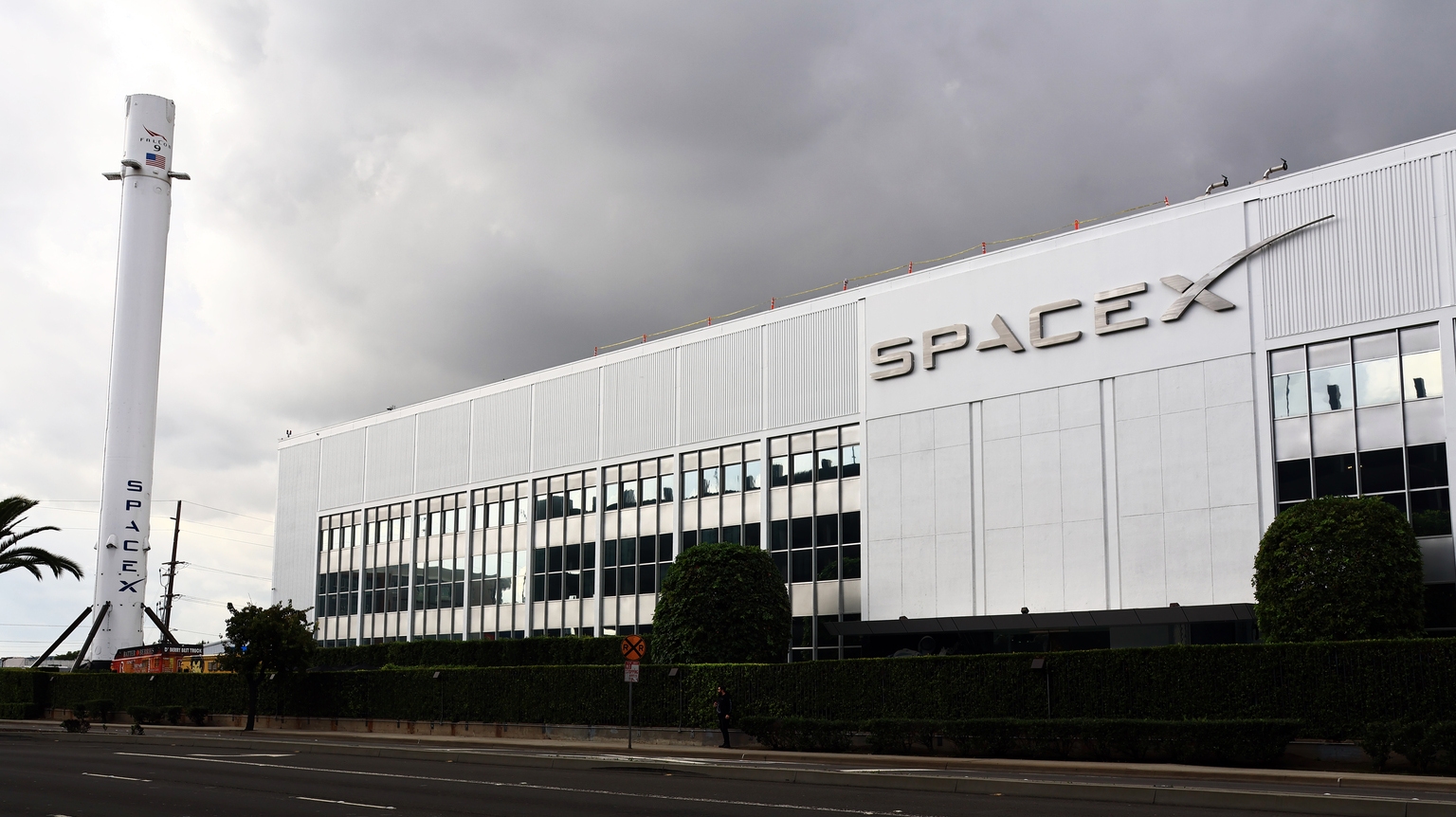
SpaceX Joined 6 Stocks in the $2 Trillion Club. Here's My Top Pick for July.
Before the end of its first trading day on the Nasdaq, Elon Musk's Space Exploration Technologies (NASDAQ: SPCX), or SpaceX, had joined an elite club: stocks with at least $2 trillion in market capitalization. The club is so exclusive that only six other stocks belong to it. And unlike SpaceX, most of them underperformed in June. Here's my pick for the best one to buy in July. Missed Nvidia in 2009? This Rare Signal Is Flashing Again. In 2009, a "Double Down" signal flashed for a little-known chipmaker called Nvidia. For the first time in years, that same "Total Conviction" signal is flashing for a company 1/100th the size of Nvidia. Continue " Biggest of the big The seven largest stocks in the world are currently: *Data as of market close on 6/29/2026. **SpaceX performance since Nasdaq debut at $150/share on 6/12/2026. Aside from TSMC and, of course, SpaceX, all of these huge companies saw big share price declines over the past month. One big reason? Ongoing concerns about how they might be impacted by the current memory shortage. Memory loss High-end memory chips for dynamic random access memory (DRAM) and N-AND flash memory (NAND) are in very short supply, and as a result, they've gotten much more expensive. Yet DRAM and NAND are critical for AI applications and for many consumer devices, such as smartphones and laptops. For Apple, more expensive DRAM and NAND chips mean the company has to accept thinner product margins for its devices that include DRAM and NAND, like iPhones and MacBooks, or pass that cost along to consumers. It had been absorbing the costs, but this month announced it would have to pass the costs on and raised prices on many of its products. Investors punished the stock, concerned that higher costs would hurt sales. For Alphabet, Microsoft, and Amazon, the memory shortage means they'll have to pay more for memory chips for their AI data center build-outs. These "hyperscalers" are already incurring massive AI capital expenditures, which are likely to increase even further in the short term as memory gets more expensive. The market is worried the costs won't justify the eventual benefits. I think these concerns are likely to persist in the short term, which is why I'm not picking any of these stocks as my top July pick.
SpaceX Faces Post-IPO Volatility, Yet Wall Street Predicts Significant Stock Price Gains
* SpaceX's stock has seen volatility since the company's IPO nearly three weeks ago, but analysts project significant long-term growth. * Analysts highlight the Starship reusable rocket as a pillar of the company's future success, and point to growing AI revenue and the potential for acquisitions as additional reasons for optimism. * Risks include high cash burn and reliance on aggressive growth assumptions for future success. Wall Street is starting to size up SpaceX (SPCX), and the stock is getting stellar reviews. Analysts who have launched coverage of the stock since the company's IPO have said SpaceX stands to become "a major hyperscaler" and "the largest communications, cloud and AI company in the world." That positivity didn't translate into gains today -- the stock fell 8% to around $157.50 -- but Wall Street sees plenty of room for SpaceX shares to rise in the months ahead. The average price target from three firms that have initiated coverage of the stock recently stands at $203. While well below the $225 all-time high hit two weeks ago, it's nearly 30% above current levels, and 35% higher than the opening price for SpaceX shares when they began trading on June 12. WHY THIS MATTERS TO YOU Elon Musk's space exploration, connectivity and AI company is now a part of major benchmark indexes and the funds that track them, and will be joining some more, which means the stock's performance is likely represented in your retirement account. The latest bullish view was delivered Tuesday by analysts at Wedbush led by Dan Ives, who initiated coverage of SpaceX with an "outperform" rating and a price target of $190. That target is derived from revenue estimates for 2028, which is expected to be the first year that all three of SpaceX's businesses scale. They view SpaceX's spacecraft and rocket called Starship as "the essential layer" driving the company's success. Its reusability is a strategic advantage from a cost perspective, but also generates a "feedback loop" through which the company can improve its flight rates without driving up capital expenditures, according to Ives and his team. They add that without it, the company's broadband business Starlink would not have reached the scale it has so far, and that SpaceX's ambitions to build orbital data centers would otherwise not be "feasible." Oppenheimer's Timothy Horan started coverage on the stock on June 11, prior to the company's IPO, with an "Outperform" rating and a $190 price target. A week later, the firm raised the target to $250 following SpaceX's acquisition of AI startup Cursor. Horan's models suggest that Cursor revenue will hit $6 billion by the end of this year, raising SpaceX's AI business revenue by 84% to $8.75 billion in the fourth quarter.
4 Lessons for Future OpenAI and Anthropic Investors, Following SpaceX's Historic IPO
SpaceX (NASDAQ: SPCX), the aerospace and AI company founded by Elon Musk, went public on June 12 at a valuation of $1.77 trillion, making it the largest IPO in history. It went public at $135 per share, started trading at $150, and hit a record high of $225.64 on June 16. But as of this writing, SpaceX's stock trades at about $160. Many investors who hopped on the bandwagon in its first four days are now underwater. That volatile market debut should teach investors four valuable lessons about hot IPOs like SpaceX -- and how they should approach OpenAI and Anthropic, two of the market's most eagerly anticipated AI IPOs, in the future. Missed Nvidia in 2009? This Rare Signal Is Flashing Again. In 2009, a "Double Down" signal flashed for a little-known chipmaker called Nvidia. For the first time in years, that same "Total Conviction" signal is flashing for a company 1/100th the size of Nvidia. Continue " 1. Valuations matter When SpaceX went public, it was already valued at 95 times its 2025 revenue of $18.7 billion. At its peak market cap of $2.66 trillion, it was valued at 142 times its trailing sales. Those were sky-high valuations, even for a company that grew its revenue by 33% in 2025. As of this writing, SpaceX is worth $2.1 trillion, or 112 times last year's sales. OpenAI was most recently valued at $852 billion, and its founders hope to go public with a market cap of $1 trillion. That would be 50 times its annualized revenue run rate of $20 billion at the end of 2025, making it seem more reasonably valued than SpaceX. Anthropic, valued at $965 billion after its latest funding round, only had an annualized revenue run rate of $9 billion at the end of 2025. If it's also targeting a $1 trillion IPO, it would debut at 111 times its annualized revenue -- making it more comparable to SpaceX. 2. Profits matter SpaceX was actually profitable in 2025, as Starlink's profits offset its space division's losses. But this year, it acquired xAI (which owns Grok and X) in an all-stock acquisition before its IPO. After recasting its 2025 financials to account for that acquisition, it became deeply unprofitable. The critics claimed that Musk was bailing out xAI at the expense of SpaceX's shareholders. OpenAI and Anthropic -- which are both unprofitable -- will also be closely scrutinized when they go public. OpenAI is still racking up steep losses, but Anthropic's rapid expansion in the enterprise market (with tools like Claude Code) is quickly reducing its operating losses. Anthropic even expects to post its first adjusted operating profit this year.
SpaceX Went From $150 to $225 and Back in Under 2 Weeks -- Here's the Math That Explains Every Dollar of That Move
The long-awaited IPO of Space Exploration Technologies (NASDAQ: SPCX), or SpaceX for short, finally arrived on June 12. Shares shot up like a rocket on their first day of trading, soaring to $150 and then to $225 in short order. But the stock has reversed course just as quickly, falling back to around $150, a round trip that took place in under two weeks. A lot is happening with SpaceX right now, from rampant hype around space and artificial intelligence (AI) to the company's recent $60 billion acquisition of Cursor. But there is real, underlying math that helps explain why SpaceX stock is so volatile right out the gate, and what it might mean for the stock price moving forward. Where to invest $1,000 right now? Our analyst team just revealed what they believe are the 10 best stocks to buy right now, when you join Stock Advisor. See the stocks " Looking at SpaceX's quick surge and sudden decline SpaceX was the largest IPO in history, and arguably one of the most hyped. There were tons of investors who wanted to buy shares. By design, SpaceX only made a small portion of its total stock publicly available on IPO day, just 4.24%. These publicly tradable shares are called the float. The small float and overwhelming demand for SpaceX shares created a classic supply-and-demand situation, in which the stock price rocketed higher in the days immediately following its market debut. But demand eventually peaks, and investors saw SpaceX reverse course after reaching about $225 per share. Image source: The Motley Fool. So, why did the stock cool off? There are probably a few reasons. First, SpaceX's stock was very expensive at its high. Second, the company is funding its $60 billion acquisition of Cursor with stock, diluting existing investors. The market often sells off stocks in these scenarios to reflect the anticipated dilution. Lastly, IPO day is often when excitement peaks. Investors then have a few days to step back and assess, and that hype and excitement usually fade a bit. Where is the rest of SpaceX's stock? Newly public companies have lockup periods that prevent insiders and employees from dumping their stock into the buying frenzy on IPO day. While typical lockup periods are around 180 days, SpaceX is using a staggered lockup period that gradually allows insiders to sell and expand the float at a controlled pace. The earliest selling window opens after SpaceX's first earnings report, assuming the stock meets certain share price thresholds. There are several windows after that, building up to the traditional lockup expiration after 180 days. Additionally, CEO Elon Musk and other significant investors are subject to a 366-day lockup, allowing them to begin selling shares on June 14, 2027. Remember, investors can currently trade only 4.24% of SpaceX's total shares. The current float of approximately 555.6 million shares could multiply as these lockups expire over the next year. Circling back to the supply-and-demand dynamic, a steadily growing float puts a thumb on the supply side of the scale. Looking at where SpaceX's share price might go from here Meanwhile, SpaceX still trades at a $2 trillion market cap, approximately 110 times its 2025 revenue of $18.6 billion. It remains one of the market's most expensive stocks, even after the recent dip. High valuations create high expectations. The selling pressure could intensify if SpaceX cannot deliver the growth to justify such a high valuation. There are several reasons to love SpaceX as a long-term investment. That said, the stock's quick dip from $225 could be a warning sign of how quickly SpaceX can shed value if market sentiment turns against it. Understanding how the float will expand over the coming year will help investors weigh the risks of buying shares now versus waiting for the dust to settle. Should you buy stock in Space Exploration Technologies right now? Before you buy stock in Space Exploration Technologies, consider this: The Motley Fool Stock Advisor analyst team just identified what they believe are the 10 best stocks for investors to buy now... and Space Exploration Technologies wasn't one of them. The 10 stocks that made the cut could produce monster returns in the coming years. Consider when Netflix made this list on December 17, 2004... if you invested $1,000 at the time of our recommendation, you'd have $400,101!* Or when Nvidia made this list on April 15, 2005... if you invested $1,000 at the time of our recommendation, you'd have $1,212,683!* Now, it's worth noting Stock Advisor's total average return is 911% -- a market-crushing outperformance compared to 208% for the S&P 500. Don't miss the latest top 10 list, available with Stock Advisor, and join an investing community built by individual investors for individual investors. See the 10 stocks " *Stock Advisor returns as of July 3, 2026. Justin Pope has no position in any of the stocks mentioned. The Motley Fool has no position in any of the stocks mentioned. The Motley Fool has a disclosure policy. The views and opinions expressed herein are the views and opinions of the author and do not necessarily reflect those of Nasdaq, Inc.

SpaceX Went From $150 to $225 and Back in Under 2 Weeks -- Here's the Math That Explains Every Dollar of That Move
The long-awaited IPO of Space Exploration Technologies (NASDAQ: SPCX), or SpaceX for short, finally arrived on June 12. Shares shot up like a rocket on their first day of trading, soaring to $150 and then to $225 in short order. But the stock has reversed course just as quickly, falling back to around $150, a round trip that took place in under two weeks. A lot is happening with SpaceX right now, from rampant hype around space and artificial intelligence (AI) to the company's recent $60 billion acquisition of Cursor. But there is real, underlying math that helps explain why SpaceX stock is so volatile right out the gate, and what it might mean for the stock price moving forward. Missed Nvidia in 2009? This Rare Signal Is Flashing Again. In 2009, a "Double Down" signal flashed for a little-known chipmaker called Nvidia. For the first time in years, that same "Total Conviction" signal is flashing for a company 1/100th the size of Nvidia. Continue " Looking at SpaceX's quick surge and sudden decline SpaceX was the largest IPO in history, and arguably one of the most hyped. There were tons of investors who wanted to buy shares. By design, SpaceX only made a small portion of its total stock publicly available on IPO day, just 4.24%. These publicly tradable shares are called the float. The small float and overwhelming demand for SpaceX shares created a classic supply-and-demand situation, in which the stock price rocketed higher in the days immediately following its market debut. But demand eventually peaks, and investors saw SpaceX reverse course after reaching about $225 per share. So, why did the stock cool off? There are probably a few reasons. First, SpaceX's stock was very expensive at its high. Second, the company is funding its $60 billion acquisition of Cursor with stock, diluting existing investors. The market often sells off stocks in these scenarios to reflect the anticipated dilution. Lastly, IPO day is often when excitement peaks. Investors then have a few days to step back and assess, and that hype and excitement usually fade a bit. Where is the rest of SpaceX's stock? Newly public companies have lockup periods that prevent insiders and employees from dumping their stock into the buying frenzy on IPO day. While typical lockup periods are around 180 days, SpaceX is using a staggered lockup period that gradually allows insiders to sell and expand the float at a controlled pace. The earliest selling window opens after SpaceX's first earnings report, assuming the stock meets certain share price thresholds. There are several windows after that, building up to the traditional lockup expiration after 180 days. Additionally, CEO Elon Musk and other significant investors are subject to a 366-day lockup, allowing them to begin selling shares on June 14, 2027.