News & Updates
The latest news and updates from companies in the WLTH portfolio.
SpaceX Targets Thursday Launch for Starship's 13th Test Flight After Last-Minute Delay
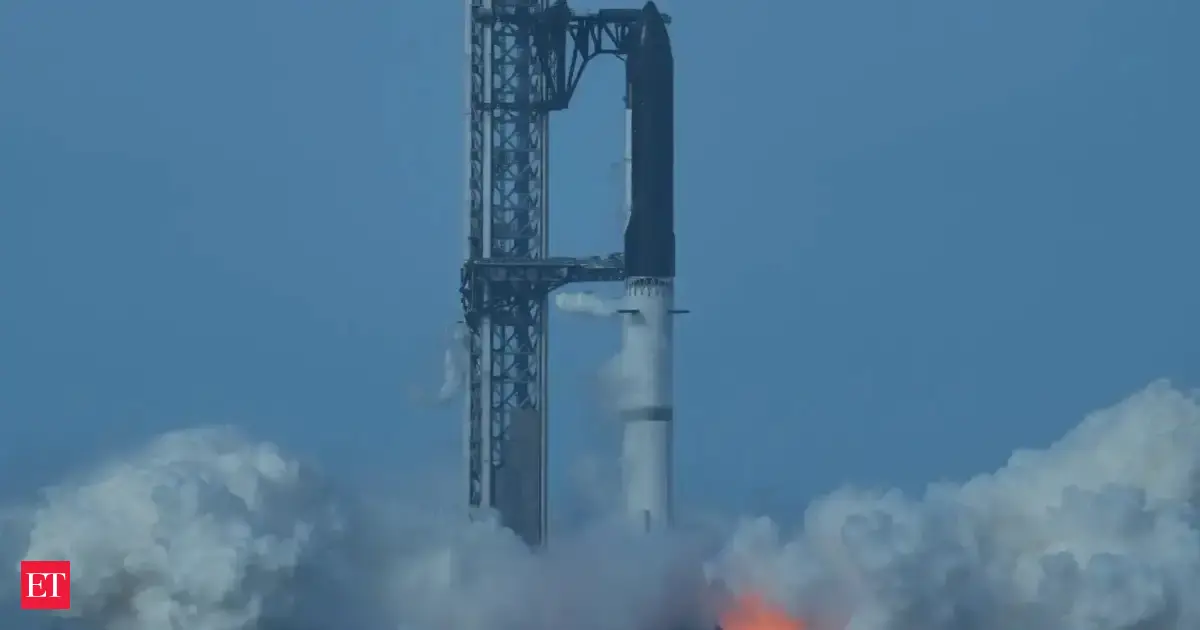
SpaceX (NASDAQ: SPCX) plans to launch the 13th test flight of its Starship rocket as early as Thursday, following the cancellation of a previous launch attempt just minutes before liftoff due to engine startup issues. The upcoming mission will focus on achieving a successful launch, ascent, stage separation, boostback burn, and landing burn at a designated offshore location. SpaceX also confirmed that the Starship vehicle will carry Starlink V3 satellites, marking another step in expanding its next-generation satellite internet network. The latest launch attempt was called off after several engines failed to ignite during the final countdown. The setback followed engine-related issues encountered during Starship's 12th test flight, which prompted an investigation by the Federal Aviation Administration (FAA). According to SpaceX, engineers have implemented multiple hardware and software upgrades to address the problems identified during the previous mission. The company said the changes are intended to improve the rocket's reliability and increase the likelihood of a successful test flight. The 13th Starship test will be the first since SpaceX completed its blockbuster initial public offering (IPO) in June. Investor sentiment has remained under pressure after last week's canceled launch, contributing to further declines in the company's share price. SpaceX stock has continued to trade below its IPO level, reflecting growing concerns over repeated testing delays and technical challenges. Since reaching a post-IPO peak market valuation of approximately $2.64 trillion, the company has lost roughly $1 trillion in market value. Despite the recent setbacks, Starship remains central to SpaceX's long-term ambitions, including deploying larger Starlink payloads, supporting future lunar missions, and eventually enabling human exploration of Mars. The upcoming test flight will be closely watched by investors, regulators, and the broader aerospace industry as the company seeks to demonstrate meaningful progress in its flagship rocket program.
SpaceX targets July 23 for next Starship launch after last-minute abort
Elon Musk's SpaceX is targeting July 23 for the 13th Starship test flight after a last-second launch abort last week. The mission will carry 20 Starlink satellites on a suborbital test as the company pushes toward routine orbital deployments by year-end. SpaceX is targeting Thursday, July 23, for another attempt to launch its Starship rocket, the company said in a statement on Sunday. SpaceX CEO Elon Musk posted on X later on Sunday that the next Starship launch would occur on Friday, contradicting the earlier statement from his company. He did not say whether the original Thursday date was wrong. On July 16, SpaceX's Starship rocket triggered a last-second abort before liftoff for its 13th flight test from Texas, which erased about $100 billion from the company's market value. SpaceX said it has modified Starship's propulsion system to address the engine issue experienced on the previous flight. A launch delay for the $15 billion rocket development program better known for dramatic engineering feats and explosive testing failures is not uncommon. On Friday, SpaceX said it would attempt the launch on July 20. The company has launched 12 Starship test flights since 2023. On its 13th flight test, Starship will carry 20 Starlink satellites to demonstrate its satellite-dispensing system and the Starlink network's laser communication links, but those satellites will follow the ship's suborbital trajectory and burn up in Earth's atmosphere soon after deployment. In its prospectus, SpaceX said that it aims to launch the first Starlink satellites to orbit on Starship by year's end, followed by routine launches.
Should You Buy $1,000 Worth of SpaceX Stock Before Its First Earnings Report?
One of the more recent arrivals to our stock market, Space Exploration Technologies (NASDAQ: SPCX), better known as SpaceX, has never published a quarterly earnings report as a publicly traded company. That's going to change soon. While the market doesn't yet have a firm date for when the figures for its second quarter ending June 30 might be released, it's reasonable to expect a report in early August. So there's time to consider if it's worth spending $1,000 on the company's stock. I wouldn't be willing, and here's why. Missed Nvidia in 2009? This Rare Signal Is Flashing Again. In 2009, a "Double Down" signal flashed for a little-known chipmaker called Nvidia. For the first time in years, that same "Total Conviction" signal is flashing for a company 1/100th the size of Nvidia. Continue " Image source: Getty Images. Moving in the darkness One of the primary reasons is that SpaceX remains something of a mystery. Its name is somewhat misleading, since most of its operations aren't directly involved in space exploration. It has a thriving satellite business with Starlink, a high-capex artificial intelligence (AI) unit that builds data centers and manages the X (formerly Twitter) social media platform, as well as a space business. While the company intends for all these operations to complement each other, SpaceX is at present more of a jumble of activities that don't necessarily synthesize. That, plus the fact that the company's pre-IPO filings don't provide much detail about its finances, makes the second quarter hard to estimate. This is surely why analyst projections are all over the place. There are many pundits already tracking SpaceX stock; 25 of them are included in the data compiled by Yahoo! Finance, for example. But, unusually for analysts, their estimates don't sit within a relatively narrow range. Their figures for the quarter's revenue have a range of nearly $3 billion -- from $5.3 billion to $8.1 billion. Those prognosticators seem to agree that the historically loss-making SpaceX will also land in the red in the second quarter. The big question is by how much -- the current net loss estimates range from $0.12 to $0.42. Stuck on the launchpad Another element keeping me away from SpaceX is that it's still experiencing setbacks in its headline activity. Late Thursday afternoon, the company unexpectedly aborted the latest launch of its Starship rocket, after some of its engines apparently failed to start. Uncomfortably, this is the heavy rocket that's supposed to be the launch vehicle helping power the company to astronomical success and glory. Mission aborts happen, of course, but there's an awful lot of capital betting on that not to occur -- at least, not often -- at SpaceX. Understandably, the stock fell after the sudden cancellation (SpaceX stock fell 5% in Friday trading). With that decline, $1,000 would buy eight shares of SpaceX. That's not a huge commitment in the grand scheme of things, but even given that, I'd hold off on investing in this stock. The second quarter is sure to feature plenty of red ink, and the company still has at least one major operational kink to work out. I feel that money has better potential for liftoff in other stocks. Should you buy stock in Space Exploration Technologies right now? Before you buy stock in Space Exploration Technologies, consider this: The Motley Fool Stock Advisor analyst team just identified what they believe are the 10 best stocks for investors to buy now... and Space Exploration Technologies wasn't one of them. The 10 stocks that made the cut could produce monster returns in the coming years. Consider when Netflix made this list on December 17, 2004... if you invested $1,000 at the time of our recommendation, you'd have $371,842!* Or when Nvidia made this list on April 15, 2005... if you invested $1,000 at the time of our recommendation, you'd have $1,244,783!* Now, it's worth noting Stock Advisor's total average return is 900% -- a market-crushing outperformance compared to 207% for the S&P 500. Don't miss the latest top 10 list, available with Stock Advisor, and join an investing community built by individual investors for individual investors. See the 10 stocks " *Stock Advisor returns as of July 19, 2026. Eric Volkman has no position in any of the stocks mentioned. The Motley Fool has no position in any of the stocks mentioned. The Motley Fool has a disclosure policy. The views and opinions expressed herein are the views and opinions of the author and do not necessarily reflect those of Nasdaq, Inc.

Should You Buy $1,000 Worth of SpaceX Stock Before Its First Earnings Report?
One of the more recent arrivals to our stock market, Space Exploration Technologies (NASDAQ: SPCX), better known as SpaceX, has never published a quarterly earnings report as a publicly traded company. That's going to change soon. While the market doesn't yet have a firm date for when the figures for its second quarter ending June 30 might be released, it's reasonable to expect a report in early August. So there's time to consider if it's worth spending $1,000 on the company's stock. I wouldn't be willing, and here's why. Missed Nvidia in 2009? This Rare Signal Is Flashing Again. In 2009, a "Double Down" signal flashed for a little-known chipmaker called Nvidia. For the first time in years, that same "Total Conviction" signal is flashing for a company 1/100th the size of Nvidia. Continue " Moving in the darkness One of the primary reasons is that SpaceX remains something of a mystery. Its name is somewhat misleading, since most of its operations aren't directly involved in space exploration. It has a thriving satellite business with Starlink, a high-capex artificial intelligence (AI) unit that builds data centers and manages the X (formerly Twitter) social media platform, as well as a space business. While the company intends for all these operations to complement each other, SpaceX is at present more of a jumble of activities that don't necessarily synthesize. That, plus the fact that the company's pre-IPO filings don't provide much detail about its finances, makes the second quarter hard to estimate. This is surely why analyst projections are all over the place. There are many pundits already tracking SpaceX stock; 25 of them are included in the data compiled by Yahoo! Finance, for example. But, unusually for analysts, their estimates don't sit within a relatively narrow range. Their figures for the quarter's revenue have a range of nearly $3 billion -- from $5.3 billion to $8.1 billion. Those prognosticators seem to agree that the historically loss-making SpaceX will also land in the red in the second quarter. The big question is by how much -- the current net loss estimates range from $0.12 to $0.42. Stuck on the launchpad Another element keeping me away from SpaceX is that it's still experiencing setbacks in its headline activity. Late Thursday afternoon, the company unexpectedly aborted the latest launch of its Starship rocket, after some of its engines apparently failed to start. Uncomfortably, this is the heavy rocket that's supposed to be the launch vehicle helping power the company to astronomical success and glory.
SpaceX Starship Flight 13 Pushed to Friday July 24, 2026
Brian Wang is a Futurist Thought Leader and a popular Science blogger with 1 million readers per month. His blog Nextbigfuture.com is ranked #1 Science News Blog. It covers many disruptive technology and trends including Space, Robotics, Artificial Intelligence, Medicine, Anti-aging Biotechnology, and Nanotechnology. Known for identifying cutting edge technologies, he is currently a Co-Founder of a startup and fundraiser for high potential early-stage companies. He is the Head of Research for Allocations for deep technology investments and an Angel Investor at Space Angels. A frequent speaker at corporations, he has been a TEDx speaker, a Singularity University speaker and guest at numerous interviews for radio and podcasts. He is open to public speaking and advising engagements.
SpaceX moves Starship launch attempt to Thursday
July 19 (Reuters) - SpaceX is targeting Thursday, July 23, for another attempt to launch its Starship rocket, the company said in a statement on Sunday. SpaceX CEO Elon Musk posted on X later on Sunday that the next Starship launch would occur on Friday, contradicting the earlier statement from his company. He did not say whether the original Thursday date was wrong. On July 16, SpaceX's Starship rocket triggered a last-second abort before liftoff for its 13th flight test from Texas, which erased about $100 billion from the company's market value. SpaceX said it has modified Starship's propulsion system to address the engine issue experienced on the previous flight. A launch delay for the $15 billion rocket development program better known for dramatic engineering feats and explosive testing failures is not uncommon. On Friday, SpaceX said it would attempt the launch on July 20. The company has launched 12 Starship test flights since 2023. On its 13th flight test, Starship will carry 20 Starlink satellites to demonstrate its satellite-dispensing system and the Starlink network's laser communication links, but those satellites will follow the ship's suborbital trajectory and burn up in Earth's atmosphere soon after deployment. In its prospectus, SpaceX said that it aims to launch the first Starlink satellites to orbit on Starship by year's end, followed by routine launches. (Reporting by Gursimran Kaur in Bengaluru; Editing by Matthew Lewis)

SpaceX moves Starship launch attempt to Thursday
July 19 (Reuters) - SpaceX is targeting Thursday, July 23, for another attempt to launch its Starship rocket, the company said in a statement on Sunday. SpaceX CEO Elon Musk posted on X later on Sunday that the next Starship launch would occur on Friday, contradicting the earlier statement from his company. He did not say whether the original Thursday date was wrong. On July 16, SpaceX's Starship rocket triggered a last-second abort before liftoff for its 13th flight test from Texas, which erased about $100 billion from the company's market value. SpaceX said it has modified Starship's propulsion system to address the engine issue experienced on the previous flight. A launch delay for the $15 billion rocket development program better known for dramatic engineering feats and explosive testing failures is not uncommon. On Friday, SpaceX said it would attempt the launch on July 20. The company has launched 12 Starship test flights since 2023. On its 13th flight test, Starship will carry 20 Starlink satellites to demonstrate its satellite-dispensing system and the Starlink network's laser communication links, but those satellites will follow the ship's suborbital trajectory and burn up in Earth's atmosphere soon after deployment. In its prospectus, SpaceX said that it aims to launch the first Starlink satellites to orbit on Starship by year's end, followed by routine launches. (Reporting by Gursimran Kaur in Bengaluru; Editing by Matthew Lewis)
Even With Elon Musk's SpaceX Stock (SPCX) Down Below Its IPO Price, I'd Still Rather Buy This Dividend Stock in July
There's been a lot of attention paid to Elon Musk's company Space Exploration Technologies (NASDAQ: SPCX), or SpaceX, and excitement over its debut on the stock market in June via an initial public offering (IPO). It was a huge IPO, raising some $75 billion and seeing the stock surge 19% to $193 on its first day. But the stock has struggled since and was recently below its IPO price, trading near $126 on July 17. Should you invest in SpaceX now? Well, you could. But I think there's a better stock to buy. Where to invest $1,000 right now? Our analyst team just revealed what they believe are the 10 best stocks to buy right now, when you join Stock Advisor. See the stocks " Image source: Getty Images. Consider General Mills Food giant General Mills (NYSE: GIS) is close to the opposite of SPX Technologies. Founded 160 years ago, in 1866, it's grown to be a powerhouse in the food sector, with brands such as Annie's, Betty Crocker, Bisquick, Cascadian Farm, Cheerios, Chex, Cinnamon Toast Crunch, Gold Medal, Green Giant, Kix, Larabar, Nature Valley, Old El Paso, Progresso, Totino's, Wanchai Ferry, and Wheaties -- among many others. Why invest in this specialist in cereals and much more? Well, several reasons: First, it's a solid dividend-paying stock, with a boffo recent dividend yield of 6.3%. Better still, the company has also been repurchasing shares (which rewards shareholders by making remaining shares more valuable), sending its total shareholder yield up to a recent 8.7%. (General Mills has paid a dividend for 127 consecutive years.) The stock is also looking undervalued, with a recent forward-looking price-to-earnings (P/E) ratio of 12.5, well below the five-year average of 15, and a price-to-sales ratio of 1.1, well below the five-year average of 1.8. The stock is appealingly priced, largely because it has fallen lately -- averaging annual losses of 15% over the past three years. In its third-quarter report, management pointed to several issues that affected its third quarter: retailer inventories and weather-related supply chain disruptions, along with brand-improving investments, divestitures, and unfavorable trade expense timing, among others. It noted, though, that these "timing headwinds [are] expected to become tailwinds in Q4." In the fourth quarter, CEO Jeff Harmening pointed to a continuing turnaround: We are laser focused on increasing our efficiency to help offset elevated inflation, fund our growth investments, and generate stronger earnings and cash flow. ... We're targeting $3 billion in cumulative cost savings by fiscal 2030. ... I'm confident we're on the path to restoring profitable growth and driving shareholder value over the long term. Recession resistance Here's a last reason to consider General Mills: Many are worrying about a stock market crash coming this year or soon, potentially with a recession following. If that does happen, it's often high-flying growth stocks that will fall most sharply. The companies that tend to hold their value relatively well are defensive ones -- those selling things that everyone needs. In a recession, you might put off getting a new car or dishwasher, but you'll still pay for electricity and your medications, as well as your Cheerios and Green Giant veggies. Given all that, I'd much rather invest in General Mills than SpaceX. Should you buy stock in General Mills right now? Before you buy stock in General Mills, consider this: The Motley Fool Stock Advisor analyst team just identified what they believe are the 10 best stocks for investors to buy now... and General Mills wasn't one of them. The 10 stocks that made the cut could produce monster returns in the coming years. Consider when Netflix made this list on December 17, 2004... if you invested $1,000 at the time of our recommendation, you'd have $371,842!* Or when Nvidia made this list on April 15, 2005... if you invested $1,000 at the time of our recommendation, you'd have $1,244,783!* Now, it's worth noting Stock Advisor's total average return is 900% -- a market-crushing outperformance compared to 207% for the S&P 500. Don't miss the latest top 10 list, available with Stock Advisor, and join an investing community built by individual investors for individual investors. See the 10 stocks " *Stock Advisor returns as of July 19, 2026. Selena Maranjian has no position in any of the stocks mentioned. The Motley Fool has no position in any of the stocks mentioned. The Motley Fool has a disclosure policy. The views and opinions expressed herein are the views and opinions of the author and do not necessarily reflect those of Nasdaq, Inc.
Should You Buy $1,000 Worth of SpaceX Stock Before Its First Earnings Report?
One of the more recent arrivals to our stock market, Space Exploration Technologies (SPCX 5.41%), better known as SpaceX, has never published a quarterly earnings report as a publicly traded company. That's going to change soon. While the market doesn't yet have a firm date for when the figures for its second quarter ending June 30 might be released, it's reasonable to expect a report in early August. So there's time to consider if it's worth spending $1,000 on the company's stock. I wouldn't be willing, and here's why. Moving in the darkness One of the primary reasons is that SpaceX remains something of a mystery. Its name is somewhat misleading, since most of its operations aren't directly involved in space exploration. It has a thriving satellite business with Starlink, a high-capex artificial intelligence (AI) unit that builds data centers and manages the X (formerly Twitter) social media platform, as well as a space business. While the company intends for all these operations to complement each other, SpaceX is at present more of a jumble of activities that don't necessarily synthesize. That, plus the fact that the company's pre-IPO filings don't provide much detail about its finances, makes the second quarter hard to estimate. This is surely why analyst projections are all over the place. There are many pundits already tracking SpaceX stock; 25 of them are included in the data compiled by Yahoo! Finance, for example. But, unusually for analysts, their estimates don't sit within a relatively narrow range. Their figures for the quarter's revenue have a range of nearly $3 billion -- from $5.3 billion to $8.1 billion. Those prognosticators seem to agree that the historically loss-making SpaceX will also land in the red in the second quarter. The big question is by how much -- the current net loss estimates range from $0.12 to $0.42. Stuck on the launchpad Another element keeping me away from SpaceX is that it's still experiencing setbacks in its headline activity. Late Thursday afternoon, the company unexpectedly aborted the latest launch of its Starship rocket, after some of its engines apparently failed to start. Uncomfortably, this is the heavy rocket that's supposed to be the launch vehicle helping power the company to astronomical success and glory. Mission aborts happen, of course, but there's an awful lot of capital betting on that not to occur -- at least, not often -- at SpaceX. Understandably, the stock fell after the sudden cancellation (SpaceX stock fell 5% in Friday trading). With that decline, $1,000 would buy eight shares of SpaceX. That's not a huge commitment in the grand scheme of things, but even given that, I'd hold off on investing in this stock. The second quarter is sure to feature plenty of red ink, and the company still has at least one major operational kink to work out. I feel that money has better potential for liftoff in other stocks.

SpaceX Moves Starship Launch Attempt to Thursday
SpaceX is targeting Thursday, July 23, for another attempt to launch its Starship rocket, the company said in a statement on Sunday. SpaceX CEO Elon Musk posted on X later on Sunday that the next Starship launch would occur on Friday, contradicting the earlier statement from his company. He did not say whether the original Thursday date was wrong. On July 16, SpaceX's Starship rocket triggered a last-second abort before liftoff for its 13th flight test from Texas, which erased about $100 billion from the company's market value. SpaceX said it has modified Starship's propulsion system to address the engine issue experienced on the previous flight. A launch delay for the $15 billion rocket development program better known for dramatic engineering feats and explosive testing failures is not uncommon. On Friday, SpaceX said it would attempt the launch on July 20. The company has launched 12 Starship test flights since 2023. On its 13th flight test, Starship will carry 20 Starlink satellites to demonstrate its satellite-dispensing system and the Starlink network's laser communication links, but those satellites will follow the ship's suborbital trajectory and burn up in Earth's atmosphere soon after deployment. In its prospectus, SpaceX said that it aims to launch the first Starlink satellites to orbit on Starship by year's end, followed by routine launches.
SpaceX loses its IPO premium as larger supply test approaches
SPCX shares have slid roughly 8% below their $135 IPO price as lockup expirations threaten to flood the market with new supply, offering a case study in how mega-IPOs reshape capital flows across asset classes. The largest IPO in history is already underwater. SpaceX shares, which debuted at $135 on June 12, have slipped to around $124 as of mid-July, putting the stock roughly 8% below its offering price and a long way from the $161 high it touched on day one. For a company that raised $75 billion in its initial offering, later expanded to $85.7 billion through a greenshoe option, that kind of reversal is not just a SpaceX story. It is a gravitational force acting on every risk asset in the market, crypto included. What happened to the rocket fuel SpaceX's Nasdaq debut was, by every measure, historic. The $135-per-share pricing implied a market capitalization of approximately $1.75 trillion, placing it among the most valuable public companies on the planet from day one. Early trading saw a 19% pop to around $161. The stock's 52-week range already stretches from $122.12 to $225.64. A scrubbed Starship test flight added to the negative sentiment, reminding investors that SpaceX's valuation is built partly on promises that still require successful execution. The current market cap sits at roughly $1.63 trillion, a meaningful haircut from the IPO-day peak. The pre-IPO secondary market was already flashing warning signs. In May 2026, ask orders totaled $12.8 billion against just $1.3 billion in bids. Sellers outnumbered buyers by nearly ten to one. That imbalance has now migrated into the public market. The lockup wall The bigger concern is what comes next. Lockup expirations are approaching, which means early investors, employees, and insiders who have been sitting on shares since long before the IPO will soon be able to sell. When a company raises $85.7 billion and then unlocks even more supply, the math gets uncomfortable. Given that the stock is already trading below its IPO price, the demand picture is not exactly inspiring confidence. Investors who bought at $135 are underwater. Those who chased the $161 first-day high are down roughly 23%. Why crypto investors should care SpaceX has no cryptocurrency token. There is no blockchain protocol involved. The IPO was conducted through traditional brokerages on a conventional stock exchange. Because capital allocation is a zero-sum game at the margins. When the largest IPO in history vacuums up $85.7 billion in capital, that money comes from somewhere. Some of it comes from bond allocations, some from other equities, and some, inevitably, from alternative assets like crypto. The pre-IPO secondary market data is particularly telling for anyone who tracks crypto market structure. A $12.8 billion ask wall against $1.3 billion in bids looks a lot like an altcoin order book during a distribution phase: when supply overwhelms demand, price discovery moves in one direction. If SPCX stabilizes above $120 and absorbs the lockup supply without a major leg down, it suggests the market has enough depth to handle large new issuances. If it breaks below $122, its current 52-week low, the ripple effects will extend well beyond aerospace stocks.
SpaceX (SPCX) Loses Its IPO Premium as a Bigger Supply Test Looms
With investors increasingly questioning whether massive AI and infrastructure spending will generate adequate returns, Space Exploration Technologies Corp (NASDAQ:SPCX) has become one of the stocks caught in the broader valuation reset. SPCX has dropped below its $135 IPO price after a sharp rally to all-time highs of $225.64. With the stock trading at about $123, it has shed about 45% in share price from its all-time high. It is also down by about 9% from its IPO price. Valuation Debate The significant share price pullback, as initial IPO enthusiasm cools, comes as investors increasingly assess whether the price was justified. SpaceX's valuation assumes flawless execution, which remains a big concern. The stock has traded at about 45x estimated 2026 sales, far above most large technology companies. Investors are therefore paying for many years of future growth rather than current earnings. Source: Pexels The IPO valuation implied expectations consistent with revenue approaching roughly $178 billion by 2035 and potentially exceeding $500 billion over the following decade. In 2025, the company's sales rose 33% to $18.67 billion, with Starlink accounting for about 60% of the total. SpaceX's premium valuation stems from the expectation that the company will not only dominate commercial launches and satellite internet but also become a major player in AI infrastructure and space. Much of the valuation also depends on Starship becoming fully reusable and the company achieving large Starlink expansion. Bigger Supply Test Even as investors continue to question Space Exploration Technologies Corp (NASDAQ:SPCX) valuation, lock-up expiration presents one of the biggest near-term risk. The company created an unusually small public float of about 5% of total shares. Because only about 5% of shares were initially available for trading, scarcity supported the post-IPO price. As hundreds of millions of additional shares become eligible for sale, that scarcity premium could diminish even if the company's fundamentals remain unchanged By December, up to 40% of outstanding shares could become eligible for trading. On the other hand, Elon Musk shares will remain locked until mid-next year, meaning the largest insider stake won't be the source of selling pressure in the near term. The lock-up expirations are a technical headwind. While it does not affect the company's fundamentals, it increases the supply of tradable shares, which can put downward pressure on the stock. This is especially the case if demand weakens and insiders sell aggressively.
SpaceX (SPCX) Loses Its IPO Premium as a Bigger Supply Test Looms
With investors increasingly questioning whether massive AI and infrastructure spending will generate adequate returns, Space Exploration Technologies Corp (NASDAQ:SPCX) has become one of the stocks caught in the broader valuation reset. SPCX has dropped below its $135 IPO price after a sharp rally to all-time highs of $225.64. With the stock trading at about $123, it has shed about 45% in share price from its all-time high. It is also down by about 9% from its IPO price. Valuation Debate The significant share price pullback, as initial IPO enthusiasm cools, comes as investors increasingly assess whether the price was justified. SpaceX's valuation assumes flawless execution, which remains a big concern. The stock has traded at about 45x estimated 2026 sales, far above most large technology companies. Investors are therefore paying for many years of future growth rather than current earnings. Source: Pexels The IPO valuation implied expectations consistent with revenue approaching roughly $178 billion by 2035 and potentially exceeding $500 billion over the following decade. In 2025, the company's sales rose 33% to $18.67 billion, with Starlink accounting for about 60% of the total. SpaceX's premium valuation stems from the expectation that the company will not only dominate commercial launches and satellite internet but also become a major player in AI infrastructure and space. Much of the valuation also depends on Starship becoming fully reusable and the company achieving large Starlink expansion. Bigger Supply Test Even as investors continue to question Space Exploration Technologies Corp (NASDAQ:SPCX) valuation, lock-up expiration presents one of the biggest near-term risk. The company created an unusually small public float of about 5% of total shares. Because only about 5% of shares were initially available for trading, scarcity supported the post-IPO price. As hundreds of millions of additional shares become eligible for sale, that scarcity premium could diminish even if the company's fundamentals remain unchanged By December, up to 40% of outstanding shares could become eligible for trading. On the other hand, Elon Musk shares will remain locked until mid-next year, meaning the largest insider stake won't be the source of selling pressure in the near term. The lock-up expirations are a technical headwind. While it does not affect the company's fundamentals, it increases the supply of tradable shares, which can put downward pressure on the stock. This is especially the case if demand weakens and insiders sell aggressively.
How Buying SpaceX Today Could More Than 10X Your Net Worth
Let's cut to the chase. An investment in Space Exploration Technologies (NASDAQ: SPCX) today could very well grow your net worth tenfold if -- stay with me -- annual revenue grows at an average rate of about 42% for the next 15 years, or 23% over the next 25 years. If either came true, annual revenue would reach about $3.6 trillion, which is strikingly close to Morgan Stanley's 2040 forecast of $3.4 trillion for SpaceX. Where to invest $1,000 right now? Our analyst team just revealed what they believe are the 10 best stocks to buy right now, when you join Stock Advisor. See the stocks " With this in mind, let's take a closer look at my reasoning to see if this space stock is worth buying today. Image source: The Motley Fool. What would it take for SpaceX to grow tenfold? SpaceX came to the market in mid-June with a lofty valuation. After its debut, the stock followed a ballistic trajectory, launching vertically for a few days before tilting to an angle and dropping sharply. The stock trades at $125, more or less, roughly 44% below its all-time high. The company reported about $18.7 billion in 2025 revenue, which, broken out by business segment, was composed of $11.4 billion from connectivity, $4.1 billion from space, and $3.2 billion from artificial intelligence. With its $1.8 trillion market valuation, SpaceX trades at about 100 times sales, which means expectations are high, and revenue growth is already assumed. Analysts at both Goldman Sachs and Morgan Stanley predict that SpaceX's annual revenue will rise above $300 billion by 2030, which, yes, is only a few years from now. If these firms are even remotely correct, then SpaceX's annual revenue could grow at a staggering rate of about 77%. Morgan Stanley, as I mentioned above, goes even further: Analysts at the firm project annual revenue of $3.4 trillion in 2040, driven by astonishing growth in the business's AI segment. Here's where a tenfold gain in SpaceX could hypothetically come into play. If annual revenue were $3.6 trillion in 2040 -- slightly higher than Morgan Stanley's prediction -- then a price-to-sales ratio of 5 would put its market cap at about $18 trillion. That's about 10 times what it is today. That sounds incredible. Could SpaceX really be worth $18 trillion in 2040? If that sounds incredible, that's because it is. No company in the world is worth $18 trillion. Only one, Nvidia, has traded above a $5 trillion valuation, and only two, Amazon and Walmart, have trailing-12-month revenue topping $700 billion. SpaceX, however, is an extraordinary company, one that could break through barriers that once felt impenetrable. If Starlink becomes a dominant global communications network, if Starship radically lowers the cost of reaching orbit, if its AI segment grows into a multi-trillion-dollar business, SpaceX could eventually reach a point no company has reached before. Just be careful not to over-speculate. If any one of these three businesses performs poorly -- I'm looking at you, Grok -- the tenfold-return scenario could fall straight out of the sky. Indeed, never forget (for now) that this trillion-dollar company is generating less than $20 billion in revenue. Size your positions according to your risk tolerance, or wait for the valuation to come back down to earth before jumping in. Should you buy stock in Space Exploration Technologies right now? Before you buy stock in Space Exploration Technologies, consider this: The Motley Fool Stock Advisor analyst team just identified what they believe are the 10 best stocks for investors to buy now... and Space Exploration Technologies wasn't one of them. The 10 stocks that made the cut could produce monster returns in the coming years. Consider when Netflix made this list on December 17, 2004... if you invested $1,000 at the time of our recommendation, you'd have $371,842!* Or when Nvidia made this list on April 15, 2005... if you invested $1,000 at the time of our recommendation, you'd have $1,244,783!* Now, it's worth noting Stock Advisor's total average return is 900% -- a market-crushing outperformance compared to 207% for the S&P 500. Don't miss the latest top 10 list, available with Stock Advisor, and join an investing community built by individual investors for individual investors. See the 10 stocks " *Stock Advisor returns as of July 18, 2026. Steven Porrello has positions in Nvidia. The Motley Fool has positions in and recommends Amazon, Goldman Sachs Group, Nvidia, and Walmart. The Motley Fool has a disclosure policy. The views and opinions expressed herein are the views and opinions of the author and do not necessarily reflect those of Nasdaq, Inc.
How Buying SpaceX Today Could More Than 10X Your Net Worth
Let's cut to the chase. An investment in Space Exploration Technologies (NASDAQ: SPCX) today could very well grow your net worth tenfold if -- stay with me -- annual revenue grows at an average rate of about 42% for the next 15 years, or 23% over the next 25 years. If either came true, annual revenue would reach about $3.6 trillion, which is strikingly close to Morgan Stanley's 2040 forecast of $3.4 trillion for SpaceX. Missed Nvidia in 2009? This Rare Signal Is Flashing Again. In 2009, a "Double Down" signal flashed for a little-known chipmaker called Nvidia. For the first time in years, that same "Total Conviction" signal is flashing for a company 1/100th the size of Nvidia. Continue " With this in mind, let's take a closer look at my reasoning to see if this space stock is worth buying today. What would it take for SpaceX to grow tenfold? SpaceX came to the market in mid-June with a lofty valuation. After its debut, the stock followed a ballistic trajectory, launching vertically for a few days before tilting to an angle and dropping sharply. The stock trades at $125, more or less, roughly 44% below its all-time high. The company reported about $18.7 billion in 2025 revenue, which, broken out by business segment, was composed of $11.4 billion from connectivity, $4.1 billion from space, and $3.2 billion from artificial intelligence. With its $1.8 trillion market valuation, SpaceX trades at about 100 times sales, which means expectations are high, and revenue growth is already assumed. Analysts at both Goldman Sachs and Morgan Stanley predict that SpaceX's annual revenue will rise above $300 billion by 2030, which, yes, is only a few years from now. If these firms are even remotely correct, then SpaceX's annual revenue could grow at a staggering rate of about 77%. Morgan Stanley, as I mentioned above, goes even further: Analysts at the firm project annual revenue of $3.4 trillion in 2040, driven by astonishing growth in the business's AI segment. Here's where a tenfold gain in SpaceX could hypothetically come into play. If annual revenue were $3.6 trillion in 2040 -- slightly higher than Morgan Stanley's prediction -- then a price-to-sales ratio of 5 would put its market cap at about $18 trillion. That's about 10 times what it is today. That sounds incredible. Could SpaceX really be worth $18 trillion in 2040? If that sounds incredible, that's because it is. No company in the world is worth $18 trillion. Only one, Nvidia, has traded above a $5 trillion valuation, and only two, Amazon and Walmart, have trailing-12-month revenue topping $700 billion.
How Buying SpaceX Today Could More Than 10X Your Net Worth
Let's cut to the chase. An investment in Space Exploration Technologies (SPCX 5.41%) today could very well grow your net worth tenfold if -- stay with me -- annual revenue grows at an average rate of about 42% for the next 15 years, or 23% over the next 25 years. If either came true, annual revenue would reach about $3.6 trillion, which is strikingly close to Morgan Stanley's 2040 forecast of $3.4 trillion for SpaceX. With this in mind, let's take a closer look at my reasoning to see if this space stock is worth buying today. What would it take for SpaceX to grow tenfold? SpaceX came to the market in mid-June with a lofty valuation. After its debut, the stock followed a ballistic trajectory, launching vertically for a few days before tilting to an angle and dropping sharply. The stock trades at $125, more or less, roughly 44% below its all-time high. The company reported about $18.7 billion in 2025 revenue, which, broken out by business segment, was composed of $11.4 billion from connectivity, $4.1 billion from space, and $3.2 billion from artificial intelligence. With its $1.8 trillion market valuation, SpaceX trades at about 100 times sales, which means expectations are high, and revenue growth is already assumed. Analysts at both Goldman Sachs and Morgan Stanley predict that SpaceX's annual revenue will rise above $300 billion by 2030, which, yes, is only a few years from now. If these firms are even remotely correct, then SpaceX's annual revenue could grow at a staggering rate of about 77%. Morgan Stanley, as I mentioned above, goes even further: Analysts at the firm project annual revenue of $3.4 trillion in 2040, driven by astonishing growth in the business's AI segment. Here's where a tenfold gain in SpaceX could hypothetically come into play. If annual revenue were $3.6 trillion in 2040 -- slightly higher than Morgan Stanley's prediction -- then a price-to-sales ratio of 5 would put its market cap at about $18 trillion. That's about 10 times what it is today. That sounds incredible. Could SpaceX really be worth $18 trillion in 2040? If that sounds incredible, that's because it is. No company in the world is worth $18 trillion. Only one, Nvidia, has traded above a $5 trillion valuation, and only two, Amazon and Walmart, have trailing-12-month revenue topping $700 billion. SpaceX, however, is an extraordinary company, one that could break through barriers that once felt impenetrable. If Starlink becomes a dominant global communications network, if Starship radically lowers the cost of reaching orbit, if its AI segment grows into a multi-trillion-dollar business, SpaceX could eventually reach a point no company has reached before. Just be careful not to over-speculate. If any one of these three businesses performs poorly -- I'm looking at you, Grok -- the tenfold-return scenario could fall straight out of the sky. Indeed, never forget (for now) that this trillion-dollar company is generating less than $20 billion in revenue. Size your positions according to your risk tolerance, or wait for the valuation to come back down to earth before jumping in.
Air Force Boosts Space Launch Program to $17 Billion, Expanding Awards for SpaceX, Blue Origin and Five Others
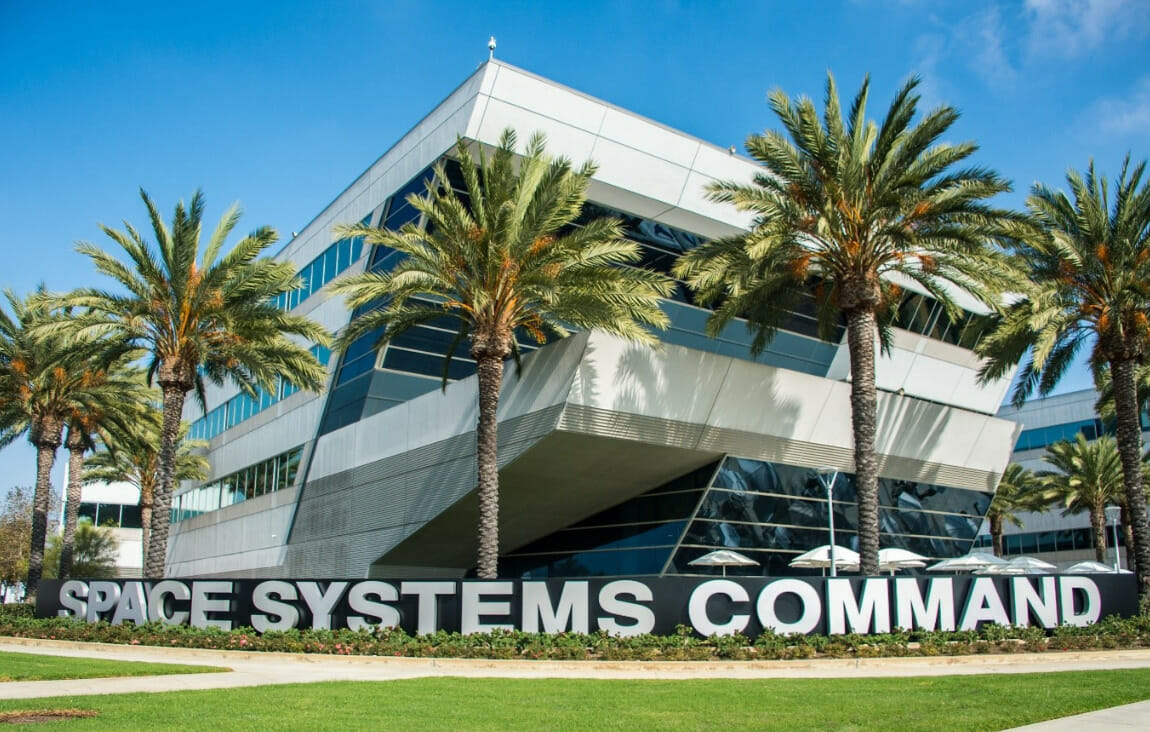
Subscribe to the Daily Intelligence for your daily dose of career intel, defense contracts and security clearance news. Contracts Valued at $7.5 Million and Above AIR FORCE United Launch Services LLC, Centennial, Colorado (FA8811-24-D-B001, P00008); Blue Origin LLC, Merritt Island, Florida (FA8811-24-D-B002, P00009); Space Exploration Technologies Corp., Hawthorne, California (FA8811-24-D-B003, P00008); Stoke Space Technologies, Inc., Renton, Washington (FA8811-25-D-B006, P00006); Rocket Lab USA Inc., Long Beach, California (FA8811-25-D-B007, P00005); Impulse Space Inc., Redondo Beach, California (FA8811-26-D-B001, P00001); and Relativity Federal Inc., Long Beach, California (FA8811-26-D-B003, P00001), have been awarded modifications to previously awarded contracts for National Security Space Launch Phase Three Lane One that will cumulatively increase the ceiling by $11,400,000,000. These modifications bring the total cumulative face value of the contract to $17,000,000,000 from $5,600,000,000. The location and period of performance will be determined at the task order level. No funds are being obligated at time of award. Space Systems Command, Space Access, Los Angeles Air Force Base, California, is the contracting activity. Raytheon Corp., Woburn, Massachusetts (FA8723-26-9-B0003, $309,472,660); SciTec Innovations LLC, Princeton, New Jersey (FA872-26-9-B001, $93,704,410); and WildStar LLC, Arlington, Texas (FA8723-26-9-B002, $20,226,551), have been awarded firm-fixed price other transaction agreements for ground-based radar digitization. These contracts provide for modernization efforts to create a common architecture and design for the upgrade of ground-based radars. Work will be performed in Arlington, Texas; Princeton, New Jersey; and Woburn, Massachusetts, and is expected to be completed April 21, 2028. These contracts were competitive acquisitions, and eight offers were received. Fiscal 2025 research, development, test and evaluation funds in the amount of $107,436,000 are being obligated at time of award. Space Systems Command, Colorado Springs, Colorado, is the contracting activity. Sigmatech Inc., Huntsville, Alabama, has been awarded a $108,862,926 firm-fixed-price contract for systems engineering and technical assistance. This contract provides for support to the Office of the Assistant Secretary for Space Acquisition and Integration. Work will be performed in the National Capital Region and is expected to be completed by July 23, 2031. This contract was a competitive acquisition, and four offers were received. Fiscal 2026 operations and maintenance funds in the amount of $43,183 are being obligated at time of award. The Air Force District of Washington, Joint Base Andrews, Maryland, is the contracting activity (FA7014-26-C-0022). Northrop Grumman Systems Corp., Baltimore, Maryland, has been awarded a $14,776,103 cost-plus-fixed-fee contract for research and development. This contract provides for algorithm development for multiple sensors. Work will be performed at Baltimore, Maryland, and is expected to be completed by October 17, 2031. This contract was a competitive acquisition, and seven offers were received. Fiscal 2026 research, development, test and evaluation funds in the amount of $1,000,000 are being obligated at the time of award. The Air Force Research Laboratory, Wright-Patterson Air Force Base, Ohio, is the contracting activity (FA2377-26-C-B034). NAVY Grunley Construction Co., Inc., Rockville, Maryland, is awarded a $117,755,087 firm-fixed-price contract for construction services for MQ-25 Aircraft Laydown Facilities. Work will be performed at Naval Station Norfolk, Virginia, and is expected to complete by April 2029. This contract is incrementally funded. Fiscal 2024 and 2026 military construction (Navy) funds in the amount of $65,817,578 for the first increment will be obligated at the time of the award and will not expire at the end of the fiscal year. Future increments will be funded in future fiscal years. contract was competitively procured via the SAM.gov website, with four offers received. The Naval Facilities Engineering Systems Command, Mid-Atlantic, Norfolk, Virginia, is the contracting activity (N40085-26-C-0017). Trevet-NOREAS JV LLC,* San Diego, California, is awarded a $45,000,000 firm-fixed-price, indefinite-delivery/indefinite-quantity contract for architect engineer services for environmental restoration services. Work will be performed at various locations within the Naval Facilities Engineering Systems Command (NAVFAC) Northwest area of responsibility and is expected to be completed by January 2032. The maximum dollar value, including one 24-month base period, one 36-month option period, and one 6-month option to extend services, is $45,000,000. Fiscal 2026 Environmental Restoration (Navy) funds in the amount of $10,000 will be obligated at time of award to satisfy the minimum guarantee and will not expire at the end of the current fiscal year. This contract was competitively procured via the SAM.gov website, with four offers received. NAVFAC Northwest, Silverdale, Washington, is the contracting activity (N44255-26-D-0008). Oshkosh Defense LLC, Oshkosh, Wisconsin, is awarded a hybrid firm-fixed-price and cost reimbursable basic ordering agreement (BOA) for diminishing manufacturing sources and material shortages (DMSMS). This BOA will require Oshkosh Defense to define and select replacement components, develop integration kits, test components and kits as needed, and create both engineering and logistics documentation to field the replacement components and kits smoothly in response to DMSMS issues associated with the medium tactical vehicle replacement, logistics vehicle system replacement, and P-19A replacement. Work will be performed in Oshkosh, Wisconsin, and is expected to be completed in July 2031. The maximum contract ceiling, including all ordering years, is $43,331,000. No funds will be obligated at time of award. Funds will be obligated on individual delivery orders as they are issued. This contract was a sole source acquisition pursuant to Federal Acquisition Regulation 6.302-1(a)(2)(iii). Program Acquisition Executive Marine Corps, Quantico, Virginia, is the contracting activity (M67854-26-G-0086). Ensign-Bickford Aerospace & Defense Co., Simsbury, Connecticut, is awarded a $29,521,000 firm-fixed-price, indefinite-delivery/indefinite-quantity contract for low hazard flexible linear shaped charges to cut and form metal in support of tactical and logistical operations. This contract does not include options. Work will be performed in Graham, Kentucky, and is expected to be completed by July 2031. Fiscal 2025 defense procurement funds in the amount of $671,642 will be obligated at time of award and will not expire at the end of the current fiscal year. This contract was not competitively procured in accordance with 10 U.S. Code 3204(a)(1), only one responsible source. Naval Surface Warfare Center, Crane Division, Crane, Indiana, is the contracting activity (N0016426DJR96). Kongsberg Defence and Aerospace, Kongsberg, Norway, was awarded a $25,919,093 firm-fixed-price modification to a previously awarded contract (N00024-25-C-5434) for encanistered missile-training rounds and launcher missile modules (dummy missiles in support of the U.S. Marine Corps Navy Marine Expeditionary Ship Interdiction System training requirements). This modification also procures other critical hardware and services including stacking frames, launch ramps, lifting pins, proof tests, and software installation tools, which are collectively essential for sustaining weapon system functionality, material readiness, installation testing support, and the testing of production and fielded systems for the Navy over-the-horizon weapon system. Work will be performed in Louisville, Kentucky (56%); Kongsberg, Norway (34%); Lunde, Norway (3%); Bohemia, New York (1%); State College, Pennsylvania (1%); and various locations all less than 1% (5%), and is expected to be completed by Nov 2032. Fiscal 2025 procurement (Marine Corps) funds in the amount of $11,077,159 (43%); fiscal 2026 procurement (USMC) funds in the amount of $10,310,137 (40%); fiscal 2026 weapons procurement (Navy) funds in the amount of $3,997,899 (15%); fiscal 2026 other procurement (Navy) funds in the amount of $300,465 (1%); and fiscal 2026 operations and maintenance (USMC) funds in the amount of $233,431 (1%), will be obligated at time of award, of which $233,431 will expire at the end of the current fiscal year. Naval Sea Systems Command, Washington, D.C., is the contracting activity (Awarded July 16, 2026). BAE Systems Ship Repair Inc., Norfolk, Virginia, is awarded a $24,361,392 cost-plus-award-fee modification to previously awarded contract (N00024-25-C-2301) to exercise options for post shakedown availability for USS Patrick Gallagher (DDG 127). Work will be performed in Norfolk, Virginia, and is expected to be completed by August 2027. Fiscal 2026 shipbuilding and conversion (Navy) funds in the amount of $16,762,092 (69%); and fiscal 2016 shipbuilding and conversion (Navy) funds in the amount of $7,599,300 (31%), will be obligated at the time of award and will not expire at the end of the current fiscal year. Naval Sea Systems Command, Washington, D.C. is the contracting activity. Corvid Technologies LLC,* Mooresville, North Carolina, is awarded a $15,300,000 modification to a previously awarded contract (N6339425C0003) for the design, manufacture, and delivery of short and medium range sub-orbital vehicle configurations, including provision of ground test hardware, special test equipment, materials, and engineering and launch support services. Work will be performed in Mooresville, North Carolina (37%); White Sands Missile Range, New Mexico (24%); Glen Burnie, Maryland (20%); Benbecula, Scotland (6%); Las Cruces, New Mexico (4%); Woomera, Australia (3%); Conroe, Texas (2%); Huntsville, Alabama (1%); San Nicolas Island, California (1%); Kekaha, Hawaii (1%); and Wallops Island, Virginia (1%), and is expected to be completed by July 2027. No funds will be obligated at time of award. Naval Surface Warfare Center, Port Hueneme, White Sands Detachment, Port Hueneme, California, is the contracting activity. L3 Technologies Inc., Camden, New Jersey, is being awarded an $11,885,868 firm-fixed-price modification to a previously awarded contract (N00024-22-C-5218) for spares. Work will be performed in Largo, Florida (69%); Salt Lake City, Utah (28%); and Lititz, Pennsylvania (3%), and is expected to be completed by September 2027. Fiscal 2025 other procurement (Navy) funds in the amount of $8,088,744 (68%); fiscal 2026 other procurement (Navy) funds in the amount of $3,567,774 (29%); fiscal 2022 ship construction (Navy) funds in the amount of $76,450 (1%); fiscal 2023 ship construction (Navy) funds in the amount of $76,450 (1%); and fiscal 2024 ship construction (Navy) funds in the amount of $76,450 (1%), will be obligated at the time of award and will not expire at the end of the current fiscal year. Naval Sea Systems Command, Washington, D.C., is the contracting activity. ARMY Alta Enterprises Inc., Center Valley, Pennsylvania, was awarded a $12,258,000 firm-fixed-price contract for computer numerical control multi-axis turning centers and Kobra 20SLY-X computer numerical control Swiss-type turning centers. One bid was solicited with one received. Work will be performed in Tobyhanna, Pennsylvania, with an estimated completion date of May 31, 2027. Fiscal 2026 funds in the amount of $12,258,000. Army Contracting Command, Aberdeen Proving Ground, Maryland, is the contracting activity (W51AA1-26-C-A009).
Elon Musk's Net Worth Slumps Amid Tesla, SpaceX Crash - Tesla (NASDAQ:TSLA), SpaceX (NASDAQ:SPCX)
Elon Musk's Net Worth Has Plunged Recently Bloomberg data shows that Musk's net worth has slumped to $792 billion from a high of $1.32 trillion last month. He is still the world's richest person by far, with his wealth being higher than the next two billionaires combined. Google's Larry Page and Sergey Brin are worth $297 billion and $276 billion, combined. Most of Musk's wealth is tied to SpaceX and Tesla, with the rest being in private companies like The Boring Company and Neuralink. Neuralink raised money at a $9 billion valuation last year, while The Boring Company is valued at $5.6 billion. Tesla stock is stuck in a bear market after falling by 23% from its highest point this year. SpaceX, which went public last month, has plunged to a record low, erasing over $1 trillion in value. This sell-off continued on Friday after aborting its launch following an engine failure. SpaceX's bond yields have jumped and are moving towards junk status. A $100 million allocation in its 2056 bonds would be worth about $90 million today. Tesla and SpaceX are Facing Major Challenges Elon Musk's companies are facing some major challenges. While Tesla's deliveries jumped in the second quarter, it is navigating a more difficult market as competition in key markets like China and Europe soars. SpaceX is also navigating a tough market in key industries. For example, its AI business is seeing elevated costs as memory, semiconductor, and server prices jump. Grok, its key product, has struggled to gain market share, with ChatGPT and Claude being the market leaders. SpaceX is also facing substantial competition in the satellite launching business, with Rocket Lab, Firefly Aerospace, and Blue Origin gaining market share. It is also burning billions of dollars in cash. Most importantly, the two companies are highly valued, with Tesla having a forward price-to-earnings ratio of 178. SpaceX trades at a forward price-to-sales ratio of 41, higher than many companies. The next key drivers for SpaceX and Tesla stocks will be their earnings, which will provide more information about their performance. Tesla's earnings will come out on Wednesday, while SpaceX is expected to release its numbers in August. Image: Shutterstock Market News and Data brought to you by Benzinga APIs To add Benzinga News as your preferred source on Google, click here.

What Do SpaceX, AMD, and Palantir Have in Common?
Space Exploration Technologies (NASDAQ: SPCX), AMD (NASDAQ: AMD), and Palantir Technologies (NASDAQ: PLTR) may seem like an odd grouping of companies. But I have a good reason to consider them together: They're all incredibly overvalued. While that may sound like a shocking statement, after digging into each stock, that's the reality, and investors sitting on them may want to consider swapping them out of their portfolios for some more reasonably valued counterparts in their industries. Missed Nvidia in 2009? This Rare Signal Is Flashing Again. In 2009, a "Double Down" signal flashed for a little-known chipmaker called Nvidia. For the first time in years, that same "Total Conviction" signal is flashing for a company 1/100th the size of Nvidia. Continue " So, just how pricey are they? Let's take a look. Image source: Getty Images. SpaceX Although SpaceX just went public a few weeks ago, I think it's one of the most overvalued stocks on the market. But that's only if you value the company based on what it has already done. The majority of SpaceX investors are buying into the stock because of what it could achieve under Elon Musk's leadership. That's a fair investment thesis, and it's what has allowed Tesla to remain one of the largest companies in the world despite its business struggles over the past few quarters. If that's your angle, I'm not going to argue, but it doesn't alter the fact that SpaceX's business as it stands now does not justify the company's valuation. SpaceX hasn't reported earnings results as a public company yet, so the only information investors have to go on is from its IPO presentation. According to that, in 2025, SpaceX generated $18.7 billion in revenue and reported negative net income. So if we value the company using 2025 sales, that would price SpaceX at 92 times sales. Even if SpaceX could snap its fingers and become instantly profitable with a 45% profit margin (its stated long-term goal), that would value the stock at 204 times earnings. That's an incredibly expensive stock, and with 2025 revenue growth coming in at only 33%, those numbers don't jibe. That's not to say SpaceX cannot overcome this with future growth, but even then, a lot of hoped-for growth is already priced into the stock, so I'm avoiding it. AMD AMD stock has risen by about 150% so far in 2026. While some of that gain was earned, the rest of it is a real head-scratcher. AMD is constantly compared to Nvidia, as these two compete against each other in many product lines, but the most important arena for both right now is the data center market. Nvidia's data center division is far larger and growing much faster than AMD's, which makes it odd that AMD is now valued at such a premium to Nvidia. NVDA PE Ratio (Forward) data by YCharts. With Nvidia's growth this fiscal year expected at 82% versus AMD's 43%, the justification for AMD's premium over Nvidia is a mystery. As a result, I think investors would be far better off selling AMD stock and scooping up Nvidia while it's as cheap as it is. Palantir Technologies Lastly, there is Palantir, which has been a popular AI stock pick over the past year. Its business continues to excel, and it grew by a strong 85% in the past quarter. But the problem is that a growth deceleration could be on the way. Wall Street estimates that Palantir's growth rate, which is projected to be 72% this year, will decline to about 45% next year. While that's still rapid, it's not enough to warrant the 90 times forward earnings valuation the stock carries. That's an expensive premium for any stock, even one growing as fast as it is today. If Palantir's growth rates start to decline at any time, the market could send its shares lower, as a ton of anticipated success is already priced into the stock. That makes it a bit of a precarious investment, and I think there are far better AI stocks to invest in than Palantir right now. Should you buy stock in Space Exploration Technologies right now? Before you buy stock in Space Exploration Technologies, consider this: The Motley Fool Stock Advisor analyst team just identified what they believe are the 10 best stocks for investors to buy now... and Space Exploration Technologies wasn't one of them. The 10 stocks that made the cut could produce monster returns in the coming years. Consider when Netflix made this list on December 17, 2004... if you invested $1,000 at the time of our recommendation, you'd have $371,842!* Or when Nvidia made this list on April 15, 2005... if you invested $1,000 at the time of our recommendation, you'd have $1,244,783!* Now, it's worth noting Stock Advisor's total average return is 900% -- a market-crushing outperformance compared to 207% for the S&P 500. Don't miss the latest top 10 list, available with Stock Advisor, and join an investing community built by individual investors for individual investors. See the 10 stocks " *Stock Advisor returns as of July 18, 2026. Keithen Drury has positions in Nvidia and Tesla. The Motley Fool has positions in and recommends Advanced Micro Devices, Nvidia, Palantir Technologies, and Tesla. The Motley Fool has a disclosure policy. The views and opinions expressed herein are the views and opinions of the author and do not necessarily reflect those of Nasdaq, Inc.
Gina Rinehart's estimated A$700m profit from SpaceX IPO wiped out as stock price dips
SpaceX shares declined below their initial public offering price of US$135, closing at US$131.11 during trading on Thursday. The aerospace and technology company experienced significant volatility following its mid-June listing, which was the largest debut in stock market history. The share price reached a peak market valuation exceeding US$2.6 trillion in the first three days of trading but has since fallen to a record low of US$1.72 trillion. Rinehart's company, Hancock Prospecting, purchased over US$1 billion worth of SpaceX shares at the IPO. Based on the stock's peak valuation, the company held an estimated paper gain of approximately US$500 million, which has now been eliminated. The latest decline represents an additional US$30 million paper loss from the peak value. Hancock Prospecting has not disclosed whether it has adjusted its position since the listing or plans to do so. Thousands of Australians participated in the IPO, with CommSec reporting that 28,000 people applied to purchase shares, setting a record for applications to an Australian IPO. The global offering was oversubscribed at three times the available shares. Some Australian institutional investors reported selling their positions early to realize profits, though Rinehart has not indicated similar actions. Market analysts attribute the recent decline to the fading initial enthusiasm surrounding the listing. SpaceX shares have fallen in seven of the last eight trading sessions. The sharpest single-day decline occurred when the company announced plans to issue additional debt through bond offerings. Short sellers betting against SpaceX have reported cumulative profits of US$3.88 billion. Analysts suggest long-term investors view the stock as part of an emerging technology sector that may require a decade or more to deliver returns.