News & Updates
The latest news and updates from companies in the WLTH portfolio.
Pollution from Musk's unpermitted xAI power project hits hardest in Black communities By Reuters
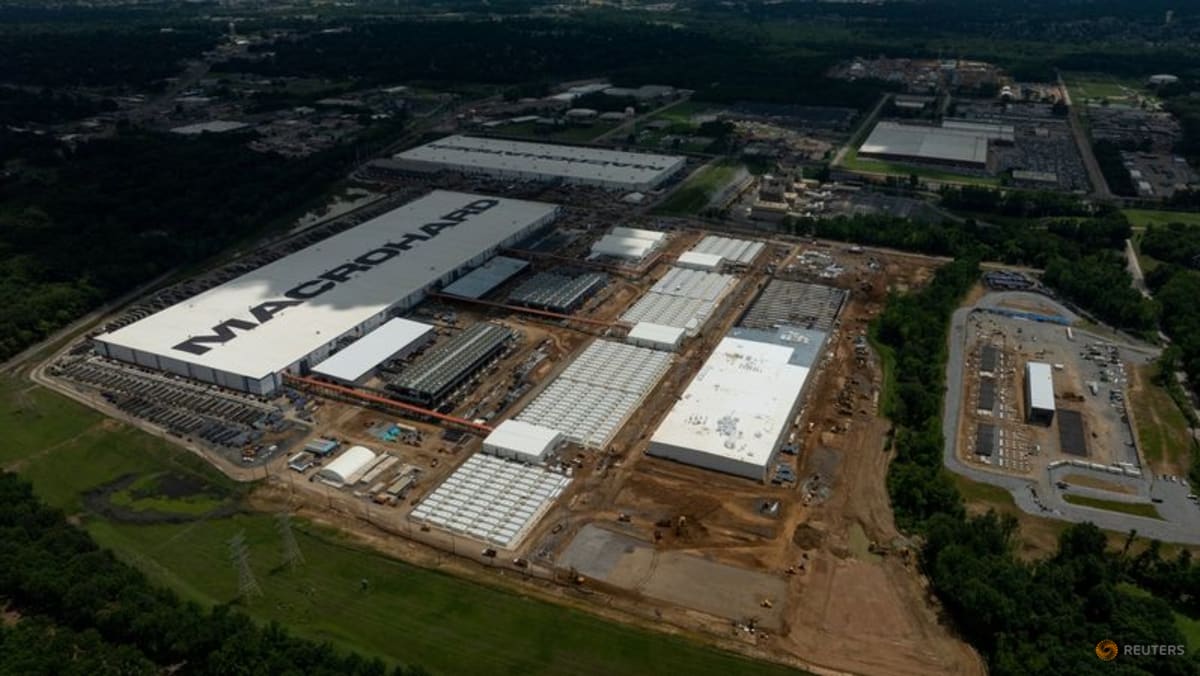
By Disha Raychaudhuri and Valerie Volcovici July 14 (Reuters) - Elon Musk's artificial intelligence company xAI has installed 59 natural gas turbines for its Colossus 2 data center project in Tennessee without securing federal clean air permits, according to communications between regulators and xAI representatives. Potential emissions from the turbines are far beyond the threshold that would require a federal permit, and would be released near predominantly Black communities already estimated to be suffering disproportionately high rates of lung disease, according to a Reuters analysis based on government data and information in the correspondence with regulators. The findings, which have not been previously reported, reflect how exploding electricity demand from AI data centers is driving companies to build off-grid power plants at a pace outstripping environmental oversight, with potentially big risks to public health. The number of unpermitted turbines identified by Reuters is about double what xAI has publicly acknowledged. The company previously said it was running 27 unpermitted turbines for Colossus 2 as of January and has argued the permits are not required. At least 57 of the 59 turbines are located in Mississippi, just over the state line from Tennessee where the data center is located. The xAI turbines are among scores of off-grid power plants for data centers proposed or under construction around the country. Local authorities often fast-track approvals in just weeks or months, without the years of environmental studies and public hearings typically required for such power generation projects that connect to the grid, Reuters has reported. Mississippi regulators in March issued a permit for permanent turbines for Colossus 2, allowing construction of 41 gas-fired turbines. The approval came three weeks after the state's only public hearing on the project. The xAI cluster of temporary turbines in Mississippi is already among the biggest off-grid data center power projects, according to Ben King, an analyst with think tank Rhodium Group, who reviewed the Reuters analysis. "This looks to be an unprecedented level of behind-the-meter gas being installed in one place," he said, referring to off-grid natural gas plants serving just one customer. The communications reviewed by Reuters show xAI, now owned by trillionaire Musk's SpaceX, has installed 57 off-grid turbines in Southaven, Mississippi, just across the state line from its Colossus 2 data center in Memphis, a facility supporting the Grok chatbot and other AI systems. The records show the company has also installed two other unpermitted turbines for the project on a different site. Reuters could not determine the location. The communications, obtained through a Reuters public records request, included emails between Trinity Consultants, representing xAI and subsidiary MZX Tech, and the Mississippi Department of Environmental Quality (MDEQ). xAI did not respond to Reuters' request for comment. xAI's turbines are part of a widening environmental justice battle over whether the AI boom is adding disproportionate pollution burdens to communities of color. Civil rights groups including the NAACP and the Southern Environmental Law Center sued xAI in April to halt their operations, arguing the turbines produce emissions subject to the federal Clean Air Act and shouldn't be operated without permits. They contend the turbines are polluting homes, schools and churches in historically Black communities. "The scale of it is astonishing," said Patrick Anderson, an attorney with the Southern Environmental Law Center. "This is an absolutely huge Clean Air Act violation that threatens public health." Securing a Clean Air Act permit would have exposed xAI's project to extensive review and public comment, potentially taking years. Mississippi environmental regulators and xAI have argued in court filings that the turbines are exempt because they are "mobile" and intended to operate onsite for less than a year. "MDEQ has determined that portable/temporary turbines do not require an air permit," the agency said in a statement to Reuters. The U.S. Environmental Protection Agency said in January 2026 that even temporary turbines exceeding emissions thresholds must obtain permits. The agency, however, told Reuters it's considering changes allowing "regulatory flexibilities" for portable units while continuing to protect public health. xAI, the MDEQ and the EPA did not answer questions from Reuters about pollution impacts on communities of color from power generation to serve data centers. The U.S. Justice Department weighed in on the lawsuit in a June 15 filing, saying that restricting the turbines could threaten national security interests because xAI's systems support U.S. military operations, including operations involving Iran. The outcome of the lawsuit filed by civil rights groups could help define how environmental laws apply to the fast-growing AI sector, where companies are scrambling to bring power supplies online to support energy-intensive computing. "This sets up scenarios where the government can create sacrifice zones and tell communities they have to breathe illegal air pollution," said Mary Rock, a senior attorney for Earthjustice which is representing the NAACP and SELC. The dispute echoes the findings of a 2022 study by researchers from UCLA and Columbia University and published in the Nature Energy journal that found that previously redlined communities - where banks historically discriminated against Black mortgage applicants - now face disproportionately high exposure to pollutants from fossil fuel facilities. "Air pollution from these and other sources contributes to systemic racial disparities in chronic disease and ultimately shorter lives," Lara Cushing, a UCLA public health professor who co-authored the study, told Reuters. BIG EMISSIONS The emails reviewed by Reuters included the manufacturer emissions profiles for 32 of the 59 turbines, including 30 at the Southaven site. A Reuters analysis based on that information found that those 30 turbines alone could emit nearly 2,500 short tons of nitrogen oxide, 4,000 short tons of carbon monoxide and 22 short tons of formaldehyde annually, assuming they operate continuously at 80% of capacity. According to the EPA, gas turbines are typically operated at loads of 80% or more to achieve efficiency. Nitrogen oxides contribute to smog and respiratory inflammation, according to the American Lung Association. Carbon monoxide deprives the body of oxygen, and formaldehyde is a carcinogen. The xAI site's potential emissions far exceed a Clean Air Act threshold that requires permitting for facilities capable of more than 100 short tons annually of pollutants such as nitrogen oxide. "This is a massive amount of turbines and an unfathomable amount of air pollution," Southaven resident Shannon Samsa said in an interview. "It's not a hypothetical," she said, "that air pollution is bad for you." The nitrogen oxide emissions calculated by Reuters for about half the plant's turbines would put the facility "up there with some of the heaviest polluting natural gas power plants across the entire country," said Nicholas Mailloux, a postdoctoral researcher at the University of Wisconsin-Madison who studies air quality and health benefits of the clean-energy transition. He said the facility would be on par with the top 25 U.S. gas plants for nitrogen oxide emissions, citing EPA data for actual emissions. THE PEOPLE AFFECTED In the Colonial Hills neighborhood of Southaven, the turbines serving Colossus 2 can be heard around the clock, often firing off noisy bursts that residents compare to jet engines. Ervin Laws, a Colonial Hills resident in his 20s, said the noise wakes him up at night. "I can't do anything about it, because he's got more money than me," he said, referring to Musk. The turbines were installed in communities already estimated to be facing relatively high respiratory disease burdens, according to a Reuters analysis of CDC data. In 27 of 28 census tracts within five miles of the site - spanning both Mississippi and Tennessee - the estimated asthma rates were higher than their respective countywide figures. In 24 tracts, chronic obstructive pulmonary disease rates were also higher. Five miles is a distance commonly used in environmental health research to capture populations likely to be exposed to air pollution from a stationary source. A separate Reuters analysis of Census Bureau data found that the residents living near the facility are disproportionately Black. Because the five-mile radius crosses state lines, Reuters compared each side against its own county baseline. Within five miles of the facility in DeSoto county, Mississippi - where the turbines are located - about 46% of residents are Black, compared with 33% countywide, according to census data. Across the state line in Tennessee, where residents have no say in Mississippi's permitting process, about 94% of residents within five miles of the facility are Black, compared to 52% in surrounding Shelby County. Jayajit Chakraborty, a professor at the University of California, Santa Barbara, said the Reuters analysis was consistent with research that shows communities of color face higher exposure to fossil fuel pollution. Shelby County and portions of DeSoto County have also previously failed to meet federal ozone standards and remain subject to EPA-approved plans to ensure they do not slip back into violation, according to regulatory documents. Nitrogen oxide is a key precursor to ozone formation, which the EPA says can harm respiratory health. "Given this community struggles with high asthma rates, additional NOx exposure at such high rates could exacerbate public health issues in a community that is already seeing more than its fair share of exposure to toxic air pollution," said Victoria Nelson, an independent environmental engineer, formerly at EPA. Sarah Gladney, 72, has watched the rapid expansion of xAI's Memphis-area presence from her home in the historically Black neighborhood of Boxtown, a few miles from where the company built its Colossus 1 data center in 2024. "Once they got their foot in the door in Memphis, I feel like it's going to be a continuous movement of xAI into these other communities," she said. "It's all about the money, and it's not about the health or wellness of the people that live in or near these communities."

Pollution from Musk's unpermitted xAI power project hits hardest in Black communities
July 14 : Elon Musk's artificial intelligence company xAI has installed 59 natural gas turbines for its Colossus 2 data center project in Tennessee without securing federal clean air permits, according to communications between regulators and xAI representatives. Potential emissions from the turbines are far beyond the threshold that would require a federal permit, and would be released near predominantly Black communities already estimated to be suffering disproportionately high rates of lung disease, according to a Reuters analysis based on government data and information in the correspondence with regulators. The findings, which have not been previously reported, reflect how exploding electricity demand from AI data centers is driving companies to build off-grid power plants at a pace outstripping environmental oversight, with potentially big risks to public health. The number of unpermitted turbines identified by Reuters is about double what xAI has publicly acknowledged. The company previously said it was running 27 unpermitted turbines for Colossus 2 as of January and has argued the permits are not required. At least 57 of the 59 turbines are located in Mississippi, just over the state line from Tennessee where the data center is located. The xAI turbines are among scores of off-grid power plants for data centers proposed or under construction around the country. Local authorities often fast-track approvals in just weeks or months, without the years of environmental studies and public hearings typically required for such power generation projects that connect to the grid, Reuters has reported. Mississippi regulators in March issued a permit for permanent turbines for Colossus 2, allowing construction of 41 gas-fired turbines. The approval came three weeks after the state's only public hearing on the project. The xAI cluster of temporary turbines in Mississippi is already among the biggest off-grid data center power projects, according to Ben King, an analyst with think tank Rhodium Group, who reviewed the Reuters analysis. "This looks to be an unprecedented level of behind-the-meter gas being installed in one place," he said, referring to off-grid natural gas plants serving just one customer. The communications reviewed by Reuters show xAI, now owned by trillionaire Musk's SpaceX, has installed 57 off-grid turbines in Southaven, Mississippi, just across the state line from its Colossus 2 data center in Memphis, a facility supporting the Grok chatbot and other AI systems. The records show the company has also installed two other unpermitted turbines for the project on a different site. Reuters could not determine the location. The communications, obtained through a Reuters public records request, included emails between Trinity Consultants, representing xAI and subsidiary MZX Tech, and the Mississippi Department of Environmental Quality (MDEQ). xAI did not respond to Reuters' request for comment. xAI's turbines are part of a widening environmental justice battle over whether the AI boom is adding disproportionate pollution burdens to communities of color. Civil rights groups including the NAACP and the Southern Environmental Law Center sued xAI in April to halt their operations, arguing the turbines produce emissions subject to the federal Clean Air Act and shouldn't be operated without permits. They contend the turbines are polluting homes, schools and churches in historically Black communities. "The scale of it is astonishing," said Patrick Anderson, an attorney with the Southern Environmental Law Center. "This is an absolutely huge Clean Air Act violation that threatens public health." Securing a Clean Air Act permit would have exposed xAI's project to extensive review and public comment, potentially taking years. Mississippi environmental regulators and xAI have argued in court filings that the turbines are exempt because they are "mobile" and intended to operate onsite for less than a year. "MDEQ has determined that portable/temporary turbines do not require an air permit," the agency said in a statement to Reuters. The U.S. Environmental Protection Agency said in January 2026 that even temporary turbines exceeding emissions thresholds must obtain permits. The agency, however, told Reuters it's considering changes allowing "regulatory flexibilities" for portable units while continuing to protect public health. xAI, the MDEQ and the EPA did not answer questions from Reuters about pollution impacts on communities of color from power generation to serve data centers. The U.S. Justice Department weighed in on the lawsuit in a June 15 filing, saying that restricting the turbines could threaten national security interests because xAI's systems support U.S. military operations, including operations involving Iran. The outcome of the lawsuit filed by civil rights groups could help define how environmental laws apply to the fast-growing AI sector, where companies are scrambling to bring power supplies online to support energy-intensive computing. "This sets up scenarios where the government can create sacrifice zones and tell communities they have to breathe illegal air pollution," said Mary Rock, a senior attorney for Earthjustice which is representing the NAACP and SELC. The dispute echoes the findings of a 2022 study by researchers from UCLA and Columbia University and published in the Nature Energy journal that found that previously redlined communities - where banks historically discriminated against Black mortgage applicants - now face disproportionately high exposure to pollutants from fossil fuel facilities. "Air pollution from these and other sources contributes to systemic racial disparities in chronic disease and ultimately shorter lives," Lara Cushing, a UCLA public health professor who co-authored the study, told Reuters. BIG EMISSIONS The emails reviewed by Reuters included the manufacturer emissions profiles for 32 of the 59 turbines, including 30 at the Southaven site. A Reuters analysis based on that information found that those 30 turbines alone could emit nearly 2,500 short tons of nitrogen oxide, 4,000 short tons of carbon monoxide and 22 short tons of formaldehyde annually, assuming they operate continuously at 80 per cent of capacity. According to the EPA, gas turbines are typically operated at loads of 80 per cent or more to achieve efficiency. Nitrogen oxides contribute to smog and respiratory inflammation, according to the American Lung Association. Carbon monoxide deprives the body of oxygen, and formaldehyde is a carcinogen. The xAI site's potential emissions far exceed a Clean Air Act threshold that requires permitting for facilities capable of more than 100 short tons annually of pollutants such as nitrogen oxide. "This is a massive amount of turbines and an unfathomable amount of air pollution," Southaven resident Shannon Samsa said in an interview. "It's not a hypothetical," she said, "that air pollution is bad for you." The nitrogen oxide emissions calculated by Reuters for about half the plant's turbines would put the facility "up there with some of the heaviest polluting natural gas power plants across the entire country," said Nicholas Mailloux, a postdoctoral researcher at the University of Wisconsin-Madison who studies air quality and health benefits of the clean-energy transition. He said the facility would be on par with the top 25 U.S. gas plants for nitrogen oxide emissions, citing EPA data for actual emissions. THE PEOPLE AFFECTED In the Colonial Hills neighborhood of Southaven, the turbines serving Colossus 2 can be heard around the clock, often firing off noisy bursts that residents compare to jet engines. Ervin Laws, a Colonial Hills resident in his 20s, said the noise wakes him up at night. "I can't do anything about it, because he's got more money than me," he said, referring to Musk. The turbines were installed in communities already estimated to be facing relatively high respiratory disease burdens, according to a Reuters analysis of CDC data. In 27 of 28 census tracts within five miles of the site - spanning both Mississippi and Tennessee - the estimated asthma rates were higher than their respective countywide figures. In 24 tracts, chronic obstructive pulmonary disease rates were also higher. Five miles is a distance commonly used in environmental health research to capture populations likely to be exposed to air pollution from a stationary source. A separate Reuters analysis of Census Bureau data found that the residents living near the facility are disproportionately Black. Because the five-mile radius crosses state lines, Reuters compared each side against its own county baseline. Within five miles of the facility in DeSoto county, Mississippi - where the turbines are located - about 46 per cent of residents are Black, compared with 33 per cent countywide, according to census data. Across the state line in Tennessee, where residents have no say in Mississippi's permitting process, about 94 per cent of residents within five miles of the facility are Black, compared to 52 per cent in surrounding Shelby County. Jayajit Chakraborty, a professor at the University of California, Santa Barbara, said the Reuters analysis was consistent with research that shows communities of color face higher exposure to fossil fuel pollution. Shelby County and portions of DeSoto County have also previously failed to meet federal ozone standards and remain subject to EPA-approved plans to ensure they do not slip back into violation, according to regulatory documents. Nitrogen oxide is a key precursor to ozone formation, which the EPA says can harm respiratory health. "Given this community struggles with high asthma rates, additional NOx exposure at such high rates could exacerbate public health issues in a community that is already seeing more than its fair share of exposure to toxic air pollution," said Victoria Nelson, an independent environmental engineer, formerly at EPA. Sarah Gladney, 72, has watched the rapid expansion of xAI's Memphis-area presence from her home in the historically Black neighborhood of Boxtown, a few miles from where the company built its Colossus 1 data center in 2024. "Once they got their foot in the door in Memphis, I feel like it's going to be a continuous movement of xAI into these other communities," she said. "It's all about the money, and it's not about the health or wellness of the people that live in or near these communities."
Pollution from Musk's unpermitted xAI power project hits hardest in Black communities
By Disha Raychaudhuri and Valerie Volcovici July 14 (Reuters) - Elon Musk's artificial intelligence company xAI has installed 59 natural gas turbines for its Colossus 2 data center project in Tennessee without securing federal clean air permits, according to communications between regulators and xAI representatives. Potential emissions from the turbines are far beyond the threshold that would require a federal permit, and would be released near predominantly Black communities already estimated to be suffering disproportionately high rates of lung disease, according to a Reuters analysis based on government data and information in the correspondence with regulators. The findings, which have not been previously reported, reflect how exploding electricity demand from AI data centers is driving companies to build off-grid power plants at a pace outstripping environmental oversight, with potentially big risks to public health. The number of unpermitted turbines identified by Reuters is about double what xAI has publicly acknowledged. The company previously said it was running 27 unpermitted turbines for Colossus 2 as of January and has argued the permits are not required. At least 57 of the 59 turbines are located in Mississippi, just over the state line from Tennessee where the data center is located. The xAI turbines are among scores of off-grid power plants for data centers proposed or under construction around the country. Local authorities often fast-track approvals in just weeks or months, without the years of environmental studies and public hearings typically required for such power generation projects that connect to the grid, Reuters has reported. Mississippi regulators in March issued a permit for permanent turbines for Colossus 2, allowing construction of 41 gas-fired turbines. The approval came three weeks after the state's only public hearing on the project. The xAI cluster of temporary turbines in Mississippi is already among the biggest off-grid data center power projects, according to Ben King, an analyst with think tank Rhodium Group, who reviewed the Reuters analysis. "This looks to be an unprecedented level of behind-the-meter gas being installed in one place," he said, referring to off-grid natural gas plants serving just one customer. The communications reviewed by Reuters show xAI, now owned by trillionaire Musk's SpaceX, has installed 57 off-grid turbines in Southaven, Mississippi, just across the state line from its Colossus 2 data center in Memphis, a facility supporting the Grok chatbot and other AI systems. The records show the company has also installed two other unpermitted turbines for the project on a different site. Reuters could not determine the location. The communications, obtained through a Reuters public records request, included emails between Trinity Consultants, representing xAI and subsidiary MZX Tech, and the Mississippi Department of Environmental Quality (MDEQ). xAI did not respond to Reuters' request for comment. xAI's turbines are part of a widening environmental justice battle over whether the AI boom is adding disproportionate pollution burdens to communities of color. Civil rights groups including the NAACP and the Southern Environmental Law Center sued xAI in April to halt their operations, arguing the turbines produce emissions subject to the federal Clean Air Act and shouldn't be operated without permits. They contend the turbines are polluting homes, schools and churches in historically Black communities. "The scale of it is astonishing," said Patrick Anderson, an attorney with the Southern Environmental Law Center. "This is an absolutely huge Clean Air Act violation that threatens public health." Securing a Clean Air Act permit would have exposed xAI's project to extensive review and public comment, potentially taking years. Mississippi environmental regulators and xAI have argued in court filings that the turbines are exempt because they are "mobile" and intended to operate onsite for less than a year. "MDEQ has determined that portable/temporary turbines do not require an air permit," the agency said in a statement to Reuters. The U.S. Environmental Protection Agency said in January 2026 that even temporary turbines exceeding emissions thresholds must obtain permits. The agency, however, told Reuters it's considering changes allowing "regulatory flexibilities" for portable units while continuing to protect public health. xAI, the MDEQ and the EPA did not answer questions from Reuters about pollution impacts on communities of color from power generation to serve data centers. The U.S. Justice Department weighed in on the lawsuit in a June 15 filing, saying that restricting the turbines could threaten national security interests because xAI's systems support U.S. military operations, including operations involving Iran. The outcome of the lawsuit filed by civil rights groups could help define how environmental laws apply to the fast-growing AI sector, where companies are scrambling to bring power supplies online to support energy-intensive computing. "This sets up scenarios where the government can create sacrifice zones and tell communities they have to breathe illegal air pollution," said Mary Rock, a senior attorney for Earthjustice which is representing the NAACP and SELC. The dispute echoes the findings of a 2022 study by researchers from UCLA and Columbia University and published in the Nature Energy journal that found that previously redlined communities - where banks historically discriminated against Black mortgage applicants - now face disproportionately high exposure to pollutants from fossil fuel facilities. "Air pollution from these and other sources contributes to systemic racial disparities in chronic disease and ultimately shorter lives," Lara Cushing, a UCLA public health professor who co-authored the study, told Reuters. BIG EMISSIONS The emails reviewed by Reuters included the manufacturer emissions profiles for 32 of the 59 turbines, including 30 at the Southaven site. A Reuters analysis based on that information found that those 30 turbines alone could emit nearly 2,500 short tons of nitrogen oxide, 4,000 short tons of carbon monoxide and 22 short tons of formaldehyde annually, assuming they operate continuously at 80% of capacity. According to the EPA, gas turbines are typically operated at loads of 80% or more to achieve efficiency. Nitrogen oxides contribute to smog and respiratory inflammation, according to the American Lung Association. Carbon monoxide deprives the body of oxygen, and formaldehyde is a carcinogen. The xAI site's potential emissions far exceed a Clean Air Act threshold that requires permitting for facilities capable of more than 100 short tons annually of pollutants such as nitrogen oxide. "This is a massive amount of turbines and an unfathomable amount of air pollution," Southaven resident Shannon Samsa said in an interview. "It's not a hypothetical," she said, "that air pollution is bad for you." The nitrogen oxide emissions calculated by Reuters for about half the plant's turbines would put the facility "up there with some of the heaviest polluting natural gas power plants across the entire country," said Nicholas Mailloux, a postdoctoral researcher at the University of Wisconsin-Madison who studies air quality and health benefits of the clean-energy transition. He said the facility would be on par with the top 25 U.S. gas plants for nitrogen oxide emissions, citing EPA data for actual emissions. THE PEOPLE AFFECTED In the Colonial Hills neighborhood of Southaven, the turbines serving Colossus 2 can be heard around the clock, often firing off noisy bursts that residents compare to jet engines. Ervin Laws, a Colonial Hills resident in his 20s, said the noise wakes him up at night. "I can't do anything about it, because he's got more money than me," he said, referring to Musk. The turbines were installed in communities already estimated to be facing relatively high respiratory disease burdens, according to a Reuters analysis of CDC data. In 27 of 28 census tracts within five miles of the site - spanning both Mississippi and Tennessee - the estimated asthma rates were higher than their respective countywide figures. In 24 tracts, chronic obstructive pulmonary disease rates were also higher. Five miles is a distance commonly used in environmental health research to capture populations likely to be exposed to air pollution from a stationary source. A separate Reuters analysis of Census Bureau data found that the residents living near the facility are disproportionately Black. Because the five-mile radius crosses state lines, Reuters compared each side against its own county baseline. Within five miles of the facility in DeSoto county, Mississippi - where the turbines are located - about 46% of residents are Black, compared with 33% countywide, according to census data. Across the state line in Tennessee, where residents have no say in Mississippi's permitting process, about 94% of residents within five miles of the facility are Black, compared to 52% in surrounding Shelby County. Jayajit Chakraborty, a professor at the University of California, Santa Barbara, said the Reuters analysis was consistent with research that shows communities of color face higher exposure to fossil fuel pollution. Shelby County and portions of DeSoto County have also previously failed to meet federal ozone standards and remain subject to EPA-approved plans to ensure they do not slip back into violation, according to regulatory documents. Nitrogen oxide is a key precursor to ozone formation, which the EPA says can harm respiratory health. "Given this community struggles with high asthma rates, additional NOx exposure at such high rates could exacerbate public health issues in a community that is already seeing more than its fair share of exposure to toxic air pollution," said Victoria Nelson, an independent environmental engineer, formerly at EPA. Sarah Gladney, 72, has watched the rapid expansion of xAI's Memphis-area presence from her home in the historically Black neighborhood of Boxtown, a few miles from where the company built its Colossus 1 data center in 2024. "Once they got their foot in the door in Memphis, I feel like it's going to be a continuous movement of xAI into these other communities," she said. "It's all about the money, and it's not about the health or wellness of the people that live in or near these communities." (Reporting by Disha Raychaudhuri and Valerie Volcovici; photos by Kevin Wurm; editing by David Gaffen, Kat Stafford, Ben Lesser and Richard Valdmanis)
Pollution from Musk's unpermitted xAI power project hits hardest in Black communities
Add Yahoo as a preferred source to see more of our stories on Google. By Disha Raychaudhuri and Valerie Volcovici July 14 (Reuters) - Elon Musk's artificial intelligence company xAI has installed 59 natural gas turbines for its Colossus 2 data center project in Tennessee without securing federal clean air permits, according to communications between regulators and xAI representatives. Potential emissions from the turbines are far beyond the threshold that would require a federal permit, and would be released near predominantly Black communities already estimated to be suffering disproportionately high rates of lung disease, according to a Reuters analysis based on government data and information in the correspondence with regulators. The findings, which have not been previously reported, reflect how exploding electricity demand from AI data centers is driving companies to build off-grid power plants at a pace outstripping environmental oversight, with potentially big risks to public health. The number of unpermitted turbines identified by Reuters is about double what xAI has publicly acknowledged. The company previously said it was running 27 unpermitted turbines for Colossus 2 as of January and has argued the permits are not required. At least 57 of the 59 turbines are located in Mississippi, just over the state line from Tennessee where the data center is located. The xAI turbines are among scores of off-grid power plants for data centers proposed or under construction around the country. Local authorities often fast-track approvals in just weeks or months, without the years of environmental studies and public hearings typically required for such power generation projects that connect to the grid, Reuters has reported. Mississippi regulators in March issued a permit for permanent turbines for Colossus 2, allowing construction of 41 gas-fired turbines. The approval came three weeks after the state's only public hearing on the project. The xAI cluster of temporary turbines in Mississippi is already among the biggest off-grid data center power projects, according to Ben King, an analyst with think tank Rhodium Group, who reviewed the Reuters analysis. "This looks to be an unprecedented level of behind-the-meter gas being installed in one place," he said, referring to off-grid natural gas plants serving just one customer. The communications reviewed by Reuters show xAI, now owned by trillionaire Musk's SpaceX, has installed 57 off-grid turbines in Southaven, Mississippi, just across the state line from its Colossus 2 data center in Memphis, a facility supporting the Grok chatbot and other AI systems. The records show the company has also installed two other unpermitted turbines for the project on a different site. Reuters could not determine the location. The communications, obtained through a Reuters public records request, included emails between Trinity Consultants, representing xAI and subsidiary MZX Tech, and the Mississippi Department of Environmental Quality (MDEQ). xAI did not respond to Reuters' request for comment. xAI's turbines are part of a widening environmental justice battle over whether the AI boom is adding disproportionate pollution burdens to communities of color. Civil rights groups including the NAACP and the Southern Environmental Law Center sued xAI in April to halt their operations, arguing the turbines produce emissions subject to the federal Clean Air Act and shouldn't be operated without permits. They contend the turbines are polluting homes, schools and churches in historically Black communities. "The scale of it is astonishing," said Patrick Anderson, an attorney with the Southern Environmental Law Center. "This is an absolutely huge Clean Air Act violation that threatens public health." Securing a Clean Air Act permit would have exposed xAI's project to extensive review and public comment, potentially taking years. Mississippi environmental regulators and xAI have argued in court filings that the turbines are exempt because they are "mobile" and intended to operate onsite for less than a year. "MDEQ has determined that portable/temporary turbines do not require an air permit," the agency said in a statement to Reuters. The U.S. Environmental Protection Agency said in January 2026 that even temporary turbines exceeding emissions thresholds must obtain permits. The agency, however, told Reuters it's considering changes allowing "regulatory flexibilities" for portable units while continuing to protect public health. xAI, the MDEQ and the EPA did not answer questions from Reuters about pollution impacts on communities of color from power generation to serve data centers. The U.S. Justice Department weighed in on the lawsuit in a June 15 filing, saying that restricting the turbines could threaten national security interests because xAI's systems support U.S. military operations, including operations involving Iran. The outcome of the lawsuit filed by civil rights groups could help define how environmental laws apply to the fast-growing AI sector, where companies are scrambling to bring power supplies online to support energy-intensive computing. "This sets up scenarios where the government can create sacrifice zones and tell communities they have to breathe illegal air pollution," said Mary Rock, a senior attorney for Earthjustice which is representing the NAACP and SELC. The dispute echoes the findings of a 2022 study by researchers from UCLA and Columbia University and published in the Nature Energy journal that found that previously redlined communities - where banks historically discriminated against Black mortgage applicants - now face disproportionately high exposure to pollutants from fossil fuel facilities. "Air pollution from these and other sources contributes to systemic racial disparities in chronic disease and ultimately shorter lives," Lara Cushing, a UCLA public health professor who co-authored the study, told Reuters. BIG EMISSIONS The emails reviewed by Reuters included the manufacturer emissions profiles for 32 of the 59 turbines, including 30 at the Southaven site. A Reuters analysis based on that information found that those 30 turbines alone could emit nearly 2,500 short tons of nitrogen oxide, 4,000 short tons of carbon monoxide and 22 short tons of formaldehyde annually, assuming they operate continuously at 80% of capacity. According to the EPA, gas turbines are typically operated at loads of 80% or more to achieve efficiency. Nitrogen oxides contribute to smog and respiratory inflammation, according to the American Lung Association. Carbon monoxide deprives the body of oxygen, and formaldehyde is a carcinogen. The xAI site's potential emissions far exceed a Clean Air Act threshold that requires permitting for facilities capable of more than 100 short tons annually of pollutants such as nitrogen oxide. "This is a massive amount of turbines and an unfathomable amount of air pollution," Southaven resident Shannon Samsa said in an interview. "It's not a hypothetical," she said, "that air pollution is bad for you." The nitrogen oxide emissions calculated by Reuters for about half the plant's turbines would put the facility "up there with some of the heaviest polluting natural gas power plants across the entire country," said Nicholas Mailloux, a postdoctoral researcher at the University of Wisconsin-Madison who studies air quality and health benefits of the clean-energy transition. He said the facility would be on par with the top 25 U.S. gas plants for nitrogen oxide emissions, citing EPA data for actual emissions. THE PEOPLE AFFECTED In the Colonial Hills neighborhood of Southaven, the turbines serving Colossus 2 can be heard around the clock, often firing off noisy bursts that residents compare to jet engines. Ervin Laws, a Colonial Hills resident in his 20s, said the noise wakes him up at night. "I can't do anything about it, because he's got more money than me," he said, referring to Musk. The turbines were installed in communities already estimated to be facing relatively high respiratory disease burdens, according to a Reuters analysis of CDC data. In 27 of 28 census tracts within five miles of the site - spanning both Mississippi and Tennessee - the estimated asthma rates were higher than their respective countywide figures. In 24 tracts, chronic obstructive pulmonary disease rates were also higher. Five miles is a distance commonly used in environmental health research to capture populations likely to be exposed to air pollution from a stationary source. A separate Reuters analysis of Census Bureau data found that the residents living near the facility are disproportionately Black. Because the five-mile radius crosses state lines, Reuters compared each side against its own county baseline. Within five miles of the facility in DeSoto county, Mississippi - where the turbines are located - about 46% of residents are Black, compared with 33% countywide, according to census data. Across the state line in Tennessee, where residents have no say in Mississippi's permitting process, about 94% of residents within five miles of the facility are Black, compared to 52% in surrounding Shelby County. Jayajit Chakraborty, a professor at the University of California, Santa Barbara, said the Reuters analysis was consistent with research that shows communities of color face higher exposure to fossil fuel pollution. Shelby County and portions of DeSoto County have also previously failed to meet federal ozone standards and remain subject to EPA-approved plans to ensure they do not slip back into violation, according to regulatory documents. Nitrogen oxide is a key precursor to ozone formation, which the EPA says can harm respiratory health. "Given this community struggles with high asthma rates, additional NOx exposure at such high rates could exacerbate public health issues in a community that is already seeing more than its fair share of exposure to toxic air pollution," said Victoria Nelson, an independent environmental engineer, formerly at EPA. Sarah Gladney, 72, has watched the rapid expansion of xAI's Memphis-area presence from her home in the historically Black neighborhood of Boxtown, a few miles from where the company built its Colossus 1 data center in 2024. "Once they got their foot in the door in Memphis, I feel like it's going to be a continuous movement of xAI into these other communities," she said. "It's all about the money, and it's not about the health or wellness of the people that live in or near these communities." (Reporting by Disha Raychaudhuri and Valerie Volcovici; photos by Kevin Wurm; editing by David Gaffen, Kat Stafford, Ben Lesser and Richard Valdmanis)
Insight: Pollution from Musk's unpermitted xAI power project hits hardest in Black communities
July 14 (Reuters) - Elon Musk's artificial intelligence company xAI has installed 59 natural gas turbines for its Colossus 2 data center project in Tennessee without securing federal clean air permits, according to communications between regulators and xAI representatives. Potential emissions from the turbines are far beyond the threshold that would require a federal permit, and would be released near predominantly Black communities already estimated to be suffering disproportionately high rates of lung disease, according to a Reuters analysis based on government data and information in the correspondence with regulators. The findings, which have not been previously reported, reflect how exploding electricity demand from AI data centers is driving companies to build off-grid power plants at a pace outstripping environmental oversight, with potentially big risks to public health. The number of unpermitted turbines identified by Reuters is about double what xAI has publicly acknowledged. The company previously said it was running 27 unpermitted turbines for Colossus 2 as of January and has argued the permits are not required. At least 57 of the 59 turbines are located in Mississippi, just over the state line from Tennessee where the data center is located. The xAI turbines are among scores of off-grid power plants for data centers proposed or under construction around the country. Local authorities often fast-track approvals in just weeks or months, without the years of environmental studies and public hearings typically required for such power generation projects that connect to the grid, Reuters has reported. Mississippi regulators in March issued a permit for permanent turbines for Colossus 2, allowing construction of 41 gas-fired turbines. The approval came three weeks after the state's only public hearing on the project. The xAI cluster of temporary turbines in Mississippi is already among the biggest off-grid data center power projects, according to Ben King, an analyst with think tank Rhodium Group, who reviewed the Reuters analysis. "This looks to be an unprecedented level of behind-the-meter gas being installed in one place," he said, referring to off-grid natural gas plants serving just one customer. The communications reviewed by Reuters show xAI, now owned by trillionaire Musk's SpaceX (SPCX.O), opens new tab, has installed 57 off-grid turbines in Southaven, Mississippi, just across the state line from its Colossus 2 data center in Memphis, a facility supporting the Grok chatbot and other AI systems. The records show the company has also installed two other unpermitted turbines for the project on a different site. Reuters could not determine the location. The communications, obtained through a Reuters public records request, included emails between Trinity Consultants, representing xAI and subsidiary MZX Tech, and the Mississippi Department of Environmental Quality (MDEQ). xAI did not respond to Reuters' request for comment. xAI's turbines are part of a widening environmental justice battle over whether the AI boom is adding disproportionate pollution burdens to communities of color. Civil rights groups including the NAACP and the Southern Environmental Law Center sued xAI in April to halt their operations, arguing the turbines produce emissions subject to the federal Clean Air Act and shouldn't be operated without permits. They contend the turbines are polluting homes, schools and churches in historically Black communities. "The scale of it is astonishing," said Patrick Anderson, an attorney with the Southern Environmental Law Center. "This is an absolutely huge Clean Air Act violation that threatens public health." Securing a Clean Air Act permit would have exposed xAI's project to extensive review and public comment, potentially taking years. Mississippi environmental regulators and xAI have argued in court filings that the turbines are exempt because they are "mobile" and intended to operate onsite for less than a year. "MDEQ has determined that portable/temporary turbines do not require an air permit," the agency said in a statement to Reuters. The U.S. Environmental Protection Agency said in January 2026 that even temporary turbines exceeding emissions thresholds must obtain permits. The agency, however, told Reuters it's considering changes allowing "regulatory flexibilities" for portable units while continuing to protect public health. xAI, the MDEQ and the EPA did not answer questions from Reuters about pollution impacts on communities of color from power generation to serve data centers. The U.S. Justice Department weighed in on the lawsuit in a June 15 filing, saying that restricting the turbines could threaten national security interests because xAI's systems support U.S. military operations, including operations involving Iran. The outcome of the lawsuit filed by civil rights groups could help define how environmental laws apply to the fast-growing AI sector, where companies are scrambling to bring power supplies online to support energy-intensive computing. "This sets up scenarios where the government can create sacrifice zones and tell communities they have to breathe illegal air pollution," said Mary Rock, a senior attorney for Earthjustice which is representing the NAACP and SELC. The dispute echoes the findings of a 2022 study, opens new tab by researchers from UCLA and Columbia University and published in the Nature Energy journal that found that previously redlined communities - where banks historically discriminated against Black mortgage applicants - now face disproportionately high exposure to pollutants from fossil fuel facilities. "Air pollution from these and other sources contributes to systemic racial disparities in chronic disease and ultimately shorter lives," Lara Cushing, a UCLA public health professor who co-authored the study, told Reuters. BIG EMISSIONS The emails reviewed by Reuters included the manufacturer emissions profiles for 32 of the 59 turbines, including 30 at the Southaven site. A Reuters analysis based on that information found that those 30 turbines alone could emit nearly 2,500 short tons of nitrogen oxide, 4,000 short tons of carbon monoxide and 22 short tons of formaldehyde annually, assuming they operate continuously at 80% of capacity. According to the EPA, gas turbines are typically operated at loads of 80% or more to achieve efficiency. Nitrogen oxides contribute to smog and respiratory inflammation, according to the American Lung Association. Carbon monoxide deprives the body of oxygen, and formaldehyde is a carcinogen. The xAI site's potential emissions far exceed a Clean Air Act threshold that requires permitting for facilities capable of more than 100 short tons annually of pollutants such as nitrogen oxide. "This is a massive amount of turbines and an unfathomable amount of air pollution," Southaven resident Shannon Samsa said in an interview. "It's not a hypothetical," she said, "that air pollution is bad for you." The nitrogen oxide emissions calculated by Reuters for about half the plant's turbines would put the facility "up there with some of the heaviest polluting natural gas power plants across the entire country," said Nicholas Mailloux, a postdoctoral researcher at the University of Wisconsin-Madison who studies air quality and health benefits of the clean-energy transition. He said the facility would be on par with the top 25 U.S. gas plants for nitrogen oxide emissions, citing EPA data, opens new tab for actual emissions. THE PEOPLE AFFECTED In the Colonial Hills neighborhood of Southaven, the turbines serving Colossus 2 can be heard around the clock, often firing off noisy bursts that residents compare to jet engines. Ervin Laws, a Colonial Hills resident in his 20s, said the noise wakes him up at night. "I can't do anything about it, because he's got more money than me," he said, referring to Musk. The turbines were installed in communities already estimated to be facing relatively high respiratory disease burdens, according to a Reuters analysis of CDC data. In 27 of 28 census tracts within five miles of the site - spanning both Mississippi and Tennessee - the estimated asthma rates were higher than their respective countywide figures. In 24 tracts, chronic obstructive pulmonary disease rates were also higher. Five miles is a distance commonly used in environmental health research to capture populations likely to be exposed to air pollution from a stationary source. A separate Reuters analysis of Census Bureau data found that the residents living near the facility are disproportionately Black. Because the five-mile radius crosses state lines, Reuters compared each side against its own county baseline. Within five miles of the facility in DeSoto county, Mississippi - where the turbines are located - about 46% of residents are Black, compared with 33% countywide, according to census data. Across the state line in Tennessee, where residents have no say in Mississippi's permitting process, about 94% of residents within five miles of the facility are Black, compared to 52% in surrounding Shelby County. Jayajit Chakraborty, a professor at the University of California, Santa Barbara, said the Reuters analysis was consistent with research that shows communities of color face higher exposure to fossil fuel pollution. Shelby County and portions of DeSoto County have also previously failed to meet federal ozone standards and remain subject to EPA-approved plans to ensure they do not slip back into violation, according to regulatory documents. Nitrogen oxide is a key precursor to ozone formation, which the EPA says can harm respiratory health. "Given this community struggles with high asthma rates, additional NOx exposure at such high rates could exacerbate public health issues in a community that is already seeing more than its fair share of exposure to toxic air pollution," said Victoria Nelson, an independent environmental engineer, formerly at EPA. Sarah Gladney, 72, has watched the rapid expansion of xAI's Memphis-area presence from her home in the historically Black neighborhood of Boxtown, a few miles from where the company built its Colossus 1 data center in 2024. "Once they got their foot in the door in Memphis, I feel like it's going to be a continuous movement of xAI into these other communities," she said. "It's all about the money, and it's not about the health or wellness of the people that live in or near these communities." Reporting by Disha Raychaudhuri and Valerie Volcovici; photos by Kevin Wurm; editing by David Gaffen, Kat Stafford, Ben Lesser and Richard Valdmanis Our Standards: The Thomson Reuters Trust Principles., opens new tab * Suggested Topics: * Environment * Environmental Justice * Gas * Climate Change * Fuel Oil Disha Raychaudhuri Thomson Reuters Disha is a data journalist based in Washington, D.C., covering global inequality, race and social justice issues. She joined Reuters in 2020 as a data journalist on the legal news team where she covered a wide range of topics including bankruptcy, opioid settlements and the legislative push to restrict transgender healthcare in the US. Prior to joining Reuters she was a data reporter at The Star-Ledger in New Jersey. Contact: [email protected] Valerie Volcovici Thomson Reuters Valerie Volcovici covers U.S. climate and energy policy from Washington, DC. She is focused on climate and environmental regulations at federal agencies and in Congress and how the energy transition is transforming the United States. Other areas of coverage include her award-winning reporting plastic pollution and the ins and outs of global climate diplomacy and United Nations climate negotiations.

Sam Altman mocks Anthropic's 'hard questions' campaign -- 'I thought this was satire'
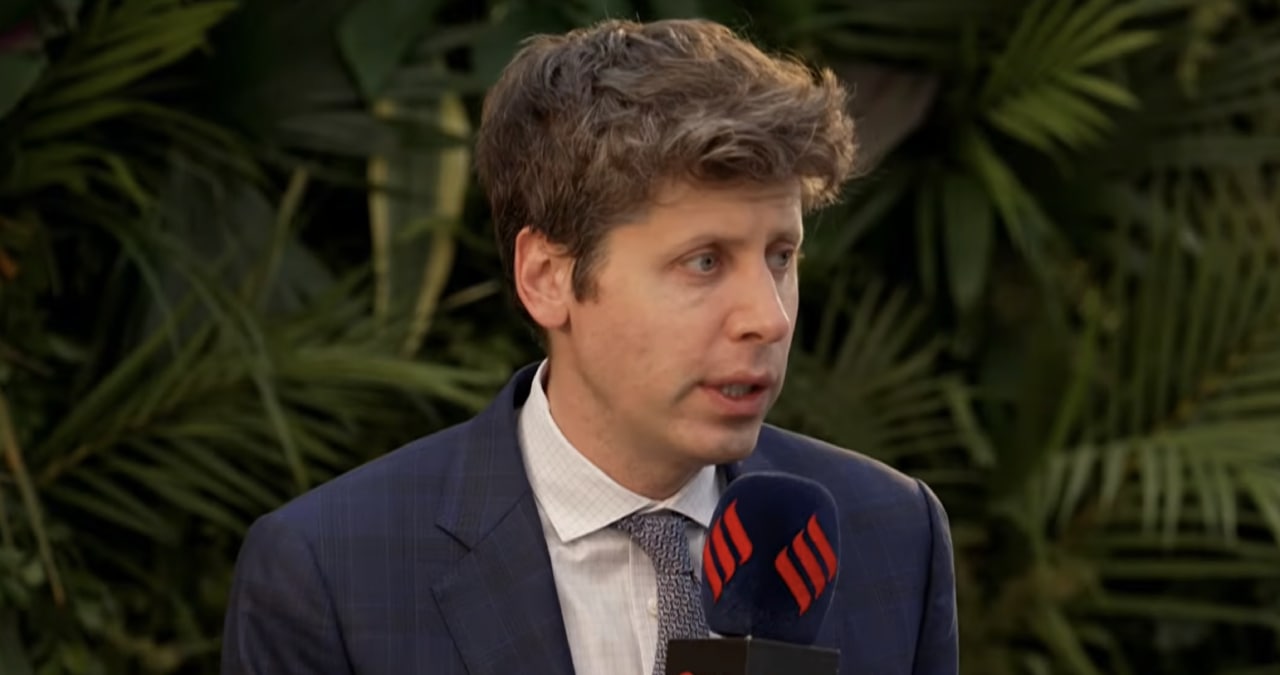
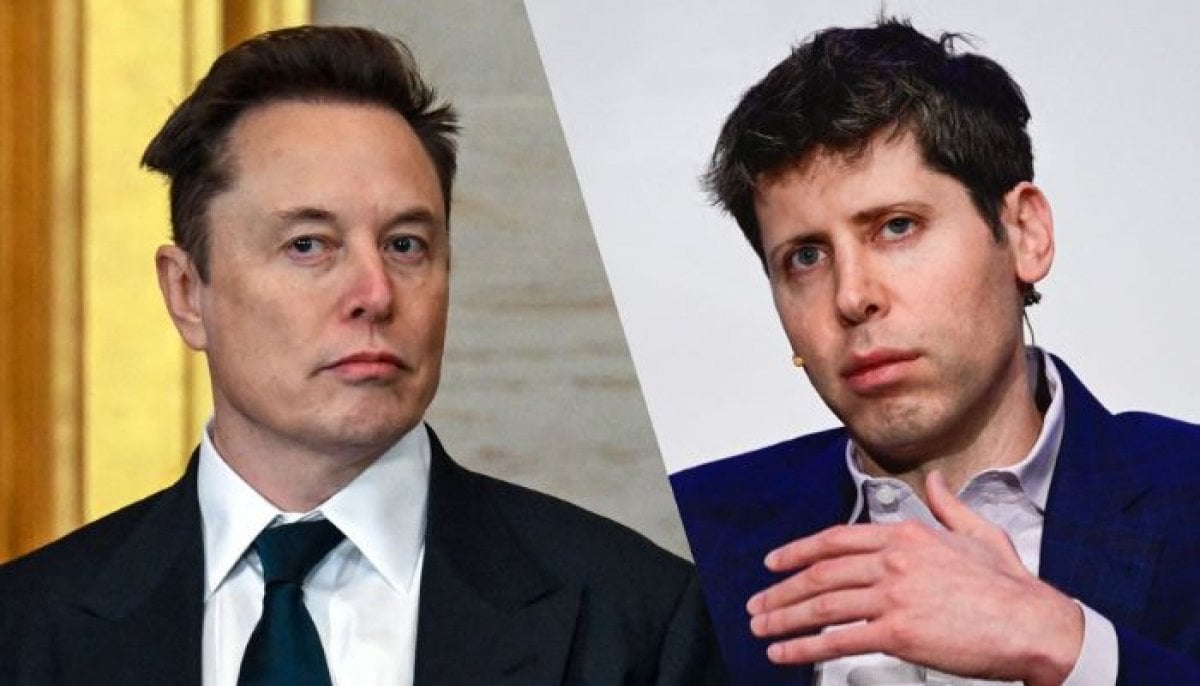
After an amusing exchange of words with SpaceXAI's Elon Musk, Sam Altman has now taken a fresh jab at another competitor - Anthropic. In his latest post on X, Altman dismissed a new promotional video from Anthropic, touting it as what he initially assumed to be satire, but it wasn't. The video, which asks Anthropic's users to pose the toughest of questions to AI, caught Altman's attention, leading him to call out Anthropic for silently downgrading its service and withholding access. In the post, Altman went on to say, "i thought this was satire, kept looking for the handle to be spelled c1audeai or something." In another follow-up post, he added, "hard questions are great but only if we deem you worthy enough to not silently downgrade you, or even get access at all". Altman's comment comes a day after his heated exchange of words with Elon Musk, who accused the OpenAI CEO of scamming people, with Altman calling out Musk for selling public market investors on "short-term data centres". What Anthropic's video says about AI The original Anthropic post promotes a cinematic advertising-style video and initiative inviting the public to submit their toughest, most uncomfortable questions about AI. Titled "There's hope in hard questions," the 90-second film features real voices from surveys and user conversations raising concerns such as: "Can AI be trusted?", "Will it benefit the majority of people?", impacts on jobs and society, misuse risks, and broader philosophical issues about humanity and technology. Anthropic positioned the campaign as a commitment to transparent AI. The video is based on extensive research, including a 52,000-person US survey and feedback from over 81,000 ClaudeClaude users, promising to publicly track progress on addressing these questions while admitting shortcomings. The company directs people to claude.com/hard-questions to participate. Altman accuses Anthropic of hypocrisy, gatekeeping Altman's response to Anthropic highlights the ongoing rivalry between the two AI safety-focused labs. Previously, Altman has criticised Anthropic for what he sees as an elitist approach, i.e., serving premium products to wealthier users while allegedly restricting broader access and controlling AI usage (such as blocking certain companies from their coding tools). This comes at a time when Anthropic is witnessing runaway success with its Claude Fable - an AI model that's considered among the most powerful ones available to humans today. OpenAI followed suit with its GPT-5.6 models, promising similar levels of AI processing performance. The timing of Altman's comments adds extra spice to Altman's slew of controversies, which reemerged after a while over a renewed public feud with Elon Musk. Over the weekend, Musk accused Altman of scamming, especially in light of an Apple lawsuit against OpenAI alleging trade secret theft. Musk posted jabs like "Scam Altman strikes again" and referenced alleged theft of "open source AI charity" and Apple's technology. Altman responded by highlighting benchmarks suggesting that OpenAI's latest model (5.6 Sol) as potentially the world's best, adding that "the most reliable way to tell is that elon is obsessed with me again." Musk retorted about upcoming orbital data centers and parole officer quips.
Anthropic 'clear leader in AI', says Musk. Here's what the SpaceX chief really means
Elon Musk does not often admit he was wrong. But he has. Responding on X to a user who noted that SpaceX controls the computing power Anthropic depends on, and could, in theory, cut it off, Musk said he never would. He went further, calling Anthropic the clear leader in AI and saying no rival had shipped a model as good as its Mythos and Fable systems. He expects a Mythos 2 before long. The turn is surprising, given that last September, he wrote that winning was never a possible outcome for Anthropic. In February, after it raised $30bn at a $380bn valuation, he called its models "misanthropic and evil" and told it to fix them. Five months on, the same company is his benchmark for the field. The praise is not free Take the compliment at face value and it reads as rare humility. Look at the plumbing and a second motive appears. In May, Anthropic agreed to lease the entire output of xAI's Colossus 1 data centre near Memphis, about 300 megawatts, paying roughly $1.25bn a month through 2029. That is close to $40bn flowing to Musk's side of the table. He is not just admiring Anthropic. He is billing it. A rival who pays you $40bn is a rival worth flattering. Musk's pledge not to weaponise that dependence costs him nothing and buys goodwill with a customer he needs. The admiration may be real. It is also good business. Playground politics? The sharper reading sits one company over. Musk co-founded OpenAI in 2015 as a non-profit, left the board in 2018 after the others refused to hand him control, and has fought it since. He sued Altman and OpenAI in 2024, accusing them of abandoning the founding mission for private gain. He sought more than $150bn in damages, Altman's removal and the unwinding of the for-profit structure. In May, a jury threw the case out, finding Musk had waited too long to file. He called the verdict a "calendar technicality" and vowed to appeal. By July, the feud was personal again. Musk branded Altman "Scam Altman" after Apple sued OpenAI, and Altman replied that the surest sign his new model led the field was that Musk was obsessed with him again. Against that backdrop, crowning Anthropic the leader does double duty. It is a real judgement about the models. It is also a way to tell the market that the AI company that matters is not the one he is suing. Both are racing to the same finish line Timing sharpens the point. Both firms filed confidentially for stock market listings in June, within days of each other. Anthropic, valued at about $965bn in private markets, is pushing for a Nasdaq debut as early as October. It could be the first company to list at close to $1tn, and it expects its first profitable quarter, with around $559m in operating income on $10.9bn of revenue.
Anthropic 'clear leader in AI', says Musk. Here's what the SpaceX chief really means
Elon Musk does not often admit he was wrong. But he has. Responding on X to a user who noted that SpaceX controls the computing power Anthropic depends on, and could, in theory, cut it off, Musk said he never would. He went further, calling Anthropic the clear leader in AI and saying no rival had shipped a model as good as its Mythos and Fable systems. He expects a Mythos 2 before long. The turn is surprising, given that last September, he wrote that winning was never a possible outcome for Anthropic. In February, after it raised $30bn at a $380bn valuation, he called its models "misanthropic and evil" and told it to fix them. Five months on, the same company is his benchmark for the field. The praise is not free Take the compliment at face value and it reads as rare humility. Look at the plumbing and a second motive appears. In May, Anthropic agreed to lease the entire output of xAI's Colossus 1 data centre near Memphis, about 300 megawatts, paying roughly $1.25bn a month through 2029. That is close to $40bn flowing to Musk's side of the table. He is not just admiring Anthropic. He is billing it. A rival who pays you $40bn is a rival worth flattering. Musk's pledge not to weaponise that dependence costs him nothing and buys goodwill with a customer he needs. The admiration may be real. It is also good business. Playground politics? The sharper reading sits one company over. Musk co-founded OpenAI in 2015 as a non-profit, left the board in 2018 after the others refused to hand him control, and has fought it since. He sued Altman and OpenAI in 2024, accusing them of abandoning the founding mission for private gain. He sought more than $150bn in damages, Altman's removal and the unwinding of the for-profit structure. In May, a jury threw the case out, finding Musk had waited too long to file. He called the verdict a "calendar technicality" and vowed to appeal. By July, the feud was personal again. Musk branded Altman "Scam Altman" after Apple sued OpenAI, and Altman replied that the surest sign his new model led the field was that Musk was obsessed with him again. Against that backdrop, crowning Anthropic the leader does double duty. It is a real judgement about the models. It is also a way to tell the market that the AI company that matters is not the one he is suing. Both are racing to the same finish line Timing sharpens the point. Both firms filed confidentially for stock market listings in June, within days of each other. Anthropic, valued at about $965bn in private markets, is pushing for a Nasdaq debut as early as October. It could be the first company to list at close to $1tn, and it expects its first profitable quarter, with around $559m in operating income on $10.9bn of revenue.
Anthropic 'clear leader in AI', says Musk. Here's what the SpaceX chief really means
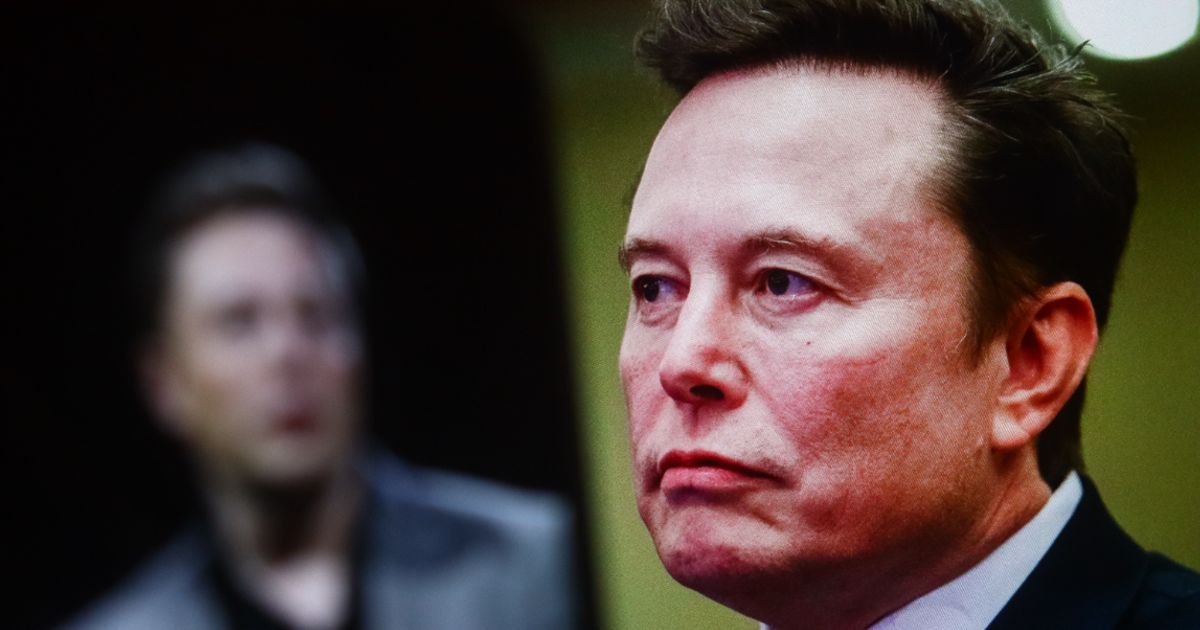
Elon Musk does not often admit he was wrong. But he has. Responding on X to a user who noted that SpaceX controls the computing power Anthropic depends on, and could, in theory, cut it off, Musk said he never would. He went further, calling Anthropic the clear leader in AI and saying no rival had shipped a model as good as its Mythos and Fable systems. He expects a Mythos 2 before long. The turn is surprising, given that last September, he wrote that winning was never a possible outcome for Anthropic. In February, after it raised $30bn at a $380bn valuation, he called its models "misanthropic and evil" and told it to fix them. Five months on, the same company is his benchmark for the field. The praise is not free Take the compliment at face value and it reads as rare humility. Look at the plumbing and a second motive appears. In May, Anthropic agreed to lease the entire output of xAI's Colossus 1 data centre near Memphis, about 300 megawatts, paying roughly $1.25bn a month through 2029. That is close to $40bn flowing to Musk's side of the table. He is not just admiring Anthropic. He is billing it. A rival who pays you $40bn is a rival worth flattering. Musk's pledge not to weaponise that dependence costs him nothing and buys goodwill with a customer he needs. The admiration may be real. It is also good business. Playground politics? The sharper reading sits one company over. Musk co-founded OpenAI in 2015 as a non-profit, left the board in 2018 after the others refused to hand him control, and has fought it since. He sued Altman and OpenAI in 2024, accusing them of abandoning the founding mission for private gain. He sought more than $150bn in damages, Altman's removal and the unwinding of the for-profit structure. In May, a jury threw the case out, finding Musk had waited too long to file. He called the verdict a "calendar technicality" and vowed to appeal. By July, the feud was personal again. Musk branded Altman "Scam Altman" after Apple sued OpenAI, and Altman replied that the surest sign his new model led the field was that Musk was obsessed with him again. Against that backdrop, crowning Anthropic the leader does double duty. It is a real judgement about the models. It is also a way to tell the market that the AI company that matters is not the one he is suing. Both are racing to the same finish line Timing sharpens the point. Both firms filed confidentially for stock market listings in June, within days of each other. Anthropic, valued at about $965bn in private markets, is pushing for a Nasdaq debut as early as October. It could be the first company to list at close to $1tn, and it expects its first profitable quarter, with around $559m in operating income on $10.9bn of revenue. OpenAI, valued a little lower and still loss-making, is leaning toward 2027, wary after SpaceX's own listing spiked and then surrendered much of the gain. Altman is holding out for a $1tn price. Here the two threads meet. Whoever lists first sets the benchmark the second is priced against. Anthropic going out ahead, blessed by Musk as the field's leader, helps fix the multiple bankers who later apply to OpenAI. Musk talking up the rival he profits from, while running down the rival he is suing, shapes the terms on which his enemy will one day face public investors. None of this proves the praise is hollow. Musk may well think Anthropic makes the best models right now. But "wowed by the model" and "at war with OpenAI" were never competing explanations. They are the same move. The compliment serves his balance sheet and his grudge at once, and it lands in the narrow window before both labs ask the market to price them.
Anthropic 'clear leader in AI', says Musk. Here's what the SpaceX chief really means
Elon Musk does not often admit he was wrong. But he has. Responding on X to a user who noted that SpaceX controls the computing power Anthropic depends on, and could, in theory, cut it off, Musk said he never would. He went further, calling Anthropic the clear leader in AI and saying no rival had shipped a model as good as its Mythos and Fable systems. He expects a Mythos 2 before long. The turn is surprising, given that last September, he wrote that winning was never a possible outcome for Anthropic. In February, after it raised $30bn at a $380bn valuation, he called its models "misanthropic and evil" and told it to fix them. Five months on, the same company is his benchmark for the field. The praise is not free Take the compliment at face value and it reads as rare humility. Look at the plumbing and a second motive appears. In May, Anthropic agreed to lease the entire output of xAI's Colossus 1 data centre near Memphis, about 300 megawatts, paying roughly $1.25bn a month through 2029. That is close to $40bn flowing to Musk's side of the table. He is not just admiring Anthropic. He is billing it. A rival who pays you $40bn is a rival worth flattering. Musk's pledge not to weaponise that dependence costs him nothing and buys goodwill with a customer he needs. The admiration may be real. It is also good business. Playground politics? The sharper reading sits one company over. Musk co-founded OpenAI in 2015 as a non-profit, left the board in 2018 after the others refused to hand him control, and has fought it since. He sued Altman and OpenAI in 2024, accusing them of abandoning the founding mission for private gain. He sought more than $150bn in damages, Altman's removal and the unwinding of the for-profit structure. In May, a jury threw the case out, finding Musk had waited too long to file. He called the verdict a "calendar technicality" and vowed to appeal. By July, the feud was personal again. Musk branded Altman "Scam Altman" after Apple sued OpenAI, and Altman replied that the surest sign his new model led the field was that Musk was obsessed with him again. Against that backdrop, crowning Anthropic the leader does double duty. It is a real judgement about the models. It is also a way to tell the market that the AI company that matters is not the one he is suing. Both are racing to the same finish line Timing sharpens the point. Both firms filed confidentially for stock market listings in June, within days of each other. Anthropic, valued at about $965bn in private markets, is pushing for a Nasdaq debut as early as October. It could be the first company to list at close to $1tn, and it expects its first profitable quarter, with around $559m in operating income on $10.9bn of revenue. OpenAI, valued a little lower and still loss-making, is leaning toward 2027, wary after SpaceX's own listing spiked and then surrendered much of the gain. Altman is holding out for a $1tn price. Here the two threads meet. Whoever lists first sets the benchmark the second is priced against. Anthropic going out ahead, blessed by Musk as the field's leader, helps fix the multiple bankers who later apply to OpenAI. Musk talking up the rival he profits from, while running down the rival he is suing, shapes the terms on which his enemy will one day face public investors. None of this proves the praise is hollow. Musk may well think Anthropic makes the best models right now. But "wowed by the model" and "at war with OpenAI" were never competing explanations. They are the same move. The compliment serves his balance sheet and his grudge at once, and it lands in the narrow window before both labs ask the market to price them.
Why OpenAI wants $1 million from Elon Musk's xAI amid Apple lawsuit
Apple accused OpenAI of stealing confidential hardware designs and manufacturing processes in lawsuit OpenAI has asked the court to award $1 million from Elon Musk's xAI company after the former was hit with a lawsuit filed by Apple over the allegations of trade secrets theft. In the midst of legal challenges, Sam Altman is now seeking such hefty legal costs from his long-standing rival Elon Musk over the dismissal of xAI's trade secret lawsuit. According to the CEO of OpenAI as reported by Bloomberg, xAI's trade secrets lawsuit should never have been filed in the first place. Under this lawsuit, the CEO of SpaceX accused the AI company of encouraging ex-employees to steal confidential data from the company, but offered no evidence to substantiate its claims. Later, the judges dismissed xAI's founder allegations and ruled that hiring practices were routine and not based on illicit activities. A federal judge in San Francisco tossed out the lawsuit earlier this year, stating that xAI lacked proof that OpenAI had encouraged any misconduct. "xAI sued OpenAI first and looked for evidence later, forcing OpenAI to spend substantial resources defeating a sprawling, aggressively litigated trade secret claim for which xAI had no evidentiary support," OpenAI's lawyers wrote. The OpenAI's announcement to seek legal costs came on Monday after the Grok chatbot maker revealed that it plans to appeal repeatedly dismissed claims regarding the role of OpenAI in alleged misconduct. The developments have proved dramatic for Sam Altman as he is also facing a lawsuit from Apple who alleged that the tech giant stole confidential hardware designs and manufacturing processes to build their own devices. Moreover, the iPhone maker also accused OpenAI of encouraging some of its employees to "share confidential information, product components, engineering drawings and other materials related to future Apple devices." With lawsuit filed by Apple, the public feud between Elon Musk and Sam Altman has deepened as they exchanged barbs on X platform. In response to this alleged lawsuit, Musk criticized Altman calling him a "scammer" who took this alleged crime to another new level. Musk also claimed on his X post that OpenAI CEO "had graduated from stealing an open source AI charity to trying to steal all of Apple's phone technology."
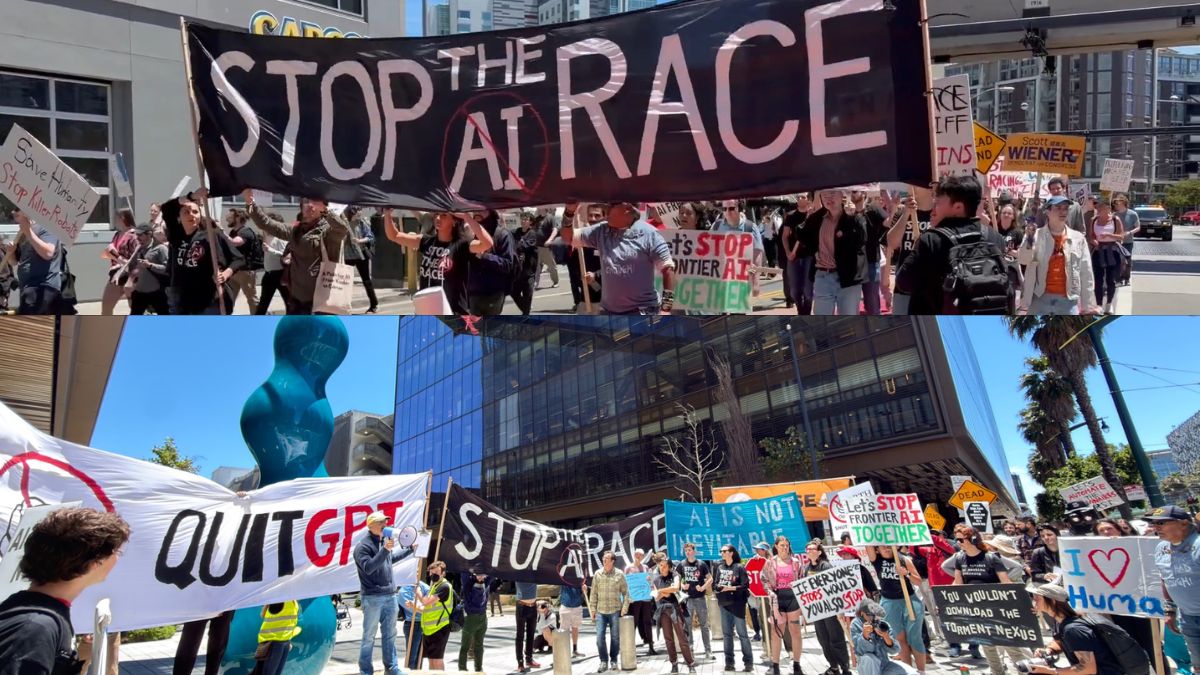
"Stop the AI Race": Hundreds March Against OpenAI, Anthropic and Google DeepMind in San Francisco
On Saturday, July 11, around 400 people took to the streets of San Francisco to protest against the leading AI companies. The march, held under the banner "Stop the AI Race", led from OpenAI's headquarters on 3rd Street past Anthropic's offices on Howard Street to Google DeepMind's location at Rincon Park, with rallies and speeches at each stop. The organizers emphasize that this was a peaceful assembly of "concerned citizens, families, and researchers" - and that employees of the companies in question were explicitly invited to join. The Central Demand: A Conditional Pause on Development The movement has a single, clearly defined demand: every CEO of a major AI lab should publicly commit to pausing the development of frontier models - on the condition that every other major lab in the world credibly does the same. This is not a call for a unilateral stop, but for a conditional pledge along the lines of: "If the others pause, I will too." In practice, according to the organizers, such a pause would mean: no new training runs for larger or more general frontier models. Teams currently working on advancing the capabilities of these models would instead shift to narrow AI applications or alignment research. Existing models would remain available, and narrow AI applications would still be permitted. As a technical blueprint, the movement points to a paper by the MIRI Technical Governance Team that outlines an international agreement led by the US and China - including verification mechanisms such as AI chip tracking and compute thresholds (FLOP caps). The Warnings: "The Architects Know the Race Is Reckless" The protesters argue that the leaders of the AI companies themselves have repeatedly warned about the existential risks of their technology - for instance in public statements on AI risk signed by numerous industry figures. At the same time, they say, each lab justifies its pace by claiming it must beat the competition and geopolitical rivals. It is precisely this race that the activists want to break. Asked about China, they respond that any agreement would of course have to include all major AI labs worldwide - but public commitments from Western CEOs are the first step toward the kind of international coordination that would make this possible. The movement has a history: in September 2025, an 18-day hunger strike outside Google DeepMind's London offices made international headlines. DeepMind CEO Demis Hassabis responded at the time and signaled openness to a conditional pause, but named international coordination as the key bottleneck. In February 2026, from the activists' perspective, Anthropic removed the commitment to pause development if its own AI became too dangerous from the third version of its Responsible Scaling Policy - prompting a first march on Anthropic, OpenAI and xAI on March 21. Since then, Anthropic has written that it expects it "would slow down or temporarily pause" development if other labs verifiably did the same, and OpenAI stated in a strategy paper that coordination, including slowing frontier development, is expected to become more important. For the organizers, this is not enough: "expects" is not a commitment - what is needed, they say, are binding pledges along with a concrete verification regime. Background: Attacks on Sam Altman's Home The protests are taking place in an increasingly heated climate. In April 2026, the San Francisco home of OpenAI CEO Sam Altman was targeted twice within a matter of days: first, a 20-year-old from Texas threw a Molotov cocktail at the property and subsequently threatened to burn down OpenAI's headquarters. According to prosecutors, the man was driven by hatred of AI technology, traveled to San Francisco with the intent to kill, and was carrying a manifesto containing the names and addresses of other AI executives and investors. He was charged with, among other things, attempted murder. Just two days later, shots were fired at Altman's house from a car; two people were arrested, though it remains unclear whether the attack was deliberately aimed at the property. No one was injured in either incident. Altman himself responded with a blog post in which he shared a photo of his family and called for de-escalation: fear about AI is justified, he wrote, and criticism of the industry welcome - but rhetoric and tactics need to be dialed down. The "Stop the AI Race" organizers, for their part, clearly distance themselves from violence and are committed to peaceful protest. Background: Resistance to AI Data Centers Across the US In parallel, resistance to the massive buildout of AI data centers is growing across the United States. According to a report by Data Center Watch, projects worth around 130 billion US dollars were blocked or delayed in the first quarter of 2026 alone - at least 75 projects, the highest figure since tracking began in 2023. In the first six weeks of the year, lawmakers from both parties introduced more than 300 data center bills, and 14 states proposed construction moratoriums. So far, opponents have had the greatest success at the local level: more than 100 municipalities across the US have imposed construction pauses - including Denver with a one-year moratorium, Oklahoma City and Tulsa, several communities in Illinois and Georgia, and around 20 municipalities in Michigan. At the state level, Maine narrowly missed becoming the first state in US history to enact a statewide moratorium in April, when Governor Janet Mills vetoed the bill. In New York, the legislature passed a one-year moratorium on AI data centers in June, which is currently awaiting Governor Kathy Hochul's signature. At the federal level, Senator Bernie Sanders and Representative Alexandria Ocasio-Cortez introduced the Artificial Intelligence Data Center Moratorium Act in March, which would halt the construction of new data centers of 20 megawatts or more until national safeguards are in place. According to a Gallup poll, roughly seven in ten Americans oppose the construction of AI data centers near their homes. The "Stop the AI Race" movement, meanwhile, is announcing further actions. As its website puts it: protest marches are "just the start".
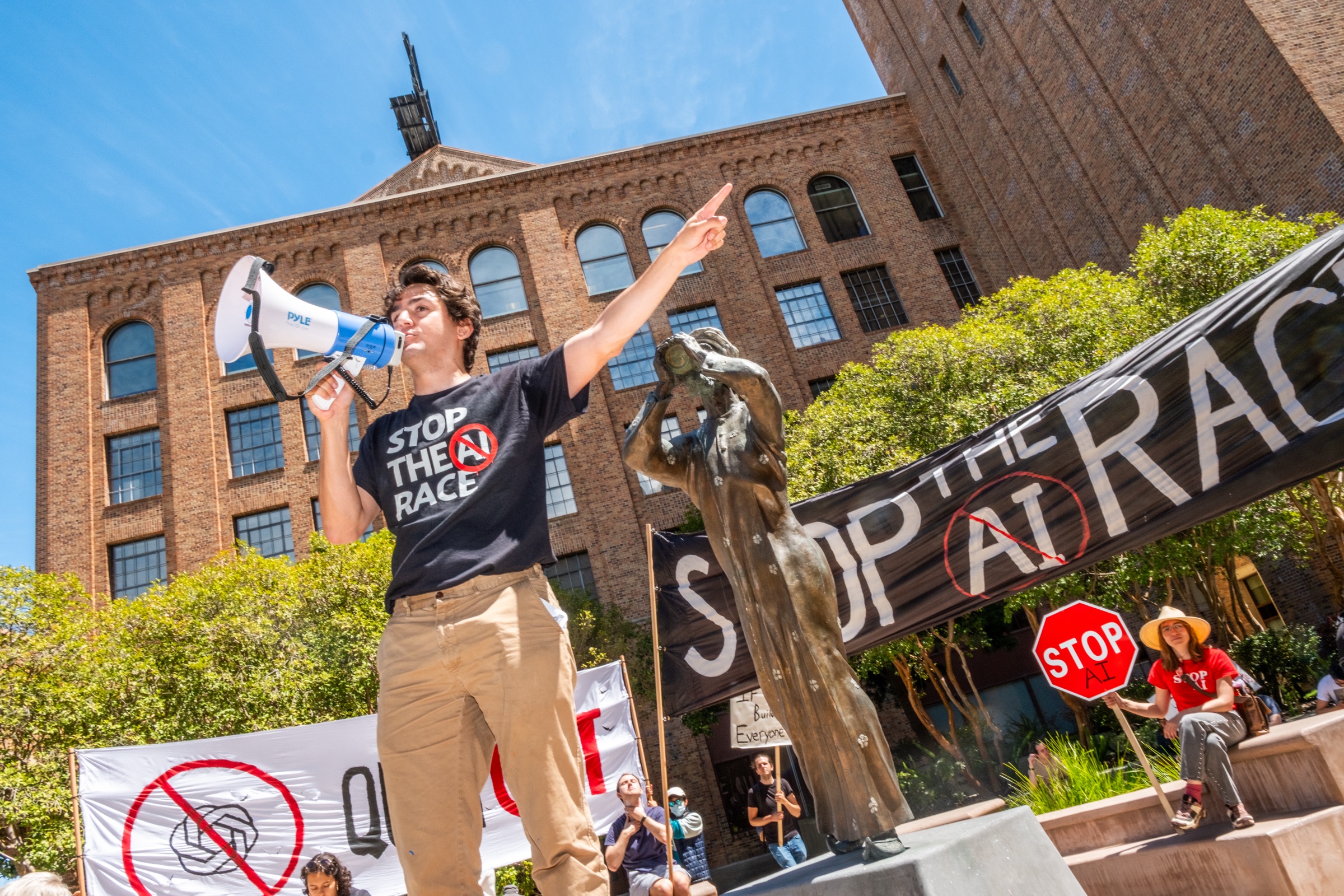
OpenAI CEO Sam Altman Throws Shade At Anthropic's New Ad Amid Tussle With Elon Musk, Apple: 'Thought This Was Satire'
* Altman took a swipe at a new advertisement for Anthropic's Claude. * In the past few days, he has again rebutted Elon Musk and said he is "not afraid of Apple" following the iPhone maker's lawsuit. * Investors are closely watching developments at OpenAI as it moves toward a public listing. OpenAI CEO Sam Altman took a more combative tone toward tech rivals on Monday, days after his AI startup was hit with a major trade-secret theft lawsuit by Apple. "Come for the best model, stay because we don't treat you with contempt," Altman posted on X on Monday, without context. Given the timing, X users interpreted it as criticism aimed at companies like Apple, Anthropic or SpaceXAI. In a separate post, Altman took a swipe at a new advertisement for Anthropic's Claude. The ad, titled "There's Hope in Hard Questions," features a narrator reflecting on whether AI can be built to benefit humanity. Responding to it, Altman wrote, "i thought this was satire, kept looking for the handle to be spelled c1audeai or something." Anthropic was started by former OpenAI employees, and the company now appears to be leading in the AI market. Altman Sharpens The Rhetoric The OpenAI CEO is no stranger to quirky responses to online critics, but lately he appears to be taking a more head-on approach. In the past few days, he's rebutted criticism from SpaceX and Tesla founder Elon Musk, saying that he was wooing public market investors with unproven claims about space data centers and that he is "not afraid of Apple" following the iPhone maker's lawsuit. Altman and Musk have frequently traded jabs online amid Musk's long-running legal campaign against OpenAI, including challenges to its restructuring and its relationship with Apple. Apple Lawsuit On Friday, Apple said it sued OpenAI in California, alleging that OpenAI encouraged Apple employees to share information, components, drawings, and other materials related to upcoming products -- as part of OpenAI's efforts to develop its own suite of devices. The suit also named Tang Tan, a 25-year Apple veteran who joined OpenAI as its chief hardware officer last year, as a defendant. The suit marks a dramatic turn for two companies that were close partners. OpenAI has powered Apple Intelligence and Siri, but ties between the two have frayed over the past year. OpenAI IPO Watch Investors are closely watching developments at OpenAI as it moves toward a public listing, setting up a potential IPO showdown with chief rival Anthropic. Both companies confidentially filed IPO paperwork with regulators last month, before reports emerged that OpenAI may delay its listing until next year rather than the previously expected fourth-quarter timeline. OpenAI now broadly trails Anthropic, based on the most recently disclosed numbers. In April, Anthropic said it tripled its annual revenue run rate to $30 billion, surpassing OpenAI's ARR of about $24 billion. Anthropic is valued at $1.08 trillion, compared to OpenAI's private market valuation of $868.4 billion, according to data from Nasdaq Private Market. For updates and corrections, email newsroom[at]stocktwits[dot]com.
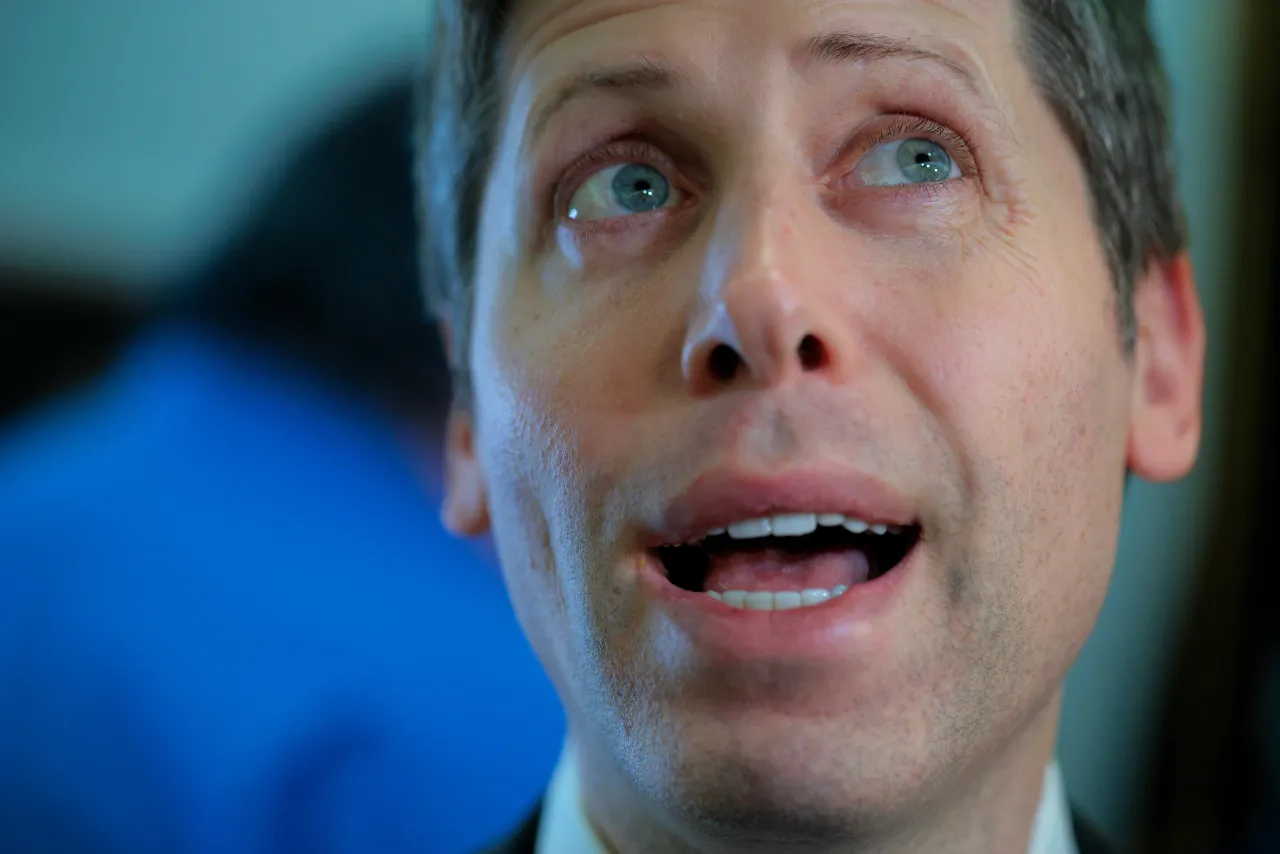
OpenAI CEO Sam Altman Throws Shade At Anthropic's New Ad Amid Tussle With Elon Musk, Apple: 'Thought This Was Satire'
* Altman took a swipe at a new advertisement for Anthropic's Claude. * In the past few days, he has again rebutted Elon Musk and said he is "not afraid of Apple" following the iPhone maker's lawsuit. * Investors are closely watching developments at OpenAI as it moves toward a public listing. OpenAI CEO Sam Altman took a more combative tone toward tech rivals on Monday, days after his AI startup was hit with a major trade-secret theft lawsuit by Apple. "Come for the best model, stay because we don't treat you with contempt," Altman posted on X on Monday, without context. Given the timing, X users interpreted it as criticism aimed at companies like Apple, Anthropic or SpaceXAI. See what 10M+ investors are talking about. Get the Stocktwits Daily Rip for what retail is watching right now, free to your inbox In a separate post, Altman took a swipe at a new advertisement for Anthropic's Claude. The ad, titled "There's Hope in Hard Questions," features a narrator reflecting on whether AI can be built to benefit humanity. Responding to it, Altman wrote, "i thought this was satire, kept looking for the handle to be spelled c1audeai or something." Anthropic was started by former OpenAI employees, and the company now appears to be leading in the AI market. Altman Sharpens The Rhetoric The OpenAI CEO is no stranger to quirky responses to online critics, but lately he appears to be taking a more head-on approach. In the past few days, he's rebutted criticism from SpaceX and Tesla founder Elon Musk, saying that he was wooing public market investors with unproven claims about space data centers and that he is "not afraid of Apple" following the iPhone maker's lawsuit. Altman and Musk have frequently traded jabs online amid Musk's long-running legal campaign against OpenAI, including challenges to its restructuring and its relationship with Apple. Apple Lawsuit On Friday, Apple said it sued OpenAI in California, alleging that OpenAI encouraged Apple employees to share information, components, drawings, and other materials related to upcoming products -- as part of OpenAI's efforts to develop its own suite of devices. The suit also named Tang Tan, a 25-year Apple veteran who joined OpenAI as its chief hardware officer last year, as a defendant. The suit marks a dramatic turn for two companies that were close partners. OpenAI has powered Apple Intelligence and Siri, but ties between the two have frayed over the past year. OpenAI IPO Watch Investors are closely watching developments at OpenAI as it moves toward a public listing, setting up a potential IPO showdown with chief rival Anthropic.
Govt denies reports of delaying OpenAI, Anthropic cybersecurity AI deployment
Report claimed a temporary pause, but the government rejected the claim. The Indian government has asked all ministries to prepare a list of the AI tools they need so these tools can be provided to them. A recent report claimed that the Ministry of Electronics and Information Technology (MeitY) advised ministries not to use cybersecurity AI models made by OpenAI and Anthropic for now. The report did not explain the reason for this advice. Furthermore, the report also claimed that the ban is at the timing of deployment and not on the tools. However, the Indian government has denied the report and said no such halt has been ordered. PIB debunks claim The Press Information Bureau (PIB), which is also the official fact-check agency for the Indian government, recently posted on its official X handle and stated that MeitY had not issued any direction or advisory asking ministries to stop the rollout or use of OpenAI or Anthropic's AI models. Furthermore, the agency also urged the citizens to rely only on official government websites and verified sources for authentic information. Also read: OpenAI asks court to make Elon Musk's xAI pay over Rs 9.5 crore after lawsuit dismissal What the report claimed about OpenAI and Anthropic AI tools According to the report, a department under MeitY had circulated an office memorandum asking ministries not to deploy cybersecurity models developed by OpenAI and Anthropic for the time being. It claimed the development came days after representatives of both companies met officials from several ministries to promote their AI tools. However, the report said it could not independently confirm how many ministries were approached or the level of those meetings. Not only that but it also claims that the Ministry of Finance had written to the department seeking approval to explore the use of agentic AI and OpenAI's GPT 5.5 model for cybersecurity work. And the ministry also outlined the possible applications of AI in the letter, including finding software vulnerabilities, strengthening cyber defence and supporting security operations. Also read: Sam Altman pokes fun at Anthropic's Claude commercial, says he thought it was satire The report also claimed that the department responded with a memorandum declining the proposal for now. However, a source quoted in the report said the response should not be considered a permanent ban. Instead, the concern was about deploying the technology too early rather than blocking its use altogether.

OpenAI's Feud With xAI Carries On as Apple Secrets Fight Revs Up
OpenAI asked a judge to find that a lawsuit filed by xAI Corp. accusing the ChatGPT maker of trade secret theft "should never have been filed" and seeks to recoup more than $1 million in legal expenses from Elon Musk's company. Sam Altman's artificial intelligence startup filed its request Monday, ...

Citi sends powerful sign to SpaceX investors
SpaceX stock is trading at $145.30, about 8% above its $135 IPO price, according to Yahoo Finance at the time of writing. Interestingly, SpaceX stock climbed as high as $225.64 after its $135 IPO, according to Yahoo Finance reporting, indicating a peak post-IPO gain of about 67%, before sharply retreating from those highs. So SpaceX investors were naturally looking for proof that Wall Street's post-IPO optimism wasn't misplaced and that the company was truly onto something special. Citi's analysts obliged, offering far more than a simple stock call. Following a 10-hour teach-in on space and AI, the firm argued that SpaceX sits at the center of a 10-plus-year investment cycle, with launch leadership, Starlink, orbital AI, and extreme vertical integration creating a compounding infrastructure story. Citi just hailed SpaceX as a platform for the future, while the market still has to decide how much of that future is investable today. Why Citi sees SpaceX as more than a rocket company Citi kicked things off with a buy rating and a $200 base-case price target for SpaceX stock, implying an expected return of about 34.9% from current levels. In the note shared with me, Citi valued SpaceX as a vertically integrated platform spanning space access, global connectivity, and AI infrastructure, rather than just a launch provider. Moreover, Citi derived its target from the average of three methods: 2027 growth-adjusted multiples for trillion-dollar peers, a sum-of-the-parts analysis valuing Space, Connectivity, and AI separately, and 2030 comparable-company multiples for large-cap platform peers. Put bluntly, as my fellow tech reporter Vuk Zdinjak noted in perhaps the most honest take on SpaceX, that kind of valuation framework shows how tough it is to value such a business. In the Bank of America note he covered, he panned the bank's use of a nearly 20-year cash-flow model that stretched far beyond the usual 5- to 10-year DCF window and well past the typical 12-month life of a price target. Analysts looked to assign a present value to businesses that may not be fully proven for years. Nevertheless, Citi is sold on SpaceX's abilities, especially its reusable launch capability, Starlink's global satellite network, the xAI/Grok integration, and future terrestrial and orbital compute infrastructure. It also argues that extreme vertical integration will likely push costs down and throughput up at a scale competitors might struggle to match. Wall Street price targets for SpaceX stock
Analysts are still bullish on SpaceX shares after Nasdaq inclusion. Here is what that means for ASX investors
You're reading a free article with opinions that may differ from The Motley Fool's Premium Investing Services. Become a Motley Fool member today to get instant access to our top analyst recommendations, in-depth research, investing resources, and more. Learn More SpaceX shares have had an extraordinary first month. Shares were issued at US$135 before listing on 12 June, and the stock climbed well above US$200, pushing the valuation above US$2 trillion. Since then, SpaceX shares have come back down to earth. Although, the company was then fast-tracked into the Nasdaq-100 index in early July, approximately 15 trading days after listing. Analysts remain bullish. For ASX investors, that matters more than most realise, because a large number of Australians now own a piece of SpaceX without having made any decision to buy it. Reasons to remain bullish on SpaceX shares The core of the bull case is Starlink. According to SpaceX's S-1 filing with the SEC, the Starlink connectivity segment generated US$11.4 billion in revenue in 2025. The segment delivered US$4.4 billion in operating income, representing year-on-year growth of 49.8% and 120.4% respectively. Starlink served 10.3 million subscribers across 164 countries as at 31 March 2026, up from just 2.3 million in 2023. This is a business growing at extraordinary speed with a defensible moat. Launching a satellite constellation of that scale requires launch capability almost no competitor possesses. The Nasdaq-100 inclusion added a further mechanical tailwind. This will force index-tracking funds worldwide to buy SPCX regardless of any individual portfolio manager's view on valuation. Betashares Space Industry ETF The Betashares Space Industry ETF (ASX: RCKT) is the most direct ASX exposure. SpaceX has already been included in RCKT following the fund's fast-track inclusion feature. This allowed it to enter the Solactive Space Industry Index far more quickly than standard timelines would permit. SpaceX now represents approximately 27% of the RCKT portfolio, making it the fund's single largest holding by a wide margin. That concentration deserves a closer look. RCKT is no longer a diversified space economy fund in any meaningful sense. It is now, in effect, a SpaceX fund with 28 other holdings attached, and its performance will be dominated by what SPCX does from here. Betashares Nasdaq 100 ETF The Betashares Nasdaq 100 ETF (ASX: NDQ) is where most Australians now own SpaceX without having chosen to. NDQ is one of the most widely held ETFs in Australia, and SpaceX's Nasdaq-100 inclusion means every NDQ holder automatically gained SpaceX exposure when the index inclusion took effect. The same applies to holders of the Vanguard MSCI International Shares ETF (ASX: VGS) and the iShares S&P 500 ETF (ASX: IVV). What's more, the millions of Australians whose superannuation funds hold international shares benchmarked against major US indices have also gained exposure. For most investors, that exposure will be small relative to the overall portfolio. But it exists, automatically, without any further action required. The risk worth understanding for SpaceX shares SpaceX is not a conventionally profitable company. The company posted a GAAP net loss of US$4.94 billion in 2025, driven by losses in the xAI and Space divisions that offset Starlink's profitability. A company trading above US$2 trillion with significant GAAP losses is a demanding proposition, even for investors genuinely excited by the long-term opportunity. The mechanical index buying that has supported the share price since listing was a one-time event, not a permanent support mechanism. Furthermore, SpaceX bonds issued shortly after the IPO have reportedly sold off to levels comparable with junk-rated borrowers. This is despite investment-grade ratings, a warning sign that the debt market is less enthusiastic than the equity market. Foolish takeaway for SpaceX shares Analysts remain bullish on SpaceX shares, and Starlink's growth justifies significant optimism. But for ASX investors, the more important point is that ownership of SpaceX is now largely automatic rather than chosen. RCKT holders own it heavily, at around 26% of the fund. NDQ, VGS, and IVV holders own it passively. Understanding how much SpaceX exposure you actually have is perhaps a more useful exercise than debating whether to buy it.

How Low Can SpaceX Stock Go?
Space Exploration Technologies (NASDAQ: SPCX) went public on June 12. Its stock promptly soared to a peak of $225, giving the company a whopping $2.9 trillion market capitalization, but it has since plummeted by 35% to close at $145 on Friday, July 10. SpaceX has a unique business that spans space transportation, satellite internet connectivity, and artificial intelligence (AI) infrastructure, and its revenue is forecast to grow rapidly over the next couple of years. However, its stock remains extremely expensive even after its recent decline, which could open the door to more losses for investors. Missed Nvidia in 2009? This Rare Signal Is Flashing Again. In 2009, a "Double Down" signal flashed for a little-known chipmaker called Nvidia. For the first time in years, that same "Total Conviction" signal is flashing for a company 1/100th the size of Nvidia. Continue " How low can SpaceX stock go? SpaceX has a significant opportunity ahead Before we dive into SpaceX's hefty valuation and the math behind a potential decline in its stock, let's examine the company's business, which does have significant growth potential. It's divided into three core segments: SpaceX already accounts for over 80% of the world's mass to orbit, so it's launching more commercial payloads than any other company or organization on the planet. Its market share will only grow once its Starship rocket enters regular service, because its 100-ton payload capacity is four times that of the Falcon 9 rocket, which completes most trips today. The connectivity business is also set to receive a massive boost, as SpaceX will start launching its V3 satellites later this year, which offer a whopping 10 times the bandwidth of the current V2 satellites. Moreover, Starship will launch 60 V3 satellites into orbit per trip, whereas Falcon 9 is only capable of sending 27 at a time. Moving on to the AI segment, most of its revenue comes from Grok subscriptions and renting data center capacity to other companies. When SpaceX bought xAI, it took ownership of data centers like Colossus and Colossus II, which are fitted with hundreds of thousands of specialized AI chips from suppliers like Nvidia and Advanced Micro Devices.
'Stop AI Race': Workers, students protest at OpenAI, Anthropic, Google's US offices as layoffs surge
People working in artificial intelligence and students were among a San Francisco crowd of about 400 protestors marching outside the offices of prominent tech companies OpenAI, Anthropic and Google DeepMind, which are leading the AI boom while thousands of employees continue to lose their jobs in the technology sector. The high-emotion march targeting AI companies on July 11 was organised by 'Stop the AI Race.' As established on its website, the group has a single demand: "Every major AI lab CEO must publicly commit to pausing frontier model development if every other major lab in the world credibly does the same." The same message was carried this weekend as a diverse group of protestors called for greater regulation of the AI industry, demanding that companies restrict all new AI model training. Anti-AI marchers cited concerns over rising rents, job cuts, existential risk and environmental harm, as seen in a video amplified by Reuters. Anti-AI protests at OpenAI, Anthropic and Google offices in San Francisco At first demonstrators gathered in front of the Mission Bay headquarters of Sam Altman's AI startup before marching to the offices of Anthropic and Google DeepMind on Saturday (US time), according to photos of the development shared by San Francisco-based nonprofit news site Mission Local. Protesters voiced their concerns through messages displayed on the many signs and banners they carried during the event, as they condemned the rise of artificial intelligence and the subsequent phasing out of the human workforce. Some of these anti-AI messages seen during the march were: * "Stop the AI Race" * "AI is a weapon of mass destruction" * "Survival over profits" * "Pause AI" * "AI is not inevitable" * "It would be bad to get into an arms race over AI" * "Stop slop" * "It's not too late to regulate" * "In a race off a cliff no one wins" Who was behind the 'Stop the AI Race' protests in San Francisco? The Stop the AI Race march was led by activist and former AI researcher Michael Trazzi. He first gained attention for going on a hunger strike last year outside Google DeepMind's office in London while demanding that AI development be frozen. On Saturday, Trazzi ended up leading the group of AI-hating protestors to chant expletives against OpenAI's Sam Altman and Anthropic CEO Dario Amodei, the San Francisco Chronicle reported. "We are in an emergency," he told others. "The problem is they can't stop the race, unless other people stop." Before this weekend's demonstration, the former AI researcher marched on Anthropic, OpenAI and Elon Musk's xAI, calling for a conditional pause on the advancing tech, in March as well. Although neither company has directly responded to the group's demands, the 'Stop the AI Race' website alludes to DeepMind CEO Demis Hassabis reacting to calls for a collective pause on development in an interview with a Bloomberg journalist. The January interaction caught the tech leader saying, "I think so." Elsewhere, Anthropic's CEO Dario Amodei has also repeatedly brought up dangers linked to AI. His assessment even landed the company in trouble with the Donald Trump administration as Anthropic and the Pentagon clashed over the military's use of AI. "Fundamentally, the enormous returns to intelligence in terms of power in the world, combined with the rapid pace of AI's progress, creates a perfect storm for a surprise seizure of power by a range of dangerous actors," Amodei wrote in a June blog post. "The danger could take a variety of specific technological or operational forms, but what they all have in common is the idea that AI could suddenly confer enormous power while routing around existing mechanisms of democratic oversight." "A fully automated drone army that sounds like science fiction today could, in the future, obey unlawful orders and allow governments to unilaterally entrench their power; professionally-trained humans are more likely to object to such illegal direction." The rising streak of 'Stop the AI Race' protests is a lot like the recent viral trend of fresh graduates "booing" numerous tech leaders addressing their university commencement speeches at a series of graduation ceremonies this year. Several top executives in their field, including former Google CEO Eric Schmidt and Tavistock Development VP Gloria Caulfield, faced relentless backlash in real time as they prompted the inevitability of AI at US universities. On its website, the Stop the AI Race group asserts "protest marches are just the start" of the calculated retaliatory efforts against architects of AI systems who continue to obsess over one-upping each other in a cut-throat competition of their own creation. The surge in criticism against artificial intelligence aligns with massive layoff waves across the industry, costing employees their jobs. As Big Tech firms like Microsoft, Meta, and many more assume a more AI-first business strategy, more than 120,000 employees have already been laid off across 228 tech companies as of this week, according to the live layoff tracker Layoffs.fyi.