News & Updates
The latest news and updates from companies in the WLTH portfolio.
How Low Can SpaceX Stock Go?
Space Exploration Technologies (SPCX 4.51%) went public on June 12. Its stock promptly soared to a peak of $225, giving the company a whopping $2.9 trillion market capitalization, but it has since plummeted by 35% to close at $145 on Friday, July 10. SpaceX has a unique business that spans space transportation, satellite internet connectivity, and artificial intelligence (AI) infrastructure, and its revenue is forecast to grow rapidly over the next couple of years. However, its stock remains extremely expensive even after its recent decline, which could open the door to more losses for investors. How low can SpaceX stock go? SpaceX has a significant opportunity ahead Before we dive into SpaceX's hefty valuation and the math behind a potential decline in its stock, let's examine the company's business, which does have significant growth potential. It's divided into three core segments: SpaceX already accounts for over 80% of the world's mass to orbit, so it's launching more commercial payloads than any other company or organization on the planet. Its market share will only grow once its Starship rocket enters regular service, because its 100-ton payload capacity is four times that of the Falcon 9 rocket, which completes most trips today. The connectivity business is also set to receive a massive boost, as SpaceX will start launching its V3 satellites later this year, which offer a whopping 10 times the bandwidth of the current V2 satellites. Moreover, Starship will launch 60 V3 satellites into orbit per trip, whereas Falcon 9 is only capable of sending 27 at a time. Moving on to the AI segment, most of its revenue comes from Grok subscriptions and renting data center capacity to other companies. When SpaceX bought xAI, it took ownership of data centers like Colossus and Colossus II, which are fitted with hundreds of thousands of specialized AI chips from suppliers like Nvidia and Advanced Micro Devices. SpaceX eventually wants to send AI computing clusters into space, where they will run on solar power and won't need complex cooling systems. This infrastructure would send data back to Earth via Starlink satellites, giving SpaceX a huge advantage over any potential competitors entering this industry. Although Elon Musk founded SpaceX to focus on space exploration and transportation, the company values its opportunity in this segment at just $370 billion. That pales in comparison to the potential $1.6 trillion addressable market in the connectivity business, and the staggering $26.5 trillion opportunity in the AI infrastructure business. SpaceX stock is trading at a sky-high premium to the broader market SpaceX generated $18.7 billion in total revenue during 2025, which was up 33% from the prior year. This was the composition: Data source: SpaceX. While connectivity was the largest and fastest-growing segment last year, that looks set to change. SpaceX recently agreed to rent up to $1.25 billion in AI computing capacity per month to Anthropic, in addition to another $920 million per month to Alphabet, and $150 million per month to Reflection AI. These deals could amount to tens of billions of dollars in annual revenue over the next few years. In fact, Wall Street's average forecast (provided by Yahoo! Finance) suggests SpaceX could more than double its revenue to $38.8 billion in 2026 and then generate $72.4 billion in revenue in 2027. That brings me to its valuation. Based on SpaceX's trailing 12-month revenue and its $1.91 trillion market capitalization, its stock is trading at a price-to-sales (P/S) ratio of 98.9, making it 15 times as expensive as the Nasdaq-100 index, which has a P/S ratio of just 6.4. In other words, SpaceX is wildly overvalued relative to its big-tech peers. Even if we value SpaceX stock using Wall Street's 2027 revenue forecast, its forward P/S ratio is still a hefty 26.3. I'm not predicting this will happen, but the stock would have to plummet by 76% over the next 18 months just to trade in line with the current P/S ratio of the Nasdaq-100 index. In my opinion, the math suggests SpaceX stock will have a tough time generating upside for the foreseeable future, and I won't be surprised to see a decline of 50% (or more), particularly if the company fails to meet Wall Street's revenue expectations.
Musk Collects R40 Billion A Month In AI Rent From Google And Anthropic
Anthropic pays SpaceX $1.25 billion a month for compute. Google pays $920 million. Combined, the two AI leases are worth more than SpaceX entire 2025 revenue. Musk is the landlord of the AI race. Anthropic agreed to pay SpaceX $1.25 billion (R22.9 billion) every month for three years to rent GPU capacity at the Colossus 1 datacentre in Memphis, Tennessee. The deal, signed in May, gives Anthropic access to more than 220,000 Nvidia GPUs and over 300 megawatts of compute, which is roughly the power draw of a small city. Google signed its own lease weeks later. The search giant will pay SpaceX $920 million (R16.8 billion) a month starting October, for roughly 110,000 GPUs, running through June 2029. Combined, the two contracts are worth $2.17 billion (R39.7 billion) a month, or about $26 billion (R476 billion) a year, which is more than SpaceX's entire 2025 revenue of $18.67 billion (R341.7 billion), according to the company's S-1 filing. One tenant, paying monthly rent, nearly matching the whole company's annual turnover. (Landlord of the year, frankly.) Both companies are paying for infrastructure that was built for xAI, Musk's AI venture, which SpaceX acquired in February in an all-stock deal valued at roughly $1.25 trillion (R22.9 trillion). The merged entity went public in June at $1.77 trillion (R32.4 trillion), closing its first day of trading above $2.1 trillion (R38.4 trillion) on Nasdaq under the ticker SPCX. It was the largest IPO in history. SpaceX builds the datacentres, AI companies pay rent on them, and the rent now exceeds every other revenue line the company has. Starlink, the satellite internet business that was SpaceX's main income source, generated $11.4 billion (R208.6 billion) in 2025. The two AI leases will generate more than double that, annually, from two customers alone. The deals exist because the AI industry has run into a wall that money alone cannot fix: there are not enough chips, power, or datacentres on Earth to meet demand. Anthropic needs the capacity for its Claude models. Google needs what it calls "bridge capacity" for Gemini Enterprise, its agentic AI platform, which has grown faster than even Google's own infrastructure can handle. In January, SpaceX filed an application with the US Federal Communications Commission for permission to launch and operate up to one million satellites as part of its Orbital Data Center system, internally called Starmind. The AI1 satellite design features a 70-metre wingspan and a 150-kilowatt peak compute payload, with interchangeable hardware for different processors. Musk has said he wants to begin launching them by 2028, using Starship, and has described space as "the only way to scale AI." The rationale is uninterruptible solar power and lower cooling costs, the two biggest operating expenses for Earth-based datacentres. Nvidia has already built a chip for this. The Space-1 Vera Rubin Module, announced at GTC 2026, is designed to deliver datacentre-class AI compute in space, with up to 25 times the AI compute power per GPU compared with the H100. It is expected to be available in 2027. Whether the orbital datacentres arrive on schedule is a separate question (they will not). The Earth-based revenue is already real. Anthropic's contract alone could generate more than $40 billion (R732 billion) over its three-year term. Google's deal adds another $30 billion (R549 billion) if it runs to completion. The termination clauses are loose: Google can exit with 90 days' notice after December, and Anthropic's ramp-up period has already passed. Musk, in other words, has found a way to charge rent to the companies building the future. Whoever's model wins, Claude or Gemini or his own Grok, the landlord gets paid. [Sources: Tom's Hardware, Anthropic, Teslarati & FCC]

Elon Musk Admits He Was 'Clearly Wrong' About Anthropic -- and Promises Not to Weaponize SpaceXAI's Compute Access Against the Claude Maker: 'Not My Style'
Benzinga and Yahoo Finance LLC may earn commission or revenue on some items through the links below. Elon Musk publicly reversed his earlier view of Anthropic on Thursday, saying he was "clearly wrong" to doubt the AI company and pledging not to use SpaceXAI's compute leverage to harm a competitor. Musk Calls Anthropic Current AI Leader "I was clearly wrong about Anthropic," Musk wrote on X. "They are obviously currently the leader in AI. No company has released a model as good as Mythos/Fable and they will undoubtedly have Mythos 2 ready soon." TechCrunch reported that Musk was referring to his September 2025 post that said, "winning was never in the set of possible outcomes for Anthropic." I was clearly wrong about Anthropic. They are obviously currently the leader in AI. No company has released a model as good as Mythos/Fable and they will undoubtedly have Mythos 2 ready soon. And I would never cut them off in a way that hurt them badly, even as a competitor.... -- Elon Musk (@elonmusk) July 9, 2026 Musk added that he would not cut off Anthropic's access in a damaging way, even though Anthropic competes with his own AI business. "I would never cut them off in a way that hurt them badly, even as a competitor. That's not my style," he wrote. He cited Tesla's patent pledge, its decision to open the Supercharger network to rivals, SpaceX's pricing for competing satellite launches and X's tolerance for criticism as examples of what he called fair competition. "Even my worst enemies can attack me on this platform," Musk wrote. Anthropic Depends On SpaceXAI Compute Deal The exchange followed a claim on X that SpaceXAI now runs a frontier model competitive with Anthropic's Opus 4.8 while Anthropic depends on short-term compute leased from SpaceXAI. Anthropic signed a May deal for 300 megawatts of compute from xAI's Colossus 1 data center near Memphis, Tennessee, paying $1.25 billion a month through May 2029. SpaceXAI said in May that the partnership gives Anthropic access to Colossus 1, which includes more than 220,000 Nvidia GPUs and is designed for AI training, fine-tuning, inference and high-performance computing. SpaceXAI also said Anthropic plans to use the compute to improve capacity for Claude Pro and Claude Max subscribers.
SpaceX's AI empire is built on data centers, not satellites - Cryptopolitan
Analysts caution that the contracts carry termination clauses and that space computing is still 10 years or more away. SpaceX's AI returns over the next few years will not come from space. According to Wall Street analysts, the money is coming from Earth data centers rather than the orbital compute that Elon Musk has promised. This reframes SpaceX (NASDAQ: SPCX) as primarily an infrastructure company. Space computing is a bet for the future, not now, for anyone considering SpaceX as an AI play. SpaceX already charges for computing. Reuters reported that the company signed enterprise deals for its Colossus supercomputer clusters with Anthropic, Alphabet's Google, and Reflection AI. Those contracts alone are expected to generate more than $28 billion annually. SpaceX's AI revenue in 2025 is ~$3.2 billion, which is significantly higher than the new deals. The compute contracts also outperformed SpaceX's earnings from rocket launches and Starlink, when counted separately. The contracts, however, include termination clauses, so analysts caution against reading them as recurring revenue. What SpaceX spent to get here SpaceX invested ~$18 billion in AI infrastructure and research in 2025. According to company filings, ~$12.7 billion was spent on capital expenditures and $5.1 billion on research and development. That expenditure outpaced spending on space and connectivity lines. Colossus and a second cluster, Colossus II, together provide ~1 gigawatt of AI compute. That makes SpaceX one of the world's largest compute operators. J.P. Morgan predicts that terrestrial capacity will reach ~9 gigawatts by 2029, which is equivalent to four times the output of the Hoover Dam. Brokerages cited by Reuters pointed to its $60 billion purchase of AI coding startup Cursor as a sign the company wants to sell AI applications, not just the machines that run them. The deal ties into Musk's model plans on the software side. A separate Cryptopolitan report said Musk's lab, now renamed SpaceXAI, built its Grok 4.5 model jointly with Cursor, and Musk has said SpaceX is buying the startup for that same $60 billion figure. Why orbit is still a distant bet Musk has proposed a future in which computers run in space. Analysts Reuters spoke with view this as a later chapter. "The narrative that (orbital) will fundamentally disrupt terrestrial data centers is a little bit overblown," said Anthony Milovantsev, a partner at consultancy Altman Solon, who estimated that any real displacement of ground-based data centers would take "ten years plus." The case is based on hardware that does not currently exist at scale. Orbital computing relies on SpaceX's Starship flying frequently and cheaply, lower launch costs, and better satellites, according to analysts. Ground clusters continue to run regardless of direction. BofA analysts were more blunt, calling the long term viability of orbital data centers "unproven and heavily reliant on key technological milestones that have yet to be realized." If the engineering is delivered, the appeal will be valid. Starships could eventually launch solar computing satellites into orbit, avoiding ground based costs such as energy, cooling, and land use. Analysts aren't asking if SpaceX can build and sell AI infrastructure. J.P. Morgan's estimate of ~9 gigawatts in 2029 remains the benchmark for establishing a business beyond Earth.
Prediction: SpaceX Shares Can Reach $220 by End of 2026
Space Exploration Technologies (NASDAQ: SPCX) has become one of the market's most closely watched stocks after its rapid entry into the Nasdaq-100 index on July 7. Shares are trading close to $149 (as of July 10), still above its $135 IPO price, but nearly 34% below its post-IPO high of $225.60. This share price pullback has not ended investor interest in SpaceX, but it has changed the debate. Investors are now weighing the company's artificial intelligence (AI) compute opportunity, Starlink satellite internet network's room to expand in satellite communications, and progress on the next-generation reusable rocket system, Starship, as they assess where the stock could trade by the end of 2026. Missed Nvidia in 2009? This Rare Signal Is Flashing Again. In 2009, a "Double Down" signal flashed for a little-known chipmaker called Nvidia. For the first time in years, that same "Total Conviction" signal is flashing for a company 1/100th the size of Nvidia. Continue " Image source: Getty Images. SpaceX has growth drivers for its revenue SpaceX is already demonstrating impressive financial momentum. Revenue rose 33% year over year to $18.7 billion in 2025. But the company still reported a net loss of $4.9 billion after merging with money-losing xAI. Starlink remains the key growth engine, supported by roughly 10.3 million users and 9,600 satellites. But AI infrastructure is also becoming the next major catalyst. Alphabet has agreed to pay SpaceX $920 million per month from October 2026 through June 2029 for access to about 110,000 Nvidia GPUs and related computing resources. Anthropic has also signed a major compute-access deal with SpaceX, securing use of SpaceX's Colossus 1 data center. Reuters reported that SpaceX's two deals are worth about $26 billion annually if fully realized. Although not all the AI revenue from these deals is expected to materialize in 2026, it still gives investors a reason to value SpaceX based on future revenue potential rather than solely on 2025 sales. SpaceX's valuation will fall, but remain expensive At the end of 2026, investors will likely be looking toward SpaceX's expected 2027 revenue, since the stock's valuation depends on how quickly Starlink, AI compute, and Starship can expand the company's sales base. SpaceX's market capitalization is close to $2 trillion. Analysts' 2026 revenue estimates range from $34.3 billion on the low end to $43.2 billion on the high end, with a base case estimate of about $38.9 billion. Hence, SpaceX is already trading at roughly 51.4 times base case 2026 sales. By the end of 2026, that multiple will most likely compress, as post-IPO excitement usually cools and investors demand evidence of execution. But it also does not need to collapse if SpaceX continues to show progress in Starlink, AI infrastructure, and Starship. A reasonable base-case assumption is that SpaceX's sales multiple compresses by about 20% to 25% from today's 51.4x 2026 sales multiple. That gives a forward price-to-sales (P/S) multiple range of roughly 38.5 to 41 times expected 2027 sales. Analysts expect SpaceX's 2027 revenue to range from $54.8 billion to $85 billion, with an average estimate of $72.4 billion. Applying a forward sales multiple of 38.5 to 41 times to the 2027 base case revenue estimate yields an implied market capitalization of about $2.79 trillion to $2.97 trillion. Using roughly 13.1 billion shares outstanding, that points to a share price in the range of $213 to $227 at the end of 2026. Hence, $220 is a reasonable base case estimate. It assumes that while SpaceX's valuation multiple compresses, revenue growth offsets the pressure enough to lift the share price. Should you buy stock in Space Exploration Technologies right now? Before you buy stock in Space Exploration Technologies, consider this: The Motley Fool Stock Advisor analyst team just identified what they believe are the 10 best stocks for investors to buy now... and Space Exploration Technologies wasn't one of them. The 10 stocks that made the cut could produce monster returns in the coming years. Consider when Netflix made this list on December 17, 2004... if you invested $1,000 at the time of our recommendation, you'd have $395,679!* Or when Nvidia made this list on April 15, 2005... if you invested $1,000 at the time of our recommendation, you'd have $1,294,805!* Now, it's worth noting Stock Advisor's total average return is 929% -- a market-crushing outperformance compared to 211% for the S&P 500. Don't miss the latest top 10 list, available with Stock Advisor, and join an investing community built by individual investors for individual investors. See the 10 stocks " *Stock Advisor returns as of July 12, 2026. Manali Pradhan, CFA has no position in any of the stocks mentioned. The Motley Fool has positions in and recommends Alphabet and Nvidia. The Motley Fool has a disclosure policy. The views and opinions expressed herein are the views and opinions of the author and do not necessarily reflect those of Nasdaq, Inc.

Prediction: SpaceX Shares Can Reach $220 by End of 2026
Space Exploration Technologies (SPCX 4.51%) has become one of the market's most closely watched stocks after its rapid entry into the Nasdaq-100 index on July 7. Shares are trading close to $149 (as of July 10), still above its $135 IPO price, but nearly 34% below its post-IPO high of $225.60. This share price pullback has not ended investor interest in SpaceX, but it has changed the debate. Investors are now weighing the company's artificial intelligence (AI) compute opportunity, Starlink satellite internet network's room to expand in satellite communications, and progress on the next-generation reusable rocket system, Starship, as they assess where the stock could trade by the end of 2026. SpaceX has growth drivers for its revenue SpaceX is already demonstrating impressive financial momentum. Revenue rose 33% year over year to $18.7 billion in 2025. But the company still reported a net loss of $4.9 billion after merging with money-losing xAI. Starlink remains the key growth engine, supported by roughly 10.3 million users and 9,600 satellites. But AI infrastructure is also becoming the next major catalyst. Alphabet has agreed to pay SpaceX $920 million per month from October 2026 through June 2029 for access to about 110,000 Nvidia GPUs and related computing resources. Anthropic has also signed a major compute-access deal with SpaceX, securing use of SpaceX's Colossus 1 data center. Reuters reported that SpaceX's two deals are worth about $26 billion annually if fully realized. Although not all the AI revenue from these deals is expected to materialize in 2026, it still gives investors a reason to value SpaceX based on future revenue potential rather than solely on 2025 sales. SpaceX's valuation will fall, but remain expensive At the end of 2026, investors will likely be looking toward SpaceX's expected 2027 revenue, since the stock's valuation depends on how quickly Starlink, AI compute, and Starship can expand the company's sales base. SpaceX's market capitalization is close to $2 trillion. Analysts' 2026 revenue estimates range from $34.3 billion on the low end to $43.2 billion on the high end, with a base case estimate of about $38.9 billion. Hence, SpaceX is already trading at roughly 51.4 times base case 2026 sales. By the end of 2026, that multiple will most likely compress, as post-IPO excitement usually cools and investors demand evidence of execution. But it also does not need to collapse if SpaceX continues to show progress in Starlink, AI infrastructure, and Starship. A reasonable base-case assumption is that SpaceX's sales multiple compresses by about 20% to 25% from today's 51.4x 2026 sales multiple. That gives a forward price-to-sales (P/S) multiple range of roughly 38.5 to 41 times expected 2027 sales. Analysts expect SpaceX's 2027 revenue to range from $54.8 billion to $85 billion, with an average estimate of $72.4 billion. Applying a forward sales multiple of 38.5 to 41 times to the 2027 base case revenue estimate yields an implied market capitalization of about $2.79 trillion to $2.97 trillion. Using roughly 13.1 billion shares outstanding, that points to a share price in the range of $213 to $227 at the end of 2026. Hence, $220 is a reasonable base case estimate. It assumes that while SpaceX's valuation multiple compresses, revenue growth offsets the pressure enough to lift the share price.

Elon Musk Thinks SpaceX Could Become More Valuable Than Earth Itself
Businessman and Tesla CEO Elon Musk has once again captured the world's attention with one of his most audacious statements yet. In an address to skepticism surrounding a major compute partnership between Anthropic and SpaceX/xAI, Musk declared that his rocket company will eventually be worth more than the rest of Earth if it accomplishes its long-term objectives. In a post on X, he wrote, "You don't seem to understand that SpaceX will be worth more than the rest of Earth if we accomplish our goals." Musk's comment came in response to analyst Thomas D. who questioned whether Anthropic's reported $7.5-40 billion deal with SpaceX-related entities represented an "unforced error." The deal reportedly grants Anthropic access to significant AI compute capacity at SpaceX's facilities, including the Colossus 1 data center. The remark, made in response to a skeptic, emphasizes SpaceX's long-term potential in space infrastructure, Mars colonization, and related technologies, framing it as vastly more significant than short-term AI deals or competition. This highlights Musk's broader vision where space ambitions could dwarf terrestrial economies, amid discussions on xAI's rapid progress with models like Grok 4.5. Musk's latest prediction builds on these achievements while pointing toward far greater ambitions, establishing a self-sustaining colony on Mars and making life multiplanetary. The vision is not merely about sending astronauts on occasional trips. Musk has repeatedly emphasized that SpaceX aims to enable ordinary people to travel to the Moon, Mars, and beyond, creating an entirely new branch of the economy rooted in space resources, orbital manufacturing, and interplanetary trade. Critics have been quick to question the feasibility and the sheer scale of such a valuation claim. SpaceX's Soaring Valuation and Recent IPO SpaceX, which recently completed its high-profile initial public offering and carries a market valuation around $1.75 trillion, is already among the most valuable companies on the planet. Its rapid rise has been fueled by reusable rocket technology, the Starlink satellite internet constellation that now serves millions of users worldwide, and the development of the massive Starship vehicle designed for deep-space missions. Musk's statement arrives amid extraordinary momentum for SpaceX. The company went public in June 2026 in what became the largest IPO in history, raising approximately $75-85.7 billion. Shares surged post-listing, pushing the market capitalization above $2 trillion and briefly surpassing major tech giants like Amazon. Musk has long framed SpaceX's mission as making humanity multi-planetary, with Starship as the key vehicle for Mars colonization, lunar bases, and large-scale space infrastructure. Achieving routine, low-cost access to orbit and beyond could unlock new industries, orbital manufacturing, asteroid mining, space-based solar power, and a vastly expanded satellite economy. Analysts and enthusiasts speculate that dominating launch capacity, global broadband via Starlink, and space-based AI/compute could transform SpaceX into the backbone of an off-world economy. Some optimistic forecasts suggest potential valuations in the trillions more if these goals materialize, effectively dwarfing Earth's current economic output in relative terms as new frontiers open. Yet Musk's track record with Tesla and SpaceX has shown that seemingly impossible timelines can accelerate dramatically when innovation compounds. Whether Musk's forecast proves overly optimistic, it highlights a fundamental shift in how we view our future. For him, space is not just a frontier for exploration, it represents the next chapter of human prosperity and survival. As SpaceX pushes the boundaries of what's technically and economically possible, the conversation about humanity's place in the cosmos grows louder.
Elon Musk changes tune on Anthropic, calls it 'leader in AI'
In a dramatic turn of events, Elon Musk has praised its long-time rival Anthropic for its significant contributions in artificial intelligence, calling the tech company "leader in AI." In the competitive tech landscape, such a surprising u-turn has raised eyebrows as SpaceX CEO repeatedly took an aim at AI startups, questioning its capabilities to stand out as a winner in the race for frontier AI. To one's amazement, Musk clearly admitted in his post on X that he was wrong about Anthropic. In response to a discussion on X regarding Anthropic's utilization of SpaceX AI infrastructure, Elon Musk asserted that his company has surpassed its competitors in the field of artificial intelligence. "I was clearly wrong about Anthropic. They are obviously currently the leader in AI. No company has released a model as good as Mythos/Fable and they will undoubtedly have Mythos 2 ready soon," Musk replied. Speaking about the dependence of Anthropic on SpaceXAI's infrastructure, Musk clarified that he would never manipulate this relationship just to gain any edge. "And I would never cut them off in a way that hurt them badly, even as a competitor. That's not my style," he added. Moreover, Musk also asserted that Tesla's decision to open-source many of its patents also underpinned this mindset, adding, "we made the Supercharger network available to all competitors, even though we could have made it a walled garden." Such promising remarks represent a departure from a tone that has always criticized Anthropic. Last year, Musk posted, "Winning was never in the set of possible outcomes for Anthropic." Moreover, the CEO of Tesla also slammed Anthropic as "evil and misanthropic." However, in May 2026 the relationship became agreeable when US-based AI company struck a deal with SpaceX, leasing the full capacity of SpaceX's "Colossus 1" data center facility in Memphis, Tennessee. The facility provides over 220,000 NVIDIA GPUs and more than 300 megawatts of power.
Elon Musk says Anthropic is the current AI leader, praises Mythos and Fable models
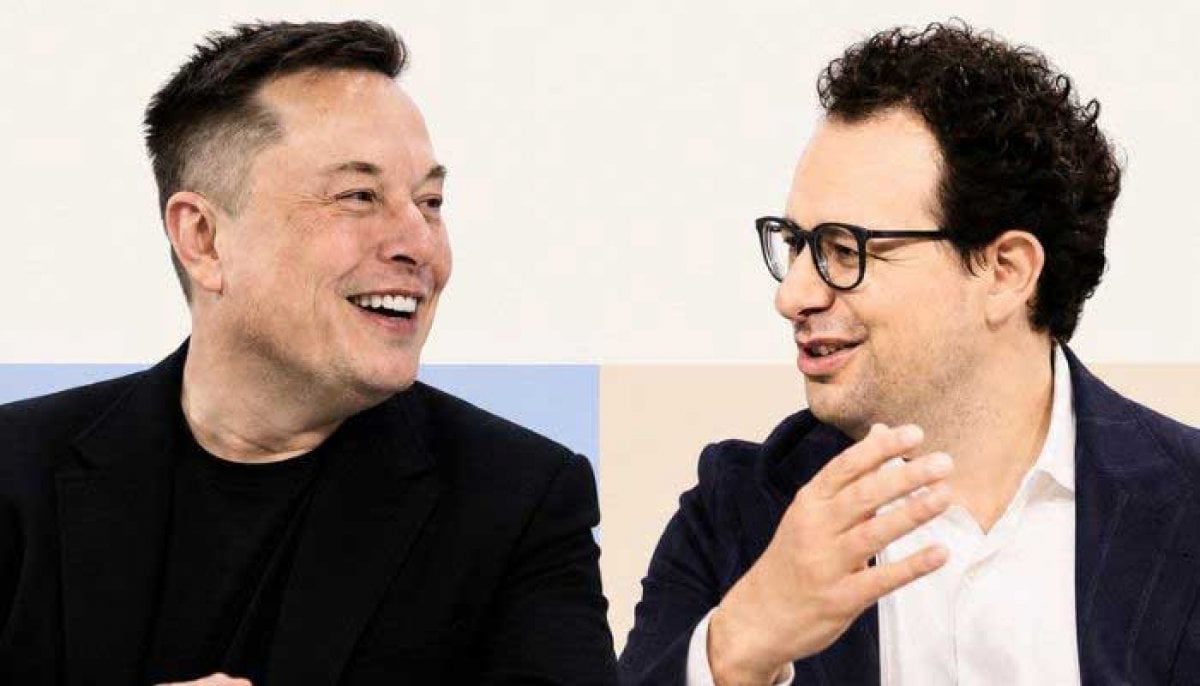
Elon Musk now calls Anthropic the industry's current leader in artificial intelligence. He admitted being clearly wrong about the AI startup's potential outcomes. Anthropic is a major customer of Musk's SpaceXAI infrastructure company. The AI startup uses SpaceXAI's supercomputer for its advanced models. Musk stated he would never harm a competitor, citing Tesla and SpaceX examples. Elon Musk has praised artificial intelligence (AI) startup Anthropic, saying it is the industry's current frontrunner, in a significant shift from his earlier criticism of the company.Responding to a user on X, the billionaire entrepreneur said he had been 'clearly wrong' about Anthropic and described it as 'currently the leader in AI'. He also said no company had released a model comparable to Anthropic's latest ones, Mythos and Fable.
I was wrong: Elon Musk accepts Anthropic is AI leader, calls Mythos best model ever
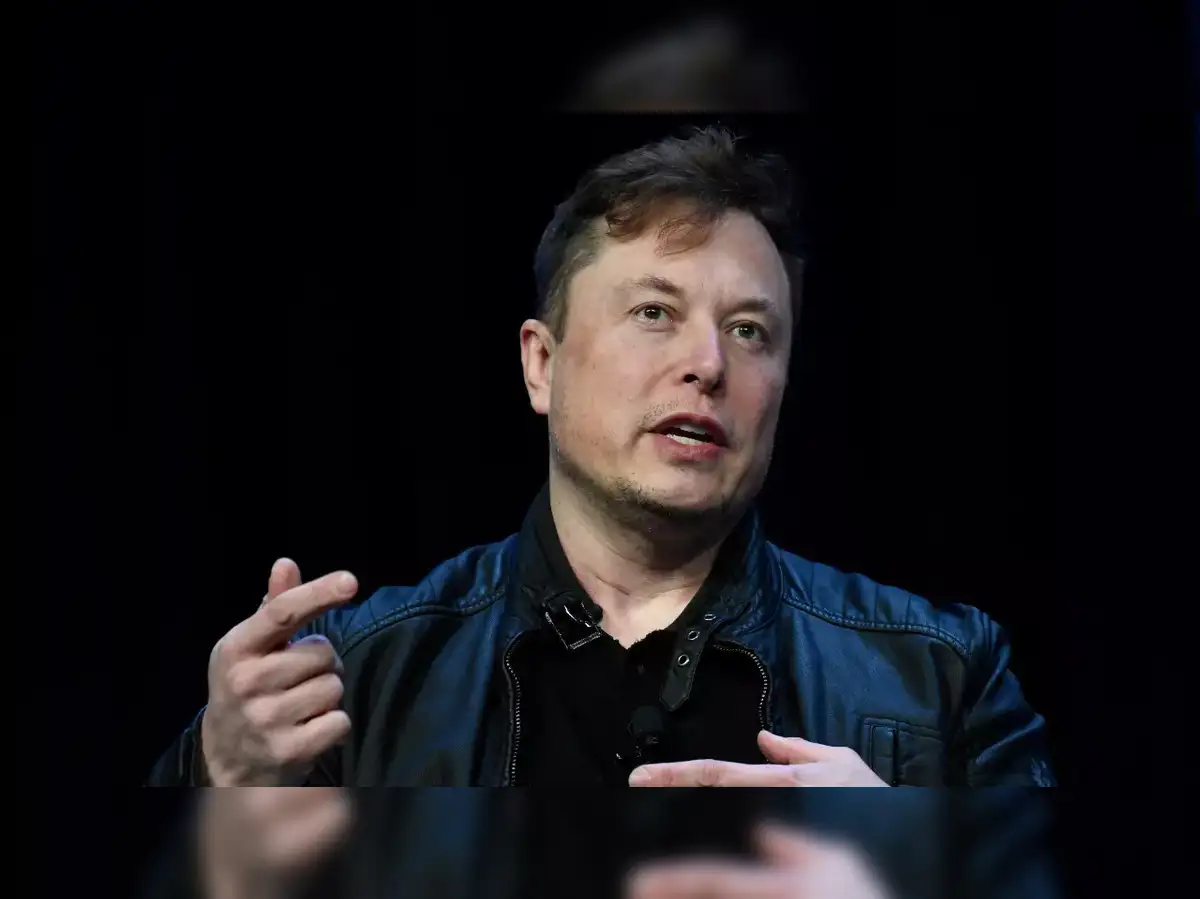
Elon Musk says he was wrong about Anthropic. (Representational image made with AI) Elon Musk is not afraid to speak his mind, particularly when it comes to his rivals - just look at his feud with OpenAI's Sam Altman. But when it comes to Anthropic, the tech trillionaire seems to have made a U-turn, and accepted that he was completely wrong. On X, a user reposted Elon Musk's comments from September last year, where the SpaceX chief declared that "Winning was never in the set of possible outcomes for Anthropic." Musk, however, gave a candid response as he accepted that Anthropic was really leading the AI race. The SpaceX chief replied, "I was clearly wrong about Anthropic. They are obviously currently the leader in AI." In particular, Elon Musk praised Anthropic's Claude Mythos and Fable models. The two models were previously restricted by the US following concerns over cybersecurity. While Musk's SpaceXAI recently released Grok 4.5, and OpenAI, too, has launched GPT-5.6, the tech trillionaire believes that Anthropic remains a league ahead. Musk added, "No company has released a model as good as Mythos/Fable and they will undoubtedly have Mythos 2 ready soon." Keep in mind that in February this year, Elon Musk had fired shots at Anthropic, accusing the company of being "misanthropic and evil." To give you some context, the words anthropic and misanthropic come from the Greek word "anthropos" meaning human being. While anthropic relates to humanity, misanthropic refers to distrust towards humanity. Can Elon Musk cutoff Anthropic from SpaceX compute? Since Elon Musk made such comments about Anthropic, a lot has changed. Anthropic is now one of the largest customers of SpaceX. In May, the AI startup Anthropic signed a deal to lease the Colossus 1 supercomputer. The Colossus 1 includes more than 2,20,000 Nvidia GPUs with a capacity of 300 megawatts of compute. Under the arrangement, Anthropic agreed to pay about $1.25 billion a month through May 2029, in a deal described as worth roughly $40 billion in revenue for SpaceX's xAI unit. But either side can end the agreement on a 90-day notice. This has raised questions that Elon Musk may now hold leverage, as he can decide to turn off the compute access at any time. Keep in mind that SpaceXAI (previously xAI) is a direct rival to Anthropic, and the Grok 4.5 model is designed for coding, a field dominated by Anthropic's Claude Code. The user wrote, "If Elon wanted to kill Anthropic, he could. Iirc the compute lease was short term, 6 months from May without renewal promise." But Musk insists that he has no plans to use such a kill-switch. He said, "And I would never cut them off in a way that hurt them badly, even as a competitor. That's not my style." Elon Musk then cited examples from his other businesses. He pointed out that Tesla had open-sourced its patents and made the Supercharger network available to competitors, "even though we could have made it a walled garden." The tech trillionaire also discussed the platform X where he is often criticised. Musk wrote,"Even my worst enemies can attack me on this platform." The relationship also raises questions about what a host company can learn from supporting a rival's systems. During Musk's lawsuit against OpenAI, he acknowledged that AI "distilling" was real, a process described in the inputs as one company using multiple fake accounts to prompt a competitor's model and learn how it works. When asked whether xAI had ever distilled technology from OpenAI, Musk replied, "Generally AI companies distill other AI companies." Anthropic has previously accused Chinese model makers of doing this to Claude.
'I was wrong about Anthropic', Elon Musk hails Claude Fable after Grok 4.5 release
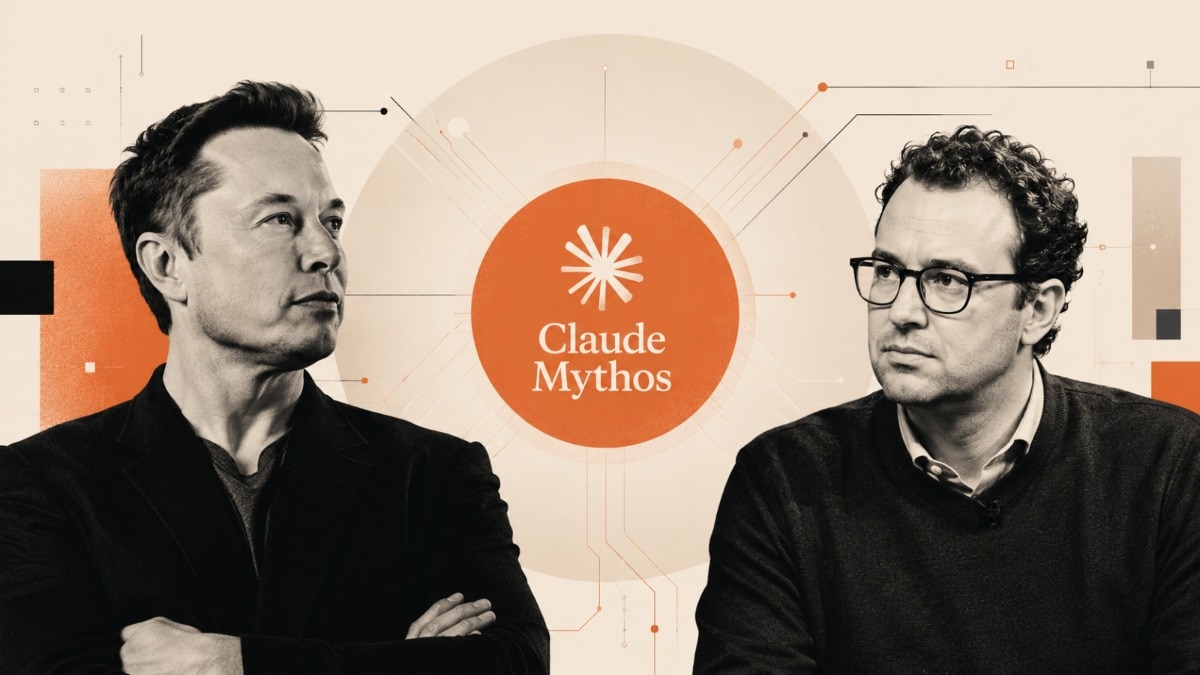
Billionaire entrepreneur Elon Musk has publicly conceded that he was wrong about Dario Amodei's Anthropic, one of the biggest rivals of SpaceXAI, a year ago. Writing on social media as a reply to a post, Musk publicly admitted he was "clearly wrong about Anthropic." Musk's humble admission came hours after SpaceXAI released Grok 4.5 to the public, acing synthetic benchmarks as far as coding is concerned. Replying to a discussion initiated by a user regarding the competitive landscape, Musk walked back years of harsh criticism against Anthropic, which is currently leading the AI market with its Claude Fable and Opus 4.8 models. "I was clearly wrong about Anthropic," Musk wrote. "They are obviously currently the leader in AI. No company has released a model as good as Mythos/Fable and they will undoubtedly have Mythos 2 ready soon. And I would never cut them off in a way that hurt them badly, even as a competitor. That's not my style," he assured in his post. Musk's latest statements represent a complete 180-degree turn from his previous rhetoric. In September 2025, he bluntly asserted that "winning was never in the set of possible outcomes for Anthropic." More recently, in February 2026, after Anthropic raised a staggering $30 billion funding round, Musk slammed the company's Claude models as biased and predicted that the firm was "doomed." Musk's direct challenge to Anthropic followed by high praise Over the past year, Anthropic set the tone for the commercial AI industry by tuning its AI model for the developer community, and focusing on productivity tools. Claude, in its top-tier avatars, has been highly capable at coding, and its Fable 5 and Mythos 5 models have showcased what these models can do for cybersecurity and code development. To make its AI product more competitive, SpaceXAI is pushing Grok into the coding space and with Cursor - the AI startup focused on vibe coding - onboard the SpaceXAI team, Musk's team released Grok 4.5. The latest Grok 4.5 is heavily marketed as an "Opus-class model, but faster, more token-efficient, and lower cost." Priced at $2 per million input tokens and $6 per million output tokens, Grok 4.5 is intentionally positioned to aggressively undercut Anthropic's Claude enterprise pricing structure, all while offering similar levels of performance. Yet, even as Musk praised his model's real-world software engineering capabilities, he acknowledged that Anthropic's Mythos 5 and Fable 5 models as the gold standard in terms of raw capability. Independent evaluations back up Musk's humility. According to data from Artificial Analysis, while Grok 4.5 immediately established itself as the top-performing non-Anthropic model on the market, Anthropic's offerings still hold the definitive edge at the top of global benchmarks. Musk addresses the $40 billion compute question Musk's public reassurance eases all concerns related to cutting off Anthropic from its compute power, despite the rivalry between the two tech moguls. Back in May 2026, Anthropic signed a major infrastructure agreement to lease the entire capacity of SpaceX's Colossus 1 data center facility in Memphis. Powered by over 220,000 Nvidia GPUs and pulling more than 300 MW of power, the deal requires Anthropic to pay SpaceX roughly $1.25 billion monthly through 2029, putting the total value of the contract at over $40 billion. Previously, rumours had it that SpaceX might exercise a 90-day exit clause in the lease to stifle Anthropic's compute resources. Musk, however, shut down that speculation, pointing to a personal philosophy of competition based on principles. "Tesla open sourced its patents and we made the Supercharger network available to all competitors, even though we could have made it a walled garden. SpaceX launches competing satellite systems with no increase in price or use of unfair terms," wrote Musk, addressing how his companies help the competition. "Even my worst enemies can attack me on this platform," wrote Musk, referring to harsh critics and his rivals posting on X, opposing Musk's methods.
From Critic To Admirer? Elon Musk Praises Anthropic's Mythos, Fable; Calls It 'Leader In AI'
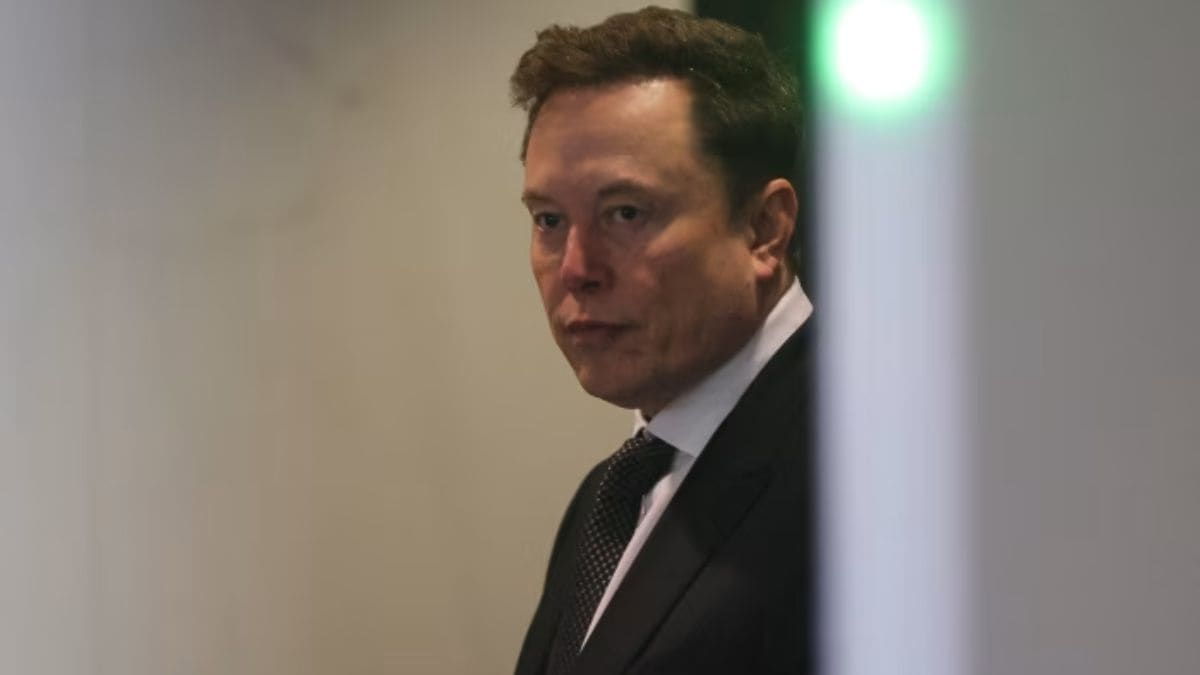
Musk has been a vocal critic of Anthropic in the past. Wikimedia Commons Tech trillionaire Elon Musk has publicly praised Anthropic, calling the AI company "obviously" the current leader in the field and hailing its Mythos and Fable models as unmatched by any competitor's offerings. "I was clearly wrong about Anthropic. They are obviously currently the leader in AI. No company has released a model as good as Mythos/Fable and they will undoubtedly have Mythos 2 ready soon," Musk wrote in a post on X published late Thursday. The remarks mark a notable shift in tone from Musk, who has been a vocal critic of Anthropic in the past. In the same post, he sought to address speculation that he might use his position as a competitor to disadvantage the company, writing that he would "never cut them off in a way that hurt them badly, even as a competitor," adding, "That's not my style." Musk pointed to his own companies' track records on competitive openness to back his claim. He cited Tesla's decision to open-source its patents and make its Supercharger network available to rival automakers despite the option to keep it exclusive, as well as SpaceX's practice of launching competing satellite systems without raising prices or imposing unfair terms on rivals. ALSO READ: Former Fed Chairman Ben Bernanke Joins Anthropic Oversight Trust The trillionaire also referenced the scrutiny he faces on X, the platform he owns, writing that "even my worst enemies can attack me on this platform." Musk's comments come amid intensifying competition in the artificial intelligence sector, where companies including Anthropic, OpenAI, and Musk's own xAI have been racing to release increasingly capable models. Anthropic's Mythos and Fable models, referenced in Musk's post, have positioned the company at the centre of that competition in recent months. Musk did not elaborate further on what prompted his change in stance toward Anthropic, a company he has previously sparred with over AI safety approaches and business practices. ALSO READ: Will AI Replace Your Job? Here's What TCS Actually Said Essential Business Intelligence, Sharp Market Insights, Practical Personal Finance Advice, Daily Fuel, Gold and Silver Prices and Latest Stories -- On NDTV Profit.
Elon Musk Says SpaceX Would Be Worth More Than Earth if It Achieves Its Goals Amid First AI Satellite Rev
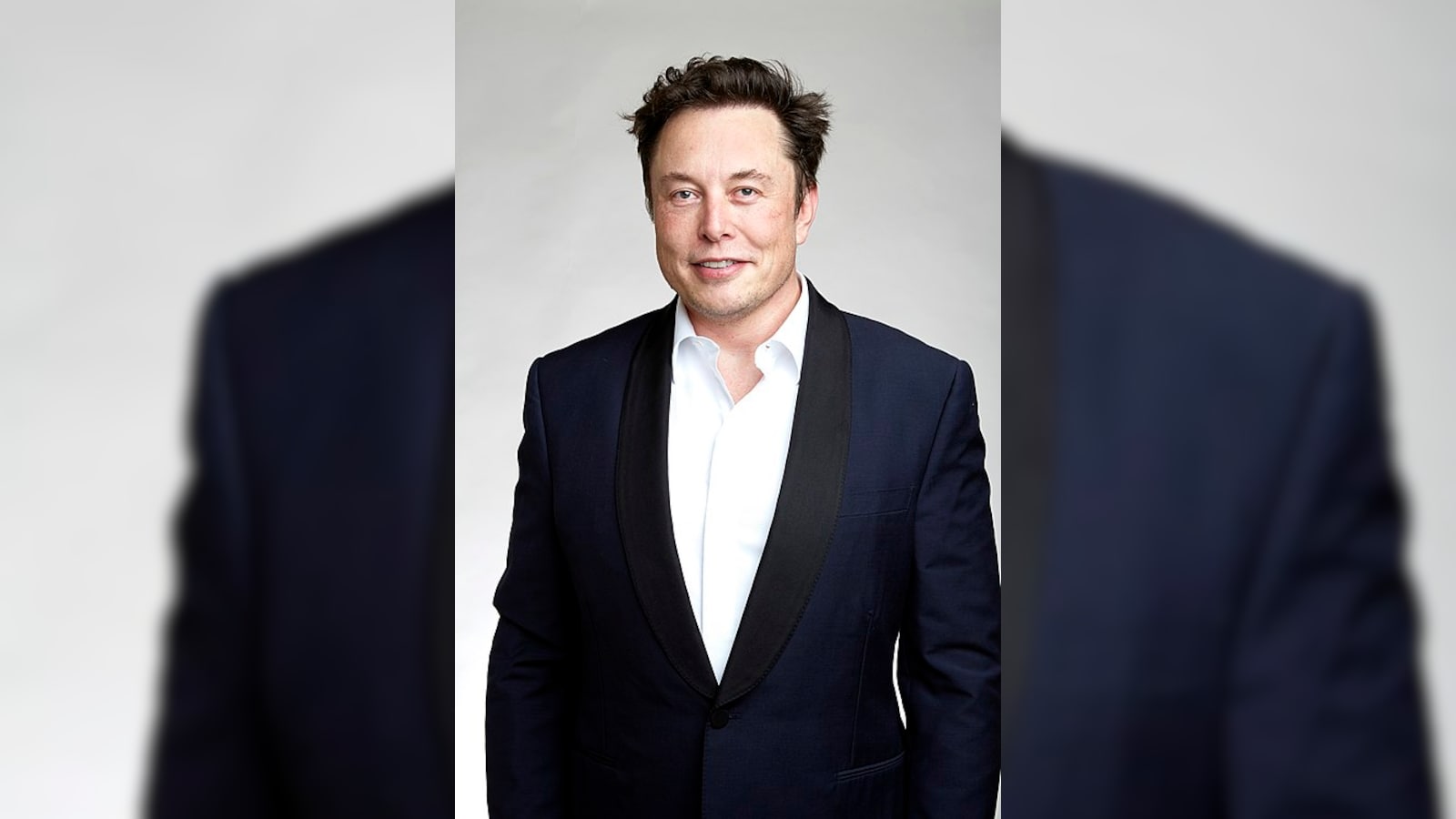
SpaceX to Exceed Earth's Value? "I wonder if History will look back at this $7.5-40B Anthropic/SpaceXai deal as the biggest unforced error of the AI era," the user said, while also outlining that the deal could hinder Anthropic's IPO as users could transfer most token exchange to SpaceX and "Claude is only used for the top tasks." Musk responded to the user, sharing his own take on the matter. "You don't seem to understand that SpaceX will be worth more than the rest of Earth if we accomplish our goals," he said in the post. SpaceX Touts New AI Satellite On Thursday, SpaceX also revealed renderings of the company's AI1 satellite, part of its Starmind constellation, which is a constellation of satellites dedicated to AI compute. The satellites will support chips from all providers and possess a 150 kW peak compute payload, as well as an average payload compute of 120 kW. The satellites will have a wingspan of 70 meters and have a 150 kW solar array. Notably, Musk has been a staunch supporter of orbital AI compute, most recently saying it was the only way to overcome Earth-based bottlenecks to AI compute. "Space is the only way to scale at scale," the trillionaire had said. Benzinga Edge Rankings show SpaceX fails to provide a favorable price trend in the Short, Medium and Long term. Price Action: SpaceX shares were up 0.06% at $152.25 during the after-hours session on Thursday. Photo courtesy: Shutterstock Market News and Data brought to you by Benzinga APIs To add Benzinga News as your preferred source on Google, click here.

Elon Musk Says Anthropic Leads AI Race as Claude Models Challenge OpenAI
Elon Musk Says Anthropic Leads AI Race as Claude Models Challenge OpenAI. Source: Ministério Das Comunicações, CC BY 2.0, via Wikimedia Commons Elon Musk has publicly praised artificial intelligence startup Anthropic, saying the company is "obviously" the current leader in AI, in a rare acknowledgment of a key rival as competition among top AI developers intensifies. Musk made the remark on X while responding to a discussion comparing the performance of leading AI models. Although he did not explain the reasoning behind his assessment, the comment highlights Anthropic's growing influence in the rapidly evolving artificial intelligence industry. Founded in 2021 by former OpenAI executives, including Chief Executive Dario Amodei, Anthropic has become one of the strongest challengers to OpenAI, Google, and Musk's own xAI. The company has built a strong reputation through its Claude family of AI models, which have gained widespread popularity, particularly among software developers and businesses. Anthropic's momentum accelerated after the launch of Claude Opus 4.5 late last year. The advanced AI model earned widespread recognition for its coding performance, attracting software engineers and AI researchers who increasingly adopted Claude over competing AI assistants. The model's strong coding capabilities fueled its rapid growth within the developer community. The company later broadened its reach with the introduction of Claude Cowork, a platform designed to help businesses and non-technical users automate tasks such as research, writing, and workplace productivity. The expansion beyond coding strengthened Anthropic's position in the enterprise AI market and reinforced its status as one of the fastest-growing companies in the sector. Anthropic's rapid growth has also attracted significant investor interest. The company confidentially filed for a U.S. initial public offering in June, shortly after completing a funding round that reportedly valued the AI startup at approximately $965 billion. If completed, the IPO could rank among the largest public listings in the artificial intelligence industry. As competition intensifies among leading AI companies, Musk's endorsement underscores Anthropic's rising prominence in the race to develop next-generation AI models. With continued advances in coding assistants and enterprise productivity tools, Anthropic is increasingly positioning itself as a formidable competitor to OpenAI and other major players in the global AI market.
Elon Musk, the Trillionaire: The SpaceX IPO and the Terminal Crisis of Finance Capitalism
Campbell critically assesses the development of the world's first trillionaire following the largest initial public offering (IPO) in history as a reflection of the deepening crisis of finance capitalism, which has become a brake on real socioeconomic development and continues to starve the real economy of productive industrial investment. SpaceX has become a multitrillion dollar corporate empire, while Elon Musk has simultaneously accumulated an unprecedented level of personal wealth. This extraordinary concentration of wealth raises fundamental questions about the future of the United States, the trajectory of the global economy, the prospects for the planet, and the future of popular social struggles. Following the Wall Street financial collapse of 2007 and 2008, Simon Johnson and James Kwak warned in 13 Bankers: The Wall Street Takeover and the Next Financial Meltdown that unless the largest financial institutions were broken up and subjected to effective regulation, the conditions that produced the crisis would remain intact, making future financial collapses increasingly likely. Two years later, Costas Lapavitsas advanced a complementary argument in Profiting Without Producing: How Finance Exploits Us All. He argued that finance had become increasingly autonomous from production, with profits generated less through the production of goods and services than through financial markets, speculation, and the expansion of financial claims. Central to this transformation was the growing power of investment banks, which increasingly directed capital towards speculative accumulation while reinforcing the interests of the most powerful fractions of finance capital. In June 2026, many of these same investment banks underwrote the largest initial public offering in history. This conjunction of extreme wealth concentration, speculative finance, and state support signals more than another cycle of market exuberance. It points towards a deepening crisis of finance capitalism in which corporate valuation becomes increasingly detached from production and speculative expansion depends upon the continuous socialisation of risk while the gains remain privately appropriated. On 12 June 2026, SpaceX entered the public markets with a valuation unprecedented in modern corporate history. At the centre of this process stood Elon Musk, who has emerged not only as one of the world's wealthiest individuals but also as a principal financier and political advocate for conservative, hard right, and increasingly neo fascist movements in the United States and internationally. This commentary examines the political economy of the SpaceX initial public offering (IPO). It asks whether its extraordinary valuation represents little more than another speculative asset bubble or whether it constitutes a state-supported mechanism through which finance capital is underwriting the consolidation of billionaire power and the global advance of authoritarian and neo fascist politics. The IPO of SpaceX The debut of SpaceX on the Nasdaq stock exchange on June 12, 2026, illustrates an advanced stage of financialization in the United States during a moment of industrial decline. By closing its first day of trading at $160.95 per share, the newly public company achieved a market capitalization exceeding $2.1 trillion, instantly establishing Elon Musk as the world's first trillionaire with a personal fortune anchored at an estimated $1.1 trillion. However, this unprecedented valuation cannot be understood in isolation from the broader financial restructuring across Musk's corporate network, particularly the significant challenges, subsequent reorganization, and strategic repositioning of X (formerly Twitter) and xAI. Following its $44 billion acquisition in October 2022, X experienced a severe and continuous collapse in advertising revenue, driving internal valuations down to approximately $33 billion by early 2025. Because the initial acquisition was loaded with $13 billion in debt, it generated annual interest obligations exceeding $1 billion -- a sum greater than the company's total pre-acquisition cash flow. The combination of declining advertising revenue, substantial acquisition debt, and annual interest obligations placed significant financial pressure on X. Analysts and financial reporting have documented the difficulties surrounding the debt-financed acquisition and the subsequent decline in the platform's valuation. Subsequent efforts to stabilize the company via the March 28, 2025 all-stock transaction, where xAI absorbed X, failed to reverse the trend. While framed as a strategic integration of artificial intelligence and digital communications infrastructure, the merger actually intensified the financial strain. Research indicates that Elon Musk and his operations were venturing into frontier AI development, a field focused on creating the most advanced and powerful general-purpose models at the absolute edge of technology. Because this development requires massive, capital-intensive investments in data centers and raw computing power, the venture ultimately accelerated rather than offset the cash burn of the combined entity. The IPO therefore functions as a mechanism of financial concealment. Rather than resolving the underlying losses, the multi-step restructuring relocated them onto a massive corporate structure capable of temporarily masking them through speculative valuation. By integrating these heavily cash-negative entities into SpaceX ahead of its Initial Public Offering, accumulated private deficits were bundled into a single asset priced entirely on aggressive, forward-looking projections of future monopoly control, shifting the burden onto public investors. An immediate reality check reveals an astonishing disconnect between this $2.1 trillion valuation and any recognizable process of physical production. In 2025, SpaceX generated $18.7 billion in revenue while recording a net loss of $4.9 billion, meaning the company went public at roughly 112 times its annual revenue. Put plainly, the market is pricing each dollar of actual sales as if it were already worth $112, a multiple that assumes an extraordinary expansion of future income. By comparison, the average firm in the S and P 500 index trades at less than four times its annual revenue. To contextualize the scale of this speculative valuation, General Motors generated $187 billion in revenue in 2025, ten times that of SpaceX, yet its market valuation stands at approximately $70 billion. If General Motors were valued at the same revenue multiple as SpaceX, it would be worth about $21 trillion, a figure equivalent to well over half the annual gross domestic product of the United States. Consequently, the financial press has expressed deep skepticism regarding this $2.1 trillion milestone, viewing it as a product of market hype rather than grounded economic reality. In an analysis of the debut, The New York Times noted that the valuation relies entirely on aggressive, forward looking revenue projections, warning that the intense market enthusiasm "feels irrationally exuberant even for Musk." Reporters further cautioned that because many of Musk's past promises have failed to materialize, public investors are precariously betting on future pledges rather than current performance. Musk strategically linked SpaceX's valuation narrative to xAI's artificial intelligence ambitions, combining aerospace infrastructure with the speculative expectations surrounding frontier AI. Financial critics dismiss this combination as "wishful thinking" rather than a sound investment thesis. This speculative valuation is sustained not only by financial restructuring but also by a powerful techno-futurist narrative. In this framing, techno-optimists look past immediate quarterly deficits and instead operate on a civilizational horizon. In their "Sentient Sun" thesis, venture capitalists Marc Andreessen and Michael McGuinness envision SpaceX not merely as a rocket manufacturer or a satellite internet provider, but as the foundational infrastructure layer for a post-scarcity human civilization. They argue that as artificial intelligence scales, it will inevitably collide with Earth's physical and political constraints, particularly an impending shortage of terrestrial energy. The proposed solution is to move heavy computing into orbit, using SpaceX's radically low launch costs to deploy massive solar-powered data centers that harvest uninterrupted stellar energy. This vision includes targeting vast quantities of orbital AI compute, enabling off-world industrialization through lunar manufacturing, and establishing self-sustaining populations on Mars. Within this framework, the integration of SpaceX's launch capacity with xAI's intelligence systems is presented as a logical necessity. As its proponents argue, rockets and intelligence are becoming the same problem. Ultimately, where the financial press warns of a speculative bubble built on hype, venture capitalists see a necessary down-payment on the monopoly infrastructure for a post-scarcity, spacefaring future. However, as Michael Hudson demonstrates in his critique of the modern rentier resurgence, this Western model of postindustrial finance capitalism serves as a catastrophic brake on real socioeconomic development. Rather than funding tangible capital formation, the hyper-financialization exemplified by the SpaceX and xAI merger utilizes debt-leverage and speculative asset-price inflation to extract unearned economic rent. By converting cutting-edge technologies into private monopoly choke points, this system imposes what Hudson terms "debt deflation" on the broader economy -- siphoning vast capital surpluses into paper wealth at the top while actively starving the real economy of productive industrial investment and hollowing out the material foundations of society. Analyzing this structural divergence through Hudson's framework of "finance as warfare" reveals a deeper systemic crisis. Under this lens, the astronomical Western valuation of SpaceX represents the pinnacle of neoliberal economic combat, where the creation of money and credit is weaponized to inflate speculative rentier assets entirely decoupled from physical production. Hudson juxtaposes this predatory model with China's framework of state-directed industrial socialism. In that system, the state holds banking, strategic infrastructure, and frontier technologies like AI as public utilities consciously insulated from Wall Street-style financialization. By shielding these core sectors from speculative market attacks, they serve as low-cost foundations for physical manufacturing and tangible economic sovereignty. By grafting the cash-burning xAI onto SpaceX, Musk is deploying a classic Western financial warfare strategy -- attempting to lock in future monopoly rents to justify a multi-trillion-dollar speculative bubble -- while trying to compete with an industrial socialist model that funds technological advancement through direct state credit, completely bypassing the parasitic overhead of financialized markets. Market Bubbles, White Supremacy, and Financialization The hyper-inflated valuation of SpaceX is not an isolated 'market' anomaly; it represents the culmination of a centuries-long trajectory in which state power has repeatedly structured the conditions for financial accumulation, transforming systems of exploitation into forms of insulated financial wealth. As Edward Baptist demonstrates in The Half Has Never Been Told, American capitalism did not mature out of 'market forces' but was pioneered in the antebellum slave labor camps, where the banking crises of 1837 and 1857 saw financial institutions utilize cutting-edge securitization and state-backed mechanisms to actively extend and deepen the violent exploitation of enslaved human collateral. The underlying blueprint of using state power to guarantee private extraction simply evolved when physical bodies could no longer be openly securitized. Throughout the 20th century, the United States deployed military force to physically capture foreign lands and treasures under the guise of stabilizing markets. By the 21st century, this relationship between financial accumulation and state power extended into direct geopolitical interventions aimed at controlling strategic resources, including efforts to shape political outcomes in oil-rich regions such as Venezuela. These interventions demonstrate that speculative financial systems remain anchored in coercive forms of state power that secure access to the material foundations of accumulation. The financial institutions that developed around Wall Street were historically intertwined with slave markets, slave-backed credit, and racialized systems of accumulation. This deep historical alignment between state power and predatory accumulation helps explain how Wall Street evolved from an eighteenth-century municipal slave market into a modern financial behemoth where total stock market capitalization has reached approximately 232 percent of United States GDP, more than double the historical norm as measured by the Buffett Indicator. The foundational architecture for this modern iteration was perfected during the structural failures of the 2008 financial crisis. In 13 Bankers, Simon Johnson and James Kwak documented how a deeply entrenched financial oligarchy achieved extraordinary influence over Washington, producing a political order in which the survival of elite financial institutions became synonymous with national economic stability. When the speculative mortgage bubble collapsed, the state intervened through massive bailouts that protected major financial institutions from the full consequences of their own speculative practices. By institutionalizing the doctrine of "too big to fail," the government transformed private financial risk into a public obligation, establishing a precedent in which speculative assets could continue to expand under the implicit guarantee of state rescue. Costas Lapavitsas extends this analysis by demonstrating that the contemporary power of finance cannot be understood simply as excessive speculation or regulatory failure. In Profiting Without Producing: How Finance Exploits Us All, Lapavitsas argues that financialization represents a structural transformation of capitalism in which accumulation increasingly occurs through financial channels rather than through the direct production of goods and services. Banks, investment funds, and financial institutions increasingly generate profits through asset appreciation, debt creation, fees, and the extraction of financial rents. In this system, wealth accumulation becomes progressively detached from productive investment, as financial claims expand faster than the material economy that supposedly sustains them. The extraordinary valuation of companies such as SpaceX illustrates this dynamic: investors are not merely purchasing ownership in an industrial enterprise producing rockets and satellites; they are purchasing claims on anticipated future monopolies, technological dominance, and speculative financial growth. Corporate insiders have successfully transformed the state apparatus into an enforcement mechanism for a predatory financial cartel. This institutional hijacking is well documented structural reality analyzed by scholars like Charles H. Ferguson, Samir Amin, and Nomi Prins, who collectively demonstrate how a deeply entrenched oligarchy completely weaponized the regulatory state. Over the subsequent quarter century, under administrations of both major political parties, Federal Reserve policies expanded liquidity across financial markets, contributing to substantial asset inflation even as wage growth remained stagnant. Through quantitative easing, the Federal Reserve created trillions of dollars in new reserves to stabilize credit markets and support asset prices, disproportionately benefiting owners of financial assets while leaving disparities in employment and productive investment largely unresolved. This deliberate state policy intentionally drove asset prices to the stratosphere while real-world wages stagnated. Operating with the absolute certainty of state protection, this oligarchy knows that any future market crash will be neutralized by another massive, taxpayer-funded bailout, shifting the final cost of their speculation onto the working class through brutal social austerity. This state-subsidized environment has triggered a structural shift long foretold by political economists Walden Bello, Immanuel Wallerstein and Samir Amin. Bello argues that when profit rates in actual productive manufacturing collapse, surplus capital flees the constraints of the real economy entirely. The stock market ceases to function as a mechanism for industrial investment; instead, it morphs into a speculative casino, acting as a giant sponge designed to absorb over-accumulated, uninvestable electronic wealth. Operating under Samir Amin's framework of "generalized-monopoly capitalism," mega-corporations no longer compete in a 'free market.' Instead, they act as private cartels engineered to extract predatory "monopoly rent" from the global working peoples and the oppressed peoples of the planet. SpaceX fits this description precisely. Investors are not purchasing shares based solely on current industrial performance; they are purchasing claims on anticipated future monopolies in launch infrastructure, satellite communications, artificial intelligence, and space-based computing. While Starlink provides an existing revenue stream, the extraordinary IPO valuation depended on a process of narrative expansion in which SpaceX became positioned not merely as a rocket manufacturer but as the foundational infrastructure layer of a future technological order. By linking SpaceX's aerospace capabilities to the speculative expectations surrounding xAI and frontier artificial intelligence, Musk transformed technological possibility into financial valuation. The result is a classic expression of financialized accumulation: future monopoly rents are capitalized in the present, allowing speculative expectations to generate extraordinary concentrations of wealth before corresponding productive returns materialize. Elon Musk as a Political Actor The immediate beneficiary of this speculative valuation was Elon Musk, whose paper wealth increased by hundreds of billions of dollars as the market capitalization of SpaceX surged. However, the IPO serves as a broader wealth-extraction event for an entire transnational syndicate. Numerous tech billionaires are attached to this gravy train. Peter Thiel's Founders Fund, which invested approximately $20 million in SpaceX in 2008 when the company was facing severe financial pressure, saw the paper value of its stake rise dramatically following the IPO, potentially representing one of the largest venture capital gains in history. Early investors, including Google and Fidelity, as well as prominent SpaceX insiders, benefited from extraordinary increases in the paper value of their holdings. This hyper-concentration of wealth is staggering. The United States remains home to hundreds of billionaires whose collective wealth has expanded dramatically in recent years, even as wealth inequality intensifies. The fortunes of these billionaires expanded by $1.5 trillion in the first year of the second Trump administration alone. The fourteen wealthiest individuals in the United States are now worth more than the entire American billionaire class combined in 2020. At the opposite pole, the bottom half of all American households own barely 2.5% of the nation's wealth. This extreme economic polarization is weaponized by the fact that SpaceX is tightly integrated with the Pentagon and United States militarism. As noted in contemporary journalistic accounts and geopolitical analyses, Starlink has evolved from a commercial satellite communications service into a strategically significant component of the emerging military, industrial, and artificial intelligence infrastructure. This hands sovereign-level geopolitical power to a single, unaccountable individual whose business empires are funded directly by state defense budgets and public subsidies. Control over economic resources is reinforced by control over communication infrastructure, particularly through X. Musk then leverages this combined dominance to intervene directly in politics. In the process, Elon Musk has transformed his wealth into a financing engine for conservative, hard-right, and neo-fascist forces across the West. Domestically, Musk became the public face and leading figure associated with the Department of Government Efficiency (DOGE) initiative within the second Trump administration. DOGE advocated for reductions in public spending as the companies of Elon Musk continued to receive substantial government contracts. Beyond mere policy manipulation, Musk has weaponized his ownership of X (formerly Twitter) as a private propaganda apparatus to systematically radicalize public discourse. By altering content moderation policies, restoring previously banned accounts, and changing recommendation systems, X became a more permissive environment for extremist and white nationalist content. Musk has amplified or engaged with narratives associated with "Great Replacement" theories and demographic anxiety commonly circulated within white nationalist movements. This alignment extends to explicit structural connections with neo-Nazi and radical-right figures globally. Musk used his absolute control over X to reinstate prominent neo-Nazi and white supremacist accounts, while leveraging his massive digital reach to intervene directly in foreign elections. In Europe, Elon Musk provided unprecedented visibility to the Alternative for Germany (AfD)[11] and its leadership during the German electoral campaign, deploying his platform's attention economy to mainstream their top candidate, Alice Weidel, and validate historical revisionism. From attacking the British Prime Minister during far-right riots to funding nativist political operations designed to dismantle social democracies across Europe, Musk functions as a primary geopolitical underwriter for neo-fascist consolidation. Elon Musk's intervention in British politics provided Nigel Farage and Reform UK with an unprecedented global platform, amplifying anti-establishment and anti-immigration narratives while lending the movement a degree of transatlantic visibility and legitimacy that accelerated its emergence as a major force in British politics. Working peoples across all continents have spent the past thirty years warning of the destructive, systemic impacts of 'finance as warfare.' This resistance reached a critical domestic flashpoint during the Occupy Wall Street movement, which catalyzed global demands for aggressive governmental oversight to restrict predatory financial engineering. The Occupy movement popularized ideas about the 99 per cent and has fueled the electoral strength of democratic socialists in the USA. Yet, even the subsequent creation of the Consumer Financial Protection Bureau (CFPB) failed to halt the speculative exuberance that followed -- a hyper-financialization that systematically concentrated unprecedented power within the billionaire class while hollowing out popular democratic participation. As economist Gabriel Zucman and journalist Edward Luce have warned, an absolute structural incompatibility exists between hyper-concentrated rentier wealth and the survival of a functional democracy. When a single unaccountable individual wields more economic, algorithmic, and geopolitical leverage than sovereign states, the democratic process collapses into a mere illusion. Consequently, the traditional legislative remedies proposed by mainstream political figures, such as marginal wealth taxes, are entirely inadequate; as Charles H. Ferguson's work demonstrates, the regulatory and legislative apparatus of the state has already been thoroughly captured by the oligarchy it claims to police. The SpaceX IPO represents a critical moment in the evolution of Western capitalism, revealing the extent to which state-backed finance, technological monopolies, and billionaire political power have become intertwined. Rather than representing a departure from earlier forms of accumulation, this development extends longstanding relationships between militarization, financialization, and concentrated private power. To prevent the total subversion of democratic society, working peoples and popular movements are organizing a fundamental restructuring that goes far beyond the limits of defensive taxation. Organized majorities are actively reclaiming agency by demanding a coordinated, systemic effort to strip the billionaire class of its structural leverage. This democratic counter-offensive aims to dismantle oligarchic power by taking critical global infrastructures, specifically satellite telecommunications, aerospace engineering, and artificial intelligence, completely out of the hands of predatory financial rentiers and placing them permanently within the public domain under transparent, popular control. Horace Campbell is a peace and social Justice activist. He is also Professor of African American Studies and Political Science at Syracuse University and Chairperson of the Global Pan African Movement, North American Chapter. He is the author of Rasta and Resistance: From Marcus Garvey to Walter Rodney, Africa World Press, 1987.

SpaceX Stock Falls 35% From Peak Even After Nasdaq-100 Inclusion
SpaceX (SPCX) shares have fallen as much as 35% from their post-IPO peak of $225.64. The drop came just days after the company joined the Nasdaq-100, as heavy selling offset forced index buying. The stock closed at $148 on July 8, below its $150 debut price for a second straight session. That erased nearly all the gains SpaceX made since its record June 12 listing. A Sell-The-News Pattern for SPCX SpaceX's Nasdaq-100 inclusion required index-tracking funds to buy shares, even though the company keeps a small public float. That mechanical demand did not stop investors from selling into the news. This is a familiar pattern, as Palantir saw the same thing happen after it joined the Nasdaq-100 in late 2024. Its shares dropped about 25% over the following weeks. A Trillion-Dollar Valuation Under Pressure The pullback still leaves SpaceX with a market capitalization near $1.9 trillion. The company posted about $18.7 billion in revenue in 2025, up about 33% year over year. That puts its valuation at roughly 100 times sales. Starlink drove much of that growth. SpaceX's satellite internet unit generated more than $11 billion in 2025, about 61% of total revenue. It remains the main support for the company's trillion-dollar valuation. SpaceX still lost money last year. The company reported a $4.9 billion net loss in 2025 and $4.3 billion more in the first quarter of 2026. Heavy spending on its xAI artificial intelligence unit and on Starship development continues to weigh on cash flow. Wall Street has largely stayed bullish since the Nasdaq-100 inclusion. Morgan Stanley, Bernstein, RBC, and UBS all initiated coverage with buy-equivalent ratings. MoffettNathanson took a neutral stance, and CFRA recommended that investors sell. Starlink's profit growth may determine how much further the stock can fall. Investors will likely watch whether that business can outpace SpaceX's mounting AI and rocket-development costs.
:quality(82)/811cf60a99d34aedb8cf512ba480b3d6)
Orbiting Capital: Lawmakers Buy SpaceX Ahead of Index Inclusion
The ink on the largest public offering in history barely had time to dry before Washington capital began to flow. When SpaceX (NASDAQ: SPCX) raised $75 billion in a June 12 market debut, the event redefined mega-cap listings. Priced at $135 per share, SpaceX immediately captured a $2 trillion valuation, fundamentally altering the landscape of the commercial space sector. Just days later, lawmakers assigned to the exact committees tasked with overseeing federal defense budgets and financial security initiated positions. The rapid accumulation of shares by politically connected insiders highlights a complex intersection between structural market mechanics, unprecedented valuations, and congressional oversight of prime defense contractors. With a mandatory liquidity injection imminent via a newly established Nasdaq-100 index rule, these early trades serve as a leading indicator for a highly volatile supply-demand imbalance. → 3 High-Yield Dividend Stocks With Real Capital Gains Potential in 2026 Capital Accumulation: Lawmakers Secure SpaceX Equity Federal disclosure filings confirm that lawmakers wasted little time securing equity in the newly public aerospace sector giant. On June 15, a dependent child of Representative Dan Meuser acquired a stake valued between $15,001 and $50,000. Three days later, Representative Gil Cisneros disclosed a purchase of up to $15,000. Prior to the public listing, Representative Lisa McClain maintained exposure through a $250,000 family investment in xAI, which was absorbed into the broader SpaceX corporate umbrella. → Flash Crash or Cash? The AI Hardware Reset Investors Can't Ignore While these transaction amounts are inconsequential relative to a multi-trillion-dollar market capitalization, the strategic placement of the buyers is highly relevant for institutional observers. Representative Cisneros serves on the House Armed Services Committee, a legislative body with direct jurisdiction over the Department of War. The Pentagon remains a primary customer for SpaceX, consistently awarding SpaceX multibillion-dollar contracts for satellite deployment and secure communications infrastructure. Simultaneously, Representative Meuser serves on the House Financial Services Committee, which oversees the Securities and Exchange Commission and the broader equities market.
SpaceX Stock Falls 35% From Peak Even After Nasdaq-100 Inclusion
SpaceX (SPCX) shares have fallen as much as 35% from their post-IPO peak of $225.64. The drop came just days after the company joined the Nasdaq-100, as heavy selling offset forced index buying. The stock closed at $148 on July 8, below its $150 debut price for a second straight session. That erased nearly all the gains SpaceX made since its record June 12 listing. A Sell-The-News Pattern for SPCX SpaceX's Nasdaq-100 inclusion required index-tracking funds to buy shares, even though the company keeps a small public float. That mechanical demand did not stop investors from selling into the news. This is a familiar pattern, as Palantir saw the same thing happen after it joined the Nasdaq-100 in late 2024. Its shares dropped about 25% over the following weeks. A Trillion-Dollar Valuation Under Pressure The pullback still leaves SpaceX with a market capitalization near $1.9 trillion. The company posted about $18.7 billion in revenue in 2025, up about 33% year over year. That puts its valuation at roughly 100 times sales. Starlink drove much of that growth. SpaceX's satellite internet unit generated more than $11 billion in 2025, about 61% of total revenue. It remains the main support for the company's trillion-dollar valuation. SpaceX still lost money last year. The company reported a $4.9 billion net loss in 2025 and $4.3 billion more in the first quarter of 2026. Heavy spending on its xAI artificial intelligence unit and on Starship development continues to weigh on cash flow. Wall Street has largely stayed bullish since the Nasdaq-100 inclusion. Morgan Stanley, Bernstein, RBC, and UBS all initiated coverage with buy-equivalent ratings. MoffettNathanson took a neutral stance, and CFRA recommended that investors sell. Starlink's profit growth may determine how much further the stock can fall. Investors will likely watch whether that business can outpace SpaceX's mounting AI and rocket-development costs. Read the Original story SpaceX Stock Falls 35% From Peak Even After Nasdaq-100 Inclusion by Darryn Pollock at beincrypto.com
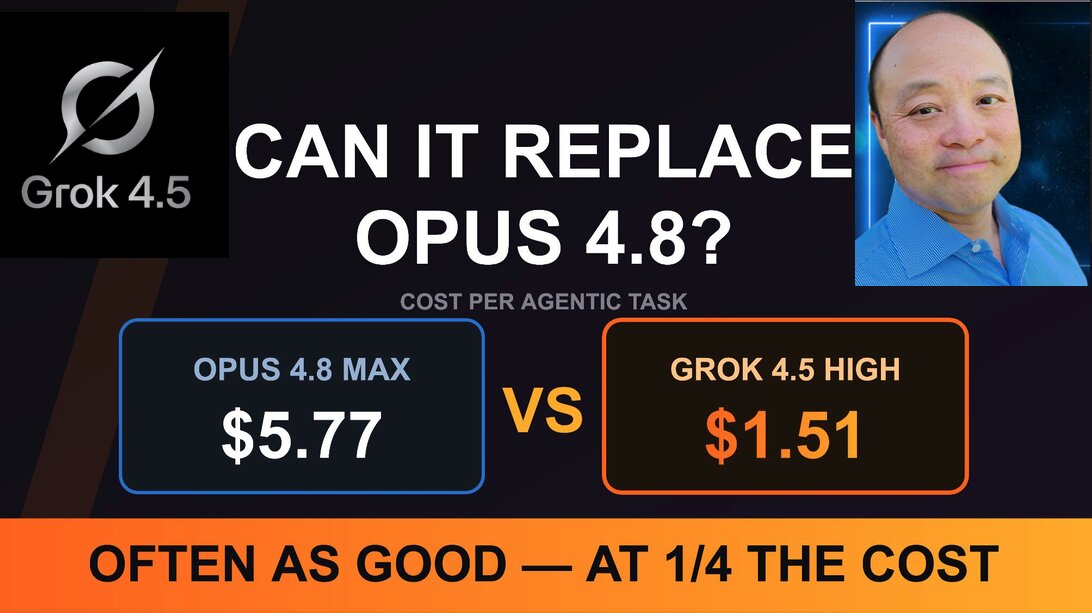
SPACEXAI Grok 4.5 is as Good as Anthropic Opus BUT One-quarter of the COST
Actual usage of SpaceXAI Grok 4.5. First person reports that there are programmers successfully replacing Opus and Sonnet in all of his systems today with Grok 4.5. Grok 4.5 worked great. Spending can drop 50-80%. $200-500 instead of $1000. Grok 4.5 is faster than Opus 4.8. Maybe 2 to 3 times faster. OpenAI GPT 5.6 is coming tomorrow and will be faster but more expensive than Grok 4.5. Grok 4.5 can own the low end of developer usage (pretty, efficient value and good enough). This could send Cursor-SpaceXAI enterprise revenue up from $4 Billion ARR to $8-15 billion ARR in 1-2 months
SpaceX Stock Is Down 35% From Its High Just 1 Day After Joining the Nasdaq-100. Is the Dip a Buy?
Getting added to the Nasdaq-100 is usually a good day for a stock. Funds that track the benchmark have to own it. And for SpaceX (NASDAQ: SPCX), that meant billions of dollars of forced buying into a company whose public float is only a few percent of its shares. On paper, that is a lot of demand chasing very little stock. Where to invest $1,000 right now? Our analyst team just revealed what they believe are the 10 best stocks to buy right now, when you join Stock Advisor. See the stocks " Yet a day after joining the index on July 7, SpaceX trades about 35% below its high of $225.64, changing hands for less than $147 as of this writing. That is below where the stock started when the company went public in June, in the largest U.S. initial public offering on record. It slipped about 6% in the session right after inclusion, giving back nearly all of its post-IPO gains. So is the drawdown a chance to buy one of the most talked-about companies in the world at a discount? Or is the slide telling investors something? Image source: Getty Images. A classic sell-the-news move In short, this looks like a classic sell-the-news event. Sure, some buying was required because of the index inclusion. But that doesn't prevent investors from selling. And, ultimately, Wall Street seems convinced that shares aren't quite worth the premium they were commanding leading up to the event -- and especially not worth the all-time high they hit shortly after the IPO. This sell-the-news dynamic following an index inclusion has happened before. Palantir peaked right around its own Nasdaq-100 addition in late 2024, then fell about 25% over the following weeks. In addition, joining an index can broaden a stock's ownership over time, but it does nothing to change what the underlying business is worth. And that, of course, is the harder question here. At the time of this writing, SpaceX carries a market capitalization of about $1.9 trillion, making a shortlist of companies that have ever commanded a value this high. And SpaceX has reached this valuation while still losing money. In 2025, the company generated about $18.7 billion in revenue, up about 33%, so investors are paying around 100 times sales. What the $1.9 trillion price demands Sure, there's a real business beneath the company's $1.9 trillion market value. Starlink, SpaceX's satellite internet service, crossed 10 million active customers earlier this year and brought in more than $11 billion in revenue in 2025, about 61% of the company's total. This is the part of the story I find most impressive: a large, fast-growing subscription business, and the main reason SpaceX can command a price in the trillions at all. But growth alone isn't the whole story. SpaceX is deeply unprofitable, reporting a net loss of $4.9 billion in 2025 and $4.3 billion in the first quarter of 2026. A big piece of that traces to xAI, the artificial intelligence (AI) start-up SpaceX absorbed earlier this year. Its AI segment generated $3.2 billion in 2025 revenue but burns far more, and management has floated even bolder plans, including putting AI data centers in orbit. Add the cost of scaling Starship, and free cash flow is deeply negative. So the price is asking a lot. It assumes Starlink keeps compounding, that Starship's launch cadence ramps on schedule, and that the money flooding into xAI eventually earns a return rather than quietly consuming Starlink's profits. Any one of those slipping could leave the stock exposed. At about 100 times sales, there is little room for the ordinary stumbles that come with building rockets and AI models at once. To be fair, this is a singular company. Its assets are hard to copy: a reusable rocket fleet, a satellite network already circling the planet, and a founder who has repeatedly pulled off what looked impossible. For investors who believe SpaceX will own space-based connectivity and compute for decades, a 33% pullback may look like an opening. I'm not there yet. The drawdown makes the stock cheaper than it was a week ago, but cheaper and cheap are not the same thing. With the company still losing billions, I think its near-$2 trillion market capitalization leaves no cushion at all. I would rather watch SpaceX show that Starlink's profits can outrun its spending before paying up -- even after a sharp one-day drop. Should you buy stock in Space Exploration Technologies right now? Before you buy stock in Space Exploration Technologies, consider this: The Motley Fool Stock Advisor analyst team just identified what they believe are the 10 best stocks for investors to buy now... and Space Exploration Technologies wasn't one of them. The 10 stocks that made the cut could produce monster returns in the coming years. Consider when Netflix made this list on December 17, 2004... if you invested $1,000 at the time of our recommendation, you'd have $410,833!* Or when Nvidia made this list on April 15, 2005... if you invested $1,000 at the time of our recommendation, you'd have $1,208,693!* Now, it's worth noting Stock Advisor's total average return is 917% -- a market-crushing outperformance compared to 209% for the S&P 500. Don't miss the latest top 10 list, available with Stock Advisor, and join an investing community built by individual investors for individual investors. See the 10 stocks " *Stock Advisor returns as of July 8, 2026. Daniel Sparks and his clients have no position in any of the stocks mentioned. The Motley Fool has no position in any of the stocks mentioned. The Motley Fool has a disclosure policy. The views and opinions expressed herein are the views and opinions of the author and do not necessarily reflect those of Nasdaq, Inc.