News & Updates
The latest news and updates from companies in the WLTH portfolio.
SPCX Stock Slides Ahead Of Nasdaq-100 Debut: Billionaire Value Investor Says Its 'Third-Rate' AI Is Getting 'Kicked Around' By Anthropic, OpenAI
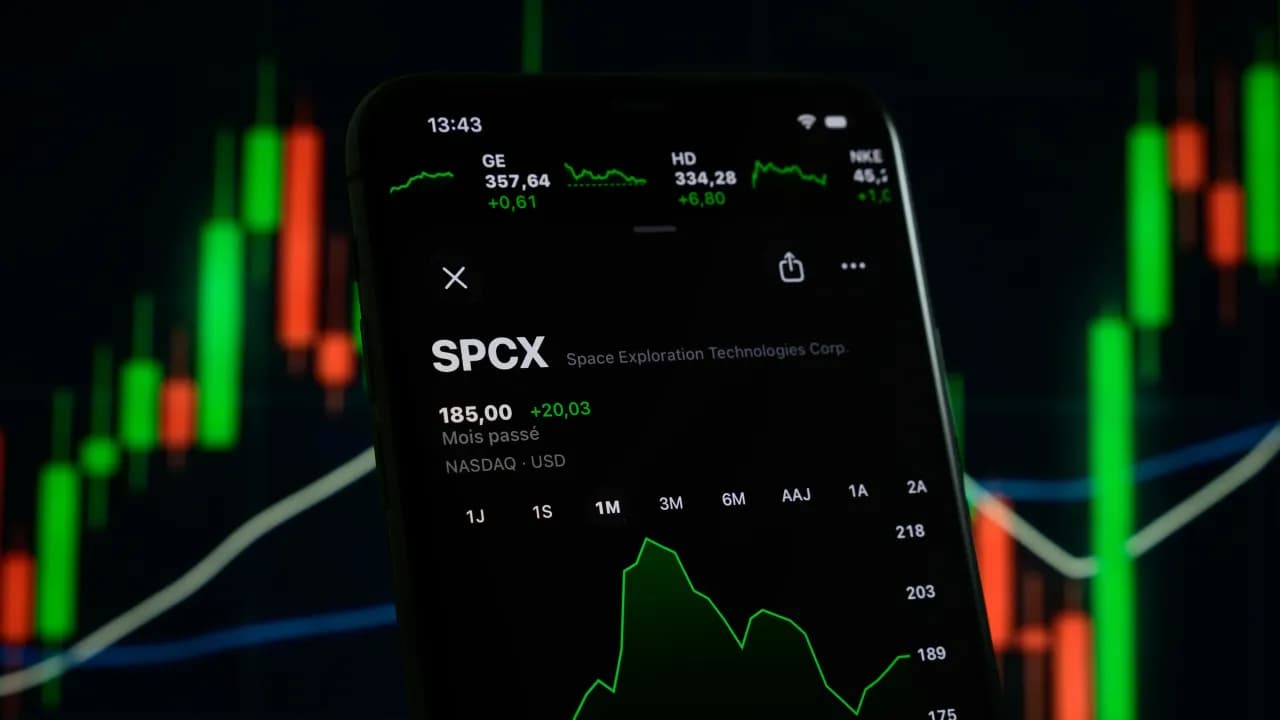
SpaceX will join the Nasdaq-100 on Tuesday, creating automatic demand from ETFs and mutual funds tied to the index, including QQQ. * Its initial index weight is expected to be limited to about 1% to 1.3% because less than 5% of shares were sold publicly. * Insider lockups could create future selling pressure, with some restrictions expected to expire 70 to 135 days after the June 12 IPO. * Jeremy Grantham criticized SpaceX's valuation, calling it the "craziest IPO in the history of man" and saying the company is "rolling in red ink." SpaceX entered its Nasdaq-100 debut week under pressure, with passive index demand set to kick in even as Jeremy Grantham questioned whether the company's AI-driven valuation can withstand scrutiny. Add Asianet Newsable as a Preferred Source SPCX stock fell 1% on Monday, extending a pullback after losing another 1% over the past week. Shares were also down 2% overnight late Monday. SpaceX Joins Nasdaq-100 SpaceX is set to enter the Nasdaq-100 at the start of trading on Tuesday, triggering automatic demand from index-linked mutual funds and ETFs, including Invesco's QQQ. The company was fast-tracked into the benchmark under rules designed to include newly public megacap companies sooner. Still, its initial index weight is expected to be limited by its small public float. SpaceX sold less than 5% of its shares in last month's public offering, while employee and insider lockups restrict additional supply. Since Nasdaq adjusts weights based on free float, SpaceX is expected to enter with an index weight of about 1% to 1.3%, far below what its $2 trillion market value would otherwise imply. The Nasdaq-100 debut also comes with a future supply risk. Some insider lockups are expected to expire in tranches between 70 and 135 days after SpaceX's June 12 IPO, while CEO Elon Musk's shares and certain large-holder restrictions are expected to remain locked for about a year. Jeremy Grantham Slams SPCX Valuation The index debut comes as Grantham, investment strategist at GMO, criticized SpaceX's valuation. Grantham is a legendary value investor known for repeatedly warning about major market bubbles, from Japan in 1989 and the dot-com peak in 2000 to the 2008 housing crisis and today's AI-driven valuations. In a Morningstar interview, Grantham called SpaceX the "craziest IPO in the history of man," arguing that investors may look back on the prospectus decades from now as a symbol of market excess. He said the company is "rolling in red ink" despite its towering valuation, and argued that much of the long-term case rests on aggressive AI assumptions. Grantham said 90% of the projection depends on SpaceX's "currently third-rate AI offering," which he said is being "kicked around the block" by Anthropic and OpenAI. xAI, acquired by SpaceX in an all-stock deal in February 2026 and now being rebranded as SpaceXAI, gained further momentum in June with SpaceX's $60 billion all-stock acquisition of Cursor parent Anysphere. The deal is expected to bolster Grok by combining Cursor's coding intelligence and developer data with xAI's Colossus supercluster. The AI push is unfolding as rival AI leaders Anthropic and OpenAI prepare for mega public listings, with private valuations of about $965 billion and $852 billion, respectively. Grantham acknowledged that index inclusion could lift the stock in the short run as forced buying may outstrip available supply: "So supply and demand being what it is, it's hard to imagine the price won't go up, and perhaps it will go up a lot." But he warned that the longer-term risk remains severe, saying he would "bet at least 90%" on a crash rather than SpaceX ultimately justifying its current valuation. Grantham also questioned SpaceX's broader AI and space assumptions, saying some productivity claims show "no idea what they're talking about" and that much of the space-travel ambition in the prospectus would be viewed by serious physicists as "utterly inconceivable." How Do Retail Traders Feel About SPCX? On Stocktwits, retail sentiment for SPCX flipped to 'bearish' levels over the past week from 'extremely bullish' levels at the time of listing amid a massive 26,150% surge in message volumes over the past month. One user said, "$SPCX The 'Forced' Buying begins. Puts will go to ZERO." View this Stocktwits post Another user said, "$SPCX only about 10% of the inclusion has actually happened. The largest bulk will occur tomorrow around 3 PM." View this Stocktwits post For updates and corrections, email newsroom[at]stocktwits[dot]com.<
SpaceXAI Announces Name Change Following Merger with SpaceX
The merged entity plans to deploy AI compute satellites as space data centers starting 2028, aiming to expand AI infrastructure The AI company xAI, led by Tesla CEO Elon Musk, has changed its name to SpaceXAI. xAI announced the name change on the social media platform X (formerly Twitter) on the 6th (local time), stating, "We are now SpaceXAI." Musk's space company SpaceX, which recently entered Nasdaq through the largest-ever initial public offering (IPO), merged with xAI in February to integrate its space, AI, and social media businesses. The company plans to integrate AI into its space business in the long term, aiming to expand its AI infrastructure business, including space data centers. Although xAI is currently running losses, SpaceX has assessed that the AI business has significant growth potential. The company stated, "We plan to deploy AI compute satellites serving as space data centers starting in 2028."
xAI is no more: Elon Musk rebrands AI venture as SpaceXAI
Elon Musk's AI venture has taken another step towards becoming part of the SpaceX ecosystem after xAI's public identity shifted to SpaceXAI. While the branding reinforces Musk's long-term strategy of combining space, connectivity and artificial intelligence, the corporate structure, product roadmap and governance behind the move remain largely unexplained. Elon Musk's effort to bring his artificial intelligence business under the SpaceX umbrella has become more visible after xAI's public identity shifted to SpaceXAI, marking the latest stage in a broader corporate consolidation that has been unfolding for months. The change became public on Monday when the X account formerly associated with xAI adopted the @SpaceXAI identity and posted a short announcement declaring, "We are now @SpaceXAI." Beyond the new branding and accompanying promotional video, however, the company disclosed little about how the business will operate, leaving unanswered questions over ownership, management, products and corporate responsibilities. A strategy that has been building for months The account rebrand follows earlier indications that Musk intended to fold xAI into SpaceX rather than continue operating it as an independent AI company. In May, Chinese state news agency Xinhua reported Musk as saying that xAI would no longer exist as a standalone business and instead become "SpaceXAI, the AI products from SpaceX". The report also said SpaceX had completed its acquisition of xAI in February. The rebranding appears to complete the public-facing portion of that transition. A newly unveiled SpaceXAI logo incorporates the xAI lettering into the familiar SpaceX branding, reinforcing the message that artificial intelligence is being presented as another core SpaceX business alongside launch services and Starlink, rather than as a separate subsidiary. Musk has previously argued that combining the two businesses would accelerate plans to build AI infrastructure beyond Earth. Following the acquisition, SpaceX also sought regulatory approval from the US Federal Communications Commission for up to one million satellites intended to support orbital AI computing, a proposal Musk has linked to overcoming power limitations affecting terrestrial AI development. AI expands beyond software into infrastructure The merger also reflects a broader shift in how Musk is positioning his AI ambitions. Rather than focusing solely on models such as Grok, SpaceXAI increasingly appears to be centred on the infrastructure needed to build and operate frontier AI systems. A SpaceX prospectus issued in June identified AI as one of the company's three strategic business segments, alongside space and connectivity. The document described AI as the company's newest expansion area and highlighted investments in large-scale computing infrastructure, including a gigawatt-scale training cluster completed during 2026. Meanwhile, public trademark filings suggest the company is preparing for a wider commercial push. Applications under the SpaceXAI name cover services ranging from satellite-based data centres and orbital computing infrastructure to cloud computing and software-as-a-service offerings designed for AI workloads. Because the filings are based on intent-to-use applications, they indicate future commercial plans rather than currently available products. Commercial activity has already begun emerging around computing capacity. Axios reported in June that Nvidia-backed AI startup Reflection had agreed to lease computing resources from SpaceXAI at the company's Colossus 2 facility under a multi-year agreement reportedly worth up to $150 million per month after an initial ramp-up period. Earlier reporting from Xinhua also said Anthropic had reached a separate agreement for access to computing infrastructure under the SpaceXAI banner. The consolidation also reflects the increasingly intertwined nature of Musk's business empire. SpaceX contributes launch capabilities, Starlink's satellite network and financial strength, while xAI brings Grok, AI software development, X's distribution platform and the Colossus supercomputing facilities. For now, the confirmed development is relatively modest: SpaceXAI has become the public identity for Musk's AI business. But taken alongside the acquisition, trademark filings, infrastructure investments and growing compute contracts, the rebrand signals that artificial intelligence is becoming central to SpaceX's long-term strategy. Whether the new identity ultimately represents a unified technology platform or simply a new label for several interconnected businesses remains one of the biggest unanswered questions surrounding Musk's expanding AI empire.
)
Here's Who Owns the Most SpaceX Stock
The question of who owns the most stock means more when you're asking about Space Exploration Technologies (NASDAQ: SPCX) than when you're asking about a typical public company. The June 2026 IPO floated a thin slice of the business -- nearly 4.3% of the equity -- which means the people and firms who held shares before the debut own the rest. The ownership structure that developed across two private decades when SpaceX was a private company is the one that governs it now that it's public, and it puts a small number of names in charge of a $2 trillion enterprise. Elon Musk owns the most SpaceX stock There is no contest at the top. Elon Musk holds close to 42% of the equity, a stake worth more than $1 trillion at the IPO valuation. Musk's block sits under a lockup that lasts until June 2027, with no early release provision, so the largest holder is a seller of nothing for the first year on the market. Where to invest $1,000 right now? Our analyst team just revealed what they believe are the 10 best stocks to buy right now, when you join Stock Advisor. See the stocks " Image source: Getty Images. The outside investors who own the most SpaceX stock Behind Musk, the biggest holder is a name many investors miss. Alphabet (NASDAQ: GOOG) (NASDAQ: GOOGL), the parent of Google, owns close to 7% of SpaceX, a position that can be traced to a $1 billion investment it made alongside Fidelity in January 2015 (Alphabet invested $900 million, with Fidelity contributing the remaining $100 million). That single check turned Google into the largest outside shareholder in the company, a bet on rockets from a search and advertising business. The early venture backers hold the most striking returns rather than the largest slices. Founders Fund, a firm co-founded by Peter Thiel, wrote a $20 million check in SpaceX's 2008 Series C round, and that stake is now worth $50 billion. Sequoia Capital, Andreessen Horowitz, and Valor Equity Partners each hold positions of around 2% or below. The February 2026 merger with xAI added new faces to the list, including Nvidia and the Qatar Investment Authority, a sovereign wealth fund. The employees and the public shareholders One large block hides in plain sight. SpaceX pays its workforce with restricted stock units and options, so employees hold a collective stake that the company does not break out in its filings. That group has waited years for the tender offers, and the staggered lockup schedule that lets them sell, and the size of their holdings is one of the least visible parts of the ownership story. You don't have much power if you buy SpaceX Beyond them sit everyone who bought at the IPO or after. Public shareholders own the small float, and more shares will reach the market as insider lockups expire throughout late 2026. The ownership map delivers one clear message: Buying SpaceX stock makes you an owner of the economics, but it doesn't give you a voice in the company's direction. SpaceX uses a dual-class structure: Musk's Class B shares carry 10 votes each, giving him 82.4% of the voting power. A public shareholder who buys Class A stock gains economic exposure to the rocket and satellite business without a real say in how it is run. Put plainly, the float exists so the public can fund the vision while the people who already own it decide what that vision costs and who profits from it. You get a ticker, a price that moves, and the privilege of watching Musk run a $2 trillion company on your money. If the board ever faces a hard call between what serves Class A holders and what serves the man holding 82.4% of the votes, the math has been settled since before you showed up. You are along for the ride, not steering it, and the ride is being priced at a valuation that assumes almost everything goes right. Whether that's a risk you want to take is up to you. Should you buy stock in Space Exploration Technologies right now? Before you buy stock in Space Exploration Technologies, consider this: The Motley Fool Stock Advisor analyst team just identified what they believe are the 10 best stocks for investors to buy now... and Space Exploration Technologies wasn't one of them. The 10 stocks that made the cut could produce monster returns in the coming years. Consider when Netflix made this list on December 17, 2004... if you invested $1,000 at the time of our recommendation, you'd have $418,761!* Or when Nvidia made this list on April 15, 2005... if you invested $1,000 at the time of our recommendation, you'd have $1,195,804!* Now, it's worth noting Stock Advisor's total average return is 918% -- a market-crushing outperformance compared to 208% for the S&P 500. Don't miss the latest top 10 list, available with Stock Advisor, and join an investing community built by individual investors for individual investors. See the 10 stocks " *Stock Advisor returns as of July 6, 2026. Micah Zimmerman has no position in any of the stocks mentioned. The Motley Fool has positions in and recommends Alphabet and Nvidia. The Motley Fool has a disclosure policy. The views and opinions expressed herein are the views and opinions of the author and do not necessarily reflect those of Nasdaq, Inc.

xAI Expands Grok Voice with 21 Multilingual AI Voices
predict.info -- Premium Domain For Sale Domain only: USD 200,000. Prediction platform technology priced separately. predict.info Elon Musk's artificial intelligence company xAI has announced the release of 21 new flagship voices for Grok Voice, its real-time conversational AI speech platform. These voices are fully multilingual, supporting over 25 languages, and are now available via the Grok Voice Agent Builder and xAI's developer APIs. Alongside the new additions, the original five Grok voices have been upgraded for improved pacing, phrasing, and emphasis. Each new voice has been tailored for specific use cases such as customer support, education, advertising, and entertainment. For example, the voice 'Carina' is designed to handle customer service interactions with a soft and empathetic tone: "Thanks for your patience -- I found the issue. [pause] Your account was still on the legacy plan, so I've moved you over and applied the credit to this month. You're all set. Anything else I can take care of?" Users can customize delivery with speech tags like and . Developers can access these voices through the Text-to-Speech API or build custom voice agents using the Grok Voice Agent Builder. xAI also offers a voice-cloning feature that allows users to replicate unique voices with as little as one minute of audio input. Strategic Expansion of Grok Voice This update marks a significant milestone in xAI's broader strategy to position Grok Voice as more than just a chatbot feature. Following the April 2026 launch of standalone speech-to-text and text-to-speech APIs, Grok Voice has evolved into a robust platform for enterprise and developer applications. These capabilities aim to compete with similar offerings from OpenAI, Anthropic, and Google DeepMind. Grok Voice is part of the larger Grok ecosystem, which integrates seamlessly into X (formerly Twitter) and other platforms. First launched in November 2023, Grok combines conversational AI with real-time data access, making it a key competitor to ChatGPT, Gemini, and Claude. Context and Challenges While xAI's innovations have pushed the boundaries of AI capabilities, the company has also faced challenges. In January 2026, California regulators ordered xAI to cease generating sexualized deepfake images of minors, an issue that highlighted the risks of generative AI misuse. Despite this, xAI has continued to scale aggressively, with Elon Musk stating in mid-2025 that the company plans to deploy the equivalent of 50 million H100 GPUs in AI compute over five years. As of July 7, 2026, Grok Voice remains a central component of xAI's AI ecosystem. Its integration with the X platform and developer tools underscores xAI's ambitions to dominate the conversational AI and voice tech markets. For developers and enterprises, the latest expansion of Grok Voice offers new opportunities to enhance user experiences, particularly in multilingual and customer-facing applications. With Musk's xAI aggressively advancing its AI infrastructure, Grok Voice is positioned to be a competitive player in the evolving AI space.
Here's Who Owns the Most SpaceX Stock
The question of who owns the most stock means more when you're asking about Space Exploration Technologies (NASDAQ: SPCX) than when you're asking about a typical public company. The June 2026 IPO floated a thin slice of the business -- nearly 4.3% of the equity -- which means the people and firms who held shares before the debut own the rest. The ownership structure that developed across two private decades when SpaceX was a private company is the one that governs it now that it's public, and it puts a small number of names in charge of a $2 trillion enterprise. Elon Musk owns the most SpaceX stock There is no contest at the top. Elon Musk holds close to 42% of the equity, a stake worth more than $1 trillion at the IPO valuation. Musk's block sits under a lockup that lasts until June 2027, with no early release provision, so the largest holder is a seller of nothing for the first year on the market. Missed Nvidia in 2009? This Rare Signal Is Flashing Again. In 2009, a "Double Down" signal flashed for a little-known chipmaker called Nvidia. For the first time in years, that same "Total Conviction" signal is flashing for a company 1/100th the size of Nvidia. Continue " The outside investors who own the most SpaceX stock Behind Musk, the biggest holder is a name many investors miss. Alphabet (NASDAQ: GOOG) (NASDAQ: GOOGL), the parent of Google, owns close to 7% of SpaceX, a position that can be traced to a $1 billion investment it made alongside Fidelity in January 2015 (Alphabet invested $900 million, with Fidelity contributing the remaining $100 million). That single check turned Google into the largest outside shareholder in the company, a bet on rockets from a search and advertising business. The early venture backers hold the most striking returns rather than the largest slices. Founders Fund, a firm co-founded by Peter Thiel, wrote a $20 million check in SpaceX's 2008 Series C round, and that stake is now worth $50 billion. Sequoia Capital, Andreessen Horowitz, and Valor Equity Partners each hold positions of around 2% or below. The February 2026 merger with xAI added new faces to the list, including Nvidia and the Qatar Investment Authority, a sovereign wealth fund. The employees and the public shareholders One large block hides in plain sight. SpaceX pays its workforce with restricted stock units and options, so employees hold a collective stake that the company does not break out in its filings. That group has waited years for the tender offers, and the staggered lockup schedule that lets them sell, and the size of their holdings is one of the least visible parts of the ownership story.
Here's Who Owns the Most SpaceX Stock
The question of who owns the most stock means more when you're asking about Space Exploration Technologies (SPCX 0.99%) than when you're asking about a typical public company. The June 2026 IPO floated a thin slice of the business -- nearly 4.3% of the equity -- which means the people and firms who held shares before the debut own the rest. The ownership structure that developed across two private decades when SpaceX was a private company is the one that governs it now that it's public, and it puts a small number of names in charge of a $2 trillion enterprise. Elon Musk owns the most SpaceX stock There is no contest at the top. Elon Musk holds close to 42% of the equity, a stake worth more than $1 trillion at the IPO valuation. Musk's block sits under a lockup that lasts until June 2027, with no early release provision, so the largest holder is a seller of nothing for the first year on the market. The outside investors who own the most SpaceX stock Behind Musk, the biggest holder is a name many investors miss. Alphabet (NASDAQ: GOOG) (GOOGL +1.87%), the parent of Google, owns close to 7% of SpaceX, a position that can be traced to a $1 billion investment it made alongside Fidelity in January 2015 (Alphabet invested $900 million, with Fidelity contributing the remaining $100 million). That single check turned Google into the largest outside shareholder in the company, a bet on rockets from a search and advertising business. The early venture backers hold the most striking returns rather than the largest slices. Founders Fund, a firm co-founded by Peter Thiel, wrote a $20 million check in SpaceX's 2008 Series C round, and that stake is now worth $50 billion. Sequoia Capital, Andreessen Horowitz, and Valor Equity Partners each hold positions of around 2% or below. The February 2026 merger with xAI added new faces to the list, including Nvidia and the Qatar Investment Authority, a sovereign wealth fund. The employees and the public shareholders One large block hides in plain sight. SpaceX pays its workforce with restricted stock units and options, so employees hold a collective stake that the company does not break out in its filings. That group has waited years for the tender offers, and the staggered lockup schedule that lets them sell, and the size of their holdings is one of the least visible parts of the ownership story. You don't have much power if you buy SpaceX Beyond them sit everyone who bought at the IPO or after. Public shareholders own the small float, and more shares will reach the market as insider lockups expire throughout late 2026. The ownership map delivers one clear message: Buying SpaceX stock makes you an owner of the economics, but it doesn't give you a voice in the company's direction. SpaceX uses a dual-class structure: Musk's Class B shares carry 10 votes each, giving him 82.4% of the voting power. A public shareholder who buys Class A stock gains economic exposure to the rocket and satellite business without a real say in how it is run. Put plainly, the float exists so the public can fund the vision while the people who already own it decide what that vision costs and who profits from it. You get a ticker, a price that moves, and the privilege of watching Musk run a $2 trillion company on your money. If the board ever faces a hard call between what serves Class A holders and what serves the man holding 82.4% of the votes, the math has been settled since before you showed up. You are along for the ride, not steering it, and the ride is being priced at a valuation that assumes almost everything goes right. Whether that's a risk you want to take is up to you.
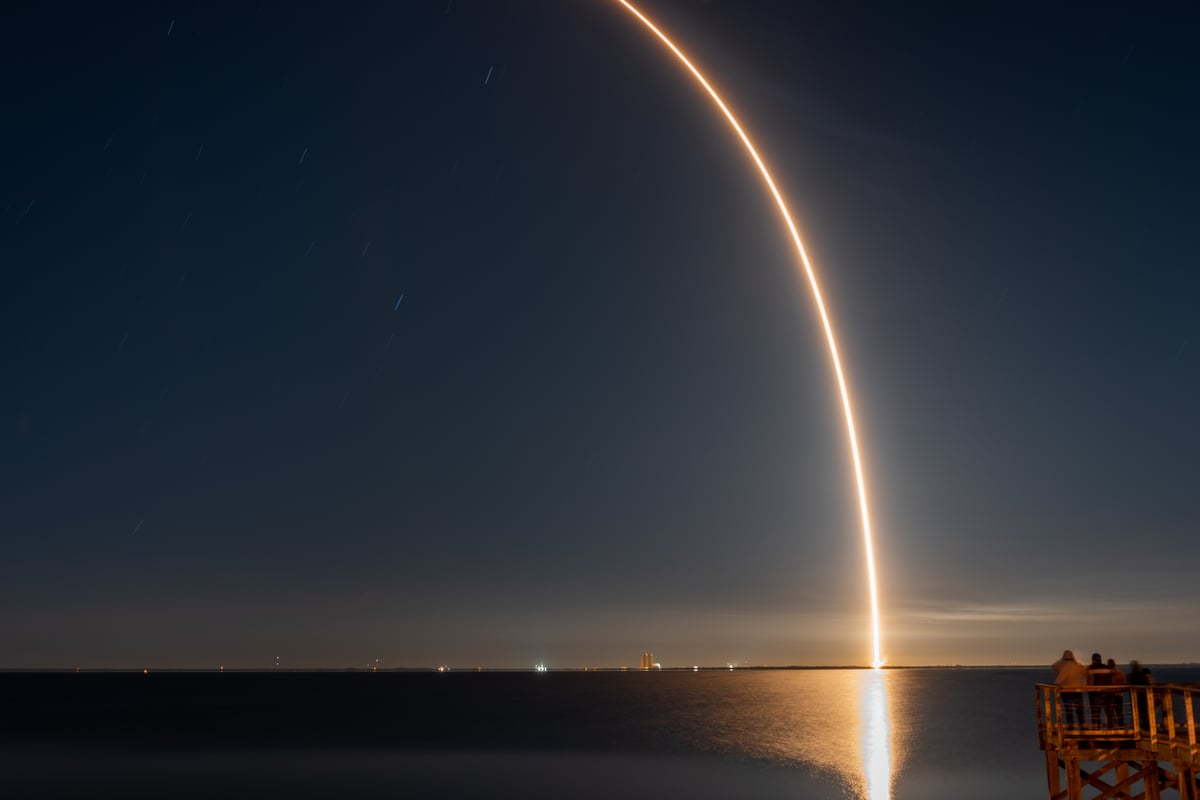
A More Than 80% Chance of a Tesla and SpaceX Merger? It Could Be a Game Changer.
Wedbush analyst Dan Ives has put the likelihood of a merger between Tesla (NASDAQ: TSLA) and Space Exploration Technologies (NASDAQ: SPCX) at more than 80% over the next year, as the potential deal fits Elon Musk's broader artificial intelligence (AI) and data strategy. Tesla invested $2 billion in SpaceX earlier in 2026, and that investment has given Tesla nearly 19 million SpaceX shares, representing less than 1% of SpaceX's outstanding shares. Missed Nvidia in 2009? This Rare Signal Is Flashing Again. In 2009, a "Double Down" signal flashed for a little-known chipmaker called Nvidia. For the first time in years, that same "Total Conviction" signal is flashing for a company 1/100th the size of Nvidia. Continue " Now, the bigger question for Tesla investors is whether a full merger would create a stronger AI, energy, connectivity, and robotics platform or dilute Tesla shareholder value by adding SpaceX's losses, heavy spending needs, and governance risks. Image source: Getty Images. Increasing credibility of the merger case SpaceX's June 2026 IPO has given the company a public stock price for the first time, which makes a possible stock-based merger of the two Elon Musk companies easier to value and structure. SpaceX would bring a growth engine that Tesla does not have. In 2025, SpaceX revenue rose to $18.7 billion, with the Starlink-powered connectivity unit accounting for about $11.4 billion of sales. Starlink's satellite internet user base had reached nearly 10.3 million by the end of the first quarter of 2026. If Tesla and SpaceX merge, Starlink would add a recurring-revenue business tied to satellites, consumer connectivity, and future mobile services. Tesla is already spending heavily on AI, robotics, custom chips, and manufacturing capacity. The company raised its 2026 capital spending plan to more than $25 billion, up from its earlier $20 billion forecast. Tesla also expects negative free cash flow for the rest of 2026, despite generating $1.44 billion in free cash flow in the first quarter. A merger with SpaceX could position Tesla as a broader platform company and create a more vertically integrated platform spanning AI, energy, mobility, and connectivity. Tesla would bring vehicles, robotaxis, Optimus robots, energy storage, and software-led services that generate customer demand. SpaceX would bring satellites, launch capacity, mobile connectivity, AI infrastructure, and xAI-related software needed to connect, power, and scale that platform. Potential synergies Reuters reported that SpaceX and xAI bought about $650 million in goods and services from Tesla in 2025, including $506 million in Tesla Megapack batteries and $131 million in Cybertrucks. With Tesla already supplying energy storage and vehicles to other Musk-controlled businesses, a merger could build on existing business relationships rather than relying solely on promised future synergies. Tesla's energy storage business could generate an estimated $18.3 billion of revenue in 2026, with gross profit of about $5.3 billion and gross margin near 29%. Since SpaceX and its xAI need large-scale power storage for AI and communications infrastructure, Tesla's Megapack business could become a more strategic internal supplier. Reuters has also reported that SpaceX, xAI -- which it acquired -- and Tesla plan to build two advanced chip factories at the Terafab facility in Austin, Texas, including one for Tesla vehicles and Optimus robots and another for future AI data centers in space. Tesla and SpaceX are also working on Macrohard , an early-stage AI platform designed to automate digital workflows and improve how people work with computers. These projects make the case for a merger more concrete by showing that Tesla and SpaceX may already be developing shared technology, not just operating under the same CEO. The Federal Communications Commission has approved 7,500 additional Gen2 Starlink satellites, bringing SpaceX's permitted Gen2 capacity to 15,000 satellites. SpaceX is also pushing deeper into direct-to-cell and U.S. mobile services. Over time, that could help Tesla's vehicles, robotaxis, charging sites, and energy assets stay connected. However, this is more of a future opportunity than something likely to add meaningful revenue right away. SpaceX's next-generation Starship reusable rocket system is designed to carry more than 100 metric tons to orbit. If it works reliably, SpaceX could deploy larger satellite networks and future space-based infrastructure at lower cost, strengthening a combined company's infrastructure story. But investors should also treat this as a major execution risk, not a guaranteed advantage. Tesla investors face risks The biggest challenge for a merger deal would be SpaceX's rich valuation. As I write this, the company trades at 77 times trailing-12-month sales, despite posting a $4.9 billion net loss in 2025. The company's AI business also had a $6.4 billion operating loss in 2025 and accounted for $12.7 billion of the company's capital expenditures that year. A merger could move those losses, capital needs, and AI-infrastructure risks closer to Tesla shareholders. Tesla also has major execution risks of its own. Reuters found that its robotaxi service in Texas still faced long wait times, limited availability, navigation problems, and safety challenges in some vehicles. If Tesla is still proving vehicle autonomy and SpaceX is still proving AI infrastructure, a merger would combine two long-term bets rather than clearly reducing risk. CEO Elon Musk reportedly controlled 42.5% of SpaceX's equity and 83.8% of its voting power before the IPO. After the offering, Musk was expected to retain about 82.4% of SpaceX's voting power. He also owns around 19.9% stake in Tesla's common stock. Musk's level of influence could make a Tesla-SpaceX deal easier to pursue, but it also makes fairness more important. Tesla shareholders would need confidence that the deal price properly reflects SpaceX's losses, Tesla's own growth potential, and the companies' existing business ties. So, the real question for shareholders is whether the deal would create more value than Tesla and SpaceX could create separately. Until investors see terms, valuation, board process, and a clearer path from synergy to cash flow, a potential merger should be treated as a serious possibility rather than a proven value creator. Don't miss this second chance at a potentially lucrative opportunity Ever feel like you missed the boat in buying the most successful stocks? Then you'll want to hear this. On rare occasions, our expert team of analysts issues a "Double Down" stock recommendation for companies that they think are about to pop. If you're worried you've already missed your chance to invest, now is the best time to buy before it's too late. And the numbers speak for themselves: * Nvidia: if you invested $1,000 when we doubled down in 2009, you'd have $505,952!* * Apple: if you invested $1,000 when we doubled down in 2008, you'd have $58,823!* * Netflix: if you invested $1,000 when we doubled down in 2004, you'd have $418,761!* Right now, we're issuing "Double Down" alerts for three incredible companies, available when you join Stock Advisor, and there may not be another chance like this anytime soon. See the 3 stocks " *Stock Advisor returns as of July 5, 2026. Manali Pradhan, CFA has no position in any of the stocks mentioned. The Motley Fool has positions in and recommends Tesla. The Motley Fool has a disclosure policy. The views and opinions expressed herein are the views and opinions of the author and do not necessarily reflect those of Nasdaq, Inc.
A More Than 80% Chance of a Tesla and SpaceX Merger? It Could Be a Game Changer.
Wedbush analyst Dan Ives has put the likelihood of a merger between Tesla (TSLA 7.35%) and Space Exploration Technologies (SPCX +2.83%) at more than 80% over the next year, as the potential deal fits Elon Musk's broader artificial intelligence (AI) and data strategy. Tesla invested $2 billion in SpaceX earlier in 2026, and that investment has given Tesla nearly 19 million SpaceX shares, representing less than 1% of SpaceX's outstanding shares. Now, the bigger question for Tesla investors is whether a full merger would create a stronger AI, energy, connectivity, and robotics platform or dilute Tesla shareholder value by adding SpaceX's losses, heavy spending needs, and governance risks. Increasing credibility of the merger case SpaceX's June 2026 IPO has given the company a public stock price for the first time, which makes a possible stock-based merger of the two Elon Musk companies easier to value and structure. SpaceX would bring a growth engine that Tesla does not have. In 2025, SpaceX revenue rose to $18.7 billion, with the Starlink-powered connectivity unit accounting for about $11.4 billion of sales. Starlink's satellite internet user base had reached nearly 10.3 million by the end of the first quarter of 2026. If Tesla and SpaceX merge, Starlink would add a recurring-revenue business tied to satellites, consumer connectivity, and future mobile services. Tesla is already spending heavily on AI, robotics, custom chips, and manufacturing capacity. The company raised its 2026 capital spending plan to more than $25 billion, up from its earlier $20 billion forecast. Tesla also expects negative free cash flow for the rest of 2026, despite generating $1.44 billion in free cash flow in the first quarter. A merger with SpaceX could position Tesla as a broader platform company and create a more vertically integrated platform spanning AI, energy, mobility, and connectivity. Tesla would bring vehicles, robotaxis, Optimus robots, energy storage, and software-led services that generate customer demand. SpaceX would bring satellites, launch capacity, mobile connectivity, AI infrastructure, and xAI-related software needed to connect, power, and scale that platform. Potential synergies Reuters reported that SpaceX and xAI bought about $650 million in goods and services from Tesla in 2025, including $506 million in Tesla Megapack batteries and $131 million in Cybertrucks. With Tesla already supplying energy storage and vehicles to other Musk-controlled businesses, a merger could build on existing business relationships rather than relying solely on promised future synergies. Tesla's energy storage business could generate an estimated $18.3 billion of revenue in 2026, with gross profit of about $5.3 billion and gross margin near 29%. Since SpaceX and its xAI need large-scale power storage for AI and communications infrastructure, Tesla's Megapack business could become a more strategic internal supplier. Reuters has also reported that SpaceX, xAI -- which it acquired -- and Tesla plan to build two advanced chip factories at the Terafab facility in Austin, Texas, including one for Tesla vehicles and Optimus robots and another for future AI data centers in space. Tesla and SpaceX are also working on Macrohard , an early-stage AI platform designed to automate digital workflows and improve how people work with computers. These projects make the case for a merger more concrete by showing that Tesla and SpaceX may already be developing shared technology, not just operating under the same CEO. The Federal Communications Commission has approved 7,500 additional Gen2 Starlink satellites, bringing SpaceX's permitted Gen2 capacity to 15,000 satellites. SpaceX is also pushing deeper into direct-to-cell and U.S. mobile services. Over time, that could help Tesla's vehicles, robotaxis, charging sites, and energy assets stay connected. However, this is more of a future opportunity than something likely to add meaningful revenue right away. SpaceX's next-generation Starship reusable rocket system is designed to carry more than 100 metric tons to orbit. If it works reliably, SpaceX could deploy larger satellite networks and future space-based infrastructure at lower cost, strengthening a combined company's infrastructure story. But investors should also treat this as a major execution risk, not a guaranteed advantage. Tesla investors face risks The biggest challenge for a merger deal would be SpaceX's rich valuation. As I write this, the company trades at 77 times trailing-12-month sales, despite posting a $4.9 billion net loss in 2025. The company's AI business also had a $6.4 billion operating loss in 2025 and accounted for $12.7 billion of the company's capital expenditures that year. A merger could move those losses, capital needs, and AI-infrastructure risks closer to Tesla shareholders. Tesla also has major execution risks of its own. Reuters found that its robotaxi service in Texas still faced long wait times, limited availability, navigation problems, and safety challenges in some vehicles. If Tesla is still proving vehicle autonomy and SpaceX is still proving AI infrastructure, a merger would combine two long-term bets rather than clearly reducing risk. CEO Elon Musk reportedly controlled 42.5% of SpaceX's equity and 83.8% of its voting power before the IPO. After the offering, Musk was expected to retain about 82.4% of SpaceX's voting power. He also owns around 19.9% stake in Tesla's common stock. Musk's level of influence could make a Tesla-SpaceX deal easier to pursue, but it also makes fairness more important. Tesla shareholders would need confidence that the deal price properly reflects SpaceX's losses, Tesla's own growth potential, and the companies' existing business ties. So, the real question for shareholders is whether the deal would create more value than Tesla and SpaceX could create separately. Until investors see terms, valuation, board process, and a clearer path from synergy to cash flow, a potential merger should be treated as a serious possibility rather than a proven value creator.

A More Than 80% Chance of a Tesla and SpaceX Merger? It Could Be a Game Changer.
Wedbush analyst Dan Ives has put the likelihood of a merger between Tesla (NASDAQ: TSLA) and Space Exploration Technologies (NASDAQ: SPCX) at more than 80% over the next year, as the potential deal fits Elon Musk's broader artificial intelligence (AI) and data strategy. Tesla invested $2 billion in SpaceX earlier in 2026, and that investment has given Tesla nearly 19 million SpaceX shares, representing less than 1% of SpaceX's outstanding shares. Missed Nvidia in 2009? This Rare Signal Is Flashing Again. In 2009, a "Double Down" signal flashed for a little-known chipmaker called Nvidia. For the first time in years, that same "Total Conviction" signal is flashing for a company 1/100th the size of Nvidia. Continue " Now, the bigger question for Tesla investors is whether a full merger would create a stronger AI, energy, connectivity, and robotics platform or dilute Tesla shareholder value by adding SpaceX's losses, heavy spending needs, and governance risks. Increasing credibility of the merger case SpaceX's June 2026 IPO has given the company a public stock price for the first time, which makes a possible stock-based merger of the two Elon Musk companies easier to value and structure. SpaceX would bring a growth engine that Tesla does not have. In 2025, SpaceX revenue rose to $18.7 billion, with the Starlink-powered connectivity unit accounting for about $11.4 billion of sales. Starlink's satellite internet user base had reached nearly 10.3 million by the end of the first quarter of 2026. If Tesla and SpaceX merge, Starlink would add a recurring-revenue business tied to satellites, consumer connectivity, and future mobile services. Tesla is already spending heavily on AI, robotics, custom chips, and manufacturing capacity. The company raised its 2026 capital spending plan to more than $25 billion, up from its earlier $20 billion forecast. Tesla also expects negative free cash flow for the rest of 2026, despite generating $1.44 billion in free cash flow in the first quarter. A merger with SpaceX could position Tesla as a broader platform company and create a more vertically integrated platform spanning AI, energy, mobility, and connectivity. Tesla would bring vehicles, robotaxis, Optimus robots, energy storage, and software-led services that generate customer demand. SpaceX would bring satellites, launch capacity, mobile connectivity, AI infrastructure, and xAI-related software needed to connect, power, and scale that platform. Potential synergies Reuters reported that SpaceX and xAI bought about $650 million in goods and services from Tesla in 2025, including $506 million in Tesla Megapack batteries and $131 million in Cybertrucks. With Tesla already supplying energy storage and vehicles to other Musk-controlled businesses, a merger could build on existing business relationships rather than relying solely on promised future synergies.
With Ambitious Growth Plans, SpaceX Stock Is Likely to Surge Higher
The buzz around SpaceX's (SPCX) initial public offering (IPO) in June was unprecedented. As the excitement sustained on listing, SPCX stock surged higher. However, as traders booked profits, a correction ensued. For investors betting on the long-term fundamentals of the business, this calm period may provide a good entry opportunity. Recently, Wedbush initiated coverage on SPCX stock with an "Outperform" rating and a price target of $190 per share. Wedbush analyst Dan Ives and his team believe that SpaceX is one of the "most differentiated assets within the tech market" with a "strong footprint" across connectivity, space, and AI infrastructure. With SpaceX's business segments offering immense potential, the growth story still seems to be at an early stage. About SpaceX Stock SpaceX was founded in 2002 with a mission to build the systems and technologies necessary to make life multi-planetary. Currently, SpaceX is building the integrated hardware and software infrastructure for space, connectivity, and AI. In the space segment, SpaceX was the first company to develop and launch a liquid-fuel rocket reaching orbit in 2008. Further, since 2023, SpaceX has launched more than 80% of mass to orbit each year. In the connectivity segment, SpaceX has more than 10,000 Starlink satellites with presence in more than 160 countries, while the company's AI segment has the world's largest coherent supercomputer -- Colossus -- under xAI. For fiscal 2025, SpaceX reported revenue of $18.7 billion and an operating loss of $2.6 billion. After a strong listing and highs near $225, SPCX stock has taken a breather. This seems like a good accumulation opportunity with innovation-driven value creation likely in the coming years. The Innovation Edge In 2008, SpaceX became the first private company to develop and launch a liquid-fuel rocket to reach orbit. Further, in 2020, it became the first company to transport astronauts to orbit and fly to and from the International Space Station. In the connectivity business, SpaceX runs a low-latency network that is available globally. Further, in the AI segment, SpaceX completed the first gigawatt-scale Megapack battery installation in 2026. The key point here is that the company has been an innovator. With roughly $86 billion in proceeds from its IPO, SpaceX is positioned to make big capital investments and accelerate innovation further. Some growth plans include an increase in launch payload capacity and establishing a lunar economy in the space segment. In connectivity, the company is focused on increasing its broadband customer base and expanding Starlink's mobile offering. Finally, in the AI business, SpaceX is looking to design and manufacture its own AI chips, while deployment of orbital AI compute at scale is also potentially in the cards. Accordingly, with many irons in the fire, the company's growth is likely to accelerate coupled with an increase in cash flows. What Do Analysts Say About SPCX Stock? Based on 11 analysts with coverage, SPCX stock has a consensus "Moderate Buy" rating. While five analysts have a "Strong Buy" rating for SPCX stock, five have a "Hold" rating, and one analyst has a "Moderate Sell" rating. The mean price target of $202.38 represents potential upside of 25% from current levels. Further, the most bullish price target of $401 suggests that SPCX stock could climb as much as 148% from here. Conclusion For the year ended December 2025, SpaceX reported capital expenditures of $20.7 billion. Of that figure, roughly 61% was allocated toward artificial intelligence investments. Further, for Q1 2026, capital expenditures came to $10.1 billion, with roughly 76% allocated toward AI. With a big addressable market, these investments are likely to spur significant growth for SpaceX. To put things into perspective, SpaceX believes that the current AI addressable market is worth $3.8 trillion. Further, if enterprise applications are included, the company's total addressable market (with space and connectivity) swells to $28.5 trillion. With big opportunities in AI and continued innovation-driven growth in space and connectivity, SpaceX is clearly positioned for long-term value creation. That makes SPCX stock appear attractive after the recent correction.
/A%20close-up%20of%20the%20SpaceX%20sign%20on%20a%20black%20building%20by%20IanDewarPhotography%20via%20Adobe%20Stock.jpeg)
Elon Musk Calls Report on SpaceX AI Handheld Device 'Utterly False' After Claims of an iPhone Rival Sparks Online Buzz
Benzinga and Yahoo Finance LLC may earn commission or revenue on some items through the links below. Elon Musk, the CEO of Space Exploration Technologies Corp., has refuted reports that his company is developing a handheld AI device. Musk took to X and responded to the reports by labeling them as "utterly false". The original post about the report was deleted later on. Utterly false -- Elon Musk (@elonmusk) July 1, 2026 Earlier this year, Musk said a Starlink phone was "not out of the question" and could be AI-optimized, but later clarified that SpaceX is not developing a smartphone. The Report In Question A report by the Wall Street Journal, published on Wednesday, indicated that SpaceX had presented investors with a prototype of a device similar to Apple Inc.'s iPhone, but "slimmer" before the IPO. As per the WSJ article, this device would run on SpaceX's proprietary system, using AI technology from xAI. The device would also include chips from Qualcomm Inc. according to the report. However, the device is reportedly still in the prototype phase, with no official name assigned, and it remains unclear whether it will ever be released to the public. The report comes after SpaceX President Gwynne Shotwell, last month, reportedly informed investors about the company's plans to launch a Starlink retail product for U.S. consumers and build its own terrestrial mobile network. Trending: Avoid the #1 Investing Mistake: How Your 'Safe' Holdings Could Be Costing You Big Time What Do The Analysts Say? An analyst at TD Cowen predicted that SpaceX could pursue an acquisition of T-Mobile US Inc. to expand its wireless ambitions, leveraging its existing Starlink partnership and targeting the growing mobile connectivity market. In its IPO filing, SpaceX estimated a $740 billion addressable market for Starlink Mobile, signaling plans to expand the service and compete with carriers such as Verizon Communications and AT&T. On the other hand, analysts at Vital Knowledge said SpaceX faces significant hurdles in scaling consumer device manufacturing and competing with established platforms, arguing that Elon Musk's companies often receive generous valuations based on ambitious product promises rather than proven consumer products, reported Forbes. "...it's hard to imagine SpaceX becoming a force in consumer electronics," wrote the firm.
Elon Musk can't sell a single SpaceX share for a year -- and then all the locks crack open at once
Unless you've been on the moon, you know that Elon Musk's SpaceX just pulled off the biggest IPO of all time and raised about $86 billion in its public stock offering last month. The reusable rocket maker did it while selling only a tiny sliver -- between 4% and 5% -- of its stock. The other 95% -- which consists of about 12.5 billion shares -- is being kept behind bars in one of the most byzantine, complicated lock-up schedules in history. To level set, lock-up periods are standard fare following an IPO; founders, top executives, and early venture investors usually agree not to sell their shares for 180 days. The point, as IPO advisor Lise Buyer of Class V Group explains, is twofold. First, it forces the people who know the company best to hold through at least one earnings report, so they can't dump stock on the public right before a bad quarter. Second, it sends a soothing signal during what could otherwise be a volatile and tenuous time in the life of a newly public company. "It's a message to the new buyers that the people who know the company best still believe in it and are going to hang on," said Buyer. But when the lock-up expires, usually right after 180 days, a glut of stock typically hits the market and puts downward pressure on the stock price. During the past decade, underwriters have pushed buzzy tech companies into adopting more staggered or shortened release dates for insiders to sell their shares, some even contingent on earnings or stock-price increases to dampen the flow. Airbnb, DoorDash, Reddit, and Snowflake all either shortened the 180 days or staggered them. SpaceX, however, took the flexible lockup approach, wrapped it in a puzzle, strapped it to an enigma, and sent it to live in a colony on Mars. There are 15 dates for sales in the public markets, according to the company's filings. For anyone who isn't Musk or a large investor, they can sell their stock during the 180-day window as it unlocks in slices of 7% on various dates in August, September, and October and then two trading days after SpaceX's Q2 2026 earnings, which will be its first as a public company. There's another big tranche after its next earnings report, and then whatever is left can be sold at 180 days. There are also dates tied to other earnings releases, plus stock-price increases. Avery Marquez, who tracks IPOs and lock-up structures as director of investment strategies at Renaissance Capital, described just how much of an outlier this is: "This is one of the most complicated, if not the most complicated lock-up we've ever seen." Buyer said she's never seen such a large percentage of a company's stock unlock before 180 days are up. "This is outside the bounds of anything we've seen before," she said. "I would expect their transfer agent will be doing shots of tequila, because it's going to be a little hard to manage," she joked. Why build a lock-up schedule this complicated? Buyer and Marquez said it's designed to keep the billions of shares behind bars from flooding the market all at once. To do so "could be catastrophic to the share price if everybody wanted to sell," said Marquez. Hans Tung, managing partner at Notable Capital and an early SpaceX investor through a company that was acquired by the rocket maker, said the schedule reads as an attempt to let shareholders ease out rather than see everything sold at once. Some will keep holding the stock "because that's how they compound over a long period of time," while others who got in during the past five to 10 years will probably sell to show some liquidity, he said. "I think this series of steps is designed for most shareholders to sell a bit each time," said Tung, whose fund has a small stake in SpaceX and a much larger position in Anthropic, which is also provides compute to SpaceX. Tung said he doesn't have inside information, but he noted that Anthropic and OpenAI, given their size, could end up adopting lockups similar to SpaceX if they go public. "The amount of money involved is just very big. So some people need to have exits along the way," he said. This is designed so that it's done over tranches instead of a free-for-all with a six month lockup and thereafter, everybody just do whatever they want." There's is another reason that could keep investors holding the stock, rather than selling right away, added Tung. The public market listing is the start of a new phase for SpaceX. And Musk's xAI, which is part of SpaceX, is likely to acquire some companies. He pointed to Cursor, the AI coding startup that SpaceX inked a compute deal with prior to the IPO. Days after the listing, SpaceX exercised an option to buy Cursor for $60 billion in SpaceX stock. Now that SpaceX is public, Musk has a liquid currency to fund more deals like this, Tung said -- and "as he acquires more companies, it will be adding more value to the stock, so [investors] will hold on for even longer." SpaceX has had a stunning trajectory in its brief time in the public market. The stock, which priced at $135 in the IPO, opened up at $150 on its first day trading and surged all the way to $226 per share in the following days. While it has since given up some of those gains, the stock now trades at roughly $162, giving SpaceX a $2.61 trillion market cap. And then there's Musk There's a wildcard in the mix. Musk holds roughly 6.4 billion shares making up about 82% of the voting power at SpaceX between his Class A and Class B supervoting 10-shares-in-one stock. Musk can't sell for 366 days, and there are no early-release provisions at all. But then in one shot, everything unlocks at once. Musk's unusual lock-up structure presents investors with a case of extremes, giving the stock a ballast of stability for the first year, followed by the potential for a supernova event. While it's almost inconceivable that Musk would choose to sell all his shares at that point given the negative signal it would send and the resulting impact on the company, the risk factor can't be discounted. Musk's track record with his Tesla stock may provide some indication of what to expect. Musk has held onto his stake in the electric carmaker and borrowed against it, avoiding the capital gains tax hit he would face. He has sold Tesla stock only as a last resort. Jay Ritter, an IPO expert and University of Florida professor, said he wouldn't be surprised if Musk doesn't sell any SpaceX stock at all. "He doesn't have to worry where his next meal is coming from, and if he does, it's probably going to be a tiny fraction of the, what, 6 billion shares that he owns," said Ritter. Musk might even buy more of SpaceX's, Marquez speculated. "It's possible we could see him buy shares when these are released. People start selling them, and he buys them up," she said. "With Elon Musk, anything is possible." Tung doesn't expect Musk to jump in right away, but wouldn't rule out buybacks down the line. "I don't think he will buy immediately, but I think over the course of the next five to 10 years, he will buy some [stock] back when he feels it's the right thing to do," he said. "He is who he is, and he's been doing this for a long time. I don't see any reason why he would behave differently." Buyer, who also declined to guess at Musk's plans, said the same. "He has no use for the cash, and I'm sure he believes that the stock is undervalued," she said. "He might not sell a single share." Whether Musk's investors can do the same remains to be seen. The post Elon Musk can't sell a single SpaceX share for a year -- and then all the locks crack open at once appeared first on Fortune.
SpaceX AI device claims surface ahead of IPO as Elon Musk denies reports
The claims come amid wider industry interest in AI smartphones, including OpenAI's reported plans. This signals growing competition in AI hardware. Anonymous sources claim that SpaceX has developed a mysterious, handset-like device intended to reshape how we interact with artificial intelligence (AI). According to the Wall Street Journal (WSJ), a prototype was recently demonstrated to investors just moments before the company's initial public offering (IPO). Allegedly, the device has a "sleek design that's slimmer than an iPhone," but the final design could change as the project is in its early stages of development. The tool runs a proprietary operating system, is powered by a Qualcomm Snapdragon chipset, and integrates AI technology developed by Elon Musk's xAI. Musk is calling the claims of an AI-powered device "utterly false" on X. In February 2026, rumors arose that SpaceX was reportedly developing a mobile phone that would connect directly to its Starlink satellite network. Musk immediately refuted the report. "We are not developing a phone," the entrepreneur said on X. But according to the Financial Times, Musk has plans to move into the US consumer mobile market. The WSJ report suggests that a phone would be the way to create Musk's "everything app," a concept that he has talked about since acquiring Twitter back in 2022. Instead of downloading separate apps to handle parts of our daily lives, these "super apps" would bring together the services people need into a single program. This concept is currently being developed and tested by Chinese tech companies like WeChat and Alipay. Allegedly, SpaceX isn't the only AI company working on an AI-powered device. According to market analyst Ming-Chi Kuo, OpenAI is trying to revolutionize the smartphone industry by developing a new smartphone with an AI agent ecosystem as a key feature. Instead of rows and columns of app icons, the interface would consist of the work of an AI agent. To optimize its performance and results, the AI agent would work both locally and in the cloud. Using an AI agent instead of apps would drastically change how we use our smartphones. "OpenAI's advantages lie in its consumer brand, years of accumulated user data, and leading AI models. Smartphone hardware is already highly mature, so OpenAI can work with the supply chain to develop the device. On the business model side, OpenAI may bundle subscriptions with hardware and build a new AI agent ecosystem with developers," Kuo said.
4 Lessons for Future OpenAI and Anthropic Investors, Following SpaceX's Historic IPO
SpaceX (NASDAQ: SPCX), the aerospace and AI company founded by Elon Musk, went public on June 12 at a valuation of $1.77 trillion, making it the largest IPO in history. It went public at $135 per share, started trading at $150, and hit a record high of $225.64 on June 16. But as of this writing, SpaceX's stock trades at about $160. Many investors who hopped on the bandwagon in its first four days are now underwater. That volatile market debut should teach investors four valuable lessons about hot IPOs like SpaceX -- and how they should approach OpenAI and Anthropic, two of the market's most eagerly anticipated AI IPOs, in the future. Missed Nvidia in 2009? This Rare Signal Is Flashing Again. In 2009, a "Double Down" signal flashed for a little-known chipmaker called Nvidia. For the first time in years, that same "Total Conviction" signal is flashing for a company 1/100th the size of Nvidia. Continue " 1. Valuations matter When SpaceX went public, it was already valued at 95 times its 2025 revenue of $18.7 billion. At its peak market cap of $2.66 trillion, it was valued at 142 times its trailing sales. Those were sky-high valuations, even for a company that grew its revenue by 33% in 2025. As of this writing, SpaceX is worth $2.1 trillion, or 112 times last year's sales. OpenAI was most recently valued at $852 billion, and its founders hope to go public with a market cap of $1 trillion. That would be 50 times its annualized revenue run rate of $20 billion at the end of 2025, making it seem more reasonably valued than SpaceX. Anthropic, valued at $965 billion after its latest funding round, only had an annualized revenue run rate of $9 billion at the end of 2025. If it's also targeting a $1 trillion IPO, it would debut at 111 times its annualized revenue -- making it more comparable to SpaceX. 2. Profits matter SpaceX was actually profitable in 2025, as Starlink's profits offset its space division's losses. But this year, it acquired xAI (which owns Grok and X) in an all-stock acquisition before its IPO. After recasting its 2025 financials to account for that acquisition, it became deeply unprofitable. The critics claimed that Musk was bailing out xAI at the expense of SpaceX's shareholders. OpenAI and Anthropic -- which are both unprofitable -- will also be closely scrutinized when they go public. OpenAI is still racking up steep losses, but Anthropic's rapid expansion in the enterprise market (with tools like Claude Code) is quickly reducing its operating losses. Anthropic even expects to post its first adjusted operating profit this year.