News & Updates
The latest news and updates from companies in the WLTH portfolio.
SpaceX abruptly scrubs Starship test flight
SpaceX on Thursday scrubbed what was to be its first Starship flight since the company went public, abruptly calling it off just as the booster began to ignite. "Some of the engines didn't start, triggering an automatic launch abort. Now offloading propellant. Next launch attempt hopefully in a few days," wrote company head Elon Musk on X. It was to be the mammoth rocket's 13th flight overall. When it eventually takes off, the flight's aims will be similar to those of a mostly successful voyage carried out in May, which debuted the latest edition of the powerful Starship, its third-generation model. The goals of that test were essentially to demonstrate the new designs in flight. It was not without a few glitches, however, including engine issues with the Super Heavy booster that necessitated a crash into the Gulf of Mexico rather than a precision return. The company said "there have been several modifications to hardware and software to address issues seen on the previous flight." SpaceX will aspire the next time around to execute a launch, ascent, stage separation, boostback burn and landing burn of the booster offshore without hiccups. The upper stage will deploy 20 Starlink V3 satellites, and SpaceX said it will test out a relight of a Raptor engine in space. It will also test upgrades to Starship's heat shield. The latest flight will be the first after Musk's SpaceX went public on Wall Street in June, with a record initial public offering. The rocket company has rapidly expanded its satellite internet service and voiced lofty ambitions for AI data centers in space. There's a lot riding on SpaceX's progress: the company is under contract with NASA to produce a modified version of Starship to serve as a lunar landing system.

AST SpaceMobile vs. Rocket Lab: Which Stock Is The Superior SpaceX Competitor?
Space Exploration Technologies (NASDAQ: SPCX) made headlines when it raised $75 billion from investors in an initial public offering (nearly $86 billion if you include the investment bankers' overallotment). The stock rocketed higher after the IPO, but it has now fallen back down to the $135 IPO price. There are alternatives to consider, such as AST SpaceMobile (NASDAQ: ASTS) and Rocket Lab (NASDAQ: RKLB). Here's why you might want to buy one of these stocks over SpaceX. What does SpaceX do? The simple answer is SpaceX does a lot. For example, it builds and launches rockets. In fact, it appears well ahead of the competition in terms of technology, with rockets that return and land after use. Reusing launch rockets materially reduces launch costs. SpaceX also operates Starlink, a satellite-based telecommunication network. And it is building an artificial intelligence business. Missed Nvidia in 2009? This Rare Signal Is Flashing Again. In 2009, a "Double Down" signal flashed for a little-known chipmaker called Nvidia. For the first time in years, that same "Total Conviction" signal is flashing for a company 1/100th the size of Nvidia. Continue " This is where things get interesting. SpaceX is a money-losing start-up, but its Starlink business is profitable. As the company clearly spelled out in its IPO prospectus, space launches and AI are burning through cash. You can avoid the money-losing businesses and just focus on the one segment of SpaceX that is profitable, the satellite-based broadband network, if you buy AST SpaceMobile. AST SpaceMobile: Not up to speed, but getting close AST SpaceMobile isn't profitable yet, either. However, it operates a satellite-based broadband network. And it is working to expand that network to cover the entire planet. It is getting close to a commercial launch of its network, but there's a vital difference between Starlink and AST SpaceMobile: Starlink's service is bespoke, while AST SpaceMobile is partnered with large cellphone service providers. That means it has a built-in customer base and is likely to hit the ground running when its service starts operating. It still has material spending needs as it works to broaden its geographic coverage, but it also has major telecom partners as supporters. If you are worried that Elon Musk is pulling SpaceX in too many directions, AST SpaceMobile would be a way to focus on the one part of that company that actually makes money today. That said, AST SpaceMobile likely won't be profitable for a while longer, given the huge cost of building and launching satellites.
SpaceX Starship launch aborted at the last moment
SpaceX's mega Starship rocket has come within a second or so from blasting off on a test flight but some of the engines failed to start, triggering a launch abort. Elon Musk's company said it will have to figure out what went wrong on Thursday before making another attempt to send Starship on a space-skimming journey halfway around the world. It was supposed to be the 13th flight for Starship, which at 124m tall with 33 main engines is the world's biggest and most powerful rocket. SpaceX's launch webcast showed the start of engine ignition three seconds before the planned liftoff, viewed from a drone high above the pad. Although the company did not elaborate, on-screen data showed four engines not firing, with the remaining 29 engines immediately shutting down and keeping the rocket anchored to the pad. It was the first time a full-scale Starship experienced a last-second abort like this. The launch team immediately began draining the fuel from the rocket. "Next launch attempt hopefully in a few days," Musk announced via X. Everything was going SpaceX's way, even the weather, until the partial engine ignition. In the end, the rocket's automatic launch system worked as planned by halting everything. Too few operating engines could have doomed the launch. Some earlier Starship flights ended in explosive fireballs. Elon Musk's company had newest, most advanced Starlinks aboard Twenty of SpaceX's newest and most advanced Starlinks were on board Starship for release during the planned hour-long flight. The internet satellites were going to try communicating with Starlinks already in orbit while taking photos of Starship's heat shield. Neither the first-stage booster nor spacecraft were meant to be recovered, with both ending up in the sea. The rocket's automatic launch system worked as planned by halting everything. Too few operating engines could have resulted in a failed launch. Some earlier Starship flights, for example, ended in explosive fireballs.

SpaceX Starship launch aborted at the last moment
SpaceX's mega Starship rocket has come within a second or so from blasting off on a test flight but some of the engines failed to start, triggering a launch abort. Elon Musk's company said it will have to figure out what went wrong on Thursday before making another attempt to send Starship on a space-skimming journey halfway around the world. It was supposed to be the 13th flight for Starship, which at 124m tall with 33 main engines is the world's biggest and most powerful rocket. SpaceX's launch webcast showed the start of engine ignition three seconds before the planned liftoff, viewed from a drone high above the pad. Although the company did not elaborate, on-screen data showed four engines not firing, with the remaining 29 engines immediately shutting down and keeping the rocket anchored to the pad. It was the first time a full-scale Starship experienced a last-second abort like this. The launch team immediately began draining the fuel from the rocket. "Next launch attempt hopefully in a few days," Musk announced via X. Everything was going SpaceX's way, even the weather, until the partial engine ignition. In the end, the rocket's automatic launch system worked as planned by halting everything. Too few operating engines could have doomed the launch. Some earlier Starship flights ended in explosive fireballs. Elon Musk's company had newest, most advanced Starlinks aboard Twenty of SpaceX's newest and most advanced Starlinks were on board Starship for release during the planned hour-long flight. The internet satellites were going to try communicating with Starlinks already in orbit while taking photos of Starship's heat shield. Neither the first-stage booster nor spacecraft were meant to be recovered, with both ending up in the sea. The rocket's automatic launch system worked as planned by halting everything. Too few operating engines could have resulted in a failed launch. Some earlier Starship flights, for example, ended in explosive fireballs.

SpaceX Starship launch aborted at the last moment
SpaceX's mega Starship rocket has come within a second or so from blasting off on a test flight but some of the engines failed to start, triggering a launch abort. Elon Musk's company said it will have to figure out what went wrong on Thursday before making another attempt to send Starship on a space-skimming journey halfway around the world. It was supposed to be the 13th flight for Starship, which at 124m tall with 33 main engines is the world's biggest and most powerful rocket. SpaceX's launch webcast showed the start of engine ignition three seconds before the planned liftoff, viewed from a drone high above the pad. Although the company did not elaborate, on-screen data showed four engines not firing, with the remaining 29 engines immediately shutting down and keeping the rocket anchored to the pad. It was the first time a full-scale Starship experienced a last-second abort like this. The launch team immediately began draining the fuel from the rocket. "Next launch attempt hopefully in a few days," Musk announced via X. Everything was going SpaceX's way, even the weather, until the partial engine ignition. In the end, the rocket's automatic launch system worked as planned by halting everything. Too few operating engines could have doomed the launch. Some earlier Starship flights ended in explosive fireballs. Elon Musk's company had newest, most advanced Starlinks aboard Twenty of SpaceX's newest and most advanced Starlinks were on board Starship for release during the planned hour-long flight. The internet satellites were going to try communicating with Starlinks already in orbit while taking photos of Starship's heat shield. Neither the first-stage booster nor spacecraft were meant to be recovered, with both ending up in the sea. The rocket's automatic launch system worked as planned by halting everything. Too few operating engines could have resulted in a failed launch. Some earlier Starship flights, for example, ended in explosive fireballs.

SpaceX aborts Starship launch after engine failure seconds before liftoff
SpaceX's mega Starship rocket came within a second or so from blasting off on a test flight but some of the engines failed to start, triggering a launch abort. Elon Musk's company said it will have to figure out what went wrong before making another attempt to send Starship on a space-skimming flight halfway around the world. It was supposed to be the 13th flight for Starship, which at 407 feet (124 meters) tall with 33 main engines is the world's biggest and most powerful rocket. SpaceX's launch webcast on Thursday showed the start of engine ignition three seconds before the planned liftoff, viewed from a drone high above the pad. Whichever engines fired abruptly shut down, with the rocket remaining anchored to the pad. The launch team immediately began draining the fuel from the rocket. "Next launch attempt hopefully in a few days," Musk announced via X. Everything had been going SpaceX's way, including the weather, until the partial engine ignition. Twenty of SpaceX's newest and most advanced Starlinks were on board Starship for release during the planned hourlong flight. The internet satellites were going to try communicating with Starlinks already in orbit while taking photos of Starship's heat shield. Neither the first-stage booster nor spacecraft were meant to be recovered, with both ending up in the sea. NASA is counting on Starship to land its astronauts on the moon in the next few years. The space agency has hired SpaceX and Jeff Bezos' Blue Origin to build and fly the lunar landers that will return humanity to the surface of the moon after an absence of more than half a century. Both companies need to have their landers -- Starship and Blue Moon -- ready to fly by next year so that the newly named Artemis III crew can practice docking their capsule with them in orbit around Earth. The mission after that -- Artemis IV planned for no earlier than 2028 -- would use one of those landers to take two astronauts to the moon's south polar region. Published on July 17, 2026

SpaceX's Starship Flight 13 test launch aborts at last second (video)
Starship Flight 13 will carry 20 Starlink V3 internet satellites, marking their first trip to space before crashing back to Earth after about 20 minutes. When you buy through links on our articles, Future and its syndication partners may earn a commission. Starship wasn't quite ready to fly today (July 16). SpaceX tried to launch the Starship megarocket on its 13th test flight today but couldn't quite pull it off. Something went wrong just as the giant vehicle's first-stage engines started to fire up, and an abort was triggered. It's too early to say what exactly happened or when SpaceX will try again with Starship Flight 13. "We'll take some time, dig into what triggered that abort once the booster was igniting to launch, and then we'll figure out what our path forward is going to be," SpaceX's Dan Huot said during the company's launch webcast today. "Hopefully, we'll be back real soon for Flight 13 and another attempt to get Starship off the pad," he added. Flight 13 will fly from SpaceX's Starbase site in South Texas. Today's attempt occurred at 6:45 p.m. EDT (2245 GMT; 5:45 p.m. local time), right at the beginning of a 90-minute launch window. Flight 13 will be the second test launch of Starship Version 3 (V3), an upgraded variant of the megarocket designed to get it up to operational status. V3's first jaunt, Flight 12 on May 22, was mostly successful, but there were a few issues. For example, Starship's Super Heavy first stage didn't steer itself back for a controlled splashdown in the Gulf of Mexico as planned, and the Ship upper stage wasn't able to relight one of its Raptor engines in space. Starship V3 will get a second chance on Flight 13, whose goals are similar to those of Flight 12: Get Super Heavy down on target in the Gulf and send Ship most of the way around the world, for a controlled splashdown of its own off the coast of Western Australia. (Ship pulled that off on Flight 12.) There are a few new objectives, however. The most notable is the payload suite flying on Flight 13 -- 20 of SpaceX's next-gen Starlink V3 internet satellites. The company wants to build a constellation of 100,000 Starlink V3 spacecraft in low Earth orbit using Starship, and Flight 13 will mark the satellites' first-ever trip to space. They won't stay up there, however; the spacecraft will be deployed on Ship's suborbital trajectory and will crash back to Earth after about 20 minutes, according to SpaceX. Six of the 20 Starlinks going up on Flight 13 will be equipped with cameras, to image Ship's heat shield. SpaceX did this with a couple of V2 Starlinks on Flight 12 as well.
SpaceX Starship Launch Aborted on the Pad at the last moment
(AP) -- SpaceX's mega Starship rocket came within a few seconds of blasting off on a test flight Thursday, but some of the engines failed to start triggering a launch abort. Elon Musk's company said it will have to figure out what went wrong before making another attempt to send Starship on a space-skimming flight halfway around the world. It was supposed to be the 13th flight for Starship, which at 407 feet (124 meters) tall with 33 main engines is the world's biggest and most powerful rocket. Twenty of SpaceX's newest and most advanced Starlinks were on board Starship for release during the planned hourlong flight. The internet satellites were going to try communicating with Starlinks already in orbit while taking photos of Starship's heat shield. Neither the first-stage booster nor spacecraft were meant to be recovered, with both ending up in the sea. NASA is counting on Starship to land its astronauts on the moon in the next few years.
Netflix, SpaceX, Alphabet, Alcoa and Intuitive Surgical: Why These 5 Stocks Are on Investors' Radars Toda
Major U.S. indices ended Thursday in the red, with the Dow Jones Industrial Average slipping 0.2% to 52,552.97. The S&P 500 declined 0.51% to 7,533.77, while the Nasdaq dropped 1.47% to 25,881.95. Across U.S. equity markets, trading was mixed beneath the surface at midday, with gains in defensive and value stocks offsetting weakness in chipmakers and speculative technology shares, prompting a rotation into smaller-cap stocks. These are the top stocks that gained the attention of retail traders and investors through the day: Netflix Inc. (NASDAQ:NFLX) Netflix's stock closed up 0.91% at $74.35, reaching an intraday high of $74.68 and a low of $72.94. The streaming giant's shares are nearing critical lows, with a 52-week range of $127.75 to $70.86. In the after-hours session, the stock plumetted 9.05% to $67.62. Looking ahead, Netflix guided third-quarter revenue of $12.86 billion and EPS of 82 cents, both below Wall Street expectations, while narrowing its full-year revenue outlook to $51.0 billion-$51.4 billion, around the low end of its previous range. The softer guidance appeared to weigh on investor sentiment. Space Exploration Technologies Corp (NASDAQ:SPCX) SpaceX shares fell 3.08% to close at $131.11, with a high of $137.76 and a low of $130.74. The stock's 52-week range is $225.64 to $130.74. The shares declined 3.08% to $127.07 in extended trading. Meanwhile, SpaceX's launch of its Starship mega rocket was aborted Thursday night after "some of the engines didn't start," CEO Elon Musk said on X, triggering an automatic launch abort. Alphabet Inc. (NASDAQ:GOOG) Alphabet's Class C stock dropped 4.43% to $353.81, with an intraday high of $374.35 and a low of $351.67. The 52-week range is $404.44 to $181.50. Reports of delays in Google's Gemini project have raised concerns about the company's competitive position in AI. Alcoa Corp. (NYSE:AA) Alcoa's shares decreased by 3.56%, closing at $46.85, with a high of $47.90 and a low of $46.39. The stock's 52-week range is $84.38 to $28.11. The stock fell 2.8% to $45.54 in after-hours trading. Alcoa shares fell in the after-hours session after the aluminum producer reported second-quarter earnings of $2.12 per share, missing Wall Street estimates of $2.25, although revenue of $3.97 billion edged past the $3.94 billion consensus. The earnings miss appeared to outweigh solid top-line performance. During the quarter, aluminum production rose 5% sequentially and shipments increased 18%, while total third-party revenue climbed 24%. CEO William Oplinger also highlighted favorable aluminum prices and the company's recently announced agreement with South32 as key strategic achievements. Intuitive Surgical Inc. (NASDAQ:ISRG) Intuitive Surgical's stock rose 3.43% to $402.33, with a high of $405.50 and a low of $393.68. The 52-week range is $603.88 to $378.50. In extended trading, the stock fell sharply by 10.79% to $358.93. The medical device maker reported second-quarter results that topped Wall Street expectations, with EPS of $2.80 beating the $2.50 consensus and revenue of $2.89 billion exceeding estimates of $2.82 billion. The company also reported strong operating metrics, with combined da Vinci and Ion procedures up 16% year over year, 468 da Vinci systems placed during the quarter and continued growth in its installed base. CEO Dave Rosa said the results reflected the strength of the company's portfolio across robotic surgery, lung diagnostics and digital solutions. Benzinga Edge Stock Rankings indicate Netflix stock has a Momentum score in the 5th percentile and a Value score in the 19th percentile. Disclaimer: This content was partially produced with the help of AI tools and was reviewed and published by Benzinga editors. Market News and Data brought to you by Benzinga APIs To add Benzinga News as your preferred source on Google, click here.

SpaceX aborts planned 13th launch of Starship from South Texas
CEO Elon Musk said some engines failed to start, triggering an automatic abort of the launch. SpaceX came within a few seconds Thursday of Starship's 13th test flight and the first to deploy actual Starlink satellites, but the launch was aborted when some of the mega-rocket's engines failed to start. The Texas company's stock, which has been generally declining since its record initial public offering last month, fell sharply in after-hours trading. SpaceX said it will have to figure out what went wrong before making another attempt. "Some of the engines didn't start, triggering an automatic launch abort," CEO Elon Musk said later on X. "Next launch attempt hopefully in a few days." A dashboard showing the rocket's status during the SpaceX livestream of the planned launch indicated that only 29 of the Super Heavy Booster's 33 Raptor engines ignited. Though countdown holds to deal with such issues are not uncommon, SpaceX was unable to restart its countdown Thursday in part because there wasn't enough water. When the Super Heavy booster's Raptor engines briefly fired, they triggered the water deluge system under the rocket, which diffuses heat and vibration. Though the engines were immediately shut down, the system released thousands of gallons of water from tanks that need to be refilled before the next launch attempt. The launch team immediately began draining the fuel from the rocket. Twenty of SpaceX's newest and most advanced Starlinks were on board for release during the planned hourlong flight. The internet satellites were going to try communicating with Starlinks already in orbit while taking photos of Starship's heat shield. Neither the first-stage booster nor the upper-stage Starship spacecraft were meant to be recovered, with both ending up in the sea. NASA is counting on Starship to land its astronauts on the moon in the next few years. Delays in its development have already caused years of delays in the NASA program.
SpaceX Starship launch aborted on pad at last moment
SpaceX's mega Starship rocket came within a second or so of blasting off on a test flight but some of the engines failed to start, triggering a launch abort. Elon Musk's company said it will have to figure out what went wrong before making another attempt to send Starship on a space-skimming flight halfway around the world. It was supposed to be the 13th flight for Starship, which, at 407 feet (124 metres) tall with 33 main engines, is the world's biggest and most powerful rocket. SpaceX's launch webcast on Thursday (July 16, 2026) showed the start of engine ignition three seconds before the planned liftoff, viewed from a drone high above the pad. Whichever engines fired abruptly shut down, with the rocket remaining anchored to the pad. The launch team immediately began draining the fuel from the rocket. "Next launch attempt hopefully in a few days," Musk announced via X. Everything had been going SpaceX's way, including the weather, until the partial engine ignition. Twenty of SpaceX's newest and most advanced Starlinks were on board Starship for release during the planned hourlong flight. The internet satellites were going to try communicating with Starlinks already in orbit while taking photos of Starship's heat shield. Neither the first-stage booster nor the spacecraft was meant to be recovered, with both ending up in the sea. NASA is counting on Starship to land its astronauts on the moon in the next few years. The space agency has hired SpaceX and Jeff Bezos' Blue Origin to build and fly the lunar landers that will return humanity to the surface of the moon after an absence of more than half a century. Both companies need to have their landers -- Starship and Blue Moon -- ready to fly by next year so that the newly named Artemis III crew can practise docking their capsule with them in orbit around Earth. The mission after that -- Artemis IV planned for no earlier than 2028 -- would use one of those landers to take two astronauts to the moon's south polar region.

SpaceX scrubs Starship Flight 13 launch moments before liftoff
SpaceX scrubs Starship Flight 13 launch moments before liftoffNext launch attempt hopefully in a few days,' says SpaceX CEO Elon Musk SpaceX on Thursday canceled the 13th test flight of its Starship megarocket after some of its engines failed to ignite during the launch attempt. The test flight from the company's Starbase, Texas test site was aborted as the giant vehicle's first-stage engines started to fire up just before the launch, which was scheduled at 6.45 p.m. EDT (2245 GMT), Space.com reported. "Some of the engines didn't start, triggering an automatic launch abort. Now offloading propellant. Next launch attempt hopefully in a few days," Space X CEO Elon Musk said on the US social media platform X. "To be confident of a good flight, 2 Raptors will be removed & replaced. Most probable launch timing is early next week," he added.
SpaceX Short Sellers Rack Up $3.88 Billion as Stock Falls Below IPO Price
This article first appeared on GuruFocus. SpaceX (NASDAQ:SPCX), Elon Musk's rocket, satellite, and artificial intelligence company, is facing mounting pressure as its stock trades near the $135 per-share price set in its initial public offering. Short sellers have generated approximately $3.88 billion in paper profits, according to data compiled by S3 Partners, after the shares fell as low as $132.15 and moved toward a fourth consecutive session of losses. The stock has also slipped below its IPO price for the first time, while bearish investors have continued increasing their positions as enthusiasm surrounding the newly public company appears to weaken. S3 Partners data show that roughly 181 million SpaceX shares, representing about 28% of the stock available for trading, have been sold short. Ihor Dusaniwsky of S3 Partners said this represents one of the highest short-interest levels recorded by a newly listed company during its first month of trading. Investors added nearly 37 million shares, valued at approximately $5 billion, to short positions over the past week as the stock continued to decline. SpaceX has now lost about one-third of its value since its June 16 closing high, erasing approximately $860 billion in market capitalization during that period. Investors are now focusing on the company's 13th Starship test flight, which could take place as soon as Thursday, along with SpaceX's first quarterly earnings report, which may be released in the coming weeks. The earnings report is expected to allow certain shareholders to sell their stock for the first time, beginning a period during which millions of additional shares could become available for trading. Dusaniwsky noted that the recent share-price weakness and expectations surrounding upcoming lockup expirations have contributed to increased short selling. These developments could keep SpaceX shares volatile as investors assess the rocket launch, the company's financial results, and the potential increase in tradable stock.

SpaceX Starship launch aborted on the pad at the last moment
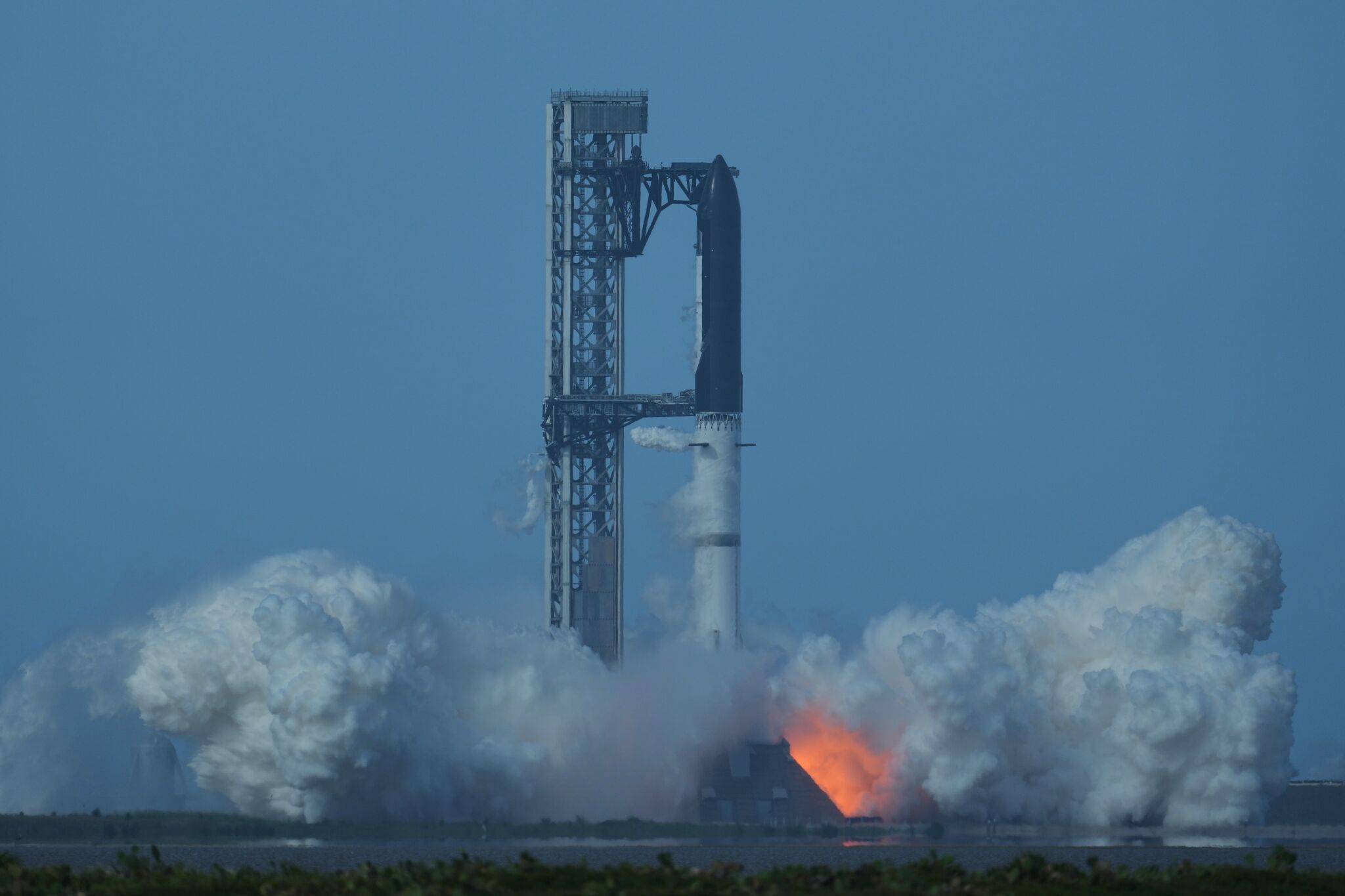
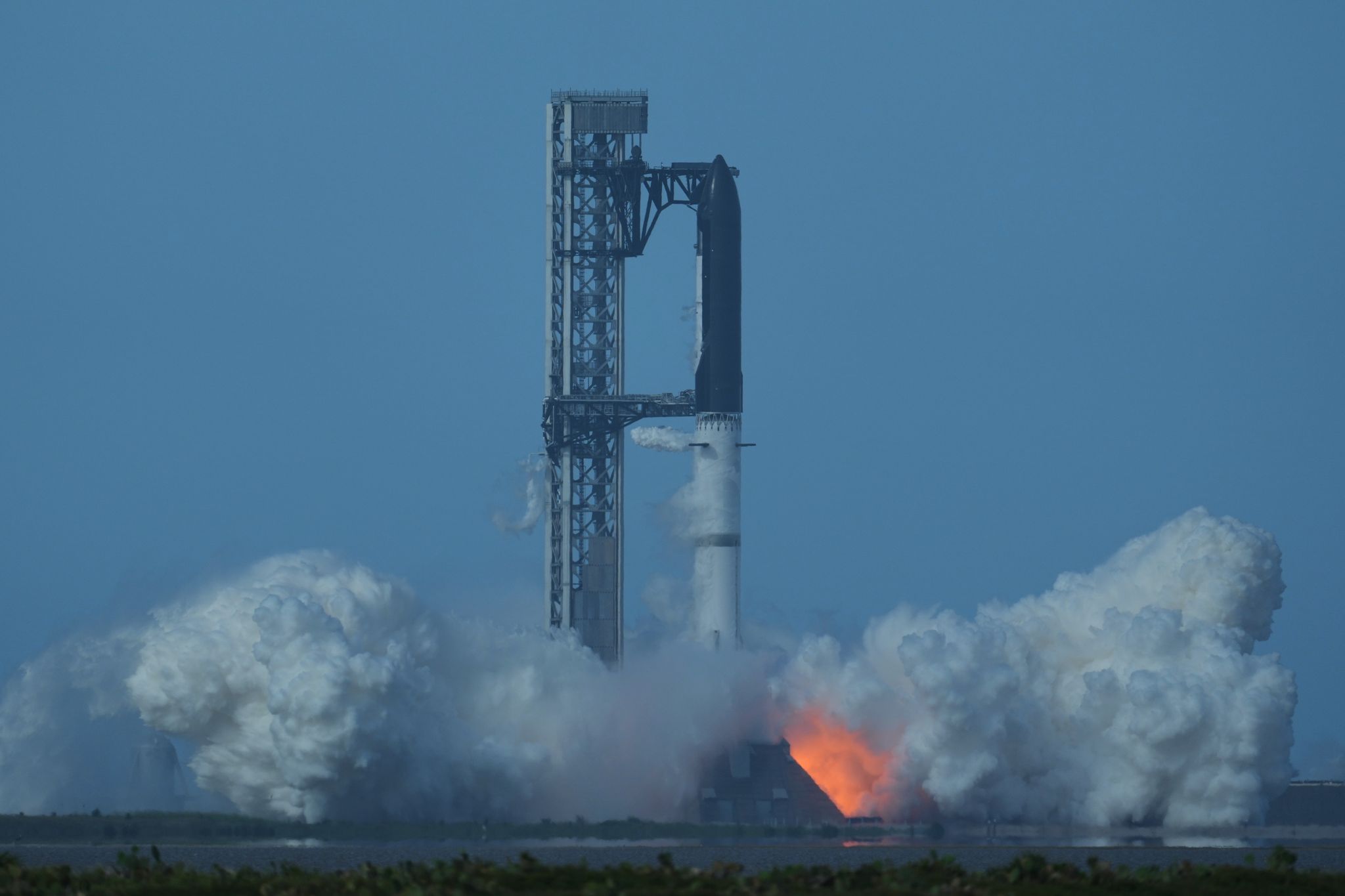
SpaceX's mega Starship rocket came within a second or so from blasting off on a test flight Thursday but some of the engines failed to ignite, triggering a launch abort amid billowing clouds of smoke and vapor. Elon Musk, the company's founder and CEO, said two engines will be replaced "to be confident of a good flight" before sending Starship on a space-skimming journey halfway around the world. It will be the 13th flight for Starship, which at 407 feet (124 meters) tall with 33 main engines is the world's biggest and most powerful rocket. SpaceX's launch webcast showed the start of engine ignition three seconds before the planned liftoff, viewed from a drone high above the pad. Although the company did not elaborate, on-screen data showed four engines not firing, with the remaining 29 engines immediately shutting down and keeping the rocket anchored to the pad. It was the first time a full-scale Starship experienced a last-second abort like this. The launch team immediately began draining the fuel from the rocket. "Most probable launch timing is early next week," Musk said via X. Everything was going SpaceX's way, even the weather, until the partial engine ignition. In the end, the rocket's automatic launch system worked as planned by halting everything. Too few operating engines could have doomed the launch. Some earlier Starship flights ended in explosive fireballs. Twenty of SpaceX's newest and most advanced Starlinks were on board Starship for release during the planned hourlong flight. The internet satellites were going to try communicating with Starlinks already in orbit while taking photos of Starship's heat shield. Neither the first-stage booster nor spacecraft were meant to be recovered, with both ending up in the sea. The rocket's automatic launch system worked as planned by halting everything. Too few operating engines could have resulted in a failed launch. Some earlier Starship flights, for example, ended in explosive fireballs. NASA is counting on Starship to land its astronauts on the moon in the next few years. The space agency has hired SpaceX and Jeff Bezos' Blue Origin to build and fly the lunar landers that will return humanity to the surface of the moon after an absence of more than half a century. Both companies need to have their landers -- Starship and Blue Moon -- ready to fly by next year so that the newly named Artemis III crew can practice docking their capsule with them in orbit around Earth. The mission after that -- Artemis IV planned for no earlier than 2028 -- would use one of those landers to take two astronauts to the moon's south polar region. ___ The Associated Press Health and Science Department receives support from the Howard Hughes Medical Institute's Department of Science Education and the Robert Wood Johnson Foundation. The AP is solely responsible for all content.
SpaceX Bears Gain as Stock Drops
This article first appeared on GuruFocus. SpaceX (NASDAQ:SPCX) short sellers have made an estimated $3.8 bilion in paper gains after the stock slid below its IPO price during a four-day losing streak. According to S3 Partners, short interest has climbed to 181 million shares, or about 28% of the company's 646 million-share tradable float. Shares have fallen 11% over the past 4 sessions, touching an intraday low of $132.15 before closing just above their $135 IPO price. Led by Elon Musk, who is also CEO of Tesla (NASDAQ:TSLA), SpaceX designs and launches rockets, operates the Starlink satellite internet network and develops spacecraft for commercial and government customers. The company is also building Starship, its next-generation launch system aimed at missions to the Moon and Mars. The recent pullback comes as investors wait for 2 major catalysts: SpaceX's 13th Starship test flight and its earnings report, expected in the first week of August.
SpaceX abruptly scrubs Starship test flight
SOUTH PADRE ISLAND, Texas -- SpaceX on Thursday scrubbed what was to be its first Starship flight since the company went public, abruptly calling it off just as the booster began to ignite. "Some of the engines didn't start, triggering an automatic launch abort. Now offloading propellant. Next launch attempt hopefully in a few days," wrote company head Elon Musk on X. It was to be the mammoth rocket's 13th flight overall. When it eventually takes off, the flight's aims will be similar to those of a mostly successful voyage carried out in May, which debuted the latest edition of the powerful Starship, its third-generation model. The goals of that test were essentially to demonstrate the new designs in flight. Get the latest news delivered to your inbox Sign up for The Manila Times newsletters By signing up with an email address, I acknowledge that I have read and agree to the Terms of Service and Privacy Policy. It was not without a few glitches, however, including engine issues with the Super Heavy booster that necessitated a crash into the Gulf of Mexico rather than a precision return. The company said "there have been several modifications to hardware and software to address issues seen on the previous flight." Advertisement SpaceX will aspire the next time around to execute a launch, ascent, stage separation, boostback burn and landing burn of the booster offshore without hiccups. The upper stage will deploy 20 Starlink V3 satellites, and SpaceX said it will test out a relight of a Raptor engine in space. It will also test upgrades to Starship's heat shield. The latest flight will be the first after Musk's SpaceX went public on Wall Street in June, with a record initial public offering. Advertisement The rocket company has rapidly expanded its satellite internet service and voiced lofty ambitions for AI data centers in space. There's a lot riding on SpaceX's progress: the company is under contract with NASA to produce a modified version of Starship to serve as a lunar landing system.

SpaceX Starship launch aborted on the pad at the last moment
SpaceX's mega Starship rocket came within a second or so from blasting off on a test flight Thursday but some of the engines failed to start, triggering a launch abort. Elon Musk's company said it will have to figure out what went wrong before making another attempt to send Starship on a space-skimming journey halfway around the world. It was supposed to be the 13th flight for Starship, which at 407 feet (124 meters) tall with 33 main engines is the world's biggest and most powerful rocket. SpaceX's launch webcast showed the start of engine ignition three seconds before the planned liftoff, viewed from a drone high above the pad. Although the company did not elaborate, on-screen data showed four engines not firing, with the remaining 29 engines immediately shutting down and keeping the rocket anchored to the pad. It was the first time a full-scale Starship experienced a last-second abort like this. The launch team immediately began draining the fuel from the rocket. "Next launch attempt hopefully in a few days," Musk announced via X. Everything was going SpaceX's way, even the weather, until the partial engine ignition. In the end, the rocket's automatic launch system worked as planned by halting everything. Too few operating engines could have doomed the launch. Some earlier Starship flights ended in explosive fireballs. Elon Musk's company had newest, most advanced Starlinks aboard Twenty of SpaceX's newest and most advanced Starlinks were on board Starship for release during the planned hourlong flight. The internet satellites were going to try communicating with Starlinks already in orbit while taking photos of Starship's heat shield. Neither the first-stage booster nor spacecraft were meant to be recovered, with both ending up in the sea. The rocket's automatic launch system worked as planned by halting everything. Too few operating engines could have resulted in a failed launch. Some earlier Starship flights, for example, ended in explosive fireballs. World's biggest rocket is key to putting astronauts back on the moon NASA is counting on Starship to land its astronauts on the moon in the next few years. The space agency has hired SpaceX and Jeff Bezos' Blue Origin to build and fly the lunar landers that will return humanity to the surface of the moon after an absence of more than half a century. Both companies need to have their landers -- Starship and Blue Moon -- ready to fly by next year so that the newly named Artemis III crew can practice docking their capsule with them in orbit around Earth. The mission after that -- Artemis IV planned for no earlier than 2028 -- would use one of those landers to take two astronauts to the moon's south polar region.

SpaceX Starship launch aborted at the last moment
SpaceX's mega Starship rocket has come within a second or so from blasting off on a test flight but some of the engines failed to start, triggering a launch abort. Elon Musk's company said it will have to figure out what went wrong on Thursday before making another attempt to send Starship on a space-skimming journey halfway around the world. It was supposed to be the 13th flight for Starship, which at 124m tall with 33 main engines is the world's biggest and most powerful rocket. SpaceX's launch webcast showed the start of engine ignition three seconds before the planned liftoff, viewed from a drone high above the pad. Although the company did not elaborate, on-screen data showed four engines not firing, with the remaining 29 engines immediately shutting down and keeping the rocket anchored to the pad. It was the first time a full-scale Starship experienced a last-second abort like this. The launch team immediately began draining the fuel from the rocket. "Next launch attempt hopefully in a few days," Musk announced via X. Everything was going SpaceX's way, even the weather, until the partial engine ignition. In the end, the rocket's automatic launch system worked as planned by halting everything. Too few operating engines could have doomed the launch. Some earlier Starship flights ended in explosive fireballs. Elon Musk's company had newest, most advanced Starlinks aboard Twenty of SpaceX's newest and most advanced Starlinks were on board Starship for release during the planned hour-long flight. The internet satellites were going to try communicating with Starlinks already in orbit while taking photos of Starship's heat shield. Neither the first-stage booster nor spacecraft were meant to be recovered, with both ending up in the sea. The rocket's automatic launch system worked as planned by halting everything. Too few operating engines could have resulted in a failed launch. Some earlier Starship flights, for example, ended in explosive fireballs.

SpaceX scrubs Starship launch attempt right as engines begin to light
SpaceX tried to get its 13th suborbital test flight of its Starship and Super Heavy rocket off the ground from Texas on Thursday, but its engines had an automatic shutdown just as they were beginning to fire with the countdown clock hitting 0. "We're not going to be launching today. We got all the way down to startup, triggered a hold on the booster, and that shut down the engines as they were starting to ignite," said SpaceX commentator Dan Huot. Teams will offload propellants and a new launch date will be announced at a later time. "We'll dig in with the teams, figure out what happened, and figure out when our next attempt is going to be," Huot said. The delay comes as the company attempts to drive toward its goal of beginning operational missions from Florida potentially before the end of the year. The massive rocket had been targeting launch during a 90-minute window that opened at 6:45 p.m. from the company's Starbase site on the southeast Texas coast. When it does eventually launch, the flight plan looks to send the Starship upper stage more than halfway around the world to land with a controlled splashdown in the Indian Ocean off the coast of western Australia while the Super Heavy booster will try for a controlled landing in the Gulf shortly after liftoff and separation. The launch comes about two months since the 12th test flight that was the first time Elon Musk's company flew Version 3 of the rocket. That mission suffered an uncontrolled landing of its booster in the Gulf that ultimately led to the rocket's grounding by the Federal Aviation Administration. The required mishap investigation that was led by SpaceX was accepted by the FAA, which announced Monday Starship was clear to fly again. "There have been several modifications to hardware and software to address issues seen on the previous flight," SpaceX stated on a mission update on its website. The company said that on the 12th flight after the booster separation, the engine setup and flip maneuver caused it to be off by about 90 degrees, which led to its failure and ultimate crash into the Gulf. Five of its 33 Raptor engines had issues as they tried to relight and that caused a planned "boostback burn" to end early. "The startup sequence has been modified to be more robust to timing variability and more reliably flip in the desired direction, which is done to increase overall performance," SpaceX stated. "The Super Heavy on this upcoming flight has hardware modifications to improve re-light reliability along with updates to engine alarms and aborts to match the conditions seen in the multi-engine flight environment." While the booster failed to make a controlled return on Flight 12, the upper stage achieved its goals of getting to the landing site in the Indian Ocean, although minus one of the three Raptor vacuum engines, which was lost about 40 seconds after stage separation. "The vehicle was able to demonstrate its engine out capability and reach its planned suborbital trajectory," SpaceX stated. "Several hardware and operational modifications have been made to address the interconnected causes with additional reliability improvements planned in upcoming versions of the Raptor engine." Something new on this mission will be the deployment of real Starlink satellites during flight. Previous Starship test flights have tried out simulators deployed during the suborbital missions. These large V3 satellites, which are too big for launches on SpaceX's current Falcon 9 rockets, will have a test run during which they will attempt to extend their solar array and antennas, and connect to the existing Starlink satellite constellation using high-capacity lasers. The Starlink satellites' lives will be short-lived, though, as they follow the Starship upper stage after deployment for an eventual reentry into the Earth's atmosphere to crash down over the Indian Ocean about 20 minutes after their deployment. Six of the 20 satellites also have cameras on board to scan Starship's heat shield, which continues to be modified for the rocket's ultimate operational configuration. Those flights are slated to take place in Florida where SpaceX continues to build out three Starship launch towers. The first is at Kennedy Space Center's Launch Complex 39-A while two more are in the works at Cape Canaveral Space Force Station's Space Launch Complex 37. The Space Force in late 2025 indicated it was prepared to support the first Starship launch on the Space Coast by mid 2026 while SpaceX has stated it would still try to launch before the end of the year. SpaceX also is nearing completion of its Gigabay manufacturing site at KSC where it will build out future Starship upper stages and Super Heavy boosters, part of a $1.8 billion investment in Space Coast operations. The first flights from KSC, though, will feature rockets shipped over from Texas until Florida's Gigabay is up and running. SpaceX ultimately is aiming for as many as 120 flights a year from across the three launch pads in Florida, a number that has raised criticism for its impact on commercial airspace. Also of concern has been its sonic boom potential during both booster landings and upper stage Starship return-to-launch-site flights that would bring it across Central Florida similar to how the space shuttle used to land back at KSC. The rocket is the most powerful to ever launch to space with nearly 17 million pounds of thrust at liftoff, nearly doubling the power of NASA's Space Launch System rocket. Starship's first test flight came in April 2023 and progress seemed to be on a good trajectory with the company managing to capture its first Super Heavy booster back at the launch tower using its swiveling "chopsticks" arms on its fifth-ever launch in October 2024. Flights in early 2025, though, ended in a series of failures including two in which the Starship upper stage disintegrated in a fiery cascade of debris across the skies visible from Florida and the Caribbean. It ended 2025, though, with two successful test flights using Version 2 of Starship followed by more than a seven-month lull before the first launch of Version 3 in May of this year. NASA is eagerly awaiting operational Starship flights as a version of the rocket is tasked to become a moon lander as part of the Artemis program. The Artemis III mission planned for mid 2027 is seeking to test out a crewed Orion spacecraft's ability to dock with a pathfinder version of Starship as well as Blue Origin's Blue Moon MK2 lander. Blue Origin, though, has to get its Canaveral launch site rebuilt after a New Glenn rocket exploded on the pad during a test hot fire earlier this year.

SpaceX scrubs Starship launch attempt right as engines begin to light
By clicking submit, I authorize Arcamax and its affiliates to: (1) use, sell, and share my information for marketing purposes, including cross-context behavioral advertising, as described in our Privacy Policy , (2) add to information that I provide with other information like interests inferred from web page views, or data lawfully obtained from data brokers, such as past purchase or location data, or publicly available data, (3) contact me or enable others to contact me by email or other means with offers for different types of goods and services, and (4) retain my information while I am engaging with marketing messages that I receive and for a reasonable amount of time thereafter. I understand I can opt out at any time through an email that I receive, or by clicking here SpaceX tried to get its 13th suborbital test flight of its Starship and Super Heavy rocket off the ground from Texas on Thursday, but its engines had an automatic shutdown just as they were beginning to fire with the countdown clock hitting zero. "We're not going to be launching today. We got all the way down to startup, triggered a hold on the booster, and that shut down the engines as they were starting to ignite," said SpaceX commentator Dan Huot. Teams will offload propellants and a new launch date will be announced at a later time. "We'll dig in with the teams, figure out what happened, and figure out when our next attempt is going to be," Huot said. The delay comes as the company attempts to drive toward its goal of beginning operational missions from Florida potentially before the end of the year. The massive rocket had been targeting launch during a 90-minute window that opened at 6:45 p.m. from the company's Starbase site on the southeast Texas coast. When it does eventually launch, the flight plan looks to send the Starship upper stage more than halfway around the world to land with a controlled splashdown in the Indian Ocean off the coast of western Australia while the Super Heavy booster will try for a controlled landing in the Gulf shortly after liftoff and separation. The launch comes about two months since the 12th test flight that was the first time Elon Musk's company flew Version 3 of the rocket. That mission suffered an uncontrolled landing of its booster in the Gulf that ultimately led to the rocket's grounding by the Federal Aviation Administration. The required mishap investigation that was led by SpaceX was accepted by the FAA, which announced Monday Starship was clear to fly again. "There have been several modifications to hardware and software to address issues seen on the previous flight," SpaceX stated on a mission update on its website. The company said that on the 12th flight after the booster separation, the engine setup and flip maneuver caused it to be off by about 90 degrees, which led to its failure and ultimate crash into the Gulf. Five of its 33 Raptor engines had issues as they tried to relight and that caused a planned "boostback burn" to end early. "The startup sequence has been modified to be more robust to timing variability and more reliably flip in the desired direction, which is done to increase overall performance," SpaceX stated. "The Super Heavy on this upcoming flight has hardware modifications to improve re-light reliability along with updates to engine alarms and aborts to match the conditions seen in the multi-engine flight environment." While the booster failed to make a controlled return on Flight 12, the upper stage achieved its goals of getting to the landing site in the Indian Ocean, although minus one of the three Raptor vacuum engines, which was lost about 40 seconds after stage separation. "The vehicle was able to demonstrate its engine out capability and reach its planned suborbital trajectory," SpaceX stated. "Several hardware and operational modifications have been made to address the interconnected causes with additional reliability improvements planned in upcoming versions of the Raptor engine." Something new on this mission will be the deployment of real Starlink satellites during flight. Previous Starship test flights have tried out simulators deployed during the suborbital missions. These large V3 satellites, which are too big for launches on SpaceX's current Falcon 9 rockets, will have a test run during which they will attempt to extend their solar array and antennas, and connect to the existing Starlink satellite constellation using high-capacity lasers. The Starlink satellites' lives will be short-lived, though, as they follow the Starship upper stage after deployment for an eventual reentry into the Earth's atmosphere to crash down over the Indian Ocean about 20 minutes after their deployment. Six of the 20 satellites also have cameras on board to scan Starship's heat shield, which continues to be modified for the rocket's ultimate operational configuration. Those flights are slated to take place in Florida where SpaceX continues to build out three Starship launch towers. The first is at Kennedy Space Center's Launch Complex 39-A while two more are in the works at Cape Canaveral Space Force Station's Space Launch Complex 37. The Space Force in late 2025 indicated it was prepared to support the first Starship launch on the Space Coast by mid 2026 while SpaceX has stated it would still try to launch before the end of the year. SpaceX also is nearing completion of its Gigabay manufacturing site at KSC where it will build out future Starship upper stages and Super Heavy boosters, part of a $1.8 billion investment in Space Coast operations. The first flights from KSC, though, will feature rockets shipped over from Texas until Florida's Gigabay is up and running. SpaceX ultimately is aiming for as many as 120 flights a year from across the three launch pads in Florida, a number that has raised criticism for its impact on commercial airspace. Also of concern has been its sonic boom potential during both booster landings and upper stage Starship return-to-launch-site flights that would bring it across Central Florida similar to how the space shuttle used to land back at KSC. The rocket is the most powerful to ever launch to space with nearly 17 million pounds of thrust at liftoff, nearly doubling the power of NASA's Space Launch System rocket. Starship's first test flight came in April 2023 and progress seemed to be on a good trajectory with the company managing to capture its first Super Heavy booster back at the launch tower using its swiveling "chopsticks" arms on its fifth-ever launch in October 2024. Flights in early 2025, though, ended in a series of failures including two in which the Starship upper stage disintegrated in a fiery cascade of debris across the skies visible from Florida and the Caribbean. It ended 2025, though, with two successful test flights using Version 2 of Starship followed by more than a seven-month lull before the first launch of Version 3 in May of this year. NASA is eagerly awaiting operational Starship flights as a version of the rocket is tasked to become a moon lander as part of the Artemis program. The Artemis III mission planned for mid-2027 is seeking to test out a crewed Orion spacecraft's ability to dock with a pathfinder version of Starship as well as Blue Origin's Blue Moon MK2 lander. Blue Origin, though, has to get its Canaveral launch site rebuilt after a New Glenn rocket exploded on the pad during a test hot fire earlier this year.