News & Updates
The latest news and updates from companies in the WLTH portfolio.
SpaceX (SPCX) Stock Plummets 40% as Cathie Wood Continues Buying Amid Market Concerns
* SPCX shares declined to $136.78 on Monday, barely holding above the $135 IPO level after reaching $225.64 in mid-June * China successfully recovered a Long March rocket booster on July 10, sparking competitive fears in reusable space launch tech * Cathie Wood's ARK Invest acquired $21.3 million of SPCX shares Monday through three ETFs, after buying $52M the prior week * An upcoming lockup expiration -- unlocking 20% of shares post-August earnings -- is creating downward pressure * The company carries a valuation approaching 50x projected 2026 revenue with no expected profitability this year Space Exploration Technologies Corp. (SPCX) has witnessed a dramatic 40% decline from its June 16 peak of $225.64, settling at $139.14 on Monday -- a downturn that's captured significant market attention despite overwhelmingly positive analyst sentiment. Space Exploration Technologies Corp., SPCX The aerospace company debuted at $135 per share on June 11, jumped to $150 within 24 hours, and climbed as high as $225.64 before entering a steep correction. Monday's intraday low of $136.78 brought the stock perilously close to breaching its initial offering price. Tuesday's premarket session showed SPCX down an additional 0.4% to $138.61. Yet analyst conviction remains strong: 80% maintain Buy ratings on the stock -- significantly above the typical S&P 500 consensus of 55%-60%. The mean price target hovers around $240, suggesting a potential market capitalization near $3.2 trillion. Evercore ISI initiated coverage Tuesday with a Buy recommendation and $230 target. The market response was muted. Chinese Reusable Rocket Breakthrough On July 10, China demonstrated successful recovery of a Long March booster using a ship-based cable system -- a notable achievement in reusable launch vehicle technology that caught investors' attention. SpaceX has maintained unquestioned leadership in this critical competitive advantage, forming a cornerstone of the investment thesis. This Chinese demonstration suggests the technological moat may be narrowing, despite SpaceX maintaining superior scale and operational capabilities. Share Lockup and Premium Valuation A technical headwind is compounding selling pressure. Following the company's inaugural quarterly earnings release -- anticipated mid-August -- approximately 20% of total outstanding shares will exit lockup restrictions. This substantial supply increase is prompting some shareholders to exit positions preemptively. Valuation concerns persist as well. With a current market capitalization around $1.8 trillion yet no anticipated profitability through 2026, SpaceX commands roughly 50 times forecasted 2026 sales -- an elevated multiple even accounting for robust growth projections. ARK Invest Accumulates Shares Contrarian activity emerged Monday as ARK Invest acquired 130,241 SPCX shares -- approximately $21.3 million -- distributed among ARKK, ARKQ, and ARKW funds. This follows the previous week's $52 million accumulation. The aggressive buying hasn't reversed the downtrend. Technical analysis shows deteriorating momentum with the MACD indicator turning bearish. Market observers identify $145 as a new resistance zone after previously serving as support. A definitive close beneath $135 would represent a significant technical breakdown below the IPO threshold -- a psychologically important marker for market participants. As of Tuesday morning, SpaceX was changing hands at $138.61.
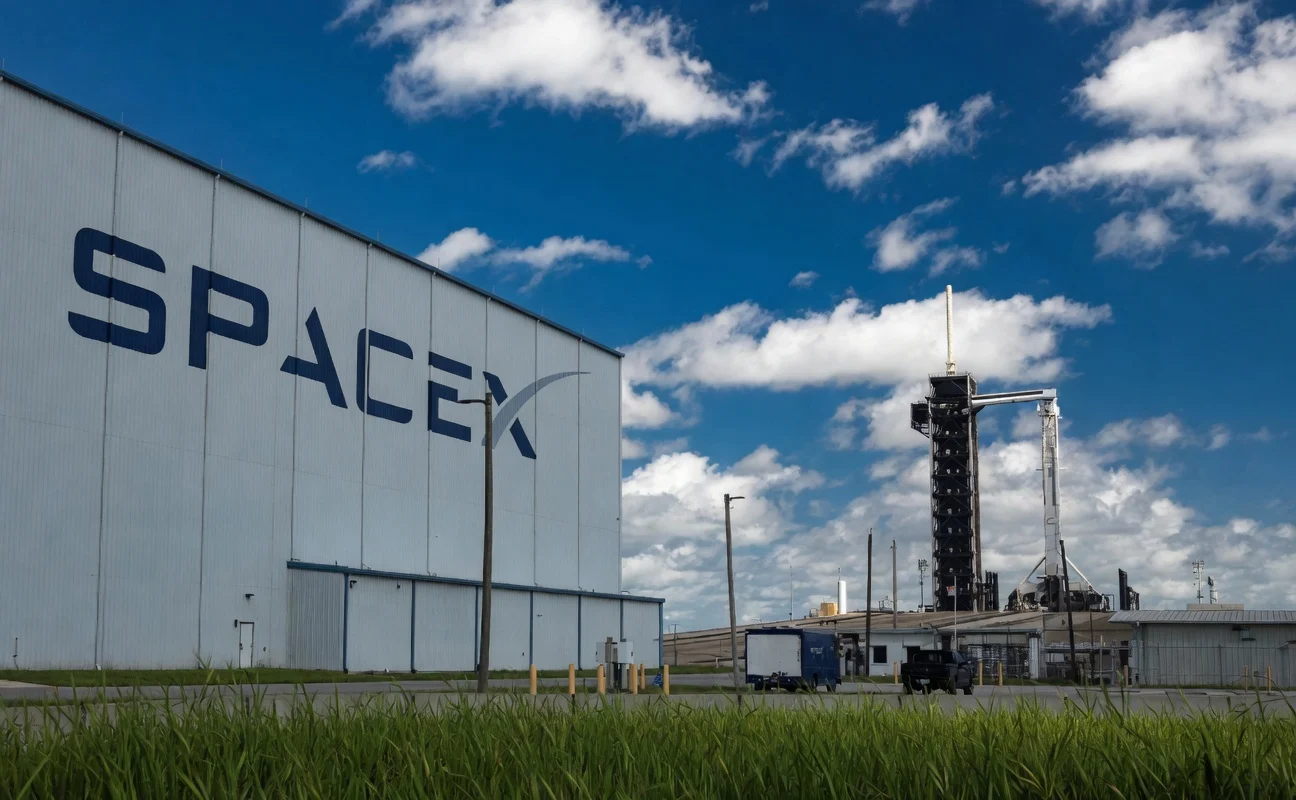
SpaceX shares are struggling. Evercore ISI still says it's 'too compelling to ignore'
SpaceX has a lot to prove following its record-smashing initial public offering, but its shares -- even as they're sliding -- have too much upside potential to pass up on, according to Evercore ISI. The investment firm initiated coverage of the space technology name with an outperform rating. It also put a $230 price target on shares, suggesting 65% upside from Monday's close. "The upside skew is too compelling to ignore," analyst Kutgun Maral said Tuesday in a note. "While one can debate the feasibility of certain ambitions and timelines, we don't think there's a debate that this is an extraordinary company on a real path to reshaping the future of humanity." Shares have fallen nearly 7% over the past five days amid concerns about its valuation and lofty ambitions. It has also tumbled more than 38% since hitting a peak of $225.64. SPCX 1M mountain SPCX 1-mo chart However, if SpaceX can follow through on several of its projects, including the roll out of heavy-lift launch vehicle Starship by the end of this year, its setup should remain compelling, per Maral. Other key goals for the firm include scaling Starlink broadband and paving a path for Grok to gain ground in the hyper-competitive artificial intelligence market. "Growth can accelerate rather than fade as the decade wears on," Maral wrote. Evercore ISI's call falls in line with consensus on the Street. Of the 31 analysts covering SpaceX, 26 have a buy or strong buy on the stock, LSEG data shows.

Pollution from Elon Musk's unpermitted xAI power project hits hardest in Black communities
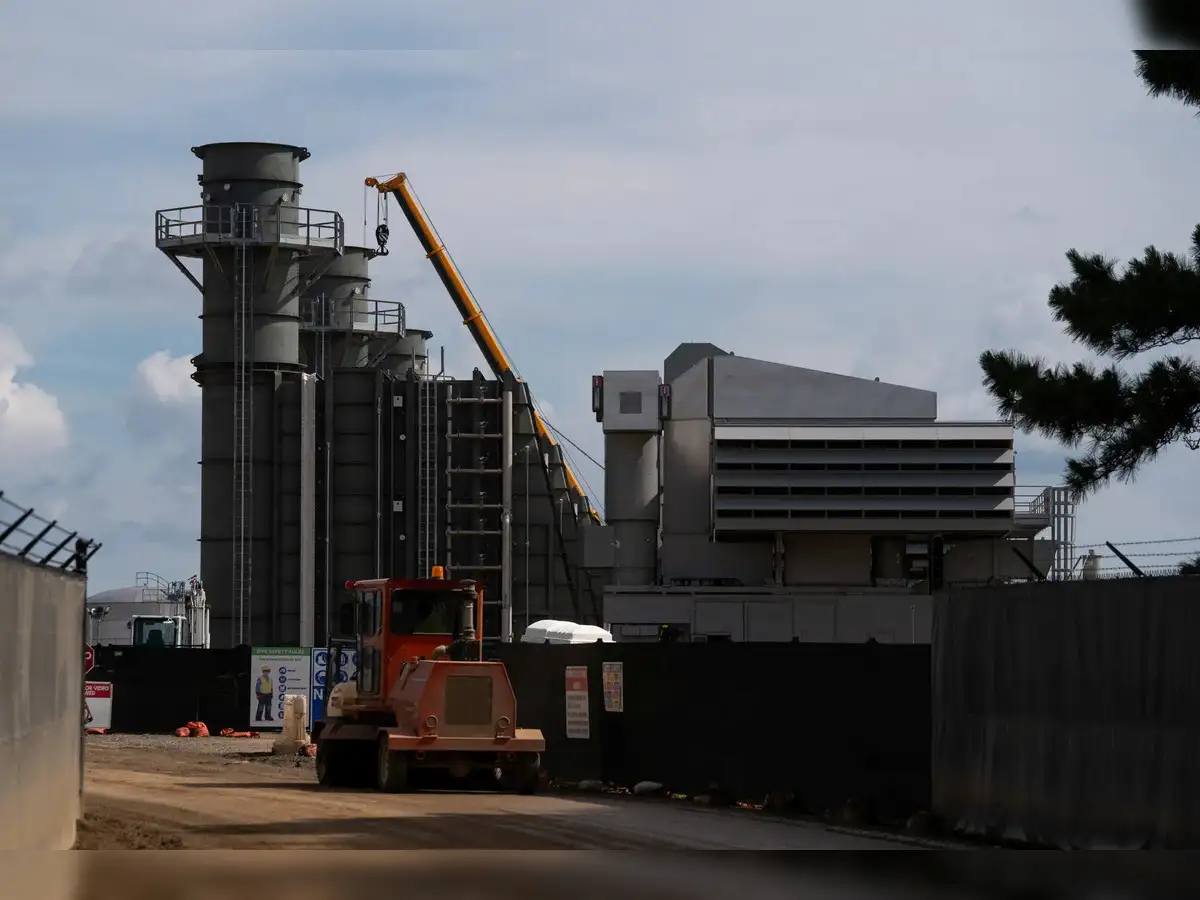
Potential emissions from the turbines are far beyond the threshold that would require a federal permit, and would be released near predominantly Black communities already estimated to be suffering disproportionately high rates of lung disease, according to a Reuters analysis based on government data and information in the correspondence with regulators. Elon Musk's artificial intelligence company xAI has installed 59 natural gas turbines for its Colossus 2 data center project in Tennessee without securing federal clean air permits, according to communications between regulators and xAI representatives. Potential emissions from the turbines are far beyond the threshold that would require a federal permit, and would be released near predominantly Black communities already estimated to be suffering disproportionately high rates of lung disease, according to a Reuters analysis based on government data and information in the correspondence with regulators. The findings, which have not been previously reported, reflect how exploding electricity demand from AI data centers is driving companies to build off-grid power plants at a pace outstripping environmental oversight, with potentially big risks to public health. The number of unpermitted turbines identified by Reuters is about double what xAI has publicly acknowledged. The company previously said it was running 27 unpermitted turbines for Colossus 2 as of January and has argued the permits are not required. At least 57 of the 59 turbines are located in Mississippi, just over the state line from Tennessee where the data center is located. The xAI turbines are among scores of off-grid power plants for data centers proposed or under construction around the country. Local authorities often fast-track approvals in just weeks or months, without the years of environmental studies and public hearings typically required for such power generation projects that connect to the grid, Reuters has reported. Mississippi regulators in March issued a permit for permanent turbines for Colossus 2, allowing construction of 41 gas-fired turbines. The approval came three weeks after the state's only public hearing on the project. The xAI cluster of temporary turbines in Mississippi is already among the biggest off-grid data center power projects, according to Ben King, an analyst with think tank Rhodium Group, who reviewed the Reuters analysis. "This looks to be an unprecedented level of behind-the-meter gas being installed in one place," he said, referring to off-grid natural gas plants serving just one customer. The communications reviewed by Reuters show xAI, now owned by trillionaire Musk's SpaceX, has installed 57 off-grid turbines in Southaven, Mississippi, just across the state line from its Colossus 2 data center in Memphis, a facility supporting the Grok chatbot and other AI systems. The records show the company has also installed two other unpermitted turbines for the project on a different site. Reuters could not determine the location. The communications, obtained through a Reuters public records request, included emails between Trinity Consultants, representing xAI and subsidiary MZX Tech, and the Mississippi Department of Environmental Quality (MDEQ). xAI did not respond to Reuters' request for comment. xAI's turbines are part of a widening environmental justice battle over whether the AI boom is adding disproportionate pollution burdens to communities of color. Civil rights groups including the NAACP and the Southern Environmental Law Center sued xAI in April to halt their operations, arguing the turbines produce emissions subject to the federal Clean Air Act and shouldn't be operated without permits. They contend the turbines are polluting homes, schools and churches in historically Black communities. "The scale of it is astonishing," said Patrick Anderson, an attorney with the Southern Environmental Law Center. "This is an absolutely huge Clean Air Act violation that threatens public health." Securing a Clean Air Act permit would have exposed xAI's project to extensive review and public comment, potentially taking years. Mississippi environmental regulators and xAI have argued in court filings that the turbines are exempt because they are "mobile" and intended to operate onsite for less than a year. "MDEQ has determined that portable/temporary turbines do not require an air permit," the agency said in a statement to Reuters. The U.S. Environmental Protection Agency said in January 2026 that even temporary turbines exceeding emissions thresholds must obtain permits. The agency, however, told Reuters it's considering changes allowing "regulatory flexibilities" for portable units while continuing to protect public health. xAI, the MDEQ and the EPA did not answer questions from Reuters about pollution impacts on communities of color from power generation to serve data centers. The U.S. Justice Department weighed in on the lawsuit in a June 15 filing, saying that restricting the turbines could threaten national security interests because xAI's systems support U.S. military operations, including operations involving Iran. The outcome of the lawsuit filed by civil rights groups could help define how environmental laws apply to the fast-growing AI sector, where companies are scrambling to bring power supplies online to support energy-intensive computing. "This sets up scenarios where the government can create sacrifice zones and tell communities they have to breathe illegal air pollution," said Mary Rock, a senior attorney for Earthjustice which is representing the NAACP and SELC. The dispute echoes the findings of a 2022 study by researchers from UCLA and Columbia University and published in the Nature Energy journal that found that previously redlined communities - where banks historically discriminated against Black mortgage applicants - now face disproportionately high exposure to pollutants from fossil fuel facilities. "Air pollution from these and other sources contributes to systemic racial disparities in chronic disease and ultimately shorter lives," Lara Cushing, a UCLA public health professor who co-authored the study, told Reuters. Big emissions The emails reviewed by Reuters included the manufacturer emissions profiles for 32 of the 59 turbines, including 30 at the Southaven site. A Reuters analysis based on that information found that those 30 turbines alone could emit nearly 2,500 short tons of nitrogen oxide, 4,000 short tons of carbon monoxide and 22 short tons of formaldehyde annually, assuming they operate continuously at 80% of capacity. According to the EPA, gas turbines are typically operated at loads of 80% or more to achieve efficiency. Nitrogen oxides contribute to smog and respiratory inflammation, according to the American Lung Association. Carbon monoxide deprives the body of oxygen, and formaldehyde is a carcinogen. The xAI site's potential emissions far exceed a Clean Air Act threshold that requires permitting for facilities capable of more than 100 short tons annually of pollutants such as nitrogen oxide. "This is a massive amount of turbines and an unfathomable amount of air pollution," Southaven resident Shannon Samsa said in an interview. "It's not a hypothetical," she said, "that air pollution is bad for you." The nitrogen oxide emissions calculated by Reuters for about half the plant's turbines would put the facility "up there with some of the heaviest polluting natural gas power plants across the entire country," said Nicholas Mailloux, a postdoctoral researcher at the University of Wisconsin-Madison who studies air quality and health benefits of the clean-energy transition. He said the facility would be on par with the top 25 U.S. gas plants for nitrogen oxide emissions, citing EPA data for actual emissions. The people affected In the Colonial Hills neighborhood of Southaven, the turbines serving Colossus 2 can be heard around the clock, often firing off noisy bursts that residents compare to jet engines. Ervin Laws, a Colonial Hills resident in his 20s, said the noise wakes him up at night. "I can't do anything about it, because he's got more money than me," he said, referring to Musk. The turbines were installed in communities already estimated to be facing relatively high respiratory disease burdens, according to a Reuters analysis of CDC data. In 27 of 28 census tracts within five miles of the site - spanning both Mississippi and Tennessee - the estimated asthma rates were higher than their respective countywide figures. In 24 tracts, chronic obstructive pulmonary disease rates were also higher. Five miles is a distance commonly used in environmental health research to capture populations likely to be exposed to air pollution from a stationary source. A separate Reuters analysis of Census Bureau data found that the residents living near the facility are disproportionately Black. Because the five-mile radius crosses state lines, Reuters compared each side against its own county baseline. Within five miles of the facility in DeSoto county, Mississippi - where the turbines are located - about 46% of residents are Black, compared with 33% countywide, according to census data. Across the state line in Tennessee, where residents have no say in Mississippi's permitting process, about 94% of residents within five miles of the facility are Black, compared to 52% in surrounding Shelby County. Jayajit Chakraborty, a professor at the University of California, Santa Barbara, said the Reuters analysis was consistent with research that shows communities of color face higher exposure to fossil fuel pollution. Shelby County and portions of DeSoto County have also previously failed to meet federal ozone standards and remain subject to EPA-approved plans to ensure they do not slip back into violation, according to regulatory documents. Nitrogen oxide is a key precursor to ozone formation, which the EPA says can harm respiratory health. "Given this community struggles with high asthma rates, additional NOx exposure at such high rates could exacerbate public health issues in a community that is already seeing more than its fair share of exposure to toxic air pollution," said Victoria Nelson, an independent environmental engineer, formerly at EPA. Sarah Gladney, 72, has watched the rapid expansion of xAI's Memphis-area presence from her home in the historically Black neighborhood of Boxtown, a few miles from where the company built its Colossus 1 data center in 2024. "Once they got their foot in the door in Memphis, I feel like it's going to be a continuous movement of xAI into these other communities," she said. "It's all about the money, and it's not about the health or wellness of the people that live in or near these communities."
How to Spot a Stock Market Bubble 101: Raymond James Just Placed an $800 Price Target on SpaceX, Valuing Elon Musk's Company at $10.5 Trillion
One month ago, on June 12, Elon Musk's artificial intelligence (AI) and space economy conglomerate, Space Exploration Technologies (SpaceX) (NASDAQ: SPCX), rewrote history with its initial public offering (IPO). The $85.7 billion raised, including the underwriters' overallotment, nearly tripled the previous IPO record holder, Saudi Aramco. But in kicking off IPO mania -- large language model developers Anthropic and OpenAI are expected to follow in SpaceX's footsteps -- SpaceX may also be fueling the final stages of an AI bubble that history suggests is waiting to pop. Missed Nvidia in 2009? This Rare Signal Is Flashing Again. In 2009, a "Double Down" signal flashed for a little-known chipmaker called Nvidia. For the first time in years, that same "Total Conviction" signal is flashing for a company 1/100th the size of Nvidia. Continue " Rarely are stock market bubble warning signs as glaring as Raymond James Financial's price target assigned to SpaceX. Wall Street's high-water price target foresees SpaceX reaching $800 in 2031 Given that 21 underwriters helped bring SpaceX public and received shares for doing so, it should come as no surprise that Wall Street analysts have, as a whole, presented an overwhelmingly positive outlook for the company. But Raymond James Financial analyst Brian Gesuale is a true outlier. His $800 price target by 2031 implies 451% upside, based on where SpaceX's shares ended on July 10, and assumes a valuation of roughly $10.5 trillion. For context, this would be more than double Nvidia's current market cap. Gesuale foresees SpaceX's full-year sales scaling from an estimated $38.5 billion in 2026 to approximately $837 billion by 2031. More importantly, earnings before interest, taxes, depreciation, and amortization (EBITDA) are projected to catapult from $17.7 billion in 2026 to $696 billion by 2031. While there's no question that AI and the space economy are two of the hottest addressable opportunities on Wall Street, several headwinds suggest Gesuale's pie-in-the-sky price target is pure fiction and the sign of an end-stage bubble that's about to burst. SpaceX spotlights everything wrong with Wall Street Although the stock market is a long-term wealth-creating machine, it's prone to occasional bubble-bursting events. SpaceX's current $1.91 trillion valuation and Raymond James' $800 price target for the company spotlight everything that's wrong with Wall Street over the short term. For starters, SpaceX hasn't demonstrated that its operating model is sustainable. While satellite-based broadband services provider Starlink is profitable, AI start-up xAI -- the segment responsible for the lion's share of SpaceX's $28.5 trillion addressable market -- is burning cash as Musk's company chases AI compute capacity.
SpaceX Launches Starlink 15-14 and 10-45 Missions, marking 600th Reused Booster flight
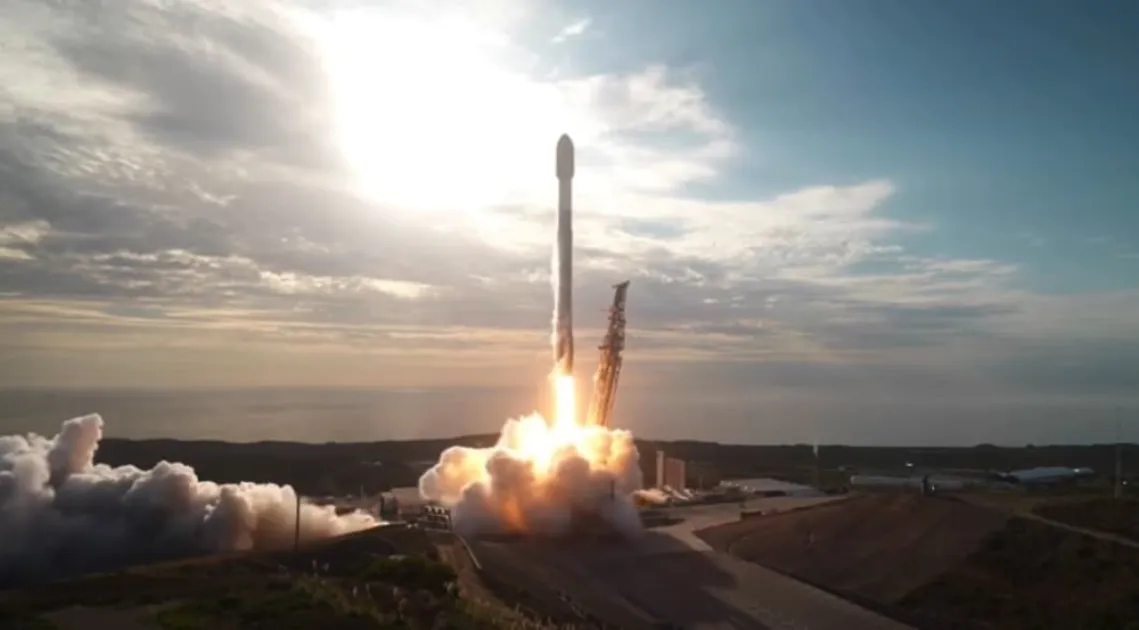
The Falcon 9 booster completed its 15th flight before landing successfully on the "Of Course I Still Love You" droneship, marking SpaceX's 665th Falcon 9 mission and its 84th launch of 2026. Flight SpaceX has officially launched the Starlink 15-14 mission from Vandenberg Space Force Base in California at 1:28 UTC Tuesday, July 14 (July 13th, 2026 at 6:28pm PDT). The Falcon 9 rocket was reportedly launched from Space Launch Complex 4E carrying booster B1093-15, flying for the 15th time. The rocket delivered a batch of 27 Starlink v2-mini satellites to low Earth orbit. As per the official reports, the booster returned to Earth, just over eight minutes after liftoff, landing on the "Of Course I Still Love You" droneship stationed downrange in the Pacific Ocean. NASASpaceflight.com shared the liftoff footage of the launch on Facebook noting, "SpaceX has launched the Starlink 15-14 mission today (July 13th, 2026) at 6:28pm PDT (1:28 UTC Tuesday) aboard Falcon 9 booster B1093-15 from Space Launch Complex 4E at the Vandenberg Space Force Base in sunny California, sending a batch of 27 Starlink v2-mini satellites to low-Earth orbit." "Just over eight minutes later, after completing its mission, the booster returned to planet Earth, landing on the "Of Course I Still Love You" droneship stationed downrange in the Pacific Ocean. This completes the 665th overall mission for a Falcon 9 rocket and it was SpaceX's 84th mission of 2026," the caption read. The mission was the 665th overall Falcon 9 mission and SpaceX's 84th of 2026, according to the official reports. Furthermore, SpaceX also launched the Starlink 10-45 mission using the Falcon 9 first stage booster with the tail number B1080, marking its 28th flight and the 600th launch of a flight-proven Falcon 9 booster, a milestone in the rocket family's reusability record. The booster previously flew two crew flights for Axiom Space, which includes the European Space Agency's Euclid observatory, and Northrop Grumman's NG-21. As per the reports by weather officials, the weather forecast noted, there's a 90% chance of favorable weather conditions at the time of the launch. Officials are monitoring weather conditions with concerns related to Thick Cloud Layers Rule. The forecast calls for a temperature of 77°F, overcast clouds, 85% cloud cover and a wind speed of 6mph. "Some lingering thick clouds left over by the evening convection may be present at the beginning of the launch window but should gradually dissipate through the window," launch weather officers wrote. "As a result, we have raised the POV slightly at the beginning of tonight's launch window, but overall good weather is expected," he added. SpaceX's project specifically aims for a space-based Internet communication system as the launch is a part of SpaceX's Starlink satellite internet constellation, a global broadband network designed to provide high-speed internet coverage worldwide. According to the reports, the Starlink mega-constellation uses thousands of satellites in low Earth orbit to deliver reliable internet connectivity to underserved and remote areas across the globe. A separate Falcon 9 launched the same day from Vandenberg Space Force Base in California, deploying 27 Starlink satellites as part of the Starlink 15-14 mission, reinforcing polar orbit coverage as SpaceX balances launches between its Florida and California ranges. SpaceX is now looking forward to Thursday, July 16 as the Federal Aviation Administration concluded its review of the company's May Starship test flight, clearing SpaceX to attempt Starship Flight 13 as early as July 16. The launch will mark the second flight of the upgraded V3 Starship configuration.
How to Spot a Stock Market Bubble 101: Raymond James Just Placed an $800 Price Target on SpaceX, Valuing Elon Musk's Company at $10.5 Trillion
One month ago, on June 12, Elon Musk's artificial intelligence (AI) and space economy conglomerate, Space Exploration Technologies (SpaceX) (SPCX 4.75%), rewrote history with its initial public offering (IPO). The $85.7 billion raised, including the underwriters' overallotment, nearly tripled the previous IPO record holder, Saudi Aramco. But in kicking off IPO mania -- large language model developers Anthropic and OpenAI are expected to follow in SpaceX's footsteps -- SpaceX may also be fueling the final stages of an AI bubble that history suggests is waiting to pop. Rarely are stock market bubble warning signs as glaring as Raymond James Financial's price target assigned to SpaceX. Wall Street's high-water price target foresees SpaceX reaching $800 in 2031 Given that 21 underwriters helped bring SpaceX public and received shares for doing so, it should come as no surprise that Wall Street analysts have, as a whole, presented an overwhelmingly positive outlook for the company. But Raymond James Financial analyst Brian Gesuale is a true outlier. His $800 price target by 2031 implies 451% upside, based on where SpaceX's shares ended on July 10, and assumes a valuation of roughly $10.5 trillion. For context, this would be more than double Nvidia's current market cap. Gesuale foresees SpaceX's full-year sales scaling from an estimated $38.5 billion in 2026 to approximately $837 billion by 2031. More importantly, earnings before interest, taxes, depreciation, and amortization (EBITDA) are projected to catapult from $17.7 billion in 2026 to $696 billion by 2031. While there's no question that AI and the space economy are two of the hottest addressable opportunities on Wall Street, several headwinds suggest Gesuale's pie-in-the-sky price target is pure fiction and the sign of an end-stage bubble that's about to burst. SpaceX spotlights everything wrong with Wall Street Although the stock market is a long-term wealth-creating machine, it's prone to occasional bubble-bursting events. SpaceX's current $1.91 trillion valuation and Raymond James' $800 price target for the company spotlight everything that's wrong with Wall Street over the short term. For starters, SpaceX hasn't demonstrated that its operating model is sustainable. While satellite-based broadband services provider Starlink is profitable, AI start-up xAI -- the segment responsible for the lion's share of SpaceX's $28.5 trillion addressable market -- is burning cash as Musk's company chases AI compute capacity. Elon Musk also has a terrible track record of fulfilling lofty promises and innovative expectations. As CEO of Tesla, Musk proclaimed that 1 million robotaxis would be on public roads by the end of 2020, which never happened. He's also assured investors that Level 5 full self-driving is "one year away" annually for more than a decade. Musk continually overpromises and underdelivers. SpaceX is likely to be haunted by historical precedent, as well. No company at the forefront of a game-changing technology has sustained a price-to-sales (P/S) ratio above 30 for any extended period. SpaceX is trading at roughly 50 times Gesuale's forecast sales for this year. Lastly, every game-changing technology for more than three decades has navigated an early stage bubble-bursting event. These bubbles have formed because investors constantly overestimate the optimization timeline of innovations. It'll likely be years before SpaceX's solutions are optimized, making Raymond James' high-water price target highly unlikely.

Here's How Big Wall Street Expects SpaceX's Business to Get in 5 Years
When a company's valuation is high and wildly above what its fundamentals justify, that's a clear sign that expectations are high. While that can be an encouraging sign that there is a ton of growth likely ahead for the business, it also signifies risk, because if it falls short and the growth story unravels, the stock could be poised for a significant sell-off. One company whose valuation hinges on its growth story is Space Exploration Technologies (NASDAQ: SPCX), which is often referred to as just SpaceX. Its market cap has been hovering around $2 trillion since its shares went public about a month ago. It has some tremendous growth opportunities, and here's just how big analysts believe the business will get in five years. Missed Nvidia in 2009? This Rare Signal Is Flashing Again. In 2009, a "Double Down" signal flashed for a little-known chipmaker called Nvidia. For the first time in years, that same "Total Conviction" signal is flashing for a company 1/100th the size of Nvidia. Continue " Image source: Getty Images. SpaceX's revenue could top $565 billion by 2031 In recent years, there has been some solid growth, but nothing like what analysts expect from the company in the future. From $10.4 billion in revenue in 2023, the company's top line would rise by 35% to just over $14 billion in 2024, and then by another 33% in 2025, totaling $18.7 billion last year. That's a strong growth rate, but if analysts are right, then the company's top line could be about to take off, significantly. The bull case around SpaceX centers around its growth potential. Today, it trades at around 100 times its trailing revenue, but if the business gets much larger in the future, then its high valuation may be much more tenable. By 2031, Wall Street analysts project that its revenue will soar to $565 billion -- that's more than 30 times what it achieved this past year. Those kinds of numbers would make it among the largest companies in terms of revenue. E-commerce giant Amazon is the leader today, with its revenue totaling $743 billion over its past four quarters. Expectations are high, but so too is the risk SpaceX has some mammoth opportunities in artificial intelligence, space, and telecom. The problem, however, is that kind of significant growth means expectations are going to be through the roof for SpaceX. Not only will the company likely need to ramp up spending at a time when investors are growing more concerned about high capital expenditures, but it will also need to execute and prove that it's making the most of those investments. It's a tall task, to say the least. Given that the stock isn't cheap, investors who buy it at its current levels aren't leaving themselves with any margin for error. While SpaceX's business may do well and achieve its lofty expectations, there's also a strong chance it falls well short of them, which is why taking a wait-and-see approach with the space stock may be the safest option right now. Should you buy stock in Space Exploration Technologies right now? Before you buy stock in Space Exploration Technologies, consider this: The Motley Fool Stock Advisor analyst team just identified what they believe are the 10 best stocks for investors to buy now... and Space Exploration Technologies wasn't one of them. The 10 stocks that made the cut could produce monster returns in the coming years. Consider when Netflix made this list on December 17, 2004... if you invested $1,000 at the time of our recommendation, you'd have $395,679!* Or when Nvidia made this list on April 15, 2005... if you invested $1,000 at the time of our recommendation, you'd have $1,294,805!* Now, it's worth noting Stock Advisor's total average return is 929% -- a market-crushing outperformance compared to 211% for the S&P 500. Don't miss the latest top 10 list, available with Stock Advisor, and join an investing community built by individual investors for individual investors. See the 10 stocks " *Stock Advisor returns as of July 14, 2026. David Jagielski, CPA has no position in any of the stocks mentioned. The Motley Fool has positions in and recommends Amazon. The Motley Fool has a disclosure policy. The views and opinions expressed herein are the views and opinions of the author and do not necessarily reflect those of Nasdaq, Inc.

Here's How Big Wall Street Expects SpaceX's Business to Get in 5 Years
When a company's valuation is high and wildly above what its fundamentals justify, that's a clear sign that expectations are high. While that can be an encouraging sign that there is a ton of growth likely ahead for the business, it also signifies risk, because if it falls short and the growth story unravels, the stock could be poised for a significant sell-off. One company whose valuation hinges on its growth story is Space Exploration Technologies (NASDAQ: SPCX), which is often referred to as just SpaceX. Its market cap has been hovering around $2 trillion since its shares went public about a month ago. It has some tremendous growth opportunities, and here's just how big analysts believe the business will get in five years. Missed Nvidia in 2009? This Rare Signal Is Flashing Again. In 2009, a "Double Down" signal flashed for a little-known chipmaker called Nvidia. For the first time in years, that same "Total Conviction" signal is flashing for a company 1/100th the size of Nvidia. Continue " SpaceX's revenue could top $565 billion by 2031 In recent years, there has been some solid growth, but nothing like what analysts expect from the company in the future. From $10.4 billion in revenue in 2023, the company's top line would rise by 35% to just over $14 billion in 2024, and then by another 33% in 2025, totaling $18.7 billion last year. That's a strong growth rate, but if analysts are right, then the company's top line could be about to take off, significantly. The bull case around SpaceX centers around its growth potential. Today, it trades at around 100 times its trailing revenue, but if the business gets much larger in the future, then its high valuation may be much more tenable. By 2031, Wall Street analysts project that its revenue will soar to $565 billion -- that's more than 30 times what it achieved this past year. Those kinds of numbers would make it among the largest companies in terms of revenue. E-commerce giant Amazon is the leader today, with its revenue totaling $743 billion over its past four quarters. Expectations are high, but so too is the risk SpaceX has some mammoth opportunities in artificial intelligence, space, and telecom. The problem, however, is that kind of significant growth means expectations are going to be through the roof for SpaceX. Not only will the company likely need to ramp up spending at a time when investors are growing more concerned about high capital expenditures, but it will also need to execute and prove that it's making the most of those investments. It's a tall task, to say the least.
Evercore ISI Initiates SpaceX at Outperform With $230 Price Target
Space Exploration Technologies Corp. designs, manufactures, launches, and operates products and services built on technologies, including rockets and spacecraft. The Company's segments include Space, Connectivity, and artificial intelligence (AI). Its Space segment designs, manufactures, and launches reusable rockets to provide access to space. Its Connectivity segment operates broadband data and communications network powered by approximately 9,600 Starlink broadband and mobile satellites in Low-Earth orbit, delivering connectivity to consumer, enterprises, and government customers over 164 countries, territories, and other markets. In its AI segment, it operates a vertically integrated AI platform spanning its truth-seeking frontier model Grok, AI solutions for consumer and enterprise customers, X-its real-time information, entertainment, and free speech platform and AI computational infrastructure.

Why SpaceX and Tesla are 'value' stocks, according to this fund manager
Charles Schwab recently warned investors against putting money in companies making growth promises pushed out far into the future. But successful value investing requires precisely that faith, according to the president and chief investment officer of Tsai Capital, Christopher Tsai. "If you look at SpaceX and say, 'Oh, it's selling at a crazy multiple,' you might be making the classical error that these companies are increasingly investing so much now, depressing earnings now, to create more value later," he told MarketWatch in a Monday interview.
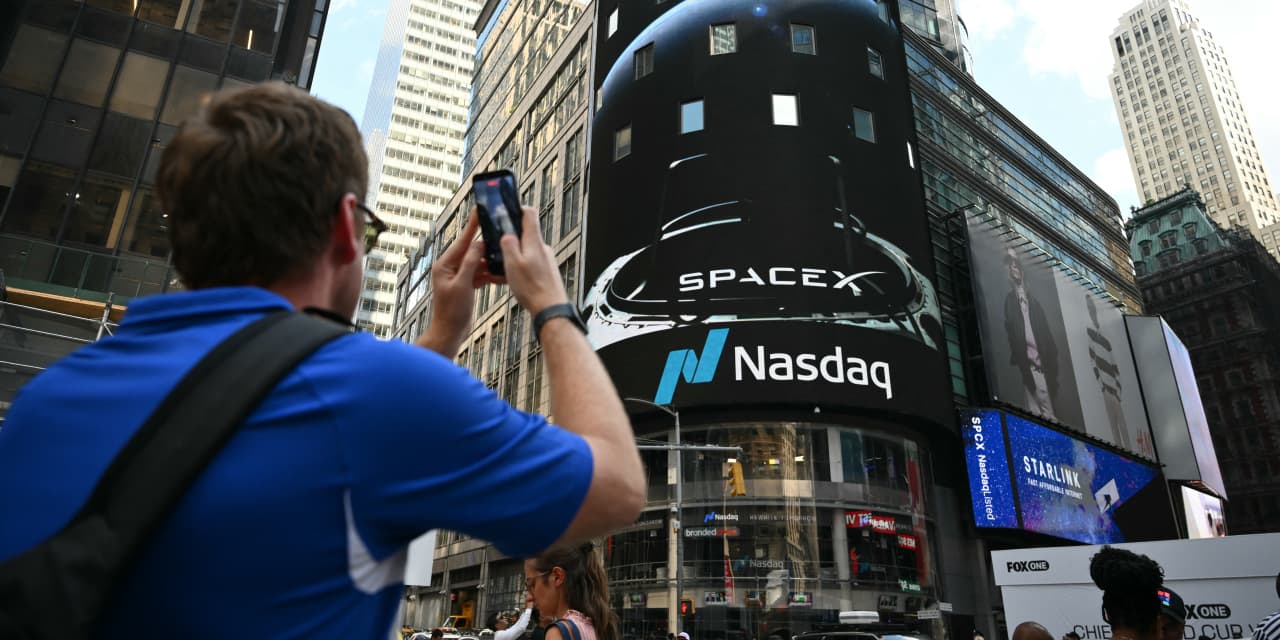
Here's How Big Wall Street Expects SpaceX's Business to Get in 5 Years
When a company's valuation is high and wildly above what its fundamentals justify, that's a clear sign that expectations are high. While that can be an encouraging sign that there is a ton of growth likely ahead for the business, it also signifies risk, because if it falls short and the growth story unravels, the stock could be poised for a significant sell-off. One company whose valuation hinges on its growth story is Space Exploration Technologies (SPCX 4.75%), which is often referred to as just SpaceX. Its market cap has been hovering around $2 trillion since its shares went public about a month ago. It has some tremendous growth opportunities, and here's just how big analysts believe the business will get in five years. SpaceX's revenue could top $565 billion by 2031 In recent years, there has been some solid growth, but nothing like what analysts expect from the company in the future. From $10.4 billion in revenue in 2023, the company's top line would rise by 35% to just over $14 billion in 2024, and then by another 33% in 2025, totaling $18.7 billion last year. That's a strong growth rate, but if analysts are right, then the company's top line could be about to take off, significantly. The bull case around SpaceX centers around its growth potential. Today, it trades at around 100 times its trailing revenue, but if the business gets much larger in the future, then its high valuation may be much more tenable. By 2031, Wall Street analysts project that its revenue will soar to $565 billion -- that's more than 30 times what it achieved this past year. Those kinds of numbers would make it among the largest companies in terms of revenue. E-commerce giant Amazon is the leader today, with its revenue totaling $743 billion over its past four quarters. Expectations are high, but so too is the risk SpaceX has some mammoth opportunities in artificial intelligence, space, and telecom. The problem, however, is that kind of significant growth means expectations are going to be through the roof for SpaceX. Not only will the company likely need to ramp up spending at a time when investors are growing more concerned about high capital expenditures, but it will also need to execute and prove that it's making the most of those investments. It's a tall task, to say the least. Given that the stock isn't cheap, investors who buy it at its current levels aren't leaving themselves with any margin for error. While SpaceX's business may do well and achieve its lofty expectations, there's also a strong chance it falls well short of them, which is why taking a wait-and-see approach with the space stock may be the safest option right now.
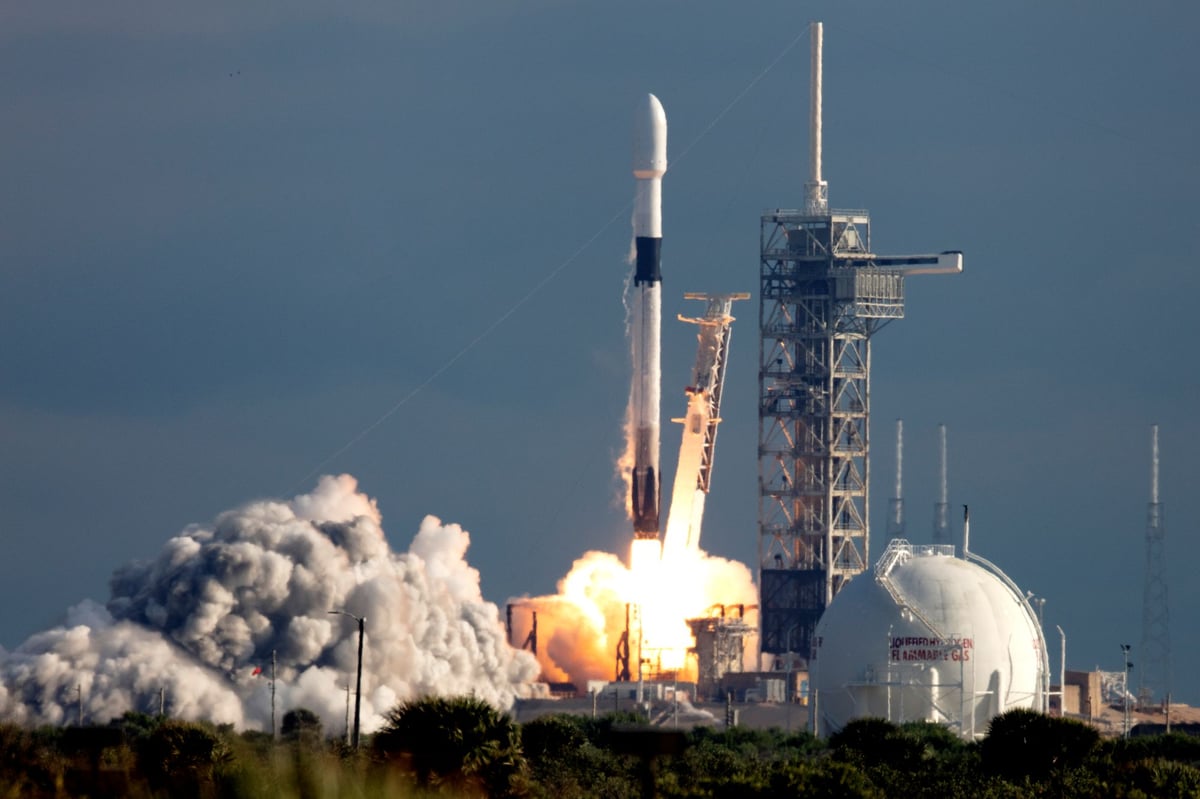
Cathie Wood Buys The Dip In SpaceX Stock Despite AI Bubble Warning By Experts
Sponsored This page may contain affiliate links. If you sign up through these links, we may earn a commission at no additional cost to you. This does not influence our editorial reviews or rankings. Even as investor sentiment was dampened by concerns about an AI bubble, Cathie Wood's ARK Invest kept accumulating a pile of Elon Musk's SpaceX stock. The latest acquisition came as the SPCX share price continued dropping, nearing the IPO price of $135. Cathie Wood Continues Buying SpaceX Stock On Monday, July 13, the SpaceX stock closed at $139.14, 4.24% lower in the intraday session. During the day, ARK Invest purchased 130,241 shares of SPCX into three exchange-traded funds, according to its daily trading disclosures. Despite the recent weakness, this purchase represents Cathie Wood's bullish take on the SpaceX stock. ARK Invest raked in SPCX shares via its ARK Innovation ETF (ARKK), the ARK Autonomous Technology & Robotics ETF (ARKQ) and the ARK Next Generation Internet ETF (ARKW). The total investment came around $21.3 million. The latest drop has brought the stock price back down below the reported crucial level of $150. Now, $145 serves as a major resistance level that earlier acted as a crucial support level, per CoinGape analysis. If the share price continues to decline, it risks falling below the IPO price of $135. However, the analysis went on to highlight that the shares had rallied after ARK Invest's buying spree last week. At the time, Cathie Wood's ARK bought $52 million in SpaceX stock. Still, the MACD indicator had taken a negative turn, indicating bearish momentum was still in place. This could keep the stock price from getting back to $150, the analysis added. The AI Bubble Warning In Focus The surge in Cathie Wood's purchasing activity for SpaceX coincides with a draft report from the U.S. Department of the Treasury. That report has raised concerns that the rapid development of AI could be a threat to the economy comparable to that of the dot-com bubble. Researchers in the field of careers at the University of Texas, Austin (NOTUS) have determined that the companies providing artificial intelligence are much more interwoven with the U.S. economy as compared to internet companies 25 years ago. The report states that the impact could radiate beyond tech stocks. They warned that it could spread to private credit markets, cloud service providers and semiconductors as well as utilities and firms financing large-scale data center projects if the AI sector goes into a major downturn. The analysts stopped short of forecasting an imminent crash. Rather, they laid out a bearish scenario in case AI companies do not achieve the level of productivity and profitability that is expected. Here, they warned investment growth could slow, investor confidence could be dampened, and economic growth could be reduced. Supply chain disruptions, geopolitical tensions, electricity shortages and funding limitations for data centre infrastructure were also identified as risks, the report noted. What Do Experts Say? Meanwhile, market watchers are speculating on whether the AI craze has gone too far. In a recent Substack post, Bernstein and Cummings say that the gains of the leading AI stocks suggests a bubble that is "still inflating." The analysts also said, "The aggressive push into AI is leaving these tech giants with significantly less cash." Moreover, they added that technology-based investments have reached nearly 5% of the U.S. GDP, surpassing the dot-com era. On the other hand, BlackRock analyst Rick Rieder stated that the asset management firm would be cutting its stake in companies focused on artificial intelligence. Instead, they are looking to move towards those that will benefit indirectly from the AI boom. One of those beneficiaries is Bitcoin miner TeraWulf that has signed a 20-year contract with Anthropic to host one of its data centers.

MEXC Reports 7.1 Billion USDT in SpaceX Futures Volume as Q2 Closes the Gap to Wall Street - Cryptopolitan
Victoria, Seychelles, July 14, 2026 - MEXC, a pioneer in 0-fee digital asset trading, today released its Ecosystem & Growth Report for the second quarter of 2026. In Q1, users mostly bought gold and other hedges against macro risk. In Q2, their attention turned to AI projects and US stocks, and MEXC spent the quarter building products for exactly that demand. Users can now back a company before its IPO, trade stock futures on it, hold tokenized shares, and buy real US stocks and ETFs, all inside one MEXC account. Every piece of that path launched or grew during the quarter. SpaceX was still a private company when MEXC ran two SPACEX(PRE) subscription rounds. More than 74,000 entries put over 173 million USDT into them, and demand for the second round reached more than 30 times the amount on offer. That demand mirrors a wider market trend: CoinGecko reports that tokenized pre-IPO trading volume surged 1,060%, with SpaceX accounting for the largest share of activity. The company then completed the largest IPO on record on June 12. Users kept trading it on MEXC after the listing, and SpaceX perpetual futures collected more than 7.1 billion USDT in volume in the weeks that followed. One name went from private to public within a quarter, and users traded at every stage. RealStocks launched on June 1 and added the last piece, real shares. Eligible users buy actual US stocks and ETFs through a licensed securities broker partner, and the shelf covers more than 7,000 names. More than 120,000 users signed up in the first month, and over half of the new accounts moved on to a first deposit. By June 18, the product had settled dividends on 34 stocks and ETFs, the kind of payout only real share ownership carries. Micron's June earnings lifted trading volume in its MEXC futures by approximately 142% in a single day. The activity spilled into related AI memory names, SanDisk, SK hynix, and a DRAM ETF. One earnings report moved a whole supply chain on the platform, because users now trade US market news the moment it breaks. "My first quarter as CEO had one goal, and that was to move MEXC from a crypto exchange toward a gateway for every market users care about," said Vugar Usi, CEO of MEXC. "Q2 put real numbers behind the word gateway, from Pre-IPO demand to actual dividend payouts." The quarter's ten biggest new-token gainers averaged +4,956%, and six of the ten were AI agent projects. Only one meme coin made the list, a clear reversal of the first quarter, when memes ran the gain rankings. The AI winners build practical systems. They settle transactions between agents, place trades for retail users, and verify identities, so the money went to projects that already do that work. The most-traded list leaned the same way, with four AI and infrastructure names to three meme names. During the quarter, MEXC appointed Vugar Usi as Chief Executive Officer and marked its 8th anniversary with a brand upgrade built on two promises: 0 Fees and Infinite Opportunities. The upgrade marks the company's move from a traditional exchange toward a universal gateway for global markets. A partnership brought the USD1 stablecoin into MEXC's trading and product suite, and the first USD1 event drew more than 161,000 participants, with new users alone pushing $2.4 billion through futures. A TradingView integration now sends perpetual futures orders straight from the chart, so users move from analysis to execution without a tab change. The Prediction Market added a Combo feature on June 9, which folds several event predictions into a single position. Average daily volume in the Prediction Market grew more than 6,700% from early to late June, and daily users rose more than 3,200%. The June Proof of Reserves put the average reserve ratio at 156.5%, which means the platform holds more assets than users have deposited, with Bitcoin backed at 269%. Between May and June, the risk team identified 4,394 illicit networks; a separate intervention effort blocked roughly 303,000 USDT in suspected fraudulent transfers. The full Q2 report, with the complete token tables, product data, and community programs, is available here. About MEXC MEXC is the world's fastest-growing cryptocurrency exchange, trusted by more than 40 million users across 170+ markets. Built on a user-first philosophy, MEXC offers industry-leading 0-fee trading and access to over 3,000 digital assets. As the Gateway to Infinite Opportunities, MEXC provides a single platform where users can easily trade cryptocurrencies alongside tokenized assets, including stocks, ETFs, commodities, and precious metals. MEXC Official Website| X | Telegram |How to Sign Up on MEXC For media inquiries, please contact MEXC PR team: [email protected]
Evercore ISI initiates SpaceX stock coverage with outperform rating By Investing.com
Investing.com - Evercore ISI initiated coverage on SpaceX (NASDAQ:SPCX) with an outperform rating and a price target of $230.00. The stock currently trades at $139.14, representing a potential upside of 65% to the analyst's target and trading just 2% above its 52-week low of $136.78. Evercore ISI analyst Kutgun Maral described SpaceX as "an extraordinary company on a real path to reshaping the future of humanity." The firm characterized the company as a vertically integrated operation that established a near-monopoly on orbital access through reusable, low-cost launch technology. The firm's model projects revenue and EBITDA compounding at 106% and 157% respectively through 2028, with margins expanding from 35% to 69%. The company reported revenue of $19.3 billion and EBITDA of $3.95 billion over the last twelve months, with analysts forecasting 95% revenue growth in the current year. According to InvestingPro Tips, analysts anticipate continued sales growth, though the stock appears overvalued based on InvestingPro's Fair Value assessment. Investors can access 11 additional ProTips and comprehensive financial metrics on the platform. The analysis spans five connected businesses including launch services, Starlink connectivity, and AI infrastructure. Evercore ISI identified several milestones requiring validation, including Starship payload delivery in the second half of 2026, Starlink broadband growth in 2026-2027, mobile strategy feasibility from 2027-2029, and terrestrial compute growth through 2028. The firm also cited orbital compute viability beyond 2029 and Grok/Cursor enterprise adoption from 2026-2028. The coverage report spans 150 pages with over 130 exhibits, produced by analysts across cable and telecom, communications infrastructure, hardware and networking, internet, and semiconductor sectors. The firm's valuation excludes potential ventures including Mars operations and the Terafab chip project. In other recent news, SpaceX has been cleared by the U.S. Federal Aviation Administration to proceed with its next Starship test flight following the completion of an investigation into a previous booster return failure. This development allows SpaceX to launch the Starship's upcoming test flight from Texas as early as this week. Additionally, Stifel has reiterated a Buy rating on SpaceX stock with a price target of $190, emphasizing the significance of the upcoming Starship Flight 13 launch. Similarly, Raymond James has maintained a Strong Buy rating, setting a higher price target of $800, and highlighted the reduced time between recent flight cycles as a positive indicator. Meanwhile, Bernstein SocGen Group has reaffirmed an Outperform rating with a $239 price target after China's successful landing of a Long March 10B rocket booster, noting the implications for SpaceX's technological advancements. These recent developments reflect ongoing interest and confidence from analysts in SpaceX's future prospects. This article was generated with the support of AI and reviewed by an editor. For more information see our T&C.

Elon Musk Says SpaceX Will Be Worth More Than the Entire Earth Because Musk Will Harvest the Sun
The number he's chasing is Earth's entire GDP, roughly $100 trillion. His pitch to investors: capture a sliver of the Sun's energy from space, and one company clears the whole planet's economy. Musk floated the claim in a tweet defending SpaceX's recent AI compute deal with Anthropic, after a supporter argued the deal handed too much money to a rival. His reply: "SpaceX will be worth more than the rest of Earth if we accomplish our goals." The defense has teeth. Anthropic is paying SpaceX $1.25 billion a month through 2029 for full access to the Colossus 1 data center in Memphis (300-plus megawatts, hundreds of thousands of NVIDIA GPUs), and Google signed a similar deal at $920 million a month. Combined, SpaceX's AI compute contracts are reportedly running at a $26 billion-plus annual rate, and Anthropic has already expressed interest in SpaceX building multiple gigawatts of compute capacity in space. The logic runs through the Kardashev scale, a measure of how much energy a civilization can channel. Musk figures space-based solar power could tap roughly 100,000 times more energy than Earth while using less than a millionth of what the Sun puts out, enough, he says, to eclipse global GDP. The energy math isn't crazy on its face. Earth currently runs on about 2 x 10¹³ watts of average power. Multiply that by 100,000 and you're at 2 x 10¹⁸ watts, which is roughly one two-hundred-millionth of the Sun's total output of 3.8 x 10²⁶ watts. No Dyson sphere required, just a swarm of orbital solar satellites beaming power down, assuming launch costs keep collapsing. Concepts already on the drawing board target single installations delivering 2 gigawatts continuously to Earth, one array doing the work of several ground plants with almost no weather or night losses. The economic leap follows the same logic. Every previous jump in cheap energy (coal, then oil and electricity) produced a non-linear jump in GDP per person, because new energy regimes don't just scale existing activity, they unlock industries that were previously uneconomic (synthetic fuels, desalination at scale, orbital manufacturing, AI clusters that couldn't be powered before). Stack a 100,000x energy unlock on top of AI removing cognitive bottlenecks and robots like Optimus removing labor bottlenecks, and the ceiling on annual output stops being set by physics. That's why the orbital compute angle matters: AI training is already slamming into terrestrial power and cooling walls, and space offers near-constant sunlight and passive vacuum cooling. The bet is that SpaceX owns the infrastructure layer (Starship for cost-to-orbit, Starlink for comms, orbital compute deals like the Anthropic one) that any of that gets built on. He's made versions of this pitch before. In January he said "space-based industries will vastly exceed the value of all of Earth," and he's claimed Tesla's Optimus robot will raise "Earth GDP by an order of magnitude." The company those promises are attached to lost $5 billion last year. SpaceX shares rallied after a blockbuster IPO last month, then slid, with investors still wary of a multitrillion-dollar valuation. And on July 10, China recovered the first stage of a Long March 10B rocket via net capture on a ship, its first orbital-class reusable booster landing, closing the reusability gap that made SpaceX's economics work in the first place. Thanks for spending time with Thought Catalog. Connect with us on Facebook and browse the rest of our website.

SpaceX rocket launch from Florida starts off Tuesday morning
Add Yahoo as a preferred source to see more of our stories on Google. As thunderstorms and heavy rain rattled Florida's Space Coast the night before, the weather cleared for a beautiful morning rocket launch. The early morning liftoff occurred 5:10 a.m. Tuesday, July 14 from Launch Complex 40 in Cape Canaveral Space Force Station. The mission, known as Starlink 10-45, saw a SpaceX Falcon 9 rocket deliver 29 of the company's Starlink internet satellites to orbit. It marked the 47th rocket of the year from Florida. No Brevard County sonic booms were heard. The first-stage booster landed on the A Shortfall of Gravitas drone ship in the Atlantic Ocean. When is the next Florida launch? Is there a launch today? SpaceX, ULA rocket launch schedule in Florida Next SpaceX rocket launch from Cape Canaveral The next Falcon 9 rocket launch from Florida is scheduled for no earlier than 5:15 p.m. Tuesday, July 21 from Launch Complex 40 in Cape Canaveral Space Force Station. The mission is the launch of Northrup Grumman's Mission Robotic Vehicle (MRV) and Mission Extension Pods. The spacecraft is referred to as a "next-generation on-orbit servicing vehicle". Brooke Edwards is a Space Reporter for Florida Today. Contact her at [email protected] or on X: @brookeofstars This article originally appeared on Florida Today: SpaceX rocket launch from Florida starts off Tuesday morning
SpaceX rocket launch from Florida starts off Tuesday morning
As thunderstorms and heavy rain rattled Florida's Space Coast the night before, the weather cleared for a beautiful morning rocket launch. The early morning liftoff occurred 5:10 a.m. Tuesday, July 14 from Launch Complex 40 in Cape Canaveral Space Force Station. The mission, known as Starlink 10-45, saw a SpaceX Falcon 9 rocket deliver 29 of the company's Starlink internet satellites to orbit. It marked the 47 rocket of the year from Florida.

SpaceX rocket launch from Florida starts off Tuesday morning
Add Yahoo as a preferred source to see more of our stories on Google. As thunderstorms and heavy rain rattled Florida's Space Coast the night before, the weather cleared for a beautiful morning rocket launch. The early morning liftoff occurred 5:10 a.m. Tuesday, July 14 from Launch Complex 40 in Cape Canaveral Space Force Station. The mission, known as Starlink 10-45, saw a SpaceX Falcon 9 rocket deliver 29 of the company's Starlink internet satellites to orbit. It marked the 47th rocket of the year from Florida. No Brevard County sonic booms were heard. The first-stage booster landed on the A Shortfall of Gravitas drone ship in the Atlantic Ocean. When is the next Florida launch? Is there a launch today? SpaceX, ULA rocket launch schedule in Florida Next SpaceX rocket launch from Cape Canaveral The next Falcon 9 rocket launch from Florida is scheduled for no earlier than 5:15 p.m. Tuesday, July 21 from Launch Complex 40 in Cape Canaveral Space Force Station. The mission is the launch of Northrup Grumman's Mission Robotic Vehicle (MRV) and Mission Extension Pods. The spacecraft is referred to as a "next-generation on-orbit servicing vehicle". Brooke Edwards is a Space Reporter for Florida Today. Contact her at [email protected] or on X: @brookeofstars This article originally appeared on Florida Today: SpaceX rocket launch from Florida starts off Tuesday morning
SpaceX rocket launch from Florida starts off Tuesday morning
As thunderstorms and heavy rain rattled Florida's Space Coast the night before, the weather cleared for a beautiful morning rocket launch. The early morning liftoff occurred 5:10 a.m. Tuesday, July 14 from Launch Complex 40 in Cape Canaveral Space Force Station. The mission, known as Starlink 10-45, saw a SpaceX Falcon 9 rocket deliver 29 of the company's Starlink internet satellites to orbit. It marked the 47 rocket of the year from Florida. No Brevard County sonic booms were heard. The first-stage booster landed on the A Shortfall of Gravitas drone ship in the Atlantic Ocean. Next SpaceX rocket launch from Cape Canaveral The next Falcon 9 rocket launch from Florida is scheduled for no earlier than 5:15 p.m. Tuesday, July 21 from Launch Complex 40 in Cape Canaveral Space Force Station. The mission is the launch of Northrup Grumman's Mission Robotic Vehicle (MRV) and Mission Extension Pods. The spacecraft is referred to as a "next-generation on-orbit servicing vehicle". Brooke Edwards is a Space Reporter for Florida Today. Contact her at [email protected] or on X: @brookeofstars

Pollution from Musk's unpermitted xAI power project hits hardest in Black communities
Elon Musk's artificial intelligence company xAI has installed 59 natural gas turbines for its Colossus 2 data center project in Tennessee without securing federal clean air permits, according to communications between regulators and xAI representatives. Potential emissions from the turbines are far beyond the threshold that would require a federal permit, and would be released near predominantly Black communities already estimated to be suffering disproportionately high rates of lung disease, according to a Reuters analysis based on government data and information in the correspondence with regulators. The findings, which have not been previously reported, reflect how exploding electricity demand from AI data centers is driving companies to build off-grid power plants at a pace outstripping environmental oversight, with potentially big risks to public health. The number of unpermitted turbines identified by Reuters is about double what xAI has publicly acknowledged. The company previously said it was running 27 unpermitted turbines for Colossus 2 as of January and has argued the permits are not required. At least 57 of the 59 turbines are located in Mississippi, just over the state line from Tennessee where the data center is located. The xAI turbines are among scores of off-grid power plants for data centers proposed or under construction around the country. Local authorities often fast-track approvals in just weeks or months, without the years of environmental studies and public hearings typically required for such power generation projects that connect to the grid, Reuters has reported. Item 1 of 7 The entrance to xAI's gas turbine facility in Southaven, Mississippi, U.S., May 30, 2026. REUTERS/Kevin Wurm [1/7]The entrance to xAI's gas turbine facility in Southaven, Mississippi, U.S., May 30, 2026. REUTERS/Kevin Wurm Mississippi regulators in March issued a permit for permanent turbines for Colossus 2, allowing construction of 41 gas-fired turbines. The approval came three weeks after the state's only public hearing on the project. The xAI cluster of temporary turbines in Mississippi is already among the biggest off-grid data center power projects, according to Ben King, an analyst with think tank Rhodium Group, who reviewed the Reuters analysis. "This looks to be an unprecedented level of behind-the-meter gas being installed in one place," he said, referring to off-grid natural gas plants serving just one customer. The communications reviewed by Reuters show xAI, now owned by trillionaire Musk's SpaceX, has installed 57 off-grid turbines in Southaven, Mississippi, just across the state line from its Colossus 2 data center in Memphis, a facility supporting the Grok chatbot and other AI systems. The records show the company has also installed two other unpermitted turbines for the project on a different site. Reuters could not determine the location. The communications, obtained through a Reuters public records request, included emails between Trinity Consultants, representing xAI and subsidiary MZX Tech, and the Mississippi Department of Environmental Quality (MDEQ). xAI did not respond to Reuters' request for comment. xAI's turbines are part of a widening environmental justice battle over whether the AI boom is adding disproportionate pollution burdens to communities of color. Civil rights groups including the NAACP and the Southern Environmental Law Center sued xAI in April to halt their operations, arguing the turbines produce emissions subject to the federal Clean Air Act and shouldn't be operated without permits. They contend the turbines are polluting homes, schools and churches in historically Black communities. "The scale of it is astonishing," said Patrick Anderson, an attorney with the Southern Environmental Law Center. "This is an absolutely huge Clean Air Act violation that threatens public health." Securing a Clean Air Act permit would have exposed xAI's project to extensive review and public comment, potentially taking years. Mississippi environmental regulators and xAI have argued in court filings that the turbines are exempt because they are "mobile" and intended to operate onsite for less than a year. "MDEQ has determined that portable/temporary turbines do not require an air permit," the agency said in a statement to Reuters. The U.S. Environmental Protection Agency said in January 2026 that even temporary turbines exceeding emissions thresholds must obtain permits. The agency, however, told Reuters it's considering changes allowing "regulatory flexibilities" for portable units while continuing to protect public health. xAI, the MDEQ and the EPA did not answer questions from Reuters about pollution impacts on communities of color from power generation to serve data centers. The U.S. Justice Department weighed in on the lawsuit in a June 15 filing, saying that restricting the turbines could threaten national security interests because xAI's systems support U.S. military operations, including operations involving Iran. The outcome of the lawsuit filed by civil rights groups could help define how environmental laws apply to the fast-growing AI sector, where companies are scrambling to bring power supplies online to support energy-intensive computing. "This sets up scenarios where the government can create sacrifice zones and tell communities they have to breathe illegal air pollution," said Mary Rock, a senior attorney for Earthjustice which is representing the NAACP and SELC. The dispute echoes the findings of a 2022 study by researchers from UCLA and Columbia University and published in the Nature Energy journal that found that previously redlined communities - where banks historically discriminated against Black mortgage applicants - now face disproportionately high exposure to pollutants from fossil fuel facilities. "Air pollution from these and other sources contributes to systemic racial disparities in chronic disease and ultimately shorter lives," Lara Cushing, a UCLA public health professor who co-authored the study, told Reuters. BIG EMISSIONS The emails reviewed by Reuters included the manufacturer emissions profiles for 32 of the 59 turbines, including 30 at the Southaven site. A Reuters analysis based on that information found that those 30 turbines alone could emit nearly 2,500 short tons of nitrogen oxide, 4,000 short tons of carbon monoxide and 22 short tons of formaldehyde annually, assuming they operate continuously at 80% of capacity. According to the EPA, gas turbines are typically operated at loads of 80% or more to achieve efficiency. Nitrogen oxides contribute to smog and respiratory inflammation, according to the American Lung Association. Carbon monoxide deprives the body of oxygen, and formaldehyde is a carcinogen. The xAI site's potential emissions far exceed a Clean Air Act threshold that requires permitting for facilities capable of more than 100 short tons annually of pollutants such as nitrogen oxide. "This is a massive amount of turbines and an unfathomable amount of air pollution," Southaven resident Shannon Samsa said in an interview. "It's not a hypothetical," she said, "that air pollution is bad for you." The nitrogen oxide emissions calculated by Reuters for about half the plant's turbines would put the facility "up there with some of the heaviest polluting natural gas power plants across the entire country," said Nicholas Mailloux, a postdoctoral researcher at the University of Wisconsin-Madison who studies air quality and health benefits of the clean-energy transition. He said the facility would be on par with the top 25 U.S. gas plants for nitrogen oxide emissions, citing EPA data for actual emissions. THE PEOPLE AFFECTED In the Colonial Hills neighborhood of Southaven, the turbines serving Colossus 2 can be heard around the clock, often firing off noisy bursts that residents compare to jet engines. Ervin Laws, a Colonial Hills resident in his 20s, said the noise wakes him up at night. "I can't do anything about it, because he's got more money than me," he said, referring to Musk. The turbines were installed in communities already estimated to be facing relatively high respiratory disease burdens, according to a Reuters analysis of CDC data. In 27 of 28 census tracts within five miles of the site - spanning both Mississippi and Tennessee - the estimated asthma rates were higher than their respective countywide figures. In 24 tracts, chronic obstructive pulmonary disease rates were also higher. Five miles is a distance commonly used in environmental health research to capture populations likely to be exposed to air pollution from a stationary source. A separate Reuters analysis of Census Bureau data found that the residents living near the facility are disproportionately Black. Because the five-mile radius crosses state lines, Reuters compared each side against its own county baseline. Within five miles of the facility in DeSoto county, Mississippi - where the turbines are located - about 46% of residents are Black, compared with 33% countywide, according to census data. Across the state line in Tennessee, where residents have no say in Mississippi's permitting process, about 94% of residents within five miles of the facility are Black, compared to 52% in surrounding Shelby County. Jayajit Chakraborty, a professor at the University of California, Santa Barbara, said the Reuters analysis was consistent with research that shows communities of color face higher exposure to fossil fuel pollution. Shelby County and portions of DeSoto County have also previously failed to meet federal ozone standards and remain subject to EPA-approved plans to ensure they do not slip back into violation, according to regulatory documents. Nitrogen oxide is a key precursor to ozone formation, which the EPA says can harm respiratory health. "Given this community struggles with high asthma rates, additional NOx exposure at such high rates could exacerbate public health issues in a community that is already seeing more than its fair share of exposure to toxic air pollution," said Victoria Nelson, an independent environmental engineer, formerly at EPA. Sarah Gladney, 72, has watched the rapid expansion of xAI's Memphis-area presence from her home in the historically Black neighborhood of Boxtown, a few miles from where the company built its Colossus 1 data center in 2024. "Once they got their foot in the door in Memphis, I feel like it's going to be a continuous movement of xAI into these other communities," she said. "It's all about the money, and it's not about the health or wellness of the people that live in or near these communities." Reporting by Disha Raychaudhuri and Valerie Volcovici; photos by Kevin Wurm; editing by David Gaffen, Kat Stafford, Ben Lesser and Richard Valdmanis Our Standards: The Thomson Reuters Trust Principles., opens new tab * Suggested Topics: * World Disha Raychaudhuri Thomson Reuters Disha is a data journalist based in Washington, D.C., covering global inequality, race and social justice issues. She joined Reuters in 2020 as a data journalist on the legal news team where she covered a wide range of topics including bankruptcy, opioid settlements and the legislative push to restrict transgender healthcare in the US. Prior to joining Reuters she was a data reporter at The Star-Ledger in New Jersey. Contact: [email protected] Valerie Volcovici Thomson Reuters Valerie Volcovici covers U.S. climate and energy policy from Washington, DC. She is focused on climate and environmental regulations at federal agencies and in Congress and how the energy transition is transforming the United States. Other areas of coverage include her award-winning reporting plastic pollution and the ins and outs of global climate diplomacy and United Nations climate negotiations.
