News & Updates
The latest news and updates from companies in the WLTH portfolio.
See images of SpaceX launching Northrop Grumman robotic spacecraft
With a brilliant blue-sky backdrop, a soaring SpaceX Falcon 9 rocket launched Northrop Grumman's Mission Robotic Vehicle during a late-afternoon mission Tuesday, July 21, from Cape Canaveral Space Force Station. The Falcon 9 took flight at 5:15 p.m. from Launch Complex 40. Touted by Northrop Grumman as a "Swiss army knife for satellites," the MRV is designed for on-orbit satellite inspection, life extension, repairs, upgrades, debris removal and repositioning. Looking ahead on the Eastern Range calendar, another Falcon 9 will launch July 30 on a SpaceX national security mission, a Federal Aviation Administration operations plan advisory shows. More details on the NROL-95 mission: * Launch window: 2:37 a.m. to 4:04 a.m. * Location: Launch Complex 40 at Cape Canaveral Space Force Station. * Live FLORIDA TODAY Space Team coverage: Starts 90 minutes before liftoff at floridatoday.com/space. For the latest news and launch schedule from Cape Canaveral Space Force Station and NASA's Kennedy Space Center, visit floridatoday.com/space. Another easy way: Click here to sign up for our weekly 321 Launch space newsletter. Rick Neale is a Space Reporter at FLORIDA TODAY, where he has covered news since 2004. Contact Neale at [email protected]. Twitter/X: @RickNeale1

UFO: The SpaceX IPO Reality Check Makes This The Final Frontier For A While (NASDAQ:UFO) | Seeking Alpha
My proprietary ROAR Score flags UFO deep in the red zone; I see value only if it drops another 30% to around $30. Space...the final frontier. We all remember that from Star Trek. Elon Musk's recent trek into public ownership of his prized SpaceX, Space Exploration Technologies Corp. (SPCX), might have helped his company complete a I'm Rob Isbitts, founder of Sungarden Investment Publishing. I run the new investing group Sungarden Investors Club, a community dedicated to navigating the modern investment climate with humility, discipline, and a non-traditional approach to income investing. I've been charting investments since the 1980s, and I spent decades an an investment advisor and fund manager before semi-retiring in 2020. Now, this investing group is my focus. The markets tells us a story...we just have to listen! I teach subscribers how to do that. Analyst's Disclosure: I/we have no stock, option or similar derivative position in any of the companies mentioned, and no plans to initiate any such positions within the next 72 hours. I wrote this article myself, and it expresses my own opinions. I am not receiving compensation for it (other than from Seeking Alpha). I have no business relationship with any company whose stock is mentioned in this article. Seeking Alpha's Disclosure: Past performance is no guarantee of future results. No recommendation or advice is being given as to whether any investment is suitable for a particular investor. Any views or opinions expressed above may not reflect those of Seeking Alpha as a whole. Seeking Alpha is not a licensed securities dealer, broker or US investment adviser or investment bank. Our analysts are third party authors that include both professional investors and individual investors who may not be licensed or certified by any institute or regulatory body.

SpaceX Starlink Communications Will Be in Every Tesla Cybercab
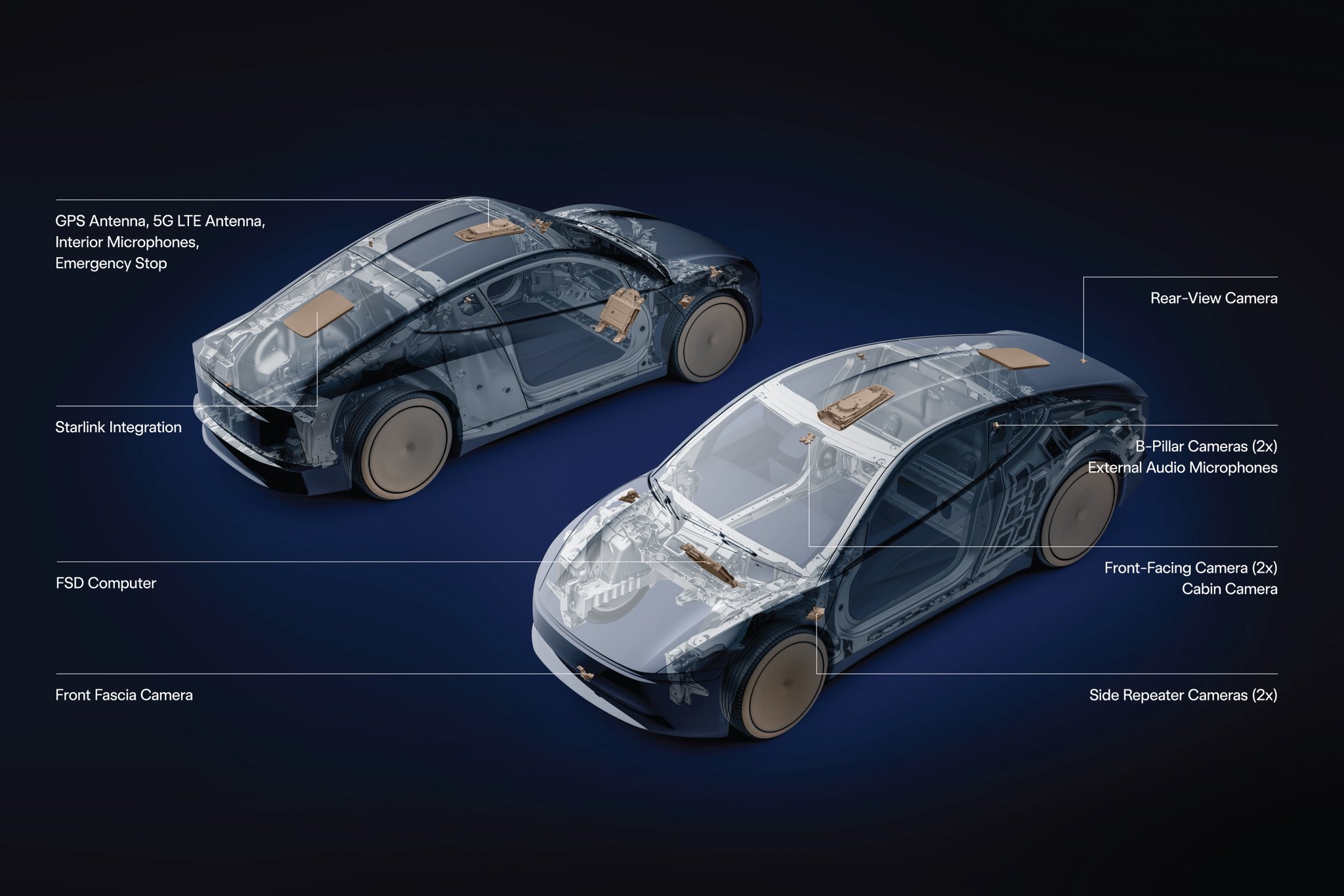
SpaceX Starlink V5 satellite terminal directly integrated into the Cybercab's roof structure (alongside the GPS antenna, 5G LTE antenna, FSD computer, and various cameras). This is a clean, factory-integrated design rather than the external Starlink Mini dishes spotted on earlier prototypes/testing vehicles (often mounted on the trunk lid). Higher-Resolution/Dual GPS The Cybercab includes a dedicated dual GPS (or dual-frequency GPS) system for significantly higher positioning accuracy and redundancy compared to standard consumer Tesla vehicles. This supports SAE Level 4 autonomy requirements (full self-driving in defined conditions without constant human oversight). Dual GPS helps with instantaneous heading determination (two separated antennas give direction without needing vehicle movement). Better performance in challenging environments (urban canyons, parking structures). Overall telemetry reliability is improved for a driverless vehicle. The Starlink V5 terminal sits alongside the GPS antennas in the roof (per the Tesla diagram), so they are co-located and complementary. Starlink terminals themselves include GNSS receivers for satellite acquisition/pointing, and broader research explores using Starlink signals as a GPS backup or augmentation for positioning, navigation, and timing (PNT). However, the primary "higher-resolution GPS" upgrade in the Cybercab is the vehicle's dedicated dual GPS hardware. Research (primarily from Ohio State University's ASPIN lab, led by Zak Kassas, with results featured in GPS World and ION papers) demonstrates strong opportunistic use of Starlink's Ku-band downlink signals (OFDM beacons). With an average of ~3 simultaneously visible Starlink satellites, ~2-meter 3D positioning accuracy is achievable in ~20 seconds (from a poor initial guess, using Doppler observables from the full OFDM beacon after advanced signal processing). Earlier work (2021-2025) was 8-10 meters with 6 satellites over longer periods and improved to meter-level with IMU (inertial measurement unit) aiding and ephemeris/timing corrections. Expected PNT accuracy improvements by 2028. Standalone Starlink PNT will likely have routine sub-meter to low single-digit meter accuracy, with faster convergence (seconds instead of tens of seconds), higher availability, and better performance in challenging environments. Denser constellation + V3 signals (stronger, better processed) will improve Doppler/pseudorange quality and geometry. With DTC and hybrid systems, Starlink GPS could potentially exceed standard GNSS robustness, with meter-level or better accuracy in many scenarios. Multi-frequency or differential techniques could push toward sub-meter. Long-term vision with ~1,000× more satellites eventually, Starlink PNT could be far more robust than GPS (over 10×-100X visible satellites and much stronger signals). Centimeter-level (or better) positional accuracy with Starlink PNT by 2029-2030 is plausible under SpaceX's long-term vision of massive constellation growth, especially if they evolve from today's opportunistic use of communication signals toward a dedicated or hybrid PNT service. Broadcast of precise ephemeris/clock corrections, support for carrier-phase tracking, or a network-assisted/PPP service. Research shows that providing real-time corrections turns performance from limited to near-GPS or better Data Transfer for Fleet Learning This is one of the biggest practical benefits. Starlink provides high-bandwidth, low-latency bidirectional connectivity (far superior to cellular in coverage and uplink speed in many scenarios). For Tesla's end-to-end neural net training approach (vision-only, fleet-scale learning). Vehicles can upload massive amounts of camera/sensor data, video clips, telemetry, and edge cases much faster. This accelerates the "fleet learning" loop. More data → faster model improvements → quicker iteration toward reliable unsupervised operation. It also enables reliable over-the-air (OTA) software/FSD updates and real-time fleet monitoring/telemetry, even in remote or cellular-dead-zone areas. Earlier prototype testing with Starlink explicitly highlighted faster data uploads as a way to speed up development. Benefits for Unsupervised Robotaxi For a purpose-built, no-steering-wheel/no-pedals robotaxi fleet aiming for unsupervised (Level 4+) operation at scale. Redundancy and reliability -- Cellular coverage has gaps (rural roads, tunnels, dense urban areas, disasters). Starlink provides an independent satellite link, ensuring the vehicle stays connected for safety, remote support (if ever needed), and operations. Waymos have stopped operation in San Francisco when they lost cellular communication. Faster AI improvement -- High-speed uplink directly speeds up the data pipeline that trains Tesla's FSD models. Tesla's core advantage has always been fleet-scale data. Starlink removes a major bottleneck. Operational scalability -- Supports wider geographic deployment, 24/7 uptime, and global expansion without depending solely on terrestrial networks. Passenger experience -- Bonus high-speed Wi-Fi (potentially a differentiator for robotaxi service). Future-proofing -- Aligns with Tesla's vision of always-connected physical AI systems. Write-Ups, Technical Papers, and Related Research Tesla's own patent (US 2025/0368267, filed ~2024, published Dec 2025). Details an RF-transparent roof assembly using polymer materials (polycarbonate, ASA) to embed satellite antennas (and other electronics) directly into the roof without signal blockage. This is the foundational technology enabling the clean Starlink V5 integration shown today. It explicitly mentions facilitating communication with satellites. IEEE paper (2023) Improving the safety of autonomous driving by using Direct-to-Satellite connectivity. The case of Iridium and Starlink satellite constellations. It presents real-world measurements of vehicular data transfer via Starlink (and Iridium), latency analysis, and concludes that satellite links can improve road safety through better situational awareness sharing. Broader Trend: Physical AI + Starlink + IoT Integration ==> Global Internet of Things This fits a clear, accelerating trend. All Tesla's physical AI (Cybercab robotaxis, Optimus humanoid robots, FSD) gains a global, high-performance connectivity backbone via Starlink. Enables edge devices (vehicles, robots, sensors) to reliably upload training data to centralized AI systems, receive updates, and operate in remote/IoT-scarce environments. There will be a seamless global internet of physical things where autonomous systems, robotics, and infrastructure stay continuously linked for collective intelligence and scalability.
William R. Timmons IV invests in SpaceX through SCH Invest By Investing.com
South Carolina's 4th district representative, William R. Timmons IV, has made a significant investment in SpaceX (SPCX), according to a recent congressional trade report. The transaction, which took place on June 15, 2026, was reported two days later. The report reveals that Timmons purchased SpaceX shares valued between $50,001 and $100,000. The transaction was made through SCH Invest, an investment vehicle that Timmons uses for his financial dealings. SpaceX, a private American aerospace manufacturer and space transportation company, is not publicly traded and thus does not have a stock ticker available in the system. The company is known for its ambitious projects in space exploration and satellite internet service. This recent investment by Timmons is noteworthy as it indicates a continued interest in the space industry from lawmakers. It also highlights the growing trend of investing in private companies that are leading the way in technological advancements and innovation. The transaction was made as an initial public offering through SCH Invest. As per the STOCK Act, which mandates transparency in the financial dealings of lawmakers, Timmons has certified that the statements made in the periodic transaction report are true and complete. Investors and market watchers often look to the investment activities of lawmakers for indications of confidence in certain industries or companies. In this case, Timmons' investment in SpaceX may signal a bullish outlook on the future of the space industry and the role of private companies in it. However, it's important to note that such investments do not guarantee success and should always be considered as part of a diversified investment strategy. This article was generated with the support of AI and reviewed by an editor. For more information see our T&C.

Elon Musk sends first warning to SpaceX short sellers
In a pointed message on X, Elon Musk warned that firms maintaining significant short positions in SpaceX over time face "very low" survival probability. The statement comes amid post-IPO volatility for the rocket company, now trading under the ticker $SPCX. Five weeks after what was described as the largest IPO in history, the stock had fallen roughly 30% from its peak above $2.6 trillion, briefly surpassing Microsoft and Amazon in market value. Short sellers celebrated gains of about $8.7 billion, but Musk's reply underscores his long-term conviction. The warning directly echoes a detailed bullish analysis arguing that Starship's cost reductions could unlock a multi-trillion-dollar space economy. Projects ranging from solar power beamed from orbit and asteroid mining to orbital data centers and Mars terraforming were projected to create over $100 trillion in new market capitalization. In this vision, SpaceX acts as the essential infrastructure provider, akin to AWS for cloud computing, capturing monopoly-like revenues from launches, crew transport, and data traffic across a rapidly expanding frontier. This is far from the first time Musk has targeted short sellers. With Tesla, he has repeatedly framed persistent bears as destined for major losses. In July 2024, Musk declared that once Tesla achieves full autonomy and volume production of Optimus robots, "anyone still holding a short position will be obliterated. Even Gates," referencing Microsoft co-founder Bill Gates' reported short bets. Elon Musk reveals what Tesla stock surge could do to Bill Gates Earlier, in 2018, he taunted shorts that they had "about three weeks before their short position explodes," a remark followed by sharp stock gains. Musk has also called short selling "value destroying" and once suggested it "should be illegal," viewing it as betting against innovation and progress. Critics often dismiss Musk's optimism as hype, especially when near-term metrics like quarterly deliveries or stock fluctuations disappoint. Yet his pattern remains consistent: framing short positions against his companies as fundamentally misjudging exponential technological leaps. For SpaceX shorts, the message is clear: betting against multi-planetary ambitions and the infrastructure monopoly they enable carries existential risk for the firms involved. As Musk and supporters see it, the space economy's upside dwarfs Earth-bound valuation models, making today's dips temporary in a decades-long ascent.

Elon Musk's SpaceX announces Q2 earnings date amid 45pc stock price slump
The earnings release coincides with the first insider share unlock, potentially increasing selling pressure despite Starlink's strong subscriber growth. NEW YORK, July 21 -- SpaceX will release its first quarterly earnings report as a publicly traded company on August 4, the rocket and AI giant said Monday on its investor relations website. The Elon Musk-led company, which trades under the ticker SPCX on the Nasdaq exchange, is scheduled to report results after markets close that day, at 2130 GMT. The figures will cover the second quarter, which ended June 30. The announcement comes as shares in the company have fallen well below their initial public offering price. SpaceX went public on June 12 at US$135 (RM552) a share, with the stock later soaring as high as US$225.64 and pushing the company's valuation above US$2.6 trillion. Shares have since tumbled, closing at US$119.85 on Monday - more than 45 per cent below their post-IPO peak. The company, which reported a loss of US$4.3 billion last year in its IPO filings, has a long-term goal of developing data centres in space. Analysts do not expect profitability anytime soon. SpaceX now operates three divisions: a launch and space unit, the Starlink satellite internet service, and an artificial intelligence arm that includes the Grok chatbot and social media platform X. Starlink, the company's only consistently profitable business, had 10.3 million subscribers as of the first quarter, with revenue up about 50 per cent year-on-year, according to SpaceX's IPO filing. The AI division, weighed down by heavy data centre spending, posted steep losses last year. Crucially, the earnings report will also trigger the first scheduled unlock of insider shares, freeing up stock that has been restricted from sale since the IPO. That could add further pressure on the price if shareholders decide to sell. -- AFP

SpaceX almost halves in value from its much-vaunted June launch
When SpaceX went public last month, it immediately became one of the most valuable companies on Earth, and turned its CEO Elon Musk into the world's first trillionaire. But in the six weeks since, it has been a stunning drop for the space company, with its value nearly halving from its first days on sale. When it first hit the market, SpaceX shares were selling at more than US$201 ($287). Now it's $US119 ($170). The company has now lost a trillion dollars in value in a month, and is now trading well below its initial public offering price. SpaceX derives much of its income from launching satellites into space, but two last-second aborts of its rockets in the past week have given investors the jitters. One of its Falcon 9 rockets aborted a takeoff even as its engines started firing up overnight. And last week, Musk's new-fangled Starship megarocket's launch was aborted. Much of the company's share market value is not tied to its current profitability but its future forecasts. But repeated failures after much hype has given investors cold feet, and many are starting to wonder why they put so much money in a company that still isn't profitable. For many traders, it represents a colossal loss of money. Among early investors is Australian billionaire Gina Rinehart, who reportedly sunk a billion US dollars in the company. It is not known if she sold her shares before SpaceX's precipitous fall. Musk meanwhile has been busy tweeting on X, promoting his AI program Grok, posting conservative opinions and reposting memes. SpaceX isn't the only tech company to have a bad run on the stock market. Last week the release of a new Chinese AI model rattled the big tech companies in the US. Kimi K3 from Moonshot AI appeared to outperform nearly all its rivals, triggering selloffs on Wall Street. And the Australian share market hasn't been immune, opening on Tuesday to a sharp drop.
SpaceX to report first earnings as public company on Aug 4 | New Straits Times
NEW YORK: SpaceX will release its first quarterly earnings report as a publicly traded company on Aug 4, the rocket and artificial intelligence (AI) giant said Monday on its investor relations website. The Elon Musk-led company, which trades under the ticker SPCX on the Nasdaq exchange, is scheduled to report results after markets close that day, at 2130 GMT. The figures will cover the second quarter, which ended June 30. The announcement comes as shares in the company have fallen well below their initial public offering price. SpaceX went public on June 12 at US$135 a share, with the stock later soaring as high as US$225.64 and pushing the company's valuation above US$2.6 trillion. Shares have since tumbled, closing at US$119.85 on Monday -- more than 45 per cent below their post-initial public offering (IPO) peak. What To Read Next The company, which reported a loss of US$4.3 billion last year in its IPO filings, has a long-term goal of developing data centers in space. Analysts do not expect profitability anytime soon. × 00:01 01:00 Tonton Non Stop, On Top! Player Insights Video- Viewport / Frames- Audio- Buffer Video / Audio- Time- Stream- Player version- Bitmovin PlayerAdaptive Streaming for the WebPlayer: 8.267.0UI: 4.17.0 Show Player Insights Copy link at current time Video Qualityauto Speednormal Audio Track- Audio Qualityauto Subtitlesoff (0) BackReset Font sizedefault Font styledefault Font familydefault Font colordefault Font opacitydefault Character edgedefault Character edge colordefault Background colordefault Background opacitydefault Window colordefault Window opacitydefault SpaceX now operates three divisions: a launch and space unit, the Starlink satellite internet service, and an artificial intelligence arm that includes the Grok chatbot and social media platform X. Starlink, the company's only consistently profitable business, had 10.3 million subscribers as of the first quarter, with revenue up about 50 per cent year-on-year, according to SpaceX's IPO filing. The AI division, weighed down by heavy data center spending, posted steep losses last year. Crucially, the earnings report will also trigger the first scheduled unlock of insider shares, freeing up stock that has been restricted from sale since the IPO. That could add further pressure on the price if shareholders decide to sell.

Meta Reportedly In Talks With Anthropic Over a $10 Billion AI Deal
Meta is reportedly in talks to lease computing power to Anthropic in a deal worth as much as $10 billion over two years, according to the New York Times. The arrangement would open a new business line for Meta while easing Anthropic's desperate hunt for compute. Inside the Reported Meta and Anthropic Compute Deal Computing power, or compute, refers to the data center capacity used to train and run artificial intelligence models. The Anthropic proposal, first announced in June, would let the startup rent Meta's excess infrastructure rather than build its own facilities. According to the NTY, Anthropic would pay Meta in monthly installments over the two-year period, with an early-exit clause available to either party. The scale still looks modest by industry standards. The proposal runs about a third of the deal Anthropic signed with Elon Musk's SpaceX in May. Follow us on X to get the latest news as it happens. Under that agreement, the AI firm pays roughly $1.25 billion monthly, or $45 billion over three years, for computing power. Similar early-exit provisions reportedly applied to that larger contract as well. The talks remain in early stages and may still collapse before closing. Both Anthropic and Meta declined to comment on the reported negotiations. The context explains the urgency. Leading AI companies are racing to secure compute, while Meta, Google, and Microsoft pour hundreds of billions into new data centers worldwide. That construction boom has unsettled Wall Street. Investors increasingly question whether such extraordinary levels of spending can ever be justified by real returns. "Anthropic needs a lot of compute, and Meta has a lot of compute. Anthropic has really good models. Meta, until very recently, didn't have very good models, and now they have, you know, I would say an A-minus to B-tier frontier model," MTS's Theo Jaffee said. Why Would Meta Rent Compute to a Direct Rival For Meta, a potential deal would carry unusual weight. It could create fresh revenue and ease pressure from shareholders skeptical of the company's aggressive infrastructure budget. Mark Zuckerberg has said Meta will spend as much as $145 billion this year, most of it on AI. That figure more than doubles the $72 billion spent the previous year. Subscribe to our YouTube channel to watch leaders and journalists provide expert insights. Doubts about Meta's own models add another layer. The company has admitted it might build more data centers than its AI products currently require. Selling that surplus offers an obvious fix. Zuckerberg hinted on a May investor call that outside firms regularly ask to buy compute at a premium.
SpaceX moves Starship launch attempt to Thursday
SpaceX is targeting Thursday, July 23, for another attempt to launch its Starship rocket, the company said in a statement on Sunday. SpaceX CEO Elon Musk initially posted on X that the next Starship launch would occur on Friday. He later replied to that post, saying, "I mean Thursday," aligning with the company's earlier statement. On July 16, SpaceX's Starship rocket triggered a last-second abort before liftoff for its 13th flight test from Texas, which erased about $100 billion from the company's market value. SpaceX said it has modified Starship's propulsion system to address the engine issue experienced on the previous flight. A launch delay for the $15 billion rocket development program better known for dramatic engineering feats and explosive testing failures is not uncommon. Last Friday, SpaceX said it would attempt the launch on July 20. The company has launched 12 Starship test flights since 2023. On its 13th flight test, Starship will carry 20 Starlink satellites to demonstrate its satellite-dispensing system and the Starlink network's laser communication links, but those satellites will follow the ship's suborbital trajectory and burn up in Earth's atmosphere soon after deployment. In its prospectus, SpaceX said that it aims to launch the first Starlink satellites to orbit on Starship by year's end, followed by routine launches. (Reporting by Gursimran Kaur in Bengaluru; Editing by Matthew Lewis and Sherry Jacob-Phillips) Copyright Reuters or USA Today Network via Reuters Connect This story was originally published July 19, 2026 at 9:19 PM.
SpaceX moves Starship launch attempt to Thursday
SpaceX is targeting Thursday, July 23, for another attempt to launch its Starship rocket, the company said in a statement on Sunday. SpaceX CEO Elon Musk initially posted on X that the next Starship launch would occur on Friday. He later replied to that post, saying, "I mean Thursday," aligning with the company's earlier statement. On July 16, SpaceX's Starship rocket triggered a last-second abort before liftoff for its 13th flight test from Texas, which erased about $100 billion from the company's market value. SpaceX said it has modified Starship's propulsion system to address the engine issue experienced on the previous flight. A launch delay for the $15 billion rocket development program better known for dramatic engineering feats and explosive testing failures is not uncommon. Last Friday, SpaceX said it would attempt the launch on July 20. The company has launched 12 Starship test flights since 2023. On its 13th flight test, Starship will carry 20 Starlink satellites to demonstrate its satellite-dispensing system and the Starlink network's laser communication links, but those satellites will follow the ship's suborbital trajectory and burn up in Earth's atmosphere soon after deployment. In its prospectus, SpaceX said that it aims to launch the first Starlink satellites to orbit on Starship by year's end, followed by routine launches. (Reporting by Gursimran Kaur in Bengaluru; Editing by Matthew Lewis and Sherry Jacob-Phillips) Copyright Reuters or USA Today Network via Reuters Connect This story was originally published July 19, 2026 at 7:19 PM.
SpaceX moves Starship launch attempt to Thursday
SpaceX is targeting Thursday, July 23, for another attempt to launch its Starship rocket, the company said in a statement on Sunday. SpaceX CEO Elon Musk initially posted on X that the next Starship launch would occur on Friday. He later replied to that post, saying, "I mean Thursday," aligning with the company's earlier statement. On July 16, SpaceX's Starship rocket triggered a last-second abort before liftoff for its 13th flight test from Texas, which erased about $100 billion from the company's market value. SpaceX said it has modified Starship's propulsion system to address the engine issue experienced on the previous flight. A launch delay for the $15 billion rocket development program better known for dramatic engineering feats and explosive testing failures is not uncommon. Last Friday, SpaceX said it would attempt the launch on July 20. The company has launched 12 Starship test flights since 2023. On its 13th flight test, Starship will carry 20 Starlink satellites to demonstrate its satellite-dispensing system and the Starlink network's laser communication links, but those satellites will follow the ship's suborbital trajectory and burn up in Earth's atmosphere soon after deployment. In its prospectus, SpaceX said that it aims to launch the first Starlink satellites to orbit on Starship by year's end, followed by routine launches. (Reporting by Gursimran Kaur in Bengaluru; Editing by Matthew Lewis and Sherry Jacob-Phillips) Copyright Reuters or USA Today Network via Reuters Connect This story was originally published July 19, 2026 at 8:19 PM.
SpaceX moves Starship launch attempt to Thursday
July 19 (Reuters) - SpaceX is targeting Thursday, July 23, for another attempt to launch its Starship rocket, the company said in a statement on Sunday. SpaceX CEO Elon Musk initially posted on X that the next Starship launch would occur on Friday. He later replied to that post, saying, "I mean Thursday," aligning with the company's earlier statement. On July 16, SpaceX's Starship rocket triggered a last-second abort before liftoff for its 13th flight test from Texas, which erased about $100 billion from the company's market value. SpaceX said it has modified Starship's propulsion system to address the engine issue experienced on the previous flight. A launch delay for the $15 billion rocket development program better known for dramatic engineering feats and explosive testing failures is not uncommon. Last Friday, SpaceX said it would attempt the launch on July 20. The company has launched 12 Starship test flights since 2023. On its 13th flight test, Starship will carry 20 Starlink satellites to demonstrate its satellite-dispensing system and the Starlink network's laser communication links, but those satellites will follow the ship's suborbital trajectory and burn up in Earth's atmosphere soon after deployment. In its prospectus, SpaceX said that it aims to launch the first Starlink satellites to orbit on Starship by year's end, followed by routine launches. (Reporting by Gursimran Kaur in Bengaluru; Editing by Matthew Lewis and Sherry Jacob-Phillips)

SpaceX moves Starship launch attempt to Thursday
July 19 (Reuters) - SpaceX is targeting Thursday, July 23, for another attempt to launch its Starship rocket, the company said in a statement on Sunday. SpaceX CEO Elon Musk initially posted on X that the next Starship launch would occur on Friday. He later replied to that post, saying, "I mean Thursday," aligning with the company's earlier statement. On July 16, SpaceX's Starship rocket triggered a last-second abort before liftoff for its 13th flight test from Texas, which erased about $100 billion from the company's market value. SpaceX said it has modified Starship's propulsion system to address the engine issue experienced on the previous flight. A launch delay for the $15 billion rocket development program better known for dramatic engineering feats and explosive testing failures is not uncommon. Last Friday, SpaceX said it would attempt the launch on July 20. The company has launched 12 Starship test flights since 2023. On its 13th flight test, Starship will carry 20 Starlink satellites to demonstrate its satellite-dispensing system and the Starlink network's laser communication links, but those satellites will follow the ship's suborbital trajectory and burn up in Earth's atmosphere soon after deployment. In its prospectus, SpaceX said that it aims to launch the first Starlink satellites to orbit on Starship by year's end, followed by routine launches. (Reporting by Gursimran Kaur in Bengaluru; Editing by Matthew Lewis and Sherry Jacob-Phillips)
SpaceX moves Starship launch attempt to Thursday
SpaceX is targeting Thursday, July 23, for another attempt to launch its Starship rocket, the company said in a statement on Sunday. SpaceX CEO Elon Musk initially posted on X that the next Starship launch would occur on Friday. He later replied to that post, saying, "I mean Thursday," aligning with the company's earlier statement. On July 16, SpaceX's Starship rocket triggered a last-second abort before liftoff for its 13th flight test from Texas, which erased about $100 billion from the company's market value. SpaceX said it has modified Starship's propulsion system to address the engine issue experienced on the previous flight. A launch delay for the $15 billion rocket development program better known for dramatic engineering feats and explosive testing failures is not uncommon. Last Friday, SpaceX said it would attempt the launch on July 20. The company has launched 12 Starship test flights since 2023. On its 13th flight test, Starship will carry 20 Starlink satellites to demonstrate its satellite-dispensing system and the Starlink network's laser communication links, but those satellites will follow the ship's suborbital trajectory and burn up in Earth's atmosphere soon after deployment. In its prospectus, SpaceX said that it aims to launch the first Starlink satellites to orbit on Starship by year's end, followed by routine launches. (Reporting by Gursimran Kaur in Bengaluru; Editing by Matthew Lewis and Sherry Jacob-Phillips) Copyright Reuters or USA Today Network via Reuters Connect This story was originally published July 19, 2026 at 6:19 PM.
SpaceX moves Starship launch attempt to Thursday
SpaceX is targeting Thursday, July 23, for another attempt to launch its Starship rocket, the company said in a statement on Sunday. SpaceX CEO Elon Musk initially posted on X that the next Starship launch would occur on Friday. He later replied to that post, saying, "I mean Thursday," aligning with the company's earlier statement. On July 16, SpaceX's Starship rocket triggered a last-second abort before liftoff for its 13th flight test from Texas, which erased about $100 billion from the company's market value. SpaceX said it has modified Starship's propulsion system to address the engine issue experienced on the previous flight. A launch delay for the $15 billion rocket development program better known for dramatic engineering feats and explosive testing failures is not uncommon. Last Friday, SpaceX said it would attempt the launch on July 20. The company has launched 12 Starship test flights since 2023. On its 13th flight test, Starship will carry 20 Starlink satellites to demonstrate its satellite-dispensing system and the Starlink network's laser communication links, but those satellites will follow the ship's suborbital trajectory and burn up in Earth's atmosphere soon after deployment. In its prospectus, SpaceX said that it aims to launch the first Starlink satellites to orbit on Starship by year's end, followed by routine launches. (Reporting by Gursimran Kaur in Bengaluru; Editing by Matthew Lewis and Sherry Jacob-Phillips) Copyright Reuters or USA Today Network via Reuters Connect This story was originally published July 19, 2026 at 9:19 PM.
SpaceX reschedules 13th Starship test flight to Thursday
HARLINGEN, Texas (ValleyCentral) - SpaceX has announced it has rescheduled its thirteenth Starship test flight for the second time. The launch window has been moved to 5:45 p.m. Thursday, July 23, from Starbase. The thirteenth Starship test flight will be the second flight test of 2026. Last week's scheduled launch was aborted just seconds before the Starship lifted off. As previously reported on ValleyCentral, SpaceX CEO Elon Musk announced that some of the engines failed to start. SpaceX originally rescheduled the launch for Monday afternoon and then moved the date again to Thursday. According to Starbase, the thirteenth Starship test flight aims to accomplish goals similar to those of the previous flight test, which included the debut of the third-generation Starship and Super Heavy vehicles. In addition to completing similar objectives, the flight will also carry the next-generation Starlink V3 satellites for the first time. A live webcast of the flight test will be available for viewers to watch approximately 30 minutes before takeoff on the SpaceX website.

SpaceX $52B Nvidia server order claim lacks verification
A social media claim by @AndrewCurran_ suggests that SpaceX has ordered $52 billion worth of NVIDIA GB300-based AI servers from Foxconn. This unverified report appears to have sparked discussions around the potential impact on NVIDIA's market valuation. The claim, however, lacks confirmation from any official or verified sources and seems to conflate previous deals involving SpaceX, such as its known $6.3 billion computing agreement with Reflection AI and a $920 million per month GPU arrangement with Google. NVIDIA's GB300 systems are already recognized for their advanced AI capabilities, and Foxconn is confirmed as a major supplier of these systems, with shipments having begun in late 2025. Key Takeaways * The reported $52 billion order by SpaceX from Foxconn appears to have caught the attention of market participants, despite lacking verification. * NVIDIA's market prospects could be positively influenced by such demand, as indicated by current speculation. * The claim suggests heightened interest in NVIDIA's GB300 system capabilities, even though no official confirmation of the transaction exists. What to Watch Market participants are likely to monitor further announcements from NVIDIA or SpaceX that could confirm or refute this claim. Any official statements or financial disclosures will be crucial in assessing the credibility of the reported order. The ongoing activity could also be influenced by NVIDIA's upcoming quarterly earnings report, which may provide insights into their data center revenue and demand for AI systems. Get live prediction-market analysis, powered by Vera. Sign up for Vera.
SpaceX's blow-it-up testing won't fly on starship
SpaceX's willingness to blow stuff up and learn from the failures has propelled it from a cash-strapped startup to one of the world's most valuable companies (and kick-started a commercial space revolution along the way). The development of the Falcon 9 rocket was achieved over a relatively short period in space-industry time. That success was built on SpaceX's willingness to test, fail and repeat rapidly. The Falcon 1 rocket failed three times before reaching orbit on the fourth try in 2008 just before Chief Executive Officer Elon Musk's money ran out. SpaceX blew up a couple of rockets on the way to Falcon 9 reaching orbit, while Musk helped popularize the phrase "rapid unscheduled disassembly." This unique engineer-led culture is a reason that buy-side analysts have justified valuations for Musk's space venture that are, well, out of this world. SpaceX is adept at building complicated hardware and manufacturing almost all components in-house.

Foxconn Wins First SpaceX AI Server Contract Worth Estimated $52 Billion
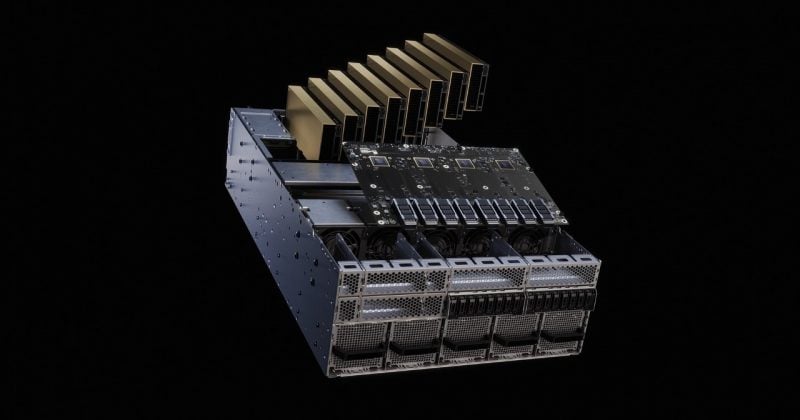
Taiwan's Hon Hai Precision Industry, better known as Foxconn, has reportedly secured its first contract to manufacture artificial intelligence (AI) servers for Elon Musk's SpaceX, marking a major expansion of its AI infrastructure business. According to Taiwan's Economic Daily, the agreement could be worth about $52 billion, based on SpaceX's reported plan to deploy more than 13,000 AI server racks powered by Nvidia's next-generation GB300 chips. With each rack estimated to cost around $4 million, the deal would represent one of the largest AI server orders in the industry. The report said the contract would end the previous dominance of Dell Technologies and Super Micro Computer in supplying AI servers to SpaceX. It also strengthens Foxconn's position as a key manufacturing partner for major North American cloud computing and AI infrastructure companies. Foxconn has not commented on specific customer orders but has consistently highlighted strong demand for its AI server business. Chairman Liu Yangwei previously projected that the company would capture more than 40% of the global AI server market this year. He also expects AI rack shipments to double and continue growing through the end of 2026. Cloud and networking products, driven primarily by AI servers, have already become Foxconn's largest business segment. The Economic Daily reported that SpaceX recently increased its planned deployment of Nvidia GB300 server racks to approximately 13,000 units, with deliveries expected to begin in late 2026 and continue into the first quarter of 2027. Beyond its satellite and space launch operations, SpaceX is rapidly expanding its AI computing infrastructure. The report said the company has reached agreements involving Anthropic and Google while also advancing AI computing initiatives with the U.S. Department of Defense. These investments reflect SpaceX's broader push into cloud computing and artificial intelligence, creating new opportunities for suppliers such as Foxconn as demand for high-performance AI servers continues to accelerate.