News & Updates
The latest news and updates from companies in the WLTH portfolio.
Meta in talks to rent some of its billions in AI infrastructure to Anthropic
New York -- Meta is in talks with Anthropic about leasing computing capacity to the AI startup. It's a move that could put the social media giant in competition with Amazon, Microsoft and Google in a new line of business: cloud computing. The conversation about a potential deal is still early, a source familiar with the matter confirmed to CNN. The talks were first reported by the New York Times, which pegged the deal's worth at as much as US$10 billion over two years, citing three people with knowledge of the discussions. CNN's source said any specific numbers that have been reported are speculative. Meta and Anthropic declined to comment on the talks. Becoming a computing provider could mark a major new revenue opportunity for Meta as it's been investing heavily in data centre infrastructure to support its AI ambitions. The social media giant plans to spend between $125 billion and $145 billion in capital expenditures this year, largely to support that infrastructure buildout, Meta said in its most recent earnings report. That could double what it spent the prior year. Meta said in April that it would lay off 10 per cent of its workforce, about 8,000 people, in part to offset the cost of those investments. Meta CEO Mark Zuckerberg has mentioned the possibility of leasing out some of that infrastructure if his own company's computing needs didn't keep pace with the buildout. "Almost every week there are different companies that come to us from outside asking us ... if we have compute that they could buy from us at some premium to what we've bought it at," Zuckerberg said at Meta's annual shareholder meeting in May. "We haven't done that yet because we think that we have a use for the compute. But obviously if we get to a point where we feel that we have overbuilt, then that is an option that we have." There's no shortage of demand for computing power as companies large and small race to adopt AI and major AI labs work to improve their models. Anthropic already has multibillion dollar compute licensing deals with Google, SpaceX, Microsoft and Amazon. Meanwhile, investors want Meta to show how its investments will benefit its bottom line, especially as it scrambles to keep pace with AI offerings from companies like Anthropic and OpenAI. Meta shares are down more than eight per cent from this time last year. Meta last month released an upgraded version of its Muse Spark AI model that it said could rival the coding capabilities of models from OpenAI, Anthropic and others. For the first time, Meta said it would offer a paid version of the service, yet another sign it's looking for bigger returns on AI.

Dow Jones Top Company Headlines at 7 PM ET: Walmart Further Shuffles Top Executives | SpaceX ...
Walmart Further Shuffles Top Executives Kieran Shanahan, chief operating officer for Walmart U.S., will leave this week. ---- SpaceX in Talks to Provide Computing Power for Pentagon's AI Push Elon Musk's company would provide billions of dollars' worth of data-center capacity under the arrangement, people familiar with the matter said. ---- Nvidia, Challenged by Apple, Narrowly Retains Wall Street's Crown The iPhone maker briefly became the U.S.'s most valuable publicly traded company on Friday. ---- China's Moonshot AI Releases Model to Challenge Top U.S. Systems The company says its model outperforms some cutting-edge U.S. systems, the latest sign that Chinese labs can rival American counterparts. ---- Taylor Farms Is Recalling Its Mexican-Grown Iceberg Lettuce From U.S. U.S. authorities have linked the lettuce to a parasitic outbreak across more than 30 states. ---- Travelers Scored an Earnings Beat. Were the Downgrades All Wrong? The insurer defied Wall Street's expectations, posting adjusted per-share earnings that were nearly double of what analysts projected. ---- Fifth Third Profit Boosted by Comerica Acquisition The Fifth Third Bank parent posted a profit of $763 million, or 83 cents a share, in the second quarter. ---- Truist Financial Earnings Beat Estimates but Eyes Are on Bank's Next Chapter Truist Financial delivered strong second-quarter earnings Friday, but investors may be more focused on what the leadership transition to incoming CEO Michael Lyons could mean for the bank's strategy. ---- GSK Shares Slide After Drugmaker Drops Chronic Cough Treatment GSK shares fell after the U.K. drugmaker said it would stop working on an experimental treatment for chronic cough after mixed results showed limited efficacy in late-stage clinical studies. ---- Volvo Car Expects Sales to Strengthen on European Growth, U.S. Recovery Volvo Car expects growth in Europe and a recovery in the U.S. to spur significantly stronger sales in the second half of the year, despite continued challenges in China. ---- Meta Plans to Hire Top Amazon Computing Executive as It Weighs Cloud Push Dave Brown, one of the most senior executives at Amazon Web Services, will bring his nearly two decades of experience to the social-media giant. ---- Burberry Reports Sales Growth as It Moves Forward With Turnaround Plan Burberry posted flat sales growth for its first quarter, but noted that it saw growth across divisions for the first time in three years. ---- Verizon to Cut About 3,000 Jobs, Divest Itself of Some Retail Stores The company plans to divest itself of 274 of its retail stores to franchise owners. Most of Verizon's layoffs would come from the retail-store divestiture. ---- Databricks Set to Hit $188 Billion Valuation With New Investment From Coatue The startup's valuation jumps 40% as the AI boom has driven demand for its data-analytics software. ---- Sweden's EQT Expects Strong Fundraising Momentum as It Posts Higher Net Profit The buyout group reported rises in net profit and revenue for the first half aided by higher fee-generating assets. (END) Dow Jones Newswires July 17, 2026 19:15 ET (23:15 GMT) Copyright (c) 2026 Dow Jones & Company, Inc.

SpaceX postponed a crucial launch - and its stock went on to close below IPO price for a second day
SpaceX's planned 13th Starship V3 rocket launch was scrubbed during its 90-minute window. Shares in SpaceX fell further below their initial-public-offering price Friday after the spacecraft manufacturer aborted an attempt to launch its Starship rocket. The Texas-headquartered company's stock (SPCX) fell more than 5% on Friday, on the heels of a 3% slide on Thursday, bringing its price more than $10 below where it launched on the Nasdaq on June 12. The stock is has lost steam for five days in a row. SpaceX shares ended at $131.11 a share on Thursday, closing below the $135-per-share IPO price for the first time. SpaceX had been set to execute its first launch since the IPO on Thursday, with a Starship take-off scrapped after its launch window opened at 6:45 p.m. Eastern time. CEO Elon Musk then confirmed the mission had been postponed, following an announcement during a livestream of the event that it had been cut short. "Some of the engines didn't start, triggering an automatic launch abort. Now offloading propellant. Next launch attempt hopefully in a few days," Musk wrote in a post on X. Musk later added: "To be confident of a good flight, 2 Raptors will be removed & replaced. Most probable launch timing is early next week." The plan for Starship's 13th flight was to address problems seen during its previous flight and to carry and deploy 20 Starlink "Version 3" (V3) satellites. The Federal Aviation Administration gave SpaceX the go-ahead for its launch on Monday after closing an investigation into the company's 12th flight, which following a safe lift-off saw its Super Heavy booster crash into the Gulf of Mexico. The regulatory body ordered SpaceX to carry out an investigation that concluded with four actions, including software and hardware updates, to be completed. Analysts at Bernstein led by Douglas Harned wrote in a note on Friday that they viewed Starlink as "the key enabler" of SpaceX's growth in the future, but that it also represents a point of risk. They expect 3,543 launches of the 400-foot rocket in 2031, with about nine in 10 for the purpose of Musk's proposed orbital data centers. -Nora Redmond This content was created by MarketWatch, which is operated by Dow Jones & Co. MarketWatch is published independently from Dow Jones Newswires and The Wall Street Journal. (END) Dow Jones Newswires 07-17-26 1855ET Copyright (c) 2026 Dow Jones & Company, Inc.
SpaceX's post-IPO swoon is typical
After the June 11 market close, Elon Musk took his Space Exploration Technologies Corp. (otherwise known as SpaceX) public. Price: $135 a share. Result: The company raised some $75 billion before expenses. The next day, when the shares could be traded, the shares reached $176.52, then dropped to $160.95. Still, it was good day: The shares were up 19.2%. The following Monday, on June 15, SpaceX (SPCX) jumped 19.6% to $192.50. The following day, the shares rose another 4.8% to $201.80, achieving a market capitalization of $2.64 trillion. But few realized SpaceX's big opening run had ended. The June 16 high was $225.64, and that's been the peak for the stock. So far. SpaceX shares swoon SpaceX has mostly been sliding ever since because many investors (or traders) saw the peak and sold, happy to let others take over the risk with a company long on a huge idea but still developing the guts of the venture. On July 16, the stock finished at $131.11, down 3.1% on the day. And that's just the start. * SpaceX has fallen for five straight days. * It's down nearly 41% from its June 16 high. * And it's down 2% below that June 11 IPO price - and down 41% from the June 16 high. * There are some 180 million shares sold short, according to charting site TradingView.com. Meaning many traders believe the decline has more to run. So they're selling shares, hoping to buy them back at a lower price generating nice profits. SpaceX has big dreams and Elon Musk As a business, SpaceX isn't through. Elon Musk is bright, resourceful, driven, fantastically ambitious and well-connected. He has a vast number of fans, admirers and supporters who believe he's a genius visionary who will achieve his dream of populating the moon and beyond. The mission statement in the company's prospectus clearly articulates the audacious dream that powers Musk and his company: "Our mission is to build the systems and technologies necessary to make life multiplanetary, to understand the true nature of the universe, and to extend the light of consciousness to the stars." So that means hardware (chips, computers and space ship), software (lots of artificial intelligence) and intense development testing. The first goal - to colonize the moon - may take some years (and billions of dollars of SpaceX equipment. And years (and more money) after that to get to, say, Mars. And it didn't seem to help matters that SpaceX followed up with a controversial $20 billion bond offering to finance artificial intelligence development in its XAI group. AI, as we all know, sucks up billions of dollars of investment capital, with uncertain profitability. All IPOs suffer growing pains In the meantime, stocks are stocks, and initial public offerings are IPOs. Rarely after a company goes public does the share price rise consistently. And SpaceX right now is behaving like a lot of companies that have gone public. As a comparison, Meta Platforms went public (as Facebook) at $38 a share in May 2012. It promptly slumped, reaching a low of $17.55 in September 2012, according to Yahoo Finance data. The stock didn't close above $38 until Aug. 2, 2013. Fast forward to July 16, 2026. Meta, which has never split its stock, closed at $664.54. Which means if you bought 100 Meta shares at the 2012 IPO price and held on, your stake has jumped in value from $3,800 to $66,454. You would have more if you bought Meta in September 2012 when the shares dropped below $18. And still more if you reinvested dividends since they were initiated in 2024. Musk himself knows about market volatility thanks to Tesla, the electric vehicle company he joined in 2004 and soon took over. The company has evolved into a global brand that faces intense competition, especially from China. In late 2024, Tesla jumped nearly 190%, peaking at $479.86. It then fell 55% over the next five months. The shares recovered those losses by December 2025. IPOs, in fact, have a tough history. Small IPOs generally are no longer public within five years, according to a 2016 study published in the Harvard Business Law Review. A large IPO (which SpaceX unquestionably is) can weather a lot, but the first few years may be a struggle. An April 2026 study by ASB Growth Ventures showed that nearly 70% of newly listed companies underperform their benchmark indices within three years of listing. More SpaceX Big dreams require big patience So the performance of SpaceX's shares may be more volatile, but, given Musk's global celebrity, understandable. If Musk and his team can get their prime product, the Starship reusable rocket, to work safely and efficiently, the very patient investor may get rewarded. These include the biggest investment and money managers, many of whom put up seed capital for SpaceX 10-to-15 years ago. Already, many have reaped huge gains from the IPO, according to a June 12 Inc. magazine report. Peter Thiel's Founders Fund invested $600 million in SpaceX. The stake may be worth $20 billion. Baron Capital's $2-billion stake may be worth up to $12 billion. (If the firm has elected not to sell any of its holdings.) So far, one is not hearing sounds of panic. The Arena Media Brands, LLC THESTREET is a registered trademark of TheStreet, Inc. This story was originally published July 17, 2026 at 9:03 AM.
SpaceX's post-IPO swoon is typical
After the June 11 market close, Elon Musk took his Space Exploration Technologies Corp. (otherwise known as SpaceX) public. Price: $135 a share. Result: The company raised some $75 billion before expenses. The next day, when the shares could be traded, the shares reached $176.52, then dropped to $160.95. Still, it was good day: The shares were up 19.2%. The following Monday, on June 15, SpaceX (SPCX) jumped 19.6% to $192.50. The following day, the shares rose another 4.8% to $201.80, achieving a market capitalization of $2.64 trillion. But few realized SpaceX's big opening run had ended. The June 16 high was $225.64, and that's been the peak for the stock. So far. SpaceX shares swoon SpaceX has mostly been sliding ever since because many investors (or traders) saw the peak and sold, happy to let others take over the risk with a company long on a huge idea but still developing the guts of the venture. On July 16, the stock finished at $131.11, down 3.1% on the day. And that's just the start. * SpaceX has fallen for five straight days. * It's down nearly 41% from its June 16 high. * And it's down 2% below that June 11 IPO price - and down 41% from the June 16 high. * There are some 180 million shares sold short, according to charting site TradingView.com. Meaning many traders believe the decline has more to run. So they're selling shares, hoping to buy them back at a lower price generating nice profits. SpaceX has big dreams and Elon Musk As a business, SpaceX isn't through. Elon Musk is bright, resourceful, driven, fantastically ambitious and well-connected. He has a vast number of fans, admirers and supporters who believe he's a genius visionary who will achieve his dream of populating the moon and beyond. The mission statement in the company's prospectus clearly articulates the audacious dream that powers Musk and his company: "Our mission is to build the systems and technologies necessary to make life multiplanetary, to understand the true nature of the universe, and to extend the light of consciousness to the stars." So that means hardware (chips, computers and space ship), software (lots of artificial intelligence) and intense development testing. The first goal - to colonize the moon - may take some years (and billions of dollars of SpaceX equipment. And years (and more money) after that to get to, say, Mars. And it didn't seem to help matters that SpaceX followed up with a controversial $20 billion bond offering to finance artificial intelligence development in its XAI group. AI, as we all know, sucks up billions of dollars of investment capital, with uncertain profitability. All IPOs suffer growing pains In the meantime, stocks are stocks, and initial public offerings are IPOs. Rarely after a company goes public does the share price rise consistently. And SpaceX right now is behaving like a lot of companies that have gone public. As a comparison, Meta Platforms went public (as Facebook) at $38 a share in May 2012. It promptly slumped, reaching a low of $17.55 in September 2012, according to Yahoo Finance data. The stock didn't close above $38 until Aug. 2, 2013. Fast forward to July 16, 2026. Meta, which has never split its stock, closed at $664.54. Which means if you bought 100 Meta shares at the 2012 IPO price and held on, your stake has jumped in value from $3,800 to $66,454. You would have more if you bought Meta in September 2012 when the shares dropped below $18. And still more if you reinvested dividends since they were initiated in 2024. Musk himself knows about market volatility thanks to Tesla, the electric vehicle company he joined in 2004 and soon took over. The company has evolved into a global brand that faces intense competition, especially from China. In late 2024, Tesla jumped nearly 190%, peaking at $479.86. It then fell 55% over the next five months. The shares recovered those losses by December 2025. IPOs, in fact, have a tough history. Small IPOs generally are no longer public within five years, according to a 2016 study published in the Harvard Business Law Review. A large IPO (which SpaceX unquestionably is) can weather a lot, but the first few years may be a struggle. An April 2026 study by ASB Growth Ventures showed that nearly 70% of newly listed companies underperform their benchmark indices within three years of listing. More SpaceX Big dreams require big patience So the performance of SpaceX's shares may be more volatile, but, given Musk's global celebrity, understandable. If Musk and his team can get their prime product, the Starship reusable rocket, to work safely and efficiently, the very patient investor may get rewarded. These include the biggest investment and money managers, many of whom put up seed capital for SpaceX 10-to-15 years ago. Already, many have reaped huge gains from the IPO, according to a June 12 Inc. magazine report. Peter Thiel's Founders Fund invested $600 million in SpaceX. The stake may be worth $20 billion. Baron Capital's $2-billion stake may be worth up to $12 billion. (If the firm has elected not to sell any of its holdings.) So far, one is not hearing sounds of panic. The Arena Media Brands, LLC THESTREET is a registered trademark of TheStreet, Inc. This story was originally published July 17, 2026 at 9:03 AM.
SpaceX's post-IPO swoon is typical
After the June 11 market close, Elon Musk took his Space Exploration Technologies Corp. (otherwise known as SpaceX) public. Price: $135 a share. Result: The company raised some $75 billion before expenses. The next day, when the shares could be traded, the shares reached $176.52, then dropped to $160.95. Still, it was good day: The shares were up 19.2%. The following Monday, on June 15, SpaceX (SPCX) jumped 19.6% to $192.50. The following day, the shares rose another 4.8% to $201.80, achieving a market capitalization of $2.64 trillion. But few realized SpaceX's big opening run had ended. The June 16 high was $225.64, and that's been the peak for the stock. So far. SpaceX shares swoon SpaceX has mostly been sliding ever since because many investors (or traders) saw the peak and sold, happy to let others take over the risk with a company long on a huge idea but still developing the guts of the venture. On July 16, the stock finished at $131.11, down 3.1% on the day. And that's just the start. * SpaceX has fallen for five straight days. * It's down nearly 41% from its June 16 high. * And it's down 2% below that June 11 IPO price - and down 41% from the June 16 high. * There are some 180 million shares sold short, according to charting site TradingView.com. Meaning many traders believe the decline has more to run. So they're selling shares, hoping to buy them back at a lower price generating nice profits. SpaceX has big dreams and Elon Musk As a business, SpaceX isn't through. Elon Musk is bright, resourceful, driven, fantastically ambitious and well-connected. He has a vast number of fans, admirers and supporters who believe he's a genius visionary who will achieve his dream of populating the moon and beyond. The mission statement in the company's prospectus clearly articulates the audacious dream that powers Musk and his company: "Our mission is to build the systems and technologies necessary to make life multiplanetary, to understand the true nature of the universe, and to extend the light of consciousness to the stars." So that means hardware (chips, computers and space ship), software (lots of artificial intelligence) and intense development testing. The first goal - to colonize the moon - may take some years (and billions of dollars of SpaceX equipment. And years (and more money) after that to get to, say, Mars. And it didn't seem to help matters that SpaceX followed up with a controversial $20 billion bond offering to finance artificial intelligence development in its XAI group. AI, as we all know, sucks up billions of dollars of investment capital, with uncertain profitability. All IPOs suffer growing pains In the meantime, stocks are stocks, and initial public offerings are IPOs. Rarely after a company goes public does the share price rise consistently. And SpaceX right now is behaving like a lot of companies that have gone public. As a comparison, Meta Platforms went public (as Facebook) at $38 a share in May 2012. It promptly slumped, reaching a low of $17.55 in September 2012, according to Yahoo Finance data. The stock didn't close above $38 until Aug. 2, 2013. Fast forward to July 16, 2026. Meta, which has never split its stock, closed at $664.54. Which means if you bought 100 Meta shares at the 2012 IPO price and held on, your stake has jumped in value from $3,800 to $66,454. You would have more if you bought Meta in September 2012 when the shares dropped below $18. And still more if you reinvested dividends since they were initiated in 2024. Musk himself knows about market volatility thanks to Tesla, the electric vehicle company he joined in 2004 and soon took over. The company has evolved into a global brand that faces intense competition, especially from China. In late 2024, Tesla jumped nearly 190%, peaking at $479.86. It then fell 55% over the next five months. The shares recovered those losses by December 2025. IPOs, in fact, have a tough history. Small IPOs generally are no longer public within five years, according to a 2016 study published in the Harvard Business Law Review. A large IPO (which SpaceX unquestionably is) can weather a lot, but the first few years may be a struggle. An April 2026 study by ASB Growth Ventures showed that nearly 70% of newly listed companies underperform their benchmark indices within three years of listing. More SpaceX Big dreams require big patience So the performance of SpaceX's shares may be more volatile, but, given Musk's global celebrity, understandable. If Musk and his team can get their prime product, the Starship reusable rocket, to work safely and efficiently, the very patient investor may get rewarded. These include the biggest investment and money managers, many of whom put up seed capital for SpaceX 10-to-15 years ago. Already, many have reaped huge gains from the IPO, according to a June 12 Inc. magazine report. Peter Thiel's Founders Fund invested $600 million in SpaceX. The stake may be worth $20 billion. Baron Capital's $2-billion stake may be worth up to $12 billion. (If the firm has elected not to sell any of its holdings.) So far, one is not hearing sounds of panic. The Arena Media Brands, LLC THESTREET is a registered trademark of TheStreet, Inc. This story was originally published July 17, 2026 at 8:03 AM.
SpaceX's post-IPO swoon is typical
After the June 11 market close, Elon Musk took his Space Exploration Technologies Corp. (otherwise known as SpaceX) public. Price: $135 a share. Result: The company raised some $75 billion before expenses. The next day, when the shares could be traded, the shares reached $176.52, then dropped to $160.95. Still, it was good day: The shares were up 19.2%. The following Monday, on June 15, SpaceX (SPCX) jumped 19.6% to $192.50. The following day, the shares rose another 4.8% to $201.80, achieving a market capitalization of $2.64 trillion. But few realized SpaceX's big opening run had ended. The June 16 high was $225.64, and that's been the peak for the stock. So far. SpaceX shares swoon SpaceX has mostly been sliding ever since because many investors (or traders) saw the peak and sold, happy to let others take over the risk with a company long on a huge idea but still developing the guts of the venture. On July 16, the stock finished at $131.11, down 3.1% on the day. And that's just the start. * SpaceX has fallen for five straight days. * It's down nearly 41% from its June 16 high. * And it's down 2% below that June 11 IPO price - and down 41% from the June 16 high. * There are some 180 million shares sold short, according to charting site TradingView.com. Meaning many traders believe the decline has more to run. So they're selling shares, hoping to buy them back at a lower price generating nice profits. SpaceX has big dreams and Elon Musk As a business, SpaceX isn't through. Elon Musk is bright, resourceful, driven, fantastically ambitious and well-connected. He has a vast number of fans, admirers and supporters who believe he's a genius visionary who will achieve his dream of populating the moon and beyond. The mission statement in the company's prospectus clearly articulates the audacious dream that powers Musk and his company: "Our mission is to build the systems and technologies necessary to make life multiplanetary, to understand the true nature of the universe, and to extend the light of consciousness to the stars." So that means hardware (chips, computers and space ship), software (lots of artificial intelligence) and intense development testing. The first goal - to colonize the moon - may take some years (and billions of dollars of SpaceX equipment. And years (and more money) after that to get to, say, Mars. And it didn't seem to help matters that SpaceX followed up with a controversial $20 billion bond offering to finance artificial intelligence development in its XAI group. AI, as we all know, sucks up billions of dollars of investment capital, with uncertain profitability. All IPOs suffer growing pains In the meantime, stocks are stocks, and initial public offerings are IPOs. Rarely after a company goes public does the share price rise consistently. And SpaceX right now is behaving like a lot of companies that have gone public. As a comparison, Meta Platforms went public (as Facebook) at $38 a share in May 2012. It promptly slumped, reaching a low of $17.55 in September 2012, according to Yahoo Finance data. The stock didn't close above $38 until Aug. 2, 2013. Fast forward to July 16, 2026. Meta, which has never split its stock, closed at $664.54. Which means if you bought 100 Meta shares at the 2012 IPO price and held on, your stake has jumped in value from $3,800 to $66,454. You would have more if you bought Meta in September 2012 when the shares dropped below $18. And still more if you reinvested dividends since they were initiated in 2024. Musk himself knows about market volatility thanks to Tesla, the electric vehicle company he joined in 2004 and soon took over. The company has evolved into a global brand that faces intense competition, especially from China. In late 2024, Tesla jumped nearly 190%, peaking at $479.86. It then fell 55% over the next five months. The shares recovered those losses by December 2025. IPOs, in fact, have a tough history. Small IPOs generally are no longer public within five years, according to a 2016 study published in the Harvard Business Law Review. A large IPO (which SpaceX unquestionably is) can weather a lot, but the first few years may be a struggle. An April 2026 study by ASB Growth Ventures showed that nearly 70% of newly listed companies underperform their benchmark indices within three years of listing. More SpaceX Big dreams require big patience So the performance of SpaceX's shares may be more volatile, but, given Musk's global celebrity, understandable. If Musk and his team can get their prime product, the Starship reusable rocket, to work safely and efficiently, the very patient investor may get rewarded. These include the biggest investment and money managers, many of whom put up seed capital for SpaceX 10-to-15 years ago. Already, many have reaped huge gains from the IPO, according to a June 12 Inc. magazine report. Peter Thiel's Founders Fund invested $600 million in SpaceX. The stake may be worth $20 billion. Baron Capital's $2-billion stake may be worth up to $12 billion. (If the firm has elected not to sell any of its holdings.) So far, one is not hearing sounds of panic. The Arena Media Brands, LLC THESTREET is a registered trademark of TheStreet, Inc. This story was originally published July 17, 2026 at 8:03 AM.
Tesla, SpaceX and Meta Forecasts - Geopolitical Risks Trigger Pre-Market Tech Selling
The Tesla daily chart shows price sliding toward the $383 support region after a year of sideways action. Source: TradingView. Tesla looks like it's going to gap to the downside at the open on Friday as we continue to see risk appetite a little bit threatened by the conflict in the Middle East. And of course, we are approaching earnings season, so it'll be interesting to see how that plays out. Tesla has earnings next Wednesday and now finds itself threatening the $383 region, an area that's been important multiple times in the past. It'll be interesting to see if there's any type of pushback here from the buyers. All things being equal, the market has been somewhat sideways for the better part of a year as we are just trying to figure out where to go next.
There is an untold story behind SpaceX's post-IPO swoon
After the June 11 market close, Elon Musk took his Space Exploration Technologies Corp. (otherwise known as SpaceX) public. Price: $135 a share. Result: The company raised some $75 billion before expenses. The next day, when the shares could be traded, the shares reached $176.52, then dropped to $160.95. Still, it was good day: The shares were up 19.2%. The following Monday, on June 15, SpaceX (SPCX) jumped 19.6% to $192.50. The following day, the shares rose another 4.8% to $201.80, achieving a market capitalization of $2.64 trillion. But few realized SpaceX's big opening run had ended. The June 16 high was $225.64, and that's been the peak for the stock. So far. SpaceX shares swoon SpaceX has mostly been sliding ever since because many investors (or traders) saw the peak and sold, happy to let others take over the risk with a company long on a huge idea but still developing the guts of the venture. On July 16, the stock finished at $131.11, down 3.1% on the day. And that's just the start. * SpaceX has fallen for five straight days. * It's down nearly 41% from its June 16 high. * And it's down 2% below that June 11 IPO price -- and down 41% from the June 16 high. * There are some 180 million shares sold short, according to charting site TradingView.com. Meaning many traders believe the decline has more to run. So they're selling shares, hoping to buy them back at a lower price generating nice profits. SpaceX has big dreams and Elon Musk As a business, SpaceX isn't through. Elon Musk is bright, resourceful, driven, fantastically ambitious and well-connected. He has a vast number of fans, admirers and supporters who believe he's a genius visionary who will achieve his dream of populating the moon and beyond. The mission statement in the company's prospectus clearly articulates the audacious dream that powers Musk and his company: "Our mission is to build the systems and technologies necessary to make life multiplanetary, to understand the true nature of the universe, and to extend the light of consciousness to the stars." So that means hardware (chips, computers and space ship), software (lots of artificial intelligence) and intense development testing. The first goal -- to colonize the moon -- may take some years (and billions of dollars of SpaceX equipment. And years (and more money) after that to get to, say, Mars. And it didn't seem to help matters that SpaceX followed up with a controversial $20 billion bond offering to finance artificial intelligence development in its XAI group. AI, as we all know, sucks up billions of dollars of investment capital, with uncertain profitability. All IPOs suffer growing pains In the meantime, stocks are stocks, and initial public offerings are IPOs. Rarely after a company goes public does the share price rise consistently. And SpaceX right now is behaving like a lot of companies that have gone public. As a comparison, Meta Platforms went public (as Facebook) at $38 a share in May 2012. It promptly slumped, reaching a low of $17.55 in September 2012, according to Yahoo Finance data. The stock didn't close above $38 until Aug. 2, 2013. Fast forward to July 16, 2026. Meta, which has never split its stock, closed at $664.54. Which means if you bought 100 Meta shares at the 2012 IPO price and held on, your stake has jumped in value from $3,800 to $66,454. You would have more if you bought Meta in September 2012 when the shares dropped below $18. And still more if you reinvested dividends since they were initiated in 2024. Musk himself knows about market volatility thanks to Tesla, the electric vehicle company he joined in 2004 and soon took over. The company has evolved into a global brand that faces intense competition, especially from China. In late 2024, Tesla jumped nearly 190%, peaking at $479.86. It then fell 55% over the next five months. The shares recovered those losses by December 2025. IPOs, in fact, have a tough history. Small IPOs generally are no longer public within five years, according to a 2016 study published in the Harvard Business Law Review. A large IPO (which SpaceX unquestionably is) can weather a lot, but the first few years may be a struggle. An April 2026 study by ASB Growth Ventures showed that nearly 70% of newly listed companies underperform their benchmark indices within three years of listing. More SpaceX Big dreams require big patience So the performance of SpaceX's shares may be more volatile, but, given Musk's global celebrity, understandable. If Musk and his team can get their prime product, the Starship reusable rocket, to work safely and efficiently, the very patient investor may get rewarded. These include the biggest investment and money managers, many of whom put up seed capital for SpaceX 10-to-15 years ago. Already, many have reaped huge gains from the IPO, according to a June 12 Inc. magazine report. Peter Thiel's Founders Fund invested $600 million in SpaceX. The stake may be worth $20 billion. Baron Capital's $2-billion stake may be worth up to $12 billion. (If the firm has elected not to sell any of its holdings.) So far, one is not hearing sounds of panic.
SpaceX's only problem is finding more space to work with
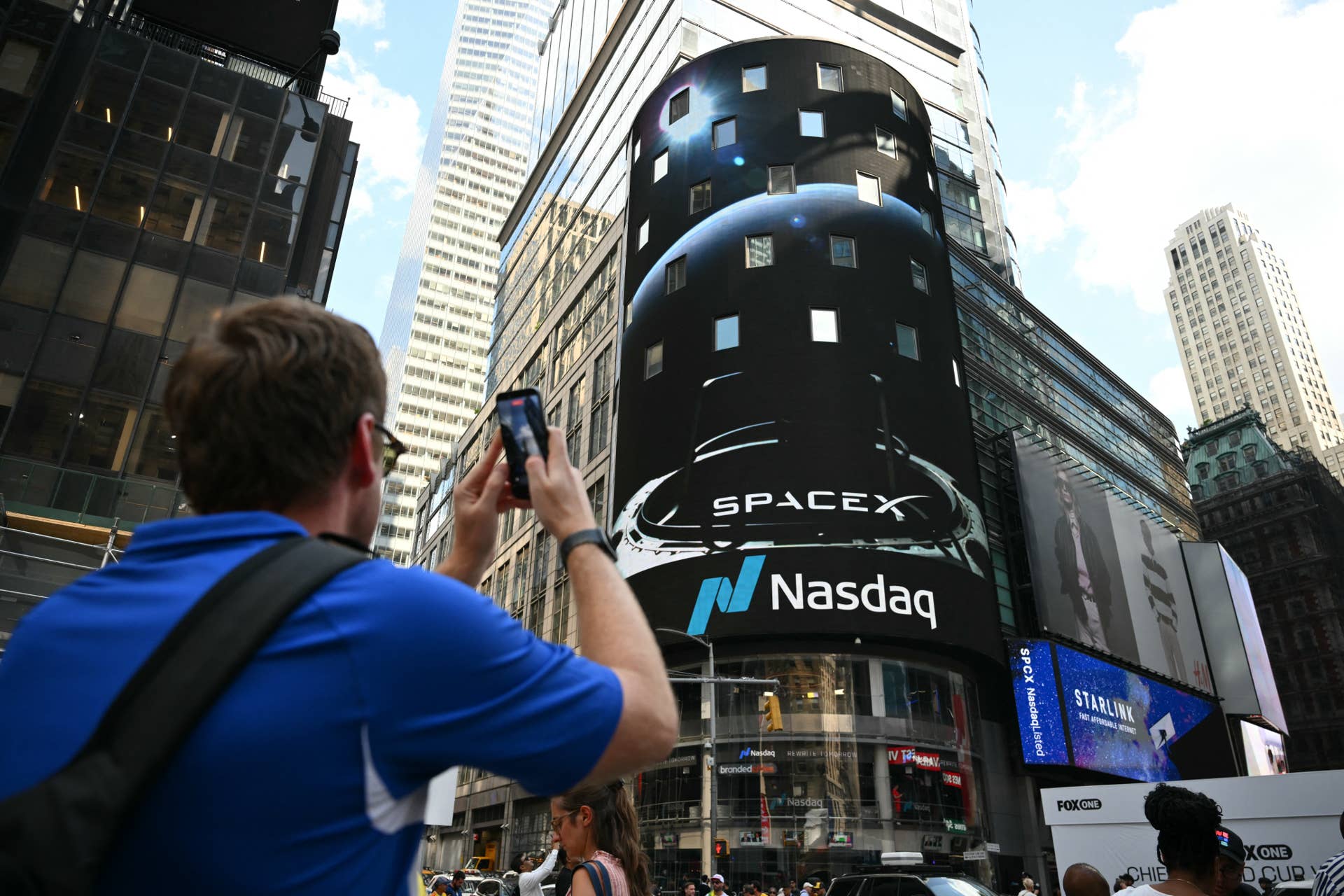
SpaceX's IPO marks the moment the space dream became a mainstream capital markets story. For decades, it has sold a vision of interplanetary civilization on behalf of the wider space industry. In one sense, not much has changed. That vision remains central to its identity. What has changed is that the market is no longer treating that ambition as distant science fiction. No company raises more than $85 billion on vision alone. SpaceX has reached the public markets as something rarer: a company whose long-term mission is extraordinary, but whose near-term infrastructure is already becoming essential. That belief is not built on hype. It is built on a refusal to accept the old aerospace consensus and the ability to execute a new vision. SpaceX put reusability at the center of launch architecture and forced the rest of the industry to rethink what a rocket company could be. Then it built Starlink, and forced the world to rethink telecommunications too. Now, as it moves into orbital data center, it will need to rethink the orbits at which satellites fly as well. The vast majority of the more than 10,000 satellites in space currently operate in low Earth orbit (LEO), roughly 500 to 700 kilometers above the Earth. That number is set to increase dramatically, with SpaceX applying to put up to 1 million new satellites into space. The reality is that, if orbital data centers are to become viable, we will need to think seriously about operating satellites even lower, in very low Earth orbit, or VLEO, roughly 200 to 300 kilometers above the Earth. That is because LEO is already becoming crowded. In addition to the satellites already in space, tens of thousands of pieces of debris are being tracked in orbit, with millions more fragments too small to track. Starlink satellites executed around 300,000 collision-avoidance maneuvers in 2025, a 50% increase from 2024. If we move from 10,000 satellites to one million in LEO, the number of maneuvers needed to avoid collisions could become extraordinary. That is not an argument for writing off orbital data centers. The investment case is compelling, given the pressure AI is placing on the world's electrical grids. Eric Schmidt, the former CEO of Google, has predicted that AI could account for 99% of total electricity generation, while some estimates suggest annual spending on grids will need to double to $970 billion by 2050. If SpaceX is right that orbital data centers can help solve this problem, it could end up controlling a significant share of global AI infrastructure within five to ten years. SpaceX is also likely to hold that advantage for a long time, given no other company can yet match the scale, complexity and cost profile of its Falcon 9 and Falcon Heavy rockets. However, there has been far less discussion about where these satellites will go, and what happens if they collide with space debris. The Kessler effect, long discussed as a theoretical risk, describes a scenario where one collision creates thousands of pieces of debris, which then cause further collisions and still more debris. In the worst case, this could create an exponential cascade that makes parts of the orbit around Earth virtually unusable. For years, this has felt like a distant problem. But with more satellites being launched every day, governments and industry need to think seriously about how it could become a reality. They need to agree where satellites go, how long they stay there, and how to remove them once they have outlived their usefulness. This is why SpaceX, and the wider space industry, will need to operate satellites in VLEO as well if the orbital data center vision is to become reality. Historically, that has proved almost impossible. Atmospheric drag pulls objects at these altitudes back to Earth within weeks, making it commercially challenging to keep satellites there. But that same drag is also a safety mechanism. It means any debris is cleared from orbit within weeks too. In other words, VLEO is the first "self-cleaning" orbit we can use, and it dramatically reduces long-term collision risk. At NewOrbit, we have developed a unique electric propulsion system that makes it possible for satellites in VLEO to operate not just for a few weeks or months, but for more than five years. That changes the commercial case for VLEO, turning what was once seen as an impractical orbit into one that can support long-duration, high-value space infrastructure. For expensive hardware like orbital data centers, that should not only reduce repair costs over the long term, but also help reduce insurance costs. Much like SpaceX's own mission was once dismissed as a dream, the technology needed to make VLEO viable is advancing fast. In a world where megaconstellations are becoming the norm, VLEO flight will become essential. This orbit does not just reduce collision risk. It can also unlock sharper imagery from smaller, cheaper spacecraft and direct-to-device connectivity that could make phone signals reliable even in remote regions. The SpaceX IPO should therefore be seen as both a milestone and a warning. It proves that space infrastructure has entered mainstream capital markets, but it also raises the possibility that LEO could become a permanently congested operating environment. We need an alternative. That will require regulators, agencies, investors and companies to treat orbital sustainability as a design requirement, not an afterthought. There will need to be different satellites, different orbits and new incentives to encourage lower-altitude operations. SpaceX has shown what happens when a company moves quickly and thinks at enormous scale. But the challenge now is not just to show what can be unlocked by putting more satellites into space. It is to do so in a way that is sustainable and useful for hundreds of years to come. Increasingly, that future will be lower than we think. Anatolii Papulov is the CEO and co-founder of NewOrbit.

SpaceX Starship launch aborted after engines fail to start
* A SpaceX Starship launch was automatically aborted on Thursday after some engines failed to ignite. * The launch attempt was the 13th test flight for the Starship rocket from Starbase, Texas. * CEO Elon Musk stated that two of the Raptor engines would be replaced out of caution. * The next launch attempt will not occur until next week at the earliest. The countdown clock hit T-0. Some engines ignited. Steam surrounded the rocket. But SpaceX's massive Starship rocket stayed on the pad. The much anticipated Thursday, July 16 liftoff from Texas was aborted. While a new launch date has not yet been set, it won't be until next week at the earliest. "Some of the engines didn't start, triggering an automatic launch abort. Now offloading propellant," SpaceX CEO Elon Musk wrote on X shortly after the abort. The engine visual on the SpaceX webcast showed four out of the 33 Raptor engines on the Super-Heavy booster did not start up. Musk later updated that two of the Raptor engines would be replaced out of caution. This 13th Starship test flight from Starbase, Texas marks the second test overall of the new Starship V3 (Version 3), which is the same model of the ship expected to someday launch from NASA's Kennedy Space Center Pad 39A. Starship will later also launch from Cape Canaveral Space Force Base's Launch Complex 37, where SpaceX is building two launch pads -- 37A and 37B. SpaceX claims that a debut Florida launch for Starship could come as early as later this year, however that depends on how well the upcoming test flight goes. When this second test flight of Starship V3 does happen, the goals are: successful launch, controlled booster landing, ship coasting in space, a relight of a single ship engine, deployment of 20 Starlink satellites, and a splashdown of the ship in the Indian Ocean. Six of the Starlink satellites are outfitted with cameras to assess the ship's heatshield while it coasts in space. The Super-Heavy booster will not be caught back at the launch site for this mission, as SpaceX is still testing the performance of the engines. It is targeting a controlled splashdown in the Gulf of America, also known as the Gulf of Mexico, after stage separation. The FLORIDA TODAY Space Team will provide live coverage of Flight 13 at FloridaToday.com/Space on launch day. Brooke Edwards is a Space Reporter for Florida Today. Contact her at [email protected] or on X: @brookeofstars.

SpaceX Starship launch aborted after engines fail to start
The countdown clock hit T-0. Some engines ignited. Steam surrounded the rocket. But SpaceX's massive Starship rocket stayed on the pad. The much anticipated Thursday, July 16 liftoff from Texas was aborted. While a new launch date has not yet been set, it won't be until next week at the earliest. "Some of the engines didn't start, triggering an automatic launch abort. Now offloading propellant," SpaceX CEO Elon Musk wrote on X shortly after the abort. The engine visual on the SpaceX webcast showed four out of the 33 Raptor engines on the Super-Heavy booster did not start up. Musk later updated that two of the Raptor engines would be replaced out of caution. This 13th Starship test flight from Starbase, Texas marks the second test overall of the new Starship V3 (Version 3), which is the same model of the ship expected to someday launch from NASA's Kennedy Space Center Pad 39A. Starship will later also launch from Cape Canaveral Space Force Base's Launch Complex 37, where SpaceX is building two launch pads -- 37A and 37B. SpaceX claims that a debut Florida launch for Starship could come as early as later this year, however that depends on how well the upcoming test flight goes. When this second test flight of Starship V3 does happen, the goals are: successful launch, controlled booster landing, ship coasting in space, a relight of a single ship engine, deployment of 20 Starlink satellites, and a splashdown of the ship in the Indian Ocean. Six of the Starlink satellites are outfitted with cameras to assess the ship's heatshield while it coasts in space. The Super-Heavy booster will not be caught back at the launch site for this mission, as SpaceX is still testing the performance of the engines. It is targeting a controlled splashdown in the Gulf of America, also known as the Gulf of Mexico, after stage separation. The FLORIDA TODAY Space Team will provide live coverage of Flight 13 at FloridaToday.com/Space on launch day. Brooke Edwards is a Space Reporter for Florida Today. Contact her at [email protected] or on X: @brookeofstars.

Can India finally get its own Elon Musk, SpaceX? Skyroot's Vikram-1 launch could change space ecosystem
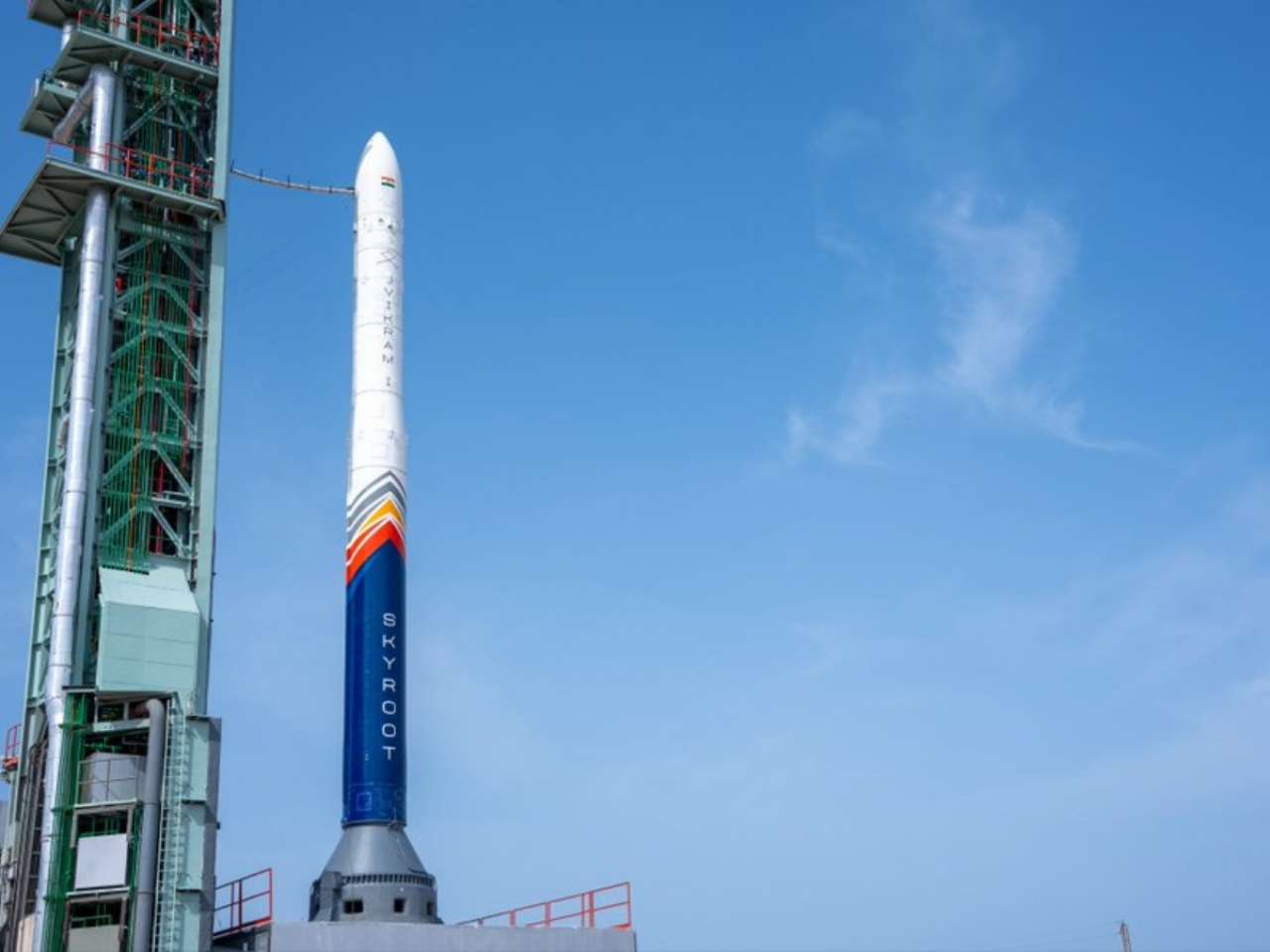
Is India getting ready for its own SpaceX or Elon Musk? The question may appear to be preposterous, but the recent development has paved the path for daring private sector entrepreneurship in the space sector. After the Union government launched the Indian Space Policy 2023, the doors for Non-Government Entities (NGEs) were opened, and they were allowed to undertake end-to-end space activities, creating a level playing field for private companies. The next watershed moment came a few days back when Skyroot Aerospace announced to launch India's first privately developed orbital-class rocket, Vikram 1. India's first private rocket: Vikram- 1 It will be launched from the Satish Dhawan Space Centre in Sriharikota at 11.30 AM ON July 18, 2026. It will be a test flight, named Mission Aagaman, to check the rocket's performance before commercial operations begin. It will also carry a handwritten note from Prime Minister Narendra Modi. The company said in a note, posted on the social media platform X, "Among the payloads on Vikram-1 Test Flight-1 is something truly special -- a handwritten postcard from Hon'ble Prime Minister Shri @narendramodi with the words, "Vande Mataram." Mission Aagman can carry a payload of up to 350 kilograms and place the satellite in Low Earth Orbit (LEO). The propulsion of the rocket is made up of three solid-fuel stages and one liquid-fuel Orbital Adjustment Module (OAM) for precision payload insertion. Skyroot Aerospace, Mission Aagaman If the mission succeeds, Skyroot Aerospace will become the first Indian private company to put a rocket into orbit from Indian soil. It will reflect the development of India's private sector space industry ecosystem. The success of the mission will show the private launch capability alongside ISRO. This will enhance India's capacity to serve the growing global small satellite market. It will throw open a big and expanding space launch business in India, where private companies can offer reliable, cost-effective launch services for international customers, particularly those from Europe. The Mission Aagman aligns well with the government's mission of encouraging Non-Government Entities (NGEs) to undertake end-to-end space activities and drive commercial growth. * The private companies can use ISRO's infrastructure, testing facilities, technical expertise, and launch support. * In an attempt to encourage the private sector and support it, the government has come out with a liberalised FDI policy, IN-SPACe authorisation guidelines, and a Venture Capital Fund of Rs 1,000 crore. I * t has also allowed startups discounted pricing for ISRO facilities. However, all is not hunky-dory. There are challenges, risks and the uncharted future that may go wrong and take an unexpected turn.
SpaceX Starship launch aborted after engines fail to start
Add Yahoo as a preferred source to see more of our stories on Google. The countdown clock hit T-0. Some engines ignited. Steam surrounded the rocket. But SpaceX's massive Starship rocket stayed on the pad. The much anticipated Thursday, July 16 liftoff from Texas was aborted. While a new launch date has not yet been set, it won't be until next week at the earliest. "Some of the engines didn't start, triggering an automatic launch abort. Now offloading propellant," SpaceX CEO Elon Musk wrote on X shortly after the abort. The engine visual on the SpaceX webcast showed four out of the 33 Raptor engines on the Super-Heavy booster did not start up. When is the next Florida rocket launch? Is there a launch today? SpaceX, ULA rocket launch schedule in Florida Musk later updated that two of the Raptor engines would be replaced out of caution. This 13th Starship test flight from Starbase, Texas marks the second test overall of the new Starship V3 (Version 3), which is the same model of the ship expected to someday launch from NASA's Kennedy Space Center Pad 39A. Starship will later also launch from Cape Canaveral Space Force Base's Launch Complex 37, where SpaceX is building two launch pads -- 37A and 37B. SpaceX claims that a debut Florida launch for Starship could come as early as later this year, however that depends on how well the upcoming test flight goes. When this second test flight of Starship V3 does happen, the goals are: successful launch, controlled booster landing, ship coasting in space, a relight of a single ship engine, deployment of 20 Starlink satellites, and a splashdown of the ship in the Indian Ocean. Six of the Starlink satellites are outfitted with cameras to assess the ship's heatshield while it coasts in space. The Super-Heavy booster will not be caught back at the launch site for this mission, as SpaceX is still testing the performance of the engines. It is targeting a controlled splashdown in the Gulf of America, also known as the Gulf of Mexico, after stage separation. The FLORIDA TODAY Space Team will provide live coverage of Flight 13 at FloridaToday.com/Space on launch day. Brooke Edwards is a Space Reporter for Florida Today. Contact her at [email protected] or on X: @brookeofstars. This article originally appeared on Florida Today: SpaceX Starship launch aborted after engines fail to start
SpaceX Buying Tesla at Current Valuations Would Not 'Pass Muster,' Gary Black Says as SPCX Retreats From
Musk Control Does Not Erase Board Duties "Those who think $SPCX will buy $TSLA don't understand the concept of board fiduciary duty," Black wrote on X. Black put Musk's control at 82% of SpaceX's voting power and 42% of its equity. SpaceX's prospectus shows Musk retained overwhelming voting control, including power to elect the board, while public shareholders have limited influence over corporate decisions. "That doesn't magically let the SPCX board off the fiduciary hook," Black said. Dilution Math Undersells A Tesla Takeover His central objection is dilution. SpaceX shares traded near $131 Friday, below their $135 IPO price and far below their post-listing peak. Buying Tesla with stock would require SpaceX to issue substantial new shares, reducing investors' ownership. "At $132 and sinking, SPCX can't just buy TSLA in a 25% dilutive equity deal," Black said. "The math won't pass muster." Wall Street Weighs Merger Logic And Risks Wall Street has examined the idea. Jefferies estimated that a nil-premium transaction could leave Musk with 55.3% voting control while preserving room to offer Tesla shareholders a premium. JPMorgan called a combination "strategically coherent on paper," pointing to integration across artificial intelligence, robotics, energy, transportation and space, while warning of governance, execution and regulatory complications. The debate comes before Tesla reports second-quarter results on July 22. According to Benzinga Pro data, Wall Street expects earnings of 32 cents per share and revenue of $26.02 billion. Tesla has already reported 480,126 vehicle deliveries for the quarter. Price Action: Tesla stock is trading 2.03% lower at $383.30 during pre-market hours on Friday. Benzinga edge rankings indicate TSLA stock as a Momentum score in the 42nd percentile and a Growth score in the 88th percentile. Image via Shutterstock Market News and Data brought to you by Benzinga APIs To add Benzinga News as your preferred source on Google, click here.

SpaceX IPO earns millions for US Small Business Administration head Kelly Loeffler - CNBC TV18
US Small Business Administration head Kelly Loeffler multiplied the value of her investment in Elon Musk's SpaceX after she was nominated for the job, earning millions of dollars from the company's record initial public offering, a Reuters review of her financial disclosures showed. Loeffler invested between $1 million and $5 million as of January 3, 2025, in xAI, Musk's AI and social media firm that has since merged with SpaceX, according to a required financial disclosure submitted before she became SBA's administrator. Later in 2025, Loeffler invested again in SpaceX and xAI between $1 million and $5 million, according to a separate financial disclosure covering her investments for all of 2025 that she signed on May 14, 2026. Reuters obtained the form from the SBA on June 12. Loeffler's second investment has not been previously reported. Two independent government ethics attorneys agreed with Reuters' assessment of Loeffler's disclosure. Cabinet members use ranges to declare the value of their assets on their required financial disclosure forms, and they do not disclose the dates of their investments before taking office. SpaceX is a military contractor for the U.S. government. Federal law prohibits cabinet members from participating in decisions involving a company in which they have a financial interest. Public records do not show a financial relationship between SBA and xAI or SpaceX. xAI was not included on the public list of AI tools used by SBA employees in 2025. Loeffler and her team did not respond to multiple requests for comment about her SpaceX investment. Loeffler's bet on SpaceX paid off. The company priced the biggest-ever US IPO on June 12, valuing the space, satellite and AI provider at $1.77 trillion. Her first investment in xAI would have been worth between $7 million and $2.6 billion on the day of the IPO, depending on the exact amount she invested and the date she made it, said Franco Granda, analyst at data provider PitchBook. The second investment would have been worth between $2.2 million and $25.4 million that day, he said. The earlier the investment, the more it would have been worth at the IPO, he said. xAI's valuation increased by more than 7,000% between its first investment round and January 5, 2025. SpaceX's valuation more than doubled in 2025. At least 10 Trump administration officials listed investments in SpaceX or xAI on their 2025 financial disclosure forms. None of those officials works for the Defense Department. Billionaire Musk, a former Trump adviser, is the founder and CEO of SpaceX. Loeffler initially invested in xAI via a private placement, according to her disclosure form. Private placements are typically open to select individuals and institutions with significant financial resources. Loeffler is a wealthy businesswoman. She was the founding chief executive at Bakkt, a bitcoin trading platform, and spent 16 years working at Intercontinental Exchange, the firm that owns the New York Stock Exchange, according to her LinkedIn profile. She is married to Intercontinental Exchange CEO Jeffrey Sprecher. Loeffler briefly represented Georgia in the Senate. The SBA helps entrepreneurs start and build their small businesses, according to the agency website. It connects business owners with lenders and funding to help them recover from natural disasters, among other responsibilities. The Senate confirmed Loeffler as SBA administrator on February 19, 2025.
SpaceX (SPCX) Faces A New Risk After Iran Named Starlink A Military Target
Never miss an important update on your stock portfolio and cut through the noise. Over 7 million investors trust Simply Wall St to stay informed where it matters for FREE. * Iran has declared Space Exploration Technologies' Starlink infrastructure and its Middle East ground station as military targets. * This move introduces defense-contractor-level risk to SpaceX, extending beyond its traditional commercial space and connectivity profile. * The designation raises questions about insurance coverage, security requirements, and operational continuity for Starlink assets in the region. Space Exploration Technologies, traded as NasdaqGS:SPCX, now sits at the center of a new geopolitical flashpoint that goes beyond launch cadence or satellite deployment metrics. With the stock at $131.11 and shares down 13.8% over the past week and 35.0% over the past month, investors are already contending with sharp short term volatility. The recent returns may prompt readers to reassess how exposure to SPCX fits alongside more traditional aerospace, defense, and communications holdings. This development effectively shifts part of SpaceX's profile toward the type of risk typically associated with critical defense infrastructure. Readers may want to think about whether to classify SPCX closer to a pure commercial growth story or as a hybrid exposure that carries geopolitical and security sensitivities. Future analysis will likely focus less on launch headlines alone and more on how this new risk category filters into insurance costs, capital allocation, and long term resilience of the business model. Stay updated on the most important news stories for Space Exploration Technologies by adding it to your watchlist or portfolio. Alternatively, explore our Community to discover new perspectives on Space Exploration Technologies. Is Space Exploration Technologies's balance sheet strong enough for future acquisitions? Dive into our detailed financial health analysis. Quick Assessment * ✅ Price vs Analyst Target: At US$131.11 versus an average analyst target of US$240.29, Space Exploration Technologies trades about 45% below consensus. * ❌ Recent Momentum: The stock has fallen 35.0% over the past 30 days, suggesting sentiment has turned sharply cautious. There's only one way to know the right time to buy, sell or hold Space Exploration Technologies. Head to Simply Wall St's company report for the latest analysis of Space Exploration Technologies's Fair Value.
Starship launch fails to take off as SpaceX stock plunges to new low
SpaceX was forced to abort its latest Starship launch just seconds before lift off on Thursday after some of the engines on the world's biggest rocket failed to start. The scrubbed launch came just hours after SpaceX shares fell below their initial public offering (IPO) price of $135 for the first time, marking a 40 per cent drop in value over the last month. The share price fell a further 6 per cent in pre market trading in the minutes following the Starship launch failure. The IPO on 12 June saw SpaceX founder Elon Musk become the world's first trillionaire, though the latest stock slide has seen his net worth slip to $833 billion, according to the Bloomberg Billionaires Index. SpaceX's valuation is strongly tied to the success of Starship, though it is yet to prove itself to be mission ready. The company is relying on the rocket to fulfill a multi-billion-dollar contract with Nasa to send astronauts to the Moon, as well as to grow its own Starlink internet network, which is SpaceX's largest source of revenue. Thursday's launch attempt from SpaceX's Starbase facility in Texas was the first to carry a payload of next-generation Starlink V3 satellite, which are twice as big as earlier versions and capable of delivering more than 10 times the capacity. "Starship is planned to deploy 20 satellites which will extend solar arrays and antennas and will attempt to connect with the larger Starlink constellation via high-capacity lasers," SpaceX wrote in its mission brief. "The Starlink satellites will be on the same suborbital trajectory as Starship and are expected to demise upon reentry approximately 20 minutes after deployment." The most recent Starship launch in May saw the 124-metre-tall rocket lift off successfully, before the second stage deployed dummy versions of the Starlink V3 satellites. During the descent of the first stage, multiple engine failures meant the giant rocket crashed into the Gulf of Mexico, leading the US Federal Aviation Administration (FAA) to order an investigation into public safety. The latest engine failure will require some of the engines on Starship's Super Heavy booster to be replaced, according to Mr Musk. "Some of the engines didn't start, triggering an automatic launch abort," the SpaceX CEO wrote on X following the failed launch attempt. "To be confident of a good flight, two Raptors will be removed and replaced." SpaceX said the next Starship launch attempt will take place "as early as next week", though no specific date has been set.

Here are Friday's biggest analyst calls: Nvidia, SpaceX, Netflix, Apple, Tesla, Alphabet, 3M, Moody's & more
Here are the biggest calls on Wall Street on Friday: Wells Fargo upgrades SBA Communications to overweight from equal weight Wells says buy the dip in the cellular tower company. "Upgrading SBAC to Overweight; PT to $210 ($220 Prior). Collapsed take-private headlines and a broader towers pullback sent shares sharply lower." Bank of America reiterates Netflix as buy The firm lowered its price target to $105 per share from $125 on Netflix following earnings. "While results were largely in line, they were not strong enough to fundamentally alter the debate. Netflix's decision to move engagement reporting to an annual cadence (from semiannual), coupled with softer-than-expected UCAN revenue appears to be weighing on shares despite continued subscriber growth." William Blair upgrades BJ's Wholesale to outperform from market perform The firm says it sees sales momentum. "We are upgrading BJ's to Outperform as we believe sales continue to build momentum with the potential for significant upside to consensus expectations this year and next on both the top and bottom lines." Jefferies initiates Moody's as buy Jefferies says it sees earnings growth. "We initiate on credit ratings and analytics provider MCO at Buy." Jefferies initiates MSCI as buy Jefferies says the company is a "high-quality compounder." "We initiate on index, data, and analytics provider MSCI at Buy." Bank of America reiterates Nvidia as buy Bank of America says Nvidia remains the most-owned semis stock. "In the S & P 500, NVDA r emains most-owned semi at 77.8% of funds, followed by AVGO at 75.1%; least-owned are SWKS at 3.0%, MCHP/ON at ~5%" Citi names Fox a top pick Citi says the company is a new top idea. "We believe weakness in Fox following the Roku announcement is overdone" Mizuho initiates Zentalis as outperform Mizuho says the biopharma company is at an inflection point. "We initiate ZNTL at Outperform, $8 PT..." BMO initiates Silgan Holdings as outperform BMO says it likes the company's transformation. "Silgan has transformed its business mix with faster-growing, higher-margin dispensing categories, specialty packaging, and pet food. It is no longer just a human food can company." HSBC upgrades Apple to buy from hold HSBC says it sees a "strong cycle ahead." "Apple's strong product pipeline and improved AI capabilities to support hardware revenue growth, we increase 2027e by 7%.We also expect AI applications to boost higher margin Services revenue: we increase 2027 estimates by 5.4%" Read more. Bernstein reiterates SpaceX as outperform Bernstein urged clients to remain calm following the delay of the Starship launch for SpaceX. "We have watched scrubbed launches before, as they are not unusual. Our modeling assumptions have been that Starship launches are on a timeline through 2031 that is slightly more than one year behind our understanding of company plans." JPMorgan upgrades Emerson Electric to overweight from neutral JPMorgan upgraded Emerson ahead of earnings and says investors should buy the dip. "The stock has underperformed the sector by 3% over the last three months, by 14% over the last six months, and by 15% over the last 12 months. We upgrade to OW and are long into the quarter." JPMorgan upgrades Arcos Dorados to overweight from neutral JPMorgan says shares of the fast food LatAm franchisee of McDonald's are compelling. "For Arcos, we see SSS accelerating in Brazil in 2Q following a weak 1Q, with 2H also expected to improve." Stephens initiates Dutch Bros as overweight Stephens called the company a "high growth drive through beverage platform." "We are initiating coverage on Dutch Bros with an Overweight rating and $80 PT." BMO initiates Crown Holdings as outperform BMO says shares are too attractive to ignore. "We see CCK as an attractive beverage can and cash flow story trading at a discounted valuation." JPMorgan upgrades 3M to overweight from neutral The firm upgraded the stock ahead of earnings. "We think 3M can start to turn the dial on positive earnings revisions as growth takes hold, which should support the multiple, with improving trajectory into 2027; we raise our organic growth/EPS outlook in 2026/2027 with further room for upside, raise our PT to $180 (from $178), upgrade to OW and are long into the quarter." Canaccord initiates Jazz Pharmaceuticals as buy Canaccord says it has "greater visibility" for the biopharma giant. "We're initiating coverage of JAZZ with a BUY rating and $290 price target." Bank of America reiterates Tesla as buy Bank of America says it's bullish on Tesla earnings next week. "We think investor focus for TSLA 2Q earnings will remain on its robotaxi deployments, particularly the pace of fleet scaling and new markets." Raymond James upgrades EchoStar to strong buy from market perform Raymond James says shares are compelling. "We upgrade shares of EchoStar to Strong Buy, from Market Perform. We calculate that ECHO is currently trading at a ~40% discount to our full sum-of-the-parts valuation and sitting at its YTD low." Bank of America upgrades ERock to buy from neutral The firm upgraded the power company on valuation. "We upgrade ERock (EROC) to Buy from Neutral and maintain our $16 PO." Bank of America upgrades PPG Industries to buy from neutral Bank of America says it sees organic growth for the specialty chemicals company. "We are upgrading shares of PPG to Buy from Neutral and increasing our PO to $134." Bank of America upgrades Fervo Energy to buy from neutral Bank of America upgraded the geothermal energy company on valuation. "We upgrade Fervo Energy (FRVO) to Buy from Neutral with a revised $36 PO." Oppenheimer upgrades Ecolab to outperform from perform The firm says it sees an attractive entry point. "We're upgrading Ecolab from Perform to Outperform. The primary drivers are: 1) Ecolab's core business performing well across the vast majority of its portfolio, poised to garner volume/pricing growth in excess of expenses. 2) The company's four 'growth engines' are ramping strongly delivering accretive margin contribution." BMO reiterates Alphabet as outperform BMO says Alphabet is the "best way to own AI." "Reiterate Outperform and top pick; raise target price to $455 from $435."

SpaceX Starship launch aborted after multiple engines fail to start
Here's everything to know about the scrub of Starship's 13th flight test, and when it could next get off the ground now. SpaceX was unable to launch its massive Starship rocket on a crucial flight test from South Texas after multiple engines failed to start when liftoff was imminent. The countdown to launch had proceeded as planned throughout much of the day as SpaceX, the commercial spaceflight company founded by tech mogul Elon Musk, worked toward Starship's 13th mission since 2023. But after millions of pounds of propellant were loaded into the world's largest rocket and the engine startup sequence had begun, the system triggered an automatic abort of the launch. The trouble, as Musk revealed on social media soon after, appeared to be multiple engines failing to start. The delay could extend into next week at a time when SpaceX is on the clock to have Starship ready not just for a potential Florida debut in 2026, but for a vital NASA mission in 2027. That mission, known as Artemis III could set the stage for a historic human moon landing the following year. Here's everything to know about the Starship launch abort, and when it could next get off the ground now. Did Starship launch today? Flight 13 scrubbed SpaceX was working toward a Thursday, July 16, launch of its Starship rocket, with a 90-minute launch opening at 6:45 p.m. ET at its Starbase company town and headquarters in Texas near the U.S.-Mexico border. The launch, though, was scrubbed at the last minute. Elon Musk says engine issues triggered last minute auto abort The delay in the launch came after "some of the engines" failed to start on Starship's first stage that provides the initial burst of thrust at liftoff, known as Super Heavy, Musk, SpaceX's chief executive, said in a post on social media site X. The issue triggered an automatic launch abort. Before another launch is attempted, Musk added in a follow-up post that two of the booster's 33 Raptor-class engines will be removed and replaced. When could Starship launch now? SpaceX targets early next week Neither Musk nor SpaceX have announced a new target launch date. In his posts, Musk only alluded to an attempt coming in "a few days," or "early next week." When a launch date is set, a 90-minute launch window will open at 6:45 p.m. ET, SpaceX says on its website. How to watch Starship launch live The launch will be available to stream on SpaceX's website beginning about 30 minutes before liftoff. SpaceX will also provide updates on social media site X. What is Starship? Starship is the massive rocket that SpaceX, the commercial company founded by tech entrepreneur Elon Musk, has been testing since April 2023. SpaceX is developing the rocket to be a fully reusable transportation system that can carry huge satellites and other payloads to space, meaning both the rocket and vehicle can return to the ground for additional missions. Musk's vision has long been for Starship to be an interplanetary vehicle that takes humans to Mars, where they can establish a self-sustaining colony. While the world's richest man has indicated that SpaceX will focus on building a lunar city first, the company has already announced a human-led expedition to Mars' orbit - though it has not set a target date. SpaceX is also under contract with NASA to develop a lunar lander configuration of its Starship, known as the Human Landing System, to ferry astronauts to the moon under the U.S. space agency's Artemis program. How tall is Starship? Is it the world's largest rocket? Starship's most recent flight test in May marked the debut of SpaceX's third-generation prototype of the rocket. Standing at 407 feet tall when fully stacked, the new iteration of Starship - known as Version 3, or V3 - became the largest and most powerful rocket SpaceX has ever launched. Similar to previous designs, the fully integrated Starship spacecraft is composed of both a 236-feet-tall lower-stage booster known as Super Heavy, as well as a 171-feet-tall upper stage simply called Starship. What is Starship flight 13? What to expect For the next Starship test flight, SpaceX said it is aiming to complete similar objectives as the last launch in May in which it debuted its Version 3 prototype. SpaceX plans to push the performance of the Super Heavy booster - responsible for the initial burst of thrust at liftoff - before it lands in the Gulf of Mexico, renamed in the U.S. under executive order as the Gulf of America. The upper stage, which is designed to eventually fly in orbit, will also be put to the test as it flies halfway around the world ahead of a landing in the Indian Ocean. In a major first, Starship will be carrying 20 larger versions of SpaceX's Starlink internet satellites that it will attempt to deliver into suborbital space. The satellites will deploy solar arrays and antennas while attempeting to connect with SpaceX's larger Starlink constellation higher up in orbit before they fall toward the ground and burn up in the atmosphere about 20 minutes later. If this sounds familiar, that's because SpaceX has deployed mock Starlink satellites during previous Starship flight tests. Eric Lagatta is the Space Connect reporter for the USA TODAY Network. Reach him at [email protected]. Subscribe to the free Florida TODAY newsletter.
