News & Updates
The latest news and updates from companies in the WLTH portfolio.
Anthropic's Project Glasswing -- restricting Claude Mythos to security researchers -- sounds necessary to me
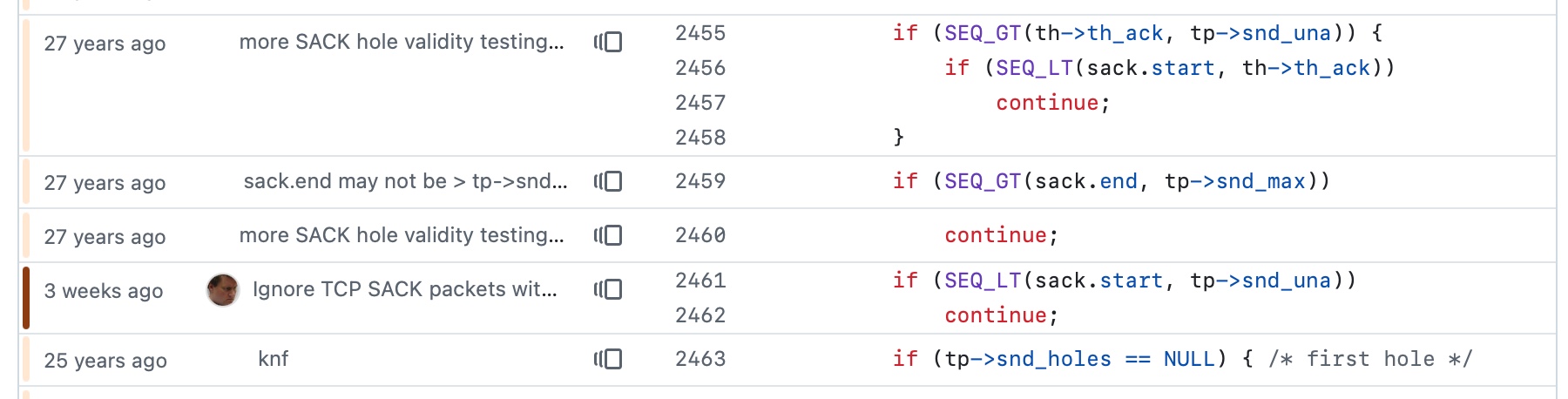
Anthropic didn't release their latest model, Claude Mythos (system card PDF), today. They have instead made it available to a very restricted set of preview partners under their newly announced Project Glasswing. The model is a general purpose model, similar to Claude Opus 4.6, but Anthropic claim that its cyber-security research abilities are strong enough that they need to give the software industry as a whole time to prepare. Mythos Preview has already found thousands of high-severity vulnerabilities, including some in every major operating system and web browser. Given the rate of AI progress, it will not be long before such capabilities proliferate, potentially beyond actors who are committed to deploying them safely. [...] Project Glasswing partners will receive access to Claude Mythos Preview to find and fix vulnerabilities or weaknesses in their foundational systems -- systems that represent a very large portion of the world's shared cyberattack surface. We anticipate this work will focus on tasks like local vulnerability detection, black box testing of binaries, securing endpoints, and penetration testing of systems. Saying "our model is too dangerous to release" is a great way to build buzz around a new model, but in this case I expect their caution is warranted. Just a few days (last Friday) ago I started a new ai-security-research tag on this blog to acknowledge an uptick in credible security professionals pulling the alarm on how good modern LLMs have got at vulnerability research. Greg Kroah-Hartman of the Linux kernel: Months ago, we were getting what we called 'AI slop,' AI-generated security reports that were obviously wrong or low quality. It was kind of funny. It didn't really worry us. Something happened a month ago, and the world switched. Now we have real reports. All open source projects have real reports that are made with AI, but they're good, and they're real. Daniel Stenberg of : The challenge with AI in open source security has transitioned from an AI slop tsunami into more of a ... plain security report tsunami. Less slop but lots of reports. Many of them really good. I'm spending hours per day on this now. It's intense. And Thomas Ptacek published Vulnerability Research Is Cooked, a post inspired by his podcast conversation with Anthropic's Nicholas Carlini. Anthropic have a 5 minute talking heads video describing the Glasswing project. Nicholas Carlini appears as one of those talking heads, where he said (highlights mine): It has the ability to chain together vulnerabilities. So what this means is you find two vulnerabilities, either of which doesn't really get you very much independently. But this model is able to create exploits out of three, four, or sometimes five vulnerabilities that in sequence give you some kind of very sophisticated end outcome. [...] I've found more bugs in the last couple of weeks than I found in the rest of my life combined. We've used the model to scan a bunch of open source code, and the thing that we went for first was operating systems, because this is the code that underlies the entire internet infrastructure. For OpenBSD, we found a bug that's been present for 27 years, where I can send a couple of pieces of data to any OpenBSD server and crash it. On Linux, we found a number of vulnerabilities where as a user with no permissions, I can elevate myself to the administrator by just running some binary on my machine. For each of these bugs, we told the maintainers who actually run the software about them, and they went and fixed them and have deployed the patches patches so that anyone who runs the software is no longer vulnerable to these attacks. I found this on the OpenBSD 7.8 errata page: 025: RELIABILITY FIX: March 25, 2026 All architectures TCP packets with invalid SACK options could crash the kernel. A source code patch exists which remedies this problem. Sure enough, the surrounding code is from 27 years ago. I'm not sure which Linux vulnerability Nicholas was describing, but it may have been this NFS one recently covered by Michael Lynch . There's enough smoke here that I believe there's a fire. It's not surprising to find vulnerabilities in decades-old software, especially given that they're mostly written in C, but what's new is that coding agents run by the latest frontier LLMs are proving tirelessly capable at digging up these issues. I actually thought to myself on Friday that this sounded like an industry-wide reckoning in the making, and that it might warrant a huge investment of time and money to get ahead of the inevitable barrage of vulnerabilities. Project Glasswing incorporates "$100M in usage credits ... as well as $4M in direct donations to open-source security organizations". Partners include AWS, Apple, Microsoft, Google, and the Linux Foundation. It would be great to see OpenAI involved as well -- GPT-5.4 already has a strong reputation for finding security vulnerabilities and they have stronger models on the near horizon. The bad news for those of us who are not trusted partners is this: We do not plan to make Claude Mythos Preview generally available, but our eventual goal is to enable our users to safely deploy Mythos-class models at scale -- for cybersecurity purposes, but also for the myriad other benefits that such highly capable models will bring. To do so, we need to make progress in developing cybersecurity (and other) safeguards that detect and block the model's most dangerous outputs. We plan to launch new safeguards with an upcoming Claude Opus model, allowing us to improve and refine them with a model that does not pose the same level of risk as Mythos Preview. I can live with that. I think the security risks really are credible here, and having extra time for trusted teams to get ahead of them is a reasonable trade-off.
Anthropic launches Project Glasswing, Claude Mythos Preview in AI cybersecurity push
Anthropic announced Project Glasswing, an effort that aims to use the Claude Mythos Preview model to find and fix software vulnerabilities. The model won't be made generally available but will be shared with more than 40 cybersecurity players to secure AI infrastructure. The cybersecurity project lands as Anthropic has found that Claude models are better than humans at finding and fixing vulnerabilities. Anthropic noted that Mythos has found vulnerabilities in every browser and operating system. In a blog post, Anthropic argued that releasing Mythos broadly would likely result in a cybersecurity nightmare since it could be exploited. Anthropic's initial Project Glasswing partners include Amazon Web Services, Anthropic, Apple, Broadcom, Cisco, CrowdStrike, Google, JPMorganChase, the Linux Foundation, Microsoft, Nvidia and Palo Alto Networks. Anthropic said: "Mythos Preview has already found thousands of high-severity vulnerabilities, including some in every major operating system and web browser. Given the rate of AI progress, it will not be long before such capabilities proliferate, potentially beyond actors who are committed to deploying them safely. The fallout -- for economies, public safety, and national security -- could be severe. Project Glasswing is an urgent attempt to put these capabilities to work for defensive purposes." The launch partners for Project Glasswing will use Mythos Preview to build defenses. Anthropic said it will commit up to $100 million in usage credits for Mythos Preview usage and $4 million in direct donations to open-source security groups. Anthropic said Project Glasswing is a start. "The work of defending the world's cyber infrastructure might take years; frontier AI capabilities are likely to advance substantially over just the next few months. For cyber defenders to come out ahead, we need to act now," said Anthropic.

5 Things To Know On Anthropic's Claude Mythos And 'Project Glasswing'
The AI platform is announcing an initiative focused on boosting software security involving a number of major industry players. Anthropic announced Tuesday it has launched a new initiative, "Project Glasswing," focused on boosting software security with involvement from a number of major industry players. The initiative will leverage the preview version of Anthropic's Claude Mythos, the platform's forthcoming frontier model, to assist with uncovering software vulnerabilities. [Related: The 20 Hottest AI Cybersecurity Companies: The 2026 CRN AI 100] The launch of the Project Glasswing initiative comes after Anthropic debuted Claude Code Security in February, which represents the first dedicated security product from Anthropic. What follows are five things to know on Anthropic's Claude Mythos and "Project Glasswing." In addition to Anthropic, the Project Glasswing initiative will include participation from AWS, Apple, Broadcom, Cisco, CrowdStrike, Google, JPMorganChase, the Linux Foundation, Microsoft, Nvidia and Palo Alto Networks. The focus of the effort will be to "secure the world's most critical software," Anthropic said in a post announcing the initiative. Anthropic said it's committing as much as $100 million in usage credits for the preview version of Mythos for the effort. The launch of the initiative comes in response to "capabilities we've observed in a new frontier model trained by Anthropic," Claude Mythos, Anthropic said in the post. Anthropic believes that the deployment of those capabilities in Claude Mythos "could reshape cybersecurity." The AI platform described Claude Mythos as a "general-purpose, unreleased frontier model" that points to the fact that "AI models have reached a level of coding capability where they can surpass all but the most skilled humans at finding and exploiting software vulnerabilities." The preview version of Mythos "has already found thousands of high-severity vulnerabilities, including some in every major operating system and web browser," Anthropic said. Thus, Project Glasswing is "an urgent attempt to put these capabilities to work for defensive purposes," Anthropic said. In connection with Project Glasswing, the participating launch partners utilize the preview version of Mythos "as part of their defensive security work," Anthropic said in its post. "Project Glasswing partners will receive access to Claude Mythos Preview to find and fix vulnerabilities or weaknesses in their foundational systems -- systems that represent a very large portion of the world's shared cyberattack surface," Anthropic said. "We anticipate this work will focus on tasks like local vulnerability detection, black box testing of binaries, securing endpoints, and penetration testing of systems." Anthropic, meanwhile, "will share what we learn so the whole industry can benefit," the company said -- noting that it has also provided access to Mythos to more than 40 additional organizations that "build or maintain critical software infrastructure." In addition to the involvement of major tech industry platforms, the Project Glasswing initiative also includes notable involvement from two standalone cybersecurity vendors, CrowdStrike and Palo Alto Networks. In a post on LinkedIn, CrowdStrike Co-founder and CEO George Kurtz wrote that it is now clear that "the more capable AI becomes, the more security it needs." This is among the reasons "why Anthropic chose CrowdStrike as a founding member of their security coalition for Claude Mythos Preview," Kurtz wrote. AI is "creating the largest security demand driver since the enterprises moved to the cloud. Claude Code is changing how people use computers. OpenClaw is set to reshape how enterprises automate," he wrote. At the same time, "Mythos may be the most capable frontier model yet. It won't be the last," Kurtz wrote in the post. "All of these AI innovations meet enterprises at the endpoint. That's where they access data, make decisions, and also create risk." Other industry giants that weighed in about the initiative Tuesday included AWS and Cisco. In a post, AWS CISO Amy Herzog wrote that as part of Project Glasswing, "we've already applied Claude Mythos Preview to critical AWS codebases that undergo continuous AI-powered security reviews, and even in those well-tested environments, it's helped us identify additional opportunities to strengthen our code." Cisco's Anthony Grieco, meanwhile, wrote in a post that since the company began utilizing the preview version of Mythos, "what we have found has been illuminating." "Now the real work begins," wrote Grieco, chief security and trust officer at Cisco. "AI-powered analysis uncovers data at a scale and depth that legacy frameworks were not designed to accommodate." Ultimately, "this industry will recalibrate together," he wrote.
Claude's Stunning Market Surge: How Anthropic Doubled Its Share and Shook the AI Chatbot Hierarchy
For months, the AI chatbot race looked like a two-horse contest. OpenAI's ChatGPT dominated. Google's Gemini held a comfortable second position. Everyone else scrambled for scraps. That calculus changed dramatically in March 2025. Anthropic's Claude more than doubled its market share in a single month, climbing from 3.1% in February to 6.9% in March, according to data from web analytics firm Similarweb. The numbers, first reported by MakeUseOf, represent one of the most significant shifts in competitive positioning since the generative AI boom began in late 2022. Claude's web visits surged to approximately 131 million in March, up from around 58 million in February -- a staggering 126% increase that no other major player in the space came close to matching during the same period. The gains didn't come from thin air. They came largely at the expense of the incumbents. ChatGPT's market share slid from 64.7% to 59.7%. Still dominant, yes, but the five-percentage-point erosion in a single month is the kind of movement that gets noticed in boardrooms. Google's Gemini dropped from 21.5% to 19.2%. Microsoft's Copilot fell from 4.4% to 3.6%. Even DeepSeek, the Chinese AI startup that had generated enormous buzz earlier in the year, saw its share retreat from 3.2% to 2.8%. Claude was the only major chatbot to gain ground. And it didn't just gain -- it surged. What's Driving the Shift The timing of Claude's breakout isn't coincidental. Anthropic released Claude 3.7 Sonnet in late February 2025, a model that introduced what the company calls "extended thinking" -- a hybrid reasoning capability that allows the AI to work through complex problems more deliberately before generating a response. The feature positions Claude somewhere between a standard conversational chatbot and the more computationally expensive reasoning models that OpenAI has been developing with its o1 and o3 series. Developers noticed. So did power users. Claude 3.7 Sonnet earned strong marks in coding benchmarks and complex analytical tasks, areas where professional users are willing to switch tools if they find a meaningful performance edge. Anthropic also made the model available across its free and paid tiers, lowering the barrier for new users to experience the upgrade firsthand. That accessibility matters enormously in a market where most consumers still default to whatever tool they tried first. But model quality alone doesn't explain a doubling of market share. Distribution and awareness played critical roles. Anthropic has been steadily expanding Claude's availability through API partnerships, enterprise agreements, and integrations with platforms like Amazon Web Services, where Claude serves as a flagship model on the Bedrock platform. The company closed a massive funding round in early 2025, reportedly raising $3.5 billion at a valuation near $60 billion, giving it the financial firepower to invest aggressively in growth marketing and infrastructure. There's also the matter of competitive stumbles. OpenAI faced a turbulent stretch in early 2025, with public debates over its corporate restructuring, the rollout of GPT-4.5 receiving mixed reviews on cost-effectiveness, and ongoing controversy about the company's shift from its nonprofit roots. None of these issues were fatal to ChatGPT's position, but they created openings. When the market leader shows even minor vulnerability, competitors with strong products can capitalize quickly. Google's Gemini, meanwhile, has struggled to convert its massive distribution advantage -- integration with Search, Android, and Workspace -- into the kind of enthusiastic user engagement that drives repeat visits. The product has improved substantially since its rocky Bard-era debut, but it still carries a perception gap among technical users who view it as a tier below the best available models. The Numbers in Context A 6.9% market share might not sound like much in absolute terms. But context matters here. The AI chatbot market is growing rapidly in total size, which means Claude's percentage gains represent an even larger increase in absolute user engagement. Going from 58 million to 131 million monthly web visits means Anthropic added roughly the equivalent of its entire prior user base in a single month. For a company that was virtually unknown outside of AI research circles two years ago, that trajectory is remarkable. It's also worth examining who these users are. Claude has developed a particularly strong following among software developers, researchers, and professional writers -- demographics that tend to be vocal about their tool preferences and influential in driving broader adoption within organizations. When a senior engineer at a Fortune 500 company starts using Claude for code review and recommends it to their team, the downstream effects on enterprise procurement decisions can be significant. The Similarweb data captures only web-based visits and doesn't fully account for API usage, mobile app engagement, or Claude's presence within third-party platforms. Anthropic's actual reach is likely larger than the web traffic numbers suggest, particularly given its deep integration with AWS and growing presence in enterprise workflows. Still, web traffic serves as a useful proxy for consumer mindshare, and on that metric, Claude's March performance was exceptional. The competitive dynamics are shifting in other ways too. DeepSeek's decline from its January peak -- when it briefly captivated the tech world with claims of training competitive models at a fraction of the typical cost -- suggests that novelty alone doesn't sustain market share. Users who flocked to DeepSeek out of curiosity appear to have migrated elsewhere, with Claude being one of the likely beneficiaries. The Chinese company faces additional headwinds in Western markets due to data privacy concerns and regulatory scrutiny that make enterprise adoption difficult. Microsoft's Copilot, despite having the enormous built-in distribution advantage of Windows, Office, and Edge, continues to underperform relative to its potential. Its market share decline to 3.6% is particularly notable given the billions Microsoft has invested in AI integration across its product line. The Copilot experience remains tightly bundled with Microsoft's existing products, which may actually be limiting its appeal to users who want a standalone AI assistant rather than one embedded in a productivity suite they may or may not use. Perplexity AI, which has carved out a niche as an AI-powered search alternative, held steady at around 3.4% market share in March. Its positioning is somewhat different from the pure chatbot competitors, focusing more on information retrieval with citations than on general-purpose conversation or code generation. But its stability while others declined suggests it has found a loyal user base. What Comes Next Anthropic isn't resting on its March numbers. The company has signaled that Claude 4 is in development, with expectations of a release sometime in mid-2025. If the jump from Claude 3.5 to 3.7 was enough to catalyze a doubling of market share, a full generational upgrade could accelerate the trend further -- assuming the model delivers meaningful improvements. OpenAI, for its part, is preparing its own countermoves. The company is expected to release GPT-5 in 2025, a model that CEO Sam Altman has described as a significant leap forward. OpenAI also continues to expand ChatGPT's feature set, recently adding more sophisticated image generation capabilities and deeper integration with external tools and data sources. The company's installed base of more than 100 million weekly active users gives it a formidable moat, even as competitors chip away at the margins. Google is pouring resources into Gemini's next generation as well, with its DeepMind research division working on models that the company hopes will close the perceived quality gap with the best offerings from OpenAI and Anthropic. Google's unique advantage -- the ability to integrate AI directly into Search, the world's most-used information tool -- remains largely untapped in its full potential. The broader market is also evolving in ways that could benefit challengers like Anthropic. Enterprise buyers are increasingly pursuing multi-model strategies, using different AI systems for different tasks rather than standardizing on a single provider. This approach reduces switching costs and makes it easier for a company like Anthropic to win specific workloads even within organizations that also use ChatGPT or Gemini for other purposes. And then there's the regulatory dimension. Anthropic has positioned itself as the safety-focused AI company, a brand identity that resonates with enterprise customers and government agencies that are wary of deploying AI systems without strong guardrails. As AI regulation tightens in Europe and gains momentum in the United States, that positioning could become a genuine competitive advantage rather than just a marketing message. March 2025 may prove to be an inflection point. Not the moment Claude overtook ChatGPT -- that remains a distant prospect -- but the moment the market shifted from a near-monopoly to a genuine multi-player competition. Anthropic demonstrated that with the right product, at the right time, even a distant third-place competitor can rapidly close the gap. The AI chatbot market is no longer a foregone conclusion. It's a fight.

Anthropic Won't Release "Mythos", Says it is Too Dangerous
US-based AI developer Anthropic has unveiled a new language model called Claude Mythos Preview, which, according to the company, is capable of independently finding and exploiting security vulnerabilities in software. The model is said to surpass the capabilities of all but the best human security experts. Due to its threat potential, Anthropic does not plan a general public release. As previously reported, developments around Mythos became known recently following a leak. Prior to this, Anthropic had already sent shares of cybersecurity companies into a tailspin with the release of Claude Code Security. The news about Mythos -- where companies such as Palo Alto Networks, CrowdStrike, CloudFlare, Cisco, and Broadcom are partners via "Project Glasswing" -- partially boosted their stocks on Tuesday. Anthropic justifies the decision against a public release with the model's extraordinary capabilities. According to the company, Claude Mythos Preview can identify security vulnerabilities and develop exploits almost entirely autonomously, without human guidance. The concern: should such capabilities fall uncontrolled into the hands of actors who are not committed to responsible use, the consequences for the economy, public safety, and national security could be severe. In the long term, Anthropic aims to make models of this performance class available safely and at scale. However, appropriate safeguards must first be developed that can detect and block dangerous outputs. These security mechanisms are to be tested initially with a less risky model -- an upcoming Claude Opus model. As part of internal testing, Anthropic deployed Claude Mythos Preview to identify so-called zero-day vulnerabilities -- security flaws that were previously unknown to the respective developers. According to the company, thousands of critical vulnerabilities were discovered across all major operating systems and web browsers. Three specific examples were made public: All of the vulnerabilities mentioned were reported to the respective software maintainers and have since been patched. For additional discovered flaws, Anthropic has initially published only a cryptographic hash of the details and intends to disclose the full information only after a fix has been applied. To deploy the model's capabilities specifically for defensive purposes, Anthropic has launched the initiative Project Glasswing. The goal is to use Claude Mythos Preview in the context of defensive security work and to share the insights gained with the entire industry. The founding partners include prominent companies from technology, finance, and cybersecurity: In addition, more than 40 further organizations that develop or operate critical software infrastructure will be granted access to the model. They are intended to use it to audit and secure both their own and open-source systems for vulnerabilities. Anthropic is making up to $100 million in usage credits for Claude Mythos Preview available for Project Glasswing. An additional $4 million will be awarded as direct grants to open-source security organizations. "The work of defending the world's cyber infrastructure could take years; the capabilities of frontier AI will likely advance significantly over the coming months. For cyber defenders to maintain the upper hand, we must act now," reads a statement from the company. Anthropic emphasizes that Project Glasswing is only a starting point. No single organization can solve cybersecurity problems alone. Frontier AI developers, software companies, security researchers, open-source developers, and governments worldwide are called upon to act together.

SpaceX's Starship V3 Engine Explodes at Boca Chica -- and the Stakes for Elon Musk's Mars Ambitions Just Got Higher
A next-generation Raptor engine intended for SpaceX's Starship V3 rocket caught fire and exploded during testing at the company's Boca Chica, Texas facility this week, sending a fireball skyward and raising fresh questions about the aggressive development timeline Elon Musk has laid out for the most powerful launch vehicle ever built. The explosion, captured on video by observers near the test site, occurred during what appeared to be a static fire or component-level test of a Raptor V3 engine -- the upgraded powerplant designed to deliver significantly more thrust than its predecessors. Footage showed flames engulfing a test stand before a violent detonation scattered debris across the area. No injuries were reported. SpaceX has not issued a public statement about the incident. That silence is typical for the company, which has long embraced a "test to failure" philosophy that treats explosions not as catastrophes but as data points. But this particular failure arrives at a moment of heightened scrutiny for SpaceX, as it simultaneously manages an expanding Starship flight test campaign, preparations for NASA lunar missions under the Artemis program, and Musk's stated goal of sending uncrewed Starships to Mars as early as 2026. The Raptor V3 and Why It Matters The Raptor engine is the heart of Starship. It burns liquid methane and liquid oxygen in a full-flow staged combustion cycle -- a design that extracts more energy from propellants than the open-cycle engines used by most rockets. The current Raptor V2 engines, which power both the Super Heavy booster and the Starship upper stage, produce roughly 230 tons of thrust each. Thirty-three of them fire simultaneously on the booster alone. Raptor V3 is supposed to be a substantial leap forward. Musk has said the upgraded engine will produce around 280 tons of thrust -- more than a 20% increase -- while also being lighter, simpler to manufacture, and more reliable. The engine is central to the Starship V3 configuration, which SpaceX has described as a larger, more capable version of the vehicle with greater payload capacity to orbit. Without a working V3 engine, the V3 vehicle doesn't fly. And SpaceX needs it to fly. The company's contract with NASA to develop a Starship-based Human Landing System for Artemis III and subsequent lunar missions depends on the vehicle reaching a level of maturity and reliability that doesn't yet exist. Beyond NASA, SpaceX's commercial ambitions -- including the eventual deployment of a next-generation Starlink constellation and point-to-point Earth transport -- hinge on Starship becoming operational at scale. So an engine exploding on a test stand isn't just a setback. It's a reminder that the hardest engineering problems in rocketry remain stubbornly hard, even for the company that has reshaped the launch industry over the past decade. As Gizmodo reported, the fireball was significant enough to be visible from public viewing areas near the SpaceX Starbase facility. The site, located at the southern tip of Texas near the Mexican border, has become a proving ground for Starship hardware, with test stands, launch pads, and manufacturing buildings spread across what was once a quiet coastal stretch. Local observers and space enthusiasts routinely document activity there, which is how the explosion footage reached social media within hours. The incident follows a string of Starship flight tests that have shown incremental but meaningful progress. The most recent launches have demonstrated successful booster separation, upper stage engine ignition in space, and -- most dramatically -- the "chopstick" catch of a returning Super Heavy booster by the launch tower's mechanical arms. Each flight has pushed the envelope further, even as none has yet achieved a fully successful mission profile from launch through landing of the upper stage. A Philosophy Built on Explosions -- But Patience Has Limits SpaceX's iterative development approach is well documented at this point. The company builds hardware fast, tests it aggressively, and learns from failures rather than trying to engineer every risk out of a design before it ever touches a test stand. This approach produced the Falcon 9, now the world's most frequently launched orbital rocket, and it has driven Starship development at a pace that would be unthinkable under traditional aerospace contracting models. But the approach has costs. Explosions generate regulatory attention from the Federal Aviation Administration, which must license every Starship launch and has at times delayed flights while investigating anomalies. Environmental groups have challenged SpaceX's operations at Boca Chica, citing damage to wildlife habitats from debris and acoustic impacts. And while investors and supporters have largely given Musk the benefit of the doubt, the timeline slips accumulate. Mars by 2024 became Mars by 2026, and even that target is viewed skeptically by most independent analysts. A test stand failure with a new engine variant is, in isolation, entirely expected during development. Rocket engines operate at extreme temperatures and pressures. The full-flow staged combustion cycle that makes Raptor so efficient also makes it extraordinarily complex -- both turbopumps run fuel-rich and oxidizer-rich preburners simultaneously, a feat no other operational engine has achieved. Pushing that architecture to higher thrust levels with V3 introduces new thermal, structural, and fluid dynamic challenges. The question isn't whether failures will happen. They will. The question is whether SpaceX can resolve them fast enough to meet its commitments. NASA's Artemis III mission, which would return astronauts to the lunar surface for the first time since Apollo 17 in 1972, is currently targeted for no earlier than mid-2027 -- already years behind its original schedule. The Starship HLS variant required for that mission needs multiple successful orbital refueling demonstrations before it can be trusted to carry crew. Each of those refueling flights requires a working, reliable Starship. Which requires working, reliable engines. The chain of dependencies is long. And it just got a link that needs repair. Meanwhile, competition isn't standing still. Blue Origin successfully launched its New Glenn rocket earlier this year after years of delays, and China's commercial space sector is advancing rapidly, with multiple companies developing reusable launch vehicles. SpaceX still holds an enormous lead in reusable rocketry and launch cadence, but that lead isn't permanent if Starship development stalls. Musk, for his part, has historically responded to setbacks by accelerating rather than retreating. After early Falcon 1 failures nearly bankrupted SpaceX, the company pushed forward and succeeded on its fourth attempt. After a Falcon 9 exploded on the pad in 2016, destroying a customer satellite, SpaceX returned to flight within four months. The Starship program has already survived multiple spectacular failures -- including the destruction of an entire launch pad during the first integrated flight test in April 2023 -- and emerged with improved hardware each time. Whether that pattern holds with Raptor V3 development will become clearer in the coming weeks and months. SpaceX typically moves quickly from failure analysis to design iteration to the next test. If additional Raptor V3 engines are already in production -- which is likely, given SpaceX's manufacturing approach of building multiple units in parallel -- the company could be back on a test stand relatively soon. What Comes Next for Starbase The near-term Starship flight test campaign will likely continue using Raptor V2 engines, which have accumulated significant flight heritage across multiple launches. SpaceX has several more flight tests planned that will focus on orbital insertion, payload deployment demonstrations, and refining the booster catch technique. These flights don't require V3 hardware. But the longer-term roadmap -- the one that includes heavier payloads, lunar missions, and eventually Mars -- depends on Raptor V3 reaching production readiness. The engine isn't just an incremental upgrade. It's the enabling technology for everything SpaceX wants Starship to become. For now, what happened at Boca Chica is a data point. A dramatic one, certainly -- fireballs tend to be. But in SpaceX's development model, it's the response that matters more than the failure itself. How quickly can they identify the root cause? How fast can they modify the design? How soon can they light another engine? Those answers will determine whether the explosion was a speed bump or something more consequential. The space industry -- and NASA's lunar ambitions along with it -- will be watching closely.

Artemis Earthbound After Historic Mission; SpaceX Conducting Launches
The Artemis II crew is on its way back to Earth after completing a record-breaking lunar flyby on April 6. NASA's historic mission concludes Friday with Artemis scheduled to splash down in the Pacific Ocean. Meanwhile, Elon Musk's SpaceX on Monday conducted its own successful Starlink launch, with a resupply mission for the International Space Station on tap for Friday....

Anthropic touts AI cyber security project
Anthropic has announced an initiative with major technology companies, including Amazon.com, Microsoft and Apple, that lets partners preview an advanced model with cyber security capabilities developed by the AI startup. Under its "Project Glasswing", select organisations will be allowed to use the startup's unreleased and general-purpose AI model, "Claude Mythos Preview", for defensive cyber security work, Anthropic said. Other partners include CrowdStrike, Palo Alto Networks, Google and Nvidia. The announcement follows a Fortune report last month that Anthropic was testing Claude Mythos, which it said posed security risks and also offered advanced capabilities, dragging shares of cyber security firms such as Palo Alto Networks and CrowdStrike sharply lower. This year's RSA cybersecurity conference in San Francisco was also dominated by talk about the rise of AI-powered cyberattacks and whether conventional security tools sufficed. In a blog post on Tuesday, Anthropic said Mythos Preview had found "thousands" of major vulnerabilities in operating systems, web browsers and other software. The startup said launch partners will use Mythos Preview in their defensive security work, and Anthropic will share findings with industry. Anthropic said it is also extending access to about 40 additional organisations responsible for critical software infrastructure, and made a commitment of up to US$100 million ($143 million) in usage credits and US$4 million in donations to open-source security groups. The AI startup added that its eventual goal is for "our users to safely deploy Mythos-class models at scale." The startup said it has also been in ongoing discussions with the US government about the model's capabilities. Last year, Anthropic said that hackers exploited vulnerabilities in its Claude AI to attack around 30 global organisations. Moreover, 67 percent of the 1000 executives surveyed in an IBM and Palo Alto Networks study said they had been targeted by AI attacks within the past year.

Louisiana bills giving tax breaks to aerospace companies like SpaceX get smooth sailing
A plan by Louisiana officials to give big tax breaks to attract aerospace companies to the state appears to be on a fast track after lawmakers on Tuesday swiftly advanced two bills without opposition. Both measures advanced out of the House tax committee first thing Tuesday morning, as legislators reconvened in Baton Rouge after an Easter break. While officials remained mum on whether any specific companies are in talks to locate here, they said the tax breaks would generally make Louisiana competitive for such aerospace projects. Asked whether he was trying to bring SpaceX or Blue Origin to Louisiana, Gov. Jeff Landry in a brief interview Tuesday afternoon said he would "love an opportunity to visit with either one of them to bring great jobs to Louisiana." Landry said that the recent Artemis II launch, which sent astronauts past the moon, shows that NASA's program is "robust," as are those of SpaceX and Blue Origin. "It seems like the space industry, the aerospace industry is doing extremely well, and we want to be positioned," the governor said. "We want to align Louisiana so that if they do come, we do get a great opportunity." Landry's chief of staff, Julie Emerson, told legislators in a committee meeting the tax breaks were necessary to stay in contention with other states for the projects. "Louisiana is trying to remain competitive with neighboring states and provide a welcoming environment to a new industry that is increasingly growing," Emerson said. "And we would like for it to grow its footprint here in Louisiana." Emerson in February gave up her spot as a state representative to become Landry's chief of staff. She had been chair of the House tax committee and in 2024 was instrumental in helping Landry pass a major tax reform package that slashed taxes for businesses. State Rep. Tony Bacala, R-Prairieville, the current committee chair who sponsored the aerospace tax break legislation, said Louisiana has been welcoming to oil and gas and petrochemical businesses and to Meta, which is building a mammoth new data center -- and now it's time to extend that welcome to the aerospace industry. "We're just making sure that the signals are sent to the right people," Bacala said. He noted that some companies want to move to a more business-friendly environment, and "we want to be on that list." Asked whether the legislation was meant to attract a particular business, Bacala said it is meant to attract a broad "category of business." Louisiana Economic Development Secretary Susan Bourgeois echoed that message. "Louisiana has a long history in aerospace and defense, and we just want to position ourselves to be able to capitalize on future opportunities," she told lawmakers Tuesday. Bourgeois said Louisiana is "mimicking" aerospace policies that already exist in Florida and Texas to compete with those states. "We want to attract any company that is making major investments in aerospace and defense," Bourgeois said in an interview Tuesday. State officials have declined to give details about any specific negotiations, and some have signed non-disclosure agreements that forbid them from doing so. "Have I historically signed NDAs that involve the space industry? Yes." Bourgeois said. "I've also historically signed NDAs that relate to every single industry operating in Louisiana." "It's not a standout," she said of NDAs related to aerospace project talks. What would the tax breaks do? House Bill 1088 would create state and local sales tax breaks for aerospace facilities that commit to large economic investments. Aerospace companies would have to commit to spend $1 billion in new capital investment by July 2031 and create 200 new, permanent full-time jobs to get state approval for an annual rebate of state and local sales tax. The state could end the arrangement if companies can't meet these two benchmarks. The sales tax rebate would be for equipment and services used directly in aerospace activities, including research, testing, manufacturing and space mission operations. A state-approved rebate would last for an initial term of 20 years, with an option to extend it for an additional 10 years. House Bill 1179 would expand eligibility for a property tax break program for investments in manufacturing facilities so that aerospace manufacturing and capital investments in aerospace manufacturing would be explicitly eligible for the program. That program, the Industrial Tax Exemption Program, or ITEP, reduces qualifying businesses' property taxes by 80% for an initial term of 5 years, with an option to extend it for an additional 5 years. And some "mega-projects" with capital expenditures of at least $500 million could be exempt from paying 100% of their property taxes under the ITEP program. Bourgeois said that state's return from these tax break programs is "far greater than the incentive itself to the company." The programs ultimately help develop new business sectors, create competitive jobs, grow wages, improve peoples' quality of life, and keep people in Louisiana, Bourgeois said.

Anthropic hits $30B run rate
Anthropic has hit a $30-billion annualized revenue run rate, tripling from $9 billion at the end of 2025, as demand for its Claude AI services accelerates, according to a report by Bloomberg. The company said enterprise adoption is driving growth, with more than 1,000 customers now spending over $1 million annually -- a figure that has doubled in recent months. To sustain the surge, Anthropic is deepening partnerships with Broadcom and Google to secure the computing power needed for large-scale AI deployment. The collaboration includes long-term chip supply agreements and access to massive computing capacity, positioning Anthropic to compete in an increasingly resource-intensive AI race. However, the company also faces regulatory headwinds, including a dispute with the US government over security concerns that could affect enterprise confidence and future revenue.
Land chaos puts Keraniganj bus terminal project at risk
A major government plan to build an inter-district bus terminal in Keraniganj is at risk of derailment, as illegal structures and a parallel university project rapidly take over land officially designated for the facility, exposing years of institutional failure and raising fears of a costly misuse of public funds. The proposed terminal at Tegoria is intended to handle bus services between Dhaka and Barishal, as well as parts of Khulna division, forming a key component of efforts to ease congestion in the capital. But a recent visit to the site shows a starkly different reality: fruit warehouses, multi-storey buildings, and earth-filling work are advancing unchecked across the land. The crisis stems from a lack of coordination between the Dhaka South City Corporation (DSCC), the Rajdhani Unnayan Kartripakkha (RAJUK), and Jagannath University (JnU) - all of whom now have competing stakes in the same 30-acre area at Baghair Mouja. While DSCC has been conducting feasibility studies and preparing designs for the terminal, JnU has already begun developing around seven acres of the same land for a 10-storey residential hall. At the same time, private actors have occupied large portions of the site with commercial structures, significantly increasing the potential cost of land acquisition. RAJUK, however, insists the land was never meant for such uses. Chief Town Planner Md Ashraful Islam said the area had long been earmarked for a bus terminal under the Detailed Area Plan (DAP), and that any other use was a clear violation of planning rules. "We have shown the area as a designated place for a bus terminal in our detailed area plan, and the use of land for any commercial and other structure is not permitted," he said. "Even if the government does not use the land for the planned purpose, the landowners have to wait for five years to review the plan. Still, we have two years in hand to review, and before that, the structures were developed." He described the ongoing construction as illegal and pointed to enforcement failures within RAJUK itself, as well as delays by the city corporation. "The structures which are built there were illegal as we did not approve any construction there," he said. "It is the responsibility of the development control department of RAJUK and the concerned zone office to take care of the land." "Besides, the city corporation has failed as they could not produce a detailed design and a development proposal in the last five years to present to the government for development of the bus terminal." Planning documents suggest the situation has deteriorated sharply over time. A 2021 feasibility study by the Dhaka Transport Coordination Authority (DTCA) identified the Keraniganj site as suitable for a terminal, noting that it was then largely occupied by brickfields and would require minimal resettlement. At the time, only a handful of labour shelters, local homes and three brick kilns existed on the land, along with a big pond created by excavation for brick-making materials. But a more recent assessment commissioned by DSCC found that at least 130 structures, including 129 households and one madrasa, would now need to be relocated. Of these, 54 are landowners, while 75 are non-titleholders engaged in both residential and commercial activities. Officials warn that the growing number of structures could significantly inflate project costs and complicate implementation. On the ground, signs of speculative construction are evident. Khairuzzaman Sikder, a tea seller at a nearby fruit market, said the area remained largely vacant until rumours of government acquisition began circulating several years ago. "After people heard about possible government acquisition, many rushed to build structures on the vacant land," he said. "Some even started construction with rods, expecting compensation. But when the rumours faded, many were left disappointed." Despite the visible encroachment, no signboards marking government acquisition or restrictions on land use were found during the visit, and no effective measures appear to have been taken to halt development. DSCC officials acknowledge delays and confusion over land acquisition as a key factor behind the present situation. Rajib Khadem, Superintending Engineer of the Traffic Engineering Circle at DSCC, said earlier inaction allowed private development to spiral. "The previous administration moved slowly, which allowed landowners to develop their properties," he said. "This could have been prevented through the deputy commissioner's office, but there was confusion over land acquisition." He added that the government is now keen to move forward with the terminal, but coordination with JnU will be essential. "We will need to sit down with Jagannath University to coordinate our plans." An official from DSCC, speaking on condition of anonymity, warned that time is running out. "If the residential hall is completed and students are accommodated, it will be very difficult to implement the terminal project," he said. "Intervention is needed before construction advances further." The official said DSCC has already sought no-objection certificates from relevant agencies, including the Ministry of Housing and Public Works and the Department of Environment. JnU, however, maintains that it is acting within its rights. University sources say the land was purchased years ago, with development work beginning in June 2025. Its Chief Engineer, Md Helal Uddin Patwary, said the university had not been formally informed of the terminal plan. "We intend to construct a 10-storey residential hall for students as part of our long-standing plan," he said. "We have recently learned about the City Corporation's proposal, but no formal discussions have taken place." Transport experts warn that failure to resolve the dispute could undermine broader efforts to bring discipline to Dhaka's chaotic bus system. Dr SM Saleh Uddin, a member of the now inactive Bus Route Rationalisation Committee, said the terminal was a strategic necessity. "The proposal for a terminal outside Dhaka originates from the Strategic Transport Plan," he said. "Such infrastructure is essential for bringing discipline to the city's bus services." As competing claims intensify and construction continues unabated, the Keraniganj site has become a textbook case of planning breakdown - where delayed decisions, weak enforcement and institutional disconnect risk turning a critical transport project into yet another costly failure.

NRG Energy board member Abraham to resign April 3
NRG Energy Inc. (NYSE: NRG) announced that board member E. Spencer Abraham will resign from the board of directors effective April 3, 2026, citing personal reasons. Abraham informed the board of his resignation intention on April 2, 2026. The company stated his decision was not due to any disagreement with the company, management, or the board regarding operations, policies, or practices. The resignation aligns with previously disclosed succession planning. Abraham was not standing for re-election at the company's annual stockholder meeting scheduled for April 30, 2026, according to the company's proxy statement filed with the Securities and Exchange Commission on March 18, 2026.

Land chaos puts Keraniganj bus terminal project at risk
A major government plan to build an inter-district bus terminal in Keraniganj is at risk of derailment, as illegal structures and a parallel university project rapidly take over land officially designated for the facility, exposing years of institutional failure and raising fears of a costly misuse of public funds. The proposed terminal at Tegoria is intended to handle bus services between Dhaka and Barishal, as well as parts of Khulna division, forming a key component of efforts to ease congestion in the capital. But a recent visit to the site shows a starkly different reality: fruit warehouses, multi-storey buildings, and earth-filling work are advancing unchecked across the land. The crisis stems from a lack of coordination between the Dhaka South City Corporation (DSCC), the Rajdhani Unnayan Kartripakkha (RAJUK), and Jagannath University (JnU) - all of whom now have competing stakes in the same 30-acre area at Baghair Mouja. While DSCC has been conducting feasibility studies and preparing designs for the terminal, JnU has already begun developing around seven acres of the same land for a 10-storey residential hall. At the same time, private actors have occupied large portions of the site with commercial structures, significantly increasing the potential cost of land acquisition. RAJUK, however, insists the land was never meant for such uses. Chief Town Planner Md Ashraful Islam said the area had long been earmarked for a bus terminal under the Detailed Area Plan (DAP), and that any other use was a clear violation of planning rules. "We have shown the area as a designated place for a bus terminal in our detailed area plan, and the use of land for any commercial and other structure is not permitted," he said. "Even if the government does not use the land for the planned purpose, the landowners have to wait for five years to review the plan. Still, we have two years in hand to review, and before that, the structures were developed." He described the ongoing construction as illegal and pointed to enforcement failures within RAJUK itself, as well as delays by the city corporation. "The structures which are built there were illegal as we did not approve any construction there," he said. "It is the responsibility of the development control department of RAJUK and the concerned zone office to take care of the land." "Besides, the city corporation has failed as they could not produce a detailed design and a development proposal in the last five years to present to the government for development of the bus terminal." Planning documents suggest the situation has deteriorated sharply over time. A 2021 feasibility study by the Dhaka Transport Coordination Authority (DTCA) identified the Keraniganj site as suitable for a terminal, noting that it was then largely occupied by brickfields and would require minimal resettlement. At the time, only a handful of labour shelters, local homes and three brick kilns existed on the land, along with a big pond created by excavation for brick-making materials. But a more recent assessment commissioned by DSCC found that at least 130 structures, including 129 households and one madrasa, would now need to be relocated. Of these, 54 are landowners, while 75 are non-titleholders engaged in both residential and commercial activities. Officials warn that the growing number of structures could significantly inflate project costs and complicate implementation. On the ground, signs of speculative construction are evident. Khairuzzaman Sikder, a tea seller at a nearby fruit market, said the area remained largely vacant until rumours of government acquisition began circulating several years ago. "After people heard about possible government acquisition, many rushed to build structures on the vacant land," he said. "Some even started construction with rods, expecting compensation. But when the rumours faded, many were left disappointed." Despite the visible encroachment, no signboards marking government acquisition or restrictions on land use were found during the visit, and no effective measures appear to have been taken to halt development. DSCC officials acknowledge delays and confusion over land acquisition as a key factor behind the present situation. Rajib Khadem, Superintending Engineer of the Traffic Engineering Circle at DSCC, said earlier inaction allowed private development to spiral. "The previous administration moved slowly, which allowed landowners to develop their properties," he said. "This could have been prevented through the deputy commissioner's office, but there was confusion over land acquisition." He added that the government is now keen to move forward with the terminal, but coordination with JnU will be essential. "We will need to sit down with Jagannath University to coordinate our plans." An official from DSCC, speaking on condition of anonymity, warned that time is running out. "If the residential hall is completed and students are accommodated, it will be very difficult to implement the terminal project," he said. "Intervention is needed before construction advances further." The official said DSCC has already sought no-objection certificates from relevant agencies, including the Ministry of Housing and Public Works and the Department of Environment. JnU, however, maintains that it is acting within its rights. University sources say the land was purchased years ago, with development work beginning in June 2025. Its Chief Engineer, Md Helal Uddin Patwary, said the university had not been formally informed of the terminal plan. "We intend to construct a 10-storey residential hall for students as part of our long-standing plan," he said. "We have recently learned about the City Corporation's proposal, but no formal discussions have taken place." Transport experts warn that failure to resolve the dispute could undermine broader efforts to bring discipline to Dhaka's chaotic bus system. Dr SM Saleh Uddin, a member of the now inactive Bus Route Rationalisation Committee, said the terminal was a strategic necessity. "The proposal for a terminal outside Dhaka originates from the Strategic Transport Plan," he said. "Such infrastructure is essential for bringing discipline to the city's bus services." As competing claims intensify and construction continues unabated, the Keraniganj site has become a textbook case of planning breakdown - where delayed decisions, weak enforcement and institutional disconnect risk turning a critical transport project into yet another costly failure.
Louisiana bills giving tax breaks to aerospace companies like SpaceX get smooth sailing
A plan by Louisiana officials to give big tax breaks to attract aerospace companies to the state appears to be on a fast track after lawmakers on Tuesday swiftly advanced two bills without opposition. The two measures advanced out of the House tax committee first thing Tuesday morning, as legislators reconvened in Baton Rouge after an Easter break. While officials remained mum on whether any specific companies are in talks to locate here, they said the tax breaks would generally make Louisiana competitive for such projects. Asked whether he was trying to bring SpaceX or Blue Origin to Louisiana, Gov. Jeff Landry in a brief interview Tuesday afternoon said he would "love the opportunity to visit with either one of them to bring great jobs to Louisiana." Landry said that the recent Artemis II launch, which sent astronauts past the moon, shows that NASA's program is "robust," as are the programs of SpaceX and Blue Origin. "It seems like the space industry, the aerospace industry is doing extremely well, and we want to be positioned," the governor said. "We want to align Louisiana so that if they do come, we do get a great opportunity." Landry's chief of staff, Julie Emerson, told legislators in a committee hearing the changes were necessary to stay in contention with other states for the projects. "Louisiana is trying to remain competitive with neighboring states and provide a welcoming environment to a new industry that is increasingly growing," Emerson said. "And we would like for it to grow its footprint here in Louisiana." Emerson in February gave up her spot as a state representative to become Landry's chief of staff. She had been chair of the House tax committee and in 2024 was instrumental in helping Landry pass a major tax reform package that slashed taxes for businesses. State Rep. Tony Bacala, R-Prairieville, the current committee chair who sponsored the aerospace tax break legislation, said Louisiana has been welcoming to oil and gas and petrochemical businesses and to Meta's mammoth new data center -- and now it's time to extend that welcome to the aerospace industry. "We're just making sure that the signals are sent to the right people," Bacala said. He noted that some companies want to move to a more business-friendly environment, and "we want to be on that list." Asked whether the legislation was meant to attract a particular business, Bacala said the measures are meant to attract a broad "category of business." Louisiana Economic Development Secretary Susan Bourgeois echoed that message. "Louisiana has a long history in aerospace and defense, and we just want to position ourselves to be able to capitalize on future opportunities," she said. Bourgeois said Louisiana is "mimicking" aerospace policies that already exist in Florida and Texas to compete with those states. "We want to attract any company that is making major investments in aerospace and defense," Bourgeois said in an interview Tuesday. State officials have declined to give details about any specific negotiations, and some have signed non-disclosure agreements that forbid them from doing so. "Have I historically signed NDAs that involve the space industry? Yes. " Bourgeois said. "I've also historically signed NDAs that relate to every single industry operating in Louisiana." "It's not a standout," she said of aerospace project talks. What would the tax breaks do? House Bill 1088 would create state and local sales tax breaks for aerospace facilities that commit to large economic investments. Aerospace Companies would have to commit to spend $1 billion in new capital investment by July 2031 and create 200 new, permanent full-time jobs to get state approval for a rebate of state and local sales tax paid on a yearly basis. The state could end the arrangement if companies can't meet these two benchmarks. The sales tax rebate would be for equipment and services used directly in aerospace activities and for purchases beginning as early as July. Eligible activity could deal with research, testing, manufacturing and space mission operations. Approved deals would last for an initial term of 20 years, with an option to extend them for an additional 10 years. House Bill 1179 would expand eligibility for a property tax break program for investments in manufacturing facilities so that aerospace manufacturing and capital investments in aerospace manufacturing would be explicitly eligible for the program. That program, the Industrial Tax Exemption Program, or ITEP, reduces qualifying businesses' property taxes by 80% for an initial term of 5 years, with an option to extend it for an additional 5 years. And some "mega-projects" with capital expenditures of at least $500 million could be exempt from paying 100% of their property taxes under the ITEP program. Bourgeois said that state's return from these tax break programs is "far greater than the incentive itself to the company." The programs ultimately help develop new business sectors, create competitive jobs, grow wages, improve peoples' quality of life, and keep people in Louisiana, Bourgeois said.

Anthropic Launches 'Project Glasswing' to Stealthily Spot Cybersecurity Issues for Rivals
Two weeks ago, Anthropic's secretive AI model known as Claude Mythos was discovered because unpublished information about it was sitting in a publicly accessible database. Now the company is announcing that it is teaming with the biggest companies in the world to let that model loose to flag potential security vulnerabilities within their systems. The limited release of Mythos, dubbed Project Glasswing, includes about 40 organizations that will have access to a preview version of the model that is supposedly better than "all but the most skilled humans" at finding software vulnerabilities. Launch partners for the project include Amazon Web Services, Apple, Google, JPMorganChase, Microsoft, and NVIDIA, among others. According to Anthropic, the early returns from the collaboration have been jarring, as the company claims to have found "thousands of high-severity vulnerabilities," including some in every major operating system and web browser. It's unsurprising, given those apparent revelations of serious security flaws, that Anthropic believes the model "could reshape cybersecurity." Its benchmark tests certainly seem to show that, as Mythos Preview consistently outperformed Claude Opus 4.6, including on the CyberGym test that seeks to identify how well AI agents can detect and reproduce real-world software vulnerabilities. The anecdotes support it, too. Anthropic says Mythos found a bug in the open-source operating system OpenBSD that had been there for 27 years and spotted a chain of vulnerabilities in Linux that could be used to completely hijack a machine. What's interesting is that just weeks ago, when Mythos was first discovered (due to a very simple security slip-up, curious how that one wasn't caught by the all-seeing machine), Anthropic was apparently positioning the model as being so powerful that it would present unprecedented cybersecurity risks. The company hasn't totally backed off that notion -- it said that it won't make Mythos Preview available to the public because of the risks it poses to facilitate cybersecurity attacks. But to go from keeping it under wraps because it's too powerful to release to deploying it across essential tech infrastructure is a bit of a leap. It's hard to remove Anthropic's positioning of Mythos from the long history of AI hype cycles, in which these tools are presented as world-altering (and potentially world-destroying) entities, only for them to be incapable of answering how many times the letter "r" appears in strawberry. Way back in 2019, when Elon Musk was still at OpenAI, the company warned that it had developed a text-generation tool that was too dangerous to be made public. A few months later, it was released anyway, and the world kept spinning, just with a bit more machine-generated nonsense in it. Anthropic has run a version of this playbook already as it relates to cybersecurity. When the company dropped Claude Opus 4.6, it touted how the model had found hundreds of previously unidentified security vulnerabilities that managed to exist undetected in the wild. AI models like Mythos almost certainly will play a role -- likely even a significant one -- in the future of cybersecurity, working both as a tool for exploitation and protection. It'll also likely have a never-ending flow of work in front of it, because AI models like its cousin Claude keep producing vibe-coded outputs filled with flaws. That's one way to ensure job security.
Is Jeff Landry Trying to Land SpaceX in Louisiana?
LAFAYETTE, La. (KPEL News) -- Something is going on in Baton Rouge, and it smells like rocket fuel. A cluster of bills filed in the Louisiana Legislature just before the March 31 bill introduction deadline is raising serious questions about whether Gov. Jeff Landry's administration is quietly wooing a major aerospace company to set up operations in the state. The bills address tax incentives, legal liability, and public records protections. That is the kind of coordinated package you put together when a specific deal is already on the table, not when you are still exploring options. The names that keep coming up? SpaceX and Blue Origin. Neither company responded to requests for comment. The legislative package is being carried by some of the more powerful chairs in the House: Rep. Tony Bacala, R-Prairieville, who leads the House Ways and Means Committee, and Rep. Jack McFarland, R-Jonesboro, who chairs the House Appropriations Committee. According to 10/12 Industry Report, here is what the bills would do: HB 1088 would create a state and local sales and use tax rebate for equipment, machinery, and materials used in aerospace facilities. To qualify, a project would need at least $1 billion in new capital investment and a minimum of 200 new direct jobs. The investment window runs from July 1, 2026, through July 1, 2031. HB 1179 would extend eligibility for Louisiana's Industrial Tax Exemption Program to aerospace manufacturing companies. HB 1033 would classify aerospace facilities as critical infrastructure, with heightened security protections and tougher criminal penalties for unauthorized access. HB 1098 and HB 1099 would significantly limit the legal exposure of aerospace companies operating in Louisiana. HB 1098 would shield aerospace companies from claims tied to noise, light, smoke, odor, and vibration from normal operations. HB 1099 would bar courts from issuing injunctions that could shut down or restrict aerospace operations and would block certain damage claims, including diminished property value or emotional distress, that arise from flight activities. HB 1071 would exempt a wide range of aerospace records, including blueprints, designs, and technical data, from Louisiana's Public Records Law, as long as the company is subject to federal arms regulations or holds a contract with the Department of Defense or the U.S. intelligence community. HB 1175 establishes legal definitions for aerospace facilities and activities, giving the broader package a consistent statutory foundation. When The Advocate asked McFarland about the bills, he said he was approached by the Landry administration in late March about sponsoring the legislation. He would not confirm or deny that a specific deal was on the table. "We have to position ourselves to be economically competitive with neighboring states and when there is industry pursuing opportunities somewhere in the country, we have to be prepared to compete," McFarland told The Advocate. Louisiana Economic Development, the state's economic development arm, took a similar line. Emma Wagner, LED's executive director of communications, told 10/12 Industry Report that aerospace and defense is one of Louisiana's seven priority sectors, identified as a "right-to-win" industry where the state can build on existing strengths. She noted that the sector has seen activity rise more than 77 percent over the past five years. "Louisiana's focus aligns directly with federal priorities around onshoring manufacturing, strengthening supply chains and increasing defense production, positioning the state to capture a growing share of that investment," Wagner said. Four sources familiar with the situation told The Advocate the state is actively in high-stakes talks with a specific aerospace company interested in expanding to Louisiana, and that this incentive package is being built to help close that deal. How far along those talks are remains unclear. Louisiana is not starting from scratch when it comes to aerospace. The state already has NASA's Michoud Assembly Facility in New Orleans East, an 829-acre complex that has been the nation's rocket factory for more than 60 years. Michoud is where the Saturn V first stages were built. It is where Space Shuttle external tanks were manufactured for nearly four decades. It is currently the site where Boeing is building the core stage for NASA's Space Launch System. The facility employs roughly 3,000 people and hosts about 20 federal, state, and commercial tenants. Its economic impact on Louisiana includes more than $493 million in economic output annually, according to NASA estimates. Just last fall, a Texas-based aerospace company called Vivace landed a contract at Michoud to help build the primary structure for Starlab, a commercial space station being developed as a joint venture between Voyager Space and Airbus. That deal drew praise from Landry's office. The infrastructure is there. The workforce is there. The question is whether the financial and legal environment can match what companies already get in Texas or Florida. The Lone Star State is not sitting still. The Texas Space Commission has already awarded $47.7 million in grants to five aerospace companies, including SpaceX, Blue Origin, and Firefly Aerospace, as part of a $150 million allocation by the Texas Legislature to grow its commercial space economy. SpaceX's Starbase is in South Texas. NASA's Johnson Space Center is in Houston. Florida has the Kennedy Space Center, multiple private launch sites, and its own incentive structures. Louisiana's pitch, if it lands, would have to be compelling enough to pull a company away from those established ecosystems, or at least convince one to expand here rather than somewhere else. The bills as written are tailor-made for a company doing high-volume launch operations, given the liability protections around noise and vibration and the public records exemptions tied to defense contracting. That profile fits a company like SpaceX, which operates under federal arms regulations and holds significant defense contracts, far better than it fits a traditional aerospace manufacturer. The 2026 regular legislative session runs through June 1. These bills will need to move through committee, and their fate will tell us a lot about whether there is something concrete behind them or whether this is, as LED frames it, a broader positioning play. If a company is named before June 1, the timeline would fit. If the bills pass quietly and a deal announcement follows shortly after, the pattern would match how major economic development projects typically unfold. Louisiana has the foundation to compete in the commercial space economy. After all, Michoud has been demonstrating that for six decades. The question Landry and the Legislature are betting on right now is whether the state can offer enough, fast enough, to land something that would define Louisiana's economic future for a generation.

Musk's 'Terafab' gambit with Intel sharpens focus on looming SpaceX-X public listing: could crypto be next?
Musk's Terafab push with Intel to build 1 TW/year of AI compute, combined with a looming multi‑trillion SpaceX-X-xAI IPO and the X Money rollout, could concentrate AI and chip capital around his stack while turning Bitcoin, Dogecoin and other assets into macro side‑bets on his execution. Elon Musk's weekend visit to Intel, followed by the chipmaker's decision to join the Terafab project alongside SpaceX, xAI and Tesla, marks a direct bid to secure roughly 1 terawatt per year of AI compute for robotaxis, humanoid robots and space-based data centers. Intel framed the move bluntly in an X post, saying it is "proud to join the Terafab project with @SpaceX, @xAI, and @Tesla to help refactor silicon fab technology," adding that its ability to "design, fabricate, and package ultra-high-performance chips at scale will help accelerate Terafab's aim to produce 1 TW/year of compute." Musk has billed Terafab as "the most epic chip-building effort ever," designed to bring logic, memory and advanced packaging under one roof in a Texas build‑out that could cost upward of $25 billion. The market reaction has been immediate on the traditional side: Intel shares jumped after the announcement, with Barron's noting that the project aims to deliver 1 TW of AI computing power for Tesla's robotaxis, the Optimus humanoid and SpaceX-linked data centers. At the unveiling last month, Musk told investors that existing semiconductor suppliers "simply could not make enough chips" to support his roadmap for autonomous vehicles and robots, effectively justifying a vertically integrated fab model. Against this backdrop, the Cointelegraph post calling the alliance "latest" underscores how social media is being used as the primary disclosure venue for a chip initiative that will compete, at scale, with the likes of Nvidia and TSMC. On the equity side, the looming question is how and when investors get pure‑play exposure. Musk has already said that reports of a 2026 SpaceX IPO are "accurate," after multiple outlets detailed a plan to take the rocket and Starlink business public at a valuation initially rumored near $800 billion, with more than $30 billion in new capital targeted. More recent coverage suggests SpaceX has confidentially filed for what could be a $1.7 trillion‑plus listing that folds in xAI and X, potentially creating a multi‑trillion dollar "three X's in one" vehicle spanning launches, satellite broadband and AI‑driven social media. Such a listing would do two things at once: first, it would likely drain liquidity from second‑tier growth stories as institutions rotate into what could become the world's largest AI‑space platform; second, it would reprice Musk‑linked names like Tesla, Intel and other suppliers as derivatives on Terafab's execution risk. In a Bloomberg segment on the Intel-Terafab partnership, host Ed Ludlow underlined that Intel will help "refactor the technology in a chip factory" for Musk's firms, raising the question of whether the chipmaker becomes, de facto, a core beneficiary of the post‑IPO capex cycle. For crypto, the strategic angle is less about today's price action and more about infrastructure and narratives. A consolidated SpaceX-X-xAI entity with dense AI and satellite capacity would be well positioned to push censorship‑resistant payments, identity and data rails globally, dovetailing with ongoing moves to integrate crypto tipping and on‑chain functionality into X. If that happens, large‑cap assets like bitcoin and ether could increasingly trade as macro proxies on Musk's execution, similar to how chip stocks now mirror AI demand. Meanwhile, the Terafab build‑out itself -- targeting 1 TW/year of compute -- will intensify competition for high‑end GPUs and fabrication capacity, likely benefiting incumbent chip leaders while also squeezing smaller AI startups that rely on third‑party clouds. That capital concentration sets up a clear question for both tech and crypto investors: if a Musk‑led IPO complex becomes the primary liquidity magnet for AI and space, which existing equities and tokens become the funding leg -- and which on‑chain projects manage to plug themselves directly into this emerging hardware and data backbone?

Is Jeff Landry Trying to Land SpaceX in Louisiana?
LAFAYETTE, La. (KPEL News) -- Something is going on in Baton Rouge, and it smells like rocket fuel. A cluster of bills filed in the Louisiana Legislature just before the March 31 bill introduction deadline is raising serious questions about whether Gov. Jeff Landry's administration is quietly wooing a major aerospace company to set up operations in the state. The bills address tax incentives, legal liability, and public records protections. That is the kind of coordinated package you put together when a specific deal is already on the table, not when you are still exploring options. The names that keep coming up? SpaceX and Blue Origin. Neither company responded to requests for comment. What the Bills Would Actually Do The legislative package is being carried by some of the more powerful chairs in the House: Rep. Tony Bacala, R-Prairieville, who leads the House Ways and Means Committee, and Rep. Jack McFarland, R-Jonesboro, who chairs the House Appropriations Committee. According to 10/12 Industry Report, here is what the bills would do: HB 1088 would create a state and local sales and use tax rebate for equipment, machinery, and materials used in aerospace facilities. To qualify, a project would need at least $1 billion in new capital investment and a minimum of 200 new direct jobs. The investment window runs from July 1, 2026, through July 1, 2031. HB 1179 would extend eligibility for Louisiana's Industrial Tax Exemption Program to aerospace manufacturing companies. HB 1033 would classify aerospace facilities as critical infrastructure, with heightened security protections and tougher criminal penalties for unauthorized access. HB 1098 and HB 1099 would significantly limit the legal exposure of aerospace companies operating in Louisiana. HB 1098 would shield aerospace companies from claims tied to noise, light, smoke, odor, and vibration from normal operations. HB 1099 would bar courts from issuing injunctions that could shut down or restrict aerospace operations and would block certain damage claims, including diminished property value or emotional distress, that arise from flight activities. HB 1071 would exempt a wide range of aerospace records, including blueprints, designs, and technical data, from Louisiana's Public Records Law, as long as the company is subject to federal arms regulations or holds a contract with the Department of Defense or the U.S. intelligence community. HB 1175 establishes legal definitions for aerospace facilities and activities, giving the broader package a consistent statutory foundation. McFarland Says It Is About Competitiveness. Others Are Not So Sure. When The Advocate asked McFarland about the bills, he said he was approached by the Landry administration in late March about sponsoring the legislation. He would not confirm or deny that a specific deal was on the table. "We have to position ourselves to be economically competitive with neighboring states and when there is industry pursuing opportunities somewhere in the country, we have to be prepared to compete," McFarland told The Advocate. Louisiana Economic Development, the state's economic development arm, took a similar line. Emma Wagner, LED's executive director of communications, told 10/12 Industry Report that aerospace and defense is one of Louisiana's seven priority sectors, identified as a "right-to-win" industry where the state can build on existing strengths. She noted that the sector has seen activity rise more than 77 percent over the past five years. "Louisiana's focus aligns directly with federal priorities around onshoring manufacturing, strengthening supply chains and increasing defense production, positioning the state to capture a growing share of that investment," Wagner said. Four sources familiar with the situation told The Advocate the state is actively in high-stakes talks with a specific aerospace company interested in expanding to Louisiana, and that this incentive package is being built to help close that deal. How far along those talks are remains unclear. Louisiana Already Has the Foundation Louisiana is not starting from scratch when it comes to aerospace. The state already has NASA's Michoud Assembly Facility in New Orleans East, an 829-acre complex that has been the nation's rocket factory for more than 60 years. Michoud is where the Saturn V first stages were built. It is where Space Shuttle external tanks were manufactured for nearly four decades. It is currently the site where Boeing is building the core stage for NASA's Space Launch System. The facility employs roughly 3,000 people and hosts about 20 federal, state, and commercial tenants. Its economic impact on Louisiana includes more than $493 million in economic output annually, according to NASA estimates. Just last fall, a Texas-based aerospace company called Vivace landed a contract at Michoud to help build the primary structure for Starlab, a commercial space station being developed as a joint venture between Voyager Space and Airbus. That deal drew praise from Landry's office. The infrastructure is there. The workforce is there. The question is whether the financial and legal environment can match what companies already get in Texas or Florida. How Louisiana Stacks Up Against Texas and Florida The Lone Star State is not sitting still. The Texas Space Commission has already awarded $47.7 million in grants to five aerospace companies, including SpaceX, Blue Origin, and Firefly Aerospace, as part of a $150 million allocation by the Texas Legislature to grow its commercial space economy. SpaceX's Starbase is in South Texas. NASA's Johnson Space Center is in Houston. Florida has the Kennedy Space Center, multiple private launch sites, and its own incentive structures. Louisiana's pitch, if it lands, would have to be compelling enough to pull a company away from those established ecosystems, or at least convince one to expand here rather than somewhere else. The bills as written are tailor-made for a company doing high-volume launch operations, given the liability protections around noise and vibration and the public records exemptions tied to defense contracting. That profile fits a company like SpaceX, which operates under federal arms regulations and holds significant defense contracts, far better than it fits a traditional aerospace manufacturer. What Happens Next The 2026 regular legislative session runs through June 1. These bills will need to move through committee, and their fate will tell us a lot about whether there is something concrete behind them or whether this is, as LED frames it, a broader positioning play. If a company is named before June 1, the timeline would fit. If the bills pass quietly and a deal announcement follows shortly after, the pattern would match how major economic development projects typically unfold. Louisiana has the foundation to compete in the commercial space economy. After all, Michoud has been demonstrating that for six decades. The question Landry and the Legislature are betting on right now is whether the state can offer enough, fast enough, to land something that would define Louisiana's economic future for a generation.
Is Jeff Landry Trying to Land SpaceX in Louisiana?
LAFAYETTE, La. (KPEL News) -- Something is going on in Baton Rouge, and it smells like rocket fuel. A cluster of bills filed in the Louisiana Legislature just before the March 31 bill introduction deadline is raising serious questions about whether Gov. Jeff Landry's administration is quietly wooing a major aerospace company to set up operations in the state. The bills address tax incentives, legal liability, and public records protections. That is the kind of coordinated package you put together when a specific deal is already on the table, not when you are still exploring options. The names that keep coming up? SpaceX and Blue Origin. Neither company responded to requests for comment. What the Bills Would Actually Do The legislative package is being carried by some of the more powerful chairs in the House: Rep. Tony Bacala, R-Prairieville, who leads the House Ways and Means Committee, and Rep. Jack McFarland, R-Jonesboro, who chairs the House Appropriations Committee. According to 10/12 Industry Report, here is what the bills would do: HB 1088 would create a state and local sales and use tax rebate for equipment, machinery, and materials used in aerospace facilities. To qualify, a project would need at least $1 billion in new capital investment and a minimum of 200 new direct jobs. The investment window runs from July 1, 2026, through July 1, 2031. HB 1179 would extend eligibility for Louisiana's Industrial Tax Exemption Program to aerospace manufacturing companies. HB 1033 would classify aerospace facilities as critical infrastructure, with heightened security protections and tougher criminal penalties for unauthorized access. HB 1098 and HB 1099 would significantly limit the legal exposure of aerospace companies operating in Louisiana. HB 1098 would shield aerospace companies from claims tied to noise, light, smoke, odor, and vibration from normal operations. HB 1099 would bar courts from issuing injunctions that could shut down or restrict aerospace operations and would block certain damage claims, including diminished property value or emotional distress, that arise from flight activities. HB 1071 would exempt a wide range of aerospace records, including blueprints, designs, and technical data, from Louisiana's Public Records Law, as long as the company is subject to federal arms regulations or holds a contract with the Department of Defense or the U.S. intelligence community. HB 1175 establishes legal definitions for aerospace facilities and activities, giving the broader package a consistent statutory foundation. McFarland Says It Is About Competitiveness. Others Are Not So Sure. When The Advocate asked McFarland about the bills, he said he was approached by the Landry administration in late March about sponsoring the legislation. He would not confirm or deny that a specific deal was on the table. "We have to position ourselves to be economically competitive with neighboring states and when there is industry pursuing opportunities somewhere in the country, we have to be prepared to compete," McFarland told The Advocate. Louisiana Economic Development, the state's economic development arm, took a similar line. Emma Wagner, LED's executive director of communications, told 10/12 Industry Report that aerospace and defense is one of Louisiana's seven priority sectors, identified as a "right-to-win" industry where the state can build on existing strengths. She noted that the sector has seen activity rise more than 77 percent over the past five years. "Louisiana's focus aligns directly with federal priorities around onshoring manufacturing, strengthening supply chains and increasing defense production, positioning the state to capture a growing share of that investment," Wagner said. Four sources familiar with the situation told The Advocate the state is actively in high-stakes talks with a specific aerospace company interested in expanding to Louisiana, and that this incentive package is being built to help close that deal. How far along those talks are remains unclear. Louisiana Already Has the Foundation Louisiana is not starting from scratch when it comes to aerospace. The state already has NASA's Michoud Assembly Facility in New Orleans East, an 829-acre complex that has been the nation's rocket factory for more than 60 years. Michoud is where the Saturn V first stages were built. It is where Space Shuttle external tanks were manufactured for nearly four decades. It is currently the site where Boeing is building the core stage for NASA's Space Launch System. The facility employs roughly 3,000 people and hosts about 20 federal, state, and commercial tenants. Its economic impact on Louisiana includes more than $493 million in economic output annually, according to NASA estimates. Just last fall, a Texas-based aerospace company called Vivace landed a contract at Michoud to help build the primary structure for Starlab, a commercial space station being developed as a joint venture between Voyager Space and Airbus. That deal drew praise from Landry's office. The infrastructure is there. The workforce is there. The question is whether the financial and legal environment can match what companies already get in Texas or Florida. How Louisiana Stacks Up Against Texas and Florida The Lone Star State is not sitting still. The Texas Space Commission has already awarded $47.7 million in grants to five aerospace companies, including SpaceX, Blue Origin, and Firefly Aerospace, as part of a $150 million allocation by the Texas Legislature to grow its commercial space economy. SpaceX's Starbase is in South Texas. NASA's Johnson Space Center is in Houston. Florida has the Kennedy Space Center, multiple private launch sites, and its own incentive structures. Louisiana's pitch, if it lands, would have to be compelling enough to pull a company away from those established ecosystems, or at least convince one to expand here rather than somewhere else. The bills as written are tailor-made for a company doing high-volume launch operations, given the liability protections around noise and vibration and the public records exemptions tied to defense contracting. That profile fits a company like SpaceX, which operates under federal arms regulations and holds significant defense contracts, far better than it fits a traditional aerospace manufacturer. What Happens Next The 2026 regular legislative session runs through June 1. These bills will need to move through committee, and their fate will tell us a lot about whether there is something concrete behind them or whether this is, as LED frames it, a broader positioning play. If a company is named before June 1, the timeline would fit. If the bills pass quietly and a deal announcement follows shortly after, the pattern would match how major economic development projects typically unfold. Louisiana has the foundation to compete in the commercial space economy. After all, Michoud has been demonstrating that for six decades. The question Landry and the Legislature are betting on right now is whether the state can offer enough, fast enough, to land something that would define Louisiana's economic future for a generation.
Is Jeff Landry Trying to Land SpaceX in Louisiana?
LAFAYETTE, La. (KPEL News) -- Something is going on in Baton Rouge, and it smells like rocket fuel. A cluster of bills filed in the Louisiana Legislature just before the March 31 bill introduction deadline is raising serious questions about whether Gov. Jeff Landry's administration is quietly wooing a major aerospace company to set up operations in the state. The bills address tax incentives, legal liability, and public records protections. That is the kind of coordinated package you put together when a specific deal is already on the table, not when you are still exploring options. The names that keep coming up? SpaceX and Blue Origin. Neither company responded to requests for comment. The legislative package is being carried by some of the more powerful chairs in the House: Rep. Tony Bacala, R-Prairieville, who leads the House Ways and Means Committee, and Rep. Jack McFarland, R-Jonesboro, who chairs the House Appropriations Committee. According to 10/12 Industry Report, here is what the bills would do: HB 1088 would create a state and local sales and use tax rebate for equipment, machinery, and materials used in aerospace facilities. To qualify, a project would need at least $1 billion in new capital investment and a minimum of 200 new direct jobs. The investment window runs from July 1, 2026, through July 1, 2031. HB 1179 would extend eligibility for Louisiana's Industrial Tax Exemption Program to aerospace manufacturing companies. HB 1033 would classify aerospace facilities as critical infrastructure, with heightened security protections and tougher criminal penalties for unauthorized access. HB 1098 and HB 1099 would significantly limit the legal exposure of aerospace companies operating in Louisiana. HB 1098 would shield aerospace companies from claims tied to noise, light, smoke, odor, and vibration from normal operations. HB 1099 would bar courts from issuing injunctions that could shut down or restrict aerospace operations and would block certain damage claims, including diminished property value or emotional distress, that arise from flight activities. HB 1071 would exempt a wide range of aerospace records, including blueprints, designs, and technical data, from Louisiana's Public Records Law, as long as the company is subject to federal arms regulations or holds a contract with the Department of Defense or the U.S. intelligence community. HB 1175 establishes legal definitions for aerospace facilities and activities, giving the broader package a consistent statutory foundation. When The Advocate asked McFarland about the bills, he said he was approached by the Landry administration in late March about sponsoring the legislation. He would not confirm or deny that a specific deal was on the table. "We have to position ourselves to be economically competitive with neighboring states and when there is industry pursuing opportunities somewhere in the country, we have to be prepared to compete," McFarland told The Advocate. Louisiana Economic Development, the state's economic development arm, took a similar line. Emma Wagner, LED's executive director of communications, told 10/12 Industry Report that aerospace and defense is one of Louisiana's seven priority sectors, identified as a "right-to-win" industry where the state can build on existing strengths. She noted that the sector has seen activity rise more than 77 percent over the past five years. "Louisiana's focus aligns directly with federal priorities around onshoring manufacturing, strengthening supply chains and increasing defense production, positioning the state to capture a growing share of that investment," Wagner said. Four sources familiar with the situation told The Advocate the state is actively in high-stakes talks with a specific aerospace company interested in expanding to Louisiana, and that this incentive package is being built to help close that deal. How far along those talks are remains unclear. Louisiana is not starting from scratch when it comes to aerospace. The state already has NASA's Michoud Assembly Facility in New Orleans East, an 829-acre complex that has been the nation's rocket factory for more than 60 years. Michoud is where the Saturn V first stages were built. It is where Space Shuttle external tanks were manufactured for nearly four decades. It is currently the site where Boeing is building the core stage for NASA's Space Launch System. The facility employs roughly 3,000 people and hosts about 20 federal, state, and commercial tenants. Its economic impact on Louisiana includes more than $493 million in economic output annually, according to NASA estimates. Just last fall, a Texas-based aerospace company called Vivace landed a contract at Michoud to help build the primary structure for Starlab, a commercial space station being developed as a joint venture between Voyager Space and Airbus. That deal drew praise from Landry's office. The infrastructure is there. The workforce is there. The question is whether the financial and legal environment can match what companies already get in Texas or Florida. The Lone Star State is not sitting still. The Texas Space Commission has already awarded $47.7 million in grants to five aerospace companies, including SpaceX, Blue Origin, and Firefly Aerospace, as part of a $150 million allocation by the Texas Legislature to grow its commercial space economy. SpaceX's Starbase is in South Texas. NASA's Johnson Space Center is in Houston. Florida has the Kennedy Space Center, multiple private launch sites, and its own incentive structures. Louisiana's pitch, if it lands, would have to be compelling enough to pull a company away from those established ecosystems, or at least convince one to expand here rather than somewhere else. The bills as written are tailor-made for a company doing high-volume launch operations, given the liability protections around noise and vibration and the public records exemptions tied to defense contracting. That profile fits a company like SpaceX, which operates under federal arms regulations and holds significant defense contracts, far better than it fits a traditional aerospace manufacturer. The 2026 regular legislative session runs through June 1. These bills will need to move through committee, and their fate will tell us a lot about whether there is something concrete behind them or whether this is, as LED frames it, a broader positioning play. If a company is named before June 1, the timeline would fit. If the bills pass quietly and a deal announcement follows shortly after, the pattern would match how major economic development projects typically unfold. Louisiana has the foundation to compete in the commercial space economy. After all, Michoud has been demonstrating that for six decades. The question Landry and the Legislature are betting on right now is whether the state can offer enough, fast enough, to land something that would define Louisiana's economic future for a generation.