News & Updates
The latest news and updates from companies in the WLTH portfolio.
Musk's SpaceX Files to Go Public in One of the Biggest IPOs Ever
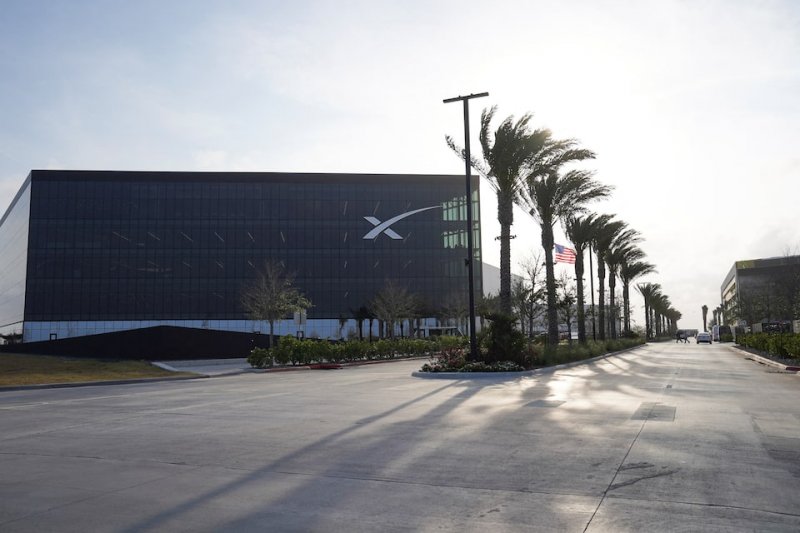
A SpaceX Falcon 9 carrying astronauts to the International Space Station lifts off from Cape Canaveral, Fla. Aubrey Gemignani/NASA/Getty Images Elon Musk's SpaceX is one step closer to staging what could be the largest initial public offering of all time. The satellite builder and rocket operator has confidentially filed IPO paperwork with the Securities and Exchange Commission, according to people familiar with the matter. SpaceX is aiming for an IPO that could raise between $40 billion and $80 billion, The Wall Street Journal has reported. The filing puts the company on track to potentially list shares by July, as Musk has told people is his goal. SpaceX would be the first of three mega-IPOs that could go in 2026: Artificial-intelligence companies OpenAI and Anthropic are both waiting in the wings for potential offerings before year-end. Many smaller technology-company IPOs have been pushed off in 2026, as fears about how AI will upend the software industry have sent investors running. Because SpaceX filed its paperwork confidentially, as is customary these days, most investors will have to wait until closer to the IPO to see the company's financial performance. The confidential process allows regulators and companies to engage in a back-and-forth dialogue about disclosures as they wrap up the paperwork. Bloomberg earlier reported that SpaceX filed. SpaceX selected five banks to lead the offering: Bank of America, Citigroup, Goldman Sachs, JPMorgan Chase and Morgan Stanley, people familiar with the matter said. Several other banks are set to have supporting roles in the IPO, which could reap the banks involved tens of millions of dollars in fees if the offering goes on as planned. SpaceX combined with Musk's AI company, xAI, in February, to create a $1.25 trillion juggernaut in the biggest corporate tie-up by value in U.S. history. By tying the two companies closer together, Musk is giving xAI more financial muscle to compete against its larger competitors OpenAI and Anthropic. Details of the Texas-based company's sales, costs, earnings and balance sheet have been a tightly held secret for years, available only to investors who forged close relationships with SpaceX leadership. While the space side of the business has built up revenue and generated earnings, its xAI artificial intelligence arm is at a much more nascent stage, needing significant amounts of cash. Once made public, SpaceX's filing is expected to shed light on the combined company's operations, which now range from satellite factories and launchpads to xAI's sprawling facility in Memphis. Additional data about customers is also likely to be laid out in the documents. The company has built a large business selling Starlink to consumers, and often works for the National Aeronautics and Space Administration and U.S. national-security agencies. SpaceX executives spent years saying the company wouldn't go public until its rockets were regularly flying to Mars. But it changed course and began racing to a stock listing last year as part of a bet by Musk that the next frontier for AI dominance is building out data centers in space. It is a pricey endeavor, and a giant IPO could help fund the efforts.

Why did SpaceX file for an IPO now?
SpaceX has moved closer to becoming a publicly traded company after confidentially filing for an initial public offering (IPO) with the U.S. Securities and Exchange Commission. Multiple reports describe the filing as being done in a way that keeps key financial figures and deal terms private "for now," which is common for early-stage IPO preparation. The announcement matters because SpaceX is one of the largest and most valuable private technology companies, and an IPO would be a major liquidity event for investors, employees, and partners tied to the company's long-running funding rounds. It also signals that SpaceX's growth -- particularly in launch demand and the Starlink satellite business -- may have reached a stage where public-market fundraising and valuation anchoring are attractive. An IPO doesn't just change how a company is financed; it can change governance, disclosure, and how future capital is raised. For SpaceX, that includes everything from ongoing rocket development to Starlink expansion and related satellite infrastructure. In short: the filing is the first concrete step from rumors and expectations toward a public-market future, with the main details likely to emerge as regulatory review and IPO paperwork progress.

Musk wants SpaceX IPO to fund AI space data centers | News.az
SpaceX is pursuing an ambitious plan to build orbital data centers, but experts warn the project could face challenges similar to those that led Microsoft to abandon its experimental undersea data center initiative. SpaceX aims to deploy up to one million satellites designed to function as data centers in space. The idea is to overcome growing constraints faced by terrestrial infrastructure, particularly limitations related to energy consumption and water use. Orbital systems could, in theory, benefit from continuous solar energy and avoid pressure on Earth's power grids. This aligns with a wider industry trend as companies explore alternative ways to support rapidly expanding AI workloads. Lessons from Microsoft's failed project The concept echoes Microsoft's "Project Natick," which tested underwater data centers. While technically successful, the project was ultimately discontinued due to high costs, scalability limitations and weak commercial demand. Experts suggest that SpaceX's orbital approach could face even greater barriers, particularly given the extreme cost of launching hardware into space and maintaining it over time. Technical challenges in space Operating data centers in orbit introduces complex engineering problems. Cooling systems, for instance, are difficult to manage in microgravity environments. Additionally, exposure to radiation and the harsh conditions of space can degrade hardware more quickly than on Earth. Another critical issue is technological obsolescence. AI chips evolve rapidly, and replacing outdated components in orbit would be far more difficult and expensive than upgrading ground-based systems. Economic viability under scrutiny Analysts question whether the concept is financially realistic. Estimates suggest that building a large-scale orbital data center network could require trillions of dollars and thousands of rocket launches annually. Even with advancements in reusable launch technology, costs remain a major constraint. Critics argue that unless launch expenses fall dramatically, such projects may struggle to compete with improving terrestrial alternatives. Limited real-world applications While technically feasible, orbital data centers may initially serve only niche markets. Potential use cases include military operations or space-based infrastructure, rather than mainstream cloud computing. Most experts believe that improving Earth-based solutions, such as more efficient chips, renewable energy integration and next-generation cooling systems, is currently a more practical path forward. A growing space-based AI race Despite skepticism, interest in space-based computing is rising. Companies and startups are increasingly exploring orbital infrastructure as demand for AI processing power surges. However, SpaceX's plan stands out due to its scale and ambition, making it one of the most closely watched experiments in the future of global data infrastructure. Outlook SpaceX's orbital data center vision represents a bold attempt to redefine how and where computing infrastructure is built. Yet significant technical, economic and regulatory barriers remain. Whether the project becomes a transformative breakthrough or follows the path of earlier abandoned experiments will depend on future advances in launch technology, cost efficiency and global demand for AI computing capacity.
What happened with Anthropic's Claude Code leak?
Anthropic issues takedown requests after Claude Code source leak Anthropic has been dealing with an unexpected exposure of Claude Code source code after a leak was traced to packaging and distribution mistakes. Coverage says Anthropic issued copyright takedown requests to remove more than 8,000 copies of the exposed code. The incident is tied to the way Claude Code was distributed, including cases where a misconfigured package or map file effectively exposed internal TypeScript source information. Reports also describe the leak as occurring at an "inconvenient" moment for Anthropic, given that the product and its capabilities are a major part of its market momentum. Even if the leaked material doesn't include the underlying AI model weights, exposing agent tooling can still be strategically important. Source code can reveal internal architectures, operational logic, and integration approaches -- information that can help rivals, researchers, or attackers understand product behavior. There's also a practical downstream risk: once code is public or widely replicated (including via mirrors), takedown requests may reduce further spread but can't reliably reverse all prior copies. That makes rapid response crucial. For enterprises evaluating agentic tools, incidents like this raise the bar for supply-chain hygiene, build/release controls, and how vendors prevent accidental exposure via dependencies or distribution artifacts. Overall, the leak has moved from an internal release mistake into a broader cleanup operation involving large-scale takedowns.
Elon Musk's SpaceX Files Confidentially for Record-Breaking $1.75 Trillion IPO - Decrypt
Musk merged SpaceX with his artificial intelligence startup xAI earlier this year, creating a combined entity valued at nearly $2 trillion. Elon Musk's SpaceX has confidentially filed paperwork for an initial public offering with the U.S. Securities and Exchange Commission, according to reports today from Bloomberg and CNBC. The company is reportedly targeting a valuation of more than $1.75 trillion after merging with Musk's artificial intelligence startup xAI. The aerospace company seeks to raise as much as $75 billion in what would be the largest public offering in history, according to Bloomberg, surpassing Saudi Aramco's $29 billion debut in 2019. The confidential filing allows regulators to review the company's finances privately before they become public. The IPO is expected to launch in June, Bloomberg said. While Musk has not made a public statement about the filing, he has suggested the plan was on his radar. In February 2021, Musk posted on X that SpaceX's internet service Starlink could go public, "Once we can predict cash flow reasonably well." In December, after Eric Berger, senior space editor at Ars Technica, posted "Here's why I think SpaceX is going public soon," Musk responded, "As usual, Eric is accurate." The June timeline would give SpaceX the jump on other potential blockbuster IPOs to come, including OpenAI and Anthropic. The IPO would aim to fund what the company described as an "insane flight rate" for its developmental Starship rocket, artificial intelligence data centers in space, and a lunar base, according to an internal memo viewed by Bloomberg. Musk's long-term ambitions center on Starship, SpaceX's rocket system designed for deep-space missions. SpaceX says the vehicle will eventually carry cargo and crew to the Moon and Mars. However, setbacks, including Starship explosions, have kept that dream from coming to fruition.

Destiny Tech100 Stock Rises After SpaceX IPO Rumors - Destiny Tech100 (NYSE:DXYZ)
Destiny Tech100 stock is charging ahead with explosive momentum. What's driving DXYZ stock higher? SpaceX's Confidential IPO Filing Reports indicate that SpaceX has submitted a draft IPO registration to the U.S. Securities and Exchange Commission, setting the stage for a potential June listing. According to Bloomberg, the offering could value SpaceX at more than $1.75 trillion, which would make it the largest IPO ever. SpaceX is also reportedly weighing a dual‑class share structure that would give insiders, including Elon Musk, enhanced voting power over corporate decisions. Sources say SpaceX executives plan to meet with prospective IPO investors this month, adding to the sense that the process is accelerating. The Technical Side To Destiny Tech100 Destiny is trading 6.8% above its 20-day SMA and 1.0% above its 100-day SMA, but it's 0.9% below its 50-day SMA, which keeps the intermediate trend from looking fully repaired. Shares are down 24.02% over the last 12 months, and the stock is sitting closer to its 52-week low ($19.71) than its 52-week high ($50.50). RSI is at 47.79, which is neutral and lines up with a market that's still deciding whether the latest bounce has follow-through. MACD is at -0.2222 versus a signal line at -0.5258 (histogram 0.3036), which is a bullish configuration even though the MACD level remains below zero. RSI in the 30-50 range with bullish MACD indicates momentum leaning bullish. Key Resistance: $30.00 Key Support: $26.00 Destiny's Background Destiny Tech100 is a non-diversified, closed-end management investment company built to hold an investment portfolio of the Top 100 high-growth tech companies. In plain terms, it's a vehicle investors may use to get exposure to growth-oriented tech names through a single listed product. Current holdings include notable private firms such as SpaceX, OpenAI, Stripe, Epic Games and Discord. DXYZ Price Action: Destiny Tech100 shares were up 7.47% at $28.79 at the time of publication on Wednesday, according to Benzinga Pro. Image: DimaZel/Shutterstock Market News and Data brought to you by Benzinga APIs To add Benzinga News as your preferred source on Google, click here.

SpaceX files to go public, paving way for record stock offering
Elon Musk's SpaceX has bold ambitions, including solar-powered, satellite-based data centers to develop and run future AI models Elon Musk's SpaceX has filed papers with US regulators that set the stage for what could be the largest-ever public stock offering, a source familiar with the matter told AFP on Wednesday. The confidential filing puts the rocket and satellite builder on track to list its shares on a public exchange by July, according to The Wall Street Journal, citing unidentified sources. Media reports have said the initial public offering could be valued at a whopping $75 billion or more, for a venture with stratospheric ambitions. The IPO looks set to blow past a record from 2019, when the oil group Saudi Aramco raised $25.6 billion. SpaceX did not respond to a request for comment, and officials at the Securities and Exchange Commission declined to comment. If successful, SpaceX could arrive on Wall Street with a valuation exceeding $1.75 trillion, putting it among the world's ten biggest companies by market capitalization. After its acquisition of xAI in early February, SpaceX was valued at $1.25 trillion. Analysts have said that taking SpaceX public will require it and Musk to maintain greater transparency, particularly about its revenues. It could also expose the company to investor pressure to focus on profits instead of long-term investments -- such as Musk's plan to build a rocket for sending people to Mars. When the documents are released, SpaceX's IPO filing will likely reveal details about its operations, including its satellite and rocket manufacturing, alongside its xAI artificial intelligence arm. Given that investors appear "enamored" with Musk's space and artificial intelligence ambitions, SpaceX could "probably get away with listing in a less exuberant market than some other companies might," said Steve Sosnick of Interactive Brokers. Matthew Kennedy, a senior strategist at Renaissance Capital, said he had little worries that SpaceX would be able to raise such a massive amount of capital, even as markets are roiled by the ongoing war in the Middle East. "US markets are some of the largest, most robust fundraising in the world, and this is a unique company that has captured the imagination of a lot of investors," Kennedy said. He also noted investor enthusiasm in potential advancements on space exploration and in AI, alongside the cash to be made in the telecoms sector. Besides SpaceX, two other tech heavyweights, the AI developers OpenAI and Anthropic, are reportedly planning IPOs this year. SpaceX, which dominates the space launching market with its reusable rockets, is owned by Musk alongside several investment funds and tech companies including Google's parent Alphabet. The company's rockets vastly reduce the cost of putting satellites into orbit. SpaceX is also the owner of the Starlink satellite constellation. In February, Musk announced that SpaceX would take over his artificial intelligence outfit xAI, a step in the billionaire's plan to use SpaceX's rockets to launch solar-powered, satellite-based data centers to run future AI models.
SpaceX confidentially files IPO for possible valuation of $1.75T
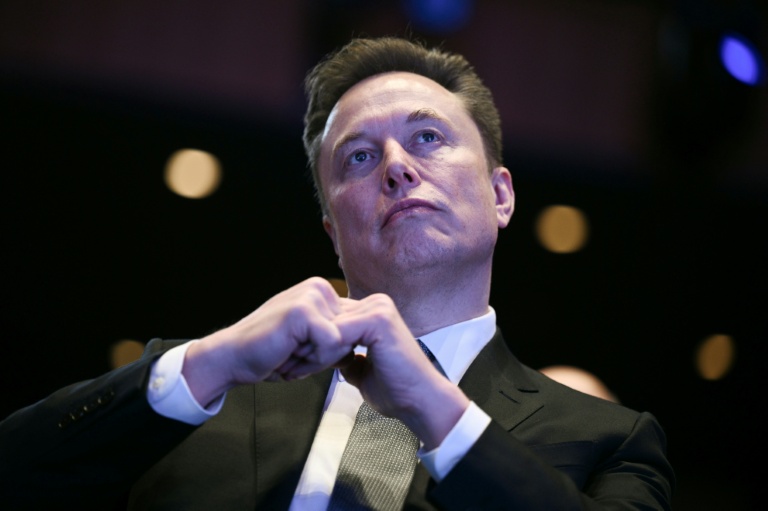
Elon Musk-owned SpaceX confidentially filed IPO paperwork with the US Securities and Exchange Commission (SEC), signalling preparations for a potential public listing which could value the company at up to $1.75 trillion, according to Bloomberg. SEC rules allow private companies to submit IPO filings confidentially up to 15 days before marketing their shares, enabling them to address regulator feedback out of public view. Bloomberg reported SpaceX is on track for a June listing ahead of IPOs by OpenAI and Anthropic. Reuters reported SpaceX is reportedly aiming to raise $75 billion and has assembled 21 banks to manage the offering codenamed Project Apex. The $75 billion IPO would dwarf all previous record listings, including Saudi oil company Aramco's $29 billion floatation in 2019. In February, SpaceX acquired Musk's start-up xAI in a record deal valuing the combined entity at $1.25 trillion. SpaceX needs a large amount of capital to build and launch its Starship rocket, provision its direct-to-device satellites and deploy up to 1 million Starlink birds designed to operate as solar-powered data centres for AI.

《TAIPEI TIMES》 Chaos drives up airline surcharge - 焦點 - 自由時報電子報
根據「電腦網路內容分級處理辦法」修正條文第六條第三款規定,已於網站首頁或各該限制級網頁,依台灣網站分級推廣基金會規定作標示。 台灣網站分級推廣基金會(TICRF)網站:http://www.ticrf.org.tw 《TAIPEI TIMES》 Chaos drives up airline surcharge 2026/04/02 03:00 Two China Airlines flight attendants pose for a photograph in front of the airline's Pikachu-themed aircraft at Taiwan Taoyuan International Airport yesterday. Photo: Huang Yi-ching, Taipei Times / Staff writer, with CNA Fuel surcharges for short and long-haul international aviation routes would rise dramatically from Tuesday next week due to a surge in crude oil prices, the Civil Aviation Administration (CAA) said yesterday. 請繼續往下閱讀... Fuel surcharges for Taiwanese carriers would increase by US$27.50 for short-haul routes and US$71.50 for long-haul routes, CAA Director-General Ho Shu-ping (何淑萍) told a meeting of the Legislative Yuan's Transportation Committee. That would raise the surcharges on short-haul routes to US$45 and US$117 for long-haul routes, the CAA said in a statement. The new fuel surcharges represent a 157 percent increase. Since the US and Israel attacked Iran at the end of February, which led to Tehran closing the Strait of Hormuz, Brent crude oil prices have jumped more than 60 percent. For domestic routes, ticket prices would go up an average of NT$97 to cover additional fuel costs, Ho said. However, the Civil Aviation Operation Fund would absorb part of the hike for routes between Taiwan proper and its outlying islands. There are no fuel surcharges on domestic routes, but fares could rise to cover higher fuel costs when state-run CPC Corp, Taiwan (台灣中油) raises fuel prices for three months in a row, Ho said. Ho did not indicate when the hikes for domestic routes would start. Minister of Transportation and Communications Chen Shih-kai (陳世凱) said the surge in fuel prices has put financial pressure on local airlines, and the fuel surcharge hikes aim to ease that pressure. Fuel prices account for about 40 percent of airlines' operating costs, according to market estimates. The CAA said it has instructed local carriers to disclose information about the fuel surcharge hikes in an appropriate manner to passengers, travel agencies, cargo shippers and cargo owners to avoid unnecessary disputes. China Airlines (中華航空) president Kevin Chen (陳漢銘) said that temporary adjustments to fuel surcharges due to oil price fluctuations are necessary, adding that the airline has prepared in advance and hopes to avoid flight reductions or cancelations. 不用抽 不用搶 現在用APP看新聞 保證天天中獎 點我下載APP 按我看活動辦法

Deepcoin becomes first CEX to integrate Polymarket 'event contracts'
Deepcoin is the first centralized exchange to integrate Polymarket event contracts, syncing quotes, liquidity and clearing so users can trade real‑world events with CEX tooling. Cryptocurrency exchange Deepcoin has entered a formal partnership with prediction market platform Polymarket to launch "Event Contracts," marking the first time a centralized exchange has integrated directly with Polymarket's real‑money event markets. Announced on April 1, the tie‑up allows Deepcoin users to access "real quotes and liquidity support synchronized with global top event markets" while trading through standard exchange accounts, according to a company statement reported by ChainCatcher. Under the new structure, both sides have implemented "deep integration of underlying logic and clearing synchronization," so that positions taken via Deepcoin are effectively mirrored one‑for‑one with corresponding Polymarket contracts. This design means users can "directly participate in popular contracts on Polymarket through their Deepcoin accounts, enjoying CEX trading speed" and order‑book style execution that aligns with "professional trading habits," the exchange said. Deepcoin framed the launch as the first step in building out a dedicated, institutional‑grade venue for real‑world event trading. The platform stated it would "continue to refine its products in the future to create a more pure and professional trading experience," signaling plans to iterate on contract design, risk management and user analytics as volumes scale. By routing demand from a centralized venue into on‑chain prediction markets, the partnership effectively opens CEX rails into a segment historically dominated by niche DeFi interfaces and bespoke OTC flows. The move lands just as regulated event markets and decentralized prediction protocols are drawing heightened attention from both venture capital and regulators. In March, Kalshi's latest financing pushed its valuation to $22 billion as demand for macro and political contracts surged, according to coverage compiled by Yahoo Finance, while a recent Forbes analysis described prediction markets as "on the cusp of becoming core financial infrastructure" amid rising institutional interest. At the same time, U.S. Commodity Futures Trading Commission enforcement director David Miller has warned that insider‑trading laws apply fully to prediction markets, underscoring the compliance pressure that CEX integrations like Deepcoin's will have to navigate.

SpaceX files to go public, paving way for record stock offering
Add Yahoo as a preferred source to see more of our stories on Google. Elon Musk's SpaceX has filed papers with US regulators that set the stage for what could be the largest-ever public stock offering, a source familiar with the matter told AFP on Wednesday. The confidential filing puts the rocket and satellite builder on track to list its shares on a public exchange by July, according to The Wall Street Journal, citing unidentified sources. Media reports have said the initial public offering could be valued at a whopping $75 billion or more, for a venture with stratospheric ambitions. The IPO looks set to blow past a record from 2019, when the oil group Saudi Aramco raised $25.6 billion. SpaceX did not respond to a request for comment, and officials at the Securities and Exchange Commission declined to comment. If successful, SpaceX could arrive on Wall Street with a valuation exceeding $1.75 trillion, putting it among the world's ten biggest companies by market capitalization. After its acquisition of xAI in early February, SpaceX was valued at $1.25 trillion. Analysts have said that taking SpaceX public will require it and Musk to maintain greater transparency, particularly about its revenues. It could also expose the company to investor pressure to focus on profits instead of long-term investments -- such as Musk's plan to build a rocket for sending people to Mars. - 'Enamored' investors - When the documents are released, SpaceX's IPO filing will likely reveal details about its operations, including its satellite and rocket manufacturing, alongside its xAI artificial intelligence arm. Given that investors appear "enamored" with Musk's space and artificial intelligence ambitions, SpaceX could "probably get away with listing in a less exuberant market than some other companies might," said Steve Sosnick of Interactive Brokers. Matthew Kennedy, a senior strategist at Renaissance Capital, said he had little worries that SpaceX would be able to raise such a massive amount of capital, even as markets are roiled by the ongoing war in the Middle East. "US markets are some of the largest, most robust fundraising in the world, and this is a unique company that has captured the imagination of a lot of investors," Kennedy said. He also noted investor enthusiasm in potential advancements on space exploration and in AI, alongside the cash to be made in the telecoms sector. Besides SpaceX, two other tech heavyweights, the AI developers OpenAI and Anthropic, are reportedly planning IPOs this year. SpaceX, which dominates the space launching market with its reusable rockets, is owned by Musk alongside several investment funds and tech companies including Google's parent Alphabet. The company's rockets vastly reduce the cost of putting satellites into orbit. SpaceX is also the owner of the Starlink satellite constellation. In February, Musk announced that SpaceX would take over his artificial intelligence outfit xAI, a step in the billionaire's plan to use SpaceX's rockets to launch solar-powered, satellite-based data centers to run future AI models.
Elon Musk's SpaceX files confidential initial public offering, reports say
Billionaire Elon Musk's SpaceX has confidentially filed for an initial public offering in what could be the largest stock market debut ever, according to Bloomberg and the Wall Street Journal. The space exploration company submitted a draft IPO filing to the Securities and Exchange Commission that puts it on track for a June listing, the news outlets reported, citing people familiar with the matter. SpaceX did not immediately respond to a request for comment. As part of the IPO process, the Texas-based company is aiming to raise as much as $75 billion and could seek a valuation of $1.75 trillion, according to Bloomberg. Saudi Aramco, Saudi Arabia's state-owned petroleum and natural gas company, went public in 2019 for $25.6 billion, according to investment bank Renaissance Capital, while Alibaba, a Chinese company that specializes in e-commerce, went public for $21.8 billion in 2014. The confidential filing allows the company to gather private feedback from regulators and temporarily insulates it from public scrutiny. Once the registration filing is made public, investors will be able to get a snapshot of the company's operations and finances. Where will the money go? The injection of funding could help SpaceX further scale its space operations, build more data centers -- which Musk wants to put into space -- and expand Starlink technology to new satellite constellations, Wedbush Securities analyst Dan Ives said in a report last week. Going public could also position SpaceX to get more defense contract opportunities with the Trump administration, particularly for the "Golden Dome" project, Ives added. President Trump announced plans for the Golden Dome last year, a missile defense system to protect the country from aerial attacks. SpaceX, founded by Musk in 2002, develops and launches spacecraft. Last month, the company sent four NASA astronauts on an 8-month mission to the International Space Station. NASA has also tapped SpaceX to develop a "human landing system" -- a specialized spacecraft -- to deliver a crew to the lunar surface as part of its Artemis program. The last moon landing was in 1972. SpaceX's portfolio has grown, with the acquisition of Musk's artificial intelligence company, xAI, in February 2026, boosting the company's valuation to $1.25 trillion. Test case with Tesla? Tesla, Musk's electric car company that went public in 2010, could prove to be a useful test case for SpaceX as it navigates the IPO process. The EV maker has faced some headwinds in the last year due to Musk's involvement with the Trump administration's Department of Government Efficiency, or DOGE, cost-cutting efforts. On the whole, Tesla has performed well financially, although its annual revenue growth has flatlined in recent years. In 2025, the company brought in nearly $95 billion in revenue compared to around $97.7 billion in 2024, according to S&P Capital IQ. Still, the company's investors have reaped major benefits, with the company's share price up more than 73% in the last five years alone. Tesla's self-driving technology and the development of a humanoid robot, dubbed Optimus, are expected to further turbocharge growth, according to Ives. Ives said SpaceX could also eventually absorb Musk's electric vehicle company. He predicts a 2027 merger. "Musk wants to own and control more of the AI ecosystem and step-by-step, the holy grail could be combining SpaceX and Tesla in some way to give the connected tissue between both disruptive tech stalwarts looking to lead the AI revolution," he said. Hawaii doctor's son testifies that his father confessed to trying to kill his stepmother

Elon Musk's SpaceX files confidential initial public offering, reports say
(CBS NEWS) - According to CBS, billionaire Elon Musk's SpaceX has confidentially filed for an initial public offering in what could be the largest stock market debut ever, according to Bloomberg and the Wall Street Journal. The space exploration company submitted a draft IPO filing to the Securities and Exchange Commission that puts it on track for a June listing, the news outlets reported, citing people familiar with the matter. SpaceX did not immediately respond to a request for comment. As part of the IPO process, the Texas-based company is aiming to raise as much as $75 billion and could seek a valuation of $1.75 trillion, according to Bloomberg. Saudi Aramco, Saudi Arabia's state-owned petroleum and natural gas company, went public in 2019 for $25.6 billion, according to investment bank Renaissance Capital, while Alibaba, a Chinese company that specializes in e-commerce, went public for $21.8 billion in 2014. The confidential filing allows the company to gather private feedback from regulators and temporarily insulates it from public scrutiny. Once the registration filing is made public, investors will be able to get a snapshot of the company's operations and finances. The injection of funding could help SpaceX further scale its space operations, build more data centers -- which Musk wants to put into space -- and expand Starlink technology to new satellite constellations, Wedbush Securities analyst Dan Ives said in a report last week. Going public could also position SpaceX to get more defense contract opportunities with the Trump administration, particularly for the "Golden Dome" project, Ives added. President Trump announced plans for the Golden Dome last year, a missile defense system to protect the country from aerial attacks. SpaceX, founded by Musk in 2002, develops and launches spacecraft. Last month, the company sent four NASA astronauts on an 8-month mission to the International Space Station. NASA has also tapped SpaceX to develop a "human landing system" -- a specialized spacecraft -- to deliver a crew to the lunar surface as part of its Artemis program. The last moon landing was in 1972. SpaceX's portfolio has grown, with the acquisition of Musk's artificial intelligence company, xAI, in February 2026, boosting the company's valuation to $1.25 trillion. Tesla, Musk's electric car company that went public in 2010, could prove to be a useful test case for SpaceX as it navigates the IPO process. The EV maker has faced some headwinds in the last year due to Musk's involvement with the Trump administration's Department of Government Efficiency, or DOGE, cost-cutting efforts. On the whole, Tesla has performed well financially, although its annual revenue growth has flatlined in recent years. In 2025, the company brought in nearly $95 billion in revenue compared to around $97.7 billion in 2024, according to S&P Capital IQ. Still, the company's investors have reaped major benefits, with the company's share price up more than 73% in the last five years alone. Tesla's self-driving technology and the development of a humanoid robot, dubbed Optimus, are expected to further turbocharge growth, according to Ives. Ives said SpaceX could also eventually absorb Musk's electric vehicle company. He predicts a 2027 merger. "Musk wants to own and control more of the AI ecosystem and step-by-step, the holy grail could be combining SpaceX and Tesla in some way to give the connected tissue between both disruptive tech stalwarts looking to lead the AI revolution," he said.
SpaceX files to go public, paving way for record stock offering
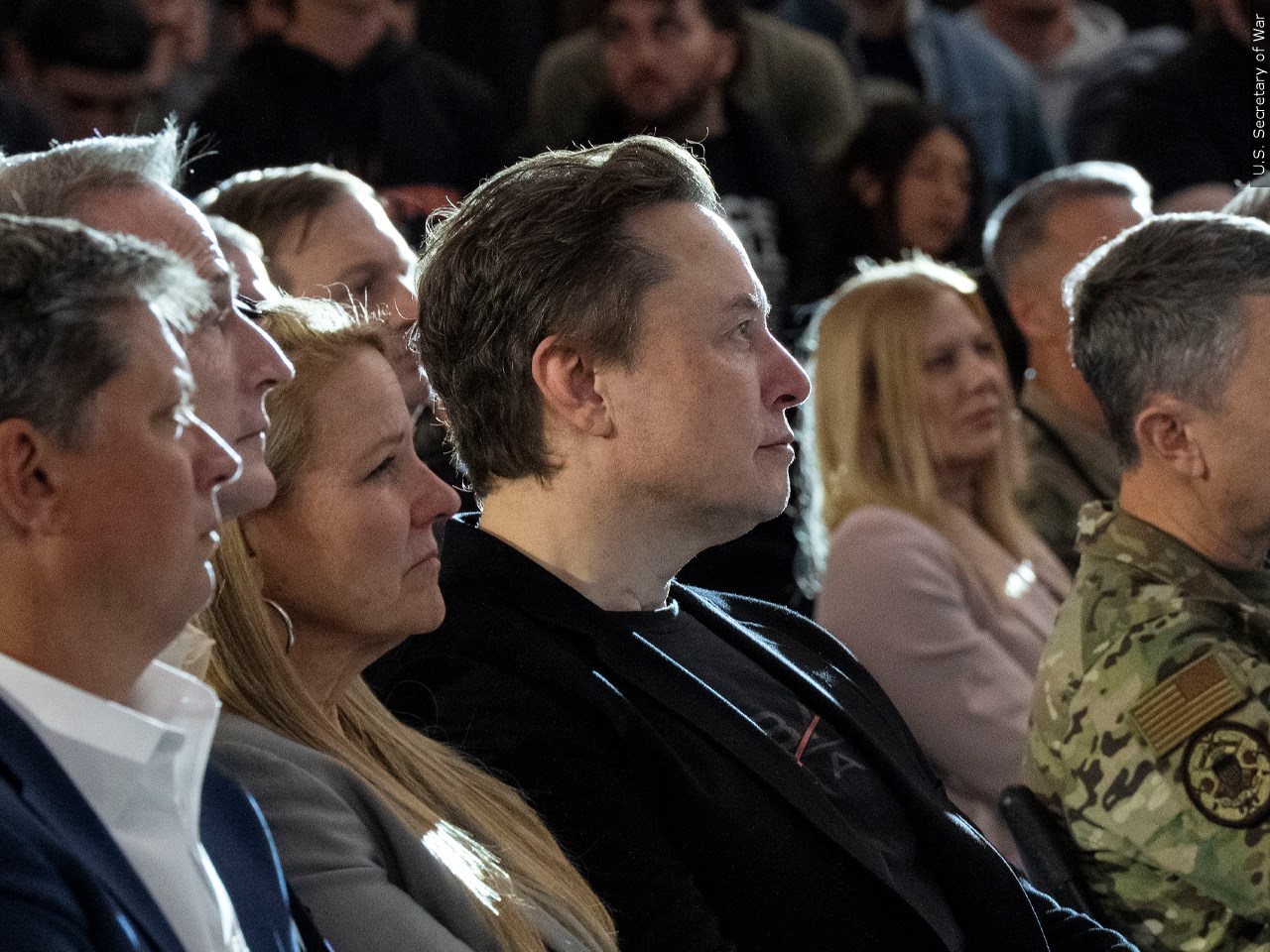
Elon Musk's SpaceX has filed papers with US regulators that set the stage for what could be the largest-ever public stock offering, a source familiar with the matter told AFP on Wednesday. The confidential filing puts the rocket and satellite builder on track to list its shares on a public exchange by July, according to The Wall Street Journal, citing unidentified sources. Media reports have said the initial public offering could be valued at a whopping $75 billion or more, for a venture with stratospheric ambitions. The IPO looks set to blow past a record from 2019, when the oil group Saudi Aramco raised $25.6 billion. SpaceX did not respond to a request for comment, and officials at the Securities and Exchange Commission declined to comment. If successful, SpaceX could arrive on Wall Street with a valuation exceeding $1.75 trillion, putting it among the world's ten biggest companies by market capitalization. After its acquisition of xAI in early February, SpaceX was valued at $1.25 trillion. Analysts have said that taking SpaceX public will require it and Musk to maintain greater transparency, particularly about its revenues. It could also expose the company to investor pressure to focus on profits instead of long-term investments -- such as Musk's plan to build a rocket for sending people to Mars. - 'Enamored' investors - When the documents are released, SpaceX's IPO filing will likely reveal details about its operations, including its satellite and rocket manufacturing, alongside its xAI artificial intelligence arm. Given that investors appear "enamored" with Musk's space and artificial intelligence ambitions, SpaceX could "probably get away with listing in a less exuberant market than some other companies might," said Steve Sosnick of Interactive Brokers. Matthew Kennedy, a senior strategist at Renaissance Capital, said he had little worries that SpaceX would be able to raise such a massive amount of capital, even as markets are roiled by the ongoing war in the Middle East. "US markets are some of the largest, most robust fundraising in the world, and this is a unique company that has captured the imagination of a lot of investors," Kennedy said. He also noted investor enthusiasm in potential advancements on space exploration and in AI, alongside the cash to be made in the telecoms sector. Besides SpaceX, two other tech heavyweights, the AI developers OpenAI and Anthropic, are reportedly planning IPOs this year. SpaceX, which dominates the space launching market with its reusable rockets, is owned by Musk alongside several investment funds and tech companies including Google's parent Alphabet.
Analysis-SpaceX's orbital data centers could face same hurdles as Microsoft's abandoned undersea project
LOS ANGELES, April 1 (Reuters) - SpaceX on Wednesday filed for an IPO that Elon Musk says will bankroll an effort to turn the rocket maker into an AI powerhouse, launching up to 1 million data‑center satellites into orbit to bypass power and water limits on Earth. Microsoft had a similar ambition to escape land‑based computing constraints in 2015, when it lowered a shipping‑container‑sized data center onto the seabed off Scotland, aiming to cut energy use through natural seawater cooling and tapping offshore wind and tidal power. Microsoft's "Project Natick," once touted as a potential breakthrough for the data‑center industry, successfully met all its technical targets but underwater data centers were abandoned more than two years ago due to a lack of client demand and unviable economics, two sources with knowledge of the project told Reuters. Asked for comment, a Microsoft spokesperson said: "While we don't currently have datacenters in the water, we will continue to use Project Natick as a research platform to explore, test, and validate new concepts around datacenter reliability and sustainability." Five data center specialists told Reuters that what went wrong for Microsoft is a cautionary tale for SpaceX because although both projects are a world apart geographically, they share key similarities: they both rely on modular units that are expensive to deploy and cannot be expanded, repaired or upgraded - features considered critical by the AI industry. "These problems are likely to be more severe in space than under the sea," said Roy Chua, founder of industry research firm AvidThink, pointing to unresolved questions over how to cool data centers in orbit, high rocket launch costs and the effects of the harsh space environment on AI chips. SpaceX did not respond to a request for comment. SpaceX, which acquired Musk's AI startup xAI in February, could raise up to $75 billion when it goes public, making it potentially the largest IPO in history. The holdings of xAI include social media company X, formerly Twitter, and AI chatbot Grok. MUSK'S SPACE AMBITIONS FACE HURDLES Although Microsoft proved that undersea data centers could work, customers were not interested in scaling them, instead expanding conventional land‑based facilities that allowed cheaper, faster upgrades as AI development accelerated, the two people with knowledge of the project said, asking not to be named due to the sensitivity of the matter. The sealed, "locked‑for‑life" design - which SpaceX would replicate in orbit - has limited flexibility, since AI chips are rapidly improving every year, while a satellite or undersea data center might be replaced only every five to seven years.
SpaceX's orbital data centers could face same hurdles as Microsoft's abandoned undersea project
LOS ANGELES, April 1 (Reuters) - SpaceX on Wednesday filed for an IPO that Elon Musk says will bankroll an effort to turn the rocket maker into an AI powerhouse, launching up to 1 million data-center satellites into orbit to bypass power and water limits on Earth. Microsoft had a similar ambition to escape land-based computing constraints in 2015, when it lowered a shipping-container-sized data center onto the seabed off Scotland, aiming to cut energy use through natural seawater cooling and tapping offshore wind and tidal power. Microsoft's "Project Natick," once touted as a potential breakthrough for the data-center industry, successfully met all its technical targets but underwater data centers were abandoned more than two years ago due to a lack of client demand and unviable economics, two sources with knowledge of the project told Reuters. Asked for comment, a Microsoft spokesperson said: "While we don't currently have datacenters in the water, we will continue to use Project Natick as a research platform to explore, test, and validate new concepts around datacenter reliability and sustainability." Five data center specialists told Reuters that what went wrong for Microsoft is a cautionary tale for SpaceX because although both projects are a world apart geographically, they share key similarities: they both rely on modular units that are expensive to deploy and cannot be expanded, repaired or upgraded - features considered critical by the AI industry. "These problems are likely to be more severe in space than under the sea," said Roy Chua, founder of industry research firm AvidThink, pointing to unresolved questions over how to cool data centers in orbit, high rocket launch costs and the effects of the harsh space environment on AI chips. SpaceX did not respond to a request for comment. SpaceX, which acquired Musk's AI startup xAI in February, could raise up to $75 billion when it goes public, making it potentially the largest IPO in history. The holdings of xAI include social media company X, formerly Twitter, and AI chatbot Grok. MUSK'S SPACE AMBITIONS FACE HURDLES Although Microsoft proved that undersea data centers could work, customers were not interested in scaling them, instead expanding conventional land-based facilities that allowed cheaper, faster upgrades as AI development accelerated, the two people with knowledge of the project said, asking not to be named due to the sensitivity of the matter. The sealed, "locked-for-life" design - which SpaceX would replicate in orbit - has limited flexibility, since AI chips are rapidly improving every year, while a satellite or undersea data center might be replaced only every five to seven years. The economics were also a stumbling block, the two people said. Deploying data centers under the sea was more expensive than building on land, and while those costs might have fallen at scale, doing so would have required tens of billions of dollars in investment. Space will be far more expensive. Analysts at MoffettNathanson, an independent U.S. equity research firm, said in a February research note that Musk's plan to put a million AI satellites in space would run into the trillions of dollars. In order for data centers in space to become commercially viable, launch costs would need to fall from today's low thousands of dollars per kilogram to the low hundreds of dollars per kilogram, analysts say. "The problem is not whether something can work, but whether it makes sense economically versus simply building more capacity on the ground," said Tim Farrar, an independent satellite industry analyst at TMF Associates. Musk says he will overcome the technical and financial hurdles, including radiation exposure, heat management in a vacuum and the need for frequent hardware replacement, by sharply lowering launch costs and developing more resilient AI chips. Demand will not be an issue, Musk says, because Earth's energy resources will quickly be depleted as AI is needed to support a world where robots outnumber humans, all cars drive themselves and space travel becomes routine. "The idea that we just can't solve problems on Earth, like power shortages and environmental issues, strikes me as unrealistically negative about Earth to try and make everything seem better in space," Farrar said. Musk's case hinges on Starship, SpaceX's next-generation rocket, which is designed to be fully reusable and carry far larger payloads than SpaceX's Falcon rockets. But Starship is years behind schedule and has suffered explosive setbacks in some of its 11 suborbital test flights since 2023. MoffettNathanson estimates that to achieve Musk's goal it would require 3,000 Starship launches a year, or eight per day. Jeff Bezos' space company Blue Origin is also backing orbital data centers. The rocket company said in March that its Project Sunrise concept would add AI computing capacity in orbit, tapping clean solar power while preserving terrestrial data-center infrastructure. Blue Origin did not respond to a request for further comment. SPACE AI COULD BE NICHE BUSINESS Space data centers do have a future, but it is more likely to complement ground-based data centers, said Claude Rousseau, a research director at Analysys Mason who tracks satellite markets. "I strongly believe that there'll be no way in the foreseeable future that space-based data centers can replace ground data centers," Rousseau said, adding that it would be a more niche industry serving infrastructure in orbit, like military satellite constellations and space stations. For instance, the International Space Station already hosts experimental systems designed to process data in orbit and reduce reliance on downlink bandwidth. Speaking on the All-In podcast in February, Nvidia Chief Executive Jensen Huang said the economics of space-based AI data centers remain unattractive. "We should definitely work on the ground first because we're already here," Huang said, describing orbital AI infrastructure as a longer-term engineering challenge rather than a near-term solution. Chua said schemes to move data centers under the sea or into space risk trying to escape problems on Earth and creating a whole new set of harder challenges. "There are many problems that we can solve on Earth before space," Chua said, pointing to gains in AI chip efficiency, better water recycling, and expanded use of solar power and modular nuclear power generation. (Reporting by Joe Brock in Los Angeles; Editing by Matthew Lewis)

SpaceX files for IPO, sources say, offering investors a stake in Musk's moon and Mars ambitions
Elon Musk's SpaceX has confidentially filed for a US initial public offering, two people familiar with the matter told Reuters on Wednesday (local time), setting the stage for what could become the largest stock market listing on record. SpaceX puts more rockets in space than any other company and promises a chance to invest in humanity's return to the moon and attempt to colonize Mars. The company aspires to put artificial intelligence data centres in space, while running a lucrative satellite communications system that opens up much of the earth to the internet and is increasingly used in war. Plus, it is run by the world's richest person, Musk, a divisive figure who has grown electric vehicle maker Tesla into the most valuable automaker. A public listing at a potential valuation of more than US$1.75 trillion (NZ$3t) comes after SpaceX merged with Musk's artificial intelligence startup xAI in a deal that valued the rocket company at $1t (NZ$1.75t) and the developer of the Grok chatbot at $250 billion (NZ$435b). SpaceX is hosting an analyst day on 21 April, encouraging research analysts to attend in person, according to a person familiar with the matter, who requested anonymity to discuss confidential information. The company is also offering analysts an optional visit to xAI's 'Macrohard' data centre site in Memphis, Tennessee, on 23 April, and plans to hold a virtual session on 4 May to discuss financial models with banks' research analysts, the source said. Valuing the conglomerate is no simple task, but Musk's leadership makes it easy for some investors. "Investors could use a sum-of-the-parts analysis, but, like with Tesla, SpaceX's valuation could very much fluctuate wildly based off how much the public believes in Musk's vision," said Angelo Bochanis, data and index associate at Renaissance Capital, a provider of IPO-focused research and ETFs. "So far, investors seem to be clamoring for any sort of exposure to SpaceX." SpaceX did not immediately respond to a Reuters request for comment. The Starbase, Texas-headquartered firm could seek to raise more than US$50b (NZ$87b) in the IPO, handily surpassing the 2019 flotation of Saudi Aramco, which remains the largest IPO on record. A blockbuster SpaceX debut could jolt the IPO market back to life after years of subdued activity, with market participants expecting strong demand from both retail and institutional investors, some drawn by Musk's brand and others seeking exposure to SpaceX's fast-growing space and satellite businesses. SpaceX is the world's most valuable privately held company, based on the valuation implied by its merger deal with xAI. The rocket startup was last valued at about US$800b (NZ$1.4t) in a secondary share sale. Several other high-profile startups, including ChatGPT maker OpenAI and rival Anthropic, are also said to be weighing large IPOs, setting up a broader test of investor appetite for new listings. Many large startups have remained private for longer, tapping deep pools of capital in private markets, but a listing by a company such as SpaceX could encourage more of them to pursue public offerings. Bloomberg News first reported on the confidential filing earlier on Wednesday. A confidential filing allows a company to submit IPO documents to regulators privately, giving it time to address feedback and refine disclosures away from public scrutiny. A listing would deepen analyst and investor scrutiny of "Muskonomy" - the billionaire's sprawling business empire and intertwined fortunes - bringing renewed focus to how his companies are financed, governed and valued across markets. "A likely dual-class share structure would let Musk tap public capital while retaining firm control, even after the substantial dilution that comes with a public offering," said Minmo Gahng, assistant professor of finance at Cornell University. He runs electric vehicle maker Tesla, brain-chip maker Neuralink and tunnel-digging firm The Boring Company. Musk also folded social media platform X into xAI through a share swap last year, giving the AI startup access to the platform's data and distribution network. Questions about Musk's ability to oversee multiple companies with market values exceeding US$1t could temper investor enthusiasm, analysts say. "It is understandable that investors would be concerned with Musk overseeing multiple significant enterprises, especially given his polarising public profile at times. However, SpaceX appears somewhat differentiated," said Kat Liu, vice president at IPOX. "The business is operationally mature, technologically ahead in several key areas, and profitable, which provides a solid fundamental underpinning." The move comes as NASA is set to launch four astronauts as soon as Wednesday evening on a 10-day flight around the moon, marking the most ambitious US space mission in decades. SpaceX generated about US$8b (NZ$14b) in profit on $15b to $16b (NZ$14b to NZ$28b) of revenue last year, Reuters reported in January, citing people familiar with the matter. A growing number of billionaires and private firms have bankrolled a fresh space race in the US, investing heavily in rockets, satellite networks and lunar ambitions, including SpaceX and Jeff Bezos' Blue Origin. Space stocks jumped on the news, with Intuitive Machines last up 11 percent, while Planet Labs, AST SpaceMobile and Rocket Lab added between 6 percent and 10 percent. As NASA leans more on commercial partners and defense budgets climb, space is emerging as a strategic battleground shaped by technological edge, national security priorities and the promise of new economic gains. SpaceX has also sought permission to launch up to 1 million solar-powered satellites engineered as orbital data centres, far beyond anything currently deployed or proposed. NASA engineers and technologists have speculated for nearly two decades about moving energy-hungry computing off the planet. SpaceX's merger with xAI has drawn investor attention to how Musk could use a tightly integrated network of rockets, satellites and AI systems to overcome technical and capital hurdles, extending artificial intelligence infrastructure beyond Earth. Artificial intelligence has become Wall Street's favorite theme, with anything tied to AI helping fuel a powerful rally in technology stocks and lifting valuations across the sector.

DOGE backlash has arrived at Elon Musk's Seattle-area SpaceX outpost
By clicking submit, I authorize Arcamax and its affiliates to: (1) use, sell, and share my information for marketing purposes, including cross-context behavioral advertising, as described in our Privacy Policy , (2) add to information that I provide with other information like interests inferred from web page views, or data lawfully obtained from data brokers, such as past purchase or location data, or publicly available data, (3) contact me or enable others to contact me by email or other means with offers for different types of goods and services, and (4) retain my information while I am engaging with marketing messages that I receive and for a reasonable amount of time thereafter. I understand I can opt out at any time through an email that I receive, or by clicking here Anti-Elon Musk protests have led consumers to boycott Tesla, unsettling the company and its share price. Could public sentiment have a similar effect on Musk's privately owned space ventures? A group of protesters from Seattle's Eastside believes it can. That group -- organized through the national grassroots movement Indivisible -- has demonstrated outside the Redmond offices of Musk's SpaceX rocket company and Starlink satellite internet firm every Wednesday for the last five weeks. The most recent demonstration drew roughly 350 people, more than double the first week's attendance, according to organizers. Similar to the crowds that have gathered outside Tesla dealerships around the country, the group in Redmond hopes to send a message that it doesn't want the billionaire involved in the federal government and doesn't support recent moves from the Musk-led Department of Government Efficiency, or DOGE. Organizer Michaele Blakely, 71, said she helped come up with the idea to protest outside Musk's offices around the same time everyone else did. Five weeks ago, there was an explosion" of action at Tesla dealerships and other office parks around the country, she said. Blakely, who owns a farm in nearby Snoqualmie Valley, predates the black-and-beige office buildings on Redmond Ridge that now house SpaceX and Starlink. Those companies turned what was once a quiet community into a busy neighborhood full of traffic, Blakely said. Musk "has his right to be here" as a business owner, Blakely said. "But when he started messing with our government, that's very different." The weekly protests are "something our community can do," she continued. "I had to do something." Anti-Musk actions have been ramping up since February, as people took to the streets to protest his close alignment with President Donald Trump and the pair's aggressive agenda. Most of those actions have targeted Tesla, the electric car company that cemented Musk's position as one of the richest people in the world and enabled his other business ventures, including his purchase of Twitter, now X, in 2022. In a speech earlier this month when Trump stood in front of Teslas parked on the White House lawn, the president said Musk has been "treated very unfairly by a very small group of people." "You can't be penalized for being a patriot, and he's a great patriot," Trump said. "Our country's going to be very strong very soon because of a lot of things he's done and a lot of the things that I'm doing." Activists have called on consumers to boycott Tesla, sell their electric cars and Cybertrucks and dump their stock in Tesla, which has declined in value by about 38% since the start of the year. Musk's space ventures are largely insulated from that type of consumer action -- SpaceX and its subsidiary Starlink are not publicly traded companies. Most of their revenue comes from government contracts that have a long shelf life, though some consumers buy internet service through Starlink. But the public outcry against Musk could still affect both SpaceX and Starlink's future, said Samson Williams, a partner at the space economy think tank Milky Way Economy. "Investors don't want to put good money after bad" causes, he said. That could particularly affect SpaceX and Starlink because "they're not highly profitable," Williams said. Because so much revenue comes from government contracts, Williams expects Starlink could feel the impact of negative consumer sentiment against its founder as early as this fall. That's when politicians are starting to prepare for midterm elections and have to decide "if they remain attached and loyal to Musk" and risk alienating some constituents who oppose him. The impact on SpaceX could take longer to become clear, Williams said. Kimberly Siversen Burke, the director of government affairs for research institute Quilty Space, doesn't expect to see such a short-term impact because there aren't many options to replace Musk's companies right now. SpaceX is competing with Amazon founder Jeff Bezos' Kent-based rocket company Blue Origin, while Starlink is competing with Amazon's satellite venture Project Kuiper. But SpaceX and Starlink are so far ahead of those rivals and other ventures that "there's really nothing that could compare," Siversen Burke said. However, Musk's increasing involvement with the government could spur increased investment in competitors, as people look for alternatives, Siversen Burke continued. "The industry is waking up to the reality that SpaceX and Starlink -- because of Musk -- are unreliable partners in the long run," she said. It's not clear how many employees are based at the SpaceX and Starlink offices in Redmond. The company has not disclosed that information and could not be reached for comment. On Wednesday, the crowd expressed all sorts of concerns about Musk, Trump and DOGE. Some protesters said they were outraged by proposed cuts to Medicare and Social Security. Others worried about slashed funding for the U.S. Agency for International Development. Some waved Ukrainian flags, and others held the blue, pink and white flag symbolic of rights for the transgender community. Some attendees held signs encouraging people to boycott Tesla, but others said they weren't there to protest Musk's businesses. "I have no vendetta against Tesla. It's how the president is using Elon Musk," said Jules Hughes, a 58-year-old from Carnation who has been on the sidewalk every Wednesday for the last five weeks. "There's a real moral compass" among those in attendance, she said. "They want their government to reflect those values." Bruce McDonald, 66, also from Carnation, held a sign that read "yay SpaceX, boo DOGE," feeling like the employees needed to know the protests weren't about them. "Elon's a complicated person, just like the rest of us," McDonald said. "SpaceX, Starlink and Tesla are great companies. I'm not against anything other than DOGE." Saul Reynolds-Haertle, 34, from Redmond, took Musk's political ascension more personally, unable to separate the companies from the policies. Reynolds-Haertle used to love space and the innovations coming from Musk's companies. But, after watching Musk-led cuts to federal research agencies that address public health and predict changes in climate and weather, Reynolds-Haertle said he can't support the founder he used to look up to. "If you had asked me 10 years ago, I was all on board," he said. "These are important fields making life better for humankind. It is deeply unpleasant that the person I used to support has managed to make space uncool."
Analysis-SpaceX's orbital data centers could face same hurdles as Microsoft's abandoned undersea project By Reuters
LOS ANGELES, April 1 (Reuters) - SpaceX on Wednesday filed for an IPO that Elon Musk says will bankroll an effort to turn the rocket maker into an AI powerhouse, launching up to 1 million data‑center satellites into orbit to bypass power and water limits on Earth. Microsoft had a similar ambition to escape land‑based computing constraints in 2015, when it lowered a shipping‑container‑sized data center onto the seabed off Scotland, aiming to cut energy use through natural seawater cooling and tapping offshore wind and tidal power. Microsoft's "Project Natick," once touted as a potential breakthrough for the data‑center industry, successfully met all its technical targets but underwater data centers were abandoned more than two years ago due to a lack of client demand and unviable economics, two sources with knowledge of the project told Reuters. Asked for comment, a Microsoft spokesperson said: "While we don't currently have datacenters in the water, we will continue to use Project Natick as a research platform to explore, test, and validate new concepts around datacenter reliability and sustainability." Five data center specialists told Reuters that what went wrong for Microsoft is a cautionary tale for SpaceX because although both projects are a world apart geographically, they share key similarities: they both rely on modular units that are expensive to deploy and cannot be expanded, repaired or upgraded - features considered critical by the AI industry. "These problems are likely to be more severe in space than under the sea," said Roy Chua, founder of industry research firm AvidThink, pointing to unresolved questions over how to cool data centers in orbit, high rocket launch costs and the effects of the harsh space environment on AI chips. SpaceX did not respond to a request for comment. SpaceX, which acquired Musk's AI startup xAI in February, could raise up to $75 billion when it goes public, making it potentially the largest IPO in history. The holdings of xAI include social media company X, formerly Twitter, and AI chatbot Grok. MUSK'S SPACE AMBITIONS FACE HURDLES Although Microsoft proved that undersea data centers could work, customers were not interested in scaling them, instead expanding conventional land‑based facilities that allowed cheaper, faster upgrades as AI development accelerated, the two people with knowledge of the project said, asking not to be named due to the sensitivity of the matter. The sealed, "locked‑for‑life" design - which SpaceX would replicate in orbit - has limited flexibility, since AI chips are rapidly improving every year, while a satellite or undersea data center might be replaced only every five to seven years. The economics were also a stumbling block, the two people said. Deploying data centers under the sea was more expensive than building on land, and while those costs might have fallen at scale, doing so would have required tens of billions of dollars in investment. Space will be far more expensive. Analysts at MoffettNathanson, an independent U.S. equity research firm, said in a February research note that Musk's plan to put a million AI satellites in space would run into the trillions of dollars. In order for data centers in space to become commercially viable, launch costs would need to fall from today's low thousands of dollars per kilogram to the low hundreds of dollars per kilogram, analysts say. "The problem is not whether something can work, but whether it makes sense economically versus simply building more capacity on the ground," said Tim Farrar, an independent satellite industry analyst at TMF Associates. Musk says he will overcome the technical and financial hurdles, including radiation exposure, heat management in a vacuum and the need for frequent hardware replacement, by sharply lowering launch costs and developing more resilient AI chips. Demand will not be an issue, Musk says, because Earth's energy resources will quickly be depleted as AI is needed to support a world where robots outnumber humans, all cars drive themselves and space travel becomes routine. "The idea that we just can't solve problems on Earth, like power shortages and environmental issues, strikes me as unrealistically negative about Earth to try and make everything seem better in space," Farrar said. Musk's case hinges on Starship, SpaceX's next‑generation rocket, which is designed to be fully reusable and carry far larger payloads than SpaceX's Falcon rockets. But Starship is years behind schedule and has suffered explosive setbacks in some of its 11 suborbital test flights since 2023. MoffettNathanson estimates that to achieve Musk's goal it would require 3,000 Starship launches a year, or eight per day. Jeff Bezos' space company Blue Origin is also backing orbital data centers. The rocket company said in March that its Project Sunrise concept would add AI computing capacity in orbit, tapping clean solar power while preserving terrestrial data‑center infrastructure. Blue Origin did not respond to a request for further comment. SPACE AI COULD BE NICHE BUSINESS Space data centers do have a future, but it is more likely to complement ground-based data centers, said Claude Rousseau, a research director at Analysys Mason who tracks satellite markets. "I strongly believe that there'll be no way in the foreseeable future that space‑based data centers can replace ground data centers," Rousseau said, adding that it would be a more niche industry serving infrastructure in orbit, like military satellite constellations and space stations. For instance, the International Space Station already hosts experimental systems designed to process data in orbit and reduce reliance on downlink bandwidth. Speaking on the All‑In podcast in February, Nvidia Chief Executive Jensen Huang said the economics of space‑based AI data centers remain unattractive. "We should definitely work on the ground first because we're already here," Huang said, describing orbital AI infrastructure as a longer‑term engineering challenge rather than a near‑term solution. Chua said schemes to move data centers under the sea or into space risk trying to escape problems on Earth and creating a whole new set of harder challenges. "There are many problems that we can solve on Earth before space," Chua said, pointing to gains in AI chip efficiency, better water recycling, and expanded use of solar power and modular nuclear power generation.

SpaceX Confidentially Files for IPO, Setting Stage for Historic Public Offering
NEW YORK (VINnews) - Elon Musk's SpaceX has taken a major step toward going public, confidentially filing its draft registration with the U.S. Securities and Exchange Commission (SEC). The move positions the company for what could become the largest initial public offering (IPO) in history. According to reports, SpaceX is targeting a valuation of approximately $1.75 trillion and aims to raise between $40 billion and $80 billion, potentially exceeding $75 billion. A public listing could occur as early as June 2026. The confidential filing allows SpaceX to work privately with regulators before any public disclosure. A standard review process could lead to a formal S-1 filing in late May or early June. Unconventional IPO Structure Sources indicate that SpaceX plans an unusually high allocation for retail investors -- up to 30% of the offering. This is significantly higher than the typical 5-10% reserved for individual investors in most IPOs. The company is also working with a large syndicate of banks, including Bank of America, Citigroup, Goldman Sachs, JPMorgan, and Morgan Stanley. SpaceX is said to be pushing for early inclusion in the Nasdaq-100 index following its debut. Strong Fundamentals SpaceX, formally known as Space Exploration Technologies Corp., has grown rapidly in recent years. The company generates substantial revenue from its Starlink satellite internet service, commercial and government launch contracts, and other operations. It is reportedly profitable with strong growth prospects tied to ambitious projects including frequent Starship launches, space-based infrastructure, and long-term goals for lunar and Mars missions. Market Reaction News of the filing triggered sharp gains in other space-related stocks on Wednesday, including Rocket Lab and AST SpaceMobile, as investors anticipated positive spillover effects from heightened interest in the sector.8c5111 What's Next Details such as the exact share structure, pricing range, and final terms remain subject to change during the SEC review process. SpaceX executives are expected to begin investor briefings in April as preparations continue. This IPO would mark a significant milestone for Musk's aerospace venture, transitioning it from a privately held company valued at around $1.25 trillion in recent private rounds to one of the most valuable publicly traded entities in the world.
