News & Updates
The latest news and updates from companies in the WLTH portfolio.
SpaceX registers to take rocket maker public in blockbuster IPO: Bloomberg report
SpaceX, led by Elon Musk, has filed for a US initial public offering. This move could lead to the largest stock market listing ever. The company's growth is fueled by reusable rockets and its Starlink satellite internet. A public listing would signal space exploration as a mainstream investment. Investors are showing strong interest in exposure to SpaceX's ventures. Elon Musk's SpaceX has confidentially filed for a US initial public offering, setting the stage for what could become the largest stock market listing on record, Bloomberg News reported on Wednesday. A public listing at a potential valuation of more than $1.75 trillion would signal that space exploration has moved from speculative venture to a mainstream investment theme. SpaceX's growth has been driven by its reusable rockets and the Starlink satellite internet network. The filing comes after SpaceX merged with Musk's artificial intelligence startup xAI in a deal that valued the rocket company at $1 trillion and the developer of the Grok chatbot at $250 billion. Musk, the world's richest person, runs a sprawling business empire that spans electric vehicles at Tesla, space launch, satellite broadband, AI and social media. "Investors could use a sum-of-the-parts analysis, but, like with Tesla, SpaceX's valuation could very much fluctuate wildly based off how much the public believes in Musk's vision," said Angelo Bochanis, data and index associate at Renaissance Capital, a provider of IPO-focused research and ETFs. "So far, investors seem to be clamoring for any sort of exposure to SpaceX." Largest IPO ever The Starbase, Texas-headquartered firm could seek to raise more than $50 billion in the IPO, handily surpassing the 2019 flotation of Saudi Aramco, which remains the largest IPO on record. A blockbuster SpaceX debut could jolt the IPO market back to life after years of subdued activity, with market participants expecting strong demand from both retail and institutional investors, some drawn by Musk's brand and others seeking exposure to SpaceX's fast-growing space and satellite businesses. SpaceX is the world's most valuable privately held company, based on the valuation implied by its merger deal with xAI. The rocket startup was last valued at about $800 billion in a secondary share sale independently. Several other high-profile startups, including ChatGPT maker OpenAI and rival Anthropic, are also said to be weighing large IPOs, setting up a broader test of investor appetite for new listings. Many large startups have remained private for longer, tapping deep pools of capital in private markets, but a listing by a company such as SpaceX could encourage more of them to pursue public offerings. Muskonomy A listing would deepen analyst and investor scrutiny of "Muskonomy" - the billionaire's sprawling business empire and intertwined fortunes - bringing renewed focus to how his companies are financed, governed and valued across markets. "A likely dual-class share structure would let Musk tap public capital while retaining firm control, even after the substantial dilution that comes with a public offering," said Minmo Gahng, assistant professor of finance at Cornell University. He runs electric vehicle maker Tesla, brain-chip maker Neuralink and tunnel-digging firm The Boring Company. Musk also folded social media platform X into xAI through a share swap last year, giving the AI startup access to the platform's data and distribution network. Questions about Musk's ability to oversee multiple companies with market values exceeding $1 trillion could temper investor enthusiasm, analysts say. "It is understandable that investors would be concerned with Musk overseeing multiple significant enterprises, especially given his polarizing public profile at times. However, SpaceX appears somewhat differentiated," said Kat Liu, vice president at IPOX. "The business is operationally mature, technologically ahead in several key areas, and profitable, which provides a solid fundamental underpinning." Space race SpaceX generated about $8 billion in profit on $15 billion to $16 billion of revenue last year, Reuters reported in January, citing people familiar with the matter. A growing number of billionaires and private firms have bankrolled a fresh space race in the U.S., investing heavily in rockets, satellite networks and lunar ambitions, including SpaceX and Jeff Bezos' Blue Origin. As NASA leans more on commercial partners and defense budgets climb, space is emerging as a strategic battleground shaped by technological edge, national security priorities and the promise of new economic gains. SpaceX has also sought permission to launch up to 1 million solar-powered satellites engineered as orbital data centers, far beyond anything currently deployed or proposed. NASA engineers and technologists have speculated for nearly two decades about moving energy-hungry computing off the planet. SpaceX's merger with xAI has drawn investor attention to how Musk could use a tightly integrated network of rockets, satellites and AI systems to overcome technical and capital hurdles, extending artificial intelligence infrastructure beyond Earth. Artificial intelligence has become Wall Street's favorite theme, with anything tied to AI helping fuel a powerful rally in technology stocks and lifting valuations across the sector. (You can now subscribe to our ETMarkets WhatsApp channel)
Mega IPOs loom on Wall Street as Elon Musk's SpaceX confidentially files paperwork
Elon Musk's SpaceX has moved closer to going public with its confidential filing, Bloomberg News reported on Wednesday, as the billionaire's rocket-and-satellite company looks to beat OpenAI and Anthropic to the new listings market. Elon Musk's SpaceX has moved closer to going public with its confidential filing, Bloomberg News reported on Wednesday, as the billionaire's rocket-and-satellite company looks to beat OpenAI and Anthropic to the new listings market. Wall Street is betting that 2026 could be a breakout year for the U.S. IPO market, underpinned by a strong pipeline of high-profile private companies and pent-up demand for new listings. Goldman Sachs earlier this year predicted that proceeds from U.S. IPOs could vault to a record $160 billion in 2026, should the marquee names go public this year. But risks linger, as geopolitical uncertainty and ongoing structural disruptions have become a persistent feature in the landscape, stoking higher volatility across equities. Here is an overview of some of the mega IPOs expected in 2026: SPACEX Elon Musk's SpaceX has confidentially filed for its hotly anticipated U.S. initial public offering, Bloomberg News reported on Wednesday, laying the groundwork for what could be the biggest stock market flotation ever. In February, SpaceX acquired Musk's artificial-intelligence startup xAI in a record-setting deal, unifying the billionaire's AI and space ambitions by combining the rocket-and-satellite company with the maker of the Grok chatbot. If SpaceX raises more than $25.6 billion, it would be the world's largest IPO, eclipsing oil major Saudi Aramco's listing in 2019. OPENAI OpenAI was laying the groundwork for an IPO that could value it at up to $1 trillion, with the ChatGPT maker considering filing with securities regulators as soon as the second half of 2026, Reuters reported last year. OpenAI Chief Financial Officer had said at the time an IPO was not in the company's near-term plans. ANTHROPIC Claude-maker Anthropic hired law firm Wilson Sonsini to prepare for an IPO that could take place as early as 2026, the Financial Times reported in December. An Anthropic spokesperson told Reuters at the time the company had not decided when or whether it will go public.
The Chaos Is the Point
Rick Hasen: "That certainly seems true of President Donald Trump's second executive order on elections, issued on Tuesday. The order purports, among other things, to direct the United States Department of Homeland Security to create a list of all U.S. citizens over 18, to supply that list to states, and for the United States Postal Service to refuse to accept mailed-in ballots from voters unless that voter's name appears on a list of the state's eligible voters that it has given USPS months before the election..." "The order will face multiple court challenges and likely will be found unconstitutional by courts. Even if courts did not intervene before November, the multiple rulemakings and new procedures for DHS, USPS, and state and local election officials envisioned by the order would be impossible to implement before November's elections. Indeed, the order is so underwhelming that it suggests Trump's real purpose was not its implementation but to create more confusion and litigation around elections, further undermining voter confidence in the integrity of American elections."

SpaceX Aims for the Stars: IPO Poised to Break Records | Headlines
Elon Musk's SpaceX is eyeing a record-breaking IPO, potentially becoming the most valuable public offering in history with a valuation of $1.75 trillion. Analysts are cautious about investor appetite and potential impacts on broader market sentiment. This move could signal a revival in the global IPO market. Elon Musk's SpaceX is poised to make a historic debut in the IPO market, with a potential valuation projected at an unprecedented $1.75 trillion. This listing could not only surpass Saudi Aramco's 2019 record but also serve as a critical barometer for investor confidence in a turbulent economic climate. The interest surrounding SpaceX's entry into the public market carries significant implications. Analysts suggest that while the hype is undeniable, the unique attributes of SpaceX's offering may limit its influence on broader market dynamics. A successful IPO could pave the way for other large-scale public offerings, rejuvenating a sector previously hindered by economic volatility. This development arrives as major listings underperform against equities benchmarks, leaving a backlog of companies eager to go public. The market's capacity to accommodate such a massive offering as SpaceX's will be a pivotal test, likely impacting the timing and strategy of future megadeals.

Morgan Stanley's E*Trade in talks to lead SpaceX IPO share sale to small investors in US: Sources
Morgan Stanley's E*Trade is in talks with SpaceX to take the lead in selling the rocket maker's shares to everyday U.S. investors in its highly anticipated IPO later this year, giving it an edge over rival brokerages Robinhood Markets and SoFi, according to two people familiar with the matter. The SpaceX IPO is shaping up to be the biggest in history, but two of Wall Street's biggest brokerages may not get a piece of it. Robinhood and SoFi have both pitched for roles on the deal but SpaceX is considering cutting them out altogether, the people said, asking not to be identified because the talks are private. It's an unusual omission for platforms that have become fixtures in marquee listings, including the $55 billion IPO for Arm Holdings' and $9.9 billion debut of Instacart in 2023, even as underwriters are expected to funnel retail demand through their own channels. Morgan Stanley, which is a lead underwriter on the deal, is expected to route a significant portion of shares set aside for smaller-ticket U.S. retail investors through its own brokerage platform E*Trade, potentially crowding out rival brokerage firms Robinhood and SoFi, according to the two people familiar with the matter. The two firms, which aren't tied to any of the banks underwriting the deal, remain in discussions to handle some of the sales, both people said. All three platforms primarily handle smaller-ticket retail orders. The sources, who requested anonymity as the discussions are confidential, cautioned that the plans are not final and could change as SpaceX nears its IPO in the next few months. Mutual fund company Fidelity is also vying for a chance to distribute some of the shares on its trading platform, one of the people said. Robinhood, Morgan Stanley, SoFi and Fidelity declined to comment. SpaceX has not responded to Reuters requests for comment. After the Reuters story was published, Musk was asked questions on his X social media platform about the role of retail brokerages. He tweeted, "These reports are false" but did not elaborate. A leading role on the SpaceX IPO would mark a significant victory for E*Trade, which has been locked in a battle for market share against top brokerages like Robinhood, Charles Schwab, and Interactive Brokers in recent years. The brokerages have enjoyed heightened market volatility that's driven up trading activity for brokerages in recent months. Morgan Stanley acquired E*Trade for $13 billion in 2020, making it one of the bank's largest ever takeovers. Over the past decade, Morgan Stanley has made a big push to tap into the retail market as the Wall Street powerhouse has attempted to reduce its reliance on its wealth management and investment banking businesses. The approach would reflect Morgan Stanley's playbook on some of its past deals, where it has sought to capture a larger share of retail allocations through its in-house platform, one of the people said. SpaceX is considering setting aside up to 30% of its shares for retail investors to cash in on founder Elon Musk's rabid fan following. A significant portion of that allocation is expected to go to private wealth and high-net-worth clients served by the underwriting banks, with part of the remainder -- the smaller-ticket, self-directed retail slice -- being the prize that E*Trade, Robinhood, and SoFi are competing for. Retail investors typically account for only a small slice of orders -- often around 5% to 10% -- with bankers largely focused on raising capital from larger institutional investors such as asset managers and hedge funds that place sizable orders. Some SpaceX investors worry whether they actually hold the company's stock, which has been sold through the opaque secondary market for private company shares, Reuters reported earlier in March.

SpaceX Files for IPO, Could Become Largest Listing Ever
SpaceX registers to take rocket maker public in blockbuster IPO, source says SpaceX's Confidential IPO Filing and Market Impact By Echo Wang and Manya Saini April 1 (Reuters) - Elon Musk's SpaceX has confidentially filed for a U.S. initial public offering, setting the stage for what could become the largest stock market listing on record, a person familiar with the matter told Reuters on Wednesday. A public listing at a potential valuation of more than $1.75 trillion would signal that space exploration has moved from speculative venture to a mainstream investment theme. SpaceX's growth has been driven by its reusable rockets and the Starlink satellite internet network. The filing comes after SpaceX merged with Musk's artificial intelligence startup xAI in a deal that valued the rocket company at $1 trillion and the developer of the Grok chatbot at $250 billion. Musk, the world's richest person, runs a sprawling business empire that spans electric vehicles at Tesla, space launch, satellite broadband, AI and social media. Investor Sentiment and Valuation "Investors could use a sum-of-the-parts analysis, but, like with Tesla, SpaceX's valuation could very much fluctuate wildly based off how much the public believes in Musk's vision," said Angelo Bochanis, data and index associate at Renaissance Capital, a provider of IPO-focused research and ETFs. "So far, investors seem to be clamoring for any sort of exposure to SpaceX." SpaceX did not immediately respond to a Reuters request for comment. Largest IPO Ever Potential Scale and Market Influence The Starbase, Texas-headquartered firm could seek to raise more than $50 billion in the IPO, handily surpassing the 2019 flotation of Saudi Aramco, which remains the largest IPO on record. A blockbuster SpaceX debut could jolt the IPO market back to life after years of subdued activity, with market participants expecting strong demand from both retail and institutional investors, some drawn by Musk's brand and others seeking exposure to SpaceX's fast-growing space and satellite businesses. SpaceX is the world's most valuable privately held company, based on the valuation implied by its merger deal with xAI. The rocket startup was last valued at about $800 billion in a secondary share sale independently. Broader IPO Landscape Several other high-profile startups, including ChatGPT maker OpenAI and rival Anthropic, are also said to be weighing large IPOs, setting up a broader test of investor appetite for new listings. Many large startups have remained private for longer, tapping deep pools of capital in private markets, but a listing by a company such as SpaceX could encourage more of them to pursue public offerings. Bloomberg News first reported on the confidential filing earlier on Wednesday. 'Muskonomy': The Musk Business Empire Governance and Control A listing would deepen analyst and investor scrutiny of "Muskonomy" -- the billionaire's sprawling business empire and intertwined fortunes -- bringing renewed focus to how his companies are financed, governed and valued across markets. "A likely dual-class share structure would let Musk tap public capital while retaining firm control, even after the substantial dilution that comes with a public offering," said Minmo Gahng, assistant professor of finance at Cornell University. He runs electric vehicle maker Tesla, brain-chip maker Neuralink and tunnel-digging firm The Boring Company. Musk also folded social media platform X into xAI through a share swap last year, giving the AI startup access to the platform's data and distribution network. Leadership Challenges Questions about Musk's ability to oversee multiple companies with market values exceeding $1 trillion could temper investor enthusiasm, analysts say. "It is understandable that investors would be concerned with Musk overseeing multiple significant enterprises, especially given his polarizing public profile at times. However, SpaceX appears somewhat differentiated," said Kat Liu, vice president at IPOX. "The business is operationally mature, technologically ahead in several key areas, and profitable, which provides a solid fundamental underpinning." Space Race and Technological Ambitions NASA Missions and Private Competition SPACE RACE The move comes as NASA is set to launch four astronauts as soon as Wednesday evening on a 10-day flight around the moon, marking the most ambitious U.S. space mission in decades. SpaceX generated about $8 billion in profit on $15 billion to $16 billion of revenue last year, Reuters reported in January, citing people familiar with the matter. A growing number of billionaires and private firms have bankrolled a fresh space race in the U.S., investing heavily in rockets, satellite networks and lunar ambitions, including SpaceX and Jeff Bezos' Blue Origin. Strategic Importance of Space As NASA leans more on commercial partners and defense budgets climb, space is emerging as a strategic battleground shaped by technological edge, national security priorities and the promise of new economic gains. Satellite Ambitions and AI Integration Orbital Data Centers SpaceX has also sought permission to launch up to 1 million solar‑powered satellites engineered as orbital data centers, far beyond anything currently deployed or proposed. NASA engineers and technologists have speculated for nearly two decades about moving energy‑hungry computing off the planet. AI and SpaceX's Future SpaceX's merger with xAI has drawn investor attention to how Musk could use a tightly integrated network of rockets, satellites and AI systems to overcome technical and capital hurdles, extending artificial intelligence infrastructure beyond Earth. Artificial intelligence has become Wall Street's favorite theme, with anything tied to AI helping fuel a powerful rally in technology stocks and lifting valuations across the sector. (Reporting by Echo Wang in New York and Manya Saini in Bengaluru; Editing by Shinjini Ganguli)
Anthropic Scrambles to Address Leak of Claude Code Source Code
Anthropic PBC is rushing to address the inadvertent release of internal source code behind Claude Code, an AI-powered assistant that has become a key moneymaker for the company. Thousands of copies of the code were removed from GitHub in response to copyright takedown requests from Anthropic, according to a notice on the popular developer platform. Anthropic later said the takedown impacted more GitHub repositories than intended and has since been significantly scaled back. The artificial intelligence startup is also taking steps to tweak its internal systems to prevent a similar leak from happening again, including by improving its automation process. In a series of posts overnight on X, Claude Code creator Boris Cherny said Anthropic's "deploy process has a few manual steps, and we didn't do one of the steps correctly." He said the company has already "made a few improvements to the automation for next time," with plans for "a couple more on the way." Get the Tech Newsletter bundle. Get the Tech Newsletter bundle. Get the Tech Newsletter bundle. Bloomberg's subscriber-only tech newsletters, and full access to all the articles they feature. Bloomberg's subscriber-only tech newsletters, and full access to all the articles they feature. Bloomberg's subscriber-only tech newsletters, and full access to all the articles they feature. Plus Signed UpPlus Sign UpPlus Sign Up By continuing, I agree to the Privacy Policy and Terms of Service. The accidental release marked Anthropic's second security slip-up in a matter of days, compromising approximately 1,900 files and 512,000 lines of code related to Claude Code. Last week, Fortune separately reported that Anthropic had been storing thousands of internal files on a publicly accessible system, including a draft blog post that detailed an upcoming model known internally as both "Mythos" and "Capybara." The exposures hit at a delicate moment for the company. Anthropic is currently in a legal battle with the US government over the Pentagon's decision to declare it a supply-chain risk following a standoff over AI safety guardrails. The company has warned that the labeling could cost it billions in lost revenue. At the same time, Anthropic has seen significant user and revenue growth in recent months, in part thanks to traction from Claude Code - a tool that's meant to help streamline the process of writing and debugging software. Claude Code's run-rate revenue topped $2.5 billion as of February, the company said, a year after its release. Those gains are key to the company's ambitions to go public as soon as this year. In a statement Tuesday, Anthropic confirmed the leak and said "no sensitive customer data or credentials were involved or exposed." The company added: "This was a release packaging issue caused by human error, not a security breach." The issue first came to light in a post on the social media platform X that purported to share a link to the code and garnered more than 30 million views. The leak has touched off thousands of posts online by people saying they've scoured the code. Some have claimed they've unearthed yet-to-be-released features, including an always-on AI agent named Kairos that fields tasks proactively as well as a system for tracking instances when users express frustration and use profanities. Cherny said the company is "always experimenting with new ideas," most of which don't end up getting released. He said Anthropic remains "on the fence" about the Kairos feature, in particular. As for the tracking system, he said it's "one of the signals we use to figure out if people are having a good experience." Beyond offering hints of a future releases, the leak also risks giving bad actors "useful insight into internals, workflows and likely abuse paths," cybersecurity firm Tanium said a blog post. Malicious actors will study the code to determine such things as how the tool handles local files, what data it may access during normal operation and how guardrails are implemented, the firm said.

SpaceX Files Confidentially for What Could Be the Largest IPO in History: Report
SpaceX has filed confidentially for an initial public offering with the Securities and Exchange Commission (SEC), Bloomberg reported on Wednesday. The company submitted its draft initial public offering (IPO) registration to the SEC, according to people familiar with the matter cited by the media outlet. The filing puts SpaceX on track for a June listing in what is expected to become the largest IPO in history. A public offering could raise as much as $75 billion at a valuation of approximately $1.75 trillion, Bloomberg has previously reported -- dwarfing Saudi Aramco's $29 billion listing in 2019, the current record holder. From $46B to $1.75T The IPO would cap one of the most dramatic private market valuation trajectories in corporate history. SpaceX was valued at approximately $46 billion in 2020, following the success of its Crew Dragon missions for NASA. The figure rose to $100 billion in 2021 as Starlink crossed 100,000 subscribers, to $137 billion in 2022, and to $180 billion in 2023 as the satellite internet service reached profitability. Secondary market trades pushed the valuation to approximately $350 billion in 2024. An insider share sale in early 2025 set it at $800 billion -- a figure Musk said on X was "not accurate," though he did not provide an alternative number. The February 2026 acquisition of xAI, Musk's artificial intelligence company, reset the combined valuation at $1.25 trillion. Within six weeks, the IPO target had climbed to $1.75 trillion. Path to Filing The confidential filing follows months of escalating signals that SpaceX was preparing to go public. In December, Bloomberg reported that SpaceX was pursuing an IPO targeting a valuation of approximately $1.5 trillion. Musk confirmed the plans on X, responding to a report by Ars Technica's Eric Berger with "As usual, Eric is accurate." A company message seen by Bloomberg in December said SpaceX was preparing for a possible IPO aimed at funding an "insane flight rate" for its Starship rocket, AI data centres in space, and a base on the moon. The valuation target rose from $1.5 trillion in December to $1.75 trillion by late March, after SpaceX acquired Musk's AI company xAI in an all-stock deal in February that valued the combined entity at $1.25 trillion. Banks and Syndicate SpaceX has appointed 21 banks to handle the offering, according to Bloomberg. The lead bookrunners include Morgan Stanley, Goldman Sachs, JPMorgan, Bank of America, and Citigroup. Investment banks leading the IPO are planning a syndicate kick-off meeting on Monday, April 6, International Financing Review reported on Monday, citing people familiar with the process. SpaceX is also planning investor briefings in April, with so-called testing-the-waters meetings expected in the weeks after the Easter holiday. Reports that SpaceX would exclude retail brokerages Robinhood and SoFi from the offering were denied by Musk on Monday, who wrote on X: "These reports are false." Bloomberg has separately reported that SpaceX is considering directing up to 30% of the offering to individual investors -- three times the industry norm. What SpaceX Includes The entity going public now encompasses SpaceX's core launch services, the Starlink satellite internet constellation, and the recently merged xAI artificial intelligence business. SpaceX generated approximately $8 billion in profit on $15 billion to $16 billion of revenue in 2025, t reported, citing people familiar with the results. The company completed 122 successful launches last year -- its most prolific year to date. Starlink had more than 9.2 million active subscribers by the end of 2025 and generated over $10 billion in annual revenue. The satellite internet service has become the company's largest revenue contributor. Following the February merger, Musk wrote on X that "within 2 to 3 years, the lowest cost way to generate AI compute will be in space." SpaceX has asked the Federal Communications Commission for authorisation to launch up to one million satellites as part of its "orbital data centres" initiative. Musk's Dual Listing Challenge A successful SpaceX listing at $1.75 trillion would make it one of the ten most valuable companies in the world -- and place it just ahead of Tesla. That would make Musk the controlling figure behind two of the world's largest publicly traded companies simultaneously. Musk holds approximately 42% voting control of SpaceX with a roughly 54% economic stake. As of publication time, Tesla shares were rising 2.7% at $381.40. Starship Musk has said he expects to test launch a new version of SpaceX's next-generation Starship rocket incorporating hundreds of upgrades, following a months-long hiatus while the company worked to resolve engineering challenges. SpaceX has conducted 11 Starship test launches since 2023, some attended by prominent political figures, with several resulting in total or partial failure. The Federal Aviation Administration approved up to 44 annual Starship launches in January. SpaceX, OpenAI, and Anthropic are among the highly valued technology companies preparing potential listings that could set records in 2026.

SpaceX prepares for record-breaking IPO that could reshape the space sector
Elon Musk's group is considering an historic IPO, with a potential valuation exceeding 1.75 trillion dollars. The move could mark a turning point for both the space industry and the financial markets. SpaceX has confidentially filed for an IPO in the United States, according to reports from Bloomberg. The transaction could value the company at over 1.75 trillion dollars and raise over $50bn, potentially exceeding the record set by Aramco in 2019. This listing would mark a major milestone for a company already considered the most valuable in the private sector, driven by its reusable launch operations and the expansion of the Starlink satellite network. This initiative is part of a broader strategy following the recent merger with xAI, valued at $250bn, which reinforces the concept of an ecosystem combining space, data and artificial intelligence. SpaceX reportedly maintains solid profitability, with approximately $8bn in earnings on estimated revenue of between $15bn and $16bn. The offering could revitalize a slowing IPO market and attract massive investor interest. However, this prospect raises questions regarding Elon Musk's capacity to manage a cluster of interconnected companies with colossal valuations. It also comes amid heightened competition in the space industry, where public and private investment is surging. SpaceX notably aims to deploy large-scale orbital infrastructure capable of transforming global networks, particularly for artificial intelligence.

SpaceX registers to take rocket maker public in blockbuster IPO, Bloomberg News reports
April 1 (Reuters) - Elon Musk's SpaceX has confidentially filed for a U.S. initial public offering, setting the stage for what could become the largest stock market listing on record, Bloomberg News reported on Wednesday. A public listing at a potential valuation of more than $1.75 trillion would signal that space exploration has moved from speculative venture to a mainstream investment theme. SpaceX's growth has been driven by its reusable rockets and the Starlink satellite internet network. The filing comes after SpaceX merged with Musk's artificial intelligence startup xAI in a deal that valued the rocket company at $1 trillion and the developer of the Grok chatbot at $250 billion. Musk, the world's richest person, runs a sprawling business empire that spans electric vehicles at Tesla, space launch, satellite broadband, AI and social media. "Investors could use a sum-of-the-parts analysis, but, like with Tesla, SpaceX's valuation could very much fluctuate wildly based off how much the public believes in Musk's vision," said Angelo Bochanis, data and index associate at Renaissance Capital, a provider of IPO-focused research and ETFs. "So far, investors seem to be clamoring for any sort of exposure to SpaceX." LARGEST IPO EVER The Starbase, Texas-headquartered firm could seek to raise more than $50 billion in the IPO, handily surpassing the 2019 flotation of Saudi Aramco, which remains the largest IPO on record. A blockbuster SpaceX debut could jolt the IPO market back to life after years of subdued activity, with market participants expecting strong demand from both retail and institutional investors, some drawn by Musk's brand and others seeking exposure to SpaceX's fast-growing space and satellite businesses. SpaceX is the world's most valuable privately held company, based on the valuation implied by its merger deal with xAI. The rocket startup was last valued at about $800 billion in a secondary share sale independently. Several other high-profile startups, including ChatGPT maker OpenAI and rival Anthropic, are also said to be weighing large IPOs, setting up a broader test of investor appetite for new listings. Many large startups have remained private for longer, tapping deep pools of capital in private markets, but a listing by a company such as SpaceX could encourage more of them to pursue public offerings. 'MUSKONOMY' A listing would deepen analyst and investor scrutiny of "Muskonomy" -- the billionaire's sprawling business empire and intertwined fortunes -- bringing renewed focus to how his companies are financed, governed and valued across markets. "A likely dual-class share structure would let Musk tap public capital while retaining firm control, even after the substantial dilution that comes with a public offering," said Minmo Gahng, assistant professor of finance at Cornell University. He runs electric vehicle maker Tesla, brain-chip maker Neuralink and tunnel-digging firm The Boring Company. Musk also folded social media platform X into xAI through a share swap last year, giving the AI startup access to the platform's data and distribution network. Questions about Musk's ability to oversee multiple companies with market values exceeding $1 trillion could temper investor enthusiasm, analysts say. "It is understandable that investors would be concerned with Musk overseeing multiple significant enterprises, especially given his polarizing public profile at times. However, SpaceX appears somewhat differentiated," said Kat Liu, vice president at IPOX. "The business is operationally mature, technologically ahead in several key areas, and profitable, which provides a solid fundamental underpinning." SPACE RACE SpaceX generated about $8 billion in profit on $15 billion to $16 billion of revenue last year, Reuters reported in January, citing people familiar with the matter. A growing number of billionaires and private firms have bankrolled a fresh space race in the U.S., investing heavily in rockets, satellite networks and lunar ambitions, including SpaceX and Jeff Bezos' Blue Origin. As NASA leans more on commercial partners and defense budgets climb, space is emerging as a strategic battleground shaped by technological edge, national security priorities and the promise of new economic gains. SpaceX has also sought permission to launch up to 1 million solar‑powered satellites engineered as orbital data centers, far beyond anything currently deployed or proposed. NASA engineers and technologists have speculated for nearly two decades about moving energy‑hungry computing off the planet. SpaceX's merger with xAI has drawn investor attention to how Musk could use a tightly integrated network of rockets, satellites and AI systems to overcome technical and capital hurdles, extending artificial intelligence infrastructure beyond Earth. Artificial intelligence has become Wall Street's favorite theme, with anything tied to AI helping fuel a powerful rally in technology stocks and lifting valuations across the sector. (Reporting by Manya Saini in Bengaluru; Editing by Shinjini Ganguli)

The road to SpaceX's juggernaut IPO
April 1 (Reuters) - Elon Musk's SpaceX has confidentially filed for its hotly anticipated U.S. initial public offering, Bloomberg News reported on Wednesday, moving the billionaire closer to having a second publicly traded company in his empire. Here is a timeline of SpaceX's journey to the blockbuster IPO: March 2002 - Elon Musk launched SpaceX using money he made from the sale of PayPal. March 2006 - SpaceX launched its first rocket, the Falcon 1, which failed. September 2008 - SpaceX's Falcon 1 launched successfully for the first time and became the first privately developed liquid-fuel rocket to reach Earth's orbit. December 2008 - SpaceX secured its first major contract with NASA to ferry cargo and supplies to the International Space Station (ISS). May 2012 - A Dragon capsule was taken to space by a SpaceX Falcon 9 rocket, making it the first private spacecraft to dock at the ISS. June 2015 - Falcon 9 Rocket exploded mid-air. December 2015 - First successful vertical landing of Falcon 9 rocket. The soft touchdown marked the first time any large rocket managed a controlled recovery after delivering a payload into orbit. February 2018 - The first Falcon Heavy launch carried Musk's Tesla Roadster and its mannequin driver, Starman, into space. April 2019 - Crew Dragon test vehicle capsule exploded during ground test. May 2019 - SpaceX began launching Starlink satellites, a constellation capable of beaming signals for high-speed internet service from space to paying customers around the globe. October 2020 - SpaceX completed its 100th successful flight of a Falcon rocket since Falcon 1 first flew to orbit in 2008. November 2020 - SpaceX Crew-1 mission - the first operational mission under NASA's Commercial Crew Program. April 2021 - NASA awarded SpaceX the contract for the first commercial human lander, part of its Artemis program. September 2021 - SpaceX launched the first all-civilian crew ever to circle the Earth from space. November 2021 - NASA's Double Asteroid Redirection Test (DART) mission was launched into an interplanetary transfer orbit aboard a SpaceX rocket, marking the world's first test of a planetary defense system designed to prevent a potential asteroid collision with Earth. April 2023 - First Starship Rocket exploded after losing control. November 2023 - Starship launch failed minutes after reaching space. November 2023 - A U.S. judge blocked the U.S. Department of Justice from pursuing an administrative case accusing Elon Musk's SpaceX of illegally refusing to hire refugees and asylum recipients. September 2024 - The SpaceX Polaris Dawn mission carried out its first privately managed spacewalk. January 2025 - SpaceX's Starship rocket broke up in space minutes after launching from Texas, forcing airline flights over the Gulf of Mexico to alter course to avoid falling debris. June 2025 - Starship exploded during a ground test. February 2026 - SpaceX acquired Musk's artificial-intelligence startup xAI in a record-setting deal worth $250 billion, unifying the world's richest man's AI and space ambitions by combining the rocket-and-satellite company with the maker of the Grok chatbot. February 2026 - SpaceX shifted its focus to building a "self‑growing city" on the moon, Musk said. March 2026 - NASA official said the Starship has accumulated at least two years of development delays since NASA picked the rocket as an astronaut moon lander in 2021, and is expected to require more time to clear remaining hurdles before landing on the moon. April 2026 - SpaceX confidentially files for its blockbuster U.S. initial public offering, laying the groundwork for what could be the biggest stock market flotation ever. (Reporting by Prakhar Srivastava and Arasu Kannagi Basil in Bengaluru; Editing by Leroy Leo)

Factbox-SpaceX's business and finances: rockets, satellite communications and budding AI
April 1 (Reuters) - SpaceX is gearing up for a stock market debut that could value it at more than $1.75 trillion, Bloomberg News reported on Wednesday, as the Elon Musk-led company reaches for the stars in what could be the largest IPO in history. Here are some details about SpaceX - what it does, what is known about its financials, and other topics. SPACEX IN BRIEF SpaceX, founded in 2002, is the largest private space company in the U.S. and conducts more launches annually than any other company globally. It offers launch services on its reusable Falcon 9 rockets and is developing a larger "Starship". Its Starlink satellite communications network offers internet service to individuals and organizations, with more than 9,500 satellites deployed since 2019 to service more than 9 million users globally. Starlink generates 50%-80% of SpaceX's revenue. Musk's mega-merger of his companies SpaceX and xAI in February combined the space-and-defense contractor with a fast-growing, money-losing AI developer spending heavily to build data centers. SpaceX's main rocket customers include NASA, the U.S. Department of Defense, international space agencies, and commercial satellite companies. The Starship system, a combination of SpaceX's Super Heavy booster and Starship upper stage, is designed for full reusability and built to carry crew and cargo. NASA has been pressing SpaceX to advance Starship toward lunar mission readiness. Musk sees Starship as core to fulfilling his goal of routinely ferrying humans to Mars. SpaceX launched five Starship flight tests last year, the first three of which suffered complex and explosive setbacks, while the last two were successful. Looking ahead, SpaceX has filed plans to launch a constellation of 1 million solar-powered AI data center satellites. Musk's vast business empire -- unofficially dubbed the "Muskonomy" by some investors and analysts -- also encompasses brain-chip company Neuralink and tunneling venture the Boring Company. SPACEX FINANCIALS SpaceX generated roughly $8 billion in profit against $15 billion to $16 billion in revenue in 2025, Reuters exclusively reported in January. The profit figure reflects EBITDA -- earnings before interest, taxes, depreciation, and amortization -- a measure of operating performance. Revenue increased 51% to $13.1 billion in 2024, according to media reports. SpaceX's revenue reportedly doubled from $2.3 billion in 2021 to $4.6 billion in 2022, then rose 90% to $8.7 billion in 2023. Musk has noted that NASA will contribute only 5% of SpaceX's revenue this year, adding that the vast majority of revenue is from the commercial Starlink system. BEYOND EARTH, TO THE MOON AND MARS In 2021, NASA tapped Starship as the lunar lander for its Artemis III mission, which aims to return humans to the Moon for the first time since the Apollo program, followed by a second selection to serve as the lander for Artemis IV. Musk in February said that SpaceX has shifted its focus from Mars to building a "self‑growing city" on the moon, which could be achieved within a decade. SpaceX still intends to start on Musk's long-held ambition of a city on Mars within five to seven years, "but the overriding priority is securing the future of civilization and the Moon is faster," he said. ACQUISITION OF XAI Musk launched artificial intelligence startup xAI in July 2023 as an alternative to OpenAI's ChatGPT. SpaceX acquired xAI in a transaction that valued SpaceX at $1 trillion, and xAI at $250 billion, according to a person familiar with the matter. Musk chose to maintain xAI, which operates X and developed the Grok chatbot, as a wholly owned SpaceX subsidiary rather than fully integrating the two companies. XAI reportedly posted a net loss of $1.46 billion for the September quarter, compared with a loss of $1 billion in the previous three months. Revenue nearly doubled sequentially to $107 million in the period ended September 30, 2025. The AI startup acquired messaging and social media service X in March last year, valuing xAI at $80 billion and X at $33 billion. THE COMPETITION Amazon founder Jeff Bezos started the rocket company, Blue Origin, in 2000. The company created a business carrying paying passengers to the edge of space aboard its New Shepard rocket but has shuttered its space tourism flights to redirect resources toward its Blue Moon lunar lander program, with an uncrewed surface mission planned for this year. Blue Origin and SpaceX are building their moon landers with billions of dollars in funding from NASA, which aims to use them for a series of astronaut moon landings starting with SpaceX's Starship. Blue Origin has a $3.6 billion contract with NASA that helps fund the development of the Blue Moon lander. In April 2025, it was awarded a contract for seven missions worth a combined $2.3 billion by the U.S. Space Force. United Launch Alliance, or ULA, is a joint venture of Boeing and Lockheed Martin. It won a U.S. Space Force contract worth $5.3 billion for 19 missions in April last year, and its new Vulcan rocket had its first two launches in 2024. The Pentagon certified Vulcan for national security missions in April after months of review into a mishap with its solid rocket motors during one of its flights. Here is a list of some publicly listed U.S. space companies: Company Market valuation as of March 31 Rocket Lab $32.67 billion Intuitive Machines $3.54 billion Planet Labs $9.67 billion York Space $2.83 billion (Reporting by Juby Babu in Mexico City; Editing by Leroy Leo)

Shelly Palmer: Anthropic accidentally leaked its Claude code playbook
Think About This: It's not existential, but it's another lesson on the road to AGI. Greetings from New York. Through a packaging error, Anthropic accidentally published roughly 512,000 lines of internal source code for Claude Code, its AI coding assistant. Within hours, the code was scraped, mirrored and shared more than 100,000 times. Importantly, Claude has not been open-sourced by accident. The leaked code didn't include Claude's model weights or training data. Instead, it exposed something arguably more valuable to competitors: the product layer (aka wrapper or harness). This is the part that turns Claude (the foundation model) into everyone's favorite coding assistant, including: workflow orchestration, tool integration, memory handling and context management. This wasn't a security breach or hack. It was an unforced error. A file accidentally shipped in the public release, letting anyone reconstruct the underlying codebase. Anthropic fixed the issue quickly and released a new version, but the damage was done. Security researcher Chaofan Shou first flagged the exposure publicly. The most prominent fork, instructkr/claw-code, has already accumulated more than 99,200 stars and more than 91,000 forks. By the time Anthropic started issuing takedown notices, copies had spread everywhere including decentralized sites where (in practice) the code cannot be taken down, ever. Embarrassingly, the exposed code revealed 44 unreleased features, including references to a "KAIROS" background agent capability and internal developer comments about engineering tradeoffs. Competitors building similar products just got a free design review of what is arguably the best AI coding assistant in the world, plus a look at Anthropic's roadmap. For Anthropic, this incident is particularly awkward given their positioning as a safety-focused AI company. It's not existential, but it's another lesson on the road to AGI. As always, your thoughts and comments are both welcome and encouraged. -s P.S. We cover all of the lessons learned from this codebase breach in our Claw strategy workshops. You can learn more about them at shellypalmer.com/claws, where you can also have a chat with our Customer Success Claw. About Shelly Palmer Shelly Palmer is the Professor of Advanced Media in Residence at Syracuse University's S.I. Newhouse School of Public Communications and CEO of The Palmer Group, a consulting practice that helps Fortune 500 companies with technology, media and marketing. Named LinkedIn's "Top Voice in Technology," he covers tech and business for Good Day New York, is a regular commentator on CNN and writes a popular daily business blog. He's a bestselling author, and the creator of the popular, free online course, Generative AI for Execs. Follow @shellypalmer or visit shellypalmer.com.

Spacex Files Confidentially For Ipo In Mega Listing Potentially Valued At $1.75 Trillion, Report Says
BERITAJA is a International-focused news website dedicated to reporting current events and trending stories from across the country. We publish news coverage on local and national issues, politics, business, technology, and community developments. Content is curated and edited to ensure clarity and relevance for our readers. SpaceX, the exertion conglomerate founded by Elon Musk, reportedly revenge disclosures confidentially pinch the U.S. Securities and Exchange Commission up of an first nationalist offering. SpaceX could activity a valuation of $1.75 trillion, according to Bloomberg, which cited anonymous sources. Under SEC rules, a backstage institution could record its IPO registration connection confidentially 15 days earlier it originates trading its shares to nationalist investors, allowing it to person feedback from the agency successful private. The institution has besides lined up an unusually ample number of 21 banks to negociate the mega IPO, internally codenamed "Project Apex," Reuters reported Tuesday. The institution expects to raise $75 billion, which would make it the largest IPO successful history, acold beyond lipid elephantine Saudi Aramco's $29 cardinal listing successful 2019. SpaceX has raised an estimated $10 cardinal arsenic a backstage company. Founded successful 2002, SpaceX is the world's starring abstraction company, flying a fleet of reusable rockets and spacecraft, and operating a 10,000-satellite communications network, Starlink. Musk brought Silicon Valley civilization to the staid world of abstraction contracting and disrupted the sector, creating a caller manufacture for backstage exertion and a roar successful abstraction startups. In February, SpaceX acquired Musk's xAI successful a woody that weighted the entity astatine $1.25 trillion. The conglomerate now includes xAI, Musk's frontier generative AI lab, and X, the societal web formerly known arsenic Twitter. Musk said for years that SpaceX would not spell nationalist until its spacecraft had reached Mars, but a voracious request for superior has changed that equation, moreover arsenic the institution has reset its ambitions to purpose for the Moon. In caller months, Musk has said the institution will build a web of arsenic galore arsenic a cardinal information halfway satellites successful space, built and launched from Earth's nearest neighbor. SpaceX needs billions to build Starship the fully-reusable dense assistance rocket that is cardinal its early business plans and NASA's dream of beating China to the Moon; to acquisition spectrum and replenish its Starlink satellites arsenic they go obsolete; and to salary for the compute required to build and run xAI's heavy learning models.

Factbox-Mega IPOs loom on Wall Street as Elon Musk's SpaceX confidentially files paperwork
April 1 (Reuters) - Elon Musk's SpaceX has moved closer to going public with its confidential filing, Bloomberg News reported on Wednesday, as the billionaire's rocket-and-satellite company looks to beat OpenAI and Anthropic to the new listings market. Wall Street is betting that 2026 could be a breakout year for the U.S. IPO market, underpinned by a strong pipeline of high-profile private companies and pent-up demand for new listings. Goldman Sachs earlier this year predicted that proceeds from U.S. IPOs could vault to a record $160 billion in 2026, should the marquee names go public this year. But risks linger, as geopolitical uncertainty and ongoing structural disruptions have become a persistent feature in the landscape, stoking higher volatility across equities. Here is an overview of some of the mega IPOs expected in 2026: SPACEX Elon Musk's SpaceX has confidentially filed for its hotly anticipated U.S. initial public offering, Bloomberg News reported on Wednesday, laying the groundwork for what could be the biggest stock market flotation ever. In February, SpaceX acquired Musk's artificial-intelligence startup xAI in a record-setting deal, unifying the billionaire's AI and space ambitions by combining the rocket-and-satellite company with the maker of the Grok chatbot. If SpaceX raises more than $25.6 billion, it would be the world's largest IPO, eclipsing oil major Saudi Aramco's listing in 2019. OPENAI OpenAI was laying the groundwork for an IPO that could value it at up to $1 trillion, with the ChatGPT maker considering filing with securities regulators as soon as the second half of 2026, Reuters reported last year. OpenAI Chief Financial Officer had said at the time an IPO was not in the company's near-term plans. ANTHROPIC Claude-maker Anthropic hired law firm Wilson Sonsini to prepare for an IPO that could take place as early as 2026, the Financial Times reported in December. An Anthropic spokesperson told Reuters at the time the company had not decided when or whether it will go public. (Reporting by Arasu Kannagi Basil in Bengaluru; Editing by Krishna Chandra Eluri and Shinjini Ganguli)
The road to SpaceX's juggernaut IPO
April 1 (Reuters) - Elon Musk's SpaceX has confidentially filed for its hotly anticipated U.S. initial public offering, Bloomberg News reported on Wednesday, moving the billionaire closer to having a second publicly traded company in his empire. Here is a timeline of SpaceX's journey to the blockbuster IPO: March 2002 - Elon Musk launched SpaceX using money he made from the sale of PayPal. March 2006 - SpaceX launched its first rocket, the Falcon 1, which failed. September 2008 - SpaceX's Falcon 1 launched successfully for the first time and became the first privately developed liquid-fuel rocket to reach Earth's orbit. December 2008 - SpaceX secured its first major contract with NASA to ferry cargo and supplies to the International Space Station (ISS). May 2012 - A Dragon capsule was taken to space by a SpaceX Falcon 9 rocket, making it the first private spacecraft to dock at the ISS. June 2015 - Falcon 9 Rocket exploded mid-air. December 2015 - First successful vertical landing of Falcon 9 rocket. The soft touchdown marked the first time any large rocket managed a controlled recovery after delivering a payload into orbit. February 2018 - The first Falcon Heavy launch carried Musk's Tesla Roadster and its mannequin driver, Starman, into space. April 2019 - Crew Dragon test vehicle capsule exploded during ground test. May 2019 - SpaceX began launching Starlink satellites, a constellation capable of beaming signals for high-speed internet service from space to paying customers around the globe. October 2020 - SpaceX completed its 100th successful flight of a Falcon rocket since Falcon 1 first flew to orbit in 2008. November 2020 - SpaceX Crew-1 mission - the first operational mission under NASA's Commercial Crew Program. April 2021 - NASA awarded SpaceX the contract for the first commercial human lander, part of its Artemis program. September 2021 - SpaceX launched the first all-civilian crew ever to circle the Earth from space. November 2021 - NASA's Double Asteroid Redirection Test (DART) mission was launched into an interplanetary transfer orbit aboard a SpaceX rocket, marking the world's first test of a planetary defense system designed to prevent a potential asteroid collision with Earth. April 2023 - First Starship Rocket exploded after losing control. November 2023 - Starship launch failed minutes after reaching space. November 2023 - A U.S. judge blocked the U.S. Department of Justice from pursuing an administrative case accusing Elon Musk's SpaceX of illegally refusing to hire refugees and asylum recipients. September 2024 - The SpaceX Polaris Dawn mission carried out its first privately managed spacewalk. January 2025 - SpaceX's Starship rocket broke up in space minutes after launching from Texas, forcing airline flights over the Gulf of Mexico to alter course to avoid falling debris. June 2025 - Starship exploded during a ground test. February 2026 - SpaceX acquired Musk's artificial-intelligence startup xAI in a record-setting deal worth $250 billion, unifying the world's richest man's AI and space ambitions by combining the rocket-and-satellite company with the maker of the Grok chatbot. February 2026 - SpaceX shifted its focus to building a "self‑growing city" on the moon, Musk said. March 2026 - NASA official said the Starship has accumulated at least two years of development delays since NASA picked the rocket as an astronaut moon lander in 2021, and is expected to require more time to clear remaining hurdles before landing on the moon. April 2026 - SpaceX confidentially files for its blockbuster U.S. initial public offering, laying the groundwork for what could be the biggest stock market flotation ever. (Reporting by Prakhar Srivastava and Arasu Kannagi Basil in Bengaluru; Editing by Leroy Leo)
Elon Musk's SpaceX: A Record-Breaking IPO Journey | Business
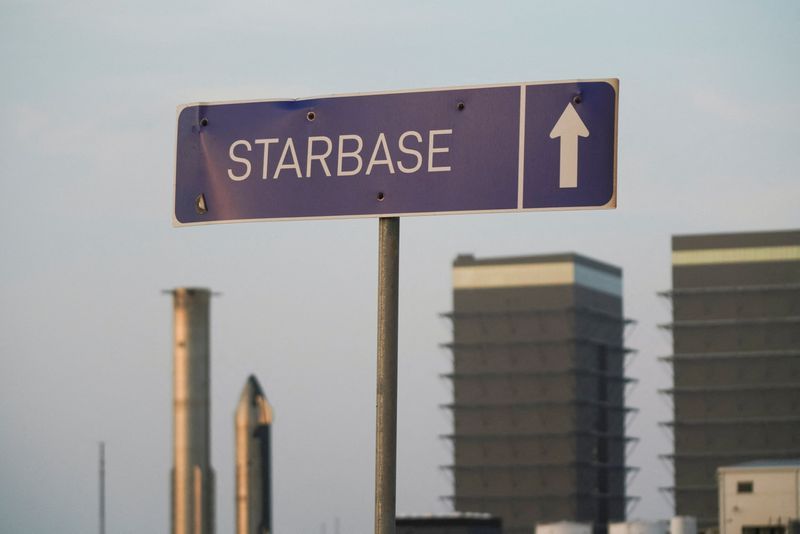
Elon Musk's SpaceX confidentially filed for a potentially record-breaking U.S. IPO. The process, managed by underwriters, involves confidential and public filings, roadshows, and pricing. With regulatory reviews underway, SpaceX's market debut will showcase investor demand and company valuation, following standard procedures before trading begins. Elon Musk's SpaceX is preparing for a potentially record-breaking U.S. IPO, filed confidentially as reported by sources familiar with the matter. This filing puts a spotlight on the intricate, multi-step IPO process that companies navigate before their shares commence trading. Depending on regulatory reviews and market conditions, the IPO timeline can span three to six months. The U.S. Securities and Exchange Commission (SEC) permits confidential filings, allowing companies to choose whether to submit initial drafts privately. In preparation for an IPO, companies hire underwriters, a group of banks that orchestrate the process. These underwriters help gauge demand and set expectations regarding the offering's size. Additionally, companies enter a quiet period where public communications are limited to prevent investor influence prior to pricing. A prospectus is privately filed by high-profile issuers and reviewed by the SEC. Public filing of the registration statement, known as an S-1 or F-1 for international companies, follows with detailed business insights and chooses an exchange and ticker symbol. After considering pricing, underwriters allocate shares, often favoring long-term holders. The companies might use the greenshoe option for extra stock in early trade, and insider shares are often locked post-debut for a specific period.
Anthropic Accidentally Leaks Details of Powerful New AI Model
The race in AI tools has picked up high speed. New models are being released one after another, each aiming to handle tasks faster and with fewer errors. As more people depend on these systems for writing, coding, and analysis, the pressure to improve has only grown. Companies are pushing hard to stay ahead, which is why progress feels constant. One of the key players in that race is Anthropic, the team behind Claude AI. The model has already shaped how many approach research and problem-solving, especially when it comes to handling complex tasks. Its impact has been noticeable across both professional and everyday use. At the same time, development hasn't slowed down. Several new models are already in the works, and a recent leak has brought unexpected attention to what Anthropic is building next. Early details suggest a more advanced system, along with a clear focus on managing the risks that come with increasing capability. The situation came down to a basic oversight. Anthropic had left parts of its content system accessible through a public storage setup. Anyone who knew where to look could find draft materials that were never meant to be seen yet. Researchers eventually came across these files, which included early blog content, documents, and visuals tied to upcoming releases. Once the issue was flagged, Anthropic moved quickly to close access. The company described it as a simple configuration mistake in an external content tool. No user data was affected, which limited the damage, but the exposed drafts still revealed more than intended. They outlined projects, internal naming, and the direction the team was heading. What makes this notable is how uncommon it is for large AI labs to reveal plans ahead of schedule. Even so, fast-moving teams sometimes miss small details, and those details can open the door to leaks like this. The leaked files point to a new system that goes beyond Anthropic's current top models. Internally, it appears under names like Claude Mythos and Capybara, both referring to the same project. From what's described, this model is positioned above their existing Opus-level systems. Early benchmarks suggest a clear performance improvement. The model performs coding tasks with greater accuracy, solves complex academic problems with fewer errors, and demonstrates stronger capabilities in technical areas such as system analysis. That level of performance comes at a cost. Systems of this scale require more resources to run, which is why access is being limited at first. Anthropic has started with a small group of users, using their feedback to refine the model before making any broader release decisions One area that receives significant attention in the leaked material is cybersecurity. The new model appears particularly strong at identifying code weaknesses. It can scan systems, detect potential flaws, and explain how those issues might be exploited. That creates a clear tension. The same capability that helps security teams fix problems can also be used in less responsible ways. Faster vulnerability detection means faster potential misuse if the technology spreads without control. Anthropic seems aware of this balance. Their early-access approach leans toward organizations focused on defense, teams that work to secure systems rather than break them. The idea is to strengthen protection before wider availability changes the landscape. This is not a new concern in AI development, but the scale of improvement raises the stakes. As models become more capable, decisions around access and timing carry more weight. Instead of releasing the model widely, Anthropic is taking a slower route. Access starts with a limited group, giving the team room to observe how the system performs in real use. That includes tracking edge cases, unexpected behavior, and how people apply the model in practical settings. The company is also placing emphasis on studying risk areas before scaling up. Cybersecurity remains a key focus, with plans to share insights that could help organizations prepare for the introduction of more advanced tools into the space. This approach reflects a broader pattern in how Anthropic operates. There's a clear effort to avoid rushing releases, even when competition is moving quickly. The aim is to maintain steady progress without losing control over how the technology is used. The leaked documents also mentioned a smaller, more private initiative, a closed event for selected business leaders. The gathering is set to take place in the UK, with CEO Dario Amodei expected to attend. The setting is intentionally low-profile, away from typical conference environments. Over two days, attendees will discuss how to apply AI tools within their organizations. There will also be early demonstrations of features that haven't been made public yet. These meetings serve a practical purpose. They give Anthropic direct feedback from companies that are likely to adopt these systems at scale. At the same time, they help shape how future tools are positioned in real business environments. The leak offers a rare look at how quickly things are moving behind the scenes. Models are evolving in shorter cycles, and the gap between versions is becoming more noticeable. What feels advanced today can be overtaken within months. For users, this points to tools that will continue to improve in capability. Tasks like coding, research, and analysis are becoming more efficient with each iteration. At the same time, the focus on risk (especially in areas like security) suggests that progress is being handled with more caution than before. How Anthropic manages this rollout will likely influence how others approach similar releases. The balance between speed and control is no longer theoretical; it's something every major lab has to deal with in real time.

Factbox-SpaceX's business and finances: rockets, satellite communications and budding AI
April 1 (Reuters) - SpaceX is gearing up for a stock market debut that could value it at more than $1.75 trillion, Bloomberg News reported on Wednesday, as the Elon Musk-led company reaches for the stars in what could be the largest IPO in history. Here are some details about SpaceX - what it does, what is known about its financials, and other topics. SPACEX IN BRIEF SpaceX, founded in 2002, is the largest private space company in the U.S. and conducts more launches annually than any other company globally. It offers launch services on its reusable Falcon 9 rockets and is developing a larger "Starship". Its Starlink satellite communications network offers internet service to individuals and organizations, with more than 9,500 satellites deployed since 2019 to service more than 9 million users globally. Starlink generates 50%-80% of SpaceX's revenue. Musk's mega-merger of his companiesSpaceX and xAI in February combined the space-and-defense contractor with a fast-growing, money-losing AI developer spending heavily to builddata centers. SpaceX's main rocket customers include NASA, the U.S. Department of Defense, international space agencies, and commercial satellite companies. The Starship system, a combination of SpaceX's Super Heavy booster and Starship upper stage, is designed for full reusability and built to carry crew and cargo. NASA has been pressing SpaceX to advance Starship toward lunar mission readiness. Musk sees Starship as core to fulfilling his goal of routinely ferrying humans to Mars. SpaceX launched five Starship flight tests last year, the first three of which suffered complex and explosive setbacks, while the last two were successful. Looking ahead, SpaceX has filed plans to launch a constellation of 1 million solar-powered AI data center satellites. Musk's vast business empire -- unofficially dubbed the "Muskonomy" by some investors and analysts -- also encompasses brain-chip company Neuralink and tunneling venture the Boring Company. SPACEX FINANCIALS SpaceX generated roughly $8 billion in profit against $15 billion to $16 billion in revenue in 2025, Reuters exclusively reported in January. The profit figure reflects EBITDA -- earnings before interest, taxes, depreciation, and amortization -- a measure of operating performance. Revenue increased 51% to $13.1 billion in 2024, according to media reports. SpaceX's revenue reportedly doubled from $2.3 billion in 2021 to $4.6 billion in 2022, then rose 90% to $8.7 billion in 2023. Musk has noted that NASA will contribute only 5% of SpaceX's revenue this year, adding that the vast majority of revenue is from the commercial Starlink system. BEYOND EARTH, TO THE MOON AND MARS In 2021, NASA tapped Starship as the lunar lander for its Artemis III mission, which aims to return humans to the Moon for the first time since the Apollo program, followed by a second selection to serve as the lander for Artemis IV. Musk in February said that SpaceX has shifted its focus from Mars to building a "self‑growing city" on the moon, which could be achieved within a decade. SpaceX still intends to start on Musk's long-held ambition of a city on Mars within five to seven years, "but the overriding priority is securing the future of civilization and the Moon is faster," he said. ACQUISITION OF XAI Musk launched artificial intelligence startup xAI in July 2023 as an alternative to OpenAI's ChatGPT. SpaceX acquired xAI in a transaction that valued SpaceX at $1 trillion, and xAI at $250 billion, according to a person familiar with the matter. Musk chose to maintain xAI, which operates X and developed the Grok chatbot, as a wholly owned SpaceX subsidiary rather than fully integrating the two companies. XAI reportedly posted a net loss of $1.46 billion for the September quarter, compared with a loss of $1 billion in the previous three months. Revenue nearly doubled sequentially to $107 million in the period ended September 30, 2025. The AI startup acquired messaging and social media service X in March last year, valuing xAI at $80 billion and X at $33 billion. THE COMPETITION Amazon founder Jeff Bezos started the rocket company, Blue Origin, in 2000. The company created a business carrying paying passengers to the edge of space aboard its New Shepard rocket but has shuttered its space tourism flights to redirect resources toward its Blue Moon lunar lander program, with an uncrewed surface mission planned for this year. Blue Origin and SpaceX are building their moon landers with billions of dollars in funding from NASA, which aims to use them for a series of astronaut moon landings starting with SpaceX's Starship. Blue Origin has a $3.6 billion contract with NASA that helps fund the development of the Blue Moon lander. In April 2025, it was awarded a contract for seven missions worth a combined $2.3 billion by the U.S. Space Force. United Launch Alliance, or ULA, is a joint venture of Boeing and Lockheed Martin. It won a U.S. Space Force contract worth $5.3 billion for 19 missions in April last year, and its new Vulcan rocket had its first two launches in 2024. The Pentagon certified Vulcan for national security missions in April after months of review into a mishap with its solid rocket motors during one of its flights. Here is a list of some publicly listed U.S. space companies: (Reporting by Juby Babu in Mexico City; Editing by Leroy Leo)
SpaceX files confidentially for IPO that will rewrite the record books
In a post on X on March 31, Musk stated that Optimus 3 is mobile but requires some finishing touches before it is ready to be shown to the world. This update comes on the final day of the first quarter, a period when Tesla had previously signaled expectations for a Gen 3 reveal. Elon Musk announced a disappointing update to the unveiling of Tesla Optimus and its third-generation iteration, missing a timeline it aimed to hit in the first quarter of the year. Musk has confirmed that the highly anticipated Optimus Gen 3 humanoid robot is already walking around and operational, yet the public unveiling will face a short delay as the company applies final refinements. In a post on X on March 31, Musk stated that Optimus 3 is mobile but requires some finishing touches before it is ready to be shown to the world. This update comes on the final day of the first quarter, a period when Tesla had previously signaled expectations for a Gen 3 reveal. The announcement follows reports of Optimus Gen 3 appearing at the Tesla Diner in Los Angeles, where it was observed serving and moving about until sunset. Images and videos shared by observers captured the robot in action, highlighting its progress in real-world mobility. Tesla had aimed to showcase the production intent version of Optimus Gen 3 during the first quarter of 2026, positioning it as a major step toward factory deployment and eventual commercial availability. Musk has described the robot as featuring advanced capabilities, including highly dexterous hands with significant degrees of freedom, powered by Tesla's AI systems for complex tasks. This minor postponement aligns with Tesla's iterative approach to development. Earlier statements from Musk indicated that Gen 3 would represent the most advanced humanoid robot yet, designed primarily for internal factory use before scaling to external customers. Elon Musk's $10 Trillion robot: Inside Tesla's push to mass produce Optimus Production timelines point toward low-volume output starting in the summer of 2026, with volume ramp-up targeted for 2027. The delay underscores the company's commitment to quality over speed, ensuring the robot meets rigorous standards for safety and performance in practical environments. Optimus represents a cornerstone of Tesla's long-term vision beyond electric vehicles. Musk has repeatedly emphasized that successful humanoid robotics could transform industries by addressing labor shortages and enabling new forms of productivity. Competitors in the space continue to advance their own platforms, yet Tesla's vertical integration, from custom actuators to end-to-end AI training, positions Optimus as a potential leader. Community reactions on social media range from excitement over visible progress to impatience with shifting timelines, a familiar pattern in Tesla's innovation journey. Investors and enthusiasts view Optimus as critical to Tesla's valuation, potentially surpassing its automotive business in scale. With the robot already demonstrating walking and basic interactions, the finishing touches likely involve software polishing, hardware fine-tuning, and reliability enhancements. Musk's update suggests the reveal could arrive in the coming weeks or months, maintaining momentum toward broader deployment. As Tesla pushes the boundaries of physical artificial intelligence, this latest development keeps Optimus in the spotlight. The company continues to prioritize rapid iteration while delivering on its promises to shareholders and customers. The robotics revolution at Tesla appears closer than ever, promising profound impacts on manufacturing, services, and daily life in the years ahead.