News & Updates
The latest news and updates from companies in the WLTH portfolio.
Dow Jones Top Company Headlines at 9 PM ET: Anthropic, Amazon Tighten Bond in $5 Billion Investment and Computing Deal | Tim ...
Anthropic, Amazon Tighten Bond in $5 Billion Investment and Computing Deal Amazon will invest as much as $25 billion in the AI company, which will secure up to 5 gigawatts in badly needed computing power in the pact. John Ternus, head of the company's hardware division, will succeed Cook, who will become executive chairman. ---- Spirit Airlines in Talks With Trump Administration on Government Investment Florida-based Spirit has been working to sell some planes and refocus operations on core cities. ---- Rio Tinto's Iron Ore, Copper Production Rose in First Quarter Rio Tinto said it produced more iron ore, copper and aluminum in the first quarter of the year, while reassuring investors of limited impacts to date from the conflict in the Middle East. ---- Alaska Air Group Suspends Guidance, Citing Fuel Cost Uncertainty "Until conditions stabilize and we have better sight to earnings beyond the current quarter, we have suspended full-year guidance," the company said. ---- Zions Bancorp Reports Higher First-Quarter Profit The Salt Lake City-based regional bank posted a quarterly profit of $232 million, up from $169 million a year earlier. ---- Steel Dynamics Posts Higher First-Quarter Profit, Sales Amid Growth in Steel Shipments The steel producer posted a profit of $403.4 million amid increased steel prices and a rise in demand for steel. ---- Red Lobster's Endless Shrimp Is Back-With a Few Strings Attached The seafood chain is bringing back the promotion for the first time since bankruptcy, with some limits. ---- Home Builder Margins Haven't Hit Bottom Yet. D.R. Horton's Earnings Will Offer Clues. D.R. Horton will likely see a 'relatively soft quarter,' one analyst says. ---- AST SpaceMobile's stock falls after failure of Jeff Bezos-backed satellite launch Blue Origin successfully launched AST SpaceMobile's satellite to orbit, but it was at the wrong altitude. ---- Cleveland-Cliffs Earnings Boosted by Trump Trade Enforcement. The Stock Is Still Down. The steel maker reported first-quarter Ebitda of $95 million, including an $80 million oneâ'time energy cost impact. Wall Street was looking for Ebitda of about $92 million. ---- Blackstone-Backed Jersey Mike's Subs Files Confidentially for IPO Jersey Mike's said the number of shares it plans to offer and the price range for the proposed offering haven't yet been determined. ---- Bipartisan Senators Warn United and American Airlines on Potential Merger Though American has rejected a deal, lawmakers asked both carriers to share how it could affect routes and fares. Under terms of the deal, certain affiliates of Blue Owl Real Estate Capital will buy all outstanding shares of Sila's common stock for $30.38 apiece, the company said. ---- McKesson to Sell Stake of Medical-Surgical Unit to Apollo McKesson said Apollo affiliates agreed to buy a minority ownership interest in its medical-surgical solutions business ahead of the unit's planned spinoff. ---- Honeywell to Sell Productivity Unit for $1.4 Billion Brady Corp. agreed to acquire Honeywell International's productivity solutions and services business for $1.4 billion. ---- USA Rare Earth to Acquire Serra Verde in $2.8 Billion Deal USA Rare Earth has agreed to acquire the owner of a rare-earth mine and processing plant in Brazil, a move that would strengthen its mine-to-magnets supply chain amid geopolitical tensions between the U.S. and China.

Amazon invests another $5 bn in Anthropic
As Amazon invests billions of dollars in Anthropic, the AI startup commits to spending heavily on the tech titan's AWS cloud computing technology Amazon on Monday said it pumped another $5 billion into Anthropic as it ramps up its collaboration with the startup behind Claude artificial intelligence. The e-commerce and cloud computing colossus noted that the investment builds on $8 billion it had already invested in Anthropic, according to the companies. Amazon added that it could invest $20 billion more in Anthropic, provided the startup meets certain performance goals. For its part, San Francisco-based Anthropic said it has committed to spending more than $100 billion on Amazon Web Services (AWS) technology to power AI in the coming decade. "We need to build the infrastructure to keep pace with rapidly growing demand," Anthropic chief executive Dario Amodei said in a release. "Our collaboration with Amazon will allow us to continue advancing AI research while delivering Claude to our customers." Anthropic said in early April that it had tripled its annualized revenues quarter-on-quarter to over $30 billion -- outpacing OpenAI for the first time. Amodei visited US officials last week at the White House, where they struck a different tone from the dispute that erupted in February, when the AI startup infuriated Pentagon chief Pete Hegseth by insisting its technology should not be used for mass surveillance or fully autonomous weapons systems. "We discussed opportunities for collaboration, as well as shared approaches and protocols to address the challenges associated with scaling this technology," a White House spokesperson told AFP. The rhetoric marks a departure from months earlier, when President Donald Trump instructed the US government to "immediately cease" using Anthropic's technology after the company refused to allow the Pentagon unconditional use of its Claude AI models. Anthropic has challenged the Trump administration in court, as well as Hegseth's move to add the company to a list of firms that pose a "supply chain risk." Earlier this month, Anthropic announced its newest AI model Mythos, withholding it from public release due to its potential cybersecurity risks.
Amazon invests another $5 bn in Anthropic
Amazon on Monday said it pumped another $5 billion into Anthropic as it ramps up its collaboration with the startup behind Claude artificial intelligence. The e-commerce and cloud computing colossus noted that the investment builds on $8 billion it had already invested in Anthropic, according to the companies. Amazon added that it could invest $20 billion more in Anthropic, provided the startup meets certain performance goals. For its part, San Francisco-based Anthropic said it has committed to spending more than $100 billion on Amazon Web Services (AWS) technology to power AI in the coming decade. "We need to build the infrastructure to keep pace with rapidly growing demand," Anthropic chief executive Dario Amodei said in a release. "Our collaboration with Amazon will allow us to continue advancing AI research while delivering Claude to our customers." Anthropic said in early April that it had tripled its annualized revenues quarter-on-quarter to over $30 billion -- outpacing OpenAI for the first time. Amodei visited US officials last week at the White House, where they struck a different tone from the dispute that erupted in February, when the AI startup infuriated Pentagon chief Pete Hegseth by insisting its technology should not be used for mass surveillance or fully autonomous weapons systems. "We discussed opportunities for collaboration, as well as shared approaches and protocols to address the challenges associated with scaling this technology," a White House spokesperson told AFP. The rhetoric marks a departure from months earlier, when President Donald Trump instructed the US government to "immediately cease" using Anthropic's technology after the company refused to allow the Pentagon unconditional use of its Claude AI models. Anthropic has challenged the Trump administration in court, as well as Hegseth's move to add the company to a list of firms that pose a "supply chain risk." Earlier this month, Anthropic announced its newest AI model Mythos, withholding it from public release due to its potential cybersecurity risks. gc/sla
Amazon invests another $5 bn in Anthropic
As Amazon invests billions of dollars in Anthropic, the AI startup commits to spending heavily on the tech titan's AWS cloud computing technology Amazon on Monday said it pumped another $5 billion into Anthropic as it ramps up its collaboration with the startup behind Claude artificial intelligence. The e-commerce and cloud computing colossus noted that the investment builds on $8 billion it had already invested in Anthropic, according to the companies. Amazon added that it could invest $20 billion more in Anthropic, provided the startup meets certain performance goals. For its part, San Francisco-based Anthropic said it has committed to spending more than $100 billion on Amazon Web Services (AWS) technology to power AI in the coming decade. "We need to build the infrastructure to keep pace with rapidly growing demand," Anthropic chief executive Dario Amodei said in a release. "Our collaboration with Amazon will allow us to continue advancing AI research while delivering Claude to our customers." Anthropic said in early April that it had tripled its annualized revenues quarter-on-quarter to over $30 billion -- outpacing OpenAI for the first time. Amodei visited US officials last week at the White House, where they struck a different tone from the dispute that erupted in February, when the AI startup infuriated Pentagon chief Pete Hegseth by insisting its technology should not be used for mass surveillance or fully autonomous weapons systems. "We discussed opportunities for collaboration, as well as shared approaches and protocols to address the challenges associated with scaling this technology," a White House spokesperson told AFP. The rhetoric marks a departure from months earlier, when President Donald Trump instructed the US government to "immediately cease" using Anthropic's technology after the company refused to allow the Pentagon unconditional use of its Claude AI models. Anthropic has challenged the Trump administration in court, as well as Hegseth's move to add the company to a list of firms that pose a "supply chain risk." Earlier this month, Anthropic announced its newest AI model Mythos, withholding it from public release due to its potential cybersecurity risks.
Amazon invests another $5 bn in Anthropic
As Amazon invests billions of dollars in Anthropic, the AI startup commits to spending heavily on the tech titan's AWS cloud computing technology Amazon on Monday said it pumped another $5 billion into Anthropic as it ramps up its collaboration with the startup behind Claude artificial intelligence. The e-commerce and cloud computing colossus noted that the investment builds on $8 billion it had already invested in Anthropic, according to the companies. Amazon added that it could invest $20 billion more in Anthropic, provided the startup meets certain performance goals. For its part, San Francisco-based Anthropic said it has committed to spending more than $100 billion on Amazon Web Services (AWS) technology to power AI in the coming decade. "We need to build the infrastructure to keep pace with rapidly growing demand," Anthropic chief executive Dario Amodei said in a release. "Our collaboration with Amazon will allow us to continue advancing AI research while delivering Claude to our customers." Anthropic said in early April that it had tripled its annualized revenues quarter-on-quarter to over $30 billion -- outpacing OpenAI for the first time. Amodei visited US officials last week at the White House, where they struck a different tone from the dispute that erupted in February, when the AI startup infuriated Pentagon chief Pete Hegseth by insisting its technology should not be used for mass surveillance or fully autonomous weapons systems. "We discussed opportunities for collaboration, as well as shared approaches and protocols to address the challenges associated with scaling this technology," a White House spokesperson told AFP. The rhetoric marks a departure from months earlier, when President Donald Trump instructed the US government to "immediately cease" using Anthropic's technology after the company refused to allow the Pentagon unconditional use of its Claude AI models. Anthropic has challenged the Trump administration in court, as well as Hegseth's move to add the company to a list of firms that pose a "supply chain risk." Earlier this month, Anthropic announced its newest AI model Mythos, withholding it from public release due to its potential cybersecurity risks.
Amazon invests another $5 bn in Anthropic
As Amazon invests billions of dollars in Anthropic, the AI startup commits to spending heavily on the tech titan's AWS cloud computing technology Amazon on Monday said it pumped another $5 billion into Anthropic as it ramps up its collaboration with the startup behind Claude artificial intelligence. The e-commerce and cloud computing colossus noted that the investment builds on $8 billion it had already invested in Anthropic, according to the companies. Amazon added that it could invest $20 billion more in Anthropic, provided the startup meets certain performance goals. For its part, San Francisco-based Anthropic said it has committed to spending more than $100 billion on Amazon Web Services (AWS) technology to power AI in the coming decade. "We need to build the infrastructure to keep pace with rapidly growing demand," Anthropic chief executive Dario Amodei said in a release. "Our collaboration with Amazon will allow us to continue advancing AI research while delivering Claude to our customers." Anthropic said in early April that it had tripled its annualized revenues quarter-on-quarter to over $30 billion -- outpacing OpenAI for the first time. Amodei visited US officials last week at the White House, where they struck a different tone from the dispute that erupted in February, when the AI startup infuriated Pentagon chief Pete Hegseth by insisting its technology should not be used for mass surveillance or fully autonomous weapons systems. "We discussed opportunities for collaboration, as well as shared approaches and protocols to address the challenges associated with scaling this technology," a White House spokesperson told AFP. The rhetoric marks a departure from months earlier, when President Donald Trump instructed the US government to "immediately cease" using Anthropic's technology after the company refused to allow the Pentagon unconditional use of its Claude AI models. Anthropic has challenged the Trump administration in court, as well as Hegseth's move to add the company to a list of firms that pose a "supply chain risk." Earlier this month, Anthropic announced its newest AI model Mythos, withholding it from public release due to its potential cybersecurity risks.
Amazon invests another $5 bn in Anthropic
As Amazon invests billions of dollars in Anthropic, the AI startup commits to spending heavily on the tech titan's AWS cloud computing technology Amazon on Monday said it pumped another $5 billion into Anthropic as it ramps up its collaboration with the startup behind Claude artificial intelligence. The e-commerce and cloud computing colossus noted that the investment builds on $8 billion it had already invested in Anthropic, according to the companies. Amazon added that it could invest $20 billion more in Anthropic, provided the startup meets certain performance goals. For its part, San Francisco-based Anthropic said it has committed to spending more than $100 billion on Amazon Web Services (AWS) technology to power AI in the coming decade. "We need to build the infrastructure to keep pace with rapidly growing demand," Anthropic chief executive Dario Amodei said in a release. "Our collaboration with Amazon will allow us to continue advancing AI research while delivering Claude to our customers." Anthropic said in early April that it had tripled its annualized revenues quarter-on-quarter to over $30 billion -- outpacing OpenAI for the first time. Amodei visited US officials last week at the White House, where they struck a different tone from the dispute that erupted in February, when the AI startup infuriated Pentagon chief Pete Hegseth by insisting its technology should not be used for mass surveillance or fully autonomous weapons systems. "We discussed opportunities for collaboration, as well as shared approaches and protocols to address the challenges associated with scaling this technology," a White House spokesperson told AFP. The rhetoric marks a departure from months earlier, when President Donald Trump instructed the US government to "immediately cease" using Anthropic's technology after the company refused to allow the Pentagon unconditional use of its Claude AI models. Anthropic has challenged the Trump administration in court, as well as Hegseth's move to add the company to a list of firms that pose a "supply chain risk." Earlier this month, Anthropic announced its newest AI model Mythos, withholding it from public release due to its potential cybersecurity risks.
Anthropic CEO Warns AI Could Halve Entry-Level Office Jobs
Dario Amodei, chief executive of artificial intelligence company Anthropic, has warned that AI could eliminate up to half of all entry-level white-collar jobs within five years, a shift he says could push unemployment rates to between 10 and 20 percent and which he argues governments are dangerously unprepared to handle. Amodei, speaking in an interview with Axios, said the pace of AI capability development over the past two years has been extraordinary, with systems that once performed at the level of a high school student now operating with the proficiency of a graduate. Tasks long assigned to junior employees in finance, consulting, law, and technology, including summarising documents, drafting reports, reviewing contracts, and generating initial project frameworks, are increasingly being handled by automated models. "We, as the producers of this technology, have a duty and an obligation to be honest about what is coming," Amodei said. "I don't think this is on people's radar." The warning carries particular weight because it comes from the person building the technology. Amodei acknowledged the contradiction but argued that alerting governments and the public was itself a form of responsibility. He noted that chief executives would quietly stop hiring in affected roles and move to full AI substitution the moment it becomes economically viable, a shift he said could happen almost overnight. Supporting data adds weight to the prediction. Big Tech's hiring of new graduates has fallen nearly 50 percent from pre-pandemic levels according to a SignalFire report, and AI was cited as the cause of nearly 55,000 US layoffs in 2025 according to figures from Challenger, Gray and Christmas. A Massachusetts Institute of Technology study found AI can already perform work equivalent to 11.7 percent of the US labour market, representing potential savings of up to 1.2 trillion dollars in wages across finance, healthcare, and professional services. Despite these risks, Amodei said halting AI development was not a viable path, given that if one company or country stopped, others would simply accelerate. Instead, he called on governments to invest in large-scale reskilling programmes and to explore economic policies that redistribute the productivity gains from automation. He also proposed a token tax on AI model usage as one possible mechanism to fund the transition. Not all industry voices share his alarm. Some economists and technology leaders argue that past technological revolutions ultimately created more jobs than they destroyed and that current AI capabilities, while impressive, have not yet shown the scale of disruption Amodei anticipates. Yale University's Budget Lab published analysis in late 2025 concluding that AI had not yet caused measurable widespread job losses based on US labour market data from 2022 to 2025. The debate nonetheless reflects a growing tension inside the technology sector between those who see AI as a productivity multiplier and those who argue its most immediate effect is the erosion of the entry-level roles where the next generation of workers would otherwise build their expertise and judgment.

Amazon to invest up to $25 billion in Anthropic as part of $100 billion cloud deal - The Economic Times
Amazon is injecting up to $25 billion into AI startup Anthropic, solidifying a partnership where Anthropic commits over $100 billion to Amazon's cloud services. This significant investment, building on previous funding, aims to bolster Anthropic's AI models and secure crucial cloud infrastructure for the burgeoning AI sector.Amazon said on Monday that it will invest up to $25 billion in Anthropic, as the AI startup commits to spending more than $100 billion over the next 10 years on Amazon's cloud technologies. The deal deepens the two firms' relationship as Anthropic rushes to secure capacity to bolster its models. Seattle-based Amazon will invest $5 billion in Anthropic now, and an additional $20 billion in the future, subject to certain commercial milestones. This is in addition to the $8 billion Amazon previously invested in the company. Amazon has struggled to generate buzz around its own AI models, such as Nova, while continuing to be a leader in providing critical infrastructure for the AI boom, such as cloud computing power. Amazon said it anticipates around $200 billion this year on capital expenditures, largely for AI development. Amazon is also making big bets on the largest AI startups. The new investment in Anthropic, the creator of Claude, follows Amazon's announcement earlier this year it would invest up to $50 billion in OpenAI, the maker of ChatGPT. In a statement, Anthropic said it expected to bring roughly 1 gigawatt of capacity via Trainium2 and Trainium3 chips by year-end. Anthropic ultimately expects to secure up to 5 gigawatts of such capacity. Amazon CEO Andy Jassy said in a statement that Anthropic's use of Trainium chips "reflects the progress we've made together on custom silicon." Anthropic is aiming to pull ahead in the AI race with model releases focusing on coding and design, while Amazon seeks customers for its custom silicon chips built for artificial intelligence training and inference. Amazon shares rose around 2.7% in extended trading.
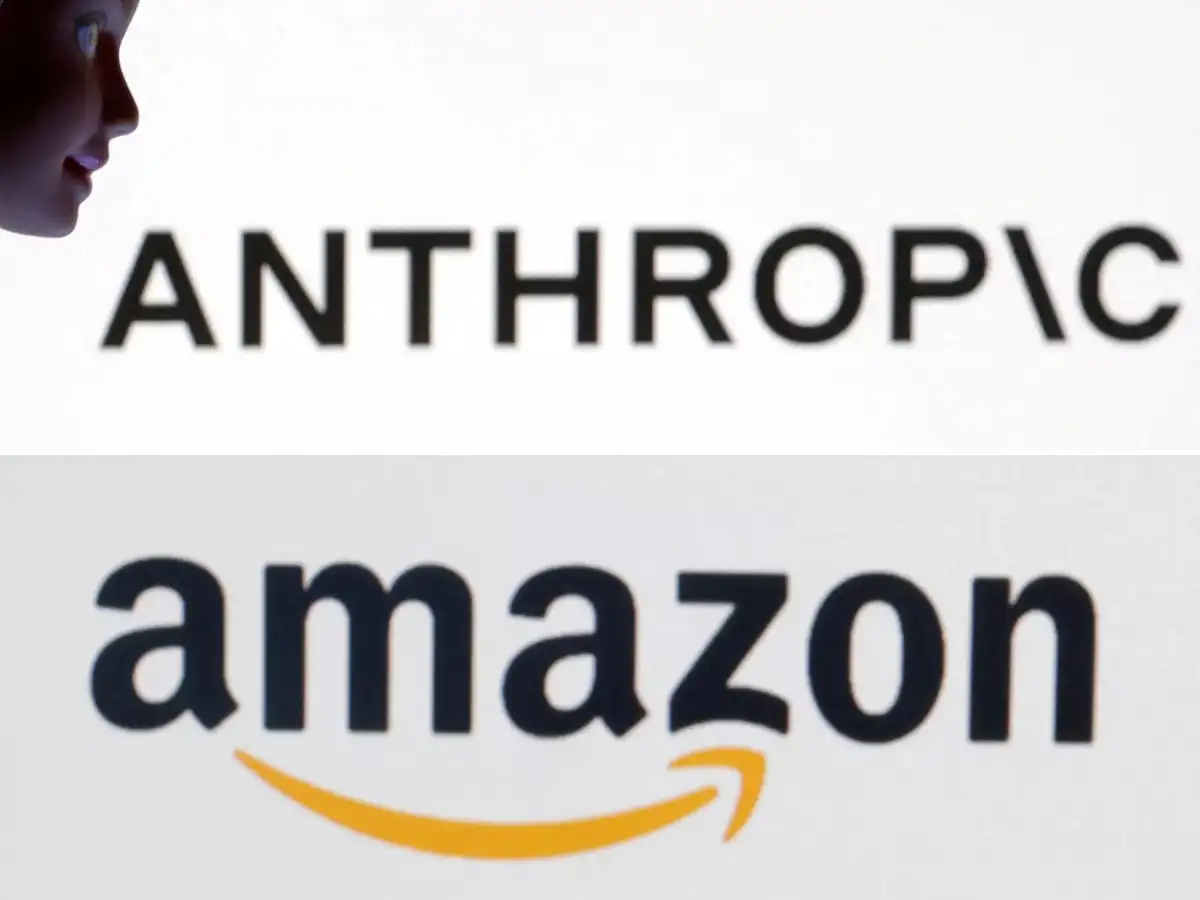
Amazon invests another $5 bn in Anthropic
Amazon on Monday said it pumped another $5 billion into Anthropic as it ramps up its collaboration with the startup behind Claude artificial intelligence. The e-commerce and cloud computing colossus noted that the investment builds on $8 billion it had already invested in Anthropic, according to the companies.
Tube strikes to bring chaos as 'militant' RMT holds 24-hour walkouts
'Militant' union bosses have been accused of holding Londoners 'hostage' as Tube drivers on £72,000-a-year prepare to cripple the capital with yet another strike. The Rail, Maritime and Transport union (RMT) has confirmed its members will walk out from 12pm for 24 hours today and again on Thursday, promising misery for millions of commuters and an estimated £250million hit to the economy. The Piccadilly and Circle lines will be completely shut during the industrial action while sections of the Metropolitan and Central lines will also be closed. All other lines are expected to have a reduced service for at least four days. Union leaders are resisting introduction of a four-day working week, which they claim could increase fatigue and compromise safety. But Transport for London (TfL) has insisted the changes are voluntary and called the walkouts 'absolutely unnecessary'. Train drivers' union Aslef has accepted the changes, which would see the average driver's working week reduce from 36 hours to 35. Susan Hall, head of the Conservative group at the London Assembly, today called on London Mayor Sir Sadiq Khan to take action to avert the walkout. 'Sadiq Khan said he would see no strikes,' she told the Daily Mail. 'Now he's sitting back and doing absolutely nothing while Londoners are left to suffer again. The Mayor and the Labour government give into the unions all the time.' Your browser does not support iframes. Passengers at Liverpool Street station in London during an RMT strike on September 10, 2025 Tory transport spokesman Richard Holden accused Sir Sadiq of letting union militants 'call the shots'. 'Sir Sadiq Khan promised zero strikes, but London is being crippled while the militant backers of Labour MPs, the RMT, call the shots,' he told The Standard. 'Conservatives warned this would happen. Yet Labour still won't stand up to their union paymasters as passengers and taxpayers deal with the fallout.' A Tube driver earns around £71,170 per year as a base salary, with total earnings often reaching £75,000 to £80,000 when overtime and allowances are included. How will the new Tube strikes impact you? Tuesday and Thursday Tube services will run normally in the morning, but reduce from mid‑morning onwards. Significant disruption from midday when strike action starts, Wednesday and Friday Strike action will continue until midday, with significant disruption expected, Services will begin to recover from midday, but disruption will continue into the evening. A reduced service will run across most lines but significant disruption is expected. No service expected on the Piccadilly and Circle lines. No service expected on the Metropolitan line between Baker Street and Aldgate. No service expected on the Central line between White City and Liverpool Street. Any services that do run will be less frequent, very busy, and passengers may not be able to board the first train. Alternative options During the strikes, other TfL services including Elizabeth line, DLR, London Overground, Trams and most bus routes are expected to be running normally, although they are likely to be very busy. On Friday, a bus strike will impact a few routes in east London. Most are enrolled into the TfL pension fund, which requires drivers to pay in 5 per cent of their salary for an employer contributions of more than 33 per cent. Other perks include free TfL travel and 75 per cent off train season tickets. Tube drivers do not require prior qualifications other than GCSEs in maths and English and training takes around six months. Simon French, chief economist at independent investment bank Panmure Liberum, has estimated the cost of the strikes as £210million. He said: 'Whilst Londoners have shown admirable adaptation to their work patterns to deal with strike disruption, there is still a core of workers who can't work at home, or adjust their commute. 'The cost is another own goal in an economy struggling for growth.' On most Underground lines, the trains are semi-autonomous. This means a machine handles stopping and starting, with drivers operating doors and handling emergencies. Laila Cunningham, Reform UK's candidate for Mayor of London, called for more automation on the Tube to cut costs and disruption. RMT general secretary Eddie Dempsey said: 'We have approached negotiations with TfL in good faith throughout this entire process, but despite our best efforts, TfL seem unwilling to make any concessions in a bid to avert strike action. 'This is extremely disappointing and has baffled our negotiators. 'The approach of TfL is not one which leads to industrial peace and will infuriate our members who want to see a negotiated settlement to this avoidable dispute.' TfL said services will vary across lines and urged passengers to check before they travel. Some bus routes in the capital operated by Stagecoach will be affected by a separate 24-hour strike from 5am on Friday. Claire Mann, TfL's chief operating officer, said: 'We have set out proposals to the RMT for a four-day working week. 'This allows us to offer train operators an additional day off, whilst at the same time bringing London Underground in line with the working patterns of other train operating companies, improving reliability and flexibility at no additional cost. 'The changes would be voluntary, there would be no reduction in contractual hours and those who wish to continue a five-day working week pattern would be able to do so.'

Amazon invests another $5 bn in Anthropic
Amazon on Monday said it pumped another $5 billion into Anthropic as it ramps up its collaboration with the startup behind Claude artificial intelligence. The e-commerce and cloud computing colossus noted that the investment builds on $8 billion it had already invested in Anthropic, according to the companies. Amazon added that it could invest $20 billion more in Anthropic, provided the startup meets certain performance goals. For its part, San Francisco-based Anthropic said it has committed to spending more than $100 billion on Amazon Web Services (AWS) technology to power AI in the coming decade. "We need to build the infrastructure to keep pace with rapidly growing demand," Anthropic chief executive Dario Amodei said in a release. "Our collaboration with Amazon will allow us to continue advancing AI research while delivering Claude to our customers." Anthropic said in early April that it had tripled its annualized revenues quarter-on-quarter to over $30 billion -- outpacing OpenAI for the first time. Amodei visited US officials last week at the White House, where they struck a different tone from the dispute that erupted in February, when the AI startup infuriated Pentagon chief Pete Hegseth by insisting its technology should not be used for mass surveillance or fully autonomous weapons systems. "We discussed opportunities for collaboration, as well as shared approaches and protocols to address the challenges associated with scaling this technology," a White House spokesperson told AFP. The rhetoric marks a departure from months earlier, when President Donald Trump instructed the US government to "immediately cease" using Anthropic's technology after the company refused to allow the Pentagon unconditional use of its Claude AI models. Anthropic has challenged the Trump administration in court, as well as Hegseth's move to add the company to a list of firms that pose a "supply chain risk." Earlier this month, Anthropic announced its newest AI model Mythos, withholding it from public release due to its potential cybersecurity risks. gc/sla
Vercel breach triggers secret-rotation warning after internal access incident
vercel has disclosed a security incident involving unauthorized access to certain internal systems, and the company is urging customers to rotate secrets immediately. The warning comes as the company investigates what it says appears to be a supply chain attack linked to a third-party AI tool. Vercel said the number of affected customers is limited, but it has not identified exactly which internal systems were accessed or how many users were impacted. What Vercel says happened Vercel said it found unauthorized access to parts of its internal environment and is now treating the case as a security breach. it has engaged experts and law enforcement while it investigates the incident, and it has released an indicator of compromise tied to a small third-party AI tool whose Google Workspace OAuth permissions were part of a broader compromise. Chief executive Guillermo Rauch said an employee account was compromised through the Context. ai AI platform being breached. Rauch said the platform had been integrated with Vercel's environment and granted deployment-level Google Workspace OAuth scopes, giving attackers a privileged foothold once the platform itself was breached. He added that the attacker then gained further access through enumeration inside Vercel environments. Customers told to check secrets and logs Vercel is advising Workspace administrators and Google account owners to look for the OAuth app identified by the company and to review account activity carefully. It is also telling customers to check activity logs and rotate environment variables if they contain secrets such as application programming interface keys, tokens, database credentials, or signing keys that had been marked as not sensitive. the impact appears to be limited, but it also said the compromise could have affected hundreds of users across many organisations. Vercel said that if users have not been contacted, there is no reason to believe their Vercel credentials or personal data were compromised at this time. Immediate reaction inside the company Rauch said the company has already analyzed its supply chain and is working to keep its core projects safe for the community. He said Next. js, Turbopack, and Vercel's other open source projects remain safe, while the investigation continues into the compromised third-party AI connection. Vercel has also told customers to enable sensitive variable protections, check recent deployments for anomalies, strengthen deployment protection settings, and rotate related tokens where needed. The company emphasized that secrets not marked as sensitive should be treated as potentially exposed and rotated as a priority. Why this breach matters now The incident is notable because it centers on trust between a cloud platform and a third-party AI integration, not just a direct system intrusion. Vercel said the initial access vector involved Google Workspace OAuth tied to Context. ai, which meant the compromise of one connected tool could cascade into broader access. That risk is what is driving the company's current guidance on vercel secrets rotation and account review. Vercel said it is working with Mandiant, additional cybersecurity firms, industry peers, and law enforcement as it narrows the scope of the incident. What happens next The next phase will likely focus on confirming exactly which internal systems were touched, how far the access went, and which customers need further action. For now, the company is pressing users to review logs, rotate exposed credentials, and treat unprotected environment variables as sensitive until the investigation is complete, as vercel continues its review of the breach.

Stock Markets Spooked by Hormuz "Chaos" as Friday's Relief Evaporates
European stock markets opened weaker after last week's optimism over a Middle East peace deal faded quickly, with traders now focused on the Strait of Hormuz, the ceasefire timeline, and a renewed jump in energy prices. The shift is sharp: what looked like relief on Friday has turned into caution, and the market reaction is already visible in London, Frankfurt, and Milan. What changed so quickly in market sentiment? Verified fact: European stock markets dropped at the start of trading as the optimism from late last week gave way to concern over the status of the Strait of Hormuz. London's FTSE 100 fell by 42 points, or 0. 4%, to 10, 626 points, leaving it below a six-week high reached at the end of last week. Germany's DAX fell by 1. 3%, and Italy's FTSE Mib declined by 1. 1%. Verified fact: The pressure did not stop at equity prices. Oil futures remained elevated, with the oil price up around 5. 5% at $95. 20 a barrel. UK month-ahead gas prices rose 3% to around 100p a therm. The reaction suggests that the market stress is not only about shares, but about the broader cost of energy and the possibility of disruption persisting beyond a brief trading window. Analysis: The immediate message from the market is that relief was fragile. The word used by Chris Beauchamp, chief market analyst at IG, was "chaos, " and that framing matters because it captures a market that is not responding to a single event, but to uncertainty about what happens next. In this setting, stock markets are not simply pricing a headline; they are pricing the risk that the headline does not resolve into a stable outcome. Why are investors so focused on the Strait of Hormuz? Verified fact: Beauchamp said Friday's "euphoria" had given way to confusion around the status of Hormuz. He also said Iran had declared the strait closed, while markets were still, in his words, "looking on the bright side. " The same assessment noted that US futures were down and Europe was expected to open lower, even though some gains from earlier in the week remained intact. Verified fact: The account from Anthony Willis, senior economist at Columbia Threadneedle Investments, added that developments over the weekend had confused matters. He said very few ships passed through during the short "open" window, some vessels tested navigation channels, and many turned back after some ships were fired upon. He also noted the US seizing an Iranian vessel in the Gulf of Oman. Analysis: The market's attention on the strait is rational because the context ties the route directly to energy supply anxiety. The rise in oil and gas prices shows that traders are treating the route as a live economic pressure point, not a distant geopolitical headline. That is why the move in stock markets is being reinforced by commodities rather than offset by them. Who benefits from calm, and who is under pressure? Verified fact: Tehran has said it has no plans to participate in new talks, while state media reports it has accused the US of violating the ceasefire. The current ceasefire is due to end on Wednesday, and there are expectations of more peace talks before then. The US is sending a delegation to Pakistan, but there is uncertainty around Iran's delegation. Verified fact: Recent rhetoric has become more escalatory, with the US once again threatening Iran's infrastructure and the Iranian regime pushing back on comments around concessions on nuclear capabilities. * Those who benefit from calm: investors seeking stability, energy consumers, and markets hoping for a clear path out of the crisis. * Those under pressure: governments managing ceasefire diplomacy, shipping routes tied to the Strait of Hormuz, and sectors exposed to higher fuel and gas costs. Analysis: The central issue is not only whether talks happen. It is whether the ceasefire can survive long enough to reduce pressure on shipping, energy, and equity pricing. In the absence of that clarity, stock markets are reacting to uncertainty by lowering risk exposure rather than waiting for reassurance that has not yet arrived. What should the public understand now? Verified fact: The market move is already visible across regions: European equities are down, US futures are weaker, oil is higher, and gas has moved up again. The six-week high in London has been pulled back from, showing how quickly sentiment can reverse when geopolitical risk returns to the foreground. Analysis: The deeper story is that the financial response is now tied to the durability of diplomacy, the safety of sea lanes, and the direction of energy prices at the same time. That combination makes this more than a passing sell-off. It is a stress test of confidence. Until the ceasefire path becomes clearer and the status of the Strait of Hormuz stops shifting, the market will likely remain vulnerable to sudden swings. For now, the message from stock markets is blunt: optimism has not disappeared, but it has been overtaken by doubt.
Anthropic has 'unprecedented' demand - and it's leaning on Amazon for support
Amazon is investing another $5 billion in the maker of Claude Amazon and Anthropic have been strategic partners since September 2023. Amazon.com has had a close relationship with Anthropic for years - and now the companies are strengthening their financial and technological ties. The e-commerce giant announced Monday afternoon that it will invest $5 billion in Anthropic currently and as much as $20 billion more down the line. These investments are on top of the $8 billion that Amazon (AMZN) had already poured into the artificial-intelligence startup. Anthropic is committing to secure up to 5 gigawatts of Amazon's custom Trainium chips, which represents both an endorsement of Amazon's technology and a further sign that AI players are looking to diversify and expand their semiconductor supply in what's still a constrained market. The AI lab also committed to spend more than $100 billion on Amazon Web Services over the next decade. "Our custom AI silicon offers high performance at significantly lower cost for customers, which is why it's in such hot demand," Amazon CEO Andy Jassy said in a blog post. Amazon's stock rose 2.4% in Monday's extended session. The push to expand Anthropic's capacity comes as the AI lab touts its "unprecedented consumer growth." Earlier this month, the company said its revenue run rate had exceeded $30 billion, up from $9 billion at the end of 2025. Meanwhile, rival OpenAI said this month it was generating some $2 billion a month, which implying that it's trailing behind Anthropic on a run-rate basis, according to Jefferies. Anthropic said in a blog post that growing at such a pace is placing an "inevitable strain" on its infrastructure, which has impacted reliability and performance for both free and paid users. In addition to the Amazon deal, Anthropic also recently expanded its relationship with Broadcom (AVGO) to access about 3.5 GW of Google's tensor processing units beginning in 2027. "Our users tell us Claude is increasingly essential to how they work, and we need to build the infrastructure to keep pace with rapidly growing demand," Anthropic CEO Dario Amodei said in a statement. The deal with Anthropic underscores Amazon's importance in the ecosystem. A recently leaked memo from OpenAI touted the company's relationship with Amazon as key to growing its enterprise business. Amazon is expected to devote most of its projected $200 billion in capital expenditures this year toward AI. In a letter to shareholders this month, Jassy said AWS's AI revenue run rate was over $15 billion for the first quarter of 2026. Its custom chips business also has an annual revenue run rate of more than $20 billion, he said. Don't miss: A new era of AI crime has arrived with Anthropic's Mythos -Emily Bary -William Gavin This content was created by MarketWatch, which is operated by Dow Jones & Co. MarketWatch is published independently from Dow Jones Newswires and The Wall Street Journal.
Amazon invests another US$5bil in Anthropic
SAN FRANCISCO: Amazon on Monday said it pumped another US$5 billion into Anthropic as it ramps up its collaboration with the startup behind Claude artificial intelligence. The e-commerce and cloud computing colossus noted that the investment builds on US$8 billion it had already invested in Anthropic, according to the companies. Amazon added that it could invest US$20 billion more in Anthropic, provided the startup meets certain performance goals. For its part, San Francisco-based Anthropic said it has committed to spending more than US$100 billion on Amazon Web Services (AWS) technology to power AI in the coming decade. "We need to build the infrastructure to keep pace with rapidly growing demand," Anthropic chief executive Dario Amodei said in a release. "Our collaboration with Amazon will allow us to continue advancing AI research while delivering Claude to our customers." Anthropic said in early April that it had tripled its annualised revenues quarter-on-quarter to over US$30 billion - outpacing OpenAI for the first time. Amodei visited US officials last week at the White House, where they struck a different tone from the dispute that erupted in February, when the AI startup infuriated Pentagon chief Pete Hegseth by insisting its technology should not be used for mass surveillance or fully autonomous weapons systems. "We discussed opportunities for collaboration, as well as shared approaches and protocols to address the challenges associated with scaling this technology," a White House spokesperson told AFP. The rhetoric marks a departure from months earlier, when President Donald Trump instructed the US government to "immediately cease" using Anthropic's technology after the company refused to allow the Pentagon unconditional use of its Claude AI models. Anthropic has challenged the Trump administration in court, as well as Hegseth's move to add the company to a list of firms that pose a "supply chain risk". Earlier this month, Anthropic announced its newest AI model Mythos, withholding it from public release due to its potential cybersecurity risks.
Amazon, Anthropic expand AI partnership with $100 billion cloud commitment
Amazon said on Monday that Anthropic will spend more than $100 billion over the next 10 years on its cloud technologies, deepening their relationship as the AI startup rushes to secure capacity to bolster its models. Amazon will also invest $5 billion in Anthropic now, and an additional $20 billion in the future, subject to certain commercial milestones. This is in addition to the $8 billion Amazon has previously invested in the company. Anthropic is aiming to pull ahead in the AI race with a slew of model releases focusing on coding and design, while Amazon seeks customers for its custom silicon chips built for artificial intelligence training and inference. Amazon shares rose around 2.5% in extended trading. Comments Published on April 21, 2026 READ MORE
Global shipping in chaos as Iran shuts Strait of Hormuz, vows to target approaching vessels - NaturalNews.com
The standoff risks a broader conflict as global energy markets are destabilized. The world's most important oil chokepoint is now a maritime prison. On April 18, Iran's Revolutionary Guard Corps sealed the Strait of Hormuz, stranding hundreds of commercial tankers and trapping thousands of sailors in a tense standoff with the United States. This decisive action, a direct response to a U.S. naval blockade of Iranian ports, has halted roughly one-fifth of the globe's seaborne oil supply and raised the specter of a broader conflict. The closure underscores a brutal reality of modern geopolitics: control over a narrow waterway can be leveraged to hold the global economy hostage. Audio evidence reveals the immediate danger. A recording released by maritime monitors captures a frantic distress call from the motor tanker Sanmar Herald as it came under fire from Iranian forces. "Sepah Navy! Motor tanker Sanmar Herald! You gave me clearance to go... you are firing now. Let me turn back!" a crew member pleads. Iranian state media confirmed gunboats fired near vessels to force them to turn back, a dramatic enforcement of the closure. For the global shipping industry, the closure has triggered a logistical nightmare and a human crisis. Hapag-Lloyd, the world's fifth-largest container line, has six ships anchored near Dubai with crews stuck for weeks. Nils Haupt, the company's senior director of communications, outlined the grim situation. "We have been working from Friday afternoon until today with the entire crisis team to bring the vessels out -- in vain, unfortunately," he told Fox News Digital. The dangers are not merely theoretical. Haupt reported crews are facing direct threats. "One crew experienced a fire on board from bomb fragments. Others have seen missiles or drones near their vessels," he said. He also cited a "significant risk from sea mines," which has made insuring vessels for passage nearly impossible. The psychological toll is mounting among the stranded sailors. "The crews are well, but they are becoming increasingly impatient and frustrated," Haupt added. "They are resilient, but each additional day makes the situation more difficult, more monotonous, and more stressful." Iran's position is unequivocal. The Islamic Revolutionary Guard Corps stated the strait would remain closed "until the U.S. lifts its blockade on Iranian ports." In a statement carried by Iranian media, the IRGC warned, "Approaching the Strait of Hormuz will be considered cooperation with the enemy, and any violating vessel will be targeted." Iran frames the U.S. blockade as "acts of piracy and maritime theft," presenting its own actions as a defensive response. This is not the first time Iran has threatened or disrupted traffic in the strait, but the current total closure represents a significant escalation. The Strait of Hormuz, only 21 miles wide at its narrowest point, is the only sea passage from the Persian Gulf to the open ocean. Its strategic importance has been a cornerstone of Middle Eastern power dynamics for decades, with Iran long recognizing the leverage its geography provides. The United States has maintained its pressure. U.S. Central Command confirmed that Navy guided-missile destroyers are among assets "executing a blockade mission impacting Iranian ports," asserting the measures are enforced impartially against all vessels. President Donald Trump dismissed Iran's tactics, stating the country "can't blackmail' the U.S. with threats regarding the waterway. He warned that U.S. attacks would resume if no deal is reached, saying, "So you'll have a blockade, and unfortunately we'll have to start dropping bombs again." The international community is feeling the ripple effects. India, a nation Iran had labeled "friendly," summoned the Iranian ambassador to protest a shooting incident involving Indian-flagged vessels, urging Tehran to resume facilitating passage. The confusion is paralyzing shipping globally. Maritime specialist John-Paul Rodrigue noted, "Ships have been attempting transit since the announcement, but it looks like many of them are heading back because the situation is unclear. There is contradictory information being issued by all parties." This standoff is a volatile test of wills with the global economy caught in the middle. Historical attempts to secure this passage have always been temporary, as the fundamental imbalance of power - where a regional actor controls a global artery - remains unresolved. The trapped sailors and their echoing distress calls are the immediate human cost, but the real price is being calculated in destabilized energy markets and the looming threat of a conflict that could spill far beyond these strategic waters.

Anthropic, Amazon ink $100B AI infrastructure deal
Anthropic and Amazon have agreed to a $100 billion AI infrastructure deal, a commitment that affects the market on whether Anthropic will develop the third best AI model by April 2026, currently at YES. The deal gives Anthropic significantly more compute resources to develop its Claude Mythos 5 model. Anthropic's position in the AI model rankings could shift as a result, with odds on the third best model outcome likely to move upward given the new infrastructure capacity. Separately, the largest company by market cap market is stable, with NVIDIA at YES. The $100 billion figure reflects Amazon's effort to close the gap with Microsoft and Google in AI deployment. The third best AI model market has no trading volume right now, but the infrastructure deal should drive activity as traders reassess Anthropic's ability to compete at the frontier. This changes Anthropic's resource position relative to Google DeepMind and OpenAI. A YES share on Anthropic achieving the third best AI model could pay off if the infrastructure investment translates into actual model performance gains on benchmarks. Watch for Anthropic's next model releases and benchmark evaluations from LMSYS Arena. These will determine whether the market reprices Anthropic's odds upward.

Amazon invests another $6.35b in Anthropic
SAN FRANCISCO - Amazon on April 20 said it pumped another US$5 billion (S$6.35 billion) into Anthropic as it ramps up its collaboration with the start-up behind Claude artificial intelligence. The e-commerce and cloud computing colossus noted that the investment builds on US$8 billion it had already invested in Anthropic, according to the companies. Amazon added that it could invest US$20 billion more in Anthropic, provided the start-up meets certain performance goals. For its part, San Francisco-based Anthropic said it has committed to spending more than US$100 billion on Amazon Web Services (AWS) technology to power AI in the coming decade. "We need to build the infrastructure to keep pace with rapidly growing demand," Anthropic chief executive Dario Amodei said in a release. "Our collaboration with Amazon will allow us to continue advancing AI research while delivering Claude to our customers." Anthropic said in early April that it had tripled its annualised revenues quarter-on-quarter to over US$30 billion - outpacing OpenAI for the first time. Mr Amodei visited US officials last week at the White House, where they struck a different tone from the dispute that erupted in February, when the AI start-up infuriated Pentagon chief Pete Hegseth by insisting its technology should not be used for mass surveillance or fully autonomous weapons systems. "We discussed opportunities for collaboration, as well as shared approaches and protocols to address the challenges associated with scaling this technology," a White House spokesperson told AFP. The rhetoric marks a departure from months earlier, when President Donald Trump instructed the US government to "immediately cease" using Anthropic's technology after the company refused to allow the Pentagon unconditional use of its Claude AI models. Anthropic has challenged the Trump administration in court, as well as Mr Hegseth's move to add the company to a list of firms that pose a "supply chain risk". Earlier in April, Anthropic announced its newest AI model Mythos, withholding it from public release due to its potential cybersecurity risks. AFP