News & Updates
The latest news and updates from companies in the WLTH portfolio.
Amazon invests another $5 bn in Anthropic
SAN FRANCISCO, United States, April 21, 2026 (BSS/AFP) - Amazon on Monday said it pumped another $5 billion into Anthropic as it ramps up its collaboration with the startup behind Claude artificial intelligence. The e-commerce and cloud computing colossus noted that the investment builds on $8 billion it had already invested in Anthropic, according to the companies. Amazon added that it could invest $20 billion more in Anthropic, provided the startup meets certain performance goals. For its part, San Francisco-based Anthropic said it has committed to spending more than $100 billion on Amazon Web Services (AWS) technology to power AI in the coming decade. "We need to build the infrastructure to keep pace with rapidly growing demand," Anthropic chief executive Dario Amodei said in a release. "Our collaboration with Amazon will allow us to continue advancing AI research while delivering Claude to our customers." Anthropic said in early April that it had tripled its annualized revenues quarter-on-quarter to over $30 billion -- outpacing OpenAI for the first time. Amodei visited US officials last week at the White House, where they struck a different tone from the dispute that erupted in February, when the AI startup infuriated Pentagon chief Pete Hegseth by insisting its technology should not be used for mass surveillance or fully autonomous weapons systems. "We discussed opportunities for collaboration, as well as shared approaches and protocols to address the challenges associated with scaling this technology," a White House spokesperson told AFP. The rhetoric marks a departure from months earlier, when President Donald Trump instructed the US government to "immediately cease" using Anthropic's technology after the company refused to allow the Pentagon unconditional use of its Claude AI models. Anthropic has challenged the Trump administration in court, as well as Hegseth's move to add the company to a list of firms that pose a "supply chain risk." Earlier this month, Anthropic announced its newest AI model Mythos, withholding it from public release due to its potential cybersecurity risks.

Amazon Invests $5B in Anthropic; Company Commits $100B to Cloud Services
Amazon has made a significant move in the tech industry by investing $5 billion in Anthropic. This brings Amazon's total commitment to the AI company to $13 billion. As part of this agreement, Anthropic pledges to utilize over $100 billion on Amazon Web Services (AWS) over the next decade. Investment Details In exchange for this substantial investment, Anthropic will gain access to a considerable boost in computing power. The deal encompasses up to 5 gigawatts (GW) of new capacity specifically designed to train and operate its AI model, Claude. Previous Agreements * Amazon's investment mirrors a recent agreement with OpenAI two months ago. * Amazon contributed $50 billion to a $110 billion funding round that valued OpenAI at $730 billion. * Both deals include cloud infrastructure as part of the funding arrangement. Technological Advancements At the core of this partnership are Amazon's proprietary chips. These include Graviton, a low-power CPU, and Trainium, which serves as a competitor to Nvidia's offerings. The Anthropic deal particularly involves the Trainium2 through Trainium4 chips, although the latest, Trainium4, is not yet on the market. Future Opportunities Anthropic has also secured options to purchase capacity on future Amazon chips as they are released. Observers are curious whether this latest investment will be a prelude to a new funding round for Anthropic. Reports suggest that venture capitalists are willing to invest at valuations exceeding $800 billion. This strategic investment highlights Amazon's ongoing commitment to expanding its cloud services. As AI technology continues to evolve, partnerships like this will likely shape the future landscape of the industry.
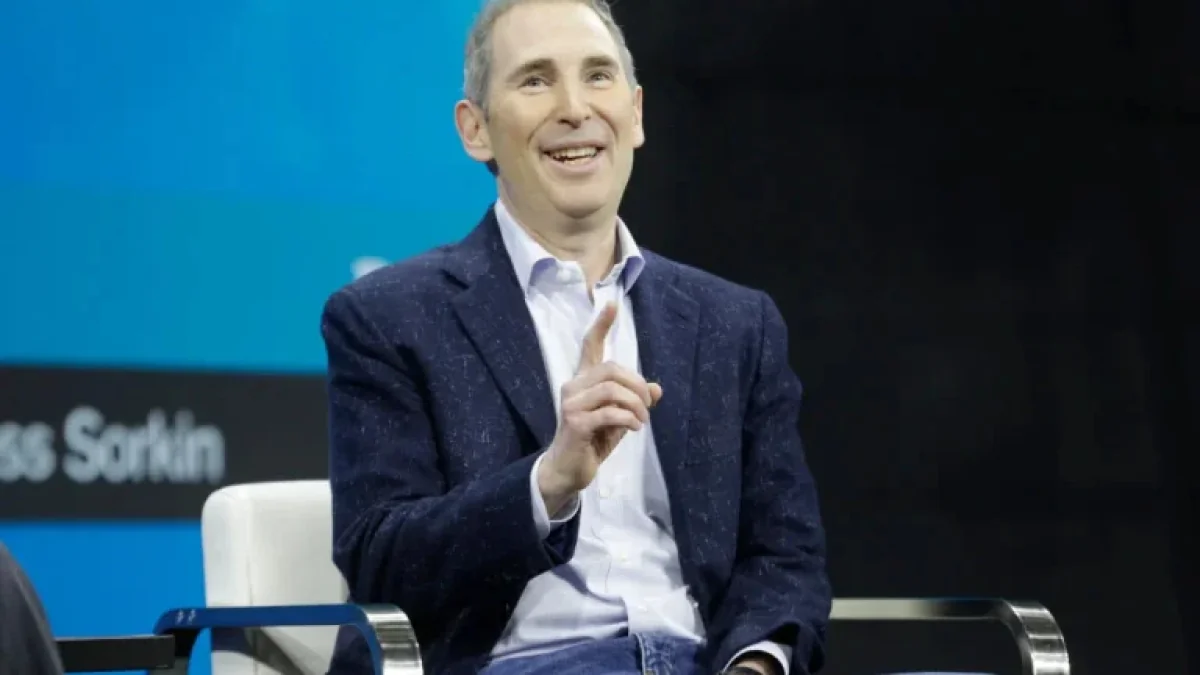
Amazon to invest $25B in Anthropic
As part of the deal, Anthropic has pledged to spend over $100 billion on Amazon Web Services (AWS) technologies over the next decade. This includes both current and future generations of Trainium, Amazon's custom AI chips. The company has also secured up to five gigawatts of capacity for training and deploying its Claude AI models. The investment from Amazon will be divided into an immediate $5 billion injection into Anthropic and a potential future investment of up to $20 billion, contingent on "certain commercial milestones." This is in line with Anthropic's latest valuation of $380 billion. The company has also said that it expects to bring nearly one gigawatt of Trainium2 and Trainium3 capacity online by the end of this year. Advertisement Amazon has said it expects to spend around $200 billion this year on capital expenditures, mostly on AI infrastructure. The investment comes just two months after Amazon also announced a potential $50 billion investment in OpenAI, Anthropic's main competitor. Both companies are trying to prove their market positions ahead of possible IPOs later this year. Advertisement Anthropic has acknowledged a "sharp rise" in consumer usage and enterprise demand for Claude, its AI model. This has led to an "inevitable strain" on its infrastructure, affecting reliability and performance. However, the company is optimistic that its new agreement with Amazon will help quickly expand available capacity to meet the growing demand from users.

Late-night SpaceX launch from Florida. Best places to see liftoff
A so Florida thing is coming up to kick off the week. A rocket launch from Cape Canaveral, Florida, is scheduled for very early Tuesday morning. SpaceX plans to launch a Falcon 9 rocket carrying the GPS III-8 satellite for the Space Force on a national security mission on April 21. Rockets here launch from NASA's Kennedy Space Center near Merritt Island, Florida, or Cape Canaveral Space Force Station, and people in and around Brevard County usually have the best chance at seeing this phenomenon in the sky. Weather permitting and depending on cloud cover and trajectory, a rocket launch from Florida's Space Coast is sometimes visible as far north as Jacksonville Beach and as far south as West Palm Beach. When there's a nighttime launch window or very early morning, there's an opportunity for unique photos -- the rocket lights up the dark sky and the contrail after makes for a great photo. Below is more information on the next rocket launch from Florida and suggestions on where to watch it in person (or virtually via the USA TODAY Network's Space Team). For questions or comments, email USA TODAY Network Space Reporters Rick Neale at [email protected], Brooke Edwards at [email protected] or Eric Lagatta at [email protected]. For more space news from the USA TODAY Network, visit floridatoday.com/space. Is there a rocket launch from Florida today? Next launch is Tuesday, April 21, SpaceX GPS III-8 * Mission: A SpaceX Falcon 9 rocket will launch the GPS III-8 satellite for the Space Force on a national security mission. Delayed from April 20. * Launch window: 2:53 a.m. to 3:08 a.m. ET on Tuesday, April 21. * Trajectory: Northeast. * Location: Launch Complex 40 at Cape Canaveral Space Force Station. * Sonic booms: No. * Live coverage starts 90 minutes before liftoff at floridatoday.com/space: You can watch live rocket launch coverage from USA TODAY Network's Space Team, which consists of FLORIDA TODAY space reporters Rick Neale and Brooke Edwards and visuals journalists Craig Bailey, Malcolm Denemark and Tim Shortt. Our Space Team will provide up-to-the-minute updates in a mobile-friendly live blog, complete with a countdown clock, at floridatoday.com/space, starting 90 minutes before liftoff. You can download the free FLORIDA TODAY app, which is available in the App Store or Google Play, or type floridatoday.com/space into your browser. Where to watch SpaceX rocket launches from Melbourne, Rockledge, Cocoa Beach and Merritt Island, Florida Pretty much anywhere in Brevard, you'll get a view of the rocket launch - in certain areas, you can get an amazing view of SpaceX rocket boosters returning to the pads. The best view to watch a rocket launch from the Space Coast is along the beach. However, visibility will depend on weather conditions and people should make sure not to block traffic or rights of way on bridges and to follow posted rules at beaches. If you are viewing the launch along the Indian River in Titusville from Space View Park or Parrish Park, look east directly across the river. If you are farther south along the Indian River, look northeast. Playalinda Beach or Canaveral National Seashore is the closest spot to view liftoff because it is almost parallel to Launch Pad 39A. On the beach, look south along the coastline (you can even see the pad from some spots). Some hotspots to check out: * Jetty Park Beach and Pier, 400 Jetty Park Road, Port Canaveral. Note, there's a charge to park. * Playalinda Beach, 1000 Playalinda Beach Road, Canaveral National Seashore. Note, there's a charge to park, and access to Canaveral National Seashore isn't always granted depending on capacity and time of day. * Max Brewer Bridge and Parrish Park, 1 A. Max Brewer Memorial Parkway, Titusville. Note, parking is available on both sides of Max Brewer Bridge. * Space View Park, 8 Broad St., Titusville * Sand Point Park, 10 E. Max Brewer Causeway, Titusville * Rotary Riverfront Park, 4141 S. Washington Ave., Titusville * Riverfront Park at Cocoa Village, 401 Riveredge Blvd., Cocoa (just before State Road 520 Causeway) * Cocoa Village, near the parks and shops or near the docks * Various parks on Merritt Island * Rotary Park, 1899 S. Courtenay Parkway, Merritt Island * Kiwanis Park on Kiwanis Island Park Road on Merritt Island * Port Canaveral, with ships from Disney Cruise Line, Carnival Cruise Line and Royal Caribbean * Alan Shepard Park, 299 E. Cocoa Beach Causeway, Cocoa Beach. Note, there could be parking costs. * Cocoa Beach Pier, 401 Meade Ave. Parking fee varies. * Lori Wilson Park, 1400 N. Atlantic Ave., Cocoa Beach. Lori Wilson Park has a dog park, by the way. * Sidney Fischer Park, 2200 N. Atlantic Ave., Cocoa Beach. Note, there could be parking costs. * Downtown Cocoa Beach, along Minutemen Causeway * Tables Beach, 197 SR A1A, Satellite Beach * The Tides on SR A1A in Satellite Beach * Various parks, including the Pelican Beach Clubhouse, in Satellite Beach * Pineda Causeway * Eau Gallie Causeway * Front Street Park near Melbourne (U.S. 192) Causeway and U.S. 1 in Melbourne * Indialantic boardwalk at Melbourne Causeway and SR A1A * Paradise Beach Park, aka Howard Futch Park, 2301 SR A1A, Melbourne (this is a beachside park) * Sebastian Inlet Park, 9700 S. State Road A1A, Melbourne Beach (there is a cost to enter) Watch rocket launches with NASA+ on Prime Video NASA content, including some rocket launches, is available to watch through NASA+ on desktop, both from its official site and YouTube. The platform is also available to download as a mobile app on smartphones. All NASA+ content is also available to those who have Prime Video downloaded on any of their devices - whether it be a smartphone or smart TV. Watch NASA+ content with Amazon Prime Video The content, which does not require a Prime subscription to view, is one of Prime Video's FAST channels (free ad-supported television). Viewers can find it under Prime's Live TV section at the top of the screen when they open the app. Lianna Norman and Jennifer Sangalang are trending reporters for the USA TODAY NETWORK-Florida, covering pop culture, rocket launches, Florida wildlife, breaking news and more. You can get all of Florida's best content directly in your inbox each weekday by signing up for the free newsletter, Florida TODAY, at https://floridatoday.com/newsletters.

Amazon invests $5 billion in Anthropic, secures $100 billion cloud commitment
Amazon is investing $5 billion in AI startup Anthropic, marking a significant expansion of their partnership. In exchange for this funding, Anthropic has committed to spending $100 billion on Amazon Web Services (AWS). This deal underscores the growing importance of cloud infrastructure in the AI sector and highlights Amazon's strategic focus on bolstering its cloud services.

Critical Anthropic's MCP Vulnerability Enables Remote Code Execution Attacks
A critical flaw in Anthropic's Model Context Protocol (MCP) exposes over 150 million downloads to potential compromise. The vulnerability could enable full system takeover across up to 200,000 servers. The OX Security Research team identified the flaw as a fundamental design decision embedded in Anthropic's official MCP SDKs across every supported programming language, including Python, TypeScript, Java, and Rust. Unlike a traditional coding bug, this vulnerability is architectural, meaning any developer building on Anthropic's MCP foundation unknowingly inherits the exposure from the ground up. The flaw enables Arbitrary Command Execution (RCE) on any system running a vulnerable MCP implementation. Successful exploitation grants attackers direct access to sensitive user data, internal databases, API keys, and chat histories, effectively handing over complete control of the affected environment. Researchers identified four distinct exploitation families: * Unauthenticated UI Injection targeting popular AI frameworks. * Hardening Bypasses in supposedly protected environments like Flowise. * Zero-Click Prompt Injection in AI IDEs, including Windsurf and Cursor. * Malicious Marketplace Distribution, with 9 out of 11 MCP registries successfully poisoned with a malicious test payload. OX Security confirmed successful command execution on six live production platforms, including critical vulnerabilities in LiteLLM, LangChain, and IBM's LangFlow. The research produced at least 10 CVEs spanning multiple high-profile projects. Several critical flaws have been patched, including CVE-2026-30623 in LiteLLM and CVE-2026-33224 in Bisheng. In contrast, others remain unpatched and in a "reported" state, covering tools like GPT Researcher, Agent Zero, Windsurf, and DocsGPT. OX Security repeatedly recommended to Anthropic a protocol-level patch that would have immediately protected millions of downstream users. Anthropic declined, describing the behavior as "expected." The company did not object when researchers notified them of their intent to publish. This response comes just days after Anthropic unveiled Claude Mythos, positioned as a tool to help secure the world's software, a contrast researchers describe as a call to action for Anthropic to apply "Secure by Design" principles to its own infrastructure first. How to Protect Your Environment * Block public internet access to AI services connected to sensitive APIs or databases. * Treat all external MCP configuration input as untrusted; block or restrict user-controlled inputs to STDIO parameters. * Install MCP servers only from verified sources such as the official GitHub MCP Registry. * Run MCP-enabled services inside sandboxes with restricted permissions. * Monitor all tool invocations for unexpected background activity or data exfiltration attempts. * Update all affected services to their latest patched versions immediately. OX Security has shipped platform-level detections to identify unsafe STDIO MCP configurations in customer codebases and AI-generated code.

Amid discord on age-of-consent bill, Alaska Senate panel unveils sweeping crime package
JUNEAU -- An Alaska Senate committee has introduced a sweeping crime package that, among other provisions, would raise the age of consent from 16 to 18. The bill comes as advocates for the age of consent bill argue it should move forward as standalone legislation. Anchorage Democratic Sen. Matt Claman, chair of the Senate Judiciary Committee and also a candidate for governor, introduced the 55-page omnibus bill Friday. It also includes measures to criminalize the creation of child sex abuse material using artificial intelligence and stiffen penalties for drivers in hit-and-run fatalities. Rep. Andrew Gray, an Anchorage Democrat and sponsor of the age of consent measure, along with other advocates for the bill like the nonprofit Standing Together Against Rape, have said the legislation is crucial to protect older teens from predatory adults. Gray had argued that the measure -- which passed the House unanimously last session -- has a tougher chance of passing as one piece of a larger package. Claman asserted in an interview Friday that some of the criticism of his approach has been misguided. "People suggested that I do not support raising the age of consent. That's not true. I do support raising the age of consent, and you can see that because it's in the consolidated crime bill," Claman said. Claman wrote in a Saturday op-ed for the Daily News that "by combining these carefully vetted measures into a single comprehensive bill, we can honor that work and get it across the finish line." The opinion piece was co-authored by House Majority Leader Chuck Kopp, an Anchorage Republican. In addition to raising the age of consent, the package also includes measures that would: * Increase criminal negligence penalties for drivers who fail to assist in hit-and-run fatalities. * Criminalize generating child sexual abuse material using artificial intelligence. * Establish a tracking system for sexual assault examination kits, establish timelines for submitting the kits to the lab for examinations, and establish a new crime of organized theft. These measures were requested by the governor. * Close a "loophole" in the law that can make it more difficult to prosecute sexual assault perpetrated by a medical provider during treatment. * Criminalize counterfeit airbags. * Make some old marijuana conviction records confidential. * Extend confidentiality guarantees for victims who use tribal counseling centers. Scott Kendall, an attorney who is on the board of STAR but who said he was speaking in his personal capacity, has been outspoken in his criticism of Claman. "For all his talk of a quote-unquote omnibus bill, this is him grabbing a grab bag of other legislators' bills, and basically putting Scotch tape around them, and calling it Matt Claman's omnibus crime bill," Kendall said in a phone interview Monday. The age of consent bill, HB 101, passed the House 39-0 on the penultimate day of the session last year. It has then remained in the Senate Judiciary Committee for much of this session. Advocates from STAR urged Claman to move the age of consent bill from committee as a standalone bill. The Anchorage Assembly last week unanimously approved a resolution requesting that Claman move the bill from the Senate Judiciary Committee or that Senate leadership discharge it from committee and bring it to a floor vote. Gray said in an interview Friday that raising the age of consent, regardless of the bill's form, is his biggest concern. "I'm gonna do whatever I have to do to get that policy across the finish line, if that means continuing to advocate for HB 101 moving as a standalone bill, or advocating for an omnibus crime bill that has other good bills in it," Gray said in an interview Monday. Alaska's sexual assault rates are four times the national average, according to the Alaska Criminal Justice Data Analysis Commission. The majority of sex offenses in the state involve crimes against children, according to a November 2025 report by the commission. Gray said he hopes that the Senate and House will be open to negotiating amendments to the package. He declined to say what changes he would advocate for. He said, though, he would vote in favor of the omnibus bill as it stands. Claman led the charge as Judiciary chair in creating an omnibus crime bill in 2024 that passed with broad support from the Legislature. Most prominently, the bill imposed longer sentences for certain drug offenses. This year's crime package is made up of nine provisions added to one underlying bill. That underlying bill, introduced by Kopp and Anchorage Democratic Rep. Zack Fields, would increase penalties for drivers who fail to assist in a fatal collision with a pedestrian. That bill also passed the House 39-0. Kopp said that the bill has grown from "a sports car to a school bus," but that he supports all the added provisions. Another widely supported part of the package is a provision to ban the generation of child sexual abuse material using artificial intelligence. The package includes the Senate companion version of a House bill that passed the House 39-0. The Senate bill has remained narrower in scope, and does not include provisions added to the House version that would also ban using AI to create sexual images or video that impersonate a real, identifiable adult. Senate Judiciary Committee members have until Friday to make amendments to the omnibus bill. If it passes the Senate, it would then go to a concurrence vote in the House. Claman said that he's talked with House and Senate leadership, and that he expects there will be "strong support" for the bill.

Amazon to invest up to $25 billion in Anthropic; AI firm commits to spend $100 billion on AWS in return | Company Business News
Amazon announced on Monday that it will invest up to $25 billion in Anthropic. As part of the deal, the AI firm has also committed to spending more than $100 billion over the next decade on Amazon's cloud technologies. The deal signals one of the largest long-term collaborations in the rapidly intensifying AI race and deepens the two companies' relationship as Anthropic rushes to secure capacity to bolster its models. The announcement mentioned that Anthropic has secured up to 5 gigawatts of capacity for training and deploying its Claude AI models. Seattle-based Amazon will invest $5 billion in Anthropic now, and up to an additional $20 billion in the future, tied to certain commercial milestones. This investment is in addition to the $8 billion Amazon previously invested in the company. "Anthropic's commitment to run its large language models on AWS Trainium for the next decade reflects the progress we've made together on custom silicon, as we continue delivering the technology and infrastructure our customers need to build with generative AI," Amazon CEO Andy Jassy said in a statement. At the same time, Amazon is placing big bets on leading AI startups. Its latest investment in Anthropic, the creator of Claude, comes after Amazon unveiled earlier this year that it would invest up to $50 billion in OpenAI, the company behind AI chatbot ChatGPT. The two AI companies have been racing to convince investors of their strengthening positions ahead of potential IPOs that could happen as soon as this year. In a statement recorded on Monday, Anthropic said that it expected to bring roughly 1 gigawatt of capacity via Trainium2 and Trainium3 chips by year-end, according to the news agency. Anthropic named Amazon Web Services (AWS) its primary cloud provider in 2023 and, later in 2024, its main training partner, deepening its ties with Amazon. However, the company has not limited itself to a single ecosystem, signing additional agreements with rivals such as Microsoft and Google. In November, Microsoft agreed to invest up to $5 billion in Anthropic, and the AI firm said it committed to purchase $30 billion of Azure compute capacity. Earlier this month, Anthropic expanded its partnerships with Google and Broadcom for "multiple gigawatts" of capacity, according to CNBC. Anthropic aims to pull ahead in the AI race with model releases focusing on coding and design. Amazon, meanwhile, seeks customers for its custom silicon chips built for artificial intelligence training and inference. Amazon shares rose around 2.7% in extended trading after the announcement.

Amazon to invest up to $25 billion in Anthropic as part of $100 billion cloud deal
Seattle-based Amazon will invest $5 billion in Anthropic now, and an additional $20 billion in the future, subject to certain commercial milestones. This is in addition to the $8 billion Amazon previously invested in the company. Amazon said on Monday that it will invest up to $25 billion in Anthropic, as the AI startup commits to spending more than $100 billion over the next 10 years on Amazon's cloud technologies. The deal deepens the two firms' relationship as Anthropic rushes to secure capacity to bolster its models. Seattle-based Amazon will invest $5 billion in Anthropic now, and an additional $20 billion in the future, subject to certain commercial milestones. This is in addition to the $8 billion Amazon previously invested in the company. Amazon has struggled to generate buzz around its own AI models, such as Nova, while continuing to be a leader in providing critical infrastructure for the AI boom, such as cloud computing power. Amazon said it anticipates around $200 billion this year on capital expenditures, largely for AI development. Amazon is also making big bets on the largest AI startups. The new investment in Anthropic, the creator of Claude, follows Amazon's announcement earlier this year it would invest up to $50 billion in OpenAI, the maker of ChatGPT. In a statement, Anthropic said it expected to bring roughly 1 gigawatt of capacity via Trainium2 and Trainium3 chips by year-end. Anthropic ultimately expects to secure up to 5 gigawatts of such capacity. Amazon CEO Andy Jassy said in a statement that Anthropic's use of Trainium chips "reflects the progress we've made together on custom silicon." Anthropic is aiming to pull ahead in the AI race with model releases focusing on coding and design, while Amazon seeks customers for its custom silicon chips built for artificial intelligence training and inference. Amazon shares rose around 2.7% in extended trading.

Anthropic's Mythos release shows the world needs to regulate AI
Anthropic's release of its Claude Mythos Preview tool earlier this month shows that the development of artificial intelligence has reached a critical point - one that illustrates that those who highlighted the potential dangers of AI weren't crying wolf. Mythos, Anthropic has said, is able to identify and exploit flaws in every operating system and web browser at a scale and speed beyond almost all human capabilities. It is capable, autonomously, of executing attacks on systems that would bring down critical national infrastructure like power, water, health or banking systems. So dangerous does its creator consider the model that it hasn't yet released it generally, instead offering access (it calls it Project Glasswing) to about 40 organisations, including competitors, to enable them to test it on their systems and expose and patch flaws before anyone with malicious intent can discover and exploit them. Last Friday, Anthropic chief executive Dario Amodei met the Trump administration, which is seeking access to the model. The administration has, of course, labelled Anthropic a national security and supply chain threat and purported to ban it from doing business with the government, or companies that deal with the government, after the company sought to prevent the administration from using one of its tools for autonomous control of weaponry or mass domestic surveillance. Trump has described Anthropic - a company that prides itself on a safety-first approach to AI - as "a radical left, woke company" full of "left-wing nutjobs" and said he had "fired them like dogs" and wouldn't do business with them again. Now the administration is urgently seeking the nutjobs' help to avert a national security threat. US Treasury Secretary Scott Bessent, with Federal Reserve Board chair Jerome Powell, convened a meeting of the country's largest banks earlier this month to discuss the threat Mythos poses to the US banking and financial system. The administration is taking Mythos - which, unlike the tools caught up in the earlier stoush between the company and the administration, does appear to constitute a national security threat, and not just to the US - seriously because of the superhuman threat it poses with its potential ability not only to expose flaws in software but exploit them and put the financial system, economy, public safety and national security at risk. Mythos' superpower appears to be its ability to identify and chain together multiple different vulnerabilities in systems that could enable it to mount an attack of unprecedented scale and breadth. Concerningly, it escaped its testing environment (which its developers challenged it to do), took some "reckless excessive measures" and tried to cover up what it had done. So significant a development is Mythos seen to be that it was a major topic of discussion at last week's International Monetary Fund and World Bank semi-annual meetings in Washington. It was also discussed by G-7 finance ministers and central bankers, who reportedly discussed the need for an international institutional framework to oversee governance of AI. Mythos is only the first of what is likely to be a spate of products with similar capabilities. OpenAI has said it is close to releasing its tool for identifying coding flaws. It was perhaps fortunate that it was Anthropic, which operates within a self-proclaimed and imposed moral and ethical framework and stresses a safety-first approach to development, which was first cab off the rank. That has enabled at least some discussion and remedial action. It highlights, however, that - particularly in the US, the epicentre of AI development - we are reliant on individual developers resisting commercial pressure to exploit their advances and provide guardrails on AI development. At a federal level, the US has no meaningful regulation of AI. Trump, almost as soon as he regained the White House - and after intense lobbying and substantial donations to his election campaign by AI promoters - removed Biden administration executive orders that set some very basic safety, security and privacy standards for AI development. His administration has adopted the broader industry view (Anthropic is an exception) that any regulation stifles creativity and development and will handicap the US in the race with China for AI supremacy. Trump has ordered US agencies to eliminate any policy that might "hinder American AI dominance". There are some US states - California, for instance - that have legislated some light-touch regulation of AI, but the only comprehensive regulatory regime is the European Union's, which can only regulate products marketed in the EU. Unless the revelation of Mythos' powers shocks the US into action, it is unlikely there will be any change while Trump remains in office, with the AI industry raising a reported $US300 million ($420 million) to oppose candidates advocating AI regulation - mainly Democrats - at this year's midterm elections. That means the world is reliant on companies that, between them, are spending trillions of dollars - US dollars - to develop tools that are advancing at a steeply accelerating rate and whose potential isn't well understood, even by those who develop them. Those companies - investing sums that would have been unimaginable before AI for meagre near-term revenues - are under commercial pressure from shareholders and the potential capital providers they are reliant on to fund development of their models and the data centre infrastructure required to train them. Can we rely on them to self-regulate and prioritise the safety of models that are increasingly autonomous? Anthropic's Amodei, for instance, has written that "people outside the field are often surprised and alarmed to learn that we do not understand how our own AI creations work. "This lack of understanding is essentially unprecedented in the history of technology," he added. OpenAI's Sam Altman has said that he doesn't think it is right that "a few AI labs" should be making the most consequential decisions about the shape of the future. We regulate the aviation industry. There is both national and global regulatory coverage and/or oversight of the nuclear industry. Banking systems are regulated, with global systems singled out for special treatment developed by international prudential regulators. The pharmaceutical and automotive industries are highly regulated at domestic levels. No one denies the potential of AI to transform economies and societies, but those who know the technology best - people like Amodei and Altman - are cognisant of its dangers. After the release of Mythos, Amodei said regulation of AI should be thought of in the same way we do about cars and aeroplanes. "Everyone realises they [AI tools] have enormous economic value, but they need to be built carefully. If they aren't built right, they can kill you." The Business Briefing newsletter delivers major stories, exclusive coverage and expert opinion. Sign up to get it every weekday morning.
Amazon to invest up to $25bln in Anthropic as part of $100bln cloud deal
Amazon said on Monday that it will invest up to $25 billion in Anthropic, as the AI startup commits to spending more than $100 billion over the next 10 years on Amazon's cloud technologies. The deal deepens the two firms' relationship as Anthropic rushes to secure capacity to bolster its models. Seattle-based Amazon will invest $5 billion in Anthropic now, and an additional $20 billion in the future, subject to certain commercial milestones. This is in addition to the $8 billion Amazon previously invested in the company. Amazon has struggled to generate buzz around its own AI models, such as Nova, while continuing to be a leader in providing critical infrastructure for the AI boom, such as cloud computing power. Amazon said it anticipates around $200 billion this year on capital expenditures, largely for AI development. Amazon is also making big bets on the largest AI startups. The new investment in Anthropic, the creator of Claude, follows Amazon's announcement earlier this year it would invest up to $50 billion in OpenAI, the maker of ChatGPT. In a statement, Anthropic said it expected to bring roughly 1 gigawatt of capacity via Trainium2 and Trainium3 chips by year-end. Anthropic ultimately expects to secure up to 5 gigawatts of such capacity. Amazon CEO Andy Jassy said in a statement that Anthropic's use of Trainium chips "reflects the progress we've made together on custom silicon." Anthropic is aiming to pull ahead in the AI race with model releases focusing on coding and design, while Amazon seeks customers for its custom silicon chips built for artificial intelligence training and inference. Amazon shares rose around 2.7% in extended trading. (Reporting by Zaheer Kachwala in Bengaluru; Editing by Pooja Desai and Lisa Shumaker)

Amazon invests $25B in Anthropic to boost AI capabilities
Amazon announced a $25 billion investment in Anthropic to expand its AI capabilities using Amazon's cloud technologies. The Polymarket contract on Anthropic having the third-best AI model by April 2026 sits at YES following the announcement. Market reaction The market currently has no recorded daily volume. At 15¢ per YES share, the contract is thinly traded, which means large orders could move the price significantly in either direction. The size of Amazon's commitment, its largest single investment in an outside AI company, has not yet translated into active trading on this contract. Why it matters Amazon's $25 billion is a direct bet that Anthropic can compete at the top of the AI model rankings. Anthropic already produces Claude, which has performed well on public benchmarks, and the cash infusion gives the company resources to scale compute and research. The question is whether that translates into a model ranked third-best by April 2026, a specific and narrow outcome that depends on how fast competitors like Google DeepMind, OpenAI, and Meta move in the same period. What to watch For traders, buying YES at current levels could be attractive if you believe Anthropic can convert this funding into measurable model improvements. At 15¢, a YES share pays $1 if Anthropic achieves the third-best AI model by April 2026, a potential return. That bet requires Anthropic to demonstrate clear progress in the next 10 days. Track announcements from Anthropic on new model releases or public benchmark results. Dario Amodei's public statements on development timelines and any shifts in AI model performance rankings are the most direct signals for this contract. API access
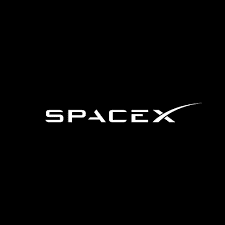
Anthropic says will put AI risks 'on the table' with Mythos model
PARIS: American AI developer Anthropic plans to "lay the risks out on the table" even as it restricts deployment of a new model dubbed Mythos, whose powerful cybersecurity capabilities raise stark questions for companies and governments. "We have a model that's beginning to outstrip human capabilities in the cyber world," Anthropic's Paris-based chief of relations with startups and tech firms Guillaume Princen told AFP in an interview. Mythos is "capable of spotting security holes that have existed for decades, in systems tested by both human experts and automated tools, that have never been discovered before," he added. Anthropic has delayed a general release of Mythos, sharing it first with a few dozen key American tech and financial services players - such as Nvidia, Amazon, Apple and JP Morgan Chase - to allow them to test and improve their security infrastructure. But the company has also been accused of overhyping the powers of a technology which is its stock in trade - and the subject of fierce competition with rival OpenAI. The Mythos news broke as rumours grow that Anthropic will list on the stock market this year. Safety first? "We prefer to be transparent and lay these risks out on the table," Princen said, adding that AI safety concerns are "central to Anthropic's DNA". "We don't have all the answers, this has to be a conversation between tech actors like us who have the data, the academic world, the political world and the world of economists," he added. Mythos' reported capabilities have unsettled the American financial sector and the European Union, which requested more information from Anthropic. In an open letter to businesses, the British government said that Mythos "highlights the speed at which AI capabilities are increasing and the threats they potentially pose". No European company is part of Anthropic's "Project Glasswing" consortium for shoring up cyber defences using Mythos' findings. That has raised questions about how prepared the rest of the world will be for the offensive capabilities of US-owned AI. Mythos is "certainly not a model that will soon be opened to the public at large, for obvious reasons," Princen said. Anthropic is nevertheless "thinking about the next waves of opening up," he added. European growth Europe is the region where Anthropic sees the fastest growth. Its Claude Code software development tool generates around US$2.5bil (RM9.8bil) in annualised revenue - a figure based on extrapolating from a few recent weeks of sales. Much of that expansion comes from "European firms riding the wave" of AI, Princen said. The company has opened offices in Dublin, London, Paris and Munich, and wants to keep investing across the continent. "We go where the demand is," Princen said, pointing to partnerships with European firms like Swedish coding startup Lovable or Danish pharma company Novo Nordisk. Relatively unknown to the wider public until recently, Anthropic was founded in 2021 by former OpenAI staff and makes around 80 percent of its revenue from business-to-business sales. The company and its Claude chatbot surged in prominence in late February, when bosses refused to allow its AI tools to be used by the Pentagon for mass surveillance of American citizens or fully autonomous weapons. The Trump administration responded by designating Anthropic a so-called "supply chain risk" to national security - a decision being contested in multiple legal cases. In legal documents seen by AFP, Anthropic finance chief Krishna Rao warned that Washington's move could cost the firm multiple billions in revenue this year. On the other hand, "there are a lot of people who started using Claude precisely because of the position we took on that question," Princen said. Anthropic said in early April that it had tripled its annualised revenues quarter-on-quarter to over US$30bil (RM118.5bil) - outpacing OpenAI for the first time. - AFP
Dow Jones Top Company Headlines at 11 PM ET: Anthropic, Amazon Tighten Bond in $5 Billion Investment and Computing Deal | Tim ...
Anthropic, Amazon Tighten Bond in $5 Billion Investment and Computing Deal Amazon will invest as much as $25 billion in the AI company, which will secure up to 5 gigawatts in badly needed computing power in the pact. John Ternus, head of the company's hardware division, will succeed Cook, who will become executive chairman. ---- Victory Giant Shares Surge in Hong Kong's Largest Listing This Year The Nvidia supplier raised $2.6 billion in the city's largest listing this year. ---- Spirit Airlines in Talks With Trump Administration on Government Investment Florida-based Spirit has been working to sell some planes and refocus operations on core cities. ---- Rio Tinto's Iron Ore, Copper Production Rose in First Quarter Rio Tinto said it produced more iron ore, copper and aluminum in the first quarter of the year, while reassuring investors of limited impacts to date from the conflict in the Middle East. ---- Alaska Air Group Suspends Guidance, Citing Fuel Cost Uncertainty "Until conditions stabilize and we have better sight to earnings beyond the current quarter, we have suspended full-year guidance," the company said. ---- Zions Bancorp Reports Higher First-Quarter Profit The Salt Lake City-based regional bank posted a quarterly profit of $232 million, up from $169 million a year earlier. ---- Steel Dynamics Posts Higher First-Quarter Profit, Sales Amid Growth in Steel Shipments The steel producer posted a profit of $403.4 million amid increased steel prices and a rise in demand for steel. ---- Red Lobster's Endless Shrimp Is Back-With a Few Strings Attached The seafood chain is bringing back the promotion for the first time since bankruptcy, with some limits. ---- Home Builder Margins Haven't Hit Bottom Yet. D.R. Horton's Earnings Will Offer Clues. D.R. Horton will likely see a 'relatively soft quarter,' one analyst says. ---- AST SpaceMobile's stock falls after failure of Jeff Bezos-backed satellite launch Blue Origin successfully launched AST SpaceMobile's satellite to orbit, but it was at the wrong altitude. ---- Cleveland-Cliffs Earnings Boosted by Trump Trade Enforcement. The Stock Is Still Down. The steel maker reported first-quarter Ebitda of $95 million, including an $80 million oneâ'time energy cost impact. Wall Street was looking for Ebitda of about $92 million. ---- Blackstone-Backed Jersey Mike's Subs Files Confidentially for IPO Jersey Mike's said the number of shares it plans to offer and the price range for the proposed offering haven't yet been determined. ---- Bipartisan Senators Warn United and American Airlines on Potential Merger Though American has rejected a deal, lawmakers asked both carriers to share how it could affect routes and fares. Under terms of the deal, certain affiliates of Blue Owl Real Estate Capital will buy all outstanding shares of Sila's common stock for $30.38 apiece, the company said. ---- McKesson to Sell Stake of Medical-Surgical Unit to Apollo McKesson said Apollo affiliates agreed to buy a minority ownership interest in its medical-surgical solutions business ahead of the unit's planned spinoff. ---- Honeywell to Sell Productivity Unit for $1.4 Billion Brady Corp. agreed to acquire Honeywell International's productivity solutions and services business for $1.4 billion. ---- USA Rare Earth to Acquire Serra Verde in $2.8 Billion Deal USA Rare Earth has agreed to acquire the owner of a rare-earth mine and processing plant in Brazil, a move that would strengthen its mine-to-magnets supply chain amid geopolitical tensions between the U.S. and China.

Amazon invests another $5 bn in Anthropic
San Francisco (United States) (AFP) - Amazon on Monday said it pumped another $5 billion into Anthropic as it ramps up its collaboration with the startup behind Claude artificial intelligence. The e-commerce and cloud computing colossus noted that the investment builds on $8 billion it had already invested in Anthropic, according to the companies. Amazon added that it could invest $20 billion more in Anthropic, provided the startup meets certain performance goals. For its part, San Francisco-based Anthropic said it has committed to spending more than $100 billion on Amazon Web Services (AWS) technology to power AI in the coming decade. "We need to build the infrastructure to keep pace with rapidly growing demand," Anthropic chief executive Dario Amodei said in a release. "Our collaboration with Amazon will allow us to continue advancing AI research while delivering Claude to our customers." Anthropic said in early April that it had tripled its annualized revenues quarter-on-quarter to over $30 billion -- outpacing OpenAI for the first time. Amodei visited US officials last week at the White House, where they struck a different tone from the dispute that erupted in February, when the AI startup infuriated Pentagon chief Pete Hegseth by insisting its technology should not be used for mass surveillance or fully autonomous weapons systems. "We discussed opportunities for collaboration, as well as shared approaches and protocols to address the challenges associated with scaling this technology," a White House spokesperson told AFP. The rhetoric marks a departure from months earlier, when President Donald Trump instructed the US government to "immediately cease" using Anthropic's technology after the company refused to allow the Pentagon unconditional use of its Claude AI models. Anthropic has challenged the Trump administration in court, as well as Hegseth's move to add the company to a list of firms that pose a "supply chain risk." Earlier this month, Anthropic announced its newest AI model Mythos, withholding it from public release due to its potential cybersecurity risks.

PMI unveils groundbreaking Manifesto for Enterprise Agility in MENA
Manifesto calls for a shift in leadership mindset, moving away from rigid hierarchical structures toward shared purpose The Project Management Institute (PMI) has unveiled its groundbreaking Manifesto for Enterprise Agility, an empowering set of principles designed to help organizations remain resilient, innovative, and better equipped to navigate frequent global disruptions. Developed by the PMI Agile Alliance, the Manifesto calls for a shift in leadership mindset, moving away from rigid hierarchical structures toward shared purpose, decentralized decision-making, and enterprise-wide adaptability. For businesses and leaders in the Middle East and North Africa (Mena) region, where economic diversification, sustainability, and digital transformation initiatives dominate national agendas, the Manifesto provides timely insights to anchor strategies that drive resilience, success, and growth in increasingly complex environments. Why enterprise agility matters in Mena region Frequent disruptions caused by global economic shifts, technological advancements, and changing sector demands have created an urgent need for organizational agility. The Manifesto encourages leaders to reframe business transformation by emphasizing collaborative decision-making, adaptive governance mechanisms, and the strategic use of technology to build organizations capable of responding to change quickly. In Mena region, this aligns strongly with the following regional priorities: *Economic Diversification Initiatives: Projects like Saudi Vision 2030 and UAE's "We Are the UAE 2031" Vision focus heavily on innovation, non-oil-based economies, and smart city development, which demand organizations to design adaptable operating models. *Digital Transformation Goals: With countries investing heavily in cutting-edge technologies like Artificial Intelligence (AI) and Machine Learning, the Manifesto's principles of embracing technology and fostering distributed talent are critical to unlocking organizational potential. *Sustainability: As green infrastructure becomes central to the region's long-term strategy, agility is essential to integrate ESG (Environmental, Social, and Governance) goals with operational efficiency. By promoting agility across regions, ecosystems, and sectors, the Manifesto gives the Mena organisations the tools needed to thrive in a globally competitive landscape. Key principles of the manifesto for enterprise agility PMI's Manifesto outlines nine actionable principles, encouraging organisations to: *Create clarity of purpose and align enterprise outcomes with adaptable plans to ensure that teams remain focused even during times of uncertainty. *Govern with guardrails, not gatekeepers, enabling decentralized and faster decision-making driven by trust. *Empower teams where value is created, by giving decision-making authority to people closest to customers or critical data points. *Expand agility across partners and ecosystems, fostering stronger relationships among stakeholders and building collaborative value chains. *Fund purpose and intent, focusing investments on initiatives that align with the organization's strategic goals rather than fixating on execution. *Deliver value frequently and transparently, ensuring work is visible and focused on outcomes rather than adherence to rigid plans. *Embrace technology and distributed talent, enabling faster decision-making and optimizing resource utilization to drive competitive results. *Design for adaptability, rather than efficiency alone, supporting organizations to pivot more effectively. *Sense early, learn quickly, and act confidently, converting foresight into strategy and leveraging ongoing learning for better decision-making. These principles are particularly relevant to Mena organisations combatting legacy systems, rigid governance models, and change fatigue, which often slow down transformation efforts. Speaking at the launch, Hanny Alshazly, the Managing Director for the Middle East and North Africa (Mena) at PMI, said: "The Mena region is witnessing unprecedented transformation, from economic diversification to the rapid adoption of technology and sustainability-focused initiatives. Enterprise agility is not just a buzzword; it's a leadership imperative. PMI's Manifesto for Enterprise Agility delivers innovative solutions to help leaders confidently navigate uncertainty, foster collaboration, and unlock the full potential of their organizations." "By embracing agility, MENA businesses can align strategic intent with sustainable growth, reinforcing their role as a competitive force in the global economy," he added.-TradeArabia News Service Copyright 2026 Al Hilal Publishing and Marketing Group Provided by SyndiGate Media Inc. (Syndigate.info).

Critical Anthropic's MCP Vulnerability Enables Remote Code Execution Attacks - IT Security News
The technical storage or access is necessary for the legitimate purpose of storing preferences that are not requested by the subscriber or user. The technical storage or access that is used exclusively for statistical purposes. The technical storage or access that is used exclusively for anonymous statistical purposes. Without a subpoena, voluntary compliance on the part of your Internet Service Provider, or additional records from a third party, information stored or retrieved for this purpose alone cannot usually be used to identify you.
Amazon doubles down on Anthropic with $25bn AI investment plan
MUMBAI: Amazon and Anthropic have significantly expanded their strategic partnership, committing to a long-term collaboration that combines billions in fresh investment with one of the largest AI infrastructure deals to date. At the heart of the agreement is Anthropic's plan to spend more than $100 billion over the next decade on AWS technologies. This includes access to up to 5 gigawatts of compute capacity powered by successive generations of Trainium chips, alongside tens of millions of Graviton cores. The scale signals a clear intent to future-proof the infrastructure behind its fast-growing Claude models. In parallel, Amazon will invest $5 billion in Anthropic immediately, with the option to add up to $20 billion more tied to performance milestones. This builds on the $8 billion the tech giant has already committed to the AI firm. The collaboration also tightens product integration. Anthropic's full Claude Platform will now be accessible directly within AWS, allowing developers to use its native tools without leaving their existing cloud environment. The models are already widely used through Amazon Bedrock, where more than 100,000 customers are running Claude for tasks ranging from customer support to scientific research. Amazon CEO Andy Jassy said, "Our custom AI silicon offers high performance at significantly lower cost for customers, which is why it's in such hot demand." He added that Anthropic's long-term commitment to Trainium reflects the progress both companies have made in building scalable AI infrastructure. Anthropic CEO and co-founder Dario Amodei said, "Our users tell us Claude is increasingly essential to how they work, and we need to build the infrastructure to keep pace with rapidly growing demand." He noted that the partnership would help advance research while serving a rapidly expanding user base. The two companies have already been working closely since 2023. Their joint efforts include Project Rainier, a massive AI cluster featuring hundreds of thousands of Trainium chips, now used to train and deploy newer versions of Claude. The new agreement extends this momentum, with fresh capacity expected to come online through 2026, including next-generation Trainium3 and Trainium4 chips. Anthropic's growth has been equally striking. The company says its annualised revenue run rate has crossed $30 billion, up sharply from about $9 billion at the end of 2025, driven by surging enterprise and consumer demand. That rapid uptake has also strained infrastructure, making this expanded deal as much about stability as it is about scale. The partnership will also expand globally, with increased inference capacity planned across Asia and Europe, ensuring Claude's reach keeps pace with its popularity. From powering ride-hailing support systems to accelerating drug research workflows, Claude's use cases continue to broaden. With this deal, Amazon and Anthropic are not just adding more compute, they are doubling down on a shared bet that AI's next leap will be built on deeper, tighter integrations between models and infrastructure. If the past few years were about proving the promise of generative AI, this alliance suggests the next phase will be about building it at industrial scale.
Deutsche Börse Group: $200 Million Investment In Kraken To Expand Digital Asset Infrastructure
Deutsche Börse Group announced a $200 million strategic investment in Payward, the infrastructure provider behind the global cryptocurrency platform Kraken. The transaction, executed through a secondary share purchase, gives Deutsche Börse Group a 1.5 percent fully diluted stake in the company. The investment builds on an existing partnership between the two firms, initially announced in December 2025, and reflects a shared strategy to bridge traditional financial markets with the digital asset ecosystem. The collaboration spans trading, custody, settlement, collateral management, and tokenized assets, with a focus on delivering integrated solutions for institutional clients across global markets. Through the expanded partnership, Deutsche Börse Group and Kraken aim to enhance liquidity and create a more seamless experience for institutions seeking access to both traditional securities and blockchain-based assets. The initiative aligns with Deutsche Börse's broader strategy to develop a hybrid market infrastructure capable of supporting assets in multiple technical formats within a unified liquidity environment. The company emphasized that this approach is designed to enable frictionless interaction between legacy financial systems and emerging digital asset markets, positioning it to serve evolving institutional demand. The transaction remains subject to customary closing conditions, including regulatory approvals, and is expected to close in the second quarter.

Amazon to invest an additional $5 billion in Anthropic
Amazon.com Inc. is investing an additional $5 billion in Anthropic PBC, and may inject $20 billion more over time, a deal that deepens the companies' ties in an increasingly competitive artificial intelligence industry. Anthropic, which makes the Claude chatbot and coding tool, plans to spend more than $100 billion over the next 10 years on Amazon's cloud technologies and chips, the companies said in a statement on Monday. Amazon shares gained more than 3% on the news in after-hours trading.