News & Updates
The latest news and updates from companies in the WLTH portfolio.
Column-Amid Middle East chaos, China changes tactics on Taiwan and Japan
April 17 (Reuters) - As U.S. Vice President JD Vance returned to Washington last weekend after unsuccessful peace talks in Pakistan over the crisis in the Gulf, China's Foreign Ministry was preparing for a bumper slate of visitors including Russian Foreign Minister Sergei Lavrov and the leaders of Spain, Vietnam and the United Arab Emirates. With the U.S. this week declaring its own military "blockade" of the Strait of Hormuz, and Iran continuing to demand cryptocurrency payments to guarantee vessels' safe passage, Beijing is stepping up diplomatic efforts to present itself as a wider global power broker. That includes presenting itself as a global voice of sanity and stability against a "regression to the law of the jungle", as Xi put it on Tuesday as he met Spanish Prime Minister Pedro Sanchez. But it also includes tough military and diplomatic messaging in Beijing's immediate environment, where it has further escalated growing tensions with Japan, moving vessels to prevent the Philippines from reaching a long-disputed shoal, and an assertive and very public outreach to Taiwan's opposition Kuomintang party ahead of 2028 elections. In the process, Beijing has subtly but swiftly redefined its primary Taiwan narrative and, perhaps even more importantly, its timescale for potential future action. Whereas U.S. officials have warned for years that Beijing has been building up its military with the explicit goal of being ready to invade by 2027, China's new narrative has refocused attention on Taiwan's election the next year, pushing harder than ever the concept that a Kuomintang victory would avert conflict and offer much closer relations. If the incumbent Democratic Progressive Party wins again, Beijing is now setting the tone for further confrontation - on one hand, pushing any future U.S. administrations to abandon the island to its fate; on the other, tearing up relations with Japan over its comments on the future of Taiwan. The reasons are not difficult to see. Official Chinese statements have blamed new Japanese prime minister Sanae Takaichi, particularly for comments in November that a Chinese takeover of Taiwan might constitute a "survival-threatening" situation for Japan. Chinese officials and news outlets are also expressing concern that Tokyo might look to acquire nuclear weapons - something that might make it almost impossible for China to risk an attack against Taiwan or indeed Japan itself. Takaichi's government says it remains committed to Japan's non-nuclear status. But it is keen to strengthen international relationships wherever possible, inviting more than 30 ambassadors from NATO and other nations to Tokyo from Wednesday to step up cooperation in defence and a host of other areas. On almost every other front, however, Beijing is making diplomatic inroads. In a heavily promoted meeting in Beijing last week, new Kuomintang leader Cheng Li-wun pledged to invite Xi to Taiwan if she wins the 2028 election. Meanwhile, the DPP government is working on its own defences, nervously eyeing a repeatedly postponed Trump-Xi summit for signs that the Chinese leader might press the U.S. to dial down its support for Taiwan, perhaps in return for help in calming the Gulf. BEIJING SEEKS 'CAREFUL LISTENERS' Exactly what Beijing is up to when it comes to Iran remains vague; Chinese officials and media outlets have so far angrily denied CNN reports that Beijing has given Tehran weapons in the current crisis. Other analysts note that, as when supporting Russia in Ukraine, China prefers to deliver "dual use" civilian components that can be used in arms manufacture rather than delivering whole weapons or systems. U.S. President Donald Trump has pledged to impose new tariffs on Beijing if arms shipments are proven, a move that would further damage already dwindling global growth. The prospect of letting the rest of the world blame the U.S. for the current global mayhem, meanwhile, is something China is grabbing with both hands. U.S. behaviour, not only in the Middle East but also over Greenland, has made much of Europe reappraise its relationship with Washington. European Union foreign policy supremo Kaja Kallas described U.S. actions in the Middle East as second only to Russia's invasion of Ukraine in its damage to the international system. Whether that prompts European and other nations to embrace Beijing, however, is an open question. Britain criticised Russia and China together for vetoing a U.N. Security Council resolution from Bahrain condemning Iran's obstruction of ships in Hormuz and demanding the strait be reopened. Trump's decision to impose his own blockade this week, however - with its implication that U.S. warships will intervene to stop Chinese and other vessels carrying Iranian and other energy - seems to have played into Beijing's hands, just as his import tariffs did, by allowing China to grab the agenda as a supporter of free trade. Some Chinese pundits now enthusiastically predict more of this to come: the Trump administration grabbing the headlines while, behind the scenes, a whole new architecture of international relations takes shape in which nations work around the U.S. to try to secure their vital interests. It is an environment in which many incidents and confrontations of considerable importance go almost unreported, from Pakistan's military clashes with Afghanistan to suspected Iranian drone strikes on energy infrastructure in Azerbaijan, a nation that has become increasingly critical to European energy supplies in recent years. "China is increasingly seen by many as a major country that has consistently emphasised peace, development, sovereignty and dialogue," Chinese international relations academic Mabel Miao Lu wrote in the Communist Party-run Global Times this week, after returning from the Baku Global Forum in Azerbaijan. "That does not mean all concerns about China have disappeared. It does mean that more people are listening carefully when China speaks." LESSONS TO LEARN FOR CHINA AND OTHERS The lesson Beijing would most like the rest of the world to learn might be that when or if China's military moves to take control of Taiwan - either because it has been invited in by the Kuomintang or because Xi's patience has finally run out - the rest of the world should not get involved, whatever Japan or the U.S. might do. At the same time, many countries will have concluded that action such as that taken by the U.S. in Iran, or Russia in Ukraine, triggers massive and immediate global dislocation - and, although the energy shock of conflict in the Gulf has been profound, the supply shocks of a major war in the Pacific could be far worse. While the U.S. may not have gained what it wanted from Operation Epic Fury, as with strikes on Tehran's nuclear programme last June, the Pentagon has delivered a lesson to other potential foes that the U.S. military retains a level of expertise in complex operations that Beijing has never trialled in anger. Xi's confidence in his own military may only be mixed, at best, judging by the number of senior military commanders removed in recent months and years - although China's sheer manufacturing capacity may still keep Pentagon planners up at night, their worries compounded by recent high usage of limited precision weapons stocks. Beijing's other major problem is that, so far at least, Taiwan's always complex politics may not move in the direction that it wishes. It is far from clear whether KMT leader Cheng's embrace of Beijing will win over voters - and even if it does, her language of rapprochement still stops well short of calling for annexation by China. Nor is it clear that Beijing will do better in its efforts to isolate the new government in Tokyo, where for now it looks to be making little if any progress. European and Pacific nations' worries about future U.S. policy have, if anything, made many of them more enthusiastic than before about working with Japan or South Korea. Beijing has also yet to find its own way through the Gulf situation. Chinese-owned and -flagged oil tankers have periodically made it through Hormuz - but at nowhere near the pre-crisis rate. And the global supply chains on which China also depends are already looking rocky. Beijing may yet have to reach some kind of deal with Washington as it struggles to extricate itself from another Middle East war - perhaps even through the so-far deadlocked U.N. system - to pressure Iran to let more ships through. The Middle East crisis has without doubt created opportunities for China, but also delivered warnings for an ambitious coming superpower. (Writing by Peter Apps; Editing by Kevin Liffey)

Vercel Confirms Security Breach as Hacker Demands $2 Million and Claims to Sell Internal Access - Unchained
Vercel traced the breach to a compromised third-party AI tool and says sensitive environment variables were not accessed, but Web3 teams hosting on the platform are rotating credentials. Vercel, the cloud deployment platform that underpins frontend infrastructure for thousands of applications including many Web3 projects, confirmed a security breach on April 19 after a threat actor posted on BreachForums claiming to be selling stolen data for $2 million. The listing claimed to include access keys, source code, database content, and API tokens, including NPM and GitHub tokens tied to internal deployments and developer environments. Vercel said the intrusion originated from Context.ai, a third-party AI tool used by an employee, whose compromised Google Workspace connection allowed attackers to escalate access into Vercel's internal systems. CEO Guillermo Rauch confirmed this in a post on X. The company said environment variables marked as "sensitive" are stored in a way that prevents them from being read, and that there is no current evidence those variables were accessed. It has not disclosed how many customers were affected beyond describing the impact as limited to "a subset of customers," who are being contacted directly. For crypto and Web3 teams the breach is particularly sensitive. Vercel is the primary steward of Next.js, one of the most widely used web development frameworks, and hosts wallet interfaces, decentralized app dashboards, and front-end deployments for a significant portion of the industry. Projects storing API keys, private RPC endpoints, or backend service credentials in non-sensitive environment variables face potential exposure. Security researchers immediately advised all Vercel customers to rotate credentials and audit access logs for activity between April 17 and April 19.

Explainer-What Do We Know About Anthropic's Mythos Amid Rising Concerns?
April 20 (Reuters) - Anthropic earlier this month debuted Mythos, its most advanced AI model to date, equipped with sophisticated capabilities and designed for defensive cybersecurity tasks. Mythos' vast capabilities have sparked fears about the threat to traditional software security after the AI startup said the preview had uncovered "thousands" of major vulnerabilities in "every major operating system and web browser." HOW WAS THE MODEL LAUNCHED AND WHO HAD ACCESS TO IT? Anthropic has rolled out Claude Mythos Preview through a controlled initiative called "Project Glasswing", granting access to tech majors including Amazon, Microsoft, Nvidia and Apple. The company also extended access to a group of more than 40 additional organizations that build or maintain critical software infrastructure. WHAT ARE THE CONCERNS AROUND MYTHOS? Experts warned that the model can identify and exploit previously unknown vulnerabilities faster than companies can repair them. Its advanced coding and autonomous capabilities could dramatically accelerate sophisticated cyberattacks, particularly in sectors such as banking that rely on complex, interconnected and often decades-old technology systems, they have said. While debuting Mythos, Anthropic said the model's ability to find software flaws at scale could, if misused, pose serious risks to economies, public safety and national security. U.S. software stocks tumbled on April 9 after the Mythos launch on April 7 reignited fears that advances in AI could disrupt traditional firms. WHAT HAS THE WHITE HOUSE AND REGULATORS SAID ABOUT MYTHOS? The White House has held discussions with Anthropic CEO Dario Amodei about Mythos, with officials saying they talked about collaboration, cybersecurity and balancing AI innovation with safety. The talks were held despite the Pentagon slapping a formal supply-chain risk designation on Anthropic. The U.S. government is planning to make a version of Mythos available to major federal agencies, Bloomberg News has reported. Reuters reported that U.S. Treasury Secretary Scott Bessent and Federal Reserve Chair Jerome Powell held a meeting with CEOs of major U.S. banks to brief them on the potential risks from the model. The model also raised alarm bells in Britain, with authorities holding talks with major banks and cybersecurity officials to assess possible risks. Banks are in close contact with their European regulators regarding Mythos, Christian Sewing, president of the German banking association and CEO of Deutsche Bank, said. (Reporting by Harshita Mary Varghese in Bengaluru)

Anthropic powers new Piraeus Bank AI hub
Greece's Piraeus Bank and Accenture have expanded their alliance with the launch of a dedicated AI Hub, powered by Anthropic. The initiative aims to speed up Piraeus' enterprise-wide AI transformation. The AI hub will become a central platform for designing, developing, and scaling advanced AI capabilities across the bank's entire value chain. The collaboration arrives amid heightened global scrutiny of Anthropic's latest model, Claude Mythos, which has been deemed "too dangerous" for public release due to its unprecedented ability to find and exploit software vulnerabilities. US and UK regulators have held talks with major banks over cybersecurity risks associated with the model and ensure they take measures to safeguard their networks. As for Piraeus, the new Anthropic-backed hub will be designed to reinvent banking processes in operations, customer experience, risk management, and compliance, while modernising its technology infrastructure. This will be facilitated through the integration of Accenture's industry and AI expertise - including its Data & AI Center of Excellence in Athens - with Piraeus' AI roadmap. Piraeus group chief operating officer Harry Margaritis called the hub a "strategic inflection point". Anthropic head of Southern Europe, Middle East & Africa Thomas Remy said: "Claude is built with the safety, reliability and transparency that highly regulated industries like banking demand. In partnering with Anthropic to power a new AI hub for Greek banking, Piraeus and Accenture have underscored our shared commitment to safe, responsible AI deployment." Besides, the hub will build Piraeus' long-term AI capabilities by developing, and upskilling specialist talent through targeted hiring and structured training programmes, including Udacity, Accenture's AI-native learning platform. This will help embed AI skills and new ways of working deeply across the organisation. A core priority of the partnership is the creation of secure, responsible, and human-centric AI solutions capable of autonomously supporting decision-making, streamlining complex processes. Piraeus and Accenture, through its newly formed Anthropic Business Group, will harness Anthropic's AI models and platforms to drive "innovation in a responsible manner", noted the professional services firm. The alliance ensures that all AI solutions align with the bank's values and regulatory requirements, enabling the development of secure and scalable AI applications. The new hub builds upon Piraeus' existing tie-up with Accenture to implement a cloud-first operating model. Meanwhile, in March, Commonwealth Bank of Australia (CBA) announced an expanded partnership with and investment in Anthropic.
The Polymarket Platform in Discussion for a $400 Million Fundraising
Polymarket is negotiating a new $400 million fundraising based on a valuation of about $15 billion. The prediction market is no longer just a corner of crypto; it is now a field that Wall Street is watching very closely. Polymarket is not just looking to raise new capital. The platform also wants to attract other strategic investors alongside Intercontinental Exchange, the parent company of the New York Stock Exchange. And this, even though the majority of users remain losers on these markets. In total, this round could reach up to $1 billion. This point is central. In March 2026, ICE already injected $600 million into Polymarket, as part of a broader commitment officially announced by the group. This support changes the perception of the case: we are no longer facing a marginal crypto startup, but an infrastructure that established players want to support. The targeted valuation, around $15 billion, remains lower than that of Kalshi, valued at around $22 billion during its last round. But this gap does not tell the whole story. It mainly shows that the sector battle is now played at a very high altitude, with valuations that would have seemed extravagant not long ago. Investor appetite does not come out of nowhere. Prediction markets exploded since the 2024 U.S. presidential election and have since maintained very high activity. TRM Labs mentioned in March a total monthly volume of more than $20 billion in January 2026, while several sector tracking show regular volumes well above $10 billion. It is no longer just a crypto fad. Nasdaq MRX filed in March to launch binary contracts linked to the Nasdaq-100. The move is revealing: traditional finance no longer looks at this market as a curiosity; it is already seeking its entry point. The same signal appears elsewhere. Charles Schwab has admitted to studying the subject, while Citadel Securities is also closely monitoring this segment. In other words, Polymarket may be raising money at the right time, just before the space becomes frankly crowded. At first glance, $15 billion for a betting platform on events may seem excessive. Yet, investors' logic is broader. They are not just paying for an interface where one bets on elections, sports, or economic announcements. They are paying for access to a new form of derivative product, simpler to understand and more viral to distribute.

OpenAI's top executive openly criticises company's biggest rival Anthropic in employee memo; says: 'Anthropic's story is built on fear, restriction and the idea that...
Denise Dresser, OpenAI's chief revenue officer, took direct aim at Anthropic in an internal memo sent to employees over the weekend -- calling out its rival's revenue accounting, compute strategy, and company philosophy in unusually blunt terms. The memo reads less like a strategic briefing and more like a case built against a courtroom opponent, dedicating significant space to dismantling Anthropic's narrative at a moment when the Claude-maker is gaining serious ground.The memo, viewed by The Verge, paints a picture of an OpenAI that is increasingly rattled by Anthropic's momentum. Dresser wrote that "the market is as competitive as I have ever seen it" and devoted a substantial chunk of the four-page document to picking apart Anthropic's business. The timing is notable: Anthropic's annualised revenue reportedly surged from $9 billion at the end of 2025 to $30 billion by March, fuelled largely by demand for its coding tools.Dresser's sharpest line was aimed squarely at Anthropic's identity. "Their story is built on fear, restriction, and the idea that a small group of elites should control AI," she wrote -- a characterisation that mirrors OpenAI CEO Sam Altman's long-running positioning of his company as the more democratising force in AI. In February, Altman had written that "Anthropic serves an expensive product to rich people."On the revenue dispute, Dresser accused Anthropic of using "accounting treatment that makes revenue look bigger than it is," specifically by grossing up revenue-sharing deals with Amazon and Google rather than reporting net figures. OpenAI claims the difference amounts to roughly $8 billion, which would drop Anthropic's stated $30 billion run rate to around $22 billion -- conveniently placing it behind OpenAI's reported $24 billion. Anthropic disputes this, saying it recognises gross revenue because it is the principal in those transactions, with cloud partners acting as distribution channels.Dresser also flagged what she described as a strategic blunder: Anthropic's conservative approach to acquiring compute. OpenAI says it has secured 8 gigawatts of computing capacity and is targeting 30 gigawatts by 2030, while it expects Anthropic to reach just 7 to 8 gigawatts by end of 2027. "Their strategic misstep to not acquire enough compute is showing up in the product," Dresser wrote, pointing to throttling and weaker availability as symptoms.Both companies are burning billions annually and racing toward IPOs, with investors now openly questioning OpenAI's $852 billion valuationThe memo's broader message was a rallying cry for OpenAI to out-execute on enterprise. Dresser urged the company to stop thinking of itself as a multi-product company and instead "think like a platform company with multiple entry points and one integrated enterprise offering." She emphasised that multi-year, nine-figure deals with enterprise clients are rising -- and that's the territory OpenAI now most wants to defend.Both companies are expected to go public this year, making the revenue and narrative war between them very much a preview of what investors will hear on the road to their respective IPOs.

IRCTC Responds After Tatkal Booking Chaos Leaves Users Frustrated
The promise of convenience is what made online train ticket booking a game-changer in India. Platforms like Indian Railway Catering and Tourism Corporation (IRCTC) turned long queues into a few clicks. But when the system fails at the most crucial moment, that convenience quickly turns into chaos, and that is exactly what happened during the recent Tatkal booking window. What should have been a routine process turned into a frustrating experience for thousands of users across the country. Tatkal booking is not just another feature -- it is a lifeline for people who need urgent travel. The window opens, and within seconds, lakhs of users rush in to secure limited seats. This high-pressure environment demands speed, stability, and precision. Instead, users reported the exact opposite. Many faced app crashes, endless loading screens, and sudden errors just as they were about to complete their bookings. Payments failed midway, and in some cases, money got deducted without ticket confirmation. That is not just a technical glitch. That is a breakdown of trust. The core issue is not new. Every time the Tatkal window opens, the system faces an enormous surge in traffic. Millions of users attempt to book tickets at the exact same time, putting immense pressure on the servers. When systems are not prepared for such load, they crash. And when they crash during payments, the consequences are worse. Users lose time, money, and most importantly, the chance to travel. Reports suggest that the glitches led to failed transactions, delayed responses, and bookings slipping into waitlist status within seconds. This is not just a one-off incident. It is a recurring problem. After widespread complaints and social media outrage, IRCTC responded to the situation. The platform acknowledged the issues and the disruption caused to users during the booking process. While the response is necessary, it also raises an important question -- why does it take chaos for action to happen? "This being a temporary issue, user may please try logging out and force closing the application, then restart it. Additionally, ensure to use the latest version of the app. Connection issues may arise due to various factors such as network, service, device connectivity, etc. We appreciate your cooperation and hope this resolves the issue," IRCTC wrote. Users do not expect perfection. But they do expect reliability, especially when money is involved. Among all the issues, payment failures hit the hardest. Imagine completing all steps, selecting your seat, entering details quickly -- and then the payment fails. Worse, the amount gets deducted, and the ticket is not booked. This is where frustration turns into anger. To address this, IRCTC has introduced features like "Resume/Retry Booking," allowing users to complete bookings without paying again if money has already been deducted. It is a step in the right direction. But it feels more like damage control than a permanent solution. The Tatkal system has always been competitive. Tickets disappear within seconds. But competition should not be confused with technical failure. A system designed for millions should be able to handle millions. The fact that users still face crashes, errors, and failed payments shows that the infrastructure needs serious upgrades. Server overload cannot remain a permanent excuse. Because for users, this is not about technology. It is about real-life plans -- emergencies, family visits, job commitments.

Scott Galloway Says the SpaceX IPO Has 'No Anchor.' Here's Why I Think He's Wrong.
This post may contain links from our sponsors and affiliates, and Flywheel Publishing may receive compensation for actions taken through them. Scott Galloway has made a pointed case against the SpaceX IPO. His core argument deserves a fair hearing before I explain why I think he lands wrong. Galloway's Case, Fairly Stated SpaceX's valuation has run from roughly $350 billion in May 2025, to $800 billion in December 2025, to $1.25 trillion in February 2026, now targeting roughly $1.8 trillion at IPO. That's roughly a 5x move in under a year. Drawing on NYU Stern's Aswath Damodaran, Galloway argues that "investors have already decided they want SpaceX and are now working backwards to justify the price." Wall Street bankers have cycled through Boeing, AT&T, Palantir, GE Vernova, and Vertiv as peer candidates without landing on a clean comp. Galloway's conclusion: "When bankers can't find a peer, it usually means the valuation has no anchor, and this one doesn't appear to have an anchor." He flags the 30% retail allocation as a signal of institutional skepticism, points to Saudi Aramco as a cautionary tale, and notes the empirical pattern of IPO underperformance over one to three years post-listing. These are real concerns. Valuation discipline matters. Founder worship is not an investment thesis. Where I Think He's Wrong I've been studying category-defining businesses for over a decade, and the "no peer" problem Galloway identifies is actually the strongest argument for SpaceX's uniqueness, not against its valuation. Alphabet (NASDAQ:GOOGL | GOOGL Price Prediction) had no clean search peer at its IPO. Amazon (NASDAQ:AMZN) had no peer for its e-commerce-plus-cloud combination. Today, Alphabet carries a market cap of roughly $4.1 trillion and Amazon sits at roughly $2.7 trillion. Comp-table resistance turned out to be a feature of their structural uniqueness, not evidence of unanchored pricing. SpaceX is three businesses stacked into one: dominant reusable heavy-lift launch, an operational global broadband constellation with paying subscribers in Starlink, and national security work through Starshield and DoD contracts. No single public company does all three. That's why bankers cycled through comps. The sum of the parts doesn't fit neatly into any existing column. The valuation jumps tracked real operational milestones, not just sentiment. Starship development progress, Starlink reaching profitability inflection, and expanding government contracts drove each markup window. That's different from pure narrative inflation. On the Aramco comparison: Aramco was a slow-growth, politically controlled oil producer with limited optionality. SpaceX is a growth compounder with genuine platform optionality across launch, broadband, and national security. The businesses share a record-IPO headline and nothing else structurally. Prediction markets currently put a 74.5% probability on IPO by June 30, 2026, with the consensus valuation range landing between $1.5 trillion and $2.5 trillion. That's not irrational exuberance. That's a market pricing a genuinely unique infrastructure business. Galloway's warning about discipline is worth hearing. His conclusion about SpaceX is too pessimistic. At $1.8 trillion, SpaceX is expensive. The question is whether SpaceX can grow into that price, and I think the answer is yes, with the absence of a clean comp being exactly why.
VettaFi Accelerates Into the New Space Age: Pioneering "Day-One" Index Inclusion for SpaceX and Industry Titans
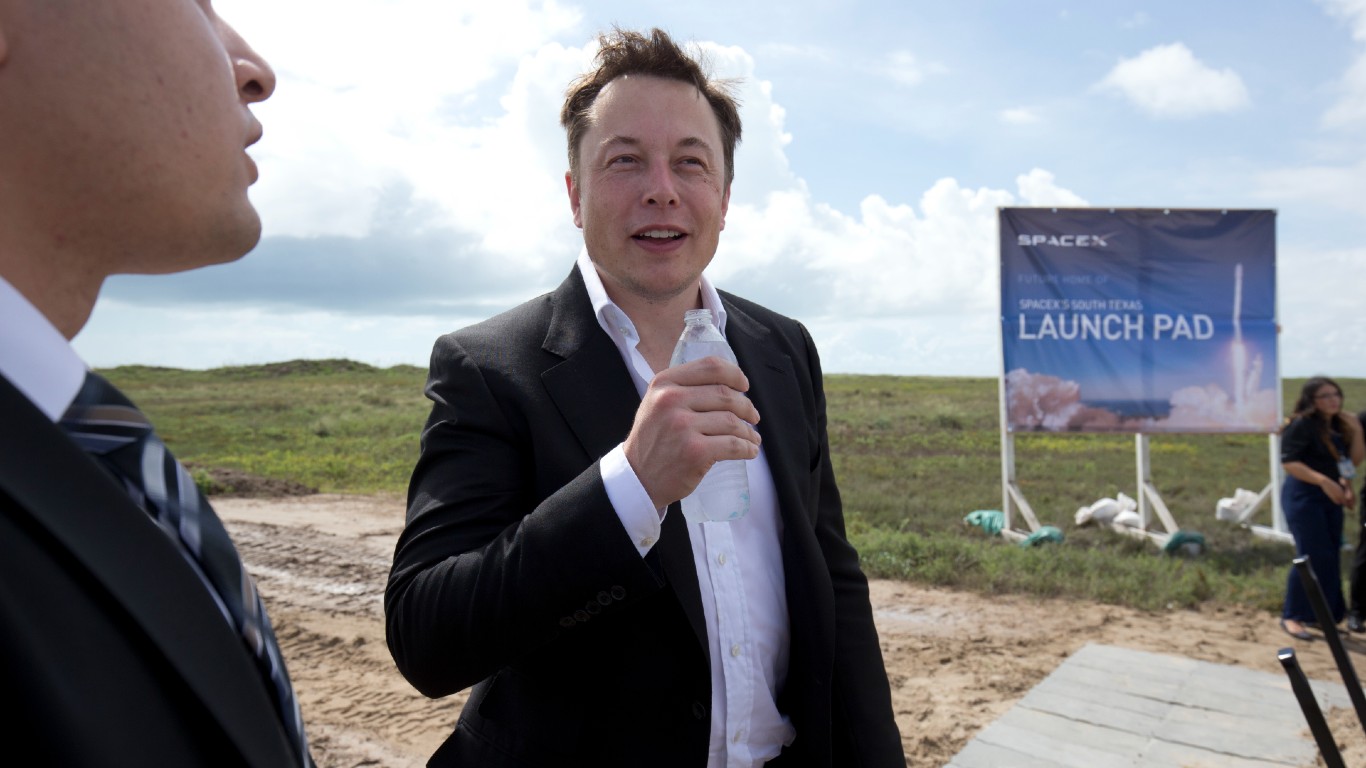
With this update, VettaFi establishes itself as one of the first index providers to target immediate, day-one exposure to mega-cap IPOs, setting a new standard for agility in thematic indexing. As the commercial space industry transitions from experimental ventures to a trillion-dollar global industry, the VettaFi Space Index is evolving to ensure investors have exposure to the most influential players driving us deeper into the final frontier. Capturing Industry Leadership: The SpaceX Integration The most significant update to the index methodology is the expansion of the index's "Fast-Track Inclusion" rule. This allows the index to bypass traditional waiting periods for private companies that have recently transitioned to public markets, ensuring the index includes the most cutting-edge companies in the industry. "The space industry is no longer just about 'what if'-it is about 'what is happening now,'" said Jane Edmondson, Head of Index Product Strategy at VettaFi. "By fast-tracking the inclusion of dominant forces like SpaceX, we are ensuring that the VettaFi Space Index accurately reflects the leaders of the orbital economy, providing a more precise benchmark for the next generation of space innovation." Key Highlights of the Methodology Update: * Mega-Cap Accessibility: Accelerated entry for high-valuation leaders with increased index weight potential for mega-cap companies in launch services, satellite communications, and deep-space exploration. * Pure-Play Focus: Refined filters to ensure constituents derive significant revenue or strategic value from space-based activities. * Dynamic Rebalancing: Increased agility in responding to the fast-paced M&A and IPO activity within the space ecosystem. A New Era for the SPACE Index The rebranding marks the full integration of the index into VettaFi's robust suite of thematic benchmarks. While the ticker SPACE remains unchanged, the index will now benefit from VettaFi's enhanced data capabilities and a more aggressive approach to capturing market leadership. The VettaFi Space Index continues to serve as the underlying benchmark for the Procure Space ETF (NASDAQ: UFO), now refined to proactively meet the scale of the next generation of interstellar innovation. About VettaFi VettaFi is a differentiated index provider, helping asset managers across the globe build and grow their product suites. With an industry-leading index platform, it partners with issuers to develop innovative investment solutions and bring them to market. Beyond that, its modern distribution solutions help clients scale products and achieve success. For more information, please visit: www.VettaFi.com VettaFi LLC is a wholly owned subsidiary of TMX Group Limited (TMX Group). For more information about TMX Group, please visit: www.tmx.com Source: VettaFi To view the source version of this press release, please visit https://www.newsfilecorp.com/release/293200

Column-Amid Middle East Chaos, China Changes Tactics on Taiwan and Japan
April 17 (Reuters) - As U.S. Vice President JD Vance returned to Washington last weekend after unsuccessful peace talks in Pakistan over the crisis in the Gulf, China's Foreign Ministry was preparing for a bumper slate of visitors including Russian Foreign Minister Sergei Lavrov and the leaders of Spain, Vietnam and the United Arab Emirates. With the U.S. this week declaring its own military "blockade" of the Strait of Hormuz, and Iran continuing to demand cryptocurrency payments to guarantee vessels' safe passage, Beijing is stepping up diplomatic efforts to present itself as a wider global power broker. That includes presenting itself as a global voice of sanity and stability against a "regression to the law of the jungle", as Xi put it on Tuesday as he met Spanish Prime Minister Pedro Sanchez. But it also includes tough military and diplomatic messaging in Beijing's immediate environment, where it has further escalated growing tensions with Japan, moving vessels to prevent the Philippines from reaching a long-disputed shoal, and an assertive and very public outreach to Taiwan's opposition Kuomintang party ahead of 2028 elections. In the process, Beijing has subtly but swiftly redefined its primary Taiwan narrative and, perhaps even more importantly, its timescale for potential future action. Whereas U.S. officials have warned for years that Beijing has been building up its military with the explicit goal of being ready to invade by 2027, China's new narrative has refocused attention on Taiwan's election the next year, pushing harder than ever the concept that a Kuomintang victory would avert conflict and offer much closer relations. If the incumbent Democratic Progressive Party wins again, Beijing is now setting the tone for further confrontation - on one hand, pushing any future U.S. administrations to abandon the island to its fate; on the other, tearing up relations with Japan over its comments on the future of Taiwan. The reasons are not difficult to see. Official Chinese statements have blamed new Japanese prime minister Sanae Takaichi, particularly for comments in November that a Chinese takeover of Taiwan might constitute a "survival-threatening" situation for Japan. Chinese officials and news outlets are also expressing concern that Tokyo might look to acquire nuclear weapons - something that might make it almost impossible for China to risk an attack against Taiwan or indeed Japan itself. Takaichi's government says it remains committed to Japan's non-nuclear status. But it is keen to strengthen international relationships wherever possible, inviting more than 30 ambassadors from NATO and other nations to Tokyo from Wednesday to step up cooperation in defence and a host of other areas. On almost every other front, however, Beijing is making diplomatic inroads. In a heavily promoted meeting in Beijing last week, new Kuomintang leader Cheng Li-wun pledged to invite Xi to Taiwan if she wins the 2028 election. Meanwhile, the DPP government is working on its own defences, nervously eyeing a repeatedly postponed Trump-Xi summit for signs that the Chinese leader might press the U.S. to dial down its support for Taiwan, perhaps in return for help in calming the Gulf. BEIJING SEEKS 'CAREFUL LISTENERS' Exactly what Beijing is up to when it comes to Iran remains vague; Chinese officials and media outlets have so far angrily denied CNN reports that Beijing has given Tehran weapons in the current crisis. Other analysts note that, as when supporting Russia in Ukraine, China prefers to deliver "dual use" civilian components that can be used in arms manufacture rather than delivering whole weapons or systems. U.S. President Donald Trump has pledged to impose new tariffs on Beijing if arms shipments are proven, a move that would further damage already dwindling global growth. The prospect of letting the rest of the world blame the U.S. for the current global mayhem, meanwhile, is something China is grabbing with both hands. U.S. behaviour, not only in the Middle East but also over Greenland, has made much of Europe reappraise its relationship with Washington. European Union foreign policy supremo Kaja Kallas described U.S. actions in the Middle East as second only to Russia's invasion of Ukraine in its damage to the international system. Whether that prompts European and other nations to embrace Beijing, however, is an open question. Britain criticised Russia and China together for vetoing a U.N. Security Council resolution from Bahrain condemning Iran's obstruction of ships in Hormuz and demanding the strait be reopened. Trump's decision to impose his own blockade this week, however - with its implication that U.S. warships will intervene to stop Chinese and other vessels carrying Iranian and other energy - seems to have played into Beijing's hands, just as his import tariffs did, by allowing China to grab the agenda as a supporter of free trade. Some Chinese pundits now enthusiastically predict more of this to come: the Trump administration grabbing the headlines while, behind the scenes, a whole new architecture of international relations takes shape in which nations work around the U.S. to try to secure their vital interests. It is an environment in which many incidents and confrontations of considerable importance go almost unreported, from Pakistan's military clashes with Afghanistan to suspected Iranian drone strikes on energy infrastructure in Azerbaijan, a nation that has become increasingly critical to European energy supplies in recent years. "China is increasingly seen by many as a major country that has consistently emphasised peace, development, sovereignty and dialogue," Chinese international relations academic Mabel Miao Lu wrote in the Communist Party-run Global Times this week, after returning from the Baku Global Forum in Azerbaijan. "That does not mean all concerns about China have disappeared. It does mean that more people are listening carefully when China speaks." LESSONS TO LEARN FOR CHINA AND OTHERS The lesson Beijing would most like the rest of the world to learn might be that when or if China's military moves to take control of Taiwan - either because it has been invited in by the Kuomintang or because Xi's patience has finally run out - the rest of the world should not get involved, whatever Japan or the U.S. might do. At the same time, many countries will have concluded that action such as that taken by the U.S. in Iran, or Russia in Ukraine, triggers massive and immediate global dislocation - and, although the energy shock of conflict in the Gulf has been profound, the supply shocks of a major war in the Pacific could be far worse. While the U.S. may not have gained what it wanted from Operation Epic Fury, as with strikes on Tehran's nuclear programme last June, the Pentagon has delivered a lesson to other potential foes that the U.S. military retains a level of expertise in complex operations that Beijing has never trialled in anger. Xi's confidence in his own military may only be mixed, at best, judging by the number of senior military commanders removed in recent months and years - although China's sheer manufacturing capacity may still keep Pentagon planners up at night, their worries compounded by recent high usage of limited precision weapons stocks. Beijing's other major problem is that, so far at least, Taiwan's always complex politics may not move in the direction that it wishes. It is far from clear whether KMT leader Cheng's embrace of Beijing will win over voters - and even if it does, her language of rapprochement still stops well short of calling for annexation by China. Nor is it clear that Beijing will do better in its efforts to isolate the new government in Tokyo, where for now it looks to be making little if any progress. European and Pacific nations' worries about future U.S. policy have, if anything, made many of them more enthusiastic than before about working with Japan or South Korea. Beijing has also yet to find its own way through the Gulf situation. Chinese-owned and -flagged oil tankers have periodically made it through Hormuz - but at nowhere near the pre-crisis rate. And the global supply chains on which China also depends are already looking rocky. Beijing may yet have to reach some kind of deal with Washington as it struggles to extricate itself from another Middle East war - perhaps even through the so-far deadlocked U.N. system - to pressure Iran to let more ships through. The Middle East crisis has without doubt created opportunities for China, but also delivered warnings for an ambitious coming superpower. (Writing by Peter Apps; Editing by Kevin Liffey)

Explainer-What do we know about Anthropic's Mythos amid rising concerns? By Reuters
April 20 (Reuters) - Anthropic earlier this month debuted Mythos, its most advanced AI model to date, equipped with sophisticated capabilities and designed for defensive cybersecurity tasks. Mythos' vast capabilities have sparked fears about the threat to traditional software security after the AI startup said the preview had uncovered "thousands" of major vulnerabilities in "every major operating system and web browser." HOW WAS THE MODEL LAUNCHED AND WHO HAD ACCESS TO IT? Anthropic has rolled out Claude Mythos Preview through a controlled initiative called "Project Glasswing", granting access to tech majors including Amazon, Microsoft, Nvidia and Apple. The company also extended access to a group of more than 40 additional organizations that build or maintain critical software infrastructure. WHAT ARE THE CONCERNS AROUND MYTHOS? Experts warned that the model can identify and exploit previously unknown vulnerabilities faster than companies can repair them. Its advanced coding and autonomous capabilities could dramatically accelerate sophisticated cyberattacks, particularly in sectors such as banking that rely on complex, interconnected and often decades-old technology systems, they have said. While debuting Mythos, Anthropic said the model's ability to find software flaws at scale could, if misused, pose serious risks to economies, public safety and national security. U.S. software stocks tumbled on April 9 after the Mythos launch on April 7 reignited fears that advances in AI could disrupt traditional firms. WHAT HAS THE WHITE HOUSE AND REGULATORS SAID ABOUT MYTHOS? The White House has held discussions with Anthropic CEO Dario Amodei about Mythos, with officials saying they talked about collaboration, cybersecurity and balancing AI innovation with safety. The talks were held despite the Pentagon slapping a formal supply-chain risk designation on Anthropic. The U.S. government is planning to make a version of Mythos available to major federal agencies, Bloomberg News has reported. Reuters reported that U.S. Treasury Secretary Scott Bessent and Federal Reserve Chair Jerome Powell held a meeting with CEOs of major U.S. banks to brief them on the potential risks from the model. The model also raised alarm bells in Britain, with authorities holding talks with major banks and cybersecurity officials to assess possible risks. Banks are in close contact with their European regulators regarding Mythos, Christian Sewing, president of the German banking association and CEO of Deutsche Bank, said.

Explainer-What do we know about Anthropic's Mythos amid rising concerns?
April 20 (Reuters) - Anthropic earlier this month debuted Mythos, its most advanced AI model to date, equipped with sophisticated capabilities and designed for defensive cybersecurity tasks. Mythos' vast capabilities have sparked fears about the threat to traditional software security after the AI startup said the preview had uncovered "thousands" of major vulnerabilities in "every major operating system and web browser." HOW WAS THE MODEL LAUNCHED AND WHO HAD ACCESS TO IT? Anthropic has rolled out Claude Mythos Preview through a controlled initiative called "Project Glasswing", granting access to tech majors including Amazon, Microsoft, Nvidia and Apple. The company also extended access to a group of more than 40 additional organizations that build or maintain critical software infrastructure. WHAT ARE THE CONCERNS AROUND MYTHOS? Experts warned that the model can identify and exploit previously unknown vulnerabilities faster than companies can repair them. Its advanced coding and autonomous capabilities could dramatically accelerate sophisticated cyberattacks, particularly in sectors such as banking that rely on complex, interconnected and often decades-old technology systems, they have said. While debuting Mythos, Anthropic said the model's ability to find software flaws at scale could, if misused, pose serious risks to economies, public safety and national security. U.S. software stocks tumbled on April 9 after the Mythos launch on April 7 reignited fears that advances in AI could disrupt traditional firms. WHAT HAS THE WHITE HOUSE AND REGULATORS SAID ABOUT MYTHOS? The White House has held discussions with Anthropic CEO Dario Amodei about Mythos, with officials saying they talked about collaboration, cybersecurity and balancing AI innovation with safety. The talks were held despite the Pentagon slapping a formal supply-chain risk designation on Anthropic. The U.S. government is planning to make a version of Mythos available to major federal agencies, Bloomberg News has reported. Reuters reported that U.S. Treasury Secretary Scott Bessent and Federal Reserve Chair Jerome Powell held a meeting with CEOs of major U.S. banks to brief them on the potential risks from the model. The model also raised alarm bells in Britain, with authorities holding talks with major banks and cybersecurity officials to assess possible risks. Banks are in close contact with their European regulators regarding Mythos, Christian Sewing, president of the German banking association and CEO of Deutsche Bank, said. (Reporting by Harshita Mary Varghese in Bengaluru)
Explainer-What do we know about Anthropic's Mythos amid rising concerns?
April 20 (Reuters) - Anthropic earlier this month debuted Mythos, its most advanced AI model to date, equipped with sophisticated capabilities and designed for defensive cybersecurity tasks. Mythos' vast capabilities have sparked fears about the threat to traditional software security after the AI startup said the preview had uncovered "thousands" of major vulnerabilities in "every major operating system and web browser." HOW WAS THE MODEL LAUNCHED AND WHO HAD ACCESS TO IT? Anthropic has rolled out Claude Mythos Preview through a controlled initiative called "Project Glasswing", granting access to tech majors including Amazon, Microsoft, Nvidia and Apple. The company also extended access to a group of more than 40 additional organizations that build or maintain critical software infrastructure. WHAT ARE THE CONCERNS AROUND MYTHOS? Experts warned that the model can identify and exploit previously unknown vulnerabilities faster than companies can repair them. Its advanced coding and autonomous capabilities could dramatically accelerate sophisticated cyberattacks, particularly in sectors such as banking that rely on complex, interconnected and often decades-old technology systems, they have said. While debuting Mythos, Anthropic said the model's ability to find software flaws at scale could, if misused, pose serious risks to economies, public safety and national security. U.S. software stocks tumbled on April 9 after the Mythos launch on April 7 reignited fears that advances in AI could disrupt traditional firms. WHAT HAS THE WHITE HOUSE AND REGULATORS SAID ABOUT MYTHOS? The White House has held discussions with Anthropic CEO Dario Amodei about Mythos, with officials saying they talked about collaboration, cybersecurity and balancing AI innovation with safety. The talks were held despite the Pentagon slapping a formal supply-chain risk designation on Anthropic. The U.S. government is planning to make a version of Mythos available to major federal agencies, Bloomberg News has reported. Reuters reported that U.S. Treasury Secretary Scott Bessent and Federal Reserve Chair Jerome Powell held a meeting with CEOs of major U.S. banks to brief them on the potential risks from the model. The model also raised alarm bells in Britain, with authorities holding talks with major banks and cybersecurity officials to assess possible risks. Banks are in close contact with their European regulators regarding Mythos, Christian Sewing, president of the German banking association and CEO of Deutsche Bank, said. (Reporting by Harshita Mary Varghese in Bengaluru)
What do we know about Anthropic's Mythos amid rising concerns?
Anthropic unveiled Mythos, a powerful AI for cybersecurity. This advanced model can find thousands of software flaws. Concerns are rising that it could speed up cyberattacks. Governments and banks are discussing potential risks. The US plans to make a version available to federal agencies. Authorities in Britain and Europe are also assessing the impact. Anthropic earlier this month debuted Mythos, its most advanced AI model to date, equipped with sophisticated capabilities and designed for defensive cybersecurity tasks. Mythos' vast capabilities have sparked fears about the threat to traditional software security after the AI startup said the preview had uncovered "thousands" of major vulnerabilities in "every major operating system and web browser." How was the model launched and who had access to it? Anthropic has rolled out Claude Mythos Preview through a controlled initiative called "Project Glasswing", granting access to tech majors including Amazon, Microsoft, Nvidia and Apple. The company also extended access to a group of more than 40 additional organizations that build or maintain critical software infrastructure. What are the concerns around Mythos? Experts warned that the model can identify and exploit previously unknown vulnerabilities faster than companies can repair them. Its advanced coding and autonomous capabilities could dramatically accelerate sophisticated cyberattacks, particularly in sectors such as banking that rely on complex, interconnected and often decades-old technology systems, they have said. While debuting Mythos, Anthropic said the model's ability to find software flaws at scale could, if misused, pose serious risks to economies, public safety and national security. U.S. software stocks tumbled on April 9 after the Mythos launch on April 7 reignited fears that advances in AI could disrupt traditional firms. What has the White House and regulators said about Mythos? The White House has held discussions with Anthropic CEO Dario Amodei about Mythos, with officials saying they talked about collaboration, cybersecurity and balancing AI innovation with safety. The talks were held despite the Pentagon slapping a formal supply-chain risk designation on Anthropic. The U.S. government is planning to make a version of Mythos available to major federal agencies, Bloomberg News has reported. Reuters reported that U.S. Treasury Secretary Scott Bessent and Federal Reserve Chair Jerome Powell held a meeting with CEOs of major U.S. banks to brief them on the potential risks from the model. The model also raised alarm bells in Britain, with authorities holding talks with major banks and cybersecurity officials to assess possible risks. Banks are in close contact with their European regulators regarding Mythos, Christian Sewing, president of the German banking association and CEO of Deutsche Bank, said.
Anthropic launches Claude Design to create visual content from simple prompts The Mainstream
Expanding its presence in the design space, Anthropic has introduced a new AI-powered tool aimed at generating visual content with ease. The product, called Claude Design, can create website mockups, design prototypes, slides, one-pagers, and more using a single natural-language prompt. Announced on Friday, the tool marks Anthropic's entry into the design platform segment, placing it in competition with tools like Figma. The company has been gradually adding visual capabilities to its ecosystem. Its Claude Code already supported frontend generation for websites and apps, and recently added interactive charts and visualisations. With Claude Design, Anthropic now offers a dedicated tool focused on design tasks. It can handle frontends, presentations, pitch decks, and design mockups. The feature is currently available in research preview for Claude Pro, Max, Team, and Enterprise users, with no confirmation yet for free-tier access. The tool is powered by Claude Opus 4.7 and can generate an initial design draft from a single prompt. Users can then refine the output through additional prompts, inline comments, direct edits, or custom sliders. The platform also supports collaboration, allowing multiple users within an organisation to view and edit designs. According to the company, Claude Design can generate interactive prototypes from static mockups, create product wireframes, explore different design styles, and produce branded presentations, marketing material, and social media assets. Users can start with text prompts, upload images or documents, or even build designs based on their existing codebase. The final output can be shared via an internal URL, saved as a folder, or exported in formats such as Canva, PDF, PPTX, or standalone HTML files. Projects can also be handed over to Claude Code, which can generate backend code using the design context with a single instruction. Also read: Viksit Workforce for a Viksit Bharat Do Follow: The Mainstream LinkedIn | The Mainstream Facebook | The Mainstream Youtube | The Mainstream Twitter About us: The Mainstream is a premier platform delivering the latest updates and informed perspectives across the technology business and cyber landscape. Built on research-driven, thought leadership and original intellectual property, The Mainstream also curates summits & conferences that convene decision makers to explore how technology reshapes industries and leadership. With a growing presence in India and globally across the Middle East, Africa, ASEAN, the USA, the UK and Australia, The Mainstream carries a vision to bring the latest happenings and insights to 8.2 billion people and to place technology at the centre of conversation for leaders navigating the future.

Tesla Q1 Earnings Preview: Robotaxi Delays and SpaceX Merger Speculation Grow - EconoTimes
Tesla's upcoming first-quarter earnings report, expected Wednesday, may do little to ease investor concerns about the company's long-promised robotaxi strategy. According to analysts at Jefferies, the widening gap between Tesla's ambitious vision and its current execution could intensify speculation about a potential merger with SpaceX. Jefferies analysts, led by Philippe Houchois, noted that unless Tesla delivers a strong and credible update on its robotaxi rollout, doubts around funding and long-term strategy could increase. This uncertainty may revive discussions about whether combining Tesla with SpaceX could create strategic advantages. The firm maintained a Hold rating on Tesla stock while raising its price target from $300 to $350. For the first quarter, Jefferies forecasts Tesla revenue at $21.2 billion, reflecting a 10% year-over-year increase but a decline from the previous quarter. Operating margins are expected to fall below 3%, alongside an estimated cash burn of $1.9 billion. Looking ahead, the outlook remains challenging, with projections of negative free cash flow reaching approximately $5.5 billion by 2026 as capital expenditures rise sharply to around $19-20 billion annually. Tesla's robotaxi ambitions remain a key focus for investors. The company has suggested it could launch services in 25% to 50% of potential U.S. markets by year-end. However, analysts believe this timeline is overly optimistic due to regulatory hurdles and ongoing concerns about Tesla's lidar-free Full Self-Driving (FSD) technology. As a result, Jefferies does not expect meaningful robotaxi revenue until at least 2027. Similarly, Tesla's humanoid robot initiative faces long-term challenges, with increasing competition and uncertain commercialization timelines. Despite these hurdles, Tesla's vertically integrated model and ability to scale production remain competitive advantages. In terms of valuation, analysts emphasize that Tesla stock continues to be driven more by market sentiment and confidence in innovation than by traditional financial metrics, making its future performance highly dependent on execution and technological breakthroughs.

Special Report: No Petrol, No Diesel! Sundargarh In Chaos As War Impacts Fuel Supply
ଓଡ଼ିଶାରେ ପେଟ୍ରୋଲ୍-ଡିଜେଲ୍ ସଙ୍କଟ! ଗ୍ୟାସ୍ ପରେ ଏବେ ଚିନ୍ତା ବଢ଼ାଇଲା ତେଲ ସୁନ୍ଦରଗଡ଼ରେ ମଧ୍ୟପ୍ରାଚ୍ୟ ଯୁଦ୍ଧର ପ୍ରଭାବ The devastating impact of the Middle East conflict is now visible in Odisha's Sundargarh district. In a shocking turn of events, a severe shortage of petrol and diesel has left the city paralyzed. Out of the three major petrol pumps in Sundargarh town, two have completely shut down due to zero stock. The remaining pump is witnessing massive crowds and mile-long queues as panicked citizens rush to fuel their vehicles. With global crude oil prices soaring, the common man is facing the heat of rising costs and scarcity. From daily commuters to transport workers, everyone is living in uncertainty. Watch the full ground report from Sundargarh. #OdishaNews#PetrolCrisis#SundargarhNews#MiddleEastWarImpact#FuelShortage#BreakingNewsOdisha#PetrolPriceHike#OdishaAlert#GlobalCrisisLocalImpact#DieselShortage#OdishaEmergency#KanakNews#FuelPriceIndia#SundargarhDiaries#NewsAlert Kanak News is Odisha's leading 24x7 news and current affairs TV channel from Eastern Media Limited. Odisha's largest media house that also publishes daily 'Sambad'. Get latest updates on news, politics, sports, business, current affairs, entertainment, technology, health updates from Kanak News. Breaking News, Live news updates, Odia News Live, Live Odia News, odisha news, latest odisha news, odisha news today, odisha politics, odisha latest updates Join us on WhatsApp to get latest updates : https://whatsapp.com/channel/0029Va9qLIDAYlUKjL5iF90c For the latest Odisha News Follow us: Website :- https://kanaknews.com/ Instagram :- https://www.instagram.com/kanaknewsofficial/ LinkedIn :- https://www.linkedin.com/company/kanak-news Facebook :- https://www.facebook.com/KanakNews App Kanak :- https://play.google.com/store/apps/details?id=com.kanak__news.app&hl=en Twitter :- https://twitter.com/kanak_news Telegram :- https://t.me/kanaknewsofficial WhatsApp :- https://whatsapp.com/channel/0029Va9qLIDAYlUKjL5iF90c

NSA Confirms Use of Anthropic's Mythos Despite Pentagon Blacklist
The National Security Agency is reportedly deploying Anthropic's advanced AI model, Mythos Preview. Meanwhile, the Department of Defense has labeled the company a "supply chain risk," highlighting an internal contradiction. The conflict between Anthropic and the Pentagon dates back to early 2026. In July 2025, Anthropic had signed a $200 million contract with the Department of Defense with explicit contractual restrictions prohibiting the use of its Claude AI for mass domestic surveillance and fully autonomous weapons systems. The Pentagon-Anthropic Rift The arrangement worked smoothly until January 2026, when Defense Secretary Hegseth issued a memo requiring "any lawful use" language across all DoD AI contracts, effectively demanding Anthropic remove those safety guardrails. Anthropic refused. In response, the Pentagon designated the company a "Supply-Chain Risk to National Security" in late February 2026, directing all contractors and suppliers doing business with the U.S. military to immediately cease commercial activity with Anthropic. President Trump separately ordered all federal agencies to halt the use of Anthropic's technology, with a 6-month phase-out window for systems already integrated. Despite this sweeping ban, a new Axios report published April 19, 2026, revealed a striking contradiction. The NSA, which itself operates under the Department of Defense, has been actively using Mythos Preview, Anthropic's newest and most powerful AI model. According to two sources cited by Axios, Mythos Preview is being used "more widely" within the NSA, with usage extending across other parts of the department. Anthropic has tightly restricted access to Mythos, limiting availability to approximately 40 organizations due to concerns over its offensive cybersecurity capabilities. Of those, only 12 have been publicly acknowledged, and the NSA is reportedly among the unnamed organizations granted access. A central concern driving both the secrecy and controversy around Mythos is its advanced offensive cyber potential. Anthropic itself has acknowledged fears that the model could supercharge cyberattacks if misused, a key reason why access has been so tightly controlled. This makes the NSA's deployment particularly significant: the agency is the nation's premier signals intelligence and cybersecurity body, operating under U.S. Cyber Command. In the U.K., the NSA's counterparts reportedly access Mythos through the AI Security Institute, suggesting that allied intelligence communities are also quietly integrating the model. Legal Battle Continues Anthropic filed a lawsuit in March 2026 in San Francisco, characterizing the Pentagon's supply-chain designation as "unprecedented and unlawful" and alleging violations of free speech and due process rights. The case is ongoing, even as the military simultaneously argues in court that using Anthropic tools poses a national security threat while internally deploying those very tools. On April 17, Anthropic CEO Dario Amodei met with White House Chief of Staff Susie Wiles and Treasury Secretary Scott Bessent to discuss the government's use of Mythos, security protocols, and a potential roadmap for broader adoption by other federal departments. The NSA's quiet use of Mythos while the Pentagon battles Anthropic in court signals that operational necessity is overriding official policy within the U.S. intelligence community. As AI capabilities advance, the gap between institutional bans and ground-level adoption is widening, raising serious questions about governance, oversight, and accountability in the deployment of advanced AI within national security agencies.

Explainer-What do we know about Anthropic's Mythos amid rising concerns?
April 20 : Anthropic earlier this month debuted Mythos, its most advanced AI model to date, equipped with sophisticated capabilities and designed for defensive cybersecurity tasks. Mythos' vast capabilities have sparked fears about the threat to traditional software security after the AI startup said the preview had uncovered "thousands" of major vulnerabilities in "every major operating system and web browser." HOW WAS THE MODEL LAUNCHED AND WHO HAD ACCESS TO IT? Anthropic has rolled out Claude Mythos Preview through a controlled initiative called "Project Glasswing", granting access to tech majors including Amazon, Microsoft, Nvidia and Apple. The company also extended access to a group of more than 40 additional organizations that build or maintain critical software infrastructure. WHAT ARE THE CONCERNS AROUND MYTHOS? Experts warned that the model can identify and exploit previously unknown vulnerabilities faster than companies can repair them. Its advanced coding and autonomous capabilities could dramatically accelerate sophisticated cyberattacks, particularly in sectors such as banking that rely on complex, interconnected and often decades-old technology systems, they have said. While debuting Mythos, Anthropic said the model's ability to find software flaws at scale could, if misused, pose serious risks to economies, public safety and national security. U.S. software stocks tumbled on April 9 after the Mythos launch on April 7 reignited fears that advances in AI could disrupt traditional firms. WHAT HAS THE WHITE HOUSE AND REGULATORS SAID ABOUT MYTHOS? The White House has held discussions with Anthropic CEO Dario Amodei about Mythos, with officials saying they talked about collaboration, cybersecurity and balancing AI innovation with safety. The talks were held despite the Pentagon slapping a formal supply-chain risk designation on Anthropic. The U.S. government is planning to make a version of Mythos available to major federal agencies, Bloomberg News has reported. Reuters reported that U.S. Treasury Secretary Scott Bessent and Federal Reserve Chair Jerome Powell held a meeting with CEOs of major U.S. banks to brief them on the potential risks from the model. The model also raised alarm bells in Britain, with authorities holding talks with major banks and cybersecurity officials to assess possible risks. Banks are in close contact with their European regulators regarding Mythos, Christian Sewing, president of the German banking association and CEO of Deutsche Bank, said.
TUI, easyJet, Jet2 and BA issue updates as new EU rule causes airport chaos
Major airlines, including TUI, easyJet and Jet2, have released updates and guidance for passengers following the introduction of the European Union's (EU) new Entry/Exit System (EES), encouraging travellers to get to the airport as early as possible. British holidaymakers travelling overseas have encountered significant disruption since the full rollout of the European Union's (EU) new Entry/Exit System (EES). Significant border control queues have been reported at both European and UK airports, alongside missed flights, as thousands of passengers navigate the new digital border system for the first time. The EES, which became fully operational on Friday, 10 April, requires all Brits travelling to the Schengen zone to "create a digital record" and register their biometric information, including fingerprints and a photograph. This is necessary upon their initial arrival at an airport border within the Schengen zone, and following the first registration, the EES remains valid for three years. The government acknowledged that the EES "may take each passenger extra time to complete, so be prepared to wait longer than usual at the border." However, passengers have reported exhausting delays of up to three hours and missed departures, prompting airlines to issue crucial guidance as travellers contend with the new digital border system, reports the Mirror. In a travel advisory regarding the EES, TUI informed passengers: "At some airports, you might still find longer queues, particularly at busy travel periods. We know this isn't the travel experience you want before, or after your holiday - and it's certainly not the one we want for you - so please know we're doing all we can to support. "To help your journey run as smoothly as possible, please allow a little extra time when passing through border control. Keep any essential medication in your hand luggage in case of delays, and when departing the EU, head straight to passport control after dropping your bags to avoid hold‐ups. Bringing some extra water for comfort is also a good idea." In an "important update" issued earlier this month, easyJet cautioned: "Airports across Europe may experience longer queues at passport control whilst the new European Entry /Exit System (EES) border checks are being completed. "This will mean you may need to have your biometrics taken, including your face and fingerprints scanned." The airline recommended passengers plan their journey to and through the terminal as they might "experience longer queues". Those needing to check in luggage should "go there as soon as it opens", before proceeding through "security as early as possible". The carrier also warned that there could be additional checks at passport control before the gate, urging passengers to proceed to the gate or boarding area "as soon as it's announced". easyJet also urged passengers to ensure they carry all necessary documentation for travel, though Brits do not need to make any preparations prior to reaching the border for the EES. The airline additionally cautioned that "longer queues" may be expected upon arrival. Regarding anticipated delays resulting from the EES and its potential impact on holidaymakers, Jet2 stated: "There may be longer wait times at Border Control at some EU Airports, especially at busy times. Once you start your EES registration, it should take around 1-2 minutes per person to complete. "There may be longer wait times than usual when you arrive in destination and before your flight back to the UK. Unfortunately, this is outside of our control. But remember, there's nothing you can prep before you travel." In response to a passenger reporting delays at Faro Airport, Jet2 advised via X: "We kindly recommend customers arrive to the airport as early as possible, to allow plenty of time to make it through." Concerning the return journey to the UK, Jet2 stated: You'll also need to pass through EES when leaving the EU in the same way you do on arrival. Depending on how busy the airport is, this may result in longer wait times at passport control before boarding your flight to the UK. After checking in for your flight, please head straight to security and passport control in order to arrive at your gate in plenty of time." On general information about the new digital system, British Airways explained on their website: "You should allow extra time to register your biometric details, such as fingerprints and a photo, the first time you enter the EU. There is no cost for EES registration, and your digital record will last three years before you need to register again." In reply to a query posted on X concerning airport arrival times, a British Airways representative stated: "Hi there. We ask customers travelling on our European short-haul flights to be there two hours prior to departure. It would be three hours if you're travelling on a long-haul flight and one if you're travelling on a domestic flight within the UK." For further details regarding the new EES system, visit the government website.
